
Few kitchen styles hold up as well over time as Mediterranean kitchen ideas rooted in the coastal architecture of Southern Europe.
Terracotta tile floors, hand-painted backsplashes, warm wood cabinetry, and wrought iron hardware create spaces that feel genuinely lived-in rather than staged.
This guide covers everything you need to bring the style home, from color palettes and cabinet finishes to flooring, lighting, appliances, and realistic cost breakdowns across 3 budget tiers.
Whether you’re working with a compact kitchen or a large open-plan layout, the principles stay the same: natural materials, earthy tones, and handcrafted details done with intention.
What Is a Mediterranean Kitchen?
A Mediterranean kitchen is a design style rooted in the coastal architecture of Southern Europe, specifically the culinary spaces of Spain, Italy, Greece, and Turkey.
It pulls from a shared regional vocabulary: warm earth tones, natural stone, handcrafted surfaces, and an easy connection between indoor cooking spaces and outdoor living areas.
This style is distinct from general rustic interior design or farmhouse aesthetics. The difference is cultural specificity. Mediterranean kitchens carry the texture of whitewashed walls, sun-bleached terracotta, and hand-painted tilework that farmhouse or cottagecore kitchens don’t replicate.
Fixr’s 2026 Kitchen Design Trends Report found that 11% of design experts cited Mediterranean-inspired colors as a top palette trend for the year, placing it among a short list of dominant directions alongside jewel tones and bold personalized colors.
The style has been building consistently since 2022. House Digest reported in 2023 that interior designer Cinque Cerra-Saunders named Mediterranean influence as a key kitchen trend, noting its blend of arches, textured walls, and character-filled wood from Moroccan, Greek, Italian, and Spanish sources.
Spanish Mediterranean Kitchen vs. Italian Mediterranean Kitchen
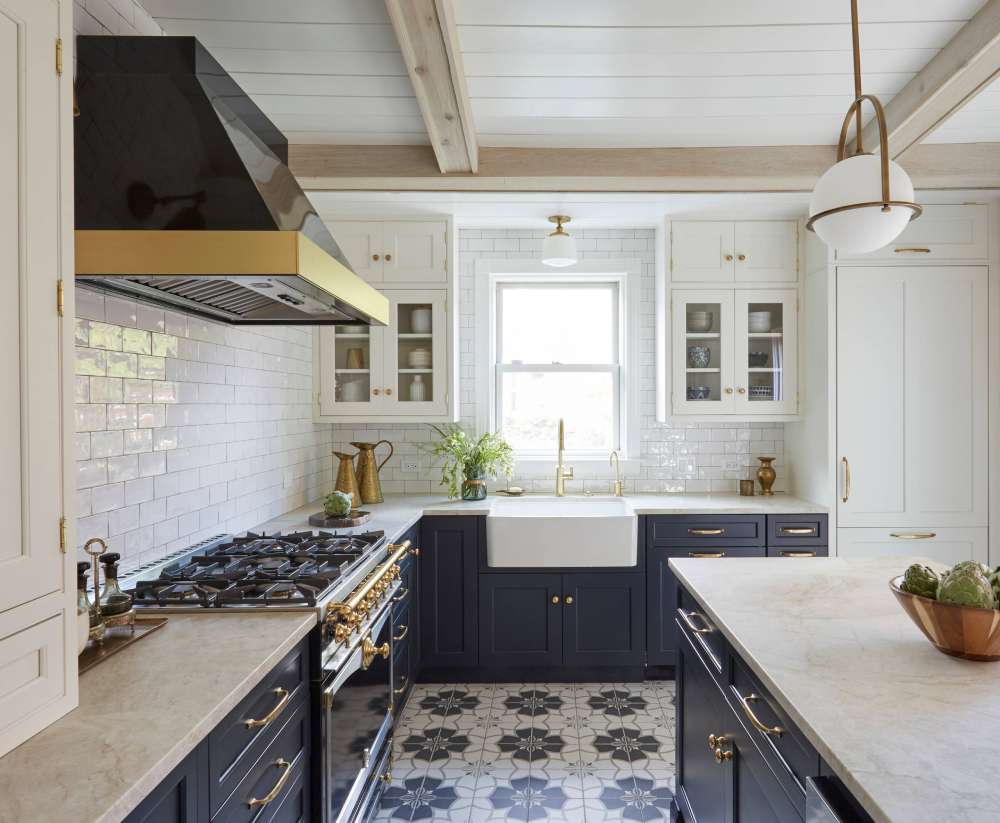
Spanish Mediterranean kitchens lean on Talavera tile, arched doorways, wrought iron hardware, and warm ochre or terracotta wall tones. Range hoods often carry ornate plasterwork. Cabinet doors tend toward raised panel or carved wood profiles.
Italian Mediterranean kitchens favor Carrara marble, travertine flooring, and a slightly more restrained palette. Stone range hoods, open wooden shelving with aged patina, and fireclay farmhouse sinks are common anchor elements.
| Feature | Spanish Mediterranean | Italian Mediterranean |
|---|---|---|
| Signature tile | Talavera, hand-painted ceramic | Encaustic cement, marble mosaic |
| Primary stone | Terracotta, warm limestone | Carrara marble, travertine |
| Hardware tone | Wrought iron, blackened steel | Unlacquered brass, aged bronze |
| Cabinet style | Carved wood, raised panel | Simple shaker, open shelving |
Greek Island Kitchen Style: Key Differences
Greek island kitchens prioritize whitewashed walls, cobalt blue accents, and minimal ornamentation. This is the most restrained of the three regional approaches.
Core markers:
- Thick plaster walls in warm white or cream
- Deep cobalt blue in cabinet doors, window frames, or tilework
- Simple open shelving over ornate cabinetry
- Natural linen, ceramic pottery, and copper accents as decor
The Greek approach works well in smaller kitchens because the light palette and minimal ornamentation keep the space feeling open. It’s probably the easiest Mediterranean sub-style to adapt to a compact urban layout.
What Are the Key Color Palettes for a Mediterranean Kitchen?
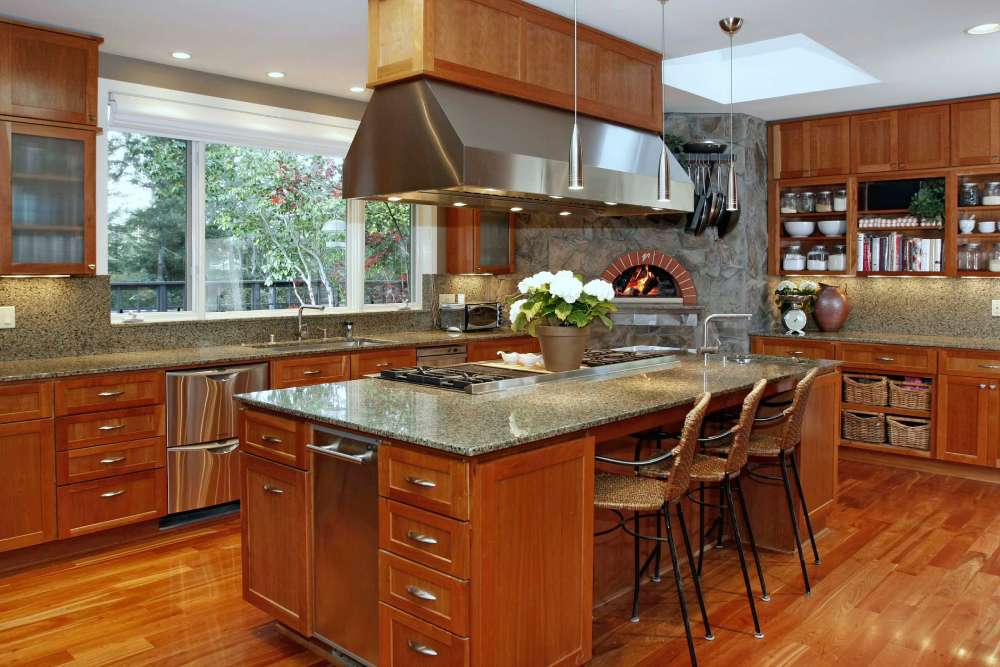
Image source: Ford Creative Group
The Mediterranean kitchen color palette centers on warm, sun-saturated tones pulled directly from the regional landscape: terracotta, burnt sienna, ochre, warm white, and sand make up the base.
The NKBA’s 2024 Kitchen Trends Report, based on feedback from 630 industry professionals, found that the top goal when selecting kitchen colors is to create a sense of nature, calm, and harmony. That’s exactly what the Mediterranean palette is built around.
Base Palette: Warm Neutrals and Earth Tones
Terracotta is the most versatile base in a Mediterranean kitchen. It works on walls, as a tile floor color, and as an accent on range hoods or pot rack surrounds.
Recommended base tones:
- Terracotta and burnt sienna for walls or tile
- Warm white and cream for cabinets (not cool white)
- Ochre and amber for accent walls or plaster finishes
- Sand and raw linen for grout, caulk, and soft furnishings
Benjamin Moore’s “Pale Oak” (OC-20) and “Pale Straw” work well as Mediterranean-friendly cabinet and wall tones. Farrow & Ball’s “Dead Salmon” and “Setting Plaster” are two others worth considering for plaster accent walls.
Accent Colors: Cobalt, Teal, and Olive
Cobalt blue is the most recognized Mediterranean accent. A single run of cobalt Talavera tile along a backsplash is enough to anchor the entire kitchen identity.
Deep teal and olive green serve as secondary accent options. Both read warmer than cobalt and pair cleanly with distressed wood cabinets or walnut open shelving.
Color pairings that work:
- Terracotta walls + cobalt tile backsplash
- Warm white cabinets + olive green island
- Sand-toned plaster + deep teal zellige accent
What to Avoid
Cool grays, stark whites, and blue-toned off-whites pull the Mediterranean warmth out of a kitchen completely. Nothing kills the look faster than pairing handcrafted terracotta tile with a cool silver-gray wall.
Avoid using too many accent colors simultaneously. Pick one (cobalt, teal, or olive) and let it repeat in 2-3 places throughout the space for visual cohesion. Color in interior design works best when it creates a rhythm rather than a random scatter of hues.
What Cabinet Styles Work Best in a Mediterranean Kitchen?
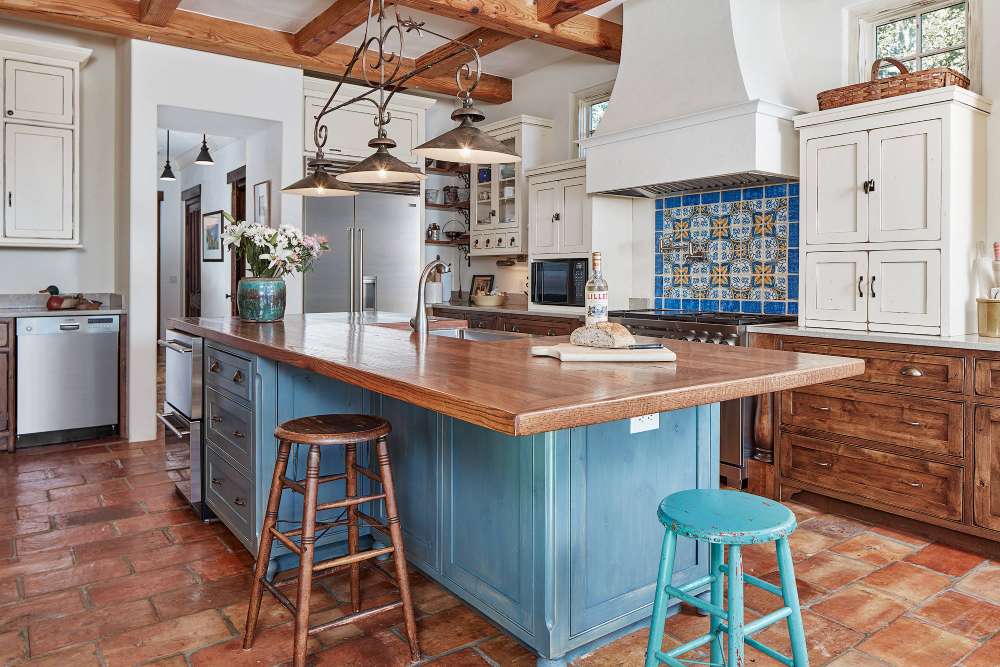
Image source: Tom Jenkins Films
Mediterranean kitchen cabinets emphasize handcrafted character over sleek uniformity. Raised panel doors, distressed wood finishes, and carved details are the primary cabinet identifiers in this style.
The 2025 Houzz Kitchen Trends Study found that 81% of renovating homeowners changed the style of their kitchen during a remodel. For those moving toward Mediterranean design, cabinetry is typically the single largest visual shift from a modern or contemporary baseline.
Painted vs. Natural Wood Cabinets in Mediterranean Kitchens
Both approaches work, but they produce different results. Natural wood reads more Italian or Spanish rustic. Painted cabinets lean Greek island or coastal Mediterranean.
| Cabinet Finish | Best Regional Fit | Wood/Paint Choices |
|---|---|---|
| Distressed natural wood | Spanish, Italian rustic | Walnut, chestnut, aged pine |
| Warm white painted | Greek island, coastal | Linen white, cream, pale ochre |
| Deep tone painted | Moroccan-Mediterranean crossover | Terracotta, olive, deep teal |
Hardware matters more here than in most other kitchen styles. Wrought iron pulls and hand-hammered bronze knobs are the standard choices for Mediterranean cabinetry. Avoid brushed nickel or polished chrome. They break the warm, artisanal character the style depends on.
Open Shelving as a Mediterranean Staple
Open shelving is not just a trend in Mediterranean kitchens. It’s a structural design choice that creates visual depth and gives the kitchen a lived-in, working quality that closed cabinetry alone cannot achieve.
Walnut or pine shelves with hand-forged iron brackets are the most authentic execution. Display ceramic pottery, copper cookware, and terracotta pitchers rather than uniform white dishware.
Mixing 60-70% closed cabinets with 30-40% open shelving keeps the kitchen functional without looking cluttered. That ratio works well in most Mediterranean layouts and prevents the open shelving from becoming a maintenance burden.
What Countertop and Surface Materials Fit a Mediterranean Kitchen?
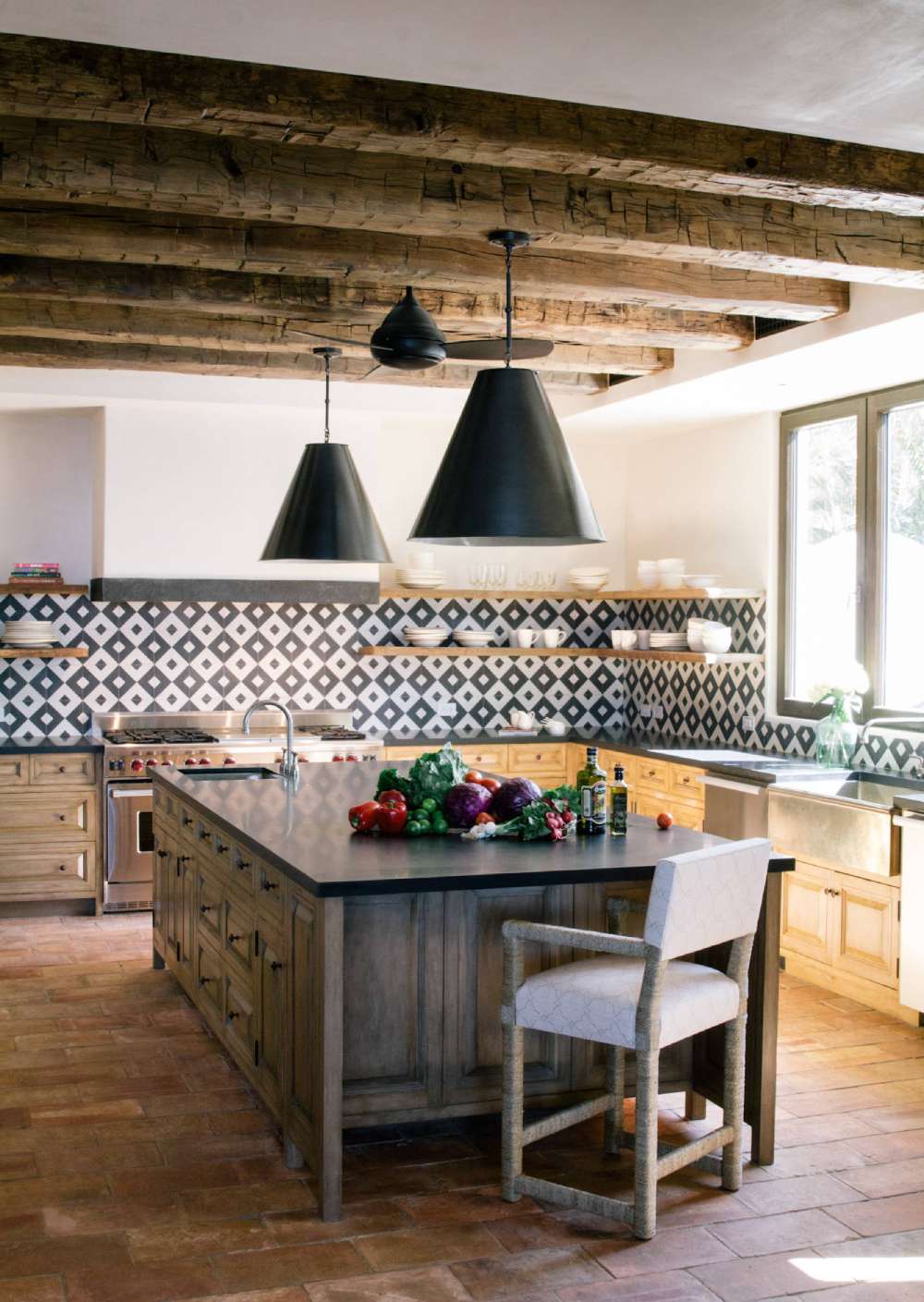
Image source: Vintage Timberworks
Natural stone and handcrafted surfaces define the Mediterranean kitchen counter. Marble, travertine, zellige tile, and butcher block are the 4 materials that appear most consistently across authentic Mediterranean kitchen designs.
Marble: The Primary Countertop Choice
Carrara and Calacatta marble are the dominant countertop materials in Italian Mediterranean kitchens. Both carry the warm vein movement and soft white base that fits naturally with terracotta floors and warm wood cabinetry.
Practical notes on marble in kitchens:
- Requires sealing annually to resist staining from acidic foods
- Etching from lemon juice or wine is common but can be polished out
- Honed marble (matte finish) shows fewer scratches than polished
- Costs range from $40 to $200 per square foot installed, depending on slab origin and thickness
Zellige and Cement Tile as Counter Surfaces
Zellige tile countertops are rare in American kitchens but authentic to Moroccan-Mediterranean crossover designs. The handmade irregularity of zellige creates a surface texture that no manufactured tile can replicate.
Encaustic cement tile works better as a counter surface in outdoor kitchen extensions than in primary indoor cooking zones. Its porous surface requires consistent sealing in high-use areas.
Butcher block is the most practical secondary surface option. Positioned on a kitchen island or prep area alongside marble perimeter counters, it introduces a warm wood element that grounds the Mediterranean earthy tone palette.
What Tile Choices Define a Mediterranean Kitchen Backsplash?
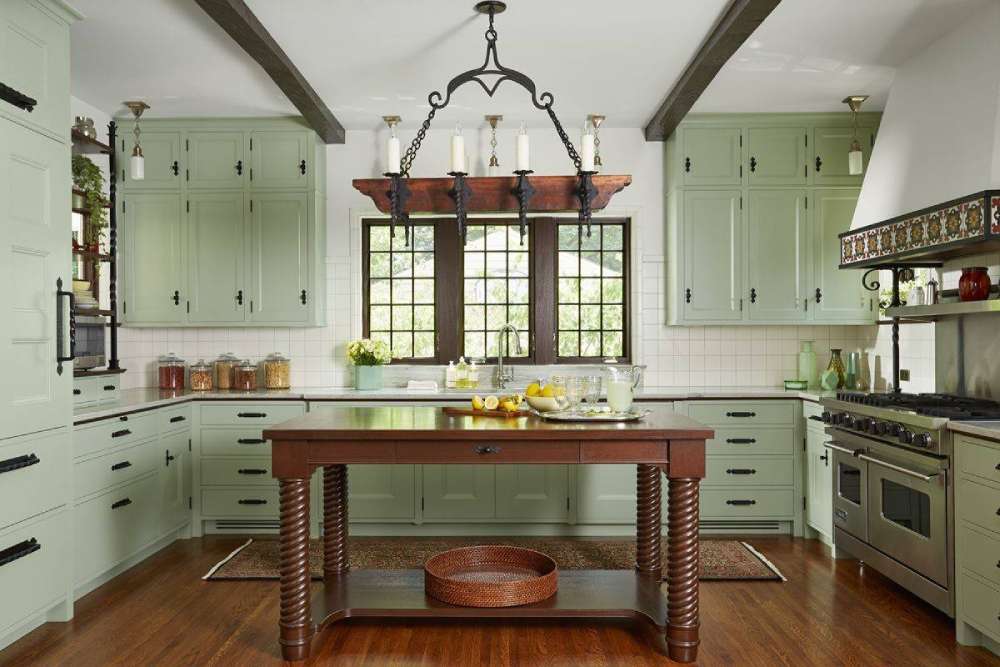
Image source: Dovetail Renovation, Inc
The backsplash is where Mediterranean kitchen design makes its biggest visual statement. Terracotta tiles, hand-painted Talavera, and zellige are the 3 primary backsplash materials that define this style.
Cerámicas Aparici reported in 2025 that natural textures and warm tones characterizing Mediterranean-style kitchens represent a growing trend in tile design, driven by consumer demand for handcrafted, personality-driven surfaces over generic subway tile.
Talavera vs. Zellige: Which Tile Fits Which Kitchen Size
Both tiles carry strong Mediterranean character, but they suit different kitchen scales and regional sub-styles.
Talavera tiles are hand-painted ceramic tiles originating from Talavera de la Reina, Spain, and later adopted widely in Mexican and Spanish Colonial kitchen design. Each tile is individually painted, meaning no two are identical. A full backsplash run in Talavera is visually bold. Use it in larger kitchens where it won’t overwhelm the space.
Zellige tiles originate from Morocco and carry a characteristically uneven glaze surface that catches light differently at various angles. They’re better scaled for smaller kitchens or accent sections because their texture already carries significant visual weight without large-format hand-painted patterns.
| Tile | Origin | Best Use | Kitchen Size Fit |
|---|---|---|---|
| Talavera | Spain / Mexico | Full backsplash, accent row | Medium to large |
| Zellige | Morocco | Backsplash, island front | Small to medium |
| Encaustic cement | France / North Africa | Patterned backsplash | Any size |
| Hand-painted terracotta | Spain / Italy | Accent niche, hood surround | Any size |
Grout Color and Its Effect on the Backsplash
Grout color significantly affects how Mediterranean backsplash tile reads from across the room. Sand-toned, warm gray, or terracotta grout maintains the earthy warmth of the tile palette.
White grout creates strong contrast that can make handcrafted tiles feel more graphic than artisanal. It also shows staining faster in a cooking environment. Matching grout to the mid-tone of the tile is the more forgiving and visually appropriate choice in Mediterranean backsplash applications.
What Flooring Options Work in a Mediterranean Kitchen?
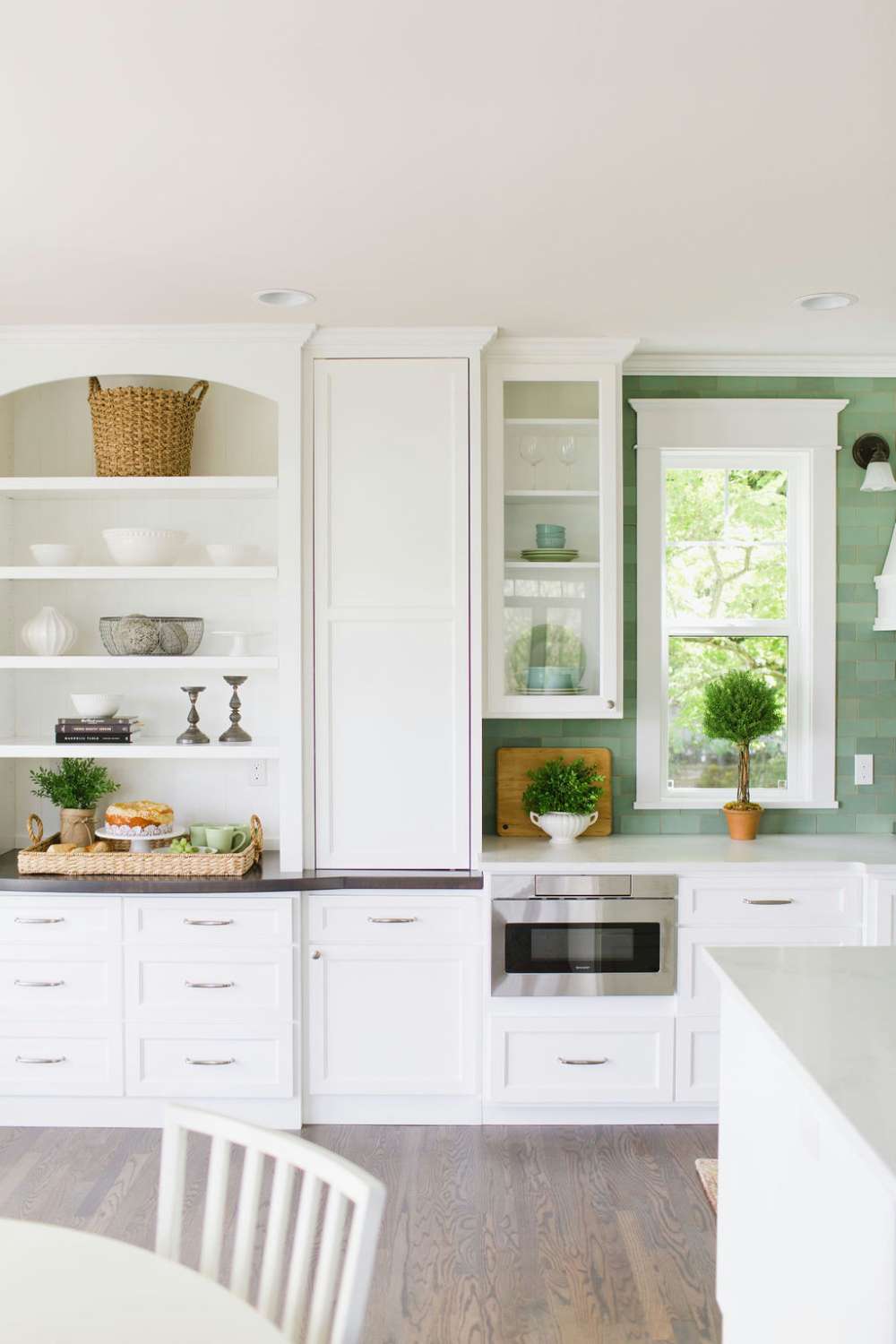
Image source: Mercury Mosaics and Tile
Terracotta tile flooring is the defining floor material of the Mediterranean kitchen. It’s followed by travertine, limestone, and encaustic cement tile as close regional alternatives.
American homeowners spent more than $600 billion on home renovations in 2024, according to the Harvard Joint Center for Housing Studies. Kitchen and bathroom flooring replacement consistently ranks among the top renovation categories driving that spending.
Terracotta Tile Flooring: Sealed vs. Unsealed
Unsealed terracotta develops a natural patina over time. It absorbs oils, liquids, and foot traffic marks in a way that actually deepens its visual character. This is appropriate for authentic Mediterranean kitchens where surface imperfection is part of the aesthetic.
Sealed terracotta is the more practical choice for most homeowners. Sealing prevents staining, makes cleaning straightforward, and protects the tile from moisture damage in cooking zones. Reseal every 1-3 years depending on foot traffic and kitchen use intensity.
Key considerations for terracotta flooring:
- Color varies significantly by origin (Italian, Spanish, and Mexican terracotta each carry distinct clay tones)
- Grout joint width of 3/8 to 1/2 inch reads more authentically than tight modern spacing
- Underfloor heating is compatible with sealed terracotta when installed by a professional
Travertine and Limestone: The Stone Alternatives
Travertine flooring is slightly more refined than terracotta and suits Italian Mediterranean kitchens that lean toward polished rather than rustic aesthetics.
Filled and honed travertine is the best finish for kitchen floors. It provides a flat surface without the open pores that unfilled travertine leaves, which trap grease and food debris over time.
Limestone works in the same regional context as travertine. It’s softer underfoot, slightly more prone to scratching, and carries a quieter visual profile. Better suited to lower-traffic Mediterranean kitchens or households without young children or pets.
Encaustic Cement Tile for Small Kitchens
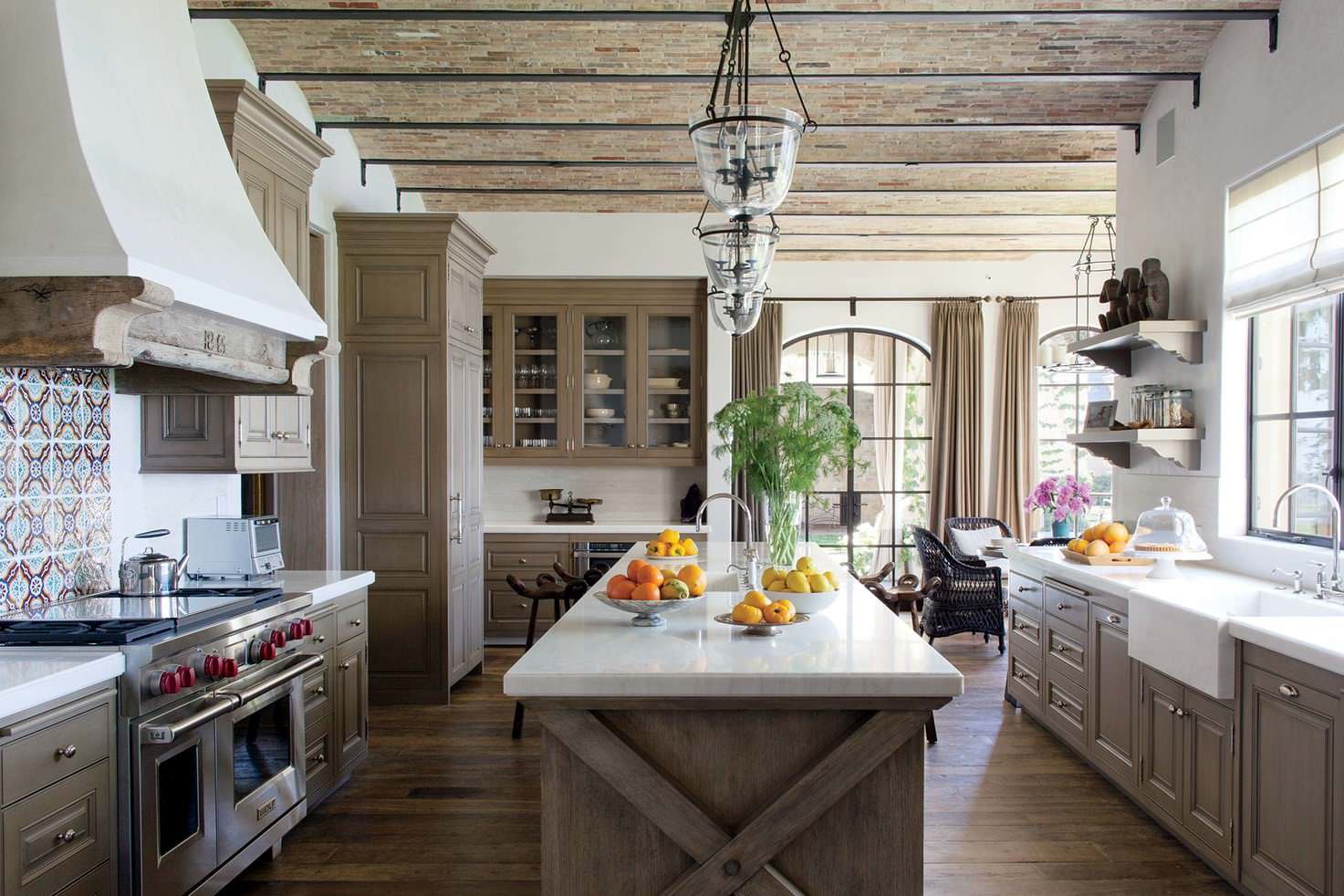
Image source: Elite Kitchen & Bath Concepts, LLC
Encaustic cement tiles produce a striking floor in compact Mediterranean kitchens. A classic geometric or floral pattern in terracotta, cobalt, and cream reads as authentically regional without the maintenance demands of natural stone.
The tile itself needs sealing before grouting and after installation to prevent the cement from absorbing grout haze. Annual resealing maintains the surface and prevents staining in active cooking environments.
What Lighting Fixtures Suit a Mediterranean Kitchen?
Mediterranean kitchen lighting is defined by handcrafted materials, warm light sources, and fixtures with visible artisanal construction. Wrought iron, hammered metal, and lantern forms are the consistent visual language across all Mediterranean regional sub-styles.
Ambient lighting in a Mediterranean kitchen works best when it mimics the quality of candlelight or natural flame. Warm white bulbs in the 2700-3000K range are the right choice. Cool white LEDs in the 4000K+ range produce a clinical quality that clashes with the warm, earthy palette the style depends on.
Pendant and Chandelier Options
Uttermost and Pottery Barn both carry wrought iron and hammered metal pendant collections that fit Mediterranean kitchen aesthetics. For an island with 3 pendants, matching lantern-style fixtures in blackened iron or oil-rubbed bronze read more authentically than mixed metals.
Spanish and Moroccan lantern fixtures work particularly well over kitchen islands and dining areas adjacent to the kitchen. The perforated metal casing casts patterned shadows on nearby walls, adding a layer of textural depth at night that flat pendant shades cannot produce.
Natural Light and Window Strategy
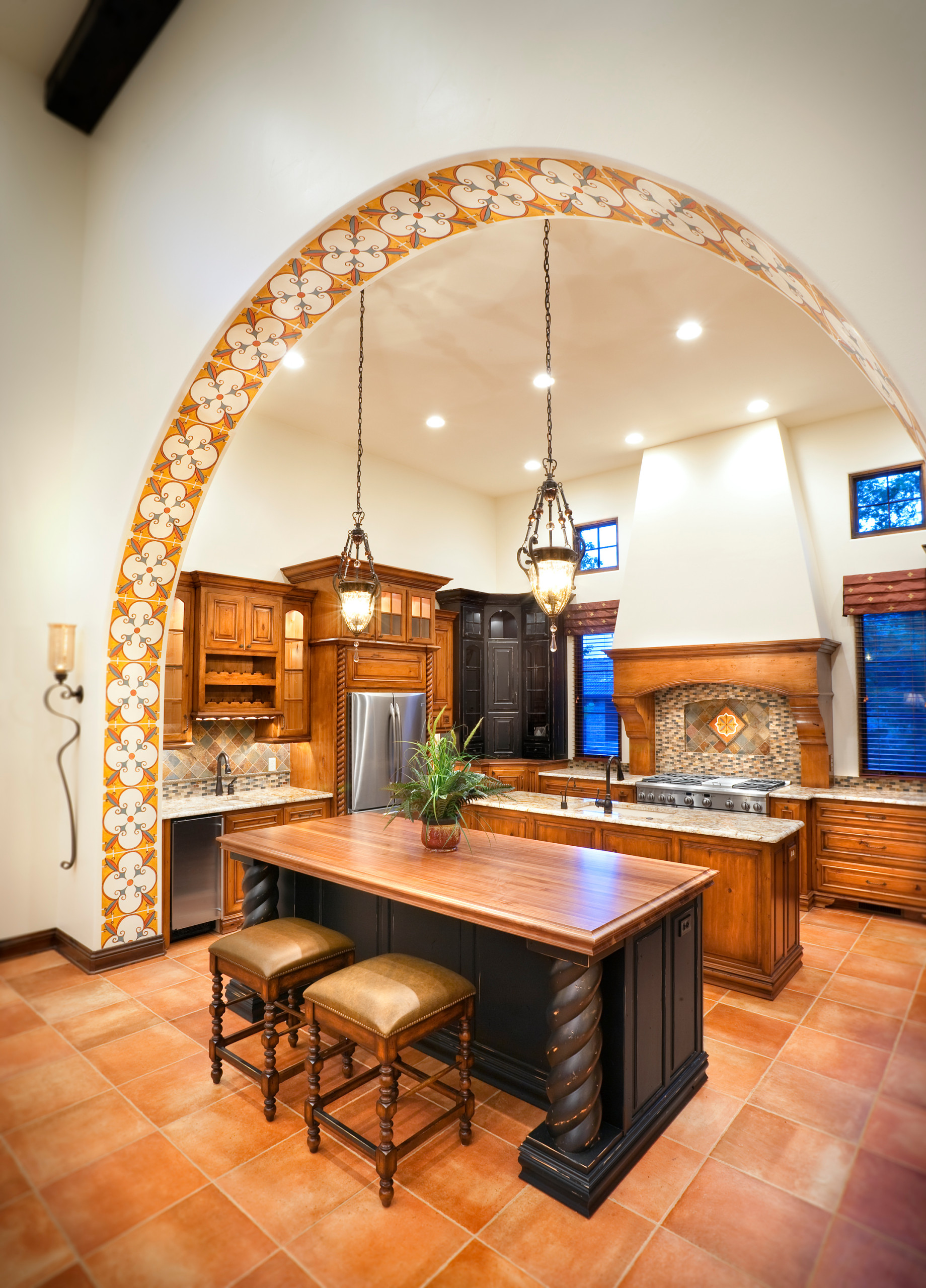 Image source: Andrea Nesbitt Designs
Natural light is a functional design element in authentic Mediterranean kitchens. Wide window openings, arched transoms, and south-facing skylights are the 3 primary strategies for maximizing daylight in this style.
Arched windows reinforce the architectural identity of arched doorways and openings found throughout Mediterranean home design. Where new window openings aren’t possible, adding arched plaster surrounds to existing rectangular windows creates the visual impression without structural modification.
Task and Under-Cabinet Lighting
Task lighting in a Mediterranean kitchen needs to be functional without interrupting the handcrafted aesthetic. Under-cabinet LED strip lighting in warm white (2700K) is the most practical option. It keeps prep surfaces well-lit while staying visually recessed behind the cabinet face.
Avoid recessed can lighting as the primary light source in a Mediterranean kitchen. A grid of uniform recessed fixtures produces an even, commercial quality that works against the warm, layered atmosphere this design style builds toward. Use recessed lighting as fill only, and let pendant and chandelier fixtures carry the visual weight of the lighting design.
What Layout Features Are Common in Mediterranean Kitchens?
Open-plan layouts with direct connection to outdoor dining or terrace spaces are the defining spatial feature of authentic Mediterranean kitchen design.
NKBA’s 2025 Kitchen Trends Report found that 72% of design professionals report homeowners are bringing the outdoors inside the kitchen, treating indoor-outdoor flow as a top design priority. Mediterranean kitchens have operated this way by default for centuries.
Indoor-Outdoor Kitchen Connection
Primary connection methods:
- French doors or large sliding glass panels opening to a terrace or loggia
- Pass-through windows between the kitchen counter and an outdoor dining surface
- Covered pergola extensions that continue the kitchen’s cooking and prep function outdoors
A pergola connected directly off the kitchen is one of the most commonly referenced features in Mediterranean home design. It creates a shaded transition zone between the cooking space and the garden without fully enclosing it.
Arched Doorways and Built-In Niches
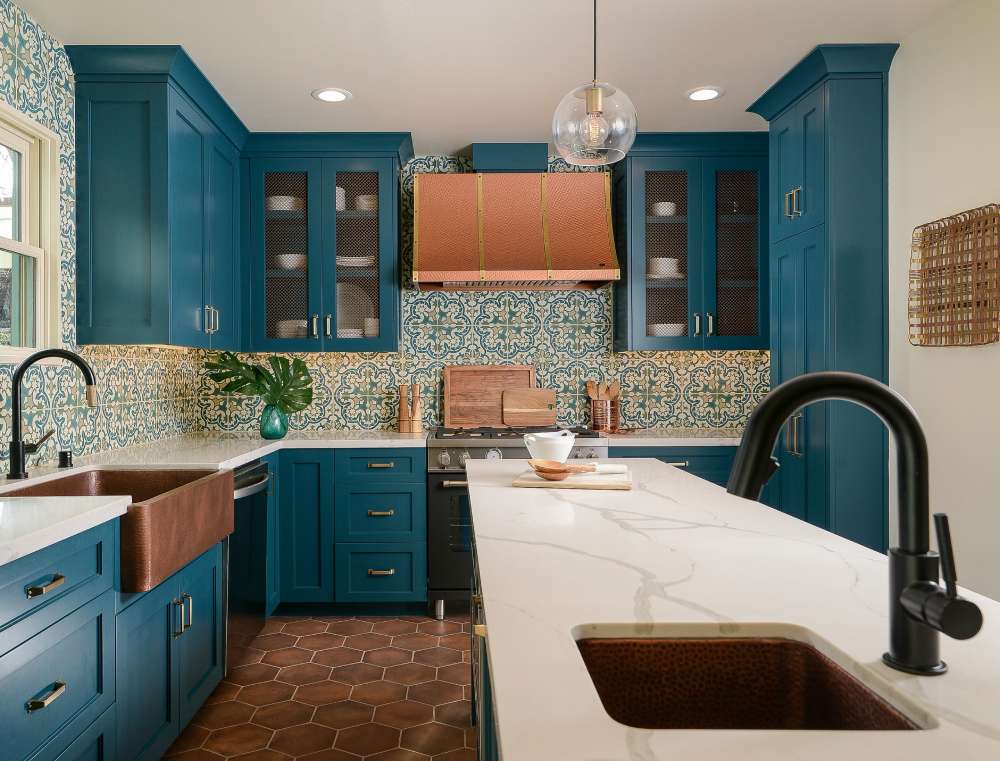
Image source: House of Brazier
Arched openings are structural, not decorative. They appear in doorways between the kitchen and adjacent rooms, in niche alcoves cut into thick plaster walls, and above range hoods as part of the hood surround design.
Adding arched plaster surrounds to existing rectangular doorways is a lower-cost option for homeowners who want the Mediterranean architectural effect without structural modification. A skilled plasterer can form an arch surround in a single day.
Exposed Ceiling Beams and Kitchen Islands
Exposed ceiling beams in walnut, chestnut, or aged pine are a consistent feature of Spanish and Italian Mediterranean kitchens. Where structural beams don’t exist, faux beams in lightweight polyurethane or hollow wood boxes achieve the same visual result at a fraction of the installation cost.
Kitchen island design in Mediterranean layouts typically features tiled fronts (encaustic cement or terracotta), a butcher block or marble top, and wrought iron pendant lighting overhead. The island functions as the communal center of the kitchen, not purely as a prep surface.
NKBA’s 2025 report found that 52% of design professionals agree adding a second kitchen island is gaining popularity, a trend that aligns well with the larger, sociable kitchen layouts common in Mediterranean-inspired homes.
What Appliances and Fixtures Fit a Mediterranean Kitchen Design?
Appliance finish and fixture selection either reinforce or undermine a Mediterranean kitchen’s handcrafted identity. The wrong finish can make the most carefully designed tilework and cabinetry look generic.
NKBA’s 2025 Kitchen Trends Report found that 83% of design professionals agree sinks with food prep and serving areas are becoming popular, a function that pairs naturally with the farmhouse sink formats that define Mediterranean kitchens.
Range and Appliance Finishes
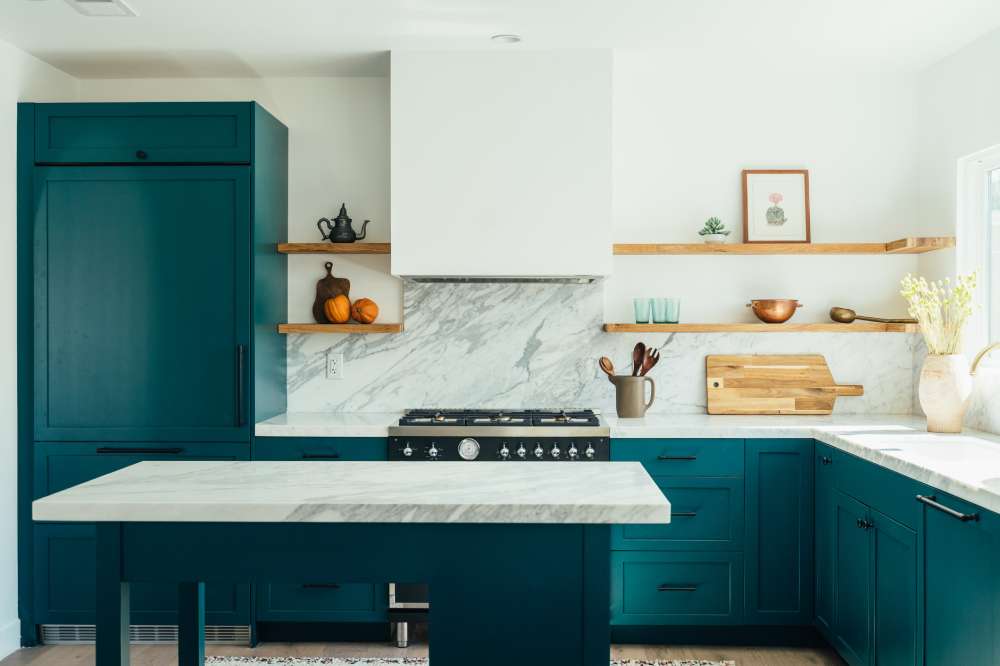
Image source: Willisland Design Works
Panel-ready appliances integrated behind cabinet fronts work well in Mediterranean kitchens where clean visual continuity matters. But professional-style ranges in cream, black, or matte finishes make a stronger regional statement when left exposed.
La Cornue, ILVE, and Bertazzoni are the 3 range brands most consistently specified in high-end Mediterranean kitchen projects. All 3 produce ranges in color and finish options that align with the warm, artisanal palette the style requires. La Cornue’s Chateau range in “Provence Blue” or “Burgundy Red” is a direct design statement in itself.
Sink Styles and Faucet Finishes
Fireclay farmhouse sinks are the most regionally appropriate sink choice. They carry the same handcrafted material quality as the tilework and stone surfaces surrounding them.
Copper farmhouse sinks are an alternative worth considering for Spanish or Moroccan-Mediterranean kitchens. The copper oxidizes over time and deepens in color, which adds to the aged, artisanal character the style depends on.
Faucet finish choice matters. Oil-rubbed bronze and unlacquered brass are the 2 finishes that read most authentically. Unlacquered brass develops a natural patina, which fits the Mediterranean preference for surfaces that gain character with use. Polished chrome or brushed nickel will feel out of place against warm stone and terracotta.
Built-In Wine Storage
Wine storage is a practical and culturally appropriate element in a Mediterranean kitchen. The 3 most common integration approaches:
- A wine rack column built into the cabinetry run beside the refrigerator
- Under-counter wine refrigeration beneath the island
- A dedicated wine wall niche in a plaster alcove beside the kitchen entry
The niche option works best architecturally in a Mediterranean kitchen. It draws on the same built-in alcove tradition used for displaying pottery and cookware throughout the style.
What Decorative Elements Complete a Mediterranean Kitchen?
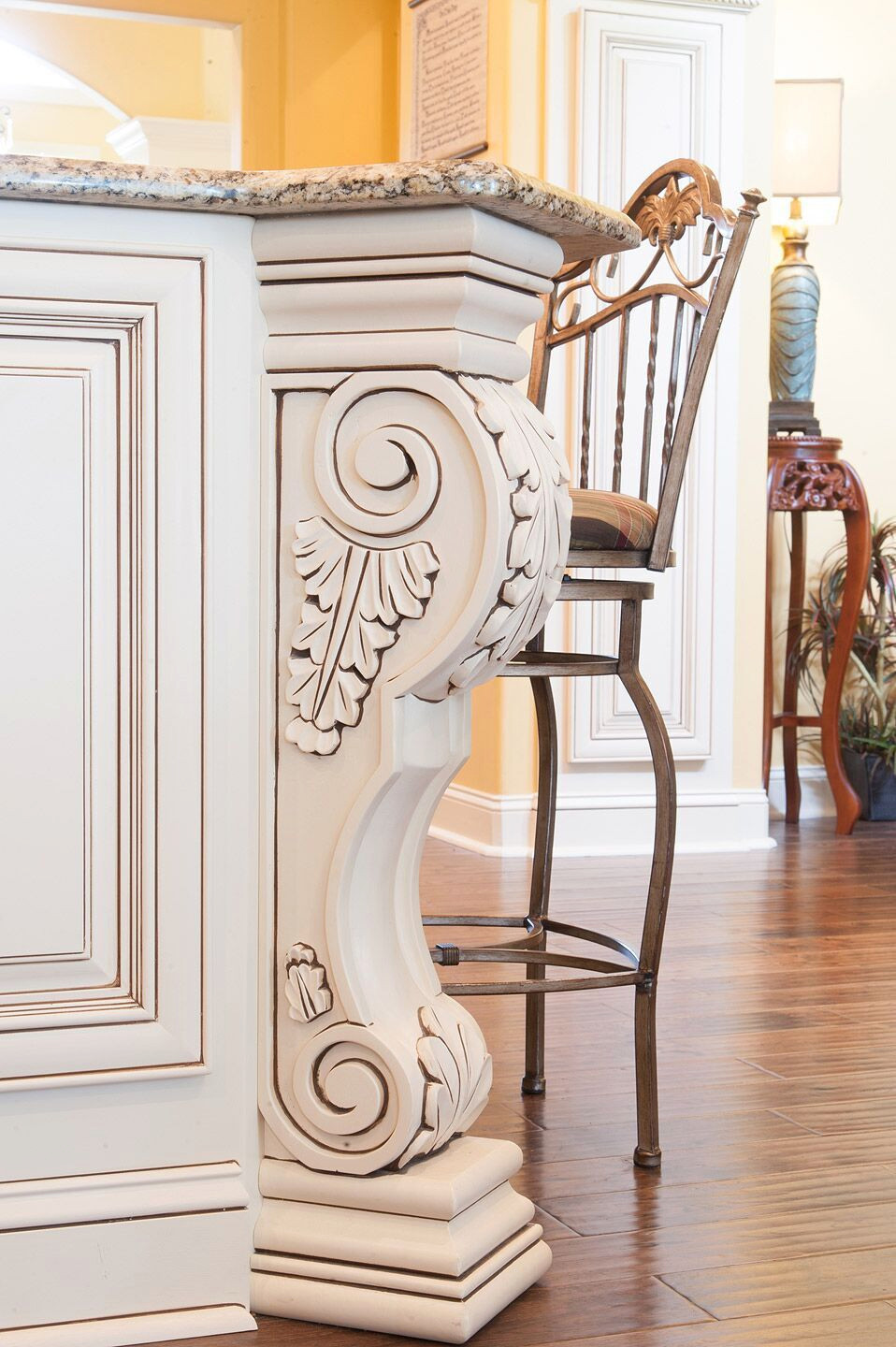
Image source: Roberts Custom Cabinets
Decorative layering in a Mediterranean kitchen works through accumulation of authentic, handcrafted objects rather than coordinated accessory sets.
The kitchen becomes a display of materials and objects that have regional and cultural weight: copper cookware, hand-thrown pottery, woven baskets, and ceramic pitchers are doing more visual work than any single design decision.
Pottery, Copper, and Ceramic Display
Open shelving loaded with hand-thrown ceramic bowls, terracotta pitchers, and copper pots is the single most cost-effective way to shift a kitchen toward a Mediterranean identity.
Copper develops a patina that deepens over years of use, making it a self-improving decorative element. A copper pot rack above the island is both functional and visually authoritative.
Sourcing options that work:
- Etsy for hand-thrown ceramic pottery from Spanish and Italian makers
- Terrain and Anthropologie for Mediterranean-inflected serveware
- Local estate sales for aged copper pieces with genuine patina
Textiles and Natural Materials
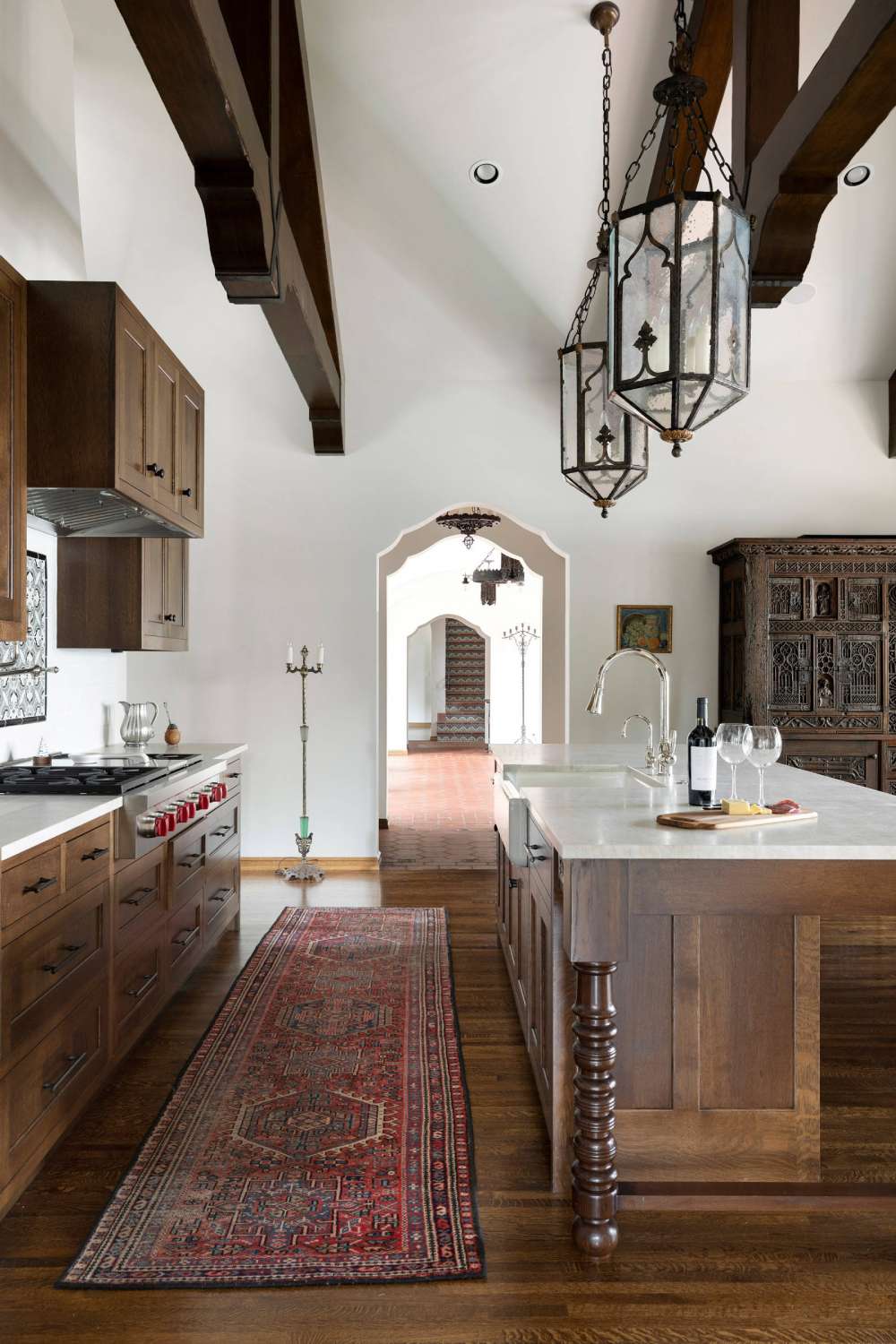
Image source: Distinctive Drywall & Painting
Natural fiber textiles bring softness into a kitchen dominated by stone, terracotta, and wrought iron. Linen dish towels, jute runners, and woven basket storage are the 3 textile categories that fit the Mediterranean aesthetic without competing with it.
Avoid synthetic or polyester textiles in Mediterranean kitchen styling. They carry a visual sheen that reads as cheap next to handcrafted tile and aged copper. Stick to linen, cotton, and natural jute throughout.
Herb Gardens and Living Greenery
A windowsill herb garden is the most regionally appropriate greenery choice for a Mediterranean kitchen. Rosemary, thyme, basil, and oregano are the 4 herbs that appear consistently in Mediterranean cooking and translate naturally to kitchen windowsill display.
Terracotta pots are the right container. Not painted ceramic, not plastic nursery pots. The terracotta continues the warm earth tone palette and weathers authentically over time.
How Does a Small Kitchen Work with Mediterranean Design?
Mediterranean design in compact kitchens is about editing, not eliminating. Pick 2-3 key elements and execute them well rather than trying to include everything.
The 2024 Houzz Kitchen Trends Study found that small kitchen remodels (under 250 square feet) have a median major remodel cost of $55,000, comparable to larger kitchens. Budget allocation in compact layouts requires sharper prioritization of which elements deliver the most visual impact per dollar spent.
Prioritizing the Right 3 Elements
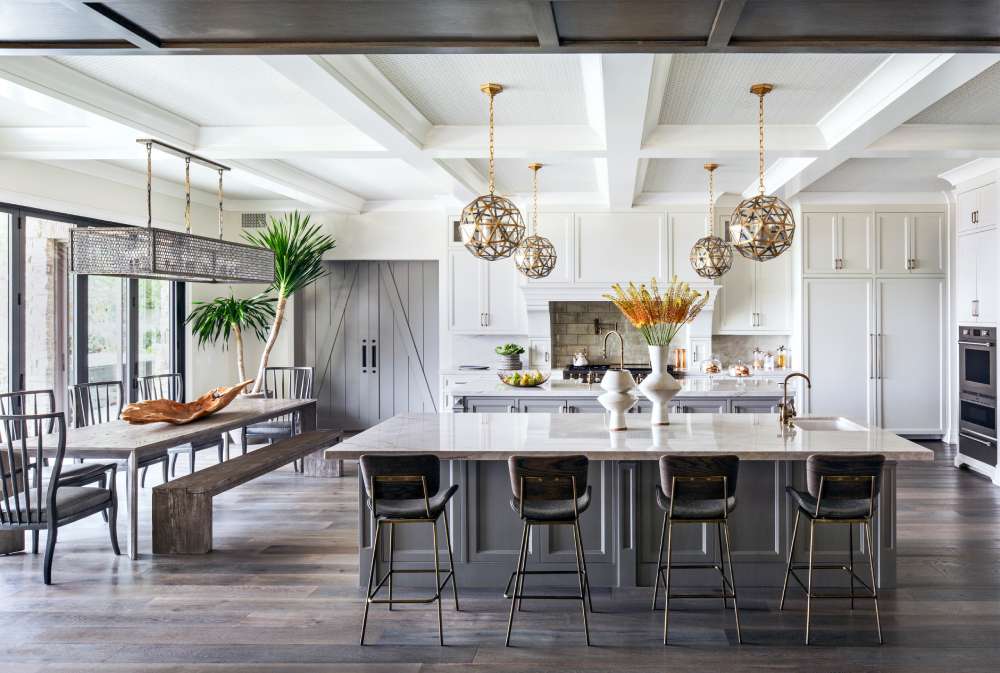
Image source: Jeff Andrews Design
In a small Mediterranean kitchen, choose 1 statement tile, 1 warm cabinet finish, and 1 authentic fixture. That combination is enough to establish the identity of the space without overwhelming it.
| Priority | Highest Impact Choice | Budget Tier |
|---|---|---|
| Tile | Zellige backsplash in cobalt or terracotta | Mid to high |
| Cabinet finish | Warm white or distressed wood paint | Budget to mid |
| Fixture | Fireclay farmhouse sink or wrought iron pendants | Mid |
Light Palettes and Vertical Storage
Warm white walls and cream cabinetry keep a small Mediterranean kitchen from feeling closed in.
Open shelving on the vertical wall above upper cabinets adds storage without eating floor space. Display 4-6 ceramic pieces and keep the rest of the shelving practical. The goal is visual breathing room, not a packed display cabinet.
Avoiding Visual Clutter in Tight Layouts
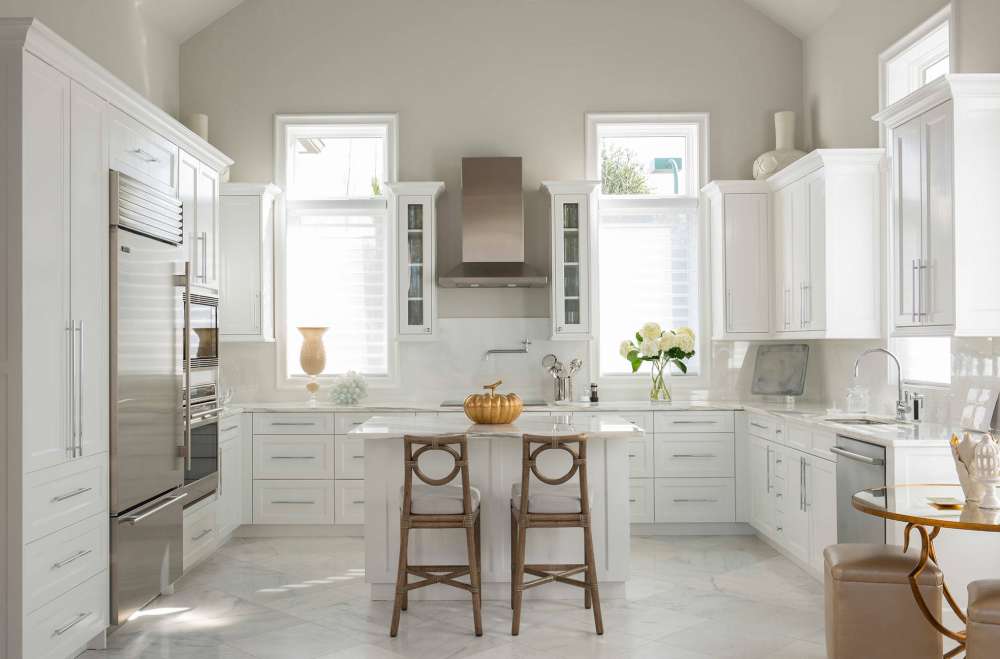
Image source: CDA Interior Design
What to skip in a small Mediterranean kitchen:
- Full Talavera backsplash (too pattern-heavy for compact walls)
- Dark distressed wood on both cabinets and floors simultaneously
- Multiple competing accent colors
Restraint is the difference between a small kitchen that reads as Mediterranean and one that reads as overwhelmed. One strong material choice, properly executed, carries more authority than five moderate ones applied without focus.
What Is the Cost of Designing a Mediterranean Kitchen?
Mediterranean kitchens cost more than standard kitchen renovations at equivalent scales. The handcrafted materials, artisan tile, specialty ranges, and custom ironwork that define the style carry consistent price premiums over mass-produced alternatives.
According to the 2025 Zonda Cost vs. Value Report, a minor kitchen remodel averages $28,458 nationally, while a major remodel runs $82,793. Mediterranean-specific material choices (zellige tile, fireclay sinks, La Cornue ranges, custom wrought iron hardware) push projects toward the higher end of each tier.
Budget Tier: $15,000 to $30,000
At this level, the Mediterranean identity comes primarily from paint, hardware, tile, and accessories rather than structural changes.
What this budget covers:
- Painted cabinets in warm white or terracotta with wrought iron hardware
- Ceramic or encaustic tile backsplash ($8-$15 per square foot range)
- Basic laminate or budget stone countertops
- Terracotta-effect porcelain floor tile (lower maintenance than natural terracotta)
- New pendant fixtures in wrought iron or blackened metal
Mid-Range Tier: $30,000 to $60,000
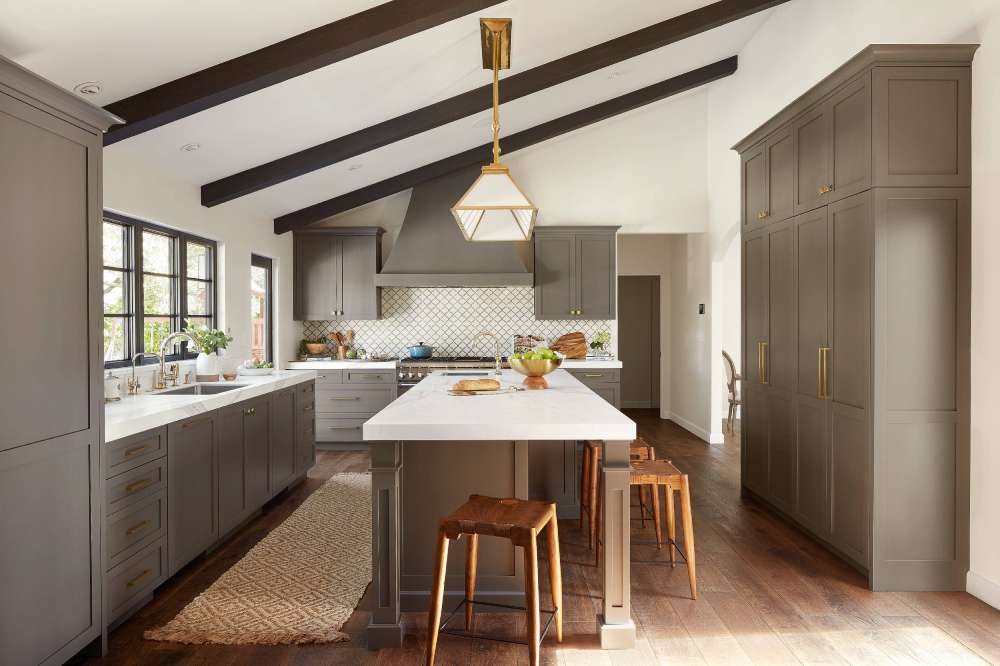
Image source: Scheinholtz Associates
This tier allows authentic material choices across most surfaces. Projects in this range produce kitchens that read as genuinely Mediterranean rather than Mediterranean-influenced.
Material upgrades this budget unlocks:
- Solid wood cabinetry in walnut or chestnut with distressed finish
- Zellige or Talavera tile backsplash ($25-$45 per square foot installed)
- Honed Carrara marble countertops
- Natural terracotta or travertine flooring
- Fireclay farmhouse sink and unlacquered brass faucet
High-End Tier: $60,000 and Above
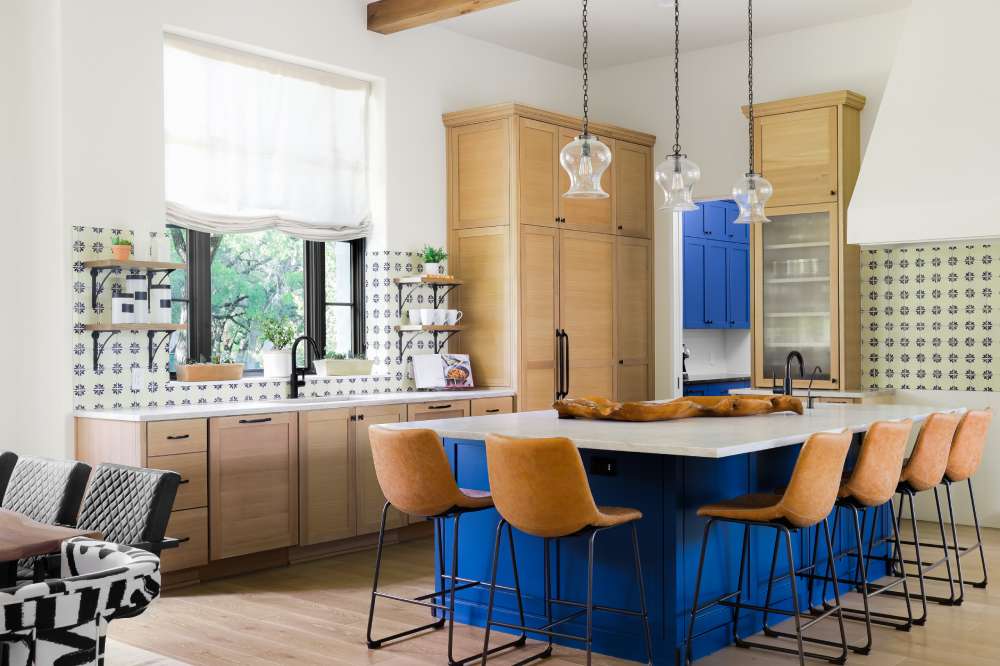
Image source: Cornerstone Architects
Above $60,000, the Mediterranean kitchen includes architectural features alongside premium materials. This is the tier where the design becomes the permanent character of the home rather than a surface-level style application.
| Feature | High-End Specification | Approx. Cost |
|---|---|---|
| Range | La Cornue Chateau, custom color | $15,000-$35,000+ |
| Cabinetry | Custom hand-built in walnut or chestnut | $500-$1,200 per linear ft |
| Stone flooring | Reclaimed Italian terracotta or travertine | $20-$60 per sq ft |
| Architectural features | Arched plaster doorways, exposed beam installation | $3,000-$12,000 |
Where to invest vs. where to save: Spend on tile, sink, and range because these elements define the visual identity of the space. Save on under-cabinet storage interiors, pull-out organizers, and appliance brands for items that don’t affect the Mediterranean aesthetic (refrigerators, dishwashers). Panel-ready appliance fronts cost less than specialty colored units and achieve the same seamless integration.
FAQ on Mediterranean Kitchen Ideas
What defines a Mediterranean kitchen style?
A Mediterranean kitchen draws from the coastal architecture of Spain, Italy, Greece, and Turkey. Terracotta tile, warm earth tones, handcrafted surfaces, wrought iron hardware, and natural materials like stone and aged wood are its core defining features.
What colors work best in a Mediterranean kitchen?
The base palette centers on terracotta, ochre, warm white, sand, and burnt sienna. Cobalt blue, olive green, and deep teal work as accent colors. Avoid cool grays and stark whites, which strip the warmth out of the palette.
What type of backsplash tile is most authentic?
Hand-painted Talavera tile and zellige tile are the two most regionally authentic choices. Encaustic cement tile is a close third. All three carry the handcrafted, artisanal quality that defines a genuine Mediterranean kitchen backsplash.
What flooring is best for a Mediterranean kitchen?
Terracotta tile flooring is the most authentic option, followed by travertine and limestone. Seal natural terracotta to prevent staining. Use wide grout joints of 3/8 to 1/2 inch for a more traditional, regional appearance.
What cabinet style fits a Mediterranean kitchen?
Raised panel doors, distressed wood finishes, and carved details are the primary cabinet styles. Walnut, chestnut, and aged pine are the most appropriate wood species. Open shelving mixed with closed cabinetry adds the lived-in depth the style requires.
What countertop material suits a Mediterranean kitchen?
Honed Carrara marble is the top choice for Italian Mediterranean kitchens. Butcher block works well as a secondary surface on the island. Zellige tile countertops are a more unusual but regionally authentic alternative for smaller prep areas.
What lighting fixtures belong in a Mediterranean kitchen?
Wrought iron pendants, lantern-style chandeliers, and hammered metal fixtures are the standard choices. Use warm white bulbs in the 2700-3000K range. Cool LEDs above 4000K clash with the warm palette and undermine the handcrafted atmosphere.
How do you adapt Mediterranean design to a small kitchen?
Pick 2-3 key elements and commit to them. A zellige backsplash, warm white cabinets, and a fireclay sink together establish the identity without overwhelming a compact space. Avoid multiple competing accent colors or heavy pattern on all surfaces simultaneously.
What appliances fit a Mediterranean kitchen?
Panel-ready appliances or professional ranges from La Cornue, ILVE, or Bertazzoni in cream or matte finishes are the best choices. Pair with a fireclay farmhouse sink and unlacquered brass or oil-rubbed bronze faucets. Avoid brushed nickel or polished chrome finishes.
How much does a Mediterranean kitchen remodel cost?
Budget tier runs $15,000 to $30,000 using painted cabinets, ceramic tile, and porcelain terracotta-effect flooring. Mid-range reaches $30,000 to $60,000 with zellige tile, marble countertops, and solid wood cabinetry. High-end projects with custom ironwork and specialty ranges exceed $60,000.
Conclusion
This conclusion is for an article presenting mediterranean kitchen ideas that work across every budget tier, from a simple zellige backsplash refresh to a full custom build with reclaimed travertine flooring and a La Cornue range.
The style holds because its materials are genuinely good. Handcrafted encaustic cement tile, aged walnut cabinetry, Carrara marble countertops, and fireclay farmhouse sinks age well and carry character that manufactured alternatives never fully replicate.
Start with the elements that define the space visually: the backsplash tile, the cabinet finish, and the sink.
Get those 3 right, and the warm earth tone palette, wrought iron accents, and open shelving with ceramic pottery display fall into place around them.

- Paint Colors That Go with Gray Floors - August 20, 2026
- What Color Bedding Goes with Dark Wood Furniture - August 18, 2026
- What Color Walls Go with Oak Floors - August 16, 2026


