Summarize this article with:

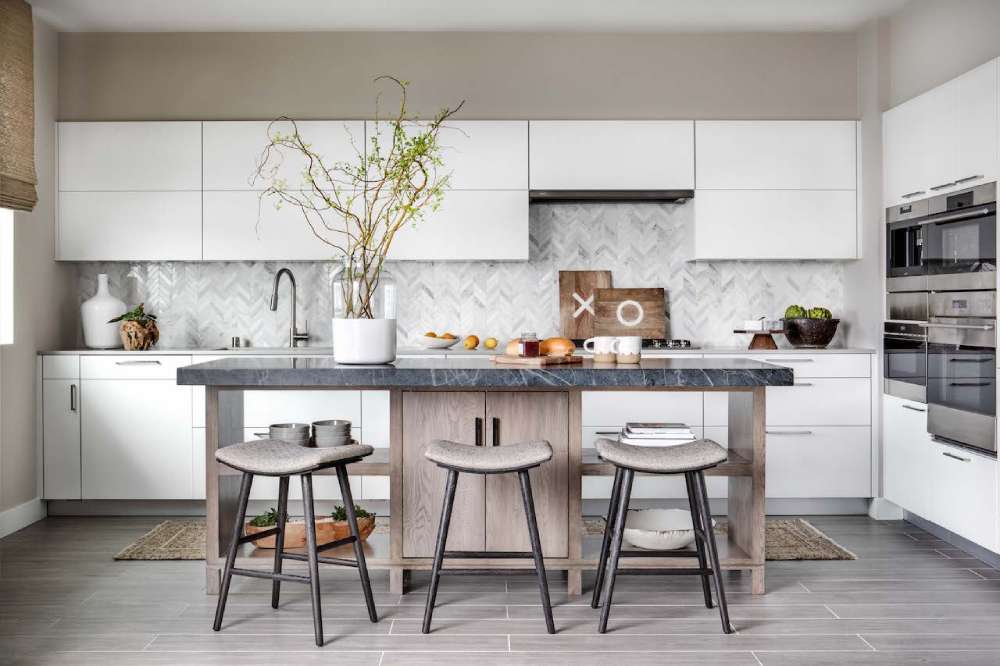
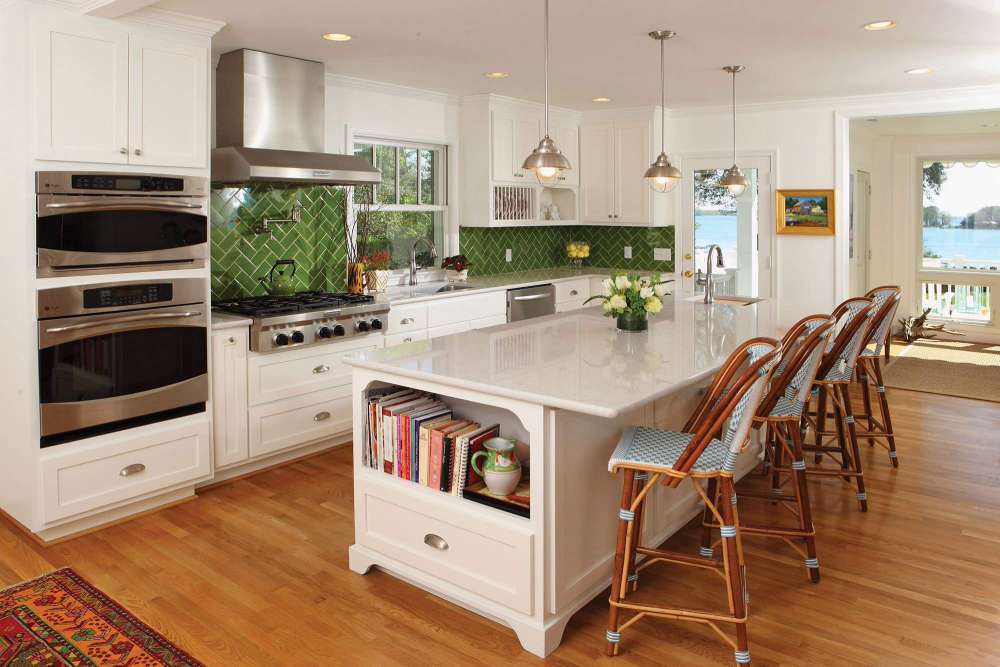
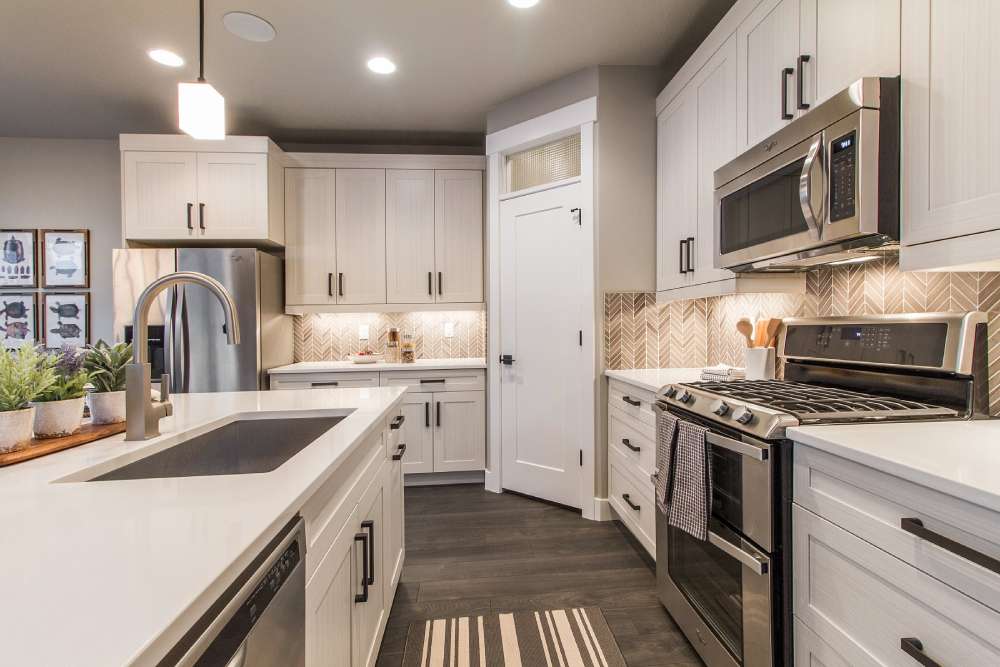
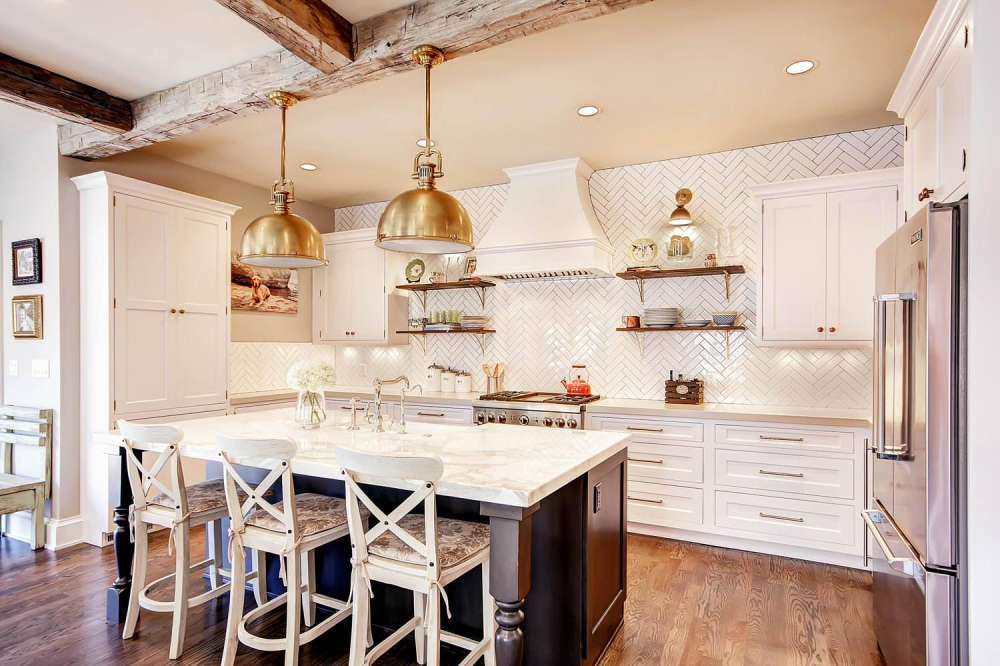
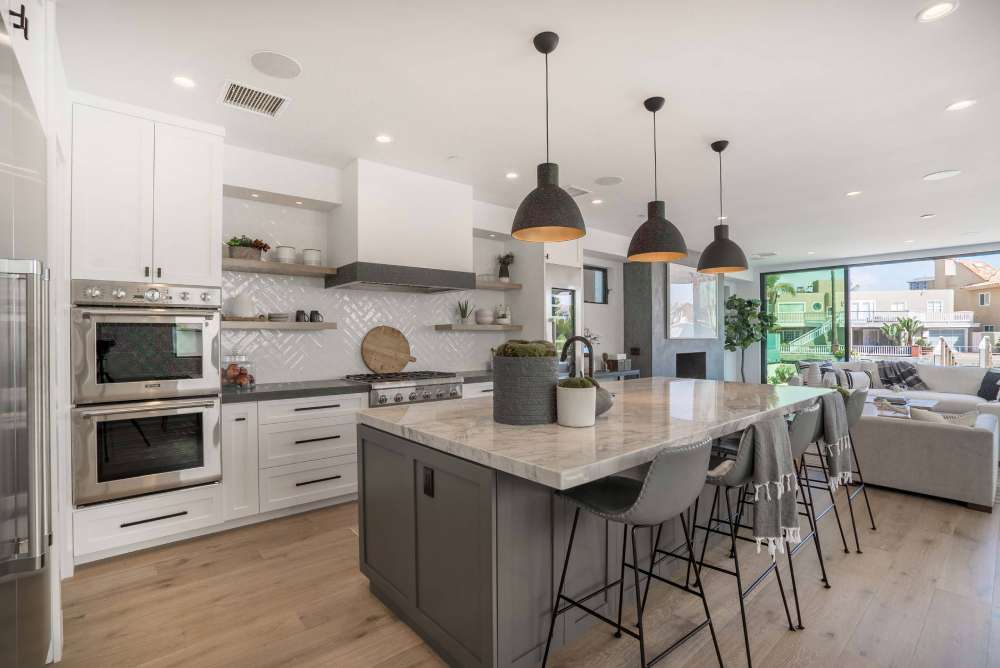
White kitchen cabinets with herringbone backsplash remain one of the most requested combinations in kitchen renovations. The pairing works because white cabinetry keeps the space bright and open, while the angled tile pattern adds texture and movement to the wall surface.

But picking the right tile material, grout color, cabinet door style, and countertop pairing makes the difference between a kitchen that looks pulled-together and one that falls flat.

This guide covers tile materials like ceramic, porcelain, marble, and glass. It breaks down cabinet styles, countertop options, hardware finishes, installation steps, and real cost numbers so you can plan with clarity before spending a dollar.

What Is a White Kitchen with Herringbone Backsplash

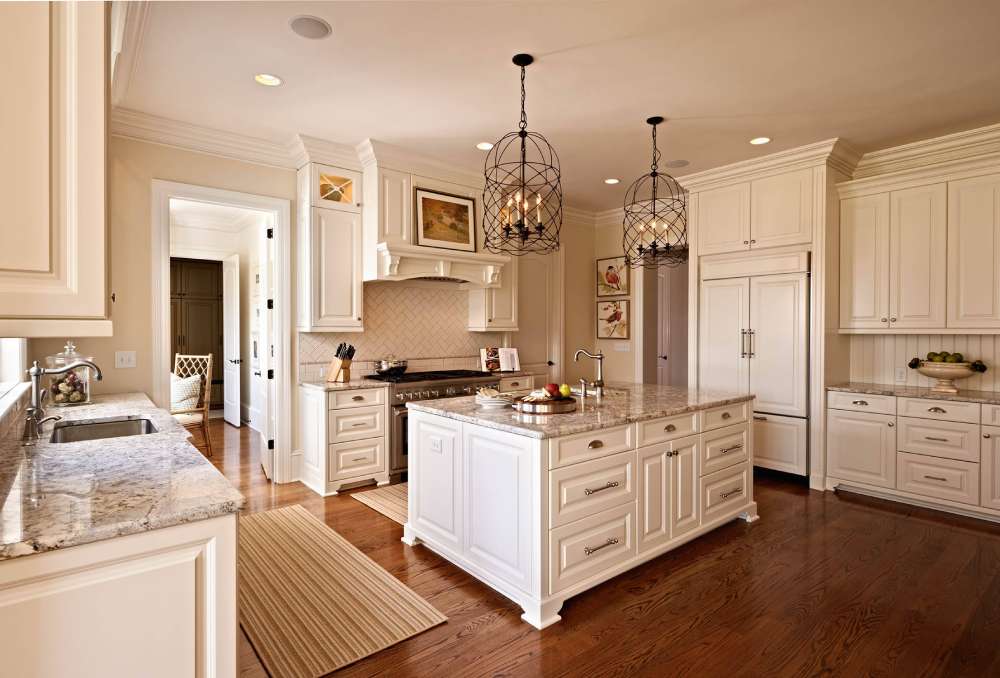
White Kitchen Cabinets With Herringbone Backsplash
Image source: Carolina Design Associates, LLC

A white kitchen with herringbone backsplash is a kitchen design that pairs white cabinetry with rectangular tiles arranged in a V-shaped, staggered pattern on the wall behind the countertop and cooking area.

The herringbone layout gets its name from the skeleton of a herring fish. Rectangular tiles sit at 90-degree angles to each other, creating a zigzag that runs vertically or diagonally across the wall surface.

White cabinets act as a neutral base. The herringbone tile pattern adds visual texture without competing for attention. That combination is why you see it in so many kitchen renovations right now, and honestly, for good reason.

This pairing works across multiple interior design styles, from clean modern spaces to warm country layouts. The white cabinet finish reflects light and makes rooms feel larger, while the angled tile arrangement gives the wall surface enough movement to keep things from looking flat or sterile.

Most herringbone backsplash installations use ceramic, porcelain, marble, or glass tiles. The tile material changes the overall feel of the kitchen drastically. Marble reads high-end. Ceramic keeps things simple and budget-friendly.

The wall area between the upper cabinets and countertop is where the backsplash sits. It protects the wall from cooking splashes and water damage while serving as the kitchen’s main decorative surface.

How Does a Herringbone Pattern Differ from Chevron in a Kitchen Backsplash

People mix these two up constantly. Herringbone and chevron look similar from across the room, but they are different tile patterns with different cuts and different visual effects.

Herringbone tiles are rectangular with 90-degree edges. Each tile meets the next at a right angle, producing a staggered, broken zigzag. The ends of the tiles create a jagged edge along the pattern line.

Chevron tiles have their ends cut at a 45-degree angle. When placed together, the angled cuts form a continuous, clean V-shape with no stagger. The result is a smoother, more uniform zigzag.

Here is the practical difference:

  • Herringbone produces a knitted, woven look with visible offsets at each row
  • Chevron creates sharp, unbroken V-lines running down the wall
  • Herringbone uses standard rectangular subway tiles; chevron requires specially cut tiles
  • Chevron typically costs more because of the precision cuts involved

For white kitchen cabinets, herringbone tends to work better. The staggered pattern adds just enough complexity without overwhelming a clean white kitchen. Chevron can feel busier, especially in a smaller space.

Herringbone also gives you more flexibility with tile size. You can use 1×3, 2×4, 2×6, or even 3×6 subway tiles. Chevron locks you into specific dimensions because the angle cuts need to align perfectly.

Both patterns use line and direction to create movement on a flat wall. But herringbone does it with standard materials, which makes installation simpler and less expensive overall.

Which Tile Materials Work Best for a White Herringbone Backsplash

The tile material you choose changes the entire look and feel of the kitchen. Same white color, same herringbone layout, completely different result depending on whether you go with ceramic, porcelain, marble, or glass.

Each material has different price points, maintenance requirements, and visual characteristics. Your decision should come down to budget, kitchen style, and how much upkeep you are willing to handle.

Ceramic Herringbone Backsplash Tiles


Image source: Jennifer Grey Color Specialist & Interior Design

Ceramic is the most affordable option for a white herringbone backsplash, typically running $2 to $8 per square foot. It comes in glossy, matte, and handmade finishes that pair well with white shaker cabinets.

The downside is that ceramic chips more easily than porcelain and absorbs more moisture over time. But for a backsplash (not a floor), that is rarely a problem in practice.

Porcelain Herringbone Backsplash Tiles

Porcelain is denser, harder, and more water-resistant than ceramic. It costs a bit more, usually $3 to $12 per square foot, but requires no sealant and handles heat well behind a stove.

A glossy white porcelain herringbone tile reflects light across the kitchen surface. Matte porcelain gives a softer, more contemporary feel.

Marble Herringbone Backsplash Tiles

Carrara marble and Calacatta marble are the two most common choices for white herringbone backsplashes. Carrara has subtle gray veining on a white base. Calacatta shows bolder, more dramatic veins and costs significantly more.

Marble needs sealing every 6 to 12 months. It stains from acidic liquids like lemon juice and tomato sauce if left sitting on the surface. Worth it for the look, but know what you are getting into.

Most marble herringbone tiles come as pre-mounted mosaic sheets (typically 12×12 inches), which actually makes installation faster than individual tile pieces.

Glass Herringbone Backsplash Tiles

White Kitchen Cabinets With Herringbone Backsplash
Image source: Cornerstone Construction and Property Services

Glass tiles catch and reflect light better than any other material. A white glass herringbone backsplash makes a small kitchen look noticeably bigger and brighter.

They are non-porous, stain-proof, and easy to wipe clean. The tricky part is that glass shows every imperfection in the wall behind it. Your wall surface needs to be perfectly flat, or the flaws will show through the translucent material.

What White Cabinet Styles Pair with a Herringbone Backsplash

Not all white cabinets are the same. The cabinet door profile changes how the herringbone pattern reads in the space. A detailed raised-panel door with a busy herringbone can look cluttered. A flat-panel door with the same tile can look sharp and intentional.

The key is matching the level of detail in the cabinet to the scale and texture of the backsplash tile.

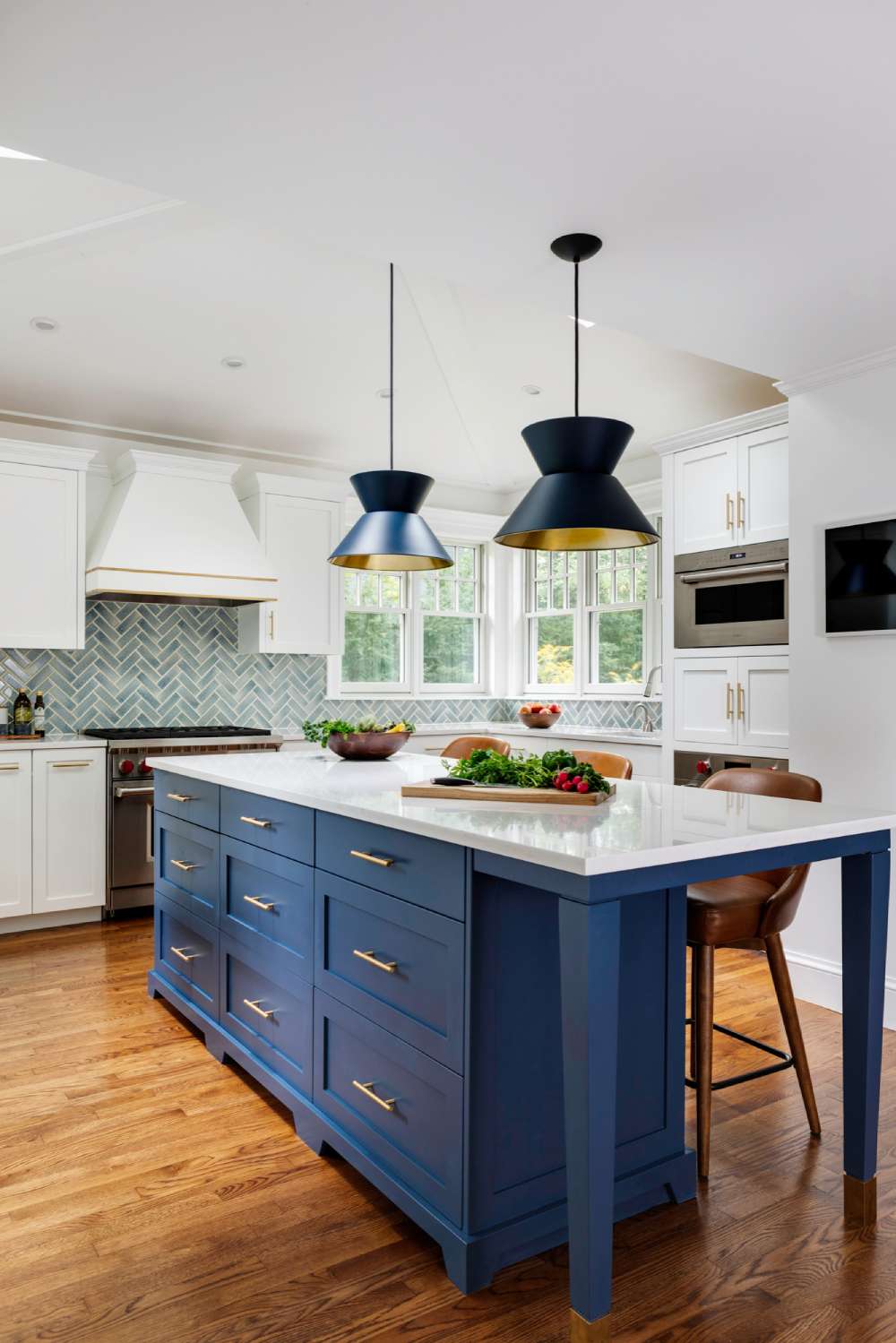
White Shaker Cabinets with Herringbone Backsplash


Image source: Anderson & Rodgers Construction

This is the most popular combination right now, and it has been for a few years. White shaker cabinet doors have a simple recessed center panel and clean lines that let the herringbone pattern stand out without visual competition.

Works in farmhouse, transitional, and modern kitchens equally well. Pair with brushed nickel pulls for a classic look, or matte black hardware for something more current.

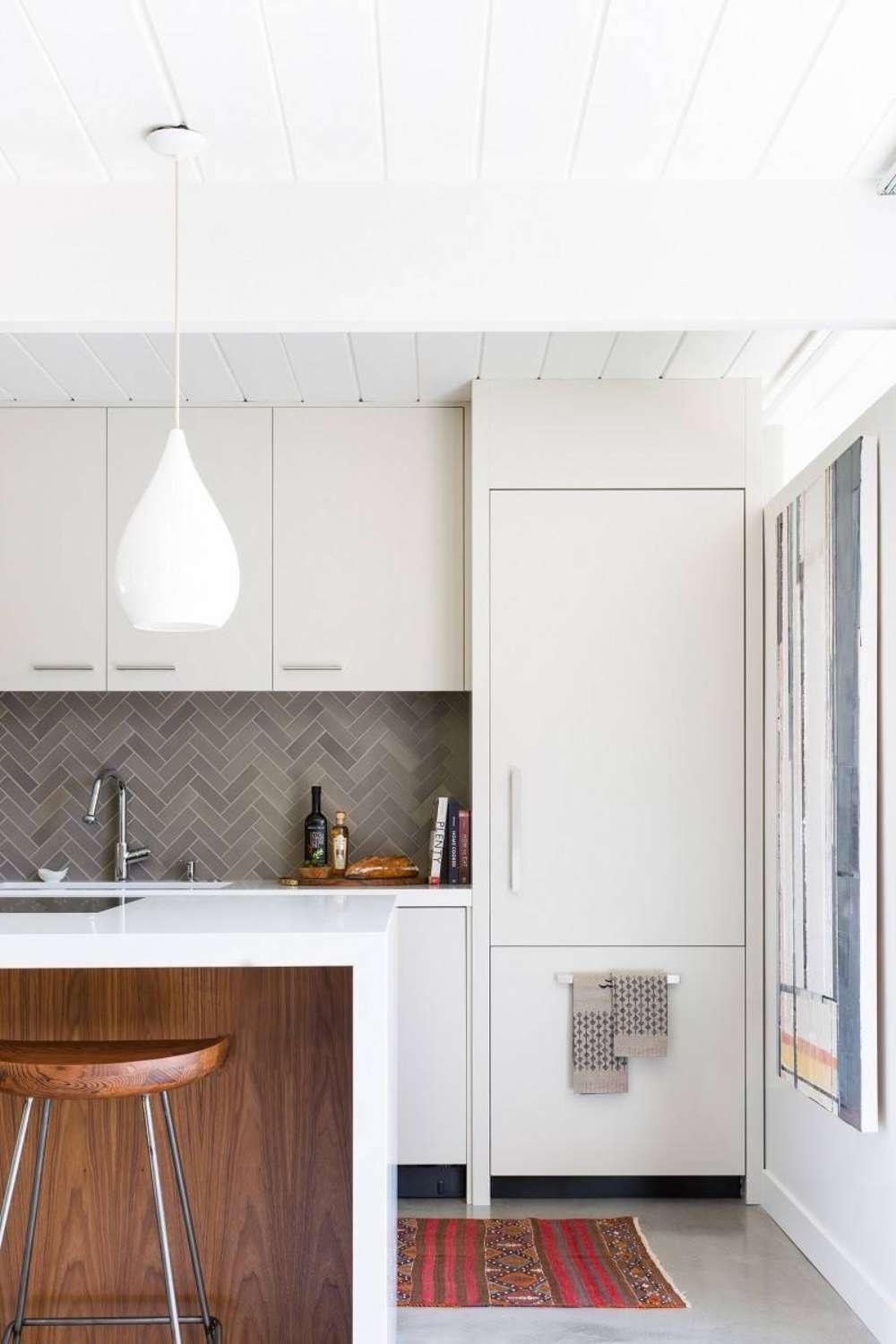
White Flat-Panel Cabinets with Herringbone Backsplash


Image source: Morrison Design House

Flat-panel (slab) doors have zero ornamentation. The smooth, uninterrupted surface puts all the visual attention on the herringbone tile behind it.

This pairing leans modern or minimalist. If you want the backsplash to be the focal point of the kitchen, flat-panel cabinets are the way to go.

White Raised-Panel Cabinets with Herringbone Backsplash

Raised-panel doors carry more visual weight. The frame and raised center panel add their own detail, which can compete with a herringbone layout.

Best paired with a larger herringbone tile (2×6 or 3×6) to keep the wall from looking too busy. This combination reads traditional and works well in kitchens with crown molding and decorative range hoods.

What Countertop Materials Complement White Cabinets and Herringbone Tile

The countertop sits right between the cabinets and the backsplash. It connects both elements visually. A bad countertop choice can disconnect the entire design, even if the cabinets and tile look great individually.

Most designers pick countertops based on how they interact with the colors and finishes already in the space. With a white cabinet and white herringbone backsplash, you have a lot of room to play with countertop material and tone.

Quartz Countertops with White Cabinets and Herringbone Backsplash

White Kitchen Cabinets With Herringbone Backsplash
Image source: LDa Architecture & Interiors

Quartz countertops are engineered stone, made from roughly 90% ground quartz mixed with resin. They come in consistent colors and patterns, which makes matching to your tile and cabinets predictable.

White or gray-veined quartz (like Calacatta-style options from Caesarstone or Silestone) pairs cleanly with a white herringbone backsplash. No sealing required. Stain-resistant. Took me a while to come around on quartz over natural stone, but for most kitchens it just makes sense.

Marble Countertops with White Cabinets and Herringbone Backsplash


Image source: JM Kitchen & Bath Design

Marble countertops and a marble herringbone backsplash together create a luxury kitchen look. The veining in the countertop can echo or contrast the backsplash tile, depending on the specific stone you select.

It etches. It stains. And it still remains one of the most requested countertop surfaces in high-end kitchen renovations. If you go marble on both surfaces, use a honed finish on the countertop and a polished finish on the backsplash (or vice versa) to create visual separation.

Granite Countertops with White Cabinets and Herringbone Backsplash

Granite adds natural variation that white cabinets with granite countertops have always delivered well. Each slab is unique. Speckled patterns in gray, black, or brown granite break up the all-white look without adding a different color family.

Darker granite (like Absolute Black or Steel Gray) creates a strong horizontal line between white cabinets above and below. That kind of balance keeps the kitchen from washing out into one flat tone.

Butcher Block Countertops with White Cabinets and Herringbone Backsplash


Image source: Sarah Jones Design

Wood countertops bring warmth into an otherwise cool, all-white kitchen. Butcher block in walnut, maple, or oak adds an organic layer that softens the geometric precision of herringbone tile.

This combination is a farmhouse kitchen staple. It works because the wood grain introduces a natural texture that plays off the angular tile pattern. The harmony between the two materials comes from their shared sense of craft and handmade quality.

Butcher block does need regular oiling and can scratch. Most people use it on an island or a secondary prep area rather than as the primary countertop surface.

What Grout Color Should You Use with a White Herringbone Backsplash


Image source: Roomba interior

Grout color controls how much the herringbone pattern shows. The wrong grout choice can flatten the entire design or make it look too aggressive. This is one of those decisions that seems small but changes everything once the tile is up on the wall.

White Grout on White Herringbone Tile

White grout on white tile creates a seamless, monochromatic surface where the herringbone pattern is visible only through subtle shadow lines and tile edges. Clean, quiet, and minimalist in feel.

Black Grout on White Herringbone Tile

Black grout turns the herringbone into a bold graphic element, outlining every single tile and making the zigzag pattern impossible to miss. High emphasis, high drama. Looks best with flat-panel or slab cabinets that can handle the visual weight.

Gray Grout on White Herringbone Tile

Gray grout is the middle ground most people land on. It defines the herringbone pattern clearly without the stark contrast of black, and it hides dirt and discoloration better than white grout over time.

What Tile Sizes Are Available for Herringbone Backsplash Layouts

Tile size changes the scale of the herringbone pattern, which directly affects how the backsplash reads in the room. Smaller tiles produce a tighter, more intricate zigzag. Larger tiles create a bolder, more relaxed pattern.

Common sizes for herringbone backsplash tile:

  • 1×2 inch mosaic sheets, pre-mounted on mesh backing for fast installation
  • 1×3 inch mini herringbone, popular in Carrara and Calacatta marble mosaics
  • 2×4 inch subway tile, a good balance between detail and simplicity
  • 2×6 inch elongated subway, produces a more stretched, modern zigzag
  • 3×6 inch standard subway tile, the classic choice for larger kitchens
  • 3×12 inch oversized format, minimal grout lines, clean contemporary look

Smaller mosaic tiles suit compact kitchens where a large-scale pattern would feel overwhelming. Larger format tiles work better in open-concept layouts where the backsplash covers a wide wall area.

The ratio matters too. The tile height should be evenly divisible by the width, or the pattern will not align correctly at the edges. Something I learned the hard way on a project years ago.

How Do You Choose Hardware for White Cabinets with Herringbone Backsplash

Cabinet hardware is the finishing detail that ties cabinets, backsplash, and countertop together. The finish you pick should respond to the other metal tones already in the kitchen, like faucets, light fixtures, and appliances.

Brass and Gold Hardware


Image source: Cottage Home Company

Brass pulls and knobs add warmth against white cabinetry and create a gold accent that pairs well with marble herringbone tile. Aged brass reads traditional; polished brass leans more glam.

Matte Black Hardware

Matte black pulls create clean contrast on white shaker cabinets. Especially strong when paired with black grout on the herringbone backsplash, tying both elements into a cohesive black accent thread throughout the kitchen.

Brushed Nickel and Stainless Steel Hardware

Brushed nickel and stainless steel are the safest options. They coordinate with stainless steel appliances, match most faucet finishes, and keep the kitchen looking unified without adding another competing metal tone.

Which Kitchen Styles Work with White Cabinets and Herringbone Backsplash

White cabinets and herringbone tile are not locked into one look. The surrounding materials, finishes, and fixtures determine the style. Same cabinet, same tile pattern, three completely different kitchens depending on what else is in the room.

Modern Kitchen with White Cabinets and Herringbone Backsplash

White Kitchen Cabinets With Herringbone Backsplash
Image source: LMB Interiors

Flat-panel white cabinets, a large-format porcelain herringbone tile, quartz countertops, and streamlined hardware. No ornamental details. Modern kitchens rely on clean geometry, and the herringbone pattern provides just enough visual interest without clutter.

Farmhouse Kitchen with White Cabinets and Herringbone Backsplash

White shaker cabinets, a ceramic herringbone backsplash, butcher block countertops, and oil-rubbed bronze hardware. Add a rustic wood range hood and an apron-front sink. The herringbone tile gives the space a handcrafted quality that fits the farmhouse look naturally.

Transitional Kitchen with White Cabinets and Herringbone Backsplash

White Kitchen Cabinets With Herringbone Backsplash
Image source: Pamela Chelle Interior Design

Transitional sits between traditional and modern. White shaker or raised-panel cabinets, marble herringbone backsplash, gray quartz countertops, and brushed nickel hardware. The mix of classic materials with simpler profiles is what makes transitional spaces work.

How Do You Install a Herringbone Backsplash Behind White Kitchen Cabinets

Herringbone installation is more involved than a standard subway tile layout. The angled placement means more cuts, more planning, and more time. Budget about 30% more labor compared to a straight horizontal tile job.

Preparing the Wall Surface

The wall behind the backsplash area needs to be flat, clean, and primed. Install cement backerboard over drywall in areas behind the stove and sink for better moisture protection and tile adhesion.

Laying Out the Herringbone Pattern

Find the centerline of the wall first. Dry-lay several rows of tile on the counter or floor to verify the pattern before applying any thinset mortar. Starting from center and working outward keeps the pattern symmetrical on both sides.

Cutting Tiles at the Edges

Every herringbone backsplash needs angled cuts where the pattern meets the edges of the wall, the countertop line, and the bottom of the upper cabinets. A wet tile saw with a sliding table handles these cuts cleanly. Budget for 10-15% extra tile to account for waste from edge cuts.

Grouting a Herringbone Backsplash

Apply grout with a rubber float at a 45-degree angle to the tile joints. Herringbone has more grout lines per square foot than standard layouts, so the process takes longer. Use a grout sealer after curing, especially on cement-based grout, to prevent staining and moisture absorption.

How Much Does a White Herringbone Backsplash Cost

Cost depends on tile material, kitchen size, and whether you hire a professional or do it yourself. A typical kitchen backsplash covers 25 to 40 square feet.

Tile Cost per Square Foot by Material

  • Ceramic: $2 to $8 per square foot
  • Porcelain: $3 to $12 per square foot
  • Glass: $7 to $20 per square foot
  • Marble mosaic: $10 to $35 per square foot
  • Calacatta marble: $25 to $50+ per square foot

Pre-mounted mosaic sheets (common for marble and glass herringbone) cost more per square foot but save significantly on labor time. If you want a full breakdown of backsplash costs, material is only part of the equation.

Labor and Installation Cost

Professional tile installation for herringbone runs $10 to $25 per square foot, depending on your area and the tile material. That is roughly 20-30% higher than standard subway tile installation because of the additional cuts and layout complexity.

Total project cost for a 30 square foot herringbone backsplash:

  • Budget ceramic: $360 to $990 installed
  • Mid-range porcelain: $390 to $1,110 installed
  • Marble mosaic: $600 to $1,800 installed
  • Premium Calacatta marble: $1,050 to $2,250+ installed

Add $30 to $60 for grout, thinset mortar, tile spacers, and a grout sealer. These are small costs that people forget to include in their initial estimate.

How Do You Clean and Maintain a White Herringbone Backsplash

White tile shows grease, splatters, and discoloration faster than darker options. Keeping it looking fresh requires regular cleaning, but nothing complicated.

For daily cleaning, wipe the tile surface with a soft cloth and warm water mixed with a few drops of dish soap. Avoid abrasive cleaners on glossy or polished tiles because they scratch the finish over time.

Grout maintenance is the bigger concern. White and light gray grout absorbs oil and cooking residue, especially near the stove area. Apply a penetrating grout sealer once a year to prevent staining.

If grout has already discolored, use a baking soda and water paste applied with a stiff brush. Oxygen bleach (like OxiClean) mixed with warm water works on stubborn stains without damaging the tile or grout.

Marble herringbone backsplash tiles need extra care. Seal the stone surface every 6 to 12 months with a stone-specific impregnating sealer. Avoid acidic cleaners (vinegar, lemon, anything citrus-based) because they etch the marble surface permanently.

Glass and porcelain tiles are the easiest to maintain. Non-porous surfaces resist staining, and a simple wipe-down after cooking keeps them spotless. The grout between the tiles still needs attention, though.

One more thing. If you are dealing with caulk along the backsplash edges (where tile meets countertop or cabinets), check it annually. Caulk cracks and peels over time, and gaps let moisture behind the tile.

FAQ on White Kitchen Cabinets With Herringbone Backsplash

Is herringbone backsplash outdated?

No. Herringbone is a centuries-old tile pattern that predates most interior design history trends. It cycles in and out of peak popularity, but it never disappears. The pattern works across farmhouse, modern, and transitional kitchens, which keeps it relevant regardless of current trends.

What is the best tile material for a white herringbone backsplash?

Porcelain offers the best balance of durability, water resistance, and cost. Marble looks more upscale but needs regular sealing. Ceramic works well on a budget. Glass reflects light best in small kitchens. Your choice depends on budget and maintenance tolerance.

Does herringbone backsplash cost more to install than subway tile?

Yes. Herringbone installation runs 20-30% higher than standard subway tile layouts. The angled placement requires more precise cuts at every edge and corner. Labor averages $10 to $25 per square foot depending on tile material and your location.

What grout color looks best with white herringbone tile?

Gray grout is the most popular choice. It defines the herringbone pattern without the harshness of black and hides dirt better than white. Black grout creates a bold graphic look. White grout gives a seamless, minimalist finish.

Can you install herringbone backsplash as a DIY project?

Pre-mounted mosaic mesh sheets (1×2 or 1×3 inch tiles) make DIY installation manageable. Individual tile herringbone is harder because each piece must be placed at the correct angle. A wet tile saw is necessary for clean edge cuts on both approaches.

What countertop pairs best with white cabinets and herringbone backsplash?

Quartz countertops in white or gray tones are the most practical pairing. Marble adds luxury but stains easily. Granite brings natural variation. White cabinet kitchens work with nearly any countertop material because the neutral base does not compete.

Should the herringbone pattern run vertically or diagonally?

Vertical herringbone is the standard orientation and draws the eye upward, making ceilings feel taller. Diagonal (45-degree) herringbone adds more visual movement but requires additional tile cuts. Vertical is easier to install and works better in most kitchen layouts.

What cabinet hardware works with a white herringbone kitchen?

Brushed nickel and stainless steel coordinate with most appliances. Matte black hardware adds modern contrast on white shaker cabinets. Brass or gold-toned pulls pair well with marble herringbone tile for a warmer, more refined look.

How do you keep white herringbone backsplash tile clean?

Wipe tile with warm water and dish soap after cooking. Seal grout lines once a year to prevent grease absorption. Marble tiles need a stone-specific impregnating sealer every 6 to 12 months. Avoid acidic cleaners on natural stone surfaces.

Does a herringbone backsplash work in a small kitchen?

Yes. White herringbone tile reflects light and adds depth without shrinking the visual space. Use smaller mosaic tiles (1×2 or 1×3 inch) to keep the pattern proportional. White grout on white tile creates an airy, open effect in compact kitchens.

Conclusion

White kitchen cabinets with herringbone backsplash give you a design foundation that holds up across style changes and kitchen trends. The combination works because it balances a neutral cabinet finish with a tile layout that adds directional movement and surface texture to the wall.

Your results depend on the specific choices you make. Porcelain or ceramic for durability on a budget. Carrara marble for a refined, high-end surface. Gray grout to define the pattern, or white grout to keep it subtle.

Match your backsplash to white cabinets based on cabinet door profile, countertop material, and hardware finish. Every element should connect to the next.

Get the tile size right for your kitchen’s scale and proportion. Seal your grout. Budget for the extra labor that herringbone requires. Small decisions stack up into a kitchen that either feels considered or feels random.

Andreea Dima
Author

Andreea Dima is a certified interior designer and founder of AweDeco, with over 13 years of professional experience transforming residential and commercial spaces across Romania. Andreea has completed over 100 design projects since 2012. All content on AweDeco is based on her hands-on design practice and professional expertise.

Pin It