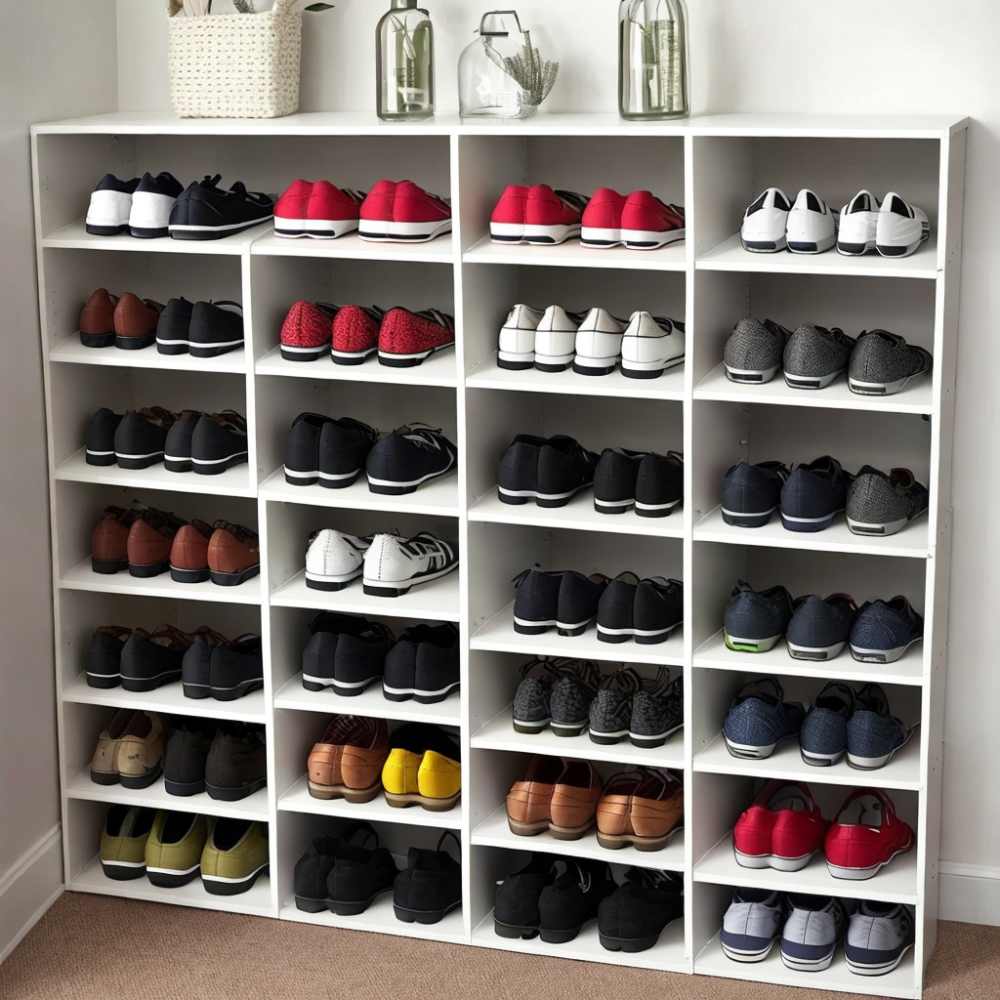
IKEA decor ideas
IKEA Craft Room Ideas for a Productive Space
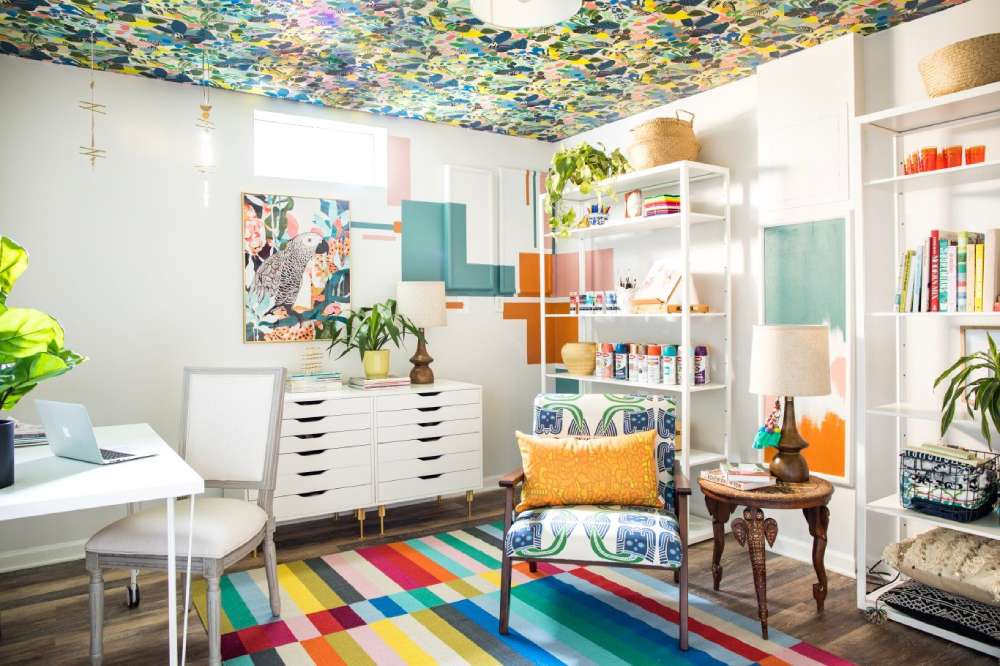
IKEA craft room ideas come down to five product lines: KALLAX cubes, SKADIS pegboards, ALEX drawer units, RASKOG carts and LAGKAPTEN tabletops. The ones below are chosen by published load ratings and current US prices, not by photo appeal.
Crafters use them in corners, closets and spare bedrooms for sewing, scrapbooking, cutting machines, yarn and paint.
A working starter pair, a 30 1/8 inch KALLAX and a 47 1/4 inch LAGKAPTEN/ADILS desk, totals $109.98 at IKEA US list prices (IKEA, September 2026).
One rule from IKEA’s own instructions most roundups skip: every KALLAX unit must be anchored to the wall, which decides where the cubes can stand.
For the other rooms these product lines furnish, see our IKEA ideas for every room.
Which IKEA products work best in a craft room?
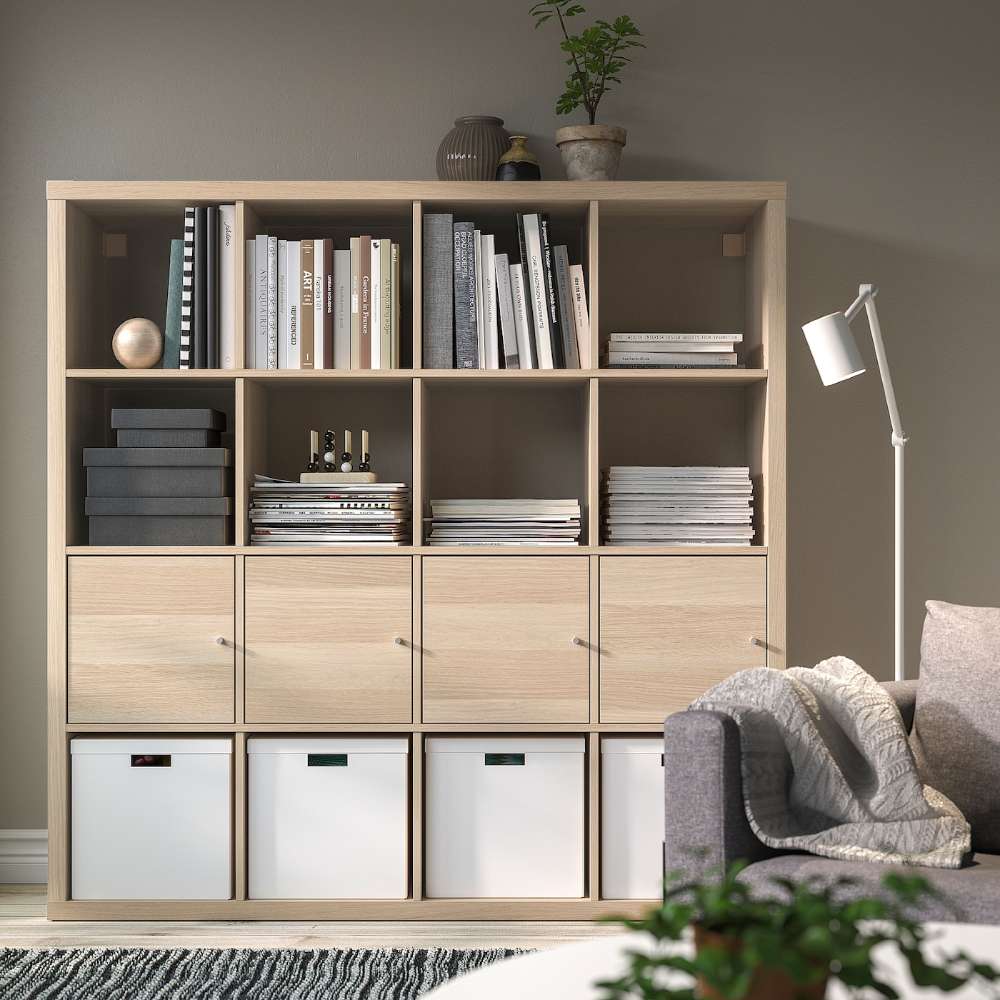
Five IKEA lines cover most craft rooms: KALLAX for cubes, SKADIS for the wall, ALEX for drawers, RASKOG for rolling storage, and LAGKAPTEN for work surfaces.
Everything else plays a supporting role. MOSSLANDA picture ledges hold paint, stamps and paper rolls, DRONA boxes drop into KALLAX cubes for yarn and fabric scraps, and a PAX frame becomes a supply closet when a full wall is free.
| Series | What it is | Best craft use |
|---|---|---|
| KALLAX | Cube shelving, stands or lies flat | Paper, fabric, yarn, bins |
| SKADIS | Perforated wall board with hooks and containers | Scissors, rulers, ribbon, hand tools |
| ALEX | Drawer unit, finished on the back | Small parts, desk base, cutting station |
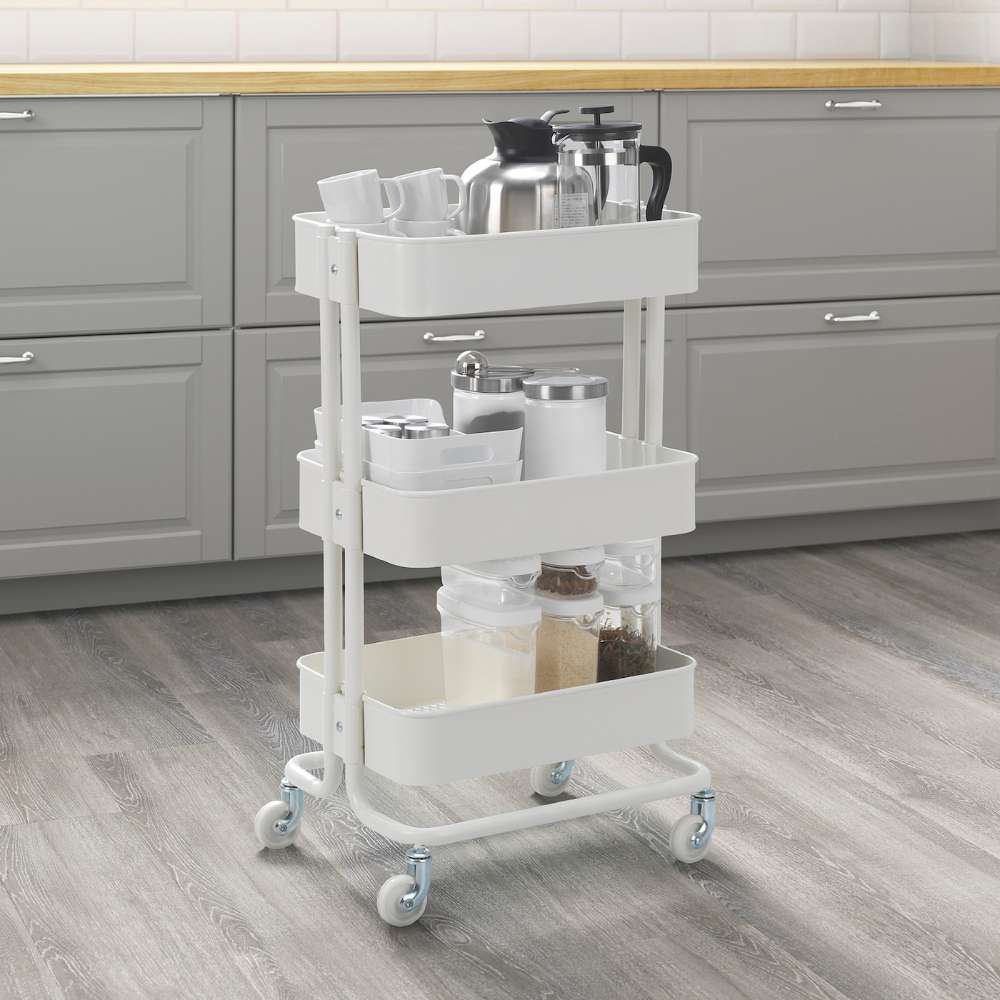
| RASKOG | Three-tier metal cart on casters | Project kits that move between rooms |
| LAGKAPTEN | Tabletop with pre-drilled leg holes | Cutting, sewing and paper-crafting surface |
IKEA’s own US product pages (September 2026) set the limits that matter when you plan around these lines:
- KALLAX shelf: 29 lb per shelf, 55 lb on the top
- KALLAX cube opening: 13 x 13 inches, wide enough for 12 x 12 inch scrapbook paper
- SKADIS pegboard: 22 x 22 inches at $24.99
- ALEX unit: 26 lb in total, 9 lb per drawer
- RASKOG cart, large size: 40 lb in total, 13 lb per tier
One trap with older tutorials. The EXPEDIT shelves in many of them are the unit KALLAX replaced (Craft Industry Alliance).
How to plan a craft room layout around IKEA furniture

Split the room into four zones: an active zone within arm’s reach of your chair, bulk storage, a display wall, and a machine station. The things you grab every few minutes sit closest to the chair.
- Active zone: scissors, glue and markers on a SKADIS board or in the top ALEX drawers
- Bulk storage: KALLAX cubes with boxes for paper, fabric and yarn
- Display wall: LACK shelves or MOSSLANDA ledges for finished projects
- Machine station: Cricut, Silhouette, Sizzix or a sewing machine on a fixed surface
Standard space planning logic applies here. Fix the machine station first, because it needs an outlet and a stable surface, then bend the rest of the room around it.
Small spaces and closets
A closet or corner gets by on three moves.
- Take storage off the floor with a wall-hung KALLAX or a SKADIS board
- Park a small RASKOG cart under the work surface (IKEA says the compact size fits under most tables and desks)
- Choose a shallow tabletop over a deep one
Check the wall before you fill wall-hung cubes with paper. IKEA states that the load a wall-hung KALLAX frame carries depends on the wall material.
Spare bedrooms and shared rooms
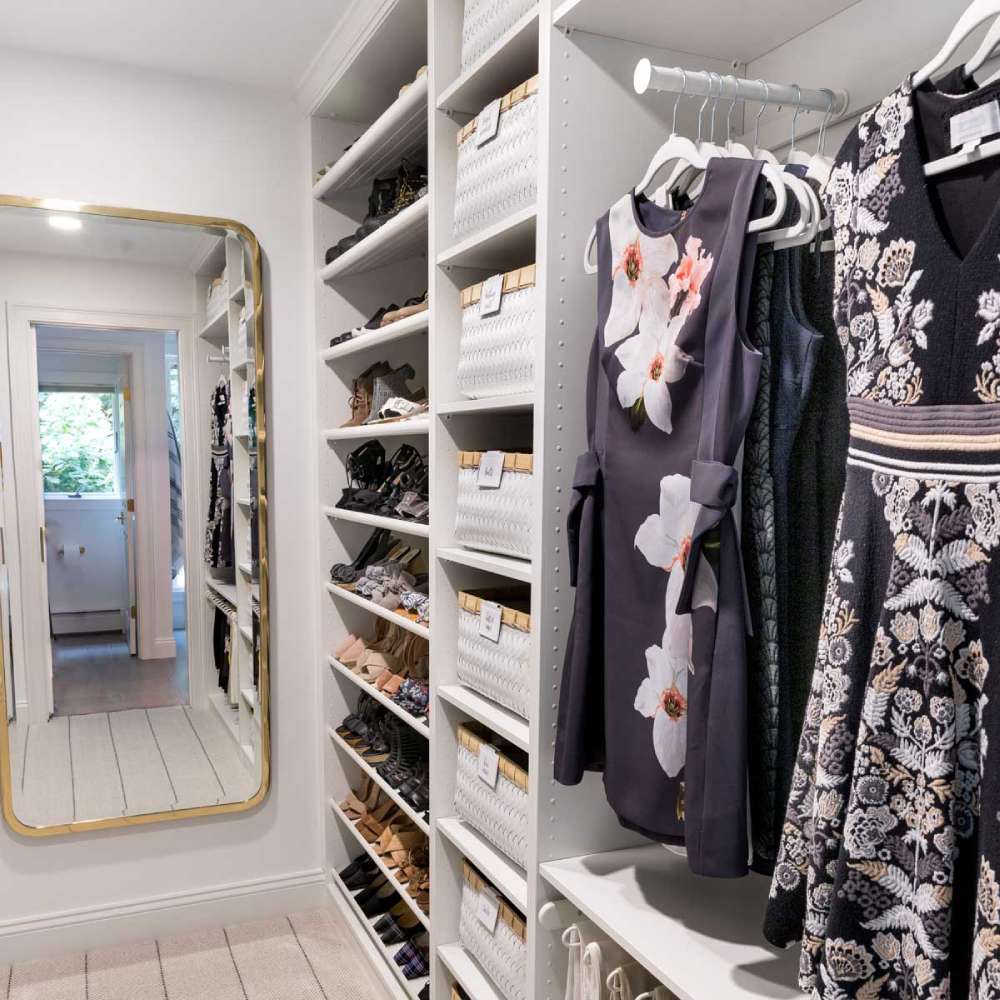
Closed storage decides whether a spare bedroom can still be a bedroom.
Doors on a BRIMNES cabinet or a PAX frame hide supplies when guests stay. IKEA finishes the back of KALLAX inserts, so a cube unit also works as a divider between craft space and sleeping area, and there are more ways to divide a room with IKEA pieces if the layout needs it.
Which IKEA storage type suits which supplies?
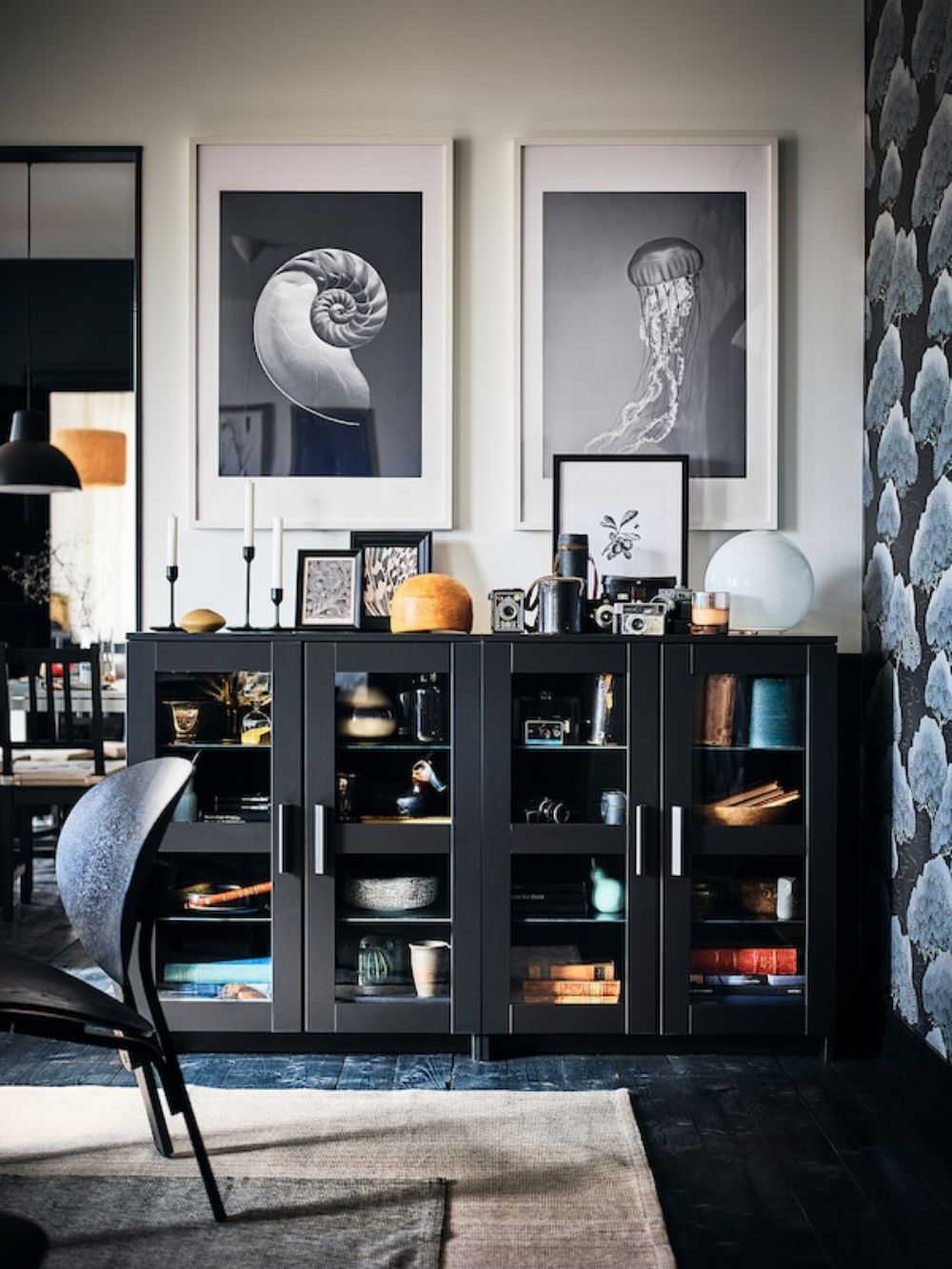
Weight and size decide. Heavy, bulky supplies go in cubes, and light, small ones go on the wall.
- Paper, fabric, yarn and vinyl rolls: open KALLAX cubes, with DRONA boxes where a tidy look matters
- Scissors, rulers, ribbon and hand tools: SKADIS hooks and containers
- Punches, embellishments, small parts: ALEX drawers or a KALLAX drawer insert
- Project kits: a RASKOG cart
- Anything that looks messy: a KALLAX door insert or a closed cabinet
IKEA’s load ratings rule out a few popular habits. A KALLAX shelf carries more than three times what an ALEX drawer does, so paint bottles and stamp blocks belong in cubes, not drawers.
A RASKOG tier holds less than half a KALLAX shelf. It suits a project kit, not a stack of fabric bolts.
Emmely at Infectious Stitches joined a RASKOG cart and a SKADIS board into a sewing cart that stores her cutting rulers (Craft Industry Alliance).
Stack vertically before adding floor units in a tight room. Pegboard and ledges cost no floor space, and a few storage ideas built for small spaces show what else fits on a wall.
How to build a craft table or desk from IKEA parts
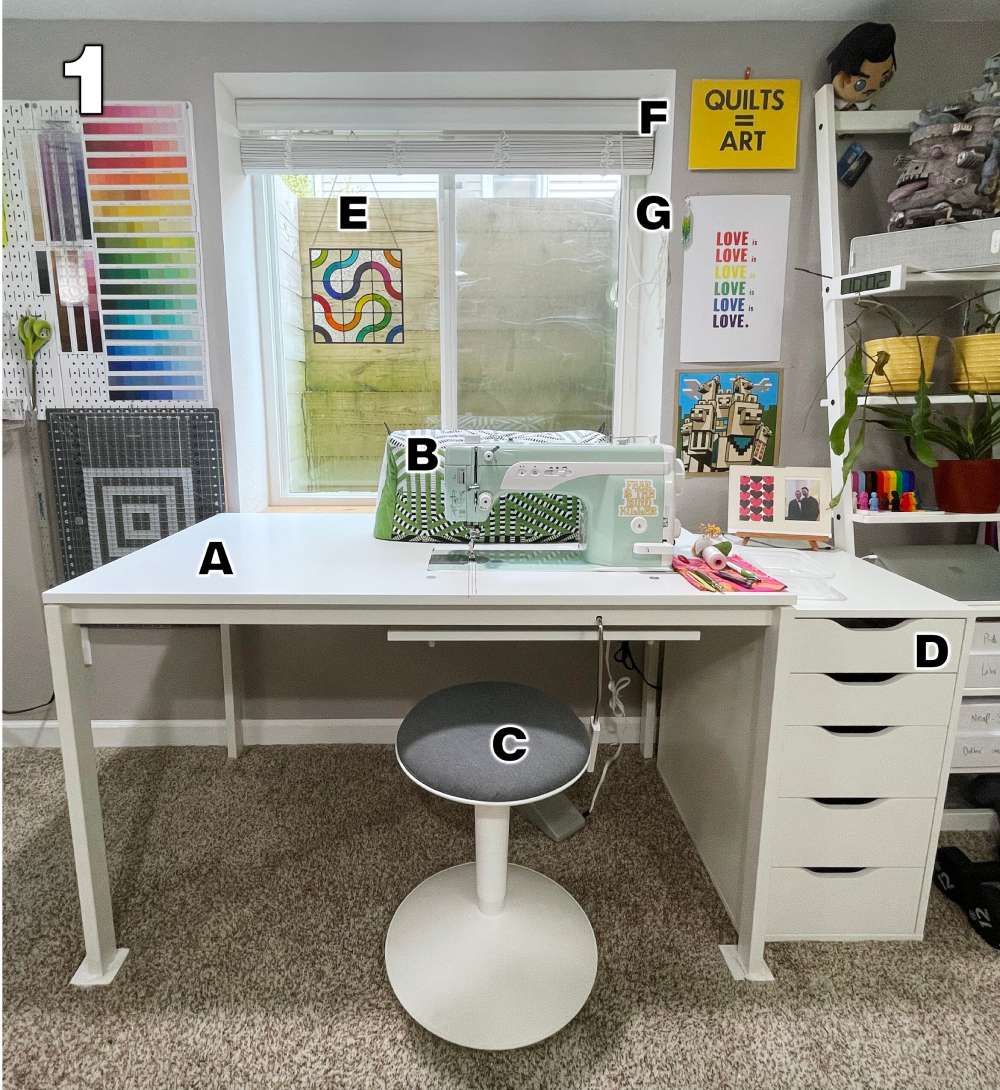
Set a LAGKAPTEN tabletop on ALEX drawer units or KALLAX cubes, then match the height and depth to the craft.
Older tutorials call the top LINNMON. IKEA replaced it with LAGKAPTEN, which uses the same recycled paper honeycomb core (Interior Insider).
Load is the number to check before a sewing machine or die-cutter goes on top. IKEA rates its LAGKAPTEN L-shaped desk combination at 110 lb max load.
ALEX and LAGKAPTEN builds
Two ALEX units carry the top at each end, which leaves drawers under the work surface. IKEA finishes the back of the ALEX, so the units can stand in the middle of the room as an island.
Pros
- Drawers sit right under the work surface
- Works as a freestanding island
- Top, legs and units are all standard IKEA parts
Cons
- Drawer load ratings are low for dense supplies
- Seated knee space shrinks as the units get wider
KALLAX-based tables
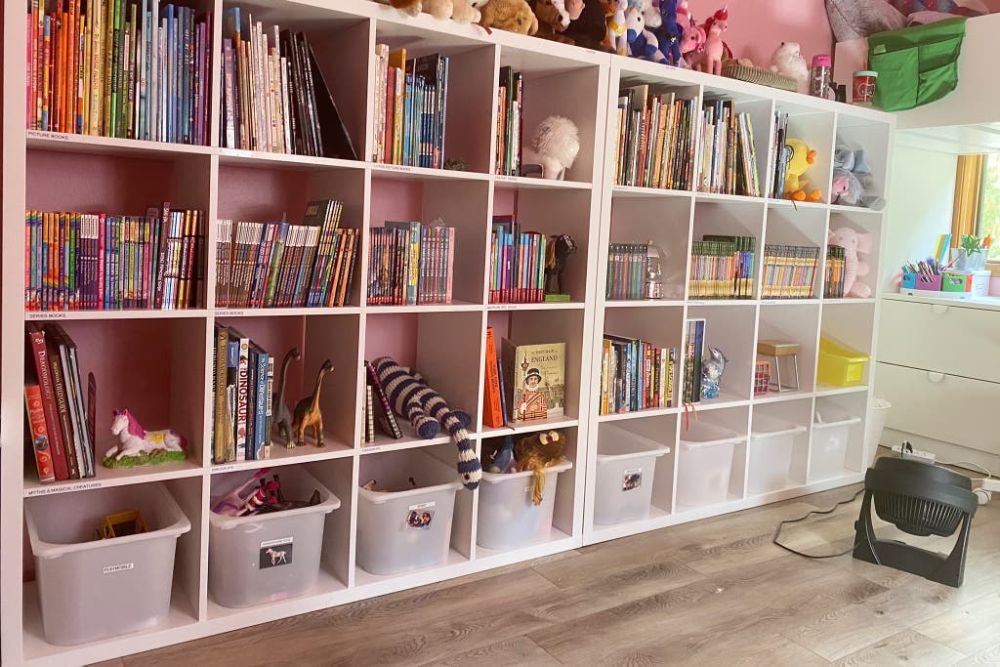
Cubes make a base that stores as much as it supports.
Kerry VanScoik built a mobile craft table from a 2×4 KALLAX on its side, with three sets of casters, two GERTON adjustable legs and a GERTON butcher block top (Jennifer Maker). Landeelu wanted counter height, so she combined a LINNMON top, a KALLAX unit and OLOV legs (Craft Industry Alliance).
Pros: open cubes on the side, casters make it movable, counter height is possible with legs.
Cons: a cube base leaves no knee room on that side, so it suits standing or perching work, not a seated one.
Adjustable-height desks
IKEA US lists electric sit/stand desks such as RODULF and IDASEN as of September 2026. They suit crafters who alternate between seated sewing and standing cutting.
| Pros | Cons |
|---|---|
| One surface serves seated and standing tasks | Sold as office desks and priced accordingly |
| No leg-height guesswork | Electronics add a part that can fail |
| Fits a single-desk room | No built-in storage, so carts and cubes come on top |
How to set up IKEA storage for each craft type
Each craft has a different first purchase: cubes for paper, a pegboard for sewing tools, rear clearance for a cutting machine, boxes and ledges for yarn and paint. Start with whatever you own the most of.
Scrapbooking and paper crafts
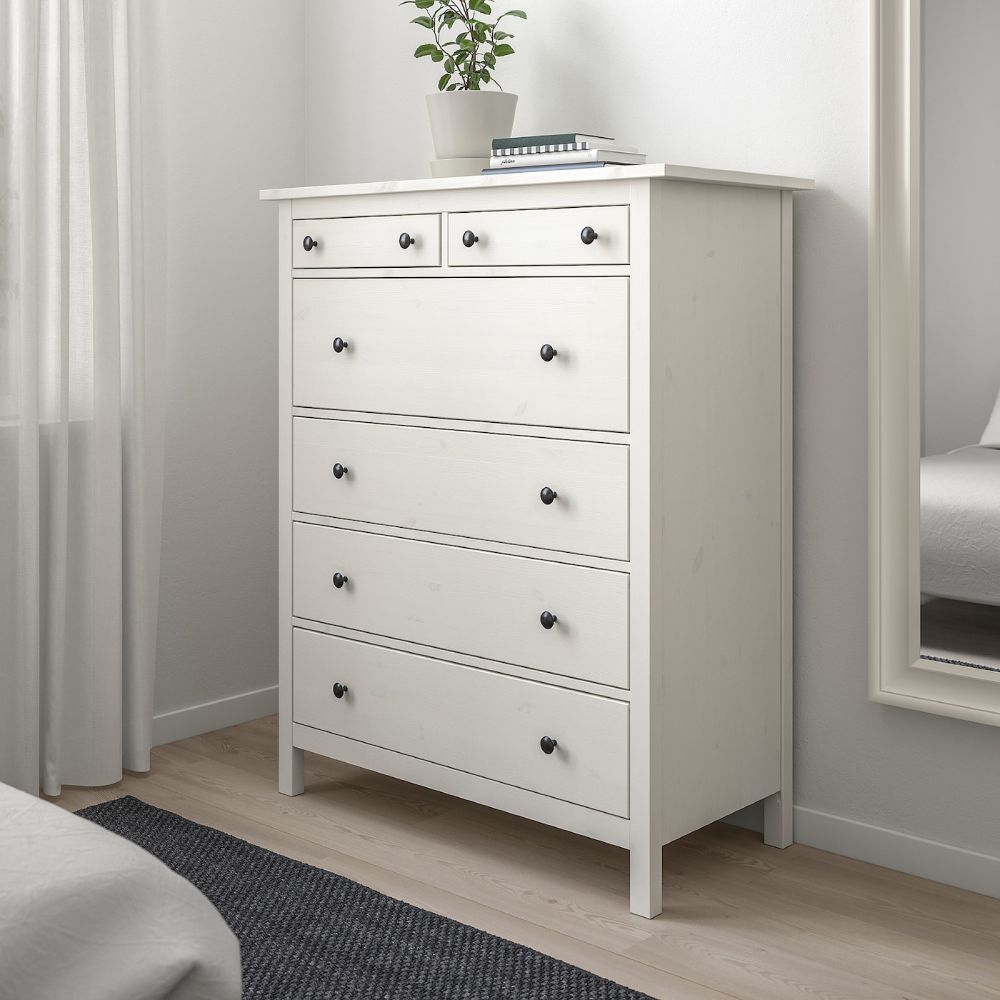
Scrapbook paper lies flat in a KALLAX cube. Shelf inserts split each cube into shorter stacks, so the bottom sheets are not buried under the rest.
- One cube per paper family: solids, patterns, cardstock
- Shelf inserts for thin stacks, open cubes for albums and punches
- A door insert on the cubes that hold the least attractive supplies
Sewing and fabric
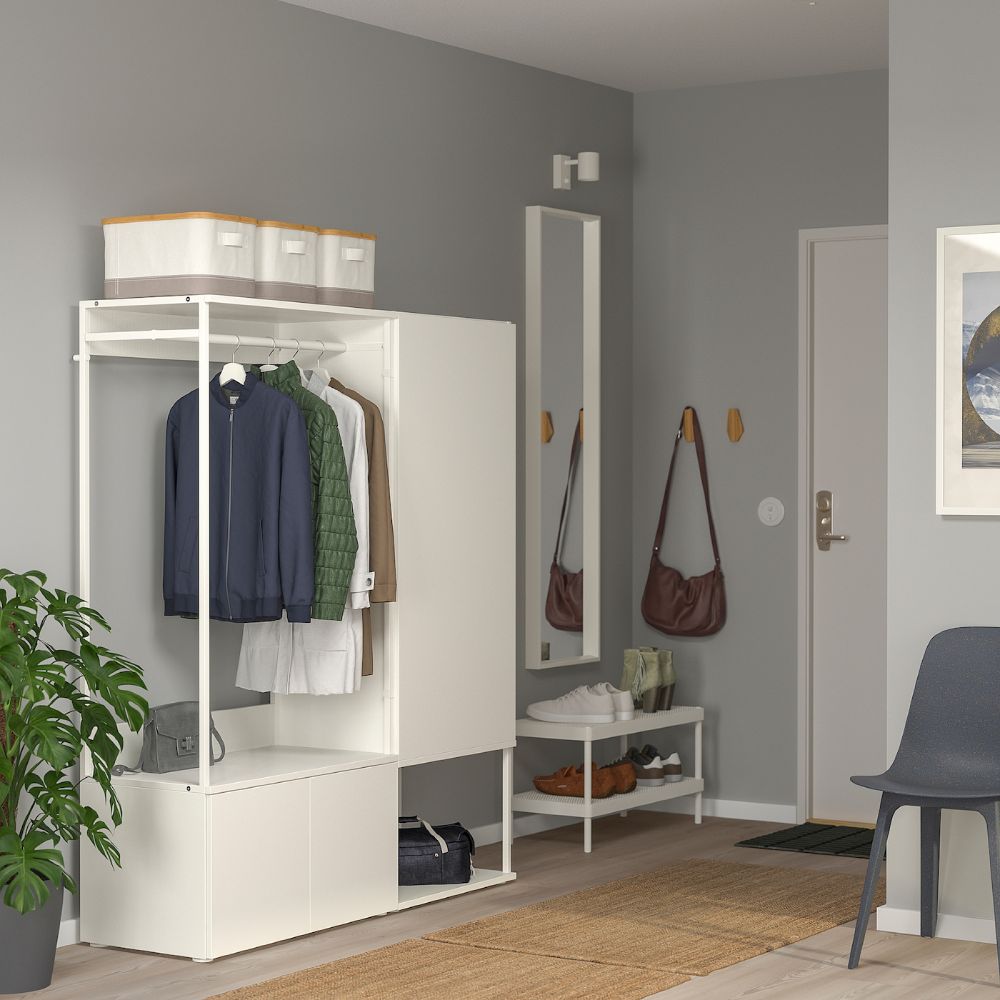
Cutting table: two KALLAX units under one wide top give measuring space with cubes underneath.
Thread and rulers: a SKADIS board within reach of the machine keeps them off the table.
Fabric: DRONA boxes in KALLAX cubes, sorted by color. IKEA lists the box at 13 x 15 x 13 inches and sizes it for KALLAX.
Taylor Made Creates runs a 5×5 KALLAX with white DRONA boxes and winds fabric samples around comic book boards to store them (IKEA Hackers).
Cricut, Silhouette and Sizzix stations
A cutting machine needs open space behind it more than storage beside it.
Cricut’s help center says to leave 10 inches behind the machine so material can feed through. A university makerspace guide (UNC Charlotte, Area 49) asks for 12 inches, so plan for 12.
The Cricut Maker 3 is 6.99 inches deep, per Cricut’s quick start guide. With 12 inches behind it, the machine claims about 19 inches of a 23 5/8 inch LAGKAPTEN top, which leaves under 5 inches in front.
Country Chic Cottage built a Cricut workstation from IKEA pegboards, vinyl storage and an ALEX drawer desk (The Crazy Craft Lady). A manual die-cutter such as the Sizzix Big Shot asks for less: a solid surface and nearby drawers for dies and cutting pads.
Yarn, paint and stamps
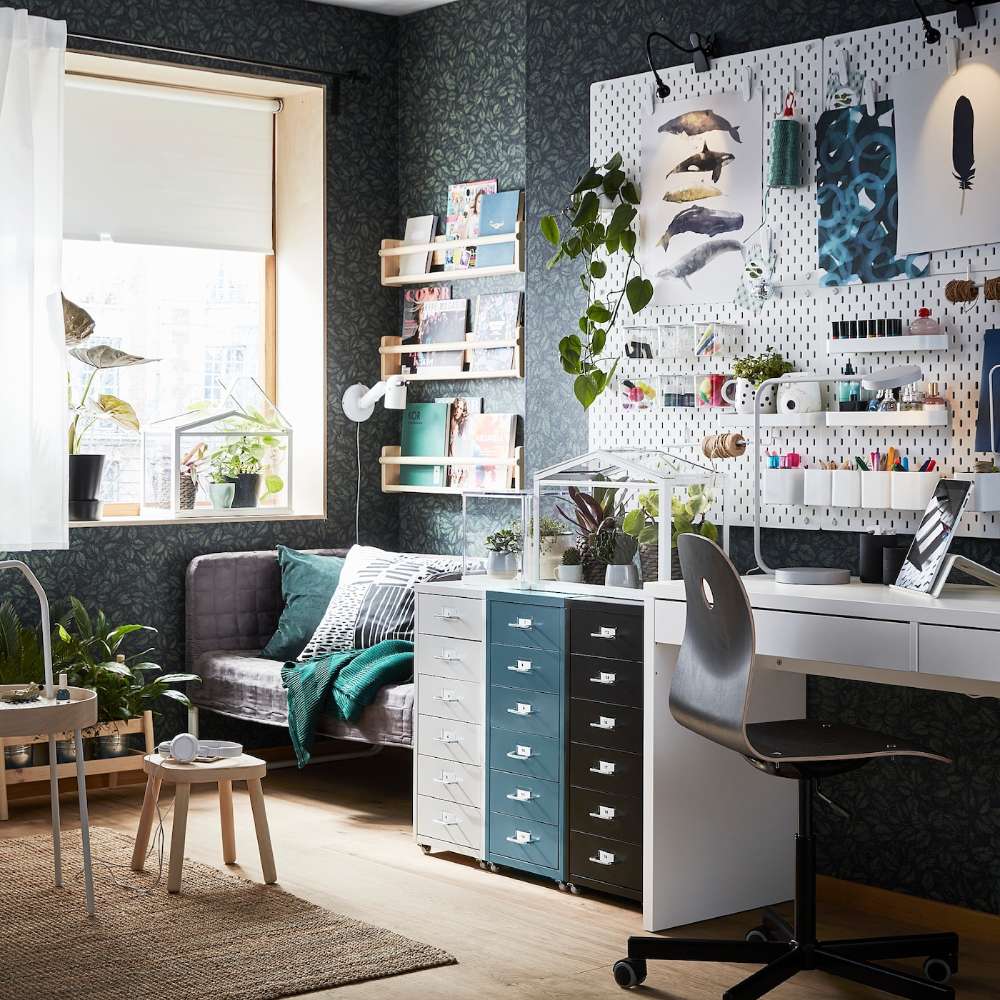
- Yarn goes in DRONA boxes, one box per project
- Paint bottles and stamp pads sit on MOSSLANDA ledges, labels facing out
- Third-party bottle inserts fit a KALLAX cube and hold 49 craft paint bottles (Craft Industry Alliance)
Shallow ledges beat deep shelves for small bottles. Nothing gets buried behind something else.
How much does an IKEA craft room cost?
An IKEA craft room runs from about $110 for a starter setup to about $540 for a full room, at September 2026 IKEA US list prices before tax, shipping and wall hardware.
| Tier | Parts | Total | Best for |
|---|---|---|---|
| Starter | KALLAX (30 1/8 in square), LAGKAPTEN/ADILS desk | $109.98 | One craft, one corner |
| Mid-range | LAGKAPTEN top, two ALEX, SKADIS combination, RASKOG cart | $299.97 | Machine station with storage |
| Full room | Two KALLAX (43 7/8 in square), top and two ALEX, two SKADIS combinations, RASKOG cart | $539.94 | Dedicated room, several crafts |
Member pricing shifts the mid-range and full-room totals. IKEA US lists an in-store IKEA Family price of $75 for the ALEX against $95 regular, valid September 8 to December 24, 2026.
Hidden cost: IKEA’s SKADIS combination listing states that wall-mounting screws are sold separately. DRONA boxes at $4.99 each add up fast across a full cube unit.
Buying order: work surface first, then one storage unit. Add the pegboard only once you know which tools actually hang.
Where do IKEA craft room hacks fail?
They fail on anchoring, on supplies that do not fit the cube or drawer, and on dense or oddly sized items. None of these ends a project, but each changes what you buy.
Anchoring, and the room divider catch
IKEA’s Secure It page says furniture must be attached to the wall with the supplied restraint and hardware suited to the wall type. The KALLAX assembly instructions carry a warning of serious or fatal crushing injuries from tip-over without wall attachment.
IKEA promotes: KALLAX inserts finished on the back, for use as room dividers.
IKEA instructs: wall attachment for every KALLAX unit.
The two documents do not fit together for a unit standing in open floor space. Use the divider idea only where the unit can be fixed to a wall, such as an alcove.
Supplies that do not fit the cube or the drawer
The Cricut Maker cuts up to 2 feet on a mat (Cricut). An ALEX drawer is 20 1/2 inches deep inside (IKEA), so a 24 inch mat cannot lie flat in it, and a cube opening is shorter still.
- Long mats: a wall rail or a wide flat drawer
- Rolled vinyl: stand it upright in a deep box
When a craft-specific insert is the better buy
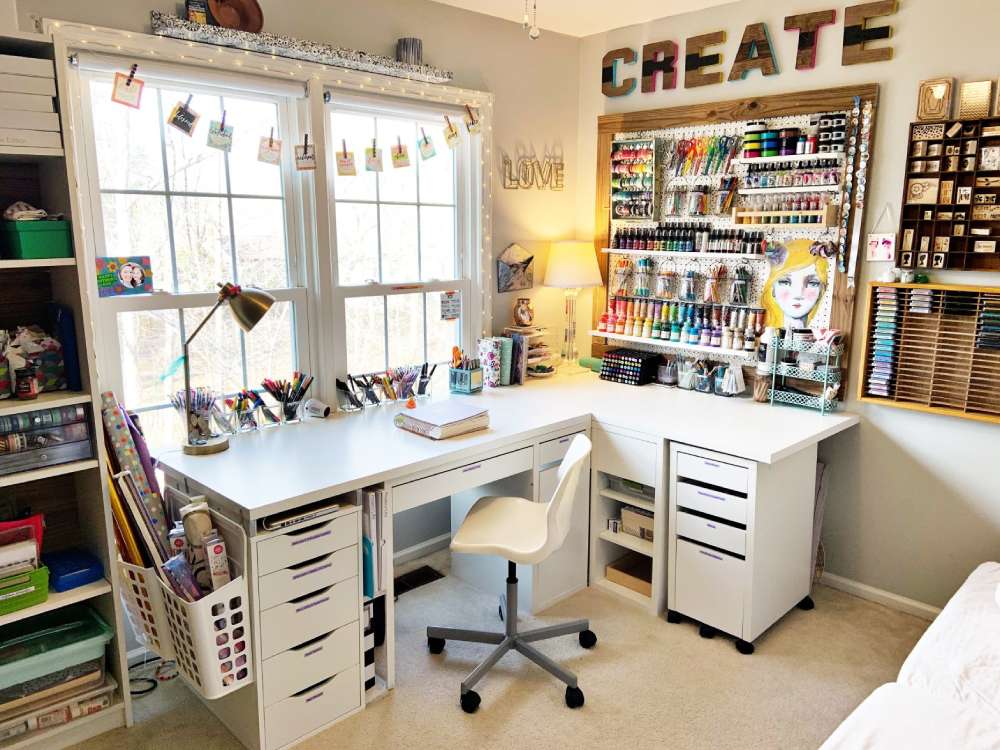
Third-party makers sell drawer and paper-shelf inserts sized for the KALLAX cube. Compare them against IKEA’s own two-drawer insert before filling every cube.
Buy IKEA for the frame. Shop around for what goes inside it.
FAQ About IKEA Craft Room Ideas
What replaced the EXPEDIT shelf in craft room builds?
KALLAX replaced EXPEDIT (Craft Industry Alliance). Old EXPEDIT tutorials still work as layout ideas, but check current KALLAX dimensions and inserts on IKEA.com before copying a build.
Does IKEA have craft room ideas for kids?
Yes. IKEA’s kids’ craft room guide builds around TROFAST frames and boxes, a MÅLA paper roll holder, and open shelving within arm’s reach of the desk.
A cart that slides under the desk keeps materials mobile.
What height should an IKEA craft table be?
It depends on the task. IKEA’s ready-made LAGKAPTEN/ADILS desk stands 28 3/4 inches high, which suits seated work.
Crafters who cut or die-cut standing go taller, using longer legs such as OLOV or GERTON.
Which lighting works in an IKEA craft room?
Put the task lighting at the work surface. Crafters run puck lights under a LACK shelf (Jennifer Maker), and IKEA sells work lamps such as the NÄVLINGE LED.
A wider set of IKEA lighting ideas covers other fixtures.
Is there an IKEA planner for testing a craft room layout?
IKEA lists planning tools in the Shop & Learn menu of its US site.
Whatever the tool, add rear clearance for a cutting machine by hand.
How do you keep an IKEA craft room looking cohesive?
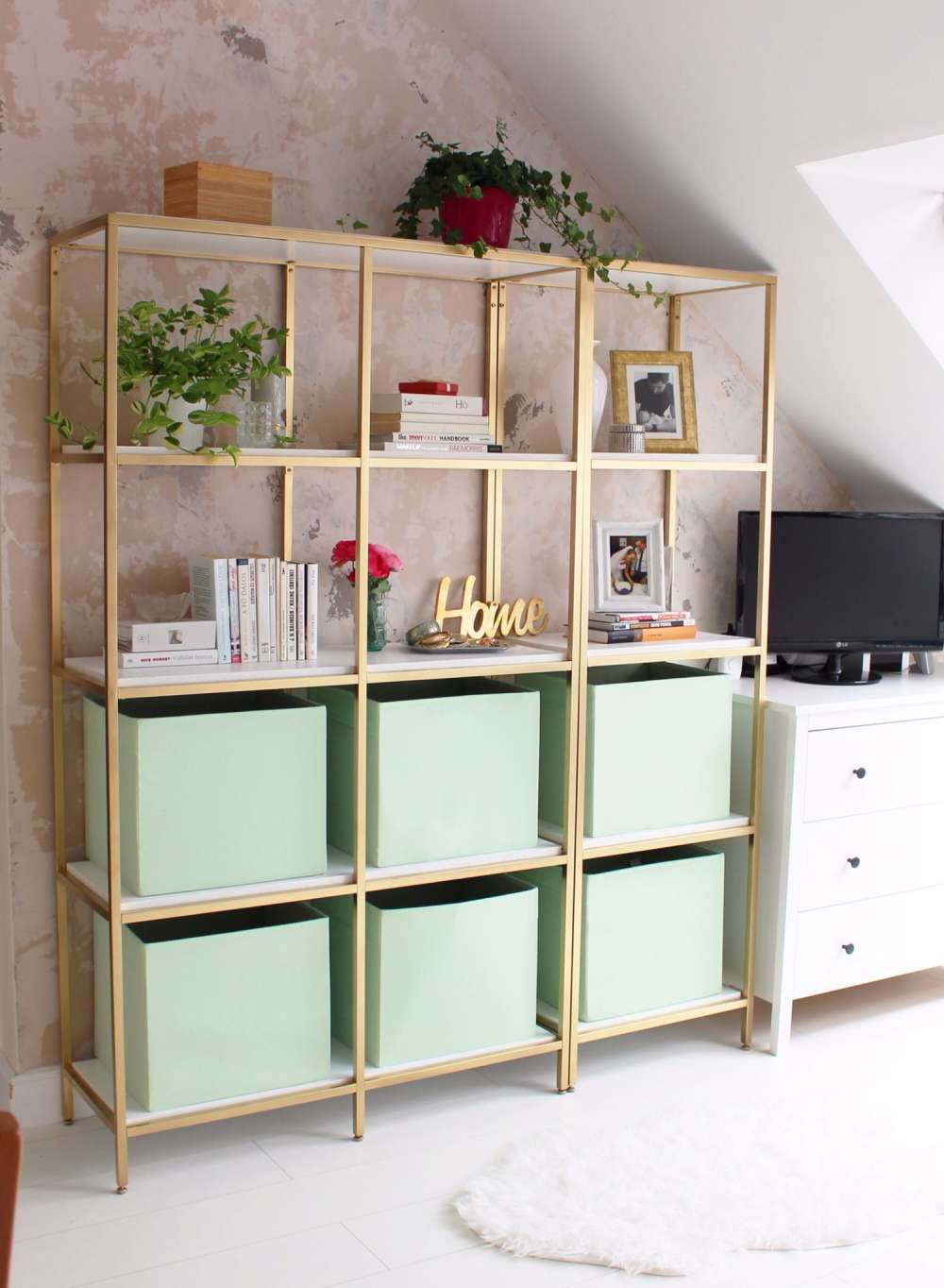
Pick one palette first, since a room color scheme generator narrows the options fast.
Then repeat it in the boxes. IKEA makes DRONA boxes in black, white, dark gray and blue, so open cubes stay uniform while doors hide the rest.
Expanding an IKEA Craft Room Without Rebuying
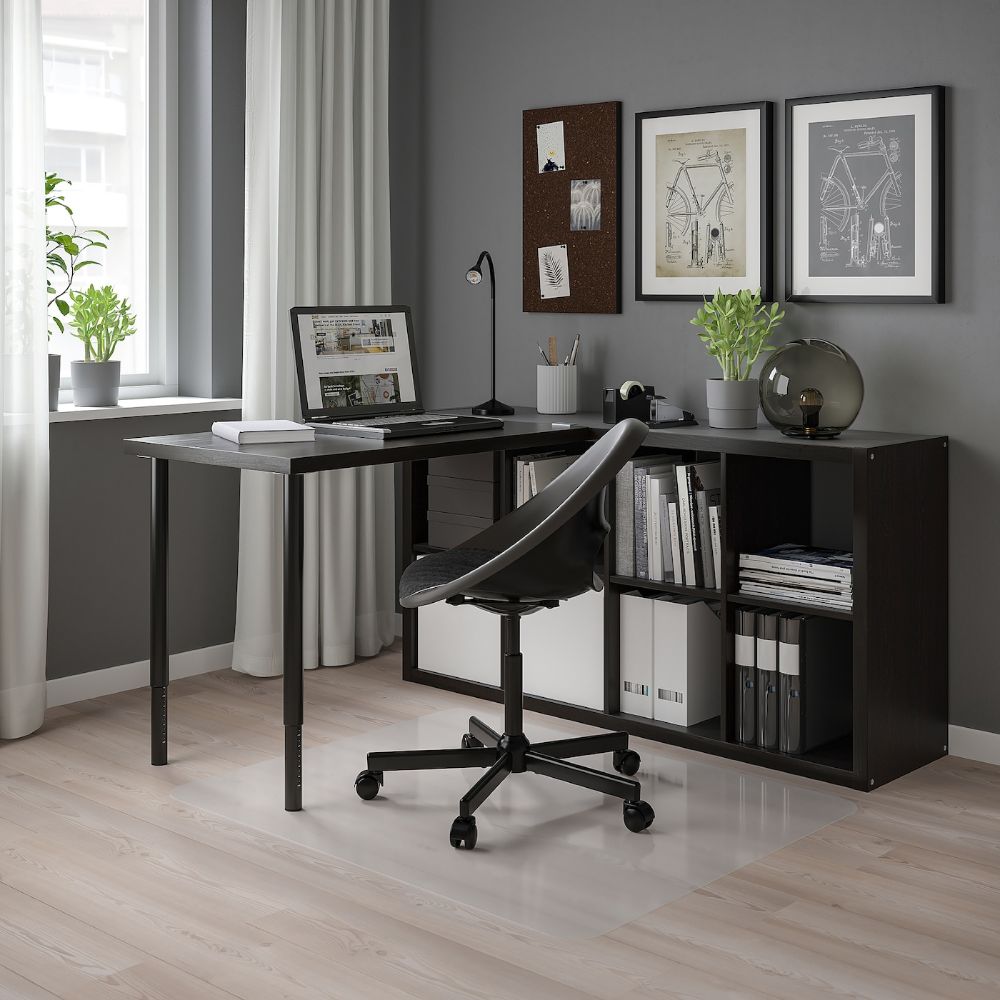
An IKEA craft room grows in three steps: more cubes on an anchored wall, then drawers for small parts, then pegboard and carts.
- Second KALLAX unit against an anchored wall
- ALEX drawers once small parts overflow
- SKADIS board and RASKOG cart last
Cubes come first because paper and fabric make up the bulk of supplies. Pegboard and cart come last because they depend on which tools you actually hang and carry.
Two core craft room lines, EXPEDIT shelving and LINNMON tabletops, have already been replaced, so a matching piece can disappear from the catalog. Buy matching units together while the current series is listed, and accept that this ties up money in space you have not filled yet.
IKEA US listings were checked on September 30, 2026. Availability shifts, so confirm each part on IKEA.com before buying.

- Shoji White vs Alabaster: Which Soft White Wins? - October 25, 2026
- Color Combinations for 32 Colors and 10 Wood Tones - October 22, 2026
- Kitchen Color Schemes by Cabinet Color: What Pairs Well - October 19, 2026