Home Decor
Awesome Kitchen Color Schemes with Black Appliances

Most kitchen color schemes with black appliances work once the cabinets, walls and counters share the appliance’s undertone and still sit apart from it in tone. White cabinets manage that without much effort. Navy, deep green, natural wood and gray can too, with a little more care.
That range is wider than it sounds. As of October 2026, Benjamin Moore lists Simply White at a light reflectance value (LRV) of 89.52, while Sherwin-Williams lists Naval at about 4.
Each black finish reflects light its own way, so the same paint reads warmer or cooler depending on which one is next to it.
If you are starting from the cabinets instead, our kitchen color schemes guide sorts the options by cabinet color.
How Black Appliance Finishes Read in a Kitchen

Finish decides how much light the appliances send back into the room, and the color choices after that follow from it. Matte surfaces swallow light and read as flat dark shapes. Coated steel and gloss pick up reflections.
How each finish reflects light

Matte black absorbs most of the light, so a range or fridge reads as one solid shape. It pairs cleanly with white and pale wood.
Black stainless steel keeps the brushed grain of stainless under a dark coating, which means the highlights run along the grain. Gloss black mirrors whatever sits across from it, from window light to pendants. Then there’s GE Slate, which JLC describes as a warm, low-gloss gray that GE introduced as an alternative to both stainless and black.
Brands don’t match each other. Reviewed’s early comparison of the black stainless lines found KitchenAid’s finish darker and more matte than Samsung’s brushed look, and LG’s closer to a mirror.
Consumer Reports noted in its August 2020 issue that shades of black stainless vary by brand, which makes mixing brands tricky. Buy the range, fridge, dishwasher and hood from one line if you can.
How each finish shows fingerprints and scratches
Sources disagree on scratches. Bob Vila’s guide describes the black layer on black stainless as an acrylic coating that scratches fairly easily and is hard to restore. Some retailer guides say the coating resists scratching better than bare stainless.
Coating chemistry isn’t the same across brands, which probably explains part of the split. Check the spec sheet for the exact model before trusting either claim.
Fingerprints are less contested. Consumer Reports says the darker finish helps resist and hide daily smudges, and KitchenAid’s PrintShield coating cleans with water and a soft cloth, per its product pages as of October 2026.
Which Cabinet Colors Work Best With Black Appliances?

Nearly all of the common ones do, as long as the undertone cooperates. Warm whites and wood soften black appliances. Cool charcoal and navy tend to blend into them.
| Cabinet color | Contrast with black | Undertone to match | Finish that suits it |
|---|---|---|---|
| White or warm white | High | Warm or neutral | Any black finish |
| Gray and charcoal | Medium to low | Cool | Black stainless |
| Black | Lowest | Neutral, plus plenty of daylight | Matte on matte |
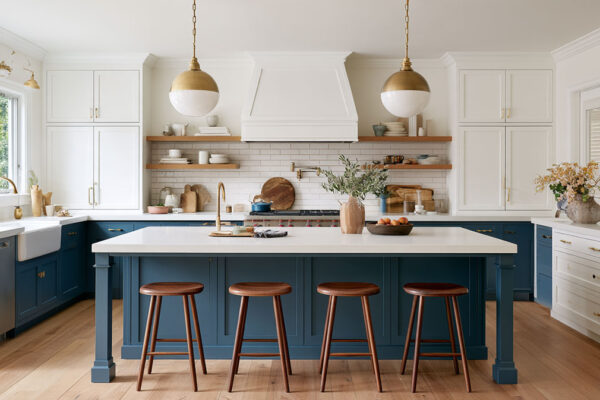
| Navy and deep green | Low to medium | Cool navy, gray-leaning green | Matte black |
| Natural wood | Medium | Warm | Black stainless |
Contrast is the first thing to sort out, and how much contrast a room can carry depends on its size and light. A small, dim kitchen usually needs more of it than a large, bright one.
Open Homes frames the undertone rule like this. Charcoal cabinets work with black appliances because both read cool, while warm-toned dark cabinets can create tension.
White and warm white

White gives the sharpest contrast of any cabinet color here. Sherwin-Williams features Alabaster SW 7008 in its Top 50 colors collection as of October 2026, and Benjamin Moore describes Simply White OC-117 as a crisp white with the slightest hint of warmth.
It gets stark fast. Hunker suggests painting the lower cabinets or the island base black or navy, and a guide to white cabinets paired with black appliances covers more layouts.
Gloss white is the weak spot. Open Homes advises matte or eggshell, because gloss reads as a kitchen that happens to have black appliances.
On the plus side, white brightens small or dim rooms and gives the highest contrast going. The downside is a clinical feel when there’s no warm metal accent such as brass (Open Homes), and Hunker says the room looks flat if the dark island or lower cabinets get skipped.
Gray and charcoal, plus the all-black option

Gray gives black appliances a balanced backdrop, so they don’t take over. Kylie M Interiors lists gray alongside black, blue and green as colors that work.
Charcoal goes tonal, and the appliances blend in instead of standing out. Hunker calls charcoal as stunning as black cabinets.
Matte black cabinets with black appliances give an ultra-modern look. Open Homes says this tone-on-tone approach needs abundant natural light, and light stone floors give the eye some relief.
The darker the cabinet, the less the appliances read as a feature. Counters and lighting end up carrying the contrast.
Navy and deep green

Deep blue and green add color without fighting the appliances. Hale Navy HC-154 from Benjamin Moore and Naval SW 6244 from Sherwin-Williams are two dependable navies.
Kylie M Interiors lists medium to dark green-grays and darker, stronger greens among the colors that suit black appliances, with some blues as a second choice. She calls green the more natural fit. Open Homes advises a blue with strong gray undertones, because pure navy can read too bold against black appliances.
Both give color with depth, and the look suits matte black. Light is the catch. Contrast drops in a dim kitchen, so a lighter counter helps.
Natural wood
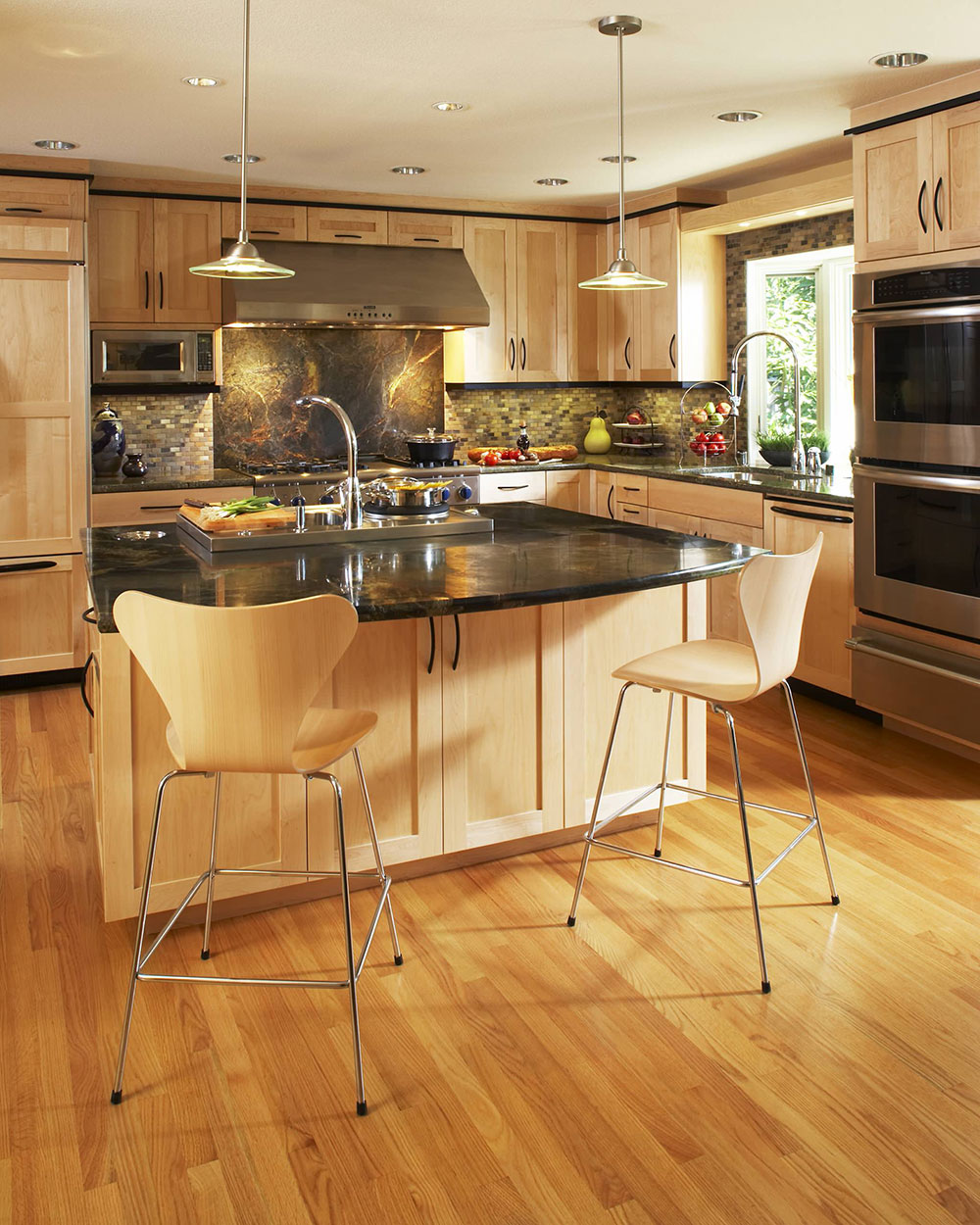
Wood is the easiest way to warm up black appliances. Hunker reports that most designers agree black stainless looks good against wood cabinetry.
Neutral wood alone can turn dull, so add one contrasting element such as a painted island. Without it, the room goes flat when every other surface is neutral too.
Wall Paint Colors for Kitchens With Black Appliances

Pick the wall color after the countertop, backsplash and flooring, because those surfaces shape the result more than the appliances do, according to Kylie M Interiors. The black appliances then sit inside a palette that already holds together.
A soft backdrop is the easy route. Light gray, greige or taupe work, with slightly cooler finishes around them. For more contrast, medium to dark green or a blue with some gray in it does the job. Hunker suggests charcoal gray as the main color for a layered, monochrome look.
How light reflectance value changes the look
Light reflectance value (LRV) scores a paint from 0 for pure black to 100 for pure white. The lower the number, the closer the wall gets to the appliance in tone.
Benjamin Moore lists Simply White OC-117 at LRV 89.52 and Hale Navy HC-154 at LRV 8.36. Sherwin-Williams puts Naval SW 6244 at an LRV of about 4.
Both brands publish on the same 0 to 100 scale, so the gap between the top and bottom of that range runs past 85 points. A wall at the dark end sits near the appliance’s own tone and stops giving it an edge.
Keep the dark navies for one wall or the cabinets, not every surface. If the palette still needs a shortlist, a roundup of the best wall colors for kitchens covers more shades.
Countertop and Backsplash Choices Around Black Appliances
Light countertops and a pale backsplash are the usual way to give black appliances some contrast. Kylie M Interiors leans the other way. She says a black or very dark countertop gives them visual support, and she credits a black granite counter for letting one white-cabinet kitchen carry black appliances at all.
Dark counters beside dark cabinets let the appliances merge into one heavy mass. That suits a tonal kitchen and feels weighty in a dim one.
Countertop materials

White or light quartz gives clean contrast, and Open Homes pairs white counters with black cabinetry and appliances. Marble sets the undertone through its veining, and Open Homes shows white marble working against charcoal cabinets and black appliances.
Butcher block brings warmth to a palette that otherwise runs cool.
Backsplash tile and tone

White subway tile is the safe call. Open Homes pairs a light backsplash with white counters behind black cabinets and appliances, for brightness and contrast.
Measure before you order. An online tile calculator turns the wall area into a count that covers the backsplash plus spare tiles for cuts.
Hardware Finishes That Tie Black Appliances Into the Room
The metal you pick sets the temperature of the palette. Open Homes goes as far as arguing that the hardware finish can matter more than the appliance color itself.
Brass reads warm and timeless against black, and chrome reads cool and modern, which suits cool gray and navy cabinets. Matte black is the cohesive pick, though Kylie M Interiors says black appliances do not require black hardware. Brushed nickel pairs with black, brass and polished nickel, and designer Stephanie Brown of Saint Louise Design says it hides fingerprints and water spots.
Houzz’s 2025 Kitchen Trends Study put brushed nickel first at 31% of homeowners, 12 percentage points ahead of black hardware, as Apartment Therapy reported.
Design guides lean toward brass and matte black. Renovating homeowners lean toward the quieter finish.
A decent rule is to match the metal to the cabinet undertone. Warm metal goes on warm whites and wood, nickel or chrome on cool gray and navy.
Kylie M Interiors shows that a black faucet, stools or light fixtures can repeat the appliance color across the room, which does the job black pulls would do. Count the appliance handles as hardware too, since they sit in the same sightline as the cabinet pulls.
How to Split the Palette Using the 60-30-10 Rule

The 60-30-10 rule gives 60% of a room’s color to a dominant hue, 30% to a secondary one and 10% to an accent, according to Promain’s Ben Thomson in Ideal Home. Applied around the appliances, it gives the room a sense of balance instead of several colors competing for attention.
Where black appliances land in the split depends on the cabinets. With white cabinets they join the accent share beside the hardware and faucet, while black or charcoal cabinets fold them into the dominant color.
Decide early whether the appliances are the focal point or the backdrop, because that choice sets their share.
- Set the 60 with the walls, which dominate a room more than any other element (Martin Waller of Andrew Martin, in Ideal Home), plus most of the cabinets.
- Set the 30 with the lower cabinets, the island or one deep wall, such as navy, green or wood.
- Set the 10 with hardware, faucet, stools and the black appliances if they are meant to stand out.
- Split the 10 into 5 and 5 when two accents compete, for example black appliances and brass pulls.
- Compare undertones across all the shares under the kitchen’s own lighting.
Take white walls and upper cabinets at 60%, navy lower cabinets and island at 30%, black appliances at 5% and brass hardware at 5%. That’s the rule applied as written.
It bends for tonal rooms. In a monochrome kitchen the lightest shade takes the 60, a mid-tone the 30 and the darkest the 10.
How Lighting and Kitchen Size Change the Scheme
Light levels decide how black appliances read, and room size decides how much black the room can absorb. A dim, small kitchen needs lighter cabinets and more reflective surfaces than a bright, large one.
Lighting
NKBA and KBIS research sets the target at 50 footcandles on the work surface, and 100 or more for older homeowners.
Most kitchens fall short. Architect Doug Walter, who helped write NKBA’s lighting guidelines, measured most of the existing kitchens he surveyed below 20 footcandles, according to an NKBA chapter session listing.
Low light hurts matte black most, since it absorbs light and sinks into shadow. Thor Kitchen, quoted by Hunker, says lighting over the island or under the cabinets changes how a palette works with dark appliances.
Recessed cans belong over the counter edges so the cook doesn’t work in their own shadow (Pro Remodeler). Under-cabinet strips add task light but rarely reach the target alone. Pendants or a chandelier are the decorative layer on top.
Daylight, pendants and under-cabinet strips each pull undertones in a different direction. Treat light as a design element and pick one color temperature for every fixture in the room.
Size the output with an LED light requirement calculator before buying fixtures.
Small kitchens versus large kitchens
Sources split on small kitchens.
Designer Cristiana Crin, quoted by Chowhound, says black appliances bring darkness to a tight space and should be avoided there. Block Renovation says they can make a small kitchen feel more compact, especially without natural light.
Teka, an appliance maker, takes the opposite side and lists “the kitchen looks smaller” among the black-in-decor myths it sets out to debunk. Homestyler’s design guide says black appliances in a micro-kitchen can form one unified block that cuts visual clutter.
Both camps agree on the condition. Small and dim is the problem case, while small and bright with light cabinets and reflective surfaces such as glass or polished tile is workable (Homestyler).
Large kitchens carry the look easily. Chowhound notes black stainless adds sophistication there without swallowing the space.
When Black Appliances Clash With a Kitchen
A lone black fridge in a light kitchen is the classic misfire. One commenter in a Houzz discussion warned that a matte black fridge can look like a black hole, while the range alone reads as a good accent. Others in the thread favored paneling the fridge.
Buying into a suite you can’t rebuy later is another. Crin warns that if a black stainless line is phased out and parts are discontinued, replacements may have to be regular stainless, which gives a disjointed look.
Then there’s the dark kitchen with no contour. Meister, a flooring manufacturer, says dark kitchens only show their full effect when contours stay recognizable, so give the range or hood an edge of contrast.
When those conditions can’t be fixed, light stainless steel is the safer call, and Crin recommends it for tight spaces. Panel-ready appliances behind cabinet fronts also work, as does a single black range with neutral companions (Homestyler).
FAQ About Kitchen Color Schemes With Black Appliances
Can black appliances be mixed with stainless steel?
Yes. Reviewed reported that black stainless can be mixed and matched with traditional stainless, so replacing one appliance does not force a full suite swap.
Keep the black pieces together, such as the range and hood, so they read as a set.
How do you clean black stainless steel and matte black appliances?
Use a soft cloth and mild soapy water. The American Cleaning Institute’s Nancy Bock told Consumer Reports that black stainless needs no special polishes.
Bob Vila’s guide warns that some cleaning products can damage fingerprint-resistant coatings, so check the model’s care guide first.
What flooring goes with black appliances?
Warm wood floors are the usual answer. Ideal Home advises adding a wooden floor to a black kitchen, and Block Renovation notes that wood pairs well with black appliances.
Dark floors change the balance, so palettes built around dark floors are worth checking separately.
Do black appliances date a kitchen?
None of the sources cited here treat black appliances as dated. Hunker calls black extremely popular even though stainless steel remains the most common finish, and Metro Appliances reports black and matte finishes trending as bold alternatives to stainless.
Trends shift, so a neutral palette around the appliances keeps the room easy to update.
Testing a Kitchen Palette Against Black Appliances Before Painting
Kitchen color schemes with black appliances need testing against the actual appliances, in the kitchen’s own light, before any paint or tile is bought. Kylie M Interiors recommends peel-and-stick paint samples for this, since they move from wall to wall without a brush.
Sequence the decisions by how costly they are to reverse. Appliance finish and brand line go first, since they’re fixed once installed. Cabinet and countertop samples come next. For a full renovation, professional kitchen remodeling services can help coordinate cabinetry, countertops and appliance placement so the finished space feels cohesive. Wall paint and hardware go last because they cost the least to change.
The trade-off is time. Waiting for samples delays the order, and that delay is the price of catching an undertone clash before it covers every cabinet front.
Once the samples settle the colors, a room paint calculator converts the wall measurements into the quantity to buy.
More Kitchen Color Guides
- Kitchen color schemes with grey floors
- White kitchen floor ideas
- Green cabinets with black countertops
- Green cabinets with white countertops
- All kitchen color schemes by cabinet color

- Kitchen Color Schemes by Cabinet Color: What Pairs Well - October 19, 2026
- Curtain Colors for Every Wall Color: Safe vs Bold Picks - October 18, 2026
- Interior Design Styles: Find Your Primary and Secondary - October 14, 2026