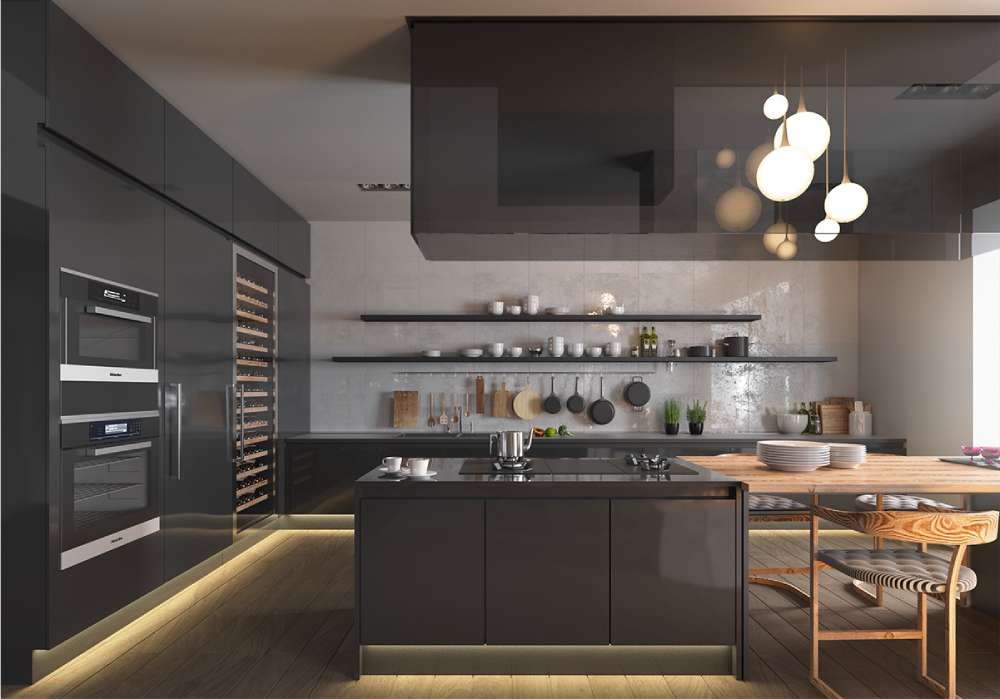
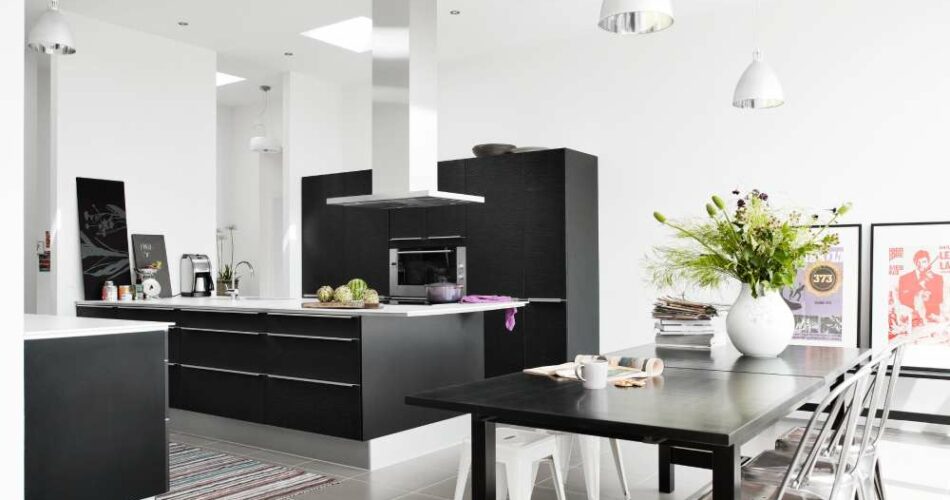
Black kitchens have gone from niche to mainstream, and the numbers back it up. Searches for “black kitchens” hit over 40,500 monthly Google queries, and #blackkitchen has racked up 138 million TikTok views (Magnet, 2024).
But pulling off a dark kitchen well takes more than painting cabinets black. The right finish, lighting plan, countertop material, and hardware finish all determine whether the result feels dramatic and deliberate or just dark.
This guide covers every major decision in black kitchen decor, from cabinet styles and countertop materials to flooring, backsplash, and accessories, across every design style from minimalist to farmhouse to Japandi.
What Is Black Kitchen Decor?

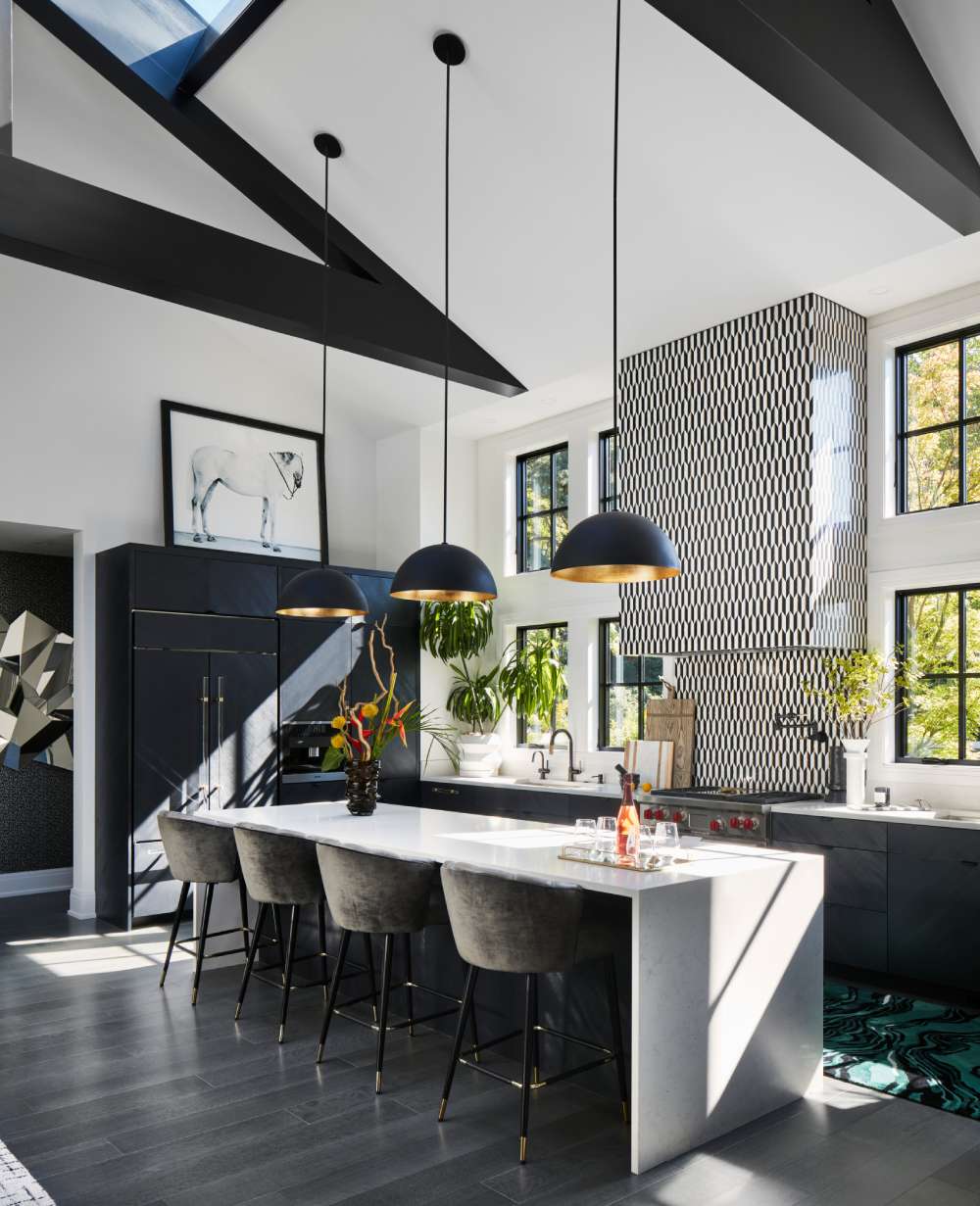
Image source: Xced Design Build
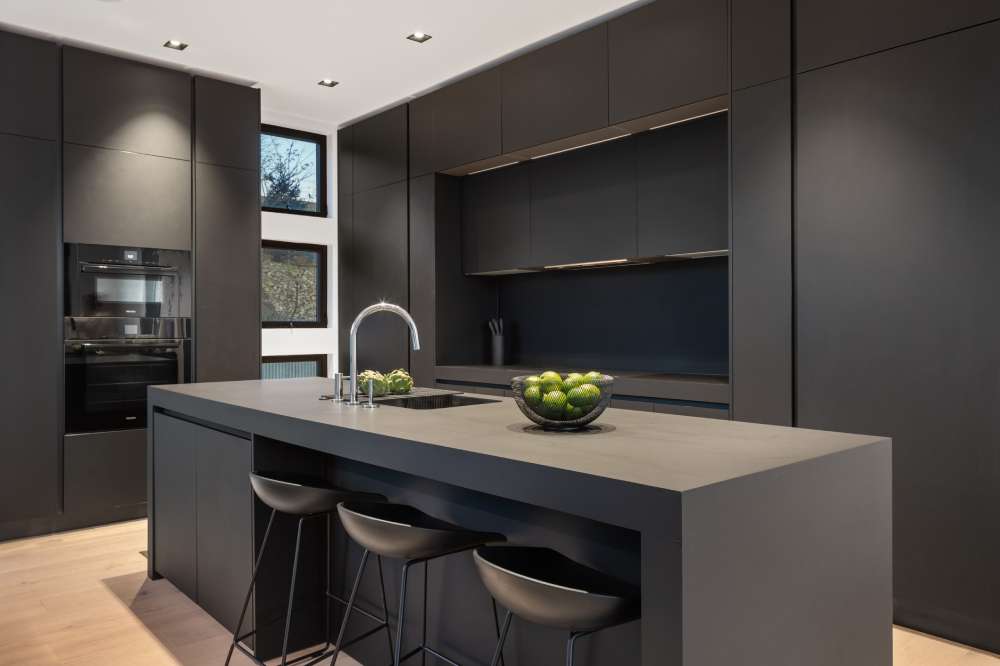
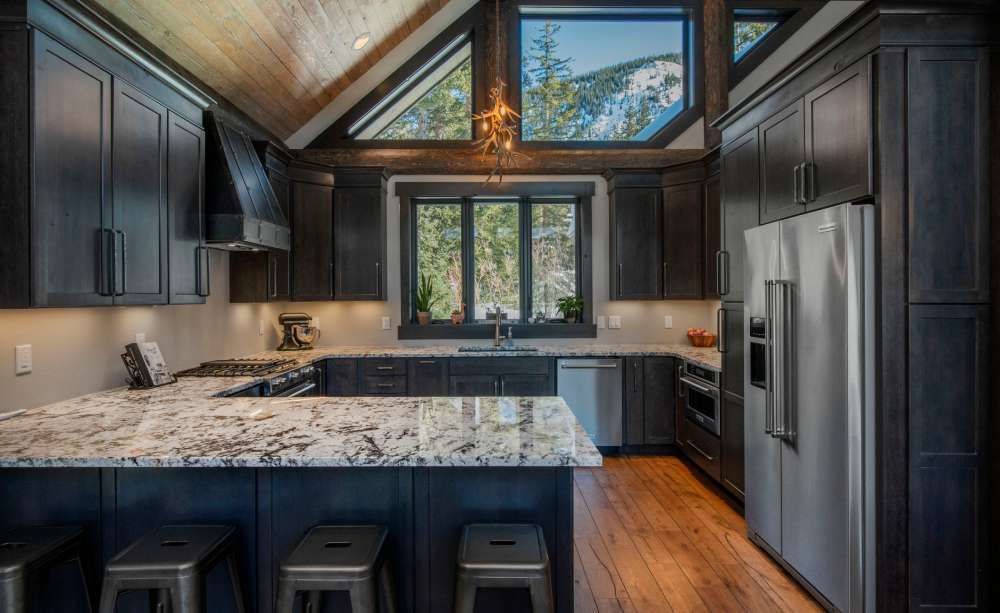
Black kitchen decor is a design approach that uses black or near-black tones as the primary color across one or more major surfaces in a kitchen. That includes cabinetry, countertops, backsplash, hardware, appliances, and accent elements.
It is not one thing. A fully black kitchen with matte black cabinets, black granite countertops, and dark floors is a different decision from a kitchen with white uppers and black lowers paired with brass hardware. Both are black kitchen decor. The degree of commitment changes everything.
Black works across multiple interior design styles: modern, industrial, farmhouse, and transitional. The finish type, the materials it is paired with, and the hardware finish are what shift it from one style to another.
The most common concern is that black will make a kitchen feel dark or small. That concern is real but manageable. The right lighting plan, reflective surfaces, and smart cabinet distribution resolve it in most layouts.
Black became Magnet’s fastest-growing cabinet color in 2023, posting a 112% uptick in sales. The term “black kitchens” now receives more than 40,500 monthly Google searches, and #blackkitchen has generated over 138 million TikTok views (Magnet, 2024).
The core distinction to understand before choosing any element:
- Full black kitchen: Black cabinets, countertops, backsplash, and appliances across the entire space
- Black-accented kitchen: Black on select surfaces (island, lower cabinets, hardware) with lighter elements elsewhere
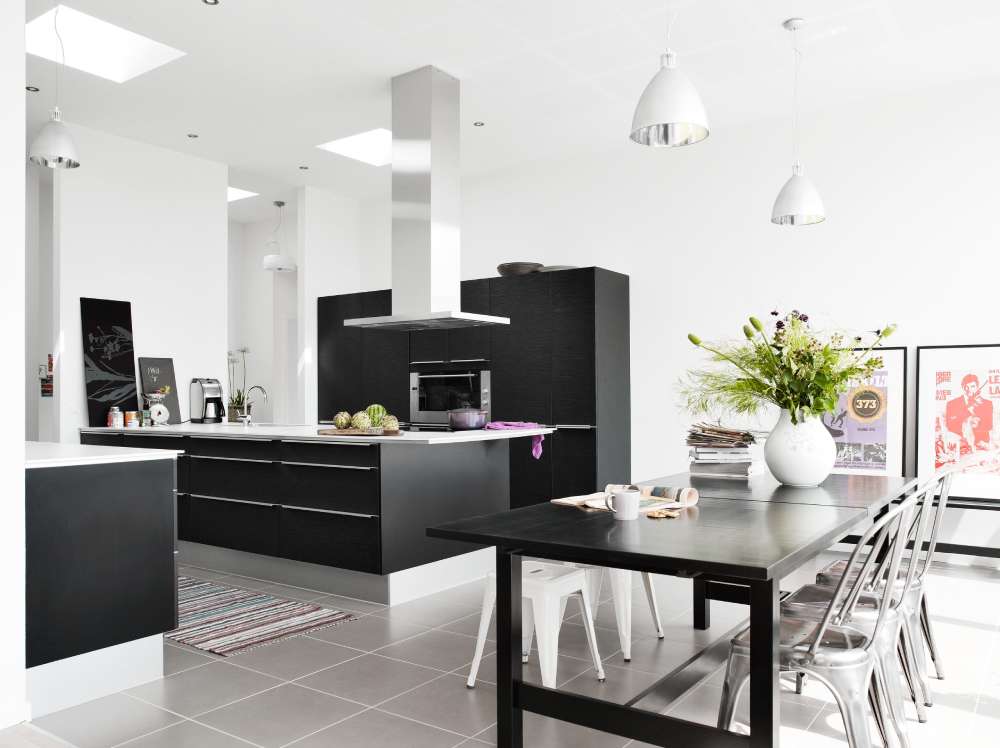
- Black-and-white kitchen: High-contrast pairing using black and white as equal design partners
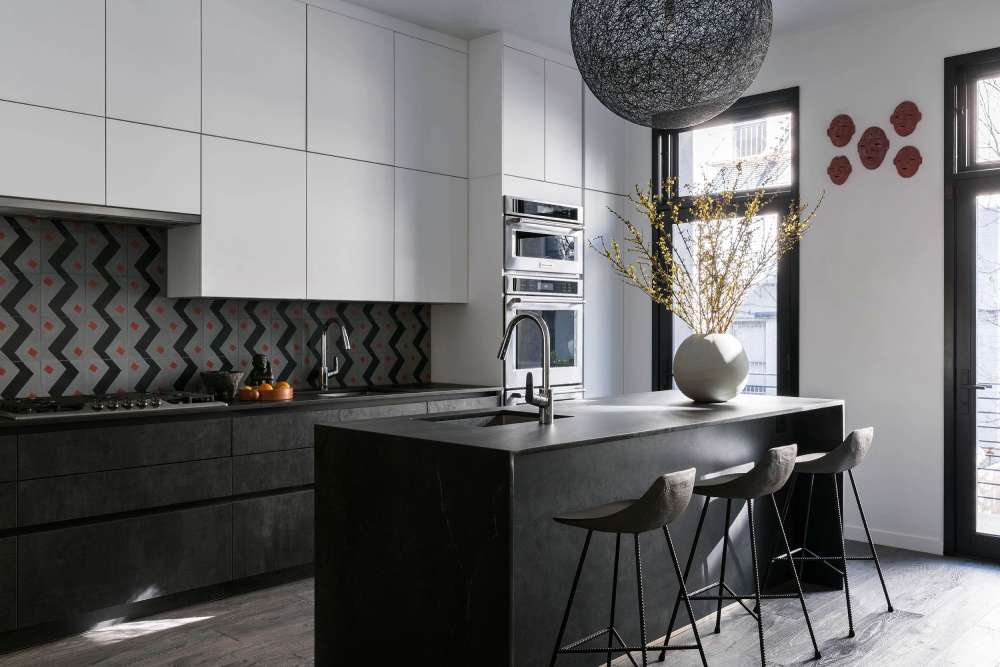
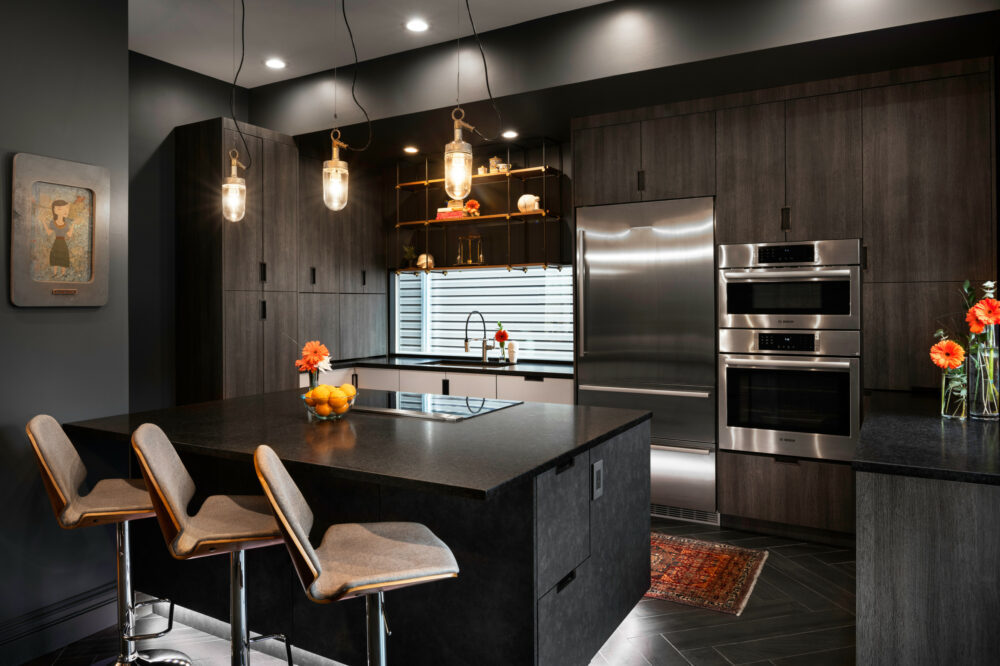
The finish matters as much as the color itself. Matte black reads understated and contemporary. High-gloss black reads bold and dramatic. Satin sits between the two. Textured finishes (leathered stone, fluted cabinetry) add depth that flat black cannot.
What Are the Most Effective Black Kitchen Cabinet Styles?
Black kitchen cabinets are the single biggest design decision in a dark kitchen. They set the tone for every other choice: countertop, hardware, flooring, and lighting.
The 2024 Houzz Kitchen Trends Study found that white remains the most common cabinet color at 46%, but the data also shows growing momentum for contrast choices. Black sits at 10% of kitchen island cabinet colors used for contrast, which signals how homeowners are beginning to test black without fully committing (Houzz, 2024).
Matte vs. Gloss Black Cabinet Finishes

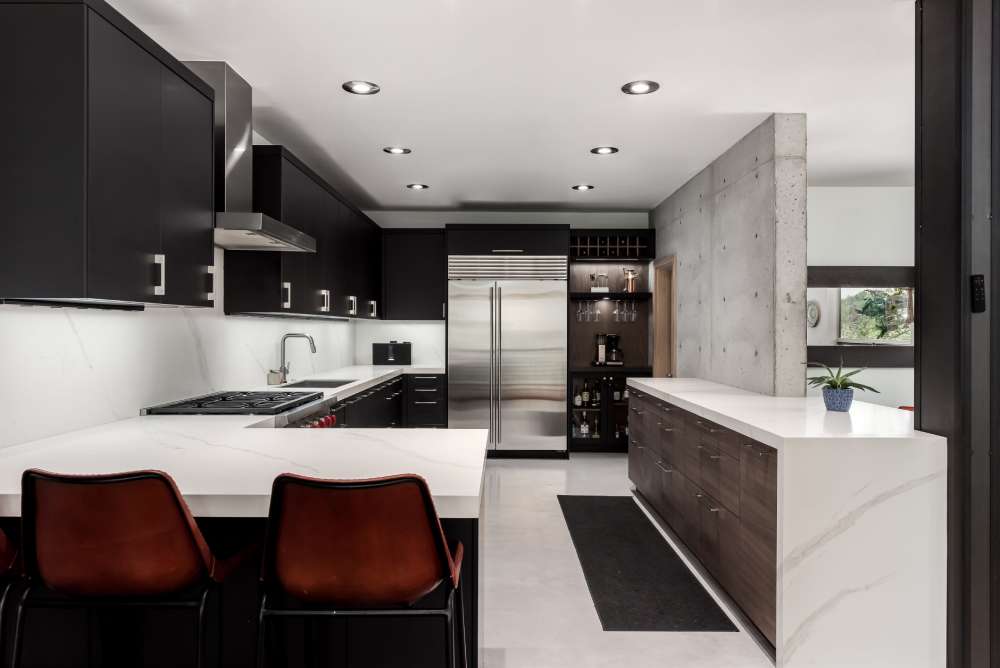
Image source: Knight Custom Homes
Finish choice changes how a black cabinet reads in a room, how much maintenance it requires, and which design styles it suits.
| Finish | Look | Best For | Maintenance |
|---|---|---|---|
| Matte black | Flat, soft, understated | Modern, Japandi, minimalist | Hides fingerprints well |
| High-gloss black | Reflective, dramatic, bold | Contemporary, Art Deco-adjacent | Shows every smudge |
| Satin black | Low sheen, refined | Transitional, farmhouse | Middle ground on upkeep |
Matte black is the more practical choice for busy kitchens. It also tends to photograph better, which matters if resale value is part of the equation.
Upper and Lower Cabinet Color Combinations
Going all-black on every cabinet surface works. But most kitchens benefit from some contrast, especially in rooms with limited natural light.
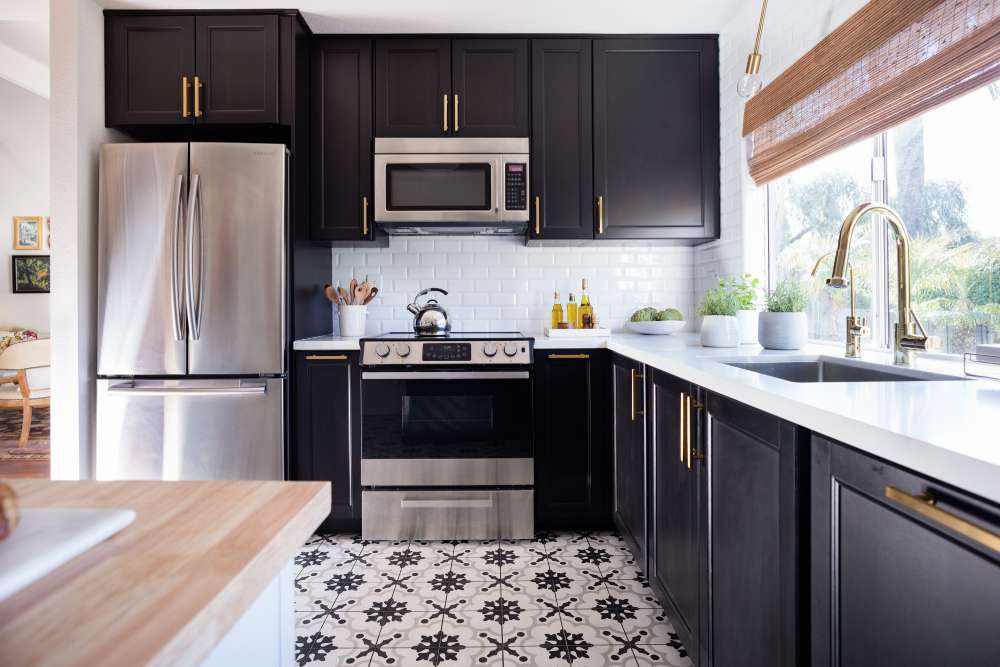
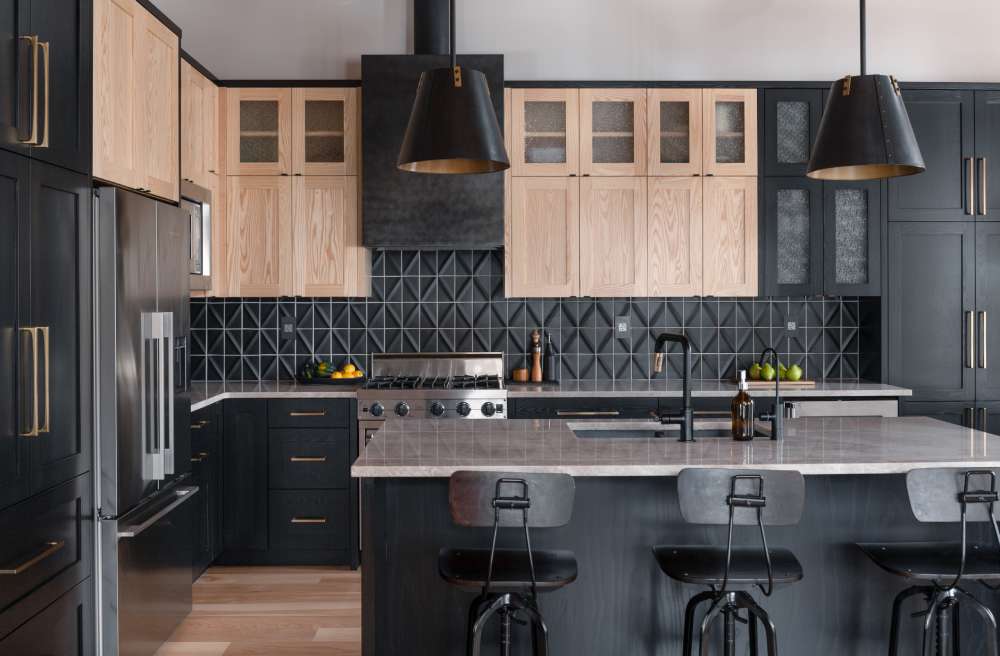
Black lowers, light uppers is the most popular pairing. It grounds the space visually, keeps the upper half of the room feeling open, and avoids the tunnel effect of an all-dark kitchen. Designers like Studio McGee have used this layout repeatedly, pairing black shaker lower cabinets with white or cream uppers and unlacquered brass hardware.
Black island, light perimeter cabinets is a lower-commitment option that still delivers strong visual impact. The island becomes a focal point without darkening the whole room.
For paint references: Sherwin-Williams Tricorn Black (SW 6258) and Benjamin Moore Black Beauty (2128-10) are two of the most commonly specified options for kitchen cabinetry. IKEA’s KUNGSBACKA cabinet door is a ready-made matte black option in anthracite recycled material.
Flat-front vs. shaker: Flat-front black cabinets suit modern and minimalist kitchens. Shaker profile in black suits farmhouse and transitional designs. Raised panel in black is less common but works well in traditional-leaning spaces.
What Black Countertop Materials Work Best in a Kitchen?

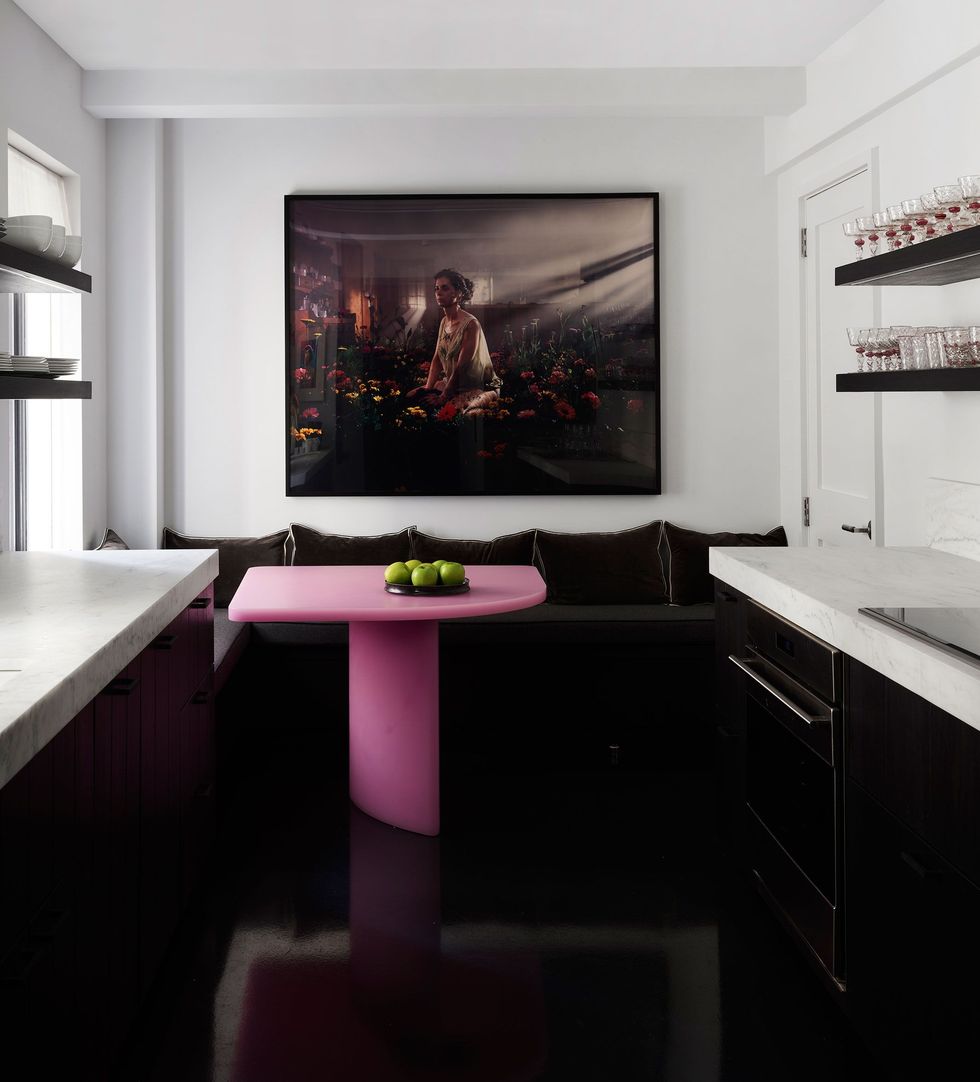
Image source: Alta Vista Builders & Consultants
Black countertops range from $40 to over $200 per square foot installed, depending on material. The visual result, maintenance needs, and durability differ significantly across options.
Black Granite vs. Black Quartz
Black granite: Natural stone with visible mineral variation. Absolute Black is the most popular slab. Requires annual sealing. Every slab is unique, which can be a feature or a complication depending on project needs.
Black quartz: Engineered stone, non-porous, no sealing required. Options include Silestone Negro Stellar and Caesarstone Jet Black. More consistent appearance than granite, which some prefer for a modern, uniform look.
From a maintenance standpoint, quartz wins on practicality. From a character standpoint, granite wins. That tradeoff is the core decision.
Black soapstone is a softer option with a natural matte finish that darkens over time with mineral oil application. It suits farmhouse and transitional kitchens particularly well. Black laminate countertops are the most budget-accessible entry point, starting around $10-40 per square foot installed.
Leathered and Honed Finishes on Black Stone
Polished black granite shows fingerprints quickly. Leathered and honed finishes are a practical solution that also adds tactile texture.
Leathered finish: A textured surface created by brushing the stone. Hides smudges better than polished, adds dimension next to flat-front cabinetry, and feels intentional rather than accidental. Best suited to busy households.
Honed finish: Flat, matte surface with no shine. Reads like chalkboard black. Pairs well with white oak cabinetry. Shows oils and handprints more than leathered but cleans fast with a microfiber cloth.
For low-maintenance needs in a black kitchen, leathered black granite or leathered black quartz is the most practical combination of aesthetics and upkeep.
How Do Black Kitchen Appliances Fit Into the Overall Design?

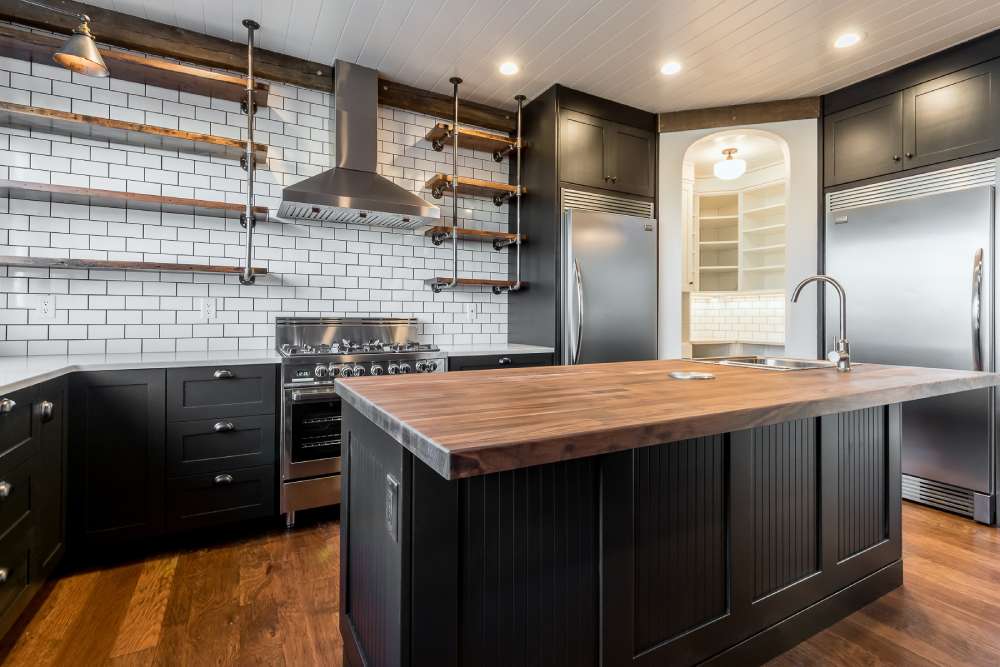
Image source: Kaboodie Kitchen
Black appliances are no longer limited to basic black-coated finishes. Two distinct categories now exist, and they behave very differently in a kitchen.
Kitchen Cabinet Kings (2025) notes that matte black appliances are one of the fastest-growing appliance finish trends, replacing the all-over stainless steel look that dominated the 2010s. The shift is driven by both aesthetics and practicality: dark finishes hide fingerprints and integrate more cleanly into dark cabinet schemes.
Matte black appliances: A flat, non-reflective finish that blends with black cabinetry or creates intentional contrast against light cabinets. LG Studio Matte Black and Samsung Bespoke in Matte Black are two of the most widely specified suites. Fingerprints are significantly less visible than on stainless steel.
Black stainless steel: A dark metallic finish that still reads as appliance-adjacent rather than furniture-adjacent. Samsung Black Stainless Steel and Smeg’s retro line both offer this finish. It creates a softer contrast against black cabinets than matte does.
The key decision when combining black appliances with black cabinets: avoid a flat, monotone result. Introduce variation through finish (matte cabinet, satin appliance), texture (fluted cabinetry against smooth appliances), or material contrast (wood open shelving near appliance groupings).
For kitchens with light cabinetry, black appliances function as a strong contrast element that anchors the space without requiring a full cabinet repaint.
What Hardware and Fixture Finishes Complement Black Kitchens?
Hardware is where a black kitchen either comes together or falls apart. The wrong finish makes the whole thing feel flat. The right one adds a layer of intentionality that reads as designed rather than painted.
There are 3 main hardware strategies for black kitchens:
- Tone-on-tone matte black: Hardware matches cabinetry. Clean, minimal, modern. Works best in Japandi and minimalist designs.
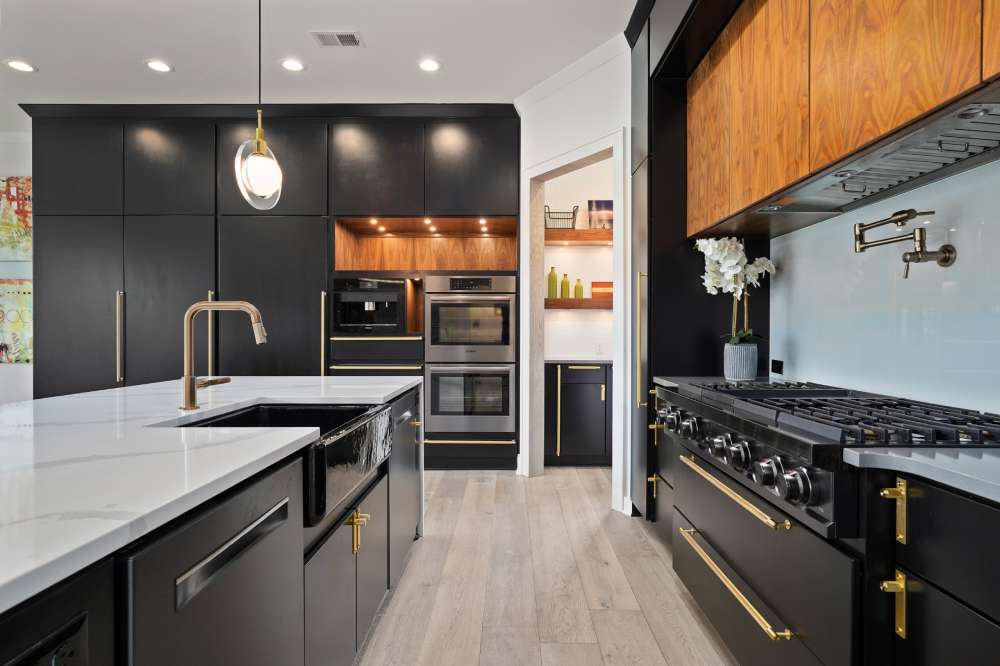
- Warm metal contrast: Unlacquered brass, antique brass, or gold hardware against black cabinets. The warmth breaks the darkness without losing drama.
- Cool metal contrast: Polished nickel or chrome against black. Sharper contrast, suits contemporary and industrial styles.
Brass with black cabinets is one of the most searched combinations online, and for good reason. It avoids the cold, monochromatic trap of all-black-on-black while adding a material richness that feels high-end without requiring expensive stone or custom cabinetry. Rejuvenation and Schoolhouse Electric both offer well-regarded brass pull collections in styles from minimal bar pulls to vintage cup pulls.
For kitchen faucets: a matte black faucet works in both tone-on-tone and contrast configurations. It pairs naturally with an undermount black granite or stainless steel sink. Visual Comfort offers pendant fixtures in matte black that carry the hardware finish into the lighting layer, creating a coherent material thread through the space.
Pull style by design direction:
- Bar pulls: modern, transitional
- Cup pulls: farmhouse, traditional-leaning
- Knobs only: minimalist, Japandi
- No hardware (push-to-open): ultra-modern, fully integrated kitchens
What Lighting Strategies Prevent a Black Kitchen From Feeling Dark?
Lighting is the most important technical decision in a black kitchen. A well-lit dark kitchen reads dramatic. A poorly lit dark kitchen reads oppressive.
The fix is layering 3 types of light: ambient, task, and accent. No single source handles all three. Relying only on overhead ambient light in a black kitchen produces flat, shadowless light that flattens every surface and removes depth from the materials you paid to see.
Under-Cabinet and Task Lighting

Image source: Usable Space Interiors, LLC
Under-cabinet LED strips are non-negotiable in kitchens with dark cabinetry. They direct light onto the work surface and countertop, keeping prep areas functional and illuminating the countertop material.
Bulb temperature matters significantly against black surfaces. A 2700K warm white brings out the warmth in wood tones and brass hardware. A 4000K neutral white suits kitchens with cool quartz veining and stainless steel finishes. Cooler temps (5000K+) tend to make black kitchens read clinical rather than dramatic.
LED strips rated at 50,000 hours of lifespan are the most practical and energy-efficient option. Continuous strip placement (no gaps between fixtures) avoids the “dotting” effect where light pools unevenly across a dark countertop.
Pendant and Overhead Fixture Selection
Pendants over a kitchen island do double work in a black kitchen: they provide task light directly over the prep and dining surface, and they read as decorative objects against the dark backdrop.
Glass pendants (clear or smoked) catch and redistribute light. Metal pendants in brass or matte black add material interest. Edison bulbs in exposed filament pendants suit industrial kitchens particularly well, where the warm glow counters the coldness of dark metal surfaces.
Recessed lighting provides the ambient layer. In black kitchens, spacing recessed fixtures closer together (every 4 feet rather than 6) compensates for the light absorption of dark surfaces. Reflective elements like glossy backsplash tile or mirrored cabinet inserts amplify available light without adding fixtures.
Homes with black kitchens sold for an average 8% more than comparable properties with white kitchens in 2024, according to housing market data. Lighting is one of the primary reasons well-designed black kitchens photograph and show well in listings.
What Backsplash Options Work in a Black Kitchen?
The backsplash in a black kitchen has one of two jobs: provide contrast or add texture. Sometimes both. Which direction makes sense depends on how much black is already present in cabinetry and countertops.
The 2024 Houzz Kitchen Trends Study found that 86% of homeowners replace backsplashes during kitchen renovations, with ceramic or porcelain tile as the most popular material at 54% (Houzz, 2024). In black kitchens, the backsplash is one of the highest-impact choices relative to its cost.
High-contrast options:
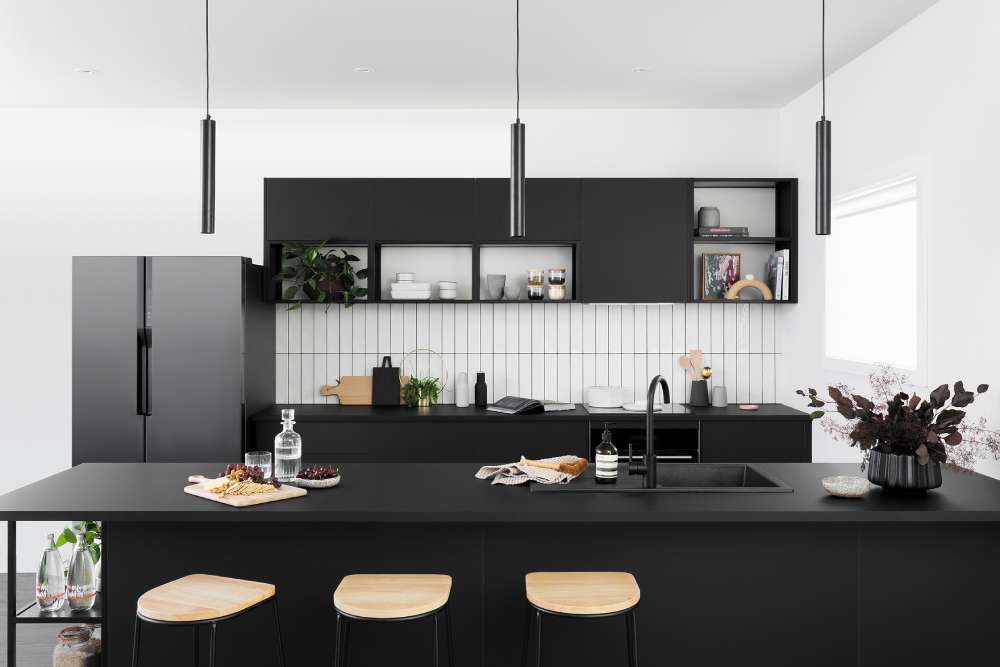
- White subway tile: the most reliable contrast choice; reads clean and classic against black cabinets
- Zellige tile in white or cream: handmade ceramic with irregular surface variation that adds warmth and texture
- Large-format white or light grey porcelain: fewer grout lines, more contemporary
Tone-on-tone options:
- Black hexagon tile with dark grout: textural variation within the dark palette
- Matte black subway tile with contrasting light grout: adds definition through grout color rather than tile color
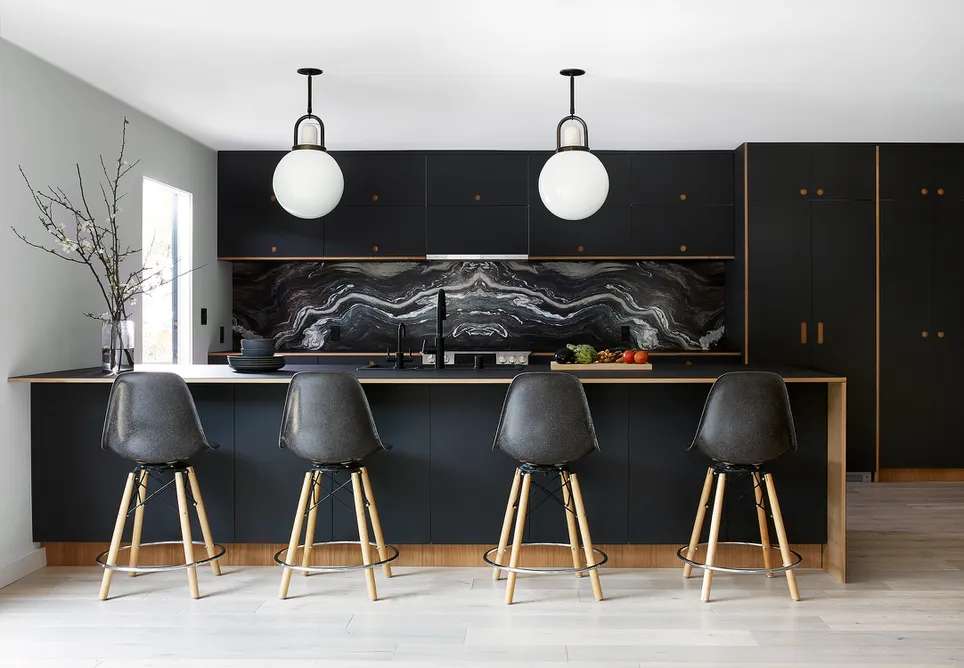
- Honed black marble slab: high-end, seamless, suits luxury black kitchens
Mirrored and metallic backsplash tiles (stainless steel, brushed brass mosaic, mirror glass) reflect light back into the space. This is a practical choice in kitchens with limited natural light where the goal is to amplify brightness without changing the color palette.
Terracotta and warm ceramic tiles add organic warmth that prevents the kitchen from reading cold. Ann Sacks and Fireclay Tile both offer handcrafted options that pair well with the natural materials (wood, stone, leather) used in high-quality black kitchen decor.
Full-slab stone backsplash from countertop to upper cabinets is the single most dramatic backsplash option. When used with a waterfall island edge and matching countertop material, it creates a continuous stone surface that reads as genuinely luxurious.
How Do You Add Warmth to a Black Kitchen With Natural Materials?
Black kitchens read cold when every surface is hard, dark, and synthetic. Natural materials solve that. Wood, stone, ceramic, and plant life all introduce warmth, texture, and organic variation that black surfaces cannot provide on their own.
Fixr’s 2024 Kitchen and Bathroom Trends Report found that 73% of design professionals named wood as the most on-trend cabinetry style, with 67% agreeing natural finishes would be the most sought-after choice going forward. That preference translates directly into black kitchens, where natural wood is the most common counterbalance to dark surfaces.
Open Wood Shelving and Butcher Block Accents
Open wood shelving against black upper cabinets is one of the most widely used warmth strategies in dark kitchen design. White oak and walnut are the most popular species. The grain pattern adds visual texture that flat-front black cabinetry cannot replicate.
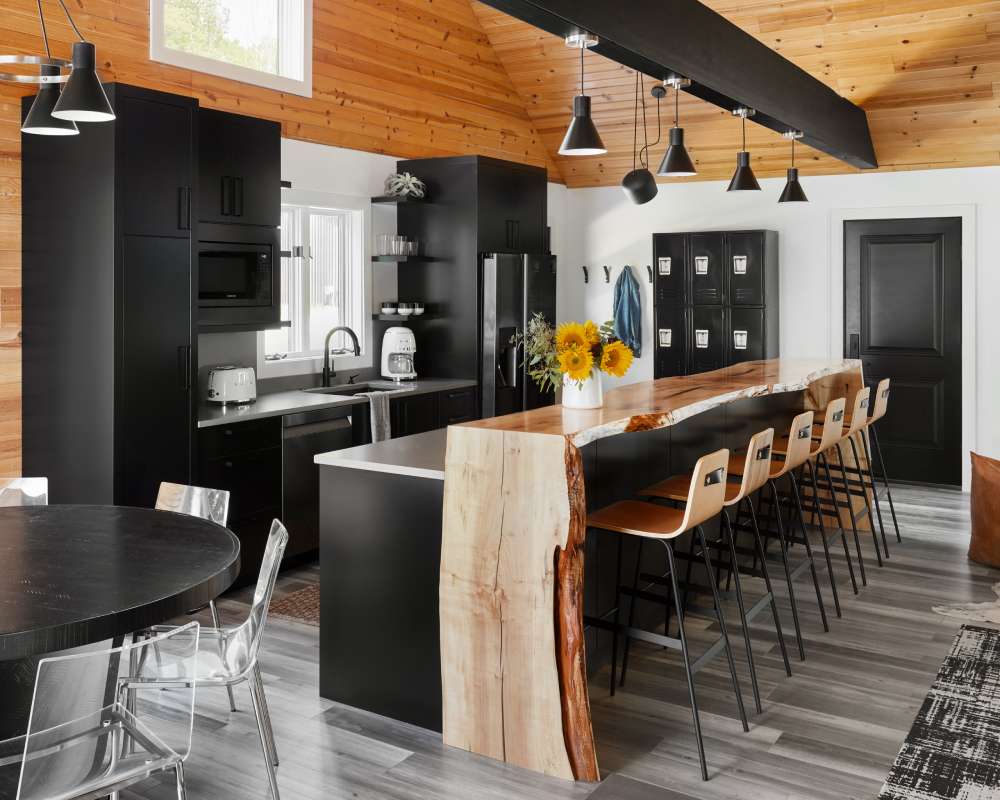
Butcher block countertop sections work similarly. A butcher block section on a black island or as a prep zone next to dark stone creates contrast in both color and material feel. It softens the moody kitchen aesthetic without reducing the drama of the overall scheme.
Studio McGee’s “Swan Lake Kitchen” project is a well-documented example of warm wood tones used with black cabinetry. The combination of black lower cabinets with warm wood open shelving and brass hardware became one of the studio’s most shared kitchen images.
Plants, Rattan, and Textile Layers
Fixr 2024 data shows stone slab backsplashes named as the hottest kitchen trend by 30% of design professionals, but the same report highlights that bringing organic elements indoors is an equally strong parallel trend.
Plants read as high contrast against black surfaces. Simple options:
- Potted herbs (rosemary, basil) near the cooktop or on open shelving
- A trailing pothos from a high shelf above black cabinets
- Terracotta pots, which add warm color against dark backgrounds
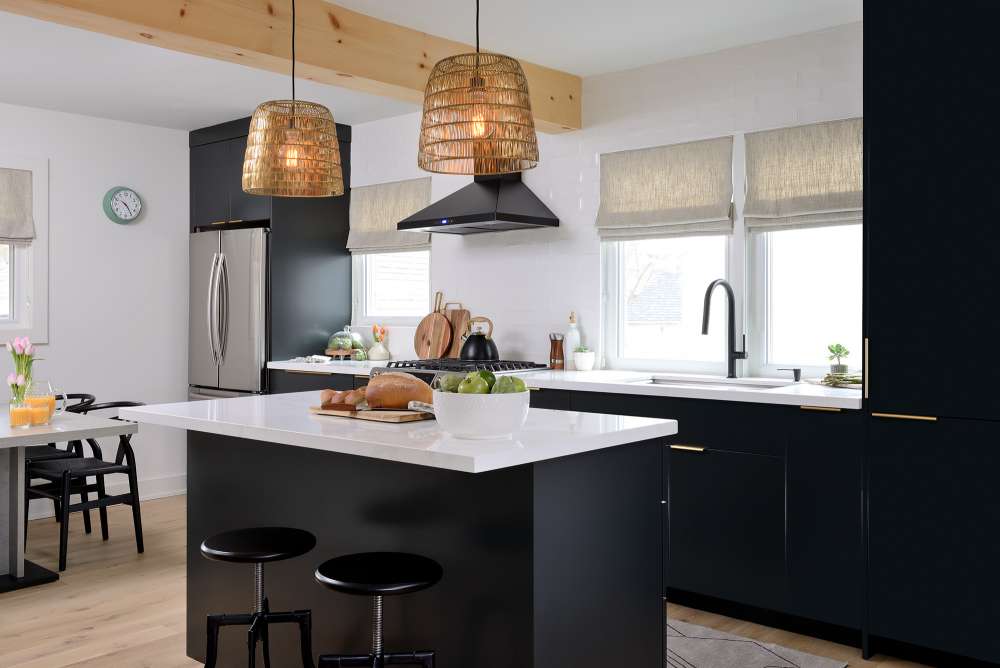
Rattan bar stools, wicker pendant shades, and linen dish towels introduce tactile warmth without altering the cabinet color scheme. These are the lowest-cost, most reversible warmth elements available in a black kitchen.
What Paint Colors and Wall Treatments Work Around Black Kitchens?
Wall color in an open-plan kitchen affects the entire adjacent living space, not just the kitchen itself. The choice depends on how much black is already present and whether the goal is high contrast or a moody, enveloping look.
White and Off-White Wall Approaches
White walls are the most common backdrop for black kitchens. They provide maximum contrast and keep the room feeling open, which is especially useful in smaller layouts.
Not all whites read the same against black. Warm whites like Benjamin Moore White Dove (OC-17) and Farrow and Ball All White prevent the cold, clinical effect that stark pure whites produce. Cool whites like Chantilly Lace work in modern, minimal kitchens where the intent is a sharper, harder contrast.
Off-whites, creams, and warm greiges are practical choices for open-plan spaces where the kitchen flows into a living or dining area. They create visual continuity without committing every surface to white.
Deep Wall Colors for a Moody Kitchen Aesthetic
Deep wall colors extend the dark scheme rather than contrast it. Charcoal, forest green, and navy on adjacent walls create an immersive, dramatic environment that suits the moody kitchen aesthetic.
Farrow and Ball Railings (No. 31), Hague Blue (No. 30), and Elephant’s Breath (No. 229) are 3 commonly specified options in dark kitchen schemes. Each reads differently depending on light levels and floor color.
Two-tone approaches work particularly well in open-plan kitchens. Black cabinetry in the kitchen zone, with a deep wall color carrying through to the adjacent dining area, creates a defined spatial boundary without a physical wall.
Wallpaper with geometric or botanical patterns adds pattern and texture to black kitchen spaces. Used on a single feature wall behind open shelving or a dining nook, it adds personality without overwhelming the kitchen’s color scheme.
What Flooring Materials Pair Well With Black Kitchen Decor?
Flooring is the largest surface area in a kitchen. Its tone and texture directly affect whether a black kitchen reads as heavy and oppressive or grounded and intentional.
| Flooring Type | Effect in a Black Kitchen | Best Style Match |
|---|---|---|
| Light white oak hardwood | Maximum contrast, brightens the space | Modern, Japandi, transitional |
| Black-and-white checkerboard tile | Classic pairing, adds graphic energy | Farmhouse, retro, eclectic |
| Polished concrete | Cool, seamless, industrial | Industrial, contemporary loft |
| Large-format white porcelain | Clean, minimal, light-reflective | Modern, minimalist |
A Tasting Table 2026 designer survey found that warm-toned hardwood floors are one of the strongest flooring trends, with multiple designers pointing to white oak, hickory, and ash as top choices. In black kitchens, light hardwood with a matte or wire-brushed finish creates the most contrast without competing with the drama of the cabinetry.
Dark floors with dark cabinets can work. But it requires strong overhead lighting, a light countertop, and a pale or reflective backsplash to prevent the kitchen from losing all depth and dimension. Most designers recommend avoiding very dark floors with very dark cabinets unless the lighting plan is robust and the countertops are light in tone.
Herringbone and chevron patterns in light hardwood or large-format tile add visual interest at floor level without adding color. These patterns suit transitional and modern black kitchen designs particularly well.
What Are the Best Black Kitchen Decor Ideas for Small Kitchens?

Image source: Devon Grace Interiors
Black in a small kitchen is not automatically a problem. The finish, lighting, and distribution of dark surfaces determine whether the space feels intimate or tight.
The first instinct is to avoid dark colors in small spaces. That instinct is only partially correct. Poorly lit, all-dark small kitchens do feel small. Well-lit small kitchens with black accents and reflective surfaces can feel considered and intentional.
Black as an Accent in Small Layouts
The most reliable approach for small black kitchens is using black on one surface only. Options ranked by impact:
- Black island with white or light perimeter cabinets
- Black lower cabinets with white uppers
- Black hardware and fixtures only, with light cabinets and countertops
Each option delivers the visual weight of black decor without committing to a fully dark scheme. The contrast between dark and light elements also creates visual emphasis that makes small kitchens feel designed rather than just functional.
Reflective Surfaces and Vertical Lines
Reflective surfaces amplify light in small dark kitchens. Glossy backsplash tile, glass-front upper cabinets, and polished countertops all bounce light back into the space. Each one reduces the visual density of the dark cabinetry.
Vertical lines extend perceived ceiling height in low-ceiling kitchens. Tall, floor-to-ceiling black cabinetry draws the eye upward. Vertical tile patterns on the backsplash reinforce this. Line direction is one of the most underused tools in small kitchen design.
Amber Interiors, the California-based design studio led by Amber Lewis, has published several small black kitchen projects where matte black lower cabinets, light countertops, and open wood shelving successfully created a moody but spacious-feeling layout in compact footprints.
How Do You Style a Black Kitchen for Different Design Aesthetics?

Image source: Nina Freudenberger
Black is one of the few colors that adapts across almost every design style without forcing a complete rethink. The cabinet profile, hardware finish, material palette, and accessory choices do the work of shifting it from one style to another.
The NKBA 2025 Kitchen Trends Report found that 52% of design professionals view cabinetry as the key area for bold color, confirming that the cabinet choice drives the overall style more than any other single element (NKBA, 2025).
Black Kitchens in Modern and Minimalist Interiors
Flat-front matte black cabinets. Integrated handles or push-to-open mechanisms. Concrete or black quartz countertops with no veining.
The minimalist approach strips everything back. No visible hardware, no decorative elements on the countertop, no open shelving cluttered with objects. The kitchen reads as a single, unified surface.
Kohler’s Japandi kitchen documentation notes that black accents provide a refined structure that puts other finishes and natural materials into relief. In a Japandi context, matte black acts as punctuation rather than as the dominant note.
Black Kitchens in Farmhouse and Transitional Styles
Farmhouse black kitchen: Black shaker cabinets, apron front sink, butcher block section, cup pulls in matte black or unlacquered brass. The warmth comes from the cabinet profile, hardware style, and natural materials, not from the color.
Transitional is the most forgiving style for black kitchens. It accepts contrast (black lowers, white uppers), mixed hardware (brass and matte black), and varied materials (stone countertop, wood open shelving) without the result looking incoherent.
The 5 most distinct black kitchen style directions at a glance:
| Style | Cabinet Profile | Key Material | Hardware Finish |
|---|---|---|---|
| Modern/minimalist | Flat-front | Concrete, black quartz | None or matte black |
| Industrial | Flat or open frame | Exposed steel, reclaimed wood | Matte black pipe |
| Farmhouse | Shaker | Butcher block, apron sink | Brass cup pulls |
| Transitional | Shaker (mixed colors) | Marble, white oak | Unlacquered brass |
| Japandi | Flat-front (no hardware) | Natural wood, stone | Brushed brass or none |
What Accessories and Decor Items Complete a Black Kitchen?
Accessories in a black kitchen either reinforce the color scheme or create deliberate contrast. The wrong approach is treating the kitchen as a canvas for every available object. The right approach is curation.
A black kitchen with too many competing finishes and colors loses the drama that makes it work. The rule: limit accent colors to 1 or 2, and keep the accessory count intentionally low.
Functional Accessories That Serve the Color Scheme
Black cookware (Le Creuset in matte black, Staub in dark enamel) doubles as decor when stored on open shelves or hung from a pot rack. It extends the dark palette without adding visual noise.
Natural wood cutting boards on a black countertop are one of the most cited styling details in dark kitchen design. The warm wood grain against dark stone or quartz reads as intentional contrast rather than random accessorizing.
Ceramic canisters and vessels in muted tones (cream, stone, clay) provide material variation without introducing strong color. Japanese ceramics with irregular surfaces suit the Japandi and minimalist kitchen directions particularly well.
Open Shelving Styling in a Black Kitchen
Open shelving in a black kitchen works when the objects on the shelves are limited and cohesive. A mix of finishes and colors turns a strong design statement into visual clutter.
A workable open shelving edit for a black kitchen:
- White or cream ceramic dishware (3-5 pieces, stacked)
- 1 potted plant or trailing vine
- A wooden cutting board or bowl as a natural material anchor
- Glassware in clear or smoked glass
Kitchen textiles complete the layering. Black kitchen runners, linen dish towels in natural tones, and dark bar stools with leather or woven upholstery all add texture without competing with the cabinet color. Avoid highly patterned textiles in a fully dark kitchen scheme, as they tend to fragment the visual coherence that makes black kitchens compelling in the first place.
FAQ on Black Kitchen Decor Ideas
Do Black Kitchens Make a Space Feel Smaller?
Not necessarily. A well-lit black kitchen with reflective surfaces and light countertops reads as intentional, not cramped.
Matte black lower cabinets paired with white uppers and under-cabinet LED strips keep small layouts feeling open while still delivering the dark, moody aesthetic.
What Is the Best Finish for Black Kitchen Cabinets?
Matte black is the most practical choice. It hides fingerprints better than high-gloss, suits more design styles, and photographs cleaner in listings.
Gloss works in bold contemporary kitchens where the reflective quality is a deliberate design decision, not just a finish preference.
What Colors Go With Black Kitchen Cabinets?
White, warm cream, brass, natural wood, and deep forest green all work well. Each creates a different result.
Unlacquered brass hardware against black cabinets is one of the most popular combinations, adding warmth without softening the drama of the dark cabinetry.
Are Black Kitchen Countertops Hard to Maintain?
It depends on the finish. Leathered black granite hides smudges well. Polished black surfaces show fingerprints quickly but clean fast with microfiber.
Black quartz requires no sealing and resists staining, making it the lowest-maintenance dark countertop material for busy kitchens.
What Flooring Works Best With Black Kitchen Cabinets?
Light white oak hardwood creates the strongest contrast and keeps the space feeling open. Large-format white porcelain tile works similarly.
Avoid pairing very dark floors with very dark cabinets unless the lighting plan is strong and the countertops are light in tone.
Can You Use Black in a Farmhouse Kitchen?
Yes. Black shaker cabinets with an apron front sink, butcher block countertop sections, and brass cup pulls are a well-established farmhouse black kitchen combination.
The shaker cabinet profile and warm materials shift the color away from industrial and toward traditional farmhouse design.
What Lighting Is Needed in a Black Kitchen?
Three layers: ambient overhead lighting, under-cabinet LED task lighting, and pendant fixtures over the island. No single source covers all three functions.
Under-cabinet LED strips at 2700K to 3000K are non-negotiable. They illuminate dark countertops and prevent the prep area from disappearing into shadow.
What Backsplash Works Best in a Black Kitchen?
White subway tile is the most reliable contrast choice. Zellige tile in white or cream adds handmade texture. Mirrored or metallic tile reflects light back into the space.
Full-slab stone backsplash in a matching or complementary material creates a high-end, seamless look suited to large luxury kitchens.
What Hardware Finish Works With Black Kitchen Cabinets?
Three options work consistently: matte black for tone-on-tone minimalism, unlacquered brass for warmth, and polished nickel for a sharper contemporary contrast.
Brass is the most widely specified contrast hardware finish in black kitchens. It prevents the monotone, flat result that all-black-on-black hardware can produce.
Is a Black Kitchen a Good Investment for Resale?
Housing market data shows homes with black kitchens sold for an average 8% more than comparable properties with white kitchens in 2024.
A well-executed black kitchen photographs well in listings, draws more buyer attention, and signals a deliberate design sensibility that adds perceived value.
Conclusion
This conclusion is for an article presenting black kitchen decor ideas as a design choice that goes well beyond painting cabinets dark.
The finish, the countertop material, the backsplash, the hardware, and the lighting all work together. Get one wrong and the whole scheme suffers.
Whether you are drawn to a minimalist kitchen with flat-front matte cabinetry, a two-tone layout with farmhouse shaker cabinets, or a Japandi-inspired scheme with natural wood open shelving, black adapts.
Pair dark cabinetry with layered lighting, natural materials, and one consistent hardware finish. That combination covers most of the decisions that separate a well-executed dark kitchen from one that just feels heavy.
- What Color Rug Goes with Dark Wood Floors - June 13, 2026
- Exterior Paint Colors for Brick Homes - June 9, 2026
- What Color Bedding Goes with Blue Walls - June 4, 2026