Color Combinations
Exterior Paint Colors for Brick Homes
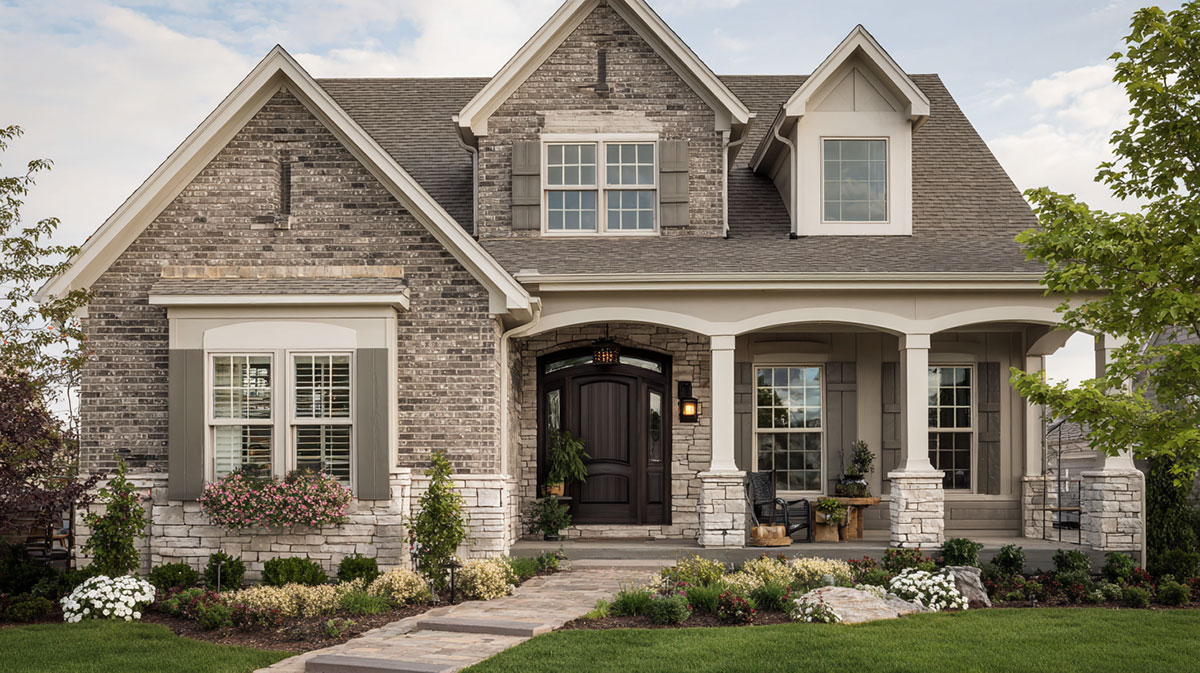
The right exterior paint colors for brick homes can add up to 5% to your property value. The wrong ones look off within a season and cost you twice to fix.
Brick is not a neutral canvas. Its undertone family, whether red, orange, brown, or gray, controls which paint colors succeed and which clash at curb distance.
This guide covers everything that actually matters: how to read your brick’s undertone, which masonry paint products perform by color family, how LRV affects color on textured surfaces, what dark and neutral palettes work in 2025, and what painted brick realistically costs from prep to finish coat.
Inside the house, our guide to color pairings by shade, wood tone and room covers walls, wood tones and textiles.
What Makes a Paint Color Work on a Brick Exterior
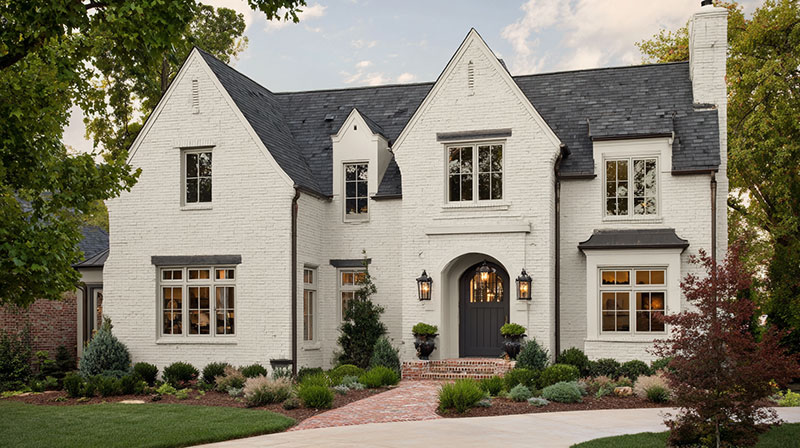
A paint color works on brick when it respects 3 core variables: the brick’s undertone family, the LRV of the chosen paint, and the finish type applied to the masonry surface.
Get any one of those wrong and the result reads off, even with a technically “neutral” color. Brick is not a neutral canvas. It has a specific color personality, and paint has to respond to it.
How Brick Undertones Drive Color Compatibility
The 5 main brick undertone families each pull paint colors in a different direction:
- Red brick: warm base, clashes with cool grays and blue-toned whites
- Orange and salmon brick: the most demanding to pair, rejects most cool neutrals
- Brown and tan brick: reads earthy, works with both warm and muted cool tones
- Gray brick: the most flexible family, accepts a wide contrast range
- White or pale brick: already near-neutral, almost any palette applies
Most homeowners stall at color selection because they’re picking from paint chips alone. The chip never shows how the color reacts to the specific undertone sitting behind it.
Why LRV Matters More Than the Color Name
LRV (Light Reflectance Value) measures how much light a color reflects on a scale of 0 to 100. Pure black sits at 0. Pure white sits at 100.
For brick exteriors, colors in the LRV range of 40 to 70 perform most predictably. They balance well with the visual texture of masonry without creating harsh contrast or disappearing into the surface.
Colors above LRV 80 (very bright whites) can look blown out in direct sun on south-facing facades. Colors below LRV 15 absorb significant heat, which can accelerate paint failure on dense masonry in hot climates, according to Resene’s masonry coating technical data.
Paint Finish Selection for Masonry
Finish type changes how a color reads on brick texture. Flat and matte finishes are standard for full brick exteriors because they reduce glare and hide surface irregularities.
| Finish | Sheen Level | Best For | Avoid When |
| Flat / Matte | None (0–5%) | Full brick facades, historic rough-face brick | High-traffic pathways prone to scuffing |
| Satin | Low (15–25%) | Modern smooth brick, accents, easy-wash zones | Highly irregular, warped, or uneven brick |
| Semi-Gloss | Medium (35–60%) | Shutters, trim, molding, front doors only | Full brick facades (creates a plastic glare) |
| Elastomeric | Varies | Waterproofing damaged, highly porous brick | Healthy brick that must naturally shed vapor |
How Mortar Color Affects the Final Result
Mortar joints cover roughly 15 to 20 percent of a standard brick wall’s surface area. That’s not a detail. It’s a significant color presence.
When painting over unpainted brick, the mortar and brick absorb paint at different rates due to varying porosity. This is why the primer coat matters more on bare brick than on any other exterior surface.
What Are the Best Neutral Paint Colors for Brick Homes
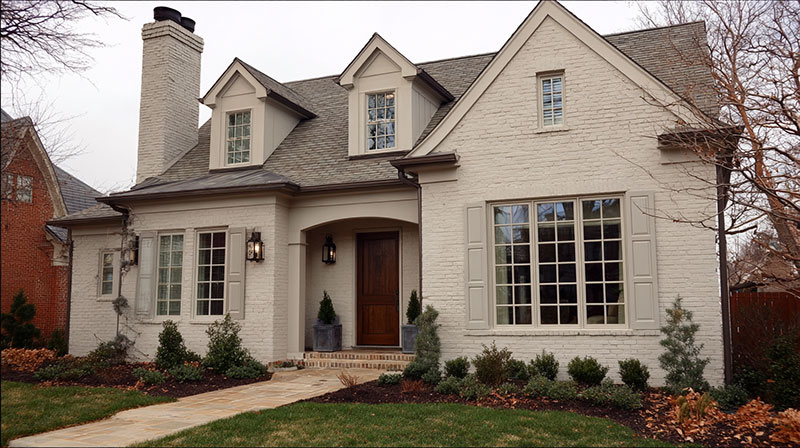
Neutral paint colors are the most reliable category for painted brick homes because they work across all 5 brick undertone families and hold their curb appeal through seasonal light changes.
Homes with greige (gray-beige) exteriors sold for an average of $3,496 more than comparable homes in the 2017 Zillow Paint Color Analysis. Neutral selection is not just aesthetic preference. It’s a measurable financial variable.
Warm Whites and Creams
Warm whites work on red, orange, and brown brick because they share the same yellow-red base. They don’t fight the warmth in the masonry. They join it.
Benjamin Moore White Dove (LRV 83.16) is the most widely used warm white on brick exteriors. It reads soft rather than stark and holds its creamy tone in both direct sun and shade.
Sherwin-Williams Alabaster (LRV 82) performs similarly. Both are in the upper-LRV white range without crossing into clinical brightness.
Pure whites with an LRV above 88 often look overexposed on textured brick in full afternoon sun. The texture casts micro-shadows that make the surface feel busy next to an intensely bright base coat.
Greige and Soft Gray Options
Greige sits between gray and beige and is the single most versatile neutral category for brick exteriors. It works on red, brown, and gray brick without committing to either warm or cool.
Top-performing greige options for brick:
- Sherwin-Williams Accessible Beige (LRV 58): warm greige, compatible with red and brown brick
- Benjamin Moore Revere Pewter (LRV 35.08): deeper greige, strong contrast on pale brick
- Sherwin-Williams Agreeable Gray (LRV 60): the most popular exterior neutral in North America, gray-leaning greige
Agreeable Gray in particular works on gray and brown brick because it carries just enough warmth to avoid looking cold while staying firmly in the gray family.
One thing I’ve noticed consistently: greige on red brick can read purple in certain light conditions if it leans too cool. Always test a 12-inch sample patch in morning and afternoon light before committing.
What Dark Paint Colors Work on Brick Exteriors
Dark exterior paint on brick is not a passing trend. 78% of homeowners agreed that painting the exterior dramatically improves curb appeal, per Thumbtack’s 2023 survey, and dark color choices are increasingly central to that transformation in 2025.
But dark paint on masonry carries 3 specific technical risks that don’t apply to lighter colors: heat absorption, LRV-related durability concerns, and primer demand when covering warm-toned brick.
Charcoal and Black
Charcoal is the most successful dark category on brick because it sits in the medium-dark LRV range (10 to 25) rather than at the extreme low end.
Benjamin Moore Kendall Charcoal and Sherwin-Williams Gauntlet Gray are the 2 most-used professional selections in this range. Both have enough gray in their base to avoid reading as pure black while still delivering strong contrast.
True black on brick (LRV below 8) works best on north-facing facades that receive limited direct sun. South-facing black brick walls absorb significantly more thermal energy, which stresses the paint film over time and accelerates cracking at mortar joints.
Deep Navy and Forest Green
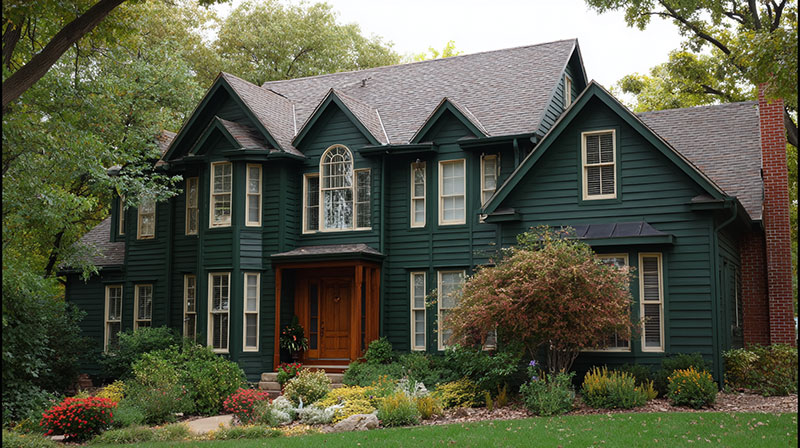
Navy blue and deep green are the fastest-growing dark color categories for brick in the 2024 to 2025 cycle. Sage green dominated 2025 exterior trend reports from both brick&batten and Sherwin-Williams.
Why these work specifically on brick:
- Navy (e.g., Benjamin Moore Hale Navy, LRV 8.36) creates strong contrast on white and pale brick
- Deep forest green reads as earthy and natural against brown and tan brick
- Sherwin-Williams Evergreen Fog (LRV 30) bridges dark and mid-tone, working on both red and gray brick
Forest green on red brick is a combination with a long history in colonial and craftsman architecture. It reads structured rather than trendy, which helps it age well on the facade.
What Color Combinations Work for Brick Home Exteriors
A brick home exterior has at least 4 color decisions: the brick body (painted or not), the trim, the shutters, and the front door. Getting all 4 to work together is where most projects either land or fall apart.
Homes with strong curb appeal sell for an average of 7% more than comparable homes with less appealing exteriors, according to data from Revive Real Estate (2024). Color coordination across all facade elements is not decorative. It’s financial.
3-Color Exterior Formula for Brick Homes
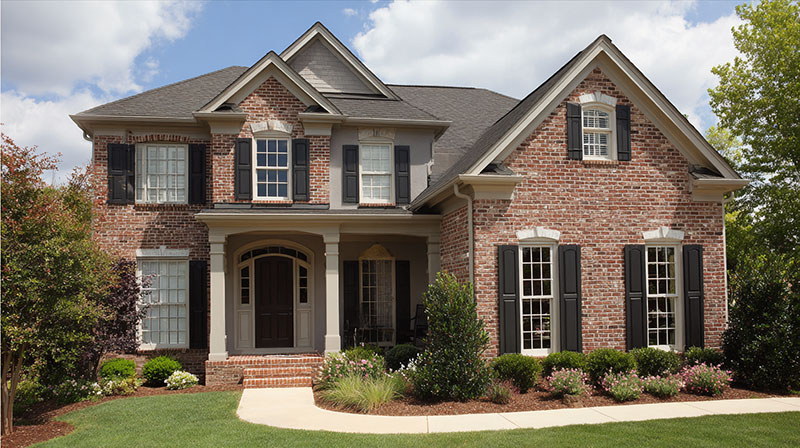
The most reliable coordination framework for painted brick uses 3 distinct roles:
- Body color: the painted brick or dominant surface tone
- Trim color: windows, fascia, soffits, typically lighter or contrasting
- Accent color: front door, shutters, or both
The trim should be at least 15 to 20 LRV points different from the body color to read as distinct at curb distance. A trim that’s too close in value to the body color blends into the facade and eliminates architectural definition.
Shutter and Door Pairings by Base Color
| Body Paint Color | Trim | Shutters | Front Door |
| Warm White (e.g., White Dove) | Bright White | Black or Deep Navy | Deep Red or Forest Green |
| Greige (e.g., Agreeable Gray) | Creamy White | Dark Brown or Charcoal | Black or Copper Bronze |
| Charcoal (e.g., Iron Ore / Kendall) | Light Gray / White | Match body or go Black | Gold-toned wood / Soft White |
| Deep Navy (e.g., Hale Navy) | Crisp White | Black or match body | Brass hardware / Natural Wood |
How Roof Color Factors In
Roof shingles are a fixed element in most exterior color decisions. They stay, and the paint has to work around them.
Gray shingles: the most flexible. Work with warm whites, greige, charcoal, and navy. Brown or tan shingles: favor warm paint tones. Cool grays create a visual disconnect. Black shingles: pair cleanly with almost any paint choice but look most intentional with light body colors and white trim.
One thing that trips people up: dark body paint with dark shingles. It can work, but the trim and door need to carry enough contrast to give the facade some lift.
How Brick Color Affects Paint Color Selection
Brick color is the non-negotiable starting point. Every other color decision radiates outward from the masonry’s natural tone. Choosing paint before understanding the brick’s specific color family is how homeowners end up repainting within 2 years.
Red Brick Paint Pairings
Red brick is the most common and the most constrained starting point. It carries a warm orange-red undertone that rejects cool paint tones at almost every LRV level.
What works on red brick:
- Warm whites (White Dove, Alabaster, Swiss Coffee)
- Deep greens, especially forest and hunter tones
- Navy blue for high-contrast traditional looks
- Warm charcoal with a brown or taupe base
What consistently fails on red brick: pure cool grays, blue-toned whites, and any paint with a visible pink or purple undertone. Those create a muddy, unresolved look that makes the brick appear dull rather than unified.
Orange and Brown Brick Paint Pairings
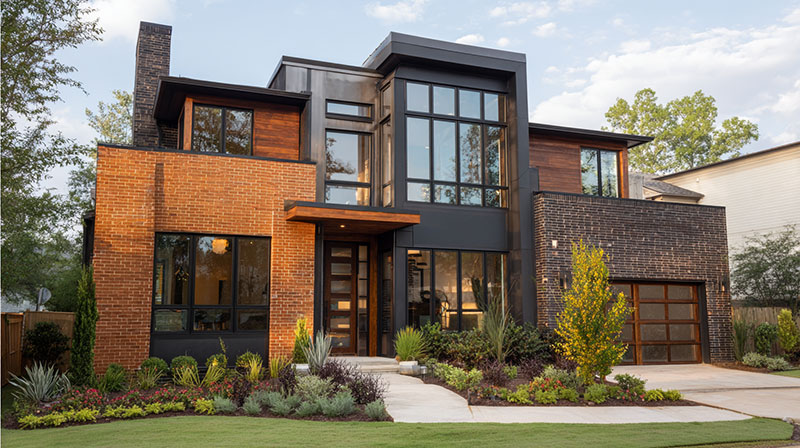
Orange and salmon brick is the trickiest family to paint. The orange undertone in the masonry bleeds visually through mid-tone paint choices and can make even well-considered colors look muddied on the surface.
Deep, saturated colors handle orange brick better than mid-tones because they overwhelm rather than react to the underlying warmth. Black, dark charcoal, and deep forest green all succeed here.
Brown brick is more forgiving. It reads as a neutral earth tone and accepts warm whites, greige, soft sage green, and warm charcoal without conflict.
Gray Brick Paint Pairings
Gray brick is the most paint-friendly masonry tone. It functions as a near-neutral surface and accepts both warm and cool paint families.
High-contrast options for gray brick: white body paint, bright trim, black shutters. This is the combination that performs in modern farmhouse and transitional architecture.
Low-contrast options: tonal grays, soft greige, or muted sage. These read as sophisticated and restrained, which suits contemporary and mid-century modern styles.
Sherwin-Williams has documented that gray-brick homes show the widest color latitude of any brick family in their exterior color consultation data, largely because gray masonry does not push a strong warm or cool bias.
What Paint Colors Are Trending for Brick Homes
Exterior color direction in 2025 shifted from the high-contrast black-and-white combinations that defined 2022 to 2024 toward softer, warmer, more nature-connected palettes. This shift is consistent across trend reports from Sherwin-Williams, PPG, and brick&batten’s annual exterior color analysis.
2025 Dominant Exterior Color Directions
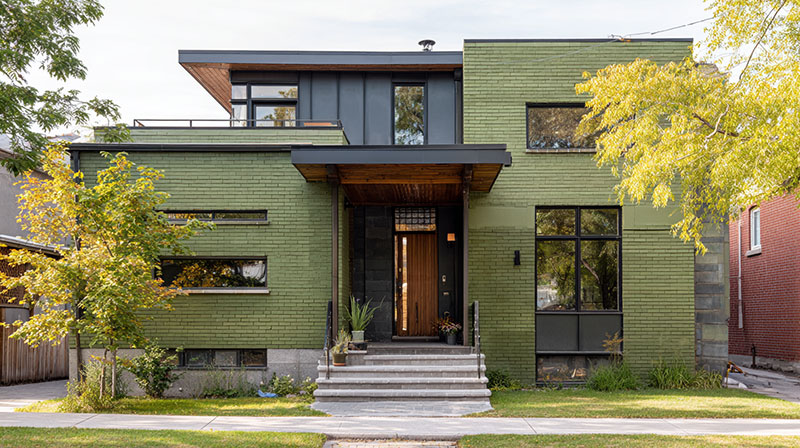
Earthy sage green is the headline color of 2025 for brick exteriors. Sherwin-Williams Evergreen Fog and Illusive Green both appear on multiple top-trend lists. Sage works particularly well on brown and gray brick because it shares the same muted, organic quality as the masonry itself.
Warm neutrals are also resurgent. Off-whites like cream, blush, and taupe are replacing stark white as the go-to “safe” choice for homeowners wanting broad buyer appeal. According to Fixr’s 2025 Cost vs. Value report, exterior replacement projects continue to generate the highest ROI in home improvement, making color choices that support resale value increasingly relevant.
The 4 trending color categories for 2025 brick exteriors:
- Sage and muted olive greens (earthy, nature-connected)
- Warm off-whites and soft creams (replaces bright white)
- Rich charcoal grays (sophisticated, enduring)
- Deep leafy greens with brown undertones (landscape-integrated)
Regional Color Differences
Exterior color preference is not uniform across the country. Regional climate, architecture, and neighborhood character all pull color choices in specific directions.
Southeast: Warm whites and soft greige dominate. Red and orange brick is prevalent, which limits cool-tone options. Midwest: Traditional and colonial architecture creates demand for classic color combinations: white or cream on red brick with black shutters. Pacific Northwest: Deep greens, slate blues, and charcoals trend higher. Gray and brown brick is more common, giving more color latitude. Northeast: Historic neighborhoods with strict color guidelines push toward period-appropriate palettes, often warm whites and deep greens or navies.
Black Painted Brick: Where It Works and Where It Fails
Black-painted brick peaked in 2022 to 2023. It still reads well in specific contexts but has lost its novelty as a blanket trend recommendation.
It works on gray or pale brick with large window areas and strong natural light. The contrast between the dark body and bright window frames provides the visual lift the facade needs.
It fails on red or orange brick without a full primer system to block the warm undertone. It also struggles on homes with very little glazing because the facade reads as uniformly dark and heavy without window contrast to break the surface up.
How to Choose the Right Paint Finish for Brick
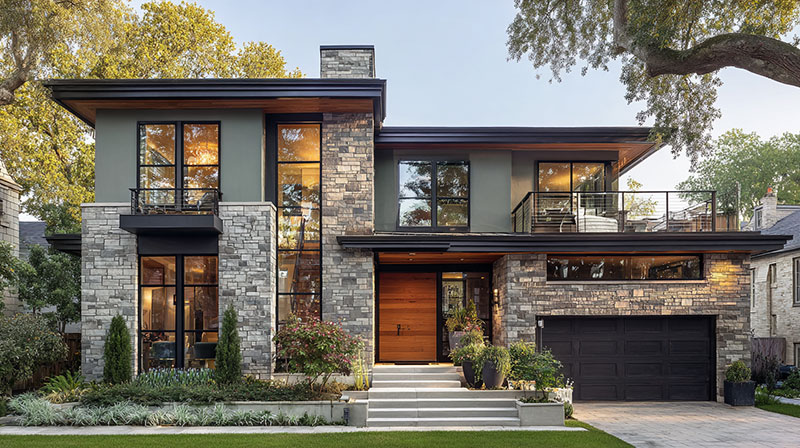
Finish selection changes how a color reads on brick texture. A matte finish and a satin finish of the same color look noticeably different on masonry because of how each interacts with the surface’s natural porosity and shadow lines.
Flat and Matte Finishes on Brick
Flat and matte are the standard for full brick exterior painting for one practical reason: they hide surface imperfections. Mortar irregularities, small chips, and uneven absorption all recede under a non-reflective finish in a way they don’t under satin or semi-gloss.
The trade-off is washability. Flat finishes on brick collect dirt and biological growth (mildew, algae) more visibly than satin finishes and require more frequent cleaning to maintain appearance.
Satin Finish: When It Makes Sense
Satin is the right choice on smoother-faced brick, such as wire-cut or tumbled brick, where surface irregularities are minimal. The slight sheen lifts the color visually and adds a subtle depth without calling attention to the texture.
Satin is also the go-to finish for trim, window frames, and soffits on brick homes, even when the body uses flat paint. The finish contrast between body and trim is one of the ways exterior color coordination creates visual hierarchy on the facade.
Elastomeric Paint as a Finish Category
Elastomeric paint is a separate product category rather than simply a finish option. It stretches and contracts with masonry movement, which makes it valuable on older brick with fine cracking or thermal movement issues.
Key facts about elastomeric coatings on brick:
- Film thickness is 10 to 20 times thicker than standard exterior paint
- Bridges hairline cracks up to 1/16 inch
- Reduces water intrusion on porous masonry
- Costs $50 to $100 per gallon vs. $30 to $70 for standard masonry paint (HomeAdvisor, 2024)
- Traps moisture if applied over wet or unsealed brick, causing bubbling and delamination
Elastomeric is not universally better than standard masonry paint. On well-maintained brick with no cracking or porosity issues, standard acrylic masonry paint outperforms it in color vibrancy and breathability.
What Primer and Prep Work Affects Final Paint Color on Brick
Primer and surface preparation determine whether a color lands exactly as chosen or reads patchy, uneven, and inconsistent after the first season.
Brick’s alkalinity actively degrades standard paint chemistries from below the surface. Alkali-resistant masonry primers neutralize those mineral salts before the topcoat ever touches the wall, according to Performance Painting’s contractor field data.
How Efflorescence and Staining Affect Color Consistency
Efflorescence is the white, powdery mineral deposit caused by water moving through brick and carrying soluble salts to the surface. Painting over active efflorescence guarantees paint failure.
The salts keep migrating after painting. They physically push the coating off the brick from underneath, causing blistering and staining that distort the color across entire wall sections.
Treatment sequence before any primer:
- Remove deposits with a stiff brush and efflorescence-specific salt remover
- Identify and resolve the moisture source driving the salt migration
- Allow the surface to dry completely, typically 24 to 48 hours minimum
- Monitor for reoccurrence before applying primer
Tinted Primer vs. White Primer on Brick
Tinted primer is underused on brick painting projects. It does one specific job that matters for final color accuracy: it closes the gap between the brick’s natural tone and the target paint color.
White primer under a dark paint color requires more topcoat layers to achieve full opacity. A primer tinted toward the topcoat color reduces coat count by 1, which lowers both material cost and application time.
On red or orange brick, a gray-tinted primer neutralizes the warm undertone bleed-through that causes mid-tone paint colors to look muddy on the first application. Rhino Shield of Missouri’s primer system documentation identifies this undertone neutralization as the primary function of their masonry primer step on warm-toned brick facades.
Brick Drying Time and Color Accuracy
Paint applied over damp brick does not produce the color shown on the chip or digital swatch. Moisture in the masonry dilutes the first coat’s pigment load as it absorbs into the porous surface.
Minimum drying windows before paint application:
- After pressure washing: 24 to 48 hours in dry conditions
- After rain or high humidity: up to 72 hours
- New brick construction: 28 to 60 days to allow full curing
Chicago-based Rhino Shield contractors note that brick must reach proper moisture content, not just feel dry to the touch, before coating is applied. Assessing by touch alone is one of the most common preparation errors on masonry projects.
How Much Does It Cost to Paint a Brick Home Exterior
Painting a brick exterior costs $1.50 to $4.50 per square foot, or $2,000 to $13,000 total depending on home size, brick condition, and paint type, according to HomeGuide’s 2025 cost analysis. The national average sits around $7,000 for a standard single-family home.
Brick costs 20 to 40% more to paint than vinyl or wood siding because masonry porosity demands more primer, more topcoat layers, and slower application to push paint into surface pores (Improovy, 2024).
Cost by Home Size
| Home Size | Estimated Total Cost | Notes |
| Small (under 1,500 sq ft) | $2,000 to $5,000 | Single-story ranch, flat ground, minimal prep |
| Medium (1,500 to 2,500 sq ft) | $5,000 to $9,000 | Standard two-story, average scraping and masking |
| Large (2,500 sq ft+) | $9,000 to $13,000+ | Multi-story, complex rooflines, scaffolding required |
| Unpainted Brick (two-story) | $7,889 to $12,583 | Requires specialty masonry primer and 2+ topcoats |
How Color Choice Affects Material Cost
Deep-base paint formulations, which are required for saturated dark colors, cost more per gallon than pastel-base paints.
Pro-grade masonry paint runs $40 to $80 per gallon, covering roughly 250 square feet per gallon (HomeAdvisor, 2024). A drastic color change (such as going from unpainted red brick to charcoal) typically requires an additional primer coat, adding $250 to $500 in materials for a mid-size home.
DIY vs. Professional Cost Comparison
DIY painting a standard brick exterior costs $700 to $1,400 in materials. Sounds like a significant saving against the $7,000 professional average.
The catch: homeowners report using up to 50% more paint than estimated on bare brick due to high porosity absorption (Coohom, 2024). Add specialty masonry primers, equipment rental for sprayers, and time to properly back-roll each coat, and the actual DIY saving shrinks fast.
Labor accounts for 70% to 85% of the total professional project cost on brick exteriors (Digital Estimating, 2024). Most professional painters offer a finish warranty. DIY projects do not.
What Are the Most Common Mistakes When Painting Brick
Most painted brick failures trace back to 3 decisions: wrong product selection, skipped preparation steps, or color chosen from a paint chip rather than tested on actual masonry. The mistakes are predictable and avoidable.
Choosing Color Without Testing on Actual Brick
Paint chips and digital color visualizers both fail on brick for the same reason: they show a flat, uniform surface. Brick is not flat or uniform.
The texture casts micro-shadows across the wall. Mortar joints read differently from brick faces. Both change how the color appears at distance vs. close up.
Correct testing approach: Apply a 12-by-12-inch sample patch directly on the wall. Observe it in morning light, afternoon light, and overcast conditions. Then decide.
Painting Over Damp Brick or Skipping Primer
Moisture trapped behind paint expands during freeze-thaw cycles. In climates with cold winters, this is a structural issue, not just a cosmetic one.
Brick must dry completely before any coating, and an alkali-resistant masonry primer is non-negotiable on bare or previously unpainted brick. According to Brickhunter’s 2024 masonry painting guidelines, painting over damp brick or using standard latex primers on bare masonry are the 2 most common causes of premature paint failure on exterior facades.
Using Non-Masonry Paint on Brick
Standard exterior latex paint is not breathable enough for brick. The masonry needs to release moisture vapor continuously. Non-breathable coatings trap that moisture and cause blistering within 1 to 2 seasons.
Required products for exterior brick:
- Alkali-resistant masonry primer (not standard exterior primer)
- Breathable acrylic latex masonry paint or elastomeric masonry paint
- No oil-based paints on exterior brick in any climate
Ignoring Mortar Color in the Color Selection Process
Fresh or repointed mortar joints are noticeably lighter than aged mortar. Painting over mismatched mortar without addressing the color variation creates an uneven base that reads through even 2 coats of topcoat.
The mortar should be allowed to cure for at least 28 days after repointing before any paint is applied. Painting too soon causes adhesion failure at the joint lines.
Can You Remove Paint from Brick to Change the Color
Full paint removal from brick exterior is possible. It is rarely clean, always expensive, and carries a real risk of permanent surface damage.
Professional removal services cost $3 to $10 per square foot, putting a 2,000 sq ft home exterior in the $6,000 to $20,000 range, according to HomeAdvisor’s 2024 cost analysis. For most homeowners, repainting over existing color is the more practical path.
Paint Removal Methods Compared
| Method | Best For | Risk to Brick | Approximate Cost |
| Chemical Stripping | Latex paint, 1 to 3 layers, historic masonry | Low: Non-destructive paste application | $3 to $6 per sq ft |
| Pressure Washing | Peeling, failing, or pre-loosened paint layers | Low to Medium: Risk to old or soft mortar | $1,500 to $3,000 total |
| Sandblasting / Media Blasting | Multi-layer oil paint, large commercial scales | High: Can permanently destroy brick face | $7,000 to $20,000 total |
When Repainting Is Smarter Than Stripping
Repainting over existing paint is recommended when the current paint is adhering well and there are fewer than 4 existing coats on the surface.
Each additional layer of paint slightly reduces the brick’s breathability. But stripping carries its own moisture and structural risks. The Brick Industry Association’s Technical Notes on painted masonry recommend repainting as the preferred maintenance approach for most residential exteriors unless the existing coating is failing, blistering, or trapping active moisture.
Historic and Soft Brick: When Neither Is the Right Answer
Some brick should never be painted. And once painted, should never be stripped by abrasive methods.
Pre-1930 brick is often soft and porous, lacking the density of modern facing brick. Sandblasting on soft historic masonry removes not just paint but the brick’s outer fired surface, permanently exposing the more absorbent core. The National Trust for Historic Preservation specifically advises against any abrasive removal method on pre-20th-century brick, citing irreversible surface damage as the primary concern.
For exposed brick interiors or historic facades where the original texture is part of the aesthetic value, chemical stripping with a product like Dumond Smart Strip or Peel Away 1 is the safest removal option available.
FAQ on Exterior Paint Colors For Brick Homes
What paint colors look best on red brick homes?
Warm whites, deep greens, and navy blue perform best on red brick. Colors like Benjamin Moore White Dove and Sherwin-Williams Evergreen Fog complement the warm undertone without fighting it. Cool grays and blue-toned whites consistently clash with red masonry.
Can you paint a brick home any color?
Technically yes, but not every color works equally well. The brick’s undertone family limits what reads clean on the surface. Orange and salmon brick are the most restrictive, rejecting most mid-tone cool neutrals. Dark saturated colors handle difficult brick tones better than mid-range ones.
What is the most popular exterior paint color for brick homes in 2025?
Earthy sage green leads 2025 exterior color trends for brick, followed by warm off-whites and rich charcoal grays. Sherwin-Williams Evergreen Fog and Illusive Green appear on multiple trend lists. Warm creams are replacing stark white as the default neutral choice.
What finish should you use when painting brick exteriors?
Flat or matte finish is standard for full brick facades. It hides surface irregularities and mortar variation better than satin. Use satin only on smoother brick faces or trim elements. Semi-gloss and gloss are reserved for shutters and front doors, not masonry body surfaces.
How long does paint last on a brick exterior?
With proper prep and quality masonry paint, a brick exterior holds its finish for 10 to 15 years. Skipped primer or low-grade products cut that to 3 to 5 years. Harsh freeze-thaw climates accelerate paint failure, particularly at mortar joints where movement is greatest.
Does painting brick hurt its value?
Well-executed painted brick can increase home value by 2 to 5%, according to Revive Real Estate data. Poor color choice or failed prep work reduces value. Once painted, brick requires ongoing maintenance repaints. Most buyers factor that long-term commitment into their assessment of painted masonry homes.
What primer do you need before painting brick?
An alkali-resistant masonry primer is required on bare or previously unpainted brick. Standard exterior primers fail against brick’s high alkalinity. Tinted primers reduce topcoat layers needed for full opacity. The brick surface must be fully dry, typically 24 to 48 hours after cleaning, before any primer is applied.
What is the best paint for exterior brick?
Breathable acrylic latex masonry paint is the standard choice. Elastomeric paint suits older brick with hairline cracking. Both Benjamin Moore and Sherwin-Williams produce dedicated exterior masonry lines. Oil-based paints trap moisture and should never be used on brick exteriors in any climate.
How much does it cost to paint a brick house exterior?
Most homeowners spend between $3,500 and $10,500, with a national average near $7,000, according to HomeGuide 2025 data. Brick costs 20 to 40% more to paint than wood or vinyl siding. Previously unpainted two-story brick homes typically run $7,889 to $12,583 including primer and multiple topcoats.
Can you remove paint from brick to change the color?
Yes, but full removal is expensive and risks surface damage. Chemical stripping with products like Peel Away or Dumond Smart Strip is the safest method. Professional removal costs $3 to $10 per square foot. Sandblasting is effective but can permanently damage soft or historic brick faces.
Conclusion
This conclusion is for an article presenting exterior paint colors for brick homes as decisions that go well beyond personal taste. Every choice, from masonry primer selection to finish type, directly affects how long the color holds and what the facade communicates at curb distance.
Brick undertone compatibility, LRV range, and paint breathability are the 3 variables that separate a lasting result from an expensive repaint in 3 years.
Whether you’re working with red brick, gray masonry, or brown and tan facades, the color palette exists. It just requires matching the paint family to the specific surface you’re starting with.
Get the prep right. Choose breathable acrylic latex or elastomeric paint rated for masonry. The color is the easy part.

- Kitchen Color Schemes by Cabinet Color: What Pairs Well - October 19, 2026
- Curtain Colors for Every Wall Color: Safe vs Bold Picks - October 18, 2026
- Interior Design Styles: Find Your Primary and Secondary - October 14, 2026