Color Combinations
What Color Walls Go with Gray Furniture
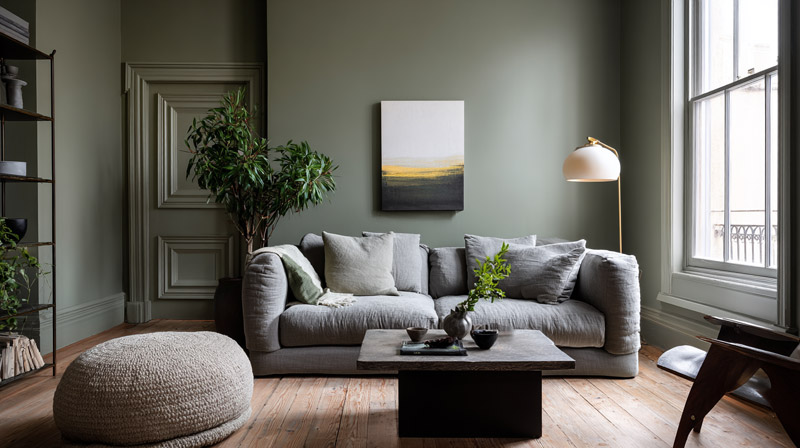
Gray furniture is one of the most flexible choices in any room. But get the wall color wrong, and the whole space falls flat.
Knowing what color walls go with gray furniture comes down to 3 things: your furniture’s undertone, the room’s natural light, and how much contrast you want.
This guide covers the best wall colors for gray furniture across every room type, from white and navy to sage green and terracotta, including which pairings to avoid and why lighting shifts everything.
For the wall, fabric and accent colors that build on this, see our guide to color pairings by shade, wood tone and room.
What Wall Colors Work Best With Gray Furniture?
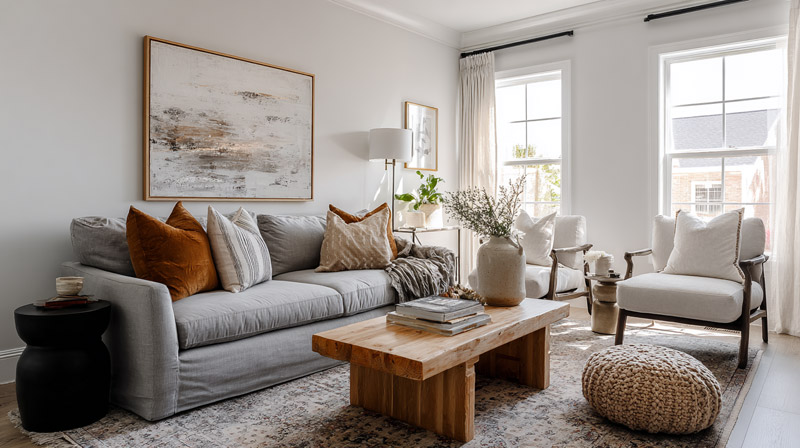
Gray furniture pairs well with 7 core wall colors: white, navy, sage green, blush, charcoal, warm beige, and terracotta. Each works for a different reason, and the right pick depends almost entirely on whether your furniture leans warm or cool.
A Fixr.com survey of 71 interior design professionals found that 81% recommend warm neutrals for interior walls when staging or decorating a home (Fixr, 2024). That stat matters here because gray furniture, especially cool-toned pieces, benefits from warm wall color to prevent the room from reading flat or cold.
The 7 best wall color pairings for gray furniture at a glance:
- White (warm or bright) — clean, minimal, works in most rooms
- Navy blue — strong contrast, adds depth and drama
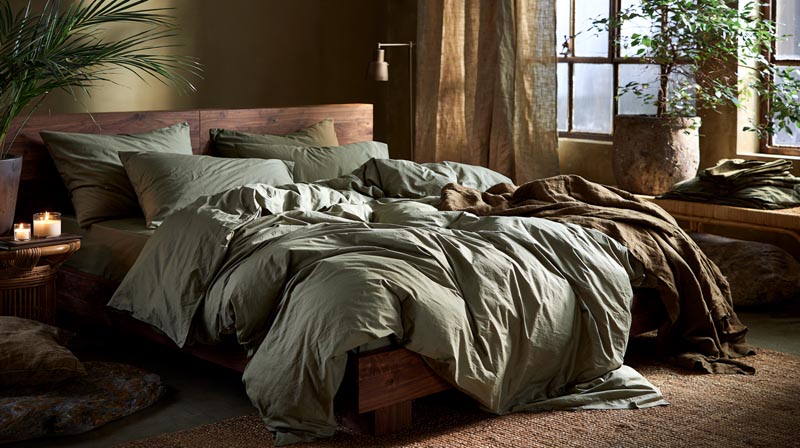
- Sage green — earthy, calming, popular across room types
- Blush pink — soft, warm complement to cool gray tones
- Charcoal — tone-on-tone, needs clear value contrast to work
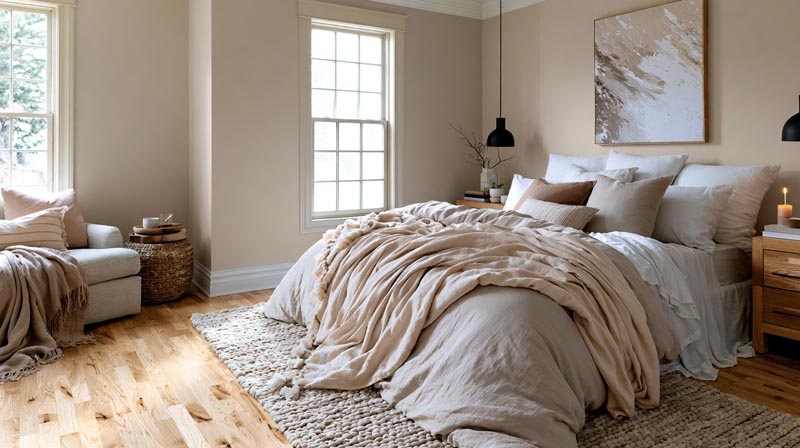
- Warm beige or greige — safe, versatile, adds warmth
- Terracotta — bold, earthy, grounding against gray neutrals
Understanding color theory in interior design is what separates a pairing that just looks fine from one that actually feels intentional. Color contrast, undertone compatibility, and the 60-30-10 rule all play a role in how these pairings land in a real room.
| Wall Color | Best Suited For | Gray Furniture Pairing |
|---|---|---|
| Warm White | Small rooms, minimalist interiors, and spaces with limited natural light | Cool gray or warm gray furniture |
| Navy Blue | Living rooms, dining rooms, and high-contrast designs | Light gray furniture |
| Sage Green | Bedrooms, living rooms, and nature-inspired spaces | Warm gray furniture |
| Warm Beige or Greige | Any room that needs added warmth and balance | Cool gray furniture |
| Terracotta | Accent walls, eclectic interiors, and bold statement spaces | Light gray or warm gray furniture |
—
Does the Undertone of Gray Furniture Change Which Wall Color to Pick?
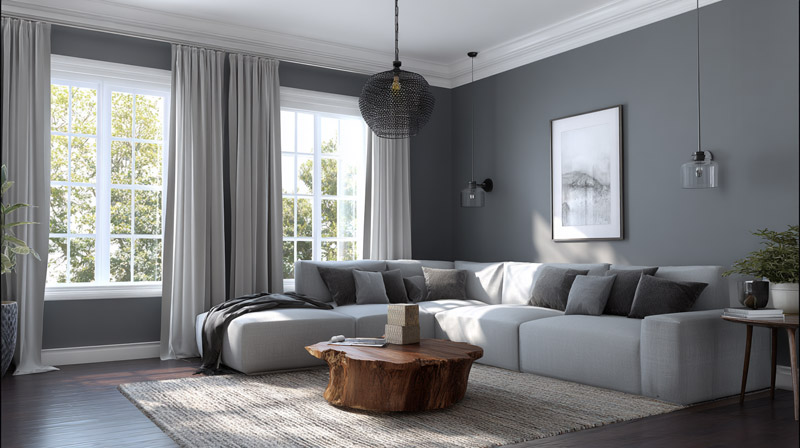
Yes. It is the single most important variable in the whole decision. Getting undertones wrong is why rooms with seemingly good color choices still feel off.
Gray furniture sits in two camps: cool-toned (blue or purple undertones) and warm-toned (brown or green undertones). These two types react very differently to the same wall color. A sage green wall looks earthy and grounded next to warm gray. Next to cool gray with blue undertones, that same sage can read murky.
How to Identify Your Gray Furniture’s Undertone
Hold a pure white card next to the furniture in natural light. If the gray looks slightly blue or purple against the white, it is cool-toned. If it looks slightly brown, tan, or green, it is warm-toned.
Artificial lighting shifts this reading. Incandescent bulbs (2700K) add yellow warmth and can make cool gray look more neutral. Daylight bulbs (5000K+) strip that warmth back out. Always assess undertone in natural daylight near a window.
Wall Colors by Undertone Type
| Gray Floor Undertone | Recommended Wall Colors | Wall Colors to Avoid |
|---|---|---|
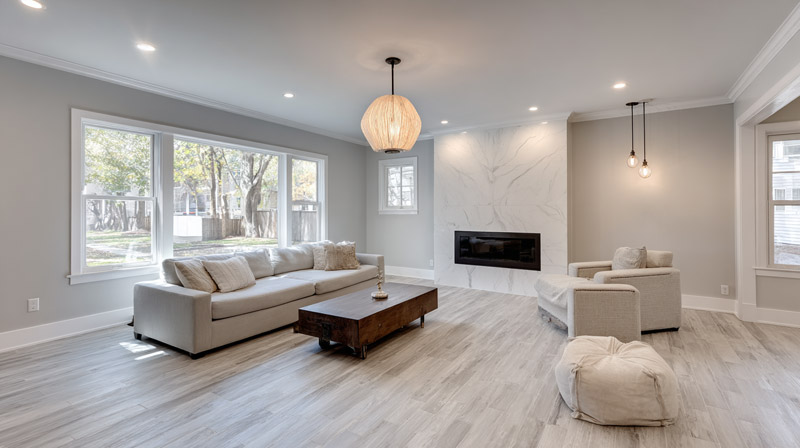
| Cool Gray (blue or purple undertones) | Warm white, creamy beige, greige, blush, terracotta, and soft taupe | Cool blue, slate blue, icy gray, and stark white, which can make the room feel colder |
| Warm Gray (brown or green undertones) | Sage green, olive, navy, off-white, soft cream, and muted greige | Bright orange, golden yellow, and other highly saturated warm hues that can clash with the floor |
Key difference: Cool gray furniture needs warm walls to avoid a cold, clinical feel. Warm gray furniture is more flexible and handles both warm and cool wall colors well.
This is a core principle of interior design: the 60-30-10 color rule applies here, but undertone compatibility comes before any ratio decision. A well-proportioned color scheme with clashing undertones still fails.
—
What White Wall Shades Pair With Gray Furniture?
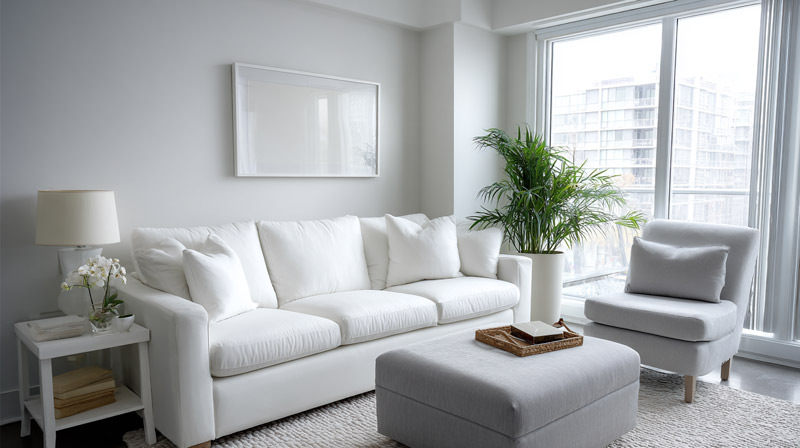
White is not one color. There are at least 3 distinct categories of white paint, and each behaves differently next to gray furniture.
A 2019 study published in the Journal of Environmental Psychology found that predominantly white environments are associated with increased perceptions of mental clarity and focus. That tracks with why white walls remain the most common pairing for gray furniture in minimalist and contemporary rooms.
Bright White vs. Warm White vs. Off-White
Bright white (like Benjamin Moore Chantilly Lace) next to cool gray furniture creates a high-contrast, clean look. The risk: in rooms with limited natural light, the combination can feel sterile rather than crisp.
Warm white (Sherwin-Williams Alabaster, with its slight yellow undertone) softens the pairing. It works particularly well with cool-toned gray furniture because the warmth counters the furniture’s coldness. This is the most forgiving option for rooms with north-facing windows or low light.
Off-white options like Farrow & Ball All White or Benjamin Moore White Dove introduce subtle undertones (lavender, green, yellow) that can either complement or compete depending on the gray furniture’s undertone.
When White Works Best With Gray Furniture
- Small rooms where white keeps the space feeling open
- Rooms with strong natural light (handles bright white without looking cold)
- Minimalist or contemporary interior design schemes
- Spaces where texture and textiles carry the warmth, not the wall color
Sherwin-Williams notes that Alabaster remains one of its highest-selling interior whites, consistently favored by designers pairing it with neutral furniture in gray and greige tones.
—
What Dark Wall Colors Work With Gray Furniture?
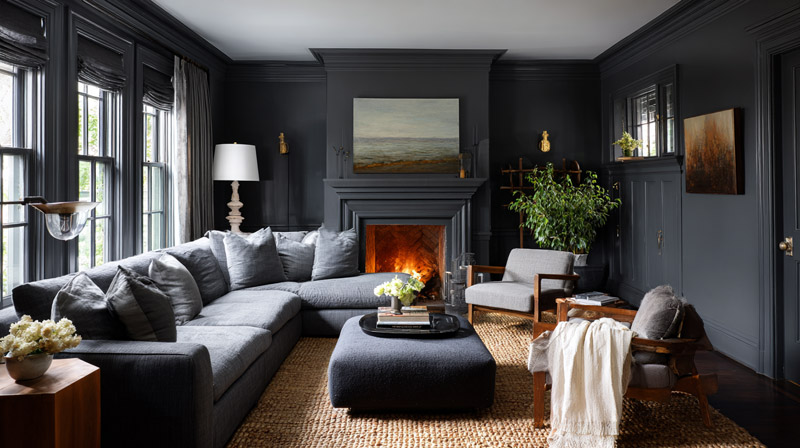
Dark walls with gray furniture create contrast-led rooms that feel intentional rather than accidental. The pairing works when there is a clear value difference between the wall and the furniture.
According to the 1stDibs 2025 Designer Trends Survey of 643 interior designers, maximalism and eclecticism now lead design preferences at 33% each, displacing minimalism (1stDibs, 2024). That shift has accelerated interest in darker, moodier wall colors across all furniture types, including gray.
Does Charcoal Work as a Wall Color With Gray Furniture?
It depends almost entirely on value contrast. Charcoal walls next to dark gray furniture flatten the room. There is not enough tonal separation for either element to read as distinct.
Light gray furniture against charcoal walls: this works well. The value gap is clear, the pairing feels moody and cohesive, and warm accents (brass hardware, ivory textiles, natural wood) pull the room back from feeling heavy.
Dark gray furniture against charcoal walls: avoid this unless at least one strong warm accent (a large rug, curtains, or wood flooring) breaks the monochrome.
Specific paints that work here: Farrow & Ball Hague Blue, Benjamin Moore Newburyport Blue, and Sherwin-Williams Black Fox. All three offer depth without reading as pure black on the wall. Understanding how contrast in interior design functions helps avoid the trap of choosing dark colors that simply eat the room.
—
What Warm Wall Colors Work With Gray Furniture?
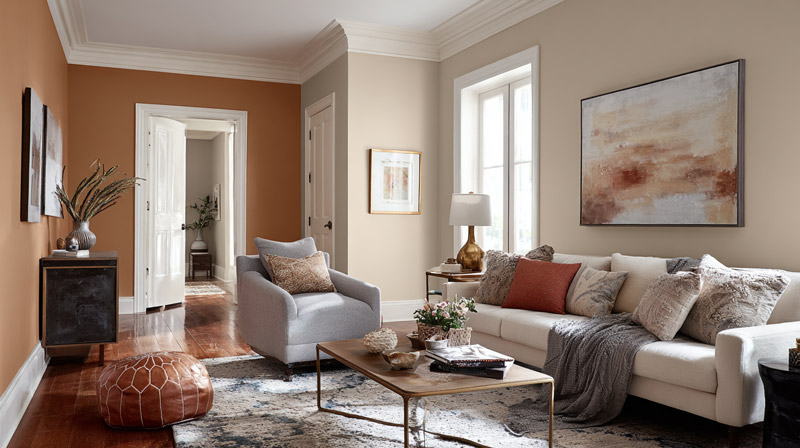
Warm wall colors solve the most common problem with gray furniture: a room that reads too cold. Beige, terracotta, blush, and warm greens all add the heat that gray furniture lacks on its own.
Fixr.com’s 2024 survey found that 46% of interior design experts identified earthy tones as the most popular color palette, up from earlier years (Fixr, 2024). That popularity extends directly to wall color choices in rooms with gray furniture.
Beige and Greige
Sherwin-Williams Accessible Beige is the classic here. It sits in warm neutral territory with a slight green-gray undertone that makes it compatible with most gray furniture without competing. Benjamin Moore Pale Oak is slightly warmer and works well in rooms with hardwood floors.
Terracotta
A bolder choice. Terracotta walls with light gray furniture create a high-contrast, earthy interior color palette. The combination references Mediterranean interior design but reads just as well in modern or transitional rooms. Farrow & Ball Dead Salmon is a muted, sophisticated take on terracotta that works without being too loud.
Blush Pink
- Works as a soft warm complement, not a bold contrast
- Best in bedrooms where a calm, warm room color scheme is the goal
- Pairs best with cool-toned gray furniture, not warm gray (can read muddy)
- Benjamin Moore Fruit Shake and Farrow & Ball Dead Salmon are specific options
—
What Green Wall Colors Pair With Gray Furniture?
Green is one of the strongest and most consistent wall color pairings for gray furniture. It works because green and gray share a natural tonal relationship, especially when both carry similar warm or earthy undertones.
Sage green hit 26% designer preference in the 2024 1stDibs survey, and while it has slightly softened to 19% for 2025, green overall remains the dominant nature-inspired wall color trend (1stDibs, 2024). Designers are now shifting toward warmer, olive-based greens with more depth and yellow base instead of the cooler, blue-based sage tones.
Sage Green
Most versatile option for gray furniture. Farrow & Ball Mizzle, Sherwin-Williams Sage, and Benjamin Moore October Mist all sit in the same muted, earthy green range that complements both warm and moderately cool gray furniture.
The risk: cool-toned gray furniture next to cool-toned sage can create a flat, color-drained room. Solve this with warm wood accents, brass fixtures, or terracotta textiles.
Olive Green
Warmer than sage. Olive green walls add depth and an earthy quality that works well in rooms with natural wood flooring and light gray upholstered furniture. The yellow base in olive prevents the coldness that some sage pairings can create.
Deep Forest Green
- High contrast against light or medium gray furniture
- Creates a dramatic, intimate room atmosphere
- Works best in living rooms with strong natural light
- Requires warm accents (brass, warm wood, ivory) to avoid heaviness
Understanding how color in interior design functions at both the wall and furniture level makes these green pairings far more predictable.
—
What Blue Wall Colors Go With Gray Furniture?
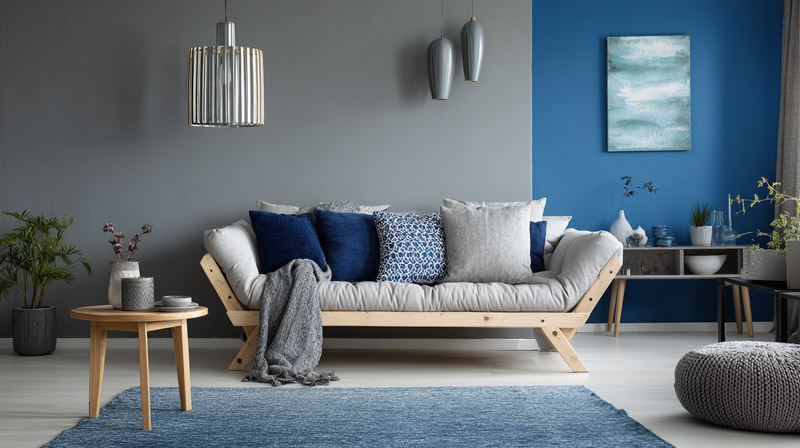
Blue is the most searched complementary color for gray furniture across interior design queries. Sherwin-Williams Director of Color Marketing Sue Wadden stated that blue and green shades are expected to strongly resonate with consumers for the next decade, a prediction backed by consistent search volume data through 2024 and 2025.
| Blue Wall Color | Design Style | Best Gray Furniture Pairing | Considerations |
|---|---|---|---|
| Light or Powder Blue | Airy, coastal, and relaxed | Warm gray furniture | Can feel overly cool when paired with cool gray flooring or furniture. |
| Slate Blue | Sophisticated, tone-on-tone | Warm gray furniture | Add warm wood, brass, or natural textures to prevent the room from feeling flat. |
| Navy Blue | Bold, dramatic, high-contrast | Light gray furniture | Use warm accents and ample lighting to keep the space from feeling too dark. |
| Deep Teal-Blue | Rich, layered, and luxurious | Warm or medium-gray furniture | Pairs best with warm grays; avoid combining with cool gray floors or furniture to prevent a cold appearance. |
Light Blue and Powder Blue
Best pairing: warm gray furniture against powder blue or pale blue walls. The warmth in the furniture balances the coolness of the wall color. Benjamin Moore Van Deusen Blue and Farrow & Ball Lulworth Blue are both proven options here.
The problem comes when cool gray furniture meets cool blue walls. Both elements share a similar cold temperature, and without warm accents, the room feels more clinical than calm. This is where understanding balance in interior design matters: warm and cool elements need distribution across a room, not concentration in one area.
Navy Blue
Navy works best as a contrast to light gray furniture. The deep tone of the wall makes the furniture pop without clashing. It is one of the few dark wall colors that does not require a strong value difference to work, because the hue contrast between navy and gray is strong enough on its own.
Real-world application: Farrow & Ball’s Hague Blue has been used extensively in living rooms with light gray sofas, paired with warm brass hardware and natural wood shelving. The combination sits at the intersection of transitional interior design and contemporary styling.
What Wall Colors to Avoid With Gray Furniture?
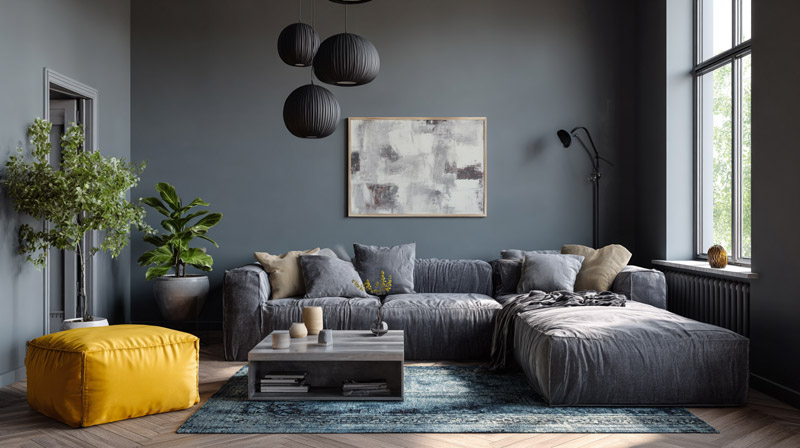
Some wall colors clash with gray furniture not because they are ugly colors on their own, but because they fight against gray’s neutrality rather than complement it.
4 wall colors that consistently fail with gray furniture:
- Bright orange and red — too warm and aggressive against gray’s cool neutrality; the contrast reads as a color collision rather than intentional contrast
- Bright yellow — competes directly instead of complementing; the room feels unresolved
- Neon or highly saturated colors — overwhelm gray, which is a muted tone by nature and gets visually dominated by bright hues
- Certain greens that share gray’s undertone — if both the wall and the furniture carry the same blue-gray undertone, the room goes flat
There is one nuance worth knowing. A Behr survey found that 74% of homeowners find it challenging to choose a wall color, partly because they test swatches in isolation rather than next to existing furniture (Behr, via Two Brothers Painting 2024). The safest way to test for a bad pairing is to hold a large paint swatch (at least A4 size) directly against your gray furniture in the actual room lighting before committing.
Havenly designers note that the most common mistake with gray furniture is choosing walls that are too similarly cool and muted, creating a washed-out, flat result rather than a composed interior color palette.
—
How Does Room Lighting Change Which Wall Color Works With Gray Furniture?
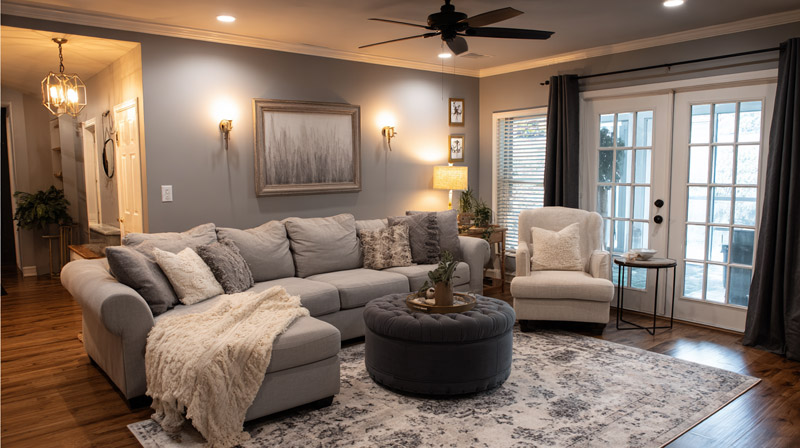
Lighting shifts how every wall color reads. The same paint can look warm and inviting in a south-facing room and cold or flat in a north-facing one, with the exact same furniture in both spaces.
A peer-reviewed study published in a 2021 NIH journal found that cool white light reduces the perceived warmth of all color environments compared to warm light. This matters directly for gray furniture pairings: a warm beige wall under 5000K cool-white LEDs can read almost as gray, eliminating the contrast you were trying to create (NIH, 2021).
Natural Light by Room Orientation
North-facing rooms receive indirect, cool light all day. This amplifies the coolness of gray furniture and makes cool wall colors (slate, bright white, light blue) feel sterile. Warm wall colors (beige, terracotta, warm sage) correct this.
South-facing rooms get strong, warm light throughout the day. They handle a wider range of wall colors, including cooler options like navy and slate blue, because the light adds warmth back into the room naturally.
Artificial Lighting Color Temperature
Two bulb temperatures define most homes: 2700K (warm white, amber cast) and 4000K-5000K (cool white, daylight tone).
- 2700K adds yellow warmth, making cool gray furniture look softer and warmer wall colors richer
- 4000K+ strips warmth from the room, making cool gray furniture look colder and potentially clashing with warm wall choices
RMCAD research confirms that warm light (2200K-3000K) softens color contrasts and creates enclosure, while cool light increases perceived clarity and spatial openness. For rooms with gray furniture, 2700K-3000K bulbs are the safer default choice regardless of wall color.
Understanding how light in interior design works alongside wall color prevents expensive repaint decisions. Always test paint swatches in the actual room, under both natural and artificial lighting, before deciding. What looks right at noon can look completely different at 8pm under your installed fixtures.
Testing Paint Swatches Correctly
Most homeowners test swatches that are too small and check them at one time of day. That is why the color fails after painting.
The right process: paint a minimum 30cm x 30cm swatch directly on the wall, leave it for 48 hours, and observe it at morning, midday, evening with natural light, and evening under artificial light. Only after those 4 checks should you decide.
—
What Accent Colors Complete a Room With Gray Furniture and Colored Walls?
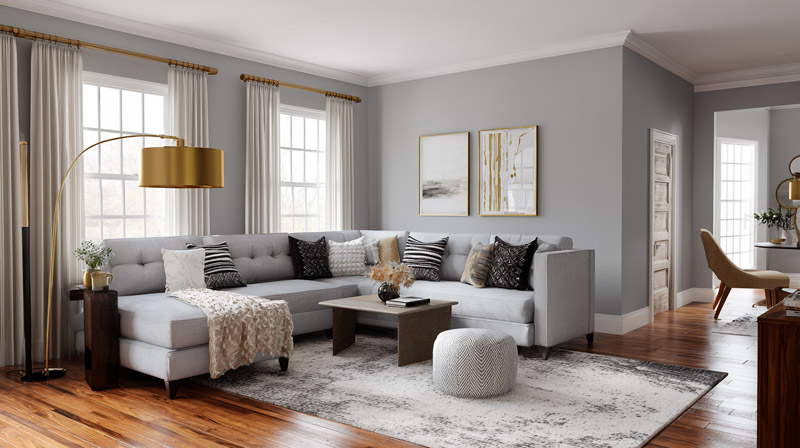
Wall color and gray furniture create the base. Accent colors are what make the room feel finished rather than just coordinated.
Havenly designers in 2025 noted that the current approach to gray furniture is to pair it with warmer materials like antique brass and rich walnut wood, moving away from the all-gray, all-cool palette that defined the previous decade (Havenly, 2025).
Warm Metals
Brass, gold, and aged copper are the most effective accent materials with cool gray furniture. They counter the furniture’s coolness without adding another wall color into the mix.
This works because emphasis in interior design functions through contrast. A brass floor lamp or gold-framed mirror next to cool gray furniture creates a focal point that the eye reads as intentional, not accidental.
Natural Wood Tones
Light oak works with cool gray furniture by adding warmth at floor or table level without competing. Walnut and dark wood pair better with lighter gray furniture where value contrast is high enough to separate the two tones.
West Elm and Crate & Barrel consistently pair gray upholstered pieces with natural wood frames and legs in their product styling. That is not a coincidence: the combination has proven conversion data behind it.
The 60-30-10 Rule Applied to Gray Rooms
| Design Layer | Recommended Proportion | Example in a Gray-Floor Room |
|---|---|---|
| Dominant | 60% | Wall color (white, greige, sage, or navy) |
| Secondary | 30% | Gray flooring, furniture, and large upholstered pieces |
| Accent | 10% | Brass finishes, warm wood, terracotta textiles, artwork, or decorative accessories |
Rug color selection follows the same logic. A neutral beige rug grounds a gray-plus-sage room. A patterned rug that pulls in navy and terracotta threads together separate accent decisions into one cohesive layer. The rugs that go with grey couches often do the heaviest lifting in the accent layer, since they cover the largest floor surface and interact with both the furniture and the wall color simultaneously.
Textiles (throw pillows, curtains) should share at least one color with either the wall or an accent tone to maintain unity in interior design. Avoid textiles that introduce a fourth color not present elsewhere in the room.
—
Does Gray Furniture Work in Every Room Type?
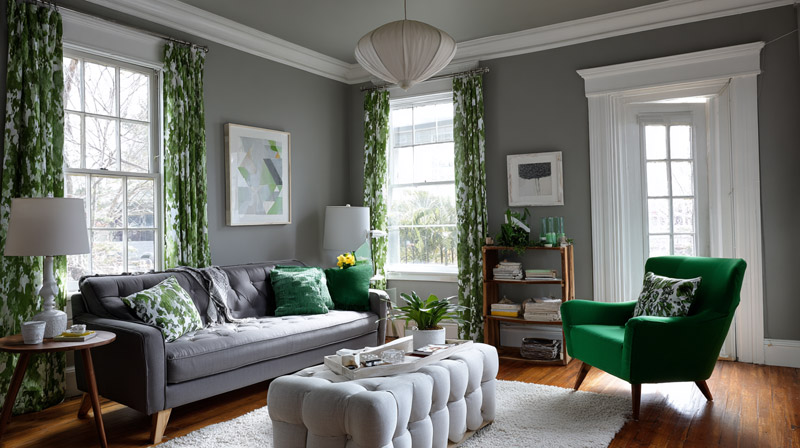
Gray furniture is versatile, but the best wall color shifts significantly by room. A pairing that works in a living room can feel cold or clinical in a bedroom, and what works in a bedroom can feel too soft for a home office.
Green was the most-searched living room color for the second consecutive year in 2024, according to a Living Cozy report analyzing worldwide Google and Instagram searches. That directly reflects how people are currently styling gray furniture: green walls are the dominant pairing in living rooms specifically (Living Cozy, 2024).
What Wall Color Works With Gray Furniture in a Living Room?
The living room has the most flexibility of any room type. It handles bold wall colors, dark contrasts, and soft neutrals equally well because furniture arrangement, rug selection, and layered ambient lighting all add warmth independently of the wall color.
Top 4 living room options with gray furniture:
- White or warm white for minimal, contemporary rooms
- Sage or olive green for earthy, nature-inspired color schemes
- Navy for high-contrast, dramatic living rooms with light gray furniture
- Warm greige (Accessible Beige, Pale Oak) for flexible, easy-to-accessorize rooms
Flooring matters here too. Dark wood floors with light gray furniture and sage walls create a three-tone layering that reads as composed. Light hardwood with dark gray furniture and navy walls creates a high-contrast room that needs warm accents to feel balanced. See more on what color walls go with dark wood floors for how the floor tone shifts the entire equation.
What Wall Color Works With Gray Furniture in a Bedroom?
Bedrooms need warmth. Full stop. A cool gray sofa in a living room can be balanced with warm accessories and lighting. A cool gray bed frame or upholstered headboard in a bedroom with cool blue walls and cool white trim creates a room that most people find uninviting for rest.
Warm white (Sherwin-Williams Alabaster), soft blush, and muted sage are the 3 most consistent bedroom winners with gray furniture. Avoid cool blue-gray combinations, bright whites with blue undertones, and slate blue walls unless the room has strong south-facing natural light and warm-toned textiles throughout.
A Sherwin-Williams 2023 color trend report confirmed that muted pastels paired with grays are trending specifically for family-oriented and bedroom spaces. The calming bedroom colors that work best with gray furniture share one trait: they carry a warm undertone, even if the hue itself is cool.
What Wall Color Works With Gray Furniture in a Home Office?
The NIH study on lighting and color found that participants experienced higher visual comfort and reduced tension in blue and white environments compared to red environments. That research supports cooler, calmer wall color choices in workspaces.
Deep blue-gray: grounding, focused, pairs with cool gray furniture without the room feeling flat if natural light is adequate.
Sage green or olive: increasingly popular for home offices because green is associated with focus and reduced eye strain. Works with both warm and cool gray furniture.
Warm white or off-white: the safest choice for home offices with limited natural light. It keeps the room feeling open and lets gray furniture anchor the space without the walls adding visual weight. The relationship between gray walls and furniture color reverses in a home office context: sometimes gray walls with warmer furniture tones work better than gray furniture with colored walls.
Understanding how rhythm in interior design connects room elements helps here. Repeating the wall color in small accents (a desk lamp shade, a chair cushion, a frame) creates visual flow that makes even a functional workspace feel considered.
FAQ on What Color Walls Go With Gray Furniture
What is the best wall color for gray furniture?
Warm white, sage green, and navy are the 3 strongest pairings. Warm white works in any room. Sage green adds earthy warmth. Navy creates high contrast with light gray furniture. The right pick depends on your furniture’s undertone and the room’s natural light.
Does gray furniture go with white walls?
Yes, but the white shade matters. Warm white (like Sherwin-Williams Alabaster) works better than bright white with cool gray furniture. Bright white plus cool gray can read sterile. Warm white softens the pairing and suits most room types and lighting conditions.
What wall color makes gray furniture look warmer?
Warm beige, greige, terracotta, and warm white all add warmth to gray furniture. Sherwin-Williams Accessible Beige and Benjamin Moore Pale Oak are reliable options. Warm wall colors counteract the natural coolness that most gray furniture carries.
Can you put gray furniture against dark walls?
Yes, if there is clear value contrast between wall and furniture. Light gray furniture against charcoal or navy walls works well. Dark gray furniture against dark walls flattens the room. Add warm accents (brass, ivory textiles, natural wood) to keep the space from feeling heavy.
What colors go with a gray sofa in a living room?
White, sage green, navy, and warm greige are the top living room wall colors for a gray sofa. Green was the most-searched living room color for two consecutive years (Living Cozy, 2024). Flooring tone and rug selection shift which option works best in your specific space.
Does gray furniture work with green walls?
Sage green and olive green both pair well with gray furniture. Sage suits warm gray tones. Olive works across warm and cool gray. Avoid cool blue-toned sage next to cool gray furniture, as both share similar undertones and the room can read flat or color-drained.
What wall color should you avoid with gray furniture?
Avoid bright orange, red, neon yellow, and wall colors that share the exact undertone as the furniture. Clashing undertones are the main problem, not just color choice. A cool blue-gray wall next to cool gray furniture with no warm accent layer creates a cold, unresolved room.
Does lighting affect which wall color goes with gray furniture?
Significantly. North-facing rooms need warm wall colors to offset cool indirect light. South-facing rooms handle a wider range, including cooler blues and greens. Bulb temperature matters too: 2700K warm bulbs work better than 4000K cool bulbs in rooms with gray furniture.
What accent colors work with gray furniture and colored walls?
Brass, warm wood tones, and terracotta textiles are the most effective accent layers. They add warmth without introducing a competing wall color. Following the 60-30-10 color rule, accents occupy 10% of the room but do the most work in preventing the palette from reading as flat.
Is gray furniture still in style?
Yes. Havenly designers confirmed in 2025 that gray furniture is returning, shifting toward richer, more saturated tones like charcoal and mink rather than washed-out light grays. The pairing approach has also changed: warm materials like antique brass and walnut now balance gray rather than more cool gray layers.
Conclusion
This conclusion is for an article presenting the wall color pairings that work best with gray furniture across every room type and lighting condition.
The core principle stays the same throughout: undertone compatibility determines whether a wall color succeeds or fails next to gray upholstery, gray bed frames, or gray case pieces.
Warm beige, sage green, navy, and terracotta all hold up because they work with gray’s natural neutrality rather than against it.
Room orientation, bulb temperature, and the 60-30-10 color rule shape the final result as much as the paint color itself.
Test large swatches. Check them under both natural and artificial lighting. Then decide.

- Kitchen Color Schemes by Cabinet Color: What Pairs Well - October 19, 2026
- Curtain Colors for Every Wall Color: Safe vs Bold Picks - October 18, 2026
- Interior Design Styles: Find Your Primary and Secondary - October 14, 2026