Color Combinations
What Color Walls Go with Oak Floors
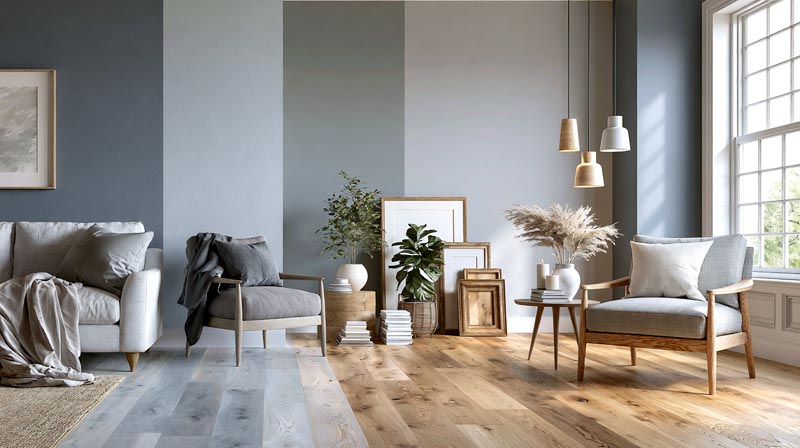
Pick the wrong wall color and your oak floors will look orange. It happens constantly, and it almost always comes down to one thing: undertones.
Oak flooring covers more U.S. homes than any other hardwood species. Yet the wall color question trips up homeowners and designers alike, because red oak and white oak behave completely differently when paired with paint.
This guide covers what color walls go with oak floors across every floor tone and room condition, from light honey oak to dark stained hardwood, from warm whites to bold forest greens.
By the end, you will know exactly which paint colors work, which ones fail, and why the undertone in your floor determines everything.
Fixed surfaces set the starting point; our decorating color combinations guide covers the colors you layer on top.
What Undertones Do Oak Floors Actually Have?
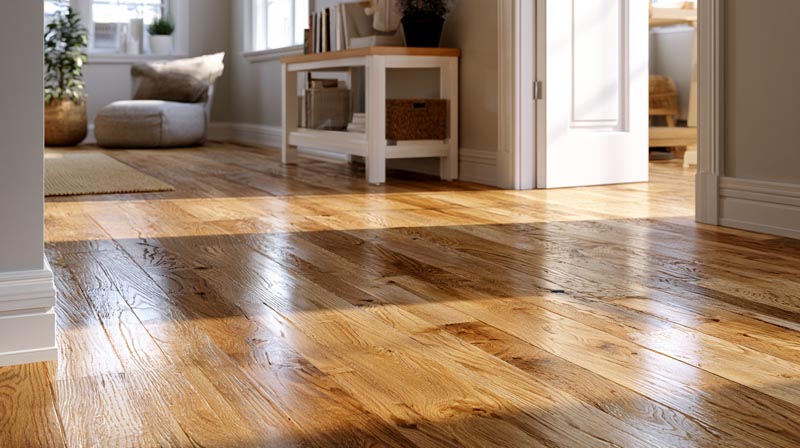
Oak flooring does not come in one tone. The wood ranges from pale honey and raw amber through to dark golden-brown, and the species matters enormously for how any wall paint reads once it goes on.
Red oak carries pink, salmon, and orange-red undertones. Even when stained, those hues tend to push through, especially under lighter finishes. White oak reads cooler. Its natural tone sits closer to beige, tan, and grayish-brown, which is exactly why it pairs with a wider range of wall colors than red oak does.
According to IMARC Group (2024), red oak leads the hardwood flooring market with roughly 35.8% of market share, while white oak holds around 29.7%. That means most oak floors in homes today are red oak, and that changes everything about the wall color conversation.
The single most reliable way to identify your floor’s undertone: look at it in natural daylight, mid-morning, from a standing position. The dominant cast you see, pink-orange, honey-gold, or grayish-tan, is the undertone you are working with.
| Oak Type | Natural Undertone | Common Finish Behavior |
|---|---|---|
| Red Oak | Pink, salmon, or orange-red | Light stains often intensify the natural pink and red undertones. |
| White Oak | Beige, tan, or grayish-brown | Accepts gray and neutral stains evenly, producing a balanced, modern appearance. |
| Honey Oak (stained) | Warm amber-gold | Warm lighting enhances its golden and orange tones, making the finish appear richer. |
This distinction matters because color in interior design is not about choosing a shade in isolation. It is about how two surfaces read against each other in real light conditions inside a real room.
—
What Wall Colors Go With Light Oak Floors?
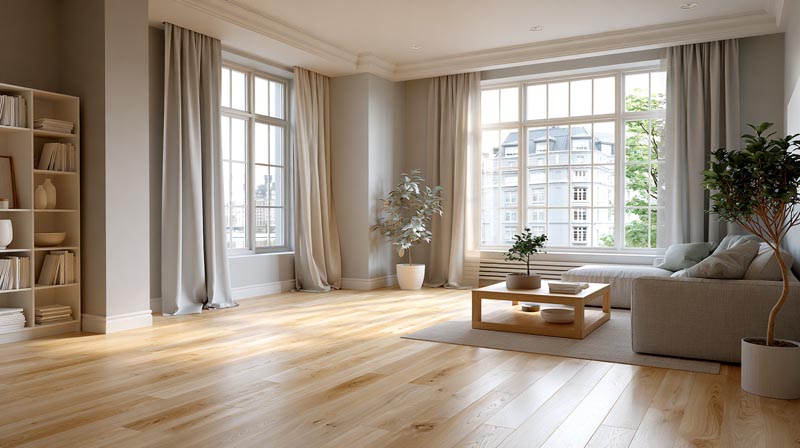
Light oak floors, the pale honey and raw-finish range, are the most forgiving to work with. They carry warmth without the strong orange push of darker or heavily stained oak, so the wall color range is broader.
A Fixr.com survey of 71 design professionals (2024) found that 46% of experts say earthy tones are the most popular interior color palette right now, and 41% selected warm neutrals. Both categories pair well with light oak for exactly the same reason: shared warmth.
Warm Whites and Off-Whites With Light Oak
The rule: use warm white, not cool or bright white.
Cool whites, especially those with a blue or purple base, create an undertone conflict with the floor’s warmth. The floor starts to read more orange than it actually is.
- Benjamin Moore White Dove (OC-17): warm, creamy, works universally
- Sherwin-Williams Creamy (SW 7012): soft yellow-white, adds depth
- Benjamin Moore Chantilly Lace (OC-65): only for white oak, too stark for red oak
Benjamin Moore has listed White Dove as one of its most consistently recommended neutrals for wood-heavy interiors for over a decade. The reason is simple: it contains a slight yellow base that echoes, rather than fights, warm floor tones.
Greige and Beige Tones With Light Oak
Sherwin-Williams Accessible Beige (SW 7036) is the most referenced example in this category. It sits at the intersection of beige and gray with a warm base, making it almost impossible to clash with light or medium oak floors.
Why greige works: the warm-gray mix does not introduce competing undertones. It simply steps back and lets the floor breathe.
- Sherwin-Williams Accessible Beige (SW 7036)
- Benjamin Moore Edgecomb Gray (HC-173)
- Sherwin-Williams Agreeable Gray (SW 7029)
- Benjamin Moore Revere Pewter (HC-172)
Sage Green and Muted Earthy Tones With Light Oak
Sage green is the most versatile bold-adjacent color for light oak floors. It works because green sits on the opposite side of the color wheel from the red-orange in oak, creating contrast without visual competition.
Muted sage, dusty olive, and soft terracotta all share the quality of containing enough brown or gray to stay grounded alongside warm wood tones.
Colors that fail with light oak: cool lavender-grays, blue-based whites, and any neutral with a strong purple undertone. These all push the floor toward appearing more orange.
—
What Wall Colors Go With Medium Oak Floors?
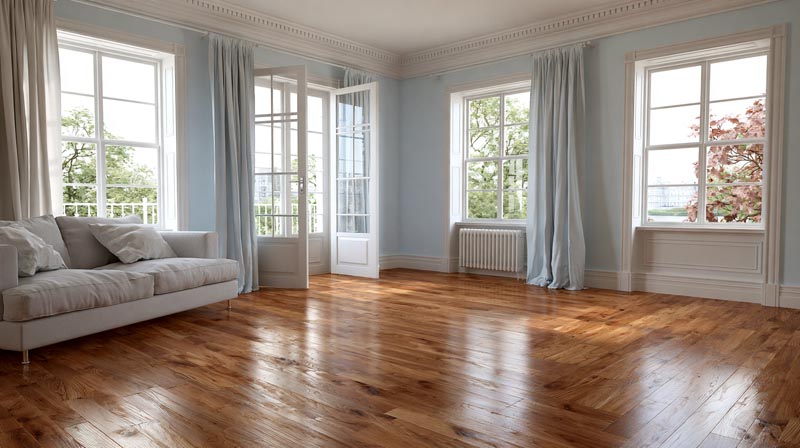
Medium oak is the most common floor tone in North American homes. The amber-brown range. It works across warm and transitional palettes, which is why it is also the category with the most wall color options available.
Residential applications account for 57.36% of the hardwood flooring market (Mordor Intelligence, 2024), and within that segment, medium-toned oak species represent the highest sales volume for renovation projects.
Neutral and Warm White Options
Starting point for most rooms: warm white or cream.
These work because they reflect rather than absorb the floor’s amber warmth. The room reads cohesive instead of divided between a warm floor and a cool upper half.
- Benjamin Moore White Dove
- Sherwin-Williams Alabaster (SW 7008)
- Benjamin Moore Navajo White (OC-95)
Earthy and Green Tones
Muted olive, khaki, and sage greens all do well here. The brown in these shades bridges naturally to the floor’s brown-amber base.
Best-performing options verified by designers:
- Sherwin-Williams Sage (SW 2860): soft, reads as a true neutral in most lighting
- Benjamin Moore Pale Avocado (2146-40): earthy without going too bold
- Farrow and Ball Moles Breath: deep warm gray-green for dramatic effect
In 2024, 32% of design experts selected deep olive green as the most popular emerging shade for interiors (Fixr.com). That aligns directly with medium oak floors, where these tones sit comfortably without competing.
Dark Contrast Walls With Medium Oak
Deep navy and charcoal work well as accent walls in medium oak rooms, but only when the room has strong natural light.
The key logic behind balance in interior design applies here: a dark wall anchors the room and makes the warm floor pop, but needs daylight to prevent the space from reading too heavy.
Specific options that work: Sherwin-Williams Naval (SW 6244), Benjamin Moore Hale Navy (HC-154), Benjamin Moore Wrought Iron (2124-10).
—
What Wall Colors Go With Dark Oak Floors?
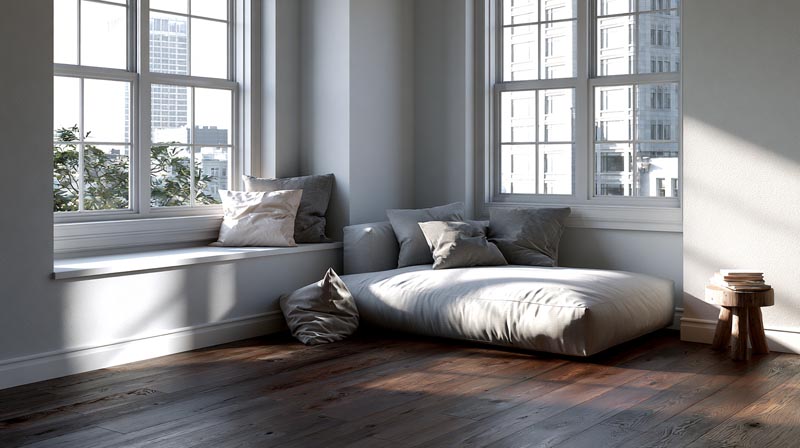
Dark oak, whether from a dark stain or species-level depth, absorbs light. The wall color carries the full weight of making the room feel open or closed. Getting this wrong creates a room that feels like a cave regardless of the lighting.
According to the Fixr.com 2024 survey, 61% of design experts recommend warm neutrals to make small spaces appear larger, and 60% say whites perform best for this purpose. Both findings apply directly to dark-floor rooms.
Light and White Walls With Dark Oak
Light walls are the functional default for dark oak floors. The contrast creates separation between floor and wall, which stops the room from collapsing visually.
Warm whites work best:
- Benjamin Moore White Dove (OC-17): the most reliable choice
- Sherwin-Williams Alabaster (SW 7008): slightly warmer, excellent in lower-light rooms
- Benjamin Moore Linen White (912): adds just enough cream to soften stark contrast
Blush, peach, and warm tan tones also soften the heaviness of dark floors without introducing the coldness that a bright white can in north-facing rooms.
Rich and Deep Wall Colors for Large Rooms
Forest green, deep teal, and matte black walls all pair with dark oak, but only in rooms that are large enough and daylit enough to carry the combination.
A compact bedroom with dark floors and dark walls loses all definition. The same combination in a high-ceilinged dining room with good south-facing light reads as intentional and grounded.
| Room Size | Wall Color Approach | Best Choices |
|---|---|---|
| Small or Low-Light | Use light wall colors to keep the space feeling bright and open. | Warm whites, pale creams, and soft blush tones. |
| Medium with Good Natural Light | Choose warm neutrals or muted colors for a balanced look. | Greige, sage green, and warm tan. |
| Large with High Ceilings and South-Facing Light | Bold or dark wall colors can create depth without making the room feel enclosed. | Forest green, navy, and matte charcoal. |
—
What Wall Colors Work With Red Oak Floors Specifically?
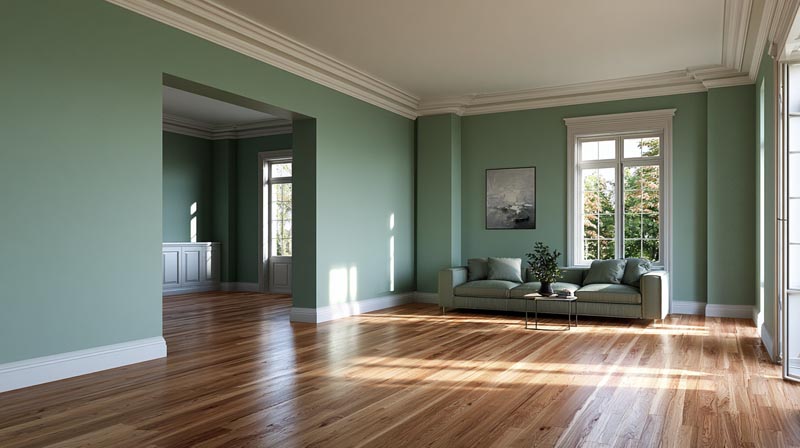
Red oak is the most misunderstood floor in color matching. The pink and orange-red undertones do not disappear under paint choices, they react to them. Pick the wrong wall color and the floor reads as aggressively orange. Pick the right one and those same undertones feel warm and inviting.
Red oak has dominated the hardwood flooring market for decades. Grand View Research (2024) confirmed it accounts for the largest species share in residential U.S. floors, which means most homeowners asking this question are dealing specifically with this species.
The reliable color categories for red oak walls:
- Muted earthy greens: green’s position on the color wheel complements the red-orange without amplifying it
- Warm neutrals with brown or yellow bases: they match the floor’s warmth direction
- Deep warm whites: creamy, butter-adjacent tones rather than bright or blue-white
Specific paint options verified by designers for red oak:
- Benjamin Moore HC-117 Hancock Green: earthy, controlled, works universally
- Sherwin-Williams SW 6119 Whole Wheat: warm tan-beige, no competing undertone
- Sherwin-Williams Accessible Beige (SW 7036): the most frequently cited match for red oak
What to avoid: purple-based grays, cool blues, lavender-tinted neutrals. These create a harsh visual contrast that emphasizes the orange in red oak instead of softening it. Repose Gray by Sherwin-Williams is a common mistake here. It looks like a safe neutral on a chip but pulls distinctly lavender next to red oak floors.
Understanding color theory in interior design makes this easier to navigate. Complementary and analogous color relationships explain why certain pairings resolve visually while others create friction.
—
What Wall Colors Work With White Oak Floors?
White oak has become the preferred floor for modern and contemporary interiors precisely because it accepts more wall color variations than red oak. Its cooler, grayish-brown undertone does not resist cool palettes the way red oak does.
White oak held a 29.7% revenue share of the U.S. wood flooring market in 2024 (Grand View Research), and its share is growing. The reason most designers cite is flexibility: it works across warm, cool, and transitional schemes.
Why white oak is different:
- Lacks the strong pink-orange cast of red oak
- Accepts cool gray wall colors without creating undertone conflict
- Works with both warm and cool whites
- Pairs with blue-gray, slate, and soft charcoal without visual tension
Specific wall color options for white oak floors:
- Benjamin Moore HC-170 Rockport Gray: a cool gray that works specifically because white oak does not fight it
- Farrow and Ball Moles Breath (No. 276): warm gray-green, understated depth
- Sherwin-Williams Upward (SW 6239): the 2024 Color of the Year, a soft blue that reads cleanly against white oak
- Benjamin Moore White Dove: warm white that keeps the floor feeling natural
This is the one floor type where a cool, blue-based gray wall color can actually work. Not because the rule about undertones disappears, but because white oak’s undertone is close enough to neutral that it does not amplify the blue the way red oak would.
Understanding Scandinavian interior design helps here. That aesthetic built its identity around white oak and cool-to-neutral wall palettes. The combination is proven at scale across thousands of interiors.
—
What Gray Wall Colors Actually Work With Oak Floors?
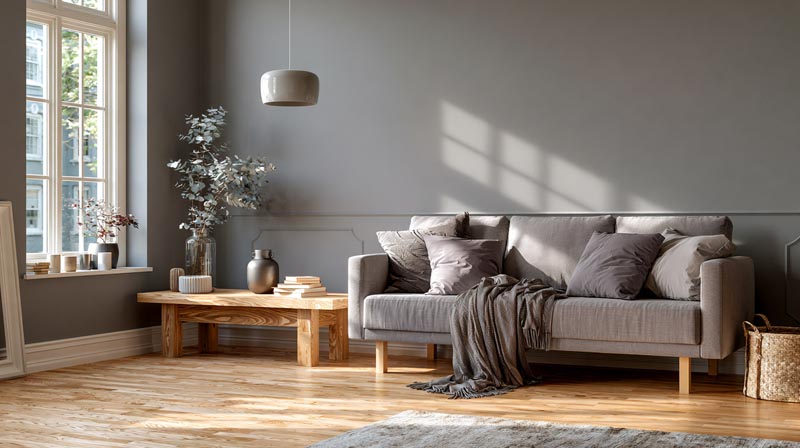
Gray is the most requested wall color category for oak floors. It is also the most frequently regretted one. The problem is consistent: most homeowners pick a gray they loved on the chip and end up with walls that make their floors look aggressively orange.
According to design professionals, cool gray was one of the most popular interior paint choices for nearly a decade before a decisive shift away from it began in 2023 (Elite Trade Painting, 2024). The shift happened in part because of exactly this problem: cool grays clash with the warm undertones in most hardwood floors.
Why Most Grays Fail With Oak
The failure point is undertone. Most gray paints contain either a blue, purple, or green base to create their neutral appearance on the chip. Under real room lighting, especially warm-bulb artificial light, those bases activate.
A blue-based gray next to orange-pink oak floors creates what designers call undertone conflict. Both colors push to the foreground and neither resolves.
Common problem grays with warm oak floors:
- Sherwin-Williams Repose Gray: pulls lavender in warm light
- Sherwin-Williams Mindful Gray: can go purple-blue in certain lighting
- Benjamin Moore Stonington Gray: too cool for red oak specifically
Gray Wall Colors That Actually Work
The grays that work with oak share one characteristic: a warm or beige base. These are technically greiges rather than true grays, but they read as gray on the wall.
Verified options:
- Sherwin-Williams Agreeable Gray (SW 7029): warm beige-gray base, the most universally safe choice for oak floors
- Benjamin Moore Edgecomb Gray (HC-173): sits between gray and beige, works with both light and medium oak
- Sherwin-Williams Accessible Beige (SW 7036): technically beige, reads as a warm gray in context
The test: check if the gray contains a beige or brown base versus a blue or purple one. If you cannot tell from the chip, paint a 12×12 inch sample on the actual wall near the floor and view it at three different times of day. Artificial light at night is when undertone conflicts become most obvious.
For rooms combining oak floors with gray walls, transitional interior design principles offer a useful framework. The goal is a 50/50 balance between warm and cool that neither overwhelms the other.
What Bold and Dark Wall Colors Pair With Oak Floors?
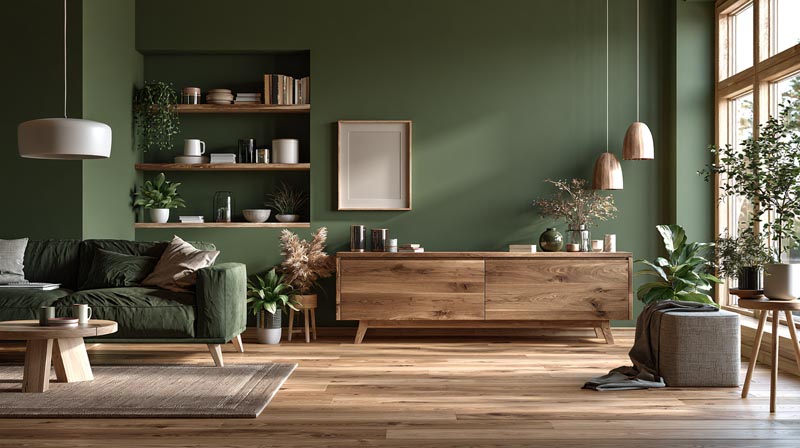
Bold wall colors are more compatible with oak floors than most homeowners expect. The key is understanding which bold shades share warmth with the floor rather than compete against it.
According to Fixr.com (2024), 32% of design experts selected deep olive green as the most popular emerging interior shade, and forest green featured prominently across all major paint brand collections for 2024 and 2025, from Sherwin-Williams to Graham and Brown.
Deep Green Walls With Oak Floors
Forest green is the most reliable bold choice for oak floors. It shares a brown-toned base with the wood, which prevents visual conflict.
- Benjamin Moore Hunter Green: deep, earthy, sits well with both red and white oak
- Sherwin-Williams Billiard Green: cool-forest tone, works best with medium to dark oak
- Farrow and Ball Moles Breath: a gray-green that bridges bold and neutral
Deep greens pair especially well with warm oak undertones because green and orange-red sit opposite each other on the color wheel. The result is visual resolution rather than conflict.
Navy and Dark Blue Walls With Oak Floors
Navy is the second most reliable bold option. But the specific shade matters considerably.
Warm navy works. Cool, purple-navy does not. Benjamin Moore Hale Navy (HC-154) and Sherwin-Williams Naval (SW 6244) both carry enough brown warmth to sit comfortably alongside oak floors. Benjamin Moore Midnight, used across full rooms and ceilings in recent design projects, produced strong results in medium-oak dining rooms when paired with warm white trim.
The interior emphasis principle applies directly here: a single bold wall becomes the room’s focal point, which draws the eye away from any floor-to-wall undertone friction that might otherwise stand out.
Black Walls and Burnt Orange With Oak Floors
Matte black works with oak floors in large, well-lit rooms. Behr’s Cracked Pepper and Sherwin-Williams Tricorn Black both appeared in major paint trend forecasts for 2024 as versatile backdrop options for warm wood interiors.
Burnt orange, rust, and deep ochre amplify the floor’s warmth intentionally. This is a maximalist move, not a neutral one, and works best in rooms where warmth and richness are the deliberate goal rather than a visual accident.
| Bold Color | Best Oak Tone | Room Requirement |
|---|---|---|
| Forest Green | Light, medium, or dark oak | Works well in rooms of any size and with most lighting conditions. |
| Warm Navy | Medium or dark oak | Best suited for spaces with good natural light to maintain a balanced feel. |
| Matte Black | Medium or dark oak | Ideal for large, south-facing rooms with abundant natural light. |
| Burnt Orange / Rust | Honey, golden, or red oak | Best used as part of an intentionally warm color palette to complement the wood’s natural undertones. |
—
How Does Room Lighting Change Wall Color Choices With Oak Floors?
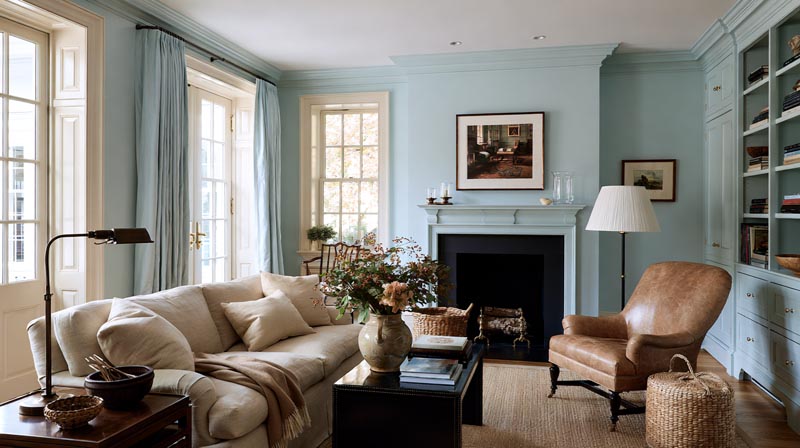
The same wall color reads completely differently in a north-facing room versus a south-facing one. This is not opinion. It is physics, and it changes which wall colors are safe to use with oak floors in any given space.
Sherwin-Williams, Benjamin Moore, and Farrow and Ball all publish room-orientation color guides. The consistent finding across all three: northern light amplifies cool undertones in paint, while southern light intensifies warmth.
North-Facing Rooms With Oak Floors
North-facing rooms receive indirect, cool-gray light throughout the day. This environment makes cool wall colors feel icier and amplifies the orange in oak floors.
What to use: warm whites, warm greiges, creams with yellow bases. Benjamin Moore recommends White Dove, Navajo White (OC-95), and Grant Beige (HC-83) specifically for northern rooms with warm wood floors. Avoid grays with blue or lavender bases here. They will read as distinctly purple next to oak under northern light.
South-Facing Rooms With Oak Floors
South-facing rooms get consistent warm, golden light all day. This is the most forgiving lighting condition for oak floors.
Warm light in south-facing rooms pulls extra yellow out of both the floor and the wall color. This means cooler-undertone wall colors become viable here that would fail in north-facing spaces. Light blue-grays, soft slate, and even cool whites stabilize rather than clash in these conditions.
Farrow and Ball’s guidance confirms this: cool whites like Borrowed Light and Pavilion Blue work in south-facing rooms precisely because the warm light neutralizes their cooler cast.
Artificial Light and Oak Floors
Bulb temperature matters as much as window direction.
- Warm white bulbs (2700K-3000K): push walls toward yellow, intensify oak’s amber tones
- Cool white bulbs (4000K+): shift walls blue, make undertone conflicts sharper at night
- Daylight bulbs (5000K-6500K): closest to natural light, most accurate for testing colors
The practical takeaway: test paint samples at night under your actual artificial lighting, not just during daytime. Undertone conflicts with oak floors are at their most visible under warm-bulb artificial light after dark.
Understanding how light in interior design shapes color perception is the single most useful skill for getting wall and floor combinations right.
—
What Trim and Ceiling Colors Complete the Wall-and-Oak Pairing?
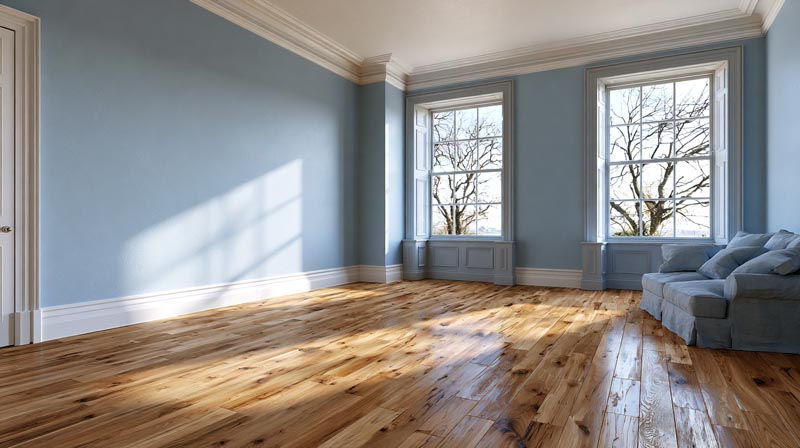
Trim and ceiling color are not afterthoughts. They either hold the wall-and-floor combination together or unravel it. A wall color that works perfectly against oak floors can start looking wrong the moment cool-white trim is added.
Trim Color Options With Oak Floors
Warm white trim is the default for almost any wall color paired with oak floors.
Bright, cool whites on trim draw the eye sharply and can make the floor look more orange by contrast. Warm whites absorb the transition instead of amplifying it.
- Benjamin Moore White Dove (OC-17): the most universally cited trim choice for warm-floor rooms
- Sherwin-Williams Creamy (SW 7012): slightly warmer, works well in traditional and rustic schemes
- Sherwin-Williams Pure White (SW 7005): cleaner but still carries enough warmth to avoid the cool-white clash
Matching trim to wall color is a legitimate option for contemporary and minimalist schemes. It reads as intentional color-drenching rather than indecision when done consistently throughout a room.
Ceiling Color With Oak Floors
Standard white ceilings work with most wall and oak floor combinations. The ceiling reflects light downward, so its tone affects how the wall color reads throughout the day.
A ceiling tinted 25 to 50 percent lighter than the wall color adds depth and cohesion without going all-in on a colored ceiling. This approach is common in rooms with deep or saturated wall colors paired with oak floors, where a stark white ceiling would break the scheme.
For rooms with bold wall colors (forest green, navy, deep ochre), a tinted ceiling in the same color family grounds the room and makes the warm oak floor feel like an anchor rather than an afterthought. The unity principle in interior design supports this approach: cohesion across surfaces creates a resolved, finished look.
—
What Paint Finishes Work Best for Walls With Oak Floors?
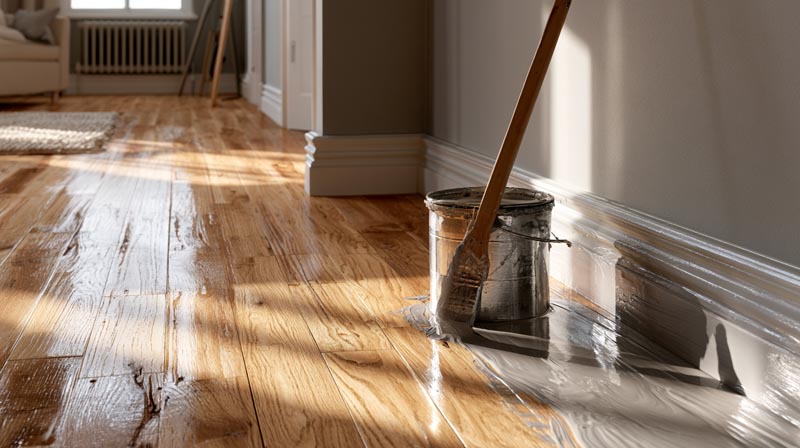
Finish selection affects how wall color reads against the sheen of hardwood flooring. A matte wall next to a polished oak floor creates a specific visual tension that can work in your favor or against you depending on the scheme.
Eggshell and satin together account for roughly 60% of all interior wall paint sold in the US, according to the American Coatings Association. Eggshell remains the single most popular finish for residential walls, and there is a practical reason for that dominance.
Eggshell and Satin for Oak Floor Rooms
Eggshell is the default choice. Its soft, low-glare surface does not compete with the natural sheen of wood flooring, and it reflects just enough light to keep warm wall colors from feeling flat.
Satin is the better choice for high-traffic rooms where the oak floor is in a hallway, kitchen, or family room. It is more washable and holds up to the increased cleaning those spaces require.
Per Family Handyman (2024), satin delivers a noticeable pearl-like sheen and handles light scrubbing without degrading, while eggshell offers a softer glow better suited to living rooms and bedrooms.
Matte and Flat Finishes With Oak Floors
Matte walls create deliberate contrast against polished or satin-finish oak floors. The combination reads as intentional in minimalist interior design and contemporary schemes where the texture difference is part of the visual language.
The practical problem with matte: it cannot be cleaned easily. Any room with a matte wall adjacent to a wood floor will see scuff marks from foot traffic, furniture, and everyday contact. For most households, eggshell is the smarter choice.
| Finish | Sheen Level | Best For | Avoid In |
|---|---|---|---|
| Matte | Near-zero sheen | Low-traffic bedrooms, dining rooms, and other spaces where a soft, non-reflective finish is preferred. | Hallways, kitchens, and other high-traffic areas where durability and cleanability are priorities. |
| Eggshell | Low sheen | Living rooms, bedrooms, home offices, and other everyday living spaces. | Wet areas such as bathrooms, laundry rooms, or other spaces with frequent moisture exposure. |
| Satin | Medium sheen | High-traffic areas, kitchens, hallways, and children’s rooms where increased durability and easier cleaning are beneficial. | Rooms with heavily textured or imperfect walls, as the added sheen can highlight surface flaws. |
—
What Are the Worst Wall Colors to Pair With Oak Floors?
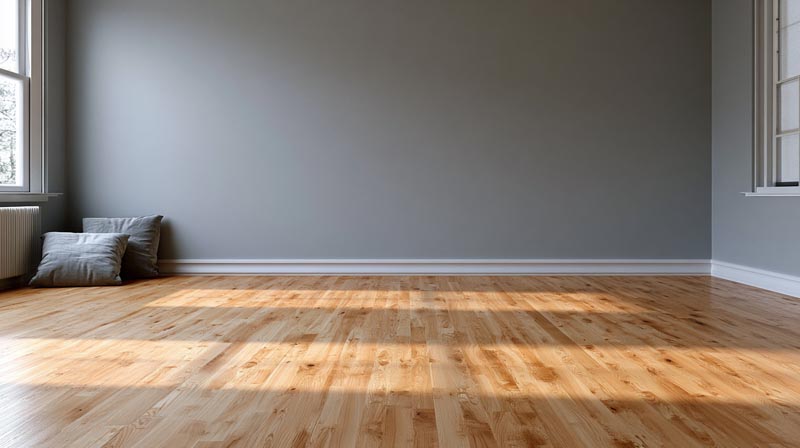
Knowing which colors to avoid saves more time than knowing which colors to pick. Most oak floor color mistakes fall into 3 categories: wrong undertone, wrong temperature, or wrong contrast level for the room’s light.
A Fixr.com 2024 survey found that 81% of design professionals recommend warm neutrals for interiors with wood floors when preparing a home for sale, specifically because cooler palettes consistently clash with warm wood tones and reduce buyer appeal.
Cool Blue-Based Grays
The single most common mistake. Cool, blue-gray paint turns orange next to warm oak floors.
The undertone logic: orange and blue are complementary colors. When placed side by side, each makes the other appear more saturated. A blue-gray wall does not neutralize a warm oak floor. It intensifies it.
Sherwin-Williams Repose Gray, while one of the most popular gray paint colors in the US, consistently fails next to red oak or honey oak floors. Its lavender undertone activates under warm artificial light, clashing directly with the floor’s orange-amber tones.
Purple-Tinted Neutrals and Lavenders
Any neutral with a purple base creates the same undertone conflict as cool gray, but more visibly. The purple reads as distinctly out of place next to warm wood, even in small amounts.
Common offenders:
- Sherwin-Williams Mindful Gray (SW 7016): pulls purple-blue under warm light
- Benjamin Moore Stonington Gray (HC-170): too cool and blue for red oak
- Any lavender or dusty purple, regardless of how neutral it appears on the chip
Stark Cool Whites
Bright, blue-based whites create a harsh contrast against warm oak floors rather than a clean one. The wall reads cold and clinical, which pushes the floor toward looking aggressively orange in response.
The fix is simple: switch from a cool white to a warm white. The difference between Benjamin Moore Chantilly Lace and White Dove is small on a chip. Against oak floors, it is the difference between a room that feels tense and one that feels resolved.
Understanding which colors fail, and why, is part of applying color theory principles practically rather than theoretically. The underlying rule is consistent: match the floor’s warmth direction with the wall color, or use a color that complements rather than opposes it.
FAQ on What Color Walls Go With Oak Floors
What is the best wall color for oak floors?
Warm whites and greige tones are the most reliable choices. Benjamin Moore White Dove and Sherwin-Williams Agreeable Gray both work because their warm bases match the floor’s undertone rather than fighting it.
Do gray walls go with oak floors?
Warm grays work. Cool grays do not. Gray paint with a blue or purple base clashes with oak’s orange-amber undertones. Greige options like Edgecomb Gray or Accessible Beige read as gray on the wall without creating undertone conflict.
What colors go with honey oak floors?
Warm whites, soft sage green, muted terracotta, and greige tones all complement honey oak floors. Avoid cool, blue-based neutrals. The amber-gold undertone in honey oak needs wall colors that share or complement its warmth direction.
What wall color makes oak floors look less orange?
Muted earthy greens are the most effective choice. Green sits opposite orange-red on the color wheel, which softens the floor’s warm cast without intensifying it. Benjamin Moore Hancock Green is a consistently recommended option for this purpose.
Can you use white walls with oak floors?
Yes, but only warm white. Cool or bright whites with blue undertones make oak floors appear more orange by contrast. Benjamin Moore White Dove and Sherwin-Williams Alabaster both carry enough warmth to sit comfortably alongside oak hardwood floors.
What wall colors work with red oak floors specifically?
Earthy greens, warm beige, and cream tones work best with red oak’s pink and orange-red undertones. Sherwin-Williams Whole Wheat and Accessible Beige are strong choices. Avoid purple-gray neutrals and cool blues, which amplify the floor’s orange cast.
Do navy blue walls go with oak floors?
Warm navy works, especially with medium and dark oak floors. Sherwin-Williams Naval and Benjamin Moore Hale Navy both carry enough brown warmth to resolve against oak. Cool or purple-navy shades create undertone friction and are harder to make work.
What wall colors work with white oak floors?
White oak accepts both warm and cool palettes. Its grayish-brown undertone means cool grays, blue-grays, and slate tones are viable here, unlike red oak. Sage green, warm white, and soft greige all work reliably across different room lighting conditions.
How does room lighting affect wall color choices with oak floors?
North-facing rooms amplify cool undertones, making warm wall colors more necessary with oak floors. South-facing rooms receive warm golden light, which allows slightly cooler wall colors to work. Always test paint samples in the actual room at multiple times of day.
What paint finish should I use on walls with oak floors?
Eggshell is the standard choice for most rooms with oak flooring. It reflects enough light to balance the floor’s sheen without competing with it. Use satin in high-traffic areas. Avoid high-gloss walls, which visually compete with polished hardwood floors.
Conclusion
This conclusion is for an article presenting the full picture of wall color coordination with oak floors, from identifying your floor’s undertone to choosing the right paint finish.
The core principle does not change regardless of oak species or room size: warm wall tones resolve, cool ones conflict.
Greige, sage green, earthy neutrals, and warm whites give you the widest range of safe choices across light oak, medium oak, and dark stained hardwood. Bold colors like forest green and warm navy work too, given the right light conditions.
Gray is not off the table. It just needs a beige or brown base, not a blue or purple one.
Test samples on the actual wall. View them under both daylight and artificial light. That single step eliminates most paint color regrets before they happen.

- Kitchen Color Schemes by Cabinet Color: What Pairs Well - October 19, 2026
- Curtain Colors for Every Wall Color: Safe vs Bold Picks - October 18, 2026
- Interior Design Styles: Find Your Primary and Secondary - October 14, 2026