

Opening your kitchen drawer to find a tangled mess of spatulas, measuring spoons, and gadgets scattered everywhere wastes precious cooking time.
Learning how to organize kitchen utensils efficiently transforms chaotic drawers into functional workspace that supports your daily meal preparation.
Most home cooks lose valuable minutes searching for the right tool while ingredients wait on the counter. Poor utensil storage creates frustration and slows down even simple cooking tasks.
This guide reveals practical kitchen organization strategies that work in real kitchens with real constraints.
You’ll discover storage solutions that maximize drawer space, create logical cooking zones, and keep essential tools within easy reach.
We’ll cover everything from choosing the right drawer organizers to strategic placement principles that match your kitchen workflow.
By the end, you’ll have a complete system for organizing every type of utensil, from daily cooking tools to specialty gadgets, plus maintenance tips to keep your kitchen storage functional long-term.
Choosing the Right Storage Solutions
Drawer Organizers and Dividers
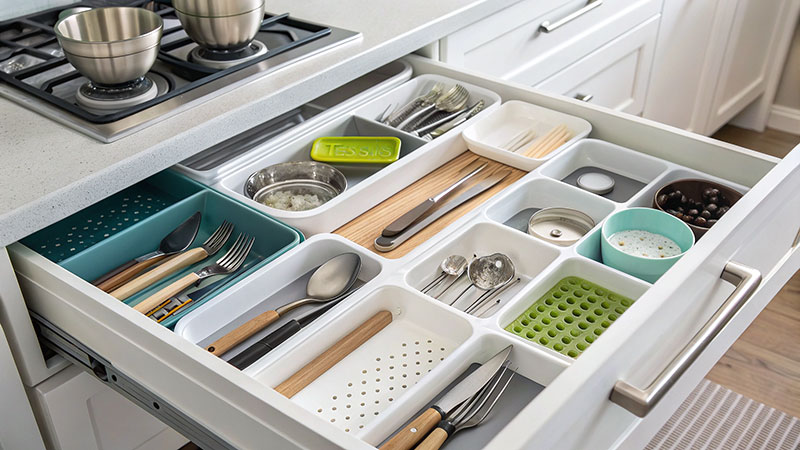
Drawer organizer systems transform chaotic utensil storage into functional spaces. Adjustable compartment trays work best for most kitchens because they adapt to different drawer sizes.
Bamboo organizers offer a natural look that complements various kitchen styles. They’re sturdy enough for heavy cooking tools yet gentle on delicate utensil finishes.
Wooden inserts create defined spaces for specific items like measuring spoons and small gadgets. The natural material prevents utensils from sliding around during daily use.
Expandable Solutions
Expandable drawer dividers fit snugly in most standard drawers. They create custom compartments without permanent modifications to your kitchen cabinets.
Look for dividers with non-slip bases. This prevents the organizer from shifting when you open and close drawers frequently.
Custom-fit organizer systems cost more but maximize every inch of available space. They’re worth the investment in high-use cooking areas.
Cabinet Storage Options
Pull-out drawers bring items from the back of deep cabinets into easy reach. No more digging through stacked utensil holders to find what you need.
Installing pull-out shelves in lower cabinets creates accessible storage for bulky items. Mixing bowls and large serving utensils fit perfectly in these spaces.
Door-mounted racks turn wasted cabinet space into functional storage. Hang lightweight utensils and measuring tools on the inside of cabinet doors.
Lazy Susan Solutions
Lazy Susan turntables work well in corner cabinets where items often get lost. Rotate the entire unit to access cooking tools stored in the back.
Choose models with raised edges to prevent utensils from sliding off during rotation. The containment keeps everything organized and secure.
Countertop Storage Systems
Utensil crocks keep daily essentials within arm’s reach of your prep area. Choose wide-mouth containers that allow easy access to frequently used tools.
Position crocks strategically near your main cooking zones. This reduces unnecessary steps during meal preparation.
Magnetic knife strips mount easily on walls or backsplashes. They free up valuable counter space while keeping sharp tools safely accessible.
Wall-Mounted Organization
Pegboard systems offer incredible flexibility for changing storage needs. Move hooks and accessories as your utensil collection grows or changes.
Rail systems with S-hooks create linear storage along backsplashes. They work particularly well for spatulas, tongs, and other hanging utensils.
Wall-mounted spice racks can double as storage for small cooking tools. Use them for items like measuring spoons and specialty gadgets.
Strategic Placement Based on Kitchen Workflow
The Work Triangle Principle
Your kitchen’s work triangle connects the sink, stove, and refrigerator. Position cooking tools near the stove for immediate access during meal preparation.
Store prep utensils like knives and cutting boards close to your main workspace. This typically falls between the sink and stove areas.
Keep cleaning tools and dish towels near the sink area. Logical placement reduces unnecessary movement during cooking and cleanup.
Zone-Based Organization
Create distinct cooking zones throughout your kitchen space. Each zone should contain the tools most relevant to activities performed there.
The prep zone needs sharp knives, cutting boards, and vegetable peelers. Store these items in the area where you do most food preparation.
Your cooking zone requires spatulas, tongs, and stirring spoons. Keep them within easy reach of stovetop and oven areas.
Baking Station Setup
Designate a specific area for baking tools if you bake regularly. Measuring cups, whisks, and mixing bowls should live together in this space.
Store baking sheets and cooling racks vertically in a cabinet near your baking area. Vertical storage saves space and makes items easier to grab.
Keep specialty baking tools like pastry brushes and cookie cutters in a dedicated drawer or container. Group similar items together for efficiency.
Accessibility and Ergonomics
Place frequently used items at chest to waist height for comfortable access. Reserve high and low storage for items used less often.
Store heavy items like cast iron pans and large mixing bowls in lower cabinets. This prevents strain and reduces the risk of dropping heavy objects.
Keep sharp knives in protective storage away from children but accessible to adults. Magnetic knife strips or in-drawer knife blocks work well for safety.
Left-handed family members need different placement strategies. Consider their dominant hand when organizing frequently used tools.
Organizing Different Types of Utensils
Cutting and Chopping Tools
Sharp knives require special storage considerations for both safety and blade protection. Never store knives loose in drawers where they can become dull or cause injury.
Knife blocks keep blades separated and easily accessible. Choose blocks with horizontal slots to prevent damage from inserting and removing knives.
In-drawer knife organizers with individual slots work well for kitchens with limited counter space. They protect both blades and fingers during storage retrieval.
Cutting Board Management
Store cutting boards vertically in narrow slots or dedicated racks. This prevents warping and allows air circulation for proper drying.
Keep separate boards for different food types to prevent cross-contamination. Color-coded systems make it easy to grab the right board quickly.
Cooking and Stirring Implements
Wooden spoons and spatulas need dry storage to prevent cracking and bacterial growth. Avoid storing them in damp areas near the sink.
Group heat-resistant silicone tools together in a utensil crock near the stove. These tools can handle high-heat cooking without melting or warping.
Metal cooking utensils scratch non-stick surfaces, so store them separately from delicate cookware. Keep them in designated spots where they won’t damage other items.
Measuring Tools Organization

Measuring cups nest together efficiently when stored properly. Keep dry and liquid measuring tools in separate groups for easy identification.
Measuring spoons on rings stay together and take up minimal drawer space. Store them in shallow compartments where you can see all sizes at once.
Consider magnetic measuring spoons that stick to the inside of spice cabinets. This keeps them handy for seasoning dishes during cooking.
Baking and Mixing Equipment
Large mixing bowls stack efficiently but can be hard to separate when nested tightly. Leave slight gaps between bowls for easier removal.
Store whisks and beaters in tall containers where the wires won’t get damaged. Wide-mouth canisters work better than narrow holders.
Keep pastry tools like rolling pins in dedicated drawers with protective sleeves. This prevents damage and keeps them ready for baking projects.
Serving and Entertaining Pieces
Serving spoons and specialty utensils often get used infrequently. Store them in less accessible areas but keep them organized for easy retrieval when needed.
Group serving pieces by function rather than size. Keep all salad-serving tools together, regardless of their material or style.
Store wine tools and bottle openers in a designated entertainment area. This keeps them together and easily accessible when hosting guests.
Specialty Tool Storage
Garlic presses, cherry pitters, and other single-purpose gadgets can clutter drawers quickly. Evaluate which tools you actually use regularly.
Store specialty items in labeled containers or dedicated drawer sections. This prevents them from getting lost among more frequently used tools.
Consider seasonal storage for items used only during specific times of year. Holiday baking tools can be stored separately and brought out when needed.
Small Gadget Organization
Kitchen tool management becomes easier when similar items are grouped logically. Store all can-opening tools together, all peelers in one spot.
Use small containers or drawer dividers to keep tiny items from getting lost. Measuring spoon sets and small gadgets need contained spaces.
Regular decluttering keeps specialty tool collections manageable. Donate or discard items that haven’t been used in the past year.
Maximizing Small Kitchen Storage
Vertical Space Solutions
Vertical storage transforms unused wall space into functional organization areas. Mount shelves above existing cabinets to store rarely used serving pieces.
Over-cabinet storage bins keep seasonal items accessible but out of daily workflow. Label containers clearly to identify contents without removing them.
Ceiling-mounted pot racks free up valuable cabinet space for utensils. Choose racks that complement your kitchen’s design while providing practical storage.
Wall-Mounted Options
Install narrow shelving units between appliances or in tight spaces. These slim profiles accommodate spice containers and small cooking tools perfectly.
Magnetic strips work on refrigerator sides for lightweight metal utensils. This creates storage in previously unused vertical surfaces.
Multi-Purpose Storage Ideas
Rolling kitchen carts provide mobile storage that moves where you need it most. Use them for prep work, then roll away when not needed.
Ottoman storage benches offer seating plus hidden compartments. Store linens, serving pieces, or rarely used appliances inside.
Kitchen islands with built-in storage maximize both workspace and organization. Choose designs with multiple drawer configurations for different utensil types.
Space-Saving Techniques
Nesting bowls and stackable containers reduce storage footprint significantly. Choose sets designed to fit together efficiently.
Collapsible storage options expand when needed but fold flat when not in use. Silicone containers and expandable organizers work particularly well.
Magnetic solutions attach to any metal surface without permanent installation. Refrigerator sides, range hoods, and appliance panels become instant storage.
Inside Cabinet Door Organization
Transform cabinet doors into storage gold mines with simple additions. Install narrow racks for spices, measuring spoons, and cleaning supplies.
Door-mounted cutting board slots keep these essentials organized and easily accessible. Choose slots that accommodate various board thicknesses.
Hidden Storage Compartments
Storage accessories tucked into unused corners maximize every available inch. Corner drawers and lazy Susan systems work well in tight spaces.
Under-sink areas often waste vertical space with poor organization. Install tiered shelving to create multiple storage levels.
Toe-kick drawers beneath lower cabinets provide surprising storage capacity. These shallow spaces work perfectly for flat items like baking sheets.
Maintenance and Long-Term Organization
Regular Cleaning and Upkeep
Weekly drawer cleaning prevents buildup of crumbs and debris that attract pests. Remove organizers completely and wipe down all surfaces.
Monthly deep organization sessions help maintain system effectiveness. Remove everything, assess what’s working, and adjust as needed.
Seasonal inventory reviews ensure you’re only keeping utensils you actually use. This is the perfect time to donate unused items.
Preventing Clutter Buildup
The one-in, one-out policy prevents utensil collections from growing beyond storage capacity. When you buy new tools, remove old or duplicate items.
Establish proper placement habits from day one. Every utensil should have a designated home that makes sense for its function.
Train all family members on the organization system. Consistency only works when everyone understands and follows the same storage principles.
System Maintenance Tips
Label storage areas clearly so items return to their proper locations. Even obvious spots benefit from subtle labels or dividers.
Replace worn organizers before they become ineffective. Broken dividers and loose compartments defeat the purpose of organized storage.
Adapting to Changing Needs
Storage solutions should evolve with your cooking habits and kitchen tools. What worked initially may need adjustment as your needs change.
Reassess organizer effectiveness every six months. Move frequently used items to more accessible locations if your cooking patterns have shifted.
New kitchen tools require storage planning before purchase. Consider where items will live before bringing them home.
Seasonal Organization Adjustments
Holiday cooking often requires temporary storage modifications. Plan flexible systems that accommodate seasonal tool increases.
Summer grilling season might shift indoor utensil priorities. Adjust accessible storage to reflect current cooking methods.
Budget-Friendly Organization Tips
DIY Storage Solutions
Repurposing household containers creates custom storage without additional expense. Mason jars, small boxes, and food containers work perfectly for drawer organization.
Cut cardboard boxes to create custom drawer dividers. Cover with contact paper or fabric for a more finished appearance.
Use ice cube trays for organizing tiny items like measuring spoon sets and small gadgets. They create perfect individual compartments.
Creative Repurposing
Empty coffee cans become excellent utensil holders when covered with decorative paper. Size them perfectly for different tool lengths.
Shoe boxes with dividers create drawer organizers for larger utensils. Cover with shelf liner for easy cleaning.
Affordable Commercial Options
Dollar store containers often work as well as expensive organizer systems. Look for clear plastic bins that stack and nest efficiently.
Thrift stores frequently have organizer trays and containers in excellent condition. Check regularly as inventory changes frequently.
Bulk buying storage solutions reduces per-unit costs significantly. Split large packages with friends or neighbors to maximize savings.
Multi-Pack Deals
Office supply stores offer drawer organizers at competitive prices. Business-focused products often provide better value than kitchen-specific items.
Back-to-school sales feature organizational products at discounted prices. Stock up during these seasonal promotions.
Maximizing Existing Storage
Rearranging current organizers often improves functionality without additional purchases. Try different configurations before buying new systems.
Combine storage methods for better space utilization. Use vertical dividers with horizontal compartments to create more organized zones.
Making the Most of Drawer Space
Measure drawer dimensions before purchasing any organizers. This prevents buying items that don’t fit properly.
Drawer space planning maximizes storage capacity through strategic placement. Group similar items together while considering frequency of use.
Use shallow containers for small items rather than deep ones where things get lost. Visibility improves access and maintains organization.
Zero-Cost Solutions
Clean food containers work perfectly for drawer organization. Yogurt cups, takeout containers, and plastic bottles create custom storage systems.
Cardboard dividers from shipping boxes can be trimmed to fit any drawer. They’re temporary solutions but cost absolutely nothing.
Investment Priorities
Focus budget on high-use storage areas first. Organize your most frequently used drawers with quality systems before tackling occasional-use spaces.
Kitchen organization products don’t need to match perfectly. Function matters more than appearance in hidden storage areas.
Choose adjustable systems over fixed-size options when budget allows. Flexibility provides better long-term value as needs change.
Common Organization Mistakes to Avoid
Poor Planning Errors
Not Measuring Space Before Buying Organizers
Drawer measurement seems obvious, yet it’s the most common organization mistake. People buy beautiful organizer systems that simply don’t fit their available space.
Always measure length, width, and depth before shopping. Even a quarter-inch difference can prevent proper installation.
Bring measurements with you when shopping or keep them saved in your phone. This prevents costly returns and wasted time.
Buying Storage Before Decluttering
Kitchen decluttering should happen before purchasing any organizational products. You can’t organize clutter effectively, no matter how many containers you buy.
Sort through everything first, keeping only items you actually use. This reveals your true storage needs and prevents over-buying organizers.
Many people discover they need far fewer storage solutions after removing unused items. The money saved can go toward higher-quality organizational systems.
Ignoring Daily Cooking Habits
Cooking tool placement fails when it doesn’t match your actual kitchen workflow. Don’t organize based on what looks neat if it doesn’t support how you cook.
Consider your dominant hand, height, and most frequent cooking methods. Right-handed cooks need different placement strategies than left-handed family members.
Watch yourself cook for a week before implementing major organizational changes. This reveals your natural movement patterns and preferred tool access points.
Overlooking Safety Considerations
Sharp knives stored loose in drawers create safety hazards and damage blade edges. Kitchen tool safety should guide all storage decisions.
Never store cleaning supplies near food preparation utensils. Cross-contamination risks increase when these items share storage space.
Keep heavy items in lower cabinets to prevent injury from dropped objects. This applies especially to cast iron cookware and large mixing bowls.
Functional Placement Problems
Storing Items Too Far From Use Points
Utensil accessibility suffers when tools live far from where you use them most. Long walks across the kitchen slow down meal preparation significantly.
Keep prep tools near your main workspace, not scattered throughout multiple drawers. Consolidating similar items saves time and reduces frustration.
Baking tools stored in the opposite corner from your mixing area create unnecessary steps. Group related items together for workflow efficiency.
Blocking Access to Frequently Used Tools
Drawer organization systems fail when everyday items get buried behind rarely used pieces. The most frequently used tools should occupy the most accessible positions.
Don’t store daily essentials in the back of deep drawers. These items should live in front positions or in shallow storage areas.
Stacking containers too high makes bottom items essentially unusable. Limit stack heights to what you can comfortably lift and access.
Creating Unsafe Storage Situations
Kitchen storage containers with sharp edges or unstable stacking create accident risks. Choose organizers with smooth edges and stable bases.
Never store glass items where they might fall and shatter. Upper cabinets near high-traffic areas pose particular risks for breakage.
Overloading drawer organizers causes them to tip or collapse when opened. Respect weight limits and distribute heavy items across multiple compartments.
Ignoring Left-Handed Family Members
Kitchen workflow efficiency requires considering all users, not just right-handed cooks. Left-handed people need different tool placement for comfortable access.
Position frequently used items on the left side of prep areas for left-handed users. This simple adjustment dramatically improves their cooking experience.
Consider installing pull-out drawers that open from either side. This accommodates different hand preferences without reorganizing entire systems.
Maintenance Oversights
Choosing Hard-to-Clean Organizers
Kitchen organization products with intricate designs trap food particles and become unhygienic quickly. Simple, smooth designs clean more easily.
Avoid organizers with deep grooves or complicated shapes that require special cleaning tools. Basic geometric forms work best for kitchen environments.
Materials like unfinished wood absorb odors and stains over time. Choose sealed wood, plastic, or metal organizers for easier maintenance.
Creating Systems Too Complex to Maintain
Utensil categorization methods fail when they require too much mental energy to maintain. Simple systems work better than elaborate organizational schemes.
Don’t create subcategories that require detailed decision-making for every item. Basic groupings like “prep tools,” “cooking utensils,” and “serving pieces” work effectively.
Color-coded systems sound appealing but often prove difficult to maintain consistently. Family members may not remember or follow complex coding systems.
Not Involving All Kitchen Users
Kitchen space management breaks down when only one person understands the organizational system. Everyone who uses the kitchen needs input and training.
Include family members in initial organization decisions. Their cooking habits and preferences affect system success significantly.
Create simple labels or visual cues that help everyone maintain the organization. Clear systems reduce the chance of items returning to wrong locations.
Forgetting to Label Storage Areas
Storage solution selection should include labeling strategies from the beginning. Even obvious storage locations benefit from subtle organizational cues.
Use drawer dividers with slight height differences to create visual boundaries between item categories. This guides proper placement without obvious labels.
Consider photo labels for family members who struggle with text-based organization systems. Visual cues work better for some learning styles.
System Design Failures
Over-Compartmentalizing Small Items
Kitchen utensil storage becomes inefficient when every tiny item gets its own designated compartment. Some mixing of similar small items actually works better.
Group measuring spoons together rather than creating individual slots for each size. They nest naturally and take up less space.
Don’t create separate compartments for items that work together frequently. Cutting and chopping tools can share larger sections effectively.
Underestimating Growth Needs
Utensil storage ideas should accommodate collection growth over time. Most people acquire more kitchen tools gradually.
Leave empty space in organizational systems for future additions. Packed-tight organization fails when you need to add new items.
Choose expandable systems when possible rather than fixed-size solutions. This provides flexibility as cooking interests and tool collections evolve.
Installing Permanent Solutions Too Quickly
Kitchen drawer layout changes should start with temporary solutions before committing to permanent modifications. Test different arrangements first.
Use removable organizers for several months before installing built-in systems. This reveals what works and what needs adjustment.
Avoid drilling holes or making permanent changes until you’re certain about optimal placement. Temporary solutions often work just as well.
Purchase Decision Mistakes
Prioritizing Appearance Over Function
Cooking utensil arrangement requires prioritizing functionality over visual appeal. Beautiful systems that don’t work practically will be abandoned quickly.
Don’t choose organizers based solely on how they look in showrooms. Consider how they’ll function with your specific tools and cooking habits.
Matching organizer sets may not fit your actual storage needs. Mix and match different solutions for better functionality.
Buying Too Many Organizers at Once
Kitchen organization tips suggest starting small and expanding gradually. Buying complete systems upfront often leads to poor fits and wasted money.
Purchase organizers for one drawer or cabinet first, then evaluate effectiveness before expanding. This prevents costly mistakes across multiple storage areas.
Test different organizer styles in various locations before committing to one type throughout your kitchen. Different spaces may need different solutions.
FAQ on How To Organize Kitchen Utensils
What’s the best way to organize utensils in a small kitchen?
Use vertical storage solutions like wall-mounted pegboards and magnetic strips. Install pull-out drawers in lower cabinets and door-mounted racks inside cabinet doors. Multi-purpose storage containers and nesting bowls maximize limited drawer space efficiently.
How should I organize deep kitchen drawers?
Install adjustable drawer organizers with tall compartments for long utensils. Place frequently used items in front sections and seasonal tools in back areas. Use vertical dividers to prevent items from sliding around during daily use.
Where should I store sharp knives safely?
Keep knives in magnetic knife strips, in-drawer knife blocks, or countertop knife blocks. Never store sharp blades loose in drawers where they can cause injury or become dull from contact with other cooking tools.
What’s the most efficient utensil storage for daily cooking?
Position frequently used items within arm’s reach of your main prep area. Store cooking utensils near the stove, prep tools by your workspace, and cleaning supplies near the sink for optimal kitchen workflow.
How do I prevent kitchen drawers from becoming messy again?
Implement the one-in, one-out policy for new purchases. Establish designated homes for every utensil and train all family members on the organization system. Perform weekly cleaning and monthly organization reviews to maintain order.
Should I store utensils by type or frequency of use?
Combine both strategies for maximum efficiency. Group similar utensil categories together within zones, then position the most frequently used items in the most accessible locations. This creates logical storage solutions that support cooking habits.
What are the best drawer organizers for kitchen utensils?
Adjustable compartment trays work well for most kitchens because they adapt to different drawer sizes. Bamboo organizers offer durability and natural aesthetics, while expandable dividers create custom-fit storage without permanent modifications to existing kitchen cabinets.
How do I organize specialty cooking gadgets?
Store specialty gadgets in labeled containers or dedicated drawer sections. Keep seasonal items like holiday baking tools in less accessible areas. Regularly evaluate which tools you actually use and donate unused items to prevent clutter buildup.
What’s the safest way to store kitchen utensils with children?
Place sharp objects in locked drawers or high cabinets. Use safety latches on drawers containing dangerous items. Store heavy cooking equipment in lower cabinets to prevent injury from falling objects. Keep cleaning supplies separate from food preparation tools.
How often should I reorganize my kitchen utensils?
Perform quick weekly cleanings and monthly organization assessments. Do seasonal deep organization sessions to remove unused items and adjust storage systems as cooking habits change. Replace worn organizers immediately to maintain system effectiveness.
Conclusion
Mastering how to organize kitchen utensils transforms daily cooking from a frustrating search mission into an efficient, enjoyable experience. The strategies outlined above create functional systems that support your unique cooking style and kitchen layout.
Successful kitchen space planning starts with understanding your workflow and choosing appropriate storage solutions. Whether you implement drawer dividers, wall-mounted systems, or cabinet organizers, consistency in placement and maintenance keeps your system working long-term.
Remember that utensil organization systems should evolve with your cooking habits. Regular assessment and adjustment ensure your storage solutions continue serving your needs effectively.
Start with one drawer or cabinet, perfect that system, then expand gradually throughout your kitchen. Kitchen cabinet storage improvements happen incrementally, not overnight.
Your organized kitchen becomes the foundation for stress-free meal preparation. Every minute saved searching for the right spatula or measuring cup gives you more time to focus on creating delicious meals for your family.

- Paint Colors That Go with Gray Floors - August 20, 2026
- What Color Bedding Goes with Dark Wood Furniture - August 18, 2026
- What Color Walls Go with Oak Floors - August 16, 2026


