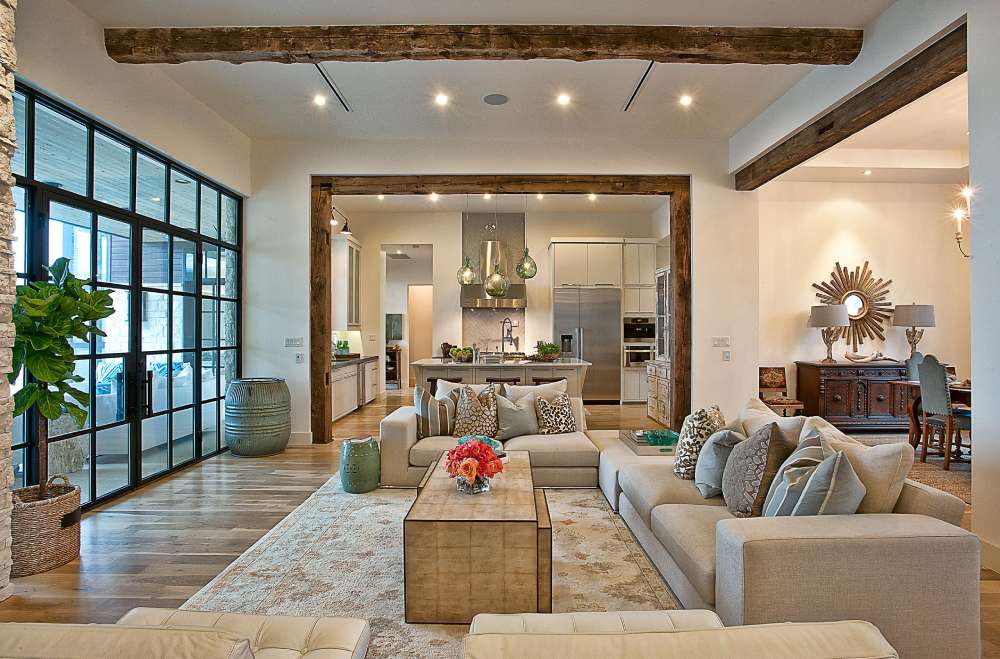
Living Room Decor
Achieving a Scandinavian Living Room Decor Style

Copenhagen’s winter solstice in 2025 lasted 7 hours 1 minute, which is 10 hours 31 minutes shorter than the June solstice, according to timeanddate.com.
Rooms in that climate have to make up for what the season withholds, so a lot of the usual Scandinavian look is practical. Pale colors bounce around whatever daylight there is, wood and wool add warmth, and lamps do the rest. Put together, that’s Scandinavian living room decor: a bright, calm room built from natural materials, soft textiles and very few objects.
The formula holds up in a small apartment or a large lounge, with IKEA basics or with Danish classics by Hans J. Wegner and Arne Jacobsen.
What makes a living room Scandinavian?

Mostly it comes down to light and restraint. A Scandinavian living room uses light neutral colors, natural materials, layered textiles, warm lighting and very little clutter, and the whole approach grew out of Nordic winters, when daylight is scarce and the home has to cover the difference.
A quick way to check your own room: if it feels light and uncluttered, and the floor is warm underfoot, it qualifies. If it feels cold or crowded, or just bare, it doesn’t.
Core principles

Pale surfaces and open windows carry daylight deeper into the room. Every piece has to earn its place by being used, and wood, wool, linen and leather beat plastic and high gloss every time. Fewer objects, better chosen. Soft layers and warm light finish the job, so the room invites sitting.
Denmark’s version of comfort is hygge, and how hygge shapes a home comes down to candles, blankets, low light and a general willingness to stay in. It’s the reason a Scandinavian room never reads as austere.
Sweden’s contribution is lagom, roughly “just enough”, which accounts for the restraint. Between the two, lagom keeps taking things out of the room and hygge keeps putting warmth back in.
Where the style comes from
The touring exhibition Design in Scandinavia opened at the Virginia Museum of Fine Arts in Richmond on 15 January 1954 and closed in Indianapolis on 19 May 1957, according to a scholarly study of the show.
That tour sold Danish, Swedish, Norwegian and Finnish homewares to North America as one category. Counts of its stops differ by source. The study lists 24 venues, while Modernism101’s catalogue notes say 27 cities.
The roots go back further. Alvar Aalto was bending Finnish birch in the 1930s, and Danish designers such as Hans J. Wegner and Arne Jacobsen gave postwar Danish modern the look most people picture now.
Put the four countries side by side and the shared traits of Scandinavian design show up in each one. Think pale rooms and plain materials, with furniture built to be used every day.
Which colors work best in a Scandinavian living room?

The base is white, soft grey or beige, with a muted accent or two on top and black in small doses.
Walls look best in warm white or pale grey, in a matte or eggshell finish, since that scatters window light instead of mirroring it. The sofa and rug do well in beige or light grey, oatmeal if you want the room warmer.
Muted blue-green or dusty rose work well as accents, and soft ochre if the room can take something warmer. They usually arrive through cushions or a throw, or one painted piece of furniture. Black belongs on picture frames, lamp bases and window hardware, and only rarely on a full wall.
Two accents is a sensible ceiling. A third pulls the room toward bohemian or color-blocked territory, which is a different look.
Undertone matters more than the shade name. North-facing rooms get cooler, bluer light, so a white with a yellowish undertone stops them turning grey. A south-facing room can take cooler greys and still feel warm.
Ready-made Scandinavian palettes save guesswork when the walls are still unpainted. Testing a grey-and-sage pairing in a color scheme generator built for rooms costs nothing before the paint tin is opened.
In a dark room, push the whites warmer and add pale wood. A cold white cannot add light the windows do not supply.
Natural materials in a Scandinavian living room, from woods to fabrics

Light woods and natural fibers do most of the work here.
Birch is the palest wood and shows up all over Finnish furniture, Aalto’s stools included. Ash is pale too but has a visible grain, which is why chairs and tables are often made from it. Oak is the mainstay for floors and coffee tables, usually oiled or soaped. Pine is warmer and softer, and it suits shelving and paneling.
On the textile side, wool covers throws and rugs, and linen is the usual choice for curtains and sofa covers. Cotton works for cushions you’ll want to wash. Sheepskin gets draped over an armchair, and leather turns up as a single tan accent chair.
Keep one dominant wood tone across floor, coffee table and shelving. Mixed tones read as accident rather than layering.
Texture does the job that color and pattern do in other styles. A rough wool throw against smooth oak makes a stronger contrast than any print, and how texture works in a room is worth a read before buying a fourth fabric.
The combination that fails most often is dark walnut or orange-toned pine against cool whites and greys. The wood fights the palette. Either warm the walls or swap the piece.
Furniture shapes and brands worth buying

Furniture here sits low, with tapered legs and clean lines, and a single design classic does more than a whole set of them. I’d rather see one good chair than four decent ones.
Sofa and seating
The sofa sits low on exposed legs that show floor beneath it. Visible floor makes the room read larger and lighter.
Upholstery stays pale (beige, oatmeal, light grey) unless a dark grey sofa is the single contrast against white walls.
Chairs carry the history. Wegner’s CH24 Wishbone has been in continuous production at Carl Hansen & Son since 1950, Dezeen noted in 2024.
That Y-shaped back is the quickest shorthand for Danish design. For more, the history of the Wishbone chair shows a form that drew on Far Eastern chairs.
Tables and shelving
Alvar Aalto patented the bent L-leg in 1933, according to Artek, which is why many Nordic tables and stools have legs that meet the top in one clean curve.
A coffee table should be low, in oak or ash, with the legs showing. Side tables work best round and small. Shelving is open units in pale wood, with gaps left on every shelf.
Slim legs matter more than the tabletop. They keep the floor visible, which is the same trick the sofa uses.
Brands by price tier
Price splits the brands fairly cleanly.
| Tier | Brands | Typical pieces | Best role |
|---|---|---|---|
| Budget | IKEA | Poang armchair, Stockholm sofa | Base furniture, storage |
| Mid-range Danish | HAY, Muuto, Normann Copenhagen, Bolia | Sofas, tables, accessories | Main seating, statement tables |
| Design classics | Fritz Hansen, Carl Hansen & Son, Artek | Egg chair, CH24 Wishbone, Stool 60 | One hero piece |
A room full of design classics is rarely needed. Buy one, such as the Egg chair Arne Jacobsen drew for the lobby of Copenhagen’s SAS Royal Hotel, and fill the rest from the cheaper tiers.
Wegner and Jacobsen both appear among the mid-century modern furniture designers whose shapes the whole category still borrows.
How to light a Scandinavian living room

Warm white bulbs rated 2700 to 3000K are the starting point. Layer ambient, task and accent light on top of them, and keep the windows clear so daylight covers whatever is left.
Stockholm gets 6 hours 4 minutes of daylight on 22 December 2026, the shortest day of the year, against 18 hours 37 minutes on the June solstice, per sunrisesunset.io’s 2026 calendar.
That swing is why Nordic homes treat lamps as primary furniture rather than extras.
General light comes from a dimmable ceiling fixture or a large pendant. A floor lamp beside the reading chair handles tasks, with a table lamp on the side table if you need one. Candles, a small lamp on a shelf or a picture light fill in the accents.
In a pale room, the general wash of ambient lighting does most of the work, so put it on a dimmer.
Louis Poulsen launched the PH5 pendant in 1958, and the 5 refers to the 50 cm diameter of its main shade. Poul Henningsen built the stacked shades to hide the bulb and cut glare.
Bulbs rated 2700 to 3000K read as warm, while anything above 5000K reads cool and bluish, according to National Grid’s guidance on ENERGY STAR certified LEDs.
Stay in the warm band. A cool bulb in a north-facing room turns white walls grey.
To size the total output, a calculator for LED light requirements turns floor area into a lumen target.
Candles belong with the accent lights. Add them through the darkest months, when the room needs the extra glow most.
Textiles and accessories that finish the room
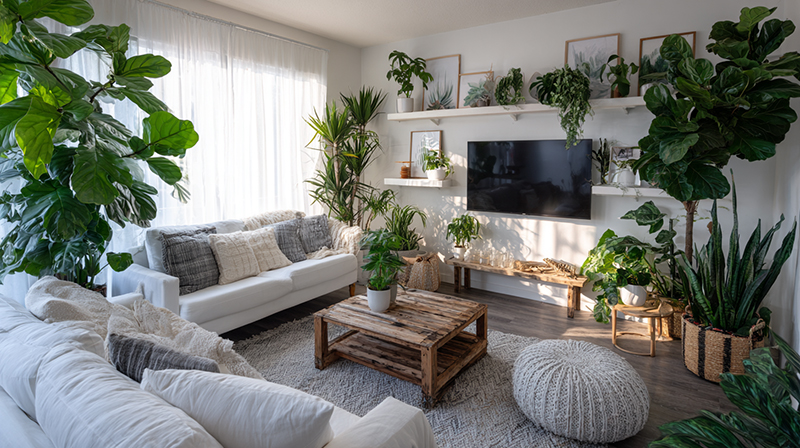
Soft layers come before objects. Get the rug and the throws, cushions and curtains sorted first, then add plants, framed art, ceramics and candles in small numbers. Do it the other way round and the room fills with things before it has any softness.
Rugs, throws and curtains
The rug should be large enough that at least the front legs of the sofa and chairs sit on it, in wool or a natural fiber such as jute. One wool or chunky knit throw goes over the sofa arm, and a sheepskin goes on a chair. To make the space feel more inviting, add some cozy blankets that matches your personal style, choosing soft textures and muted colors that complement the Scandinavian palette.
Cushions stay in linen and cotton in base colors, with one small geometric pattern as the accent. Curtains are linen, hung high and wide so the fabric frames the window instead of covering glass.
Rugs are the piece most often bought too small. Measure the seating group first, or run the numbers through a calculator for rug size before ordering.
Cushions need a cap too. If they have to be moved before someone sits down, there are too many.
Plants, art, ceramics and candles

The claim that houseplants purify room air traces back to a 1989 NASA study run in sealed chambers.
Drexel University researchers reviewed 12 chamber studies in 2019 and calculated that matching a building’s ventilation would take 10 to 1,000 plants per square meter of floor space.
Plants earn their place for green and softness, not air. These indoor plant ideas help match species to the room.
Art looks best in one or two frame finishes, and a gallery wall only works when the pieces share a color scheme. Ceramics should be matte, handmade and few. Candles go grouped on a tray, not scattered.
Three objects on a surface is plenty, and two is often better.
How much empty space does the room need?

Enough that two people can cross the room without turning sideways, and enough that each piece of furniture has clear floor around it.
IKEA’s own styling guide says the look comes from making a lot with a little, with sparse furniture leaving the room’s natural space visible.
Keep one clear path from the door to the seating. In an open-plan room, float the sofa off the wall to mark the seating zone. In a narrow room it goes against the wall.
On the walls, leave one empty or give it a single large piece of art. Open shelves should stay open only where the contents deserve display. Closed cabinets take the clutter, so the room reads calm even when daily life is happening in it.
Sketch the room to scale before buying anything. That habit is what space planning comes down to, and it catches a sofa that blocks a door before it is delivered.
If the room is big, a low shelf unit or a large rug splits the zones without walls. Plenty of ways to divide a large living room follow the same restraint.
Scandinavian, minimalist, mid-century modern or Japandi: how do they differ?

Light and comfort come first in Scandinavian decor. Minimalism is mostly about taking things away. Mid-century modern cares about postwar form, and Japandi about imperfection.
| Style | Priority | Palette | Materials |
|---|---|---|---|
| Scandinavian | Light and comfort | Warm whites, grey, beige, muted accents | Light woods, wool, linen |
| Minimalist | Reduction | Neutral, often near-monochrome | Plain, unadorned surfaces |
| Mid-century modern | Postwar form and function | Warm woods with bold accents | Hardwoods, molded plywood |
| Japandi | Calm and imperfection | Warm neutrals with a darker anchor | Light and dark woods, ceramics |
Mid-century modern is the closest relative. Wikipedia describes it as a movement popular from roughly 1945 to 1969, which overlaps the Danish designers behind Scandinavian furniture, so the labels blur.
The split shows in color and pattern. Mid-century rooms lean on the bolder mid-century modern look, while Scandinavian rooms get their interest from texture.
Japandi is the newest relative. It adds wabi-sabi, so handmade and imperfect pieces are prized, and it darkens the palette with walnut or black-stained oak.
The cross-over is older than the label. IKEA credits Japanese designer Noboru Nakamura with the POANG armchair, launched in 1977, and the Japanese and Scandinavian blend now has its own style guides.
Style guides don’t agree on the palette. Some describe it as bright whites and cool tones, others as warm whites and greige. This article follows the warm reading, which matches the bulb advice above.
If the room gets little daylight, stay Scandinavian. If it gets strong sun, Japandi’s darker anchors hold up.
When does Scandinavian decor not work?
It struggles in rooms with almost no daylight, and in households where pale upholstery gets wrecked every week. It also falls apart when belongings don’t fit behind closed doors.
In a room with almost no daylight, pale walls have nothing to bounce, so they look flat. A mid-tone warm neutral works better, with the room built around lamps.
With children and pets, white upholstery stains fast. Oatmeal or mid-grey with washable slipcovers is the safer choice.
Collectors have a harder time. If your things don’t fit behind doors, the style won’t survive them, so add closed storage and give one wall to display. Go too far the other way and a bare room feels cold, not calm.
The minimalist side of Scandinavian design goes wrong when reduction is mistaken for emptiness, a point the guide to Scandinavian minimalism develops.
Homes & Gardens points to candles and textured throws, along with a warmer-toned rug, as the fix for a one-dimensional room. It also lists all-white schemes and too much wood among the common mistakes.
Warmer palettes help too, and color choices that make a living room cozy show how far to push them.
The upside is real. It brightens dark rooms, and since it works across room sizes you can build it up piece by piece.
The downsides are just as real. Pale surfaces show dirt, and clutter has nowhere to hide. Good furniture costs more up front. And when every choice is the default one, the room can read like a template.
How to put the room together on a budget or in a small space
Work from the biggest surfaces to the smallest objects, and stop adding the moment the room feels finished.
- Clear the room and measure it, noting windows, doors and outlets.
- Paint the walls a warm white, or keep existing neutral walls.
- Buy the sofa and rug first, since they set the palette.
- Add the lamps and warm bulbs.
- Layer one throw, a few cushions and curtains.
- Bring in plants and a single large piece of art.
- Live in the room for a few weeks, then remove what is unused.
Small rooms

Nordic city apartments are the model, and Scandinavian apartment layouts show how little floor area the style needs.
Wall-mounted shelving frees the floor. A storage ottoman can replace a coffee table and a chest, and one large mirror opposite the window doubles the daylight.
Budget priorities
Spend on the sofa frame and the main lamp, because both are used daily and are hard to swap later. Save on side tables, shelving, vases and frames, where basic versions look identical from across the room.
Retail guides built on living room ideas using IKEA furniture prove the base can be inexpensive. Secondhand Danish pieces are the other route, and they cost nothing in style.
Scandinavian Living Room Decor FAQ
Is Scandinavian the same as Nordic?
Not strictly. Scandinavia covers Denmark, Norway and Sweden, while Nordic adds Finland and Iceland.
In design, the labels overlap. Finnish brands such as Artek are routinely filed under Scandinavian style.
Can a Scandinavian living room have a fireplace?
Yes. Keep the surround plain, in white plaster, pale stone or painted brick, and let the fire supply the warmth.
A neat stack of birch logs beside it works as decor and storage in one.
Does it work in a rental where the walls cannot be repainted?
It does, because most of the style lives in movable pieces. A pale rug, linen curtains, a wool throw, warm bulbs and framed prints change the room without touching the walls.
How do I care for sheepskin, wool and oiled wood?
Shake and brush sheepskin, spot clean it, and air dry it away from heat. Wash wool throws only as the label allows.
Oiled or soaped wood needs refreshing with the same finish the maker used.
How do I mix Scandinavian pieces with furniture I already own?
Unify the room before replacing anything. A pale rug, warm white walls and consistent bulbs pull mismatched pieces together.
Keep one or two darker existing pieces as contrast, and buy the largest new piece, usually the sofa, in a light fabric.
Keeping the Room Scandinavian After the First Month
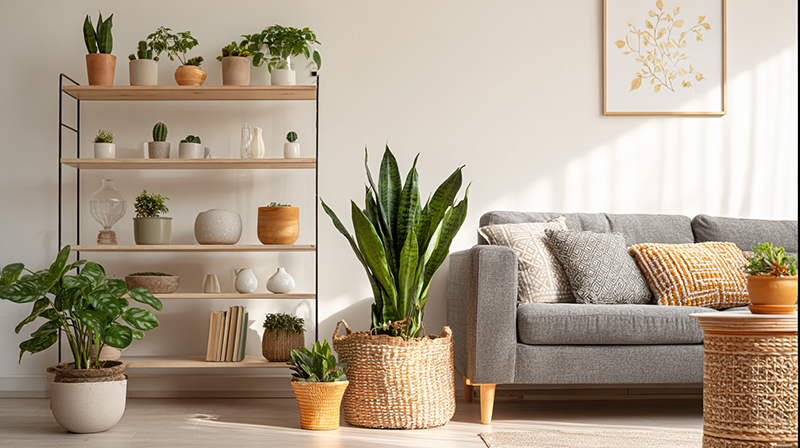
A monthly edit keeps the room on track. Start by clearing surfaces back to a few objects each, since clutter erodes the restraint everything else depends on.
Then replace any mismatched bulbs with warm white, because a single cool one shifts the color of the whole room.
Textiles come last. Swap wool and sheepskin for linen and cotton in summer, which costs the least and follows the season.
The catch is convenience. With a one in, one out rule, every new purchase needs a place or something else has to leave.
The routine carries over to the bedroom too, and Scandinavian bedroom designs follow the same logic of a pale base, natural fibers and warm light.

- Shoji White vs Alabaster: Which Soft White Wins? - October 25, 2026
- Color Combinations for 32 Colors and 10 Wood Tones - October 22, 2026
- Kitchen Color Schemes by Cabinet Color: What Pairs Well - October 19, 2026