French country living room decor works because it never tries too hard. The style pulls from centuries of Provencal farmhouse living, mixing distressed wood, linen textiles, and muted color palettes into rooms that feel both elegant and genuinely comfortable.
But getting the look right takes more than buying a few toile pillows and calling it done. The wrong choices can push a room from “charming countryside home” into “themed gift shop” fast.
This guide covers the specific furniture silhouettes, fabric choices, color combinations, and architectural details that make the style authentic. You will also find sourcing tips, budget tiers for different spending levels, and the common mistakes that trip people up most often.
What Is French Country Living Room Decor?

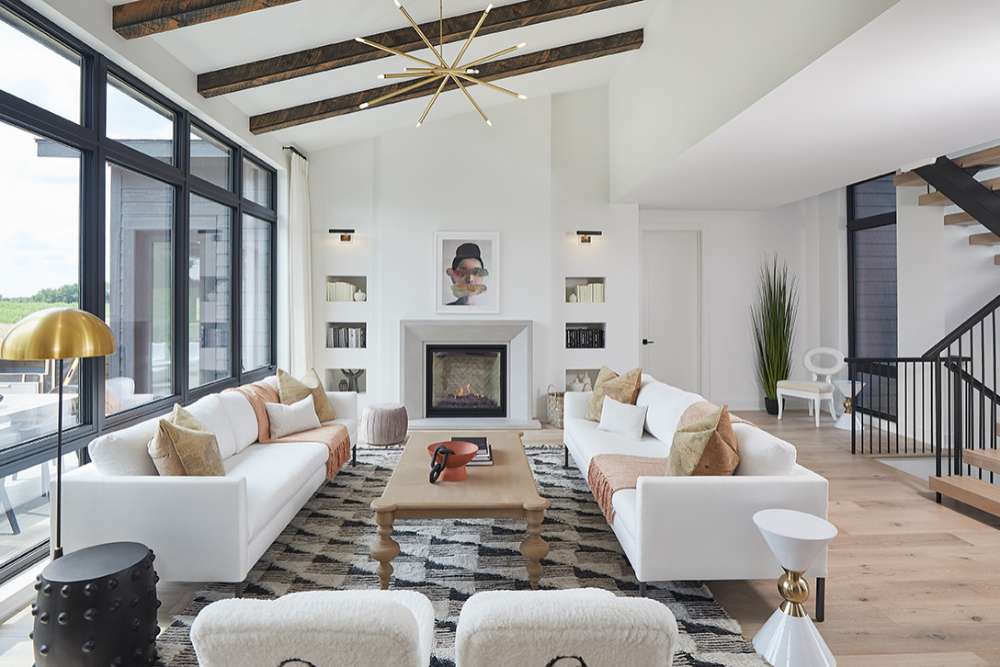
Image source: Niki Papadopoulos
French country living room decor is a style rooted in the rural farmhouses of southern France, particularly the Provence region. It mixes rustic textures with refined European elegance to create rooms that feel both sophisticated and lived-in.
The look has been around since the 1600s, when homeowners in Normandy and Provence borrowed the curved silhouettes and ornate details of Parisian furniture but softened them with muted paint colors, linen upholstery, and natural materials. American soldiers stationed in France during World War I brought the style back to the United States, and it has gone through waves of popularity ever since.
What makes it stick? Comfort first, beauty second. Every piece in a French country living room looks like it has a story, whether it is an antique armoire passed down through a family or a slipcovered sofa with just the right amount of wear.
The rustic home decor DNA is there, but it is polished. Think rough-hewn exposed ceiling beams overhead and a Louis XV-style bergere chair in the corner. That tension between the rough and the graceful is the whole point.
How It Differs From Similar Styles

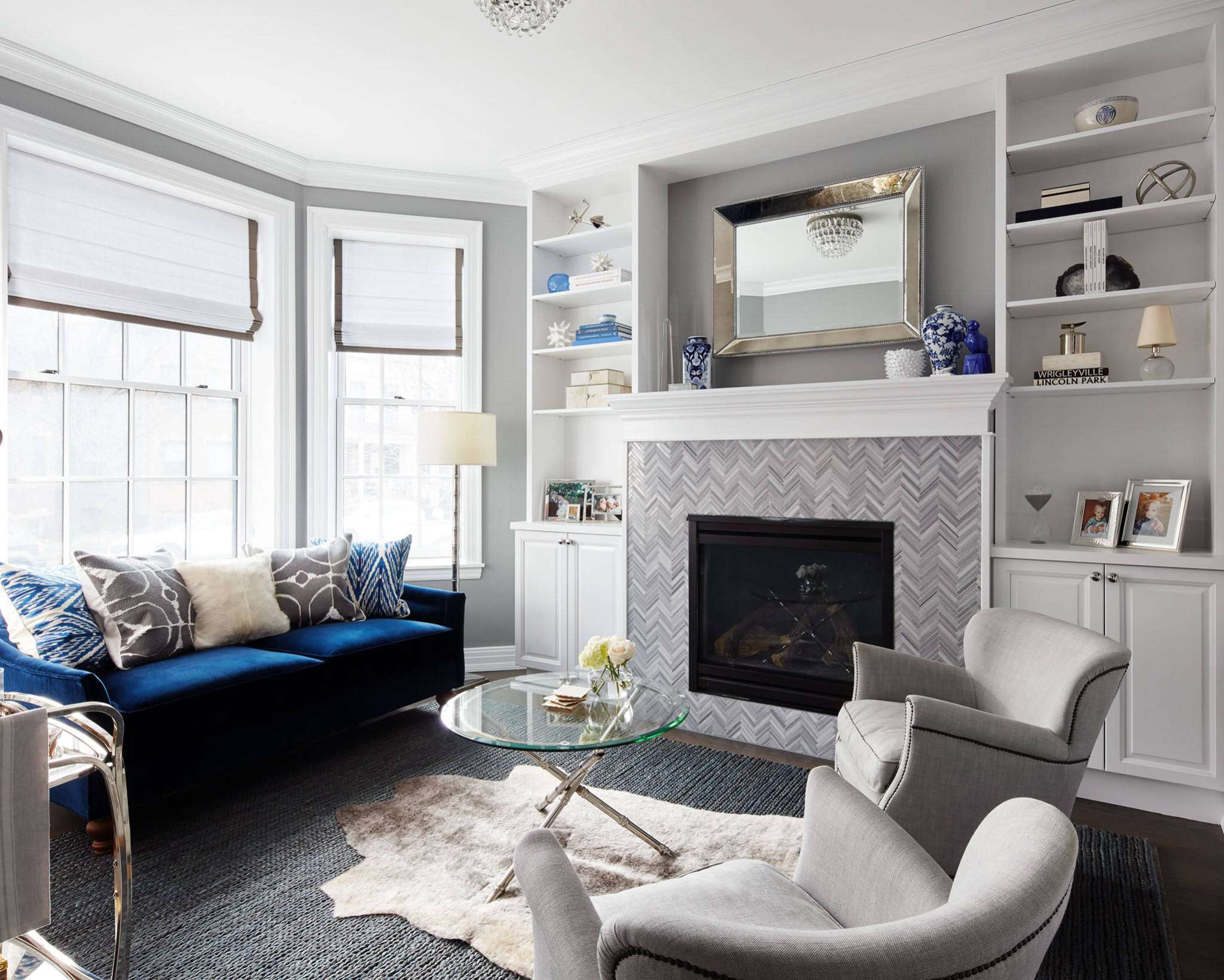
Image source: Sandi Lanigan Interiors
People confuse French country with a few other looks. Here is a quick breakdown.
| Style | Key Difference | Overall Feel |
|---|---|---|
| French Country | Curved lines, muted colors, antique mix | Warm, collected, lived-in |
| Shabby Chic | Heavier distressing, more pink and white | Feminine, romantic, lighter |
| Farmhouse | Straighter lines, shiplap, modern hardware | Casual, clean, American |
| French Provincial | More formal, closer to Louis XV originals | Elegant, structured, polished |
Shabby chic living room decor shares some DNA with French country (both love distressed finishes and soft fabrics), but French country has more warmth and less pink. The bones are heavier, the furniture has more heft, and the palette pulls from the landscape instead of a pastel box.
The history of interior design traces how Provencal farmhouse aesthetics migrated across Europe and eventually to American suburbs. That long lineage is part of why the style never fully goes out of fashion. It has roots too deep to be a trend.
Why It Is Gaining Fresh Attention
French country is not new, but it is having a moment again. The secondhand furniture market hit $40.2 billion globally in 2024, according to Market.US research, and is expected to double to $87.6 billion by 2034. That plays directly into a style built on vintage finds and antique pieces.
The 2025 Houzz & Home Study found that 54% of homeowners took on renovation projects in 2024, with a median spend of $20,000. Living rooms specifically saw a median spend of $4,000, down 20% from the prior year, which means people are looking for affordable style updates rather than gut renovations.
French country fits that perfectly. A linen slipcover, a pair of vintage candlesticks, and a coat of limewash paint can shift the entire mood of a room without a major budget.
Color Palettes That Define the Style

The French country color palette comes straight from the Provencal landscape. Lavender fields, sun-bleached stone walls, olive groves, terracotta roof tiles. These are not colors someone picked from a trend report. They have been part of the region’s visual identity for centuries.
Start with warm neutrals as the foundation. Cream, linen white, soft taupe, and warm grey give the room a base that feels sun-washed without being cold. The accent colors layer on top: dusty blue, sage green, lavender, muted yellow, and terracotta.
What you will not find in a French country palette is high contrast. No stark black-and-white schemes. No saturated neons. Everything is pulled back about two notches from full intensity, like the original color faded naturally over a few decades in the Provence sun.
Core Color Families and Where to Use Them
Walls and ceilings: Warm whites and creams work best here. Benjamin Moore’s White Dove or Farrow & Ball’s Pointing are popular picks. The goal is a backdrop that feels like plaster, not drywall.
Upholstery and large furniture: Soft taupes, warm greys, and natural linen tones. These anchor the room without competing with the architectural details.
Accents and textiles: This is where colors that pair with sage green, pale blue, and lavender come in. Throw pillows, curtain panels, and ceramics carry the color while keeping the overall scheme soft.
Understanding how color works in interior design helps here. French country rooms rely on analogous color relationships (colors sitting next to each other on the wheel) rather than complementary contrasts. That is what keeps everything feeling harmonious instead of jarring.
Walls, Trim, and Ceiling Color Relationships

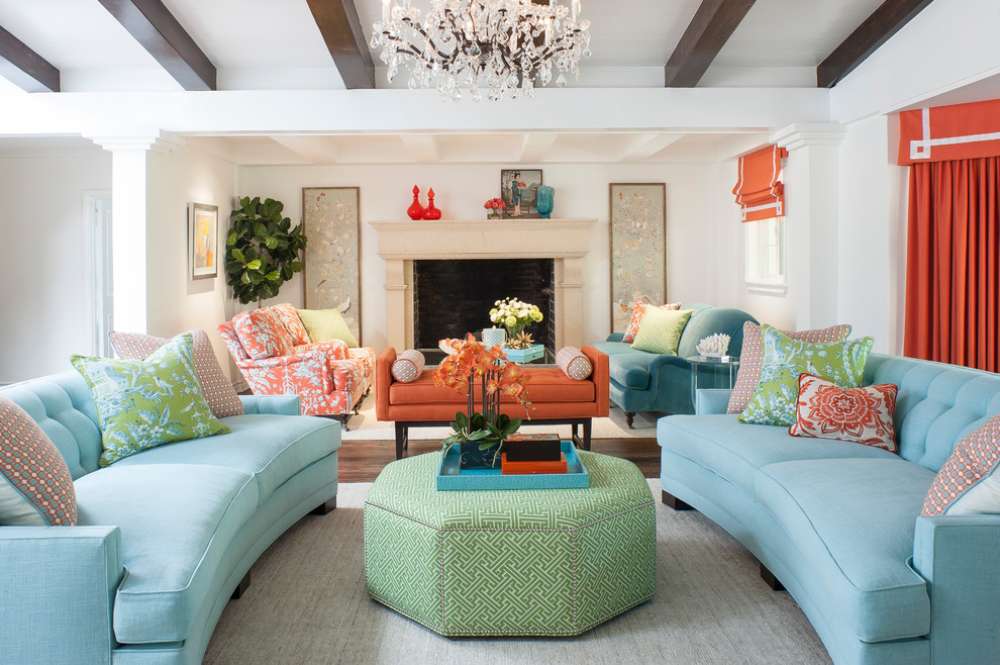
Image source: Beautiful Chaos Interior Design & Styling
A common mistake is painting walls, trim, and ceiling the exact same white. French country rooms use slight tonal shifts between these surfaces. The ceiling might be a half-shade warmer than the walls. The trim might carry a hint of cream against cooler grey-white walls.
Annie Sloan Chalk Paint has built a following specifically because it gives furniture and walls that slightly chalky, imperfect finish that reads as authentically aged. That matte, slightly uneven quality is the opposite of the glossy precision you would find in a contemporary interior design scheme.
If you are working with colors that complement beige, French country is one of the easiest styles to pull off. Beige is basically the default here, and the entire accent palette (blue, green, lavender) sits beautifully against it.
Furniture Styles and Silhouettes
French country furniture has specific shapes you can spot across a room. Cabriole legs. Rolled arms. Carved wood details that look hand-done, not factory-stamped. The curves are generous, the proportions are substantial, and the finishes lean toward distressed, whitewashed, or natural wood with a low sheen.
Getting the scale and proportion right matters a lot with this style. A bergere chair needs enough visual weight to hold its own next to a heavy farmhouse coffee table. A dainty side table next to an oversized sofa throws the whole room off.
Seating That Feels Collected, Not Matched

Image source: John Lewis & Partners
This is probably the trickiest part of French country decorating. Nothing should look like it came from a single showroom floor. The sofa might be a slipcovered piece in natural linen. The armchairs could be a pair of upholstered bergeres with exposed wood frames. And there might be a small bench or settee pulled in from another room entirely.
The 2025 Houzz & Home Study showed that 41% of homeowners purchased large furniture during renovation projects in 2024, up from 37% the prior year. Millennials increased their share the most, jumping from 44% to 48%.
For sourcing, Restoration Hardware carries reproduction French-style pieces at the higher end. Ethan Allen’s French Heritage collection offers a middle ground. And Chairish (which has sold over one million vintage items since its launch) is the go-to for one-of-a-kind finds. The company has seen 14% year-over-year growth in its trade business, partly because interior designers are buying vintage to avoid tariff-related price increases on new imported furniture.
Storage Furniture and the French Armoire

Image source: Cecilie Starin Design Inc.
The armoire is the signature storage piece. Before built-in closets were standard, French households relied on large freestanding cabinets to store linens, clothing, and tableware. In a living room setting, an armoire can hold books, display ceramics, or simply act as a sculptural anchor.
Look for these details in authentic or well-made reproduction pieces:
- Crown molding along the top rail
- Arched or paneled doors with visible wood grain
- Iron or pewter hardware with an aged finish
- A slightly uneven paint surface that suggests hand-finishing
Console tables, farm tables repurposed as sofa tables, and low-profile buffets round out the storage options. The form of each piece should favor curves over sharp angles. Even a simple bookshelf benefits from a scalloped edge or turned leg to fit the aesthetic.
The vintage home decor market is working in your favor here. The global vintage and retro goods market was valued at $75 billion in 2024 and is growing at roughly 10% annually, according to Future Data Stats. That means more inventory hitting platforms like 1stDibs, Facebook Marketplace, and local estate sales.
Textiles and Fabric Choices
Fabric selection can make or break a French country living room. Get it right and the room feels like a Provencal farmhouse. Get it wrong and it reads as a generic beige box or, worse, a costume.
Linen is the backbone. Full stop. It wrinkles, it softens with every wash, and it has a slightly uneven texture that gives it character. Use it on sofas, armchairs, curtains, and throw pillows. The wrinkles are not a flaw. They are the point.
Signature Patterns

Toile de Jouy: The most recognizable French country pattern. Pastoral scenes printed in a single color (usually blue, red, or black) on a white or cream background. Use it on one or two pieces in a room, not everywhere. A pair of toile pillows on a solid linen sofa, or toile curtain panels against plain walls.
Ticking stripes: Those thin, evenly spaced stripes originally found on mattress fabric. They add structure to a room full of curves and florals.
Florals: Small-scale, loose, and faded-looking. Not the tight, formal florals of English traditional interior design. Think garden roses sketched in watercolor, not botanical illustrations.
Grain sack: Rough-woven fabric with simple stripes, originally used for agricultural storage. Works beautifully as pillow covers and table runners.
A 2023 Global Well-Being Research Consortium study found that 63% of consumers associated improved mood and relaxation with high-quality natural fiber textiles, including cotton, linen, and wool. That tracks with why French country rooms feel so immediately calming. The fabrics are doing a lot of the emotional heavy lifting.
Layering Without Overdoing It

Image source: Martha O’Hara Interiors
The trick is mixing two or three patterns at different scales. One large-scale pattern (toile on curtains), one medium (floral on accent pillows), and one small or geometric (ticking stripe on a throw).
Keep all patterns within the same color temperature. If your toile is blue-and-cream, your florals and stripes should share that blue family. Mixing a cool blue toile with warm red florals creates visual chaos. If you are exploring throw pillow combinations, stick to three patterns maximum in one seating area.
For window treatments, full-length linen panels in a solid or ticking stripe are the safest bet. They soften the hard lines of the window frame and add vertical movement to the room. Avoid heavy drapes with thick linings. The fabric should have enough weight to hang well but still move with a breeze.
Flooring and Rugs
The floor sets the foundation for everything above it. In a French country living room, that foundation should feel old, warm, and natural.
Wide-plank hardwood is the most authentic choice. Oak and walnut are the traditional species, and the planks should be wider than what you find in most modern flooring (think 7 inches and up). The finish should be matte or hand-scraped, not high-gloss polyurethane.
Hard Flooring Options

Image source: Classic Cottages LLC
Reclaimed wood: Salvaged planks from old barns or factories carry a patina that takes decades to develop naturally. The price point is higher, but one room of reclaimed oak flooring completely changes the character of a space.
Limestone tile: Common in actual French country homes, especially in the south. The surface is slightly rough, cool underfoot, and ages with a soft, powdery look over time.
Terracotta tile: Handmade terracotta in natural red or ochre tones brings immediate warmth. It is porous, so it needs sealing, but the imperfections in each tile are part of the appeal.
If you are stuck with builder-grade flooring or in a rental, a well-chosen rug can cover a lot of ground (literally). Regarding paint colors that work with wood floors, the warm neutral palette of French country pairs naturally with most wood tones, which makes this style surprisingly forgiving.
Rugs That Work in French Country Rooms

The Aubusson rug is the classic pick. These flat-woven tapestry rugs feature muted floral and scroll designs that look like they belong in a Provencal estate. Vintage Aubussons on 1stDibs can run into the thousands, but reproductions from brands like Ballard Designs offer the look at a fraction of the cost.
Other options that work well:
- Muted Persian or Oriental rugs with a faded, time-worn appearance
- Natural fiber rugs in jute or sisal for a more casual, textured layer
- Simple wool rugs in solid cream or soft grey as a neutral base
If you are working with a rug alongside a beige couch, go with something that introduces subtle color. A faded blue and cream Aubusson or a muted sage Persian rug pulls the room together without fighting the upholstery. And always size up. A rug that is too small for the seating area makes the whole arrangement look disconnected.
Lighting and Fixtures
French country lighting should feel warm and layered. A single overhead fixture will not cut it. The goal is multiple light sources at different heights, creating pockets of warm glow across the room instead of one flat wash of light from above.
The role of light in interior design is especially noticeable in this style because so many of the materials (linen, aged wood, plaster walls) respond dramatically to warm, directional light. A wrought iron chandelier looks completely different under recessed LEDs versus the flicker of candlelight.
Fixture Types and Placement

Image source: Pankow Construction – Design/Remodeling – PHX, AZ
Chandeliers: The centerpiece. Wrought iron with candle-style arms is the most traditional option. Crystal chandeliers also work, particularly if the room has higher ceilings and a more formal layout. Brands like Visual Comfort, Currey & Company, and Aidan Gray specialize in fixtures with the right aged finish.
Table lamps: Place these on end tables and console surfaces. The bases should be ceramic, turned wood, or aged metal. Top them with linen or burlap drum shades for a soft, diffused glow.
Wall sconces: Flanking a fireplace or a large mirror with a pair of sconces in an aged brass or zinc finish adds balance and architectural interest. Candle-style sconces reinforce the period feel.
Layering Light Correctly
Every well-lit room needs three types of lighting working together.
Ambient lighting handles the overall illumination. In a French country room, this usually comes from the chandelier and supplemental ceiling fixtures. Keep them on dimmers so you can pull the intensity back in the evening.
Task lighting covers focused activities. A table lamp next to a reading chair, or a small lamp on a writing desk. The light should be warm, not cool white.
Accent lighting draws attention to specific features. A picture light above a painting, or a small lamp inside an open armoire to highlight displayed pottery.
One thing to avoid: relying exclusively on recessed lighting. Those ceiling cans are useful as supplemental sources, but they flatten the room’s character when used alone. French country rooms need the warmth and shadow that comes from decorative fixtures at lower levels.
The 2025 U.S. Houzz & Home Study found that among homeowners who renovated outdoor spaces in 2024, 27% updated their lighting, making it the most common outdoor upgrade. That same attention to lighting applies indoors, where the right fixtures can transform an otherwise ordinary room into something with real atmosphere.
Wall Treatments and Architectural Details
The walls and ceiling do more work in a French country living room than most people realize. Strip away the furniture and textiles, and the architectural bones should still read as Provencal. Exposed beams, plaster finishes, and carved molding give a room the kind of details that no amount of accessories can fake.
This is where the style has a real advantage over trends that rely purely on decor. The structure itself becomes the design.
Exposed Beams and Ceiling Treatments

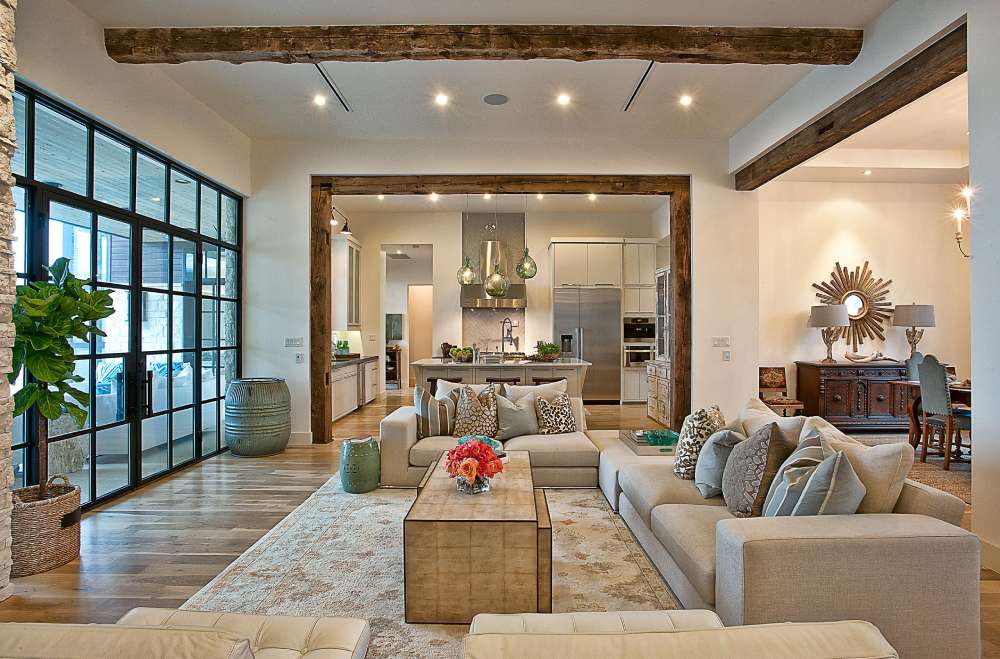
Image source: Leslie McDonnell ReMax Realtor
Exposed ceiling beams are the single most recognizable architectural feature of French country interiors. In authentic Provencal homes, these are structural timbers left visible after construction, often oak or chestnut, with an unfinished or lightly stained surface.
For homes without original beams, faux wood options have become extremely accessible. Lightweight polyurethane beams weigh just 1 to 2 pounds per linear foot compared to hundreds of pounds for solid wood, and they install directly over drywall.
Brands like Ekena Millwork offer faux beams in finishes that closely match reclaimed wood. The whitewash and hand-hewn textures work particularly well for French country spaces.
Wall Finishes That Build Character

Image source: Pimlico Interiors
Limewash paint: Creates a soft, chalky, slightly uneven finish that mimics aged European plaster. Brands like Portola Paints and Romabio have made this finish mainstream.
Venetian plaster: A thicker application that adds real depth and subtle movement to wall surfaces. Works best on feature walls or fireplace surrounds.
Wainscoting and panel molding: Applied to the lower third of a wall, these add a European formality that reads as old-world. Chair-rail height is standard.
The role of line in interior design shows up clearly here. Horizontal molding lines break up tall walls, while vertical board-and-batten adds height to rooms with lower ceilings. French country rooms tend to favor the horizontal, which keeps the mood grounded and relaxed.
Fireplace Styling in a French Country Living Room

The fireplace is the natural focal point of a French country living room. According to the National Association of Real Estate Appraisers, adding a fireplace can raise a home’s value by more than 10%.
For the surround, stone is the most authentic choice. Rough-cut limestone, stacked fieldstone, or even a simple plaster surround with a reclaimed wood mantel all work within the style. The key is avoiding anything too polished or modern.
| Surround Material | Feel | Budget Range |
|---|---|---|
| Rough-cut limestone | Classic Provencal | $$$ (higher) |
| Stacked fieldstone | Rustic, textured | $$ (moderate) |
| Painted brick | Cottage, softer | $ (DIY-friendly) |
| Plaster with wood mantel | Simple elegance | $ (most affordable) |
HomeAdvisor data from 2024 shows the average fireplace remodel costs between $400 and $2,000, making it one of the more budget-friendly ways to shift a room’s entire character. For more inspiration on stacked stone fireplace ideas, the options range from floor-to-ceiling installations to a simple surround.
Mantel styling matters just as much as the surround. A pair of candlesticks, an antique mirror propped against the wall, and a small arrangement of dried lavender is all you need. Less is better here. A good furniture arrangement around the fireplace places the main seating group facing or flanking the hearth, reinforcing it as the room’s anchor.
Decorative Accents and Styling Details
The accessories in a French country living room should look like they were collected over years, not ordered in a single afternoon. Each object has a purpose, whether functional or purely sentimental, and nothing feels like it was placed there just to fill a shelf.
Ceramics, Pottery, and Ironstone

Image source: Liliane Hart Interiors
A 2023 survey by the Global Well-Being Research Consortium found that 63% of consumers associate handcrafted, natural objects with improved mood. That research lines up with why French country rooms feel so comfortable. The accessories are tactile, imperfect, and grounded in materials from the earth.
Key pieces to look for:
- French confit pots (originally used for preserving duck and goose fat)
- Quimper pottery with hand-painted folk motifs
- White ironstone pitchers, platters, and serving bowls
- Biot glassware with its signature trapped-bubble finish
Display these on open shelving, inside an armoire with doors left ajar, or grouped on a farmhouse coffee table. The arrangement should feel casual, not curated.
Florals, Mirrors, and Finishing Touches

Image source: Anita Clark Design
Fresh and dried flowers are a staple. Lavender bundles, hydrangeas, and garden roses placed in ironstone pitchers or copper pots bring the Provencal countryside directly into the room.
Antique mirrors with gilded or distressed frames serve double duty. They reflect light (which amplifies the warm glow from pendant lighting and chandeliers) and they add a layer of old-world elegance that bare walls cannot.
Woven baskets, vintage books stacked on a side table, iron candlesticks, and linen-lined trays round out the styling. The approach is “less is more, but make it warm.” Every surface does not need something on it. But the pieces you do place should feel like they belong there.
Common Mistakes With French Country Living Rooms
French country is one of those styles where the line between authentic and costume is thinner than you’d think. A few wrong choices and the room tips from “charming Provencal farmhouse” into “themed restaurant.”
Over-Distressing and Themed Accessories
The biggest offender: furniture that is distressed to the point of looking fake. Real wear happens unevenly (drawer pulls, edges, legs) over decades. Sandblasting an entire dresser until the white paint looks uniformly chipped reads as manufactured, not authentic.
The second biggest mistake is leaning too hard into “French” themed accessories. Eiffel Tower figurines, rooster ceramics in every corner, fleur-de-lis on every throw pillow. These are shorthand symbols, not actual elements of the style.
Designer Charles Faudree, one of the most recognized names in American French country design, built entire rooms without a single rooster. The style comes from the materials and proportions, not the motifs stamped on them.
Matching Everything From One Store
A room where every piece came from the same retailer on the same day is the opposite of what French country aims for. The whole point is a collected look that suggests decades of gathering.
The secondhand furniture market supports this approach. Chairish has sold over one million items since launch, and Facebook Marketplace lists thousands of vintage pieces daily in most metro areas.
Mix eras. Mix finishes. A 1940s bergere chair next to a brand-new linen sofa next to a 1970s brass lamp. That combination looks intentional. A matched set from a catalog does not.
Pattern Overload and Style Confusion
| Mistake | What Actually Works |
|---|---|
| Toile on every surface | One toile piece, rest in solids or stripes |
| Confusing shabby chic with French country | Less pink, heavier furniture, warmer palette |
| All florals, no visual break | Balance florals with solid linen and ticking |
| Too many small accessories | Fewer, larger pieces with more negative space |
Understanding the role of pattern in interior design helps here. French country works with pattern, but it controls the dosage carefully. Two to three patterns in the same color family, at varying scales. Anything more and the room starts feeling cluttered instead of collected.
The difference between French country and shabby chic decor is often just weight and warmth. French country furniture is heavier, the wood tones are warmer, and the palette leans toward earthy tones rather than pastels. If your room looks like it could be in a Meg Ryan movie from the 90s, you might have drifted into shabby chic territory.
How to Transition an Existing Living Room to French Country Style

Image source: Patterson Custom Homes
You do not need to gut a room to get this look. Some of the most successful French country spaces are built gradually, starting with a few targeted changes and layering in new pieces over months or even years.
According to HIRI research, painting is by far the most planned home improvement activity among homeowners, and 70% of homeowners in 2024 felt it was a good time to start a project under $5,000. That budget range is plenty to begin a French country transformation.
Start With Paint and Textiles
These two changes deliver the most visual impact for the least money. A coat of limewash or warm white paint on the walls, paired with new linen slipcovers on existing furniture, can shift the room’s entire personality in a weekend.
Interior painting delivers a 107% return on investment according to industry data from Vander Kolk Painting, making it one of the smartest updates you can make, even if you are planning to sell.
Swap out existing throw pillows for a mix of toile, grain sack, and solid linen covers. Replace heavy drapes with lighter linen panels. These are fast, reversible changes that immediately signal the style. For decorative pillow ideas for your sofa, stick to no more than five pillows in two to three coordinating fabrics.
One Statement Vintage Piece

Image source: Platinum Homes by Mark Molthan
This is the move that anchors the whole room. A single antique or vintage piece (an armoire, an oversized gilded mirror, a wrought iron chandelier) sets the tone for everything around it.
The global vintage goods market was valued at $75 billion in 2024 and is expanding at roughly 10% annually, according to Future Data Stats. Prices are competitive, and inventory is growing across platforms like 1stDibs, Chairish, and local estate sales.
You do not need the whole room to be vintage. One anchor piece, surrounded by newer items in complementary materials and finishes, creates that collected-over-time effect without breaking the budget.
Budget Tiers for a French Country Makeover
| Budget | Focus Areas | Expected Impact |
|---|---|---|
| Under $500 | Paint, new pillows, dried florals, hardware swap | Noticeable mood shift |
| Under $2,000 | Above plus linen slipcovers, vintage mirror or chandelier, area rug | Room reads as French country |
| $2,000 to $5,000 | Above plus faux beams, fireplace update, one or two upholstered pieces | Full style transformation |
The 2025 Houzz & Home Study showed that living room renovation median spend dropped to $4,000 in 2024. That middle budget tier above lands right in that range and delivers a complete style change without structural work.
For budget living room decor ideas beyond French country, the same principles of paint-first, textiles-second, statement-piece-third apply across most decorating styles. But few styles reward thrifted and vintage finds the way this one does. The older and more worn a piece looks, the better it fits.
If you are also considering the bedroom, French country bedroom decor follows the same material palette (linen, distressed wood, muted colors) and translates easily once you have the living room established. And for extending the look into the kitchen, French country kitchen decor brings in copper cookware, open shelving, and the same warm neutrals.
The full French country home decor approach works best when there is a consistent thread running through every room: the same color temperature, the same mix of rustic and refined, and the same respect for natural materials that age well.
FAQ on French Country Living Room Decor
What defines French country style?
French country style blends rustic farmhouse elements from Provence with refined European elegance. It relies on natural materials like distressed wood, linen textiles, and wrought iron, paired with soft muted colors. Comfort and authenticity drive every design choice.
What colors work best in a French country living room?
Warm neutrals form the base: cream, linen white, taupe, and soft grey. Accent with Provencal-inspired tones like lavender, sage green, dusty blue, and terracotta. Avoid saturated or high-contrast palettes. Everything should feel sun-faded and gentle.
What fabrics are used in French country decor?
Linen is the dominant fabric for upholstery, curtains, and pillows. Toile de Jouy, ticking stripes, grain sack, and small-scale florals are the signature patterns. Stick to natural fibers like cotton, linen, and wool for authenticity.
Is French country the same as shabby chic?
No. They share some overlap, but French country uses heavier furniture, warmer wood tones, and an earthier palette. Shabby chic leans more feminine with pastels and lighter distressing. The bones of French country are sturdier.
What type of furniture fits this style?
Look for pieces with cabriole legs, rolled arms, and carved wood details. Bergere chairs, slipcovered sofas, French armoires, and farmhouse coffee tables are staples. Mix vintage finds with newer pieces for that collected-over-time look.
How do I add French country style on a budget?
Start with paint and textiles. A limewash wall finish and new linen pillow covers shift the mood immediately. Add one vintage statement piece from an estate sale or Chairish. You can begin a transformation for under $500.
What lighting works in a French country living room?
Wrought iron chandeliers with candle-style arms are the classic choice. Layer with ceramic or turned-wood table lamps topped with linen shades. Use wall sconces in aged brass or zinc to flank the fireplace. Avoid relying on overhead cans alone.
What flooring suits French country decor?
Wide-plank oak or walnut hardwood with a matte finish is the most authentic option. Limestone tile, terracotta, and reclaimed wood also work. For rugs, choose faded Aubusson styles, muted Persians, or natural fiber options like jute.
Do I need a fireplace for this style?
A fireplace helps since it is the traditional focal point in Provencal homes. But it is not required. A large antique mirror, an armoire, or a gallery wall of vintage frames can anchor the room instead.
Can French country work in a modern home?
Yes. The style adapts well to newer construction. Faux ceiling beams, panel molding, and limewash paint add architectural character to builder-grade rooms. The key is layering natural textures and curved furniture to soften clean, modern lines.
Conclusion
French country living room decor rewards patience. The best rooms in this style are not assembled in a weekend. They are built piece by piece, mixing antique French furniture with natural linen textiles, warm neutral wall colors, and the kind of aged patina finishes that only time or a good estate sale can provide.
Start with what costs the least and changes the most. Paint, fabric, and one vintage statement piece will do more than a full furniture set ever could.
Let the Provencal color palette guide your choices. Layer in toile de Jouy sparingly. Choose wrought iron fixtures over polished chrome. And leave room for imperfection, because that is where the real character lives.
The style has lasted centuries for a reason. It is built on natural materials, honest craftsmanship, and comfort that does not need to announce itself.

- What Color Walls Go with Oak Floors - August 16, 2026
- What Color Rug Goes with Brown Furniture - August 14, 2026
- What Color Walls Go with Gray Furniture - August 12, 2026