Summarize this article with:

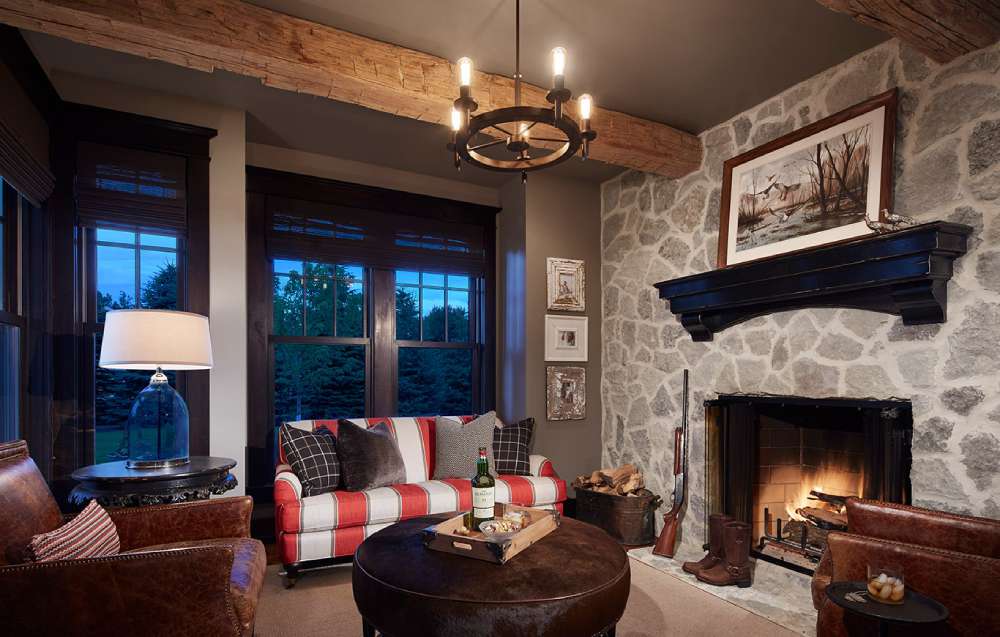
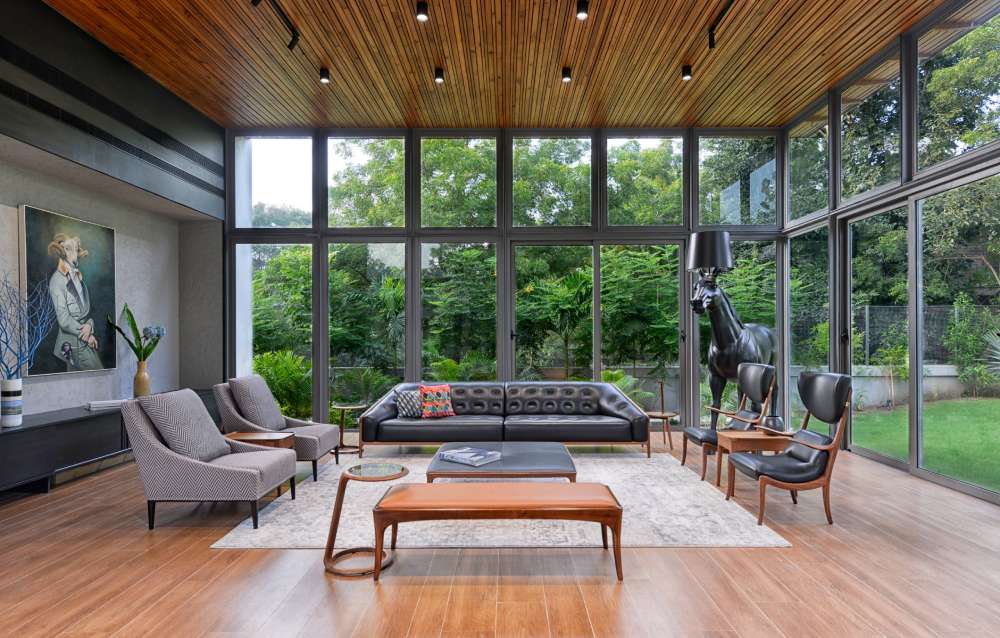
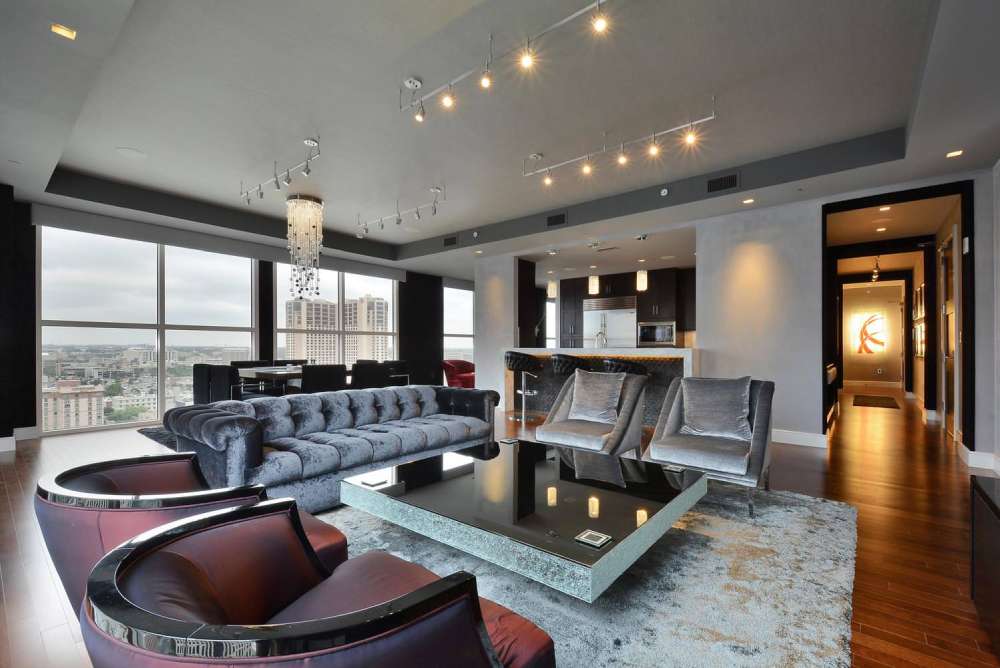
A leather Chesterfield sofa against a charcoal wall, brass fixtures catching warm light, raw walnut shelving holding exactly the right number of objects. That’s masculine living room decor when it’s done right.

But most rooms miss the mark. They go too dark, too bare, or fall into “man cave” territory with neon signs and mismatched furniture.

This guide covers the specific color palettes, materials, furniture, and layout decisions that separate a well-designed masculine space from a room that just happens to be dark. From deep-seated leather sectionals to matte black lighting and concrete accent tables, every choice gets broken down with real options at different price points.

What Is Masculine Living Room Decor?


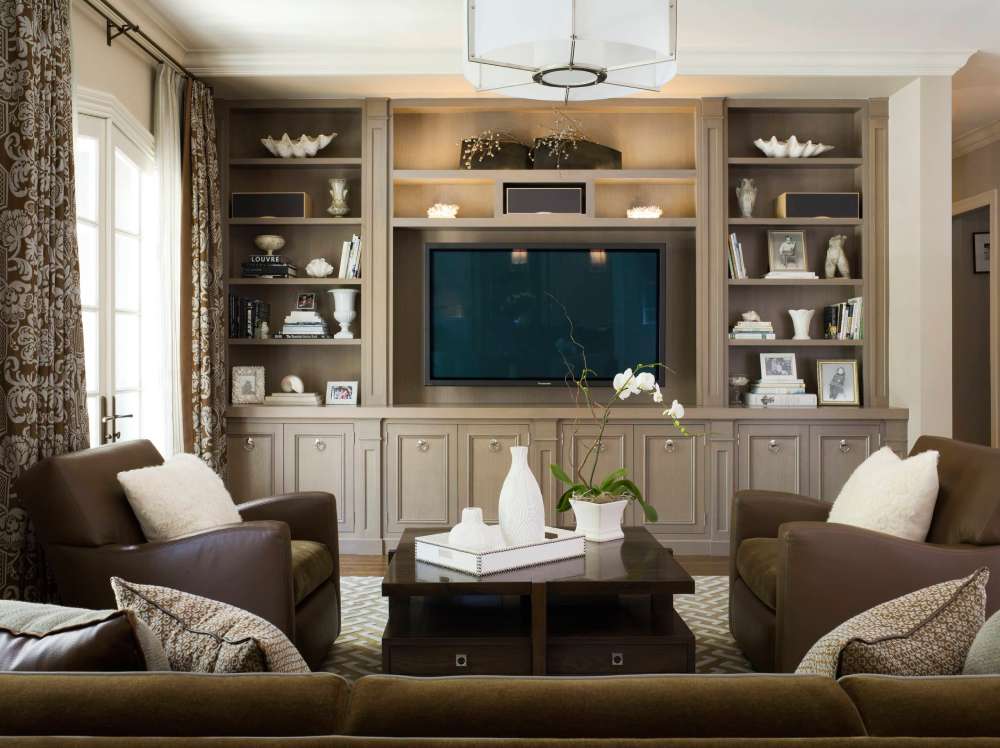
Image source: Martha O’Hara Interiors

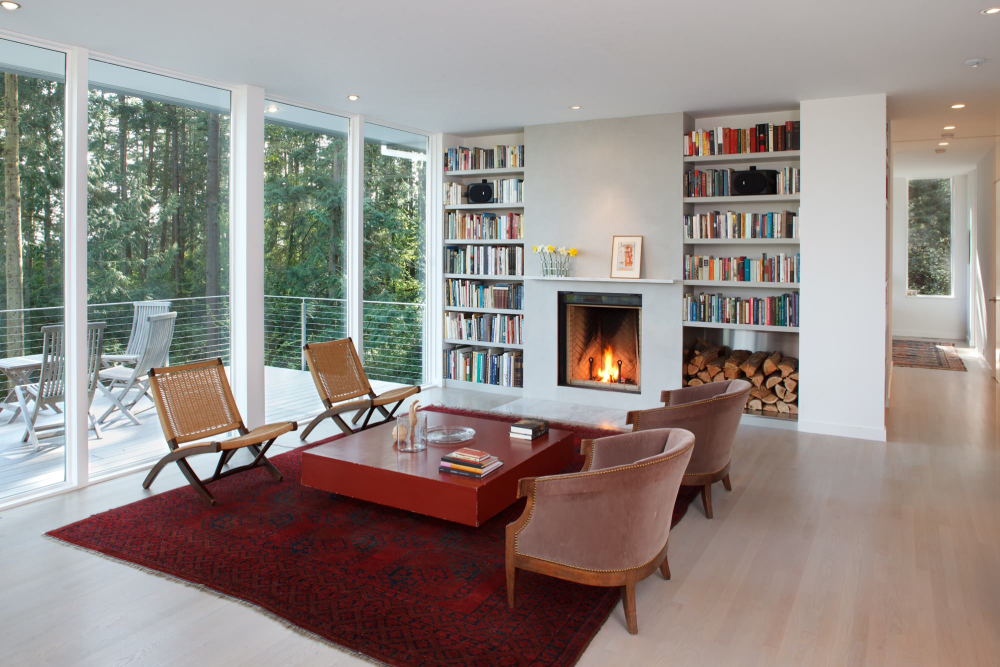
Masculine living room decor is a design approach built on strong lines, muted or dark color palettes, raw materials, and minimal ornamentation. It leans on visual weight. Heavy furniture, tactile surfaces, and restrained accessories define the look.

The goal is a room that feels grounded. Not cold. Not bare. Just deliberate.

People confuse this with minimalist interior design or industrial interior design all the time. And sure, there’s overlap. But a masculine living room borrows from both without fully committing to either. You can have an exposed brick accent wall and still place a deep-seated Chesterfield sofa with cognac leather pillows on a vintage Persian rug. That’s not minimalist. That’s not strictly industrial. It’s its own thing.

SwiftBeacon data shows that industrial is the most searched style trend in 24% of U.S. states, which gives you a sense of how much appetite there is for rugged, raw-material aesthetics right now. Masculine decor channels that same energy but warms it up considerably.

What Masculine Doesn’t Mean

Dark everything. That’s the biggest trap. A room painted floor to ceiling in charcoal with black leather furniture and zero warmth is not masculine. It’s a cave.

Common misconceptions worth ditching:

  • Masculine doesn’t mean devoid of comfort or soft textures
  • It’s not a “man cave” with neon signs and sports memorabilia covering every surface
  • It doesn’t reject all color, just demands restraint and intention

The real distinction comes down to proportion and material honesty. Furniture with visible structure. Surfaces you can feel. Color choices that anchor a room rather than distract from it. A well-done masculine space can feel just as inviting and livable as any other style. Probably more so, because everything in it serves a purpose.

Color Palettes That Set the Tone

Color does about 80% of the work in a masculine living room. Get it wrong and the whole room falls apart, no matter how good the furniture is.

The foundation is always a dark or muted neutral base. Charcoal, slate, warm gray, deep navy, black. These aren’t accent colors. They’re the backdrop everything else lives against.

According to Homes and Gardens, designers heading into 2025 are leaning heavily into moody and warm palettes. Deep chocolatey browns, burgundies, and shadowy olive greens are dominating projects, especially in living rooms where people want depth without coldness.

Core Palette and Accent Layers


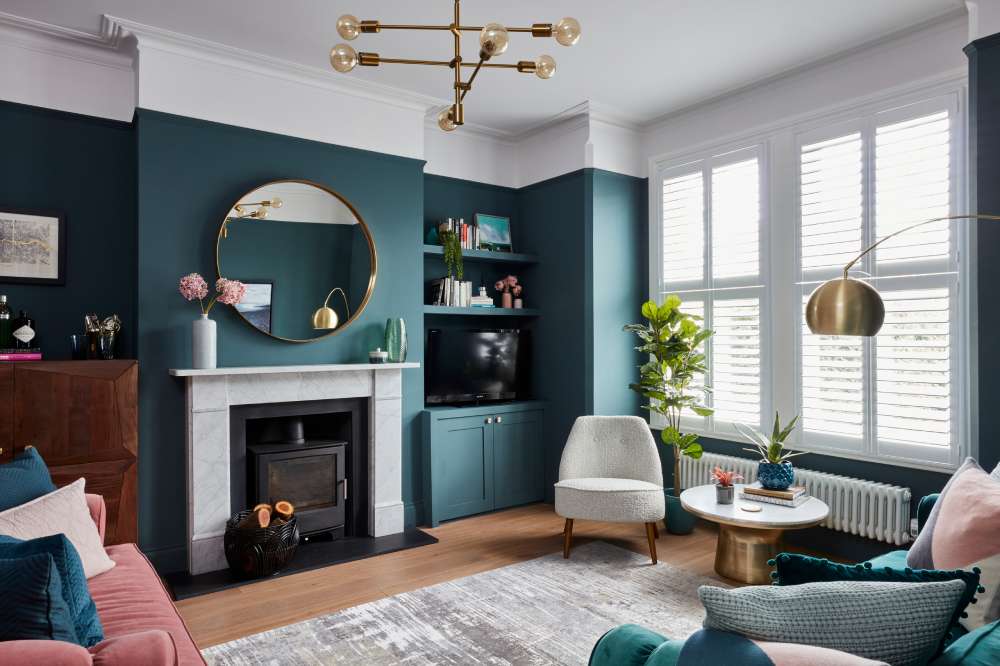
Image source: Arc Photography

Think of it in two tiers.

The base: charcoal gray, slate, deep navy, matte black, espresso brown. These cover your walls, your largest upholstery pieces, and your flooring. Benjamin Moore’s Kendall Charcoal and Sherwin-Williams’ Tricorn Black have been favorites for years in this space, and both still hold up.

The accent layer: cognac, rust, olive, burgundy, brass tones. These show up in throw pillows, area rugs, lighting fixtures, and smaller furniture. The colors that pair well with charcoal gray are surprisingly versatile here.

Livingetc reported that Google searches for “terracotta” jumped 5,000% recently, which tracks. Warmer earth tones are filling that accent layer in masculine rooms everywhere.

Color Role Recommended Shades Where to Use
Base neutral Charcoal, slate, deep navy Walls, large sofas, flooring
Warm accent Cognac, rust, burgundy Pillows, leather chairs, throws
Earth tone Olive, walnut brown, terracotta Rugs, wood furniture, ceramics
Metal accent Brass, matte black, aged bronze Lighting, hardware, frames

Dark Walls vs. Light Walls with Dark Furnishings


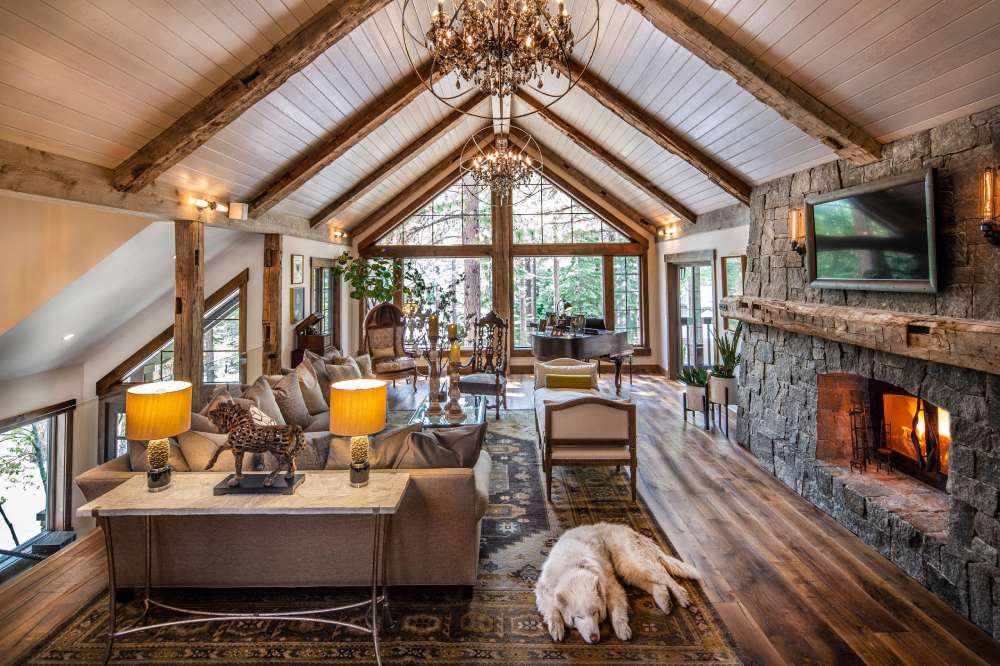
Image source: S A K Designs

This is the fork in the road most people hit early. Both approaches work. But they produce completely different results.

Dark walls (think Benjamin Moore’s Hale Navy or Farrow & Ball’s Railings) create an enveloping, cocoon-like effect. Smaller rooms actually benefit from this. I know that sounds backwards, but a dark wall removes visual boundaries. The room feels less boxy. Pair dark walls with lighter upholstery (a gray linen sofa, for instance) and you get serious contrast without the room feeling heavy.

Light walls with dark furnishings give you more flexibility. A warm white or greige wall lets a dark leather Chesterfield or a walnut wood media console become the star. This approach is easier to change over time, too. Swapping a few dark accent pieces costs less than repainting an entire room.

Took me a while to figure out that you don’t actually have to choose one or the other. An accent wall in deep slate with the remaining three walls in warm white gives you both effects in the same room. Your mileage may vary depending on natural light, though.

Furniture Pieces That Define the Room

Furniture carries most of the visual weight in a masculine space. And by weight, I mean actual physical presence. Low-slung profiles, thick cushions, wide arms, solid frames. This is not the place for spindly legs and delicate silhouettes.

The global leather furniture market was valued at roughly $28.7 billion in 2024, growing at a CAGR of 4.1% through 2033 (Data Horizon Research). That growth is driven partly by the exact demographic buying into masculine decor: millennials investing in durable, premium pieces for their first homes.

Sofas and Seating


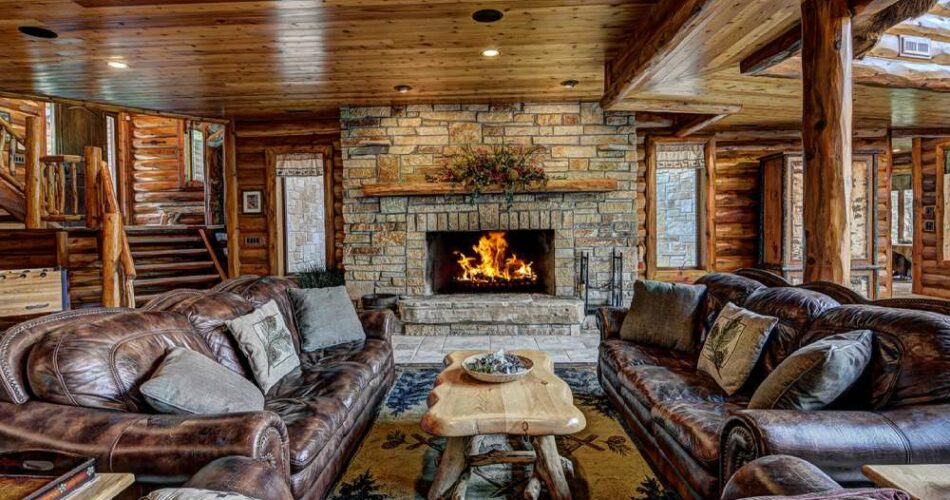
Image source: Woodmeister Master Builders

The Chesterfield. Still the most iconic choice for a masculine living room. Deep button tufting, rolled arms, low profile. Works in leather or a heavy dark linen. Restoration Hardware’s version runs large, which is actually what you want here. A sofa that dominates the room is the point.

If Chesterfields feel too traditional, low-profile modular sectionals from Article or CB2 hit a more contemporary note. Deep-seated and clean-lined, they’re the kind of couch you sink into and don’t get up from for hours.

Accent seating matters too. A mid-century modern lounge chair (the Eames is the obvious pick, but there are solid alternatives from West Elm and Room & Board) adds personality without fighting the sofa for attention.

Leather vs. Performance Fabric


Image source: Talie Jane Interiors

Leather ages. That’s the whole appeal. A full-grain leather sofa develops a patina over years that actually makes it look better. The smell, the feel, the way light catches worn spots. Nothing else does that.

But let’s be honest. Not everyone can drop $4,000+ on a leather sectional. And if you have pets or kids, performance fabrics from brands like Crypton or Revolution are a legitimate alternative. They resist stains, hold their shape, and come in colors like slate, charcoal, and deep olive that work perfectly in a masculine palette.

Material Pros Cons Best For
Full-grain leather Ages beautifully, durable, classic look High cost, needs conditioning Long-term investment pieces
Top-grain leather More uniform finish, slightly cheaper Less character over time Budget-conscious leather fans
Performance fabric Stain-resistant, pet-friendly, affordable Doesn’t develop patina Families, renters, high-traffic rooms

Home Furnishings Association data shows millennials spend an average of $770 annually on furniture, with sofas being the number one purchase across all age groups. That means a lot of first-time buyers are making this exact leather-vs-fabric decision right now.

Scale and Proportion for Oversized Seating

Bigger isn’t always better. But in masculine rooms, furniture that’s too small looks lost.

The general rule: your sofa should take up roughly two-thirds the length of your longest wall. A coffee table should be about two-thirds the length of the sofa. This creates visual scale and proportion that makes the room feel intentional rather than thrown together.

Oversized seating works best in rooms with at least 12-foot ceilings or open floor plans. In smaller apartments, a single deep-seated club chair paired with a compact sofa beats a sectional that swallows the whole room. Space planning makes or breaks this.

Materials and Textures That Add Weight

A masculine living room lives and dies by its materials. You can have the right colors and the right furniture and still end up with a room that feels flat. Texture is what gives a space depth. Literally. Your eyes need surfaces to land on.

ArchDaily’s 2025 trends report noted that completed projects this year showed a clear return to raw, exposed construction materials as both structural and aesthetic elements. Concrete, steel, and reclaimed wood aren’t just accents anymore. They’re the main event.

Raw and Industrial Materials


Image source: Fredman Design Group

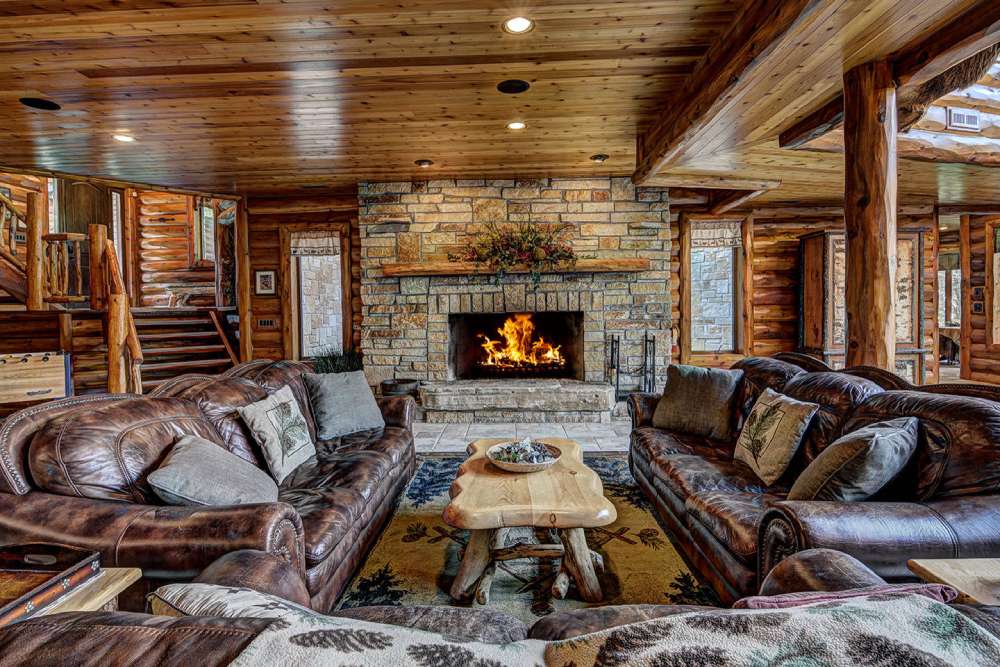
Exposed brick remains one of the strongest visual anchors in a masculine room. If you’ve got it, don’t cover it up. If you don’t, there are solid faux brick panels that look convincing enough, though nothing beats the real thing.

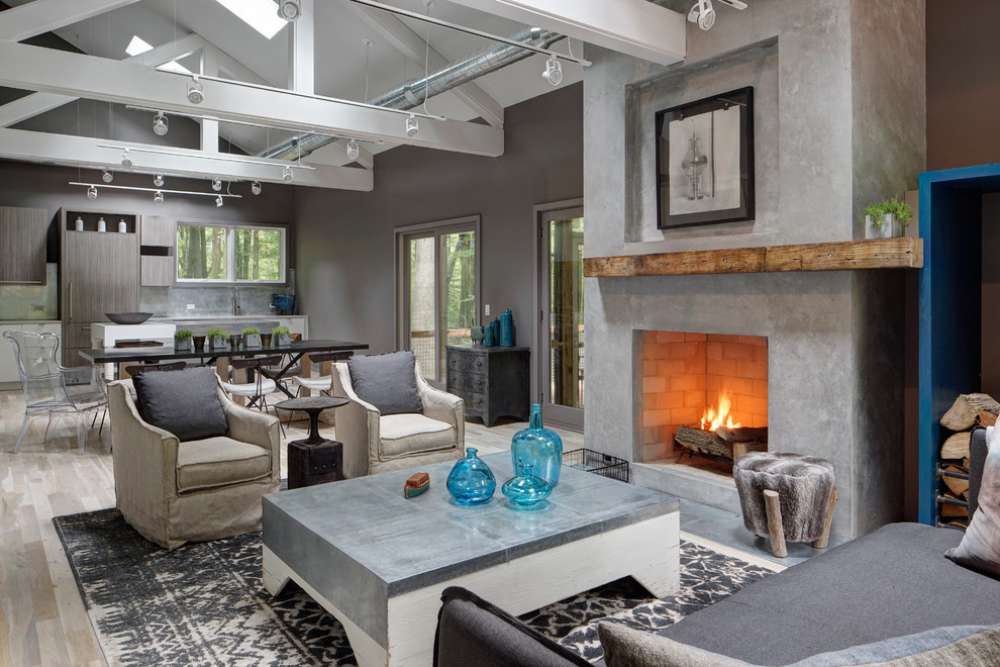
Concrete shows up in coffee tables, accent walls, and flooring. Pinterest data from 2024 showed searches for “stained concrete floors living room” climbed 60% in a single quarter. Heavy, cold to the touch, visually commanding. It reads as distinctly masculine.

Blackened steel and iron work best in frames. Shelving, coffee table legs, light fixtures. These materials add structure without bulk, and they pair naturally with warm wood tones to keep the room from feeling too cold.

Warm Natural Materials


Image source: Quarry Mill

Here’s where people get this style wrong. They go all-in on the industrial side and forget the warmth.

Walnut. Dark, rich, warm grain. Walnut is practically the default wood species for masculine interiors. Media consoles, shelving, coffee tables. It works everywhere and pairs with both dark and light color schemes.

Oak runs lighter and works better in rooms that need more visual breathing room. Saddle leather (on chairs, on wrapped shelves, even on drawer pulls) adds another warm layer.

Natural stone surfaces like slate and soapstone are gaining ground too. The Artsy 2025 trends report highlighted that luxury materials with organic texture are redefining what high-end residential spaces look like.

Textiles That Work


Image source: Interiors by Maite Granda

Wool, linen, canvas, heavy cotton, cowhide. That’s basically the approved list.

  • Wool: throw blankets and area rugs, adds visual warmth without looking fussy
  • Linen: curtains and pillow covers, relaxed and slightly rumpled texture
  • Cowhide: rugs and accent pillows, pattern without being decorative
  • Canvas and heavy cotton: durable, understated, perfect for sofa throw pillows

Avoid anything with sheen. Satin, silk, high-gloss finishes on fabric. These undercut the material honesty that masculine rooms depend on. The whole point is surfaces that look and feel real.

Lighting That Shapes the Mood


Image source: Jane Reece Interiors

Light controls everything in a living room. Paint a room in perfect charcoal, fill it with beautiful leather furniture, then put in a single overhead fluorescent. Ruined. Completely.

The global decorative lighting market hit $41.6 billion in 2024 and is growing at 2.9% annually (SwiftBeacon). A big chunk of that growth comes from residential buyers upgrading to fixtures that do more than just illuminate. They set a mood.

Color Temperature and Fixture Styles

Start with color temperature. 2700K to 3000K is the sweet spot for masculine living rooms. Warm enough to feel inviting, not so warm it goes amber and makes everything look yellow. Most LED bulbs now let you dial this in.

For fixtures, matte black is still king. Pendant lights in matte black or aged bronze over a seating area create a strong focal point. Exposed filament Edison bulbs in simple cage fixtures are a classic move, though they’re getting slightly overplayed. Tom Dixon and Flos both make statement fixtures that lean industrial without the cliche.

Brass sconces on either side of a media wall or fireplace add warm metallic tones. The Houzz 2025 Summer Trends Report showed searches for “copper pendant lighting” jumped 3.5x and “gold lamps” rose 42% year over year, signaling that warm metals are officially back in force.

Layering Ambient, Task, and Accent Light


Image source: Beth Whitlinger Interior Design

One light source in a room is never enough. Three is the minimum.

Ambient lighting covers the whole room. A central pendant, recessed lighting on a dimmer, or even a large floor lamp. This is your base layer.

Task lighting targets specific areas. A reading lamp next to a lounge chair. A desk lamp in a corner workspace. These need to be functional, not just decorative.

Accent lighting is what separates a good room from a great one. LED strips behind shelving, picture lights above wall art, uplight behind a large plant. These create layers and shadows that make the room feel three-dimensional instead of flat.

An aspectLED survey found that 96% of respondents said the pandemic changed their expectations around lighting design at home. People want more control, more layers, more atmosphere. That tracks perfectly with what masculine rooms demand.

Wall Decor and Art for Masculine Spaces

Bare walls are lazy, not masculine. But the wrong art kills a room faster than a bad sofa. The trick is picking pieces that add visual interest without tipping into “decorated.” There’s a difference.

According to the U.S. Houzz & Home Study, artwork ranked third among home decor purchases in 2024 at 41%, tying with large furniture. People are investing in what goes on their walls, not just what sits on their floors.

Photography and Abstract Art


Image source: Décor Aid

Large-scale black and white photography is the safest play. Architectural shots, landscapes, even portraiture. The monochromatic palette fits any masculine color scheme without clashing, and the scale (think 40×60 inches minimum for a feature wall) makes a genuine statement.

Abstract art works when the color palette stays restrained. Deep navy, charcoal, cream, rust. A big abstract piece in muted tones over a leather sofa is one of those combinations that just works every time. Skip anything too bright or playful, though. That’s a different room.

Alternatives to Framed Art


Image source: Clare Elise Interiors

Not everything on a wall needs a frame.

  • Mounted sculptural objects (metal gears, reclaimed wood pieces, antique tools)
  • Floating shelves with curated objects and a few books
  • A single oversized mirror with a raw wood or blackened steel frame

Frame choice matters when you do go traditional. Black metal frames, raw wood frames, or floating mounts. Stay away from ornate gold frames or anything with matting that feels too formal. The frame should disappear, not compete with the art.

Gallery walls can work, but they walk a fine line in masculine spaces. Keep the frames uniform (same color, same width) and the spacing tight. A messy, eclectic gallery wall is better suited for bohemian or eclectic decor styles.

Rugs, Throws, and Soft Elements

Soft elements are where masculine rooms gain warmth without losing edge. Skip them entirely and the space feels sterile. Overdo them and you’ve wandered into a different style altogether.

The global area rug market hit $11.77 billion in 2024 and is growing at 6.6% annually through 2030, according to Grand View Research. Wool rugs held the largest share at over 30%, which makes sense. Wool is the natural default for rooms that need texture without fuss.

Rug Styles That Fit


Image source: Savvy Interiors/ inSIDE by Savvy

Flatweave rugs: low pile, clean look, won’t compete with heavy furniture for visual attention.

Jute and sisal: raw, natural, adds an earthy layer under a coffee table or in front of a sofa. They wear fast in high-traffic areas, though.

Cowhide: organic shape, pattern that reads masculine without trying. Works as an area rug or layered over a larger flatweave.

Vintage Persian (muted tones): the faded, low-contrast versions add history to a room without any of the ornate feel. Look for rugs with deep reds, navy, and worn ivory. If you’re working with a darker sofa, check which rugs pair well with brown couches before committing.

Rug Sizing Mistakes

A too-small rug shrinks the room visually. This happens constantly.

The front legs of your sofa and chairs should sit on the rug at minimum. Ideally, all legs are on it. A rug that floats in the center of the room with furniture surrounding it on bare floor looks like an afterthought. If you’re dealing with a sectional, sizing gets trickier, so understanding how to place a rug under a sectional sofa really matters.

For a standard living room layout, an 8×10 or 9×12 rug works for most seating arrangements. Anything smaller than 5×8 in a living room is basically a bath mat.

Throws and Pillows That Don’t Undercut the Look


Image source: Norman Design Group, Inc.

Heavy knit throws in charcoal or cream. Dark linen pillows. Maybe one leather accent pillow. That’s the range.

The U.S. Houzz & Home Study found that rugs topped decor purchases at 49%, with pillows and throws at 45%. People are buying these items. The question is whether they’re buying the right ones.

  • Stick to 3-5 pillows max on a sofa (odd numbers look better, at least in my experience)
  • Mix textures, not colors: a wool pillow next to a linen one next to a leather one, all in the same tonal family
  • Keep throws folded or casually draped, not perfectly arranged

If you’ve got a dark leather sofa, finding the right throw pillow ideas for a black leather couch makes a real difference. Same goes for anyone working with a grey sectional. The right pillow pairings for a grey couch can shift the whole mood of the room.

Storage and Organization That Stays Clean

Clutter kills a masculine room faster than bad paint. The whole aesthetic depends on surfaces being intentional. If every shelf is overloaded and every table has a pile of stuff, the design disappears underneath it.

According to Fixr.com’s 2025 expert survey, 94% of professionals believe thoughtfully designed storage is the number one priority for home buyers right now. That’s not just about closets and kitchens. It applies directly to living rooms, where visual clutter is the first thing guests notice.

Open Shelving vs. Closed Storage


Image source: Studio Sarah Willmer Architecture

Both have a role. The trick is knowing which one goes where.

Storage Type Best For Watch Out For
Open metal-frame shelving Curated displays, books, vinyl, small art Requires constant editing
Closed media consoles Electronics, cables, remotes, board games Can feel bulky if too large
Floating shelves Small vignettes, candles, framed photos Easy to overload
Bar carts Liquor display, glassware, copper tools Only works if you actually use it

Restoration Hardware and CB2 both carry reclaimed wood and blackened steel shelving units that fit the masculine palette. IKEA’s Vittsjo line is a budget workaround that looks passable with the right styling.

Cable Management and Surface Discipline

Nobody talks about this, but it matters. A beautiful walnut media console with a rat’s nest of cables hanging behind the TV undoes all the work you’ve put into the rest of the room.

Quick fixes that actually work:

  • Cord covers painted to match wall color
  • Cable management boxes behind the console
  • Wall-mounting the TV with in-wall cable routing

Beyond cables, keep surfaces clear as a design principle. One or two items per surface, max. A coffee table with a single hardback book and a small ceramic tray is plenty. A console with a lamp and one object. That restraint is what makes the room feel curated instead of cluttered.

Small Masculine Living Room Layouts


Image source: A. Perry Homes

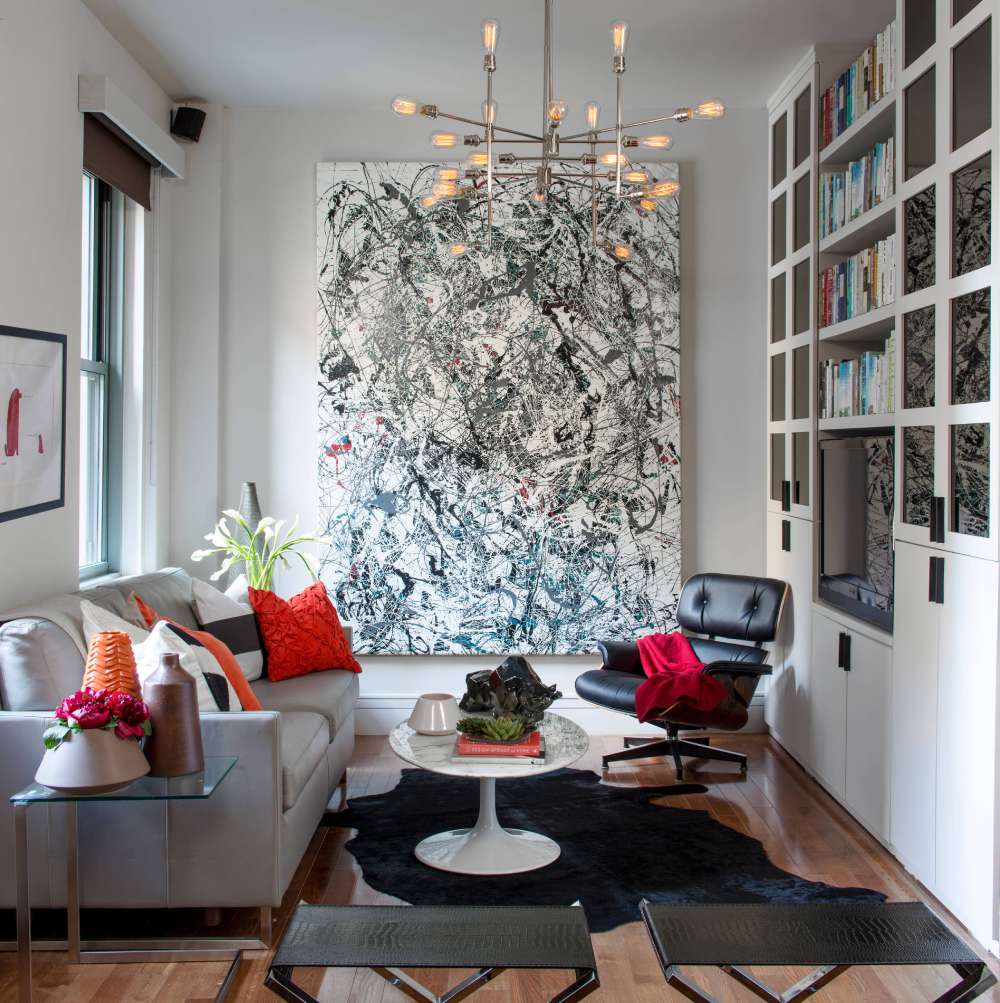
Most people working on a masculine room aren’t dealing with a 500-square-foot great room. They’re in apartments. RentCafe data shows the average U.S. apartment reached 908 square feet in 2024, and in cities like New York, living rooms often land between 150 and 250 square feet.

That’s tight. But the masculine aesthetic actually works well in small spaces because it already favors fewer, heavier pieces over a bunch of lightweight ones.

Furniture Arrangement Under 200 Square Feet

Start with one statement piece. A single deep-seated leather club chair or a compact two-seater sofa. Not both. In spaces this small, you pick your anchor and build around it.

A round coffee table (instead of rectangular) opens up traffic flow in tight layouts. Wall-mounted shelving and a floating media console free up floor area. The usual tricks for making small rooms look bigger still apply here.

Layout principles for compact rooms:

  • Pull furniture away from walls by 3-6 inches to create depth
  • Use vertical space aggressively: tall bookshelves, wall-mounted lights, art hung above eye level
  • Keep the floor visible. The more floor you can see, the larger the room feels

Apartment-Specific Strategies

Renters face limits that homeowners don’t. No painting. No built-ins. No structural changes. That’s fine. You can still pull off a masculine room without touching the walls.

Dark, heavy furniture against lighter rental-white walls actually creates strong asymmetry and contrast that reads as intentional. A dark leather sofa, a matte black floor lamp, and a walnut side table on a jute rug. That’s three pieces and a rug, and the room already has a direction.

Small apartment decor doesn’t have to mean compromise. It just means editing more ruthlessly. Every piece needs to earn its place. If something doesn’t serve the room visually or functionally, it goes.

Common Mistakes in Masculine Living Room Design

Clever Real Estate found that 74% of homeowners who remodeled in the past five years have regrets. In living rooms specifically, the mistakes tend to be predictable and fixable.

Here’s what keeps going wrong.

Going Too Dark Without Relief

Charcoal walls. Black sofa. Dark rug. No warmth, no contrast, no breathing room. The room turns into a hole.

Every dark masculine room needs at least one warm counterpoint. A cognac leather chair. A brass floor lamp. Colors that complement navy blue or colors that work with black can help you find that balance. Even a stack of light-spined books on a shelf breaks the visual monotony.

Ignoring Texture Variety

A room where everything is smooth and flat reads as cold, even if the colors are warm. You need friction between surfaces.

Mix rough and smooth. Matte and satin. Woven and solid. A concrete coffee table next to a leather sofa on a wool rug, with linen curtains filtering the light through the windows. That’s four different textures in one view, and none of them clash.

The “Man Cave” Trap

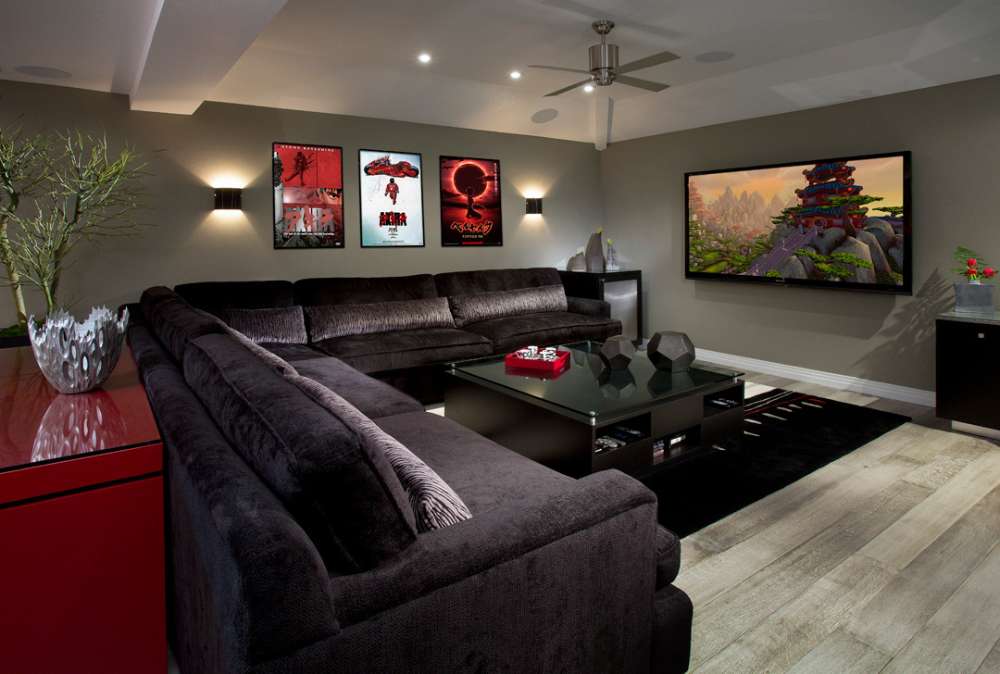
Neon signs. Excessive sports memorabilia. Movie posters in plastic frames. A full-sized arcade machine in the corner. These belong in a basement entertainment room, not a living room you’re trying to design with any level of intention.

Masculine decor is about restraint. The 1stDibs 2025 Designer Trends Survey showed that 33% of designers are moving toward maximalism, but even that trend is about curated abundance, not random accumulation. There’s a big difference between a room full of thoughtfully chosen objects and a room full of stuff.

Buying Matching Furniture Sets

This one is tricky because it feels safe. A matching sofa, loveseat, and coffee table from the same line. Everything coordinates. Nothing stands out.

And that’s the problem. Matching sets flatten a room. They remove all the tension and contrast that make a space interesting. A transitional design approach, mixing pieces from different eras or styles, creates the kind of layered, lived-in quality that matching sets never achieve.

Buy the sofa from one place, the coffee table from another, the accent chair from a vintage shop. The small details in how pieces relate to each other, without being identical, are what make a room feel real.

Skipping Plants Entirely

Look, a fiddle leaf fig isn’t going to ruin the masculine vibe. Neither is a snake plant or a rubber plant. Green is a neutral in this context. It’s organic material, same family as wood and leather.

One or two large-scale plants in simple matte pots (black, concrete, or terracotta) add life to a room without softening it. Biophilic design principles back this up. Rooms with some living greenery just feel better to spend time in.

The mistake isn’t having too many plants. It’s having zero.

FAQ on Masculine Living Room Decor

What colors work best for a masculine living room?

Charcoal, deep navy, slate, and matte black form the base. Layer in warm accents like cognac, rust, olive, and burgundy. Brass or aged bronze metallics add warmth without softening the palette.

Can a masculine living room still feel warm and inviting?

Absolutely. The key is texture layering. Combine wool throws, leather upholstery, walnut wood, and linen curtains. Warm lighting at 2700K-3000K color temperature keeps the space from feeling cold or sterile.

What is the best sofa for a masculine room?

A deep-seated Chesterfield sofa in leather is the classic pick. Low-profile modular sectionals from Article or Room & Board offer a more contemporary alternative. Either way, choose heavy frames with clean lines.

Is leather or fabric better for masculine furniture?

Leather ages better and develops character over time. Full-grain leather is the gold standard. Performance fabrics in dark tones (slate, charcoal, olive) work well for families or renters on a tighter budget.

How do I make a small apartment living room look masculine?

Pick one anchor piece, like a leather club chair or compact two-seater. Use smart layout ideas, wall-mounted shelving, and a matte black floor lamp. Fewer pieces with more visual weight beats cramming in furniture.

What type of lighting suits a masculine living room?

Matte black pendants, brass sconces, and exposed filament bulbs set the right tone. Layer ambient, task, and accent sources. Avoid overhead fluorescent or cool-toned LEDs entirely.

What wall art fits a masculine aesthetic?

Large-scale black and white photography or abstract art in muted tones. Skip small, scattered frames. One oversized piece above the sofa makes a stronger statement than a dozen smaller prints ever will.

What rugs work in a masculine living room?

Flatweave, jute, cowhide, and faded vintage Persian rugs all work. Stick to muted, low-contrast patterns. Size matters more than style. An 8×10 minimum for most seating arrangements prevents the room from looking disjointed.

How do I avoid the “man cave” look?

Skip the neon signs, sports memorabilia overload, and matching furniture sets. Masculine decor is about restraint and material quality, not themed decoration. Curate individual pieces from different sources instead of buying everything from one store.

What materials define masculine interior design?

Exposed brick, concrete, blackened steel, and walnut wood form the raw foundation. Saddle leather, wool, and natural stone add warmth. Avoid high-gloss laminates or thin veneers. Material honesty is the whole point.

Conclusion

A well-executed masculine living room decor scheme comes down to material choices, restrained color palettes, and furniture with real visual weight. Dark toned walls, raw wood surfaces, and heavy textile layers do the work. Not themed accessories or matching sets from a single catalog.

Every decision should pass a simple test. Does this piece earn its place in the room?

Start with one strong anchor, whether that’s a full-grain leather sofa, a modern fireplace surround, or a statement floor lamp in aged bronze. Build outward from there. Mix industrial metal frames with warm walnut. Balance dark slate walls with cognac and olive accents.

Skip the shortcuts. Invest in fewer pieces that feel intentional, and the room will hold up for years without needing a refresh.

Andreea Dima
Author

Andreea Dima is a certified interior designer and founder of AweDeco, with over 13 years of professional experience transforming residential and commercial spaces across Romania. Andreea has completed over 100 design projects since 2012. All content on AweDeco is based on her hands-on design practice and professional expertise.

Pin It