Shabby chic living room decor looks effortless. It isn’t. Every chipped paint finish, every faded floral pillow, every rumpled linen slipcover sits exactly where it does on purpose.
Rachel Ashwell built this style in 1989 from flea market finds and vintage furniture with visible history. Decades later, it remains one of the few interior design styles where worn and weathered pieces actually increase a room’s appeal.
This guide covers the specific color palettes, furniture silhouettes, textiles, lighting, and accessories that define an authentic shabby chic living room. Plus the common mistakes that turn charming into cheap, and practical tips for pulling it off on a real budget.
What Is Shabby Chic Living Room Decor?
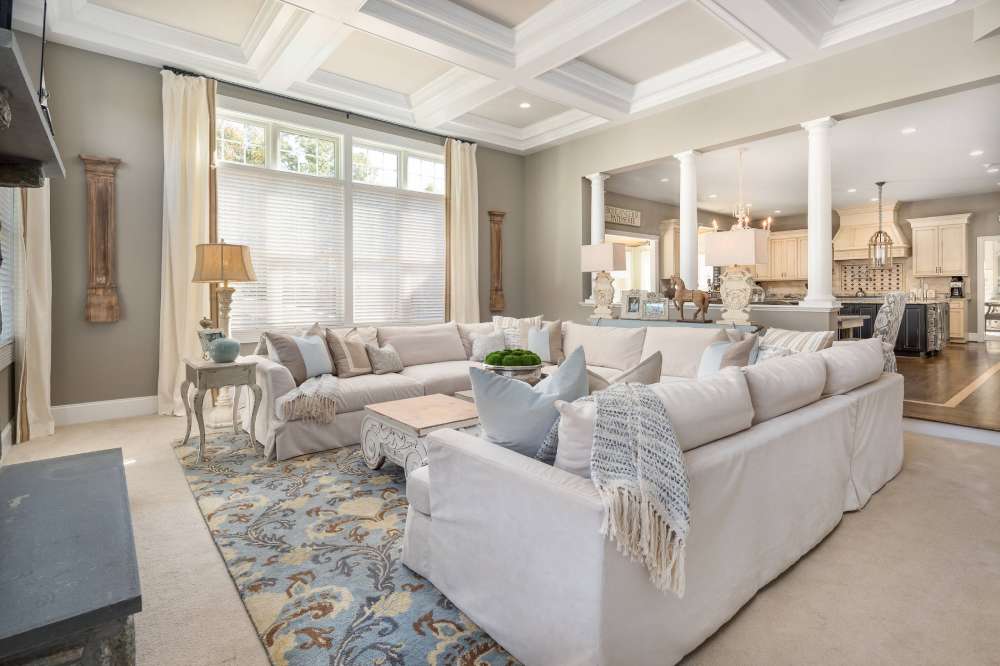
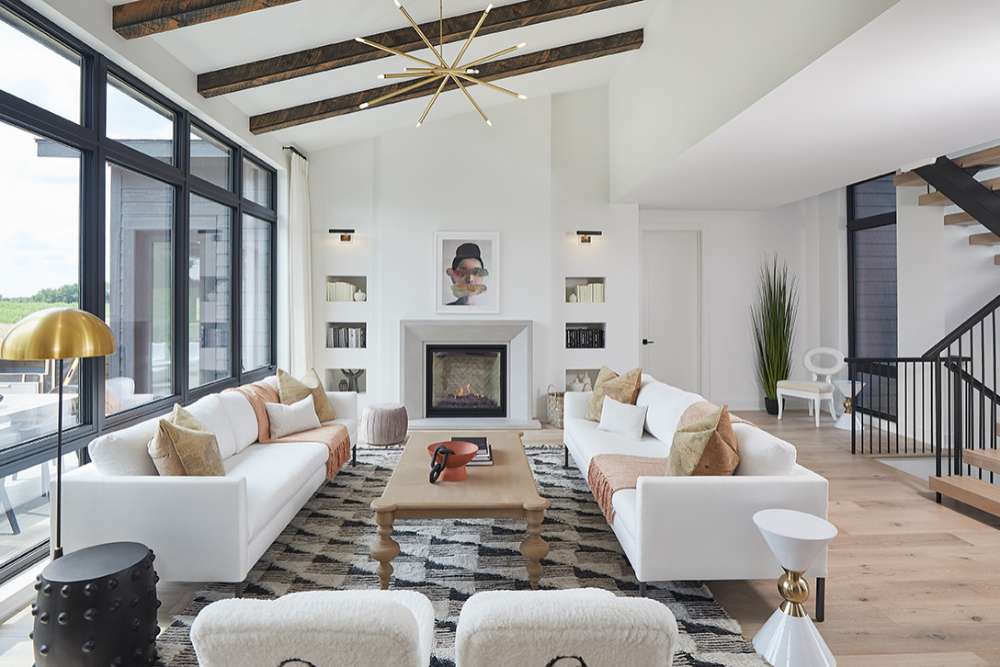
Image source: The Suite Shoppe Interiors
Shabby chic is a specific approach to decorating that treats imperfection as a design choice. Worn edges, faded florals, chipped paint finishes. All of it is intentional.
Rachel Ashwell coined the term in 1989 when she opened her first store in Santa Monica, California. She grew up visiting flea markets with her father, a secondhand rare books dealer, and her mother, who restored antique dolls. That upbringing shaped everything about the brand.
The core idea? Beauty, comfort, and function wrapped in soft pastels, vintage furniture, and linen slipcovers. By the early 1990s, the New York Times recognized Ashwell’s signature sloppy, wrinkled slipcovers as a distinct style category.
People confuse shabby chic with other styles all the time. It’s not farmhouse interior design, which leans utilitarian and rustic. It’s not quite French country living room decor either, though they share DNA. And it sits far from rustic interior design, which favors raw, heavy materials over soft pastels and lace.
The shabby part is deliberate. Furniture looks aged, painted surfaces show wear, and fabrics carry a slightly faded quality. But underneath that relaxed exterior sits a carefully considered room.
| Style | Primary Mood | Key Materials | Color Base |
|---|---|---|---|
| Shabby Chic | Romantic, soft | Painted wood, linen, lace | White, blush, pastels |
| Farmhouse | Rustic, functional | Raw wood, metal, burlap | Neutrals, earth tones |
| French Country | Warm, elegant | Toile, stone, wrought iron | Warm yellows, blues |
| Cottage | Casual, coastal | Wicker, cotton, painted wood | Whites, soft blues |
Hammonds furniture research found that “shabby chic” generates roughly 5,400 monthly Google searches and over 174 million TikTok searches. Younger generations are discovering the style fresh, without the 1990s baggage.
The history of interior design shows that styles rooted in genuine craftsmanship and personal expression tend to outlast passing fads. Shabby chic fits that pattern perfectly. It’s less about following a trend and more about building a room that feels lived in and loved.
Color Palettes That Actually Work
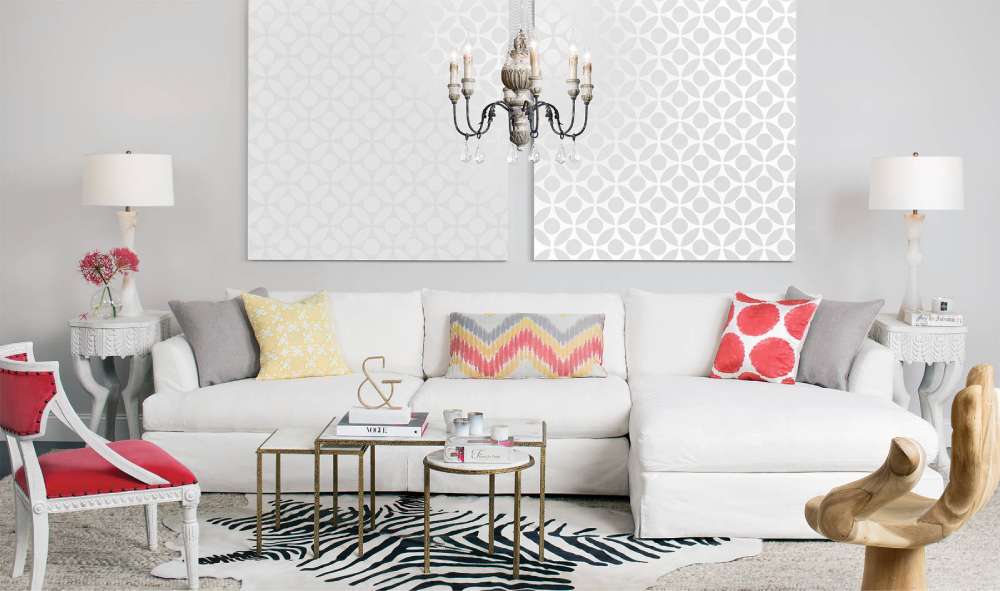
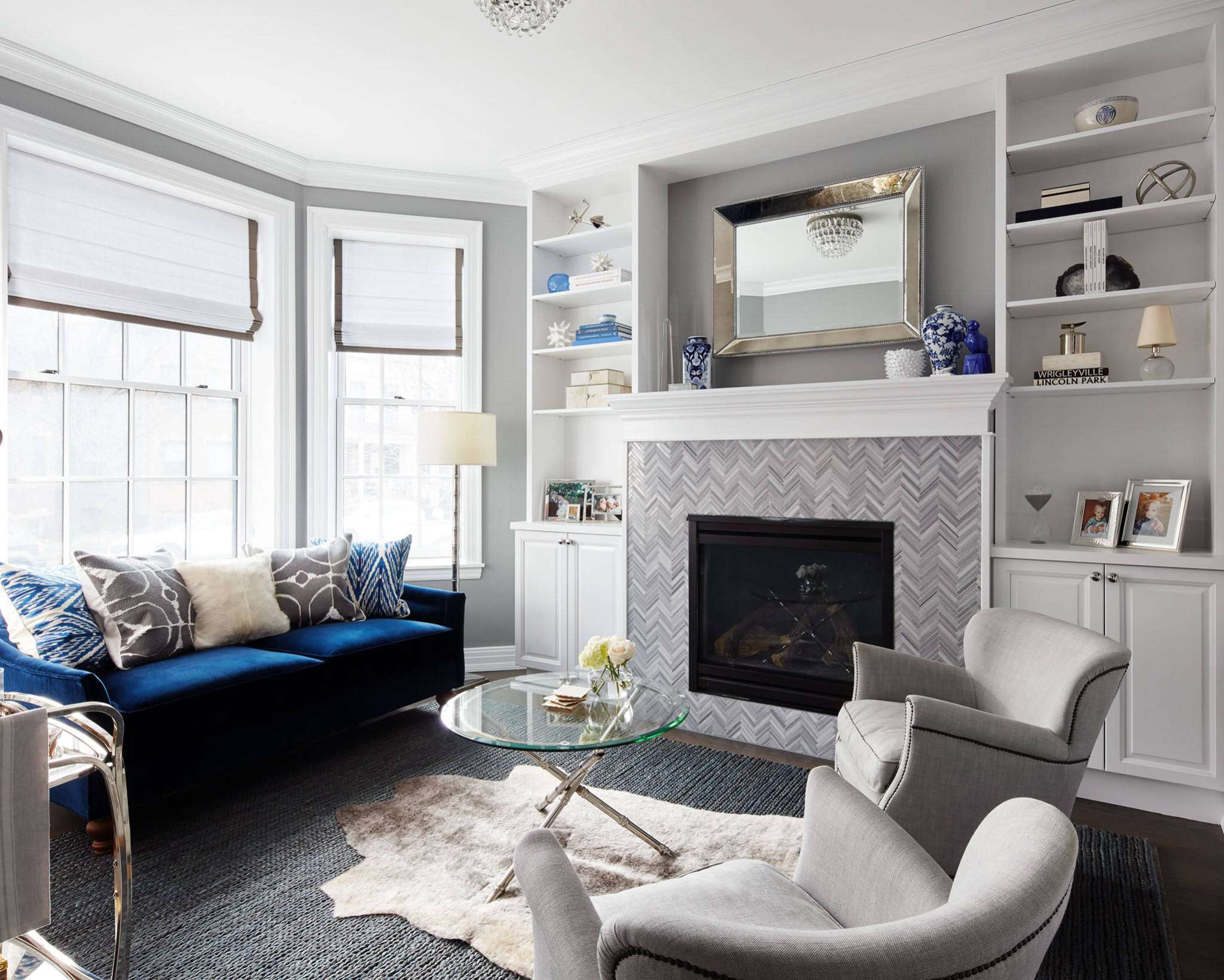
Image source: High Fashion Home
Get the color wrong and your shabby chic living room slides into farmhouse territory or, worse, into something that feels like a nursery. The palette is the single most defining element of this style.
The White and Cream Foundation
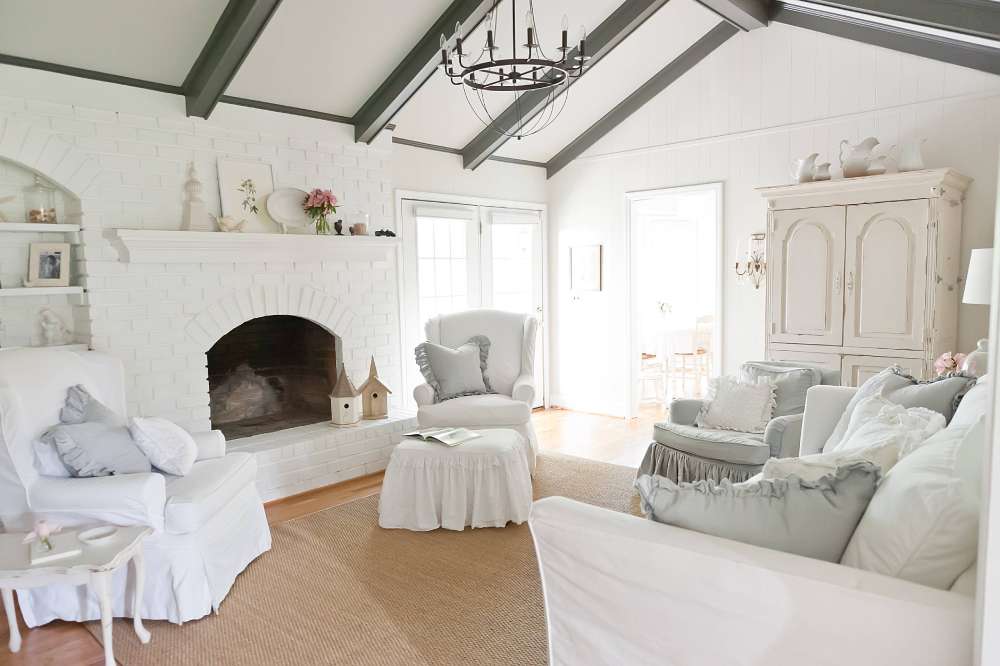
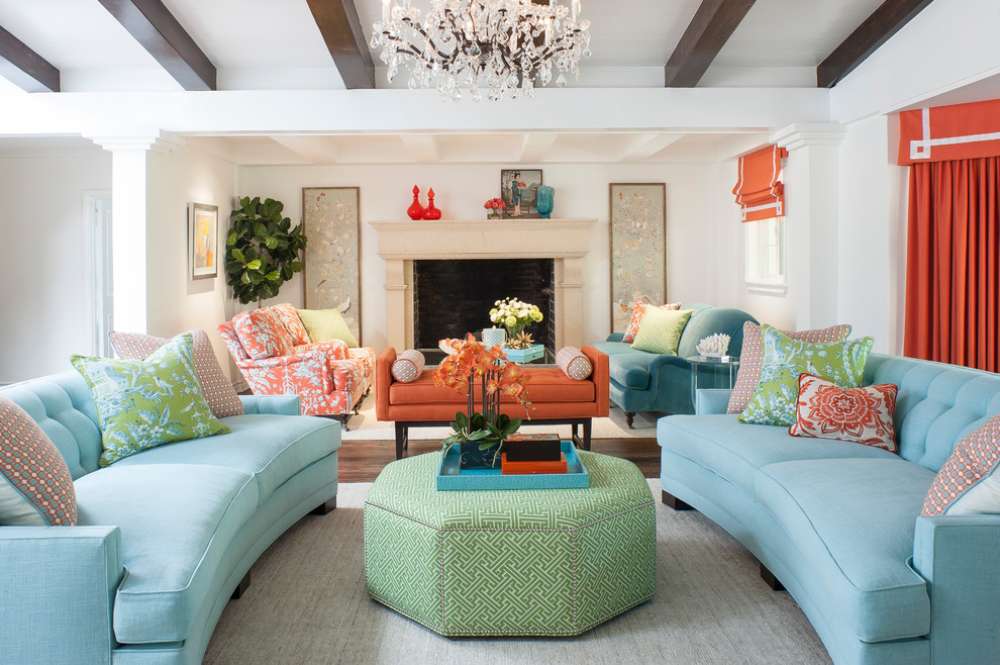
Image source: Kristie Barnett, The Decorologist
White is the anchor. Walls, large upholstered pieces, curtains, and most painted furniture should live in the white-to-cream range. Not stark hospital white. Think warmer, softer. Off-white with the faintest yellow undertone.
Benjamin Moore’s “White Dove” and Farrow & Ball’s “Pointing” both hit the right note. These are whites that feel settled and warm, not cold or clinical.
Research published in Frontiers in Psychology confirmed that lighter interior colors significantly affect how bright and spacious a room feels. White ceilings, in particular, were preferred across test groups of over 440 participants for their ability to preserve adequate lightness levels.
Accent Colors That Define the Style
Here’s where most people either get it right or completely miss.
- Blush pink: The signature shabby chic accent. Dulux named “Sweet Embrace,” a soft baby pink, their 2024 Color of the Year, calling it warming and calming
- Powder blue: Works on throw pillows, painted side tables, ceramic vases
- Sage green: Adds an earthy balance without pulling the room toward coastal design
- Lavender: Best in small doses. A pillow or two, maybe a vase. Too much and the room skews juvenile
Understanding how color works in interior design is half the battle here. Shabby chic leans heavily on color theory even if it doesn’t look like it. The palette is intentionally low-contrast and tonal.
Colors That Push You Off Course
Beige and tan pull the room toward farmhouse. Dark brown wood tones read as traditional rather than shabby chic. And high-saturation colors (bright teal, deep navy, bold red) break the softness that holds the whole look together.
If you’re stuck between shades, the colors that pair well with pink and tones that complement light pink are reliable starting points for building out a shabby chic palette.
Stick to pastels and whites. Let texture do the heavy lifting instead of color contrast.
Furniture With Visible History
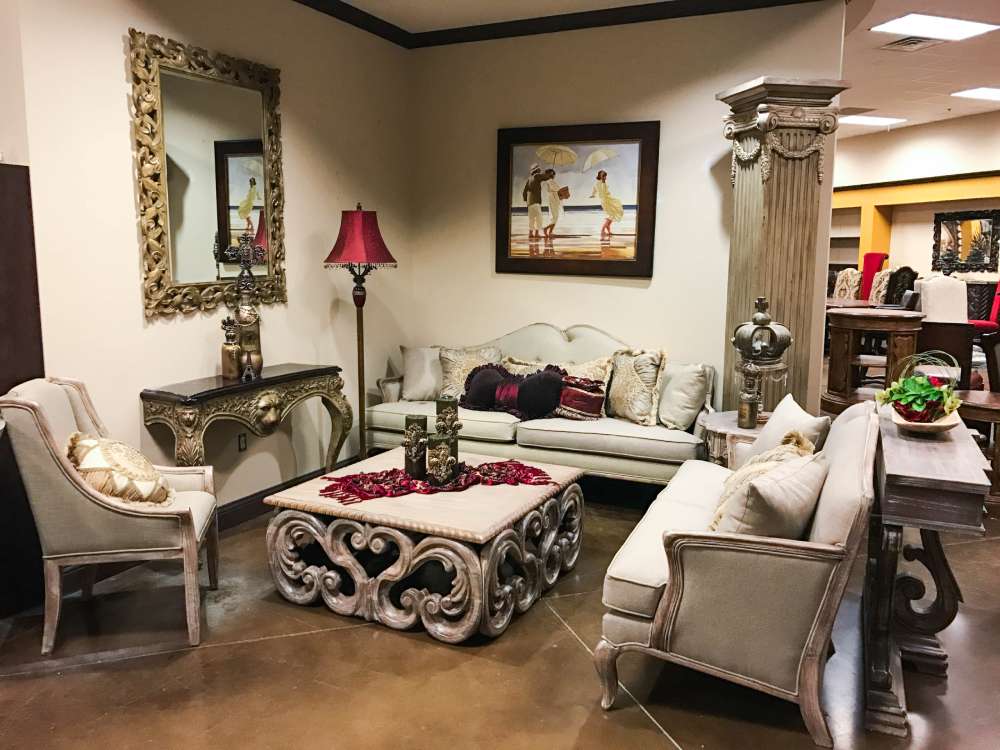
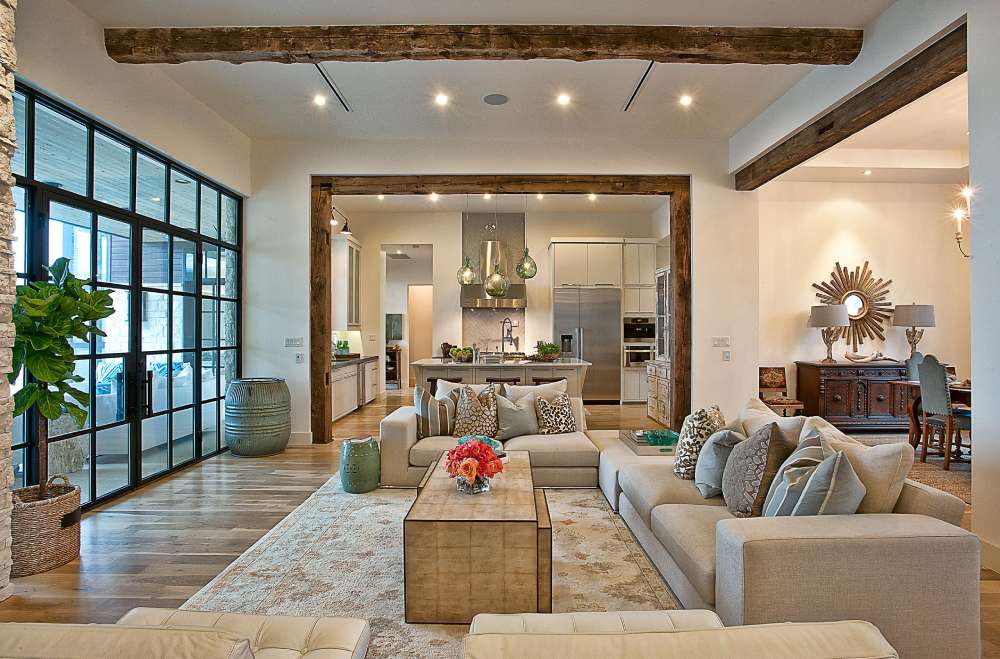
Image source: Luxe Leather Furniture
The furniture makes or breaks a shabby chic living room. You can get the colors right and the textiles perfect, but if the furniture looks like it came straight from a showroom floor, the whole thing falls apart.
What to Look For
Slipcovered sofas are the backbone. White or natural linen, slightly rumpled, never stiff. Rachel Ashwell built her entire brand on this exact piece. The New York Times recognized her signature product as early as 1992.
Beyond sofas, these silhouettes define the style:
- Cabriole leg coffee tables and side tables
- Tufted armchairs with rolled arms
- Painted bookshelves with visible brush strokes
- Distressed wood cabinets in white or cream
Curved lines over straight edges. That’s the rule. Louis XV-style chairs, Victorian-era side tables, anything with ornate carved details. The form of your furniture should feel soft and rounded, never angular or industrial.
Where to Source Vintage Pieces
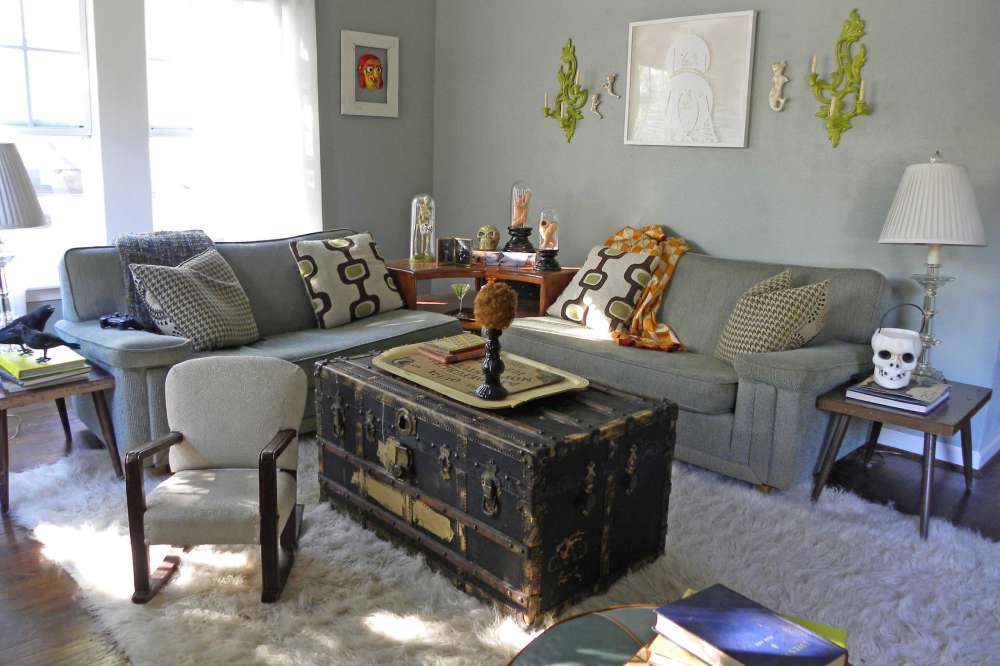
Grand View Research valued the global secondhand furniture market at $34.01 billion in 2023, projecting growth to $56.66 billion by 2030. The infrastructure for finding vintage furniture has never been better.
Online: Chairish, Facebook Marketplace, Etsy vintage sections. Chairish reported a 35% year-over-year sales growth in North America in early 2024, with particular demand for vintage pieces.
In person: Estate sales, flea markets, local antique shops. Took me a while to figure out that estate sales beat antique shops on price almost every time. The dealers at antique shops bought from those same estate sales last weekend.
A 2023 YouGov survey across 17 markets found that 36% of consumers are likely to buy secondhand furniture. That number is even higher among younger buyers.
Kaiyo, an online resale marketplace, estimates that furnishing a living room with secondhand pieces saves roughly 173 kilograms of CO2 compared to buying new. Something to feel good about while you’re dragging that $40 coffee table to your car.
How to Distress Furniture Yourself
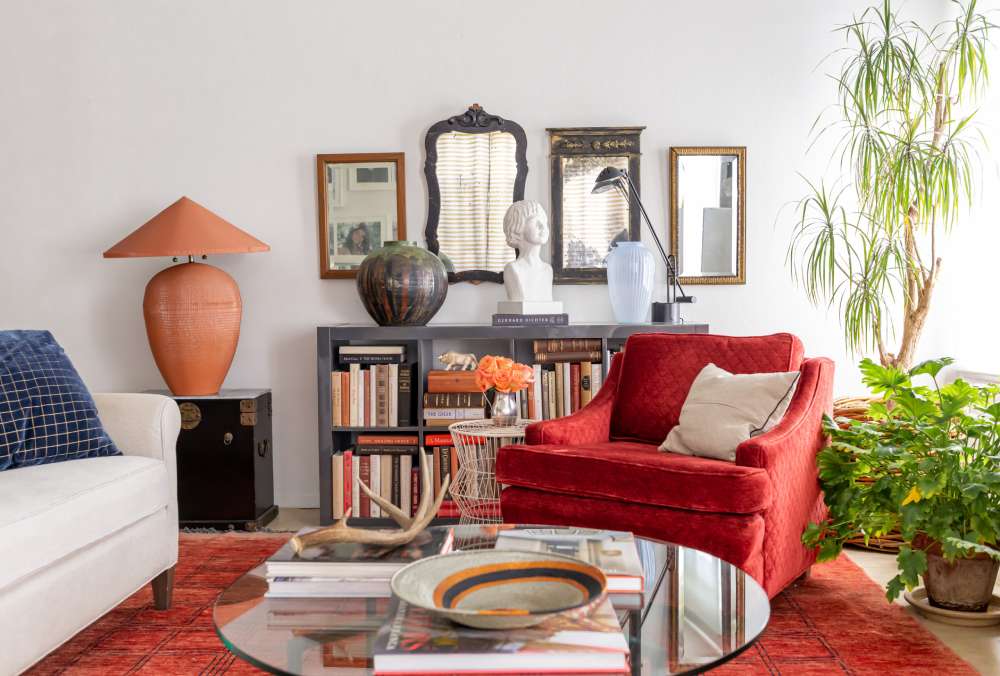
Image source: Leah Impey Interior Design
Buying authentic vintage for every piece gets expensive fast. Annie Sloan’s Chalk Paint, developed in 1990, changed the DIY furniture game completely. No sanding, no priming. Just open the tin and start painting.
The global chalk paint market was valued at $134 million in 2023 and is expected to reach $181 million by 2030, according to Global Info Research. That growth is driven almost entirely by home DIY projects.
The basic process:
- Clean the piece thoroughly
- Apply one or two coats of chalk paint (Annie Sloan, Rust-Oleum Chalked, or Dixie Belle all work)
- Once dry, sand the edges, corners, and surfaces that would naturally show wear
- Finish with clear wax or leave raw for a more matte look
Sand where life would actually touch the piece. Armrests, drawer edges, table corners, around handles. That’s what makes distressing look believable instead of forced.
Textiles and Layering
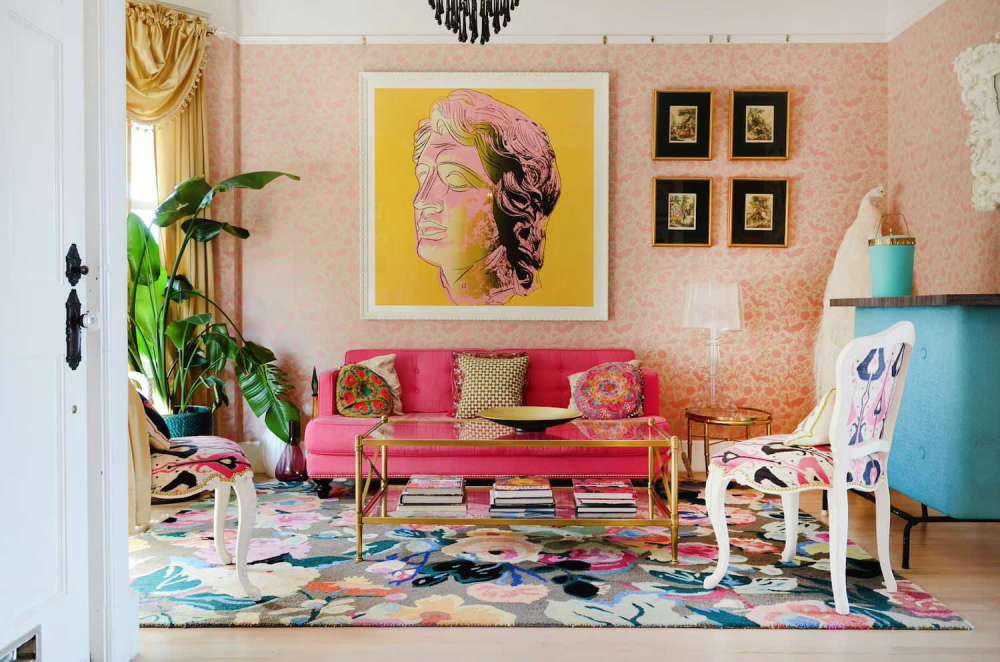
Strip away the fabrics from a shabby chic living room and you’re left with painted furniture in a white box. The textiles are what give the room its warmth, personality, and that lived-in quality everyone talks about.
Fabric Choices
Linen: The workhorse of the style. Slipcovers, curtains, pillow covers. It wrinkles naturally, which actually works in your favor here.
Cotton: A close second, especially in floral prints. Cabbage roses (the big, overblown variety) are the classic shabby chic pattern, not modern botanical prints.
Vintage lace: Use it as a runner, a curtain panel accent, or layered over a solid tablecloth. A little goes a long way.
Havenly’s 2024 design trend report noted a growing preference for performance fabrics like chenille and velvet, predicting they’d outpace linen in mainstream design. But in shabby chic spaces, linen and cotton remain the foundation. The wrinkle is the point.
Pillow and Throw Layering
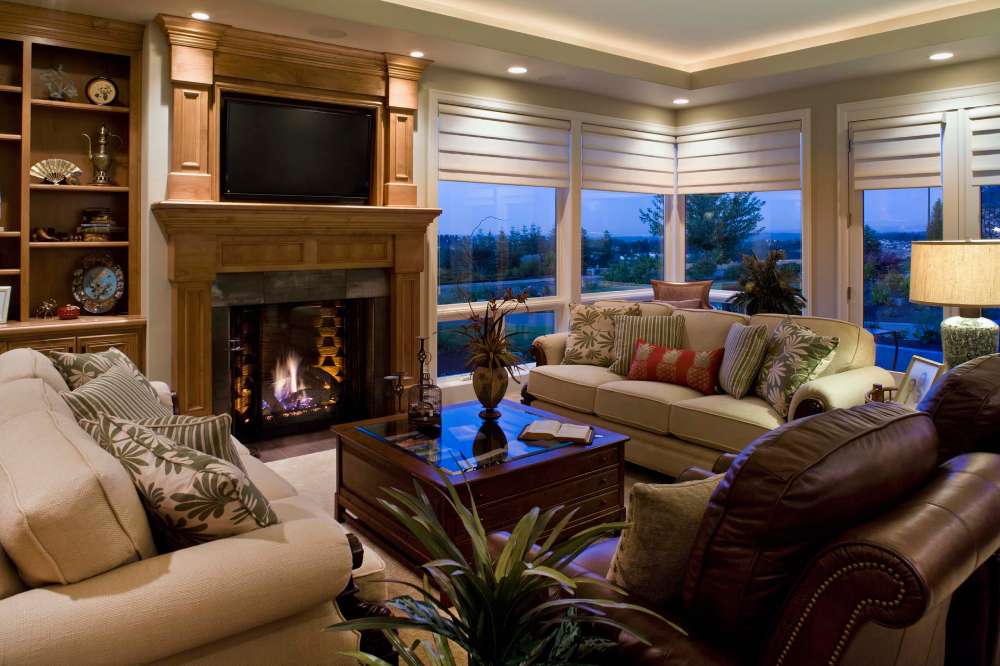
Image source: Kaufman Homes, Inc.
This is where mixing and matching throw pillows gets fun. The goal is coordinated but not matching. Different sizes, different patterns, same tonal family.
- Mix a large floral with a smaller stripe or ticking pattern
- Keep all pillows within the same color temperature (cool pastels together, warm pastels together)
- Add one or two ruffled or lace-trimmed options
If your sofa is white or cream, your pillow choices for a white couch should pull from blush, powder blue, or sage. Three to five pillows total. More than that and you can’t actually sit down.
Window Treatments
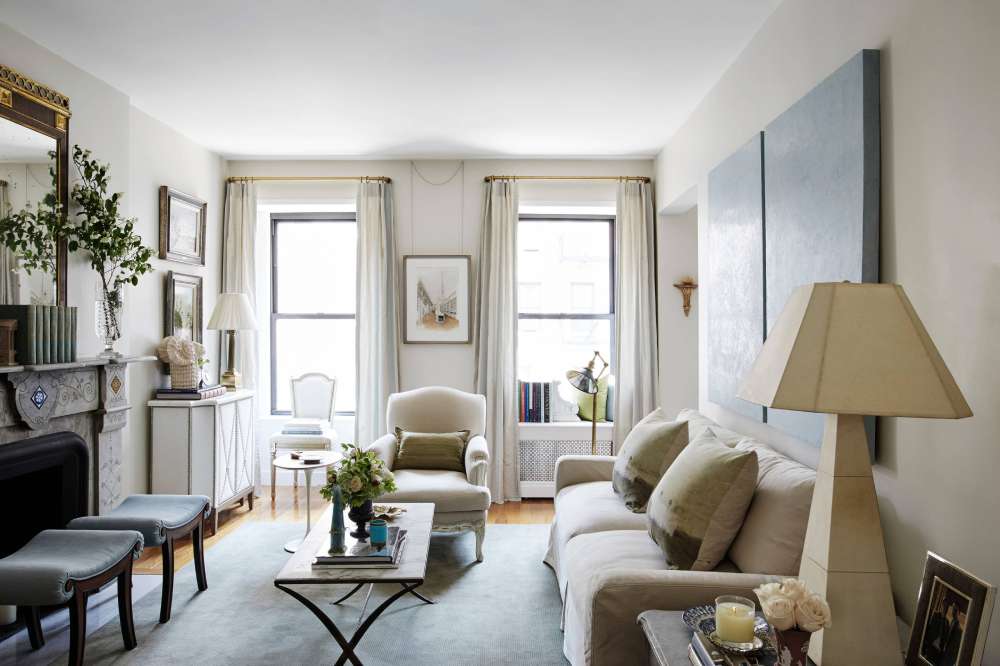
Image source: Pickering House LLC
Floor-length, lightweight, slightly sheer. That’s the formula. Understanding what window treatments do for a room helps you realize they’re not just functional here. They’re one of the biggest visual elements in the space.
If your walls are white or gray, the curtains you choose for white walls should be either tone-on-tone (white on white with a different texture) or a very soft pastel. Heavy, dark curtains kill the airy feeling that shabby chic depends on.
Lighting and Chandeliers
A crystal chandelier in a shabby chic living room is not optional. Well, technically it is. But I’ve never seen a really good shabby chic room without one. It’s the single piece that pulls the whole aesthetic together.
The Crystal Chandelier
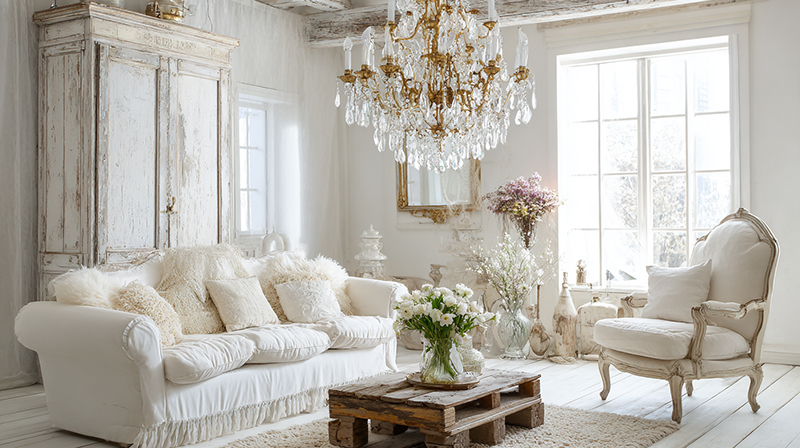
Even a small one makes a difference. Doesn’t need to be enormous or expensive. Vintage crystal chandeliers show up at estate sales and on Chairish regularly, often for a fraction of what new reproduction versions cost.
The best options mix crystal drops with distressed or painted metal frames. A perfectly polished brass chandelier reads as luxury design, not shabby chic. You want something that looks like it’s been hanging in a French country house for decades.
Choosing the right chandelier also means understanding the role of a focal point in a room. In a shabby chic living room, the chandelier usually is that focal point. Everything else plays supporting role.
Layered Lighting Beyond the Chandelier
Table lamps: Fabric shades in linen or soft floral prints. Ceramic or painted wood bases. Nothing chrome. Nothing brushed nickel.
Candle holders and lanterns: Mercury glass, wrought iron, or painted wood. These provide ambient light that softens the room after dark.
What to avoid: LED strip lighting, recessed can lights as primary sources, anything with a modern chrome or matte black finish. These belong in contemporary design or industrial spaces, not here.
The way light functions in a room affects mood more than most people realize. Shabby chic rooms should feel warm and a little bit glowy, never harshly lit. Layer your sources. Overhead for general illumination, table lamps for warmth, candles for atmosphere.
Wall Decor and Art
The walls in a shabby chic living room walk a thin line between curated and cluttered. Get it right and the room feels collected and personal. Go too far and it looks like a thrift store exploded.
Mirrors With Character
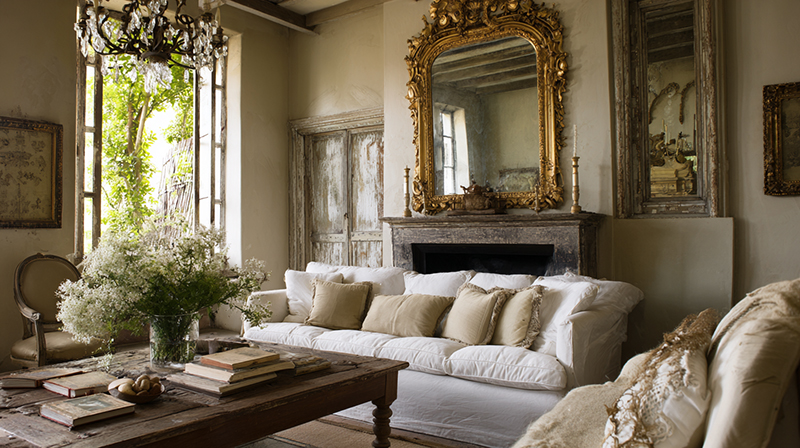
Vintage mirrors with ornate frames are a signature element. The frame matters more than the glass. Look for carved wood, gilded finishes that have worn down, or painted white frames with visible aging.
A large mirror above a fireplace or sofa creates depth and reflects light around the room, making a smaller living room feel bigger. This connects to how space works in interior design. Mirrors are one of the oldest tricks for making rooms feel larger without knocking down walls.
Art and Wall Arrangements
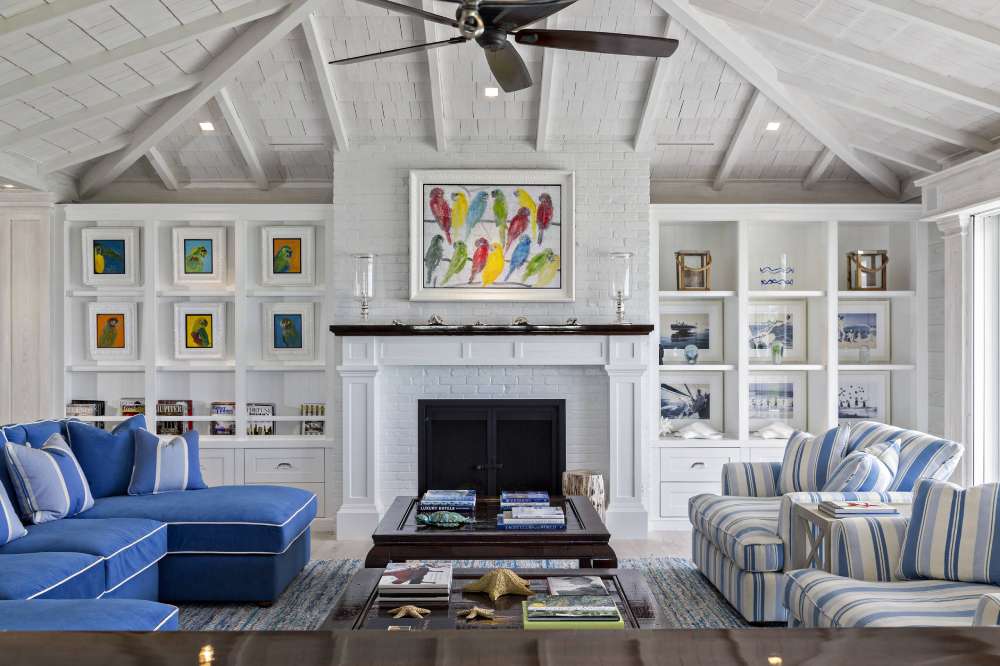
Image source: Keating Moore Construction
What works: Botanical prints in muted tones, vintage oil paintings (especially still lifes and landscapes), faded photographs in antique frames.
What doesn’t: Mass-produced “shabby chic” word art and lettered signs. Nothing screams “I bought this at a home goods store” faster than a wooden plaque that says “Live, Laugh, Love” in cursive. This is exactly where the style gets a bad reputation.
For gallery walls, collect mismatched frames and paint them all the same white or cream. The principle of unity works beautifully here. Different frames, different art, one unifying paint color. It pulls everything together without looking like a matched set from a catalog.
Plate Walls and Decorative Shelving
Hanging vintage plates on walls is one of those things that either reads as charming or dated. The difference is curation.
- Stick to a limited color palette (blue and white Chinoiserie, all-white ironstone, or mixed pastels)
- Arrange in an organic cluster, not a rigid grid
- Mix in one or two small mirrors or framed prints to break up the pattern
Floating shelves with carefully chosen objects (a small stack of vintage decor books, a mercury glass vase, a porcelain figurine) add dimension to walls without overwhelming the room. The details you choose should feel personal, not like they came from a single shopping trip.
Rugs and Flooring
The floor sets the stage for everything above it. Get this wrong in a shabby chic living room and the whole palette feels off, no matter how perfect your furniture and textiles are.
The Best Flooring Base
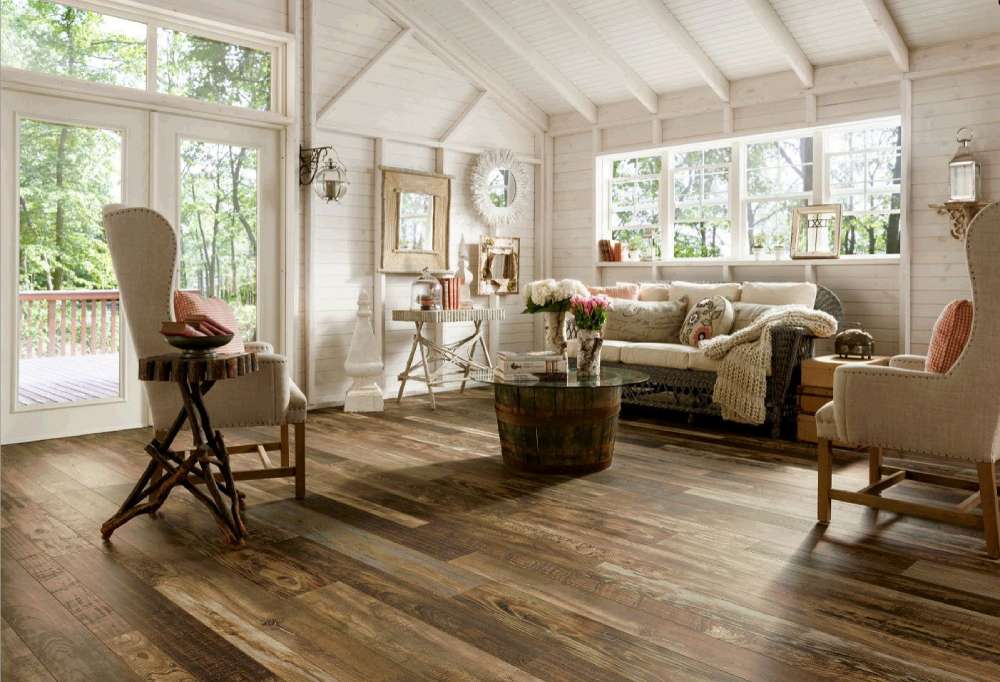
Image source: Mercer Floor and Home Carpet One
Light-toned hardwood or whitewashed wood floors are the ideal starting point. Think pale oak, pickled pine, or painted white floorboards with visible grain underneath.
Dark or high-contrast flooring fights against the soft pastel palette that shabby chic depends on. Espresso-stained hardwood, dark tile, or black-toned laminate will pull the room toward modern or minimalist territory fast.
If you’re stuck with darker floors and can’t replace them, a large light-colored area rug covering most of the surface is the fix. IMARC Group valued the global area rugs market at $36.5 billion in 2024, so there’s no shortage of options at every price point.
Choosing the Right Area Rug
The rug choice here is more specific than people think. Not every vintage-looking rug fits.
| Rug Type | Shabby Chic Fit | Watch Out For |
|---|---|---|
| Faded Persian | Excellent, especially in muted pinks and blues | Too-bold colors read as traditional |
| Braided cotton | Good for a casual, cottage feel | Can skew farmhouse if too rustic |
| Muted floral | Perfect match for the style | Avoid modern geometric florals |
| Sisal or jute | Works as a base layer only | Too rough alone, needs layering |
Layering smaller rugs over a larger neutral base adds dimension. A faded floral pattern on top of a simple cream jute rug creates the kind of collected, unplanned look that shabby chic rooms do best.
According to the 2023 YPulse Shopping for the Home Report, 33% of Millennials plan to buy rugs for their homes, making it one of the more actively purchased decor categories among younger buyers.
If your sofa is a neutral tone, the right rug to pair with a beige couch in this style would lean toward a faded Persian or a soft floral, keeping everything within the same warm, muted family.
Accessories and Finishing Details
The accessories are where a shabby chic living room either comes together or collapses into clutter. There’s a specific line between “curated vintage” and “grandmother’s attic.” The difference is editing.
Flowers and Greenery
Fresh flowers: Peonies, garden roses, hydrangeas, and lavender. These are the shabby chic standards. Arrange them loosely in a pitcher or mercury glass vase, not a tight formal arrangement.
Dried flowers: Dried lavender bundles and dried hydrangeas work well on shelves and mantels. They last months and fit the slightly faded look.
Skip tropical plants and succulents. Those belong in bohemian decor or biophilic design, not here.
Display Objects and Vignettes
Opendoor’s 2024 Home Decor Report found that Americans spend an average of $1,599 per year on home decor. You don’t need to spend anywhere near that on accessories for a single room if you shop smart.
- Vintage books stacked with spines facing out (muted covers, not bright paperbacks)
- Porcelain tea cups and saucers, especially Wedgwood or mismatched floral patterns
- Mercury glass candleholders and small vases
- Glass cloche jars with small objects inside
Group items in odd numbers (three, five) on trays or tiered stands. This creates vignettes that look intentional without being fussy.
Storage That Fits the Style
Wicker and rattan baskets are the go-to. They handle throws, magazines, remotes, and all the other stuff that accumulates in a living room.
Painted wood crates stacked as a side table pull double duty. And a shabby chic home almost always has at least one piece that’s both decorative and functional, like a vintage trunk used as a coffee table with blanket storage inside.
Common Mistakes in Shabby Chic Rooms
This style has more pitfalls than most. It’s easy to tip from charming into cheap, or from collected into chaotic. And the internet is full of mass-market versions that miss the point entirely.
Over-Distressing Furniture
There’s a difference between a piece that looks like it’s lived through decades and one that looks like someone attacked it with sandpaper for twenty minutes. Which, of course, is exactly what happened.
The fix: Sand only where real wear would occur. Edges, corners, drawer pulls, armrest tops. If the distressing is uniform and covers every surface equally, it reads as fake instantly.
Mixing in Too Many Competing Styles
One industrial light fixture might work as an intentional contrast. But adding industrial hardware, a mid-century modern coffee table, and a Scandinavian minimalist shelf to a shabby chic room doesn’t create eclectic style. It creates confusion.
Understanding how harmony works in a room helps here. Every piece doesn’t need to be matching, but they all need to be speaking the same general language.
Relying on Mass-Produced “Shabby Chic” Products
This is where the style earns its worst reputation. Those wooden signs with cursive lettering, the factory-distressed picture frames sold in packs of three, the “vintage-look” clocks with no actual history. None of it works.
Real shabby chic pieces have texture you can feel, irregularities you can see, and stories you can at least imagine. Mass-market reproductions flatten all of that into something generic.
The U.S. Census Bureau’s 2023 American Housing Survey recorded over 50 million DIY projects completed by homeowners that year, totaling more than $125 billion in spending. A fraction of that effort toward actual vintage sourcing or DIY distressing produces better results than any pre-made “shabby chic” product from a chain store.
Going All-White Without Variation
| Mistake | Why It Fails | Better Approach |
|---|---|---|
| Same white on everything | Flat, clinical, no depth | Mix 2–3 white tones (warm, cool, cream) |
| No texture variation | Everything blends into a blank wall | Layer linen, lace, painted wood, wicker |
| No accent color at all | No focal points, nothing to land on | Add blush, sage, or powder blue in small doses |
A room that’s entirely one shade of white with no tonal variation, no texture changes, and no accent colors doesn’t read as shabby chic. It reads as unfinished.
Shabby Chic on a Budget
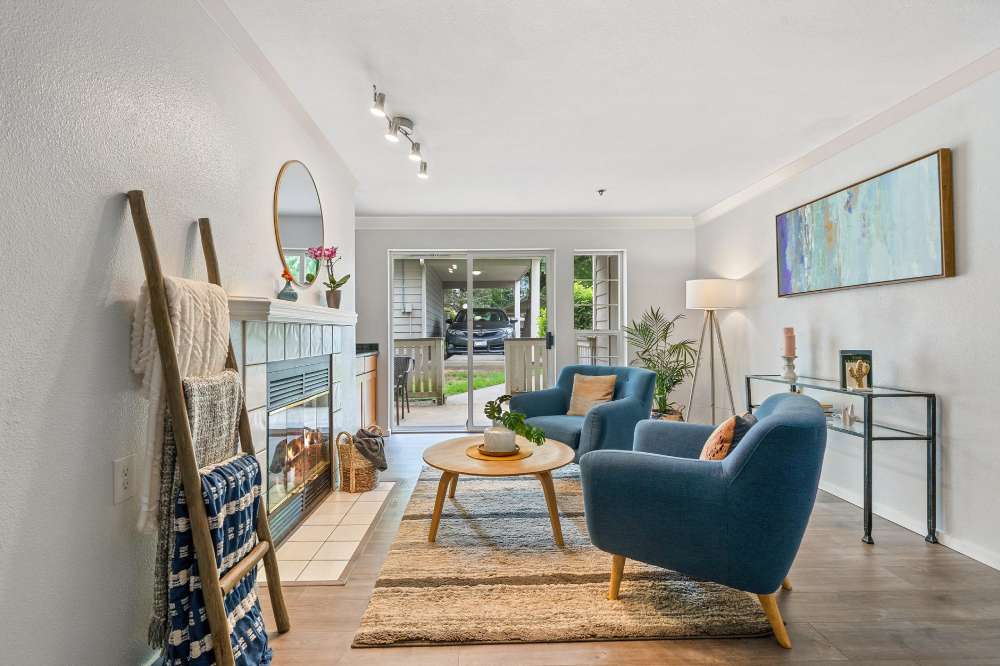
Image source: EL & EL Wood Products Corp.
Here’s the thing most people forget. This style was built on secondhand shopping from the start. Rachel Ashwell opened her first store stocked almost entirely with flea market finds. The whole point was making beauty from what already existed.
Where to Find Pieces for Less
B-Stock, a B2B recommerce marketplace, reported that furniture brands sold 85% more units in 2024 than the year before through resale channels. The secondhand infrastructure keeps getting better.
Best sources ranked by price:
- Estate sales (lowest prices, best selection of genuine vintage)
- Facebook Marketplace (free to cheap, requires patience and regular checking)
- Thrift stores like Goodwill and Habitat ReStore
- Chairish and Etsy (higher prices, but curated and shippable)
IKEA’s Buy Back and Resell program sold 7 million secondhand items through its As-Is sections and online marketplace in 2024, according to Modern Retail. Most resale items sell within 48 to 72 hours of hitting the store floor.
The Single Best DIY Investment
Chalk paint. That’s it.
A single quart of Annie Sloan Chalk Paint or Rust-Oleum Chalked can transform an ugly dresser, a dated bookshelf, or a scarred coffee table into something that looks like it belongs in a shabby chic living room. No sanding required. No primer. Just paint, dry, sand the edges, wax.
Annie Sloan’s global network includes over 1,200 retailers in more than 50 countries. That paint is available almost everywhere, and the brand offers workshops through local stockists if you want hands-on guidance.
Where to Splurge vs. Where to Save
Splurge on: A good sofa (you sit on it every day), a chandelier (it’s the room’s point of emphasis), and quality slipcovers in washable linen.
Save on: Side tables, picture frames, decorative accessories, storage baskets, and throw pillows. All of these can come from thrift stores, estate sales, or DIY projects without any loss in quality or style.
Opendoor’s data shows that 41% of homeowners cite cost as the most intimidating factor when starting a home decorating project. But shabby chic is probably the most budget-friendly approach to living room decor that still produces a room with real character.
Drop cloths from a hardware store make surprisingly good slipcovers. Old picture frames painted white cost almost nothing. Garden flowers clipped from your yard are free.
The whole philosophy of this style says that the best rooms aren’t the most expensive ones. They’re the ones where someone actually took time to find, restore, and arrange things with care. At least in my experience, the rooms that feel the most “finished” are the ones where most of the budget went to one or two anchor pieces, and everything else was sourced with patience and a little creativity.
FAQ on Shabby Chic Living Room Decor
What defines shabby chic style?
Shabby chic combines vintage furniture, pastel color palettes, and deliberately distressed finishes. Rachel Ashwell created the style in 1989, centering it on flea market finds, linen slipcovers, and floral patterns that feel romantic and lived in.
What colors work best in a shabby chic living room?
White and cream form the base. Accent with blush pink, powder blue, sage green, or lavender. Avoid high-saturation colors and dark earth tones, which pull the room toward farmhouse or rustic decor instead.
Is shabby chic still in style?
Yes. The style generates over 174 million TikTok searches and 5,400 monthly Google searches. Younger generations are discovering it fresh, and designers continue to modernize the look by pairing vintage pieces with cleaner lines.
What is the difference between shabby chic and farmhouse?
Shabby chic is romantic and feminine, built on pastels, florals, and crystal chandeliers. Farmhouse decor is more utilitarian, favoring raw wood, metal accents, and neutral earth tones over soft pinks and lace.
What furniture works for shabby chic?
Slipcovered sofas, chalk-painted wood pieces, tufted armchairs, and cabriole leg tables. Look for curved silhouettes over straight lines. Vintage finds from estate sales or platforms like Chairish and Facebook Marketplace work best.
How do I distress furniture for a shabby chic look?
Apply Annie Sloan Chalk Paint or Rust-Oleum Chalked directly to the surface. No sanding or priming needed. Once dry, sand edges and corners where natural wear would occur. Finish with clear wax for protection.
What type of rug fits a shabby chic living room?
Faded Persian rugs in muted pinks and blues, soft floral area rugs, or braided cotton styles. Layer a smaller patterned rug over a larger neutral base for depth. Avoid bold geometric or contemporary patterns.
Can I do shabby chic on a budget?
The style was literally built on secondhand shopping. Estate sales, thrift stores, and DIY chalk paint projects keep costs low. Splurge on one anchor piece like a sofa, and save on vintage accessories sourced affordably.
What lighting fits shabby chic decor?
A crystal chandelier is the signature piece. Pair it with table lamps featuring fabric shades in linen or floral prints, plus mercury glass candle holders for ambient glow. Avoid chrome, brushed nickel, or LED strips.
What mistakes should I avoid with shabby chic?
Over-distressing furniture, using mass-produced “shabby chic” signs, mixing in too many competing styles, and going all-white without contrast or texture variation. Edit heavily. Curated always beats cluttered.
Conclusion
Shabby chic living room decor rewards patience more than spending. The best rooms in this style are built slowly, piece by piece, from estate sale finds, chalk paint projects, and vintage accessories that carry actual history.
Start with a white and cream foundation. Layer in soft pastels like blush pink and powder blue. Choose a crystal chandelier as your anchor, and let distressed painted furniture and cabbage rose fabrics fill in the rest.
Skip the mass-produced replicas. Source real antique pieces from Chairish, Facebook Marketplace, or your local flea market instead.
The rooms that feel most authentic are the ones where every weathered finish and layered textile tells a story. Yours should too.

- Paint Colors That Go with Oak Floors - August 22, 2026
- Paint Colors That Go with Gray Floors - August 20, 2026
- What Color Bedding Goes with Dark Wood Furniture - August 18, 2026