Color Combinations
What Color Furniture Goes with Light Wood Floors
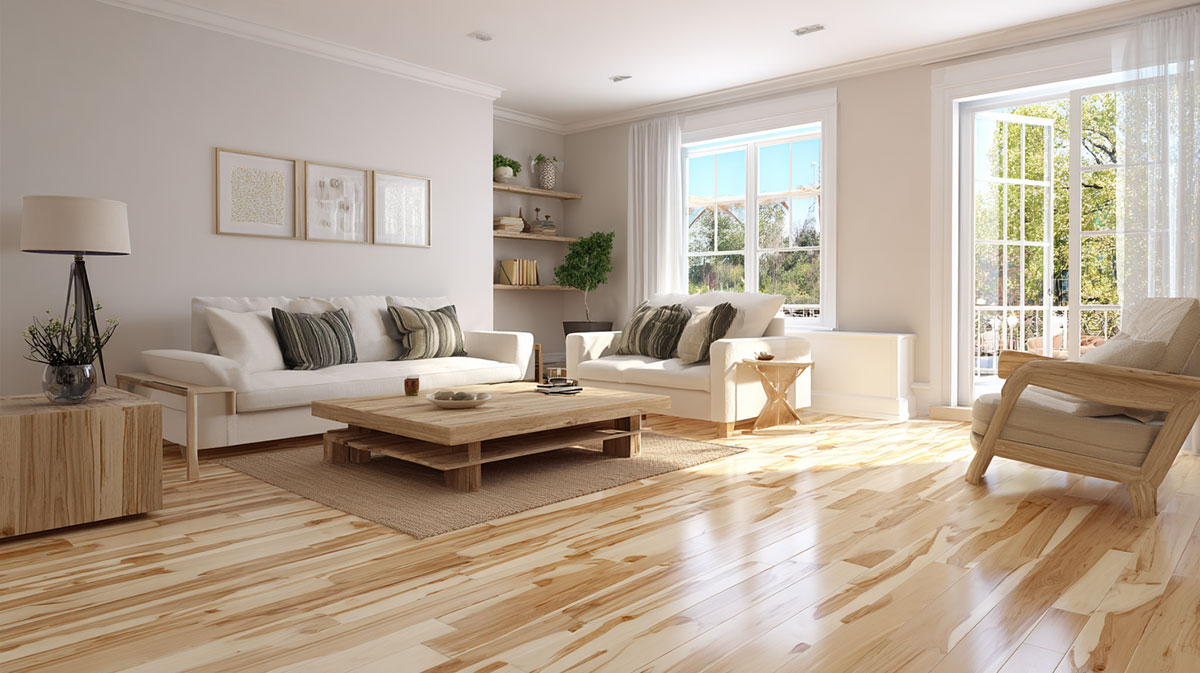
Light wood floors are forgiving until they’re not. Pick the wrong furniture color and the room looks flat, unfinished, or like two separate design decisions that never met.
The answer to what color furniture goes with light wood floors isn’t one color. It depends on your floor’s undertone, the room’s natural light, and the contrast gap between floor and furniture.
This guide covers the furniture colors that work, the ones to avoid, and the specific rules that change based on whether your floors run warm, cool, or neutral. From sofa selection to dining tables, bedroom sets, metal finishes, and rugs, every major furniture decision is covered.
Our color partner table lines up wood tones and floors with the wall colors that suit them.
What Are Light Wood Floors
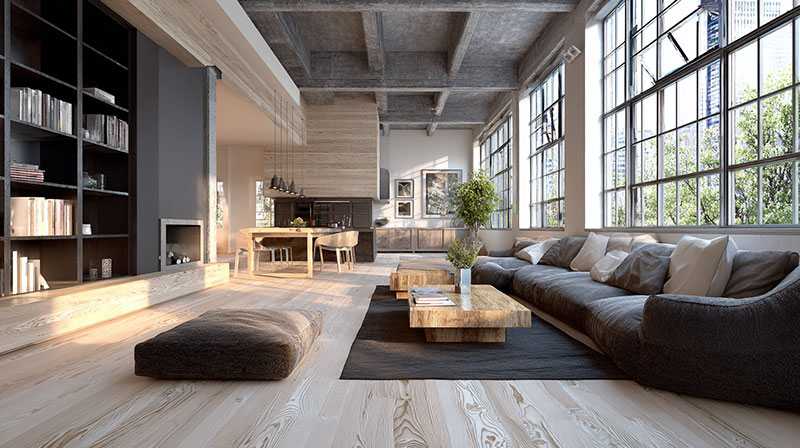
Light wood floors sit in a Light Reflectance Value (LRV) range of roughly 55 to 75. That covers species like maple, ash, pine, and light oak, all of which share a pale, open-grain appearance but behave very differently once furniture enters the room.
The US wood flooring market was valued at $6.33 billion in 2024, according to Grand View Research, with residential applications holding a 77.1% share. Light-toned species are among the most requested, driven by demand for bright, open-plan interiors.
The reason two floors both labeled “light wood” can need completely different furniture colors comes down to one thing: undertone.
The Three Undertone Categories
Every light wood floor carries a hidden pigment. Identifying it before choosing any furniture color is the first and most important step.
| Undertone Type | Common Species | Visual Signal |
| Warm (yellow, honey) | Natural maple, birch, beech, light hickory | Floor appears golden or amber in natural light |
| Cool (gray, pink, ashy) | White oak, ash, whitewashed pine | Floor reads slightly silver or muted in daylight |
| Neutral (raw wood, pale beige) | Soft maple, pale ash, light natural oak | Neither pulls warm nor cool beside a white reference |
How to Identify Your Floor’s Undertone
Place a plain white sheet of paper flat on the floor. Look at both surfaces side by side in natural daylight.
If the wood looks yellow or gold next to the paper, you have a warm-undertone floor. If it reads gray or slightly pink, it’s cool. If neither effect is strong, the floor is neutral. That one test changes every furniture decision that follows.
Why Finish Type Changes the Rules
Matte finishes absorb light and soften undertones, making warm floors look less saturated and cool floors look flatter.
Whitewashed finishes amplify cool or purple-pink undertones, a common trap when pairing with warm beige furniture.
Natural and light oil finishes let the wood’s true pigment show, making undertone identification easier and color pairing more reliable.
What Furniture Colors Work Best With Light Wood Floors
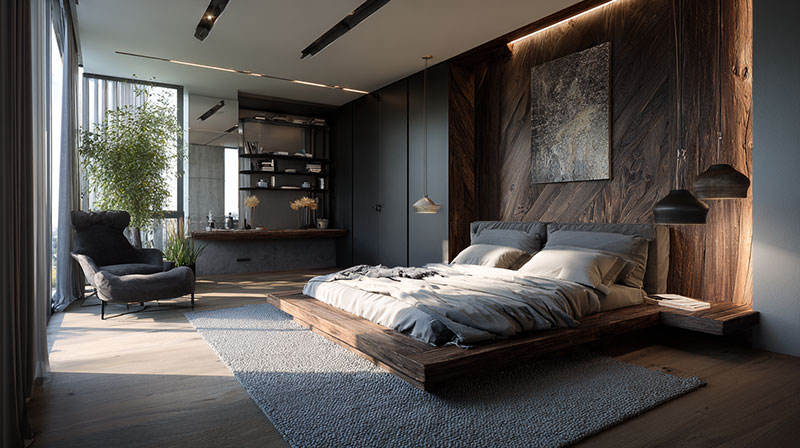
Light wood floor furniture ideas almost always work better when the furniture contrasts the floor rather than blending with it. The floor and furniture need enough difference in LRV to read as two separate layers.
According to Mintel’s 2024 residential flooring consumer research, 40% of US homeowners choose wood for their main living areas, making furniture-floor pairing one of the most common design decisions in American homes.
The Six Furniture Color Families That Work
Not all six work equally well across all floor types. The undertone governs which ones are safe choices and which require more careful testing.
- White and off-white: Creates clean contrast. Works across all 3 undertone categories, strongest on cool-undertone floors where warmth from the wood prevents the room from feeling clinical.
- Charcoal and dark gray: The most forgiving choice. Holds visual weight without pulling warm or cool, so it pairs with every light floor type.
- Navy blue: Strong contrast on warm-undertone floors. The cool tone of navy balances honey or golden floors naturally.
- Warm brown and camel: Works on neutral-undertone floors. Can blend and disappear on warm floors if the tones are too close.
- Black: Maximum contrast. Works across all light floor undertones. Particularly strong on pale ash and whitewashed floors where even dark gray can feel soft.
- Sage and muted green: Sits between cool and warm on the color wheel. Works well on both warm and neutral floors. On cool floors, test first since two cool tones can flatten each other.
The LRV Gap Rule
A useful benchmark from interior color coordination: furniture and floor should differ by at least 20 LRV points for the two surfaces to read as clearly distinct.
A light ash floor at LRV 65 paired with a cream sofa at LRV 70 creates a near-invisible boundary. The room loses depth. Swap the cream sofa for a charcoal linen at LRV 25 and the room immediately has structure.
What Furniture Colors to Avoid With Light Wood Floors
Avoiding wrong furniture colors for light wood floors matters as much as picking right ones. A few combinations are consistently problematic regardless of room size, lighting, or style.
The “Muddy Middle” Problem
Medium brown furniture at a similar LRV to the floor is the most common mistake. The furniture doesn’t disappear, but it doesn’t stand out either. The room reads as one undifferentiated mass of warm wood tones.
Took me a while to nail down exactly why some rooms with “matching wood” felt off. It’s not that wood-on-wood is always wrong. It’s that the tones are too close in value. The solution is always to go darker or lighter, never to try to match.
Colors That Flatten or Clash
Beige and tan furniture on warm-toned light floors (maple, birch, honey oak): the undertones merge and the room looks one-dimensional. This combination tests well in showrooms lit with warm lighting, then disappoints in real homes under daylight.
Yellow-toned wood furniture competes with honey-undertone floors directly. Two warm yellows at similar saturation create visual noise rather than cohesion.
Orange-adjacent furniture colors (terracotta, rust, burnt sienna) clash specifically with pink-undertone floors like certain maple and light red oak species. The pink in the floor and the orange in the furniture fight each other.
How to Test Before You Buy
Pull a paint chip or fabric sample and hold it flat against the floor in both morning and evening light. The sample will shift color temperature across the day.
If the furniture and floor look the same at any point during that test, the contrast is too low. Move a shade darker or cooler on the furniture side.
How Undertones in Light Wood Floors Change Furniture Color Rules
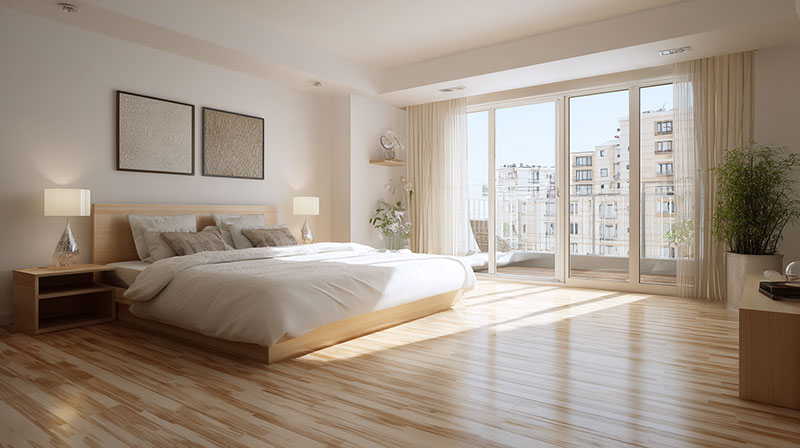
Understanding how color works in interior design changes the entire approach to furniture-floor pairing. Undertones are not a subtle detail. They are the filter that determines whether a furniture color looks intentional or accidental.
Cool-Undertone Light Wood Floors
White oak, ash, and gray-washed pine carry cool gray or pink undertones. These floors read contemporary and clean in spaces with good natural light.
Best furniture pairings: cool whites (Benjamin Moore Chantilly Lace, SW High Reflective White), slate blue, charcoal, matte black.
Warm furniture tones like camel, honey brown, or warm cream can work if used in small doses as accent pieces. As the dominant furniture color, they fight the floor’s cool undertone and the room looks confused.
Warm-Undertone Light Wood Floors
Honey oak, natural maple, and birch floors run warm. The golden and yellow pigments in these species are strong, especially in south-facing rooms where afternoon light amplifies them further.
Best pairings pull in the opposite direction: deep navy, forest green, warm off-whites (not pure cool white), and dark walnut furniture. These cooler or deeply saturated tones balance the floor’s natural warmth without canceling it.
Avoid: greige furniture with a gray base. That gray-to-warm contrast works on paper but often looks dingy in person on warm-undertone floors.
Neutral-Undertone Light Wood Floors
Pale ash and light natural oak with minimal grain variation are the most forgiving starting points in the whole category.
Neutral floors accept both warm and cool furniture palettes. This is why most Scandinavian interior design and minimalist interior design schemes use neutral-undertone light wood as the base floor. The floor never fights the furniture. It just holds the room together.
One genuine advantage of neutral-undertone floors: you can mix furniture tones across a room (one charcoal sofa, one camel armchair) without the floor making the mix look wrong.
What Color Sofa Goes With Light Wood Floors
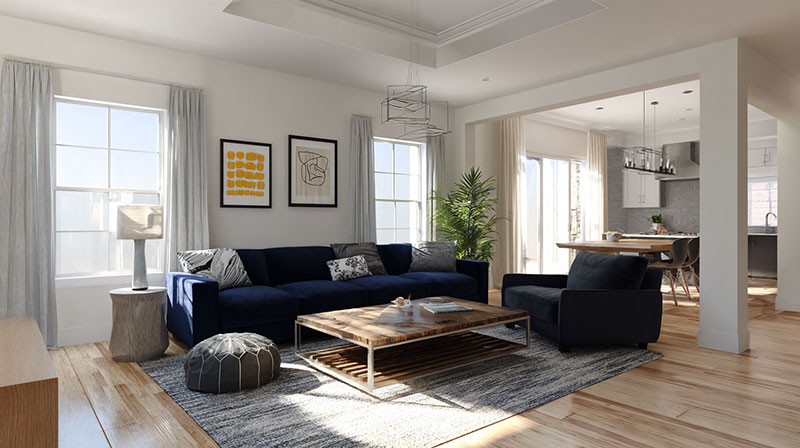
The sofa is typically the largest upholstered surface in a living room. Its color carries more visual weight than any other single furniture piece, which makes getting it right against light wood floors especially important.
Charcoal and Dark Gray Sofas
Charcoal linen or velvet sofas work on all 3 undertone categories. This is the closest thing to a universal rule in this topic.
The reason: charcoal sits at a low LRV (roughly 15-25) regardless of whether it leans warm or cool, creating strong contrast against any light floor in the 55-75 LRV range. Brands like West Elm’s Hamilton sofa in Worn Velvet Charcoal or IKEA’s KIVIK in dark gray are frequently used examples of this pairing in practice.
Navy and Deep Blue Sofas
Navy sofas on warm-undertone floors: near-perfect balance. The cool depth of navy pulls the floor’s warmth into focus as a positive quality rather than an overwhelming one.
On cool-undertone floors, navy works but requires warm accents (brass side tables, warm wood accessories) to prevent the room from reading as too cold.
White and Cream Sofas
Best for cool and neutral-undertone floors in well-lit rooms. North-facing rooms tend to flatten cream sofas against warm floors, making both look washed out.
A practical note: white sofas photograph beautifully on light floors. They’re also the first combination to look wrong in real daily use when the floor’s undertone doesn’t support it. Test in person, not just on screen.
Camel and Cognac Leather Sofas
| Stone Type | Mantel Direction | Why It Works |
| Gray / Cool Stone | Bright white or warm white | Crisp contrast defines the stone edge cleanly |
| Beige / Tan Stone | Warm white or matching wall color | Reduces visual competition, lets the stone lead |
| Dark / Black Stone | Crisp white or matching wall color | A light mantel separates the stone weight from the wall |
| White / Cream Stone | Match stone or go slightly deeper | A tonal approach keeps the architectural focal point cohesive |
What Color Dining Table Goes With Light Wood Floors
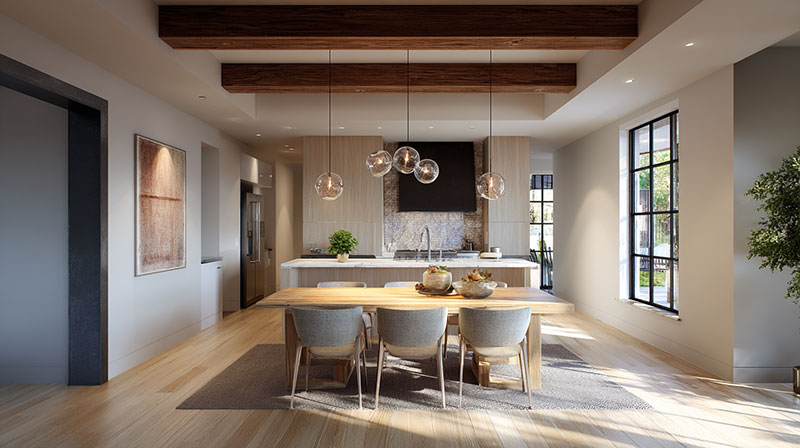
The dining room is where wood-on-wood combinations are most common and most often handled badly. Most people default to matching the table species to the floor, which almost always flattens the room.
The 2024 Houzz & Home Study found living rooms are renovated by 21% of homeowners, with dining spaces seeing similar investment. Furniture color decisions in these rooms directly affect resale perception.
Black-Stained Wood Tables
Black-stained dining tables on light wood floors is one of the strongest combinations in residential interior design. The contrast is immediate, the pairing reads as intentional, and it works across all light floor undertones.
It also scales well: a matte black oak table looks at home in both a contemporary interior and a mid-century modern interior. The floor always reads as light and warm in contrast, regardless of its exact undertone.
Dark Walnut Tables
Dark walnut on cool-undertone floors: excellent. The warm red-brown of walnut creates a complementary contrast against gray or ashy floors.
On warm-undertone floors, dark walnut sometimes pulls the floor’s warmth too far. The solution is to balance with a cool wall color or cool-toned chairs.
Glass-Top Tables
Glass-top tables effectively disappear visually. They preserve the floor’s presence in the room, which works especially well in smaller dining areas where a solid table would cut the space in half.
The trade-off: glass offers no color contribution. The chairs and rug carry all the color work, which puts more pressure on those choices.
Why Matching Wood Tones Fails
A light oak dining table on light oak floors creates what designers call “tonal flatness.” The floor and table read as one continuous plane. There is no visual separation between standing surface and walking surface. The room looks unfinished rather than minimal.
If you want a wood table on wood floors, the table must be at least 3 to 4 LRV points darker than the floor, and the grain patterns should differ clearly between the two species.
What Color Bedroom Furniture Goes With Light Wood Floors
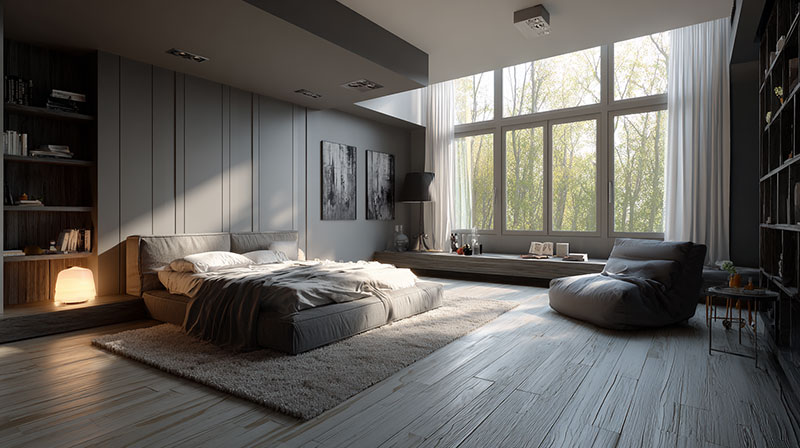
Bedroom furniture operates differently from living and dining furniture. Pieces are larger, cover more wall height, and the dominant piece (the bed frame) sits against the floor at a sharp visual boundary. Color decisions here affect how restful or cluttered the room reads.
Dark Upholstered Bed Frames
Dark upholstered bed frames (charcoal, slate, deep navy) on light wood floors anchor the room without competing with the floor.
The visual logic: the bed frame defines the room’s focal point through contrast while the light floor keeps the space from feeling heavy. This is why Scandinavian bedroom design and minimalist bedroom design almost universally use this combination.
White Bedroom Sets
White bedroom furniture on light wood floors: best in rooms with direct natural light above roughly 300 lux. Below that, white furniture and a light floor both go flat and the room looks bleached.
In north-facing bedrooms specifically, this combination often works better with warm cream or off-white rather than pure cool white. The slight warmth compensates for the cool, indirect light.
Natural Rattan and Cane Furniture
Rattan and cane pieces add texture contrast, not color contrast. They sit close in LRV to most light floors but differ through material, weave, and reflectivity.
Works best on warm-undertone floors where the natural amber tones of rattan echo the floor’s warmth. On cool-undertone floors, rattan can look yellow and out of place unless balanced with cooler textiles.
Storage Furniture: Dark Over Light
Dressers and wardrobes are large vertical surfaces. A light dresser on a light floor extends the floor’s tone up the wall, which can make a room feel smaller and less defined.
Dark wood dressers consistently outperform light wood on light floors because they create a clear horizontal boundary between floor and storage piece. The room reads as layered rather than uniform.
How Room Lighting Changes Furniture Color Compatibility
The same furniture color reads differently at 8am, 2pm, and 9pm. Lighting is not a finishing touch in floor-furniture color coordination. It is a primary variable.
Understanding how light works in interior design directly affects whether a furniture-floor pairing holds up across the full day.
Natural Light Direction
Room orientation changes everything about how light wood floors and furniture interact.
- North-facing rooms: cool, indirect light amplifies gray undertones in ash and white oak floors. Navy and charcoal furniture hold visual weight. Cream furniture looks dull.
- South-facing rooms: warm afternoon light saturates honey and maple floors. Pull furniture cooler (slate, navy, forest green) to prevent the room from tipping fully warm.
- East-facing rooms: strong morning light, flat afternoon. Test furniture samples at both times. Morning readings are not reliable.
LED Color Temperature and Furniture Color
A 2700K bulb (warm white) adds a yellow cast to every surface in the room, deepening honey floors and warming white furniture toward cream.
A 4000K bulb (cool white) neutralizes warm undertones, making warm maple floors read closer to neutral and gray furniture appear crisper. Most living rooms use 2700K by default, which often explains why furniture that looked right in a showroom (lit at 3000-4000K) looks different at home.
RMCAD research on lighting temperature confirms that color temperature profoundly affects perception of materials, surfaces, and finishes, independent of the furniture color itself.
Testing Furniture Color Under Real Conditions
Order fabric samples before committing to a sofa color. Place the sample flat on the floor near the furniture’s intended position.
Check it at three times: morning natural light, midday, and evening under your actual bulbs.
If any of those three readings makes the combination look wrong, the pairing is not reliable enough for a large piece. This test takes ten minutes and has saved a lot of expensive returns.
What Metal and Accent Finishes Complement Light Wood Floors
Metal furniture legs, hardware, and accent pieces connect the floor’s undertone to the furniture’s color. Get this wrong and a well-chosen sofa or table still looks disconnected from the room.
According to Inspire Hardware’s 2024 trend report, matte black and brushed brass are the two dominant finishes in residential interiors, with mixing metals becoming a mainstream approach.
Matte Black
Universal pairing. Matte black legs, frames, and hardware create maximum contrast on all light floor undertones without pulling the room warm or cool.
Works especially well on pale ash and whitewashed floors where even dark gray reads as soft. CB2’s Stilt side table in matte black on a light oak floor is a clean example of this done without overthinking it.
Brushed Brass
Brushed brass on warm-undertone floors: one of the best matches in residential metalwork. The yellow-gold of the brass echoes the floor’s honey or amber pigment, creating cohesion without matching.
On cool-undertone floors, brass introduces warmth that can feel forced. Test with a small piece first. A single brass floor lamp tells you quickly whether the combination works.
Chrome and Brushed Nickel
Best suited to cool-undertone floors (ash, white oak, gray-washed pine). These finishes share the floor’s cool gray undertone, which creates internal consistency across the room’s surfaces.
MBS Interiors 2025 trend data confirms chrome and silver are staging a comeback, particularly in Scandinavian-influenced spaces, where cool metals and cool floors reinforce each other.
Mixing Two Metal Finishes
One dominant finish, one accent. Use one metal for 80% of the room’s hardware (furniture legs, light fixtures, door handles) and a second for accent pieces only.
Pairing matte black with brushed brass is the most common current combination. Brushed nickel with polished brass also works. Chrome with matte black tends to feel clinical unless the room has strong warm elements to balance it.
How to Use Dark Furniture to Ground a Room With Light Wood Floors
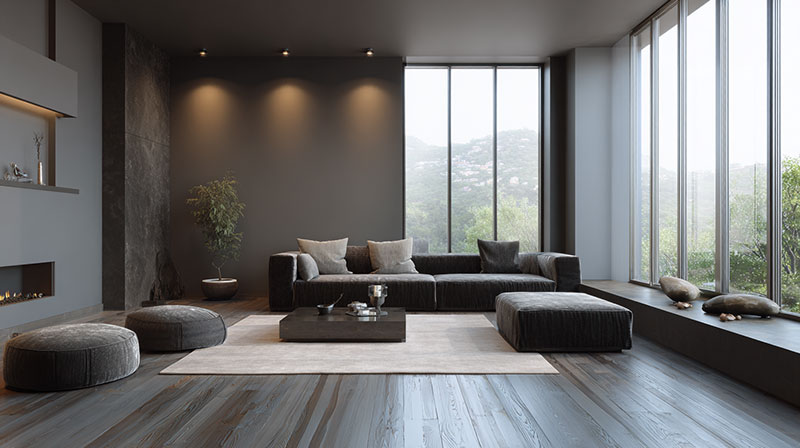
Dark furniture on light wood floors is one of the most reliable combinations in wood floor interior design. But without a few structural decisions in place, dark pieces can feel dropped into the room rather than anchored in it.
Homes and Gardens reported in 2024 that interior designers are broadly moving back toward darker woods, with the shift driven by a reaction against the all-gray, all-white interiors that dominated the previous decade.
Why Dark Furniture Needs an Area Rug
A dark sofa or dining table sitting directly on a pale floor creates a hard visual edge at the furniture’s base. The rug solves this by creating a visual zone between the floor and the furniture.
The rug does not need to match the furniture. It needs to sit tonally between the floor and the furniture in LRV, acting as a bridge rather than a contrast element of its own.
The 3:1 Light-to-Dark Ratio
A practical balance rule: 3 light elements for every 1 dark element. In a room with light floors, light walls, and natural light as the 3 light elements, one dark furniture piece (an espresso dresser, a charcoal sectional, a black dining table) sits correctly without overwhelming the room.
Adding a second large dark piece requires adding another light element to compensate. Otherwise the room starts tipping dark despite the pale floor underneath.
Dark Furniture Placement
| Placement | Effect on Light Floor | Recommended |
| Against wall | Anchored footprint; perimeter room feels significantly larger | Yes: Ideal for small to mid-sized rooms |
| Center of room | Floor weight disappears completely beneath the mass | With Rug Only: Crucial for floating layouts |
| Floating from walls | Exposes the floor planks on all sides, maximizing light contrast | Yes: Best reserved for larger spatial layouts |
How Ceiling Height Affects the Dark-on-Light Rule
Low ceilings (under 8 feet) restrict how much dark furniture a room with light floors can absorb. Dark pieces feel heavier in low-ceiling spaces.
In rooms with 9-foot or higher ceilings, dark furniture reads as grounding rather than heavy. The extra vertical space gives the room enough breathing room to absorb the visual weight.
What Color Furniture Works in Open-Plan Spaces With Light Wood Floors
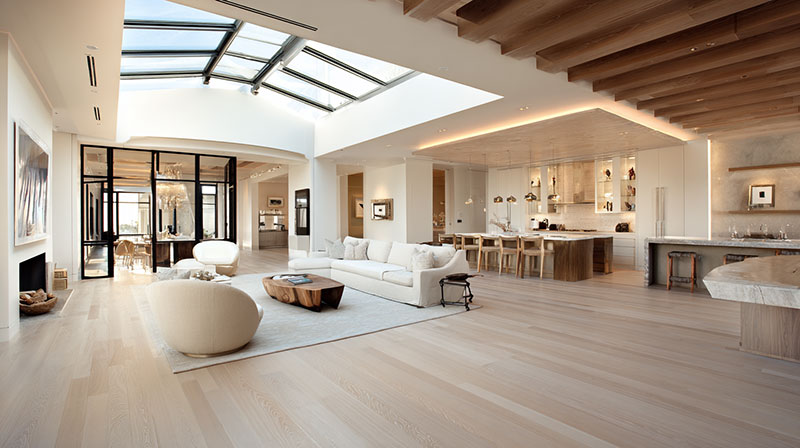
Open-plan spaces with light wood floors present a specific challenge: the floor is continuous, the furniture shifts by zone, and color decisions in the living area are visible from the dining area and kitchen simultaneously.
Baker Bros flooring research shows that 85% of home buyers prefer open-plan arrangements, making furniture-floor cohesion across connected zones one of the most common design problems in American homes.
The Consistent Undertone Rule
All furniture across an open plan must share one undertone family. Warm-toned furniture in the living zone and cool-toned furniture in the dining zone creates a visual collision on a single continuous floor.
Undertone consistency matters more than color matching. A deep navy sofa and a sage green dining chair can coexist because both are cool-toned. A warm camel sofa and a cool slate dining chair will fight each other despite being different colors.
Zone Differentiation Without Color Conflict
Vary lightness and darkness within one undertone family to distinguish zones.
- Living zone: charcoal sofa, medium gray armchairs
- Dining zone: dark walnut table, lighter gray linen chairs
- Connection: same cool undertone family, different LRV values
The light wood floor reads as the unifying element across all zones without competing with any of them.
Transitional and Bridge Furniture
Benches, consoles, and bar stools that sit between zones need to stay neutral. A bench in a mid-tone warm oak or a console in matte black both work as bridges because neither commits strongly to one zone’s color.
Keep transitional pieces simpler than anchor pieces. They connect. They do not define.
How Rug Color Affects the Furniture-Floor Relationship
Rugs are the mediating element between furniture color and light wood floors. They can resolve a pairing that doesn’t quite work, or break one that should have been fine. Contrast in interior design between floor, rug, and furniture creates the layering effect that makes a room read as finished.
Where Rug LRV Should Sit
The rug’s LRV should fall between the floor’s LRV and the furniture’s LRV. This creates a gradient from light floor to mid-tone rug to dark furniture.
Light floor (LRV 65) + mid-tone rug (LRV 40) + dark sofa (LRV 20) reads as three distinct layers. Light floor + light rug + dark sofa collapses the first two layers into one.
Natural Fiber Rugs and Undertone Matching
Jute and sisal rugs carry warm yellow-brown undertones. On warm-undertone floors (maple, birch), they create tonal cohesion. On cool-undertone floors (ash, white oak), they introduce a warmth conflict.
Cool-undertone floors pair better with flat-weave wool or polypropylene rugs in gray, blue-gray, or charcoal.
Patterned Rugs and Color Bridging
A well-chosen patterned rug does work that no solid rug can.
- Pull 1 color from the furniture’s dominant tone
- Pull 1 color from the wall or curtain color
- Let the rug’s background stay close to the floor’s undertone family
This ties the room’s color layers together through the rug, rather than relying on the furniture and floor to do it alone. The result reads more intentional even when the individual pieces are relatively simple.
Rug Size Relative to Furniture
An undersized rug breaks the furniture-floor connection entirely. All front legs of seating furniture must sit on the rug for it to function as a zone anchor.
In dining areas, the rug needs to extend at least 24 inches beyond the table on all sides. This keeps chairs fully on the rug even when pulled out, which is the most common sizing mistake in dining rooms with light hardwood floors.
FAQ on What Color Furniture Goes With Light Wood Floors
What is the best furniture color for light wood floors?
Charcoal, dark gray, navy, and black all work well. These colors create strong contrast against pale floors without competing with the wood’s undertone. White and off-white furniture also pair cleanly, especially on cool-undertone ash or white oak.
Does dark furniture look good on light wood floors?
Dark furniture on light wood floors is one of the most reliable combinations in residential design. The contrast reads as intentional. Use an area rug to anchor dark pieces and prevent them from looking dropped into the space.
What sofa color works best with light hardwood floors?
Charcoal linen or velvet is the closest thing to a universal choice. It works across warm, cool, and neutral-undertone floors. Navy is the strongest option for warm honey or maple floors specifically, where the cool depth balances the floor’s warmth.
Should furniture match light wood floors?
No. Matching furniture to light floors creates tonal flatness. The two surfaces merge visually and the room loses depth. Contrast in LRV between floor and furniture is what makes a room read as layered and finished.
What color dining table goes with light wood floors?
A black-stained wood table is the cleanest choice. It works across all floor undertone categories. Dark walnut also performs well, particularly on cool-undertone floors. Avoid light wood tables at a similar tone to the floor.
What colors should you avoid with light wood floors?
Beige and tan furniture blends into warm-toned floors and erases contrast. Medium brown furniture at a similar LRV creates a muddy, undefined look. Yellow-toned wood furniture competes directly with honey or maple floors and flattens the room.
Does white furniture work with light wood floors?
Yes, particularly on cool and neutral-undertone floors in well-lit rooms. In north-facing or low-light rooms, warm off-white performs better than pure cool white. Test in your actual lighting before committing to a large upholstered piece.
What metal finishes go with light wood floors?
Matte black works across all light floor undertones. Brushed brass pairs best with warm-undertone floors like maple and birch. Chrome and brushed nickel suit cool-undertone floors such as ash and white oak. Mixing two finishes is acceptable when one clearly dominates.
What color rug works between light wood floors and dark furniture?
A mid-tone rug that sits between the floor’s LRV and the furniture’s LRV. This creates a visual gradient: light floor, mid rug, dark furniture. Avoid rugs that are close in tone to either the floor or the furniture.
How does room lighting affect furniture color on light wood floors?
North-facing rooms amplify cool undertones in the floor, making warm furniture look off. South-facing rooms intensify warm floors. A 2700K bulb adds yellow cast to every surface. Always test furniture samples under your actual lighting before buying.
Conclusion
This conclusion is for an article presenting what color furniture goes with light wood floors, and the core answer comes down to one principle: contrast over matching.
Identify your floor’s undertone first. Warm maple and birch floors need cooler furniture tones to stay balanced. Cool ash and white oak floors handle both directions with more flexibility.
From sofa color selection to dining table pairing and bedroom furniture choices, the LRV gap between floor and furniture determines whether the room reads as layered or flat.
Factor in room lighting, metal finish compatibility, and rug placement before finalizing any major purchase.
Get those variables right and the floor does exactly what pale hardwood flooring is supposed to do: make the whole room feel open, coordinated, and intentional.

- Kitchen Color Schemes by Cabinet Color: What Pairs Well - October 19, 2026
- Curtain Colors for Every Wall Color: Safe vs Bold Picks - October 18, 2026
- Interior Design Styles: Find Your Primary and Secondary - October 14, 2026