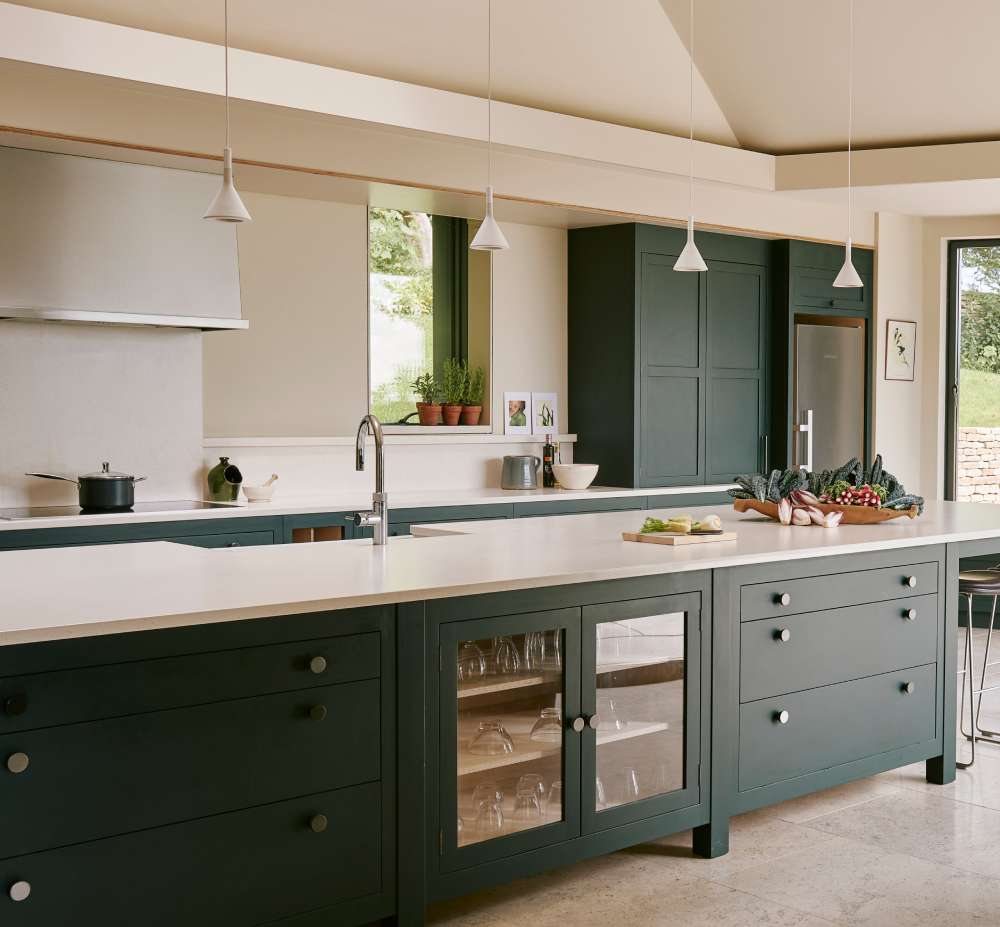
A brown kitchen island does something no other cabinet color does quite as well: it makes a kitchen feel like a room rather than a workspace.
Warm wood tones, from honey oak to deep walnut, bring a furniture-quality anchor to the center of the kitchen. And right now, that direction is exactly where kitchen design is heading.
This guide covers everything that determines whether a brown island works in your kitchen: wood species, finish types, countertop pairings, hardware, flooring, lighting, sizing, and resale impact.
Whether you are choosing between a walnut island finish and a painted brown cabinet, deciding how a brown island fits a white kitchen, or figuring out the right countertop material to pair with warm wood cabinetry, the answers are here.
What Is a Brown Kitchen Island?
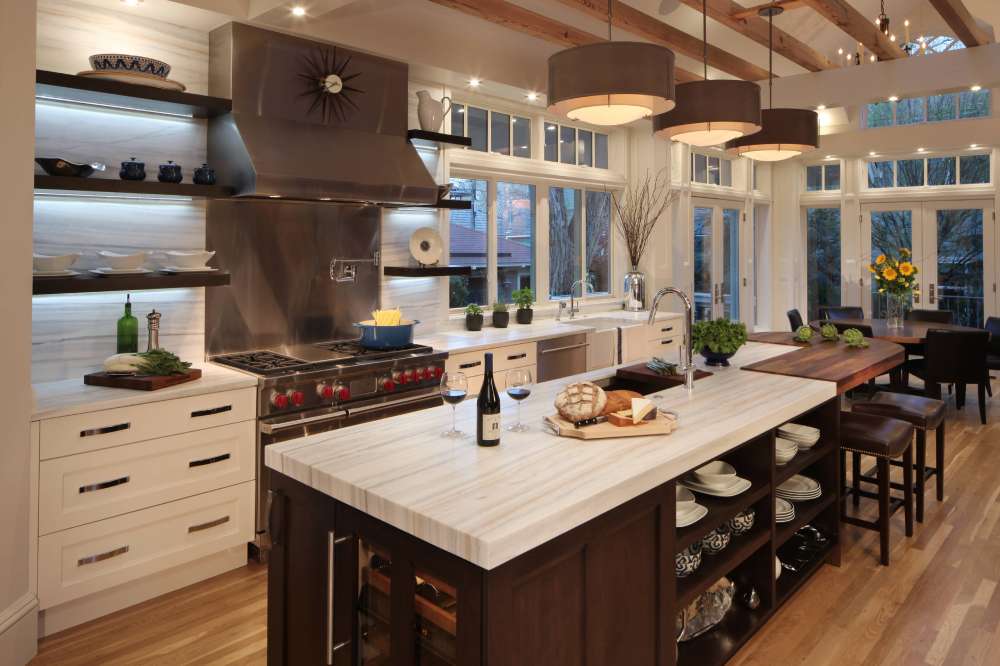
Image source: Kitchen Distributors
A brown kitchen island is a standalone or built-in island unit finished in any warm brown tone, whether that comes from natural wood grain, a stained wood species, painted cabinetry, or a veneer surface in the brown range.
It covers a wide spectrum. Dark espresso and walnut-toned islands sit at one end. Honey oak and light cherry wood finishes sit at the other. Everything from warm tan to deep chocolate brown falls within the category.
The brown kitchen island functions as a focal point in the kitchen, particularly in two-tone layouts where white or painted perimeter cabinets contrast against a warm wood island base. That contrast is the main design reason homeowners choose brown over a matched perimeter color.
Natural wood brown vs. painted brown: These are two different finish paths with different maintenance profiles, different cost ranges, and different visual outcomes. Natural wood finishes show grain and age over time. Painted brown finishes (from brands like Benjamin Moore or Farrow & Ball) cover grain and stay consistent in color.
The island format matters too. Brown islands come as freestanding furniture pieces, custom built-ins with base cabinetry, and furniture-converted pieces like repurposed dressers or butcher block tables. Each format affects cost, installation, and how the island reads in the space.
According to the 2024 Houzz Kitchen Trends Study, wood cabinet finishes grew year-over-year, with 25% of renovating homeowners choosing wood tones for at least part of their kitchen cabinetry. The kitchen island is the most common place that contrast color or finish gets introduced.
The NKBA’s data confirms the same direction: large islands for serving and dining rank as the top design priority cited by 49% of industry professionals, and the island has become the site where homeowners take the most design risks with color, material, and finish.
What Wood Species Are Used for Brown Kitchen Islands?
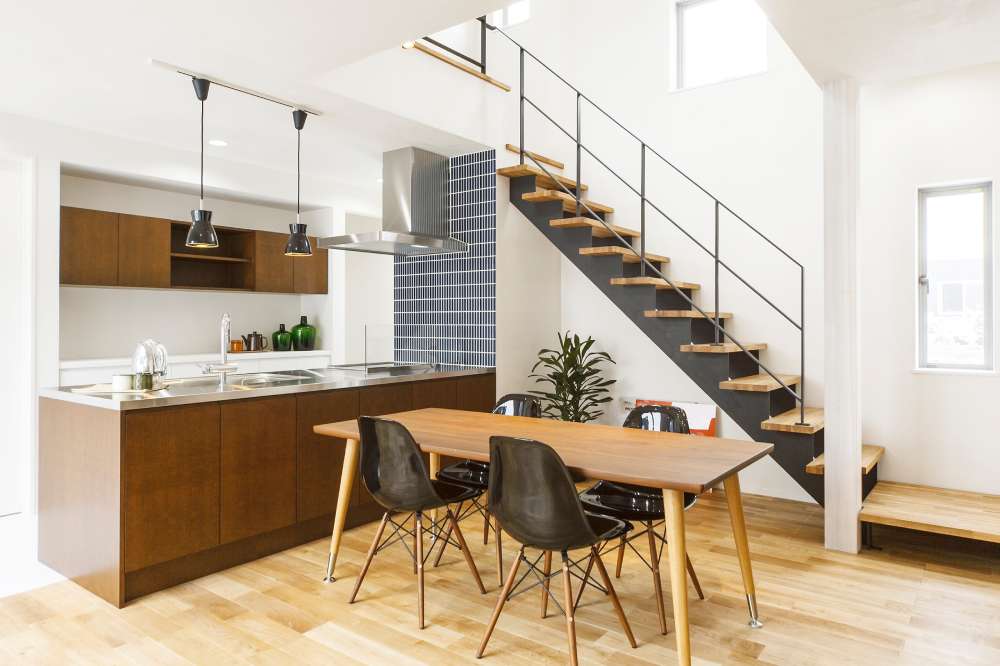
Image source: STAP|スタップ一級建築士事務所
5 wood species account for the majority of brown kitchen islands: walnut, white oak, cherry, maple, and hickory. Each delivers a different shade of brown, a different grain character, and a different price point.
| Wood Species | Brown Tone | Janka Hardness | Price Tier |
|---|---|---|---|
| Walnut | Deep chocolate to purplish-brown | 1,010 | Premium |
| White Oak | Honey to golden tan | 1,360 | Mid-high |
| Cherry | Reddish-brown, deepens with age | 1,360 | Mid-high |
| Maple | Light tan when stained | 1,450 | Mid-range |
| Hickory | Streaky contrast brown | 1,820 | Mid-range |
Natural Brown Wood Tones vs. Stained Finishes
Walnut and cherry produce rich brown coloration without staining. Walnut ranges from light brown to deep chocolate. Cherry starts pale pink and darkens to a reddish-brown through oxidation and light exposure over time.
White oak and maple accept stain well. White oak with a warm stain is currently the most in-demand option in the mid-range kitchen market, per the NKBA 2024 Kitchen Trends Report, which flagged a significant rise in homeowners choosing warm wood finishes over painted options.
Maple can be tricky. Its tight grain tends to make dark stains look flat rather than rich. If the goal is a deep, warm brown with visible grain depth, cherry or walnut produce better results on maple’s tight surface.
How Wood Species Affect Island Durability
Hardness rating matters for an island surface. The island takes daily abuse: groceries dropped, stools pushed, prep work done directly on the surface.
- Hickory (1,820 Janka) resists dents best. Grain variation is dramatic.
- Maple (1,450) and white oak (1,360) handle wear well at lower cost than walnut.
- Walnut (1,010) and cherry (950) are softer. They scratch more easily but age beautifully.
For an island used heavily as a prep surface, white oak or maple offers a better durability-to-cost ratio than walnut. For an island used primarily for seating and display, walnut’s visual quality justifies the softer surface.
What Brown Finish Types Are Available for Kitchen Islands?
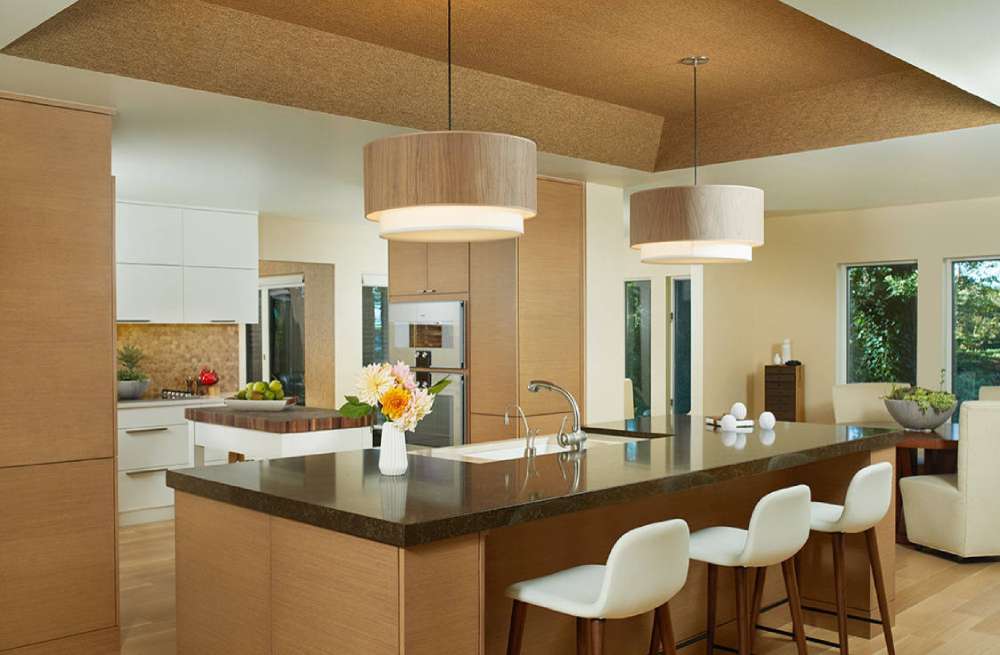
Image source: Cannarsa Structure and Design
4 finish categories produce a brown appearance on a kitchen island: oil and penetrating finishes, lacquer and polyurethane coatings, painted brown cabinet finishes, and textural finishes like wire-brushed or cerused surfaces. Each has different maintenance demands and visual results.
Oil and Penetrating Finishes
Oil finishes soak into the wood fiber rather than sitting on top. The result is a matte, natural-looking surface that shows grain texture clearly.
The trade-off: oil finishes require reapplication every 1-3 years depending on use. They offer no surface protection against water pooling or deep scratches. Best for islands used decoratively more than for heavy prep work.
Lacquer, Polyurethane, and Surface Coats
Surface coat finishes sit on top of the wood and form a protective layer. Lacquer and polyurethane both lock in color, reduce maintenance, and offer satin to gloss sheen options.
Polyurethane is more durable for kitchen use. Lacquer cures harder and faster but is more prone to yellowing on lighter brown tones over time. For darker walnut or espresso-stained islands, either works well.
Semihandmade, which offers custom fronts for IKEA cabinet bases, is one production option that lets homeowners achieve a finished wood-look island at a lower cost than full custom cabinetry.
Painted Brown Cabinet Finishes
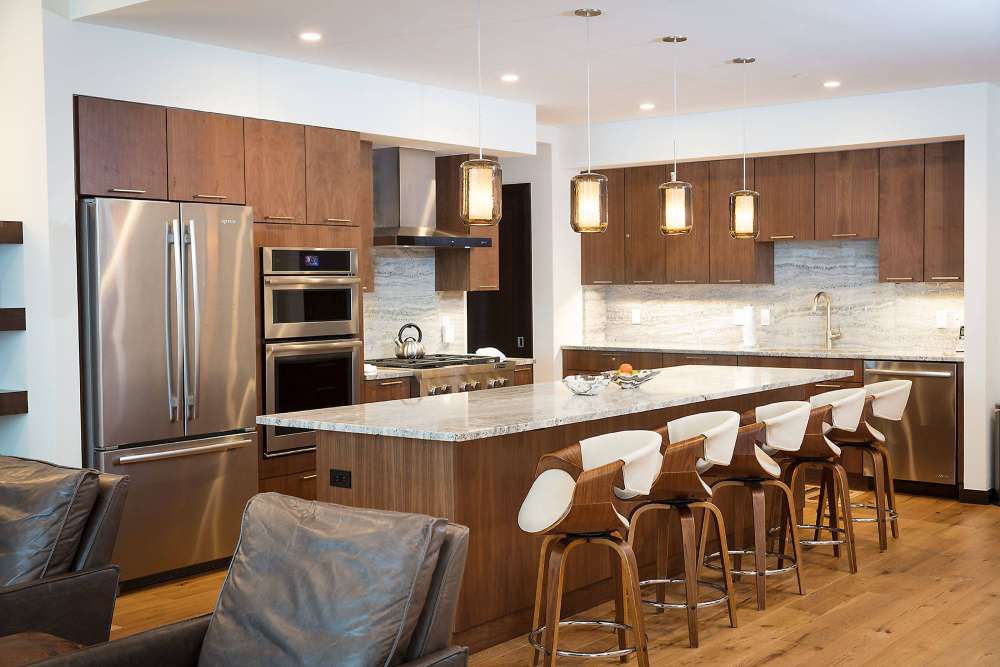
Image source: Kasia Karska Design
Painted brown covers the wood grain entirely and delivers a consistent flat color.
Top-performing brown paint options for kitchen cabinetry:
- Benjamin Moore Raccoon Fur (warm mid-brown)
- Farrow & Ball Dead Salmon (warm pinkish-brown)
- Sherwin-Williams Urbane Bronze (deep warm brown with gray undertone)
Painted brown suits contemporary and transitional kitchen styles where grain texture would compete with the design. It also ages more evenly than natural wood, since it doesn’t shift in tone over time.
Wire-Brushed and Cerused Finishes
Wire-brushing removes soft grain fibers from the wood surface, leaving raised grain lines that catch the light. The result is a brown island with visible texture depth rather than a flat surface.
Cerusing fills the open grain lines with white or light pigment, creating a two-tone brown-and-white surface that reads warmer than a solid paint finish. Both finishes suit farmhouse and transitional kitchen styles.
What Cabinet Door Styles Work for Brown Kitchen Islands?
5 cabinet door styles appear most on brown kitchen islands. The door profile shifts the design register significantly, even with the same wood species and stain color underneath.
| Door Style | Design Register | Best Brown Tone Match |
|---|---|---|
| Shaker | Transitional to modern farmhouse | Oak, walnut, painted brown |
| Raised panel | Traditional | Cherry, dark walnut |
| Slab / flat front | Contemporary | Espresso, painted brown |
| Beadboard | Cottage, farmhouse | Lighter brown, painted |
| Open shelf base | Furniture-style | Any warm wood tone |
Shaker Doors on Brown Islands
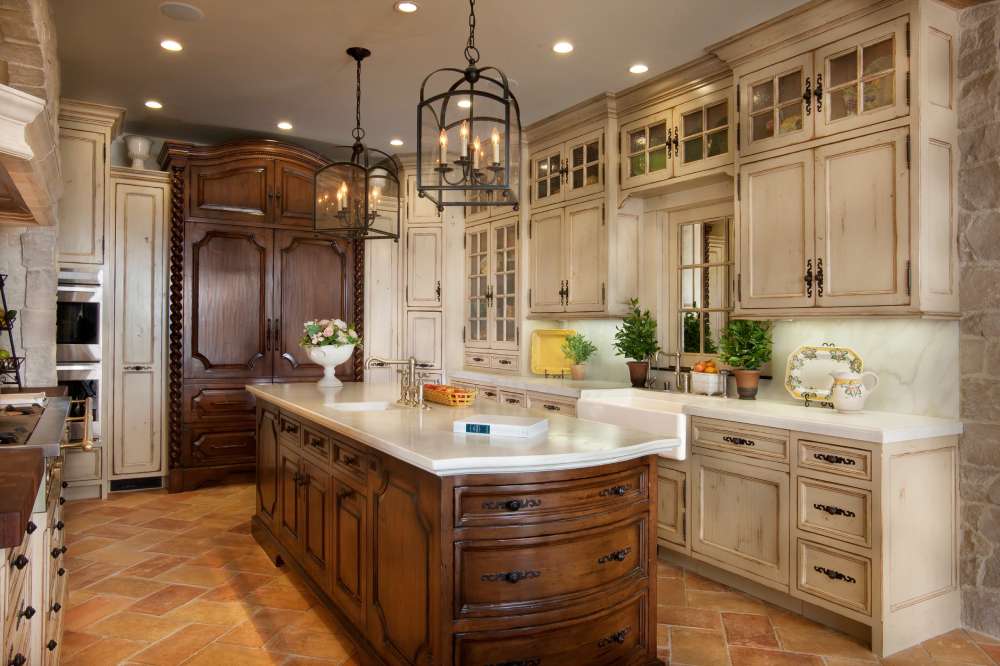
Image source: GDC Construction
Shaker is the most versatile door profile for a brown island. The flat center panel and simple frame work across modern farmhouse, transitional, and even contemporary kitchens depending on how the hardware is chosen.
The slim shaker variation (narrower stile and rail widths) trends strongly in 2024-2025 per NKBA data. It suits walnut and white oak islands particularly well, keeping the profile clean while letting the wood grain carry the visual weight.
Slab Doors for Contemporary Brown Islands
A flat slab front with no visible frame or panel reads as furniture-grade in a contemporary kitchen. On a dark espresso or painted brown island, it delivers the cleanest possible surface.
The slab door works best when paired with integrated or minimal hardware. Bar pulls in brushed brass or matte black suit it well. Cup pulls and traditional knobs shift it toward a different style register than the slab door is designed for.
Raised Panel Doors for Traditional Brown Islands
Raised panel profiles suit cherry and dark walnut tones best. The shadow lines created by the raised center panel add visual complexity that suits a richer, deeper brown rather than a lighter honey or tan wood tone.
According to the 2025 Houzz Kitchen Trends Study, traditional kitchen styles grew to 14% of renovating homeowners, up from prior years, meaning the raised panel brown island has an expanding audience again after years of flat-front dominance.
What Countertop Materials Pair With a Brown Kitchen Island?
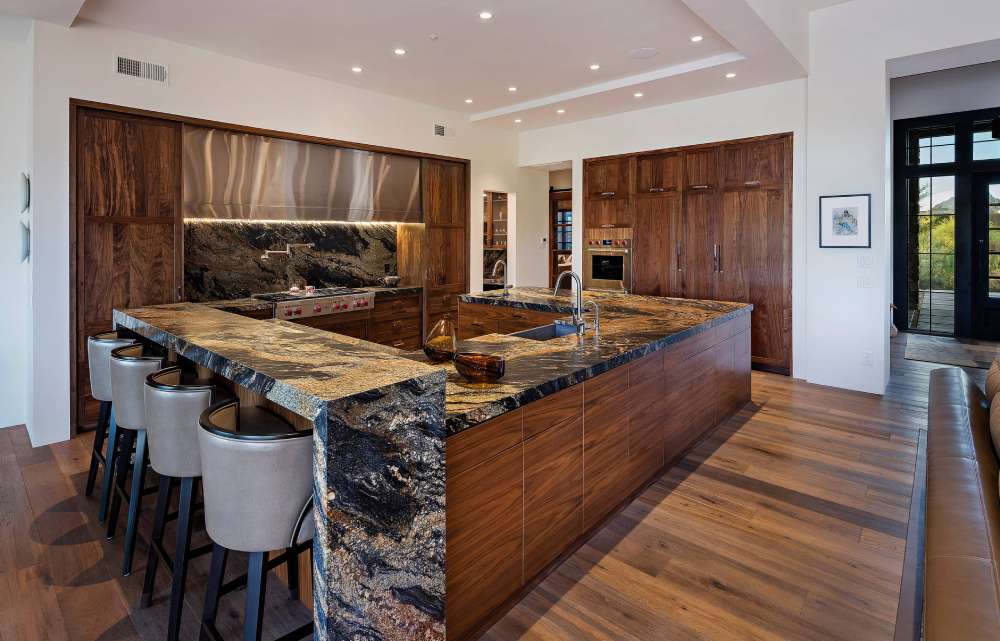
Image source: LaBlonde Development
The countertop is the mediating element between the brown island base and the rest of the kitchen. It either contrasts the warm wood tone, matches it, or bridges it to the perimeter cabinetry color.
Light Countertops on Dark Brown Islands
White marble, Calacatta quartz, and Carrara-look engineered quartz are the most common countertop pairings on dark walnut or espresso brown islands.
The logic is contrast. A dark brown base with a white or light quartz top creates a clear visual separation that makes the island read as a furniture piece rather than a cabinet run. This is the same principle behind contrast in interior design, where opposing tones create definition and prevent visual flatness.
Calacatta quartz consistently ranks as the most popular island countertop pairing in current kitchen design. Its white ground with warm gold veining connects back to the brown wood tone without matching it exactly.
Matching Countertop Edge Profiles to Island Style
Edge profile affects how substantial the island feels visually.
- Waterfall edge: countertop material runs down the sides to the floor. Suits dark walnut and contemporary slab-front islands.
- Eased or pencil edge: simple and clean. Works across all brown island styles.
- Ogee or full bullnose: traditional profiles. Suit raised panel cherry and dark walnut islands.
- Mitered edge: thick slab appearance with no visible substrate. Premium look, suits luxury brown island designs.
Waterfall countertops on kitchen islands have been gaining traction since 2023, according to design industry tracking. On a dark brown walnut island, the waterfall edge is currently one of the most requested premium finish combinations.
Butcher Block Countertops on Brown Islands
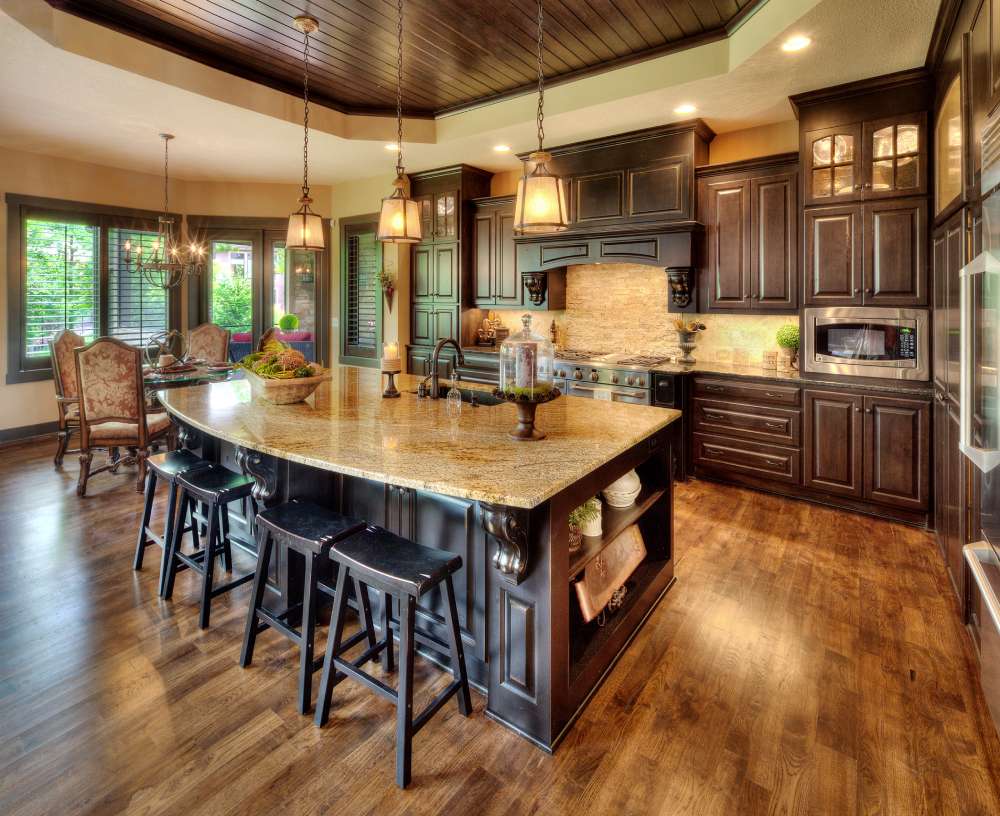
Butcher block on a brown island is a tone-on-tone pairing. It works best when the island base is a different brown shade than the butcher block top, creating at least some visual separation.
A painted brown base with a maple butcher block top works. A dark walnut base with a walnut butcher block top flattens out. The key is tonal contrast between base and surface, even within the brown range.
Butcher block requires more maintenance than quartz or granite. It needs periodic oiling and is more susceptible to water damage and staining. It suits kitchens used heavily for cooking prep, where the surface develops a natural patina over time rather than needing to stay pristine.
Black and Dark Countertops on Lighter Brown Islands
Black granite, honed soapstone, and black quartzite work on lighter honey oak or tan-brown islands.
Dark-on-dark combinations (black counter on dark walnut base) tend to feel heavy unless the kitchen has significant natural light or very light flooring and wall color to balance the weight. In larger kitchens with high ceilings, the combination can work. In smaller or lower-ceilinged kitchens, it tends to close the space down.
What Kitchen Styles Use a Brown Island?
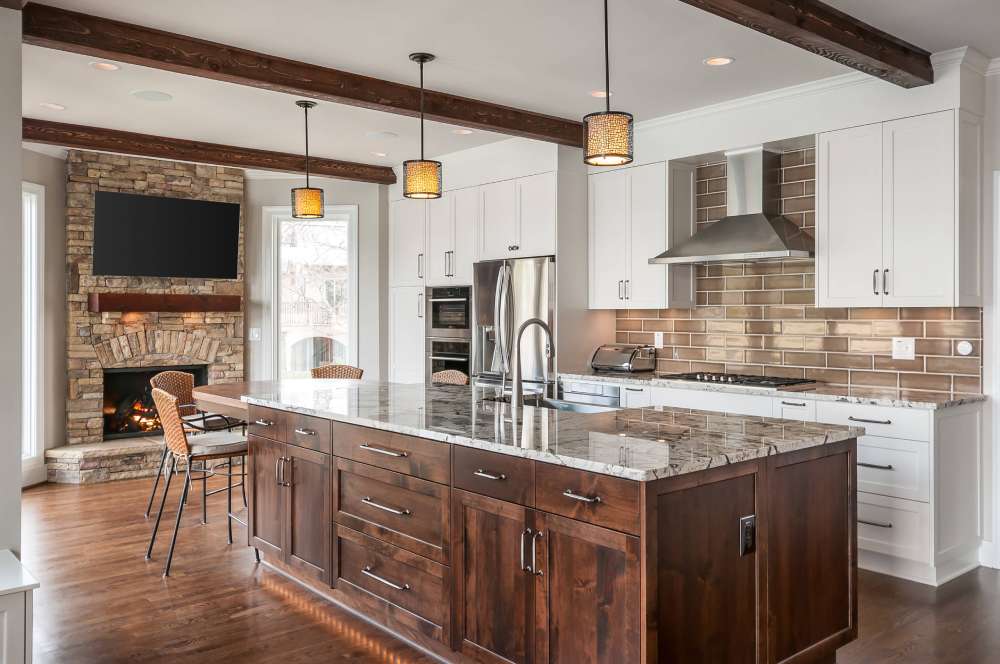
Image source: Innovative Design Build
A brown island fits across 6 kitchen design styles, but it plays a different role in each one.
In some styles it anchors the whole room. In others it functions as a contrast element against a lighter perimeter. Understanding which role the brown island plays in each style matters for getting the proportions and pairing decisions right.
Farmhouse and Modern Farmhouse Kitchens
This is the most common brown island context. White shaker perimeter cabinets, a brown or walnut island base, and a quartz or butcher block countertop is the defining combination of modern farmhouse kitchen design over the past decade.
The brown island functions as the focal point and furniture anchor. It introduces warmth into an otherwise all-white kitchen without adding complexity or competing with the perimeter cabinetry. Wire-brushed finishes and beadboard door profiles fit this style well.
According to farmhouse interior design principles, the mix of raw textures and warm wood tones against painted white surfaces is the core visual tension the style depends on.
Transitional Kitchens
Transitional style is the most popular kitchen style in North America, holding 25% of renovating homeowner preference per the 2025 Houzz Kitchen Study.
A brown island bridges the gap between traditional warmth and contemporary clean lines in a transitional kitchen. Walnut or stained oak with a slim shaker door, paired with brushed brass hardware and a white quartz countertop, is the transitional brown island formula that appears most in kitchen design publications currently.
Rustic and Lodge-Style Kitchens
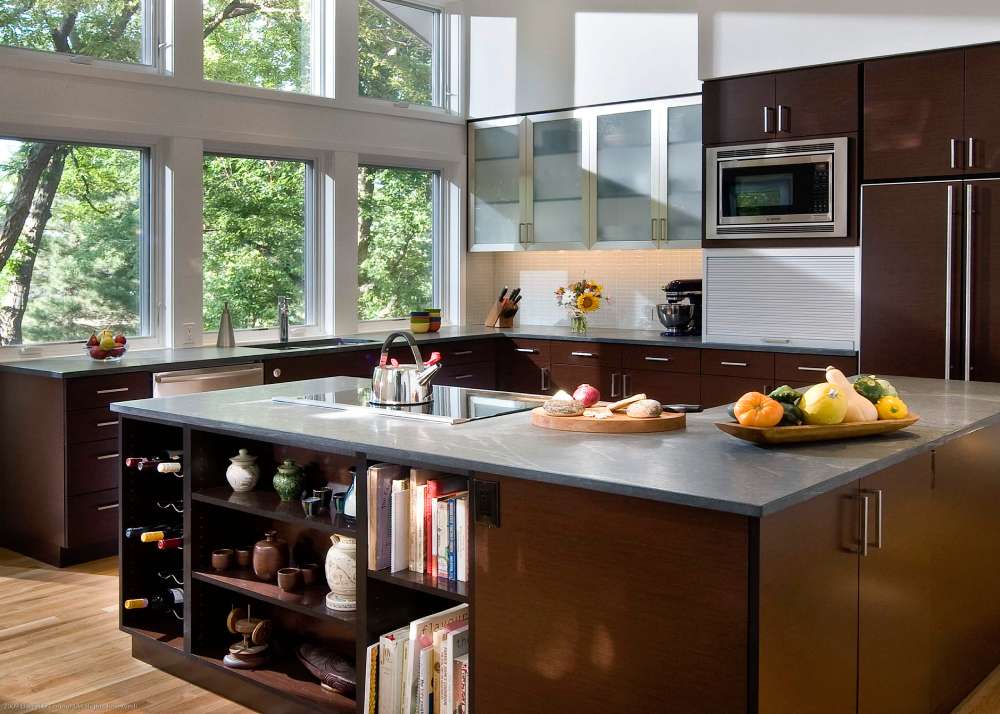
Image source: Buckner Construction Inc.
In rustic kitchens, the brown island is not a contrast element. The whole kitchen runs warm: reclaimed wood, stone, brown cabinetry throughout.
Reclaimed wood kitchen islands are the defining piece in this style. The rough texture, visible nail holes, and inconsistent grain color of reclaimed wood add visual authenticity that a new wood island finished with a uniform stain cannot replicate.
Contemporary Kitchens
Contemporary kitchens use a dark espresso or flat-front walnut island against white or light gray flat-front upper cabinets.
The brown in a contemporary kitchen is typically the darkest element in the room. Matte black hardware and a waterfall quartz countertop suit it best. The island sits as a deliberate design statement rather than a warm accent.
Traditional Kitchens
In traditional kitchen designs, the brown island matches or closely coordinates with the perimeter cabinetry. Cherry wood with raised panel doors, dark stain, and oil-rubbed bronze hardware is the traditional brown island archetype.
Two-tone brown (lighter perimeter, darker island) works better in traditional kitchens than stark white-and-brown contrast. The variation keeps the visual warmth consistent while still defining the island as a separate piece.
Scandinavian-Influenced Kitchens
Light oak brown is the Scandinavian brown island approach. Natural white oak with a clear or very light oil finish, clean slab or slim shaker door profiles, and minimal hardware.
The Scandinavian interior design philosophy applies directly: natural material, minimal finish intervention, functional form. The island looks brown but retains a pale, airy quality that keeps the kitchen light.
What Hardware Finishes Work on Brown Kitchen Islands?
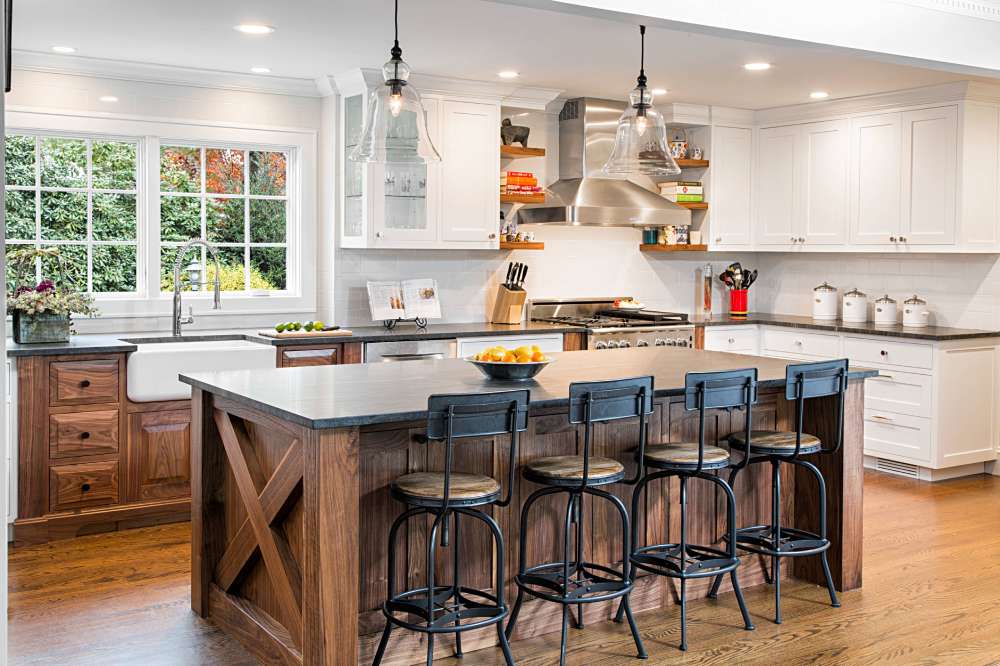
Image source: Andreas Letkovsky Architecture
Hardware finish is a small decision with disproportionate visual impact. On a brown island, the metal tone either reinforces the warmth of the wood or introduces a deliberate contrast against it.
Brushed Brass and Unlacquered Brass
Brass is the strongest hardware match for walnut and white oak islands. The warm yellow-gold of brushed brass connects directly to the warm undertones in brown wood, creating a cohesive metal-and-wood relationship.
Unlacquered brass develops a patina over time, darkening and dulling slightly. On a walnut island, this aging quality reads as intentional and adds character. On a painted brown island, it can look inconsistent unless the kitchen has other aged-finish elements.
The NKBA’s 2024 Kitchen Design Trends Report identified a significant shift toward gold and brass finishes in kitchen hardware, with brass moving decisively past stainless steel and chrome in designer specification.
Matte Black Hardware
Matte black creates a sharp contrast on brown wood islands. It suits darker espresso and walnut tones more than lighter oak or honey brown, where the contrast can feel too abrupt.
- Best profile for matte black: bar pull or simple cup pull
- Best island tone: dark walnut, espresso, or dark painted brown
- Style fit: contemporary, modern farmhouse
Oil-Rubbed Bronze
Oil-rubbed bronze delivers a tone-on-tone warmth. The deep brown-black metal sits close in value to dark wood tones, creating a unified rather than contrasting look.
It suits traditional brown islands with cherry wood or raised panel doors better than contemporary flat-front designs, where the dark metal can feel too heavy and old-fashioned against sleek cabinet lines.
Brushed Nickel and Chrome
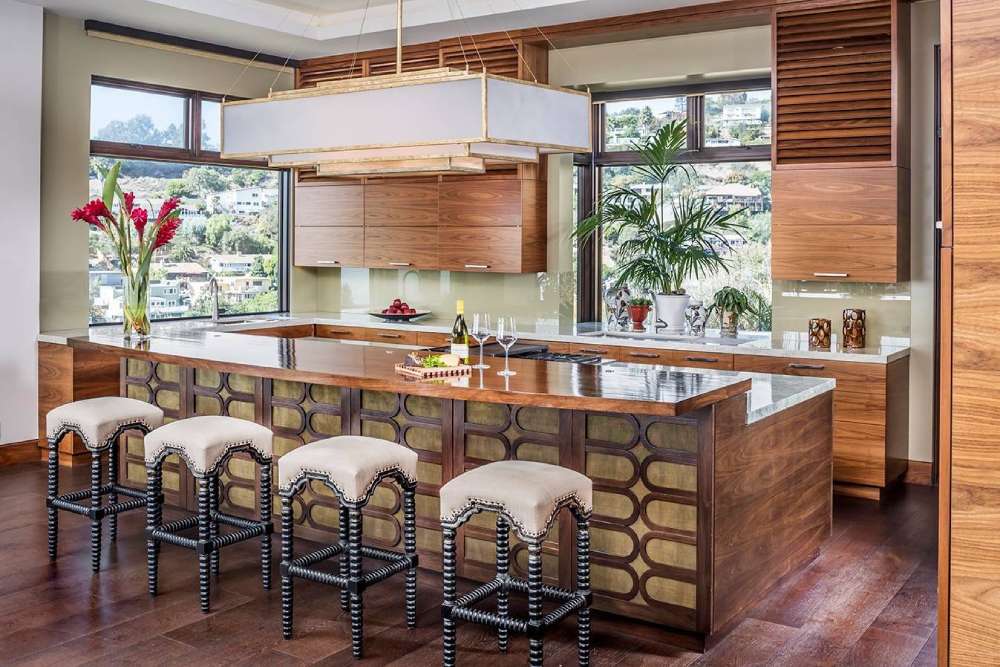
Image source: Kirk Saunders Architect
Cooler metal finishes work on lighter brown islands where warm metals would create too much visual richness. A honey oak island with brushed nickel hardware keeps the palette from becoming too warm-heavy.
Chrome reads the most contemporary of the cooler metals. Brushed nickel sits between chrome and brass in warmth and suits transitional kitchen designs well, where neither a fully warm nor fully cool metal feels right.
How Does a Brown Island Work in a White Kitchen?
The white kitchen with a brown island is the most widely used two-tone kitchen configuration in North America right now.
White shaker perimeter cabinets, a warm walnut or stained oak island base, and a quartz countertop on top. That combination appears across more kitchen renovation projects than any other contrasting island approach, according to NKBA 2024 data showing the “colored island plus white perimeter” formula as the dominant two-tone layout.
Proportions and Visual Balance
Island size relative to the perimeter run is the single most important proportional factor. An island that is too small in a large white kitchen looks like an afterthought. One that is too large blocks workflow and creates a heavy brown mass in the center of a light room.
The island footprint should stay at roughly 10% or less of the total kitchen floor area (Boss Design Center guidance). A kitchen of 200 square feet can support an island of around 20 square feet. That works out to approximately 4 feet by 5 feet.
The 2024 Houzz Kitchen Trends Study found that more than 2 in 5 homeowners (42%) chose islands 7 feet or longer, up 10 percentage points since 2020. Large white kitchens increasingly drive that demand, because the brown island needs enough scale to anchor the space.
Countertop as the Mediating Element
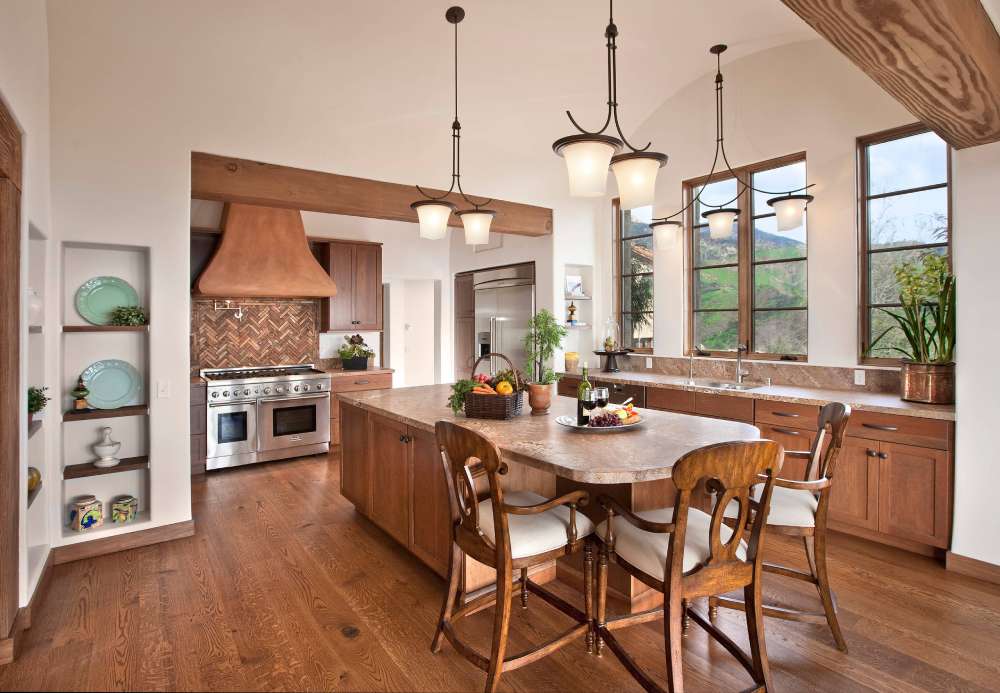
Image source: Allen Construction
The countertop on a brown island in a white kitchen does two visual jobs at once.
- It separates the brown base from the white upper cabinets above
- It connects the island to the perimeter countertop material (if they match)
Matching island and perimeter countertops in a white-and-brown kitchen creates cohesion. Contrasting them (white quartz on island, different material on perimeter) fragments the visual flow. Most designers match the countertop material across both surfaces and vary only the cabinet color.
Flooring Tone Impact
Warm wood flooring (white oak, European oak) next to a brown island creates a tone-on-tone ground plane that can feel heavy unless the ceiling is high or the room receives strong natural light.
Large-format gray or white porcelain tile under a white-and-brown kitchen produces the clearest visual separation between island and floor. The tile keeps the floor neutral so the brown island reads as a deliberate furniture accent against a light background.
Light hardwood floors (blonde or natural white oak) in the 2024 flooring trend cycle work well. The floor stays warm but pale, which lets the darker brown island hold visual weight without the floor competing.
What Sizes and Configurations Are Standard for Brown Kitchen Islands?
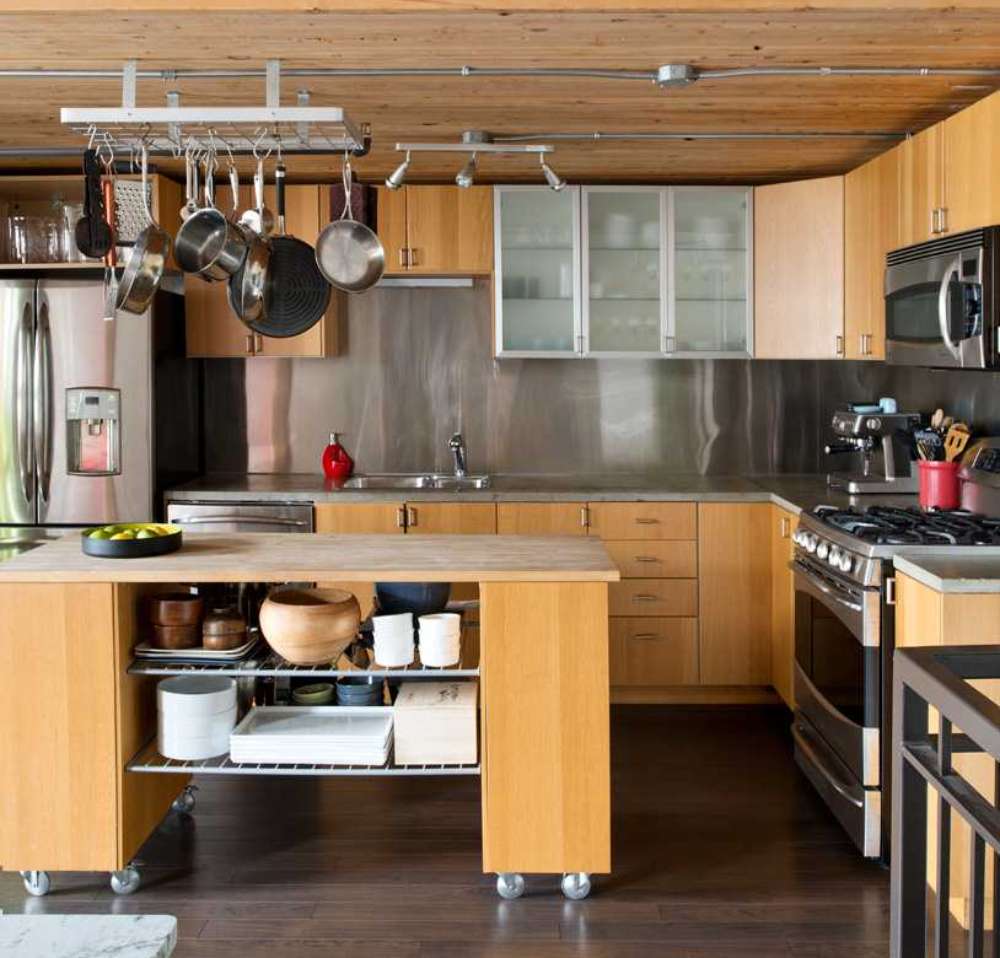
Image source: Pause Design Inc.
Standard kitchen island dimensions follow predictable ranges based on kitchen size and intended use. Getting the size wrong is the most common and most expensive planning mistake in kitchen island design.
| Island Size | Dimensions | Best For |
|---|---|---|
| Small | 24″ x 48″ | Compact kitchens, prep only |
| Medium | 36″ x 60″–72″ | Prep plus 1–2 seat seating |
| Large | 42″–48″ x 84″–96″ | Seating, prep, built-in appliances |
Standard Height and Seating Overhang
Standard counter height is 36 inches. Bar height is 42 inches. The bar-height tier is declining in popularity, with most designers now recommending a single 36-inch surface for both prep and seating, per Boss Design Center’s 2024 project data.
Seating overhang: 12 inches minimum for knee clearance. 15-18 inches is the comfortable practical range. Any overhang beyond 10-12 inches on stone or quartz requires structural corbels or metal support brackets, which run $150-$400 depending on material and style (D&G Flooring guide, 2024).
Allow 22-24 inches of island edge width per seat. A 72-inch island accommodates 3 stools comfortably on one side. Below 48 inches of seating edge, 2 stools become tight.
Aisle Clearance Requirements
NKBA planning guidelines specify 42 inches minimum clearance on work aisles where one cook operates, and 48 inches where two people work simultaneously.
36 inches is the absolute minimum and works only in low-traffic zones with no appliance doors opening into the aisle. Most residential kitchens benefit from targeting 42-48 inches consistently.
An island that is too wide for the available floor plan creates daily frustration that no design decision can fix after the fact. Painter’s tape on the floor before ordering is the simplest way to confirm the island footprint actually works in the space.
Freestanding vs. Built-In Brown Island Configurations
Freestanding: Butcher block tables, furniture-converted pieces, and movable cart-style islands. Lower cost, no installation, easy to reposition.
Built-in: Custom or semi-custom base cabinetry, plumbed for a sink or wired for a cooktop. Permanent, requires permits for plumbing and electrical work, significantly higher cost range.
For a brown island specifically, the furniture-style built-in (custom cabinetry with exposed legs or a furniture toe kick rather than a cabinet toe kick) produces the warmest, most deliberate brown wood look. It reads as a piece of furniture placed in the kitchen rather than a continuation of the cabinet run.
What Flooring Works With a Brown Kitchen Island?
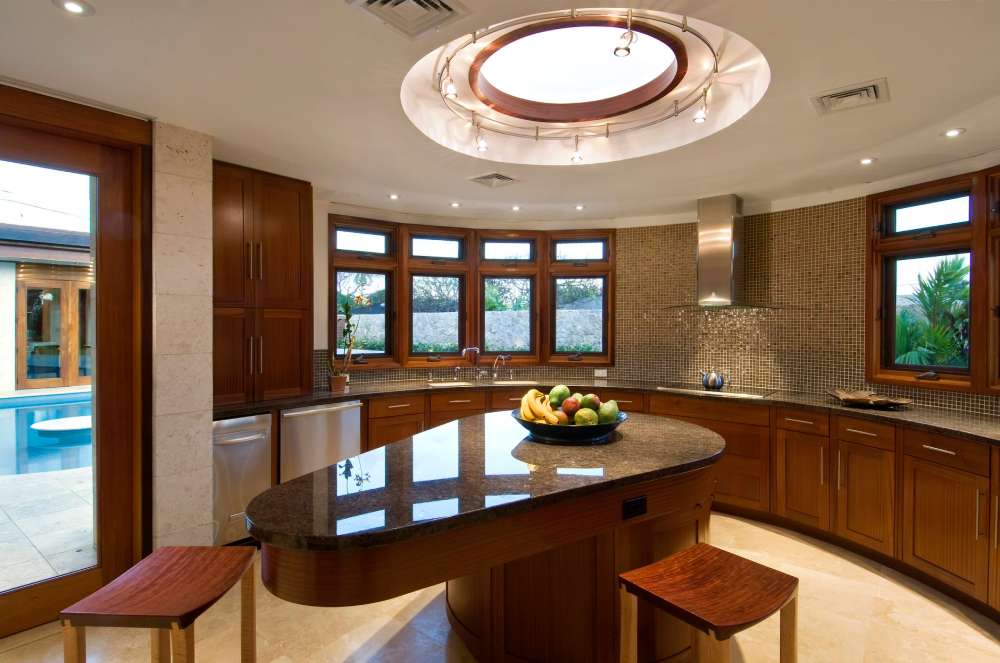
Image source: Lapis Design Partners
Flooring tone determines whether a brown island reads as grounded or visually disconnected from the room.
The goal is tonal separation between island and floor so the island stands out as a deliberate design element rather than blending into the ground plane. That separation can come from value contrast (light floor, dark island) or material contrast (warm wood island, cool tile floor).
Light Wood Flooring
White oak, maple, and blonde hardwood floors create clear separation from a brown island.
This is the most common and safest pairing. The floor stays warm but pale, which lets the brown island carry the visual weight of the room without the floor compressing the space. Blonde and light wood tones dominated flooring trends at the International Surface Event (Houzz, 2024), reflecting the same direction happening in kitchen cabinetry.
Wide-plank formats (5 inches or wider) in light oak work especially well. The continuous plank surface reads as a calm neutral ground that makes the brown island a clear focal point above it.
Dark Hardwood Floors
Dark walnut or espresso-stained hardwood next to a dark brown island is only viable in large kitchens with high ceilings and strong light.
In smaller or lower-ceiling kitchens, the combination reads heavy and compresses the room. The island loses its definition against the dark floor and the whole kitchen darkens significantly.
One rule: if the floor stain is within 2 tonal values of the island finish, the island disappears visually. Contrast is what makes both elements readable.
Tile Floors
Large-format gray or white porcelain tile is the flooring choice that produces the most reliable visual separation from any brown island tone.
The cool neutral tile creates an automatic contrast against warm brown wood. It also reads as deliberate and contemporary, which suits transitional and modern farmhouse kitchens where a brown island is most common.
Large-format tiles (24×24 inches or larger) have become one of the top designer choices in kitchen flooring precisely because minimal grout lines read clean and keep the floor visually quiet. A quiet floor lets a brown island function as the intended emphasis element in the kitchen without floor pattern competing for attention.
The Matching Trap
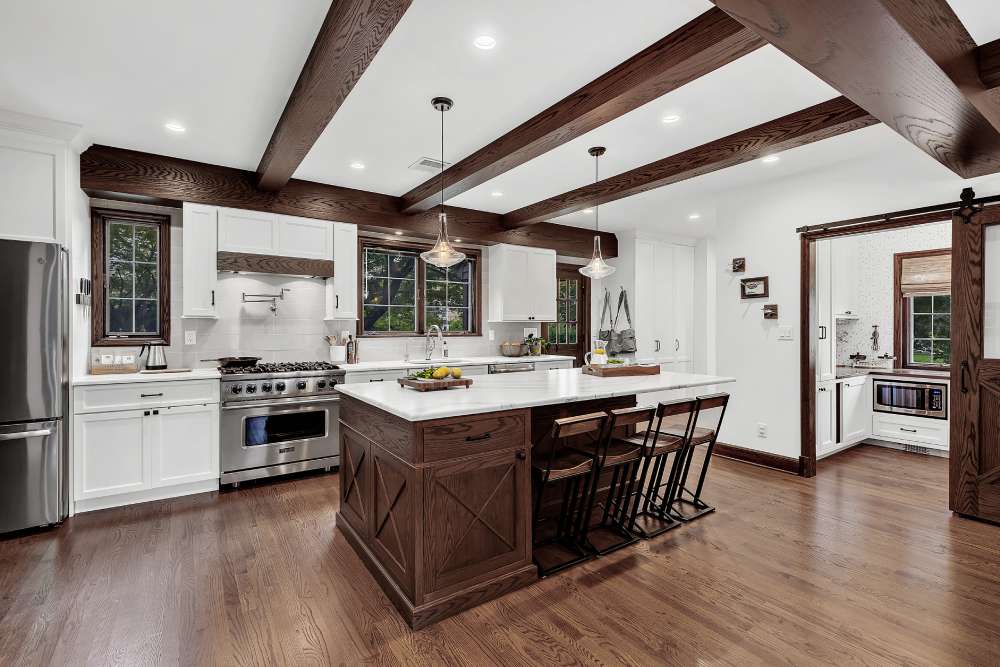
Image source: Ivory & Oak Remodeling and Millwork
Matching the island finish and floor stain exactly flattens the design. Both elements disappear into each other.
A walnut island on a walnut floor reads as one large brown mass rather than two distinct design elements. The balance between floor and island requires tonal differentiation, not tonal matching, to work visually.
What Lighting Fixtures Suit a Brown Kitchen Island?
Pendant lighting over a brown island does two jobs: it provides task illumination for prep work and establishes the island as the visual center of the kitchen.
The standard hanging height is 30-36 inches above the countertop surface for an 8-foot ceiling (Lightopia, 2024). Add 3 inches for every additional foot of ceiling height. Two pendants suit most islands up to 7 feet long. Three pendants work for islands 7 feet and over.
Rattan and Woven Pendants
Rattan pendants over a brown island produce a layered warm-materials moment that reads naturally in farmhouse and transitional kitchens.
The woven texture of rattan adds a textural layer that connects to the wood grain of the island below. Both are warm, natural materials at different scales. The combination works because the materials are in the same family without being identical.
Best ceiling height for rattan pendants: 9 feet or above. At 8 feet, rattan dome shapes can feel too close to the countertop at the required 30-36 inch hanging height.
Brass and Black Metal Pendants
Metal pendant choices mirror the hardware decision for the island base.
- Brushed brass pendants: reinforce the warm metal-and-wood relationship. Suit walnut and oak islands with brass hardware.
- Matte black pendants: introduce a hard contrast. Suit dark espresso or contemporary brown islands with matte black pulls.
- Aged bronze pendants: tone-on-tone warmth. Suit traditional cherry wood islands with oil-rubbed bronze hardware.
Cluster vs. Statement Pendant Formats
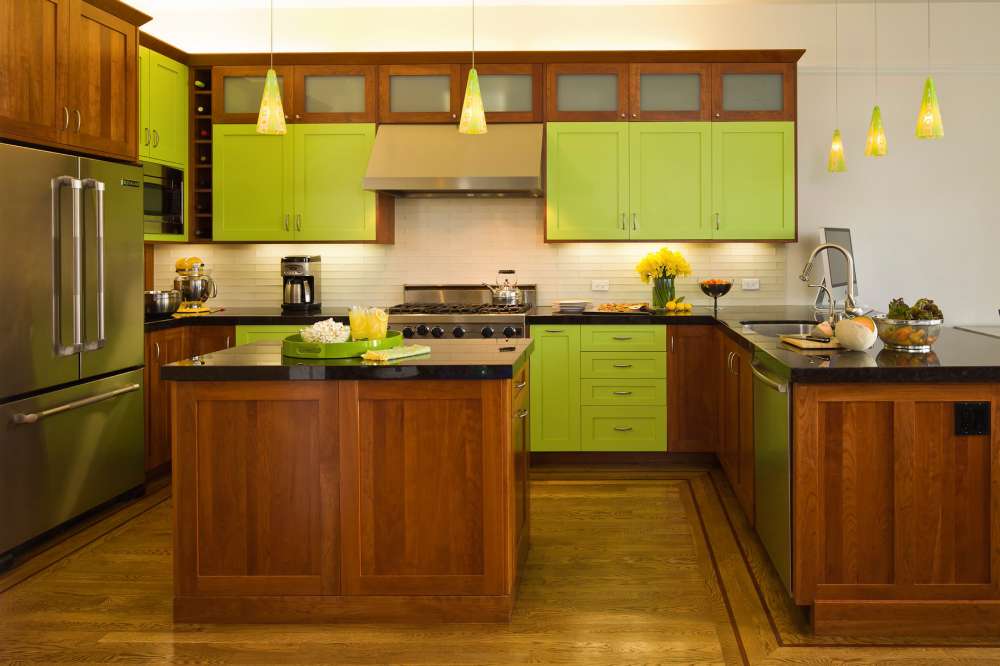
Image source: McKinney Photography
For islands up to 5 feet long, a single large statement pendant centered above the island works. Diameter should be approximately half the island width.
For islands 6 feet and longer, 2-3 smaller pendants spaced evenly performs better than a single large pendant that off-centers visually as the island length grows.
The NKBA 2024 report flagged layered kitchen lighting as a growing priority. Pendants alone are rarely sufficient for full kitchen task lighting. Under-island LED strip lighting and recessed ceiling fixtures supplement pendant lighting for prep-heavy use on a brown island.
How Do Brown Kitchen Islands Affect Resale Value?
Kitchen upgrades earn a perfect 10/10 satisfaction score among homeowners who complete them, per NAR/NARI 2025 data. But satisfaction and resale recoup are different metrics.
Minor kitchen remodels return an average of 96% of project cost at resale nationally, while major custom kitchen remodels return closer to 50%, according to Remodeling Magazine’s 2024 Cost vs. Value Report. The gap is wide and the reason matters: buyers pay for broad appeal, not personal design choices.
Brown Cabinetry’s Position in Buyer Preference
Wood cabinet finishes overtook white as the top cabinet preference for the first time in nearly a decade, according to MasterBrand’s 2026 cabinetry report (via Real Simple). Wood at 29% versus white at 28% is a narrow lead but marks a real directional shift.
Two-tone kitchens (white perimeter, brown or wood island) capture both sides of that preference. They appeal to buyers who want warmth through wood tones and buyers who want the crisp lightness of white. That broad appeal is the resale argument for a two-tone brown island over an all-brown kitchen.
Brown Island Tones and Resale Risk
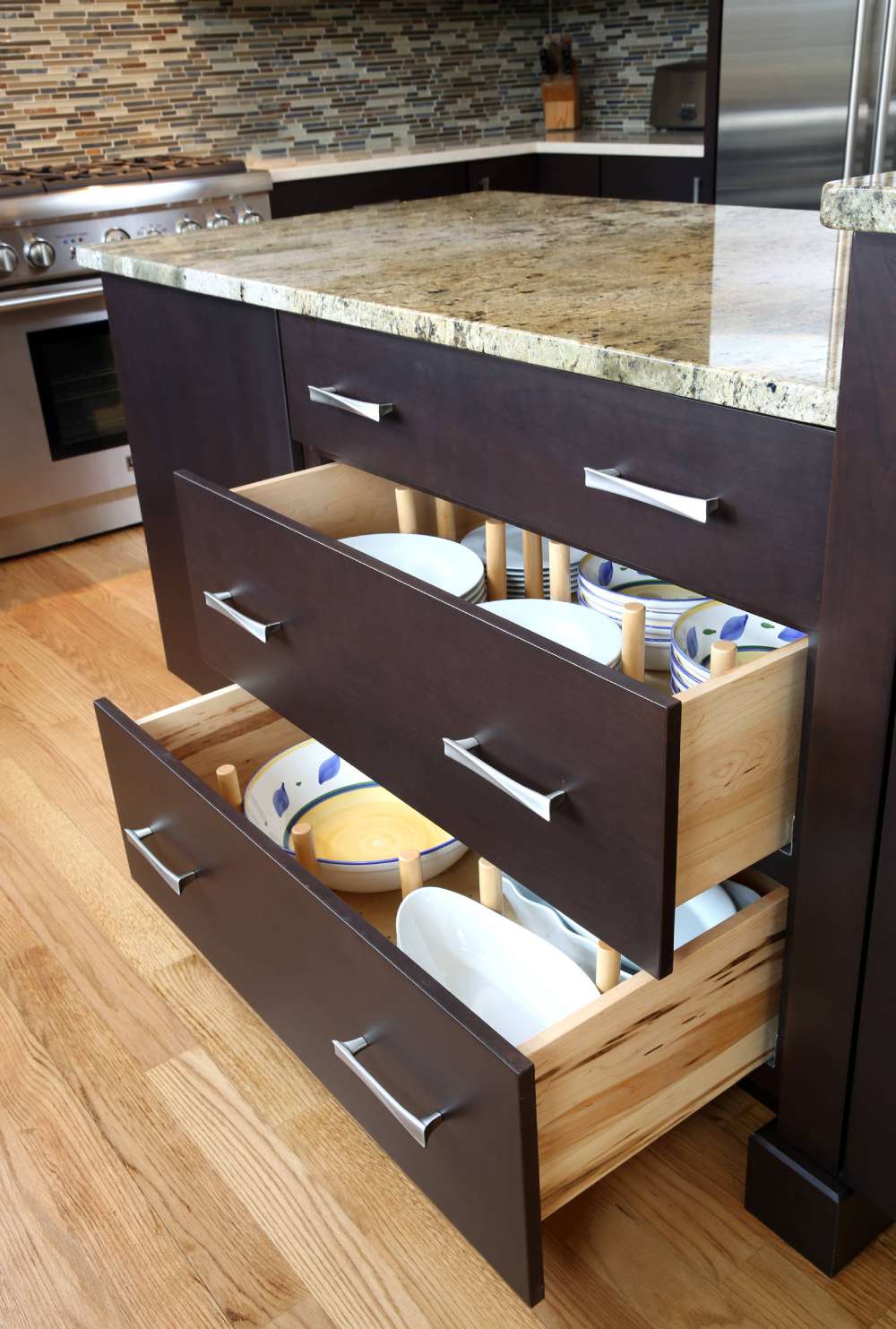
Image source: Normandy Remodeling
Lower resale risk: walnut tone, white oak stain, honey oak. Neutral brown shades with visible grain and broad appeal.
Higher resale risk: dark espresso, heavily painted brown finishes, highly customized dark-on-dark combinations. These read as personal choices rather than broadly desirable finishes.
The principle applies consistently: buyers price personalized design choices as remediation costs, not value additions. A dark painted brown island in a small kitchen with dark floors is the profile most likely to suppress rather than support resale value.
Practical Resale Guidance
For homeowners planning to sell within 2-3 years, a targeted mid-range refresh delivers better financial return than a full custom renovation, per Remodeling Magazine’s 2024 Cost vs. Value data.
- New island countertop (quartz): high-value, broad buyer appeal
- Hardware update: low cost, immediate visual impact
- Island refinish or repaint to neutral brown tone: mid-range cost, removes dated finishes
For homeowners staying 10 or more years, the daily use value of a well-designed brown island changes the math entirely. The resale recoup rate is a useful benchmark, not a sole criterion for the decision.
FAQ on Brown Kitchen Island
What countertop goes best with a brown kitchen island?
White or light quartz is the most reliable choice. Calacatta and Carrara-look quartz contrast the warm wood tone without competing with it. Butcher block works as a tone-on-tone option when the base and top differ enough in shade.
What wood species is best for a brown kitchen island?
Walnut and white oak lead current demand. Walnut delivers deep chocolate brown with flowing grain. White oak offers a lighter honey tone, accepts stain well, and costs less. Both suit modern farmhouse and transitional kitchen styles.
Does a brown island work in a small kitchen?
Yes, if the island footprint stays at roughly 10% of the total kitchen floor area. A lighter brown tone (honey oak, natural white oak) keeps the space from feeling heavy. Dark espresso in a small kitchen tends to compress the room.
What hardware finish works best on a brown kitchen island?
Brushed brass is the strongest match for walnut and oak islands. It connects to the warm undertones in brown wood. Matte black suits darker espresso or painted brown. Oil-rubbed bronze suits traditional cherry wood islands.
What color cabinets go with a brown kitchen island?
White shaker perimeter cabinets are the most common pairing. The two-tone contrast makes the brown island read as a furniture-style focal point. Off-white and cream also work. Matching brown perimeter cabinets to the island suits rustic and traditional kitchens.
What flooring pairs well with a brown kitchen island?
Light wood flooring (white oak, maple, blonde hardwood) creates clear tonal separation from a brown island. Large-format gray or white porcelain tile works equally well. Avoid matching the floor stain closely to the island finish, as both elements lose definition.
How do I style a brown kitchen island?
Keep it functional first. A simple centerpiece, a bowl of fruit or greenery, and clean countertop space read better than heavy decor. Brass or black pendant lights above, matching hardware throughout, and one consistent countertop material complete the look.
Is a brown kitchen island still in style?
Yes. Wood cabinet finishes overtook white as the top preference for the first time in nearly a decade, per MasterBrand’s 2026 cabinetry report. Warm brown tones, walnut especially, are widely cited as a leading direction in current kitchen design.
What pendant lights suit a brown kitchen island?
Rattan and woven pendants suit farmhouse and transitional brown islands. Brushed brass or matte black metal pendants suit contemporary and modern setups. Hang the bottom of the fixture 30-36 inches above the countertop surface for standard 8-foot ceilings.
Does a brown kitchen island affect resale value?
Neutral brown tones (walnut, white oak stain) have broad buyer appeal and support resale. Dark painted brown or heavily customized dark-on-dark combinations carry more risk. Minor kitchen updates return an average of 96% of project cost at resale, per Remodeling Magazine’s 2024 Cost vs. Value Report.
Conclusion
This conclusion is for an article presenting the brown kitchen island as one of the most considered decisions in a kitchen renovation, not a default choice.
Wood species, stain depth, cabinet door profile, countertop material, and hardware finish all interact. Getting one wrong shifts the whole result.
The pairing logic is consistent: tonal contrast between island and floor, countertop as the visual bridge, and metal finish that either reinforces warmth or introduces deliberate contrast.
Walnut grain, white oak stain, shaker cabinetry, quartz countertop surfaces, and brushed brass pulls are not arbitrary combinations. They work because each element supports the others.
A well-specified brown island adds resale appeal, daily function, and a furniture-quality anchor that painted cabinetry rarely achieves on its own.

- Paint Colors That Go with Oak Floors - August 22, 2026
- Paint Colors That Go with Gray Floors - August 20, 2026
- What Color Bedding Goes with Dark Wood Furniture - August 18, 2026