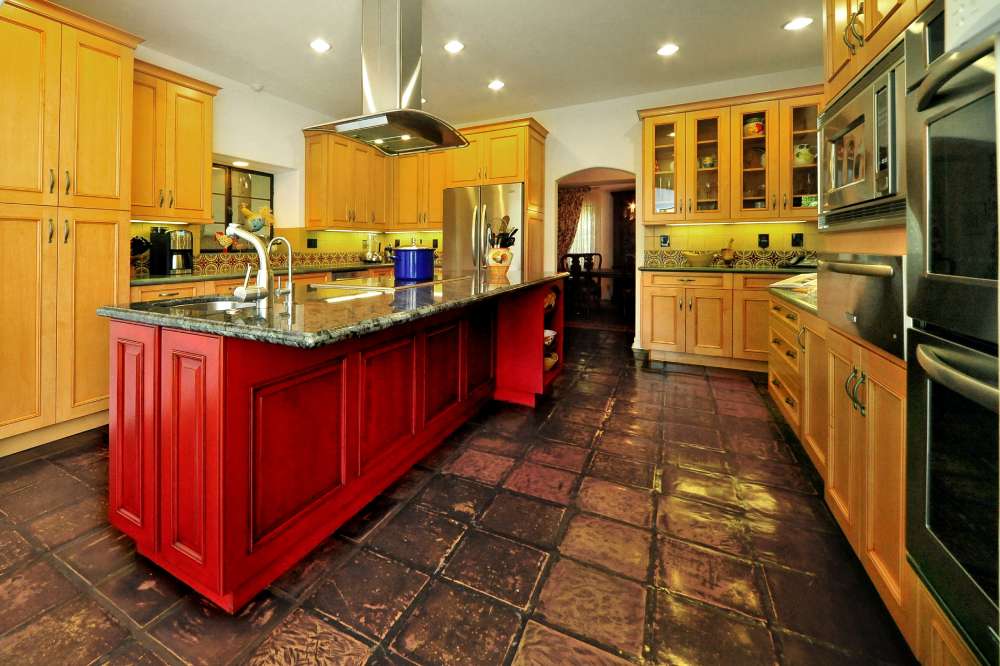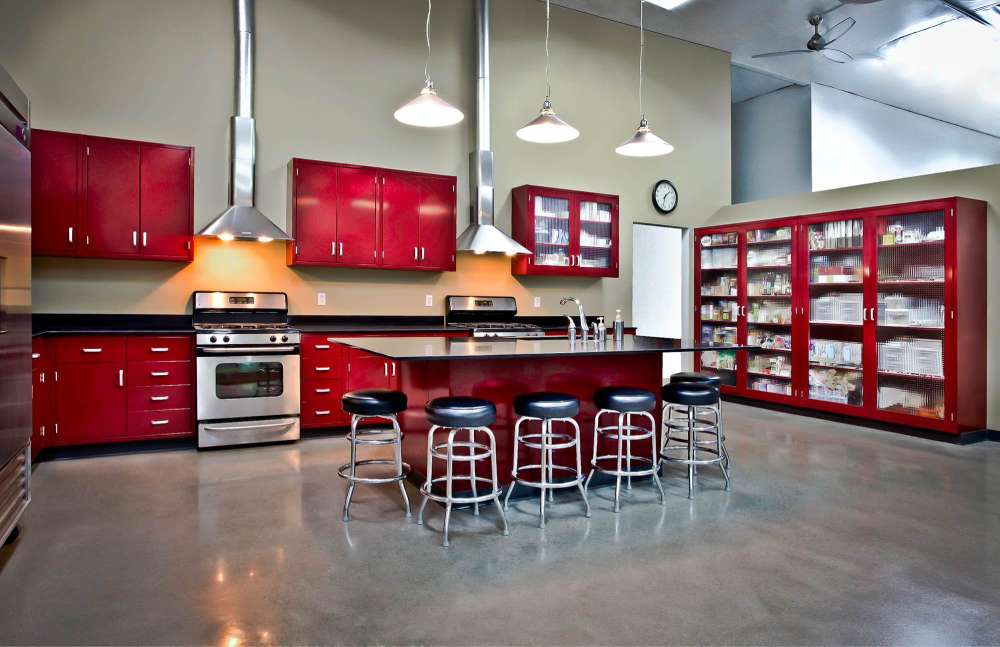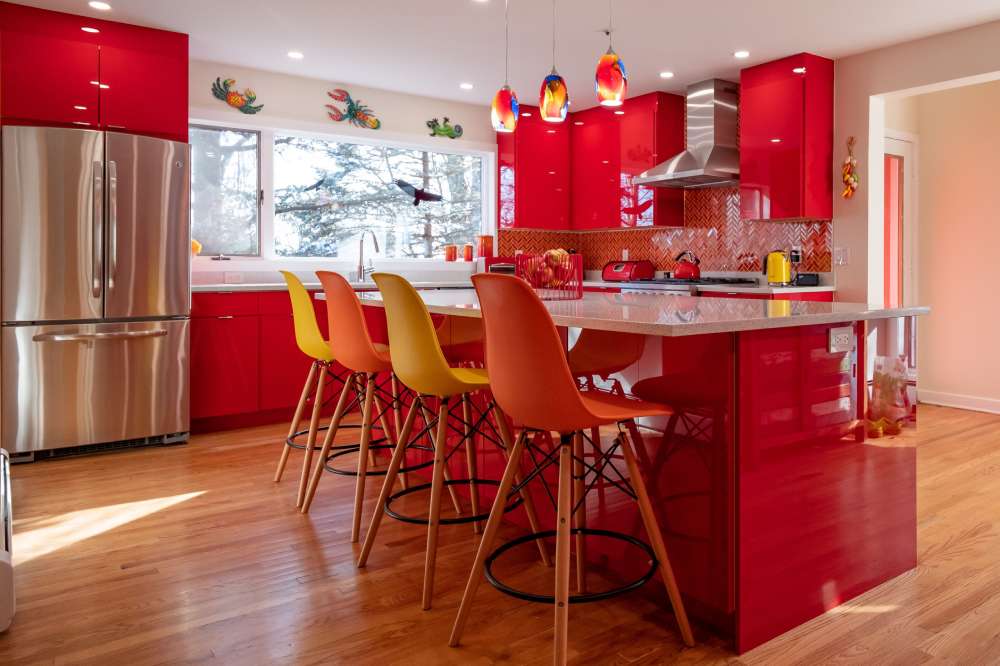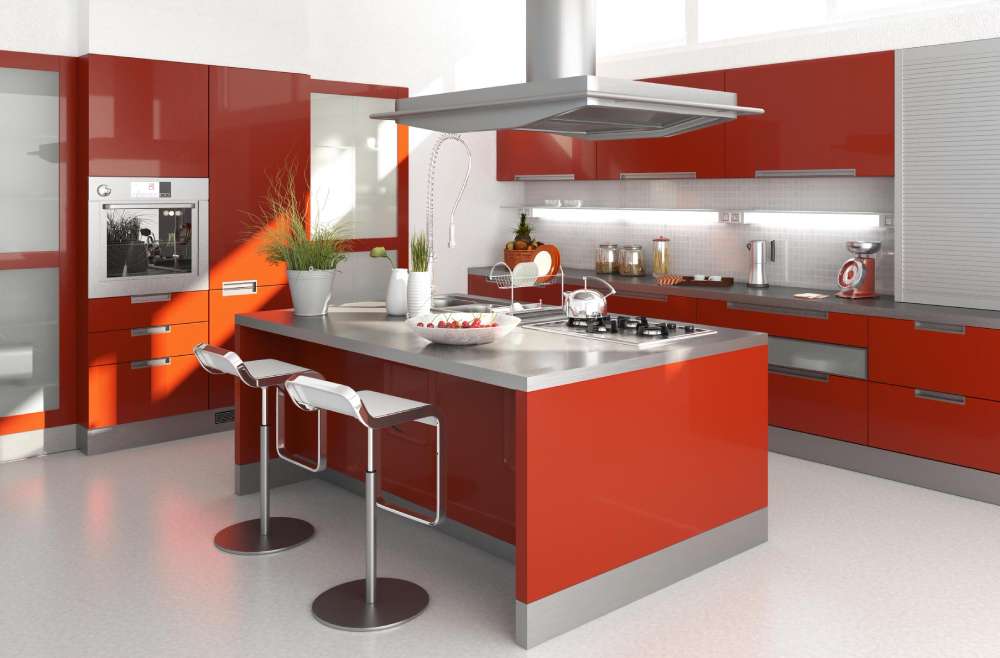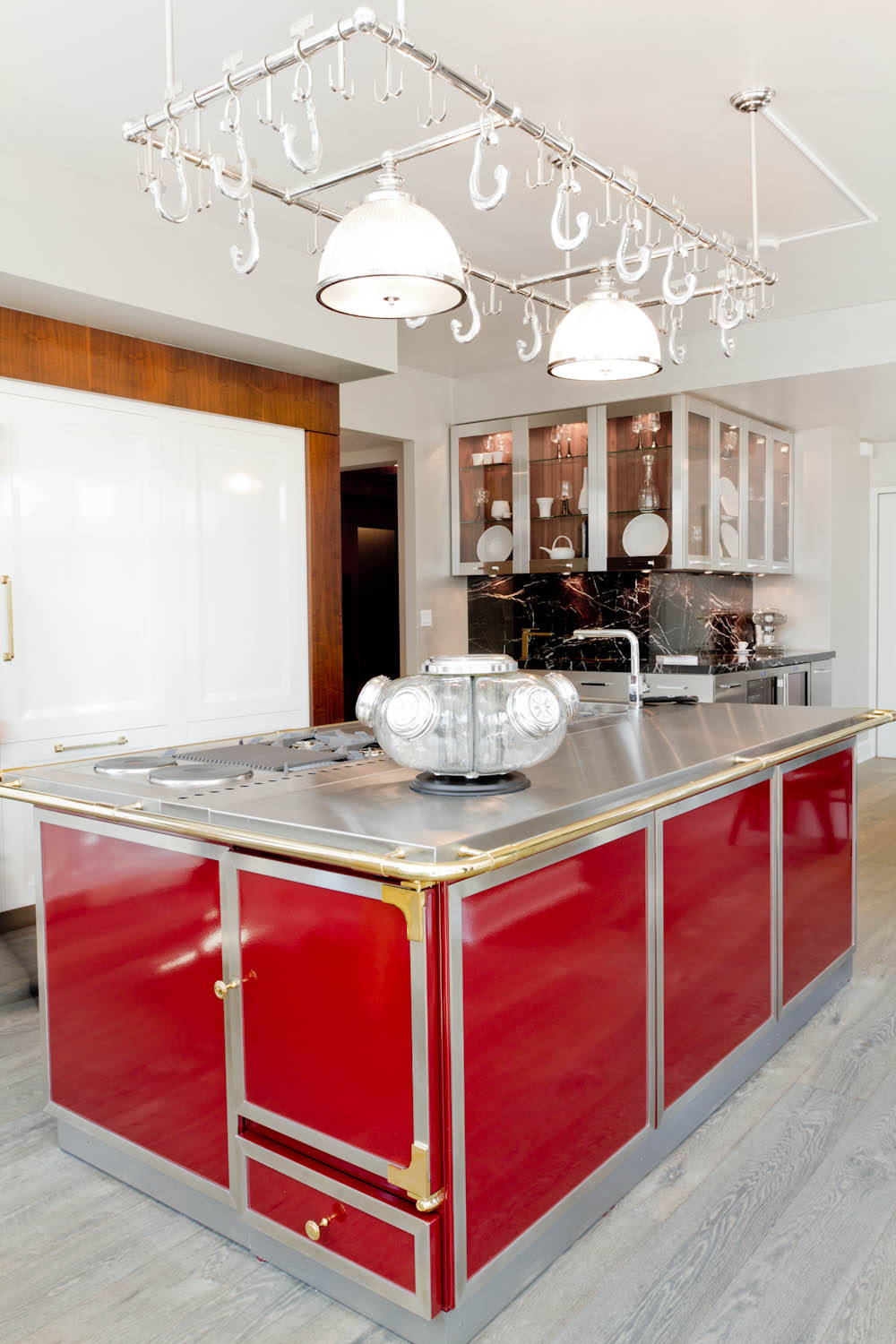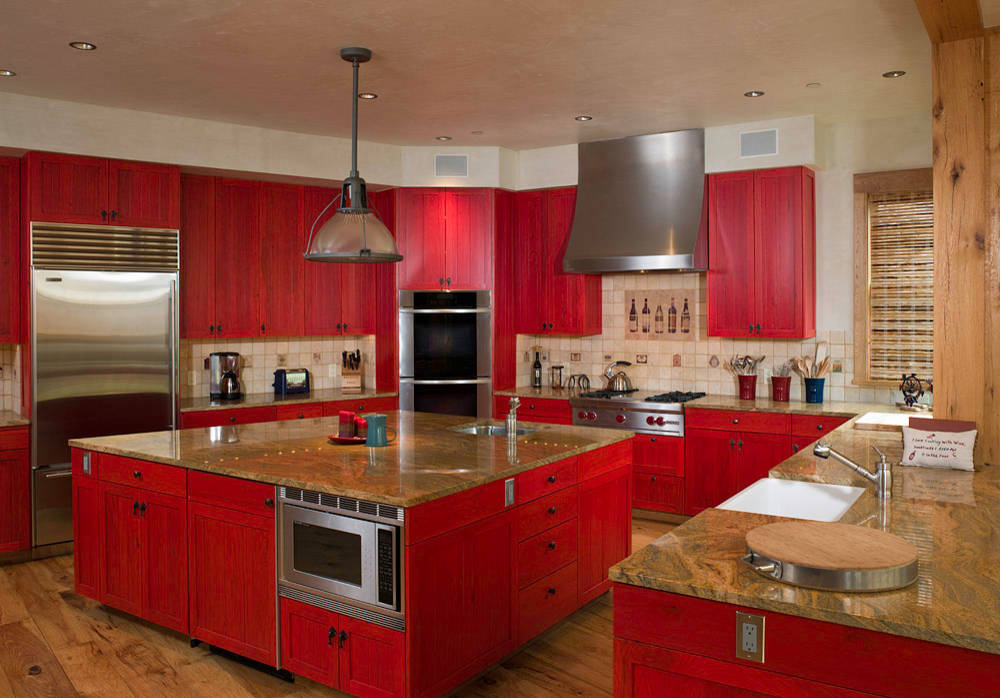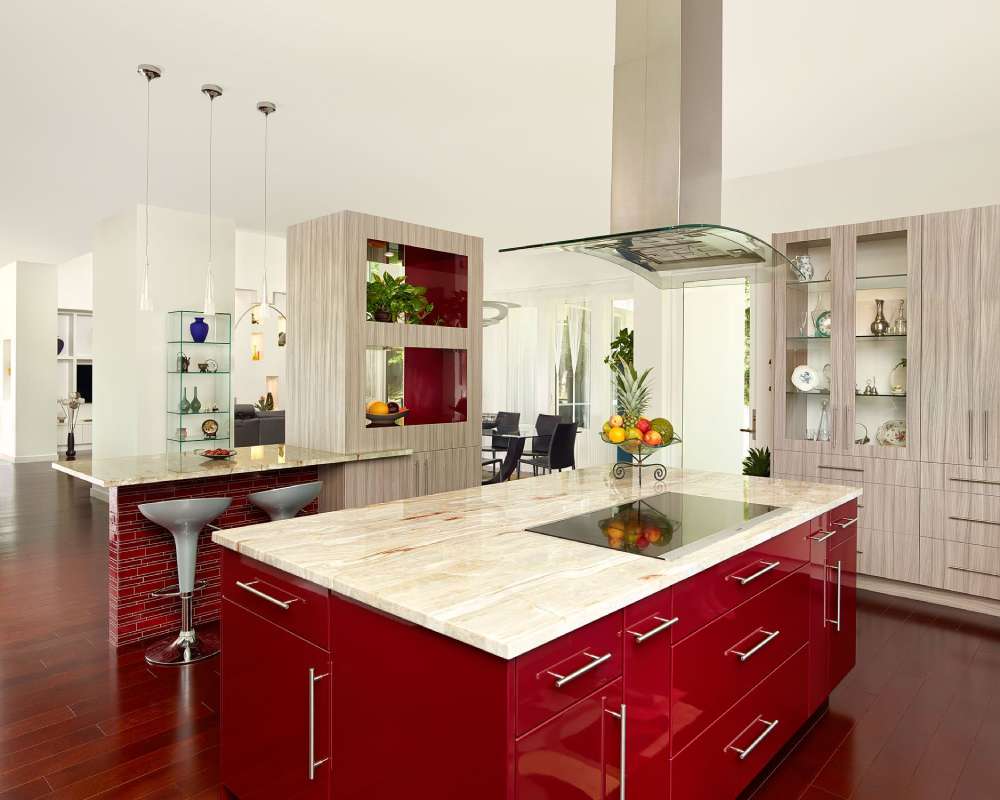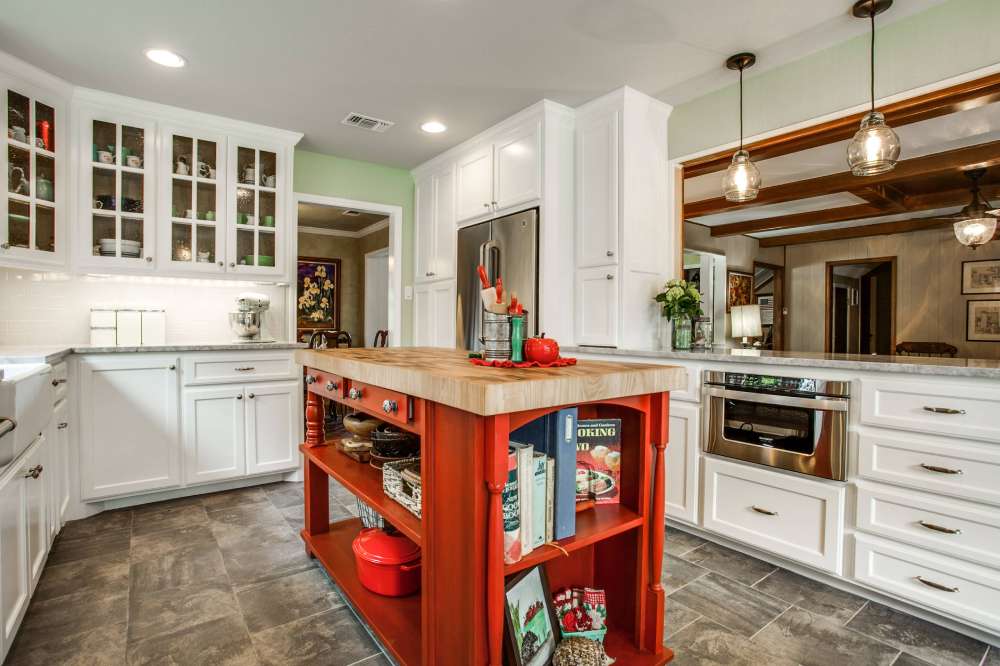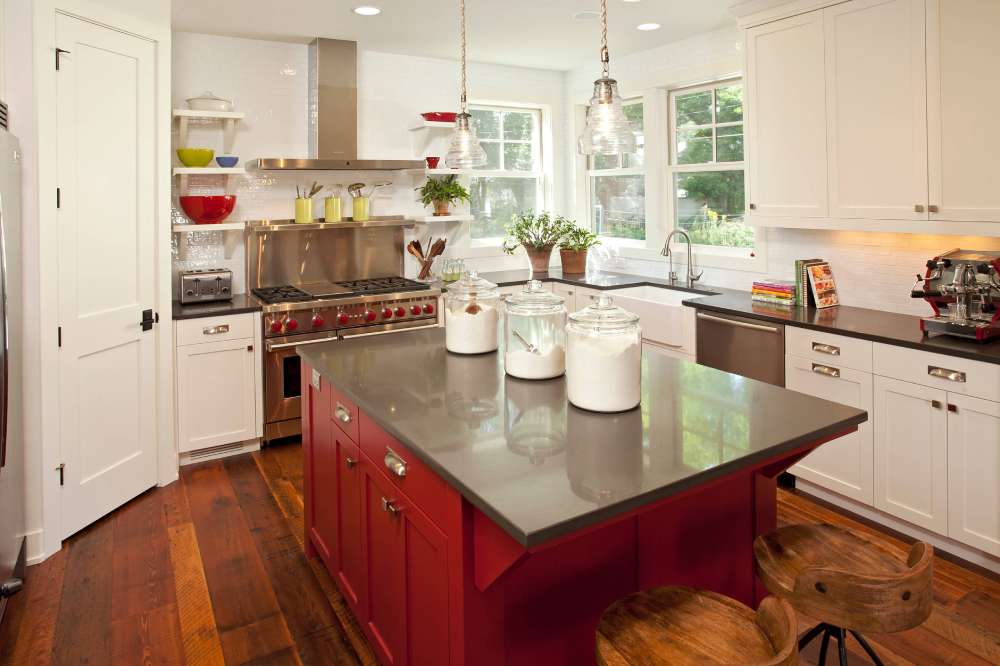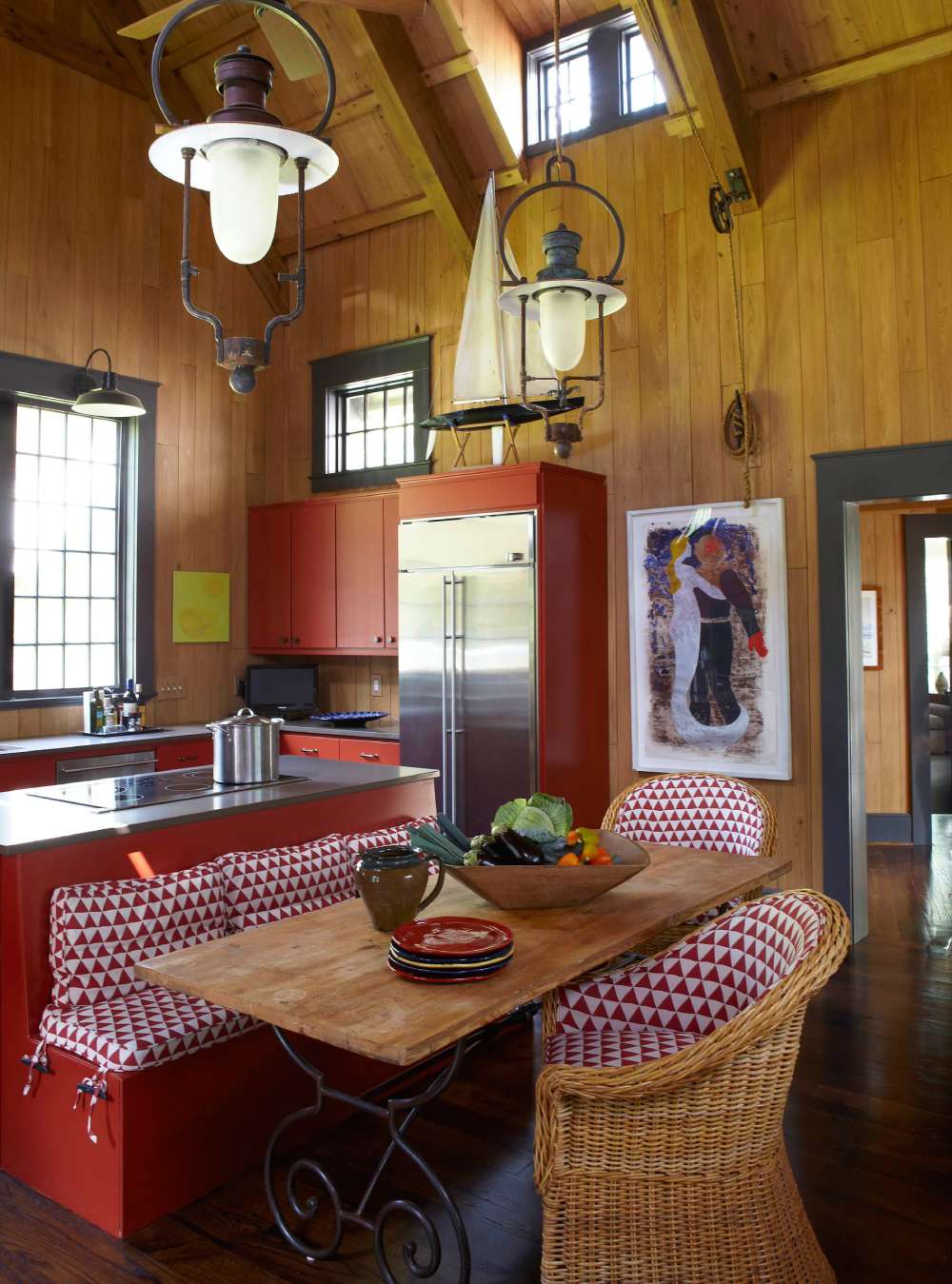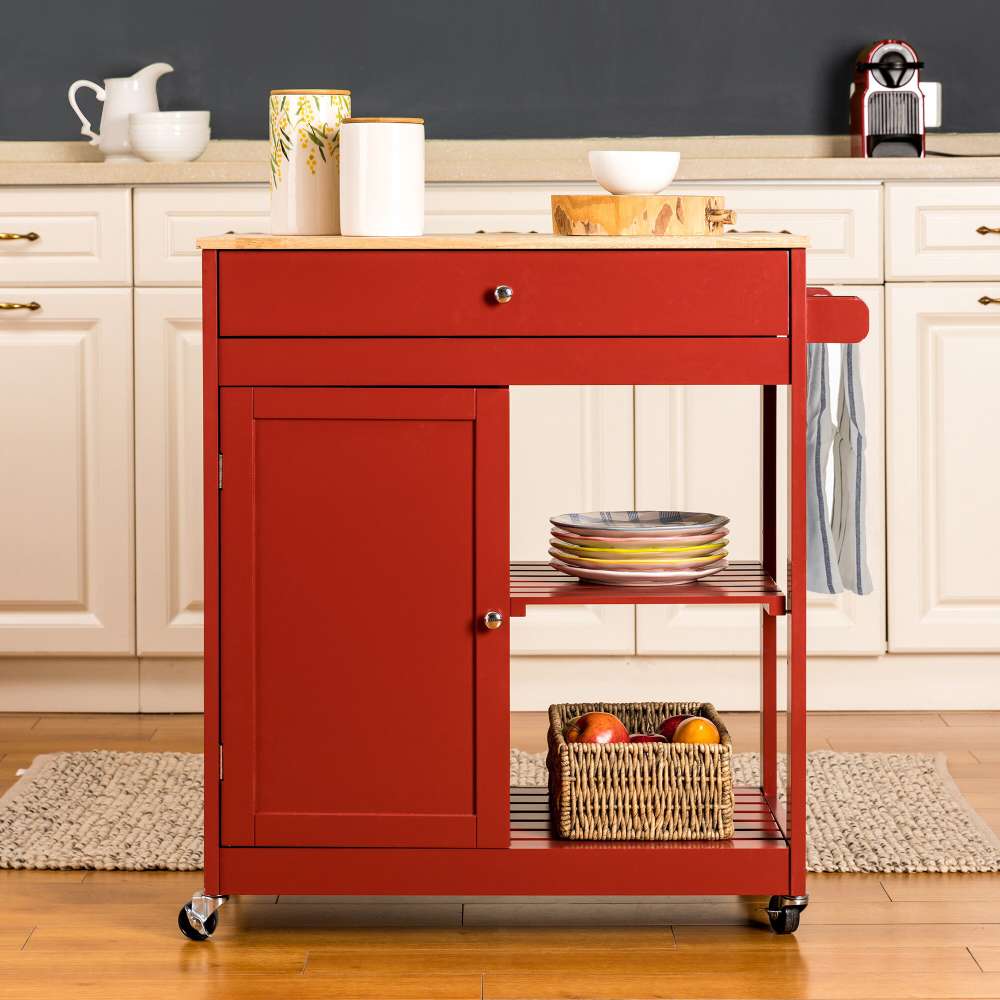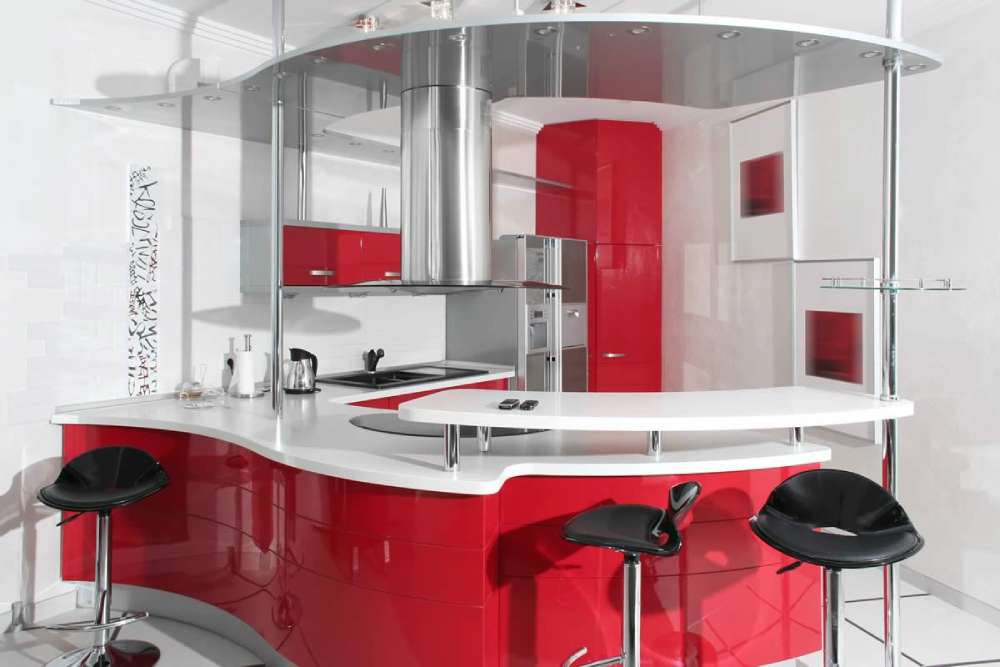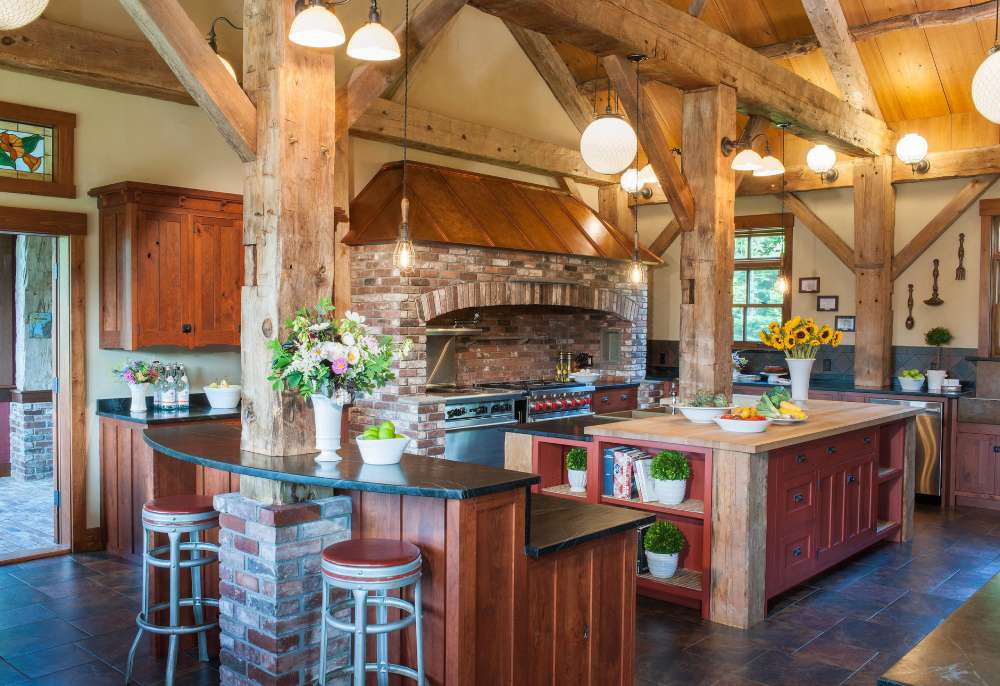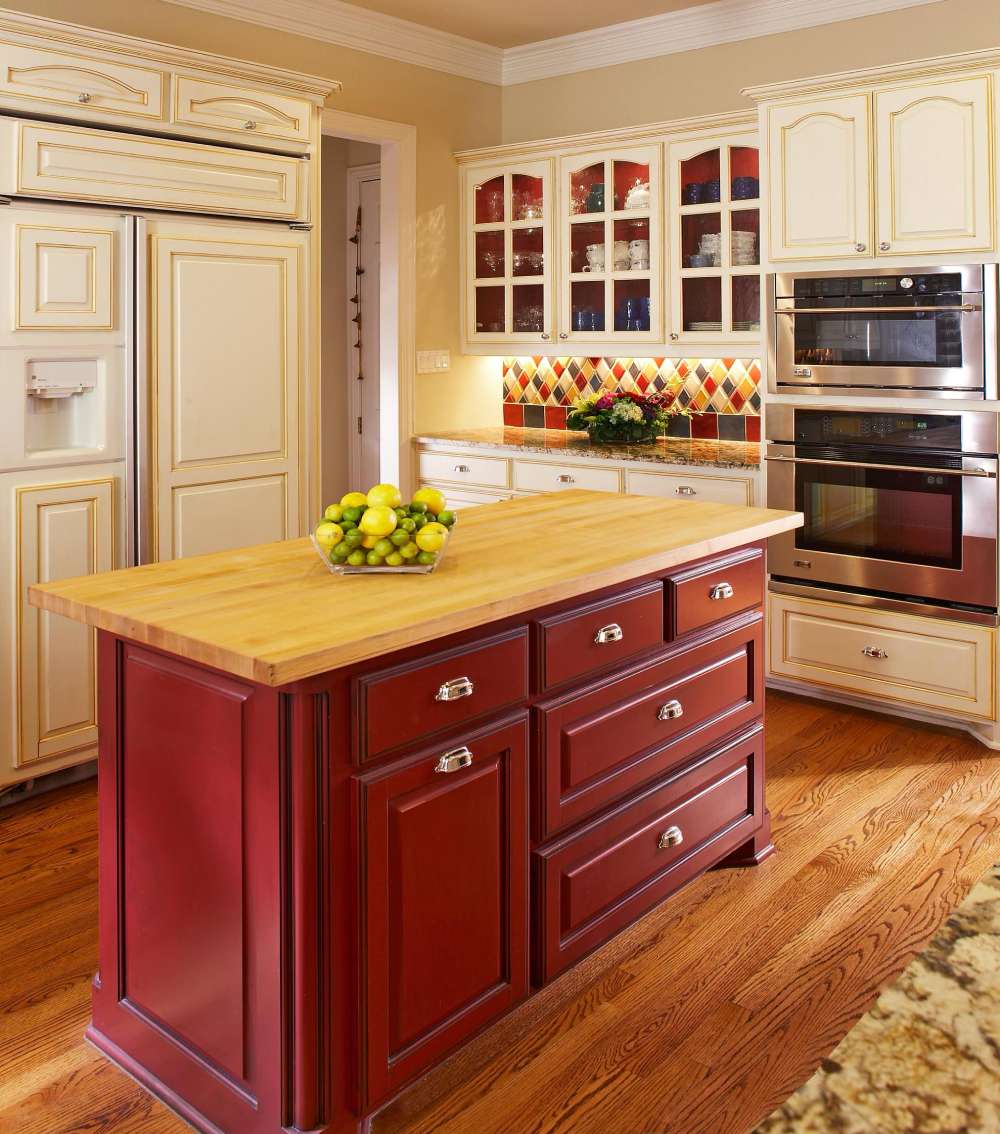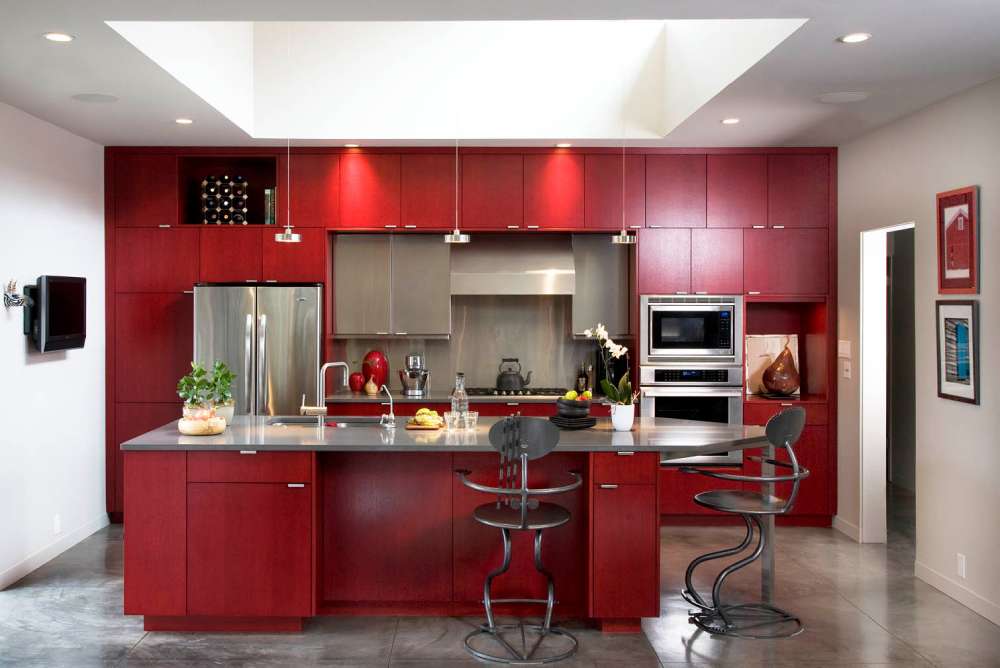
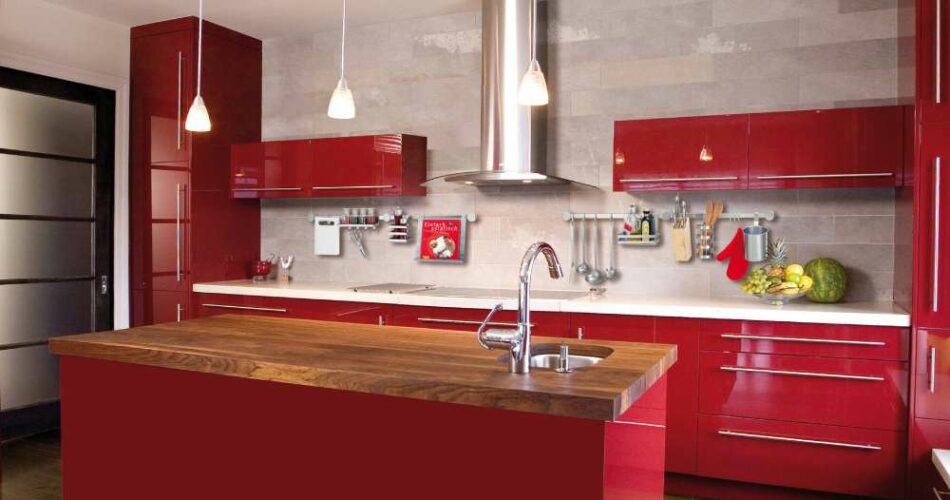
Red kitchen island ideas work. They just require the right shade, the right countertop pairing, and an honest look at your existing kitchen before committing to a bold color.

A red island is one of the strongest kitchen focal points you can create, but the details matter more than the color itself.

This guide covers everything from cherry red versus burgundy, to which countertop materials actually hold up next to bold cabinet paint, to how small kitchens can pull off a painted red island without the space feeling cluttered.

You will find specific paint codes, finish recommendations, style pairings, and purchasing options across every budget, from a $300 IKEA base you paint yourself to a full custom lacquered island.

What Makes a Red Kitchen Island Work in a Real Kitchen


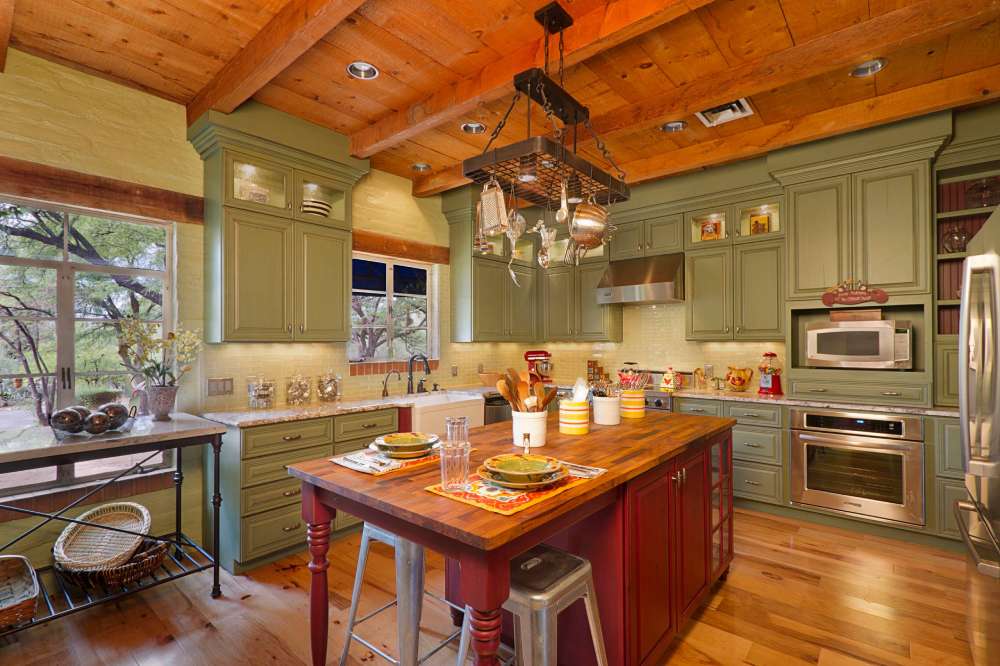
Image source: LA Dwelling Inc

A red kitchen island works when 3 design conditions align: the lighting temperature supports the red tone, the surrounding cabinet color creates intentional contrast, and the square footage is large enough for a bold accent color to read as a focal point rather than visual noise.

According to the NKBA 2025 Kitchen Trends Report, 71% of homeowners now prefer colorful kitchens over white ones. Red islands sit at the intersection of that shift and a bigger design conversation about using the island as the room’s anchor piece.

How Lighting Changes Red

Warm incandescent bulbs (2700K-3000K) push red toward orange. Cool LED lighting (4000K+) pulls red toward pink or burgundy.

The Interior Designers Institute noted in 2024 that 85% of designers recommend layered ambient lighting in kitchens specifically to control how color reads at different times of day. A red island under recessed cool LEDs looks nothing like the same island under pendant lighting with Edison-style bulbs.

  • 2700K-3000K: red reads warm, slightly orange-shifted
  • 3500K: red reads most true to its painted finish
  • 4000K+: red cools down, cherry tones pull toward burgundy

Surrounding Cabinet Color

White perimeter cabinets are the most forgiving pairing. They give red room to breathe without competing.

Dark navy or charcoal perimeter cabinets work too, but only when the countertop is light enough to prevent the whole kitchen from going heavy. Plain & Fancy Cabinetry’s 2025 report confirmed that contrast between island and perimeter cabinet color is the single clearest signal of intentional design versus accidental color clash.

Square Footage and the Focal Point Rule


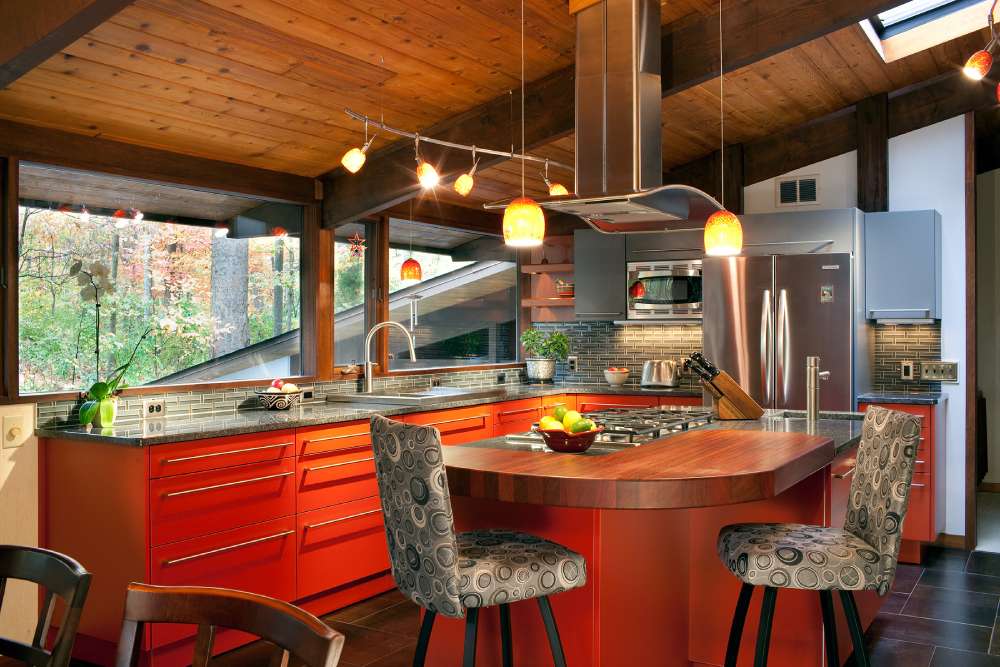
Image source: studio beili

A red island in a kitchen under 150 square feet competes with every other surface. In a kitchen over 200 square feet, it reads as a focal point.

The NKBA’s average US single-family kitchen sits at 161 square feet. That’s workable for a red island, but requires keeping countertops, backsplash, and flooring strictly neutral.

Countertop Material as the Pivot Point

The countertop decision changes how red reads more than any other variable. Here’s how the main options perform:

Countertop Effect on Red Best Red Pairing
White quartz Cools and grounds the red All red tones
Butcher block Warms and softens Cherry, tomato red
Black granite Dramatic, adds visual weight Burgundy, dark red
Calacatta marble Elegant, competes with bold hues Cooler reds only

Which Shades of Red Work Best for a Kitchen Island


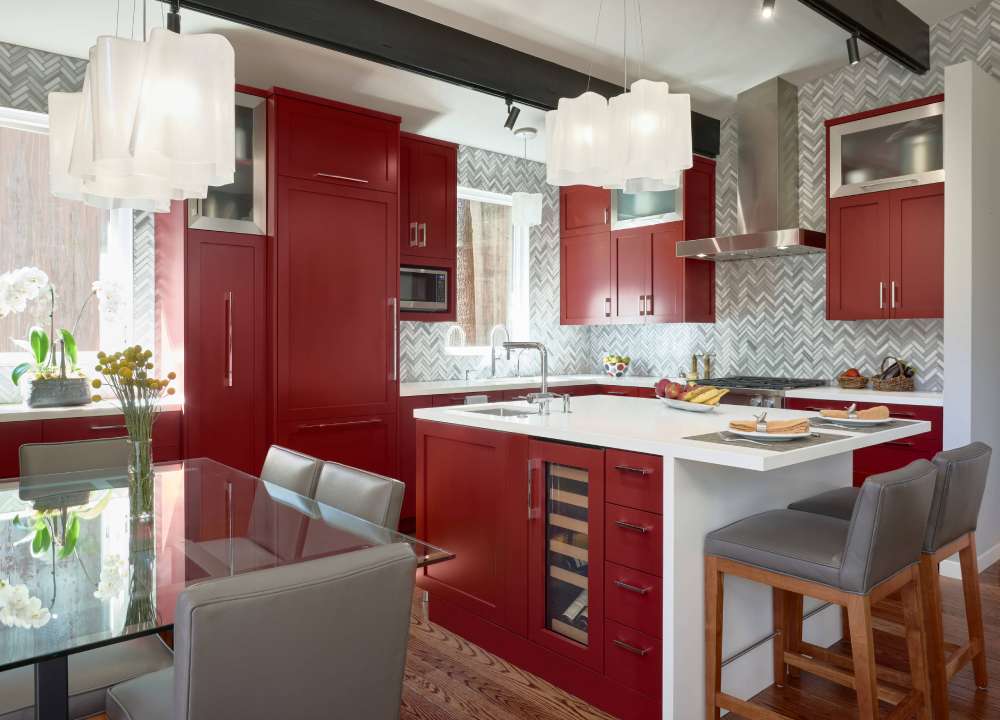
Image source: USI Design & Remodeling

Red is not one color. Cherry red, brick red, burgundy, and tomato red behave differently under the same lighting and next to the same cabinets. Choosing the wrong undertone is the most common red island mistake.

The NKBA’s 2025 report noted that 52% of homeowners are returning to bright and earthy 1970s tones, which includes the warm reds and terracotta shades that are now showing up on islands specifically.

Warm Reds

Cherry red, tomato red, and paprika all carry orange undertones. They feel energetic and work best in kitchens with natural light and wood accents.

Specific paint codes that perform well on kitchen islands:

  • Benjamin Moore Chili Pepper (2004-20): a saturated, pure red with slight warmth
  • Sherwin-Williams Antique Red (SW 0006): a softer brick tone, forgiving on larger surfaces
  • Farrow and Ball Rectory Red (217): deeper and more complex, leans toward traditional settings

Warm reds pair directly with butcher block countertops and unlacquered brass hardware. The combination echoes the farmhouse kitchen aesthetic that Houzz’s 2024 study found remains one of the top renovation styles.

Cool and Deep Reds

Burgundy, wine red, and oxblood carry blue or purple undertones. They read more sophisticated and less retro than warm reds.

Best pairings for cool reds: Calacatta marble countertops, matte black hardware, white or grey perimeter cabinets.

These shades sit closer to the traditional interior design color family. They work in raised-panel cabinet door styles and furniture-style islands with turned legs, where the deeper tone reads as intentional rather than bold.

Red Type Undertone Best Style Match Avoid Pairing With
Cherry red Warm, orange Farmhouse, transitional Warm wood floors
Tomato red Warm, slightly orange Eclectic, retro Orange-toned granite
Brick red Earthy, brown Rustic, industrial Cool grey countertops
Burgundy Cool, blue-red Traditional, transitional Warm oak wood tones

Matte vs. Gloss Finish


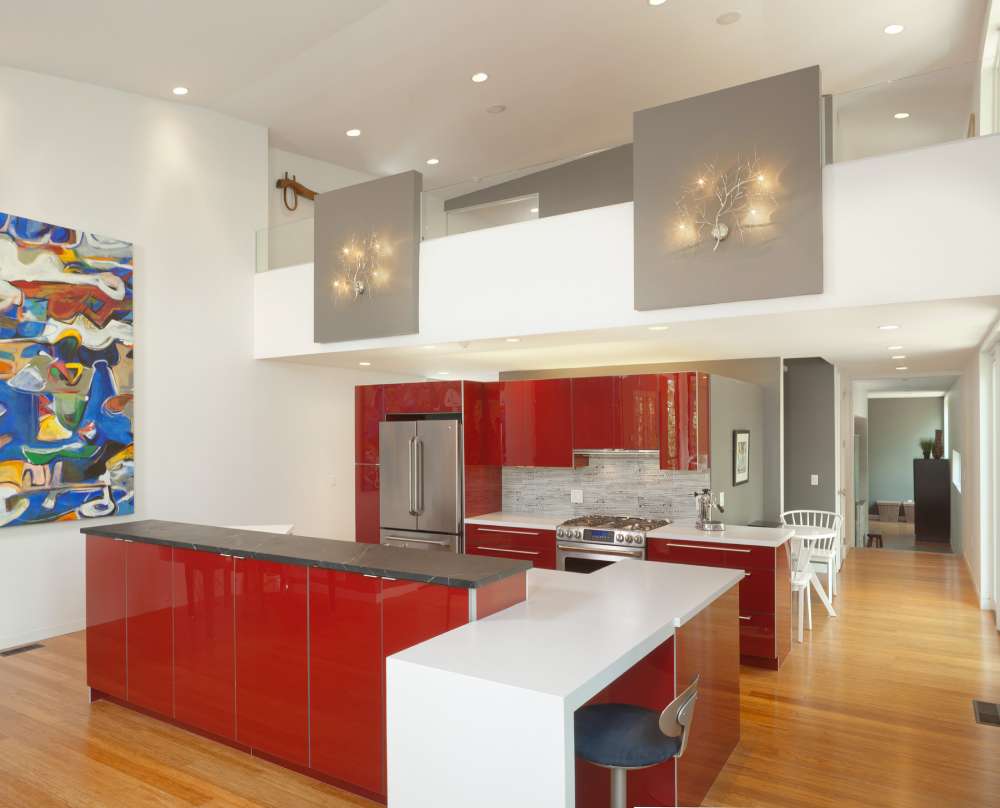
Image source: Crown Point Cabinetry

Finish level is as important as the color itself. Gloss amplifies any red, making it read bolder and larger. Matte absorbs light and makes the same red feel more contained.

Gloss works best in modern flat-front island designs where the reflective surface is part of the aesthetic. Matte works better in farmhouse and transitional kitchens where the goal is warmth, not drama.

Red Kitchen Island Ideas for White Kitchens

White-and-red is the most searched and most installed island contrast combination. The reason is straightforward: white cabinets give red maximum visual separation, so the island reads as the clear focal point without any additional design work.

Houzz’s 2024 U.S. Kitchen Trends Study found the median spend on kitchen renovations rose 20% to $24,000, with island upgrades listed among the top three budget priorities. A red island repaint or replacement is one of the most cost-effective ways to hit that visual upgrade without full cabinet replacement.

Countertop Choices for White-and-Red Kitchens

White quartz is the default and works every time. But it’s not the only option.

  • Calacatta marble: elegant, suits cooler reds like burgundy and wine
  • White oak butcher block: warms cherry and tomato reds, softens the contrast
  • Honed Carrara: quieter than Calacatta, allows the red to carry the room

Avoid warm beige or cream countertops on a red island with white cabinets. The warmth of the countertop pulls against the cool brightness of white, creating a color conflict that makes the red look muddy.

Hardware That Connects White Cabinets to a Red Island


Image source: Blue Boar Construction

Hardware is the connector between white perimeter cabinets and the red island. It links both surfaces without matching either one directly.

Brushed brass reads warm and adds a layer of depth that both white and red respond well to. Matte black creates a sharper, more modern break. Chrome is the riskiest choice, since it reads cold next to warm reds and can make the overall palette feel disconnected.

Flooring and Backsplash Considerations

Keep both neutral. Light wood flooring (white oak, natural maple) grounds the space and echoes any butcher block countertop. Grey tile works well for a more modern feel.

Avoid patterned backsplash directly behind a red island. The pattern and the bold color compete for attention. A simple white subway tile or solid slab backsplash keeps the red as the room’s only visual statement.

Red Kitchen Island Ideas for Dark and Two-Tone Kitchens

Dark perimeter cabinets paired with a red island are less common, but the combination is more sophisticated when it works. The key condition: the countertop must be light enough to prevent the kitchen from going visually heavy on all four walls.

The NKBA 2025 Kitchen Trends Report confirmed that 67% of designers agree showcasing two painted finishes in the same kitchen is a top personalization trend. Two-tone kitchens, where the island is a different color than the perimeter, are now the standard setup for this approach.

Best Dark Cabinet Colors Paired with Red

Navy blue + red: the most balanced pairing. Both are saturated, but navy is cool and red is warm, creating natural contrast without clash.

Forest green + red: works best with darker reds like burgundy or oxblood. Avoid tomato red next to forest green since both carry strong chromatic weight.

Charcoal grey + red: the cleanest option. Charcoal is essentially neutral, so red reads clearly without competition from the perimeter cabinets.

Countertop Logic for Dark-Plus-Red Combinations


Image source: Lowes

A dark cabinet kitchen with a red island needs a light countertop to maintain legibility. White quartz or light Calacatta marble on the island, matched to the same or similar countertop on the perimeter, keeps the upper and lower visual planes balanced.

Brass hardware is the most effective finish connector here. It bridges dark cabinets and a red island by adding warmth that both colors respond to, which is a unifying element across the two-tone palette.

Two-Tone Configuration Options

Perimeter Color Island Red Tone Hardware Finish Countertop
White Any red Brass or matte black White quartz or butcher block
Navy blue Cherry or tomato red Unlacquered brass White quartz
Forest green Burgundy or oxblood Aged brass Calacatta marble
Charcoal grey Any red Matte black or chrome Light quartz or concrete

Red Kitchen Island Ideas by Style

Red behaves differently depending on the design style it sits inside. The door profile, finish level, hardware choice, and countertop all need to align with the broader style or the red island reads as an afterthought rather than a deliberate choice.

The 2024 NKBA report noted the island is the #1 build priority for 78% of kitchen designers, specifically because it functions as the room’s signature piece. Getting the style alignment right determines whether the island anchors or disrupts the rest of the kitchen.

Farmhouse Red Kitchen Islands

Farmhouse style uses red in its most grounded, earthy form. Think Sherwin-Williams Antique Red on a shaker-door island with open shelving below, paired with an apron front sink and shiplap wall paneling.

Key farmhouse details:

  • Raised-panel or shaker cabinet door style
  • Butcher block or white farmhouse quartz countertop
  • Unlacquered or aged brass hardware
  • Open wood shelving on the island base for extra storage

This is the style most associated with rustic kitchen design, where distressed paint finishes and furniture-style detailing are expected rather than unusual.

Modern Red Kitchen Islands


Image source: Wendy O’Brien Interior Planning & Design

Modern red is lacquered, not painted. Flat-front door profiles, integrated handles (or no handles), and a waterfall countertop edge are the defining features.

Benjamin Moore Chili Pepper in a high-gloss lacquer finish on a flat-front island with a white waterfall quartz countertop is the clearest example of how modern interior design handles bold color. The red is unapologetic, but the clean geometry keeps it from feeling chaotic.

Traditional Red Kitchen Islands

Traditional red islands use raised-panel doors, turned legs, furniture-style base detailing, and deep red tones like Farrow and Ball Rectory Red or a custom burgundy.

Countertop pairings for traditional style: Calacatta marble, honed black granite, or soapstone. All three have the visual weight to match a traditional island without looking mismatched.

Hardware in oil-rubbed bronze or antique brass reinforces the traditional profile. Matte black looks out of place here.

Industrial Red Kitchen Islands

Industrial red is matte and slightly rough. Brick red or oxblood on an island with a raw steel base, open steel bracket shelving, and a concrete or honed black granite countertop.

This pairing connects directly to industrial kitchen design principles: exposed materials, minimal ornamentation, and color used sparingly as a contrast element rather than a softening one.

Red Kitchen Island Ideas with Seating

Adding seating to a red island introduces 3 specific design decisions that affect how the color reads: overhang depth, stool finish, and island length. Get any of these wrong and the bold color stops being an asset.

According to Houzz’s 2024 data, 52% of renovating homeowners modify their kitchen layout during major projects, with island seating expansion listed as the most common layout change. This means most homeowners adding seating are also re-evaluating their island’s scale.

Seating Dimensions That Work


Image source: REFINED LLC

A 12-15 inch countertop overhang is the minimum for comfortable knee clearance. At standard 36-inch counter height, pair with 24-inch counter stools. At bar height (42 inches), use 28-30 inch bar stools.

Island length rule: allow at least 24 inches of seating width per person. A 4-foot island fits 2 people. A 6-foot island fits 3 comfortably. Below 4 feet, skip fixed seating entirely and use freestanding stools that can be moved.

Stool Finish and Material Pairings

The stool is the second-most visible object next to the island. It either reinforces the red or dilutes it.

  • Black metal stools: the sharpest contrast, works with all red tones
  • Natural wood seat with metal legs: bridges the red to any wood flooring
  • White upholstered seat: soft, works best in white-cabinet kitchens with a red island
  • Warm brass finish stool: connects directly to brass hardware on the island itself

Waterfall vs. Standard Overhang

A waterfall countertop edge on a red island is a bold choice. The countertop material runs continuously down the side face of the island, eliminating the visual break between top and cabinet.

On a red island, a waterfall edge works best in modern kitchens where the countertop is white or light quartz. The contrast between the red cabinet body and the white waterfall side creates a clear color-block composition. In traditional or farmhouse kitchens, a standard overhang with a simple edge profile reads better.

Red Kitchen Island Ideas with Contrasting Countertops


Image source: Wendy O’Brien Interior Planning & Design

The countertop decision on a red island is the single most impactful pairing choice in the entire kitchen. The right material makes the red look intentional and sophisticated. The wrong one makes it look like a repainting mistake.

As of 2024, engineered quartz leads kitchen countertop materials at 32% market share (Houzz 2026 Kitchen Study), making it the default surface most homeowners are working with. But for a red island specifically, quartz is only one of several good options.

White Quartz

White quartz is the safest and most versatile choice. It works with every red tone, cools the overall palette, and requires no special design justification.

Best for: first-time red island installations where the goal is to get the color right before adding complexity. The neutrality of white quartz means the red island can change shade or finish later without the countertop becoming a problem.

Black Granite and Soapstone

High drama. Both materials have significant visual weight that only dark reds and burgundy can match without being overwhelmed.

Soapstone adds a soft, matte quality that pairs well with traditional and farmhouse-style red islands. Black granite has a harder surface character that fits modern and industrial profiles better. Neither works well with bright tomato or cherry red: the combination reads as too aggressive.

Butcher Block


Image source: REFINED LLC

Butcher block is the warmest countertop option available and the most forgiving on a red island.

Why it works: wood tones share undertones with warm reds, which creates natural visual continuity rather than contrast. John Boos butcher block in maple or walnut are the two most used options. Maple pairs with cherry and tomato reds. Walnut pairs with burgundy and brick red.

Concrete

Concrete countertops on red islands are underused and genuinely effective. The matte grey surface creates a neutral, low-contrast base that lets the red carry the room without competing.

This pairing shows up most often in industrial kitchen design, where both the red cabinet and the concrete countertop are intentionally raw-looking materials that reinforce the style’s character rather than dress it up. Concrete countertop costs typically run $65-$135 per square foot installed, making it a mid-range option relative to marble and premium quartz.

Small Red Kitchen Island Ideas

Red in a small kitchen is workable. The condition: keep the island’s footprint under 10% of the kitchen’s total square footage and keep every surrounding surface strictly neutral.

Fixr’s 2025 kitchen island sizing guide confirms the 10% rule as the industry standard for preventing a bold-colored island from overwhelming compact spaces. For a 150-square-foot kitchen, that means a maximum island footprint of 15 square feet, roughly 4 feet by 3 feet 9 inches.

Minimum Dimensions for a Red Island to Work

24 inches wide, 36 inches long is the floor. Below that, a red painted surface reads as furniture, not as an island.

Angi’s kitchen island sizing data shows the most common small kitchen island runs 4 feet by 2 feet. At that size, a red island works as a visual emphasis point without creating circulation problems, provided at least 40 inches of clearance exists on all sides.

Freestanding vs. Fixed Red Islands in Small Kitchens


Image source: SWANSON RENOVATIONS LLC

A freestanding red island on casters moves when needed. That flexibility matters in kitchens where the workflow changes between cooking, entertaining, and daily use.

Leg-style base vs. solid base:

  • Leg-style: shows floor beneath the island, reduces visual mass, better in tight spaces
  • Solid base: heavier visual weight, works when the island is the room’s only focal point

IKEA VADHOLMA and Crosley Furniture both offer freestanding kitchen islands under 36 inches in length that can be painted red using Sherwin-Williams Emerald Urethane. Both have open lower shelving that keeps the base visually light.

Keeping Surroundings Neutral

In a small kitchen with a red island, the backsplash, countertop, and flooring all need to stay quiet. One additional pattern or competing color makes the kitchen feel chaotic rather than designed.

What works: white quartz or butcher block countertop on the island, white or light grey perimeter walls, light wood or white tile flooring. The red does all the visual work. Everything else supports it.

Red Kitchen Island Ideas with Wood Accents


Image source: DLB Custom Home Design

Red and wood is the most approachable version of a bold island color. Wood tones share underlying warmth with most reds, which makes the two materials read as intentionally paired rather than contrasting.

Houzz’s most recent kitchen study found that 37% of renovating homeowners choose a different countertop color on their island versus the perimeter, and of those who pick a non-white option, nearly 4 in 10 go with wood. That makes the red island-plus-wood combination one of the most naturally occurring pairings in current kitchen design.

Open Wood Shelving on a Red Island Base

Open shelving on the base of a red island serves two purposes. It adds warm wood texture that softens the bold color, and it provides accessible storage without making the island feel like a solid wall of red.

Best wood tones for open island shelving:

  • White oak: pairs with cherry red and tomato red
  • Walnut: pairs with burgundy and brick red
  • Maple: light enough to work with any red shade

Matching Wood Floors to a Red Island

Red islands over warm honey oak floors are the most common mismatch. The orange undertone in both the floor and the red collide instead of connecting.

The fix is to pick a red with cooler or browner undertones, like Farrow and Ball Rectory Red or Sherwin-Williams Antique Red, which read more earthy next to warm wood. Alternatively, a color approach that works consistently: lay a large neutral area rug under and around the island to visually separate the red from the floor tone below it.

Mixed-Material Islands

A red painted lower cabinet section with a natural wood face frame or top rail is a two-material approach that reads more refined than a fully red island in traditional and transitional kitchens.

Lowe’s and Home Depot both stock semi-custom island cabinet kits where the door faces and the face frame can be specified separately, making a red-body-plus-wood-trim combination achievable without full custom cabinetry. This is a practical route that keeps costs in the $800-$2,000 range for a DIY or semi-professional installation.

How to Style a Red Kitchen Island


Image source: Shift Architects

Surface styling on a red island requires more restraint than on a neutral one. Every accessory competes with the color. The goal is to add life without adding visual noise.

The Interior Designers Institute’s 2024 kitchen trends data found that 80% of designers now treat the kitchen island as a showpiece space for decorative lighting and surface accessories, a significant shift from purely functional island design. On a red island, that showpiece status means fewer, better-chosen items.

Pendant Lighting Over a Red Island

Pendant sizing rule from Progress Lighting: hang pendant bottoms 30-36 inches above the countertop, spaced at least 24-30 inches apart, starting 12-15 inches in from each end of the island.

Finish choices that work with red:

  • Aged or unlacquered brass: the warmest option, connects to warm reds
  • Matte black: the sharpest contrast, suits modern and industrial red islands
  • Clear glass: neutral finish, lets the red read without competition from the fixture

Houzz reports that 63% of homeowners choose pendant lights over their kitchen islands, making them the dominant island lighting choice. For a red island, two pendants on a standard 4-6 foot island is the right number. Three starts to feel busy.

Countertop Accessories

Keep it to 3 items maximum. More than that and the accessory layer competes with the island color for attention.

What reads well on a red island: a white or neutral ceramic bowl with fruit, a single plant in a white pot, metallic or stainless small appliances. Green herbs in a white pot are the most effective single accent against red, since green sits opposite red on the color theory wheel and creates natural contrast without feeling forced.

What to Avoid

A patterned backsplash directly behind a red island adds a second visual event that fights the color. Keep the backsplash solid or simple.

Orange-toned wood accessories, warm terracotta bowls, or orange-adjacent ceramics on the surface create an undertone clash with most reds. Warm reds especially pick up and amplify orange accessories in a way that looks accidental rather than designed.

Red Painted Kitchen Island Ideas


Image source: Rikki Snyder

Painting an existing island red is the most cost-effective approach to this design choice. The results range from professional to disastrous depending almost entirely on product choice and prep quality, not on the color itself.

Cabinet-grade paint runs $80-$100 per gallon for premium products like Sherwin-Williams Emerald Urethane or Benjamin Moore Advance. A standard kitchen island takes 1-2 quarts for 2 coats, making product cost minimal relative to the visual result.

Product Selection

Product Best For Key Tradeoff
Sherwin-Williams Emerald Urethane DIY, faster recoat, high durability Slightly textured finish at satin sheen
Benjamin Moore Advance Brush application, best leveling Very slow dry time, yellowing risk on deep bases
Farrow and Ball Full Gloss Gloss finish, traditional kitchens Highest cost, requires careful application

Prep Steps That Determine the Result

Prep is 80% of the job. The paint product matters less than surface preparation on an island that takes daily use and cleaning.

  • Sand existing surfaces with 150-grit, then 220-grit between coats
  • Apply a bonding primer (Zinsser BIN shellac for raw wood or MDF)
  • Use semi-gloss minimum on any surface that will be wiped regularly
  • Allow full cure time before reinstalling doors: 28 days for peak hardness on most hybrid enamels

Common Mistakes on Red Islands Specifically

Red is a high-pigment color that requires a tinted primer to achieve full opacity in 2 coats. A standard white primer under red produces a streaky, orange-shifted undercoat that bleeds through the topcoat.

Ask the paint store to tint the primer to a warm mid-tone before applying. This cuts the number of topcoats needed from 3-4 down to 2 and produces a cleaner, truer red. It’s a 10-minute request at any Benjamin Moore or Sherwin-Williams counter that most DIYers skip.

Where to Buy a Red Kitchen Island


Image source: Benjamin Hill Photography

Red kitchen islands are available at 3 distinct price and quality tiers: ready-made freestanding units, semi-custom painted cabinetry, and fully custom built-in islands. Each tier has different lead times, material quality, and customization options.

NKBA’s 2024 market outlook data noted that remodeling spending on kitchen and bath projects was projected at $67 billion, with kitchen islands among the top upgrade categories. That spending pressure has expanded the ready-made market significantly, making painted island options more accessible than in previous years.

Ready-Made Red Islands

Most ready-made islands ship in neutral finishes. Painting them red after delivery is the standard approach.

Best starting points:

  • Wayfair: widest selection, price range $200-$1,200 for freestanding units
  • World Market: furniture-style islands with leg bases, easier to paint cleanly
  • IKEA VADHOLMA: flat-pack, paintable MDF surfaces, $300-$500 range

IKEA’s VADHOLMA island in particular has a flat, unpainted MDF surface that accepts cabinet-grade enamel well, making it a practical base for a DIY red island at a lower entry cost than semi-custom options.

Semi-Custom and Custom Options

Semi-custom cabinets from national retailers like Home Depot and Lowe’s offer painted finish upgrades in their mid-tier cabinet lines.

Cost tiers for a red kitchen island:

  • Ready-made + DIY paint: $200-$800 total
  • Semi-custom painted: $1,500-$4,000 installed
  • Full custom lacquered: $5,000-$15,000 depending on size and finish

Professional Refinishing Services


Image source: Cillesa Interior Design & Space Planning

Repainting an existing kitchen island professionally costs $300-$800 for a standard-size island when hiring a cabinet refinishing specialist. This covers sanding, priming, spray application of 2 coats, and hardware reinstallation.

National cabinet refinishing chains like N-Hance and Kitchen Tune-Up both offer color change services on existing islands and can match Farrow and Ball or Benjamin Moore red shades via custom tinting. Lead time is typically 3-5 business days, making this the fastest route to a professionally finished red kitchen without a full remodel.

FAQ on Red Kitchen Island Ideas

Does a red kitchen island work in a small kitchen?

Yes, if the island stays under 10% of the kitchen’s total square footage. Keep surrounding cabinets white or light grey, use a neutral countertop, and avoid patterned backsplash. The red reads as an intentional focal point rather than clutter.

What countertop goes best with a red kitchen island?

White quartz works with every red shade. Butcher block warms cherry and tomato reds. Black granite suits burgundy. Calacatta marble pairs with cooler reds only. Avoid warm beige countertops, which create an undertone clash with most red tones.

What paint should I use on a kitchen island?

Use cabinet-grade enamel. Sherwin-Williams Emerald Urethane dries faster and suits DIY projects. Benjamin Moore Advance levels better for brush application. Both cost $80-$100 per gallon. Always use a tinted bonding primer under red to achieve full coverage in two coats.

What hardware finish works with a red island?

Brushed brass or unlacquered brass connect well with warm reds. Matte black creates sharper contrast and suits modern or industrial kitchens. Chrome feels cold next to most red tones. Oil-rubbed bronze is the best choice for traditional-style red islands with raised-panel doors.

Can I pair a red island with dark cabinets?

Yes. Navy, forest green, and charcoal all work as perimeter cabinet colors alongside a red island. Use a light countertop to prevent the kitchen from going visually heavy. Brass hardware bridges dark perimeter cabinets and a red island most effectively.

What red paint colors are used on kitchen islands?

Benjamin Moore Chili Pepper (2004-20) is a saturated pure red. Sherwin-Williams Antique Red (SW 0006) is softer and more brick-toned. Farrow and Ball Rectory Red (217) is deeper and suits traditional kitchens. All three perform well in semi-gloss or full-gloss cabinet-grade finishes.

Does a red kitchen island add value to a home?

Bold island colors can attract or limit buyers depending on the market. A professionally painted red island in a well-designed kitchen reads as a custom detail. A sloppy DIY paint job in the wrong shade does the opposite. Neutral countertops and hardware reduce the perceived risk for buyers.

What style of kitchen suits a red island best?

Farmhouse, modern, traditional, and transitional kitchens all support red islands when the finish and door profile align with the style. Farmhouse uses distressed or matte red with shaker doors. Modern uses lacquered gloss red with flat-front profiles. Industrial uses matte brick red with raw steel or concrete details.

What bar stool color goes with a red kitchen island?

Black metal stools create the sharpest contrast and work with all red tones. Natural wood seats on metal legs bridge the island to wood flooring. White upholstered seats soften the combination in white-cabinet kitchens. Avoid warm orange or terracotta stool finishes near cherry or tomato reds.

How much does a red kitchen island cost?

A ready-made island painted red costs $200-$800 total. Semi-custom painted cabinetry runs $1,500-$4,000 installed. Full custom lacquered islands start at $5,000. Professional refinishing of an existing island costs $300-$800. DIY repainting with Sherwin-Williams Emerald Urethane costs under $100 in materials.

Conclusion

This conclusion is for an article presenting red kitchen island ideas as a practical, achievable upgrade, not just a bold design fantasy.

The right shade matters. So does the countertop material, the cabinet door profile, and whether your perimeter cabinets give the red enough contrast to read as intentional.

painted red island in a white kitchen with white quartz and brushed brass hardware is approachable for almost any budget. A fully lacquered burgundy island with a waterfall edge is a longer-term investment with a different payoff.

Either way, the kitchen island color scheme you choose sets the tone for the entire room. Get the pairing right, and the red works hard for you every single day.

Andreea Dima
Author

Andreea Dima is a certified interior designer and founder of AweDeco, with over 13 years of professional experience transforming residential and commercial spaces across Romania. Andreea has completed over 100 design projects since 2012. All content on AweDeco is based on her hands-on design practice and professional expertise.

Write A Comment

Pin It