Interior Lighting Ideas: How to Layer Light Room by Room and Style by Style
Good interior lighting comes from layers rather than one bright ceiling fixture. Ambient light fills the room, task light covers work surfaces such as the sink or a reading chair, and accent light picks out art, shelves or architecture.
Each layer needs its own fixtures, placement and color temperature, and dimmers let one room shift from bright and practical to low and calm. Style then shapes the fixtures: paper lanterns in a Japanese room, cage pendants in an industrial loft, sculptural lamps in a mid-century space.
This page starts with a quick chart of layers and fixtures, then groups our guides into the lighting layers, lighting by style, and bulbs and work zones. AweDeco also has free LED light requirement and chandelier size calculators for sizing a room's lighting.
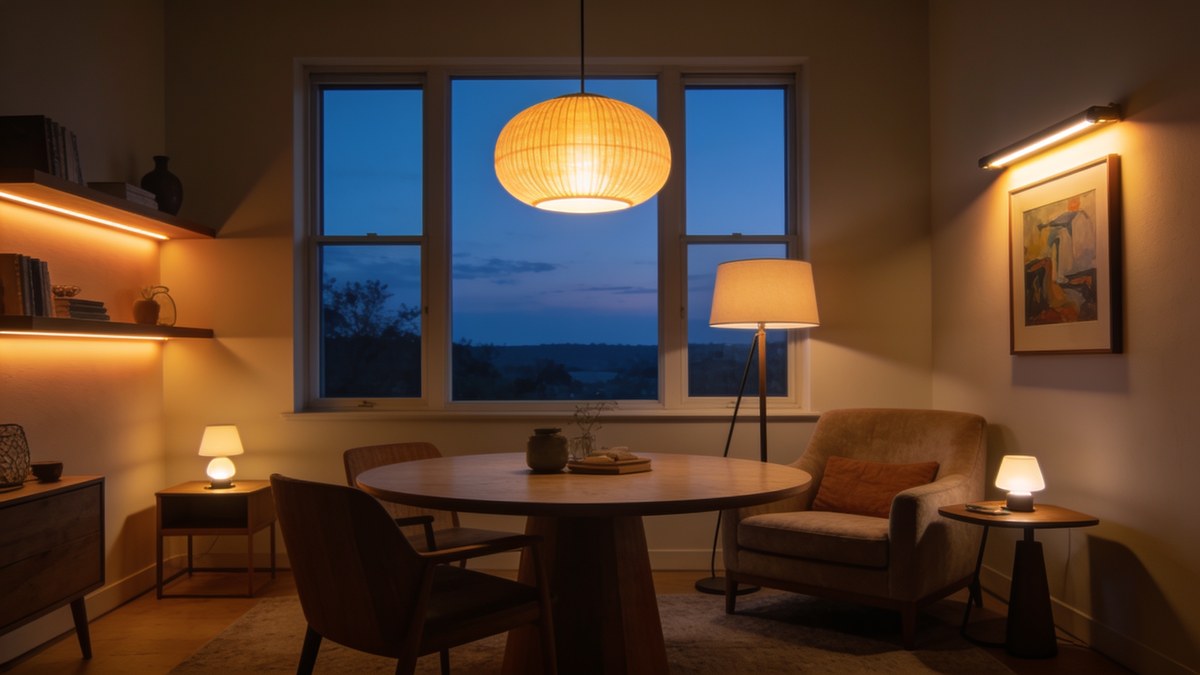
Lighting layers and fixtures at a glance
Use this chart to see what each layer or fixture type does and where it fits before you open the full guide.
| Layer or fixture | What it does | Where it works | Full guide |
|---|---|---|---|
| Ambient lighting | Lights the whole room evenly so you can see and move around | Every room, as the base layer | What is ambient lighting |
| Task lighting | Puts focused light in front of or beside you, without shadows on your hands | Kitchen sink, counters, desks, reading spots | Over kitchen sink lighting |
| Accent lighting | Directs extra light at one object or surface to draw the eye | Art, shelving, textured walls, architectural features | What is accent lighting |
| Paper and bamboo lanterns | Give low, warm, diffused light through washi or bamboo | Japanese and calm, low-key rooms | Japanese lighting ideas |
| Concealed and recessed fixtures | Deliver light while keeping hardware out of sight | Minimalist living rooms, bedrooms and kitchens | Minimalist lighting |
| Cage, dome and gooseneck fixtures | Bring exposed, utility-style light from factories and warehouses | Kitchens, lofts and open-plan rooms | Industrial lighting |
| Sputnik, arc and tripod lamps | Act as sculptural objects first and light sources second | Mid-century living and dining rooms | Mid-century modern lighting |
| Edison filament bulbs | Add a warm amber glow where the bulb itself is on show | Open pendants, cage lamps and bare-bulb fixtures | What are Edison bulbs |
The lighting layers
Start with the base layer and the emphasis layer, the two that most rooms get wrong.
-

Ambient lighting explained
Plan the base layer of a room: which fixtures provide it, where they go, and when one ceiling light is not enough.
-

Accent lighting explained
Pick fixtures, beam angle and aim to highlight art or architecture, and see how accent light differs from ambient and task.
Lighting ideas by style
Fixtures carry a style as much as furniture does. These guides cover the fixtures, materials and bulbs behind each look.
-

Japanese lighting ideas
Use andon, chochin and Akari lamps with washi or bamboo shades to get low, warm light in each room.
-

Minimalist lighting
Layer ambient, task and accent light with fewer, visually quiet fixtures and the right color temperature and finishes.
-

Industrial interior lighting
Choose cage, dome and gooseneck fixtures, set pendant heights, and check the safety rating a bathroom fixture needs.
-

Mid-century modern lighting
Pick classic pendants, sputniks and arc lamps by room, and decide between buying vintage or a reproduction.
-

IKEA lighting ideas
Plan general, task and mood light with IKEA lamps per room, including smart bulbs and setups that need no electrician.
Bulbs and work zones
Two practical guides: one on a bulb that shapes the look of a fixture, one on lighting the busiest spot in the kitchen.
-

Edison bulbs
Understand how Edison style bulbs work, how warm and bright they are, and whether to buy incandescent or LED filament.
-

Over kitchen sink lighting
Match a fixture to your sink layout, set pendant height and brightness, and check whether it needs a damp rating.
Common questions
What are the three layers of lighting?
The three layers are ambient, task and accent lighting. Ambient light fills the room, task light serves specific activities such as cooking or reading, and accent light highlights objects or features. Most rooms look best when all three are on separate controls.
What is the difference between ambient and accent lighting?
Ambient lighting spreads light evenly so you can see the whole room. Accent lighting is directional and brighter than its surroundings, so it pulls attention to one object or surface.
What color temperature should I use in a living room?
Warm white, around 2700K to 3000K, is the usual choice for living rooms and bedrooms because it feels relaxed in the evening. Cooler light is more common in work areas where you want crisp, neutral light.
Are Edison bulbs bright enough to light a room?
They are mainly decorative, with a warm amber glow that suits fixtures where the bulb is visible. In most rooms they work best alongside other light sources rather than as the only ambient layer.