Industrial Interior Design: Brick, Steel and Concrete Made Livable
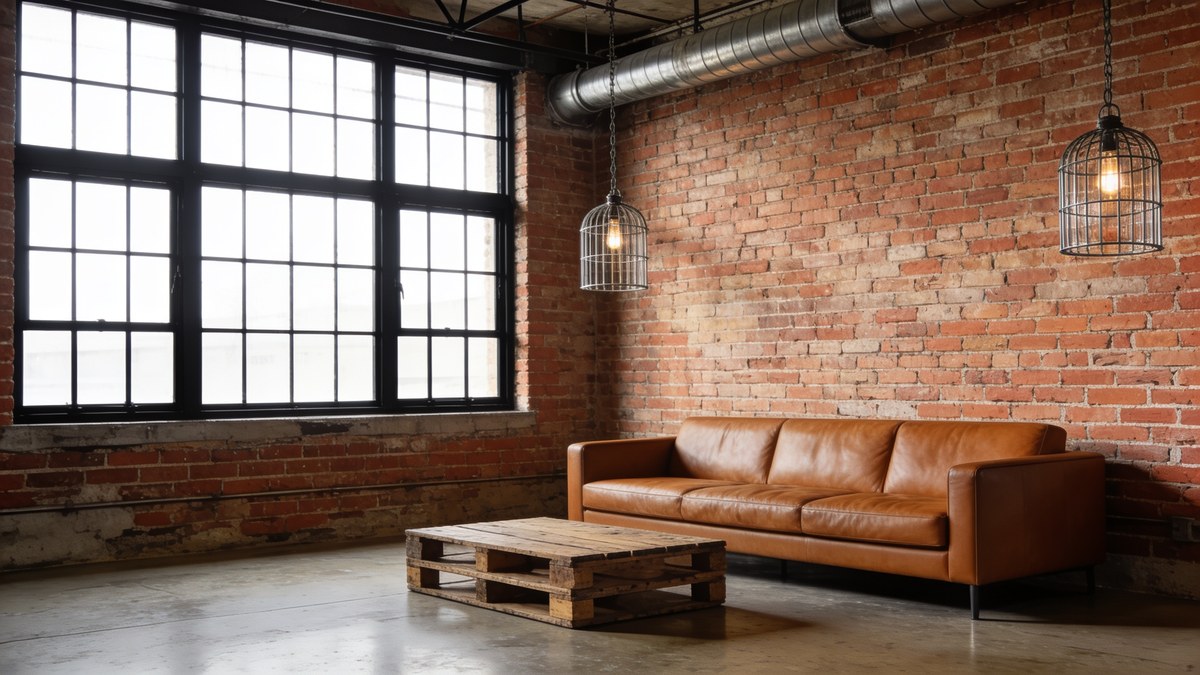
Industrial interior design is a style that keeps the raw structure of a factory or warehouse on show, such as exposed brick, concrete, steel beams and ductwork, and builds a comfortable home around it.
The look grew out of former factory buildings converted into lofts, most famously in New York's SoHo. What defines it is honest material: a muted palette of grays, blacks and browns, metal and reclaimed wood furniture, and utility-style lighting. From there it splits into many versions, from clean modern and minimalist rooms to warm rustic and ornate steampunk ones.
This page covers the core look first, then compares the main variations, and ends with guides to color, furniture and lighting.
Which industrial style fits your home?
Each version keeps the same raw shell and changes what you put inside it.
| Style | What sets it apart | Full guide |
|---|---|---|
| Industrial loft | The original converted factory look with open plans and high ceilings | Industrial loft design |
| Modern industrial | Refined, clean-lined finishes instead of rust and distress | Modern industrial style |
| Minimalist industrial | Clear surfaces, few objects and a grey, white and black palette | Minimalist industrial style |
| Rustic industrial | Reclaimed wood and leather set against brick and black steel | Rustic industrial style |
| Urban industrial | Loft materials adapted to ordinary city homes with softer furniture | Urban industrial style |
| Scandinavian industrial | Pale wood, wool and linen soften one raw feature | Scandinavian industrial style |
| Steampunk industrial | Victorian machine detail such as brass fittings and gears | Steampunk industrial style |
The core industrial look
Start here to understand where industrial style comes from and how its pared-back versions work.
-

Industrial loft design
Light, zone and furnish an open loft, deal with echo and heating, and get the look on a budget or in a rental.
-

Industrial minimalism
Blend industrial and minimalist styles by deciding how much furniture and decor a room needs and how to plan space and light.
-

Minimalist industrial style
Follow the furniture and layout rules of minimalist industrial and compare it with Scandinavian, Japandi and modern farmhouse styles.
Industrial style variations
These guides compare the blended versions so you can choose how polished, warm or decorative your rooms should feel.
-

Modern industrial style
See how modern industrial differs from traditional industrial and where to spend first when building the look.
-

Urban industrial style
Bring urban industrial into a city home without loft architecture, and decide where to spend and where to save.
-

Rustic industrial style
Decide what to paint and what to leave raw, and how rustic industrial differs from farmhouse and modern rustic.
-

Scandinavian industrial style
Soften a brick wall or concrete floor with Nordic materials and choose what to buy first for the room.
-

Steampunk industrial style
Add brass, copper and gear details to an industrial shell without overdoing it, and care for aged metal finishes.
-
Steampunk interior design
Plan walls, furniture, lighting and accents for a full steampunk room, and tell it apart from neo-Victorian and dieselpunk.
Color, furniture and lighting
These guides cover the pieces you buy and paint once the shell is in place.
-

Industrial color palette
Match paint colors to concrete, charcoal and matte black, pick accents and choose undertones and finishes by surface and room.
-

Industrial furniture design
Judge materials, steel finishes, joints and build quality so you can tell sturdy industrial furniture from weak copies.
-

Industrial interior lighting
Choose industrial fixtures, bulbs and pendant heights for each room, and check the safety rating needed near water.
Common questions
What is industrial interior design?
It is a style that leaves the structure of a building visible, such as brick walls, concrete floors, steel beams and ductwork. Furniture in metal and wood, a muted palette and utility-style lighting complete the look.
Where did industrial style come from?
It came from former factories and warehouses converted into homes, especially the artist lofts of New York's SoHo in the second half of the 20th century. The exposed structure those conversions left behind became a look people later copied in ordinary homes.
What colors go with industrial style?
Grays, blacks, whites and browns form the base because they match concrete, steel, brick and wood. Warmer accents usually come from rust tones and metals such as brass and copper.
Can you create an industrial look without exposed brick?
Yes. Black metal furniture, reclaimed wood, concrete-look finishes, exposed-bulb or cage lighting and a muted palette can carry the style in a home without loft architecture.