Mediterranean Interior Design: Plaster, Terracotta and the Regional Looks Behind It
Mediterranean interior design is a warm, relaxed style drawn from the homes of southern Europe and North Africa, built on plaster walls, terracotta floors, exposed wood and colors taken from sea, sun and earth.
What defines it is the shell of the room. Thick walls, arched openings, shaded courtyards and handmade materials came from hot, dry summers long before anyone called it a decor style. The look also changes by region: Greek rooms lean white and blue, Tuscan and Spanish rooms lean toward ochre, terracotta and dark timber.
This page starts with the architecture that shapes the style, then compares the regional versions, and ends with palettes and room guides for bedrooms, kitchens and outdoor spaces.
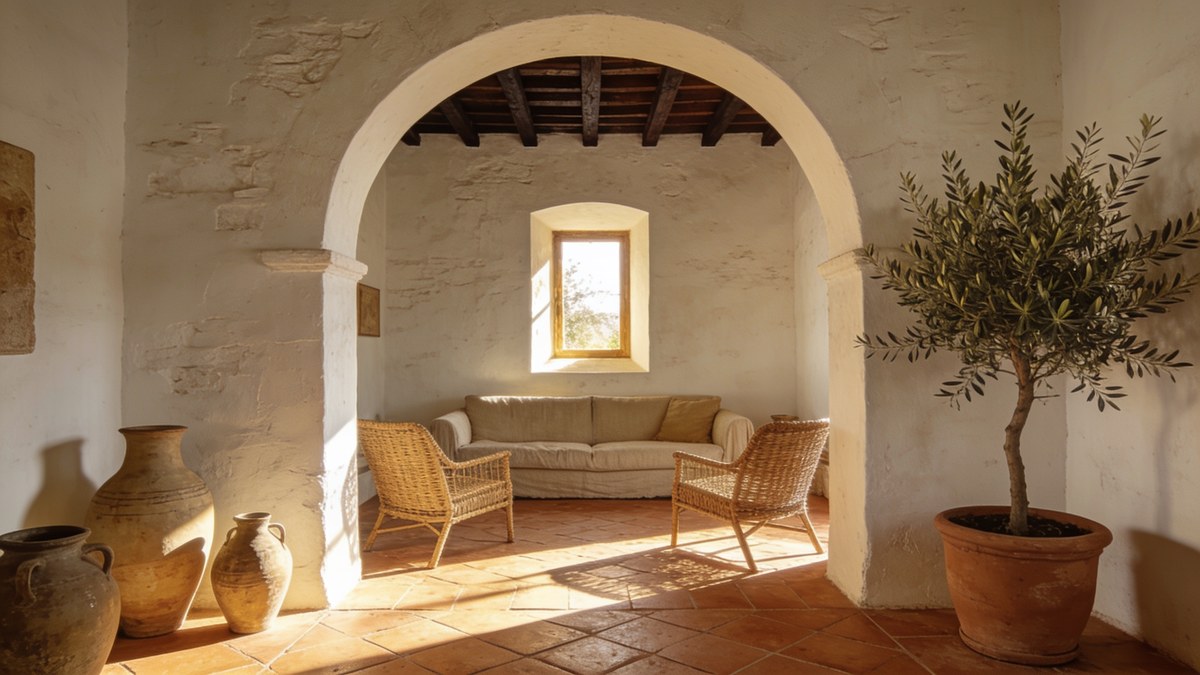
What to look for in a Mediterranean room
Use this as a quick check when you plan or buy for a Mediterranean space.
| Element | What to look for | Full guide |
|---|---|---|
| Walls | Textured lime plaster, stucco or limewash rather than flat drywall paint | Mediterranean home features |
| Color | Whitewash, sea blue, terracotta, ochre and olive, kept low in saturation | Mediterranean color palette |
| Floors | Terracotta, cotto, stone or encaustic tile, sealed where it meets water and oil | Mediterranean kitchen guide |
| Openings | Round arches, deep-set windows and wooden shutters | Arches and shutters |
| Metalwork | Wrought iron in lighting, railings and bed frames | Spanish Revival interiors |
| Textiles | Linen, cotton and natural fibers in calm, sun-faded tones | Mediterranean bedroom ideas |
| Outdoor rooms | Courtyards, loggias and terraces used as part of the house | Mediterranean courtyard basics |
| Regional accent | Greek white and blue, Tuscan earth tones or Spanish tile and dark timber | Greek interior design |
The architecture behind the style
Mediterranean rooms start with the building. These guides explain the walls, roofs and outdoor rooms the interior style grew out of.
-

Mediterranean home features
Learn which walls, roofs, openings and finishes mark a Mediterranean house, and which features still make sense outside a dry-summer climate.
-

Mediterranean courtyards
Understand how a courtyard differs from a patio or atrium, how it cools a house and how to plan one step by step.
-

What a loggia is
Tell a loggia apart from a balcony, veranda, portico or arcade, and know what to check before adding one at home.
Regional Mediterranean styles
Mediterranean is an umbrella term. Each region uses its own stone, clay and timber, and these guides help you pick the direction that suits your home.
-

Tuscan style explained
See which colors, wall finishes, floors and furniture define Tuscan style, and how to update an older Tuscan room.
-
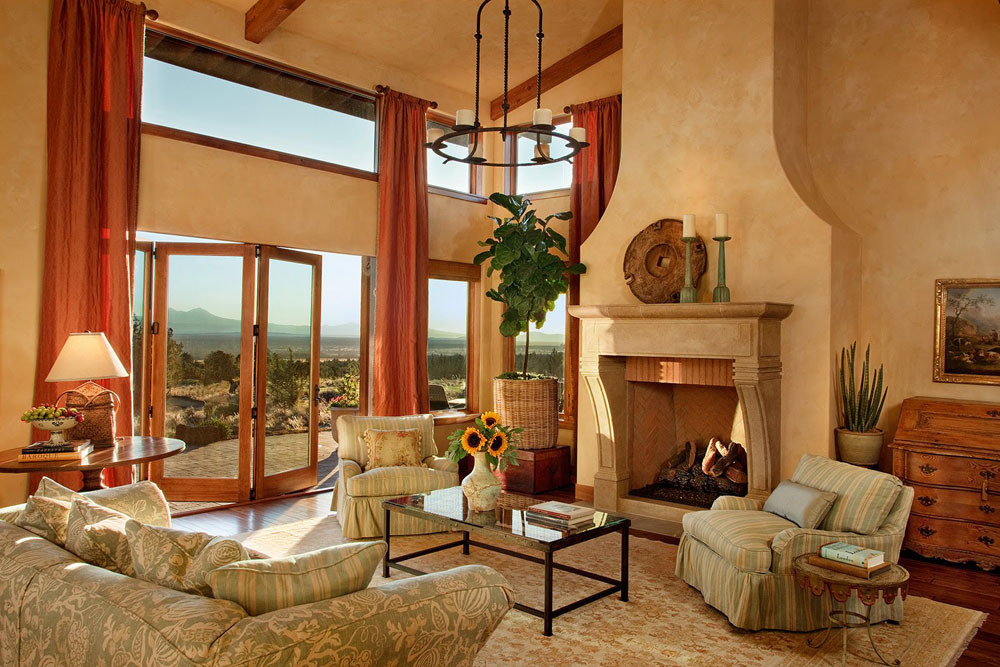
Tuscan design ideas
Get practical ideas for bringing Tuscan materials and architectural features into each room without the look feeling dated.
-

Greek interior design
Separate vernacular Greek rooms from classical revival, compare regional styles and bring lime, stone and Aegean blue into a modern home.
-

Traditional Spanish interiors
Work with azulejos, arches, carved ceilings and wrought iron, and tell traditional Spanish apart from Colonial, Revival and hacienda decor.
-

Spanish Revival interiors
Recognize the arches, tile, iron and timber of American Spanish Revival and bring the style into a home room by room.
-

Traditional Italian interiors
Compare Renaissance, Baroque and Neoclassical rooms, learn the classic Italian materials and tell authentic pieces from revival and kitsch.
Colors and rooms
Once you know the direction, these guides cover the palette and the rooms where Mediterranean style gets used most.
-

Mediterranean color palette
Choose and balance warm and cool Mediterranean colors by region and by room, including exterior shades and matching paint colors.
-

Mediterranean bedroom ideas
Plan a bedroom in the right order, from plaster finishes and flooring to bed frames, linen bedding and lighting.
-

Mediterranean kitchen design
Pick cabinets, countertops, sealed flooring and iron or copper hardware, then plan a layout and range hood that fit the space.
-

Mediterranean outdoor spaces
Lay out a terrace or patio, compare hardscape materials and shade options, and choose plants that survive your climate.
Common questions
What is Mediterranean interior design?
It is a style based on the homes of countries around the Mediterranean Sea, such as Spain, Italy, Greece and Morocco. It relies on textured plaster walls, terracotta or stone floors, exposed wood, wrought iron and colors drawn from the sea and the earth.
What is the difference between Tuscan and Mediterranean style?
Tuscan is one regional version of Mediterranean style. It leans on warm earth tones, terracotta, stone and dark timber, while coastal Mediterranean rooms, like those on the Greek islands, use more white and blue.
What colors are used in Mediterranean interiors?
The core colors are whitewash, sea blue, terracotta, ochre and olive green. Most rooms keep a light base on the walls and bring in the stronger colors through tile, textiles and painted wood.
Can you use Mediterranean style in a cold climate?
Yes, the interior elements such as plaster finishes, tile, wood beams and the color palette work in any climate. Features built for heat, like thin shutters and open courtyards, need adjusting, and outdoor plantings must suit local winters.