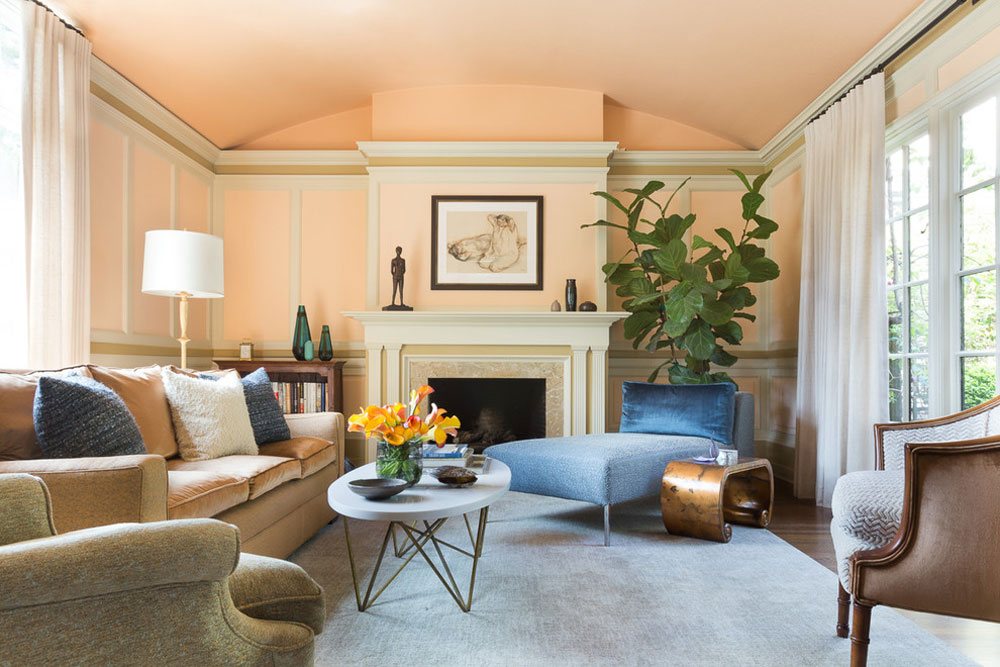
Rattan chairs, banana leaf prints, and a Monstera deliciosa in the corner. That is what most people picture when they think about tropical home decor. But the style goes deeper than a few Instagram-friendly accessories.
Getting it right means understanding the materials, the color palette, the plants, and where the whole thing came from historically. Get it wrong and your living room looks like a resort gift shop.
This guide covers the core elements of tropical interior design, from bamboo and teak furniture to bold botanical patterns and room-by-room styling. Plus budget-friendly sources, common mistakes to avoid, and where to actually shop for pieces that last.
What Is Tropical Home Decor

Image source: MCYIA Interior Architecture and Design
Tropical home decor is a design style built around the materials, colors, and plant life found in equatorial regions. It uses natural textures like rattan and bamboo, bold botanical patterns, and a warm color palette pulled from places like Bali, the Caribbean, and coastal Brazil.
People confuse it with other styles all the time. But tropical decor is not the same thing as coastal interior design, which leans heavily on nautical motifs and blue-and-white palettes. And it is not Bohemian interior design either, which tends to be more eclectic and layered without much structure.
Tropical interiors have roots in British colonial and plantation-era rooms. Dorothy Draper, one of the most recognized famous interior designers of the 20th century, played a role in popularizing the lush, oversized botanical prints that still define the style today.
The Beverly Hills Hotel’s Martinique banana leaf wallpaper became one of the most copied patterns in interior design history. That single wallpaper basically set the visual standard for what most people picture when they hear “tropical decor.”
What actually separates this style from others comes down to a few things. Humidity-friendly materials are a given. Indoor-outdoor flow matters. And plants are not accessories here. They are part of the structure of the room itself.
Grand View Research valued the global home decor market at $960.14 billion in 2024, with consumers increasingly drawn to sustainable materials like bamboo for furniture and organic fabrics for furnishings. Tropical decor sits right in the center of that trend.
How Tropical Decor Differs from Related Styles
| Style | Key Materials | 2026 Color Focus | Defining Feature |
|---|---|---|---|
| Tropical | Rattan, bamboo, reclaimed teak | Moss greens, sun-baked terracotta, guava | Architectural foliage and “Bio-Luxury” textures |
| Coastal | Bleached oak, linen, jute rope | Mist blue, sea-salt white, sandy neutrals | “Airy” negative space and eroded natural finishes |
| Bohemian | Mixed hand-loomed textiles, macrame | Deep indigo, turmeric, charcoal, clay | Maximalist layering with “Global Heritage” accents |
| Mediterranean | Terra-sigillata, unlacquered brass | Ochre, dusty olive, warm sandstone | Arched silhouettes and “Sun-Drenched” materiality |
If you are interested in how Mediterranean home decor compares more closely, the overlap is smaller than you would think. Tropical rooms feel loose and leafy. Mediterranean rooms feel grounded and stone-heavy.
Core Materials and Textures in Tropical Decor
Materials do most of the heavy lifting in tropical interiors. Get them right and the room reads tropical without needing a single palm print anywhere.
The bamboo furniture market alone was valued at $13.75 billion in 2024 according to Data Bridge Market Research, growing at a 6.65% CAGR through 2032. That tells you how many people are reaching for these natural materials right now.
Rattan, Bamboo, and Wicker

Rattan is a vine-like palm native to tropical regions of Asia, Africa, and Australia. It bends without breaking, which is why it has been used in furniture for centuries.
Bamboo is a grass, not a wood. It grows fast (some species up to 35 inches per day), making it one of the most renewable building materials on the planet.
Wicker is not a material at all. It is a weaving technique. You can make wicker furniture from rattan, bamboo, willow, or even synthetic resin. When someone says “wicker chair,” they are describing the construction method, not what it is made of.
Mordor Intelligence projects the rattan furniture market will reach $1.22 billion by 2030, growing at over 5% annually. China and Indonesia remain the largest producers, with the Philippines, Vietnam, and Singapore close behind.
Teak and Mahogany

Image source: Chic Home Interiors
These are the heavier pieces in a tropical room. Teak coffee tables, mahogany dining sets, and hardwood bed frames anchor the space while lighter rattan and cane pieces float around them.
Teak holds up in humid climates better than almost any other wood. It contains natural oils that resist water, decay, and insects. There is a reason teak shows up on boat decks and outdoor patios across Southeast Asia.
Natural Fiber Textiles
Jute and sisal work for rugs and woven wall hangings. They add texture in interior design without competing with bolder patterns elsewhere in the room.
Seagrass baskets serve double duty as planters and storage. They look right at home next to a rattan accent chair or tucked under a bamboo console table.
Linen and cotton slipcovers go over upholstery instead of synthetic fabrics. Tropical rooms breathe. Heavy polyester kills that.
Flooring Materials
Terrazzo, stone tile, and polished concrete work as base flooring. They stay cool underfoot, which matters in warm climates, and their neutral tones let the natural fiber rugs and bold textiles above them stand out.
The home textiles and floor coverings segment is growing at a projected 9.4% CAGR through 2033 according to Market Data Forecast, largely driven by demand for natural fibers like cotton, linen, and wool.
Tropical Color Palettes That Actually Work
Color is where people either get tropical decor right or turn their living room into a theme park gift shop. Understanding how color works in interior design makes the difference.
The base layer is always neutral. Whites, creams, warm tans, and sandy beige tones cover most of the surfaces. Think walls, large upholstered pieces, and flooring.
Building the Base
Start with roughly 60% neutral tones across the room. That includes walls, major furniture, and flooring.
Warm whites work better than cool whites here. Benjamin Moore’s “White Dove” or Farrow & Ball’s “Pointing” read warmer without going yellow. Cool whites make tropical accents feel disconnected, like someone dropped a palm tree into a minimalist studio.
If you want to explore how beige specifically pairs with other tones, there is a solid breakdown of colors that go with beige that applies directly to tropical base layers.
The Green Layer

Image source: Margaret Wright Photography
Greens are the soul of a tropical palette. But “green” is vague. There are at least four distinct greens you will see in well-done tropical rooms, and they each create a different mood.
- Emerald green: Rich and deep. Works on accent furniture or a single statement wall. Pairs with brass fixtures and warm wood tones. You can see how colors that go with emerald green play out in tropical spaces
- Palm green: The classic banana leaf tone. Shows up mostly in prints and textiles rather than paint
- Sage green: More muted, leans gray. Useful for pairing with sage green in bedrooms where you want calm over energy
- Olive green: Warmer, earthier. Reads more organic and less “tropical vacation.” Pairs well with teak and mahogany
Bold Accent Colors

Image source: Elizabeth Home Decor & Design, Inc.
The remaining 10% of your palette is where the personality shows up.
Hibiscus pink and deep coral work as pillow accents, throw blankets, or ceramic planters. A guide to colors that go with coral is useful here since coral can easily clash if you pick the wrong supporting tones.
Papaya orange and bird-of-paradise yellow are bolder choices. They read best in small doses, maybe a single Strelitzia arrangement or a patterned lumbar pillow. Nobody is painting an entire wall papaya orange. At least, they shouldn’t be.
For more ideas on warm tropical accent colors, the breakdown of colors that go with peach covers a range that overlaps with tropical palettes nicely.
Tropical Color Palette Quick Reference
| Layer | Coverage | 2026 Color Palette | Where to Use |
|---|---|---|---|
| Base | ~60% | Sand, oatmeal, warm plaster, bleached bone | Walls, large upholstered sofas, area rugs, flooring |
| Supporting | ~30% | Moss, deep forest, muted sage, dusty olive | Drapery, accent chairs, large-scale indoor plants |
| Accent | ~10% | Terracotta, sun-baked clay, muted amber, guava | Cushions, small ceramics, artisan glassware, art |
Tropical Patterns and Prints for Walls and Fabrics
Patterns are where tropical decor gets loud. The trick is knowing where to deploy them and where to hold back.
The Banana Leaf Standard
The Martinique banana leaf wallpaper is the benchmark. Originally installed at the Beverly Hills Hotel in 1942, it became the single most recognizable pattern in interior design for tropical spaces.
You do not need the original. Milton & King and Tempaper both make modern versions, including peel-and-stick options that work in rentals. Tempaper’s removable wallpapers are especially popular for anyone who wants a tropical accent wall without the long-term commitment.
Beyond Banana Leaves
Monstera prints have taken over in the last five years. The split-leaf shape reads modern and graphic compared to the denser banana leaf pattern.
Fern and mixed botanical prints work better on upholstery and throw pillows than on walls. They are less dominant, which makes them easier to mix with other patterns in the same room.
Animal and bird motifs (toucans, parrots, leopard print) add a layer of personality. Leopard print sounds wild for a tropical room, but it actually reads as a neutral when used sparingly on a single accent pillow or a small upholstered stool.
Block printing and batik-style textiles from Indonesian and Thai traditions bring an artisanal quality that mass-produced prints cannot match. These handmade pieces connect directly to the cultural origins of tropical design.
Where to Use Bold Patterns (and Where Not To)
One statement wall. Not four. That is the rule.
Took me years to figure out that the most effective tropical rooms use bold prints in exactly one spot and let everything else stay neutral or use subtler textures. The second you wallpaper all four walls in banana leaf, the room stops feeling like a home and starts feeling like a hotel lobby. And not the good kind.
For pillows and soft furnishings, mixing different scales of print works better than matching. One large-scale palm leaf pillow next to a smaller-scale fern print creates visual interest through contrast in interior design without overwhelming the eye.
Wallpaper vs. Fabric vs. Art

Image source: Wyatt Poindexter of Keller Williams Elite
Wallpaper is the biggest commitment. It covers the most surface area and dominates the room. Best for a single accent wall in a living room or bedroom.
Fabric (curtains, pillows, upholstery) is mid-commitment. Easier to swap out seasonally or when you get tired of a pattern. Ideal for throw pillow combinations that you can rotate.
Framed botanical art is the lowest commitment option. One or two large-scale prints of monstera or bird of paradise leaves can anchor a wall without the permanence of wallpaper.
Best Indoor Plants for a Tropical Interior
The global indoor plants market hit approximately $20-21 billion in 2025, growing at a 4-5% CAGR through the end of the decade. Tropical species make up a significant chunk of that.
Plants are not decorations in a tropical room. They are structural elements, as fundamental to the design as the furniture. This is where tropical decor overlaps heavily with biophilic interior design, which centers on incorporating natural elements into built spaces.
The Big Five Tropical Houseplants
Monstera deliciosa: The split-leaf philodendron everyone posts on Instagram. Tolerates medium to bright indirect light. Grows fast and gets big, so give it space. A single mature monstera in a woven basket planter can carry an entire corner.
Bird of paradise (Strelitzia): Tall, architectural leaves that fan out dramatically. Needs bright light, ideally near a south-facing window. This plant struggles in dark apartments, and honestly, most people underestimate how much light it actually needs.
Fiddle leaf fig: Still popular, still finicky. Does not tolerate drafts, inconsistent watering, or being moved. If you can keep it happy, the large violin-shaped leaves are hard to beat for visual impact.
Areca palm: The classic indoor palm. Softer and more feathery than other palms, which makes it feel less like a mall atrium and more like a living room. Bright indirect light, regular watering.
Banana plant: Not the fruit-bearing kind (unless you have a greenhouse). Dwarf banana plants grow to about 6-8 feet indoors and add the most dramatically “tropical” silhouette of any houseplant.
Realistic Alternatives for Low-Light Spaces
Not every home gets the bright light tropical plants want. Here is what actually works in lower light.
- Pothos: Nearly impossible to kill. Trails beautifully from shelves and hangers
- Philodendron: Similar to pothos but with larger, more tropical-looking leaves
- Snake plant: Thrives on neglect. Handles low light and irregular watering without complaint
These three will not give you the same “wow” as a 6-foot bird of paradise. But they will keep your space green without turning plant care into a part-time job.
Planters and Styling

Image source: WhiteSpace Architects
The planter matters as much as the plant. Woven seagrass baskets are the default for tropical rooms. Ceramic pots in earth tones (terracotta, warm cream, matte olive) work well too.
Bamboo or brass plant stands add height and create layers. Grouping three plants at different heights (floor, table, shelf) creates rhythm in interior design that pulls the eye through the space.
For artificial plants, Nearly Natural and Pottery Barn both offer tropical options that pass at a glance. The trick is mixing one or two fake plants in with real ones so nobody inspects too closely.
Tropical Decor by Room
Tropical style does not apply the same way in every room. A bedroom needs calm. A living room can handle more energy. A bathroom can lean harder into natural materials because humidity is already part of the equation.
Living Room

Image source: Sarah Barnard Design LLC
The living room is where tropical decor gets to be the most expressive. This is the room where you go bold.
Anchor pieces: A rattan accent chair (the IKEA BUSKBO is a budget classic), a teak coffee table, and a linen sofa in a warm neutral tone. These three form the foundation.
Layering: Botanical throw pillows on the sofa, a jute area rug under the seating arrangement, and one large-scale plant in the corner. If you have a beige sofa, a guide to throw pillow ideas for a beige couch with tropical prints can help you get the mix right.
Lighting: Woven pendant lighting over a dining area or reading nook. Brass table lamps with linen shades on side tables. Skip anything chrome or industrial. The role of light in interior design matters here because warm-toned lighting makes natural materials glow while cool lighting flattens them.
For a deeper look at how to approach the entire room, there is a useful overview of living room design ideas that covers layout and furniture placement fundamentals.
Bedroom
Tropical bedrooms should feel restful. Dial back the bold prints and let the materials do the work.
A canopy bed or four-poster frame in natural wood or bamboo creates a focal point in interior design terms without needing a loud headboard. White bedding is the base. Layer in a tropical print through a single duvet cover or a lumbar pillow rather than covering everything in palm leaves.
Ceiling fans are functional and decorative. Hunter and Haiku both make fans that look intentional rather than like an afterthought. In warm climates, they are not optional.
If you are working with a queen-sized bed, getting the proportions right between the bed, the rug, and the surrounding furniture is a matter of scale and proportion in interior design. A rug under a queen bed should extend at least 18 inches beyond each side for the room to feel balanced.
For more specific ideas, the guide to tropical bedroom decor covers everything from furniture choices to color pairing.
Bathroom

Image source: Soul Interiors Design, LLC
Bathrooms are where tropical decor feels the most natural. Humidity is already there. Lean into it.
Teak bath mats replace fabric ones. They drain instantly and look better with age.
Stone vessel sinks on a natural wood vanity create an organic feel that tile and porcelain cannot match.
Small plants that handle humidity belong here: pothos trailing from a shelf, a tillandsia (air plant) mounted on driftwood, or a Boston fern hanging near the shower. Open shelving in natural wood instead of closed cabinets keeps the space feeling airy.
Brass or matte gold fixtures tie the warm palette together. They connect to the same tonal family as the teak and bamboo in the rest of the house.
Outdoor and Patio Spaces

Image source: LUNCHBOX Design/Build
Outdoor tropical decor has to survive weather. All-weather wicker and teak furniture handle rain and sun without falling apart after one season.
Outdoor tropical rugs from Dash & Albert or Safavieh add pattern underfoot without rotting or fading. String lights, lanterns, and citronella candles in ceramic holders create ambient lighting that makes a patio feel like an extension of the living room.
The outdoor home decor segment is expected to experience the fastest growth through 2030 according to Grand View Research, driven by durable material options and the growing preference for open-space living among urban consumers.
Tropical Decor on a Budget
You do not need a Serena & Lily budget to pull off tropical style. Most of the best tropical rooms mix high and low pieces, and the low pieces often carry just as much visual weight.
The global secondhand furniture market hit $40.2 billion in 2024 according to Market.US, and it is expected to double to $87.6 billion by 2034. That means more vintage rattan and wicker is available now than ever before.
Thrift Store Rattan Finds
What to look for: Solid frames with tight, unbroken weaving. Minor discoloration on rattan is fine. That golden patina actually adds character. Loose joints and cracked frames are the deal-breakers.
What to skip: Anything with mold, mildew stains deep in the weave, or synthetic resin pretending to be natural rattan. Synthetic pieces yellow differently and feel plasticky to the touch.
IKEA sold a combined 7 million items through its As-Is and resale channels last year, according to Modern Retail. Their Buy Back program gives store credit for used furniture, and much of what cycles through has that natural material look that fits tropical rooms.
Budget Retailers with Tropical-Friendly Lines
| Retailer | Best For (2026 Trends) | Price Range |
|---|---|---|
| IKEA (BUSKBO, TOLKNING) | Hand-braided rattan chairs and modular bamboo storage. | $40 – $200 |
| Target (Opalhouse / Jungalow) | Botanical-print textiles and textured terracotta ceramics. | $15 – $150 |
| H&M Home | Heavy linen cushion covers and seagrass floor baskets. | $10 – $80 |
| World Market | Solid wood bamboo furniture and woven global decor. | $100 – $800 |
The IKEA BUSKBO rattan chair has become something of a cult favorite for tropical rooms on a budget. It shows up constantly in design blogs and Instagram flat-lays, and for good reason. It is under $150 and looks like something three times the price.
DIY Tropical Upgrades
Some of the most effective tropical touches cost almost nothing.
- Paint terracotta pots in matte white or warm cream to match a neutral base layer
- Stencil a banana leaf pattern on a single wall instead of buying wallpaper
- Frame free botanical printables from sites like Rawpixel in simple black or brass frames
If you are working with a tighter budget across the whole home, a guide to affordable apartment decor covers the general principles that apply here too.
And look, the biggest money saver in tropical decor is restraint. One real Monstera deliciosa in a $12 woven basket from Target does more for a room than $500 worth of tropical-themed accessories from HomeGoods. Every time.
Common Tropical Decor Mistakes
Tropical decor goes wrong fast when people treat it like a theme instead of a style. The difference matters. A theme is a costume. A style is a framework.
Going Full Tiki Bar
Pineapple-shaped everything. Plastic flamingos on the shelf. Fake leis draped over a mirror.
None of that is tropical decor. It is party decor. There is a real distinction between a room that references equatorial regions through materials and color and one that looks like a Jimmy Buffett concert merchandise booth.
A survey conducted by IKEA across 30+ markets found that 64% of customers now report taking conscious action on sustainability, including buying secondhand. That shift toward intentional purchasing is the opposite of impulse novelty items.
Pattern Overload
The mistake: Matching banana leaf prints on curtains, pillows, wallpaper, and a rug all in the same room.
The fix: One bold print in one spot. Everything else stays neutral or uses a subtler botanical texture. Mixing different scales of print helps too, but only if the background palette stays consistent.
Understanding balance in interior design applies directly here. When every surface competes for attention, nothing wins. The room just feels loud.
Skipping the Neutral Foundation
Jumping straight to coral walls and emerald green curtains without building a neutral base first is the fastest way to create a room that feels exhausting instead of relaxing.
Warm whites, sandy beige, and soft tan need to cover at least 60% of the room before any bold tropical color gets introduced. The whole color theory in interior design framework supports this approach. Bold accents only work when they have quiet space to contrast against.
Overcrowding with Plants
Fifteen plants sounds great until you are spending every Sunday morning watering, pruning, and checking for spider mites.
Three to five well-placed, healthy plants create more impact than a dozen stressed ones dropping leaves on the floor. Space in interior design is not just about furniture. It includes the breathing room between plants, between objects, between patterns.
Quick Mistake-to-Fix Reference
| Mistake | Why It Fails | 2026 Style Fix |
|---|---|---|
| Novelty tropical items | Reads as “costume” or a themed hotel room rather than a sophisticated home. | Replace with raw natural materials like hand-carved wood and unpolished stone. |
| Matching prints everywhere | Creates “Visual Fatigue” with no place for the eye to rest. | Use one bold botanical pattern as a focal point; keep 70% of textiles neutral. |
| No neutral base layer | The room feels chaotic, loud, and physically smaller. | Establish a 60% warm neutral foundation (sand, oatmeal, or soft clay) before adding color. |
| Too many plants | High maintenance; can lead to humidity issues or a “cluttered greenhouse” look. | Select 3–5 high-impact plants (like a Fiddle Leaf or Bird of Paradise) at varying heights. |
| Wrong materials for climate | Leads to warping, mold, and rapid decay in humid environments. | Invest in Teak, Rattan, and performance fabrics that are naturally humidity-resistant. |
Where to Shop for Tropical Home Decor
Where you buy matters as much as what you buy. Tropical decor sources range from mass-market retailers to individual artisans in Southeast Asia, and the quality (and price) varies wildly.
The vintage and antique furniture market was valued at $15.7 billion in 2024, with projected growth to $17.2 billion in 2025 according to industry analysis. That growth is pushing more curated secondhand options into the mainstream.
High-End Sources
Serena & Lily: Coastal and tropical furniture with a premium finish. Rattan beds, woven dining chairs, natural fiber rugs. Expect to pay $800+ for major pieces.
Anthropologie Home: Botanical prints, unique ceramic planters, brass fixtures. Strong on accessories, weaker on large furniture for this specific style.
CB2: More contemporary than strictly tropical, but their bamboo and cane accent pieces bridge the gap between modern interior design and tropical warmth.
Mid-Range Retailers
World Market, West Elm, and Article sit in the sweet spot. Article’s rattan and teak lines are especially good for tropical living rooms, and they ship direct to consumer, which keeps prices lower than traditional furniture stores.
West Elm leans more toward mid-century modern interior design in much of its catalog, but their natural material pieces (jute rugs, linen bedding, woven lighting) cross over into tropical territory without much effort.
Specialty and Vintage

Chairish surpassed $100 million in annual GMV and saw first-time buyer counts rise nearly 11% year over year in May 2025, according to Modern Retail. It is the best online source for vintage rattan furniture specifically.
Etsy remains strong for handmade tropical textiles. Look for shops based in Bali, the Philippines, and Thailand that sell batik fabrics, hand-carved wooden decor, and woven wall hangings. Shipping takes longer, but the pieces are one-of-a-kind.
For local sourcing, estate sales in Florida and Southern California consistently turn up mid-century rattan sets, teak patio furniture, and vintage tropical prints. The competition is thinner than online, and you can inspect pieces in person before buying.
International Sourcing
Balinese furniture importers sell direct to U.S. consumers through platforms like Etsy and independent websites. Filipino rattan workshops ship custom-made chairs, headboards, and mirrors.
The bamboo furniture market is growing fastest in Asia Pacific, which accounts for over 65% of global production according to Intel Market Research. That regional concentration means the widest selection and best pricing comes from sourcing closer to the raw material.
Shipping large furniture internationally adds cost and lead time (usually 6-12 weeks). But for signature pieces like a statement rattan peacock chair or a hand-carved teak console, the savings over domestic retail pricing can be significant.
Shopping Guide by Budget
| Budget Level | Best 2026 Sources | Estimated Spend (Per Room) |
|---|---|---|
| Under $500 | IKEA, Target (Threshold/Studio McGee), H&M Home, Local Thrift | $200 – $500 |
| $500 – $2,000 | World Market, Article, West Elm, Etsy (Artisan Textiles) | $500 – $2,000 |
| $2,000+ | Serena & Lily, Chairish (Vintage), Anthropologie, Direct Imports | $2,000 – $10,000+ |
One last thing. The best tropical rooms almost always mix price points. A $2,000 teak dining table from Serena & Lily next to $40 seagrass placemats from Target. A $15 pothos from a garden center trailing down a $300 vintage rattan shelf from Chairish. The contrast between high and low is part of what makes tropical decor feel lived-in rather than staged.
If you are still figuring out your overall style direction, looking at a broader comparison of interior design styles can help you see where tropical fits relative to other approaches. And for tropical decor ideas specific to the kitchen, the tropical kitchen decor guide covers countertop materials, cabinet finishes, and open shelving that work in that particular room.
FAQ on Tropical Home Decor
What defines tropical home decor?
Tropical home decor uses natural materials like rattan, bamboo, and teak, paired with bold botanical patterns and a warm color palette. It draws from equatorial regions including Bali, the Caribbean, and coastal Brazil. Plants are structural elements, not afterthoughts.
How is tropical decor different from coastal decor?
Coastal decor leans on nautical motifs, blue-and-white palettes, and driftwood. Tropical decor skips the anchors and seashells entirely. It focuses on lush greenery, warm wood tones, and bold prints like banana leaf and monstera patterns instead.
What colors work best for tropical interiors?
Start with warm neutrals (white, cream, sandy tan) covering about 60% of the room. Layer in greens like emerald or palm green at 30%. Add coral, hibiscus pink, or papaya orange accents for the remaining 10%.
What are the best indoor plants for a tropical room?
Monstera deliciosa, bird of paradise (Strelitzia), fiddle leaf fig, areca palm, and banana plants top the list. For low-light spaces, pothos, philodendron, and snake plants work as realistic alternatives that still read tropical.
Is rattan the same as wicker?
No. Rattan is a material, a vine-like palm native to tropical regions. Wicker is a weaving technique, not a material. You can make wicker furniture from rattan, bamboo, willow, or even synthetic resin.
Can I do tropical decor on a budget?
Absolutely. Thrift stores are full of vintage rattan furniture. The IKEA BUSKBO chair costs under $150 and looks far more expensive. Target’s Opalhouse line and H&M Home carry affordable tropical textiles and woven accessories.
What is the biggest tropical decor mistake?
Going full “tiki bar” with novelty items like pineapple-shaped everything and plastic flamingos. Tropical decor is a design style, not a party theme. Focus on natural materials and restrained pattern use instead.
How many plants should I put in a tropical room?
Three to five well-placed, healthy plants beat a dozen struggling ones. Group them at different heights (floor, table, shelf) to create visual movement. Overcrowding leads to maintenance problems and a cluttered look.
What materials are best for tropical furniture?
Rattan and bamboo work for lighter accent pieces. Teak and mahogany anchor heavier furniture like dining tables and bed frames. Both teak and rattan handle humidity well, which matters in warm climates.
Where can I buy quality tropical decor?
Serena & Lily and Anthropologie Home for high-end pieces. World Market and Article for mid-range. Chairish is the best online source for vintage rattan specifically. Etsy connects you with artisans in Bali and the Philippines.
Conclusion
Tropical home decor works when you treat it as a material-driven style, not a theme you layer on top of a room. Natural textures like jute, seagrass, and woven cane do the heavy lifting. Bold botanical prints and warm accent colors fill in the gaps.
Start with a neutral foundation. Add one or two statement plants like a bird of paradise or areca palm. Pick furniture in teak or rattan that can handle humidity and daily use.
Skip the novelty items. Mix price points from Chairish vintage finds to Target’s Opalhouse textiles. Let the indoor-outdoor flow and natural fiber layering speak for themselves.
The best tropical rooms feel relaxed, warm, and personal. Not purchased from a single catalog. Build yours piece by piece.

- Paint Colors That Go with Gray Floors - August 20, 2026
- What Color Bedding Goes with Dark Wood Furniture - August 18, 2026
- What Color Walls Go with Oak Floors - August 16, 2026