Indian home decor is not one style. It is dozens of regional craft traditions, material choices, and color palettes that have been shaped over centuries by climate, religion, and local artisanship.
From Rajasthani block-print textiles and South Indian brass lamps to carved sheesham furniture and Madhubani wall art, the range is massive. And the market reflects it. India’s home decor industry crossed $25 billion in 2024.
This guide covers the specific materials, furniture styles, color palettes, lighting traditions, and room-by-room approaches that define authentic Indian interiors. You will also find sourcing options, tips for blending ethnic decor with modern spaces, and the festive traditions that drive how Indian homes actually look and feel throughout the year.
What Is Indian Home Decor
Indian home decor is a style built on centuries of regional craft traditions, specific material preferences, and bold color use that varies from state to state. It pulls from woodworking, metalwork, textile weaving, and painted art forms that have been passed down through generations of artisans across the subcontinent.
IMARC Group valued India’s home decor market at $25.50 billion in 2024, with projections reaching $40.80 billion by 2033 at a 5.40% CAGR. That number tells you something. People are spending real money on how their homes look and feel.
But here’s the thing most people get wrong. They confuse Indian decor with bohemian home decor or generic “ethnic” styling. The difference is specificity. Bohemian borrows loosely from multiple cultures. Indian decor has traceable roots in particular regions, particular crafts, and particular materials.
Regional Identity, Not One Look
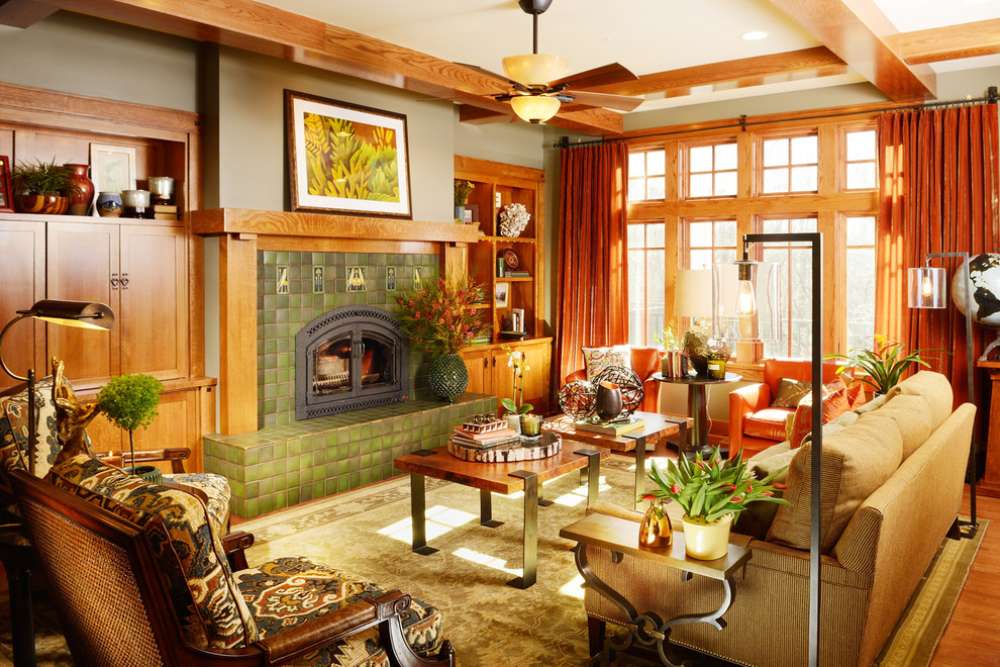
Image source: Nathan Taylor for Obelisk Home
A home styled with Rajasthani textiles looks nothing like one built around South Indian brass work or Kerala woodcarving. That’s the point.
Rajasthan leans into block-printed fabrics, blue pottery, and carved sandstone. South India focuses on brass hanging lamps, teak furniture, and Tanjore paintings. Bengal brings Kantha embroidery and terracotta. Kashmir contributes walnut wood carving and Pashmina textiles.
India’s handicraft market alone hit $4.56 billion in 2024, according to IMARC Group, and is projected to reach $8.19 billion by 2033. Each of those dollars flows through a specific regional craft tradition, not a generic “Indian style.”
What It Is Not
Indian decor gets mislabeled as maximalist. Some of it is, sure. A Rajasthani haveli is going to have a lot going on. But contemporary Indian interiors from designers like Shabnam Gupta or Ashiesh Shah are restrained, using a single brass statement piece against a lime-washed wall.
It also is not interchangeable with Moroccan home decor, even though both use warm tones, brass, and geometric patterns. The construction techniques, wood types, and textile traditions are completely different.
Ken Research estimated that over 6 million Indian consumers in 2024 showed interest in incorporating global design elements into their homes. The blending goes both ways. But the base identity stays specific to the craft.
Core Materials in Indian Home Decor
Materials define this style more than anything else. You can spot Indian decor by what it is made from before you notice any other detail.
The India home furnishings market reached INR 56,330 crore in 2024, according to IMARC Group. Home furniture alone takes a 40.12% share, and wood dominates that segment because of its cultural weight and the variety of species available across the country.
Wood Types That Shape the Look
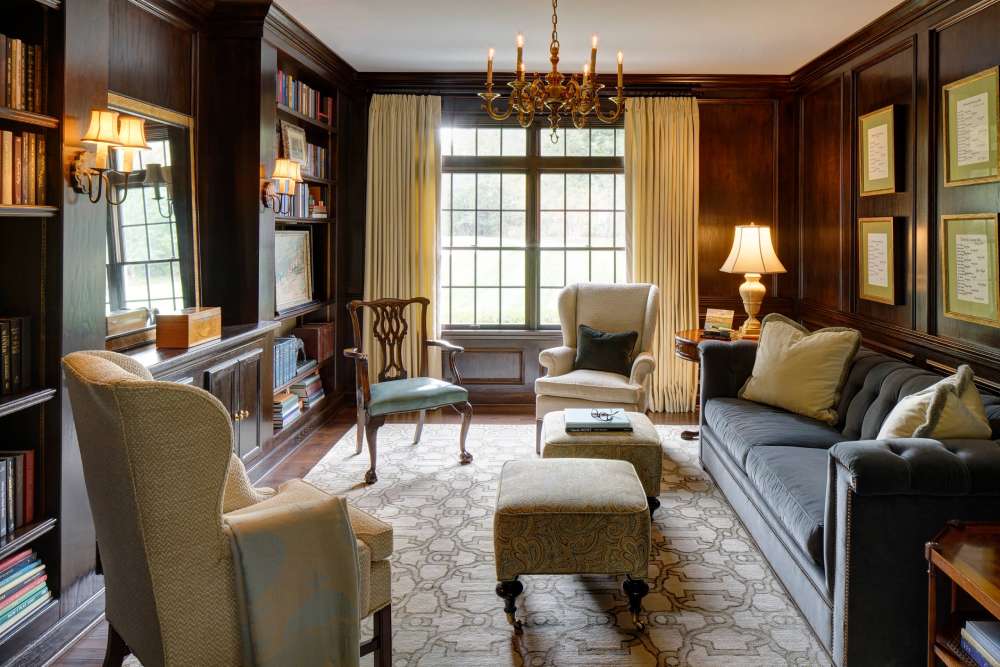
Sheesham (Indian rosewood): Dense grain, dark color, holds carved detail well. The go-to for dining tables and bed frames in North India.
Teak: Water-resistant, long-lasting, used heavily in South Indian and coastal homes. Gets better with age.
Mango wood: Lighter, more affordable, increasingly popular on platforms like Pepperfry and Amazon Karigar for ethnic furniture lines. It takes stain well and works for both rustic home decor and polished contemporary pieces.
Jodhpur has become the center for reclaimed and carved wood furniture production, with pieces shipping globally. Saharanpur in Uttar Pradesh handles a large share of the woodware export market, which alone brought in $241.68 million in Q1 of FY26, per IBEF data.
Metals and Textiles
Brass and copper are not just decorative. They are functional in Indian homes. Water vessels, cooking pots, diya holders, hanging lamps. These items have been part of daily use for centuries and now double as accent pieces in styled interiors.
Dhokra metalcraft from Chhattisgarh produces some of the most recognizable brass figures and wall hangings in the Indian decor space. The lost-wax casting technique dates back over 4,000 years.
On the textile side, India’s handloom sector constitutes 14% of the country’s industrial production and 4% of GDP, according to market research from Rural Handmade. That is a massive industry built on cotton, silk, jute, and khadi.
| Material | Primary Region | Common Use (2026) | Modern Decor Application |
|---|---|---|---|
| Sheesham Wood | North India (Punjab, Rajasthan, Haryana) | Heavy-duty furniture, beds, musical instruments | Live-edge dining tables, fluted wall paneling |
| Brass | South India (Tamil Nadu), Chhattisgarh | Traditional oil lamps (Diyas), kitchen vessels | Unlacquered hardware, architectural inlay in stone |
| Jute | Bengal (West Bengal & Bangladesh), Bihar | Sacking, industrial rope, eco-friendly packaging | Sculptural high-pile rugs, woven pendant light shades |
| Banarasi Silk | Varanasi (UP) | Bridal sarees, traditional formal wear | Brocade wall-panels, heavy silk-blend upholstery |
| Terracotta | West Bengal (Bishnupur), Rajasthan | Pottery, roofing tiles, traditional figurines | 3D geometric wall cladding, “Micro-Luxe” planters |
Natural stone plays a role too. Agra’s marble inlay tradition, Jaisalmer sandstone, and slate from Himachal Pradesh show up in flooring, tabletops, and fireplace surrounds. The texture in interior design that these stones bring is hard to replicate with synthetic alternatives.
Color Palettes That Define Indian Interiors
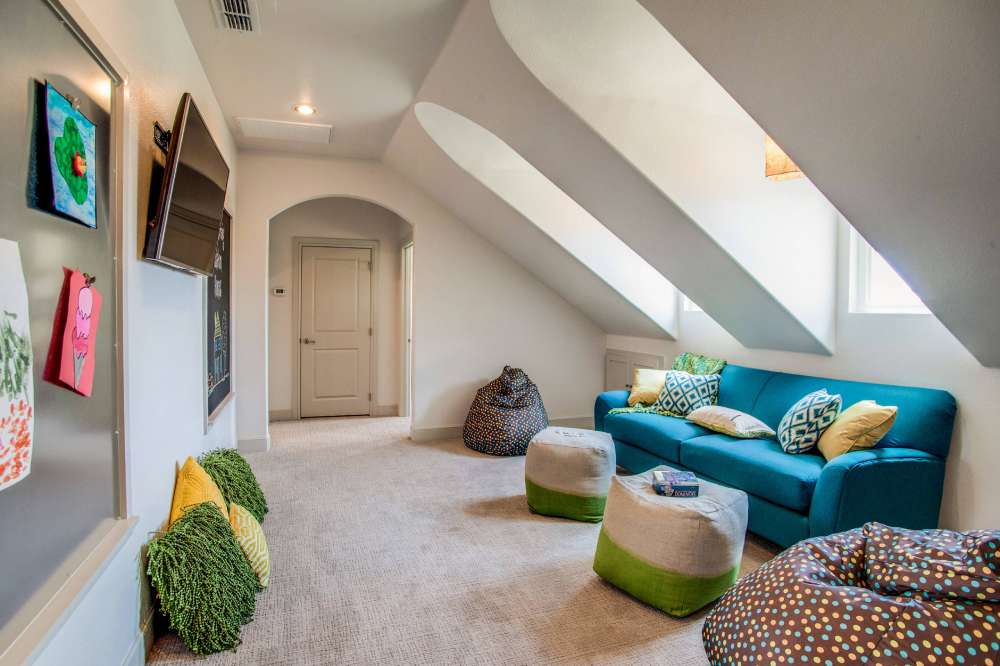
Image source: Cody Craig Custom Homes
Indian color choices are not random. They trace back to natural dyes, regional climate, and religious symbolism. The palette is earned, not just picked from a swatch book.
Turmeric yellow, terracotta red, indigo, and emerald green form the traditional base. These colors existed in Indian homes long before they showed up in Western trend reports.
Traditional Palettes
The reason Indian interiors feel warm is physics, not just preference. Rajasthan gets blistering sunlight. Deep reds and ochres absorb and diffuse that light instead of bouncing it around the room. Kerala, with its heavy monsoons and green canopy, gravitates toward darker wood tones and white with gold accents.
Temple-inspired palettes center on gold, deep red, and black. You see this in pooja rooms and formal sitting areas. The gold comes from brass fixtures and gilded frames, not paint.
Understanding how color works in interior design matters here because Indian schemes layer multiple strong hues that would clash in other styles. The trick is distribution. One bold wall. Textile accents in a contrasting shade. Metallic elements to bridge the tones.
Contemporary Indian Palettes
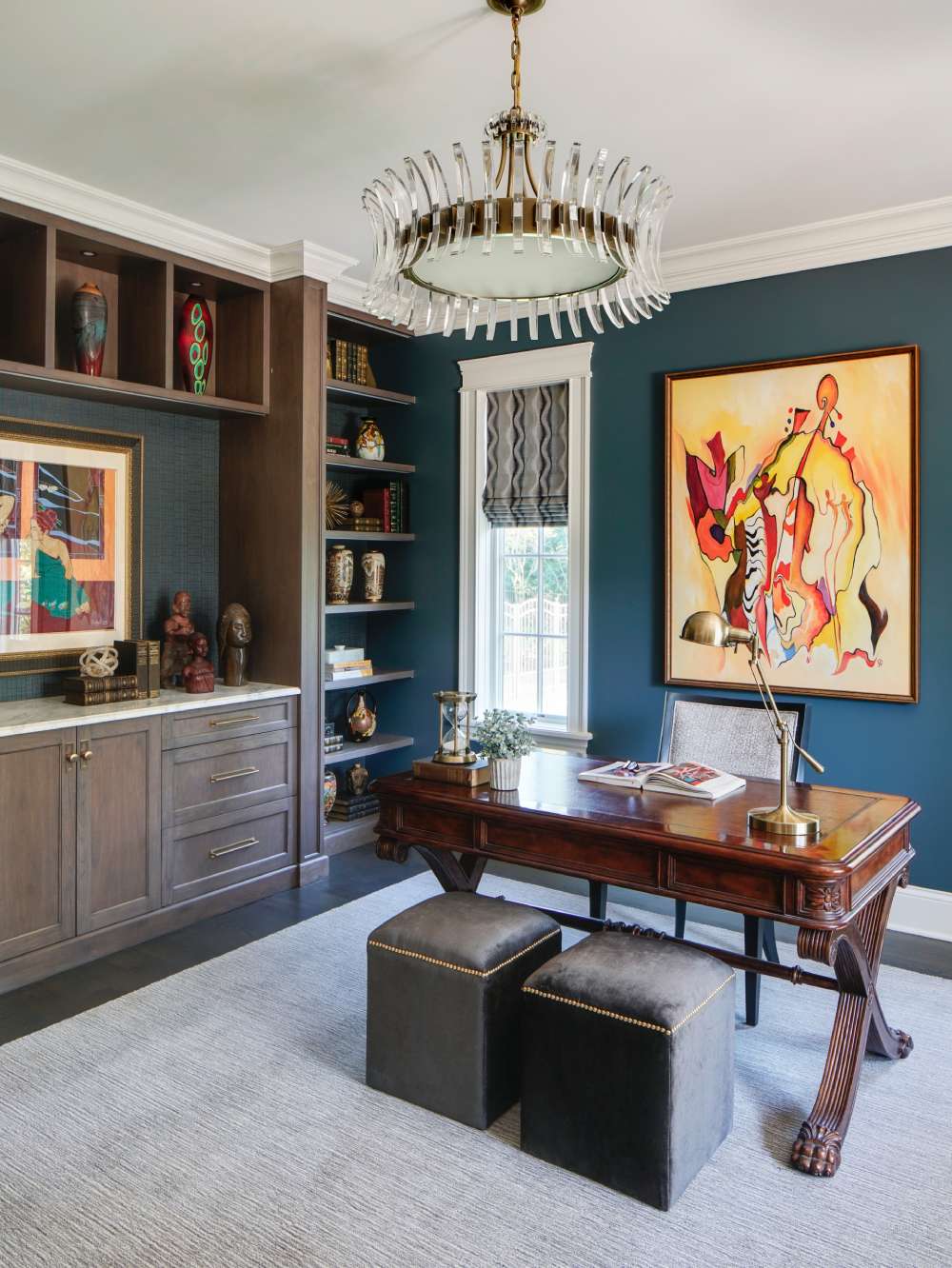
Image source: Dual Concept Design
Not every Indian home looks like a spice market. The current shift (especially in urban apartments in Mumbai, Bangalore, and Delhi) leans toward muted earth tones with a single bold accent.
Think off-white walls, a terracotta-colored accent wall, and brass lighting. Or pale sage green throughout with deep indigo cushions and a wooden console. Statista projects the Indian home decor segment growing at 8.78% CAGR through 2029, and a lot of that growth comes from younger buyers who want Indian-rooted aesthetics without the visual weight.
Lime wash and colored plaster are coming back hard. Lippan art (mud and mirror work from Kutch, Gujarat) is probably the most Instagram-friendly wall treatment to come out of Indian craft traditions. It works on a single panel or an entire feature wall.
Understanding how colors pair with gold is useful here because brass and gold-toned metals are constant across nearly every Indian color scheme. They act as a bridge between whatever wall colors and textiles you choose.
Climate and Light Conditions
Punjab uses brighter, more saturated phulkari-inspired tones because the northern light is cooler and flatter. Goa leans into whites and blues pulled from its Portuguese colonial past and coastal environment.
South Indian Chettinad mansions use deep, almost black Athangudi tiles paired with white lime walls. The contrast in interior design there is extreme and deliberate. It keeps rooms cool and visually grounded in a tropical climate.
Furniture Styles and Formats
Indian furniture does not follow Western proportions. Seating is lower. Storage is more ornate. And the relationship between furniture and floor space works differently.
Home furniture holds 52.1% of India’s total home decor market, according to IMARC Group. That is the single largest category, and it is where the Indian aesthetic shows up most clearly.
Low Seating and Floor Culture
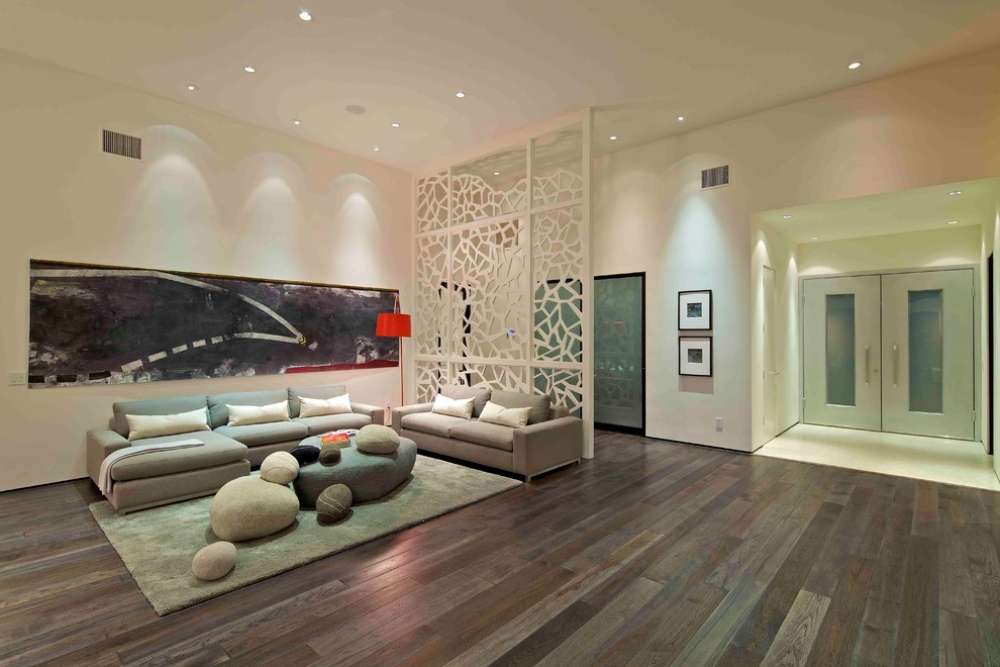
Image source: Charco DESIGN & BUILD Inc.
The diwan, the baithak, the gaddi (floor cushion), and the jhula (swing chair) are not just aesthetic choices. They come from a cultural habit of sitting close to the ground for meals, conversation, and rest.
Low seating changes the proportions of a room. The scale and proportion in interior design shift when your primary seating surface is 12 to 18 inches off the floor instead of the standard Western 17 to 19 inches. Ceilings feel higher. Walls get more visual presence. Rugs and floor textiles become the primary layer.
Pepperfry, which holds roughly 50% of India’s online furniture market share, lists over 125,000 products. Their ethnic and traditional categories consistently rank among the top sellers, especially low-profile seating and carved wood pieces.
Carved and Ornate Storage
Vintage almirahs (tall wooden wardrobes with brass fittings) are probably the most collected Indian furniture piece globally. The originals come from Rajasthan and Gujarat, often salvaged from old havelis.
Wooden trunks with iron or brass hardware served as travel and dowry storage for centuries. Today they function as coffee tables, bedroom storage benches, and entryway pieces.
Carved wood panels from Saharanpur and Jodhpur work as headboards, room dividers, or standalone wall art. The detail level on hand-carved pieces is something machine production cannot touch.
If you like the idea of layering old and new, vintage home decor principles apply directly here. Indian antique furniture holds its value and looks right at home next to contemporary living room decor when placed correctly.
Where to Find Authentic Pieces
FabIndia operates over 400 stores and is the most accessible source for handcrafted Indian furniture and textiles. Jaypore and iTokri focus on artisan-sourced home goods. Amazon Karigar connects rural craftspeople directly with buyers.
Nilkamal launched 60 new Nilkamal Homes stores across 35 cities in late 2024, targeting the premium home furniture and decor segment. IKEA India expanded online deliveries across Delhi-NCR and 9 satellite cities in early 2025.
The online channel moved fast. Over 20 million users in India bought home decor products online in 2024, per IMARC Group data. Technavio projects the online home decor segment growing by $4.39 billion between 2024 and 2029.
Room-by-Room Breakdown
Indian decor principles flex differently depending on the room. A living room gets layered differently than a kitchen. And certain rooms (like the pooja room) have no direct Western equivalent.
Living Room
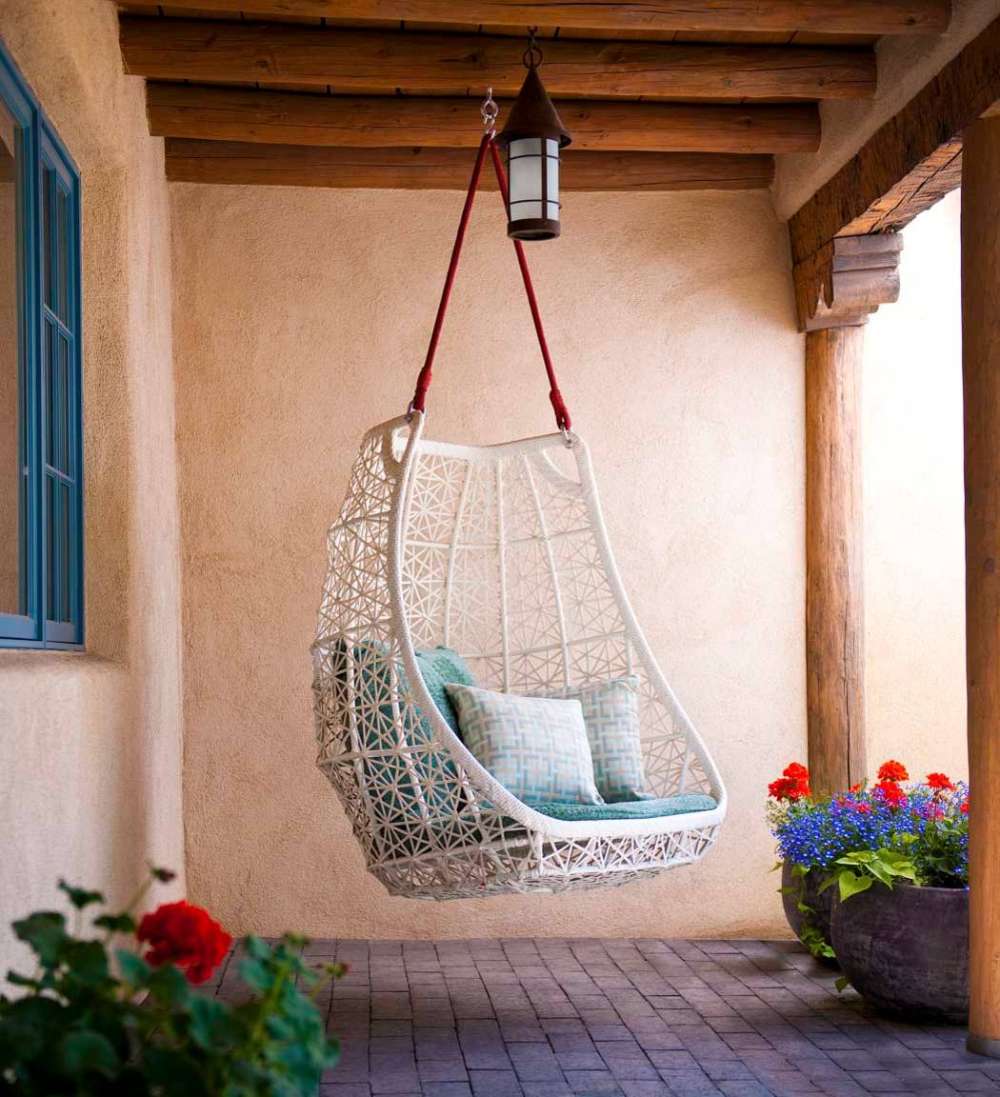
The living room in an Indian home is a gathering space first. Seating arrangements are often circular or L-shaped, built to face each other rather than a TV. A low wooden diwan against one wall, floor cushions opposite, and a brass coffee table in the center is a classic layout.
Brass accents are the focal point in interior design for many Indian living rooms. A large brass urli (flat bowl) filled with flowers, a hanging bell, or a cluster of diya holders on a console table. These pieces catch light and create the warm glow that defines the style.
Throw pillow combinations matter a lot in this context. Mixing Ikat prints with solid silk cushions, or pairing Kantha-stitched covers with plain linen, gives the layered textile look without it feeling chaotic.
Bedroom
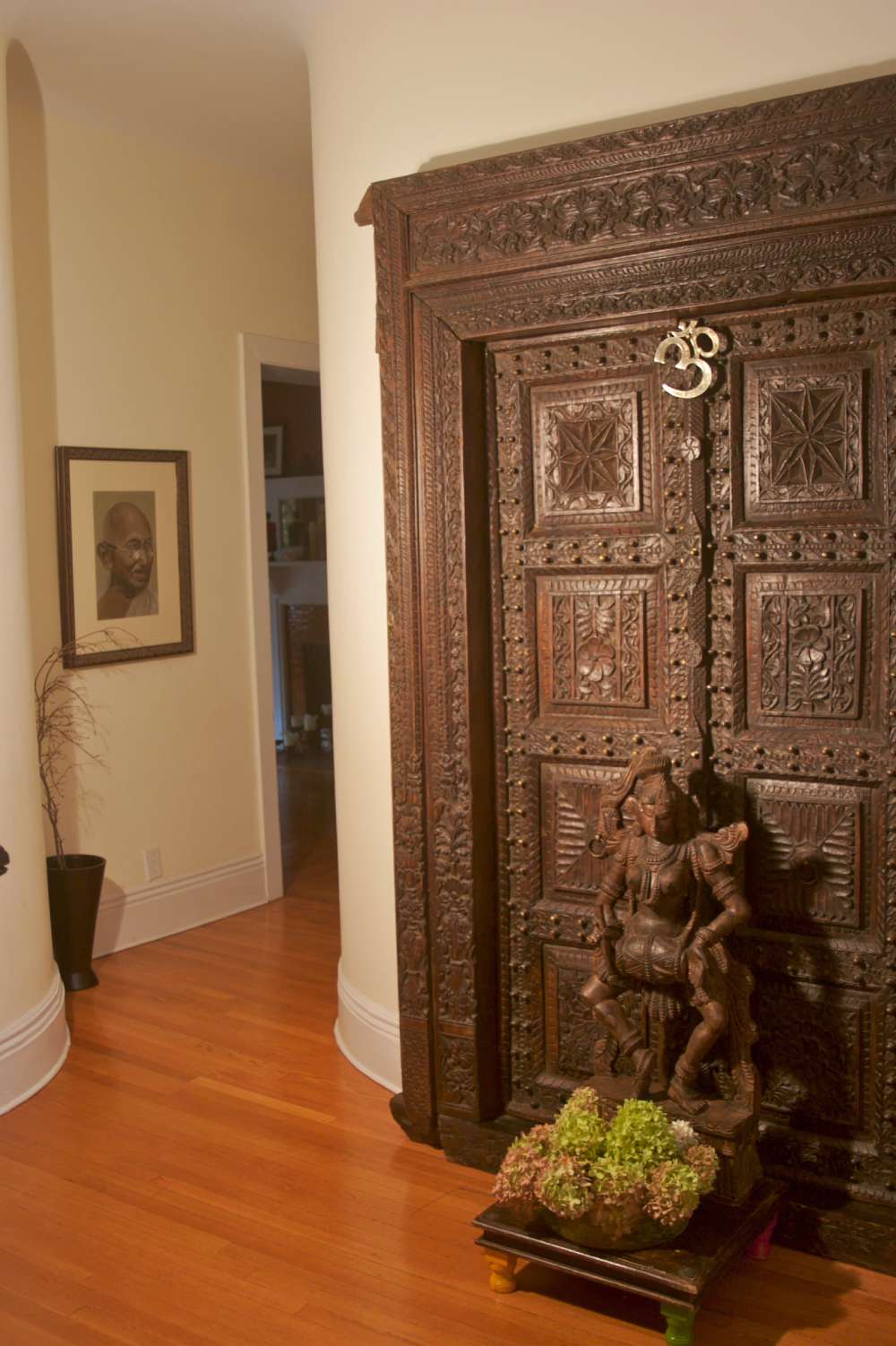
Image source: Marie Burgos Design
Jaipuri quilts (razai) are the signature bedroom textile. Lightweight, block-printed cotton filled with raw cotton batting. They look good folded at the foot of the bed and function in every season except peak winter.
Carved wooden headboards from Rajasthan or reclaimed door panels used as headboards are common. Bedside brass lamps or hanging lanterns replace standard table lamps. The overall mood targets warmth without clutter.
For bedroom decorating ideas rooted in Indian style, the formula is a statement headboard, layered bedding, and warm metallic lighting. Keep the rest simple.
Pooja Room Design
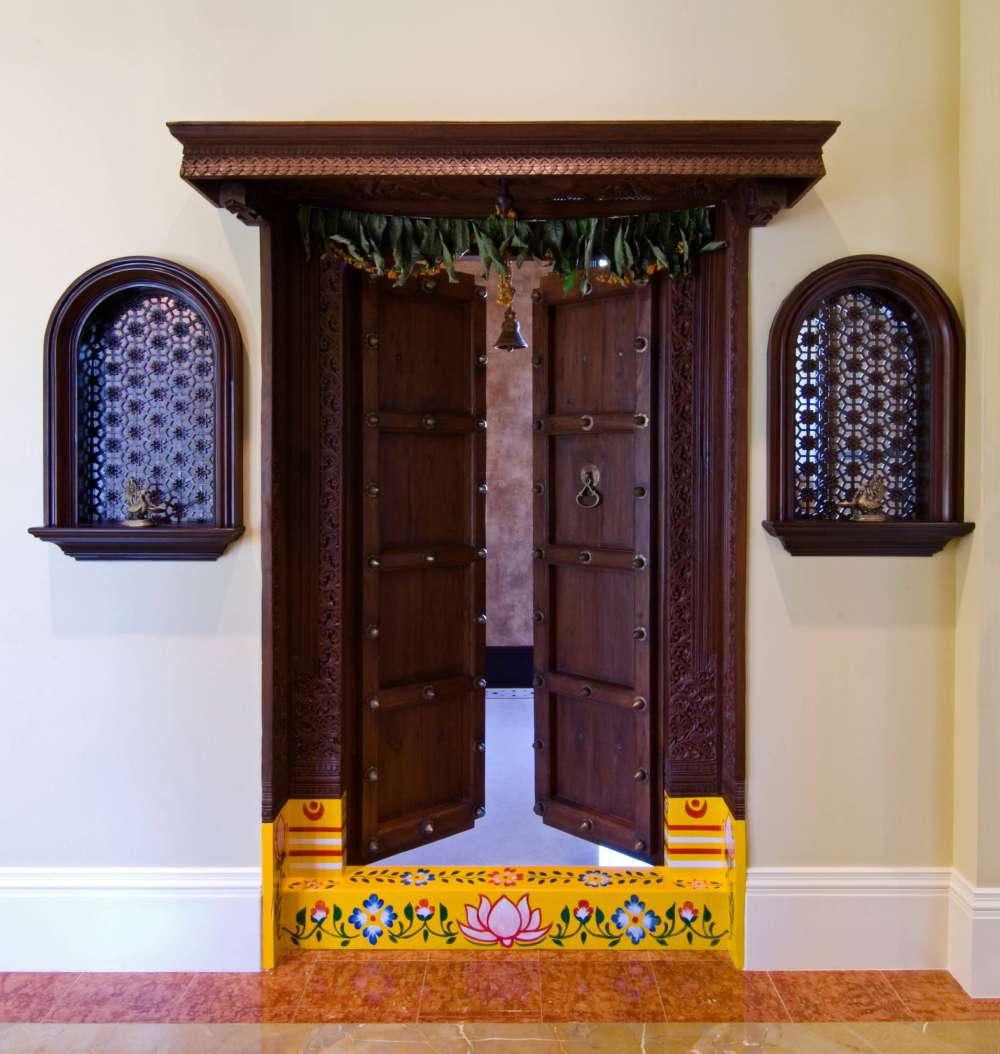
Image source: Cudmore Builders
This is where Indian home decor gets truly specific. The pooja room is a dedicated prayer and meditation space. Every material choice has spiritual weight.
Platform materials: Marble or white stone for purity. Sheesham or teak for built-in units. Brass fittings and bells at the entrance.
Lighting: Ambient lighting from diyas (oil lamps) and soft overhead fixtures. No harsh fluorescents. Backlit panels behind idols are trending in contemporary setups.
Placement: Traditionally northeast-facing, away from bathrooms and kitchens. Ventilation matters because incense and camphor are used daily.
Built-in pooja units are now a standard feature in new Indian apartment construction. Modular versions from Godrej Interio and Pepperfry range from simple wall-mounted shelves to full walk-in prayer rooms with storage for ritual items.
Kitchen and Dining
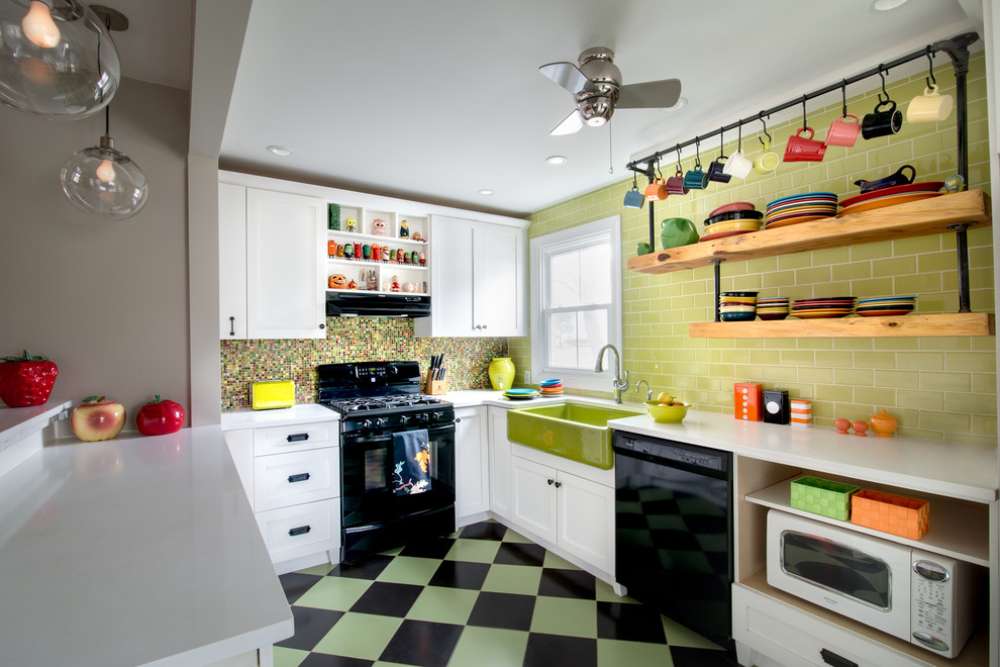
Image source: Hannah Dee Interiors
Indian kitchen styling is practical first. Copper and brass utensils displayed on open shelving serve double duty. Wooden spice boxes (masala dabba), steel containers (dabba sets), and brass serving bowls are functional items that happen to look great.
Dining often centers on a solid wood table (mango wood or sheesham) with mismatched brass and ceramic serving pieces. The thali-style serving approach, where individual small bowls sit on a metal plate, is both cultural and visually distinctive.
Check out broader kitchen decorating ideas to see how ethnic styling integrates with modern kitchen layouts. Indian kitchens work well with color schemes built around wood cabinets because the natural grain complements brass hardware and terracotta accents.
Lighting and Ambiance
Indian homes historically prioritize warm, indirect light. This is not a design trend. It is a habit built around oil lamps, candles, and filtered sunlight through jali (lattice) screens.
India’s wall decor market (which includes lighting fixtures and decorative elements) was valued at $8.33 billion in 2025, per Mordor Intelligence. The lighting segment within that is growing as consumers move away from basic ceiling fixtures toward layered, atmospheric setups.
Traditional Fixtures
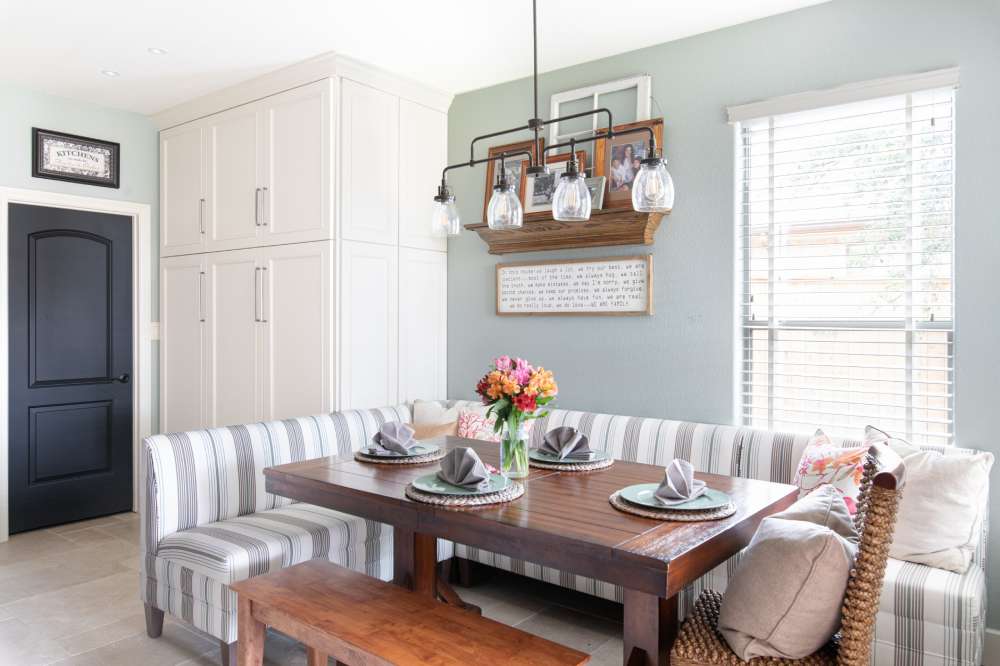
Image source: Twelve Stones Designs, LLC
The thookku vilakku (hanging brass oil lamp from Tamil Nadu) is one of the most recognizable Indian lighting fixtures. It works in entryways, pooja rooms, and living spaces.
Rajasthani jali lanterns filter light through geometric cutouts in metal or stone. The patterned shadows they throw across walls and ceilings are a big part of the visual effect. This is pattern in interior design created by light, not fabric or paint.
Dhokra brass chandeliers and multi-arm diya stands are statement pieces. They work best as a single pendant lighting element over a dining table or in an entryway.
Layered Lighting Approach
The Indian approach to light in interior design layers multiple warm sources rather than relying on one overhead fixture.
| Layer | Traditional Source | Modern 2026 Equivalent |
|---|---|---|
| Ambient | Brass hanging lamps (Thooku Vilakku) | Warm-dim LED pendants with a hand-beaten brass finish |
| Task | Oil lamps near work or reading areas | Task lighting with high-CRI (Color Rendering Index) warm bulbs |
| Accent | Diya clusters, floor lanterns | Accent lighting or micro-spotlights on brass wall art |
| Decorative | String lights and oil lamps for festivals | Permanent architectural fairy lights or hidden LED cove lighting |
Luxury housing sales in India climbed from 16% to 34% of national transactions between 2018 and 2024, according to Mordor Intelligence. That jump in premium real estate directly increases demand for designed lighting schemes, including Indian-style layered fixtures that go beyond basic recessed lighting.
Festive Lighting That Stays
Diwali lighting setups (diya arrangements, string lights, paper lanterns) often become permanent features. Many Indian households keep a brass diya tray lit daily near the entrance or in the pooja room.
Marigold garlands with embedded fairy lights, originally for weddings and Diwali, now appear year-round in bedrooms and living rooms. The crossover from festive to everyday is one of the more distinctive things about Indian decor. Nothing is purely seasonal if it works.
Wall Decor and Art
Wall art in Indian homes is not decorative filler. It carries regional identity, religious narrative, and craft tradition. The global wall art market hit $63.61 billion in 2024 and is projected to reach $118.79 billion by 2032, according to industry reports. Indian art forms are a measurable part of that growth.
Mordor Intelligence valued India’s wall decor market at $8.33 billion in 2025, with housing launches up 20% year-over-year in 2024 creating demand for fresh wall treatments and art installations.
Traditional Art Forms
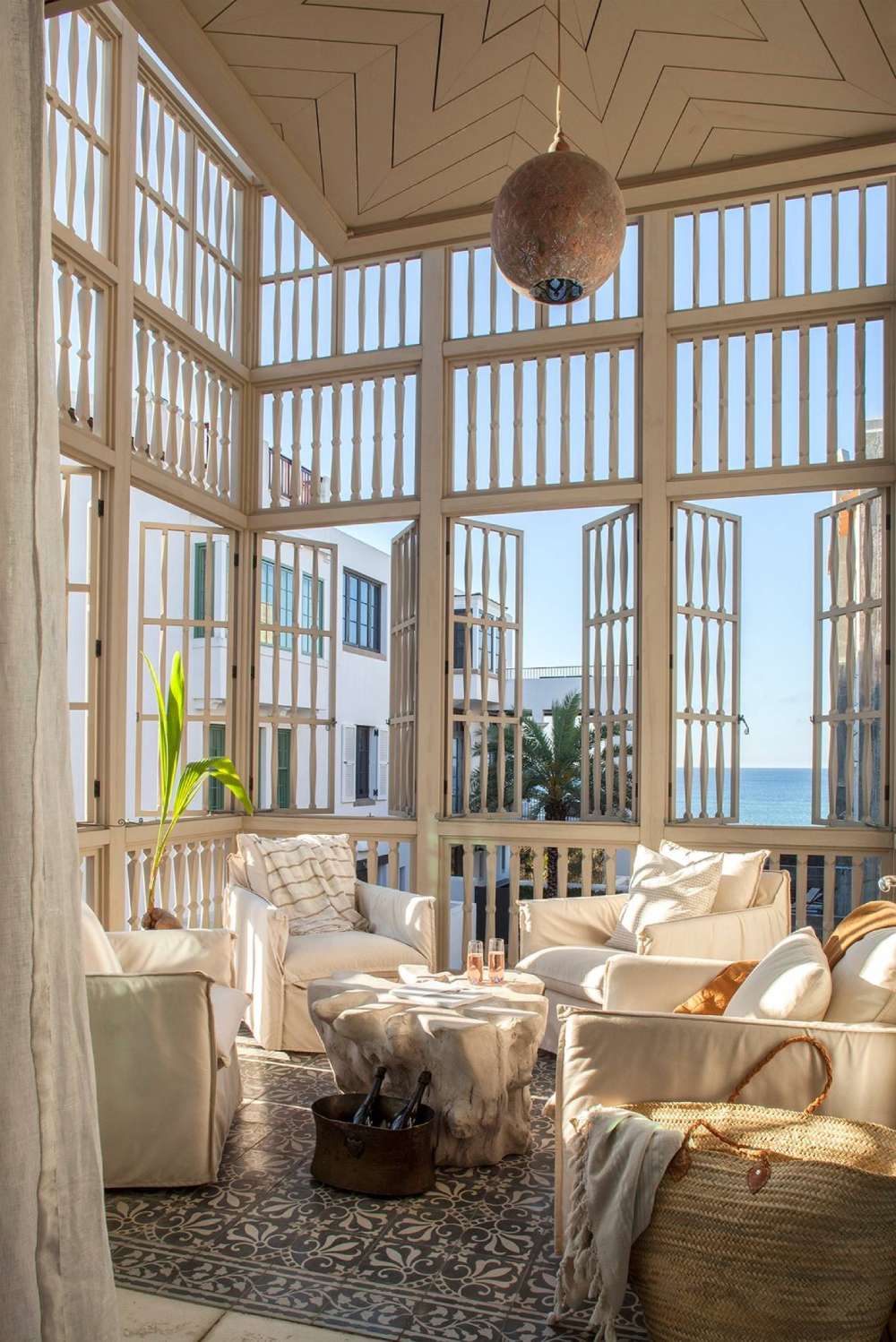
Madhubani paintings from Bihar use natural dyes like turmeric and indigo. The geometric patterns and mythological scenes were originally painted on mud walls by women. Now they sell on canvas and handmade paper globally through platforms like Craftsvilla and iTokri.
Warli art from Maharashtra takes a completely different approach. White stick figures on a dark background. Minimal, almost abstract. It works surprisingly well in minimalist interior design settings where other Indian art forms might feel too busy.
Tanjore paintings from Tamil Nadu are the opposite. Gold leaf, semi-precious stones, rich colors. Typically depicting Hindu deities. These are statement pieces, not background decor.
Metal and Wood Wall Art
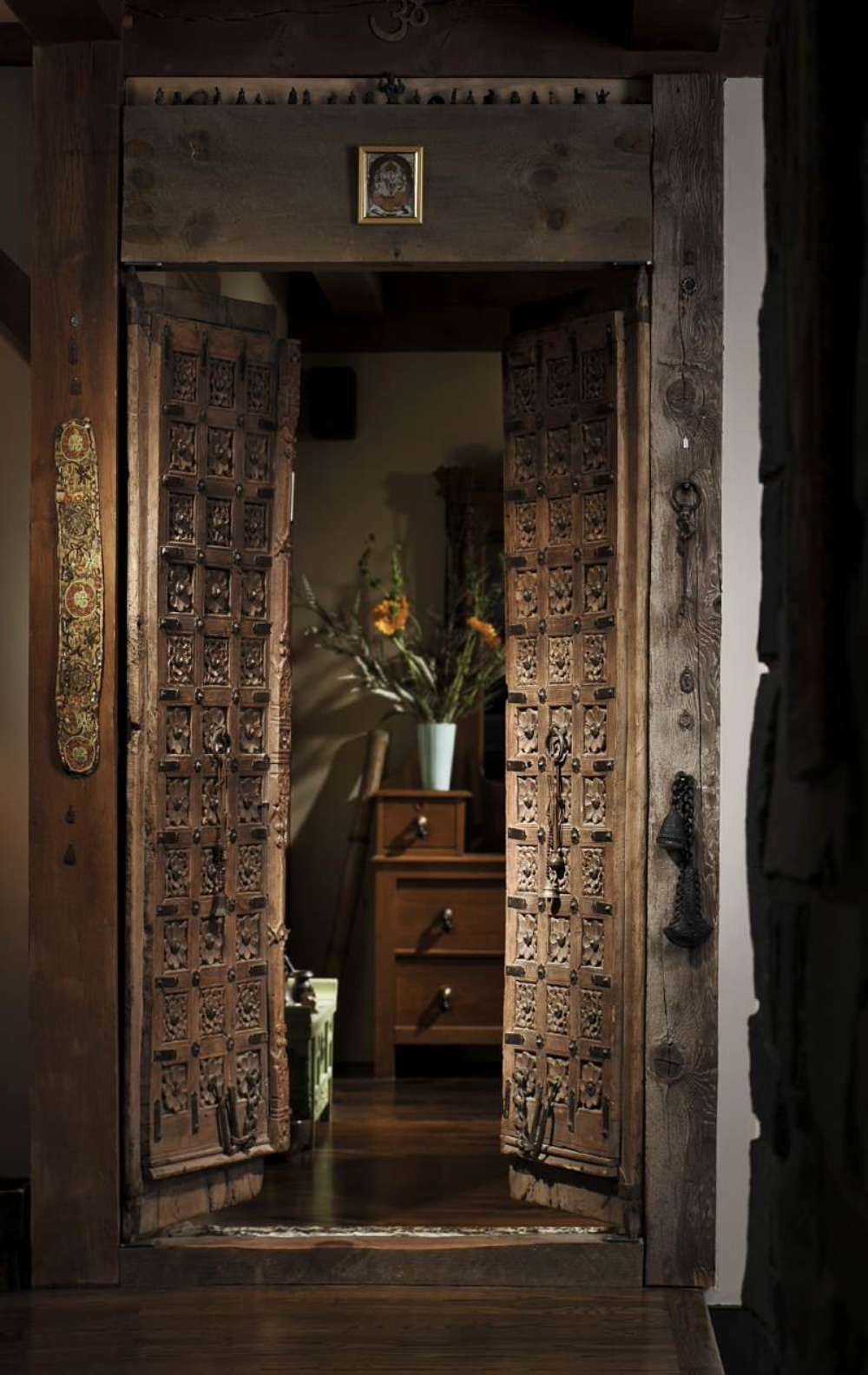
Image source: Fredman Design Group
Dhokra metalcraft from Chhattisgarh produces brass wall hangings using a lost-wax casting technique that is over 4,000 years old. Sun motifs, tribal figures, and animal forms are the most common subjects.
Carved jali screens (wooden lattice panels) serve as both wall art and functional room dividers. They bring line in interior design through their geometric cutout patterns, creating shadow play when lit from behind.
India’s art metal ware exports reached $120.52 million in Q1 of FY26, per IBEF. That figure reflects global demand for exactly these kinds of handcrafted wall pieces.
Buying Authentic vs. Mass-Produced
This is a real problem. Mass-produced “ethnic” wall art floods Amazon and cheap decor sites. The pieces strip cultural context, use synthetic materials, and fall apart within a year.
Real Madhubani work takes hours of meticulous painting with natural dyes. Real Dhokra casting involves a multi-step process with recycled metal. The price difference exists for a reason.
Platforms like Jaypore, which specializes in curated artisan collections from Rajasthan and Gujarat, and iTokri (with annual revenue of INR 23.9 crore as of FY24 per Tracxn) offer vetted artisan-sourced pieces. Contemporary Indian artists like Seema Kohli and Jogen Chowdhury bridge the traditional-modern gap on gallery platforms like Artisera.
How to Mix Indian Decor with Modern Interiors
This is where most people either overthink it or over-commit. The fusion of traditional Indian elements with contemporary spaces is the biggest trend in Indian residential design right now. Outlook Luxe’s 2025 trends report noted that lime-wash wall treatments and handmade artisanal pieces are gaining ground fast in urban Indian homes.
Ken Research found that over 6 million Indian consumers actively sought to incorporate global design elements into their homes in 2024. The blending goes both ways, and getting the ratio right matters more than the pieces themselves.
The 60-40 Approach
Keep 60% of the room modern and neutral. Bring 40% Indian through specific accent pieces. That ratio keeps things grounded without looking like a themed restaurant.
A concrete version of this: white walls, a clean-lined sofa, a simple jute rug. Then layer in a carved wooden console, brass accent lighting fixtures, and block-print cushions. The Indian elements become focal points instead of overwhelming the space.
Designers like Shabnam Gupta (Peacock Life) and Inam Hussain Mullick practice this kind of restraint in their residential projects. One brass urli on a coffee table. A single Pichwai painting behind the sofa. Not six things fighting for attention.
Common Mistakes
Image source: GIL WALSH INTERIORS
| Mistake | Why It Fails | Better 2026 Approach |
|---|---|---|
| Over-accessorizing | Creates “Visual Noise” and makes a space feel cluttered rather than curated. | Follow the “Hero Piece” Rule: Select 2–3 high-impact statement pieces per room. |
| Mixing too many regions | Rajasthani + South Indian + Bengali = visual chaos without a cohesive thread. | Choose one Regional Base (e.g., Mughal-inspired or Kerala Minimalist) and layer from there. |
| Cheap replicas | Synthetic materials lose their luster and look inauthentic in natural light. | Invest in Handcrafted Authenticity; fewer, real pieces age better and hold value. |
| Full thematic commitment | The room feels like a museum or a set piece rather than a functional home. | Use “South Asian Accents” against a neutral, modern backdrop for a balanced look. |
The principles of interior design apply here the same way they do anywhere else. Balance, harmony, and unity still matter, even when you are working with ornate materials.
What Works in Apartments
Smaller spaces need restraint. A single carved wood headboard in the bedroom. One brass pendant light in the dining area. Handloom window treatments instead of heavy drapes.
For small apartment decor, Indian elements actually work well because many of them (floor cushions, wall hangings, brass accents) take up zero floor space. The use of space in interior design actually improves when you go vertical with wall art and hang lanterns instead of placing table lamps.
Japandi-Indian fusion (blending Japanese-Scandinavian minimalism with Indian craft elements) gained traction in 2025 as a specific substyle. Clean lines plus brass accents, warm wood, and handloom textiles. It is the most apartment-friendly version of Indian decor out there.
Where to Buy Authentic Indian Home Decor
Image source: SDG – Scheiber Design Group
Sourcing is half the challenge. The gap between mass-produced “Indian style” decor and actual artisan-made pieces is wide, and knowing where to shop makes all the difference.
Over 20 million users purchased home decor online in India in 2024, per IMARC Group. The online channel grew at 10.9% CAGR between 2024 and 2029, according to Technavio. But online does not automatically mean authentic.
Online Platforms
FabIndia: Over 327 stores across India. Generated INR 1,688 crore ($200 million) in FY23 revenue. The most established name in handcrafted Indian home goods, from furniture to textiles to tableware.
Jaypore: Curated collections focused on Rajasthan and Gujarat craftsmanship. Strong in copper, brass, and handloom textiles. Runs its own vintage section for antique pieces.
iTokri: Covers the widest range of Indian handloom and craft traditions, from chikankari embroidery to Madhubani painting to Manipuri weaving. A smaller operation but well-vetted artisan base.
Okhai: Founded through the Tata Chemicals Society for Rural Development. Works with 25,000 women artisans across India. Average growth rate of 50% over the last five years. About 90% of sales happen online.
Amazon Karigar: Connects rural craftspeople directly with buyers. Best for smaller handcrafted items like brass diya holders, terracotta planters, and block-print table runners.
City-Specific Markets
If you are in India or visiting, physical markets offer pieces you will not find online. The experience is part of the purchase.
- Johari Bazaar, Jaipur for block-print textiles, lacquer bangles, and blue pottery
- Chor Bazaar, Mumbai for vintage furniture, brass antiques, and reclaimed wood pieces
- Dilli Haat, Delhi for rotating artisan exhibitions from every Indian state
- Nalli Silks, Chennai for South Indian silk and cotton textiles
Government emporiums like the Cottage Emporium in Delhi stock curated regional crafts at fixed prices. No bargaining, but quality is guaranteed and the artisan cooperatives behind the products are verified.
For International Buyers
India ranks as the second-largest exporter of home decor globally, with 20,940 shipments recorded as of mid-2025, per IBEF. The USA alone takes 38.69% of total Indian handicraft exports.
| What Ships Well | What Doesn’t | Notes |
|---|---|---|
| Brass accents, diya holders | Large furniture | Freight costs for heavy furniture are prohibitive for individual buyers. |
| Block-print textiles, throws | Terracotta (fragile) | Focus on metal or high-quality textiles to avoid breakage during transit. |
| Wall art, paintings | Stone items | Stone carries high weight surcharges and potential customs delays. |
| Handloom cushion covers | Large carved panels | Flat-packed items ship cheaply and are less prone to damage. |
India accounts for roughly 40% of global handmade carpet exports, according to IBEF. Carpets and rugs are actually one of the safest items to ship internationally, with well-established export channels from Jaipur and Bhadohi.
If you are looking for rugs that go with a beige couch, Indian handwoven jute and cotton dhurries in earthy tones are a natural fit. For darker furniture, rugs that pair well with brown couches include Rajasthani block-print dhurries in indigo or cream.
Seasonal and Festive Indian Decor
Festivals drive a massive share of Indian decor purchases. A LocalCircles survey of 49,000 households found that 40% of urban Indian families planned to spend on home decor during the 2024 festive season, with total urban festive spending estimated at INR 1.85 lakh crore ($22 billion).
The 2025 Diwali season hit a record, with CAIT reporting Rs 5.4 lakh crore in total goods sold. Furniture, decor, and kitchenware saw strong demand, and handcrafted Indian goods specifically benefited from the “Vocal for Local” campaign.
Diwali
Diwali is the single biggest driver of Indian home decor purchases in any given year. Criteo data showed Home and Garden online sales during Diwali 2024 saw light ropes and strings jump 204%, candles up 122%, and dinnerware up 89%.
The Diwali decor playbook is specific: rangoli patterns at the entrance (done with colored powder, flower petals, or stickers), diya clusters on every flat surface, marigold garlands on doors and windows, and string lights across balconies and facades.
The Rediffusion report found that wall hangings were the top home decor preference at 52.24% during Diwali 2024, followed by furniture at 31.84% and carpets at 31.26%.
Other Festivals
Onam (Kerala): Pookalam floor art made from fresh flowers. Brass urli bowls filled with floating blossoms. Banana leaf-styled serving arrangements. The look is gold-accented and nature-focused.
Pongal (Tamil Nadu): Kolam art drawn at the entrance with rice flour. Terracotta pots overflowing with rice. Sugarcane bundles and turmeric plants as natural decor.
Navratri and Durga Puja: Red and gold color schemes. Temporary altar setups (pandals in Bengal). Heavy use of fresh flowers, especially marigolds and jasmine.
When Festive Becomes Permanent
One of the more interesting things about Indian decor is that festive pieces do not always go back in the box. A brass diya tray bought for Diwali stays on the console table year-round. The marigold garland habit turns into permanent fairy light installations.
Handwoven torans (door hangings) bought for Navratri become a permanent part of the entryway. Brass bells from temple decor stay mounted at the front door.
PwC reported that 70% of Indian garment manufacturers have started integrating sustainable practices. This push toward eco-friendly production means festive decor items (especially handmade diyas, natural fiber garlands, and organic cotton hangings) are increasingly built to last beyond a single season.
If you already lean toward eclectic home decor, Indian festive pieces integrate easily. A Diwali lantern collection next to a mid-century modern sideboard, or Onam brass bowls on a Scandinavian-style dining table. The warmth of the Indian pieces softens the clean lines without clashing.
FAQ on Indian Home Decor
What defines Indian home decor?
Indian home decor is built on regional craft traditions, handcrafted materials like brass, sheesham wood, and handloom textiles, and warm color palettes rooted in natural dyes. Each state contributes distinct art forms, furniture styles, and textile techniques.
What are the best colors for an Indian-style room?
Turmeric yellow, terracotta red, indigo, and emerald green form the traditional base. Contemporary Indian interiors lean toward muted earth tones with a single bold accent wall. Climate and regional light conditions influence which palette works best.
How do I mix Indian decor with modern interiors?
Keep 60% of the room modern and neutral. Layer in Indian elements through brass accents, block-print cushions, and a carved wood statement piece. Stick to one regional style as your base to avoid visual clutter.
What furniture is typical in Indian homes?
Low seating like diwans and floor cushions, carved sheesham wood dining sets, vintage almirahs with brass fittings, and wooden trunks are common. Jodhpur and Saharanpur are major production centers for ethnic Indian furniture.
Where can I buy authentic Indian home decor online?
FabIndia, Jaypore, iTokri, Okhai, and Amazon Karigar all source directly from artisans. Pepperfry carries ethnic furniture lines. For handmade wall art and brass pieces, iTokri and Jaypore offer the widest artisan-vetted selections.
What is a pooja room and how do I design one?
A pooja room is a dedicated prayer space in Indian homes. It typically uses marble or teak platforms, brass bells, diya lighting, and backlit panels. Placement is traditionally northeast-facing with good ventilation for incense.
What Indian art works as wall decor?
Madhubani paintings from Bihar, Warli tribal art from Maharashtra, Tanjore gold-leaf paintings, and Dhokra brass wall hangings are the most popular. Pichwai art from Rajasthan and carved jali wood panels also work well.
How do Indian festivals affect home decor?
Festivals like Diwali, Onam, and Pongal drive major decor purchases. Diyas, rangoli patterns, marigold garlands, and brass vessels are bought seasonally but often become permanent fixtures. About 40% of urban Indian households spend on home decor during festive season.
What materials are used in Indian home decor?
Teak, mango wood, and sheesham for furniture. Brass and copper for accents and lighting. Jute, cotton, and silk for textiles. Terracotta and natural stone for flooring and wall treatments. Most materials are regionally sourced and handcrafted.
Is Indian home decor sustainable?
Much of it is, by default. Handloom textiles use natural fibers. Dhokra casting recycles metal. Madhubani art uses plant-based dyes. Around 10 million Indian households shifted toward eco-friendly home products in 2024, per Ken Research.
Conclusion
Indian home decor works because it is rooted in something real. Centuries of woodworking in Jodhpur, Dhokra metalcraft in Chhattisgarh, Kantha embroidery in Bengal, Banarasi silk weaving in Varanasi. These are not trends. They are living traditions with traceable origins.
Whether you are setting up a pooja room with marble and brass, layering Jaipuri quilts in a bedroom, or hanging a single Warli painting in a modern apartment, the key is specificity. Pick a region. Learn its materials. Commit to a few handcrafted pieces over a pile of replicas.
The sourcing has never been easier. Platforms like FabIndia, Okhai, and iTokri connect you directly to artisan cooperatives. Physical markets like Chor Bazaar and Dilli Haat still offer pieces you cannot find anywhere online.
Start with one room. One brass accent. One handloom textile. Build from there.

- Paint Colors That Go with Gray Floors - August 20, 2026
- What Color Bedding Goes with Dark Wood Furniture - August 18, 2026
- What Color Walls Go with Oak Floors - August 16, 2026