Bohemian home decor is one of those styles that looks effortless but rarely happens by accident. The layered textiles, mismatched furniture, and collected-over-time feel that define boho interiors take more thought than most people expect.
And there’s a big gap between “bohemian” and “just cluttered.”
This guide breaks down how to actually build the look, from choosing the right earthy color palettes and mixing patterns without chaos, to sourcing handmade pieces, vintage furniture, and artisan decor on a realistic budget. You’ll also find room-by-room breakdowns, lighting strategies, and the common mistakes that turn a free-spirited space into a disorganized one.
What Is Bohemian Home Decor?
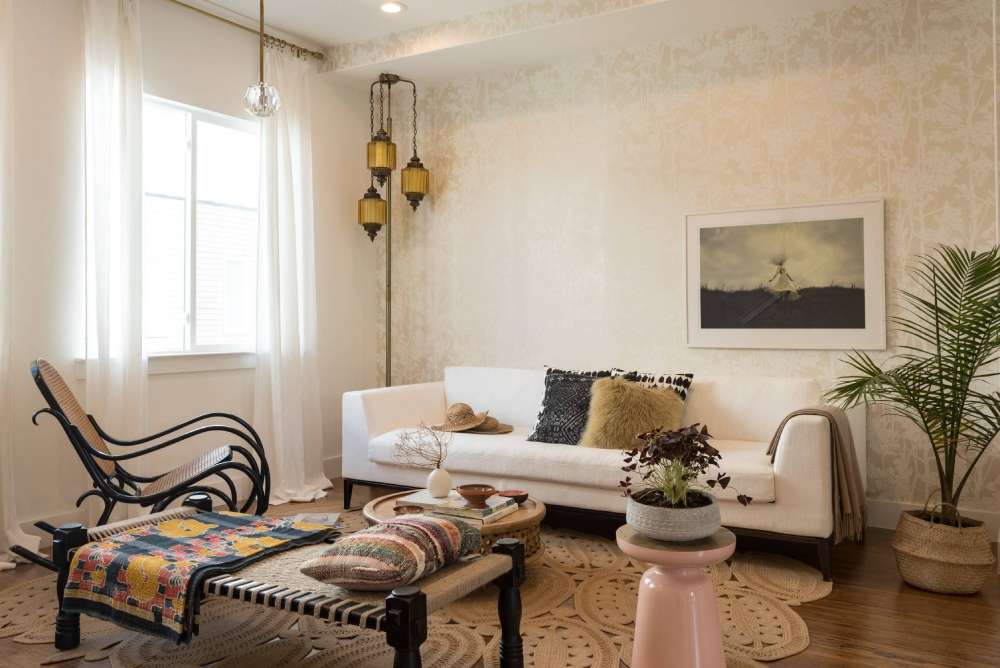
Bohemian home decor is a design style built on collected, layered, and intentionally mismatched elements that reject rigid symmetry and matching sets. It prioritizes warmth, personal history, and creative expression over perfection.
The look feels lived-in because it’s supposed to be. Every piece in a boho room carries a story, whether it’s a kilim pillow from a flea market or a brass tray picked up on a trip abroad.
And that’s the whole point. This is not a style you buy in one shopping trip.
Where Bohemian Style Actually Came From
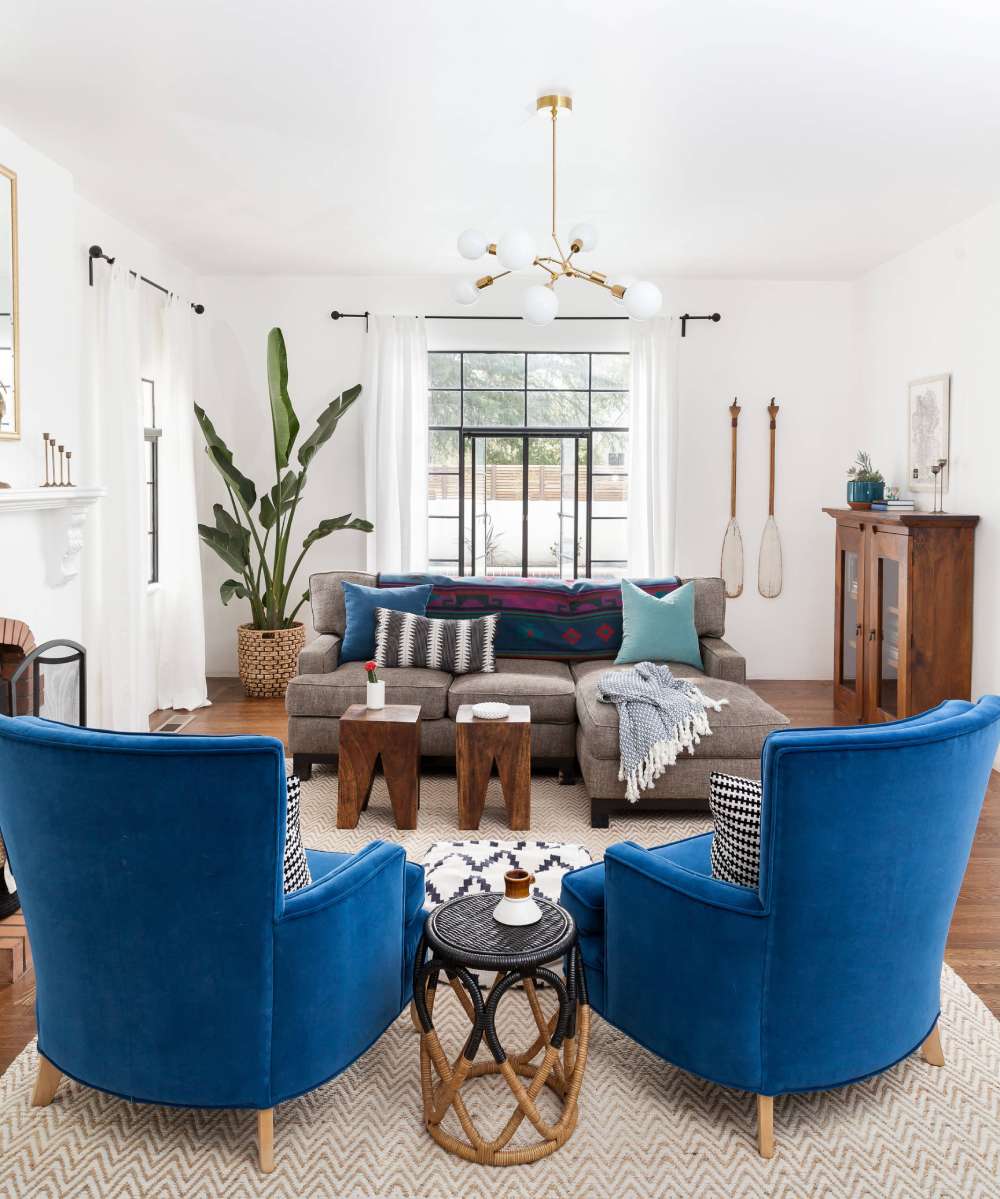
The word “bohemian” traces back to 19th-century Paris. French artists, writers, and performers who rejected mainstream society gravitated toward poorer neighborhoods, living cheaply but creatively. Their homes reflected that mindset, filled with found objects, handmade crafts, and whatever textiles they could get their hands on.
The term itself comes from “Bohemia,” a region in the Czech Republic associated with Romani travelers. These nomadic communities influenced the aesthetic through their colorful clothing and layered textiles.
That free-spirited attitude resurfaced in the 1950s with the Beat Generation, then again with the hippie movement of the 1960s and 70s. Each era added something new to the look. But the core stayed the same: personal expression over convention.
If you’re interested in how design movements have shaped residential spaces over centuries, the broader story of interior design history puts bohemian style in useful context.
Bohemian vs. Boho Chic vs. Eclectic
People confuse these constantly, so let’s be clear.
Bohemian is the original. It’s maximalist, personal, sometimes messy. Think layers on layers, vintage finds mixed with handmade pieces, no rules about what “goes together.”
Boho chic is the polished, Instagram-ready version. It keeps the rattan and macrame but strips away the chaos. Cleaner lines, fewer items, more white space. Anthropologie and Urban Outfitters sell this version.
Eclectic is broader. An eclectic interior design approach mixes any styles together, not just bohemian ones. A room with Art Deco lamps, mid-century chairs, and industrial shelving is eclectic. It’s not necessarily bohemian unless it also carries that free-spirited, globally influenced, textile-heavy sensibility.
Your mileage may vary. But knowing where one style ends and another starts helps you actually achieve the look you want instead of ending up with a room that just looks confused.
Colors and Palettes That Actually Look Bohemian
Color does most of the heavy lifting in bohemian spaces. Get it right and the room feels grounded and warm. Get it wrong and you’re staring at a room that looks like a theme park gift shop.
The Earthy Base
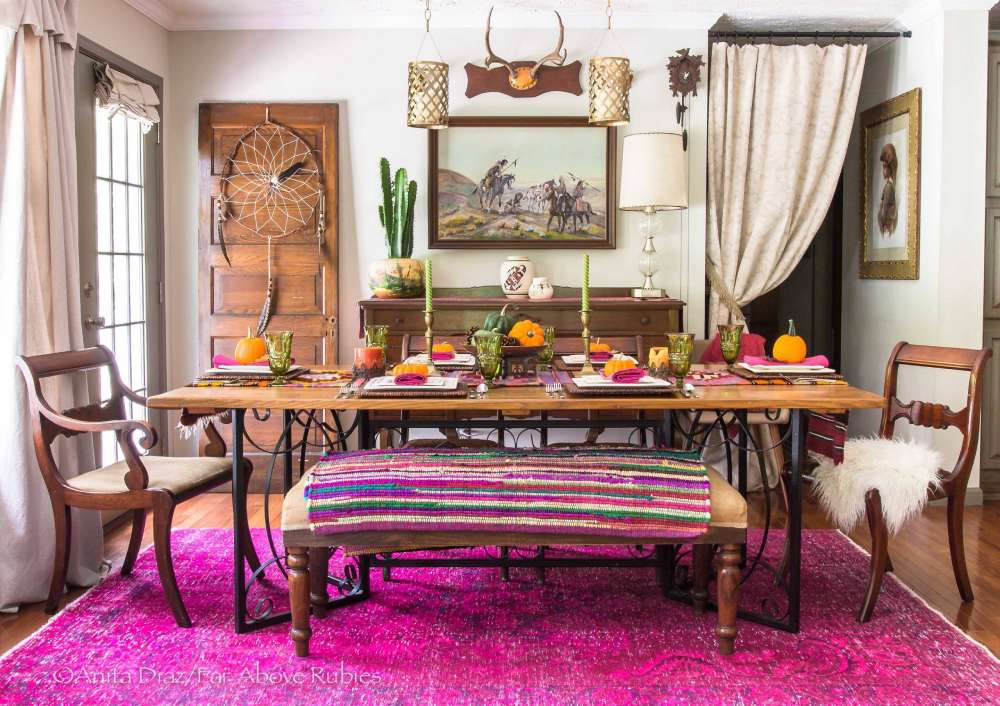
Image source: Anita Diaz for Far Above Rubies
Start with earth tones. Always.
Terracotta, ochre, rust, olive, and warm browns form the foundation of nearly every authentic bohemian room. These tones connect back to the style’s roots in natural materials, handmade pottery, and sun-baked textiles from North Africa, South Asia, and Central America.
Benjamin Moore’s “Potters Clay” and Farrow & Ball’s “India Yellow” land right in this territory. But honestly, any muted warm tone works as a starting point.
Understanding how color in interior design sets mood is half the battle with bohemian palettes.
Jewel Tones as Accents
Deep plum. Emerald green. Sapphire blue.
These are your accent players, not your base. A single suzani embroidered cushion in emerald on a rust-toned sofa does more than an entire emerald wall.
The trick is restraint, which feels contradictory for a maximalist style. But even bohemian rooms need breathing space between colors. Knowing which colors pair well with emerald green or how to work with burnt orange tones keeps the palette from going off the rails.
Why “All-White Boho” Isn’t Really Bohemian
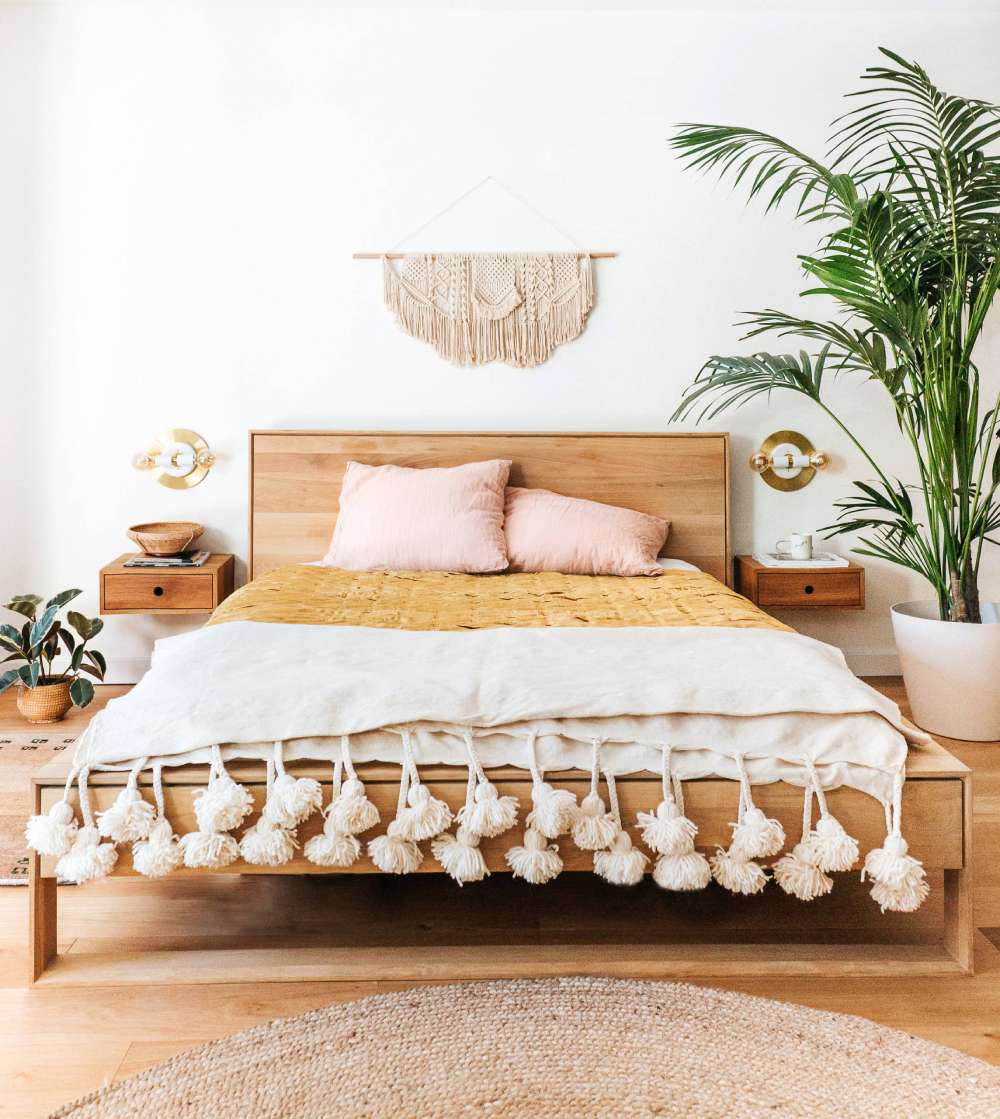
Image source: Erin Roberts Design
Took me a while to accept this one, but those all-white rooms with a single macrame wall hanging and a pampas grass arrangement? That’s closer to coastal interior design or Scandinavian interior design than anything bohemian.
Bohemian style depends on warmth, saturation, and visual density. Strip all that out and you lose the thing that makes it bohemian in the first place. A neutral base is fine. An entirely neutral room with one boho accessory is not the same thing.
Market Data Forecast reports that 72% of premium decor purchases in 2023 involved products with documented artisan origins, like hand-dyed textiles and hand-carved wood. That rich, saturated, handmade quality is what gives bohemian color palettes their character.
| Color Category | Examples | Role in Bohemian Rooms |
|---|---|---|
| Earth tones | Terracotta, ochre, rust, olive | Foundation, walls, large furniture |
| Jewel tones | Sapphire, plum, ruby | Accent pillows, throws, small decor |
| Warm neutrals | Sand, cream, warm gray | Breathing space between bold elements |
| Metallics | Brass, aged gold, copper | Hardware, trays, lamp bases |
Textiles and Layering Techniques
Textiles are the backbone of every bohemian room. Pull out the rugs, throws, and pillows and you’re left with a room that could belong to any style. The fabric is what makes it boho.
Grand View Research valued the global home decor market at $960.14 billion in 2024, with the textile segment expected to see the fastest growth through 2030. That growth is driven largely by demand for handmade, globally sourced fabrics, which is exactly where bohemian style lives.
Rugs as the Foundation
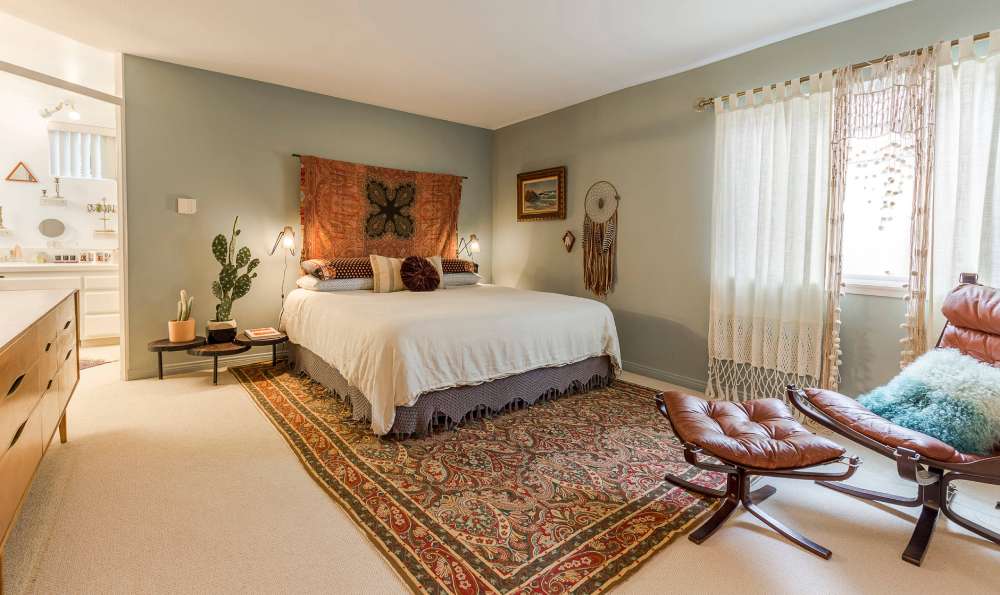
Image source: Madison Modern Home
Persian, Moroccan, kilim, and vintage overdyed rugs anchor bohemian living rooms. The rug goes down first. Everything else follows.
A single large-format rug with a traditional pattern sets the color story for the rest of the room. I’ve seen people pick their entire palette from one good vintage rug, and it works every time.
Layering rugs on top of each other is a signature boho move, but there’s a line between “collected over time” and “yard sale.” Keep one rug dominant and the second smaller, angled slightly, with a complementary (not competing) pattern. If you’re working with a sofa setup, understanding how to place a rug under a sectional keeps the layering intentional instead of random.
How to Mix Patterns Without Visual Chaos
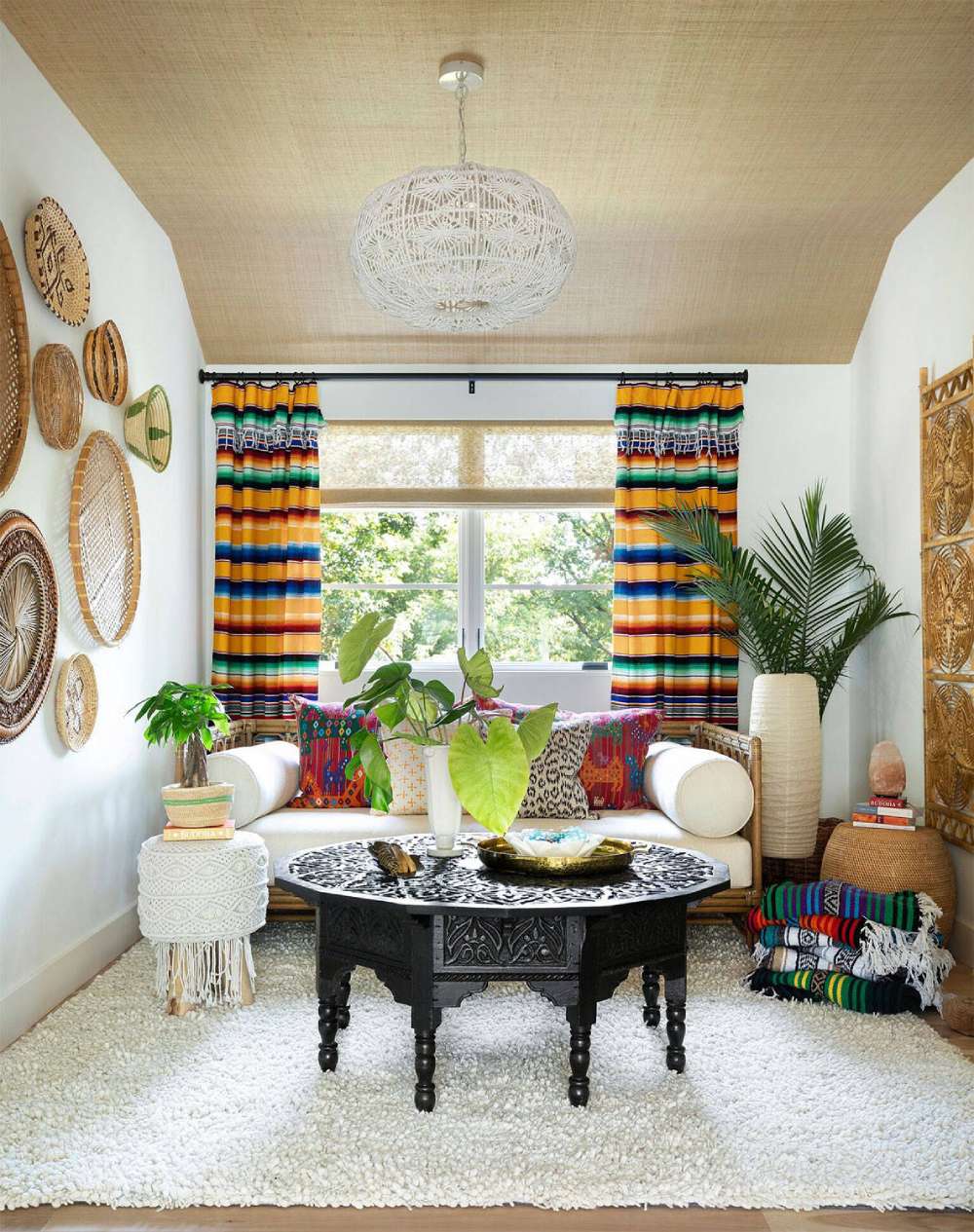
Image source: Angela Morris Interior Design Group
Pattern mixing is where most people freeze up. Fair enough. It’s tricky.
The scale rule: Combine one large-scale pattern, one medium, and one small. A bold Persian rug, a medium-sized ikat throw, and a small geometric on a pillow. They coexist because they’re not competing at the same visual scale.
The color thread: Pick one color that appears in every pattern. Doesn’t have to be the dominant color, just present. That single shared thread ties everything together.
And know when to stop. If your eye can’t rest anywhere in the room, you’ve gone too far. Understanding how pattern functions in interior design gives you a framework instead of just guessing.
Throws, Pillows, and Wall Textiles
Macrame wall hangings. Mudcloth throws. Suzani embroidered cushions. Turkish towels draped over chair backs.
These aren’t accessories in a bohemian room. They’re structural elements.
For sofas specifically, a mix of three to five throw pillow combinations in different textures (think linen, velvet, and woven cotton together) keeps things from looking like you bought a matching set.
Globally, the handicraft market reached $739.95 billion in 2024, and about 62% of U.S. consumers reported buying handcrafted products at least twice a year (Industry Research). That demand directly feeds the bohemian textile market, where hand-loomed and hand-dyed fabrics carry the most visual weight.
Furniture Styles That Fit Bohemian Rooms
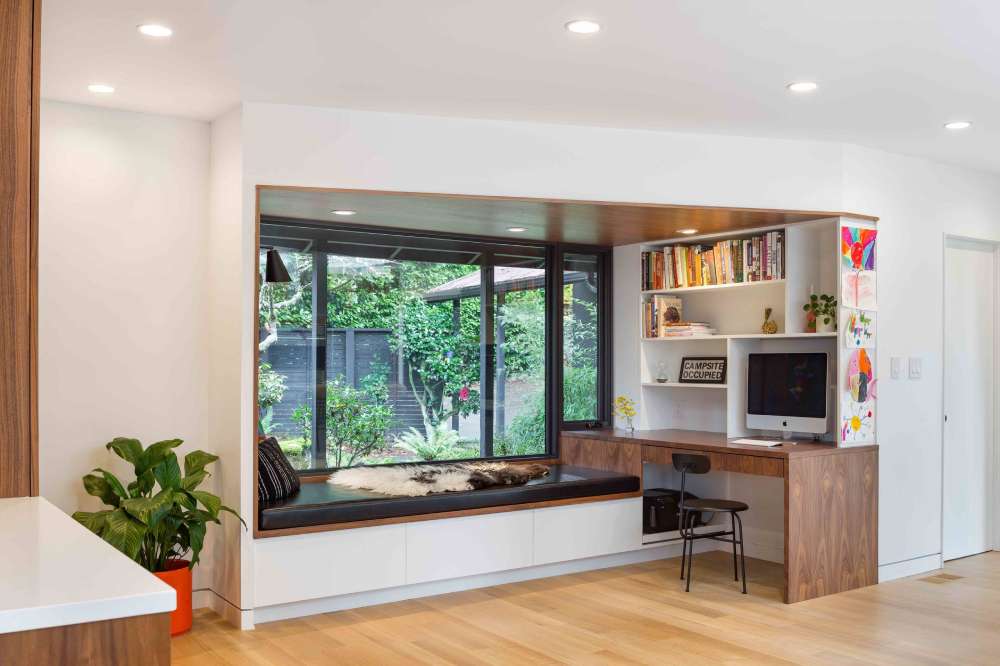
Image source: James Frank Construction Inc
Bohemian furniture is not about matching sets. At all. If your coffee table, side table, and TV stand came from the same product line, you’re probably not in bohemian territory.
Low-Profile and Natural Materials
Floor cushions, daybeds, low-slung sofas, and leather poufs are standard in boho living spaces. The lower the seating, the more relaxed and grounded the room feels.
Materials matter here. Rattan, cane, bamboo, and reclaimed wood carry that handmade, organic quality that defines the style. A rattan peacock chair is probably the single most iconic piece of bohemian furniture. One good vintage find like that can anchor a whole room.
The approach to form in interior design matters with boho furniture. Curved, organic shapes work better than hard geometric lines. Think rounded arches on bookshelves, tapered legs on side tables, and woven textures on dining chairs.
Mixing Eras and Sources
A mid-century modern walnut credenza next to a carved Moroccan side table next to a rattan hanging chair. That combination sounds chaotic on paper but works in practice because each piece has warmth and character.
Thrift stores, estate sales, and flea markets are primary sourcing spots. West Elm’s partnership with artisan groups in Guatemala and Tunisia (launched in 2024) shows that even large retailers recognize how much buyers want handmade, globally sourced furniture.
Opendoor’s 2024 data shows U.S. consumers spend an average of $1,598 annually on home decor. Stretch that further by buying one genuine vintage piece instead of several mass-produced items from the same store. The vintage piece will carry the room.
| Furniture Type | Material | Bohemian Role |
|---|---|---|
| Peacock chair | Rattan, wicker | Statement seating, bedroom corner |
| Floor cushions | Cotton, linen, leather | Casual seating, layered on rugs |
| Carved cabinet | Reclaimed wood | Storage with visual texture |
| Low daybed | Wood frame, cotton mattress | Living room lounging, reading nook |
| Brass-legged table | Metal, glass, or wood top | Accent piece, entryway or bedside |
Plants and Natural Elements in Bohemian Spaces
Plants aren’t optional in bohemian rooms. They’re structural.
A room without greenery can still be eclectic or boho-chic, but it doesn’t quite reach full bohemian. The connection to organic, living things is baked into the style’s DNA, going all the way back to those 19th-century artist studios filled with ferns and potted palms.
Trailing Plants and Statement Greenery

Pothos in macrame hangers is the most recognizable bohemian plant pairing. It practically sells itself. But string of pearls, philodendrons, and English ivy serve the same function: cascading green that softens hard edges and fills vertical space.
For corners and floor space, fiddle leaf figs and snake plants add height and structure. A single large plant in a woven basket planter does more for a room than five small pots scattered randomly on a shelf.
This approach ties directly into biophilic interior design principles, where bringing natural elements indoors measurably improves mood and air quality. Bohemian spaces have been doing this instinctively for over a century.
Beyond Living Plants
Dried flowers and pampas grass work for low-maintenance texture. Preserved eucalyptus bundles in ceramic vases, dried lavender on a shelf, or a large pampas arrangement in a floor vase all carry that organic warmth without the watering schedule.
Then there’s the non-plant natural elements: driftwood pieces, crystals and stones on a tray, woven seagrass baskets used as planters or storage, and terracotta pots in various sizes. These add texture to the design without competing with the textiles already in the room.
Keeping It Realistic
Dead plants are not bohemian. They’re just neglected.
If you travel a lot or forget to water things (no judgment), lean toward snake plants, ZZ plants, and pothos. These survive low light and inconsistent care. The goal is green and alive, not a sad collection of brown stems in pretty pots.
Lighting That Sets a Bohemian Mood
Overhead fluorescent lights will kill a bohemian room faster than anything else. The entire style depends on warm, layered, slightly dim lighting that makes the room feel like a place you want to stay in, not a place where you’re being interrogated.
Statement Fixtures
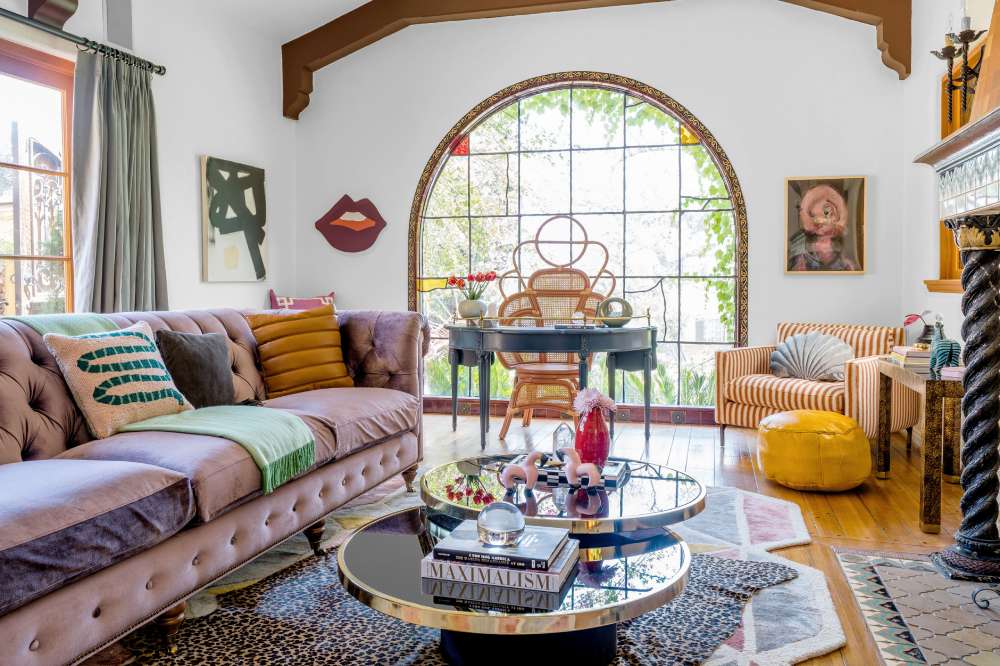
Image source: Black Lacquer Design
Moroccan lanterns, Turkish mosaic lamps, and rattan pendant lights are the go-to overhead options. Each one casts patterned light and shadow across walls and ceilings, which adds another layer of visual texture to the room. A single Moroccan punched-metal pendant light can transform a plain dining area into something that actually feels intentional.
Justina Blakeney’s Jungalow line popularized the rattan pendant for good reason. It’s warm, natural, and works in bedrooms, living rooms, and covered outdoor spaces equally well.
Layered Light Sources
One light source is never enough. Bohemian rooms need at least three.
Ambient lighting sets the base. That’s your overhead fixture or a large floor lamp with a warm-toned bulb.
Task lighting goes where you need it. A brass desk lamp for a reading corner, a ceramic table lamp next to the sofa.
Accent lighting adds mood. String lights draped over a headboard (intentionally, not as an afterthought), candles in brass and carved wood holders, or a small lantern on a shelf. Understanding how light shapes interior spaces helps you layer these sources without the room feeling either too dark or too busy.
What to Avoid
Cool-toned LED bulbs. They flatten everything. Every rug looks duller, every wood tone looks gray, and the warmth you spent hours building just disappears.
Stick with bulbs in the 2700K to 3000K range. Warm white. That’s it. It’s a small detail that changes everything.
Wall Decor and Art for Bohemian Interiors
Blank walls are the enemy here. A bohemian room needs visual weight on its walls just as much as it needs layered textiles on its furniture.
The global wall art market was valued at $60.3 billion in 2024, with residential applications accounting for over 71% of demand (Market.us). That residential share keeps growing because people are treating walls like they treat every other surface in a boho space: as a place to tell a story.
Gallery Walls Done the Bohemian Way

Mismatched frames, different sizes, no perfect grid. That’s the formula. A gallery wall in a bohemian room should look collected over time, not purchased as a set from HomeGoods on a Saturday afternoon.
Mix frame materials. Brass next to raw wood next to painted white. Mix content too: a small oil painting, a vintage photograph, a hand-drawn sketch, a woven textile in a frame. The lack of uniformity is the whole point.
A Houzz survey found that 87% of homeowners said design affects their happiness, and 74% felt measurably happier after redecorating. Gallery walls offer high visual impact for relatively low cost, which makes them a practical starting point for anyone building a bohemian room on a budget.
Textile Art and Woven Pieces
Macrame hangings: the signature bohemian wall piece, available everywhere from Etsy shops to Target’s Opalhouse collection.
Woven tapestries: vintage suzani or kilim pieces mounted on a dowel rod add color and textural depth that a flat print can’t match.
Mudcloth panels: West African textile art in earthy black-and-white patterns provides contrast against warm-toned walls without being loud.
Mirrors, Wallpaper, and Accent Walls
Vintage mirrors with ornate or distressed frames pull double duty. They add visual depth to small rooms while fitting the collected-over-time aesthetic perfectly.
For wallpaper, William Morris patterns, bold florals, or ethnic block prints work best on a single accent wall. Covering an entire room in busy wallpaper usually tips the balance from “bohemian” to “overwhelming.”
SwiftBeacon data shows that 62% of homeowners prefer photography as wall art, while 49% gravitate toward landscape imagery. In boho rooms, both work best when printed on textured paper or canvas and placed in mismatched frames alongside handmade pieces.
Bohemian Decor by Room
Bohemian style doesn’t look the same in every room. A living room can handle more visual density than a kitchen. A bedroom needs calm alongside the color. Each space calls for a slightly different balance.
Bohemian Living Room Essentials
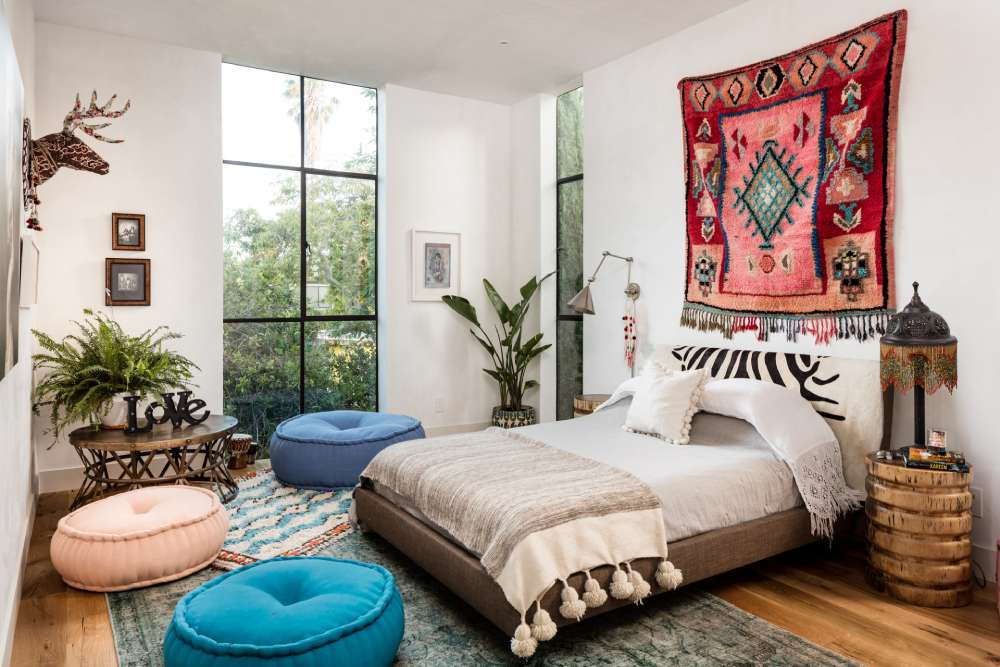
The living room is where boho style goes the hardest. This is where you layer the most, mix the most, and let the collected-over-time look really breathe.
- Floor seating (poufs, oversized cushions) mixed with a main sofa in linen or cotton
- A statement rug as the room’s color anchor
- Coffee table styled with books, brass trays, candles, and small collected objects
If you want more direction on building out this space, there’s useful overlap with eclectic living room decor approaches. The main difference is that bohemian rooms lean heavier on global textiles and natural materials.
Bohemian Bedroom Setup
Bedrooms need the warmth without the chaos. Sleep matters.
Canopy or draped fabric over the bed is the single fastest way to make a bedroom feel bohemian. Sheer linen or cotton gauze in a warm tone, hung from ceiling hooks or a simple wooden dowel, transforms even a basic bed frame.
Nightstands that don’t match, intentionally. A carved wooden stool on one side, a brass-topped side table on the other. Bedding should be linen with layered throws in complementary textures. Check out ideas for throw pillows on beds if you want specific arrangements that work.
Bohemian Kitchen and Dining Touches
Kitchens are tricky for boho. Too much visual clutter near food prep zones gets impractical fast.
Open shelving with mismatched ceramics is the move. Handmade pottery, stoneware mugs in different glazes, wooden cutting boards leaned against the backsplash. Woven placemats and brass utensils on the dining table. Herb gardens on windowsills as functional decor.
For more targeted ideas, bohemian kitchen decor goes deeper into what actually works in cooking spaces without sacrificing function.
Bohemian Bathroom Details
| Element | Bohemian Choice | Why It Works |
|---|---|---|
| Mirror | Vintage brass or carved wood frame | Adds character to a small space |
| Storage | Woven baskets, rattan shelving | Hides clutter while adding texture |
| Towels | Turkish towels in earth tones | Thin, textured, and visually warm |
| Accessories | Handmade ceramic soap dish, terracotta pots | Keeps the artisan feel consistent |
Bathrooms have limited wall and floor space, so restraint matters more here than in any other room. One or two strong boho pieces (a vintage mirror, a set of woven baskets) do more than covering every surface.
Bohemian Decor on a Budget
You don’t need Anthropologie prices to build a bohemian room. The whole style was born from artists who had almost no money. Buying expensive mass-produced “boho” sets from a single retailer is, honestly, the opposite of what the style is about.
Where to Source Affordable Pieces
The secondhand furniture market hit $40.2 billion globally in 2024 and is growing at 8.1% annually through 2034 (Market.us). That growth is driven partly by younger buyers who want unique, sustainable pieces at lower prices. And that market feeds directly into bohemian decor.
Thrift stores and estate sales: primary sources for vintage rugs, brass trays, ceramic vases, and mismatched furniture. The 2024 Thrift Industry Report shows that 8 in 10 consumers have bought at least one non-apparel item secondhand, with home decor and furniture among the top categories.
Flea markets: best for one-of-a-kind finds like hand-carved wooden boxes, old picture frames, and textile remnants.
Online marketplaces: Etsy remains the go-to for handmade macrame, artisan pottery, and vintage textiles. Facebook Marketplace surpassed 1.1 billion global users by 2025 (Mordor Intelligence) and is increasingly used for local furniture finds.
What to Spend On vs. What to Save On
Spend more on:
- One good vintage or handmade rug (it anchors the entire room)
- A statement furniture piece like a rattan chair or carved cabinet
Save on:
- Throw pillows (swap covers seasonally from Etsy or H&M Home)
- Small decor objects (candles, trays, vases from thrift stores)
- Plants and pots (propagate from cuttings, use terracotta from hardware stores)
World Market and H&M Home carry affordable decor pieces that lean bohemian without the artisan markup. Use these for filler items while investing in a few genuine handmade or vintage anchors.
DIY Projects That Actually Look Good
Macrame wall hangings are one of the few DIY projects that genuinely look homemade in a good way. The material cost is low (cotton rope from a hardware store), and YouTube tutorials are endless.
Hand-dyeing fabric with natural dyes (turmeric for gold, avocado pits for blush pink) produces the kind of imperfect, organic tones that define bohemian textiles. Painted terracotta pots in earthy tones and fabric-wrapped vases are other easy wins.
Common Mistakes That Make Bohemian Rooms Look Messy
There’s a line between “collected over time” and “cluttered beyond function.” Most people cross it without realizing, and it’s usually fixable.
Too Many Small Items, No Focal Point
Every bohemian room needs one thing that grabs attention first. A large vintage rug. A bold tapestry. A peacock chair. Without that focal point, the eye bounces around with nowhere to land, and the room reads as chaotic instead of curated.
Aim for one dominant visual anchor per room. Everything else supports it.
Ignoring Negative Space
Maximalism doesn’t mean every square inch needs to be covered. Even the most densely layered bohemian rooms have breathing room. A bare section of wall between two tapestries. An empty corner next to a full bookshelf.
Understanding how space works in interior design helps you know where to leave gaps. Without them, the room feels heavy instead of warm.
Buying a “Boho Set” From One Store
If every item in the room came from the same collection at Target or Urban Outfitters, it’s a costume. Not a style.
Bohemian rooms get their character from mixing sources, eras, and origins. A hand-thrown ceramic from a local artisan next to a mass-produced rattan lamp is fine. An entire room of mass-produced “boho” items from one product line is not. The mismatched quality is what creates harmony in the design, oddly enough.
Forgetting Function
A room still has to work for daily life. If you can’t sit on your sofa because it’s buried in 14 throw pillows, or you can’t eat at your dining table because it’s covered in candles and brass objects, you’ve gone too far.
Pull back until every surface serves both form and function. The best bohemian rooms look effortless precisely because they don’t sacrifice comfort for aesthetics.
Over-Relying on One Material
All rattan everything. All macrame everything. All brass everything. Pick one and you lose the eclectic mix that defines the style.
Aim for at least three to four different materials in any given room: wood, metal, woven fiber, and ceramic, for instance. That variety creates visual rhythm and keeps the eye moving in a way that feels intentional rather than monotonous.
FAQ on Bohemian Home Decor
What defines bohemian home decor?
Bohemian home decor is a style built on layered textiles, mismatched furniture, and collected objects from different cultures and eras. It rejects rigid symmetry. The look prioritizes personal expression, handmade pieces, and earthy, warm color palettes over matching sets.
What colors work best in bohemian rooms?
Earthy tones form the base: terracotta, ochre, rust, olive, and warm browns. Jewel-tone accents like emerald, sapphire, and deep plum add depth. Avoid cool grays and stark whites as your primary palette.
How is bohemian different from boho chic?
Bohemian is the original, maximalist version with dense layering and a lived-in feel. Boho chic is the cleaner, more curated take popularized by retailers like Anthropologie and Urban Outfitters. Less clutter, more white space.
What furniture fits a bohemian living room?
Low-profile seating like floor cushions, leather poufs, and daybeds. Rattan chairs, reclaimed wood tables, and vintage pieces from different eras. Nothing should match. Mix thrifted finds with handmade artisan items for the best result.
Can you do bohemian decor on a budget?
Absolutely. Thrift stores, estate sales, and flea markets are primary sources. Etsy offers affordable handmade macrame and textiles. Invest in one good vintage rug and save on throw pillows, candles, and small decor from budget retailers like H&M Home.
What plants look best in bohemian spaces?
Trailing pothos in macrame hangers is the classic choice. Fiddle leaf figs and snake plants add height. Dried pampas grass and preserved eucalyptus work for low-maintenance texture. Place larger plants in woven baskets as planters.
How do you mix patterns without making a room look messy?
Use the scale rule: combine one large pattern, one medium, and one small. Keep one shared color running through all patterns. A Persian rug, an ikat throw, and a geometric pillow can coexist if they share a common tone.
What lighting works for bohemian interiors?
Moroccan lanterns, Turkish mosaic lamps, and rattan pendants are go-to fixtures. Layer three sources: ambient, task, and accent. Use warm bulbs in the 2700K to 3000K range. Candles in brass holders add mood.
What wall decor suits a bohemian room?
Gallery walls with mismatched frames and mixed content. Macrame wall hangings, woven tapestries, and vintage mirrors with ornate frames. Avoid perfectly aligned grids. The arrangement should look collected over time, not bought in one trip.
What is the biggest mistake people make with bohemian decor?
Buying an entire “boho collection” from a single store. The style depends on mixing sources, eras, and origins. A room where every piece came from the same product line looks like a costume, not a personal space.
Conclusion
Getting bohemian home decor right comes down to one thing: patience. The best boho rooms aren’t assembled in a weekend. They’re built slowly, piece by piece, from thrift stores, flea markets, and artisan shops.
Layer your rugs. Mix your rattan with reclaimed wood. Hang a Moroccan lantern next to a macrame wall piece and let the combination breathe.
Stick with warm ambient lighting, earthy color schemes, and natural materials like bamboo and cane. Let your indoor plants fill the corners. Use kilim pillows and suzani throws to add global character without overthinking it.
Skip the matching sets. Buy fewer things, but buy pieces with a story. That’s what separates a bohemian space from a decorated one.

- Paint Colors That Go with Gray Floors - August 20, 2026
- What Color Bedding Goes with Dark Wood Furniture - August 18, 2026
- What Color Walls Go with Oak Floors - August 16, 2026