Dark walls, carved wood, velvet everything. Gothic home decor has been pulling people in since the Victorian era, and it’s not slowing down. Pinterest reported searches for “medieval core” up 110% heading into 2025.
But getting this style right takes more than painting a room black and buying a candelabra. The line between dramatic and costume-y is thinner than most people think.
This guide covers the full picture: color palettes, furniture, lighting, textiles, room-by-room breakdowns, and the budget strategies that actually work. Whether you’re going for a traditional Victorian Gothic feel or a cleaner modern gothic look, you’ll find what you need to make it hold together.
What Is Gothic Home Decor
Gothic home decor is a style of residential interior design rooted in the architectural language of the 12th to 16th centuries. It pulls directly from the pointed arches, heavy stonework, and ornate carvings that defined medieval European cathedrals and castles.
But here’s the thing most people get wrong. Gothic decor is not Halloween decor. It’s not plastic skulls on a shelf or fake cobwebs draped over a doorframe. The real thing carries weight, history, and a kind of seriousness that seasonal decorations simply can’t replicate.
The style revolves around dark color palettes, carved wood furniture, wrought iron fixtures, stained glass accents, and richly textured fabrics like velvet and brocade. Every piece in a gothic room tends to feel intentional, heavy, and a little dramatic.
Its modern form traces back to the Gothic Revival of the 19th century, when architects like Augustus Pugin pushed medieval design principles back into mainstream culture. Pugin designed the interiors of London’s Palace of Westminster, and his approach to furniture, metalwork, and wallpaper gave gothic interiors a legitimate place in domestic spaces. Horace Walpole’s Strawberry Hill House, built starting in 1749, is considered one of the first residential expressions of this revival.
The style has since split into a few variations. Traditional gothic stays close to the Victorian Gothic Revival, leaning into church-like ornamentation, ecclesiastical references, and antique materials. Modern gothic (sometimes called gothic glam) strips back the historical heaviness and works with cleaner lines, matte black finishes, and a more edited approach to dark interiors.
Pinterest identified “Western Gothic” as a top interior design trend for 2024, combining dark color palettes with vintage Americana motifs. Searches for the term rose 145% year over year. And for 2025, Pinterest Predicts flagged “Castlecore” with searches for “medieval core” climbing 110%, signaling that gothic-adjacent aesthetics keep pulling new audiences.
According to Accio market research, consumer interest in gothic decor follows a strong seasonal pattern, peaking in September and October, but maintaining steady demand through winter months as well.
If you want to understand how this style sits within the broader history of interior design, it helps to know that gothic decor occupies a specific lane. It’s the opposite of minimalist interior design or Scandinavian interior design. Where those styles subtract, gothic adds. Where those styles lighten, gothic darkens.
That tension is exactly what makes it work for the people who love it.
Colors That Define a Gothic Interior
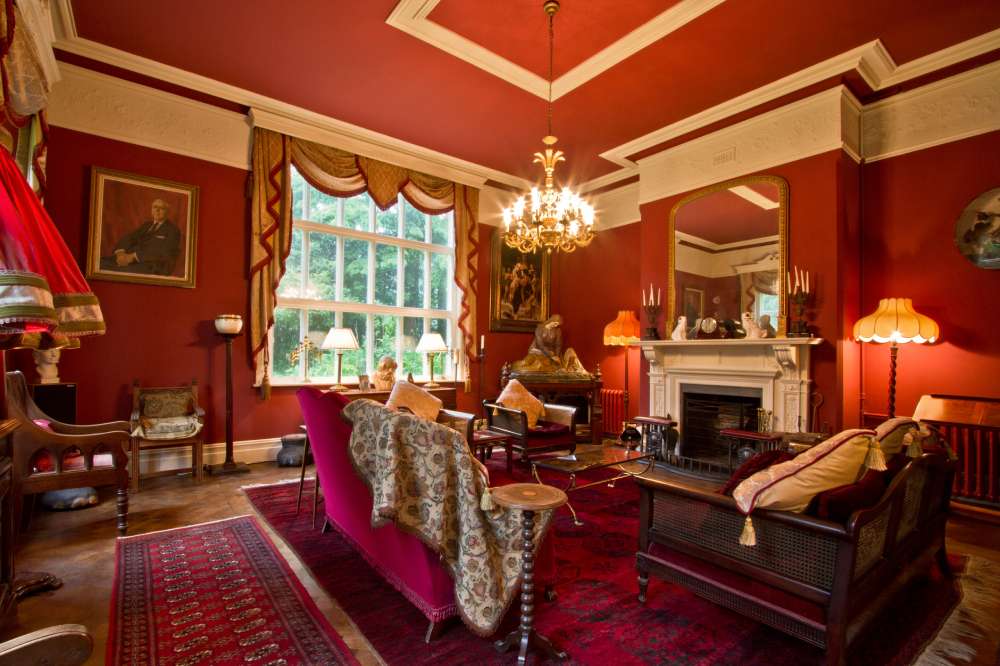
Image source: Giuseppe Digno Photography
The palette does most of the heavy lifting in a gothic room. Get the colors wrong and the whole thing falls apart, either too costume-y or too flat.
Primary tones: black, deep burgundy, plum, midnight blue, forest green, and charcoal gray. These aren’t accent colors. They’re the foundation. Walls, large furniture pieces, and textiles all pull from this range.
Accent metals: aged gold, antique silver, wrought iron black, and burnished bronze. Metallic finishes show up in lighting fixtures, mirror frames, hardware, and decorative objects. They prevent dark rooms from feeling one-dimensional.
The 1stDibs 2025 Designer Trends Survey found that 32% of designers planned to use rich chocolate brown in projects, nearly double the figure from two years prior. Dark red and burgundy continued climbing too, reaching 20% among surveyed designers. These numbers confirm that the broader design world is moving toward the exact tones gothic interiors have always used.
Dark Walls Without Shrinking the Room
This is the concern that stops most people. Dark paint on every wall feels risky, especially in smaller rooms.
The trick is working with lighting and reflective surfaces. A large ornate mirror on a dark wall bounces light back into the space. Metallic accents, glass candle holders, and crystal chandeliers all do the same job.
Farrow & Ball’s Pitch Black and Benjamin Moore’s Black Beauty are popular choices for gothic walls. But plenty of people go with very dark greens or navy blues instead of true black, which gives the room depth without making it feel like a cave.
A Fixr survey of 67 design experts found that 55% named color drenching as the top color trend for 2025. That technique, using the same dark color across walls, trim, and ceiling, actually works well in gothic spaces because it removes visual breaks and makes the room feel larger, not smaller.
Accent Colors That Work With Black
Black is not a solo act in gothic interiors. It needs companions.
- Burgundy and deep red add warmth without fighting the darkness. Think colors that pair well with burgundy for guidance on building out that palette.
- Gold introduces contrast through metallics, not competing wall colors. Colors that complement gold can help you find the right balance of brightness.
- Ivory or stone gray offer relief in small doses, usually through textiles, art frames, or a single architectural element.
The goal is contrast without clashing. A room that’s entirely black feels oppressive. A room that’s black with burgundy velvet, gold candelabras, and one ivory throw across a dark sofa? That feels intentional.
Understanding color theory helps a lot here. Gothic palettes work because they sit in the same value range (all dark) with strategic pops from metals and lighter neutrals. It’s the same logic behind any well-planned color approach, just applied to the darkest end of the spectrum.
Furniture Styles for Gothic Rooms
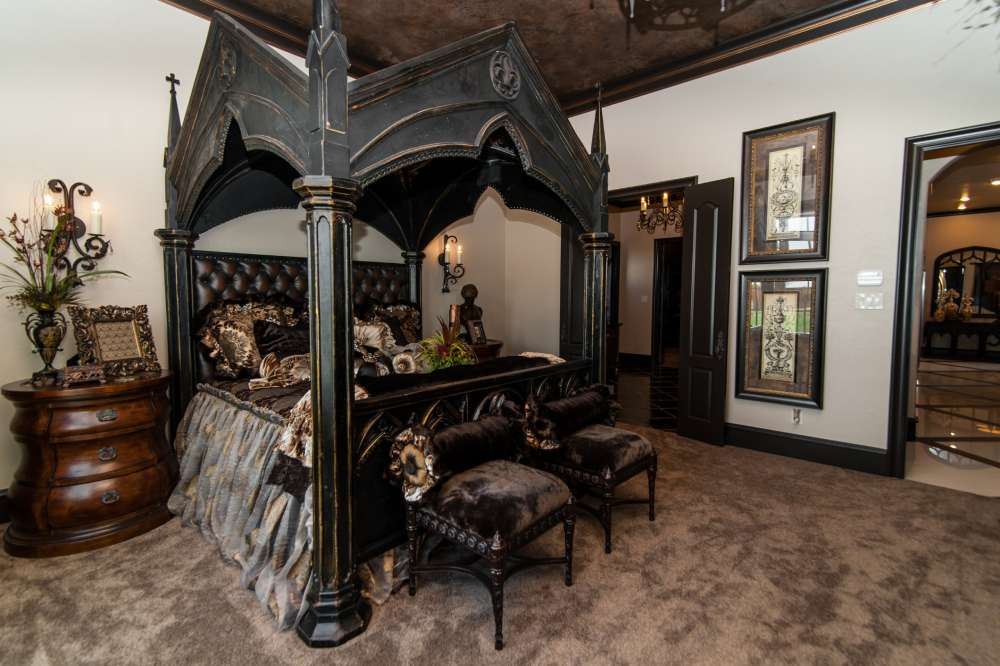
Image source: Luxe Leather Furniture
Gothic furniture is big. Physically big. And it doesn’t apologize for it.
The pieces that define this style lean on carved wood (oak, mahogany, walnut), tufted velvet upholstery, and silhouettes borrowed from medieval and Victorian-era design. Pointed arch motifs, quatrefoil patterns, and claw-foot details show up repeatedly.
Augustus Pugin, who shaped the Gothic Revival’s approach to furniture in the 1840s, believed that furniture should reflect its construction honestly. No fake ornamentation. No hidden shortcuts. His oak tables and chairs for the Palace of Westminster set the template that gothic furniture still follows, even when modernized.
| Furniture Type | Key Features | Where It Works Best |
|---|---|---|
| Canopy bed | Tall posts, heavy draping, dark wood frame | Bedroom focal point |
| Throne chair | High back, carved details, velvet seat | Living room or study |
| Claw-foot table | Ornate legs, dark wood, heavy build | Dining room |
| Tufted velvet sofa | Deep buttoning, rolled arms, dark fabric | Living room centerpiece |
Key Furniture Pieces for Each Room
A gothic bedroom almost always starts with the bed. Canopy beds with dark wood frames and heavy draping create a focal point instantly. Pair it with a carved nightstand and a tufted bench at the foot.
Living rooms center on seating. Throne-style chairs, high-back armchairs with nail-head trim, and deep velvet sofas give the room its personality. Decorative pillows on the sofa in damask or dark floral prints tie it together.
Dining rooms call for a long, heavy wooden table with high-back chairs. The table itself does the talking. Scale and proportion matter a lot here. A flimsy table in a gothic dining room kills the whole look.
Where to Find Gothic Furniture
Design Toscano specializes in reproduction gothic and medieval pieces. It’s probably the most well-known source for this style, offering everything from gargoyle statues to carved wood thrones at a range of price points.
Restoration Hardware carries darker wood pieces and tufted upholstery that work in gothic rooms, even if they’re not specifically marketed as gothic. IKEA occasionally has pieces that can be hacked or repainted to fit. Wayfair stocks wrought iron bed frames and dark wood shelving at budget-friendly prices.
For authentic antiques, estate sales and Facebook Marketplace remain the best options. Look for Victorian-era pieces with original carvings. The global home decor market was valued at roughly $779 billion in 2024 according to Market Data Forecast, and the premium furniture segment is growing at 9.1% annually. Vintage and antique pieces increasingly hold or grow their value.
Gothic Wall Decor and Art
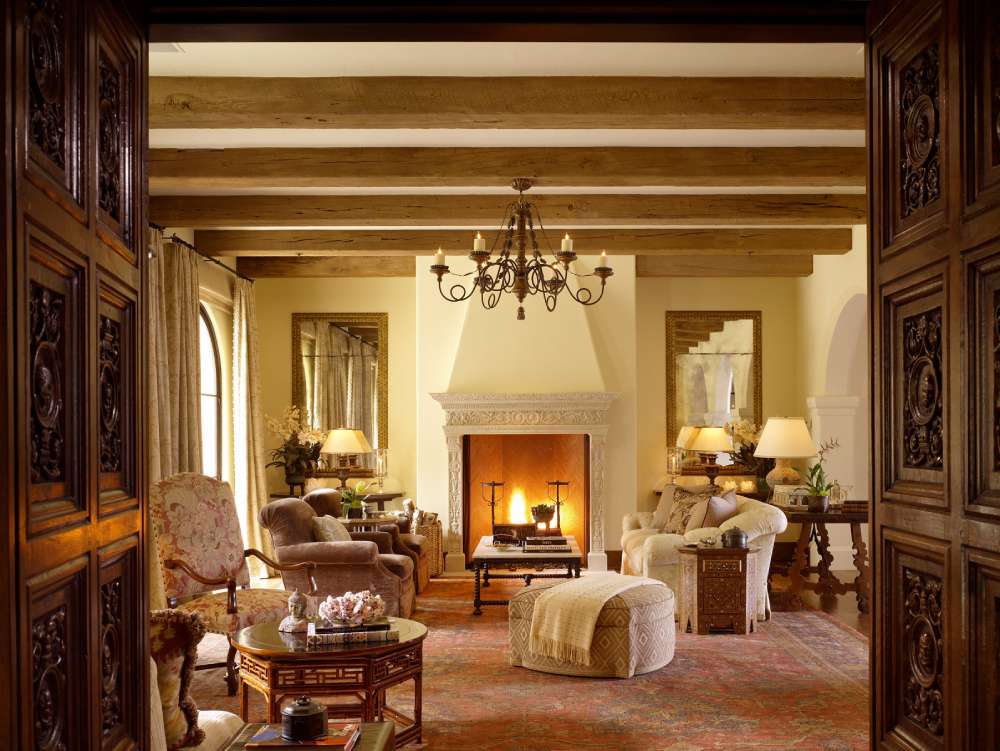
Walls in a gothic room do more than hold paint. They carry texture, pattern, and visual weight.
The easiest way to build that layered feeling is wallpaper. Damask patterns have been tied to gothic and Victorian interiors for over a century. Dark floral wallpaper, William Morris-inspired botanical prints, and flocked textures all fit. Even a single accent wall in a strong pattern can anchor a room.
Grand View Research data shows that North America holds over 40% of the global wall decoration market, with the wall art segment accounting for about 75% of the US wall decor market according to Business Wire. People are spending real money on what goes on their walls.
Art and Imagery
Gothic wall art leans dark, but it’s not all doom. Think dark botanical illustrations, memento mori prints, medieval-inspired woodcuts, and religious iconography. Pre-Raphaelite Brotherhood reproductions fit beautifully in these spaces.
Etsy has become one of the biggest marketplaces for gothic-specific art prints. Original oil paintings in dark, moody palettes are worth hunting for at estate sales. Avoid mass-produced “spooky” prints that read as seasonal decoration rather than permanent decor.
Architectural Wall Elements
Wainscoting and panel molding add physical depth to walls. Dark-stained wood paneling in a study or dining room is one of the most effective gothic treatments. Faux stone panels work too, especially in a smaller apartment where real stone isn’t practical.
Mirrors deserve their own mention. Ornate gilded frames, arched mirrors that reference cathedral windows, and convex mirrors all show up in well-done gothic rooms. They serve double duty: decorative on their own, and functional for bouncing light around dark spaces.
Gothic Lighting Fixtures
Lighting can break a gothic interior faster than any other single element. Get it wrong and a dark room just looks dark. Get it right and it looks intentional, moody, and deeply atmospheric.
The core principle of ambient lighting applies here, but the execution is completely different from what you’d see in a modern or contemporary space. Gothic rooms rely on warm, diffused, and layered light sources rather than bright overhead fixtures.
Chandeliers as Centerpieces
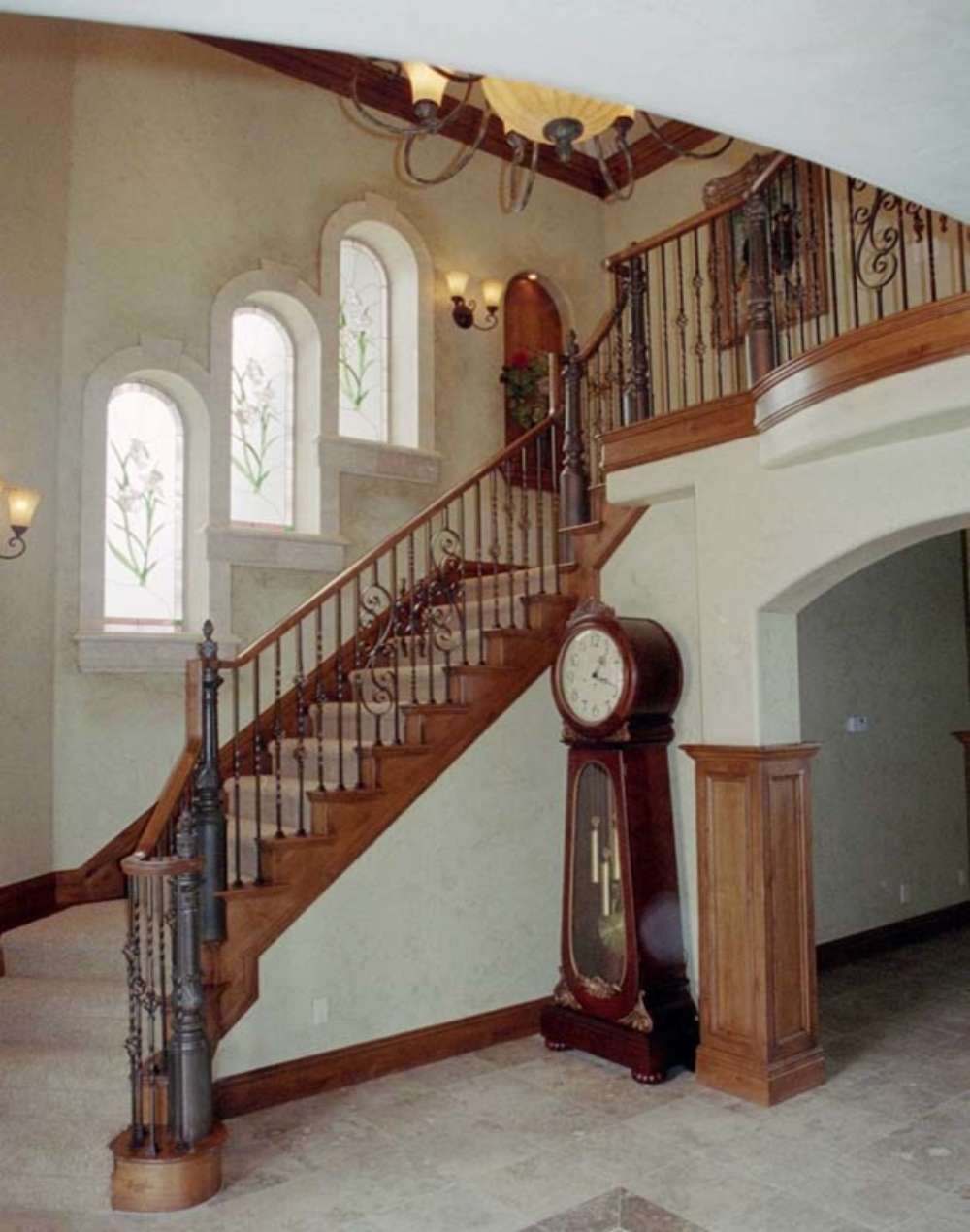
Image source: Titan Stairs, Utah!
Every gothic room benefits from one dramatic overhead fixture. Candelabra-style chandeliers in wrought iron or dark metal finishes are the classic choice. Crystal chandeliers work too, especially with amber-toned glass or a blackened frame.
Pendant lighting with a gothic sensibility tends toward lantern-style or cage designs. Dark bronze finishes and candle-shaped bulbs keep the look consistent. The key is choosing fixtures with visible structure, weight, and detail. Thin, sleek, contemporary pendants won’t work here.
The global home decor market’s lighting segment continues to grow. Printful reports that lighting solutions rank among the top product categories in the broader home decor market, and demand for statement fixtures specifically has increased alongside the maximalism and dark-mode trends of 2024 and 2025.
Wall Sconces and Table Lamps
Wall sconces with candle-style bulbs or wrought iron frames add accent lighting that feels period-appropriate. Place them flanking a mirror, along a hallway, or beside a bed frame.
Table lamps with stained glass shades (Tiffany Studios-style) or dark fabric shades sit well on nightstands, console tables, and desks. Louis Comfort Tiffany’s original designs from the Art Nouveau period cross over into gothic rooms because they share that same emphasis on color, craft, and ornamental detail.
Candlelight
Don’t underestimate actual candles. Tall taper candles in iron candelabras, pillar candles on carved holders, and even clusters of varied-height candles on a mantel or dining table create the kind of rhythm that electric lights struggle to match.
Accio’s analysis of Amazon data shows that “Gothic Black Wall Candle Sconces & Holders” maintained steady search volume and increasing sales throughout 2025, making candle-based lighting one of the most accessible entry points into gothic decor.
Bulb color temperature matters for electric fixtures. Stay in the 2200K to 2700K range (warm white to amber). Anything above 3000K starts to feel clinical, which kills the mood in seconds.
Textiles and Fabrics in Gothic Decor
Fabric choices separate a mediocre gothic room from a convincing one. This style demands heavy, tactile, visually rich textiles. Linen and cotton alone won’t cut it.
Grand View Research notes the textile segment is expected to experience the fastest growth in the home decor market through 2030. And within gothic interiors specifically, fabric is where most of the budget tends to go after furniture.
Primary Fabrics
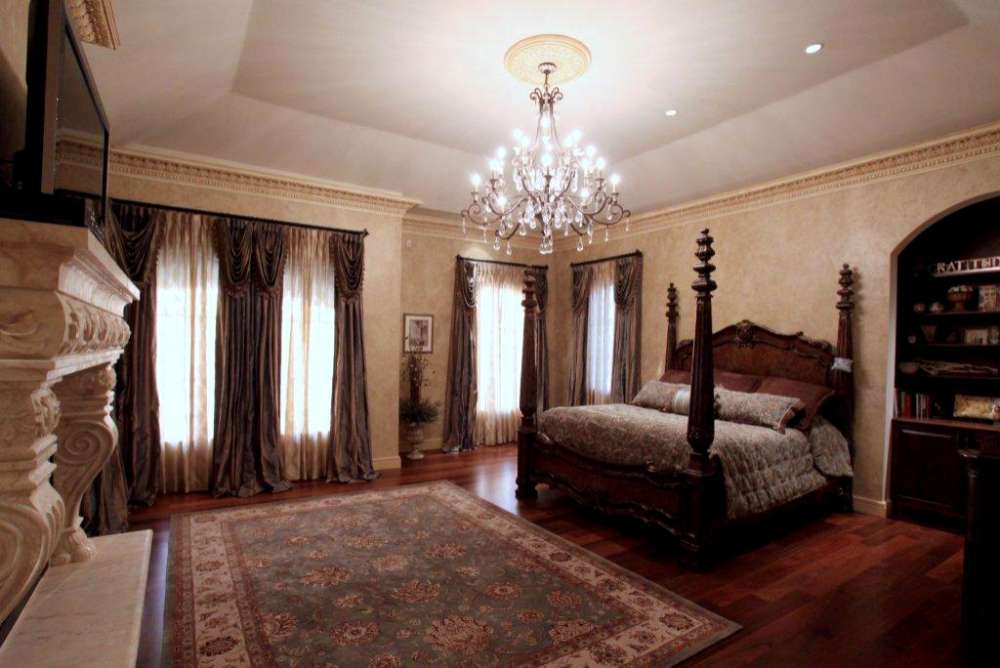
Image source: Dream Home Design USA
Velvet is the dominant fabric. It shows up on sofas, armchairs, headboards, curtains, and throw pillows. The way it catches light gives dark rooms the visual depth they need.
Beyond velvet, the lineup includes brocade for formal pieces, lace for sheers and table runners, jacquard for upholstery, heavy linen for a more rustic gothic feel, and faux fur for layering on beds and seating. Each brings a different kind of texture to the room.
The 1stDibs survey found that deep reds, browns, and rich fabrics like velvet and mohair gained popularity for 2025, with designers specifically noting a move away from minimal interiors toward character-filled spaces.
Curtains and Window Treatments
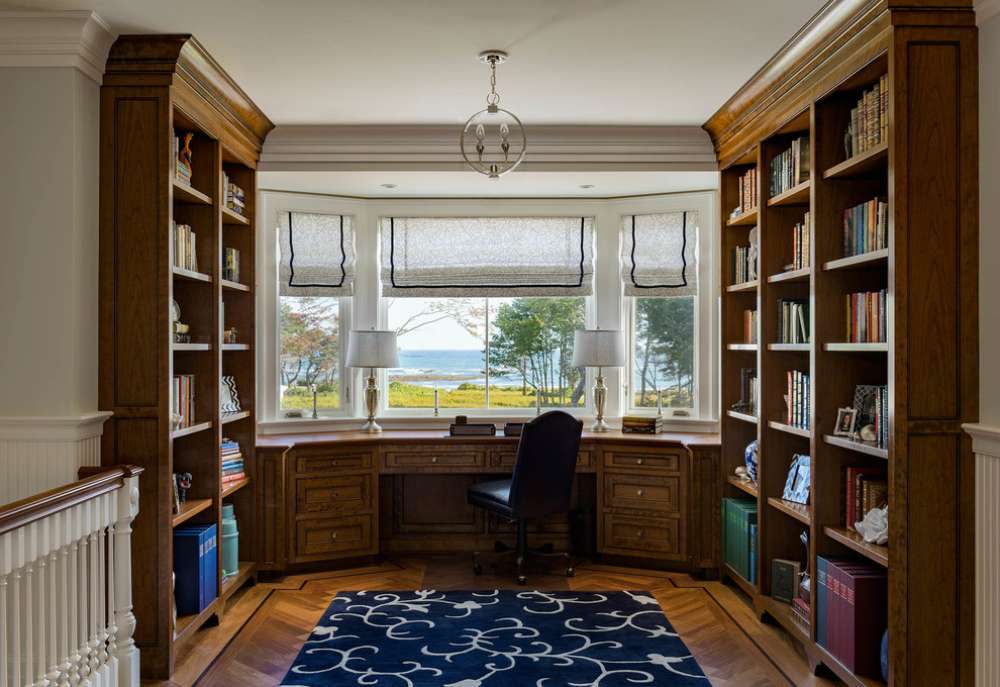
Floor-length velvet drapes in deep burgundy, midnight blue, or black are the standard gothic window treatment. They block light (which is often the point) and add substantial visual weight to the room.
Layering works well. A sheer lace panel underneath heavier drapes creates a filtered-light effect during the day while maintaining that dark, enclosed feel at night.
If your walls are already dark, your curtains don’t have to match exactly. Curtain colors for gray walls translate well to the charcoal tones common in gothic rooms. Dark emerald or deep plum curtains against charcoal walls create harmony through tonal variation rather than exact matching.
Rugs and Floor Textiles
Dark hardwood or stone-look floors paired with Persian or Oriental rugs is the classic gothic combination. The rug introduces pattern, warmth, and a sense of layered history.
A rug under a black sofa should pull from the room’s accent palette. Burgundy, gold, and deep green patterns against a dark field are typical choices.
For bedrooms, a large area rug placed under a queen bed anchors the space and keeps bare feet off cold floors. Choose something with enough visual weight to hold its own against dark bedding and heavy curtains.
Throw pillows on the bed in damask, skull motifs, or dark florals finish the textile story. Mix sizes and shapes. Gothic rooms are not about matching sets. They’re about accumulation, and looking a little bit like everything was collected over time.
Gothic Decor by Room
Gothic style doesn’t work the same way in every room. A bedroom can handle heavier, moodier treatments than a kitchen. And a bathroom needs materials that survive moisture, which rules out half the typical gothic toolkit.
The 2025 Houzz and Home Study found that kitchens and guest bathrooms tied as the most renovated rooms at 24% each. That matters here because it means homeowners are already investing in the exact spaces where gothic details make the biggest impact.
Gothic Living Room Setup
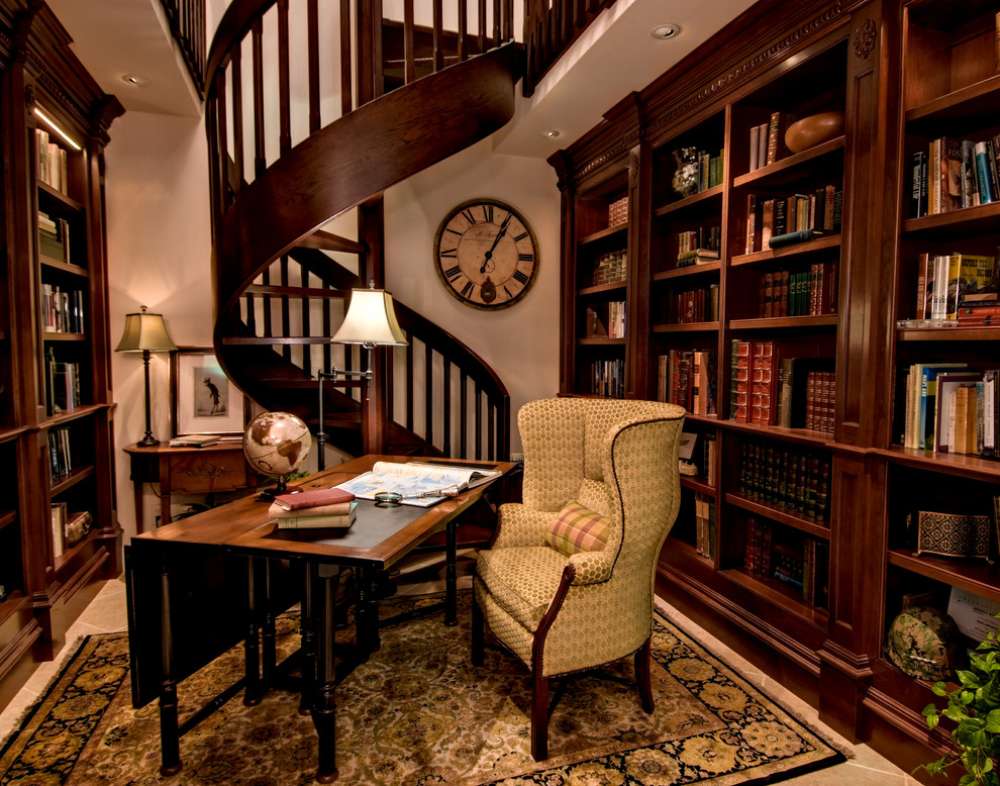
Image source: Viscusi Elson Interior Design – Gina Viscusi Elson
The living room is where you set the tone for the whole house. Start with one strong focal point and build around it.
Fireplace route: A carved stone or dark wood mantel with candelabras and an oversized ornate mirror above it. Arranging furniture around the fireplace gives the room a natural gathering point.
Bookcase route: Floor-to-ceiling dark wood shelving filled with leather-bound books, curiosities, and gothic art. This is the fireplace bookshelf approach taken to its darkest conclusion.
Layer in a tufted velvet sofa, a Persian rug, and heavy drapes. Throw pillows for a dark couch in damask or deep floral patterns pull the seating area together.
Gothic Bedroom Essentials
Houzz data shows median spending on primary bedrooms dropped to $2,750 in 2024, down 21% from the year before. Good news for gothic bedrooms, which rely more on fabric and lighting than structural renovation.
- A canopy bed or tall upholstered headboard as the anchor
- Layered dark bedding in velvet, brocade, or heavy cotton
- Throw pillow combinations mixing textures and motifs
- Wall sconces flanking the bed for warm, low light
For a complete approach, check out romantic bedroom decor ideas. Gothic and romantic bedrooms share a lot of DNA, especially around textiles and mood lighting.
Gothic Bathroom Details
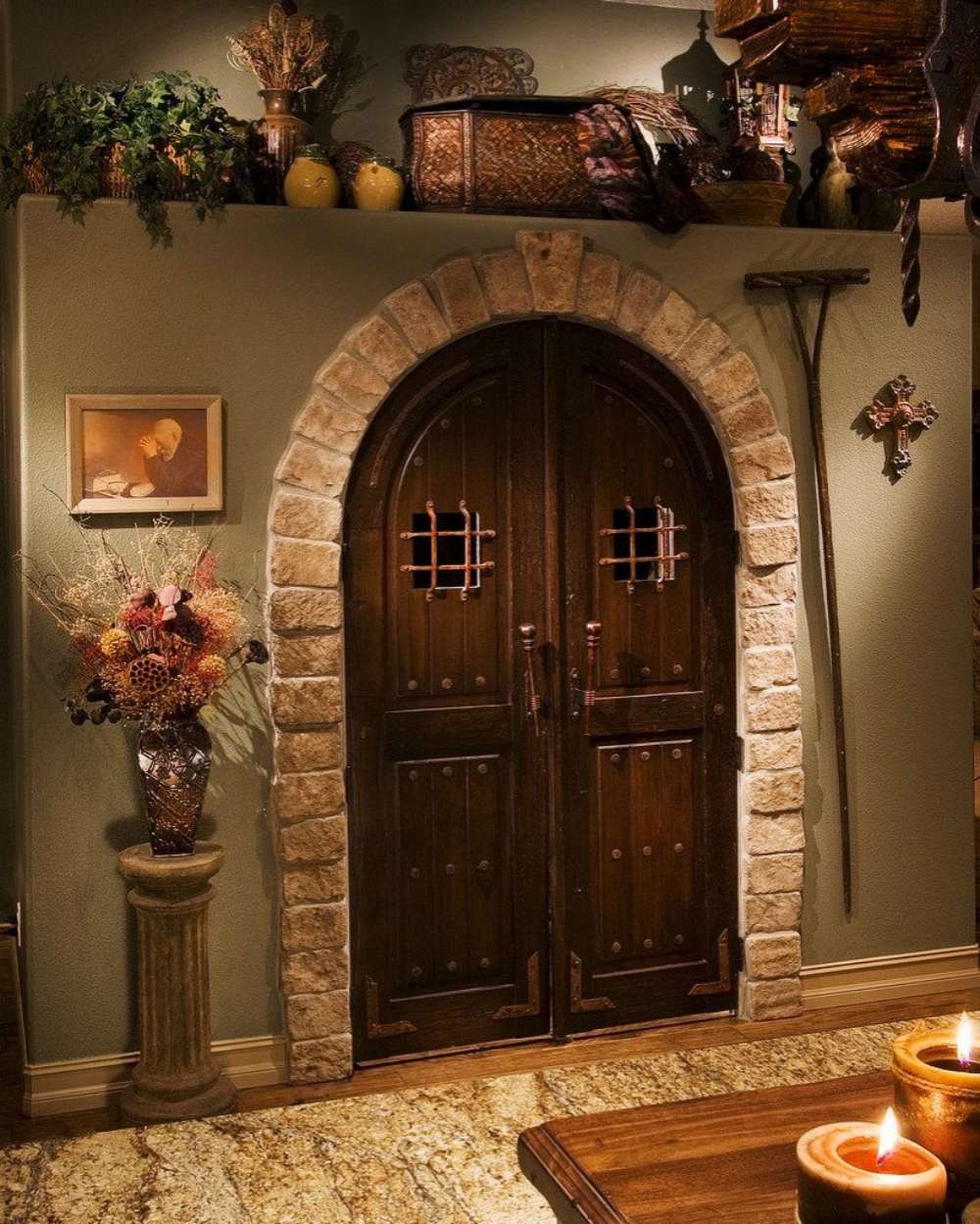
Image source: Central Kitchen & Bath
Bathrooms are tricky. Velvet and brocade don’t belong near showers. But gothic still works here through hard materials and fixtures.
| Element | Gothic Approach | Practical Note |
|---|---|---|
| Fixtures | Unlacquered brass, aged gold, or oil-rubbed bronze | Adds warmth to dark spaces; avoid matte black if resale is a concern. |
| Tub | Clawfoot with a matte black or charcoal exterior | Cast iron holds heat significantly longer than acrylic. |
| Tile | Dark marble, black hexagon, or deep emerald green | Darker grout is more forgiving and hides mineral buildup. |
| Storage | Apothecary jars, dark wood floating shelves | Open shelving adds character but requires curated styling. |
Accio’s market analysis of black bathroom fixtures shows search interest peaked at 97 in January 2025 before declining through mid-year, suggesting the trend is stabilizing rather than growing. For longevity, brass and aged gold pair better with gothic bathrooms than all-black hardware.
Gothic Dining Room and Kitchen Touches
A long, heavy wooden table with high-back chairs is the centerpiece. Think carved oak with visible grain. Iron candelabras down the center, not floral arrangements.
Kitchens are harder to make fully gothic without a major renovation. But you can bring gothic touches through kitchen color schemes with dark floors, wrought iron pot racks, dark cabinet hardware, and stained glass window film on upper cabinets.
The National Kitchen & Bath Association’s 2025 report found that 71% of designers now prefer colorful kitchens over all-white ones, which opens the door for deeper, moodier kitchen palettes.
Gothic Home Decor on a Budget
You don’t need a Restoration Hardware budget to pull off gothic decor. Some of the best gothic rooms are built from thrift store finds, DIY projects, and smart prioritization.
The 2025 Houzz study reports that median household renovation spending dipped to $20,000 in 2024. But most gothic transformations don’t require structural work. Paint, textiles, and lighting handle the bulk of it.
High-Impact, Low-Cost Changes
Paint is the single biggest lever. One gallon of Sherwin-Williams or Benjamin Moore in a deep charcoal, plum, or midnight blue changes a room’s entire personality for under $60.
After paint, focus on lighting. Swap generic overhead fixtures for a thrifted chandelier spray-painted black. Add candles in iron holders. These cost almost nothing and do more for the mood than anything else.
Textiles come third. Dark velvet curtains, a few throw pillows for a black couch, and one good area rug shift the room dramatically.
Where to Source on a Budget
Clever Real Estate found that 93% of homeowners would be willing to DIY a renovation project. For gothic decor specifically, DIY delivers outsized results because the style rewards imperfection and patina.
- Thrift stores and estate sales: Ornate frames, candelabras, dark wood furniture, and mirrors. A coat of black spray paint transforms most finds.
- Facebook Marketplace: Victorian-era furniture shows up regularly, often for a fraction of retail.
- Dollar Tree and Target: Seasonal Halloween sections carry gothic-adjacent items (skull decor, dark candle holders, black lace) at rock-bottom prices.
- Amazon: Gothic wall art prints, wrought iron sconces, and velvet pillow covers start under $15.
What to Invest in vs. What to Save On
Invest in: One statement furniture piece (a carved wood bed frame or a tufted velvet sofa), quality paint, and good curtains. These anchor the room.
Save on: Decorative objects, wall art, candle holders, and small accessories. These are easy to find cheap and swap out over time. The affordable apartment decor approach applies here: spend on what you see every day, save on what you can replace.
Modern Gothic vs. Traditional Gothic Decor
These two approaches share a color palette but almost nothing else in terms of execution. Choosing the wrong one for your space (or mixing them carelessly) creates visual confusion fast.
The 1stDibs 2025 Designer Trends Survey showed 33% of designers leaning into maximalism and an equal 33% toward eclecticism. Traditional gothic fits the maximalist camp. Modern gothic sits closer to the contemporary end, with dark colors applied to cleaner silhouettes.
| Feature | Traditional Gothic | Modern Gothic |
|---|---|---|
| Furniture | Ornate carvings, heavy wood, tufted velvet | Clean lines, matte black, low-profile silhouettes |
| Walls | Damask wallpaper, panel molding, dark paint | Solid dark paint, lime-wash textures, minimal trim |
| Lighting | Candelabra chandeliers, Tiffany-style lamps | Black geometric pendants, hidden LED strips |
| Metals | Aged gold, wrought iron, antique silver | Matte black, brushed nickel, smoked chrome |
| Overall Feel | Victorian parlor, cathedral-inspired | Dark gallery, high-end “Moody” loft |
When Traditional Works Best
Older homes with existing architectural details (crown molding, arched doorways, hardwood floors) are built for traditional gothic. The ornamentation already exists. You’re just leaning into it.
Victorian home decor and traditional gothic overlap heavily. If your house was built before 1920, traditional gothic will feel like it belongs there. Period-accurate touches from the Arts and Crafts Movement, William Morris wallpapers, and Pre-Raphaelite art prints all fit naturally.
When Modern Gothic Works Best
Newer construction, apartments, and open-concept layouts suit modern gothic. These spaces lack the architectural bones for heavy ornamentation, so a pared-back approach reads better.
Think matte black furniture, dark walls with no wallpaper, one or two statement pieces (a sculptural chandelier, a large ornate mirror), and minimal accessories. The industrial interior design crowd has been doing a version of this for years, just without the gothic vocabulary.
For apartment dwellers working with limited square footage, apartment decorating ideas that prioritize paint, textiles, and lighting over bulky furniture make modern gothic more practical than traditional.
Common Mistakes With Gothic Home Decor
Gothic decor has a narrow margin between “dramatically beautiful” and “haunted house gift shop.” Most mistakes fall into a few predictable categories.
Going Too Dark With No Relief
A room painted entirely in black with black furniture, black curtains, and no metallic accents or lighter textiles just looks like a void. Balance still matters, even in dark spaces.
Every gothic room needs at least one source of visual relief. An ivory throw, a gilded mirror frame, stone-colored ceramics, or light from a well-placed sconce. The colors that work with black are more varied than people assume.
Confusing Gothic With Halloween
Novelty skulls, rubber bats, and plastic cobwebs are not gothic decor. They’re seasonal props. The distinction matters because gothic style carries year-round credibility while Halloween accessories look out of place by November 1st.
Real gothic accessories include carved gargoyle statues, wrought iron wall sconces, apothecary jars, antique books, and dark botanical prints. Quality over quantity, always.
Ignoring Lighting
Dark color palettes absorb light. Without enough warm light sources, the room reads as dim and uninviting rather than moody and atmospheric.
Layer your lighting: ambient light from a chandelier, task lighting at reading areas, and candles or sconces for warmth. Stay below 2700K on bulb temperature.
Overcrowding the Room
Gothic style rewards density, but there’s a line between “collected over decades” and “cluttered.” Every ornate piece needs breathing room. Using space intentionally lets individual pieces make their statement.
Good space planning keeps even a heavily decorated gothic room from feeling chaotic. Leave some negative space on shelves, don’t double up on statement pieces in the same sightline, and resist the urge to fill every surface.
No Cohesion Between Rooms
One fully gothic room in an otherwise modern or farmhouse-style home creates a jarring disconnect. If you’re committing to gothic in the bedroom, carry at least some of that dark palette into adjacent hallways and shared spaces.
Unity across a home doesn’t mean every room needs to be identical. But there should be a thread, whether that’s a shared color, a repeated material, or a consistent metal finish that ties the gothic space to the rest of the house.
FAQ on Gothic Home Decor
What is gothic home decor?
Gothic home decor is a design style drawn from Gothic architecture of the 12th to 16th centuries. It features dark color palettes, carved wood furniture, pointed arch motifs, wrought iron fixtures, and heavy textiles like velvet and brocade.
Is gothic decor the same as Halloween decor?
No. Gothic decor is a year-round interior style rooted in the Gothic Revival movement and Victorian-era design. Halloween decor uses seasonal novelty items. Gothic rooms feature quality materials, antique pieces, and intentional dark aesthetics.
What colors work best for gothic interiors?
Black, deep burgundy, plum, midnight blue, forest green, and charcoal gray form the core palette. Accent metals like aged gold, antique silver, and wrought iron black prevent dark rooms from feeling flat.
Can gothic decor work in a small apartment?
Yes. Focus on paint, textiles, and lighting rather than bulky furniture. Dark walls with reflective surfaces like ornate mirrors and metallic accents actually make small spaces feel deeper, not smaller.
What furniture defines a gothic room?
Carved wood pieces in oak or mahogany, tufted velvet sofas, throne-style chairs, canopy beds, and claw-foot tables. Design Toscano, Restoration Hardware, and estate sales are common sources for these pieces.
What is the difference between modern gothic and traditional gothic?
Traditional gothic uses ornate carvings, damask wallpaper, and Victorian-era references. Modern gothic strips back the ornamentation, using matte black finishes, clean lines, and minimal accessories against dark walls.
How do you light a gothic room properly?
Layer warm light sources. Use a candelabra-style chandelier for ambient light, wall sconces for accents, and real candles for atmosphere. Keep bulb temperature between 2200K and 2700K to maintain warmth.
What fabrics are used in gothic decor?
Velvet is the primary fabric. Brocade, lace, jacquard, heavy linen, and faux fur all play supporting roles. Floor-length velvet drapes and dark patterned rugs are standard textile choices for gothic rooms.
Is gothic home decor expensive?
It doesn’t have to be. Paint, thrift store finds, and DIY projects handle most of the transformation. Black spray paint on a thrifted chandelier or ornate frame delivers gothic style for under $10.
What is the biggest mistake people make with gothic decor?
Going too dark with zero contrast. Every gothic room needs visual relief through metallic accents, lighter textiles, or reflective surfaces. A room that’s entirely black without balance just looks like a void.
Conclusion
Gothic home decor isn’t a trend that fades when the season changes. It’s a full design system built on centuries of architectural history, from medieval cathedrals to Augustus Pugin’s Victorian interiors.
The key is restraint within the darkness. Dark color palettes need metallic accents. Ornate furniture needs breathing room. Candlelight needs to be layered with sconces and chandeliers.
Start with what makes the biggest difference first. Paint, lighting, and one strong textile choice will shift a room faster than a dozen small accessories ever could.
Whether you’re drawn to damask wallpaper and carved wood furniture or prefer the cleaner edge of matte black finishes against dark walls, the approach stays the same. Build slowly. Source thoughtfully. Let every piece earn its place.
Gothic rooms that last are the ones that look collected, not decorated.

- Paint Colors That Go with Gray Floors - August 20, 2026
- What Color Bedding Goes with Dark Wood Furniture - August 18, 2026
- What Color Walls Go with Oak Floors - August 16, 2026