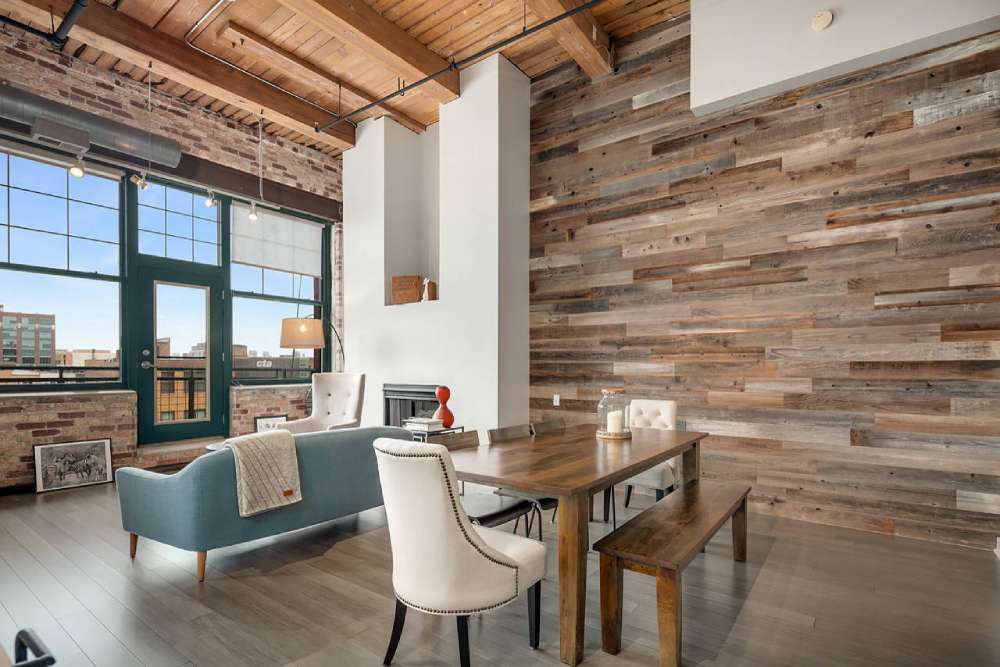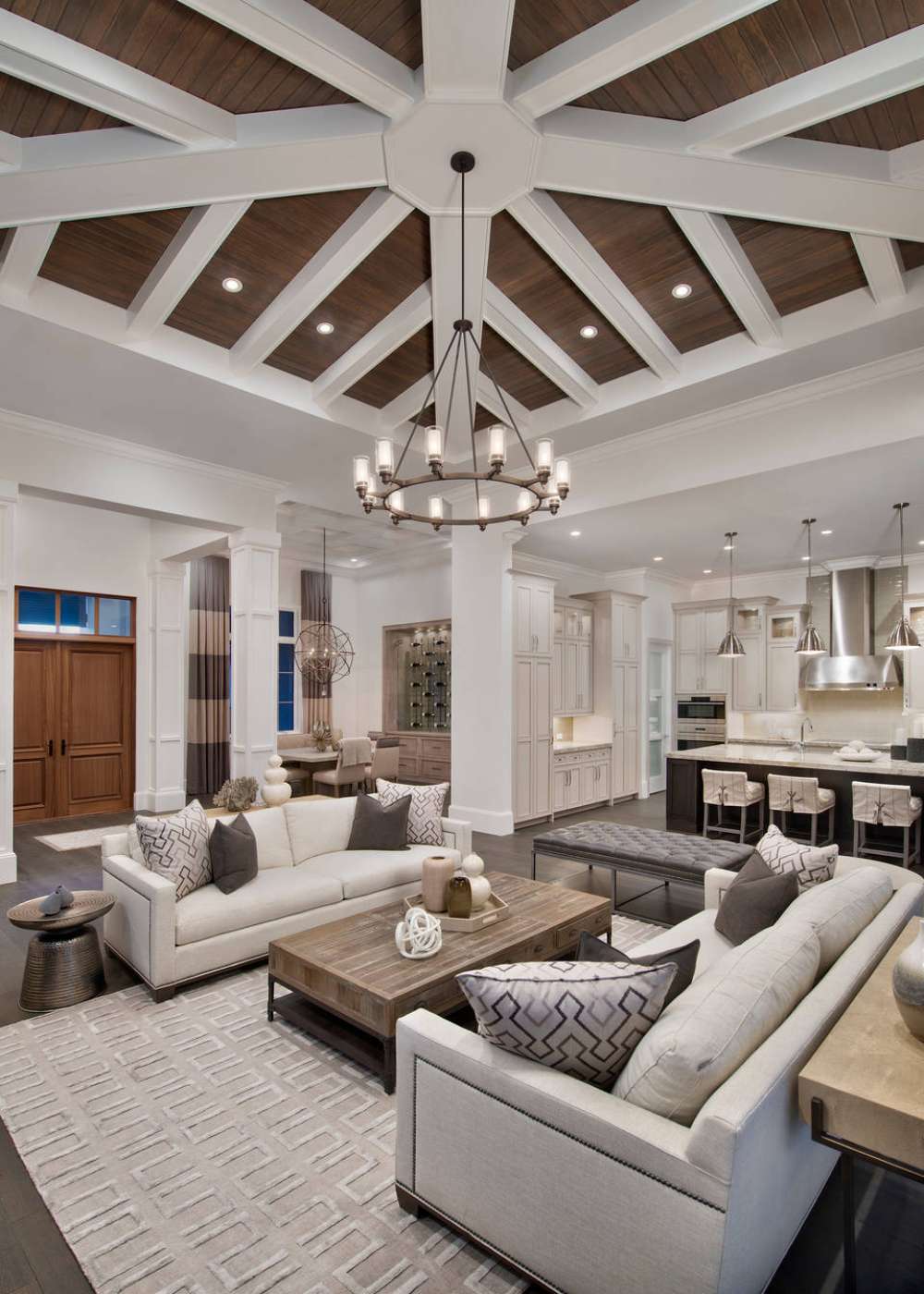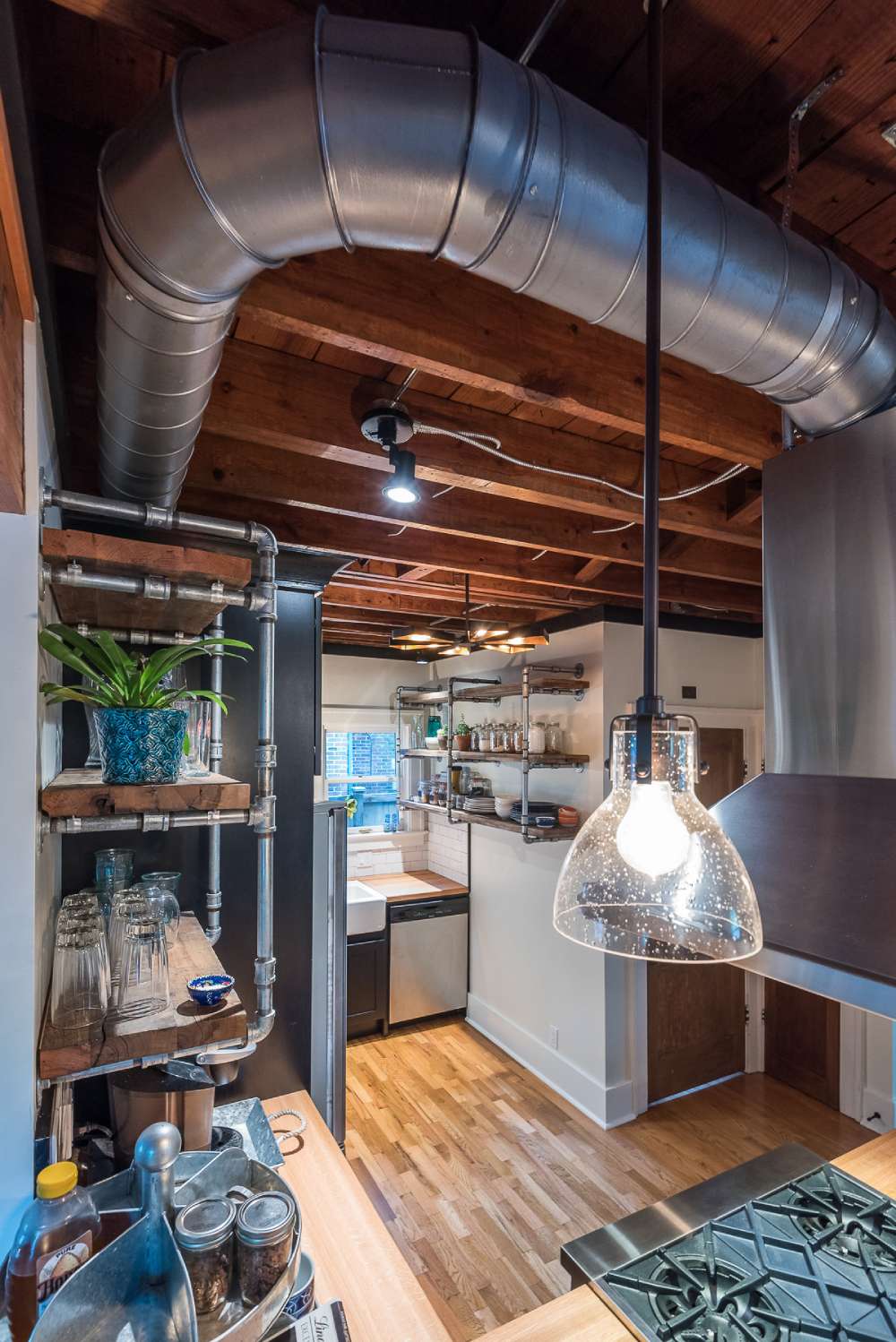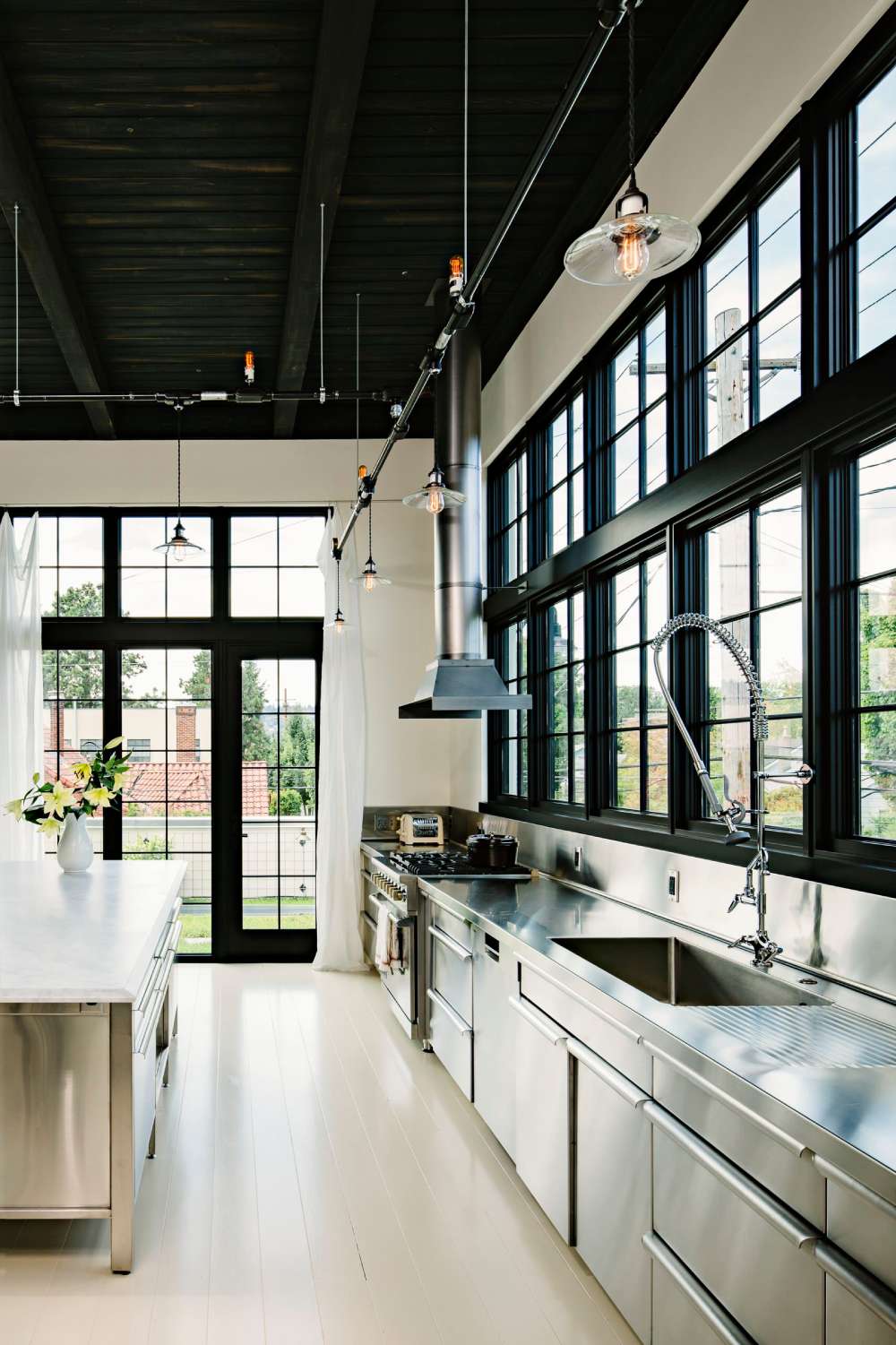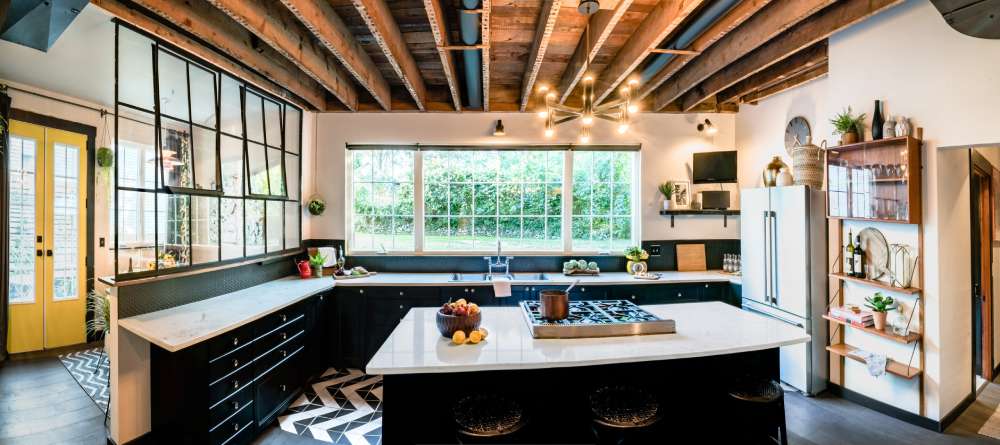

Exposed brick, black steel, and reclaimed wood shouldn’t work together in a living room. But they do. Industrial chic home decor takes the raw bones of old warehouses and factory lofts and turns them into spaces that feel both rugged and genuinely livable.
The style started in converted manufacturing buildings in New York and London. It stuck around because the mix of rough materials and polished furnishings hits a balance that other design styles struggle to pull off.
This guide covers the specific materials, color palettes, furniture, lighting, and room-by-room approaches that make industrial chic work. Plus the common mistakes that make it look cheap instead of intentional.
What Is Industrial Chic Home Decor?
Industrial chic home decor is a design style that pairs raw, unfinished materials with polished, intentional furnishings to create spaces that feel both rugged and refined. Think exposed brick walls next to a velvet sofa. Steel beams above a reclaimed wood dining table.
The whole point is tension. Rough against smooth, old against new, hard against soft.
It grew directly out of warehouse and factory conversions in cities like New York, London, and Detroit during the late 20th century. Artists in SoHo and Tribeca took over abandoned manufacturing buildings with high ceilings, cast-iron columns, and massive windows because the rent was cheap and the space was huge.
They didn’t cover up the brick or hide the ductwork. They left it all exposed, and that became the look.
The global interior design market was valued at $137.93 billion in 2024, according to Grand View Research, with residential design growing at a 4.5% annual rate. A significant chunk of that demand comes from homeowners drawn to styles like industrial chic that mix authenticity with function.
People confuse this style with a few similar ones, and the differences matter. Pure industrial interior design keeps things stark. Metal, concrete, minimal softness. It looks like the factory never left. Farmhouse design borrows some of the same materials (reclaimed wood, weathered finishes) but leans heavily into warmth, floral patterns, and country references.
Rustic interior design shares the love of natural materials but skips the urban edge entirely.
Industrial chic sits in the middle. It keeps the grit but adds comfort. The “chic” part isn’t optional.
Core Design Principles Behind the Style
The foundation comes down to a few rules that hold across every room.
Honest materials first. Concrete, steel, brick, and wood in their natural state. No faux anything. The material’s age and imperfection is the point.
Open layouts. The style came from loft spaces that had zero interior walls, so compartmentalized rooms work against it. You want sightlines and flow, not chopped-up spaces.
Mixing eras deliberately. A vintage factory cart used as a coffee table next to a modern leather sofa. This isn’t accidental. The mix of old and new creates the visual friction that makes the style work.
Understanding contrast in interior design is really what separates a good industrial chic room from one that just looks unfinished.
Materials That Define the Industrial Chic Look
Materials do most of the talking in this style. Without the right ones, you just have a cold room with bad lighting.
Exposed Brick

Image source: Jane Kim Architect
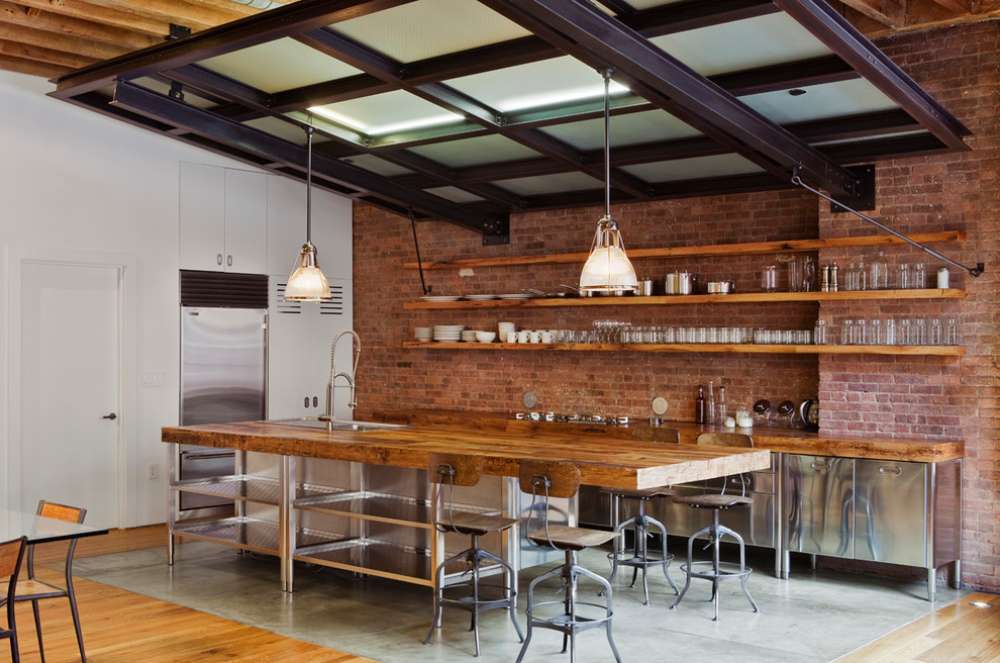
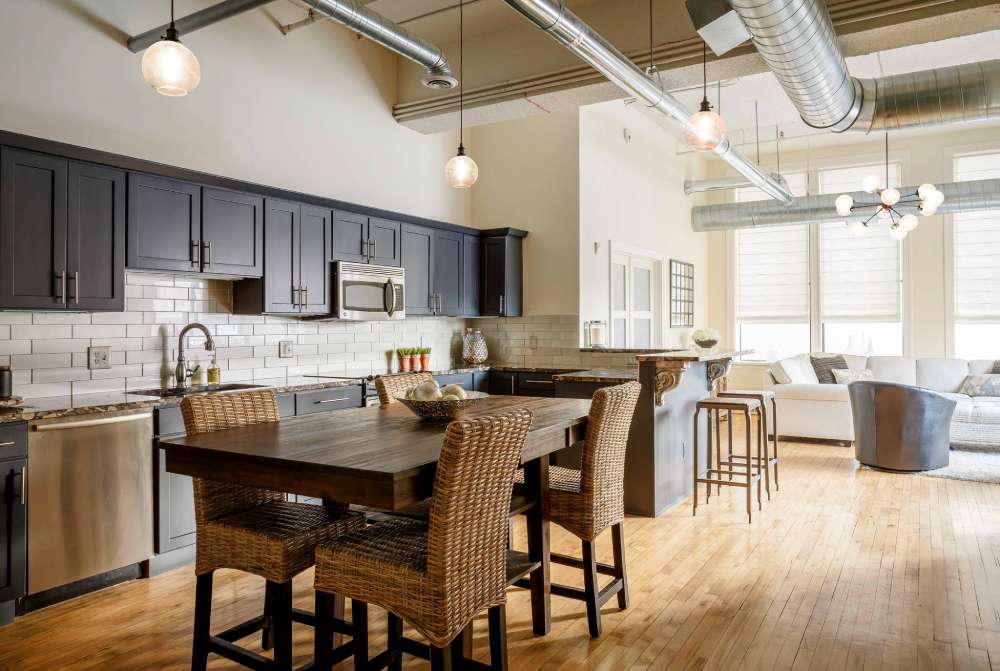
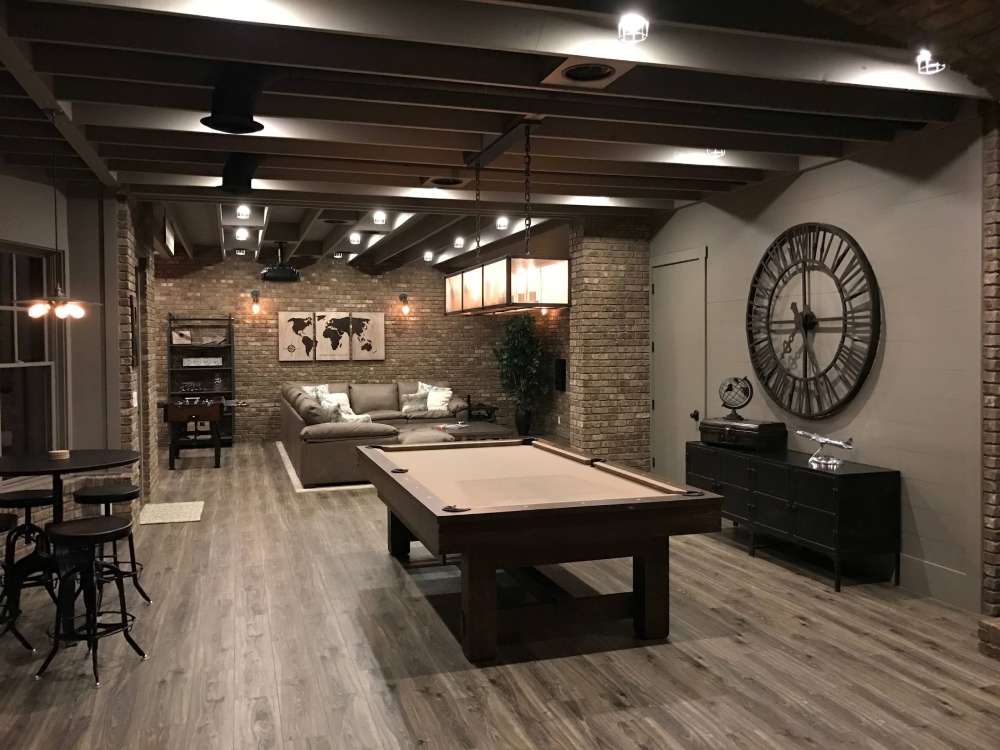
Real exposed brick is the single most recognizable element. The warm, ruddy tones and natural variation in each brick add texture that paint simply cannot replicate. It works as an accent wall in living rooms, behind kitchen open shelving, or as a full-room treatment in loft apartments.
Not every home has original brick underneath the drywall, though. Faux brick panels from companies like Dreamwall or Brick Slips give you the look without the structural commitment. And if you already have red brick walls, choosing the right surrounding paint colors matters a lot.
The reclaimed lumber market hit $62.2 billion in 2024 (IMARC Group), driven partly by the popularity of styles like industrial chic where salvaged materials are a centerpiece, not an afterthought.
Metal and Steel

Image source: Emerick Architects
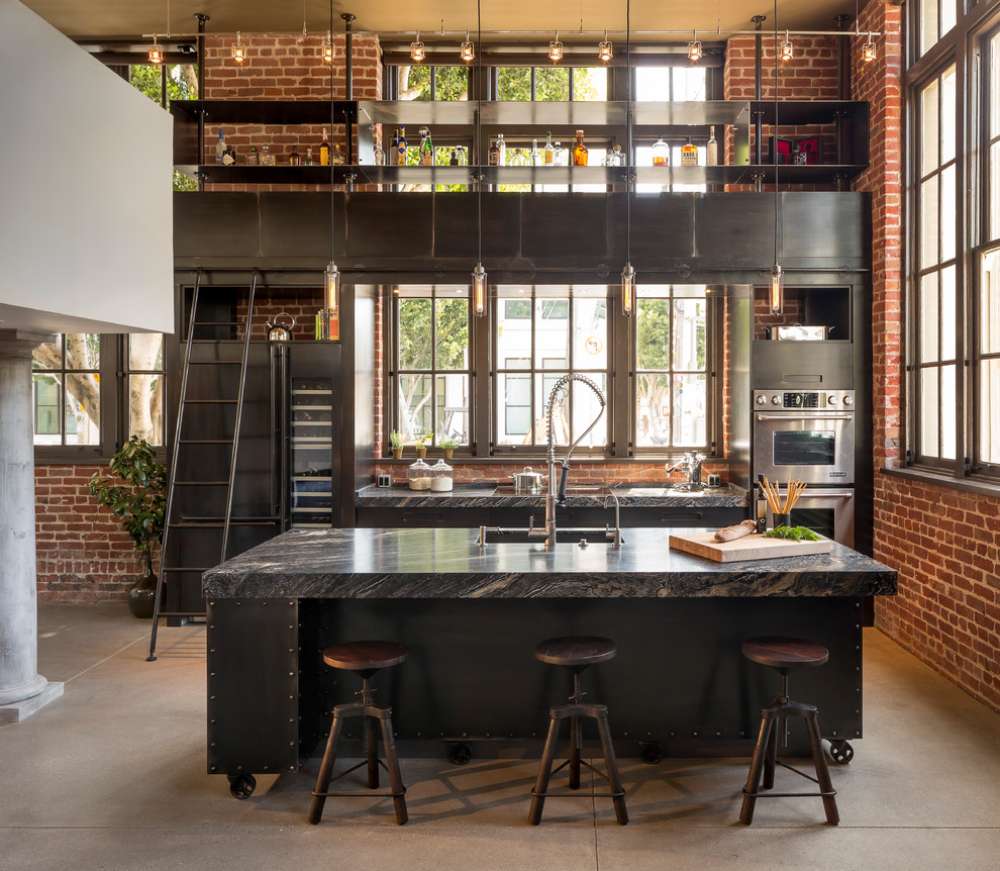
Black steel, wrought iron, and brushed metal finishes give industrial chic its urban skeleton. You’ll see them in shelving frames, table legs, light fixtures, bar stools, and window frames.
Matte black is the default. It reads as structural rather than decorative, which is exactly what this style wants. Colors that pair well with black are worth studying here, because too much of it without warm counterpoints kills the “chic” half of the equation.
The 1stDibs 2025 Designer Trends Survey found that 33% of designers are moving toward eclecticism, with mixed metals and raw finishes being a major part of that shift.
Reclaimed Wood

Image source: Pizzazz Interiors II LLC
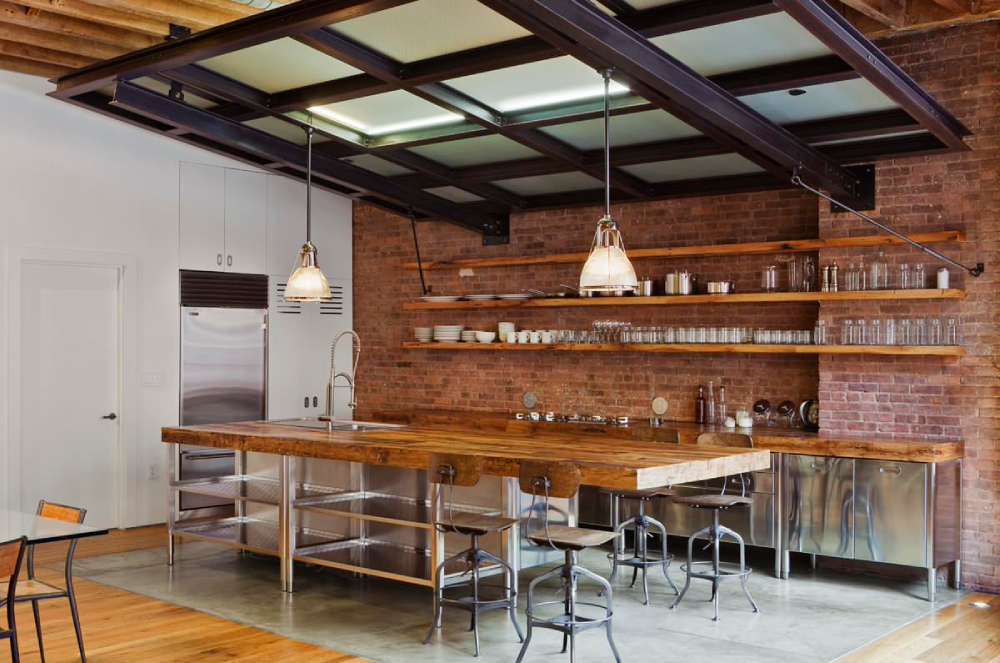
This is the warm counterbalance. Without reclaimed wood, industrial spaces feel like parking garages. Distressed oak, salvaged pine, and weathered barn wood show up as dining tables, floating shelves, and ceiling beams.
The furniture segment accounted for 32.6% of the global reclaimed lumber market in 2024, according to IMARC Group. That’s a direct reflection of consumer demand for pieces with history and character.
Live-edge wood slabs paired with metal hairpin or pipe legs have become a signature of the style. West Elm, Restoration Hardware, and smaller Etsy sellers all carry versions at different price points.
Concrete and Leather

Polished concrete floors anchor a room without competing with other materials. They’re durable, easy to maintain, and cool underfoot (literally, so layer rugs). Concrete-look porcelain tiles work as a budget alternative.
Leather comes in distressed, not pristine. A worn brown leather Chesterfield sofa or a pair of aged leather dining chairs add warmth. If you’re working with a dark leather couch, figuring out throw pillow ideas for a dark brown couch will help you soften the look without losing the edge.
Color Palettes for Industrial Chic Spaces
Industrial chic has a specific color language. Get it wrong and the room either looks like a cave or a Pottery Barn catalog.
The Base Palette
Charcoal gray, slate, matte black, and warm white form the foundation. Not cool white. Warm white. The difference sounds small but it changes how every other material reads in the room.
Understanding color theory in interior design helps here. Cool whites push the space toward clinical. Warm whites pull it toward livable.
| Base Color | Where to Use It | Avoid |
|---|---|---|
| Charcoal gray | Walls, large furniture | Using on all four walls |
| Matte black | Hardware, fixtures, frames | Pairing with cool-toned whites |
| Warm white | Ceilings, trim, counters | Bright or blue-based whites |
| Slate gray | Accent walls, textiles | Rooms with limited natural light |
Accent Colors That Work
One accent color per room. Max two. That’s it.
Burnt orange, deep teal, mustard, and olive green all work because they have enough depth to stand up against raw materials without looking out of place.
Stay away from pastels. They fight the roughness of the materials instead of working with them. And beige kills the look almost every time. It flattens the contrast that the style depends on.
Specific Paint Shades Worth Knowing
Benjamin Moore Wrought Iron (HC-171): A deep, complex black-brown that changes with the light. It’s become the go-to for industrial chic accent walls.
Farrow & Ball Railings (No.31): A softer, blue-black that reads less harsh than a true black. Good for trim and cabinetry.
Sherwin-Williams Urbane Bronze (SW 7048): Their 2021 Color of the Year and still going strong. It bridges the gap between brown and gray in a way that complements exposed brick and reclaimed wood perfectly.
Furniture That Works in Industrial Chic Interiors
The furniture has to serve the same tension the whole style runs on. Too polished and it looks misplaced. Too rough and you’re sitting in a barn. Deloitte has reported that 42% of consumers now prefer buying furniture from companies offering customization, which lines up with the mix-and-match attitude of industrial chic.
Living Room Furniture Picks

Image source: TTM Development Company
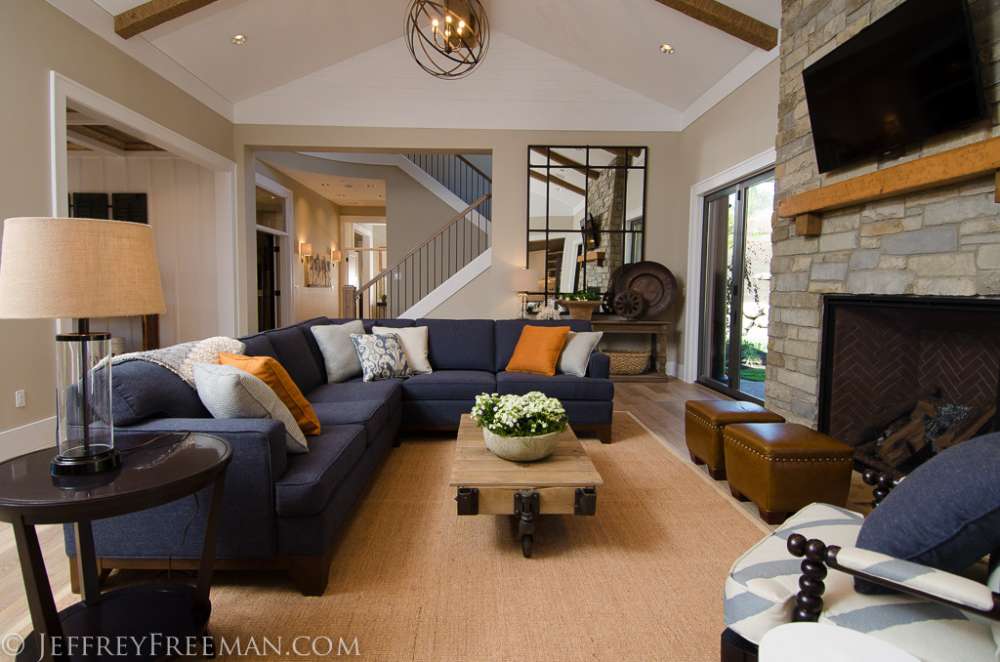
A distressed leather sofa is the anchor piece. Full stop. Brands like Restoration Hardware, Article, and Poly & Bark carry options at different price points. If leather isn’t your thing (or budget), a deep charcoal or gray linen sofa works too, but you’ll need to add texture elsewhere.
Metal-frame open shelving from IKEA’s FJALLBO line or similar options from West Elm give you display space without visual weight. Keep them only about 60-70% full. Negative space matters.
For throw pillows, stick with canvas, chunky knit, or leather. Not satin, not silk. If your sofa is gray, check out some throw pillow combinations for gray couches for ideas that maintain the industrial tone.
Dining and Kitchen Furniture
The table is everything in this room. A live-edge wood slab on metal legs or a reclaimed wood farmhouse table with steel hairpin legs sets the whole tone.
Mix your seating. Don’t buy a matching set of six chairs. Two metal bar stools on one side, a wooden bench on the other, and a couple of Tolix-style chairs at the ends. The mismatch is intentional.
IKEA, CB2, and Wayfair all carry industrial-style dining furniture. For something with actual vintage character, 1stDibs and local flea markets are better bets, though pricier.
Bedroom Furniture That Fits

Low-profile metal bed frames are the standard. Black iron or raw steel, minimal ornamentation. A platform bed with no headboard also works, especially if you’re placing it against an exposed brick wall.
Keep nightstands small. A reclaimed wood stool, a metal pipe side table, or even a stack of old books. The bedroom should feel less decorated than the rest of the house. For more ideas on making this room work, look at industrial bedroom decor approaches.
Lighting as a Structural Element
Lighting matters more in industrial chic than in almost any other style. It’s not background. It’s architecture.
The global decorative lighting market reached $30.6 billion in 2024, according to Expert Market Research, with industrial-style fixtures and Edison bulbs identified as a growing category. And the pendant and chandelier segment is projected to grow at 7.1% annually through 2030, per Grand View Research.
Edison Bulbs and Pendant Fixtures
Look, Edison bulb pendant lights have been the poster child of this style for a decade. They still work. But they’re getting overdone in certain contexts (looking at you, every coffee shop in Brooklyn).
The better move in 2025 and beyond is filament LED bulbs that mimic the Edison look but use far less energy. Same warm glow, better efficiency, longer lifespan.
Oversized factory-style pendants over kitchen islands and dining tables remain a strong choice. Black metal cage lights, pulley systems, and articulated wall sconces all carry the industrial DNA without leaning on the same fixture everyone else uses.
Layered Lighting Strategy
A single overhead fixture flattens any room. Industrial chic spaces need three layers, minimum.
Ambient lighting: Your overhead pendants or recessed fixtures handle the general illumination.
Task lighting: Articulated desk lamps, under-cabinet strips in the kitchen, or adjustable wall sconces near reading areas.
Accent lighting: LED strips behind shelving, floor uplights washing an exposed brick wall, or a spotlight on a piece of art.
Skip any layer and the room goes flat. Understanding how light functions in interior design will keep you from making that mistake.
Floor Lamps and Table Lamps

Image source: Platinum Design Build
Tripod floor lamps with exposed bulbs work well in living room corners. Look for matte black or brass finishes.
Adjustable architect-style lamps (like the classic Anglepoise or its many knockoffs) are perfect for desks and bedside tables. They’re functional and they look like they belong in a workshop, which is exactly the point.
Wall Treatments and Architectural Details

Image source: Blakely Interior Design
Walls and ceilings do a lot of the heavy lifting in industrial chic. The goal is to reveal structure, not cover it up.
Exposed Brick Walls
If your home has original brick beneath the plaster, uncovering it is one of the highest-impact moves you can make. But test a small section first. Sometimes the brick underneath is crumbling or uneven in ways that need serious repair before you can show it off.
Sealing is non-negotiable. Unsealed brick absorbs cooking oils, dust, and soot (especially near fireplaces). A clear matte sealant protects the surface without adding shine.
For homes without original brick, faux panels have gotten surprisingly good. Brick and stone wall treatments are worth exploring if you want the texture without a full renovation.
Exposed Ductwork and Ceiling Features
Exposed pipes, ducts, and ceiling beams are features, not flaws.

Image source: Darcy Bean Custom Construction Inc.
Paint your ductwork matte black to make it intentional. Left in raw silver, it can look unfinished. In black, it becomes a design element. The same goes for plumbing pipes in bathrooms and kitchens.
Exposed ceiling beams (wood or steel) add strong linear elements to a room. They draw the eye upward and make high ceiling rooms feel even more dramatic. In lower-ceilinged homes, a single exposed beam across the ceiling can suggest the loft feel without requiring 14-foot ceilings.
Gallery Walls and Metal Accents

Gallery walls in industrial chic spaces follow different rules than traditional ones.
- Black metal frames only (or mix black with raw wood frames)
- Vary the sizes. No matching sets.
- Skip perfect symmetry. Asymmetrical arrangements feel more natural here
- Include non-traditional pieces: vintage factory signs, old blueprints, metal wall sculptures
Corrugated steel or metal panels as accent walls work well in home offices and bedrooms. They’re unexpected and they photograph well, which honestly matters if you care about how the space looks on Pinterest or Houzz.
Textiles and Soft Furnishings That Add Warmth
This is where most people mess up industrial chic. They get the brick, the metal, and the concrete right, and then the room feels like a parking structure. Textiles are what keep the space from crossing from “cool” into “cold.”
The global home textile market was valued at $125.31 billion in 2024, according to Market Data Forecast, with rugs and carpets projected to grow at a 5.92% annual rate. That growth is being driven partly by styles like industrial chic, where layered soft furnishings are the only thing standing between “loft living” and “warehouse squatting.”
Rugs and Floor Layering
Layer your rugs. A jute or sisal base layer on top of that concrete or hardwood floor, then a vintage or Persian-style rug on top of it. The double layer adds depth without looking overdone.
If your living room centers around a sectional, figuring out how to place a rug under a sectional sofa makes the room feel anchored instead of floating. For dining areas with reclaimed wood tables, a rug under the dining table softens the sound and adds a warm boundary to the eating space.
Skip anything too bright or too pristine. Faded, worn-looking rugs (or new ones made to look that way) fit better.
Curtains and Window Treatments
Two valid approaches here, and they’re totally opposite.
Option one: No curtains at all. If you have large industrial-style windows, letting them stay bare respects the architecture. This works best in loft spaces with oversized panes where fabric would just compete with the view.
Option two: Linen curtains in a neutral tone. They filter light without blocking the industrial feel. Understanding what window treatments work for your specific room setup will save you from a costly wrong choice. If your walls are gray, take a look at what curtains pair with gray walls before buying.
Throw Pillows and Blankets
Cushion covers, throws, and decorative linens made from biodegradable fibers saw 18% annual growth in recent years, according to Market Growth Reports. That tracks with a broader shift toward natural textiles that also happen to look great in industrial settings.
- Canvas, chunky knit, and leather throw pillows work
- Wool or cotton throws, draped loosely, not folded into crisp rectangles
- Avoid satin, silk, or anything too polished
For sectional sofas (common in open-plan loft spaces), you can find targeted throw pillow ideas for a sectional that keep the industrial tone while adding comfort. If you’re working with a black leather sofa, a very common pick for this style, specific pillow ideas for a black leather couch will help you balance the textures.
Room-by-Room Styling Approaches

Image source: Jenny Sutherland Designs
The style translates differently in every room. What works in the kitchen would look strange in the bedroom, and vice versa.
Kitchens and bathrooms remain the most renovated rooms, with 24% of homeowners upgrading each in 2024, according to Houzz. The median kitchen renovation spend hit $24,000 in 2023. If you’re putting that kind of money in, you want the style choices to be right.
Kitchen and Dining Area
Open shelving replaces upper cabinets. This is the signature kitchen move. Metal brackets, reclaimed wood shelves, and a curated (not cluttered) display of everyday items.
Key elements:
- Subway tile or cement tile backsplash
- Matte black cabinet hardware and faucets
- Butcher block or concrete countertops
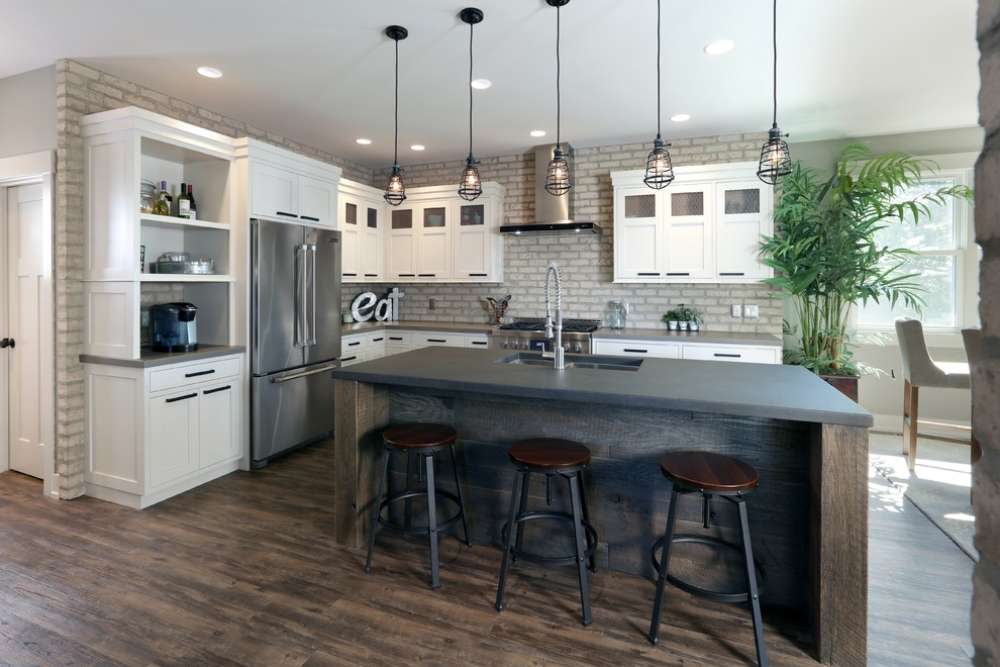
- Industrial pendant lights over the island
If you’re considering tile for the backsplash, knowing how to apply grout correctly matters, because sloppy grout lines will ruin an otherwise great-looking installation. And for broader industrial kitchen decor ideas, there’s a whole range of approaches depending on your budget and kitchen size.
Bathroom
| Element | Industrial Chic Choice | Avoid |
|---|---|---|
| Vanity | Wall-mounted with metal legs | Ornate carved wood |
| Fixtures | Matte black faucets, exposed pipe | Chrome-plated traditional |
| Tile | Concrete-look large format | Small mosaic patterns |
| Mirror | Round or frameless, oversized | Gold-framed decorative |
| Lighting | Cage sconces or articulated | Crystal or fabric shade |
The bathroom is actually one of the easiest rooms to convert to industrial chic. Pipe-style towel racks (you can DIY these with black iron pipe from Home Depot for under $50), concrete-look floor tiles, and an exposed-bulb wall sconce go a long way.
Bedroom and Home Office
Less is more in the bedroom. A low metal bed frame, minimal nightstands, one oversized floor mirror leaning against an exposed brick wall. That’s it.
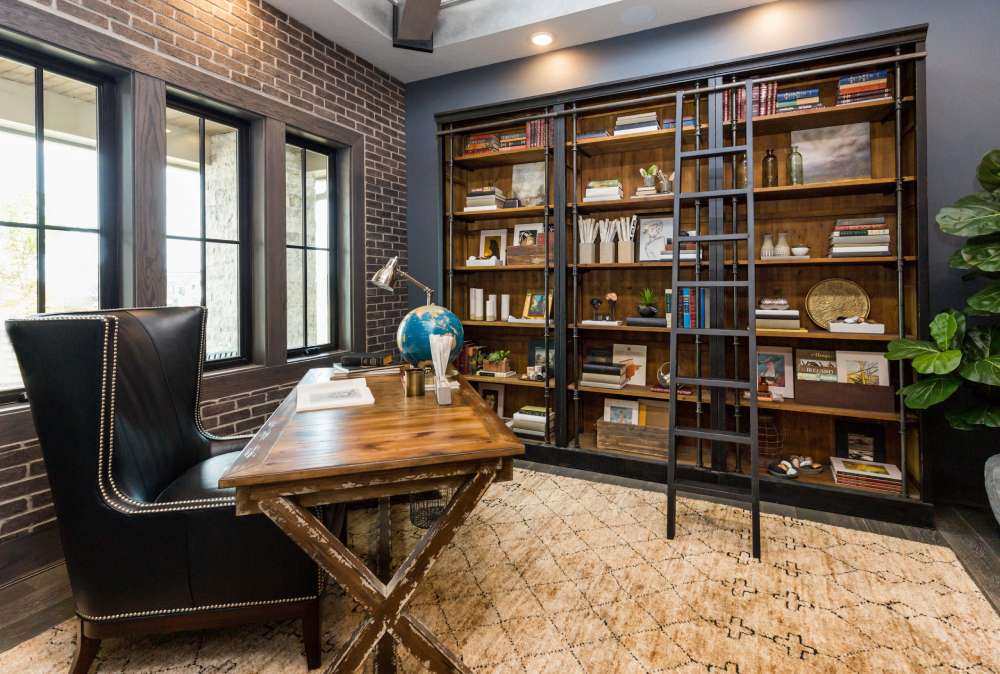
For a home office, the setup practically builds itself. A pipe-and-wood desk. Metal-frame shelving for books and supplies. An adjustable architect-style task lamp. Exposed ductwork overhead, if you have it.
If you’re working with a small bedroom, the clean lines and minimal furniture of industrial chic actually make the room feel bigger, not smaller. The key is to resist adding more pieces. Let the walls and the materials do the talking.
Budget Breakdown for Industrial Chic Decor
You can do industrial chic cheaply, or you can spend serious money. The style is one of the few that works at both ends. Clever Real Estate data shows homeowners spent an expected $485 billion on renovations in 2024, but the smart play with this style is knowing where to invest and where to cut corners.
High-Impact, Low-Cost Moves
Painting exposed pipes and ductwork matte black is the single cheapest thing you can do to shift a room toward industrial. A can of paint, a brush, maybe two hours of work.
Other fast wins:
- Swapping light fixtures to Edison-style pendants ($30-80 each)
- Adding open pipe shelving (DIY from iron pipe fittings, under $100 per shelf)
- Replacing cabinet hardware with matte black pulls ($2-5 per piece)
CivicScience found that 43% of renovators in 2024 chose to do their projects entirely DIY, up 5 points from 2023. Industrial chic rewards that approach because so much of the look comes from revealing what’s already there, not buying new things.
Where to Actually Invest
A quality leather sofa. This is the anchor of your living room and it gets used daily. Cheap leather cracks and peels within two years. Budget $1,500-3,000 minimum for something that’ll last.
A solid reclaimed wood table. The dining table is the centerpiece of social life. A real reclaimed wood slab with metal legs runs $800-2,500 depending on size and source.
Good lighting. Cheap fixtures look cheap. One statement pendant over the dining table ($200-500) and a couple of quality wall sconces ($80-150 each) change the entire atmosphere.
Source Comparison by Budget
| Budget Tier | Best Sources | Expect to Pay |
|---|---|---|
| Budget | IKEA FJALLBO line, Amazon, Wayfair | $500–2,000 per room |
| Mid-range | West Elm, CB2, Article, Etsy | $2,000–5,000 per room |
| High-end | Restoration Hardware, 1stDibs, local artisans | $5,000–15,000+ per room |
Mixing tiers is the smart approach. An IKEA shelf next to a vintage 1stDibs factory cart is exactly the kind of mix that makes industrial chic look lived-in rather than catalog-styled.
Common Mistakes That Make Industrial Chic Look Cheap or Cold
Getting the style wrong is easy. And once it goes wrong, the room just looks unfinished or uncomfortable rather than intentionally raw.
Going Too Dark Without Warmth
All black metal, dark gray walls, no reclaimed wood, no textiles. This is the number one mistake.
The result is a room that feels like a storage unit. You need that warm counterbalance. Reclaimed wood, leather, a vintage rug, some greenery. Understanding balance in interior design is the difference between a moody loft and a depressing one.
Using Too Many Matching Pieces
Never buy a matching furniture set for an industrial chic room. The whole aesthetic depends on mixing eras, materials, and sources. A Tolix chair next to a wooden bench next to a leather armchair. A vintage factory cart as a coffee table and a modern CB2 side table.
If everything matches, you lose the collected-over-time quality that makes the style feel real. Restoration Hardware’s showroom looks great, but copying it piece-for-piece removes the personal character that comes from mixing new with old.
Fake-Looking Materials
Thin vinyl “brick” wallpaper that looks like a texture on a screen. Plastic frames pretending to be metal. Particle board shelves with a “wood-look” print.
These don’t age well. They don’t feel right up close. And they undercut the entire attention to details that separates good design from a surface-level attempt. If you can’t afford real reclaimed wood right now, use real wood (even inexpensive pine stained dark) before you use fake anything.
Overcrowding and Missing Greenery
Two mistakes that often happen together.
On shelving: Keep open shelves at about 60-70% capacity. The empty space is part of the design. When you fill every inch, the room starts to feel cluttered instead of curated. Good use of space means knowing what to leave out.
On plants: Greenery is not optional. A tall fiddle leaf fig, trailing pothos on a shelf, a few succulents on a windowsill. Plants connect the raw materials back to something living. Skip them and you’re just in a warehouse.
This falls under the broader idea of biophilic design, which brings natural elements into built spaces. Industrial chic rooms without a single plant feel incomplete every time.
FAQ on Industrial Chic Home Decor
What is industrial chic home decor?
It’s a design style that combines raw, unfinished materials like exposed brick, steel, and concrete with refined furniture and soft textiles. The look originated in converted warehouse lofts in cities like New York and London.
How is industrial chic different from industrial style?
Pure industrial home decor stays stark and utilitarian. Industrial chic adds warmth through reclaimed wood, distressed leather, layered rugs, and intentional soft furnishings. The “chic” part is what makes the space comfortable, not just cool.
What colors work best for industrial chic spaces?
Charcoal gray, matte black, slate, and warm white form the base. Accent with deep teal, burnt orange, or mustard. One accent color per room. Stay away from pastels and cool-toned whites.
Can I achieve industrial chic on a budget?
Yes. Paint exposed pipes matte black, swap light fixtures for Edison-style pendants, and add DIY pipe shelving for under $100 per shelf. IKEA’s FJALLBO line and Wayfair carry affordable industrial furniture.
What furniture fits industrial chic living rooms?
A distressed leather sofa, metal-frame open shelving, and a reclaimed wood coffee table with hairpin legs. Mix vintage finds with modern pieces from West Elm or CB2. Never buy a matching set.
What lighting works in industrial chic rooms?
Oversized factory-style pendant fixtures, black metal cage lights, and articulated wall sconces. Layer your lighting with ambient, task, and accent sources. A single overhead fixture will flatten any room.
Is exposed brick necessary for industrial chic?
Not required, but it helps a lot. If your home doesn’t have original brick, faux brick panels from brands like Dreamwall give you the texture without structural changes. A concrete or metal accent wall works too.
What textiles should I use in industrial chic rooms?
Jute and sisal rugs as base layers, vintage Persian-style rugs on top, linen curtains, and throws in wool or cotton. Stick with canvas and chunky knit for pillows. Skip satin and silk entirely.
How do I keep industrial chic from looking too cold?
Add reclaimed wood, layer textiles generously, and include greenery like trailing pothos or a fiddle leaf fig. The biggest mistake is going all-metal-and-concrete without warm counterpoints like leather and wood.
Does industrial chic work in small apartments?
It works well, actually. The clean lines and minimal furniture free up floor space. Open shelving replaces bulky cabinets. For small apartment decor, industrial chic’s less-is-more approach makes tight rooms feel bigger.
Conclusion
Industrial chic home decor works because it respects the raw character of a space instead of hiding it. Concrete floors, metal pipe shelving, Edison bulb fixtures, and distressed leather all earn their place when they’re balanced with the right textiles and warm wood tones.
The style doesn’t demand a loft apartment in Brooklyn or a massive budget. A few matte black hardware swaps, some open shelving, and a well-chosen vintage rug can shift any room in the right direction.
Where people go wrong is treating it as purely rough and minimal. The warmth matters just as much as the grit. Layer your rugs. Add plants. Mix your furniture eras.
Get the balance right and you’ll end up with a home that feels honest, comfortable, and completely yours.
- What Color Bedding Goes with Gray Walls - May 14, 2026
- What Color Curtains Go With Gray Walls - May 8, 2026
- How Visual Furniture Previews Help You Choose the Right Piece for Your Room - April 13, 2026