Color Combinations
What Color Rug Goes with Dark Wood Floors
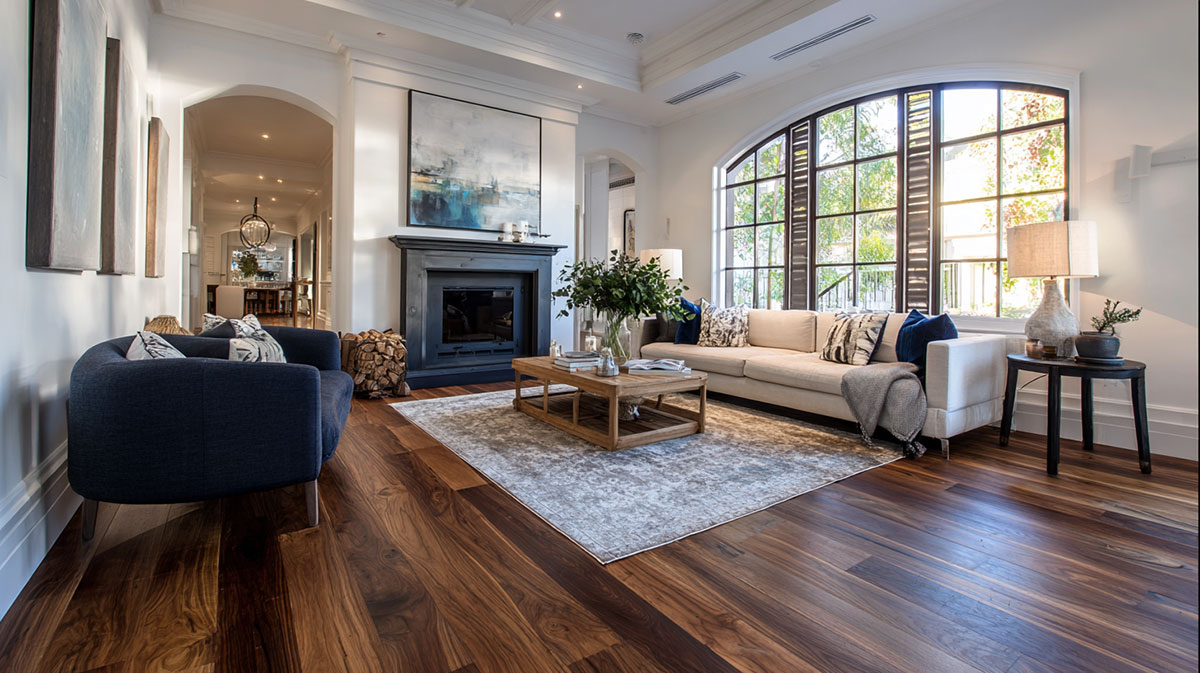
The wrong rug color on dark wood floors doesn’t just look off. It flattens the entire room.
Figuring out what color rug goes with dark wood floors comes down to 3 things: floor undertone, room light, and furniture weight. Get those right and the color choice becomes obvious.
This guide covers every variable that affects rug color selection on dark flooring, from warm vs. cool undertones in walnut, espresso, and ebonized oak, to how room size, wall color, and artificial lighting shift the decision entirely.
By the end, you’ll know exactly which rug colors work, which create floor-rug conflict, and how to test your choice before buying.
Fixed surfaces set the starting point; our color matching guide for interiors covers the colors you layer on top.
What Counts as Dark Wood Floors for Rug Color Matching?
Dark wood floors span a specific range of tones. To pick the right rug color, you first need to know exactly where your floor sits within that range.
The core categories: espresso, jacobean, dark walnut, ebonized oak, and Brazilian walnut (ipe). Each reads differently under light, and each pulls rug color selection in a different direction.
Undertone is the single factor most people skip. And it’s the one that causes the most regret.
Warm Undertones vs. Cool Undertones
Warm-toned dark floors carry red, orange, or amber casts. Brazilian walnut, dark-stained red oak, and mahogany all fall here.
Cool-toned dark floors lean gray, ash, or purple. Ebonized oak, dark gray stains, and some jacobean finishes sit in this category.
The undertone determines which rug colors will feel cohesive and which will create visible tension. A warm-toned rug on a cool-toned floor creates an undertone clash that’s hard to explain but easy to feel.
How Finish Affects Perceived Floor Color
Matte finishes absorb light and make floors read darker and richer. High-gloss finishes reflect light, intensifying contrast and making the floor color more pronounced.
This matters for rug selection because the same ivory rug will look brighter against a matte espresso floor and more luminous against a high-gloss one. Test swatches under both conditions if you can.
| Floor Type | Undertone | Finish Common |
| Brazilian Walnut (Ipe) | Warm (Rich red-brown / olive hints) | Matte or satin |
| Espresso Stain | Warm (Deep chocolate roasted-coffee) | Satin or semi-gloss |
| Ebonized Oak | Cool (Jet black / charcoal gray grain) | Matte |
| Jacobean Stain | Neutral to Cool (Muted brown-black) | Satin |
According to Data Bridge Market Research (2024), wool area rugs held the largest revenue share at 38.5% of the global area rug market. Wool’s natural dye retention makes undertone matching more precise. It holds true color better than synthetic alternatives, which matters when you’re trying to match against complex floor tones.
What Rug Colors Work Best With Dark Wood Floors?
Light neutrals create the highest contrast against dark flooring. They visually lift the room and prevent the floor from reading as heavy. But they’re not the only option, and they’re not always the right one.
The global area rugs market reached USD 36.5 billion in 2024, driven largely by homeowners investing in color-matched, personalized floor coverings (IMARC Group, 2024). Color coordination is now a primary purchase driver.
Light and Neutral Rugs on Dark Wood Floors
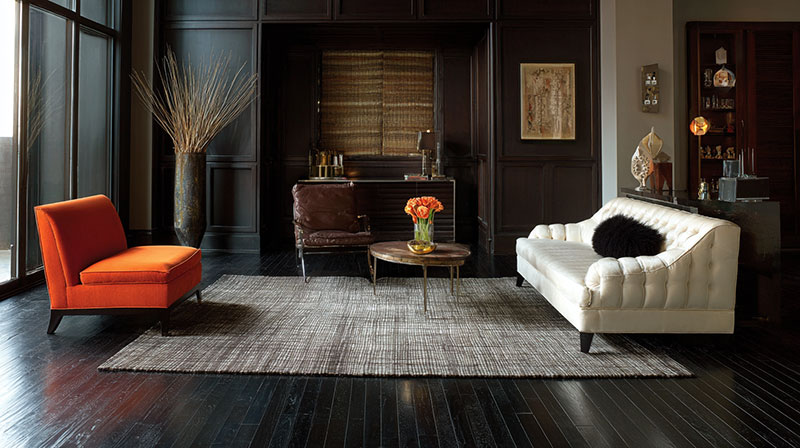
Best performers: ivory, cream, oatmeal, warm white.
These create maximum floor-rug contrast, which is the fastest way to make a dark floor feel intentional rather than oppressive. The room gains visual breathing room.
- Ivory works across both warm and cool dark floors
- Cream pulls slightly warmer, better suited to walnut and mahogany tones
- Oatmeal reads as the most relaxed of the neutrals, works well in casual living rooms
The trade-off is maintenance. Light rugs on dark floors show debris from the floor surface easily. Worth knowing before committing.
Warm-Toned Rugs on Dark Wood Floors
Terracotta, rust, camel, and burnt sienna pull the warm undertones out of walnut and mahogany floors. Instead of contrasting, they create tonal depth.
This approach works especially well in living rooms with warm wall colors. The rug becomes part of a coherent earthy color palette rather than a standalone statement.
One honest downside: warm-toned rugs on warm-toned floors can collapse visual separation if the tones are too close. Keep at least 2-3 shades of value difference between the floor and the rug.
Cool-Toned Rugs on Dark Wood Floors
Cool grays, blue-grays, slate, and soft sage work best against ebonized oak and other cool-undertone dark floors. Pairing warm colors against these floors creates undertone conflict that reads as an error, not a design choice.
A cool gray rug on an ebonized oak floor creates a monochromatic, composed palette. Add cool-toned metal accents (brushed nickel, chrome) to reinforce the direction.
Bold and Deep-Colored Rugs on Dark Wood Floors
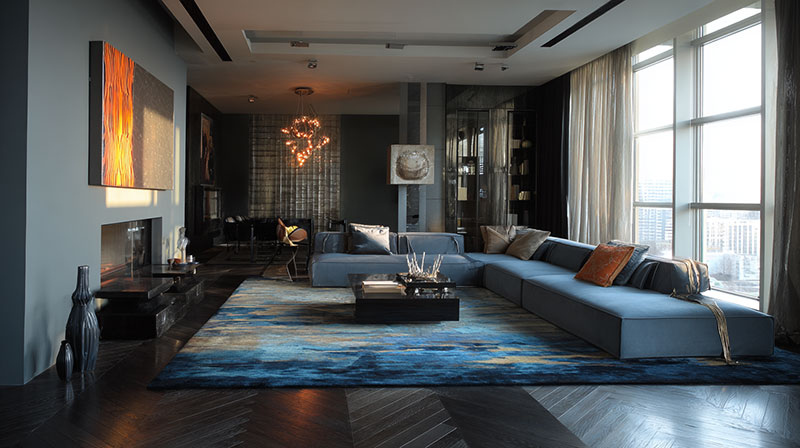
Navy, forest green, and burgundy create tonal layering. This is a sophisticated approach that works when the rest of the room has lighter elements to balance the floor-rug weight.
These pairings suit traditional interior design and mid-century modern interior design well. Both styles tend to have enough lighter furniture and wall tones to absorb the visual weight at floor level.
Navy on dark walnut is one of the most widely used combinations in high-end residential projects. It works because navy reads as a depth layer, not a competing surface.
What Rug Colors to Avoid With Dark Wood Floors?
Certain color choices don’t just look off. They actively flatten the room or create visual friction that no amount of styling fixes.
The most common mistake is choosing a rug in the same dark brown family as the floor. The result is a room with no contrast, no visual depth, and no floor definition at all.
Dark Brown Rugs on Dark Brown Floors
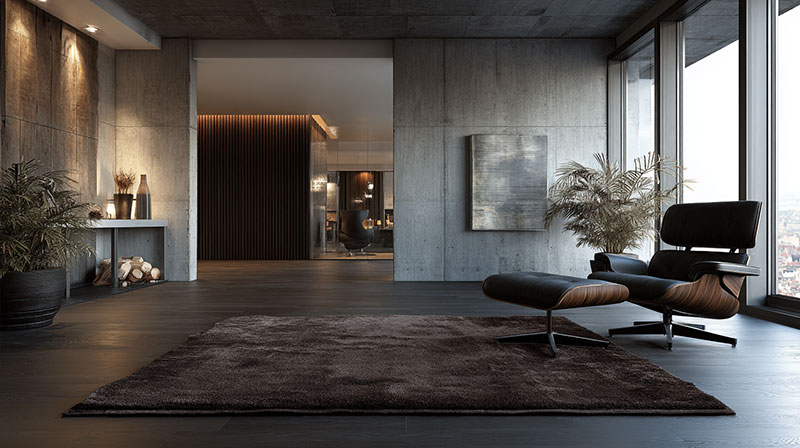
This flattens the room completely. The floor disappears, the rug disappears, and the space reads as one dense, undifferentiated mass.
You lose the contrast that gives interior design its sense of depth and structure. Without separation between floor and rug, the visual hierarchy collapses.
Muddy Mid-Tones and Undertone Mismatches
Problematic combinations:
- Dark olive on warm-toned floors: the yellow-green undertone conflicts with red-brown wood
- Murky taupe on cool dark floors: reads as beige gone wrong
- Medium gray on warm espresso floors: undertone clash creates an unsettled feeling
These aren’t universal rules. At least in my experience, the undertone conflict is the issue, not the color itself. A clean gray works fine on a cool-toned dark floor.
When Black Rugs Fail (and When They Don’t)
Black rugs on dark floors in rooms without adequate natural light or pale walls create a visual void. The room feels smaller than it is and the floor reads as a single dark plane.
Black rugs do work on dark floors when: walls are white or very light, the room has strong natural light, and the rug has visible texture or pattern that creates its own contrast layer. Without those conditions, skip it.
How Room Size and Natural Light Change Rug Color Decisions?
A rug color that looks right in a spacious, south-facing living room can make the same color look wrong in a small north-facing bedroom. The floor hasn’t changed. The light has.
Research published in the Journal of Engineering Research (2024) confirms that color perception in interior spaces is directly affected by light direction, intensity, and uniformity. The same surface color reads differently depending on all 3 factors.
North-Facing vs. South-Facing Rooms
North-facing rooms receive cool, indirect light throughout the day. Warm rug colors (cream, ivory, terracotta) counteract the coolness and keep the room from feeling cold.
South-facing rooms get warm, direct light. They can handle cooler rug tones without losing warmth. A cool gray or blue-gray rug that would feel clinical in a north-facing room reads as clean and balanced here.
Room Size and Visual Compression
Dark floors plus a dark rug in a small room compress the visual field. The space reads smaller than it measures.
- Small rooms: lighter rug tones always perform better for spatial perception
- Large open-plan spaces: can absorb deeper rug tones without closing in
- Low-ceiling rooms: benefit from lighter rugs, which keep visual weight at floor level lower
Ruggable and Architectural Digest’s 2025 joint collection specifically addressed smaller living spaces by prioritizing lighter, high-contrast rug designs (Market Research Future, 2025). The consumer signal is clear: people in smaller homes want visual lift, not more visual weight.
Artificial Lighting Color Temperature
This one gets overlooked almost every time. The color temperature of your light bulbs shifts how rug colors read at night.
2700K bulbs (warm white) push warmer undertones into any rug color. Cream becomes warmer, gray reads slightly yellow.
4000K bulbs (cool white) neutralize warm tones and sharpen cool ones. Ivory reads cleaner, gray reads truer.
Test your rug swatch in the room at night with your actual lighting before making a final call. Plenty of “wrong” rug color choices are actually wrong lighting choices.
How Rug Pattern Affects Color Compatibility With Dark Wood Floors?
Pattern changes the rules. A color that creates undertone conflict as a solid can work perfectly when broken up by pattern. And a color that would be too pale on its own anchors a room beautifully inside a bold geometric.
Pattern in interior design affects not just visual interest but how colors interact with surrounding surfaces. On dark floors specifically, pattern creates a visual buffer zone between the rug and the floor, which gives more color combinations room to work.
High-Contrast Patterns
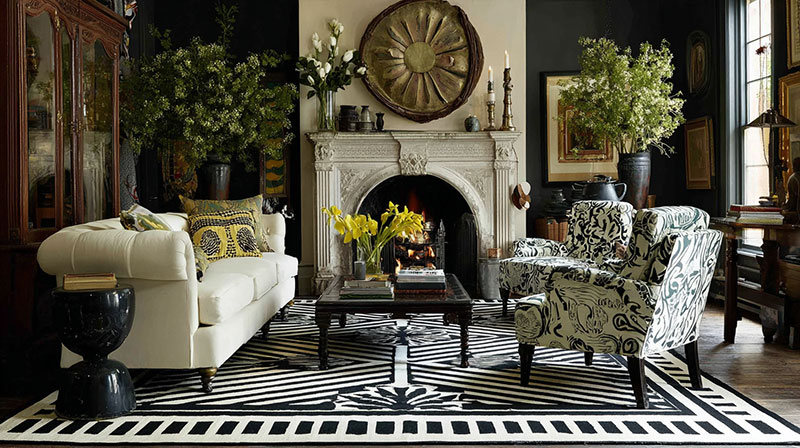
Black and white geometric rugs, bold striped patterns, and high-contrast traditional motifs sit clearly above the dark floor. The contrast is built into the rug itself.
These work because the internal rug contrast is stronger than the floor-rug contrast. Your eye engages with the pattern first and reads the floor as a separate layer underneath.
Low-Contrast Patterns on Dark Floors
A tonal rug (similar values, subtle pattern) in colors close to the floor will disappear. You’ll lose both the pattern and the rug’s grounding function.
This is where pattern scale matters. Large-scale patterns in medium-value colors hold their presence better than small-scale ones in similar tones.
Persian and Traditional Patterns
Persian rugs with warm reds, terracotta, gold, and ivory naturally complement walnut and mahogany floors. The color family of traditional Persian rugs was developed over centuries to coordinate with rich, dark wood furnishings. That’s not an accident.
| Pattern Type | Best Use on Dark Floors | Color Flexibility |
| High-contrast geometric | Any dark floor tone (Ebony, Walnut) | High: Works with bold or monochrome palettes |
| Persian / Traditional | Warm-toned dark floors (Ipe, Espresso) | Medium: Best with warm, rich, earthy palettes |
| Abstract / Organic | Any dark floor tone (Smoky, Ebonized) | High: Highly forgiving with fluid modern layouts |
| Tonal low-contrast | Avoid on dark floors (Creates a visual void) | Low: Limits brightness; risks muddy formatting |
What Rug Material Works With Dark Wood Floors by Color Type?
Material affects how a color reads. The same shade of gray in a flatweave reads differently than in a high-pile shag. On dark floors, fiber and texture choices change how strongly a color communicates.
Wool area rugs held the largest U.S. market share at 28.88% in 2024, partly because wool holds dye depth better than synthetic fibers (Grand View Research, 2024). That matters when you’re trying to land a specific floor-rug color relationship.
Wool Rugs
Wool holds color depth consistently. Both light and dark tones stay true over time.
For dark floors, wool in ivory or cream reads as rich and intentional rather than cheap. The fiber density gives light colors visual weight they need to anchor against a heavy floor.
Jute and Sisal
Natural tan tones. No dye options. This actually makes them useful on dark floors because the contrast is built in and the tone is neutral enough to work against almost any dark floor undertone.
The texture of jute adds visual interest that compensates for the limited color range. It’s one of the few rug types where color selection is removed as a decision entirely.
Silk and Viscose
These reflect light. A pale silk rug on a dark floor reads brighter than the same color in wool. The reflectivity creates additional contrast between floor and rug, which can work for or against you depending on the room’s light levels.
In well-lit rooms, the effect is striking. In low-light rooms, the sheen can read as flat.
Flatweave vs. High-Pile
Flatweave shows color more accurately. What you see in the swatch is what you get on the floor. Useful for precise color matching.
High-pile softens colors and adds texture that creates its own visual layer. Lighter high-pile rugs in cream or ivory often read warmer than their swatch suggests because pile direction creates shadow and highlight variation.
How to Match Rug Color to Wall Color When You Have Dark Wood Floors?
Three surfaces. One decision that affects all of them. The rug sits between the dark floor and the wall color, and it either bridges those 2 elements or creates conflict between them.
The 60-30-10 rule in color theory frames this well. The dark floor functions as the dominant element (60%), the wall as secondary (30%), and the rug as either an accent (10%) or the visual anchor that ties the two together. Most rooms with dark floors work best when the rug plays the anchor role, not the accent.
White or Off-White Walls With Dark Floors
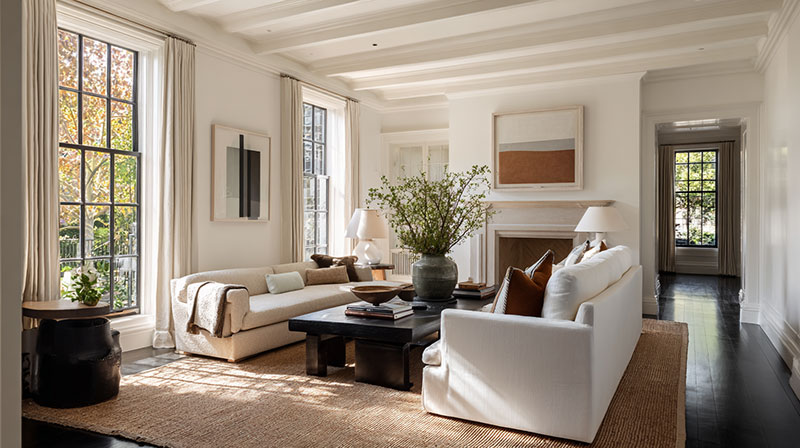
The most common combination in current residential design. White walls plus dark floors is a strong contrast palette that needs a rug decision to resolve the tension between them.
The rug becomes the tonal bridge. A warm neutral (ivory, oatmeal) softens the stark contrast. A bold-colored rug (navy, rust) adds a third element that draws the eye down and grounds the space.
According to the Harvard Joint Center for Housing Studies, annual U.S. remodeling spending reached USD 611 billion in 2022 and remained above USD 600 billion through 2025. Pairing white walls with dark hardwood floors is one of the most searched renovation combinations, driven by this sustained home improvement activity.
Warm Wall Colors With Dark Floors
Terracotta walls, warm beige, mustard, or sage push the rug palette toward warm tones. A cool gray rug under warm walls on a warm-toned dark floor creates 3 conflicting directions at once.
Stick to warm neutrals or warm deeps (rust, camel, ochre) when warm walls are in play. The color in interior design principle of tonal coherence applies across all 3 surfaces, not just 2.
Cool Wall Colors With Dark Floors
Sage green, slate blue, dusty blue-gray: these open the rug palette toward cool or neutral tones. A warm rug against cool walls on a cool-toned dark floor reads as out of place.
Cool walls also let you push toward bolder rug colors. A forest green rug under a slate blue wall on an ebonized oak floor creates a sophisticated, tonal depth that’s hard to achieve with warm palettes.
Monochromatic Approaches
Wall and rug in the same tone family. This only works with strong texture variation. Same color, same texture, no contrast = flat and unfinished.
The role of texture in interior design is to create differentiation where color similarity removes it. On dark floors, a wool rug in the same warm gray as the wall works when the rug’s pile creates visible textural contrast against the smooth wall surface.
What Rug Color Works Best by Room Type With Dark Wood Floors?
Room function changes the rug color decision. The same dark espresso floor in a bedroom needs a different rug approach than it does in a dining room or home office.
Residential use accounted for 72.4% of global carpet and rug sales in 2024, driven by home renovation activity and room-specific decor investment (Market.us, 2024). Consumers are not buying one rug for the whole house. They are making room-level decisions.
Living Room Rug Colors for Dark Wood Floors
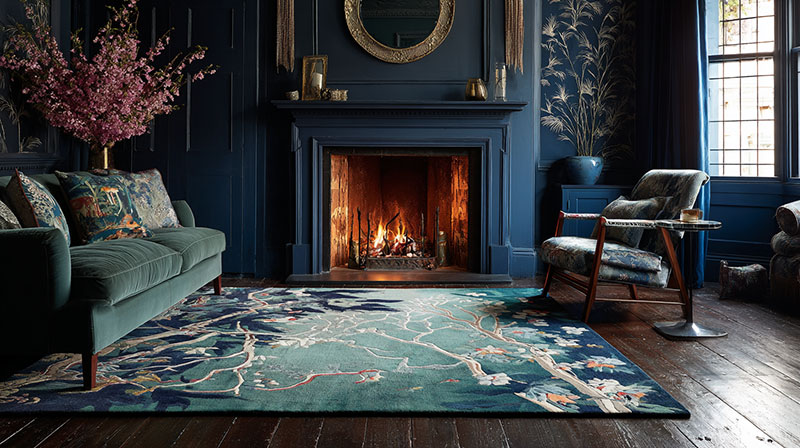
The living room has the most flexibility. It typically gets the most natural light and the most design attention, which means it can handle a wider range of color and contrast choices.
Best options:
- Light neutrals (ivory, oatmeal) for maximum contrast and visual lift
- Patterned rugs with mid-tone anchors when pure neutrals feel flat
- Jewel tones (navy, forest green) when walls and furniture are pale enough to absorb the weight
In 2024, living room color trends shifted strongly toward warm, layered palettes over the all-white minimalism of previous years (Italian furniture brand Adora, 2024). A terracotta or camel rug fits that direction well on a walnut-toned floor.
Bedroom Rug Colors for Dark Wood Floors
Warm-toned rugs outperform cool ones in bedrooms with dark floors. At night, under warm-temperature bulbs, cool gray or white rugs can read as clinical. Ivory, camel, and soft gold hold warmth in low light.
Avoid high-contrast white in bedrooms unless the room has significant natural light during the day. The contrast that reads as elegant in a living room reads as stark in a bedroom at 11pm.
Dark floors with a layered rug approach, using a jute base and a smaller warm-toned rug on top, works especially well in bedrooms. It adds textural depth without committing fully to one color decision.
Dining Room Rug Colors for Dark Wood Floors
Practical reality first: dining room rugs take the most abuse. Spills, chair movement, crumbs. Color selection here has to account for maintenance, not just aesthetics.
Medium tones hide staining better than light or very dark options. Warm beige, sandstone, and mid-gray all perform better than pure ivory or cream in dining rooms with dark floors.
HGTV’s 2024 dining room rug picks for dark wood settings consistently favored neutral wool rugs in broken-stripe or subtle pattern formats, noting that neutral tones “work with any design style” while standing up to real use (HGTV, 2024).
| Room | Best Rug Colors | Avoid |
| Living room | Ivory, jewel tones, patterned mid-tones | Dark brown solids, black |
| Bedroom | Ivory, camel, warm gold, champagne | Bright stark white, icy cool gray |
| Dining room | Warm beige, sandstone, charcoal mid-gray | Pure cream, light unpatterned ivory |
| Home office | Cool gray, muted slate blue, sage green | High-stimulation neon or bold solids |
| Hallway | High-contrast patterns, warm terracotta runners | Dark solid colors (disappear visually) |
How Furniture Color Affects Rug Color Choice on Dark Wood Floors?
Dark floors plus dark furniture plus a dark rug. That combination kills the room. The rug is the one element you can change most easily, so it carries the job of restoring visual separation when the floor and furniture are both heavy.
A 2024 study published in Buildings (MDPI) tested furniture and floor color combinations in office environments and found that wood floor and dark furniture pairings produced lower design satisfaction scores among participants than wood floor and lighter furniture combinations. The visual weight of dark-on-dark consistently registered as less appealing.
Light Furniture on Dark Floors
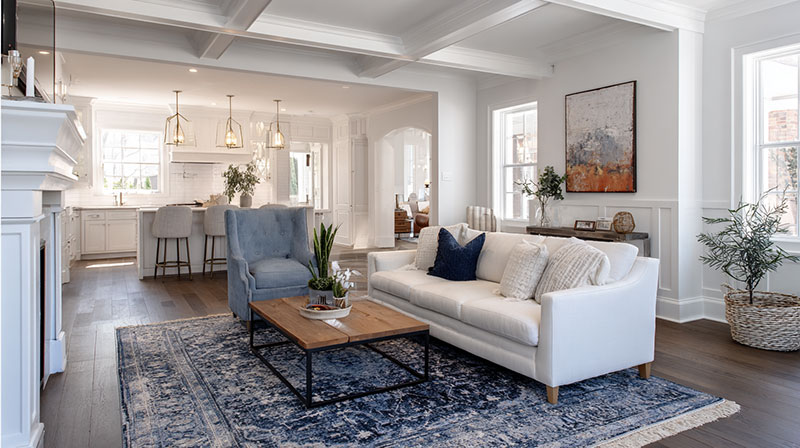
This is the most design-flexible setup. Light furniture already creates contrast with the floor.
The rug can go either direction: lighter (consistent, cohesive palette) or darker (intentional third layer of contrast). Both work. The deciding factor is the wall color.
If walls are also light, a darker rug adds depth the room would otherwise lack. If walls are medium or saturated, a lighter rug keeps the floor level from getting visually crowded.
Dark Furniture on Dark Floors
The rug must go light. No flexibility here.
Dark furniture plus dark floors plus anything other than a clearly lighter rug collapses the room’s visual separation entirely. Cream, ivory, or light oatmeal are the reliable choices. A medium-value rug won’t be light enough to create the needed separation.
National Floors Direct’s 2024 guidance for dark hickory floors paired with dark furniture specifically recommended “furniture in white, cream, or light gray” as the primary palette strategy, with the rug functioning as an extension of that lighter field (National Floors Direct, 2024).
Wood-Toned Furniture and Undertone Matching
Oak, teak, and other warm-toned wood furniture carry undertones that interact with both the floor and the rug.
Warm wood furniture + warm dark floor: rug should reinforce the warm palette (camel, rust, terracotta) or contrast clearly with light neutrals.
Warm wood furniture + cool dark floor: this combination already has built-in tension. The rug becomes the mediator. A neutral warm-leaning ivory sits between the 2 undertones without taking sides.
Metal Accents and Rug Tone
Brass and gold hardware push the room toward warm rug tones. Chrome and brushed nickel push toward cool.
This sounds minor. It isn’t. Metal finishes read across the entire room and shift the undertone of every other surface. A cool gray rug that reads perfectly under chrome fixtures reads slightly off under brass ones.
Check your light fixtures, cabinet hardware, and decorative objects before finalizing a rug color on dark floors. The details in interior design shift the reading of the larger surfaces around them.
How to Test a Rug Color Before Buying for Dark Wood Floors?
Wrong rug color on dark floors is an expensive mistake. Returning a large area rug is inconvenient. Most people skip the testing step and regret it.
Augmented reality (AR) tools are now standard across major rug retailers. Wayfair, IKEA, and Rugs USA all offer in-app AR visualization that places a digital rug on your actual floor through your phone camera. The decorative rugs market reached USD 3.8 billion in 2024, with AR shopping tools cited as a key growth driver as consumers seek to verify color and scale before buying (Global Market Insights, 2024).
Physical Swatches First
Order samples or swatches before committing. Place them directly on the dark floor in natural light, not on a table or next to a window.
Most rug retailers offer swatch programs. Rugs USA launched its Custom by Rugs USA program in February 2024, specifically allowing consumers to order made-to-measure pieces with flexible sizing and sample verification before full purchase (Grand View Research, 2024).
Check the swatch at 3 different times of day: morning light, midday, and under your evening artificial lighting. All 3 will read differently on a dark floor.
AR Tools and What They Get Right (and Wrong)
Wayfair’s app places 3D rug models in your space using your phone camera. Target and MADE.com use Google’s Scene Viewer for similar functionality.
What AR gets right: scale, proportion, color contrast against your specific floor.
What AR misses: texture depth, pile direction, and how the rug reads under your specific lighting. A flatweave and a high-pile shag can look identical in AR. They do not look identical in person.
The Photography Test
Once you have a physical swatch on the floor, photograph it at different times of day. Review the photos on your phone screen, not in person.
Your eye adjusts for lighting conditions automatically. Your phone camera doesn’t. The photograph often reveals undertone clashes that your eye adapts around in real time.
This test takes 10 minutes and has prevented more floor-rug color mismatches than any other single method. Do it before buying.
Return Policies to Check
Before ordering, verify the return window and process. A 30-day return policy with free return shipping removes most of the financial risk from an in-home trial.
- Wayfair: 30-day return on most rugs
- Rugs USA: 30-day return with paid return label
- IKEA: 365-day return policy on unused items
Buying from retailers with clear return policies turns rug selection into a low-risk trial process rather than a permanent commitment. Use the policy. That’s what it’s there for.
Understanding scale and proportion in interior design also matters at the testing stage. A rug swatch that looks right in color can still fail if the full rug is undersized for the room. Test both color and size together before committing.
If you want to use a rug size calculator to verify the right dimensions for your space before ordering a sample, that step belongs before color testing, not after.
FAQ on What Color Rug Goes With Dark Wood Floors
What is the best rug color for dark hardwood floors?
Light neutrals work best. Ivory, cream, and oatmeal create strong floor-rug contrast and prevent the room from reading as heavy. Warm-toned rugs like terracotta and camel also work well on walnut and mahogany floors with red-brown undertones.
Does a gray rug work with dark wood floors?
It depends on the floor’s undertone. Cool gray rugs pair well with ebonized oak and cool-toned dark floors. On warm-toned floors like espresso or walnut, medium gray creates undertone conflict. Blue-gray is a safer choice across both undertone categories.
Can you put a white rug on dark hardwood floors?
Yes, but with trade-offs. White creates the highest contrast against dark flooring and visually lifts the room. The downside is maintenance. Dark floors show debris easily, and a white rug amplifies that problem. Off-white or ivory is a more practical alternative.
What color rug goes with espresso wood floors?
Espresso floors carry warm deep-brown undertones. Ivory, cream, camel, and rust all complement that warmth. Cool grays create undertone tension. Persian rugs with warm reds and gold tones are a reliable choice for tonal layering on espresso flooring.
Should a rug be lighter or darker than the floor?
Lighter. A rug darker than the floor collapses visual separation and makes the room feel flat. The rug needs to be at least 2-3 value steps lighter than the floor to create readable contrast and maintain the floor as a distinct surface.
What rug colors work in a living room with dark wood floors?
Light neutrals, patterned mid-tones, and jewel tones like navy and forest green all work. The living room has the most flexibility of any room type. The key constraint is furniture color. Dark furniture requires a lighter rug. Light furniture opens more options.
What rug material is best for dark hardwood floors?
Wool holds color depth best and works across light and dark tones. Jute provides built-in neutral contrast without any color decision required. Flatweave rugs show color most accurately, making them useful when precise floor-rug color matching matters.
Does pattern matter when choosing a rug for dark wood floors?
Yes. High-contrast patterns sit clearly above dark floors and give more color flexibility. Low-contrast tonal patterns in colors close to the floor disappear visually. Persian rugs with warm reds and ivory work naturally with walnut and mahogany tones.
How does natural light affect rug color on dark floors?
Significantly. North-facing rooms with cool light benefit from warm rug tones. South-facing rooms handle cool grays without losing warmth. Artificial lighting color temperature also shifts how rug colors read. Always test a swatch under your actual room lighting before buying.
How do I test a rug color before buying for dark wood floors?
Order a physical swatch and place it directly on the floor. Check it in morning light, midday, and under evening artificial lighting. Use AR tools from retailers like Wayfair or Rugs USA to verify scale and contrast. Photograph the swatch at different times of day.
Conclusion
This conclusion is for an article presenting rug color selection as a decision driven by floor undertone, room light, and furniture weight, not personal taste alone.
Dark walnut, espresso, and ebonized oak each pull the color contrast decision in a different direction. Matching warm tones to warm floors, and cool tones to cool floors, removes most of the guesswork.
Room type matters too. A dining room rug needs to survive daily use. A bedroom rug needs to hold warmth at night. A living room gives you the most freedom.
Test swatches on the actual floor. Check them under your lighting. Use AR tools from Wayfair or Rugs USA before committing.
Get the floor-rug pairing right and the rest of the room follows naturally.

- Kitchen Color Schemes by Cabinet Color: What Pairs Well - October 19, 2026
- Curtain Colors for Every Wall Color: Safe vs Bold Picks - October 18, 2026
- Interior Design Styles: Find Your Primary and Secondary - October 14, 2026