Color Combinations
Colors That Go With Burnt Orange: The Best Options
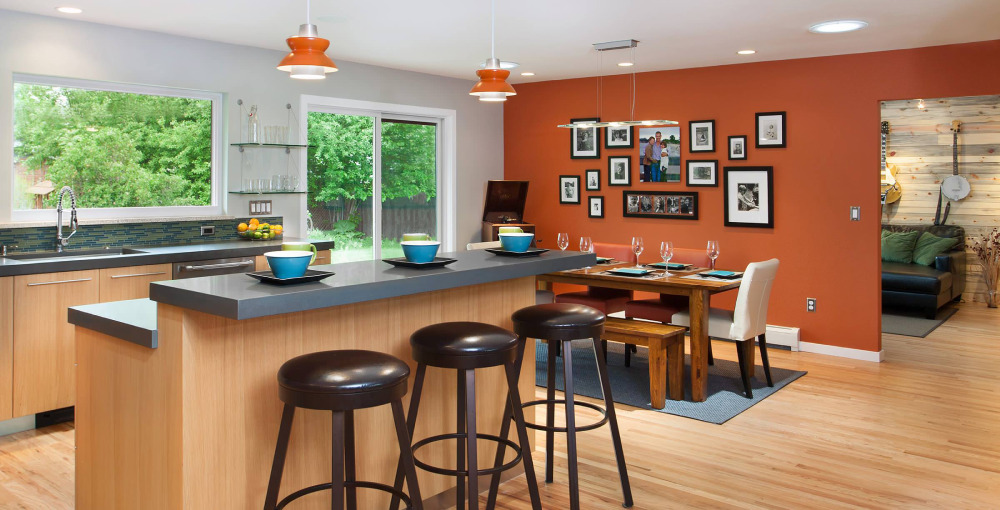
Burnt orange usually enters a room as one big piece, a sofa or a rug, and every other color gets picked around it afterward. Navy, teal, cream, charcoal and sage green are the ones that tend to hold up.
Navy and teal get their contrast from blue, which sits opposite orange on the color wheel. Cream and sage share the orange’s earthy warmth instead. The partner you pick also decides whether the room feels formal or retro.
The trend side backs this up. Better Homes and Gardens Australia named Spiced Tangerine, a deep, warm orange matched to Benjamin Moore’s Racing Orange 2169-10, its first 2026 Colour of the Year. That suggests rich, expressive color is moving out of the accent role and into the lead.
Burnt orange is one of 32 colors in our guide to color combinations for every room, each listed with its safe and bold partners.
Burnt orange is one of 32 colors in our chart of which colors go together, each listed with its safe and bold partners.
Which colors go with burnt orange?

Guides from Tikkurila, Dulux, Livingetc, Homes & Gardens and Piktochart, checked in October 2026, all pair burnt orange with a blue or blue-green and at least one neutral. That overlap is the backbone of every workable palette. Brown and warm gray are the safe supporting neutrals to fall back on.
| Partner | Relationship | Mood | Best on |
|---|---|---|---|
| Navy blue | Complementary | Formal, high contrast | Dining and living rooms |
| Teal | Near-complementary | Retro, lively | Accent walls, kitchens |
| Cream | Warm neutral | Soft, open | Walls, upholstery |
| Charcoal | Dark neutral | Grounded, modern | Sofas, feature walls |
| Sage green | Earthy, muted | Calm, natural | Bedrooms, bathrooms |
Blues bring the most contrast, and neutrals are the lower-risk option. Greens fall in between.
What undertone does burnt orange have, and why does it decide the pairing?

The red-brown undertone is what decides it. Burnt orange is a dark, saturated orange with brown pulled in, so warm neutrals blend into it and blues stand against it.
A neutral with a yellow or red base shares that undertone and sits quietly next to the orange, while anything built on blue reads colder.
The standard digital shade is hex #CC5500, which is RGB 204, 85, 0 and HSL 25 degrees, 100%, 40%. In CMYK it comes out at 0, 58, 100, 20. Canva lists the same values, and HTML Color Codes gives the same hex.
No single body owns the shade. Canva dates the name to 1915 and points out that organizations define it differently, with Auburn University and the University of Texas each using their own version.
So treat #CC5500 as a starting point, then test chips against it in your own room.
The closest paint-store shades run softer than that screen value.
- Sherwin-Williams Cavern Clay (SW 7701) has hex #AC6B53 and an LRV of 19.9 as of October 2026, which makes it a dusty clay rather than a saturated orange.
- Farrow & Ball’s Red Earth (No. 64) is a warm terracotta red mixed from red and yellow pigments, per Farrow & Ball.
LRV, light reflectance value, runs from 0 (black) to 100 (white). At 19.9, Cavern Clay sits in the medium-dark range.
A brighter orange follows different pairing rules, which the guide to colors that go with orange covers.
Do blue and teal make the strongest pairing with burnt orange?
For contrast, yes. Blue sits opposite orange on the color wheel, so navy and teal give burnt orange more contrast than any other family.
That’s standard color theory, with opposite hues sharpening each other. Dominic Myland, CEO of Mylands, told Livingetc that the tone of blue you pick sets the feel of the whole space.
Navy blue

Navy gives the formal, high-contrast version. Mayfair Hall calls the pair bold and dramatic, suited to living and dining rooms. A navy sofa with burnt orange cushions works, and so do burnt orange dining chairs against navy walls, with a cream rug between the two.
Full-strength navy next to saturated burnt orange reads as a team palette, since the shade turns up often in sports uniforms (HTML Color Codes). A bit of cream between them breaks that up.
If navy is already in the room, the rest of the palette is easier to plan from the colors that go with navy blue.
Teal and blue-green

Teal pushes the pair toward retro and lively. Piktochart lists teal beside blue as the shade that makes burnt orange pop, and Homes & Gardens names bright teal as a higher-impact choice.
Add a deeper blue-violet such as indigo and you get a split-complementary scheme, where the contrast stays and a second cool tone comes into the room.
Teal is easy to overdo, though. A teal wall, a teal sofa and orange pillows all compete for the same focal point, so keep it to one large surface.
Softer blues
Dusty blue and blue-gray calm the orange down.
Homes & Gardens shows a blue-gray bedroom with orange curtains, which is a good template for rooms meant for rest. The contrast is lower and the room is quieter for it.
Which neutrals work with burnt orange?
Cream, warm white, beige and brown work best, and gray and black also work in controlled amounts.
Homes & Gardens advises keeping at least one neutral among the accents in any orange scheme. Brown and beige both count, and so does gray. Orange dominates a room, and the neutral gives the eye somewhere to rest.
| Neutral | Pro | Con |
|---|---|---|
| Cream and warm white | Softens the intensity | Reads flat without texture |
| Beige, tan and brown | Shares the earthy base | No cool relief |
| Gray | Modern, balanced | Cool grays turn cold |
| Black | Sharpens the orange | Heavy in large areas |
Tikkurila calls beige with burnt orange a solid scheme and rates brown as a particularly good match. Tan is its suggestion for a more modern take. If beige is the larger surface in the room, the colors that go with beige show what else sits well beside it.
Gray draws the most debate. Tikkurila recommends light grays, Dulux says burnt orange suits both light and dark gray, and Canva pairs it with dark blues and grays as an accent.
The sources agree gray works and differ on depth. Warm gray or greige sits closest to the orange’s undertone, so it is the safer pick.
Charcoal is the darker route. It grounds a burnt orange sofa, and the colors that go with charcoal gray fill in the remaining palette.
Black belongs in small doses, like frames and hardware. Homes & Gardens lists black among the starker partners that add impact.
How do green and pink layers work with burnt orange?
A second color on top of burnt orange needs a neutral nearby, or the room turns into a three-color fight.
Greens
Sage is the calm option and suits bedrooms and bathrooms. Olive is earthier and more retro, and it sits closest to the orange’s undertone. Forest green goes deep and formal, which looks strong beside dark wood. Emerald reads rich and luxurious (Mayfair Hall).
Dulux suggests dark green and burnt orange together in printed cushions or artwork to make a room look cohesive.
Sage is the gentlest option, and the colors that go with sage green help place a third tone beside it.
Warm earthy layers

Terracotta, sienna, rust and the rest of that family sit next to burnt orange on the wheel, so they layer without clashing. Livingetc’s advice is to pair burnt orange with colors found in nature.
Mustard and amber belong here too, as the yellow side of orange.
The risk is a room built only from warm tones. One cool or neutral surface makes the layers look chosen, and a broader earthy color palette shows how far the family stretches.
Soft pinks
Pink works when it is dusty and warm. Tikkurila lists dark pink among workable partners and notes that a pale orange with pink undertones adds warmth to a burnt orange interior. Cool, bright pinks fight the red-brown base.
What proportion of burnt orange should a room have?
Burnt orange works best as the 10 percent accent or the 30 percent secondary color. As the 60 percent base it needs strong natural light and a pale partner.
Bob Vila’s explainer on the 60-30-10 rule splits a room into 60 percent dominant, 30 percent secondary and 10 percent accent, with the secondary carried by curtains, upholstery, artwork and accent walls. It also calls the ratio a guideline, and says an accent pattern can replace an accent color.
- At 10 percent the orange lives in cushions, throws, ceramics and framed art. That is the lowest-risk version and the easiest to swap.
- At 30 percent it becomes a sofa, curtains, a rug or one accent wall.
- At 60 percent it means painted walls, which is rare and only works in a bright room.
Secret Linen Store co-founder Molly Freshwater puts a bedroom’s dominant color on the walls, the secondary on the duvet cover and curtains, and the accent on cushions and throws. Burnt orange fits the last two roles.
A burnt orange accent wall counts toward the secondary share. If the sofa already carries the orange, pick a different wall shade from the accent wall colors for a living room.
Cream or linen curtains and a neutral rug (patterned with orange and one cool tone) keep a burnt orange sofa as the focal point, and pillows in navy or sage tie it together.
Pillows do most of the 10 percent work, and a guide to throw pillow combinations helps mix patterns without losing the palette.
Which colors suit burnt orange room by room?

Pair navy or brown with burnt orange in living rooms, greige and linen in bedrooms, warm white in kitchens, and sage with cream in bathrooms.
| Room | Best partners | Burnt orange role | Skip |
|---|---|---|---|
| Living room | Navy, brown, cream | Sofa or rug | Orange walls plus orange sofa |
| Bedroom | Greige, linen, dusty blue | Bedding or one wall | Orange on all four walls |
| Kitchen | Warm white, wood, dark blue | Walls or island | Stark white trim |
| Dining room | Navy, emerald, cream | Upholstered chairs | Orange table and chairs together |
| Bathroom | Sage, cream | Towels, vanity | Orange walls without a window |
In a living room, one large orange piece against calmer walls does the job. Mayfair Hall lists a burnt orange area rug as a way to ground the space.
A single wall behind the bed keeps a bedroom restful, and the guide to accent wall colors for a bedroom lists neighbors to test.
Behr says burnt orange paint suits kitchen walls because it adds a warm, comforting feel, and it suggests mint green and peach for a brighter palette. For wall shades beyond orange, the best colors for kitchen walls cover the rest.
Dining chairs upholstered in burnt orange add a sophisticated touch, per Mayfair Hall.
In bathrooms, keep the orange to small items and let sage and cream carry the walls.
Which materials and design styles suit burnt orange?
Brass, oak, walnut, leather and linen suit burnt orange most, and the shade fits mid-century modern, 1970s revival and rustic rooms best.
Materials and metallics

Warm metals look best, brass and gold especially, with bronze close behind. Oak and walnut work for wood, cognac and tan for leather, and linen and wool for fabric.
Piktochart recommends gold or bronze for elegance and layered textures for depth. Chrome and glossy black plastic do the opposite and flatten the warmth.
Design styles
Mid-century modern puts burnt orange against walnut and teal. MyMove notes that the earth-inspired colors of the 1970s made their way into mid-century homes as owners redecorated, and the mid-century modern color palette shows how the shade sits inside it.
That decade was the shade’s peak. Burnt orange, harvest gold and avocado green dominated 1970s kitchens and appliances, a palette Leatrice Eiseman and Keith Recker cover in Pantone: The Twentieth Century in Color.
I’d use one retro color and leave the rest of the set in the past.
Bohemian rooms layer patterns and rattan around one big burnt orange piece, with plants wherever they fit.
For Japandi, Benjamin Moore advises cool grays or neutral tones for an understated orange look. In a room built on Japanese Scandinavian interior design principles, limit the color to one object against pale wood.
Behr says burnt orange appears often in traditional or rustic decor and fits modern designs too, which covers modern farmhouse rooms.
How does light change burnt orange, and when does the scheme fail?
Cool light mutes burnt orange and warm light pushes it toward yellow, so one chip reads differently in a north-facing room, a south-facing room and under different bulbs.
- In a north-facing room, Benjamin Moore describes the light as muted and cooler. Its Helen Shaw says these rooms can take rich color from floor to ceiling.
- South-facing rooms get warmer light that makes colors appear more yellow, says Little Greene’s Ruth Mottershead, so warm tones turn creamier.
- Under warm bulbs, which Westinghouse Lighting classes as 2000K to 3000K, reds and oranges look more vibrant, according to Lampwise.
- Westinghouse treats 4500K and above as daylight, a blue-white that reads harsh beside burnt orange.
Put those together and a rule falls out. A north-facing room mutes the color, so choose the more saturated chip. The sun in a south-facing room adds yellow, which makes a redder, deeper chip the better choice.
Fixtures and layers change the result too, which the guide to light in interior design breaks down.
A small, dark room painted burnt orange on all four walls is the usual failure. Homebuilding says a low-LRV color in good light feels cocooning rather than cramped, and good light is exactly what a small dark room lacks. Stark white trim is the other one, since it turns the pairing harsh and cream or warm white fits better.
The usual fix is a lighter partner or a smaller area of orange.
Before painting every wall of a small room, compare it against the best colors for small rooms.
How to build and test a burnt orange palette
Decide what job the orange has and pick a partner, then test large samples under the room’s own light before buying paint.
As of October 2026, Benjamin Moore’s orange paint page lists the warm whites Simply White OC-117 and White Dove OC-17, plus the blush-leaning Basking Ridge Beige 1158 and Georgetown Pink Beige HC-56, as partners for orange. The page also tells buyers to read the undertones already in the room and to sample extensively.
For a quick second opinion on partners, a room color scheme generator proposes combinations worth sampling.
- Decide what role the orange plays in the 60-30-10 split.
- Pick one partner family, whether blue, neutral or green. Combining all of them at once gets busy.
- Add one neutral, such as cream or greige, to rest the eye.
- Buy samples. Benjamin Moore advises viewing them in the home’s lighting through the day and evening, natural and artificial.
- Paint large swatches on two walls, including the one that gets the least light.
- Judge them side by side. DesignShop suggests testing two to four samples, then choosing the one that still looks right at night.
Preview apps such as Benjamin Moore’s Color Portfolio apply colors to photos of the room, which narrows the field but does not replace a wall swatch.
When a sample wins, a room paint calculator turns wall dimensions into the amount to buy.
Common Questions About Decorating With Burnt Orange
Is burnt orange a warm color?
It reads warm because of the red-brown undertone, and it sets a cozy, autumnal mood. A cool partner such as navy or teal balances that warmth.
Can burnt orange work in a small room?
Yes, as an accent. A rug, textiles or a single wall keep the color in check. Orange on all four walls absorbs light in a dark room.
Is burnt orange still in style?
According to The Spruce, yes. It counts burnt orange among the bedroom colors replacing gray in 2026.
MyMove notes that current orange paints run softer than the 1970s originals.
Which trim color goes with burnt orange walls?
Cream or warm white. Stark bright white turns the pairing harsh.
Farrow & Ball matches its terracotta Red Earth with the complementary white Dimity, a good model for matching the trim’s undertone to the wall.
Changing a Burnt Orange Scheme Without Repainting
Changing a burnt orange scheme is cheap when the orange sits on movable pieces and means a full repaint when it sits on the walls.
That difference sets the order of any redo, starting with the cheapest.
- Cushions and throws first
- Area rug and curtains second
- Sofa upholstery third
- Wall paint last
Each step costs more and takes longer to reverse than the one before, so the swap with the lowest cost and the fastest reversal comes first.
The catch is that movable orange gives a quieter room than a painted wall. A new rug is usually the first large swap, and a rug size calculator confirms the dimensions before buying.

- Kitchen Color Schemes by Cabinet Color: What Pairs Well - October 19, 2026
- Curtain Colors for Every Wall Color: Safe vs Bold Picks - October 18, 2026
- Interior Design Styles: Find Your Primary and Secondary - October 14, 2026