Color Combinations
The colors that go with teal? Check out these color combinations
Benjamin Moore’s Color Trends 2021 palette came out in October 2020, and its teal (Aegean Teal 2136-40) shares the lineup with 11 other hues. The rest include a rosy peach and a rich brown, plus one that reads like potter’s clay. The brand describes the palette as warm and sunbaked, which puts its cool blue-green in a warm setting.
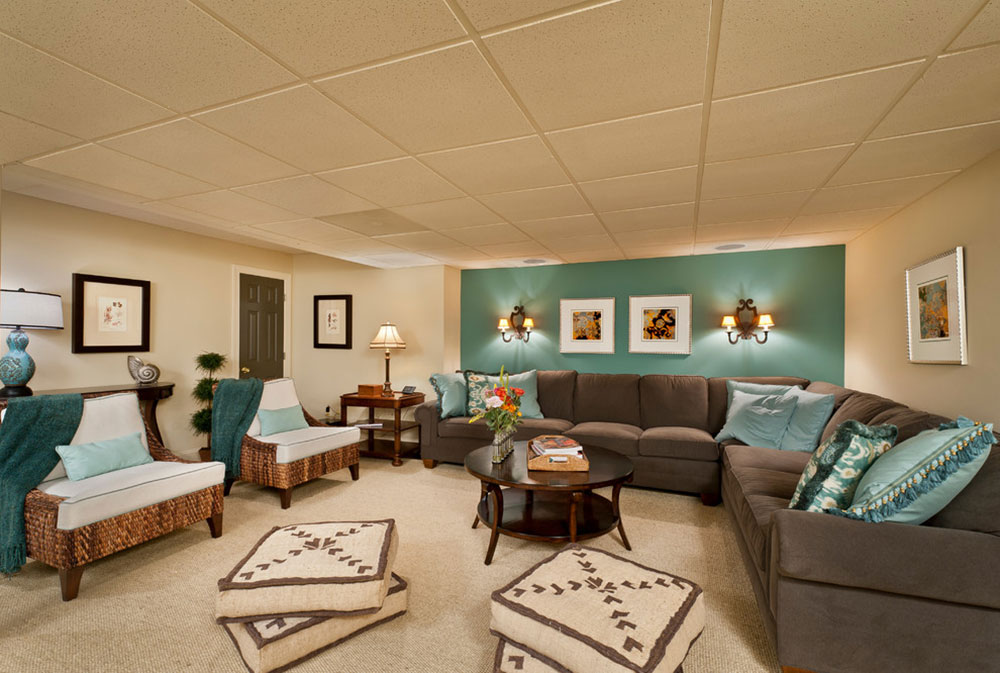
Teal sits between blue and green, and that’s why it acts so differently depending on what you put beside it. Warm hues push against it. Blues and greens melt into it. Neutrals settle it down, and brass or wood takes the chill off.
Teal is one of 32 colors in our guide to combining colors in a room, each listed with its safe and bold partners.
Teal is one of 32 colors in our guide to what goes with what, each listed with its safe and bold partners.
Which colors go with teal?
Coral and terracotta sit opposite teal on the wheel, and burnt orange does too, so they give the most contrast. Navy and sage are the neighbors (emerald if you’re feeling bold). White, cream and charcoal stay out of the way. Brass and walnut are the easy metal and wood picks, with copper close behind.
The W3C CSS Color Module Level 3 defines teal as #008080, which is RGB 0, 128, 128. That’s a deep blue-green with no red in it at all. Paint-chip teals usually lean greener or bluer than that value, but whichever way they lean, the opposite side of the wheel stays in the reds and oranges.
| Family | Example colors | Effect in a room | Best use |
|---|---|---|---|
| Warm complements | Coral, terracotta, burnt orange, blush | High contrast, energetic | Pillows, art, rugs |
| Neighboring hues | Navy, sage, emerald, turquoise | Calm, layered | Walls, large furniture |
| Neutrals | White, cream, gray, charcoal | Clean, grounded | Trim, ceilings, backdrops |
| Metals and woods | Brass, copper, walnut, oak | Warm, finished | Lighting, hardware, tables |
Distance on the wheel explains most of it, and the color theory behind these families goes deeper if you want it. Neighbors blend, opposites compete for attention, and neutrals stay out of the fight.
If you want the lowest risk, go with neutrals or neighboring hues, since nothing competes with teal. Warm complements bring the most contrast, so use them in small doses. Metals and wood bring the most finish, and they add warmth without adding another color.
Which warm colors make teal stand out?

Warm hues sit opposite blue-green on the color wheel, so coral, terracotta, burnt orange, rust, mustard and blush pink all make teal stand out. The pairing works when the warm color stays smaller than the teal.
Johannes Itten’s The Elements of Color (1970) lists 7 contrasts. Two of them, complementary contrast and simultaneous contrast, explain why this pairing works. Each color looks stronger beside its opposite, so a little coral does the work of a lot.
Opposites create the sharpest contrast in a room, which is why one color has to lead.
Soft complements such as coral and peach

Coral lifts mid and light teals without pushing the room toward orange. Peach does something similar, and Emma Bestley of YesColours pairs it with teal in bathrooms, across walls and floors, skirting included (Homes & Gardens, 2024).
Benjamin Moore color specialist Helen Shaw recommends muted pink or coral, even yellow, as accents on a dark teal, because they bring out its warmer undertones.
Stronger complements like terracotta and rust

Farrow & Ball’s own copy for Vardo (No. 288), a rich teal, says it works best with reds and dark grays.
Rust and burnt orange follow the same logic on a deeper teal. Designer Margaret Donaldson of MDI Luxury Design says teal and orange suit modern and eclectic rooms alike, since the intensity of each can be adjusted (Homes & Gardens, 2024).
Saturated pinks work too. Nadia Watts Interior Design pairs dark teal walls and a teal sofa with hot pink artwork.
Equal amounts of teal and orange turn a room loud. Give teal the walls or the sofa and keep the warm color small. Cushions and throws are the obvious place for it. One accent chair works, and so does art or the border of a rug.
Do blues and greens work with teal?
Yes. Navy, sage, emerald, olive and turquoise sit next to teal on the color wheel, so they build a calm, layered room with little risk of clash.
The weak point is flatness. When every color shares the same depth, teal and its neighbors blur together.
A kitchen by Cohesively Curated Interiors shows the fix. Benjamin Moore Sea Glass cabinets sit beside a teal tile wall, and the warm wood on the island and floor balances the cool blue-greens (Homes & Gardens, 2024).
Navy deepens the scheme, so it suits walls or a sofa with teal as the accessory color. Emerald is the richest neighbor and does best next to a muted teal. Olive brings yellow undertones that warm teal up, which is the mix designer Sarah Storms used in a maximalist bedroom. Turquoise goes brighter and more tropical.
Sage green is the safest neighbor. Ideal Home counts it among the best partners for teal because of where it sits on the color wheel, and the shades that go with sage green stretch the palette further.
Teal on teal works when the depths differ, with a pale wall, a mid-tone sofa and a dark rug. If the blend gets too smooth, one contrast breaks it up. White trim does it, and so does warm wood, or even a single coral accent.
Which neutrals suit teal?

White, cream, beige, gray and charcoal all suit teal. The choice comes down to undertone, since warm neutrals soften teal.
Farrow & Ball pairs Vardo with Ammonite as its complementary white, a gray-toned white the brand describes as neither too warm nor too cool.
Farrow & Ball’s Patrick O’Donnell adds that dirtier whites and buttery yellows turn gentler beside teal, which gives a more settled look (Livingetc).
For a vivid teal, Al Bruce of Olive & Barr recommends white as the balance, since it puts teal in the spotlight without overloading the room. It also brightens small spaces. If the walls stay teal, choose the trim by undertone, and this guide to paint colors that suit white trim covers the options.
Cream and beige lean warm, which softens a deep teal and settles the room.
Charcoal gives the moodiest result. Homes & Gardens says teal pieces must stay dominant against dark colors, as in a living room where a teal couch, footstool and ottoman hold their own against chocolate brown walls.
Black works in thin lines such as frames and window grids, lamp bases too.
Cool gray beside a blue-leaning teal reads cold. Switch to greige or beige to warm it up.
How do brass, gold, copper and wood work with teal?
Warm metals add glow to teal, and wood layers more warmth on top so a blue-green room doesn’t feel cold.
Brass, gold and copper
Metal finish sets the temperature of the room.
Graham & Brown recommends copper or gold to energize a teal scheme, and Livingetc notes that gold moves between traditional and contemporary rooms. Chrome keeps teal crisp, and Homes & Gardens says it can sit beside brass in a color-drenched room.
In a dining room by Brad Ramsey Interiors, teal walls and ceiling carry brass accents and a black and white hide rug. Ramsey kept the ceiling teal because a white one would have broken the jewel-box feel.
Pick one metal per room as the lead, then repeat it on lighting and hardware, frames too.
Wood tones

Hunker notes that a rich wood furniture finish softens bold color pairings and acts as a buffer between them. Dark woods anchor deep teal, while oak and lighter woods keep light and mid teals open.
Kate Marker Interiors shows the light-wood version in a dining room: dark teal wallpaper above white wainscoting, with light brown furniture and decor. For dark woods, a guide to what else suits walnut wood helps fill out the rest of the palette.
How does the shade of teal change the best partner?
The best partner depends on whether the teal leans blue, green or yellow, and on how deep it runs. Offset the lean with an opposite-temperature partner, or echo it with a near neighbor.
| Teal shade | Undertone | Best partners | Avoid |
|---|---|---|---|
| Deep teal | Depth leads | Dark green, warm wood, soft aqua | Colors at the same depth |
| Mid teal | Gray-leaning | Warm white, light gray, putty | Heavy saturated accents |
| Bright, turquoise-leaning | Blue | Cream, warm wood, coral | Cool grays |
| Yellow-leaning | Warm, vintage | Brown, gold, cream | Cool whites |
Teal runs on blue and green undertones, according to Livingetc’s Amy Moorea Wong (2025), and a rarer third leans yellow.
A blue-leaning teal is cool and fresh, which makes it a good pick for entryways and home offices. Designer Gideon Mendelson of Mendelson Group suggests mustard or lavender, or a minty green, against its cool undertone.
Green-infused teals feel earthy and restful, and they suit cozy living rooms and bathrooms. Designer Oliver M. Furth pairs teal with tans and browns, and an earthy palette carries that through the rest of the room.
Yellow-leaning teal reads warm and vintage, and it fits classic, luxurious rooms. Echo it with brown, gold and cream.
Depth changes the contrast more than the undertone does.
Deep teal takes a dark green for full drama, says Farrow & Ball’s Patrick O’Donnell (Livingetc, 2025). Mid teal sits easily with whites and light grays. Pale teal pairs with an even softer aqua in a kids’ room, or a green-based white in a study (same source).
Benjamin Moore lists Aegean Teal (2136-40) at LRV 25.13, a balanced mid-tone blue-green with a hint of gray, and coordinates it with Chantilly Lace, Atrium White, Gray Cashmere and Muslin.
How much teal should a room hold against other colors?
The 60-30-10 split is the usual starting point, with 60% dominant color, 30% secondary, 10% accent. Country & Town House, quoting Secret Linen Store co-founder Molly Freshwater, puts the dominant color on the walls in most rooms. Teal can take any of the three shares, and the share decides how loud it gets.
A drenched room with teal on the walls is the bold version, and it works best with a pale partner and warm wood nearby.
As the 30, teal turns up as a sofa, curtains or cabinets against neutral walls. That’s the safest role for a first teal piece.
As the 10, it’s cushions, a vase or art. Livingetc calls teal throw pillows and blankets the quickest accent, since they move around to test placement.
A well-placed 10% accent creates emphasis in a room and pulls the eye to a chosen spot. Repeat it in several places so the choice looks deliberate.
If you want an order to work in, this one has held up for me:
- Pick the teal shade and decide whether it plays the 60, the 30 or the 10
- Set the 60 as a neutral, or as teal itself in a drenched room
- Choose the 30 from the pairing families, a neighboring hue, a warm wood or a second neutral
- Add the 10 as a warm complement or a metal, and repeat it
Homes & Gardens calls the split simply a guideline, and a one-hue teal room breaks it by design. In that case assign proportions by depth instead, with the lightest shade at 60, the mid-tone at 30 and the darkest at 10.
What colors go with teal in each room?

Restful partners suit bedrooms and bathrooms, and livelier ones suit living rooms and kitchens. Livingetc (2025) links soothing teal to sleep in bedrooms and to unwinding in living rooms, and to a spa feel in bathrooms.
Living room
Oliver M. Furth Design & Decoration pairs teal armchairs and an ottoman with an acid yellow rug and a light timber coffee table.
A teal sofa works as the 30% piece, so keep the walls pale or warm neutral and put the warm color on the rug. Livingetc notes that teal furniture makes a bold focal point without overwhelming the room.
The reverse also works. A single teal feature wall wants neutral furniture, and this guide to accent wall colors for a living room covers the options.
Bedroom
Country & Town House maps the 60-30-10 split onto bedrooms. Walls or bedding take the dominant color, curtains and throws the secondary, and cushions and trims the accent.
With teal on the walls, cream curtains and one row of coral cushions finish the scheme. Livingetc recommends a soothing teal for sleep, and a deep, green-leaning shade with soft partners belongs among the colors that calm a bedroom.
Bathroom
ArchiPro’s teal guides split the choice by undertone.
A blue-based teal is cleaner and cooler, and looks crisp beside white ceramics and chrome. A green-based one is softer and more organic, warm beside brushed brass and timber, stone too.
The guide also advises checking teal tile in daylight and under warm artificial light before buying.
Kitchen
Houzz’s design panel highlights two-tone kitchens. Designer Sabrina Alfin recommends blues and greens on the lower cabinets with white above, and her San Francisco Bay Area kitchen uses the Sherwin-Williams teal Refuge on the lowers.
Keep the countertop pale so the teal does not close in.
How does lighting change teal and the colors beside it?
North light mutes teal and pulls its partners cooler, while south light concentrates it, so the same pairing needs adjusting by window direction. Bulbs add a second shift on top of daylight.
Livingetc (2025) describes teal as cool and serene in north-facing rooms, where indirect light renders it softer and more muted, and as concentrated and bold in south-facing ones. Light is a design variable in its own right, and how light works as a design element explains why.
In a north-facing room the light is cooler, so a lighter partner shouldn’t have a cool gray or blue base. Farrow & Ball recommends yellow-based whites, which bounce the most light.
South-facing rooms get warm light from dawn to dusk, and Farrow & Ball rates them among the easiest for a palette. Pale partners keep a concentrated teal open.
East rooms get the most sun in the morning and cooler light in the evening, and west rooms run the opposite way. Choose partners for the hours the room is actually used.
Sources split on what to do in a north-facing room. Farrow & Ball suggests embracing the cool light with darker colors, and O’Donnell says teal creates a cocooning feel in poorly lit spaces (Livingetc, 2025).
Benjamin Moore’s color team advises warmer undertones in the same exposure (Homes & Gardens). For teal the split resolves by depth. A deep teal can lean into the cool light, while a pale teal needs warm partners.
Artificial light is the second shift. Farrow & Ball notes that halogen and incandescent bulbs warm wall colors, cool white bulbs give them a bluer cast, and a plain white bulb shows colors closest to daylight.
The ambient lighting that sets the room’s base light decides most of that cast, so settle the bulb first. Westinghouse Lighting puts warm white at 2000K to 3000K, cool white at 3100K to 4500K and daylight above 4500K.
Neighbors shift teal as well. Josef Albers’ Interaction of Color (Yale University Press, 1963) devotes whole chapters to making one color look like two and two different colors look alike, and teal reads differently beside white, coral or walnut.
A cool gray or blue-based white in a north-facing room is the usual failure. Cool white bulbs over a blue-leaning teal with cool partners go wrong in the same way.
Colors That Go With Teal FAQ
Is teal a warm or cool color?
Teal reads as a cool color, though warmer than most blues. Designer Oliver M. Furth calls it a cool tone yet one of the warmest, and Farrow & Ball’s Patrick O’Donnell says it rarely feels chilly (Livingetc, 2025). A yellow undertone pushes it warmer still.
Is teal outdated?
No. Livingetc’s color expert Amy Moorea Wong was still publishing guidance on decorating with teal in January 2025.
To keep it current, bring teal in through texture-rich pieces such as glazed ceramics and velvet, or anything with a glossy finish.
Is teal a good color for a small room?
Yes, with a plan. A pale teal against white trim keeps the room open.
A deep teal turns a small room into an enclosed, cocooning space, which suits a bedroom or study better than a room that needs to feel airy.
Which countertop goes with teal kitchen cabinets?
Light stone such as off-white quartz keeps teal cabinets from closing in the room. Warm wood works too, since it adds a second warm layer beside the blue-green. I’d skip dark counters unless the kitchen has strong daylight.
Does teal go with purple or lavender?
Yes. Livingetc points to lilac as a cool color that gives teal a gentle contrast, and designer Gideon Mendelson suggests lavender against its cool undertone.
Deeper plum reads richer, so match the depth, with pale lavender beside pale teal and plum beside deep teal.
Checking a Teal Palette Before You Buy
Colors that go with teal need a test in the actual room, once in daylight and once after dark under the bulb that will stay. Window direction and bulb temperature shift teal and its partners together, so a chip seen in a shop proves little.
Start with teal samples on 2 walls, put the partner swatches beside them, and bring in furniture and textiles last.
Paint goes first because it’s the cheapest thing to correct. Farrow & Ball lists sample pots at GBP 5.95 (UK site, October 2026), so the real cost is time, a full day of watching the wall before the order goes in.
A color scheme generator built for rooms shortlists 2 or 3 pairings before the first pot opens. A new bulb or a nearby repaint resets the test.

- Kitchen Color Schemes by Cabinet Color: What Pairs Well - October 19, 2026
- Curtain Colors for Every Wall Color: Safe vs Bold Picks - October 18, 2026
- Interior Design Styles: Find Your Primary and Secondary - October 14, 2026