
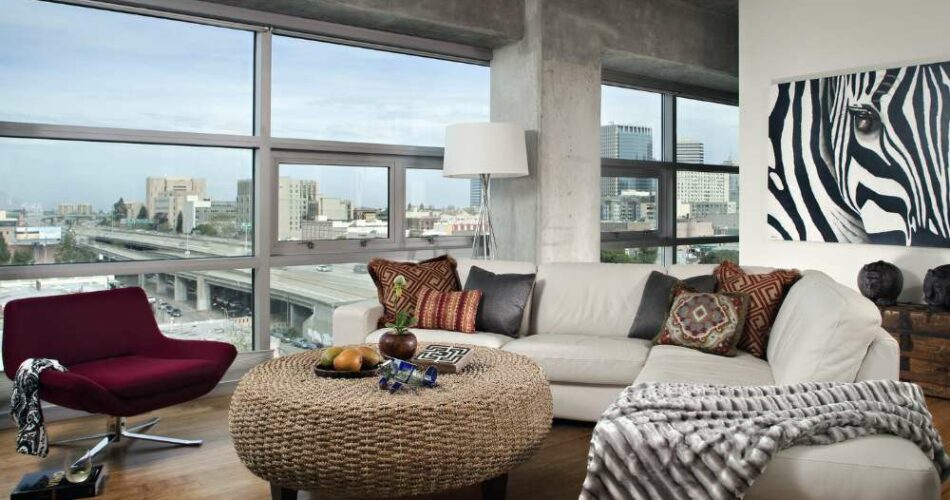
Nestled among the linen contours of an inviting sofa, a meticulously curated selection of pillow can transform any living space from the mundane to the sublime.
Each cushion is but a portal to a designer realm, where texture cosies up to pattern and hue weaves tales of comfort and style.
Decorative pillow ideas for your sofa are not mere afterthoughts; they are the alchemists that transmute a room’s aesthetic, turning neutrality into delight.
Delve deep into this article, and uncover the secrets of accentuating your sectional companions with velvet whispers and silken threads. Discover how the plush touch of faux fur or the rustic glamour of leather can become your living room’s pièce de résistance.
Journey through the intricacies of pillow arrangements, sofa styling, and color coordination perfected for the modern home.
By the end, be endowed with the knowledge to style your haven like a tableau, ever rich in comfort and harmoniously balanced in design.
Decorative Pillow Ideas for Your Sofa
| Decorative Pillow Idea | Style | Best for | Maintenance | Cost |
|---|---|---|---|---|
| Bold Patterned Pillows | Modern, Eclectic | Statement-making | Varies by fabric | Mid to High |
| Textured Linen Pillows | Rustic, Casual | Everyday comfort | Machine washable | Low to Mid |
| Velvet Lumbar Pillows | Luxurious | Supporting backrest | Spot clean | Mid |
| Mix-and-Match Pillow Sets | Bohemian | Versatile layouts | Depends on materials | Mid to High |
| Artisan-crafted Pillow Covers | Unique, Artsy | Personalized touch | Hand wash | High |
| Seasonal Themed Cushions | Festive | Seasonal updates | Varies | Low to Mid |
| Geometric Shaped Pillows | Contemporary | Modern angular spaces | Case-by-case basis | Mid to High |
| Eco-friendly Material Pillows | Green Living | Environmentally conscious | Biodegradable care | Mid to High |
| Custom Embroidered Pillows | Traditional | Custom Decor | Delicate care needed | High |
| Fluffy Faux Fur Pillows | Cozy, Glam | Added warmth and texture | Machine washable | Low to Mid |
Providing Comfort and Support
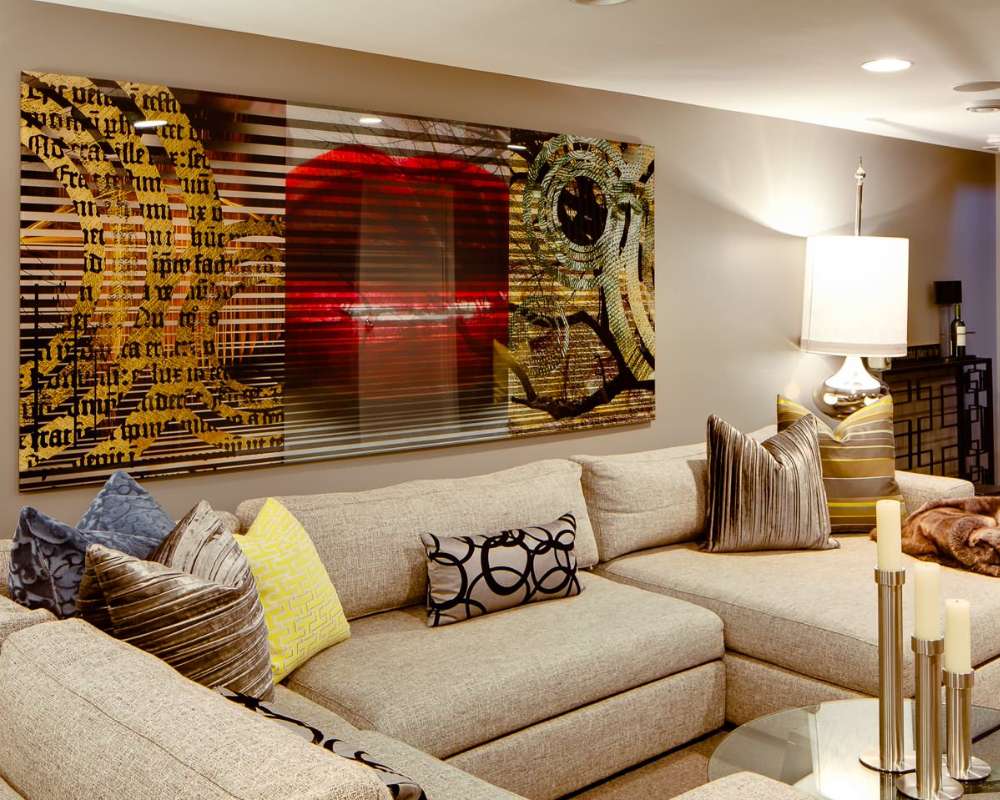
Image source: Mark Teskey Architectural Photography
Providing comfort and back support is what throw pillows are reliable at. Thus, you can treat them as regular couch pillows or sofa pillows. Plus, you can put them on chairs for an extra layer of coziness. On that note, you can even use more-in-one style pillows.
Throw pillows are quite useful when you’re trying to relax in front of the TV. They come in joyful pillow patterns and support your spine. So, you can put a smaller pillow behind your back while playing video games to adjust your sitting position. Aside from that, you can use a throw pillow to cover the edges of a coffee table. That way, you’ll protect your kids from injuries.
Distinct Types of Decorative Pillows
Square Shaped Decorative Pillows

Image source: Michael Abrams Interiors
The square-shaped throw pillow is what you’ll most often come across in retail stores. Commonly, their length is about 16-, 18- or 20-inches. So, if you are a fan of frequently changing the look of your traditional sofa, stick to square pillows.
One or two pillows are usually enough for a standard furniture piece. Then, you could apply different pillow covers to achieve a cohesive color palette once the seasons change.
Cylinder Shaped Decorative Pillows
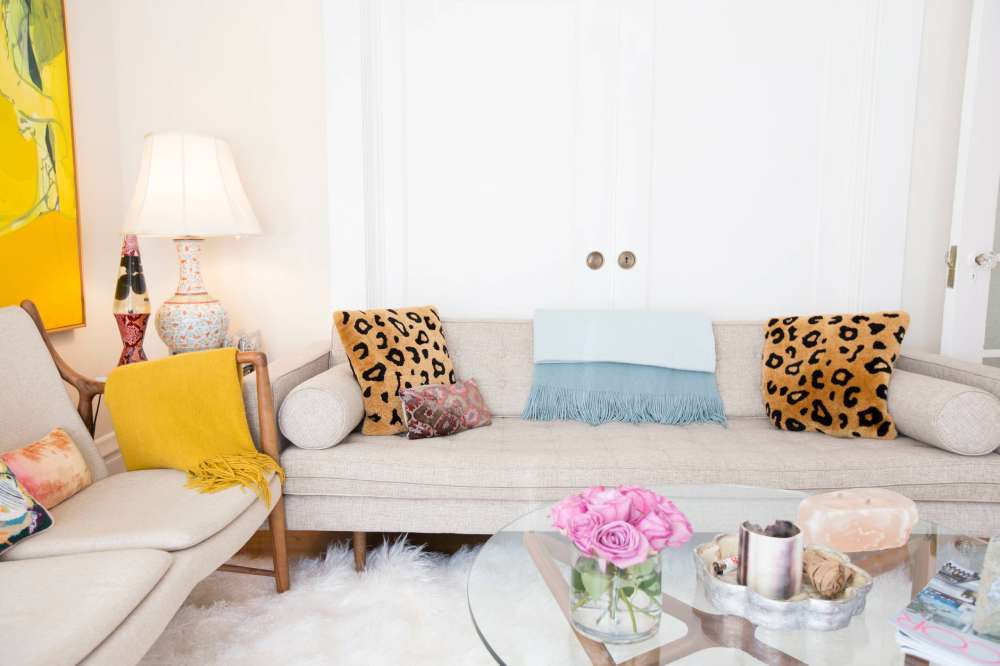
Image source: Poss Architecture + Planning and Interior Design
One thing that will style up your game is long and narrow bolster throw pillows. Select an anchor color palette and place two bolster pillows up front and back. That way, you will update the look of any white sofa. As for a bed, you can pick a vibrant hue for larger pillows of the same color.
Bolster throw pillows are functional aside from sofa styling as well. For example, you can use them for providing hip support at night. Plus, they can provide head and shoulder parallel support. All in all, they can serve several purposes and still light up the room’s decor with bold patterns.
Add More Throw Decorative Pillows
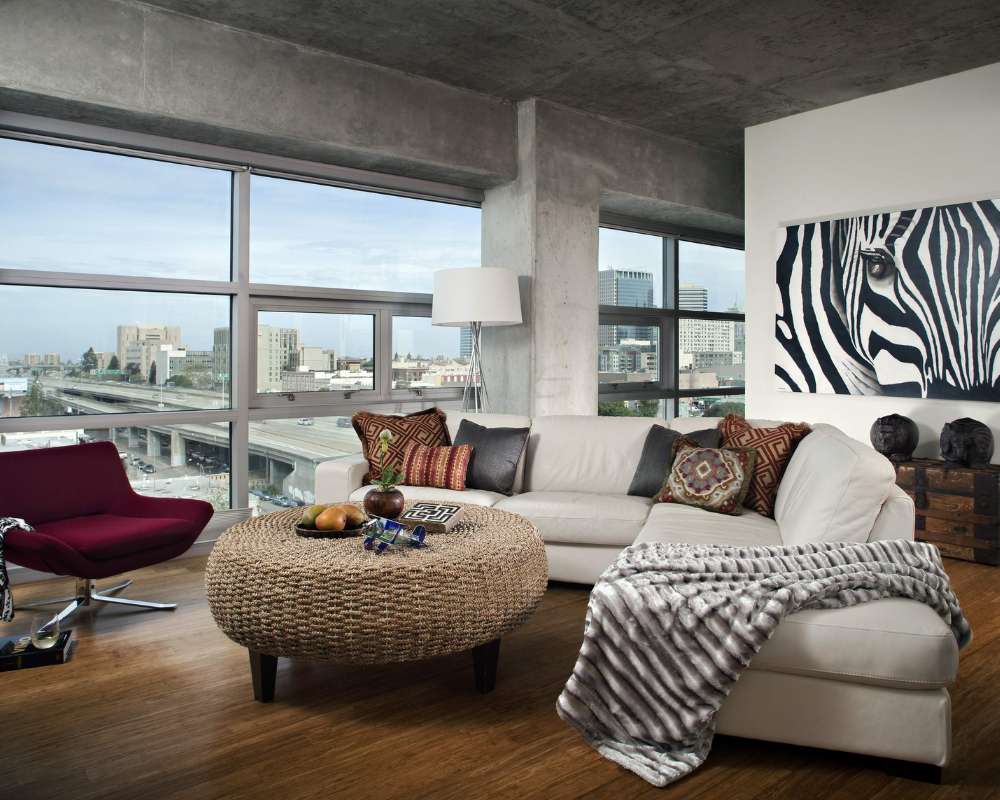
Image source: Kristina Wolf Design
For a better visual interest in your family room, you can choose an animal print or faux fur texture. You can also add more throw pillow colors to make your bedroom more aesthetically pleasing. At the same time, consider keeping throw pillows of more than one pillow size near your bed during winter. Style throw pillows and a fluffy throw blanket look very cozy together.
What Is a Neckroll Decorative Pillow
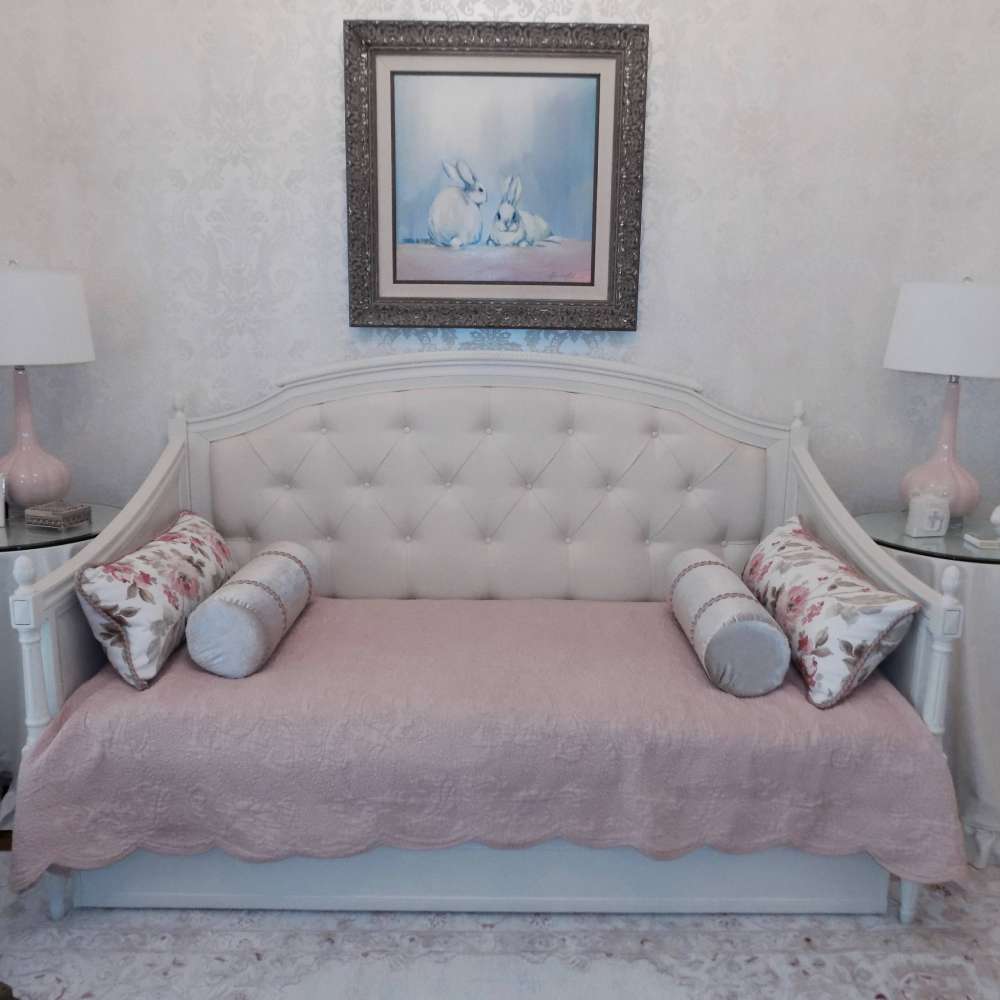
Image source: Dona Designs
People use neckroll pillows for better neck comfort while they sleep. So, you can put a small neckroll pillow in your favorite pillowcase with a busy print. Then, you can freely nestle into your preferred sleeping position.
How to Style Your Floor With Decorative Pillows
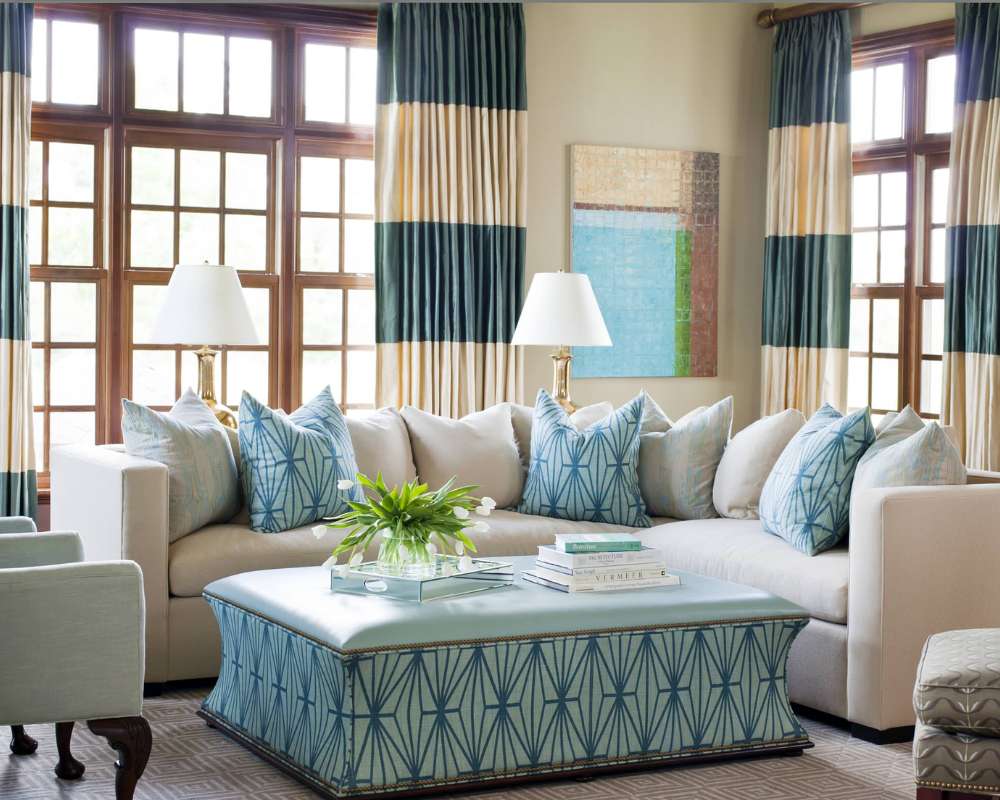
Image source: Tobi Fairley Interior Design
An extra-large cushion pillow on the floor acts like an impromptu couch and carries an innate fun factor. You can also use multiple elements instead of a single oversized one. However, double-check how many pillows you’ll need for such a ground-level pillow arrangement.
Pillow Styling Ideas – Most Popular Fabrics
Cotton Filling for a Natural-Looking Sofa Pillow
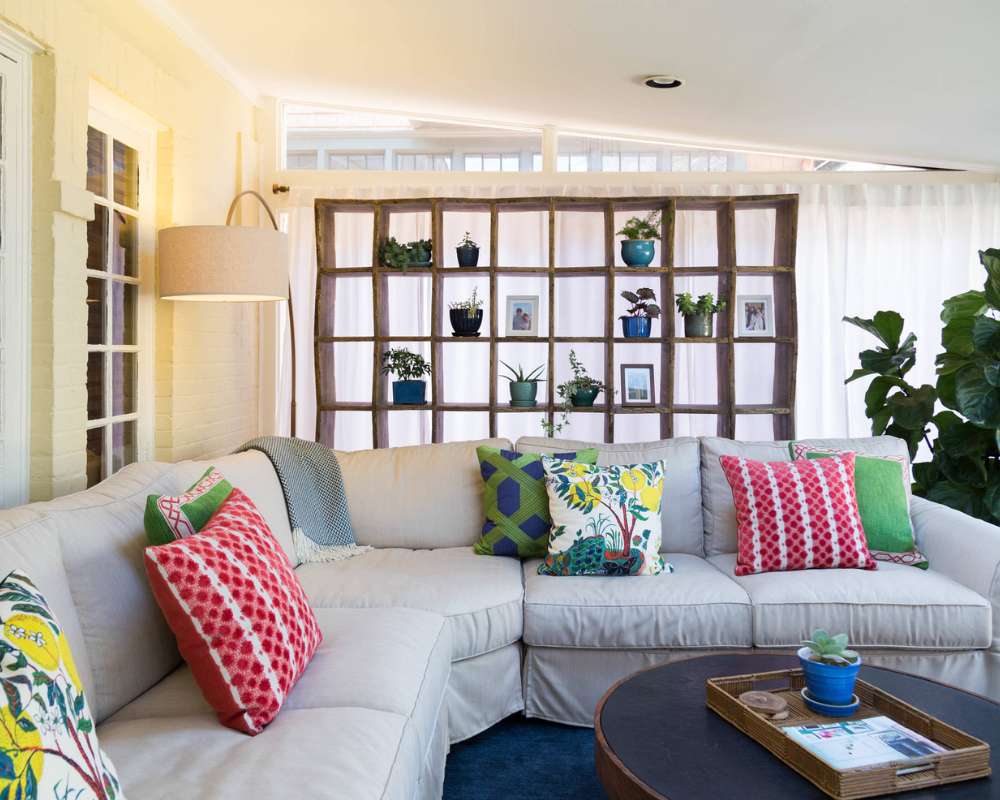
Image source: Incorporated
Cotton is a commonly used material since it’s breathable and hypoallergenic. As a result, it’s reliable for regulating your body temperature during the night. Also, washing cotton throw pillows is a breeze. Generally, you can use a regular washing machine, making it a very easy task.
The Eco-Friendly Linen Material
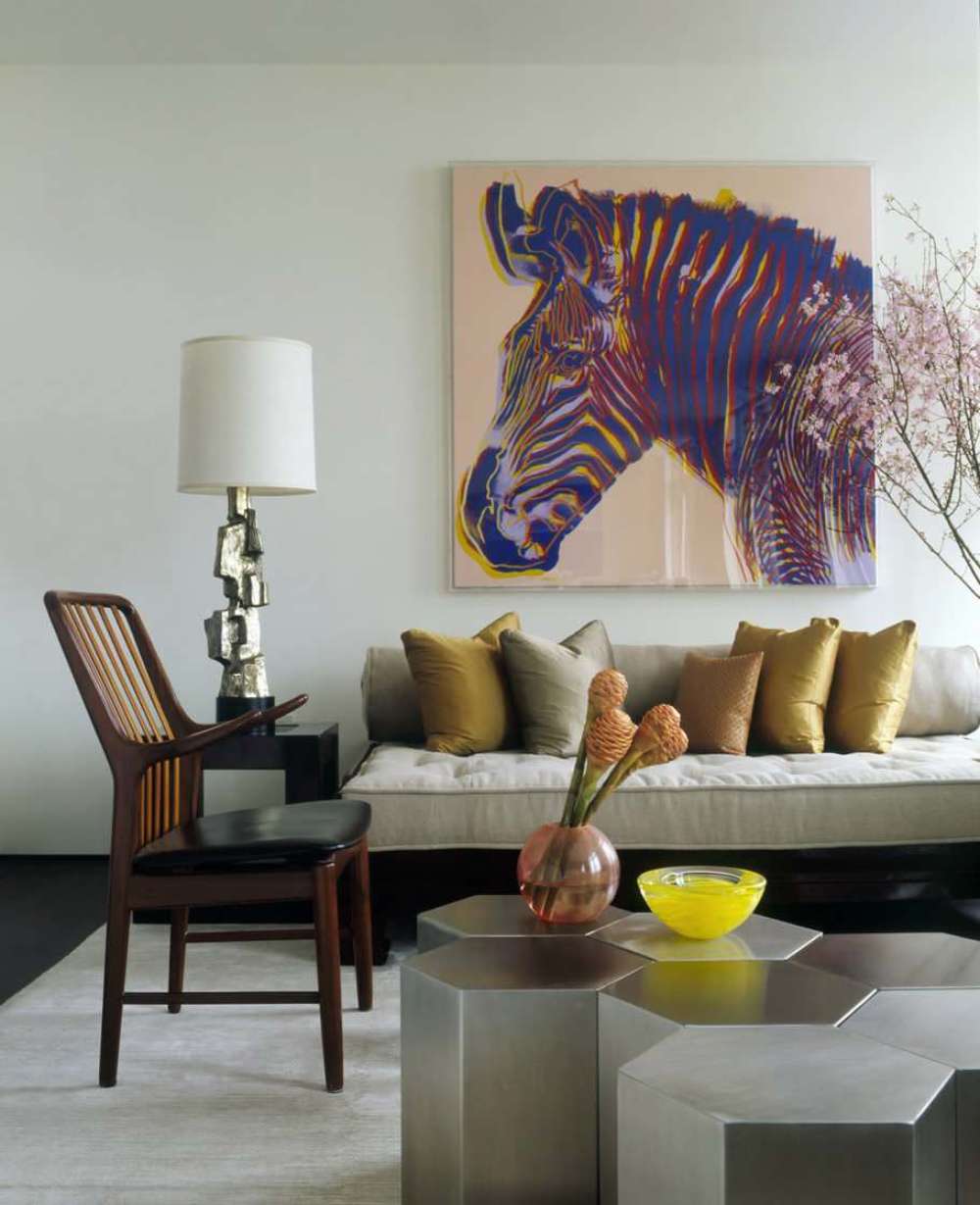
Image source: Kitchens & Baths, Linda Burkhardt
Linen comprises flaxseed, hence it is 100% biodegradable. At the same time, it is a durable and soft fabric. Therefore, it is one of the most eco-friendly throw pillow fillings available.
Silk – A Classic and Stylish Choice
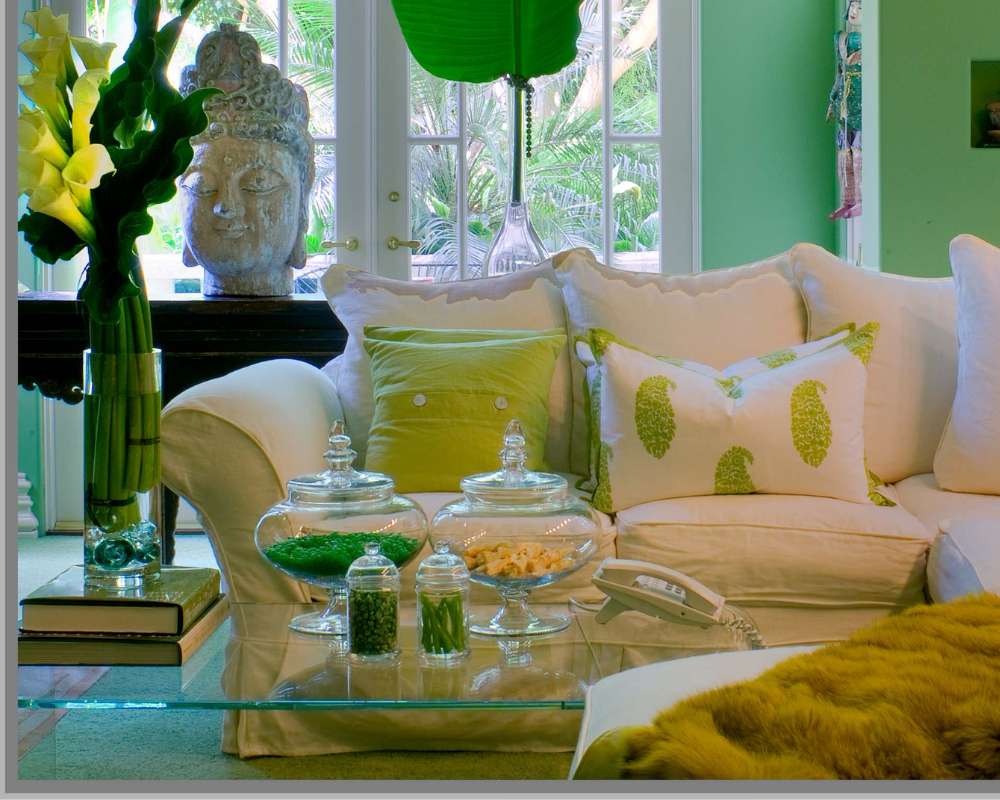
Image source: Tracy Murdock Allied ASID
Besides its appearance, silk is surprisingly resistant to wear and tear. It also outclasses most other materials in terms of how often you’ll have to clean it. That means you can bet that a silk pillow will serve you for a long time. It also won’t easily shed that particular feeling of freshness.
Velvet Material for a Luxurious Touch
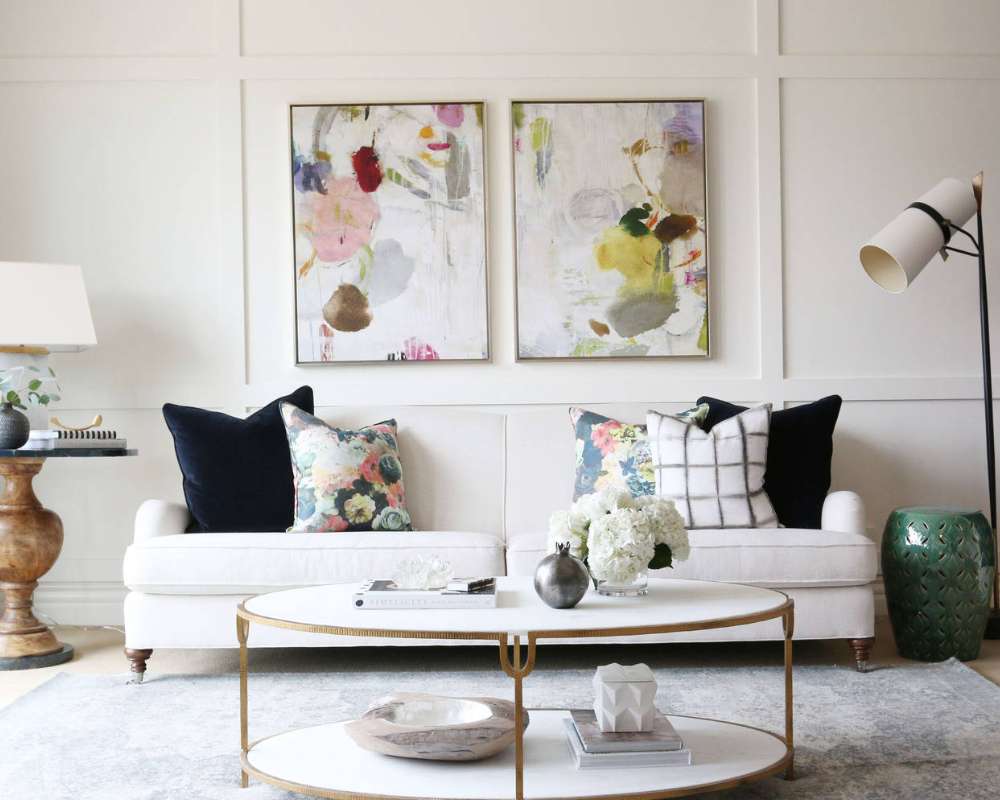
Image source: Studio McGee
Velvety throw pillows are often that special something that elevates the overall room’s ambiance. Plus, velvet adds depth with its texture and promotes a homely vibe at the same time. For a vintage outcome, pick patterned pillows with a floral theme.
Robust Solid Pillows of Synthetic Materials

Image source: Martha O’Hara Interiors
If you expect a lot of mileage from your throw pillows set, pick covers comprising nylon or polyester. That way, you’ll ensure that the right throw pillows preserve their shape and form for months on end. Also, such materials are perfect for outdoor usage due to their heat and mold-resistant properties.
Varying Patterns You Can Pick From
Opting for a Bold Color Scheme
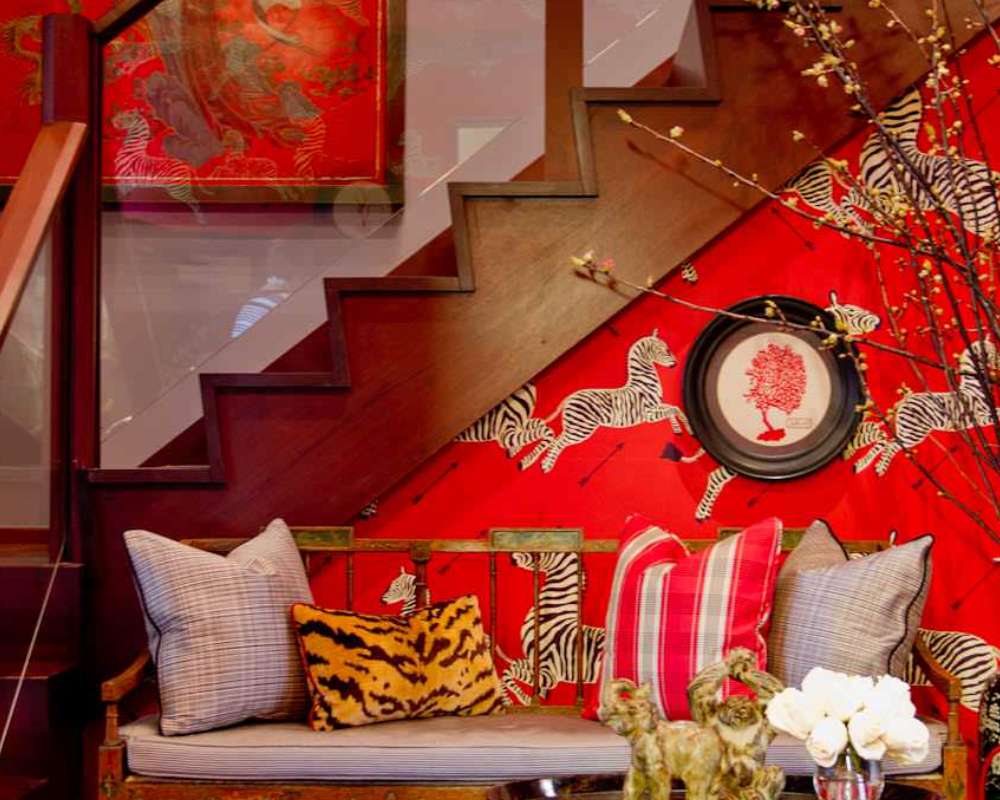
Image source: Rikki Snyder
If you’ve used lively patterns elsewhere in the room, stick to a single, bolder color for the throw pillows. On the other hand, use solid pillows with vibrant hues to decorate a monochromatic sofa.
Stripes for an Effective and Simple Print
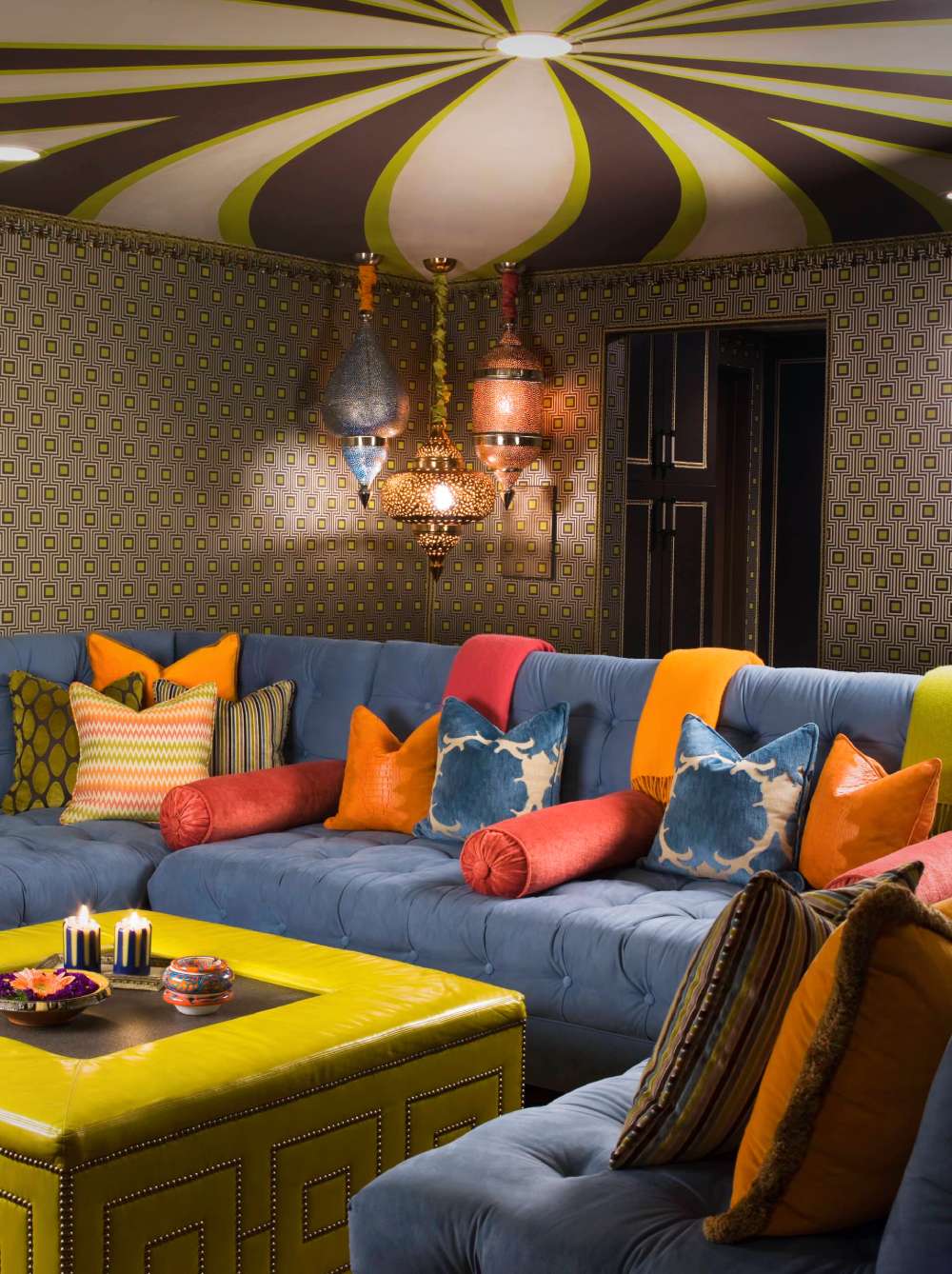
Image source: SoCal Contractor
Opting for striped patterns for your throw pillows is a shortcut for a balanced room decor. On that note, you can also use slight variations of the same base color for the stripes. Combining two neutral colors like beige and white is another popular solution.
Achieving a Feminine Look by Using Floral Patterns
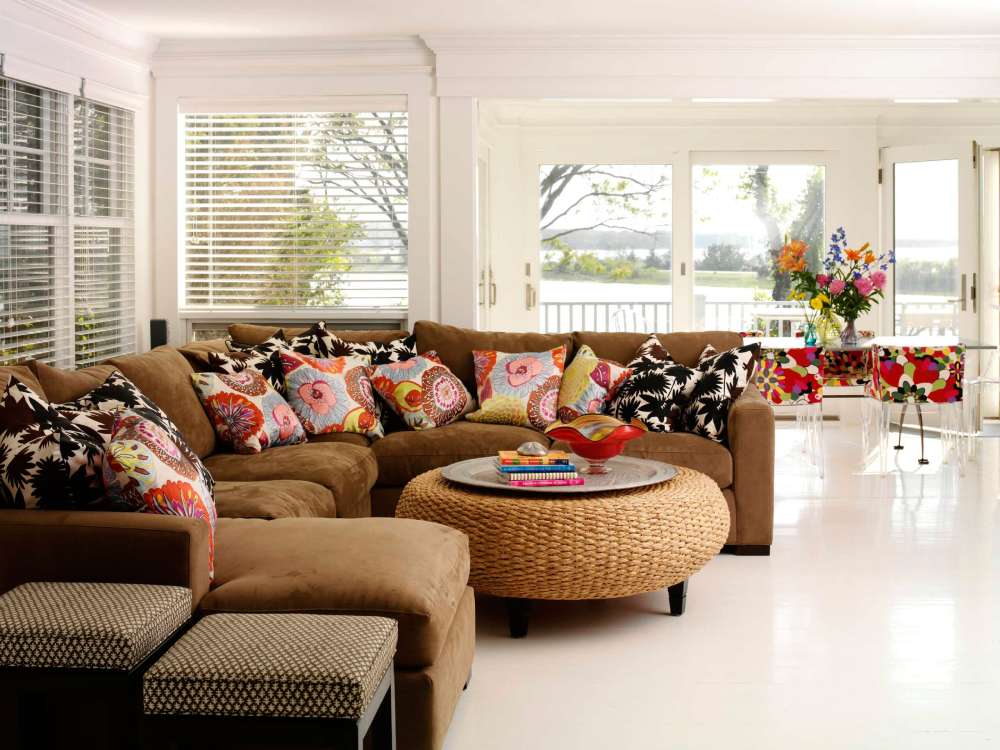
Image source: Tara Seawright Interior Design
Floral and leaf themes always look classy and homely. However, they’re especially reliable for infusing a feminine touch to the setup. They are also a great contrasting match for a leather pillow and fit into a traditional style.
Therefore, you can update the look of your existing furniture by applying floral patterned elements. Depending on your space, you can decorate large sofas in that manner and with great success. In case you want to avoid a busy look, opt for lighter patterns instead.
Versatile and Abstract Throw Pillow Patterns
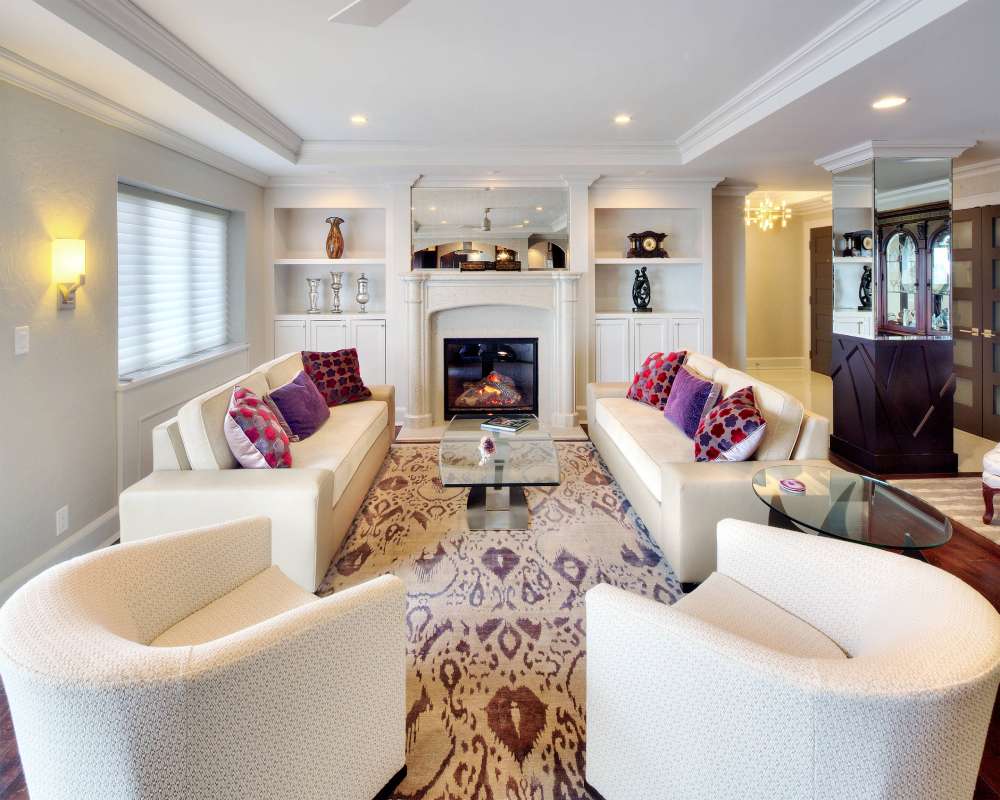
Image source: Alan Karlin Design
You can flex your creative muscles when revamping your living room decor with some freestyle, abstract pillow covers. That way, you get to fine-tune the outcome, whether towards a more casual or formal style. Either way, you can create a comfortable and inviting interior.
Different Textures and Geometric Shapes
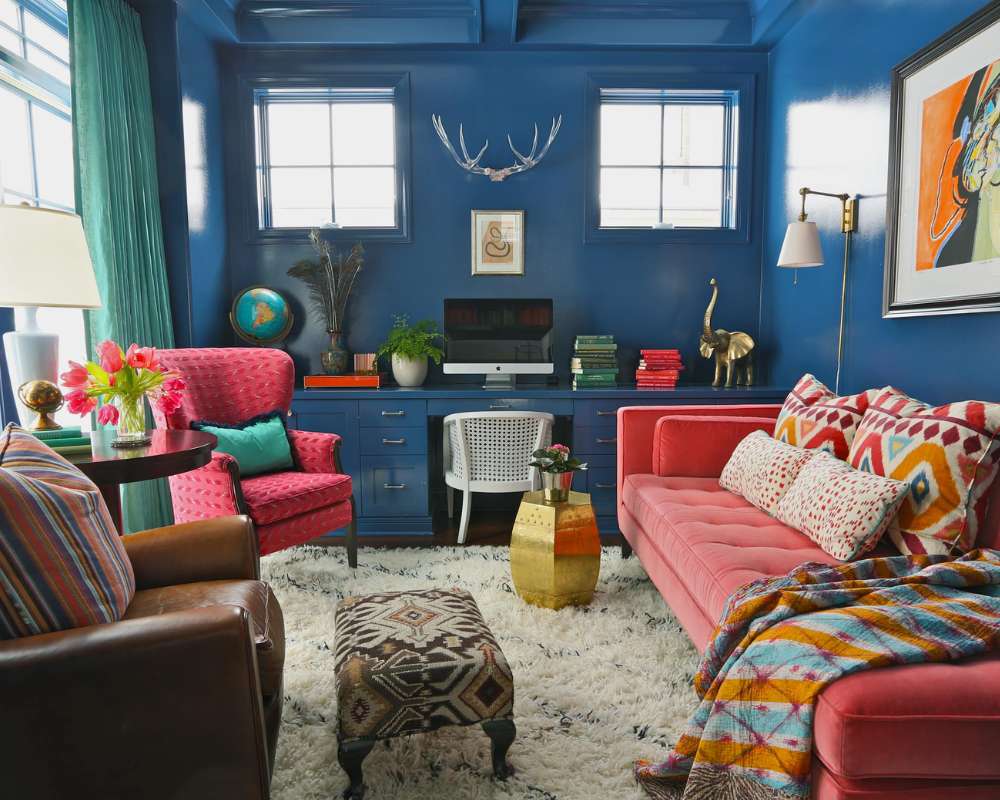
Image source: Summer Thornton Design, Inc
Currently, using throw pillow covers with sleek geometric shapes is a trendy choice. This category comprises circles, stars, triangles, etc. Since they’ll always look familiar, such textures are very versatile and work within any type of setup.
Tips and Tricks About Combining Throw Pillows
Choosing Pillows of Different Types
For a more interesting decor, avoid a too-formal-looking sofa. Avoiding strict symmetrical lines is a good way to do so. Hence, place two large throw pillows at each edge of the sofa. Next, move inwards by adding pieces of various sizes.
Implementing Various Materials
The texture of the pillows is just as essential as their color. Thus, you can spice things up by combining smooth and fuzzy accessories. Also, consider using faux fur, linen, and velvet.
Playing With Colors and Patterns
You don’t have to stick to a single dominant theme all throughout your living room. So, after picking an anchor color, you can experiment with complementary additions. For example, try combining solid, floral, and striped patterns with your choice of throw pillows.
Decorative Pillows – Buying Guide
Online Stores
Wayfair – Here you can find a wide array of products for all seasons and holidays. Their prices are quite competitive, too.
Overstock – Due to the vast assortment of throw pillows, it’d be wise to use the search function properly. For example, inquire about pillows of a certain size or filling material.
Home Decor Retailers
Goodee – This popular brand focuses on natural fabrics and suave-looking living room accessories.
Antrhopologie – Here you can find throw pillows of the boho and similarly eclectic styles. Such elements add up to a cozy ambiance.
Places Offering Vintage Options
The Global Stitch – If you’d prefer handmade, high-quality throw pillows, check out this domain.
1stdibs – This retailer offers luxurious pieces for updating your living space. Their inventory includes furniture, jewelry, throw pillows, etc.
FAQ On Decorative Pillow Ideas For Your Sofa
How Many Decorative Pillows Should I Place on My Sofa?
Placing an odd number of pillows creates a visually pleasing arrangement. Typically, three to five pillows balance both comfort and design, depending on the size of your sofa. Experiment with a mix of square, lumbar, and bolster pillows for an engaging look.
What Size Pillows Work Best for a Standard Sofa?
For a standard sofa, 18×18 to 24×24 inch cushions strike the right proportion. Larger sofas can accommodate up to 26-inch pillows, while a loveseat might pair better with smaller sizes. A variety in size adds depth to your pillow-scape.
Can I Mix Different Textures and Fabrics?
Absolutely! Contrast is key in design. Velvet can offer a touch of luxury, while linen brings casual charm. Combining textures like these invites a sensory experience and adds complexity to your decor. Ensure harmony in color or pattern to unify the look.
How Do I Choose the Right Color Pillows for My Sofa?
Look at your room’s color palette and choose pillows that complement or provide a pop of contrast. If your sofa is neutral, consider vibrant hues or bold patterns. For a colorful sofa, choose pillows in coordinating or muted tones to balance the ensemble.
Should the Pillow Fabric Match My Sofa?
Not necessarily. Pillows are an opportunity to introduce new materials that don’t have to mirror your sofa’s fabric. Leather against cotton, silk alongside wool – these are the juxtapositions that make a space dynamic.
It’s about creating an interesting narrative within your living area.
How Can I Achieve a Designer Look With My Pillows?
Layering is the designer’s secret. Start with larger, solid-colored pillows at the back, then layer in smaller, patterned or textured options in front.
Consider artisan designs or handmade pillows for an exclusive feel, and don’t shy away from custom embroidery for a personalized touch.
What’s the Best Way to Arrange Pillows on a Sectional?
On a sectional, balance is crucial. Begin with larger pillows at the corners, then work your way in with smaller sizes. Create symmetry, and ensure each section has a cohesive look with similar or complementary pillows that reflect the sectional’s expansive form.
How Often Should I Change My Decorative Pillows?
Changing pillows with the seasons keeps your decor fresh; bright and airy designs for spring and summer, richer and warmer textiles for fall and winter. It’s an easy décor update that keeps your living space feeling current and cozy year-round.
Are Down Pillow Inserts Better Than Synthetic?
Down inserts are plush and long-lasting, offering luxurious comfort. Synthetic fills are hypoallergenic and generally more budget-friendly.
Both have merits, and the choice often boils down to personal preference and practical requirements such as allergies and ease of cleaning.
How Do I Make My Sofa Look Cozy and Inviting with Pillows?
Inject plushness with a mix of fluffy and soft textures. Layer different sizes for a sense of depth. Choose warm colors and inviting patterns that beckon relaxation. The aim is to create a space where comfort meets style, conjuring the allure of a cozy refuge.
Conclusion
Embarking on this journey through the world of decorative pillow ideas for your sofa, one transcends beyond mere cushioning to an art form gracing our everyday spaces. Our voyage unraveled the silken threads that bind comfort to canvas, pillows to peace.
- We delved into hues, where each color held a conversation with mood.
- Textures whispered secrets, hinting at a tactile dreamscape that beckons.
- Patterns emerged as the architects of interest, shaping our visual feast.
Amidst the geometrics and florals, the plush velvets and woven linens, a living tapestry was woven. There, the vast possibilities of cushioned comfort met the panache of diverse styling – from the minimalistic whispers to the bohemian roars.
As chapters close on our sofa-styled saga, may these insights serve as faithful companions in crafting personal retreats, where every seat becomes a story, a symphony of curated repose. Go forth, let intuition be the compass, and may the cushions cradle creativity as much as comfort.