

A bed without throw pillows is like a room with bare walls. It functions, but it doesn’t feel finished.
The right throw pillow ideas for your bed can change the entire look of a bedroom in under ten minutes, without repainting, buying new furniture, or spending a fortune. A few well-chosen decorative pillows add color, texture, and personality to your bedding ensemble.
But picking the wrong sizes, fabrics, or color combinations turns a bed into a cluttered mess. I’ve seen it happen more times than I can count.
This guide covers pillow sizes, arrangement techniques by bed type, fabric choices, style-specific ideas, seasonal swaps, and pillow color combinations that actually work together. Everything you need to style your bed with confidence.
What Are Throw Pillows for a Bed
A throw pillow for a bed is a decorative cushion placed on top of bedding to add color, texture, and visual interest to a bedroom. Throw pillows range from 12×16 inch boudoir sizes to 26×26 inch Euro shams, and they are not designed for sleeping.
They sit in front of your sleeping pillows. That’s the whole point.
Bed throw pillows serve a different purpose than the ones you rest your head on at night. They complete the look of a bedding ensemble the same way a rug ties together a living room floor. Without them, most beds look unfinished, like a sentence missing its last word.
I’ve seen people skip decorative pillows entirely and then wonder why their bedroom feels flat. The bed is the focal point in most bedrooms, and throw pillows are one of the fastest ways to give it presence.
How Are Throw Pillows Different from Sleeping Pillows
Sleeping pillows use soft down, down alternative, or memory foam fills designed for neck support. Throw pillows use firmer polyester fiberfill or feather-down blends that hold their shape upright on a made bed.
Cover materials differ too. Sleeping pillows sit inside plain cotton cases, while decorative pillow covers come in velvet, linen, silk, faux fur, and printed cotton with zipper closures.
What Sizes Do Bed Throw Pillows Come In
 Image source: Karen Houghton Interiors
Bed throw pillows come in standardized sizes, each with a specific role in your pillow arrangement:
- Euro sham (26×26 inches) – the large square that leans against the headboard at the back
- Standard square (20×20 or 22×22 inches) – the most common decorative pillow size, placed in front of Euro shams
- Lumbar pillow (12×20 or 14×22 inches) – rectangular, usually placed at the very front as a finishing piece
- Boudoir pillow (12×16 inches) – a smaller rectangular option, common in traditional bedroom styling
- Bolster pillow (6×16 inches or longer) – a cylindrical roll, popular in transitional and classic bedrooms
The size you pick depends on your bed dimensions and how layered you want the look. A twin bed can’t hold five Euro shams. Obviously.
How to Choose Throw Pillows for Your Bed
 Image source: Snake River Interiors
Choosing throw pillows comes down to five things: your bed size, your bedroom style, your color scheme, the fabric you want, and how many pillows you’re willing to move every night before sleep.
That last one matters more than people think. I’ve watched clients stack eight pillows on a queen bed, only to toss them on the floor every evening. Within a month, half the pillow covers were scuffed. Start with a number you’ll actually maintain.
The principles of good design apply here just like anywhere else in a room. Your pillows need to work together, not just look pretty in isolation.
What Throw Pillow Shapes Work Best on a Bed
 Image source: Margeaux Interiors – Margaret Skinner
Square pillows (18×18 to 24×24 inches) are the default for beds because they fill the width evenly and layer well behind each other. Lumbar pillows work best as the front accent piece, adding a horizontal line that breaks up all those squares.
Bolster pillows suit traditional bedrooms and daybeds. Round pillows are tricky on beds since they roll and rarely stay put.
How Many Throw Pillows Should You Put on a Bed
 Image source: Cornerstone Architects
Pillow count scales with bed size. Here’s what actually works without looking overcrowded:
- Twin bed – 1 to 2 decorative pillows (one square, one lumbar)
- Full bed – 2 to 3 decorative pillows
- Queen bed – 3 to 5 decorative pillows (two Euro shams plus two to three smaller accents)
- King bed – 5 to 7 decorative pillows (three Euro shams, two standard squares, one to two lumbar or accent pillows)
- California king – same as king, but you might add one extra pillow to fill the width
These numbers include decorative pillows only, not your sleeping pillows tucked behind them.
What Fabrics Are Best for Bed Throw Pillows
 Image source: Martha O’Hara Interiors
Fabric choice sets the entire mood. A velvet throw pillow reads completely different from a washed linen one, even in the same color.
Cotton and linen work year-round and wash easily. Velvet adds weight and richness for cooler months. Silk looks beautiful but shows wear fast, so it’s better for guest bedrooms or rooms that don’t get heavy daily use.
Faux fur and chunky knit covers bring textural contrast that photographs well and feels good to touch. Performance fabrics with stain-resistant treatments are worth considering if pets sleep on the bed or kids climb in regularly.
Mixing two or three different fabrics on the same bed creates depth. A flat cotton next to a nubby wool next to a smooth velvet gives the eye something to move across. That kind of attention to detail is what separates a bed that looks “fine” from one that looks intentional.
Throw Pillow Ideas by Bedroom Style
Your bedroom style determines which pillow colors, patterns, fabrics, and arrangements make sense. A kilim-print pillow looks right at home in a bohemian space but completely wrong on a sleek platform bed with white sheets.
The trick is matching your pillow choices to the broader room context. If you’ve already committed to a specific interior design style, your pillow options narrow in a good way.
What Throw Pillows Work for a Modern Bedroom
Solid colors, geometric prints, and a monochromatic color palette. Stick to clean lines, no tassels, no fringe. Black, white, charcoal gray, and one accent color like mustard or deep teal.
Fabrics stay smooth and matte. Think structured cotton, wool felt, or bouclé. Two to four pillows maximum, since modern design leans spare.
What Throw Pillows Work for a Bohemian Bedroom
This is where you can go a little wild. Mudcloth, kilim, block-printed cotton, macramé, tasseled edges, and mixed earthy tones. Bohemian style rewards layering different patterns that share a loose color family.
Terracotta, rust, sage green, cream, and faded indigo all play well together here. Handwoven or handmade pillow covers add the kind of imperfection that this style needs.
What Throw Pillows Work for a Minimalist Bedroom
One or two pillows. That’s it. White, cream, oatmeal, or soft gray in linen or organic cotton.
No prints, no embroidery, no fringe. A single minimalist bedroom relies on texture differences between fabrics rather than color or pattern to create interest. A waffle-knit cover next to a smooth linen is enough.
What Throw Pillows Work for a Traditional Bedroom
Damask patterns, floral prints, piping details, and richer fabrics like silk or velvet. Navy blue, burgundy, forest green, and gold are classic here.
Symmetrical arrangements feel most natural in traditional spaces. Match your pillow pairs exactly, place them evenly, and add a centered boudoir or bolster pillow at the front.
What Throw Pillows Work for a Coastal Bedroom
Blue and white is the backbone. Striped patterns, light blue tones, sandy beige, and natural woven textures like jute or cotton rope.
Keep fabrics light and washable. Coastal bedrooms feel best when pillows look a little relaxed, not stiff or overly formal. Linen covers in soft ocean tones with maybe one striped lumbar pillow at the front.
What Throw Pillows Work for a Farmhouse Bedroom
Neutral tones run this style. Cream, charcoal, warm white, and muted sage. Ticking stripes, grain sack fabric, buffalo check, and chunky knit covers are the go-to choices for a farmhouse look.
Mix a soft beige solid with a striped pattern and something textured like a cable-knit cover. It should look collected over time, not bought as a matching set.
How to Arrange Throw Pillows on a Bed
Pillow arrangement follows a simple rule: largest at the back, smallest at the front, with each layer stepping down in size. The goal is creating visual depth without the pile looking chaotic.
Your bed size determines how wide you go. Your style determines how many layers deep.
How Do You Layer Throw Pillows on a King Bed
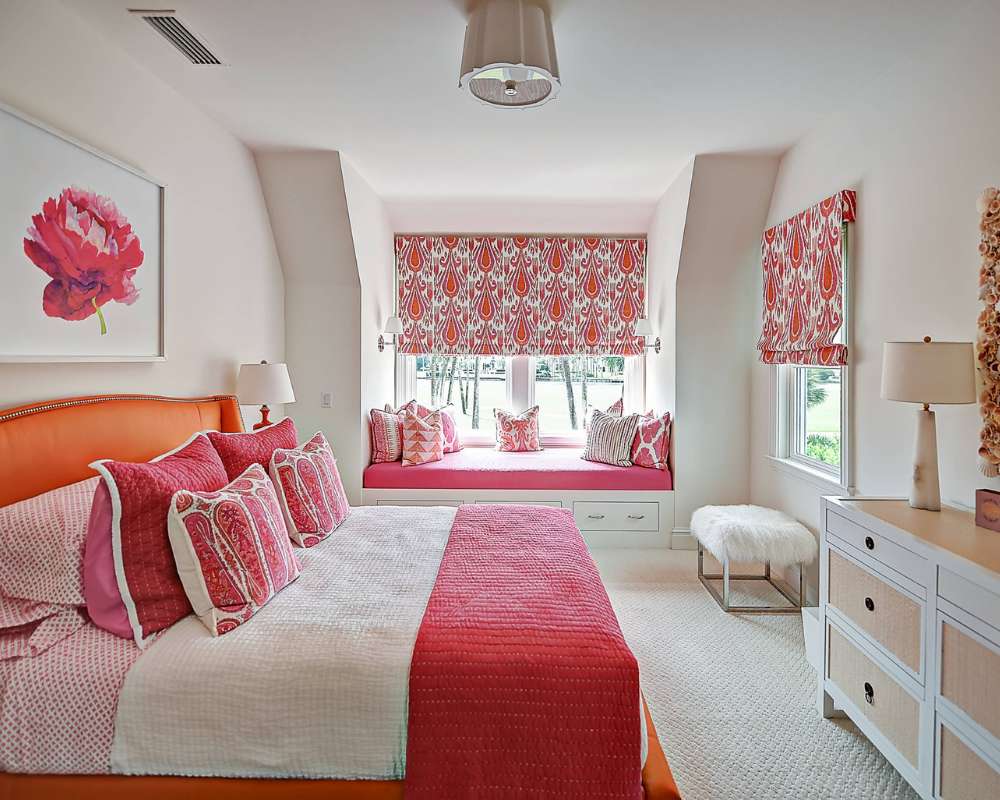
Start with three Euro shams (26×26) leaning against the headboard. Place two king sleeping pillows in front, either propped or laid flat. Add two standard square throw pillows (20×20 or 22×22) next, then finish with one lumbar pillow centered at the front.
That’s a seven-pillow arrangement that fills the king bed width without gaps. You can cut it down to five by dropping the Euro shams and using the sleeping pillows as the back layer. The scale and proportion of each pillow size relative to the bed matters more than the total count.
How Do You Layer Throw Pillows on a Queen Bed
 Image source: Ivy Lane Living
Two Euro shams at the back, two sleeping pillows in front of those, then two decorative squares (20×20), and one lumbar or accent pillow centered in front. Five to six pillows total.
For a more relaxed queen bed setup, skip the Euro shams entirely and lean two sleeping pillows against the headboard, then add two accent pillows and a lumbar. That’s a cleaner, faster look to put together each morning.
How Do You Arrange Throw Pillows on a Twin Bed
 Image source: Chris Barrett Design
One sleeping pillow propped against the headboard, one square throw pillow in front of it, and one lumbar pillow at the very front. Three pillows total, and the bed still looks styled without being crowded.
For a small bedroom, this is enough. Anything more on a twin just makes the sleeping area feel smaller than it is.
What Is the Best Pillow Arrangement for a Bed with No Headboard
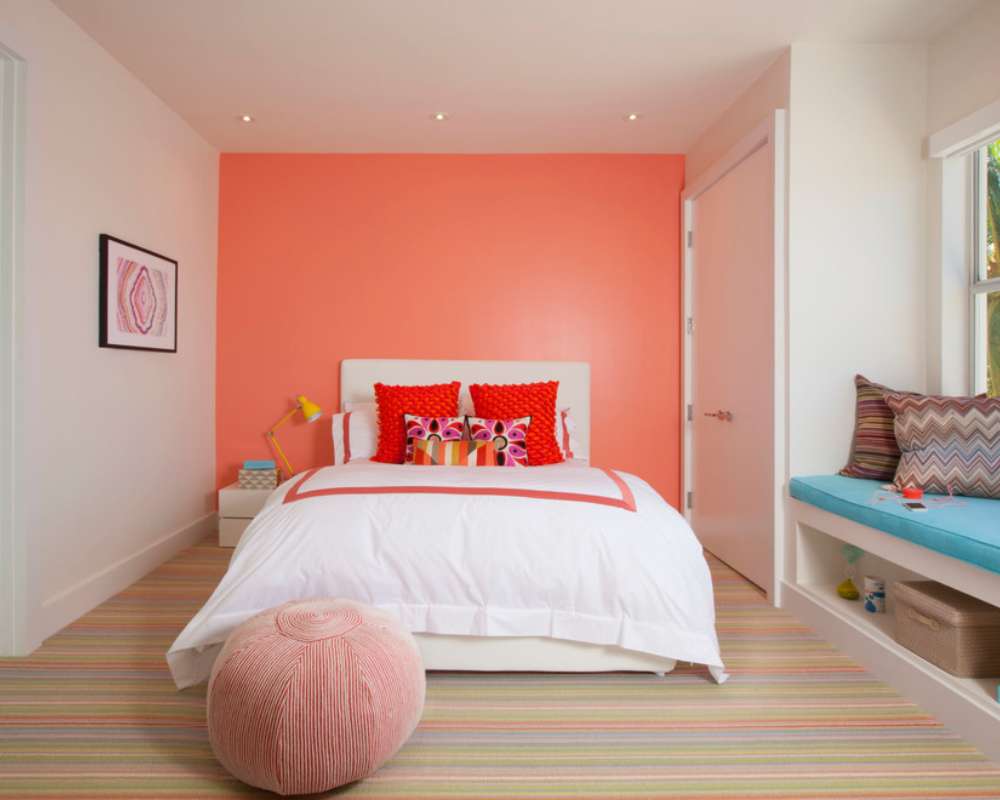 Image source: DKOR Interiors Inc.- Interior Designers Miami, FL
Without a headboard, pillows have nothing to lean against. Two oversized Euro shams propped directly against the wall solve this. They act as a soft visual frame and keep smaller pillows from sliding down.
Another option is a long bolster pillow placed horizontally at the wall line. Layer your decorative pillows in front of it. Some people mount a floating shelf or a piece of fabric-wrapped foam board behind the bed to give pillows a surface, but that’s a bigger project. The Euro sham method works immediately and costs almost nothing.
Throw Pillow Color Combinations for Beds
Color theory applies to pillow selection just like it does to paint or furniture. But I’ll be honest, most people overthink this part.
Pick one dominant color, one supporting color, and one accent. Three colors total across your pillow arrangement. That formula works on almost any bed in almost any room.
What Colors Go Together for Bed Throw Pillows
 Image source: Kendall Wilkinson Design
These throw pillow color combinations have been consistently reliable across different bedroom styles:
- Navy and mustard on white bedding
- Blush pink and charcoal gray for a soft modern look
- Sage green and cream on a neutral duvet
- Terracotta and ivory for warmth without heaviness
- Black and white for graphic, high-contrast bedrooms
- Tan, rust, and cream for earthy warmth
Monochromatic palettes (varying shades of one color) work surprisingly well when you mix textures. Three different white pillows in linen, velvet, and cotton look far more interesting than three identical white squares.
How Do You Mix Patterns on Bed Throw Pillows
 Image source: Michael Abrams Interiors
The rule of three works here. One large-scale pattern (like a bold stripe or oversized floral), one medium-scale pattern (geometric print or smaller motif), and one solid or near-solid texture.
Tie the patterns together through one shared color. If your large-scale pillow has navy in it, your medium-scale pattern should carry a touch of navy too. The solid pillow can be navy, or it can be one of the other colors that go with blue from the patterned pieces.
The mistake most people make is matching patterns at the same scale. Two pillows with similar-sized stripes next to each other just compete. Vary the scale and the whole arrangement calms down. That sense of harmony comes from contrast, not from sameness.
FAQ on Throw Pillow Ideas for Your Bed
How many throw pillows should you put on a bed?

Image source: Lisa Benbow of LCB Interior Design
It depends on bed size. A twin bed looks best with 1 to 2 decorative pillows. A queen bed handles 3 to 5. A king bed can hold 5 to 7 without looking overcrowded. Always count decorative pillows separately from sleeping pillows.
What size throw pillows look best on a bed?
 Image source: Dayna Katlin Interiors
x20 inch square throw pillows are the most common choice. Pair them with Euro shams (26×26) at the back and a lumbar pillow (12×20) at the front. This combination creates layered depth across most bed sizes.
What is the best throw pillow arrangement for a queen bed?

Start with two Euro shams against the headboard. Place two sleeping pillows in front, then two 20×20 decorative squares, and finish with one centered lumbar pillow. Five to six pillows total fills a queen bed properly.
How do you mix patterns on bed throw pillows?
Use the rule of three. One large-scale pattern, one medium-scale print, and one solid. Connect them through a shared color. Varying the contrast between patterns at different scales keeps the arrangement from looking busy.
What color throw pillows go with white bedding?
Almost anything works on white. Navy and mustard create strong contrast. Sage green and cream feel calm. Blush pink and gray read soft and modern. Pick two accent colors maximum and carry one neutral through the arrangement.
Should throw pillows match on a bed?
Not necessarily. Matching pairs look polished in transitional and classic bedrooms. But mixing different covers in a shared color family creates a more collected, personal feel. Either approach works when the overall palette stays cohesive.
What is the best throw pillow fabric for everyday use?
Cotton and linen are the most practical choices. Both wash easily and hold up to daily handling. Velvet works well for cooler months but shows wear faster. Pillow covers with zipper closures make seasonal fabric swaps simple.
How do you style throw pillows on a bed without a headboard?
Prop two oversized Euro shams directly against the wall as a visual anchor. Layer smaller decorative pillows in front. The Euro shams replace the headboard’s function and keep everything from sliding down flat.
How often should you replace throw pillows on a bed?
Replace pillow inserts every 1 to 2 years when they lose shape and no longer hold upright. Decorative pillow covers last longer with proper care. Polyester fiberfill inserts flatten faster than feather-down blends.
Can you use too many throw pillows on a bed?
Yes. Too many pillows make a bed look cluttered and turn the nightly routine into a chore. If you’re tossing more than five pillows on the floor before sleep, cut the count. Styled should still mean practical.
Conclusion
Good throw pillow ideas for your bed come down to a few clear decisions. Pick the right sizes for your bed dimensions, choose fabrics that fit your lifestyle, and stick to a color palette of two to three tones.
Layer from large to small, back to front. Euro shams first, then standard squares, then a lumbar or bolster at the front.
Match your pillow choices to your bedroom decor. A velvet accent pillow that works in a luxury bedroom won’t suit a casual coastal space. Context matters every time.
Swap covers seasonally. Linen and cotton for warmer months, faux fur and chunky knit for fall and winter. It keeps the bed feeling fresh without replacing entire pillow sets.
Start with three pillows if you’re unsure. You can always add more. But a bed pillow arrangement that you’ll actually maintain every morning beats a perfect stack you’ll abandon by week two.

- Paint Colors That Go with Gray Floors - August 20, 2026
- What Color Bedding Goes with Dark Wood Furniture - August 18, 2026
- What Color Walls Go with Oak Floors - August 16, 2026


