Home Decor
Stylish Shoe Storage Ideas for Small Spaces
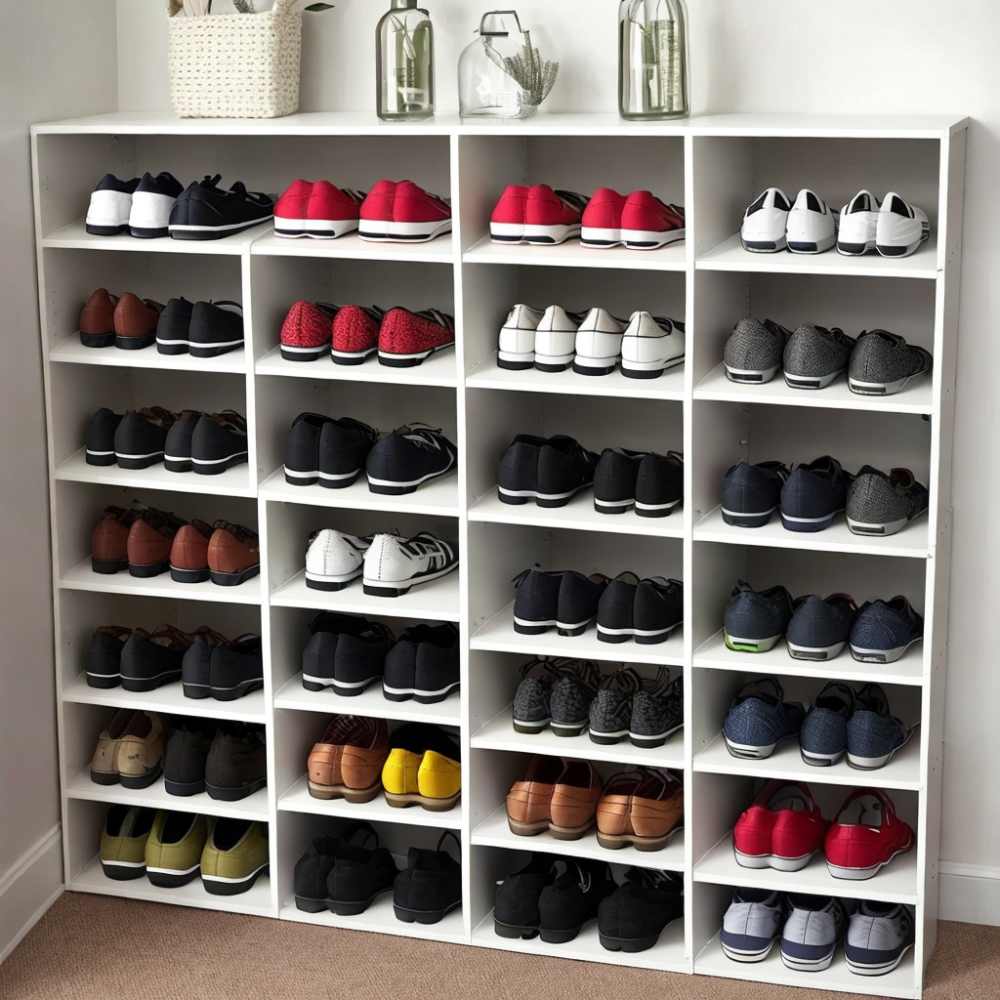
Shoe storage is usually bought on the capacity figure printed in the listing, and that figure is optimistic. A cabinet rated at approx. 12 pairs holds fewer once boots are in the mix.
Where the unit goes limits the choice as well. Hallways tend to be shallow, and under a bed there is only so much clearance. Closets are the forgiving case, as long as the shelves adjust.
Cost per pair is flatter than the formats suggest, at least for racks and tall cabinets. In IKEA Belgium’s October 2026 listings, the TJUSIG rack (EUR 24.99, approx. 6 pairs) and the BISSA 3-compartment cabinet (EUR 49.99, approx. 12 pairs) both land at EUR 4.17 per rated pair. The cabinet costs twice as much only because it holds twice as many pairs, so the doors come free per pair.
How do you choose shoe storage before buying anything?
Count the pairs and measure the spot before looking at anything else. Style, material and price can wait.
A rack sized for six pairs looks fine in a showroom. It overflows the first time the winter boots come out.
Sort the shoes into the ones worn every week and the ones that only come out for a season or an occasion. Only the weekly group needs to sit at hand height, and it is a smaller group than most people expect.
Then measure. Width, depth and height all count, along with how far a door or drawer swings, but depth rules out more options than width does. Compare the rated capacity against your count and round up, because published capacities are approximate (IKEA labels its cabinets “approx.” pairs) and boots or high-tops cut the number.
Visible or hidden is a real choice too. Open racks give airflow and quick access. Closed cabinets and boxes hide the clutter and keep dust off. Anything mounted, whether wall cabinets, shelves or door hooks, depends on what the wall or door can carry, so check that before ordering.
Daily pairs get the best spot. Everything else can go up high or behind a door.
Which shoe storage formats work best, and how do they compare?
Which one fits comes down to pair count and available depth, and whether you mind seeing the shoes.
Capacities below are the manufacturers’ own ratings, taken from IKEA and The Container Store product listings in October 2026.
| Format | Example | Footprint | Rated capacity |
|---|---|---|---|
| Wall cubby cabinet | IKEA TRONES (sold as a 2-pack) | 52 x 18 x 39 cm per cabinet | approx. 4 pairs per 2-pack (about 2 per cabinet) |
| Tall slim cabinet | IKEA BISSA, 3 compartments | 49 x 28 x 135 cm | approx. 12 pairs |
| Double-row cabinet | IKEA HEMNES, 2 compartments | 89 x 30 x 127 cm | approx. 14 pairs |
| Gliding closet shelf | Elfa Decor+ shelf | 2 ft closet section | 6 to 8 pairs of adult shoes per shelf |
Shoe racks and shelves
Open racks are the baseline. They come in every size and need almost no assembly, and each pair gets air on all sides.
You can see the whole collection at a glance, and a rack scales from three pairs up to a full wall. The downside is dust, which settles on every pair, and scuffed sneakers stay on show for visitors.
Shoe cabinets and tilting units
IKEA lists BISSA at approx. 12 pairs on a 28 cm deep body, and HEMNES at approx. 14 pairs because each fold-down compartment holds two rows.
The smallest cabinet in that family is the easiest to misread. IKEA sells TRONES as a 2-pack and rates the pack at approx. 4 pairs, which is about 2 pairs per cabinet. Buyers on the same listings report 2 to 3 pairs of adult shoes per cabinet, so plan on the per-cabinet figure and not the pack figure.
Renters should note that IKEA requires all three models to be fixed to the wall. For more models beyond these, see the wider range of IKEA shoe storage options.
Clutter disappears behind the doors, and IKEA states the BISSA and HEMNES interiors keep shoes ventilated. Capacity is fixed per compartment, though, and the wall fixing rules out some rentals.
Benches and ottomans
A bench is seating first and storage second.
Hollow benches and lift-lid ottomans hide a few pairs in a hallway too narrow for a cabinet. A household of two outgrows one quickly.
It works when the entry needs somewhere to sit and put shoes on. It stops working when the daily pairs are bulky boots, because the space under a seat is low.
Over-the-door and hanging organizers
These use the back of a door and no floor at all. Check the door thickness against the hook gap, and the clearance between door and frame at the top. Then think about the swing once the pockets are full.
Hollow-core doors carry less load than solid ones, so read the organizer’s weight rating before filling every pocket.
There are no tools involved in putting one up or taking it down, which suits renters. The pockets squash heels and chunky sneakers, though.
Under-bed storage

Under-bed boxes and wheeled drawers turn dead space into room for off-season pairs. Frame clearance is the limit, so measure it first.
The catch is access. Anything stored there leaves the daily rotation, which makes it a seasonal home for shoes, not an everyday one.
Wall-mounted racks and pegboards
Floating shelves suit flats and sneakers, and angled rails hold heels. A pegboard with hooks and small shelves handles a bit of everything.
Wall formats keep the floor clear and double as display. Wall type and load rating decide what they carry, so heavy boots belong on the lowest, best-anchored shelf.
The catch is the drilling. And a whole wall of shoes gets noisy to look at.
Boxes, bins and drawers
Clear stacking boxes keep each pair visible and dust-free, while closed bins are better for off-season pairs. In narrow closets where doors cannot swing, pull-out drawers fit.
Boxes cost more per pair than an open shelf. Clean and dry the shoes first, since a closed box holds in whatever moisture goes into it.
What are the best ways to store shoes in a small space?
Go vertical. Doors, walls and the gap under the bed hold shoes without using floor, which is the one thing a small room cannot spare.
Roughly in order of how much floor each option takes:
- Over-the-door pockets take no floor, only a door.
- Wall shelves and rails also take none, but you need a clear stretch of wall.
- Under-bed boxes are floor-free too, limited by frame height.
- Slim cabinets need a shallow strip of wall or floor.
- A tension rod rack hangs flats or heels low in a closet and goes in or out in minutes.
- Rotating racks stack a lot of pairs on one round footprint.
Door pockets, wall shelves and rotating racks are the visible kind. Access is fast, and they add some visual noise.
Slim cabinets and closed bins hide everything, and so do under-bed boxes. The room stays calmer and the morning grab gets slower.
Pick one of each. Three formats of the same kind just move the clutter around.
A shallow, wall-fixed cabinet is the usual answer for a tight hallway. IKEA’s units sit inside a wider set of small-space storage solutions from IKEA built around the same idea of using depth instead of floor.
Where should shoe storage go: entryway, closet, bedroom or garage?
Daily pairs belong at the door where shoes come off. The rest go to the closet or bedroom, and muddy or work pairs go to the garage.
Entryway and mudroom
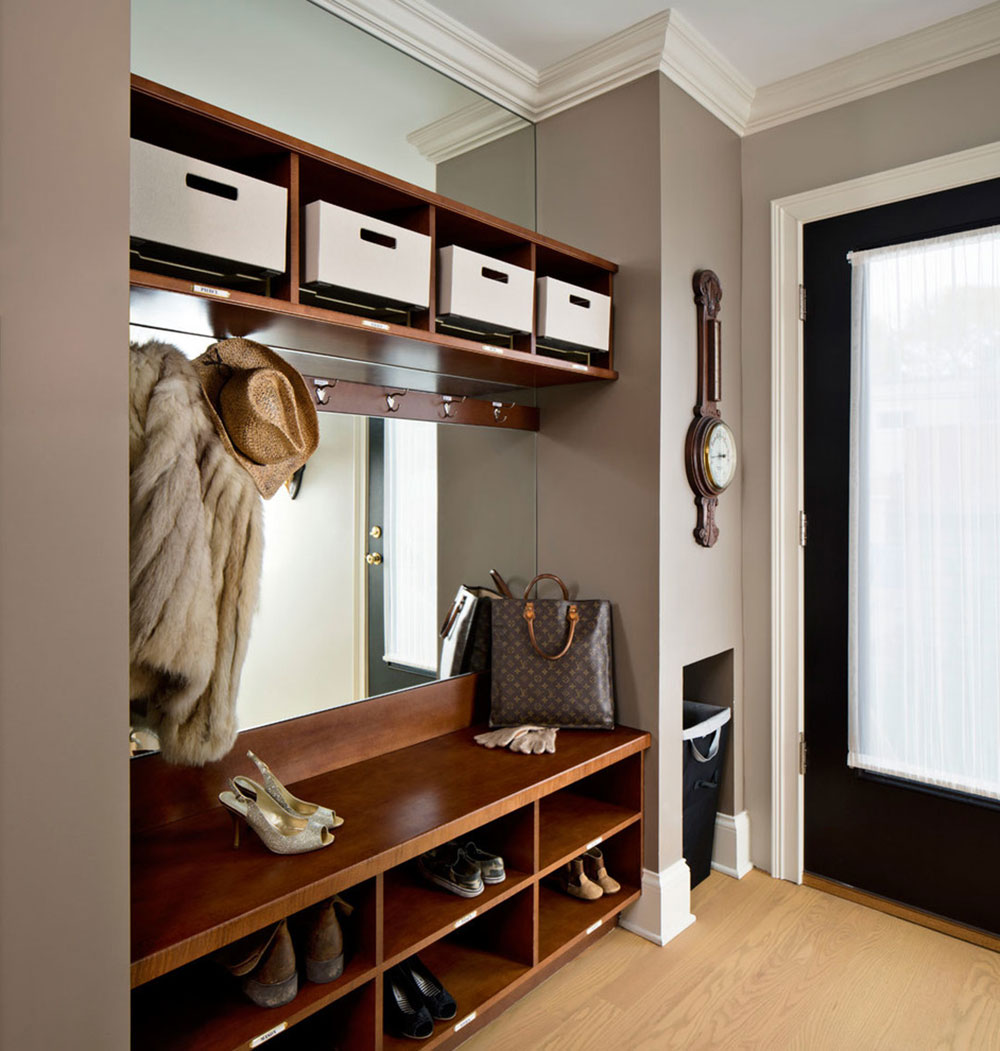
Shoes land here, so storage has to work in one motion.
A slim cabinet takes the pairs worn every day, and a tray under the rack catches dirt and meltwater. In a mudroom, a bench with storage makes sense, since people sit there to lace boots.
Closet
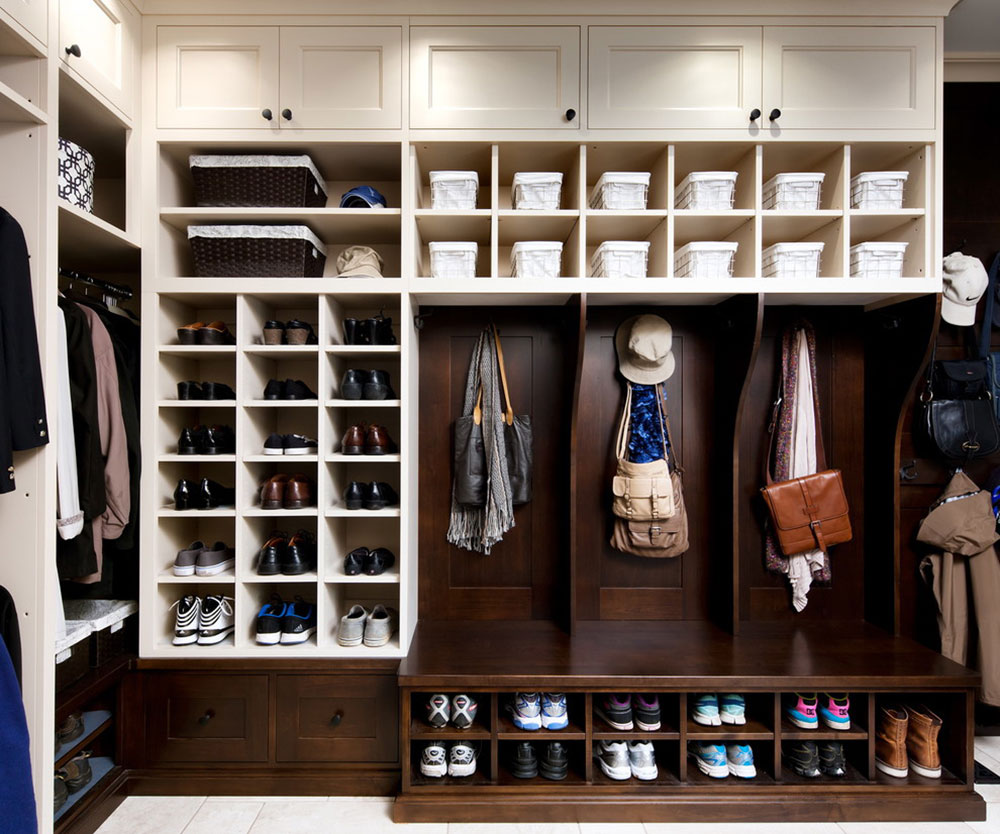
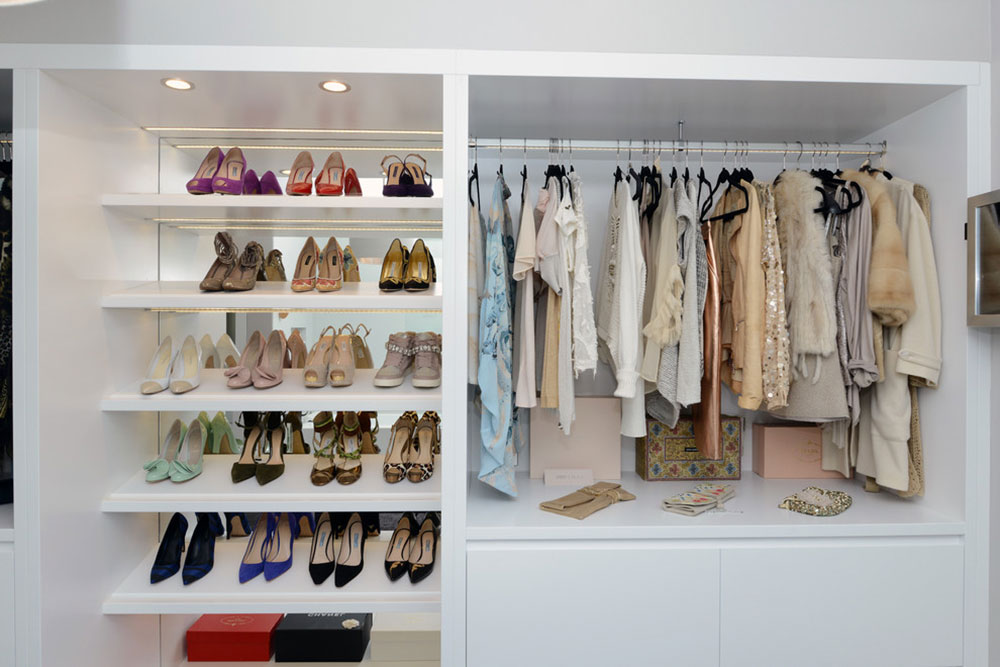
Adjustable shelves and gliding shelves beat fixed ones, because shoe heights vary more than anyone expects. Put angled shelves at knee height for the daily pairs and stack boxes above for the rest.
Back-of-door pockets add capacity without touching the floor plan.
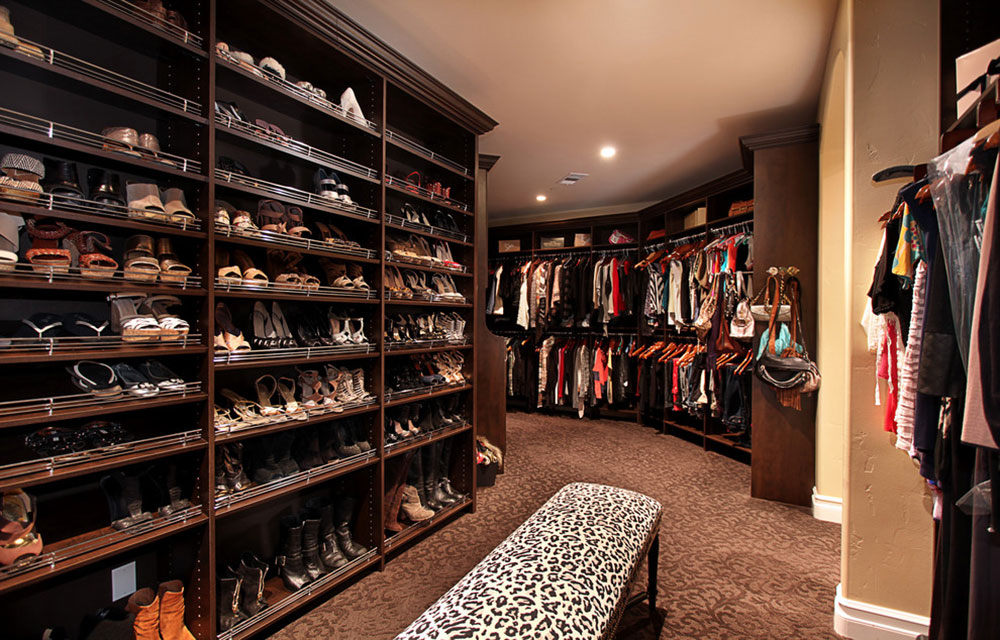
Where the closet is large enough to walk into, plan the shoe wall before the hanging rails. That order matters most when planning a walk-in closet, because shoes set the shelf spacing for everything else.
Bedroom
Keep it close to the wardrobe.
A slim rack or low cabinet next to the wardrobe takes the pairs in rotation, and boxes under the bed hold the ones that wait out a season.
Garage and outdoor entry
Closed cabinets keep dust and damp off, and waterproof trays take the wet and muddy pairs.
Garage storage collects the dirtiest shoes in the house, so it needs surfaces that wipe clean. Wood and fabric hold moisture, while plastic and metal dry fast.
Homes without a closet
A slim cabinet fixed to the hallway wall does most of the work. A storage bench or ottoman can sit in the living area, an over-the-door organizer fits a bedroom door, and a spare wall can take floating shelves or a pegboard.
Furniture formats do the work a closet would, and most of them pass for ordinary furniture.
How should sneakers, heels, boots and other shoe types be stored?
Match the format to the shape of the shoe. Sneakers are easy and heels want an angle. Boots need something holding them up, and light flats or sandals can just go in an open bin.
Sneakers
Sneakers tolerate almost any format, so the choice comes down to protection and visibility.
Pairs worn less often do well in clear stacking boxes, while the rotation pairs sit on cube shelves or a tiered rack. A collection worth showing can go on open display shelving.
Sneaker retailer Impossible Kicks displays its stock on modular Elfa shelving in its stores, which shows how well plain open shelves suit the shoe.
Heels
Bespoke closet maker Neatsmith says angled shelves and double-depth shoe drawers are very popular with its clients (Homes & Gardens).
An angled shelf tilts each pair toward you, so a full row is visible at once. A hanging rail or pocket organizer keeps the pair together and off the floor, but tall heels need deep pockets.
Boots
Tall boots slump and crease unless something holds the shaft up, which is why Public Storage and most care guides say to stand them upright with inserts.
Shapers cost little. IKEA Belgium lists the SITTPINNE shoe shaper at EUR 1.50 per piece, sold in sets of 2.
Free stand-ins work too, and professional organizer Amy Brady suggests cut pool noodles or empty wine bottles (Fox News).
A fixed-height shelf leaves tall boots lying on their side. Give them a taller slot or a boot rack, or just a stretch of closet floor.
Sandals, flats and kids’ shoes
Sandals and flats file vertically in an open bin. Kids’ shoes work best with one basket or cubby per child, low enough to reach alone.
Which materials and care steps keep stored shoes in good condition?
Airflow decides odor, and material decides airflow. Open wood, metal and wire let air reach every pair, while solid plastic and closed fabric hold it in.
| Material | Airflow | Upkeep | Fits best |
|---|---|---|---|
| Solid wood | Good with slatted shelves | Damp cloth, wipe dry | Entryway racks, benches |
| Metal and wire | Highest | Wipe or rinse | Closet shelves, garage racks |
| Plastic | Low if solid, good if ventilated | Wipes clean fastest | Trays, garage bins |
| Fabric | Moderate | Holds dirt, needs washing | Hanging pockets, dust bags |
Clean shoes before they go away. Dirt left on them is much harder to remove months later, and suede needs brushing so dust does not settle in the nap (Tata CLiQ, 2025).
Pairs that sit for a season should be filled with shoe trees or acid-free tissue to hold their shape. Leather also needs a day off between wears to shed the moisture a foot leaves behind. Occasional pairs go in dust bags or boxes, and daily ones stay on open shelves.
Unfinished cedar is the shoe tree material to buy for leather. It absorbs moisture and holds the shoe’s form as it dries, according to shoe-care maker Saphir.
Lacquered cedar and plastic trees hold shape but absorb no moisture, because lacquer seals the wood and plastic is non-absorbent (Langer & Messmer). For damp pairs, that difference decides whether the shoe dries or just sits wet.
How much does shoe storage cost, and what are the cheap options?
Open racks and slim cabinets sit between EUR 25 and 50 at IKEA. A storage bench costs roughly three times a rack.
Prices below come from IKEA Belgium’s online listings in October 2026 and vary by country and promotion.
| Option | Example | Price (EUR) |
|---|---|---|
| Open rack | TJUSIG, 79 x 32 x 37 cm | 24.99 |
| Wall cubby cabinet | TRONES, 2-pack | 29.99 |
| Slim cabinet | BISSA, 3 compartments | 49.99 |
| Storage bench | TJUSIG, 108 x 34 x 50 cm | 79.99 |
Per rated pair, the rack and the slim cabinet cost the same. TJUSIG works out to about EUR 4.17 per pair at IKEA’s rating of approx. 6 pairs, and the BISSA unit lands on the identical figure. The wall cubby is the exception. EUR 29.99 for a 2-pack rated at approx. 4 pairs comes to about EUR 7.50 per rated pair.
So a cabinet is not a premium purchase per pair. It costs more in total because it holds more, and the doors and cleaner look come with it. For a collection of up to six pairs, a single rack is the cheapest way in. Between seven and twelve pairs, two stacked racks (EUR 49.98) cost about the same as one BISSA (EUR 49.99), so the choice comes down to dust, appearance and whether the wall can take fixings.
Modular systems such as Elfa sit at the other end. The Container Store designs each layout, so cost follows the closet.
Cheap and DIY options
Stacked or wall-mounted crates give you one pair per cube. A tension rod works as a closet-floor rack for heels and flats and comes out in minutes. A plywood rack or bench is a weekend build, finished in paint or stain, and wire baskets corral loose pairs by the door.
Old furniture is the cheapest raw material. A repainted chest of drawers fitted with baskets or shelves becomes shoe storage, and plenty of upcycled furniture ideas follow the same route.
When paying more makes sense
Daily-use pairs at a busy entry justify doors, because a closed cabinet keeps a hallway tidy for visitors.
Heavy boots call for a rated, wall-anchored unit, and a display collection is worth open shelving built to last.
When does each shoe storage option stop working?
Every format has a limit, and it is nearly always load or clearance. Moisture, now and then.
Over-the-door organizers do not suit sliding wardrobe doors, where track clearance is tight and rollers wear under load. A full organizer also blocks the swing if the door opens against a wall.
Under-bed boxes are no use on beds with built-in drawers or a solid base, since there is no gap to work with.
Adhesive hooks carry a printed weight rating. Light flats and sandals fit within it, boots do not.
Wall cabinets come down to hardware. IKEA sells its shoe cabinets without fixings, and concrete, plaster and plasterboard each change the hardware list.
Sources split on closed containers. Clarks’ storage guide recommends clear bins for dust protection, while Tata CLiQ (2025) advises breathable bags over airtight boxes because trapped moisture causes mildew.
The split resolves on dryness. Clear bins suit clean, dry pairs, and fabric bags suit anything stored for a season.
When one of these limits applies, change the format instead of overloading it.
Shoe Storage Ideas FAQ
Should shoes stay in their original boxes?
Yes, for pairs worn rarely. Original boxes stack neatly and keep dust off, but they hide what is inside, so put a photo label on each box, a trick professional organizer Amy Brady recommends.
Daily pairs belong on open shelves.
Can renters use shoe storage without drilling into walls?
Yes. Freestanding racks and tension rods need no drilling, and over-the-door organizers don’t either. All of it leaves with you.
Put floor protectors under rack legs. IKEA sells TRIXIG self-adhesive protectors for its TJUSIG racks to prevent scratches on sensitive floors.
How do you rotate shoes between seasons?
Move off-season pairs to the highest closet shelf, closed bins or under-bed boxes, and bring in-season pairs down to knee height.
Clean each pair before it goes up. Swap twice a year, the way a wardrobe rotates.
Which display setup suits a sneaker collection?
Clear acrylic boxes show a collection well, according to an expert quoted in Real Homes’ small-entryway shoe storage guide. Open shelves work as well.
Add shelf lighting, and keep the display out of direct sunlight, which fades and cracks leather.
Where to Start When Organizing Shoes
Shoe storage ideas deliver the fastest result when daily pairs get a home first, since those are the pairs that end up on the floor by the door.
After that, seasonal pairs go overhead or under the bed, and boot shapers and shoe trees come last.
Treat rated capacity as an estimate, and check what the rating counts. IKEA’s TRONES rating of approx. 4 pairs covers the whole 2-pack, so each cabinet holds about 2 to 3 pairs in buyer reports. For boots and high-tops, size up one step.
The trade-off is one in, one out. Once a unit is full, a new pair means retiring an old one.
Prices and ratings were checked against IKEA Belgium’s listings in October 2026. If rack and cabinet cost per pair diverge, the advice on choosing between them needs a second look.

- Kitchen Color Schemes by Cabinet Color: What Pairs Well - October 19, 2026
- Curtain Colors for Every Wall Color: Safe vs Bold Picks - October 18, 2026
- Interior Design Styles: Find Your Primary and Secondary - October 14, 2026