Home Decor
Tuscan Interior Design Ideas for a Rustic Touch
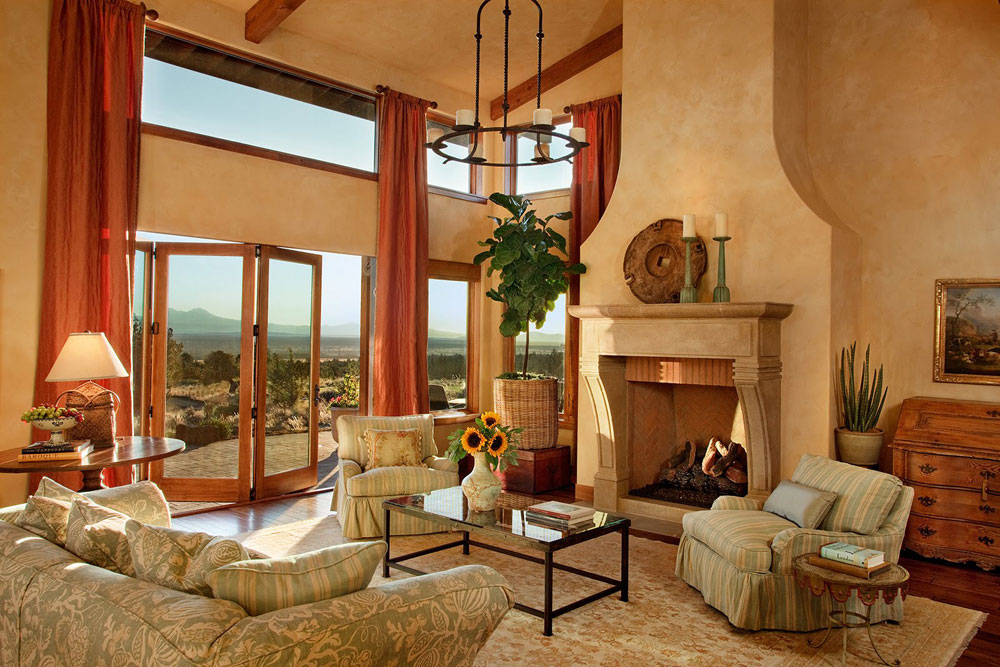
Most of what gets called Tuscan style traces back to tenant-farmer homes, where families worked the land for a share of the crop. That system shaped the Tuscan countryside until the 1960s (Visit Tuscany). The houses were built from local stone, clay and timber, and the interior look that came out of them still depends more on aged, hand-finished surfaces than on any single piece of furniture.
Today’s version keeps those materials and softens the rest. Better Homes & Gardens, in a September 2025 piece, calls kitchens and outdoor spaces the natural entry points.
What is Tuscan interior design and where does it come from?
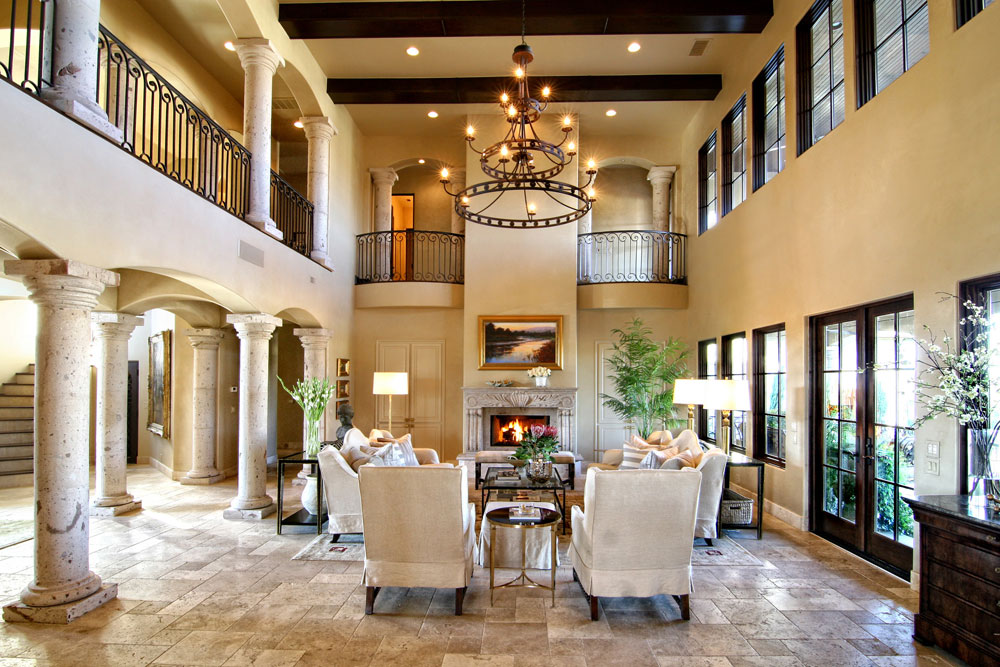
The style takes the stone, timber and terracotta of central Italian farmhouses and brings them indoors, with aged, hand-finished surfaces where a modern room would have polished ones.
Its model is the casale, a rural stone farmhouse. Villas followed classical Renaissance plans. A casale grew around the work done in it, so it ended up with thick walls and exposed beams, plus a large hearth in the main room.
The style sits inside the broader family of traditional Italian interiors, but Tuscany supplies its own materials. Impruneta terracotta does a lot of the work. Pietra serena sandstone and local chestnut timber cover most of the rest.
UNESCO added the Val d’Orcia in the province of Siena to the World Heritage List in 2004, and the listing names farmhouses among the protected features of a countryside that kept its Renaissance layout.
From those buildings the interior style borrows local stone walls over terracotta floors, and exposed chestnut or oak beams. The palette comes from clay, wheat, olive groves and wine.
Penguin Random House lists Frances Mayes’s 1996 memoir Under the Tuscan Sun as a New York Times bestseller for more than two and a half years.
That run came shortly before the early-2000s boom in American “Tuscan” houses. Homes & Gardens describes those as vaguely Italianate McMansions about 1,000 square feet too big, and nowhere near a casale.
Which colors and wall finishes define Tuscan interior design?
Walls in a Tuscan room come in warm, earthy colors: terracotta, ochre, olive green, burnt sienna and warm cream, put on lime plaster, limewash or exposed stone.
Warm cream or a sandy neutral is the base on most walls. Ochre and wheat yellow bring sun-faded warmth to living and dining rooms. Terracotta, burnt sienna and Chianti red add depth on accent walls, tile and textiles, while olive and sage green act as the cooler accents, drawn from the olive groves.
Sources agree on the earth-tone logic and split on depth. Wayfair’s guide leans on sandy neutrals with dark browns and rusty oranges. GenRoom starts from cream limewashed walls and adds wheat yellow and ochre accents, and Urban Ambiance lists terracotta, olive green and muted gold.
The brown-heavy end is where the style dated. HGTV’s Christina Haack told Realtor.com she would not repeat the early-2000s version, with its browns, heavy rugs and travertine everywhere (via House Digest).
A usable earthy color palette keeps one light anchor, and in a Tuscan room that anchor is cream or limewashed plaster.
Lime plaster and limewash give the matte, slightly cloudy surface most people picture. Limewash is just lime thinned into a paint, and it lets the wall breathe. Venetian plaster, which is lime putty with marble dust burnished to a soft sheen, shows up too. Fresco means pigment laid into wet plaster, and stenciled work covers painted borders on dry walls. Exposed stone usually gets one wall, set against plain plastered ones.
One correction to common advice. Venetian plaster is a northern Italian finish, made famous during the Renaissance according to Armourcoat. The farmhouse original is plain lime plaster or limewash, so polished marmorino suits a grander room better than a rustic kitchen.
Whatever the finish, the surface has to look troweled by hand, which is why textured wall treatments read as Tuscan and flat eggshell paint does not.
Limewash weathers and needs recoating, and acrylic masonry paint over old lime plaster traps moisture. Faux sponge-painted gold, the 1990s shortcut, imitates the look without the depth.
Which materials and floors does Tuscan style rely on?
Terracotta, travertine, pietra serena, Carrara marble and wrought iron do most of the material work in a Tuscan room, and chestnut and oak timber carry the ceilings and furniture.
| Material | Where it goes | Character and limit |
|---|---|---|
| Terracotta (cotto) | Floors, ceilings, pots | Orange-red from iron-rich Impruneta clay |
| Travertine | Floors, backsplashes | Pitted Rapolano stone; dates when used everywhere |
| Pietra serena | Stairs, door and window frames | Blue-grey sandstone; weathers poorly outdoors |
| Carrara marble | Countertops | White or blue-grey; Apuan Alps quarries |
| Wrought iron | Stair rails, hardware, lighting | Hand-forged, dark, scrolled |
Impruneta, south of Florence, has been making terracotta tile since the 14th century, and Visit Tuscany notes that the tiles topping Florence’s Duomo were baked there.
Impruneta cotto is protected by a designation called Artistic and Traditional Ceramics of Impruneta, which requires production in the town, local clay and traditional methods, according to Google Arts & Culture’s Impruneta terracotta story. So terracotta tiles sold under that name come from registered local producers, and everything else is terracotta in the generic sense.
Pietra serena has a hard limit. The Florentine reports that the stone does not weather well, so builders normally kept it indoors. Visit Tuscany says the Fiesole quarries are closed, with stone still quarried in the Mugello, especially near Firenzuola.
In Pierattelli Architetture’s Maison Ache conversion, pietra serena covers floors, trim and a spiral staircase while terracotta flooring supplies the warmth (Archello).
Travertine is the one to ration. The Rapolano quarries near Siena have supplied it since Etruscan times (Visit Tuscany), but Haack’s complaint about travertine everywhere names it as the 2000s mistake.
UNESCO’s tentative-list entry for the Marble Basin of Carrara dates large-scale quarrying to the first century BC under Roman rule, so Carrara countertops are Tuscan in origin as well as in look.
Timber finishes the set. Chestnut and oak beams, tables and doors look right when they are old, which is where reclaimed wood beats new boards stained dark.
Which architectural features carry the Tuscan look?

Exposed ceiling beams, arched openings, a stone fireplace and wood shutters on deep-set windows carry most of it.
Sources split on the beam finish. Gioia describes raw, unfinished timber, while GenRoom specifies chestnut or oak stained dark.
Either way, rustic timber beams need visible grain and tool marks, and in many casali they alternate with joists and terracotta bricks to form the ceiling.
Arches show up as doorways between rooms and as brick or stone frames over windows. Some casali go further with vaulted brick ceilings (volte a crociera).
The arch is a Renaissance inheritance. Visit Tuscany credits Brunelleschi with the first widespread use of pietra serena for columns, cornices, arches and portals in Florence.
The fireplace anchors the main room. Surrounds use pietra serena or rough stone, and some stop at a lintel or a mantel shelf. GenRoom notes a thick chestnut mantel beam as a common detail.
Wood shutters sit in deep openings cut through thick stone walls, and that depth is the part a new build cannot fake.
It all breaks down in hollow-wall new builds with flat ceilings. Faux beams and stick-on stone veneer read as set dressing, which is the 1990s problem the style still carries.
How do furniture, textiles and lighting finish a Tuscan room?
Sturdy wood furniture and natural fabrics do most of the finishing, with hand-forged iron lighting on top. Everything should look handmade and old rather than ornamental.
Furniture and textiles
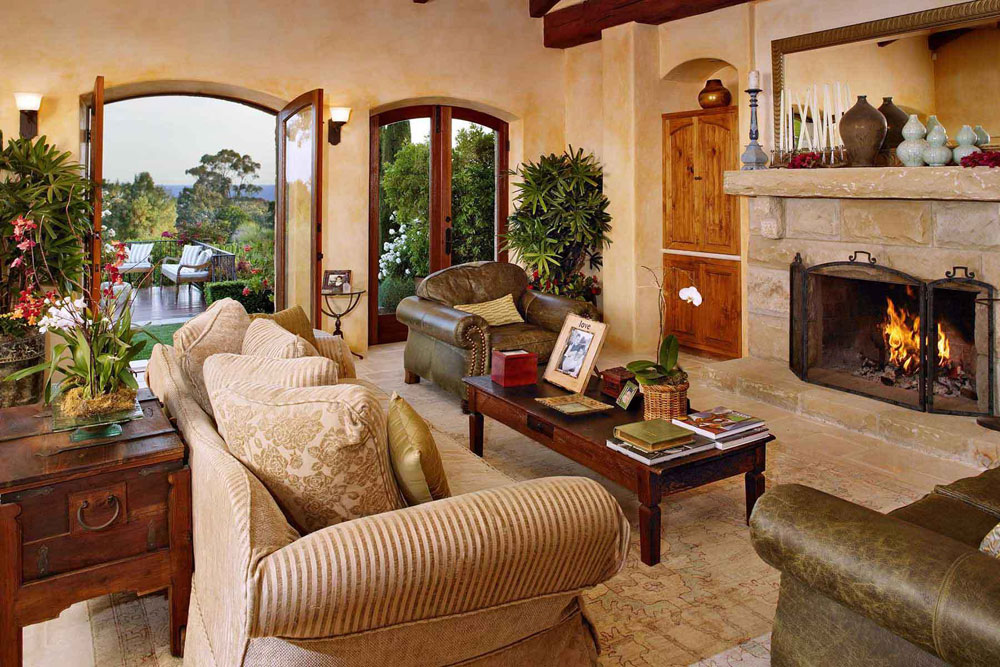
Wayfair’s style guide describes an ornate branch of Tuscan furniture, with carved designs and curved shapes, and a plain branch built sturdy and straight. GenRoom’s plain version uses a long walnut farm table as the anchor piece.
The plain branch ages better, and it matches a working farmhouse.
On floors, HGTV’s Tuscan guide lays antique rugs over worn wood, and Wayfair adds earthy-toned throws to seating. Antique rugs come in fixed sizes and cannot be trimmed, so check the footprint with a rug size calculator before buying.
Lighting and decor
Wrought-iron chandeliers and sconces with scrolled metalwork are the usual fixtures, though Better Homes & Gardens now favors slender fixtures and minimalist stair rails over the heavy wrought iron of the 2000s. The light itself should be warm and low, which is why Urban Ambiance points to amber glass shades and candelabra-like chandelier detail.
Painted ceramics and tile add color, per HGTV. Impruneta kilns also made orci, the big terracotta vessels that held oil and wine, according to Visit Tuscany. For greenery, Wayfair suggests potted plants in terracotta planters and a faux citrus or olive tree.
Scale decides whether an iron chandelier looks grand or oversized, so test the fixture against the room with a chandelier size calculator before ordering.
Two iron pieces and one good lamp beat a shelf of themed accessories.
How does Tuscan style change from room to room?
The materials stay the same from room to room. What changes is the focal point, which is an island in the kitchen, a hearth in the living room, a linen-dressed bed in the bedroom and a plaster surface in the bathroom.
Kitchen
Houzz’s 2026 U.S. Kitchen Trends Study (1,780 homeowners surveyed in July 2025) puts wood at 29% of renovated cabinet colors, ahead of white at 28%.
That helps a style built around timber. Platner & Co. describes today’s Tuscan kitchen as lighter in wood tone and plainer in cabinetry, with softer plaster walls (Homes & Gardens, July 2026).
Islands are the second signature. Houzz found 58% of renovating homeowners add or update one, and a large island needs a styling plan, so read up on how to decorate a large kitchen island before the copper pots go up.
Designers quoted by Homes & Gardens swap in marble or natural stone counters in a quieter palette, and use open shelving in softly aged timber. Brushed and burnished metals with subtle iron details replace the heavy scrolled ironwork. Copper cookware and ceramics stay, but sparingly.
Living room
The hearth sets the layout.
GenRoom describes a Tuscan living room built around a stone-or-brick hearth with a thick chestnut mantel beam, furnished with heavy walnut tables and credenzas.
Seating faces the fire first, and arranging furniture around the fireplace gets harder when a television competes with it, so settle the focal wall early.
Bedroom
The bedroom is the quietest room, carried by cream-and-ochre plaster walls (GenRoom).
Maverick Frame’s room guide adds natural linen bedding and heavy wood nightstands to the plaster walls, which it gives in soft ochre or cream.
Bathroom
Designer Natalie Du Bois brought light into a windowless powder room in a Tuscan-style home with reflective shell mosaics and a gilded mirror from Italy (Trends).
The limit is water. Plain lime plaster is not waterproof, so shower walls and splash zones use tadelakt or microcement instead.
How does Tuscan style differ from Mediterranean, French country and rustic farmhouse?
Tuscan is the inland Italian branch of Mediterranean design, which makes the two close relatives. French country adds scrolled woodwork and toile, and rustic farmhouse trades the earth tones for white and shiplap.
| Style | Setting | Palette | Signature materials |
|---|---|---|---|
| Tuscan | Inland central Italy, rural | Cream, ochre, terracotta, olive | Plaster, terracotta, stone, timber, iron |
| Mediterranean | Spain, Italy, Greece, southern France, North Africa | White or cream limewash, terracotta, deep blue, olive | Plaster, painted tile, wrought iron |
| French country | French provincial farmhouse | Earthy tones | Scrolled wood, toile, tapestries |
| Rustic farmhouse | American farmhouse | White, cream, warm gray | Shiplap, Shaker cabinets, barn wood |
Mediterranean is the parent family. GenRoom lists Spain, Italy, Greece, southern France and coastal North Africa as its sources, with a palette of white or cream limewash, terracotta and deep blue.
The wider characteristics of Mediterranean homes include features Tuscan rooms rarely use, such as whitewashed walls and blue tilework.
Blue is where sources disagree.
GenRoom lists deep blue as a core Mediterranean accent. Wayfair, though, places vivid blues in Tuscan rooms on mosaics and painted tile, and a 2026 Katharine Pooley kitchen in Homes & Gardens uses a pale blue scheme. The line is moving, and pale blue now sits inside modern Tuscan work.
French country furniture tends to be scrolled and molded, and the rooms bring fussier architectural motifs plus toile and formal tapestries. The plain branch of Tuscan furniture avoids all of that ornament.
Rustic farmhouse sits under the wider heading of rustic interior design and shares beams, reclaimed wood and iron with Tuscan style.
The split is palette and finish. Remodel AI’s farmhouse guide lists white, cream and warm gray with shiplap and Shaker cabinets, where Tuscan rooms stay earthy and plastered.
Is Tuscan style outdated, and how do you use it today?
The faux, ornamental 2000s version is outdated. A restrained Tuscan style built on real plaster, stone and terracotta is current.
Real Tuscan versus the 1990s look

An authentic casale lets its surfaces age into a patina. It uses real terracotta, stone and timber, with simple, sturdy furnishings and iron accents (HGTV).
The 1990s and 2000s American version went heavy on red, brown, gold and beige, a palette designer Cathleen Gruver of Gruver Cooley calls dark and muddy (Southern Living via AOL). Better Homes & Gardens points to cherry and mahogany cabinetry as another tell, and faux finishes and faux stone stood in for the real thing.
Sources disagree on whether the style is back. A Southern Living feature on 2000s trends, republished by AOL, reports that designers overwhelmingly agree Tuscan-inspired design belongs in the past.
Homes & Gardens (July 2026) reports a revival of Tuscan kitchens, and Better Homes & Gardens (September 2025) says the faux version is not returning while the style is. The disagreement is about which version. The critics target the faux and ornamental one, and the revival coverage describes a restrained one.
Updating the style step by step
- Lighten the palette. Swap deep gold and red for mushroom, ivory, ochre and terra-cotta, so rust becomes ochre and burgundy becomes clay (Lauren Saab, Saab Studios).
- Replace faux finishes with plaster and handmade tile, not sponge paint and imitation stone (Courtney Batten, Paige Studio).
- Pick one hero material, such as travertine or terra-cotta, and let it carry the room (Saab).
- Simplify the furniture. House Digest points to simpler lines, lighter wood finishes and warm fabrics over tufted pieces.
- Rein in the iron. Slender fixtures, hardware and stair rails keep the contrast without the weight (Better Homes & Gardens).
The method runs on contrast in interior design. Typical pairings are a rustic beam in a clean limewashed room and a plastered range hood among sleek cabinets (Better Homes & Gardens, September 2025). Terra-cotta tile next to plain furniture is another pairing from the same piece.
When Tuscan style does not fit
Small, dark rooms are the first trouble spot. Old Tuscan-style rooms can have low ceilings and be small and dark (a Goce Delcev University paper), and HGTV notes their windows were left bare for daylight, a trick a dim modern room can still use.
Minimalist homes cannot take the full kit. Batten’s rule is one or two grounding Tuscan elements against sleek silhouettes.
Furniture that is too big causes the rest of the problems. Thomas Burger, a designer who owned a home in Tuscany, says Tuscan architecture was never meant to be heavy or busy.
Heavy beams and carved sofas in a compact room are a problem of scale and proportion in interior design, not of taste.
Common Questions About Tuscan Interior Design
How much does a Tuscan kitchen cost?
Tuscan kitchens have no published price of their own, so budget by remodel scope. Houzz’s 2026 Kitchen Trends Study reports a median of $20,000 for minor remodels and $55,000 for major ones.
Estimate your own scope with a home renovation cost calculator before pricing real stone or custom plaster.
Can you get the Tuscan look on a budget?
Yes, because the style rewards collected pieces over matching sets. Designer Katharine Pooley calls a Tuscan kitchen collected rather than perfect, and Better Homes & Gardens points to vintage woods and rugs among the textures to use.
Which paint colors match the Tuscan palette?
Sherwin-Williams Rookwood Terra Cotta (SW 2803) covers the terracotta, and Benjamin Moore Byzantine is a rustic alternative with brown undertones, according to designer Kathy Kuo in Homes & Gardens.
Rookwood has a light reflectance value of about 14, so keep it to an accent wall and let a warm cream carry the rest.
Does Tuscan style work on a patio or courtyard?
Yes. Homes & Gardens named “Tuscan villa” its most romantic outdoor trend for summer 2026, built from forged-iron pendants, mosaic tile rugs, terracotta planters and travertine side tables.
Officine Gullo’s Manfredi Conforzi adds that traditional Tuscan country houses pair the main kitchen with outdoor cooking areas and aperitivo bars.
Which window treatments suit Tuscan style?
Linen panels on wrought-iron rods and interior wood shutters suit it best. Pottery Barn’s curtain guide recommends sheer or linen styles for an airy room and says light-filtering panels diffuse sunlight. The antiques dealer Proantic sells a set of 19th-century Florentine shutters in light ochre with Pompeian red borders, a period example of the look.
Compare the options in this overview of window treatments before ordering custom shutters.
The One Change That Adds the Most Tuscan Character
Start Tuscan interior design with the walls. Troweled plaster or limewash in cream or ochre sets the surface that every later piece has to match.
Walls fix the palette. Floors and ceilings set the weight of the room, and objects only decorate whatever is already there. Reverse the order and every purchase locks in a color before the room has a surface.
After the walls, pick one real floor or ceiling material. Iron and ceramics come last.
The trade-off is a room that looks bare while the plaster cures and the furniture waits.
This order reflects sources verified on 11 October 2026, and it changes if revival coverage turns back toward the faux 2000s look. Test the wall colors in a room color scheme generator before buying paint.

- Kitchen Color Schemes by Cabinet Color: What Pairs Well - October 19, 2026
- Curtain Colors for Every Wall Color: Safe vs Bold Picks - October 18, 2026
- Interior Design Styles: Find Your Primary and Secondary - October 14, 2026