Color Combinations
Colors That Go With White: Great Interior Ideas

Gray, greige, navy, sage green, black and warm earth tones all go with white. Pastels work too, and so do bolder colors like terracotta or mustard, as long as they stay in small doses. What separates a good pairing from a bad one is mostly contrast and undertone.
White isn’t a single color. Benjamin Moore’s Off-White collection alone holds 152 white and off-white shades, as of October 2026, so the undertone of the white you pick decides which partners work.
A warm white turns dingy beside a cool bluish gray. Put that same gray next to a cool white and it looks clean.
White is one of 32 colors in our interior color combinations guide, each listed with its safe and bold partners.
White is one of 32 colors in our color pairing chart, each listed with its safe and bold partners.
Which colors pair best with white?
Gray, greige, navy, sage, black and warm earth tones work because each one sharpens white or softens it without competing for attention.
Pastels like blush and lilac do the same job more gently, and mint works too. Bold accents such as terracotta or mustard hold up when they stay small.
| Partner color | Effect on the room | Contrast | Pairs best with |
|---|---|---|---|
| Gray and greige | Calm, contemporary | Low | Gray with cool white, greige with warm |
| Navy and deep blue | Classic, tailored | High | Cool or neutral white |
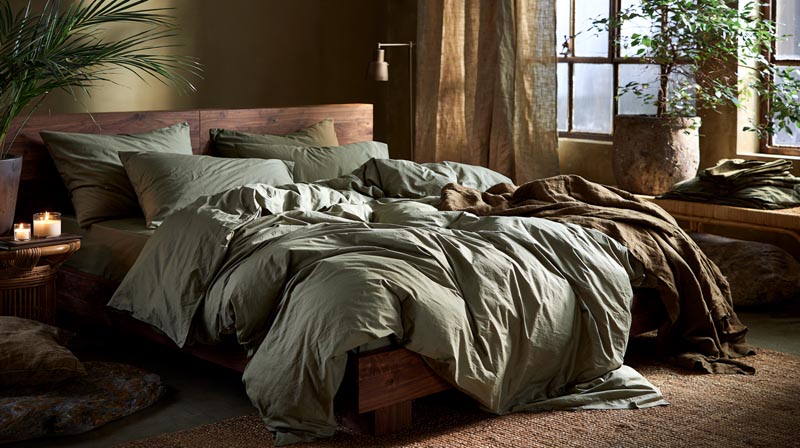
| Sage and olive | Natural, restful | Medium | Neutral or warm white |
| Black and charcoal | Graphic, defined edges | High | Crisp, cool white |
| Terracotta, taupe, brown | Warm, grounded | Medium | Warm white |
Sue Wadden, director of color marketing at Sherwin-Williams, pairs cool, crisp whites with a true black, as quoted in Homes & Gardens.
That’s also the sharpest pairing in the table. Black traces every edge in the room, so it suits frames, window mullions and furniture legs better than whole walls.
Low versus high contrast mostly comes down to mood. White with greige calms a room, while white with navy gives it structure. There’s more on that trade-off in this look at how contrast works in a room.
Pastels suit bedrooms and nurseries best because they soften white without darkening it. Red, mustard and orange hit harder. They read better as a cushion or a single chair than as a full wall.
Earth tones deserve a place on the shortlist. Taupe and terracotta bring the warmth that bright white lacks, and olive does it more quietly. All of them sit naturally inside an earthy palette built around wood and clay.
How white undertones decide which colors work

Undertone decides the pairing. Warm whites sit best with warm partners and cool whites with cool ones, and most rooms go wrong by mixing the two.
Devon Wegman of Devon Grace Interiors tells Homes & Gardens that the undertone of the chosen white has to coordinate with the rest of the palette.
Kati Curtis of Kati Curtis Design goes a step further. In a separate Homes & Gardens piece she describes picking off-whites that carry a trace of a color already in the room.
Warm whites

Benjamin Moore Simply White has a slight yellow undertone and still reads bright for a warm white. White Dove, also from Benjamin Moore, is creamy and softened by a gray undertone. Sherwin-Williams Alabaster is soft and creamy with a warm cast.
Oak, terracotta, olive, brass and gold are the usual partners.
Set a warm white beside a cool bluish gray and the cream turns dingy. The gray pulls it toward yellow.
Cool whites

Cool whites lean blue or gray, and they read crisp.
Navy, charcoal, true black and chrome all suit them. Orange-toned wood is the problem. Next to it a cool white looks sterile, so keep the wood light or limit it to one piece.
Neutral and gray-leaning whites

Sherwin-Williams Pure White (SW 7005) sits close to neutral, and reviewers disagree on its lean. Some see no undertone at all, others a faint yellow.
That ambiguity is why a neutral white works as a base when a room mixes warm wood with cool metal.
Livingetc points out the downside, which is that a white with no undertone makes bright colors look stark beside it.
A decent rule of thumb is to fix the partner color and the flooring first, then choose the white last.
How light changes white and the colors beside it
Daylight direction and bulb color temperature both shift a white pairing. So does the white’s light reflectance value (LRV).
Daylight direction
South-facing and western afternoon light warms a white toward yellow. North-facing light is cooler and flatter, so a cool white reads grayer there.
Window size, tree cover and neighboring walls change the result too, which ties into the wider role of light in a room’s design.
Bulb color temperature
Warm bulbs push a white toward yellow. Daylight-rated bulbs push it toward blue.
Choose the bulb first, then judge the swatch under it.
Light reflectance value
LRV scores how much light a paint reflects on a 0 to 100 scale, where 0 is black and 100 is pure white.
A higher LRV makes the white read brighter and makes colored partners look deeper by contrast. A lower-LRV white sits closer in tone to mid-tone partners, so the step between them shrinks.
Sherwin-Williams lists Pure White (SW 7005) at LRV 84 and Alabaster (SW 7008) at LRV 82, per its color listing as of October 2026. Those two sit two points apart, so choosing between them is an undertone decision, not a brightness one.
On the bulb side, Energy Trust of Oregon recommends 2700K warm bulbs for living rooms, bedrooms and dining rooms. It rates 3500K cool white as suited to kitchens and work spaces, and 5000K daylight-rated bulbs simulate a bright day.
Put those together and the choices get easier. In a north-facing room with 2700K bulbs, go with a warm white and wood, terracotta or brass partners, because cool daylight and warm bulbs together flatten a cool white.
A south-facing room with 5000K bulbs is a different story. A cool or neutral white holds up there, and navy or sage partners read cleanly.
Does the finish change which colors pair with white?
Yes. Sheen changes how much light a surface throws back, so the same white and the same partner color look brighter or deeper depending on matte, eggshell or gloss.
A glossy surface reflects more light than a matte one in the same color, which is why semi-gloss trim looks brighter than a flat wall painted the identical white.
Matte and flat finishes hide wall flaws and soften contrast, so they suit deep partners like navy and charcoal. Eggshell is the usual pick for living rooms and bedrooms, and its faint glow warms creamy whites. Gloss and semi-gloss are for trim, doors and cabinets, where they sharpen the edge against a matte wall.
Brass, gold, copper and oak go with a warm white. For a cool white, think chrome, nickel, black steel and pale or gray-toned wood.
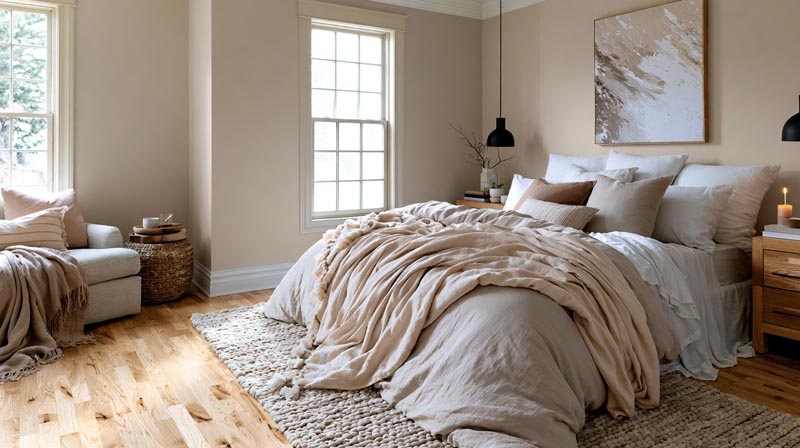
White-on-white rooms live on texture. Linen, boucle, plaster and rattan give a single white several tones, and how texture builds depth in a room explains why that works.
Gloss has a downside on walls, since it shows every patch and roller mark. Keep it for trim and cabinets.
Proportion and scheme: building a palette around white
The 60-30-10 split is the easy way in. White takes 60 percent of the room, a supporting color takes 30, and one accent takes the last 10.
A worked example would be white walls, an oak table and greige sofa as the 30, and sage cushions plus a ceramic lamp as the 10.
A monochromatic version is white-on-white with tonal layers, driven by texture rather than hue. Analogous schemes use neighbors on the color wheel, like sage, teal and soft blue. Complementary schemes use opposites such as navy against rust or ochre, and white acts as the buffer between them.
The wheel decides which partners count as analogous or complementary, and the color theory behind interior design maps those relationships in full.
For a first draft, an online generator for room color schemes lets you test supporting colors against a base white before buying a single sample.
The scheme stops working when two accents carry equal weight. Metallbude’s advice on white furniture lands on the same point, which is to keep the number of colors low.
If the room needs more color, deepen the 30 instead of adding a second 10.
Colors that go with white, room by room
Each room tilts the pairing differently. Living rooms take gray, navy and wood, kitchens lean on wood and deep greens, and bathrooms on sage, brass and wood. Bedrooms do best with soft blue or lilac.
Living room

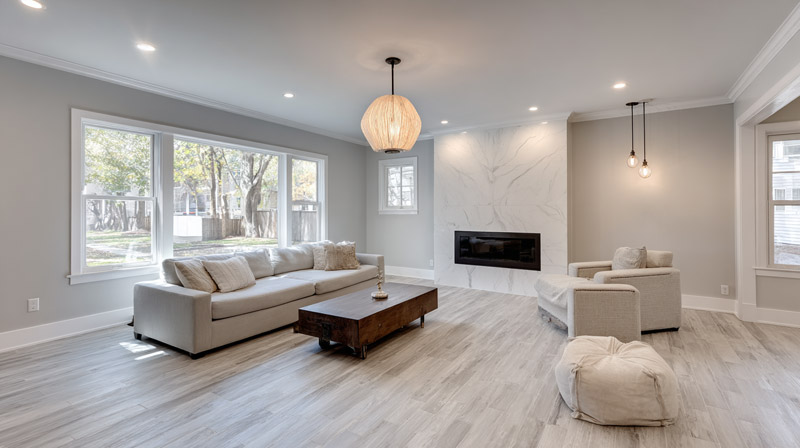
Gray curtains or a gray sofa make a low-contrast, contemporary base. Navy on one wall or in the upholstery adds structure. Oak or walnut keeps the white from reading flat.
Georgia Zikas Design set white furniture against navy wallpaper in a living room Hunker featured. The darker wall pushes the white pieces forward as the focal point.
Kitchen

Emerald, navy or sage on the lower cabinets and island works well against white uppers. Wood or gray stone countertops bridge the white and the accent.
Hardware follows the white. Brass goes with a warm one, black with a crisp one.
Countertop and backsplash choices narrow quickly once the cabinet white is fixed, and these kitchen color schemes built around white cabinets show the usual pairings.
Bathroom
The warm route is warm white tile and walls with wood, brass and a sage or blush vanity. The cool route swaps in crisp white tile, a slate blue or near-black vanity and chrome.
Mirrors and glossy tile bounce light around, so a white’s undertone shows faster here than in a bedroom.
Bedroom
Soft blue, gray-blue and lilac sit best with white in a bedroom.
HGTV’s Hilary Farr pairs seafoam green with warm woods, cool grays and soft whites for calm, and the wider range of calming bedroom colors stays in the same low-saturation family.
Keep the bedroom to one partner color plus wood. A third hue starts to compete with the quiet the room is meant to give.
White pairings by interior style

Scandinavian rooms lean on pale wood and muted gray, and Japandi on oak and green. Coastal goes for blue and sand, modern farmhouse for black, and mid-century modern for mustard or teal.
| Style | White leans | Partner colors | Typical material |
|---|---|---|---|
| Scandinavian | Warm or soft | Muted gray, pale blue | Pale oak, linen |
| Japandi | Warm | Sage, charcoal, black accents | Oak, walnut |
| Coastal | Crisp | Navy, sky blue, sand | Rattan, weathered wood |
| Modern farmhouse | Crisp or warm | Black, charcoal | Wood beams, black metal |
| Mid-century modern | Warm | Mustard, teal, burnt orange | Walnut, teak, brass |
Scandinavian rooms depend on restraint. A warm white base, light wood and a small set of muted accents do most of the work, and these Scandinavian color palette ideas lay it out.
Japandi inherits the warm white from its Scandinavian side. Apartment Therapy notes that it steers clear of pink, orange and red hues, and that green is one of the most commonly used colors after the neutrals.
Coastal rooms split into two moods. Ethan Allen’s designers describe navy and crisp white with touches of sand as invigorating, and sand and white with hints of sky blue as serene.
Modern farmhouse leans on black against white and wood. In a Fixer Upper kitchen, Joanna Gaines set black cabinets and furniture against white tile and countertops, with warm wood floors and beams (Hunker).
Mid-century modern keeps walls neutral and spends color on one or two saturated pieces. The mid-century modern color palette shows how mustard, teal and rust are rationed.
Which colors clash with white?
No hue clashes with white on its own. Clashes usually come from an undertone mismatch. Neon saturation causes them too, and so do bright reds or oranges used at full intensity.
Hunker’s roundup treats white as a universal partner, but Livingetc calls the idea of endless pairings inaccurate. Homes & Gardens goes further and lists five colors designers avoid.
Both positions hold once undertone is the variable. Homes & Gardens itself concludes that white works alongside any color when the undertones are handled.
Designer Nadia Watts finds bright neons intense against white. Brandon Lange of BZ Interiors advises against the bright versions of red and orange, though muted rust and terracotta sit outside that warning. Kathy Kuo cautions against treating different whites as interchangeable, and Metallbude warns that a pile of cool, sterile colors makes a room uncomfortable.
How to test a white and partner color before painting
Test the pairing on movable samples, inside the room, at different times of day, before buying a gallon.
- Shortlist two whites and one partner color, with the undertone direction (warm or cool) settled first.
- Order samples. Sherwin-Williams lists 8 x 8 inch peel-and-stick samples at $3.95 each and up to 10 free 2 x 3 inch chips (2026 listing). Benjamin Moore’s Canadian store sells 9 x 14.75 inch peel-and-stick sheets.
- If you’re using sample pots, paint two coats on poster board instead of the existing wall, because the old color skews the result (Benjamin Moore guidance).
- Place the board beside the partner color, the wood, the metal and the textiles already in the room.
- Check it in the morning, at midday and in the evening, including the evening under the bulbs the room uses, per Benjamin Moore and CertaPro.
- Leave it up for two to three days. A pairing that holds across those days is the one to buy.
Samples carry a limit. Benjamin Moore states that its liquid paint samples are for testing color only and are not tested for long-term performance, so a painted sample left up for weeks can shift or fade.
Benjamin Moore’s guidance also offsets a room’s light. South-facing rooms get a cooler hue, east-facing rooms a warmer one, and west-facing rooms go cooler again.
That sits alongside the matching rule, and the two answer different questions. Match the white to its partner colors, then offset the white against the light.
When a pairing fails, change the white. The partner color usually belongs to furniture or tile, while a different white costs one more sample.
Once the pairing holds, calculate how much paint the room needs before heading to the store.
Common Questions About Colors That Go With White
What wall color goes with white furniture?

Deep blue, emerald and mustard make white furniture stand out, while soft gray or greige keeps the look calm. Metallbude names those three bold colors as its eye-catching contrast picks. For more combinations, see which wall colors suit white furniture.
What colors go with white trim?
Almost any wall color works, so temperature is what decides it. Warm white trim suits greige, taupe and olive walls, while crisp white trim gives navy, charcoal and sage a clean edge. This guide to wall colors that work with white trim goes further.
Can I mix white and off-white in one room?
Yes, when both share the same temperature. Designer Kathy Kuo cautions against treating whites as interchangeable, so keep the trim as the lighter white and the walls as the softer one.
A warm off-white beside a cool white looks like a painting mistake, not a choice.
How do I warm up an all-white room?
Add wood, linen and wool, then bring in one earthy partner such as terracotta or sage. Warm bulbs help as well.
If the white itself reads cold, swap it for a warm white before adding anything else.
Does white make a small room look bigger?
Yes, in feel but not in size. Pale colors reflect more light, so white walls make a small room read brighter and more open, as Benjamin Moore’s small-room color guidance notes.
The effect fades in a dim room if the white carries a cool undertone, because it turns gray.
What curtain colors go with white walls?
Cream and white-on-white give a quiet neutral base. For color, Hillarys suggests gray, green and blush pink, and Hunker adds brown and goldenrod for warmth.
Pick the curtain’s undertone to match the wall white.
Choosing Between Two Pairings That Both Look Right
When two colors that go with white both look right on the sample board, choose the pairing that holds up under the room’s evening bulbs and matches the undertone of the flooring and wood.
Start with the evening bulb check, then look at the undertone of the fixed materials, and last weigh what it would cost to reverse the choice.
Bulbs come first because a pairing that only works in daylight works for a few hours a day. Floors and counters come second because they cannot be repainted, while a wrong white costs one more sample.
The lower-contrast pairing is the safer pick, and the price is a flatter room with less definition at the edges.
Re-test after replacing the bulbs or the flooring, since either change shifts the undertone the pairing was matched to (position verified October 2026).
With the wall pairing settled, furniture is the next decision, and this guide to furniture colors for white walls picks up from there.

- Kitchen Color Schemes by Cabinet Color: What Pairs Well - October 19, 2026
- Curtain Colors for Every Wall Color: Safe vs Bold Picks - October 18, 2026
- Interior Design Styles: Find Your Primary and Secondary - October 14, 2026