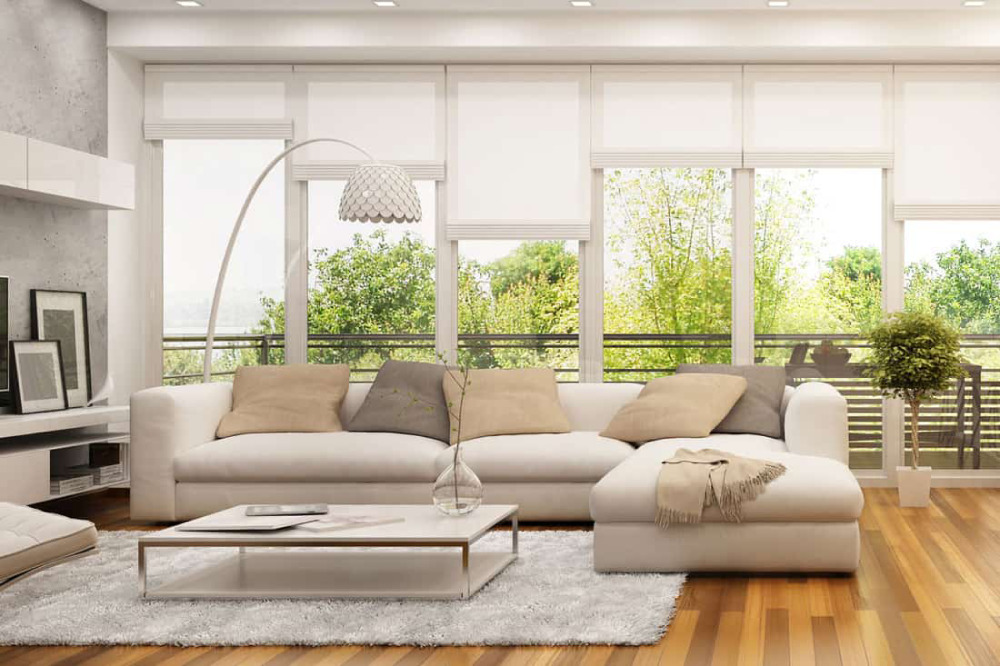
The wrong rug under the dining table slides, stains, and makes every chair wobble. The right one protects your floors, absorbs sound, and pulls the whole dining room together.
Picking a dining room rug comes down to size, material, shape, and placement. Get one of those wrong and you will feel it every single meal.
This guide covers exact rug dimensions for 4, 6, and 8-seater tables, the best materials for stain resistance and chair traffic, proper placement rules, and realistic cost breakdowns from budget polypropylene to handmade wool.
Everything here is based on standard furniture measurements and real-world performance, not guesswork.
What Is a Rug Under the Dining Table
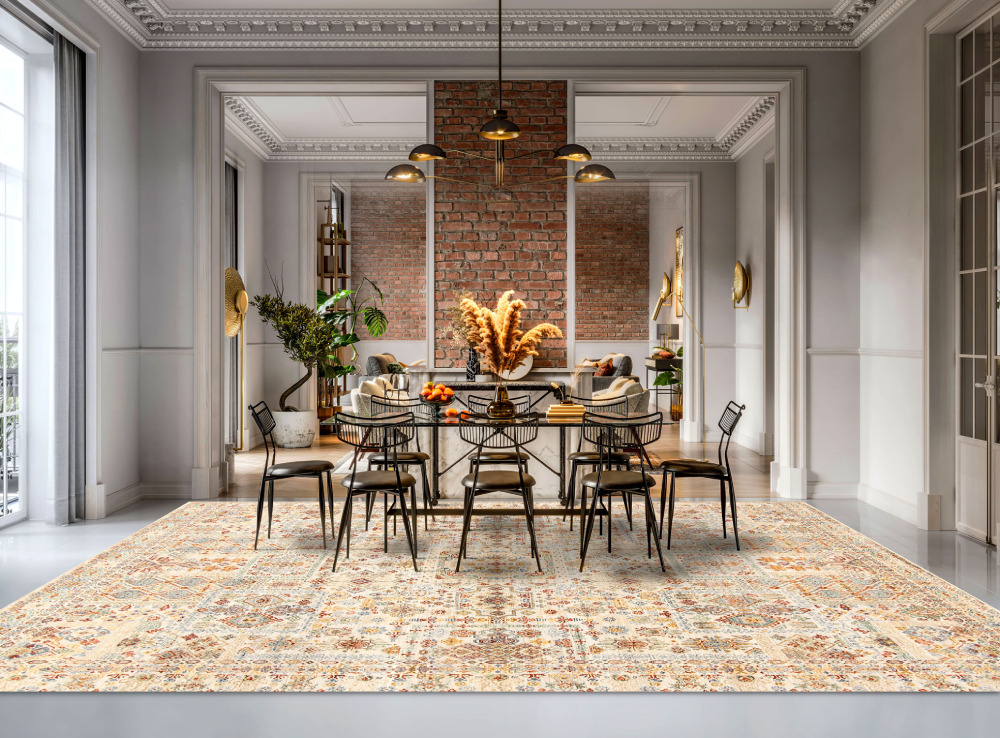
A rug under the dining table is a floor covering placed beneath the table and chairs to define the eating area, protect the floor surface, and add visual warmth to the dining room.
It sits flat against the floor, typically made from low-pile or flat-weave material, and extends far enough beyond the table edge so that all dining chairs remain on the rug when pulled out for seating.
Most dining room rugs range from 8×10 to 10×14 feet depending on table size. The rug anchors the furniture grouping into a single zone, which is especially useful in open floor plan layouts where the dining area flows into the kitchen or living room.
Without a rug, chair legs scrape directly against hardwood or tile. That leads to scratches, noise, and an eating area that feels disconnected from the rest of the room.
A properly sized area rug solves all three problems at once.
It also absorbs sound. Dining rooms with hard flooring tend to echo, and a flat weave dining rug underneath the table dampens that significantly.
The rug ties the table, chairs, and any surrounding furniture into a cohesive arrangement. This kind of grounding matters when working with balance in interior design, because the rug creates visual weight at the center of the room.
What Size Rug Goes Under a Dining Table
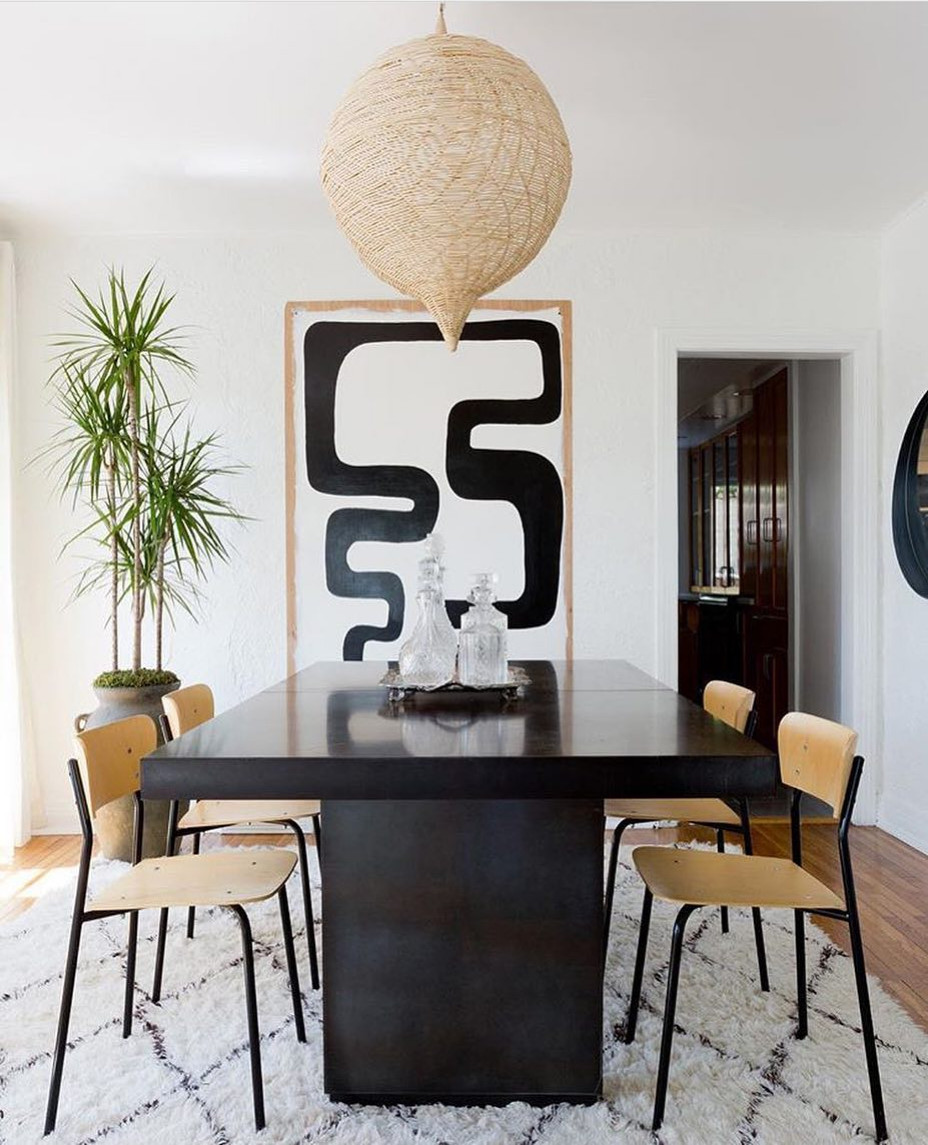
The rug should extend 24 to 30 inches beyond the table edge on all sides. That clearance keeps every chair fully on the rug, even when someone pushes back from the table.
Too small, and chair legs catch the rug edge constantly. Too large, and it crowds the room or tucks under other furniture where it should not.
Here is how standard table sizes pair with rug dimensions:
- 4-seater table (36×48 inches) pairs with an 8×10 rug
- 6-seater table (36×72 inches) pairs with a 9×12 rug
- 8-seater table (40×84 inches) pairs with a 10×14 rug
These measurements assume standard dining chair depth of about 20 to 22 inches plus the pull-out distance needed for comfortable seating.
Measure your actual table and chairs before buying. I’ve seen people order a gorgeous 8×10 for a 6-seater and end up returning it within a week because the back legs kept slipping off.
Getting scale and proportion right here is not about looks alone. It is about function first.
How Big Should a Rug Be Under a Round Dining Table
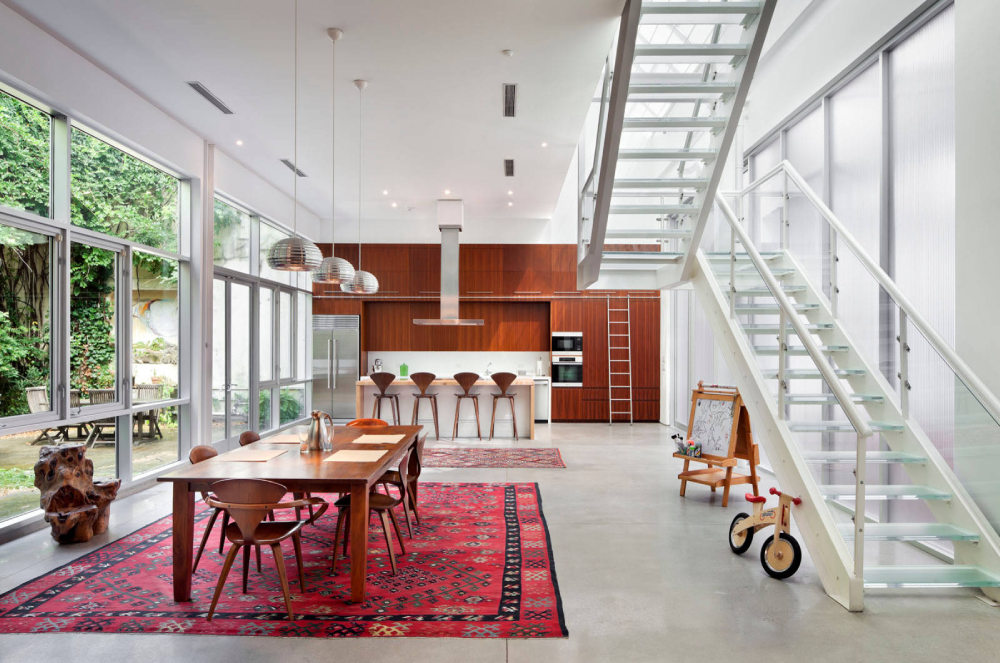
A 48-inch round table needs at least an 8-foot round rug. A 54-inch table, go with 9 feet. A 60-inch table requires a 10-foot rug minimum.
Square rugs work under round tables too, as long as the dimensions hit that 24-inch clearance on each side.
How Big Should a Rug Be Under a Rectangular Dining Table
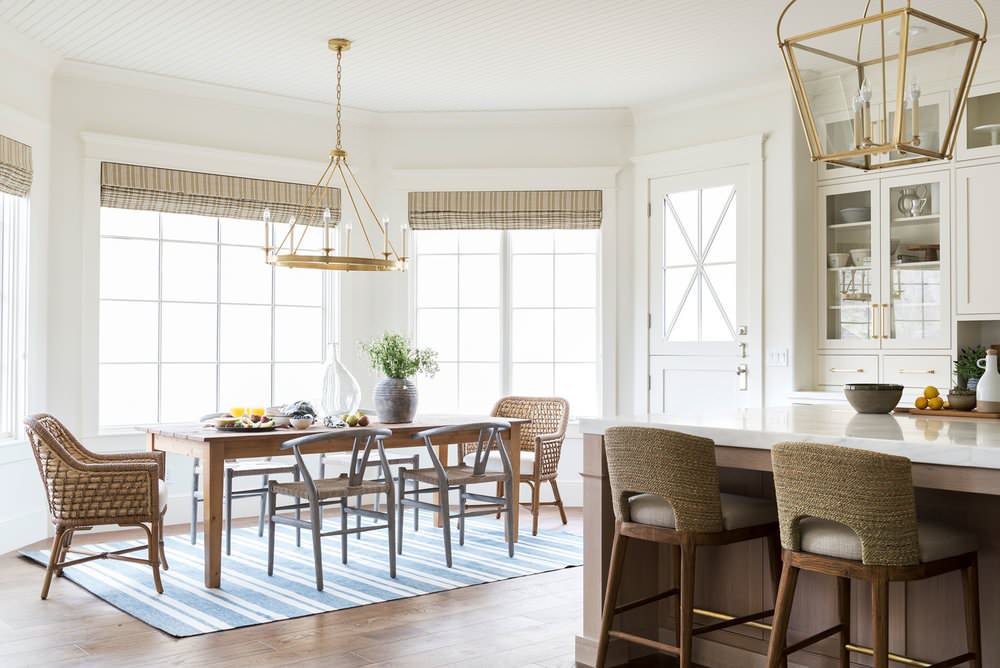
A standard 36×60 table fits best on an 8×10 rug. For a 36×72 table, a 9×12 gives proper coverage. Larger 40×84 tables need a 10×14.
Always measure from the outermost table edge, not from the center.
What Shape Rug Works Best Under a Dining Table
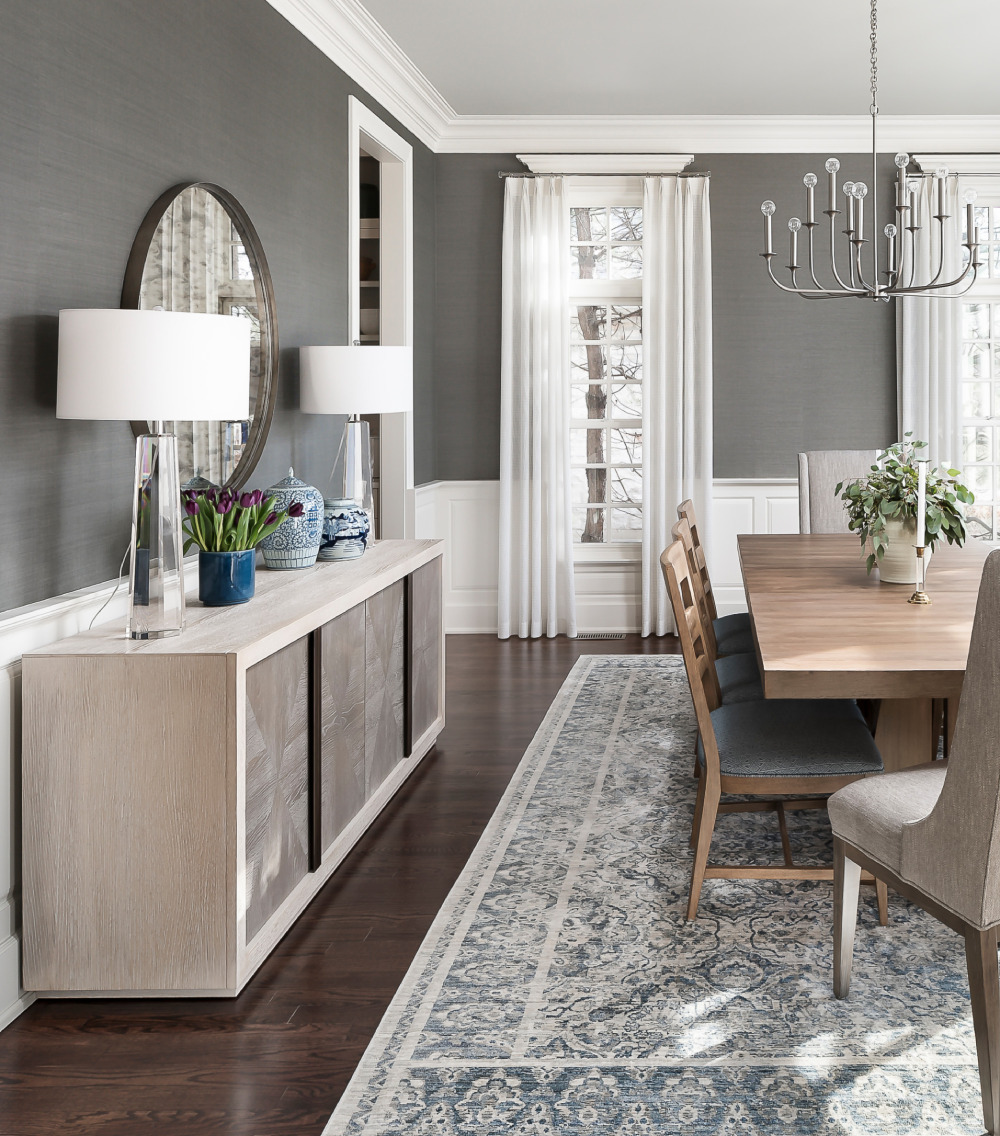
Match the rug shape to the table shape. Rectangular table, rectangular rug. Round table, round rug.
That is the standard rule, and it works about 90% of the time.
Oval rugs pair well with oval tables but they are harder to find in standard sizes. A rectangular rug under an oval table works fine and actually gives you more floor coverage where the chairs pull out at the ends.
Round rugs under rectangular tables? That rarely works. The corners of the table extend past the rug’s curve, and the chairs at the ends lose coverage.
Square rugs under round tables are a different story. That combination works well because the rug corners provide extra space where you actually need it, at the diagonal pull-out points.
When the shape is right, the whole dining area reads as intentional. The unity in your design comes from that kind of quiet consistency between furniture and floor covering.
What Type of Rug Is Best Under a Dining Table
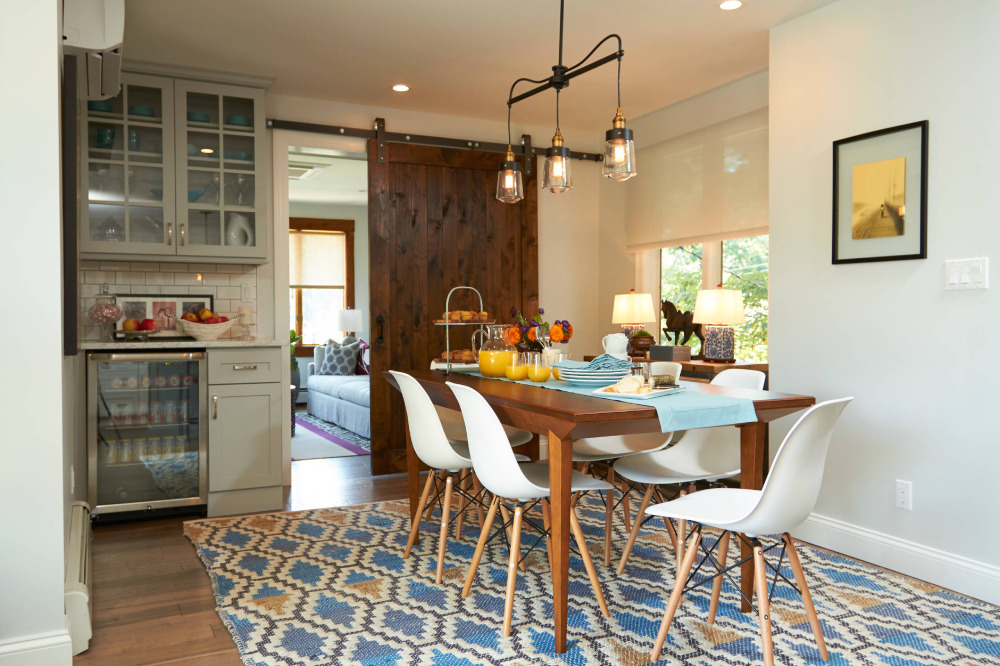 Image source: Nurzia Construction Corporation
The best dining table rug handles food spills, resists stains, stays flat under moving chairs, and cleans up without drama.
Low-pile and flat-weave constructions beat everything else for this job. Chair legs glide smoothly, crumbs do not disappear into deep fibers, and vacuuming takes half the effort.
Here is how the most common materials compare:
- Polypropylene (indoor/outdoor): stain-proof, hose-washable, budget-friendly. Top pick for families with kids.
- Wool (flat-weave): naturally stain-resistant thanks to lanolin, durable, ages well. Higher cost but lasts years.
- Cotton (flat-weave): machine-washable, soft, affordable. Wears faster than wool or synthetic.
- Jute/Sisal: natural texture adds warmth, but absorbs liquids fast and stains easily.
- Polyester: soft feel, decent stain resistance, but matts down under heavy chair traffic.
Pile height matters more than most people think. Anything above 0.5 inches becomes a problem. Chairs wobble, crumbs hide, and the rug bunches when you push back from the table.
Stick to a pile height of 0.25 inches or less for dining use. Viscose and high-pile shag rugs look great in a living room but have no place under a dining table.
Is a Jute Rug Good Under a Dining Table
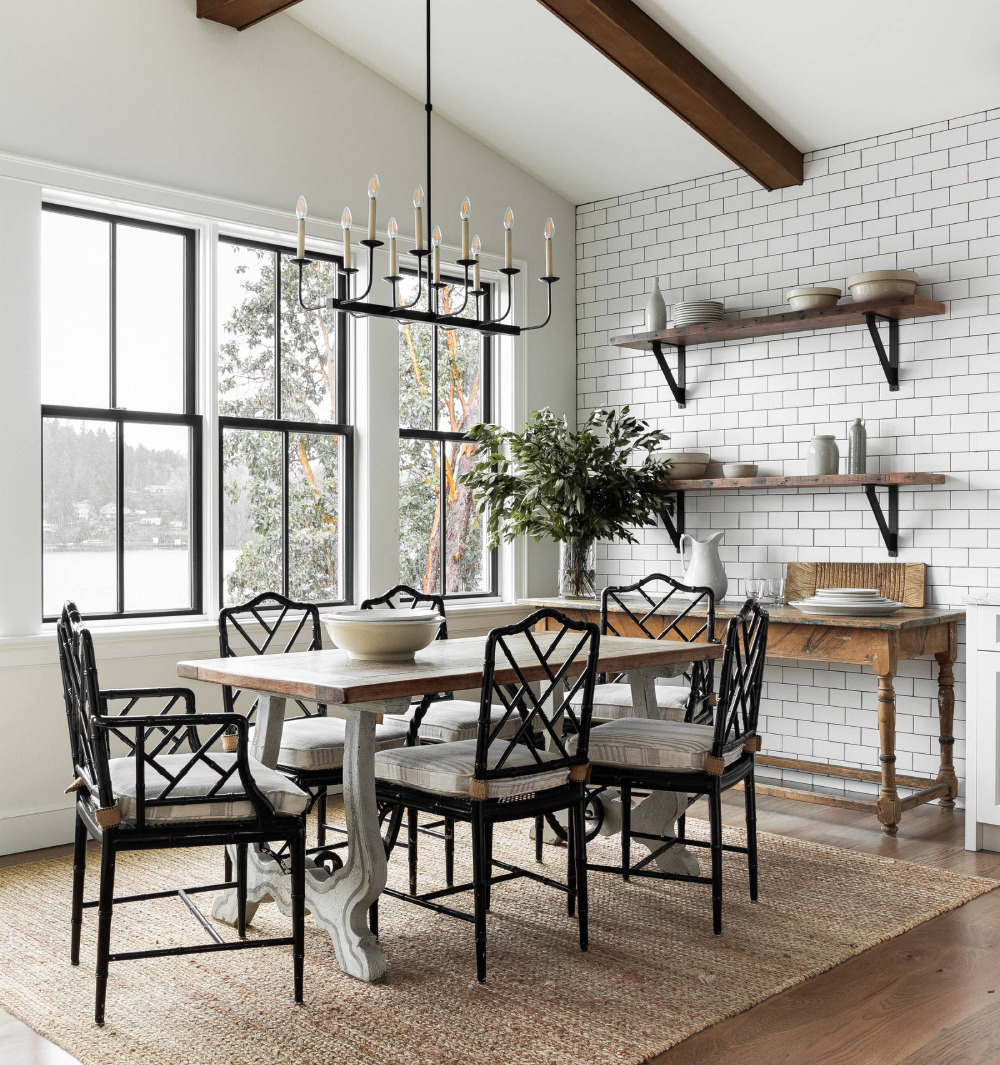 Image source: Marianne Simon Design
Jute looks great but performs poorly around food. It absorbs liquid on contact, stains permanently from wine or sauce, and the fibers shed constantly under chair movement.
If you still want jute, use it in a dining room where meals are rare, like a formal space used a few times a year.
Is a Wool Rug Practical Under a Dining Table
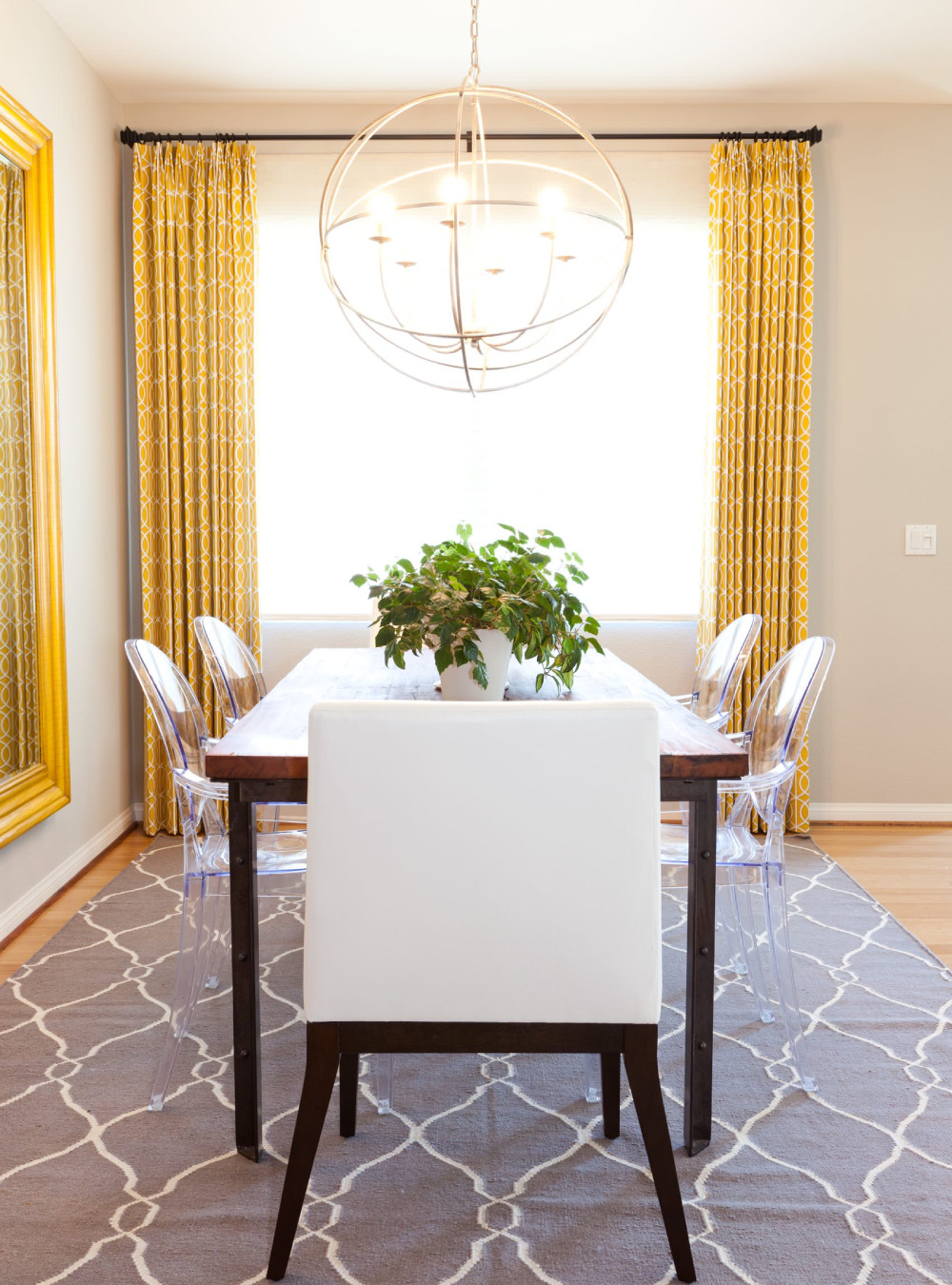 Image source: Lilium Designs
Flat-weave wool is one of the best dining rug materials. The natural lanolin coating repels liquid long enough for you to blot spills before they set.
A kilim or dhurrie style wool rug handles chair traffic well and gets better looking with age. Hand-knotted wool rugs with thick pile are a different story; save those for the living room.
How to Place a Rug Under a Dining Table
Center the rug under the table so equal coverage extends on all four sides. Pull out every chair to its full seating position and confirm that all four legs sit on the rug.
If any chair leg hangs off the edge, the rug is either too small or not centered properly.
The rug should not touch the walls. Leave at least 18 inches of bare floor between the rug edge and the nearest wall. This framing of exposed floor around the rug is what makes the dining zone feel defined without crowding the room.
For rooms where the dining table sits near a living area, the space planning becomes more specific. The rug should separate the dining zone clearly without overlapping with a rug under a sectional sofa or other floor coverings nearby.
Placement under a queen bed follows different rules entirely, but the dining table setup is more demanding because every seat needs to work.
Should All Chair Legs Be on the Rug
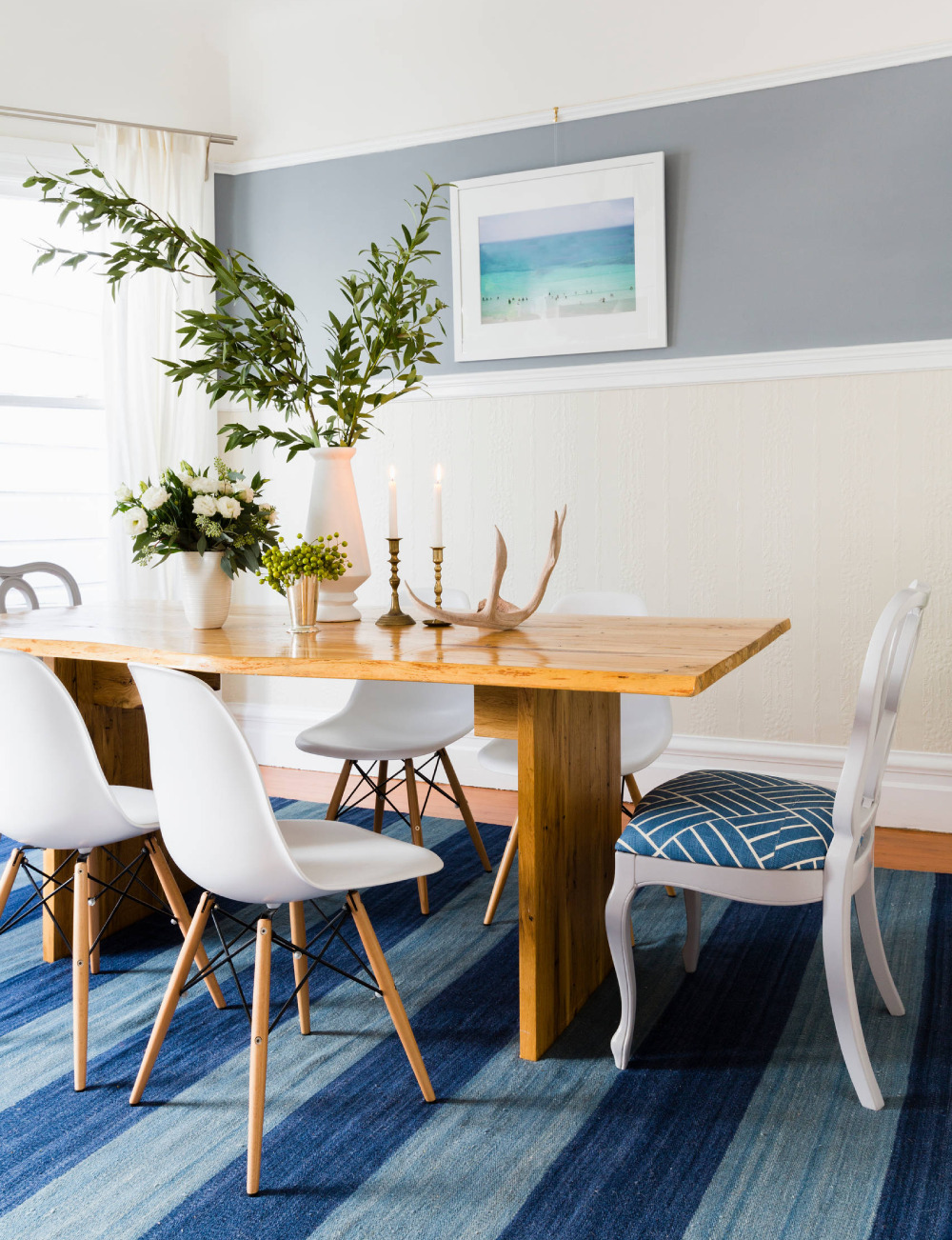 Image source: Lauren Nelson Design
Yes. When front legs sit on the rug and back legs rest on the bare floor, the chair wobbles every time someone sits down. That unevenness also scratches hardwood flooring where the legs rock back and forth.
The 24-inch extension rule exists specifically to prevent this. Factor in a chair depth of roughly 20 inches plus 4 to 6 inches of pull-out clearance.
What Color Rug Goes Under a Dining Table
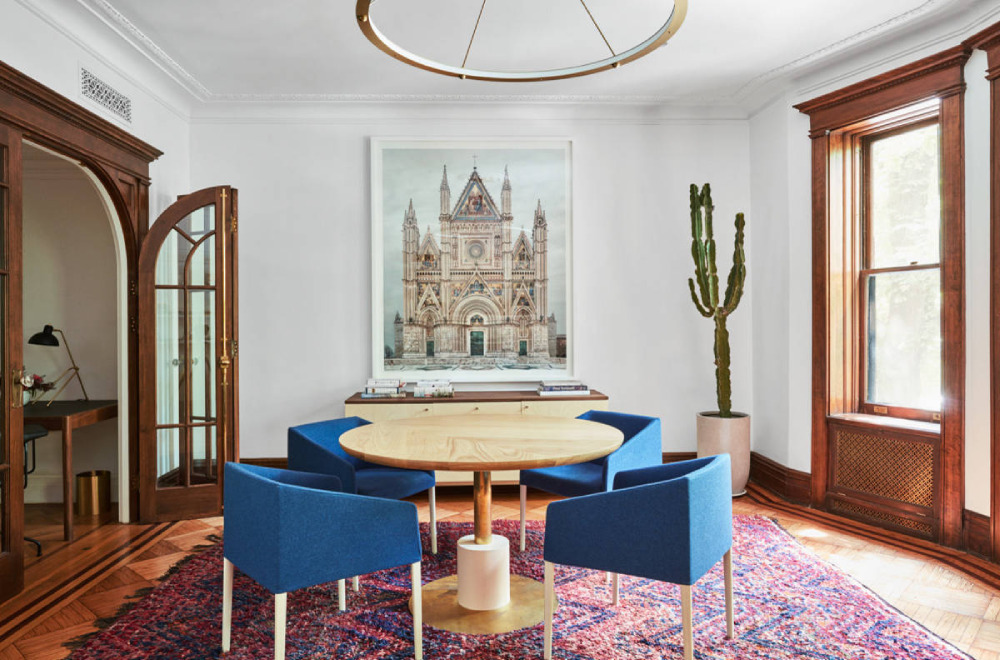 Image source: Jessica Helgerson Interior Design
Pick the rug color based on what is already on the floor and what finish the table has. Dark walnut tables look best on lighter rugs. Light oak tables pop against deeper tones or saturated patterns.
Patterned rugs with medium density hide food stains better than solid colors. A solid cream rug under a family dining table is a headache waiting to happen.
Warm wood floors pair well with rugs in beige, terracotta, or muted blue tones. Grey floors work with almost anything, but especially rugs in charcoal or warm ivory.
The rug color should connect to something else in the room. Wall paint, curtains, a centerpiece. That connection creates harmony in the design without making the space feel over-coordinated.
If your dining room opens into a kitchen, consider what is happening on that side too. A rug that clashes with kitchen decor will make both spaces feel off.
One thing I always tell people: go darker or busier than you think you need. Dining rugs take more abuse than any other rug in the house. That pattern density is doing real work for you.
How to Keep a Rug Flat Under a Dining Table
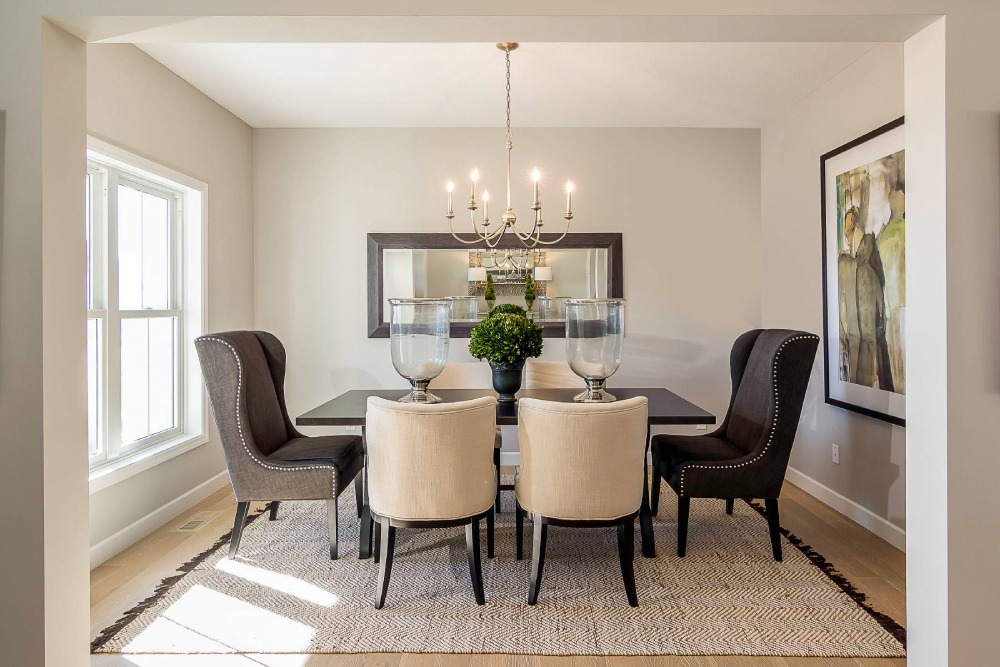 Image source: Country Joe Homes
Chairs push and pull across the rug surface every single day. Without a rug pad, the rug will bunch, slide, and curl at the corners within weeks.
A felt-rubber combo pad is the standard recommendation for dining areas. It grips the floor, cushions the rug, and stays in place under heavy chair traffic.
Pad thickness matters. Go with 1/8 inch for dining rooms. Anything thicker creates an uneven transition between rug and bare floor that catches chair legs.
Here are the common rug pad types ranked for dining use:
- Felt-rubber combo: best overall grip and durability, safe on all floor types
- Natural rubber: strong grip, thinner profile, works well on hardwood
- PVC/vinyl pads: cheap but can discolor hardwood floors over time; avoid these
Double-sided rug tape works as a backup for smaller rugs or renters who cannot use thick pads. Brands like Gorilla Grip make non-slip pads specifically cut for standard rug sizes.
Trim the pad so it sits about one inch inside the rug edge on all sides. If the pad peeks out, it collects dust and looks sloppy.
How to Clean a Rug Under a Dining Table
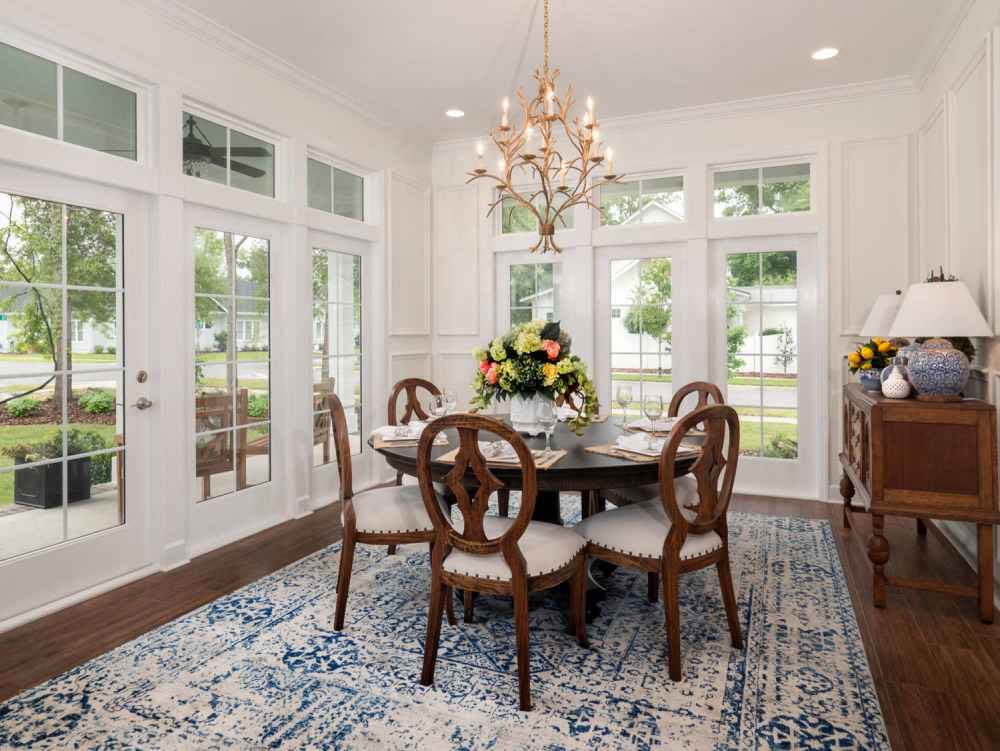 Image source: Advanced Building Concepts, Inc.
Dining rugs need vacuuming twice a week minimum. Food crumbs, dust, and hair collect faster under a table than anywhere else in the house.
Spot-clean spills immediately. Blot, never rub. Rubbing pushes the stain deeper into the fibers, especially on wool or cotton weaves.
Material dictates the cleaning method:
- Polypropylene: hose it down outdoors, scrub with mild soap, air dry flat
- Wool: blot spills with cold water, use wool-safe cleaner, professional clean once a year
- Cotton: machine wash if the size allows, tumble dry low or hang dry
- Jute/sisal: dry brush only, water causes permanent damage and mildew
Wine, grease, and tomato sauce are the three worst offenders at a dining table. For wine, cover the stain with salt immediately and vacuum after 15 minutes. Grease needs dish soap applied directly. Sauce stains respond best to a mix of white vinegar and cold water.
Washable rugs from brands like Ruggable remove the cleaning problem entirely. The top layer peels off and goes straight into the washing machine. Took me a while to come around on them, but for a dining room with young kids, they genuinely make life easier.
Professional rug cleaning every 12 to 18 months keeps deeper grime from breaking down fibers. Worth the cost on a quality wool or hand-knotted piece.
How to Protect Hardwood Floors with a Rug Under a Dining Table
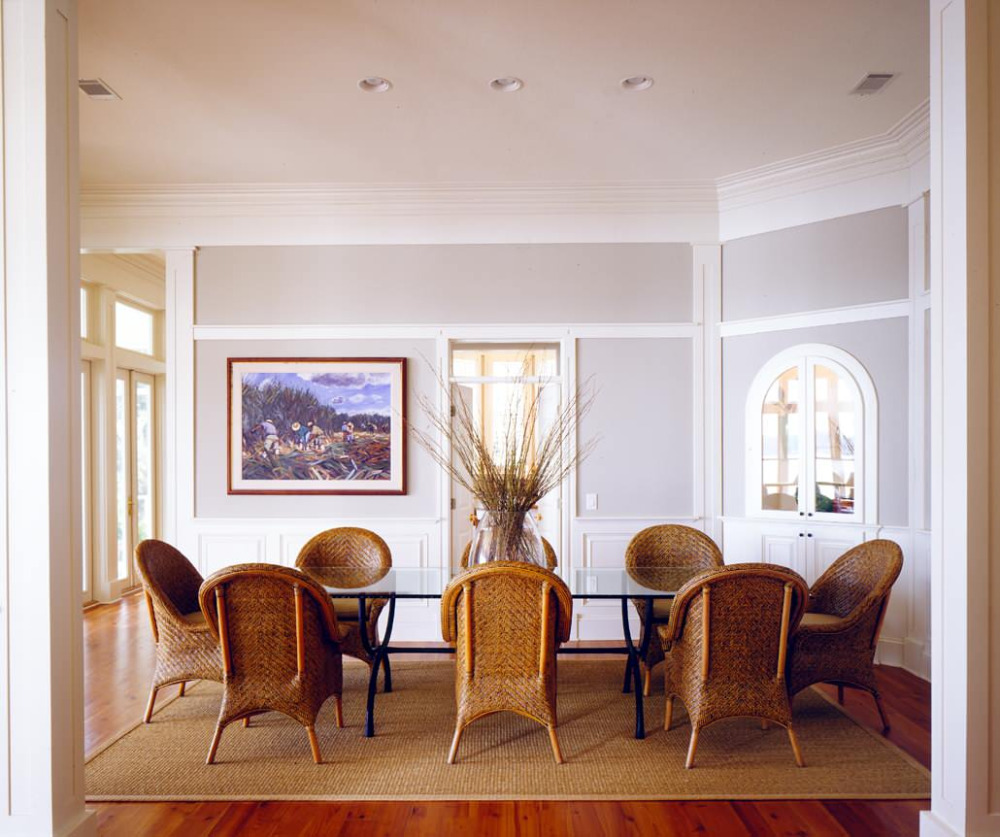 Image source: Frederick + Frederick Architects
The rug itself is only half the protection. The pad underneath determines whether your hardwood flooring stays intact or develops discoloration and scratches over time.
Rubber-backed rugs trap moisture between the backing and the floor. On hardwood, that moisture causes clouding, warping, and finish damage. Avoid any rug with rubber or latex bonded directly to the backing.
Felt pads from RUGPADUSA are the safest choice for hardwood. They allow airflow between the rug and floor, prevent color transfer, and do not leave residue when removed.
Chair leg pads add a second layer of floor scratch prevention. Felt furniture pads on each chair leg reduce point pressure on both the rug and the floor beneath it. Replace them every few months because they compress and lose effectiveness.
Rotate the rug 180 degrees every six months. Sunlight from nearby windows fades both the rug and the exposed hardwood unevenly. Rotating distributes wear and keeps the floor color consistent when you eventually move the rug.
The light in a dining room affects more than mood. Direct sun bleaches certain rug dyes and accelerates fiber breakdown, particularly on jute and sisal.
How Much Does a Dining Table Rug Cost
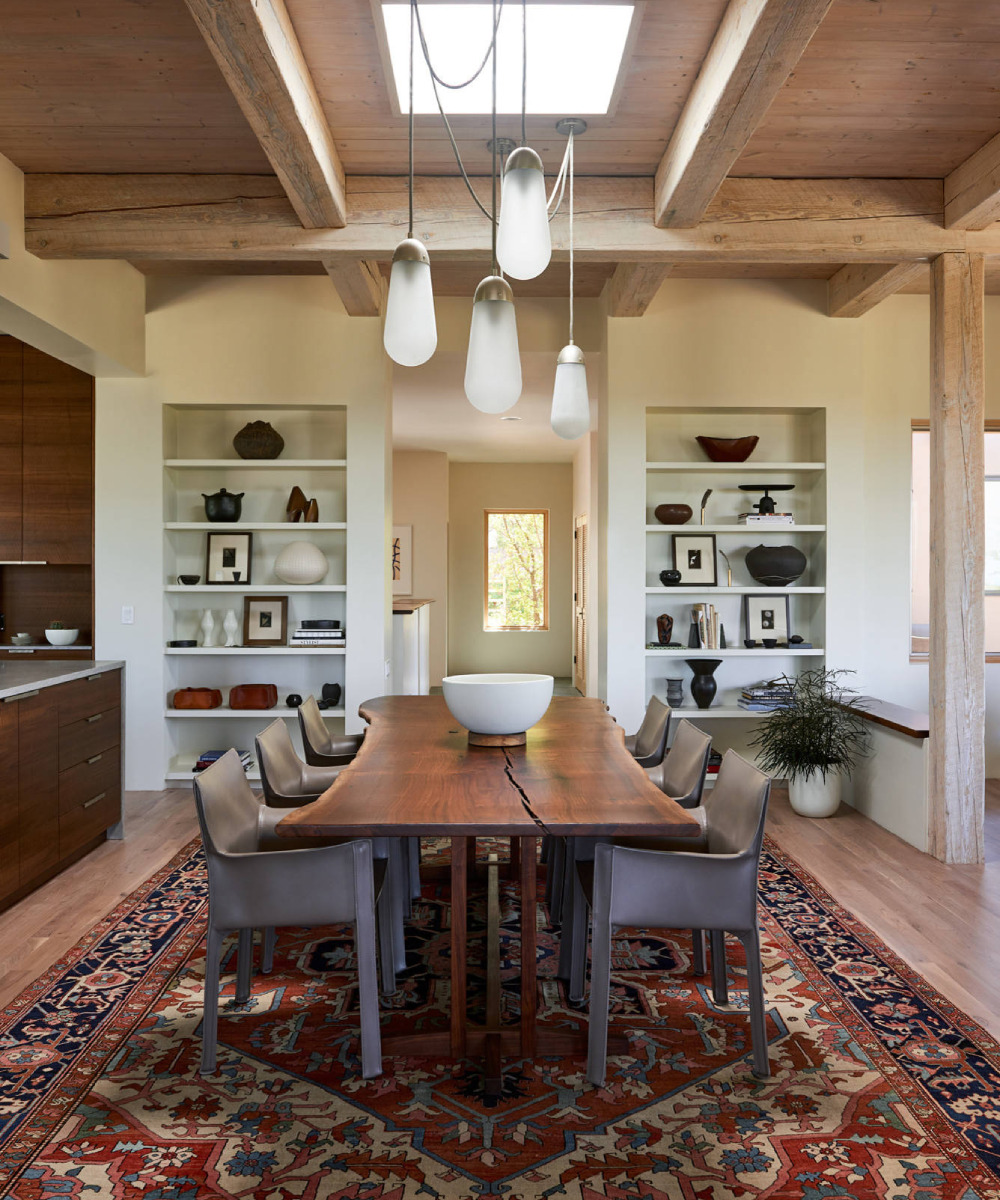 Image source: Susan M Stella Design
Price depends on material, size, and construction method. Here are realistic ranges for an 8×10 rug, the most common dining table size:
- Polypropylene (indoor/outdoor): $100 to $300
- Cotton flat-weave: $150 to $400
- Jute: $200 to $600
- Wool flat-weave (machine-made): $400 to $1,200
- Wool flat-weave (handmade kilim): $500 to $2,000
- Hand-knotted wool: $1,000 and up
A 9×12 or 10×14 adds roughly 30% to 50% on top of those prices.
Retailers like Safavieh and NuLOOM sit at the affordable end with decent quality synthetics. Loloi Rugs and Pottery Barn carry mid-range options. West Elm and Crate and Barrel stock higher-end pieces, while Restoration Hardware targets the luxury market.
Wayfair and IKEA are the go-to for budget picks. Mohawk Home offers solid polypropylene options under $200 that hold up surprisingly well in high-traffic dining rooms.
Do not forget the rug pad cost. A quality felt pad for an 8×10 rug runs $30 to $80. Cheap pads disintegrate within a year and leave residue on floors.
Best Rug Materials for Homes with Kids and Pets
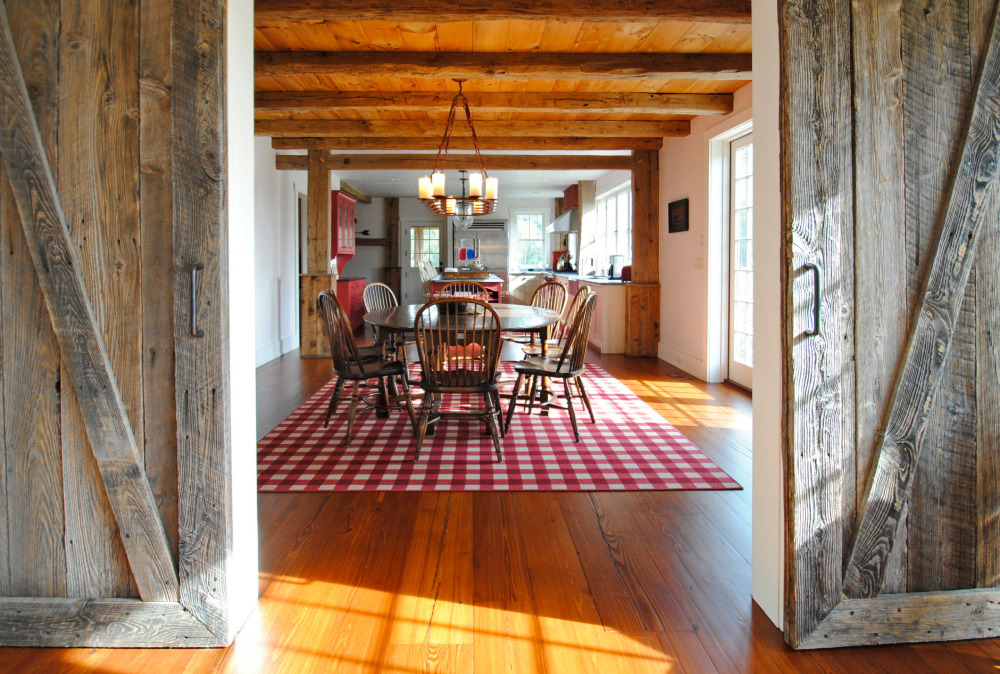 Image source: Wolstenholme Associates, LLC
Indoor/outdoor polypropylene is the top pick for families. It resists stains completely, dries fast after cleaning, handles heavy chair traffic, and costs less than natural fiber alternatives.
Washable rugs have changed the game for dining rooms with small children. Ruggable and FLOR both make modular or peelable options that you can throw in the machine after a messy dinner. FLOR tiles let you replace individual sections instead of cleaning the whole rug.
Wool with a Scotchgard-type stain treatment works too, but only in flat-weave construction. The stain protector gives you a window of about 30 seconds to blot before liquid penetrates the fiber.
What does not work: shag rugs, high-pile synthetics, viscose, and anything with fringe edges near a dining table. Kids pull fringe. Pets chew it. Chair legs catch it. All of it ends badly.
If your dining space connects to a farmhouse-style kitchen or a rustic home, a durable cotton or polypropylene rug in a neutral tone blends right in without worrying about every dropped fork or spilled juice box.
Pet owners should also check for rugs with tight weave construction. Loose weaves trap pet hair deep in the fibers where a standard vacuum cannot reach it.
FAQ on Rug Under The Dining Table
What size rug do I need under a dining table?
The rug should extend 24 to 30 inches beyond the table edge on all sides. A 6-seater table typically needs a 9×12 rug. Measure your table and add 48 to 60 inches to both length and width for the correct rug size.
Should I put a rug under my dining table on hardwood floors?
Yes. A rug with a felt pad protects hardwood flooring from chair leg scratches, absorbs noise, and prevents scuff marks. Avoid rubber-backed rugs directly on hardwood because trapped moisture causes warping and finish damage over time.
What is the best rug material for under a dining table?
Flat-weave polypropylene and flat-weave wool perform best. Polypropylene resists all stains and costs less. Wool offers natural stain resistance from lanolin and ages well. Both handle daily chair movement without bunching or wearing down quickly.
Should all chair legs be on the dining room rug?
Yes. All four legs of every chair should stay on the rug when pulled out for seating. Partial placement causes wobbling, uneven wear on the rug edge, and scratches on exposed flooring beneath the chair legs.
Can I use a jute rug under a dining table?
Jute works in formal dining rooms used infrequently. It absorbs liquids instantly, stains permanently from food and wine, and sheds fibers under chair traffic. For daily use, polypropylene or wool flat-weave rugs are better choices.
How do I keep a rug from sliding under the dining table?
Use a felt-rubber combo rug pad cut one inch smaller than the rug on all sides. Brands like Gorilla Grip and RUGPADUSA make pads specifically for this purpose. Double-sided rug tape works as a secondary option for renters.
How often should I clean a rug under the dining table?
Vacuum twice a week minimum. Spot-clean spills immediately by blotting with cold water. Schedule professional rug cleaning every 12 to 18 months. Washable rugs from Ruggable can go in the machine after heavy spills.
What shape rug goes under a rectangular dining table?
A rectangular rug matches a rectangular table best. The rug shape should mirror the table shape for balanced coverage on all sides. Oval rugs also work but are harder to find in standard dining room rug sizes.
How much does a good dining table rug cost?
An 8×10 polypropylene rug costs $100 to $300. Cotton flat-weave runs $150 to $400. Wool starts around $400 and goes up to $2,000 for handmade kilims. Add $30 to $80 for a quality felt rug pad.
Can I use a washable rug under my dining table?
Yes. Washable rugs from Ruggable and modular tiles from FLOR are practical for dining rooms with kids and pets. The top layer peels off for machine washing. They handle food spills, pet accidents, and daily wear without permanent staining.
Conclusion
Choosing the right rug under the dining table comes down to a few specific decisions. Size, material, shape, and pad type determine whether the rug works for you or against you.
Stick to the 24-inch rule beyond every table edge. Keep pile height at 0.25 inches or lower. Pick polypropylene for busy households, flat-weave wool for rooms that see lighter use.
A felt rug pad from a brand like RUGPADUSA keeps everything in place and protects your floors underneath.
Vacuum often. Blot spills fast. Rotate the rug every six months to distribute wear and prevent uneven floor fading from sunlight.
Get the sizing right first, then worry about color and pattern. A rug that fits properly will always look better than one that just looks pretty on a screen.

- Paint Colors That Go with Oak Floors - August 22, 2026
- Paint Colors That Go with Gray Floors - August 20, 2026
- What Color Bedding Goes with Dark Wood Furniture - August 18, 2026