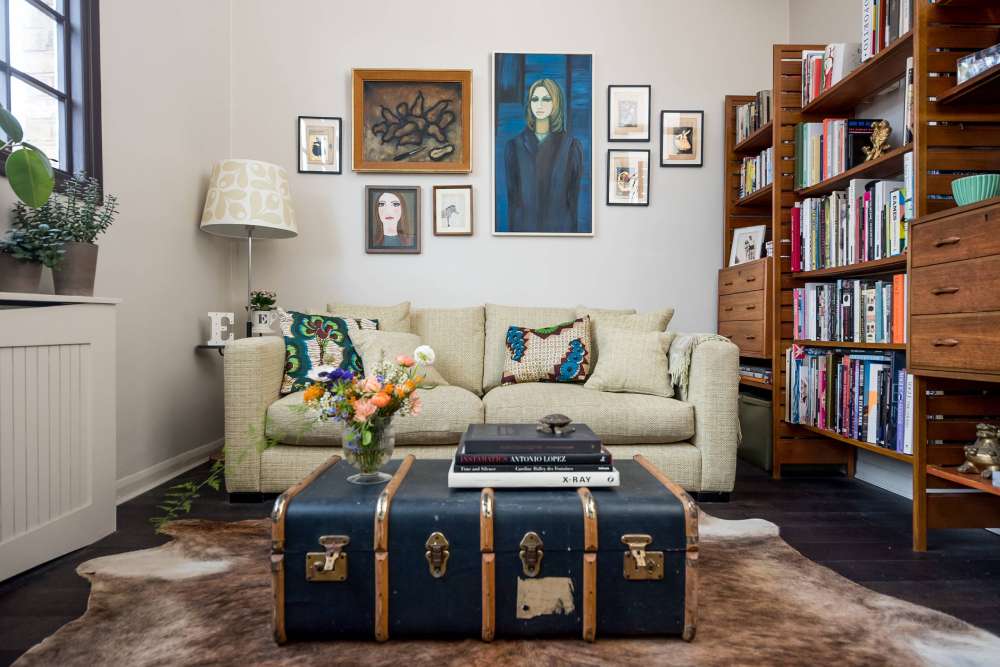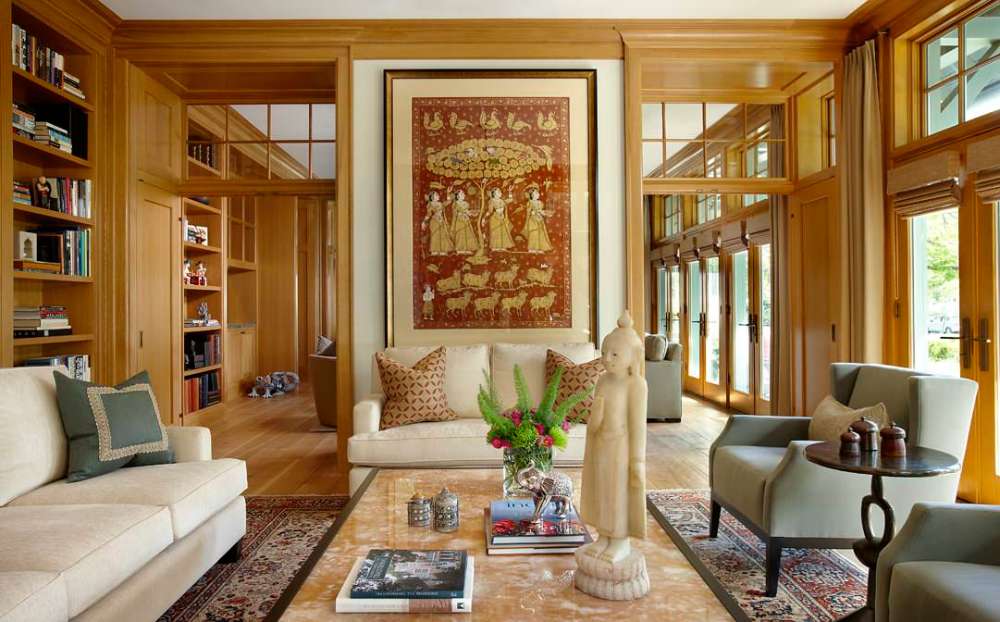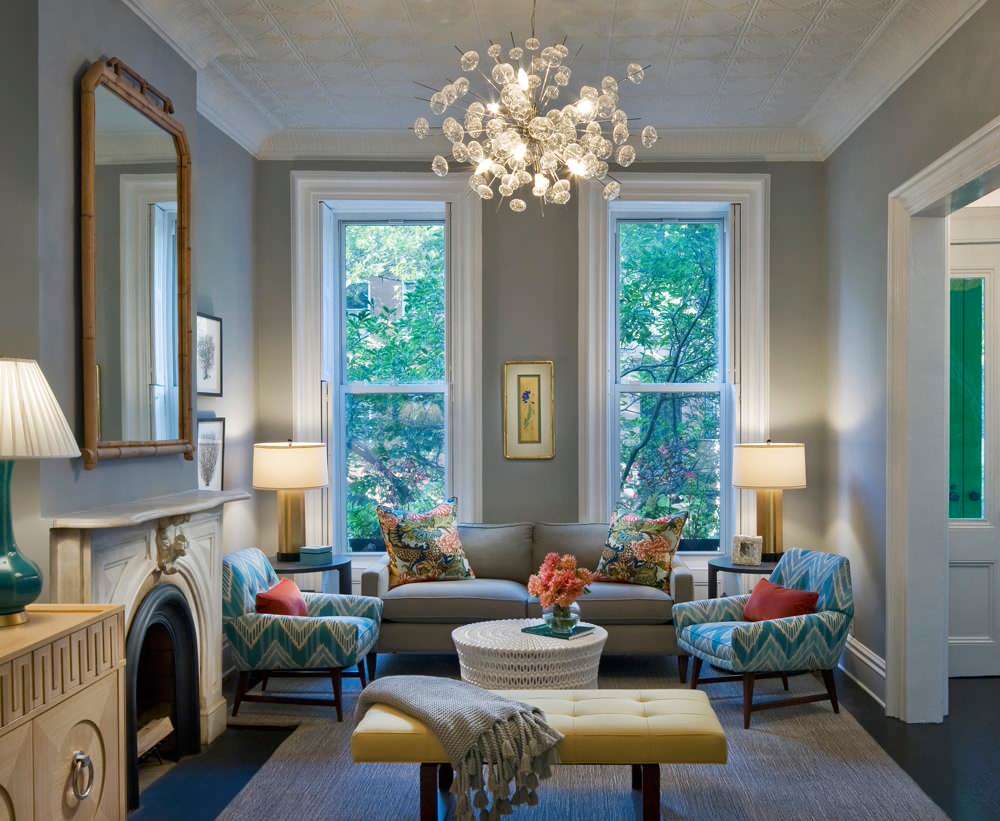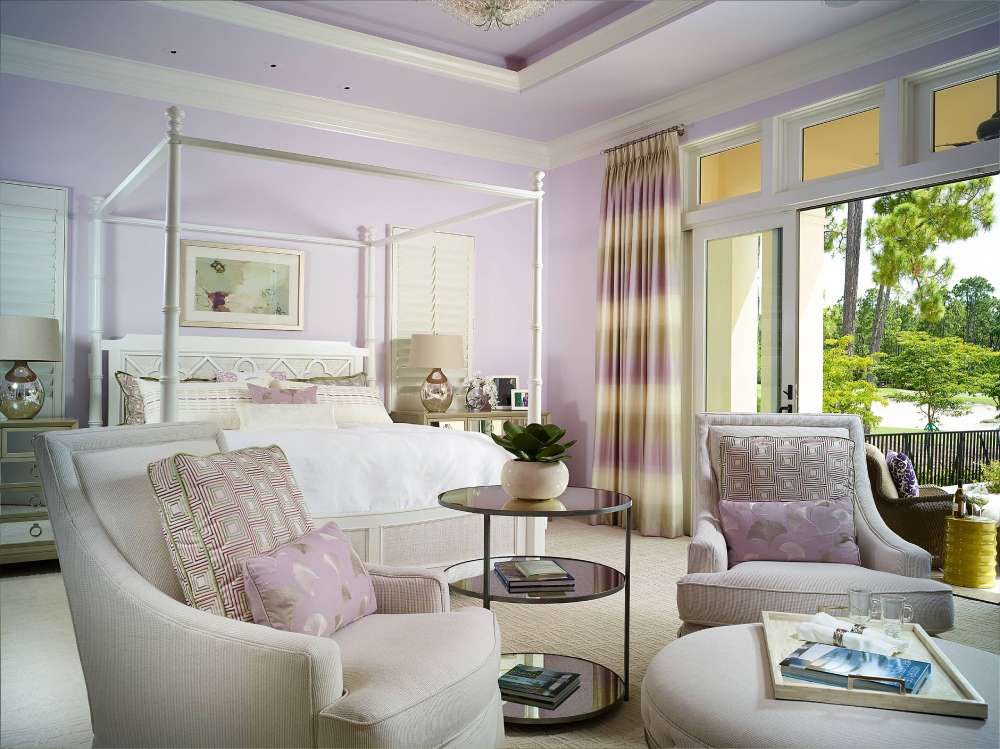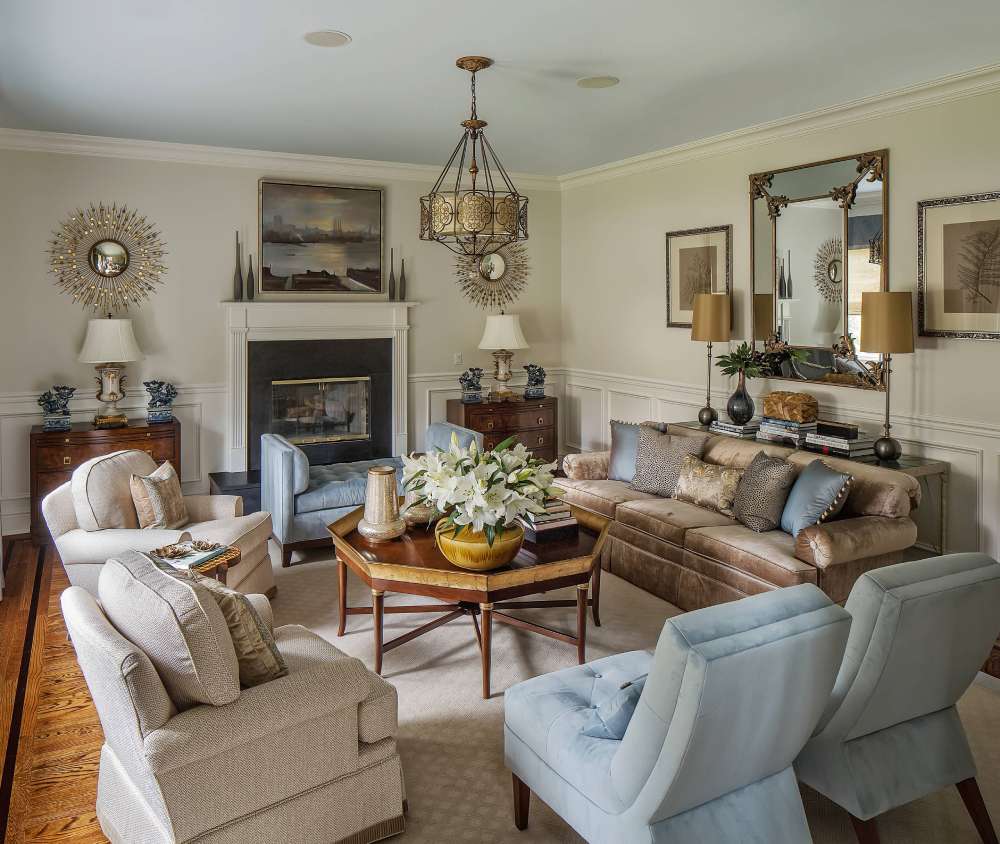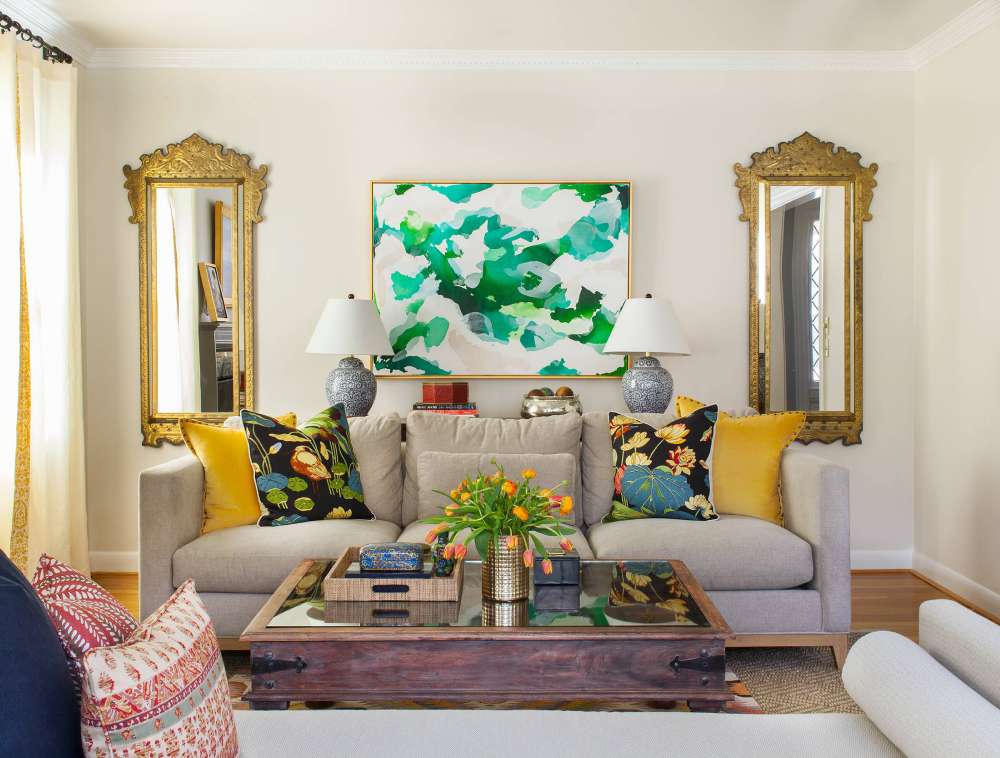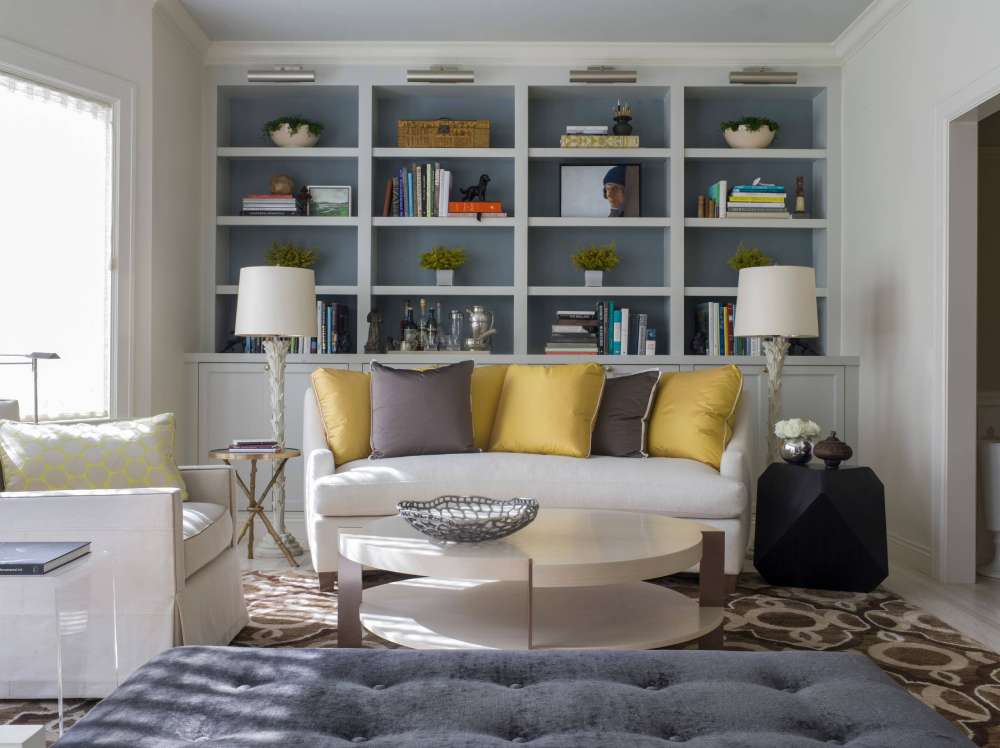
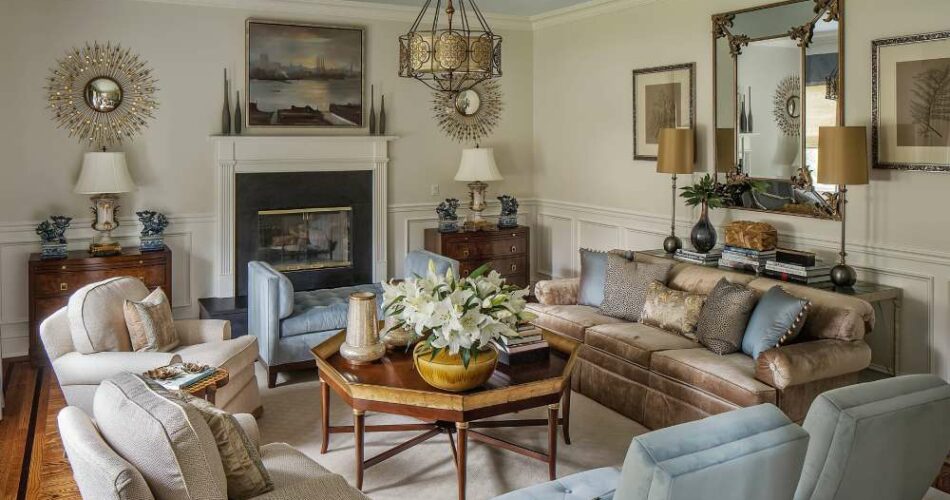
A room full of brand-new furniture can look fine. But it rarely tells a story. Vintage living room decor brings in pieces with history, texture, and a kind of character that mass-produced items just cannot replicate.
The secondhand furniture market is growing fast, and for good reason. People want living rooms that feel collected over time, not assembled in a single afternoon from one catalog.
This guide covers how to identify the right vintage style for your space, which furniture pieces to prioritize, where to source them at fair prices, and how to arrange everything so it looks intentional rather than cluttered. Whether you are drawn to mid-century modern clean lines or 1970s rattan and earth tones, you will find a practical starting point here.
What Is Vintage Living Room Decor?

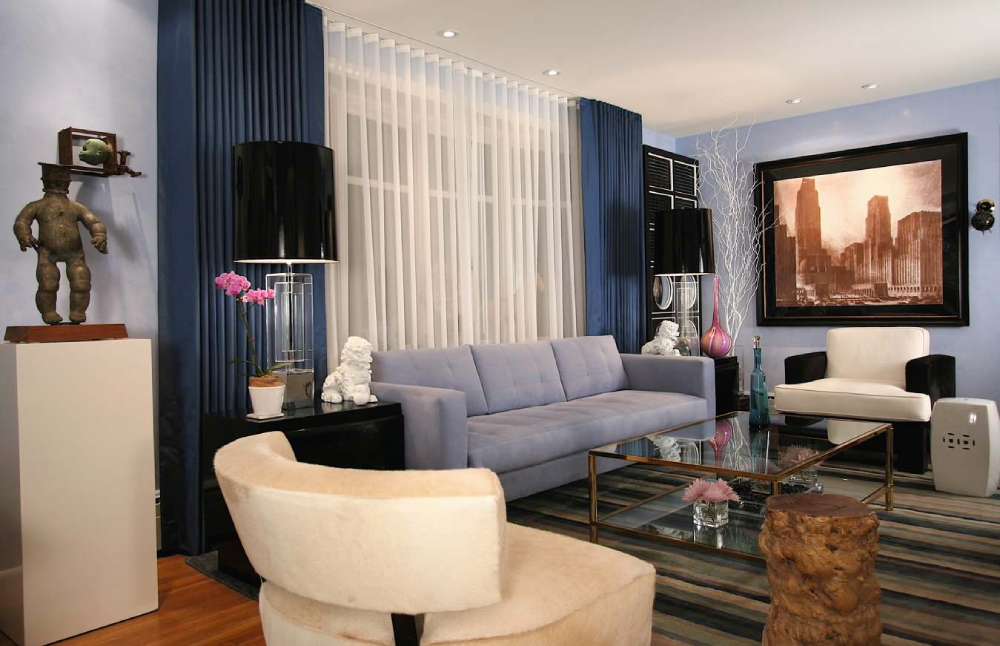
Image source: Dominic Fusco Studios
Vintage living room decor uses furniture, textiles, and accessories from roughly 20 to 100 years ago to create a space with character and history. It is not the same as antique decor, which refers to items over a century old, or retro decor, which uses modern reproductions of older styles.
The distinction matters. A 1960s teak credenza is vintage. A brand-new credenza designed to look like one from the 1960s is retro. A hand-carved Victorian cabinet from 1880 is antique.
Vintage style pulls from specific decades, each with its own look: brass and geometric patterns from the Art Deco era, clean lines and tapered legs from mid-century, macrame and rattan from the 1970s. The goal is to bring aged, well-made pieces into a functional modern room, not to recreate a period film set.
This style has gained serious traction in recent years, and not just because it looks good. The global secondhand furniture market was valued at over $40 billion in 2025, growing at a 7.5% annual rate, according to Research Nester. A big part of that growth comes from people furnishing living rooms with pre-owned items that have more personality than anything from a big-box store.
Sustainability plays a role too. The EPA reports that Americans discard over 12 million tons of furniture and furnishings annually, with roughly 80% of it ending up in landfills. Buying vintage keeps quality pieces in circulation longer and reduces that waste.
And then there’s the cost factor. Platforms like Chairish and AptDeco regularly sell designer-level furniture at 30% to 70% off retail. You can get a solid walnut coffee table from the 1950s for less than a particle-board version from most chain stores. That kind of value is hard to ignore.
Understanding interior design history helps when working with vintage pieces, because knowing what era a piece comes from tells you what it pairs well with and what it clashes against.
Vintage Living Room Styles by Decade
Not all vintage looks the same. The decade a piece comes from determines its materials, shapes, and overall feel. Knowing the differences helps you pick a direction (or mix eras intentionally without the room looking like a yard sale).
Art Deco: 1920s Through 1930s

Image source: B Fein Interiors LLC
Geometric patterns everywhere. Velvet upholstery. Brass and lacquer finishes. This era favored bold symmetry and luxurious materials.
Think mirrored consoles, angular armchairs, and sunburst motifs. Art Deco home decor works best in rooms where you want a sense of glamour without going full maximalist. The color range tends toward deep jewel tones: emerald, sapphire, and colors that go with gold accents.
Mid-Century Modern: 1940s Through 1960s

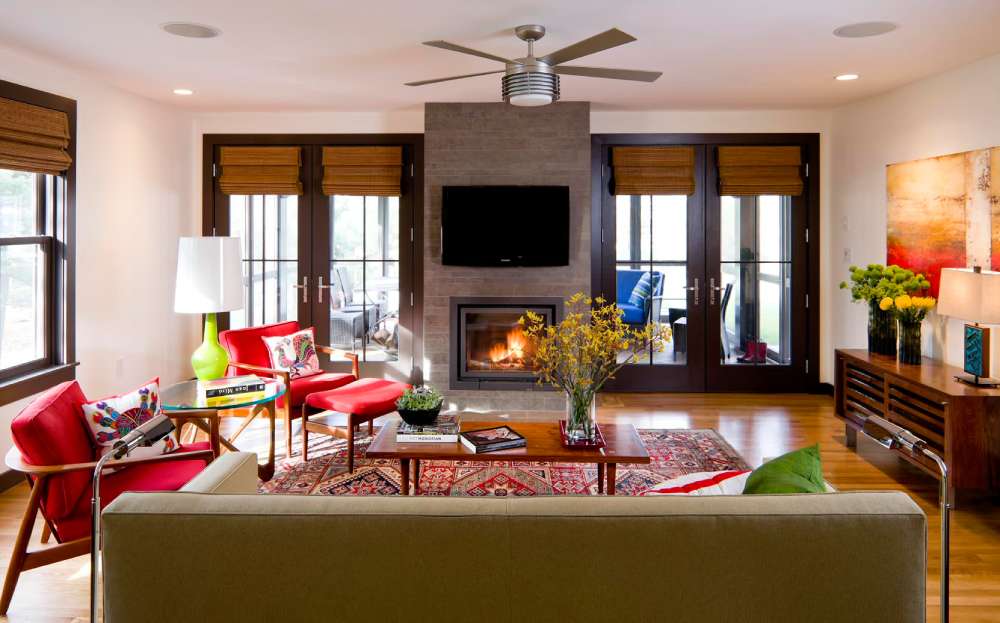
Image source: Shirley Meisels
This is the decade range most people picture when they hear “vintage furniture.” Clean lines, tapered legs, organic curves, and natural materials like teak, walnut, and leather.
Designers like Charles and Ray Eames, Eero Saarinen, and George Nelson defined this period. The Eames Lounge Chair and Saarinen Tulip Table remain some of the most recognized furniture pieces in the world. Herman Miller and Knoll produced many of the original designs that collectors chase today.
Mid-century modern interior design does well in smaller spaces because the furniture tends to have a lighter visual footprint. Low-profile sofas, slim shelving, and furniture raised on legs create the illusion of more floor space. That is partly why, as Apartment Therapy noted, the style has become almost synonymous with “good design” itself.
Bohemian 1970s

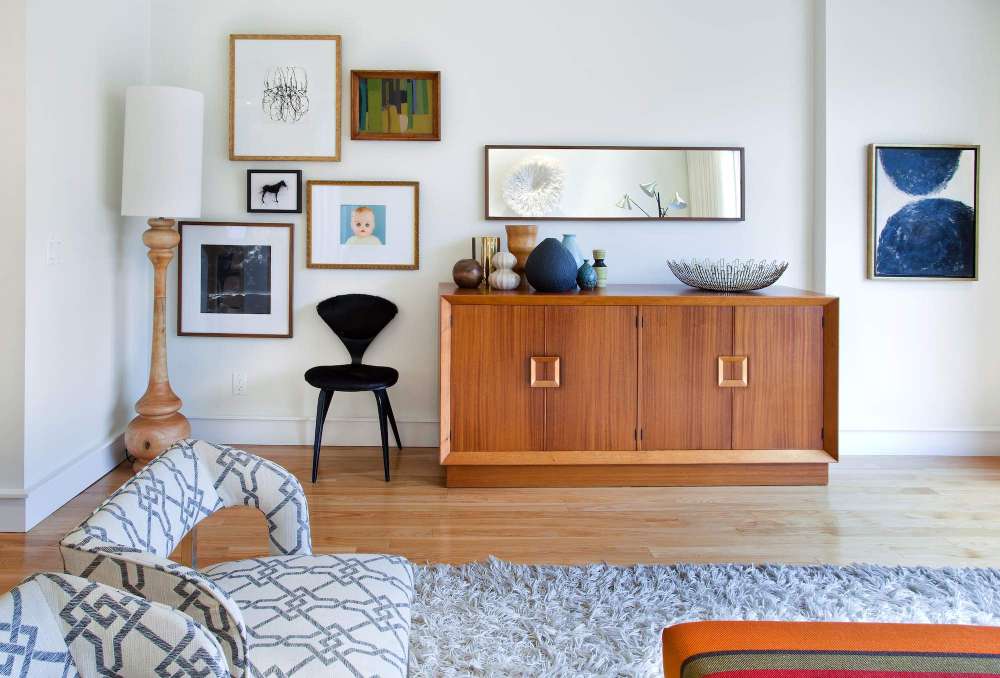
Image source: Emilie Fournet Interiors
Earthy, laid-back, and textured. This era introduced rattan peacock chairs, shag rugs, macrame wall hangings, and an explosion of houseplants as decor elements.
The color palette shifted to warm earth tones: mustard, burnt orange, avocado green, and terracotta. Seating got lower to the ground. Rooms felt casual and communal.
This style connects closely with what we now call Bohemian interior design, and it blends surprisingly well with mid-century pieces when the color palette stays consistent.
Postmodern 1980s and 1990s
Bold color blocking. Chrome and glass. Oversized silhouettes. The Memphis Group, founded by Ettore Sottsass in Milan, pushed furniture design toward playful, almost cartoonish forms that rejected the restraint of earlier decades.
This era is trickier to integrate into a living room without it feeling like a theme park, but individual pieces work well as accent items. A single Memphis-style side table or a chunky glass coffee table from this period can add energy to an otherwise neutral room.
How to Mix Decades Without Clashing
Pick one dominant era and let it set the tone for roughly 60% to 70% of the room. Then pull accent pieces from other decades.
A mid-century sofa works perfectly alongside a 1970s rattan side chair if the upholstery colors share a common thread. The principles behind harmony in interior design apply directly here: repeated colors, materials, or shapes create visual connections between pieces from different periods.
What usually goes wrong is when every piece screams a different decade at the same volume. Keep one era as the “lead voice” and let the others play supporting roles.
Key Furniture Pieces for a Vintage Living Room
You do not need to fill an entire room with old furniture. A few strong vintage pieces mixed with modern basics can carry the whole look. Took me a while to learn that, honestly. I used to overcrowd rooms with too many statement items and everything competed for attention.
Sofas That Set the Tone

Image source: Ike Kligerman Barkley
Chesterfield: Deep button-tufting, rolled arms, leather or velvet. Originally British, but it has become a staple of vintage living rooms worldwide.
Mid-century low-profile: Slim cushions, tapered wooden legs, minimal frame. Brands like West Elm still retained strong resale value for mid-century pieces on platforms like Kaiyo in 2023.
Tuxedo sofa: Arms and back sit at the same height, giving it a boxy, clean shape. Popular from the 1960s onward, typically upholstered in velvet or a solid fabric.
On Chairish, vintage sofas and couches represent one of the fastest-moving categories. Grand View Research projects secondhand sofa sales to grow at a CAGR of 8.7% through 2030. The demand is real.
Seating Beyond the Sofa

Image source: Meghan Shadrick Interiors
Wingback chairs from the early 20th century bring height and drama. Barrel chairs from the 1960s and 70s add a sculptural curve. Cane-back chairs from almost any era inject lightness.
Your mileage may vary, but I find that one or two vintage accent chairs paired with a modern sofa gives a room just enough history without overdoing it. Look at decorative pillow ideas for your sofa to tie the chair and sofa fabrics together visually.
Tables and Storage

Image source: Jamesthomas Interiors
| Piece | Best Era to Source | What to Look For | |—|—|—| | Coffee table | Mid-century (kidney-shaped, teak) | Stable joints, minimal veneer damage | | Side table | Art Deco (marble-top, brass legs) | Solid stone, no chips at edges | | Console | 1970s-80s (glass, chrome, brass) | Clean welds, no cloudiness in glass | | Credenza | Mid-century (walnut, sliding doors) | Working hardware, intact shelving | | Bar cart | Any era (brass or chrome frame) | Smooth-rolling casters, stable tiers |
Credenzas, specifically, have become difficult to find at reasonable prices. A genuine mid-century Herman Miller or Knoll credenza can sell for thousands on 1stDibs. But lesser-known Scandinavian brands from the same period offer similar quality at much lower price points.
What to Buy Vintage Versus New
Solid wood furniture, brass accessories, and glass or marble tables hold up beautifully from the secondhand market. The construction quality from the 1950s through 1970s often exceeds what mass-market retailers produce today.
Upholstered pieces are a different story. Vintage cushions lose their support. Fabric can harbor dust, allergens, and odors that cleaning alone will not fix. If you fall in love with a vintage sofa frame, budget for professional reupholstery. That can run $1,500 to $4,000 depending on the piece, but the finished product will last decades.
Color Palettes That Work in Vintage Living Rooms
Color does most of the heavy lifting. You could have all the right furniture and still end up with a room that feels off because the wall color fights with the finishes on the wood or the patina on the brass.
Understanding color theory in interior design helps here, but you do not need a degree. You need to know which tones belong to which era and how they interact with the materials in the room.
Earthy and Muted Palettes
Mustard, olive, burnt sienna, and cream. This is the go-to range for 1970s vintage rooms and for any living room mixing multiple decades.
These tones pair naturally with walnut and teak furniture. They also soften the visual weight of heavy upholstered pieces like Chesterfields. Colors that go with olive green offer a useful starting point if you want walls that recede and let the furniture take center stage.
Jewel Tones
Emerald, sapphire, burgundy, and deep gold. These belong to Art Deco and 1980s postmodern interiors.
A single emerald velvet accent chair can anchor a room. Pair it with brass table lamps and a Persian rug and you have a living room that feels collected, not decorated. For wall colors, emerald green pairings work particularly well with warm neutrals and dark wood.
Burgundy combinations lean dramatic. They suit rooms with higher ceilings and plenty of natural light, otherwise the space can feel like it is closing in on you.
Pastels for 1950s and Early 1960s Looks
Mint, blush, powder blue. If your vintage direction is more Doris Day than Don Draper, pastels work.
The trick is keeping them from looking juvenile. Pair pastels with darker accent furniture, brass hardware, and at least one grounding element (a dark wood credenza, for instance). Mint green pairings tend to work best when balanced by warm metallics and cream rather than bright white.
Wall Color and Vintage Furniture Finishes
Warm wood tones like walnut and teak clash with cool gray walls. They need warm whites, creams, or muted earth tones as a backdrop.
Brass and gold-finished accessories sit awkwardly against stark white walls. They look better against colors that pair well with beige or soft sage. Benjamin Moore’s “White Dove” and Farrow & Ball’s “Joa’s White” are two commonly specified paint options for rooms heavy on vintage wood furniture.
Sherwin-Williams’ “Accessible Beige” has become a standard recommendation for mid-century modern living rooms, and for good reason. It is warm enough for wood tones without going full yellow.
Textiles and Patterns in Vintage Decor
Fabric choices separate a room that looks “thrifted” from one that looks intentionally styled. The wrong textile makes a vintage room feel dated. The right one makes it feel timeless.
Signature Patterns by Era
Floral chintz: 1940s through 1980s, peaking in the English country house style. Still works, but go small-scale if you want it to read modern.
Toile: French-influenced, narrative scenes on fabric. Best used sparingly (pillow covers, a single armchair) rather than on full sofas. Damask: Formal, textured, pairs well with dark wood and crystal. Paisley: Shows up in every decade from the 1960s forward.
Using pattern in interior design effectively means mixing scales. A large floral rug with small geometric throw pillow combinations prevents patterns from competing with each other.
Rugs That Ground a Vintage Room

Image source: LDa Architecture & Interiors
A vintage Persian or kilim rug is probably the single highest-impact item you can add to a living room. It anchors the furniture, introduces color, and immediately communicates “this room has layers.”
Overdyed rugs (vintage rugs re-dyed in a single bold color) bridge traditional and modern. Shag rugs belong to the 1970s. Braided rugs lean farmhouse and colonial.
If you have a neutral sofa, check out how rugs pair with beige couches for combinations that add character without fighting the seating.
Curtains and Drapes

Image source: Leslie Harris-Keane Interior Design
Pinch-pleat curtains are a classic. Floor-length velvet panels add drama and acoustic dampening. Cafe curtains (covering only the lower half of a window) belong to midcentury kitchens and breakfast nooks but rarely work in a living room.
For guidance on window treatments, the key rule with vintage rooms is to match the formality of the curtain to the formality of the furniture. Velvet curtains look right next to a Chesterfield sofa. Linen panels suit a mid-century space better.
Where to Source Vintage Textiles
Estate sales often have the best textile finds because people sell entire households, including rugs, curtains, and upholstery fabric by the yard. Etsy remains the largest online marketplace for vintage textiles. Flea markets like Brimfield in Massachusetts and the Rose Bowl in Pasadena are legendary for textile hunters.
Facebook Marketplace works for local finds, especially rugs. I have picked up hand-knotted Persian rugs for under $200 on Marketplace that would cost $800 or more on Chairish. The catch is you need to know what you are looking at.
Lighting and Accessories That Complete the Look
Furniture gets most of the attention, but light in interior design and the smaller objects on shelves and tables are what make a vintage living room feel finished. Skip these details and the room looks staged. Get them right and it looks lived-in.
Vintage Lighting by Style

Image source: Blackband Design
Tiffany lamps: Stained glass, warm glow, Arts and Crafts through Art Nouveau era. Originals are expensive. Quality reproductions exist, but the glass quality varies wildly.
Sputnik chandeliers: Mid-century, starburst-shaped, typically brass or chrome. A single Sputnik fixture can define the entire character of a room. They function as both ambient lighting and a visual focal point in the design.
Brass arc lamps: 1960s and 1970s, tall floor lamps with a curved arm that extends over seating. Great for reading corners.
Milk glass pendants: White opaque glass, typically from the 1940s through 1960s. Soft diffused light that works well as pendant lighting over a sitting area.
Wall Decor and Decorative Objects

Image source:Murphy & Co. Design
Gallery walls built with vintage frames (mismatched sizes and finishes) are one of the easiest ways to make a wall look collected over time rather than assembled in one shopping trip.
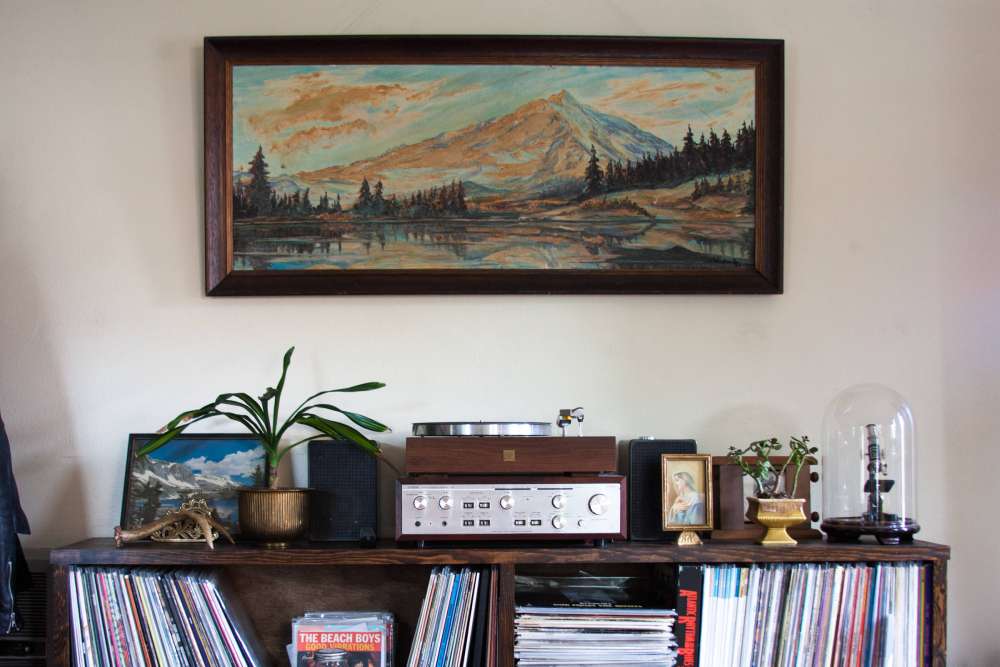
Sunburst mirrors from the 1960s remain popular. Brass candlesticks, ceramic vases, stacked vintage books, and record players all serve as decorative objects that also do something. That dual purpose is what separates vintage accessories from random clutter.
Patina matters. Small scratches, oxidation on brass, and worn leather are features, not flaws. The details in interior design include these imperfections because they signal authenticity.
Vintage vs. Vintage-Inspired Accessories
Genuine vintage accessories make sense when the piece has character that cannot be faked: the weight of a solid brass lamp base, the color variation in hand-blown Murano glass, the wear on a 50-year-old leather-bound book.
Reproductions make sense for items where the original is impractical or overpriced. Nobody needs an original Tiffany lamp at $5,000 when a good reproduction at $150 serves the same visual purpose in a room. Same goes for clock reproductions, bookends, and decorative trays.
eBay’s 2024 Watchlist data showed that users searched for “vintage” items over 1,200 times per minute across the platform. The demand for both genuine vintage and vintage-inspired goods is not slowing down.
Where to Find Vintage Living Room Furniture and Decor
The sourcing part trips people up. You can have perfect taste and still struggle to find actual vintage pieces at reasonable prices. But the options have expanded dramatically over the last five years, and the gap between online convenience and in-person treasure hunting has narrowed.
Chairish has sold over one million items since its 2013 launch, according to the U.S. Chamber of Commerce. The platform’s gross merchandise value hit roughly $200 million in 2024. That gives you a sense of just how much vintage and pre-owned furniture is moving through online channels.
Online Marketplaces
Chairish: Curated, vetted listings with professional photography. Best for mid-to-high-end vintage and designer pieces. Sellers receive 70% or more of the sale price.
1stDibs: The top tier. Luxury vintage and antique furniture from professional dealers. Prices reflect that. A genuine Eames Lounge Chair or Saarinen Tulip Table will cost thousands here, but authenticity is verified.
Etsy: Strongest for smaller vintage items like brass candlesticks, ceramic vases, vintage books, and textiles. Furniture listings vary wildly in quality. Always check seller reviews.
Facebook Marketplace: The best source for local deals. No shipping costs, and sellers are often just trying to clear space fast. Prices are negotiable. The catch is inconsistent quality and no buyer protection on most transactions.
AptDeco: Focused on the New York, New Jersey, and D.C. markets. Handles delivery logistics, which solves the biggest pain point in buying used furniture online.
In-Person Sources
According to Fairfield Market Research, 54% of secondhand furniture buyers cited environmental reasons as a motivator, and many of those buyers prefer seeing items in person before committing.
| Source | Best For | Price Range | |—|—|—| | Estate sales (EstateSales.net) | Complete room sets, rugs, lighting | Low to moderate | | Brimfield Flea Market (MA) | Rare textiles, small accent pieces | Varies widely | | Round Top Antiques Fair (TX) | Southern and mid-century styles | Moderate to high | | Rose Bowl Flea Market (CA) | Eclectic mix, rattan, boho pieces | Low to moderate | | Habitat for Humanity ReStore | Solid wood basics, shelving, tables | Very low |
Consignment shops and local auction houses fill the gap between flea markets and online platforms. LiveAuctioneers and Everything But The House (EBTH) run online auctions for estate items, giving you access to pieces you would otherwise need to attend in person.
What to Inspect Before Buying
Joints: Wiggle the piece. If it rocks or shifts, the joints are loose. Dovetail joints in drawers signal quality construction.
Springs and cushions: Sit on sofas and chairs. If you sink to the frame, the springs or webbing need replacement, which adds cost.
Veneer: Check edges and corners for peeling or bubbling. Repairing damaged veneer is doable but tedious.
Odor: Smell the piece. Smoke, mildew, and pet odors trapped in fabric are extremely difficult to remove fully.
How to Arrange Vintage Furniture in a Modern Living Room
Buying great vintage furniture is one thing. Placing it in a room so that it actually works is another problem entirely. Vintage pieces tend to be larger, heavier, and shaped differently than most modern furniture. That means standard room layouts don’t always apply.
Residential buyers made up 58.72% of secondhand furniture sales in 2024, according to Mordor Intelligence, and most of those purchases went into living rooms. Getting the arrangement right matters because the living room is where these pieces get the most daily use.
Anchoring With One Statement Piece
You don’t need a fully vintage room. One strong piece can set the entire mood.
A Chesterfield sofa in a room full of modern basics instantly reads as curated. A mid-century walnut credenza against a plain white wall becomes the emphasis in the design without any other vintage items around it.
The rest of the room can stay neutral and contemporary. That single vintage piece does the work.
Balancing Weight and Open Space
Vintage furniture tends to sit lower and wider than modern equivalents. A 1970s sectional or a deep Chesterfield will eat floor space fast.
Counter that visual heaviness by keeping one wall mostly open. Or raise the eye line with tall shelving or a floor-length mirror. Understanding balance in interior design is the difference between a room that feels collected and one that feels crowded.
Scale and proportion matter even more with vintage pieces than with modern ones because the sizing was built for different room dimensions and ceiling heights.
Layout Patterns That Work
Conversation grouping: Two chairs facing a sofa with a coffee table between them. Classic, functional, and it works in rooms as small as 12 by 14 feet.
Asymmetrical arrangement: Avoid matching everything. One wingback chair on one side, a floor lamp and small table on the other. This approach connects naturally with asymmetry in interior design, which tends to feel more dynamic than perfectly mirrored setups.
Fireplace focal point: If your living room has a fireplace, build the seating arrangement around it. Check out furniture arrangement around the fireplace for specific configurations that keep traffic flow open while centering the conversation area.
Common Mistakes in Vintage Living Room Decor
Vintage rooms go wrong more often than people admit. The difference between “curated and personal” and “cluttered grandma’s house” comes down to a handful of mistakes that are easy to make and just as easy to avoid.
Over-Theming a Single Decade
Filling every surface with 1960s pieces turns a living room into a set from a period drama. It stops feeling like a home.
The fix is straightforward: mix at least two eras. Keep the dominant style to one period (say, mid-century), but bring in accessories or a single seating piece from another decade to break the uniformity. An eclectic interior design approach creates rooms with more visual interest and a sense that items were collected over time rather than ordered all at once.
Ignoring Comfort for Aesthetics
A beautiful 1940s settee that nobody wants to sit on is just an expensive obstacle in the middle of the room.
Test every seating piece before buying. Seat depth, back angle, and cushion firmness all affect whether people will actually use the furniture. If something looks perfect but feels terrible, skip it. Or budget for new cushion inserts, which typically run $100 to $300 per cushion depending on foam density and size.
Skipping Necessary Restoration
HomeAdvisor data shows the average furniture reupholstery cost sits around $742 per piece, with couches running $600 to $2,400 depending on size and fabric.
That is real money. But a vintage sofa with sagging springs and stained fabric drags down an entire room. Budget for restoration when the frame is worth saving. Skip restoration when the damage is structural (broken joints, cracked frame rails, warped wood).
Buying Items That Don’t Fit the Room
A massive ornate Victorian cabinet in a 10-by-12 apartment living room? That is not going to work regardless of how beautiful the piece is.
Always measure first. Measure the piece, measure the room, and measure the doorways and hallways it needs to pass through. Understanding space in interior design will save you from buying something spectacular that physically cannot function in your living room. If you are working with a compact room, look at small apartment decor strategies that prioritize pieces with a lighter visual footprint.
Vintage Living Room Decor on a Budget
You do not need a large budget to pull off a vintage living room. Some of the best-looking vintage rooms cost less than a single new sectional from a mainstream retailer. It just requires patience and knowing where to look.
The secondhand furniture market is projected to reach $87.6 billion by 2034, doubling from 2024 levels, according to Market.US as reported by the U.S. Chamber of Commerce. That growth means more inventory entering the resale pipeline every year, which is good news for budget buyers.
Best Budget Sources
Goodwill and Habitat for Humanity ReStore stores are the starting point. Pricing is unpredictable, but solid wood dressers, side tables, and shelving units show up regularly for under $50.
Garage sales and estate sales beat thrift stores for larger furniture. Most estate sale companies discount everything 50% on the final day.
Facebook Marketplace remains the single best platform for local vintage finds at low prices. Negotiate. Sellers expect it. A listing at $200 will often close at $120 to $150 if you can pick the item up that same day.
DIY Refinishing: What Is Realistic
| Task | Beginner Friendly? | Typical Cost | |—|—|—| | Sanding and restaining wood | Yes | $30 to $60 in supplies | | Replacing drawer pulls/hardware | Yes | $5 to $15 per pull | | Painting a wood piece | Yes, with prep | $40 to $80 in supplies | | Reupholstering a dining chair seat | Yes | $15 to $30 per chair | | Reupholstering a full sofa | No, hire a professional | $600 to $2,400+ | | Repairing loose joints with wood glue | Yes | Under $15 |
Sanding and restaining a mid-century credenza is a weekend project that can turn a $75 thrift store find into a piece that looks like it came from a high-end vintage shop. The tools are basic: sandpaper, wood stain, polyurethane, and a few brushes.
Replacing dated hardware is one of the cheapest and most effective upgrades. Brass pulls from the 1960s and 1970s are available on Etsy for a few dollars each and can completely change the character of a dresser or credenza.
Mixing Vintage and Reproductions
The smartest approach on a budget: invest in one or two genuine vintage anchor pieces and fill in around them with affordable reproductions and modern basics.
A real mid-century teak coffee table paired with a new sofa from a mid-range retailer creates the same effect as a fully vintage room at a fraction of the cost. The vintage piece brings the character. The modern pieces provide comfort and clean condition.
IKEA’s Buy Back & Resell program has processed nearly 14,700 items in 2025 (up from 8,000 in 2023), according to KHOU. Their As-Is sections at participating stores sell pre-assembled furniture at steep discounts. Not vintage, but useful for budget-friendly basics that fill gaps around your genuine vintage pieces.
Spotting Undervalued Pieces
Estate sale pricing is inconsistent. Items from lesser-known Scandinavian makers from the 1950s and 1960s frequently sell for a fraction of what comparable Danish or American mid-century brands fetch on Chairish or 1stDibs.
Look for solid construction (dovetail joints, hardwood frames) rather than brand names. A well-made walnut side table from an unknown manufacturer will outlast and outperform a trendy reproduction from a mass-market retailer every time.
The vintage home decor approach works best when you focus on build quality over brand recognition, especially if you are working within a budget for your living room.
FAQ on Vintage Living Room Decor
What counts as vintage furniture?
Vintage refers to items roughly 20 to 100 years old. Anything older is considered antique. Reproductions of older styles are called retro. The distinction affects pricing, authenticity, and how a piece fits within your living room.
What is the most popular vintage style for living rooms?
Mid-century modern dominates. Clean lines, tapered legs, and natural materials like teak and walnut from the 1940s through 1960s remain the most requested vintage look. Designers like Charles Eames and Eero Saarinen defined the era.
How do I mix vintage and modern furniture?
Pick one or two vintage anchor pieces and surround them with modern basics. Keep a consistent color palette across both styles. Shared tones and materials create visual connections between pieces from different decades.
Where is the best place to buy vintage living room furniture?
Chairish and 1stDibs for curated online selections. Facebook Marketplace and estate sales for local bargains. Flea markets like Brimfield and Round Top for one-of-a-kind finds. Each channel serves a different budget and style range.
Is vintage furniture more sustainable than buying new?
Yes. The EPA reports Americans discard over 12 million tons of furniture yearly. Buying secondhand keeps quality pieces in use longer and avoids the environmental cost of manufacturing new items from raw materials.
What colors work best in a vintage living room?
Earthy tones like mustard, olive, and burnt sienna suit most vintage styles. Jewel tones work for Art Deco rooms. Pastels fit 1950s aesthetics. Match wall color to your furniture’s wood finish for a cohesive look.
How much does it cost to reupholster vintage furniture?
Expect to pay $370 to $1,146 per piece on average. Couches run $600 to $2,400 depending on size and fabric. Dining chairs are cheaper at $100 to $250 each. Budget for this when buying vintage seating.
What should I check before buying vintage furniture?
Inspect joints for stability, check veneer for peeling, test cushion support by sitting on it, and smell for trapped odors. Dovetail joints in drawers signal quality construction. Structural damage is usually not worth repairing.
Can I decorate a vintage living room on a budget?
Absolutely. Goodwill, Habitat for Humanity ReStore, and garage sales offer solid wood furniture under $50. Refinish a thrift store credenza yourself for under $60 in supplies. One genuine vintage piece mixed with affordable items carries the whole room.
What vintage accessories make the biggest impact?
A Persian or kilim rug transforms a living room instantly. After that, brass table lamps, vintage frames for a gallery wall, and ceramic vases add layers without major cost. Patina and imperfection are features, not flaws.
Conclusion
Vintage living room decor is not about recreating the past. It is about pulling the best pieces from it and making them work in a space you actually live in every day.
Start with one strong piece. A Chesterfield sofa, a walnut credenza, a Persian rug. Build around it with intention, not impulse.
Pay attention to color palettes, fabric choices, and how each item relates to the others in scale and finish. Source smart. Estate sales, Chairish, and Facebook Marketplace all serve different budgets and different needs.
Skip the pieces that look great but feel terrible. Prioritize build quality over brand names. And do not be afraid of patina, worn edges, or mismatched frames. Those are the things that make a vintage room feel real.
The best vintage living rooms look like they happened gradually. Yours can too.
- What Color Rug Goes with Dark Wood Floors - June 13, 2026
- Exterior Paint Colors for Brick Homes - June 9, 2026
- What Color Bedding Goes with Blue Walls - June 4, 2026