Matching furniture sets are boring. There, someone had to say it. Eclectic living room decor takes the opposite approach, mixing periods, origins, textures, and styles into a room that actually feels like a real person lives there.
But “eclectic” doesn’t mean “random.” The best mixed-style rooms follow specific rules about color, scale, and pattern that keep everything from falling apart visually. Get those wrong, and you end up with chaos instead of character.
This guide covers how to build a cohesive eclectic living room from the ground up. Color palettes that hold mismatched furniture together. Where to source vintage pieces worth buying. How to layer patterns without the room feeling noisy. And the common mistakes that turn curated into cluttered.
What Is Eclectic Living Room Decor
Eclectic living room decor is the intentional mixing of furniture, textiles, patterns, and objects from different periods, origins, and styles within a single room. The key word there is intentional.
It is not the same as throwing random stuff together and hoping it looks good. A lot of people confuse eclectic with cluttered. They’re not the same thing. Not even close.
What holds an eclectic room together is usually one unifying thread. Sometimes that’s a shared color palette. Sometimes it’s a repeated material, like brass showing up in the lamp, the picture frame, and the coffee table legs. Other times it’s just scale consistency, where every piece feels proportional to the room even if none of them “match.”
The 1stDibs 2025 Designer Trends Survey found that 33% of designers named eclecticism as their guiding style for 2025, tying with maximalism for the top spot. Both bumped minimalism, mid-century modernism, and Scandinavian modernism from the positions they’d held in recent years.
But eclectic is not the same as maximalist. Bohemian interior design leans heavily into textiles and global patterns. Maximalism goes loud on purpose, filling every surface. Eclectic borrows from many styles but keeps a tighter editorial hand on what stays and what goes.
The collected look, that vibe where a room feels like it was assembled over years rather than bought from a catalog, that’s what eclectic actually is. A Victorian settee next to a Parsons table. A Persian rug under a Danish credenza. It works because the pieces share something, even if that something is hard to name right away.
Eclectic vs. Other Mixed Styles
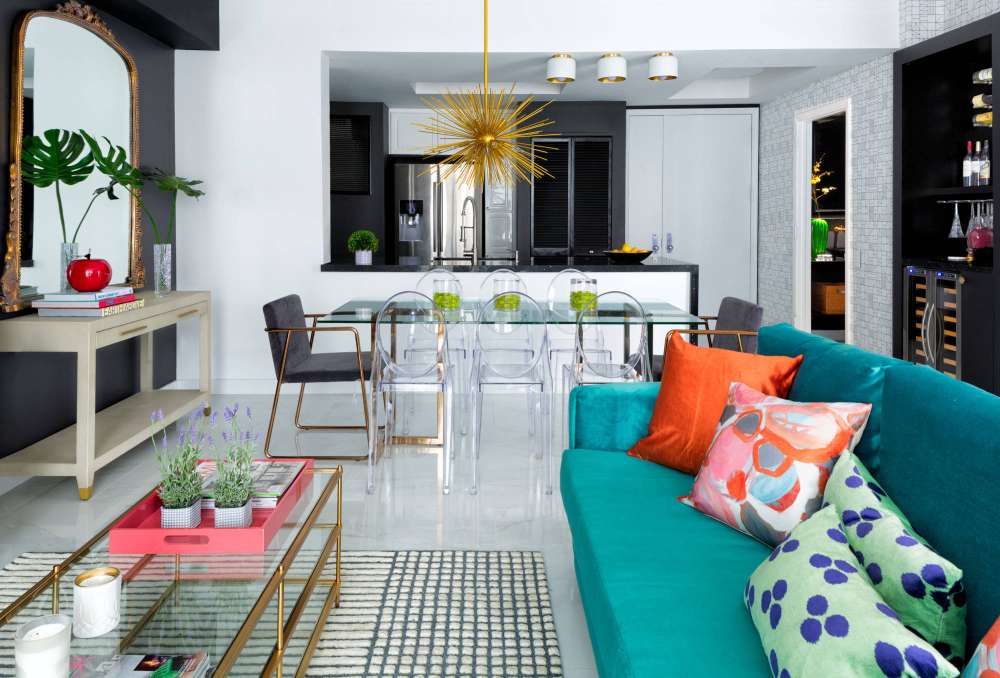
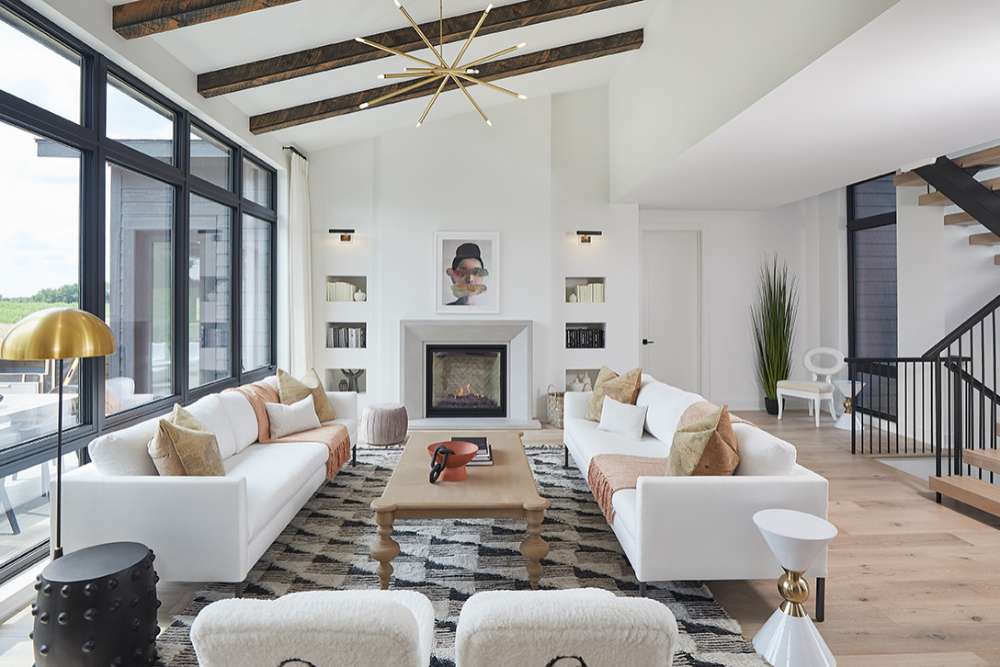
Image source: Interiors by Maite Granda
| Style | Core Idea | Key Difference from Eclectic |
|---|---|---|
| Bohemian | Global textiles, layered patterns | Leans heavily into one aesthetic direction |
| Maximalist | More is more, bold on every surface | Embraces visual overload deliberately |
| Transitional | Traditional meets contemporary | Only blends two specific style families |
| Eclectic | Curated mix across any era or origin | No style limit, unified by a connecting element |
The global home decor market was valued at roughly $960 billion in 2024, according to Grand View Research, with a growing share driven by consumers looking for personal, non-cookie-cutter spaces. That’s the demand eclectic satisfies. People are tired of rooms that look like they were pulled from the same showroom.
How Color Palette Holds an Eclectic Room Together
Color is the single most important structural decision in an eclectic living room. Get the palette wrong, and even the most beautiful vintage finds will look like a pile of unrelated objects.
The approach that works best is a dominant neutral base with two or three accent colors repeated across mixed-style pieces. You’re not matching furniture. You’re matching undertones.
Choosing Your Anchor Colors
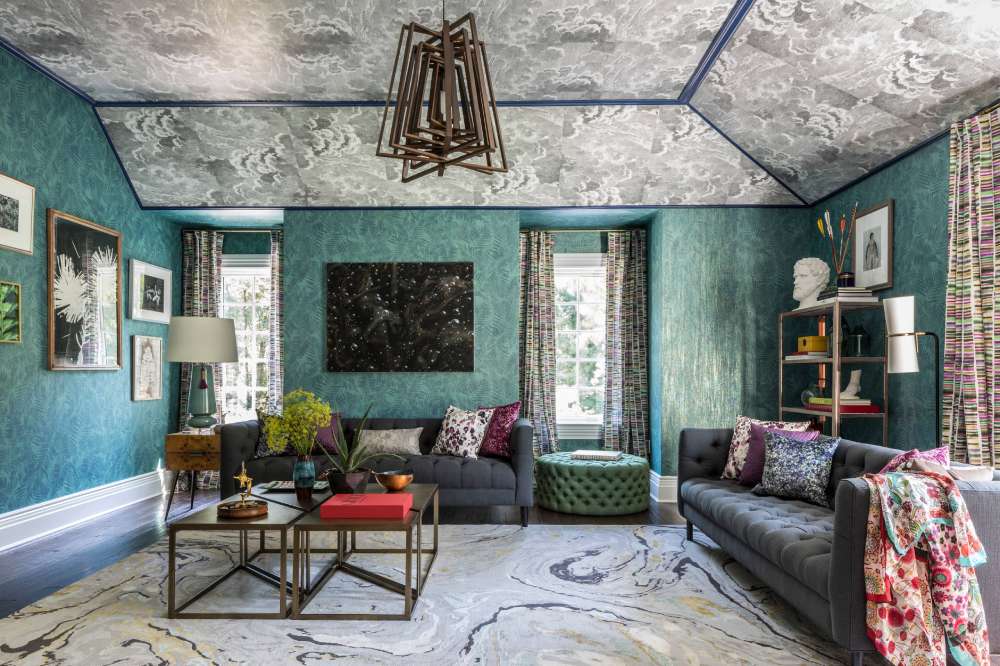
Warm vs. cool undertones matter more than exact shades. A warm honey-toned oak side table and a warm caramel leather sofa already feel connected, even if one is mid-century and the other is traditional. A cool-toned gray velvet chair next to cool slate blue curtains does the same thing from the opposite end of the spectrum.
Pick one direction. Warm or cool. Then build from there.
The Pantone Color Institute named Mocha Mousse as the 2025 Color of the Year, signaling a broader move toward warm, brown-based tones. That gives you a natural eclectic base. Layer navy blue accents over a mocha foundation and suddenly your Art Deco side table speaks the same language as your farmhouse sofa.
Palette Combinations That Work
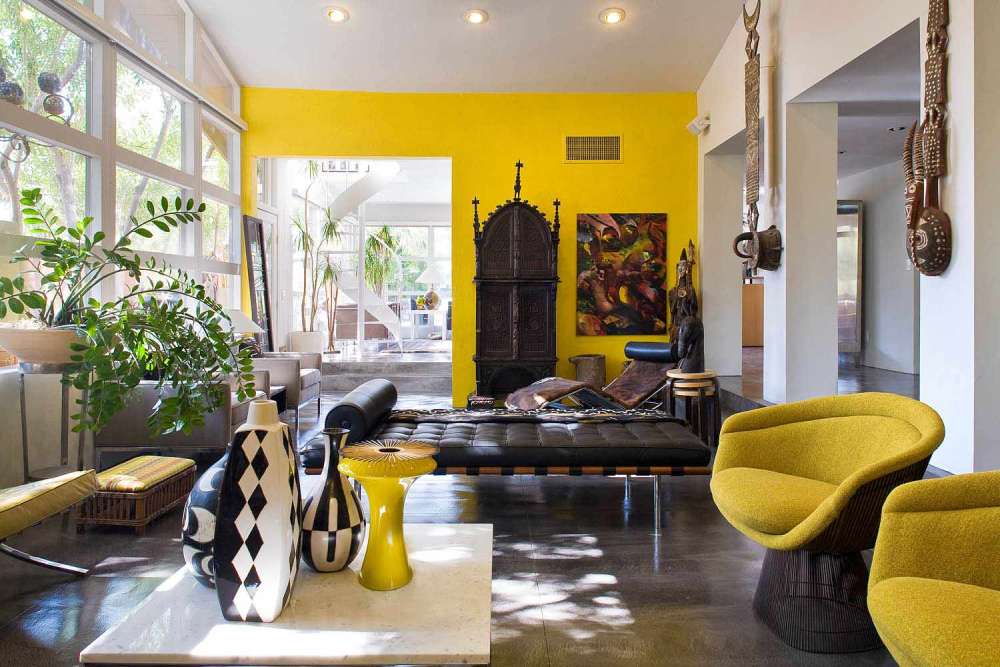
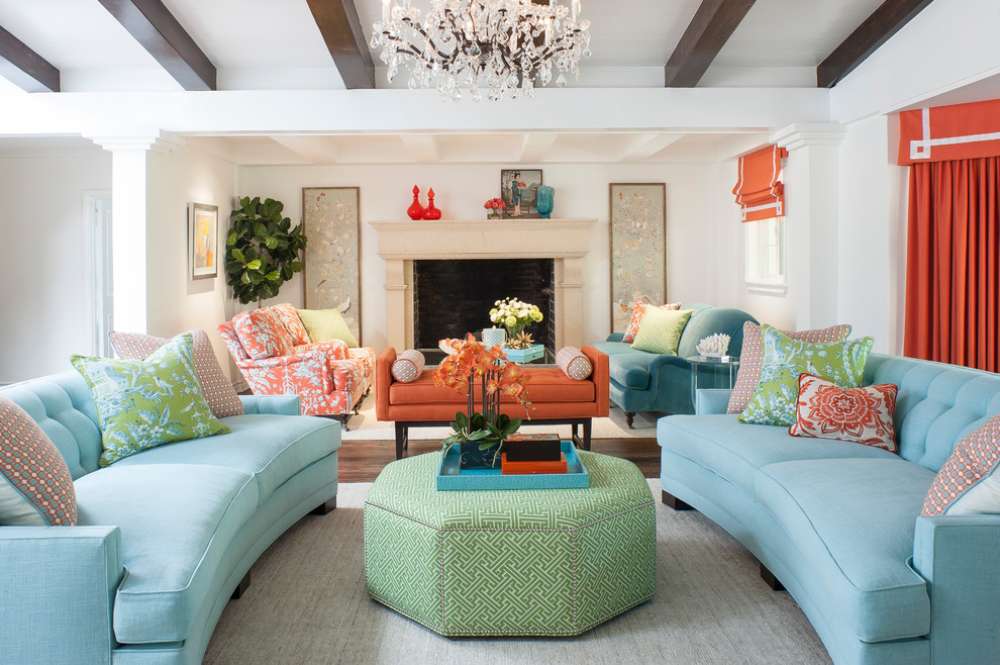
Image source: KuDa Photography
Mustard + navy + ivory: Bridges mid-century modern pieces with traditional upholstery. The mustard pulls warmth from wood tones while navy grounds heavier furniture.
Terracotta + sage + cream: Perfect for pairing Scandinavian clean lines with Moroccan decor elements. Sage connects the two through a natural, earthy bridge. If you need more direction on pairing colors that go with sage green, there are plenty of proven combinations.
Burgundy + gold + charcoal: A richer option if you’re leaning into Hollywood Regency pieces alongside something more industrial. The gold accents tie the glam to the grit.
When to Break the Palette
Every eclectic room benefits from one rogue piece. A bright red chair in an otherwise neutral room. A turquoise vase on a walnut shelf. That one object that doesn’t follow the rules becomes the focal point.
The trick is to limit it to one, maybe two items. Any more, and the room starts losing the thread.
Understanding color theory helps here. Complementary colors (sitting opposite each other on the wheel) create the strongest contrast, while analogous colors (sitting next to each other) create the smoothest blends. Eclectic rooms typically use analogous palettes with one complementary surprise.
Mixing Furniture Styles Without the Room Falling Apart
This is where most eclectic attempts go wrong. People think the goal is to get one piece from every decade and line them up like a timeline exhibit. That’s not it.
The real test of whether furniture works together isn’t the era it came from. It’s scale and proportion.
A massive Victorian armoire next to a delicate mid-century end table will look bizarre regardless of how well the colors match. They need to feel like they belong in the same physical space. Same visual weight zone, even if their DNA is completely different.
Anchor Pieces vs. Accent Pieces
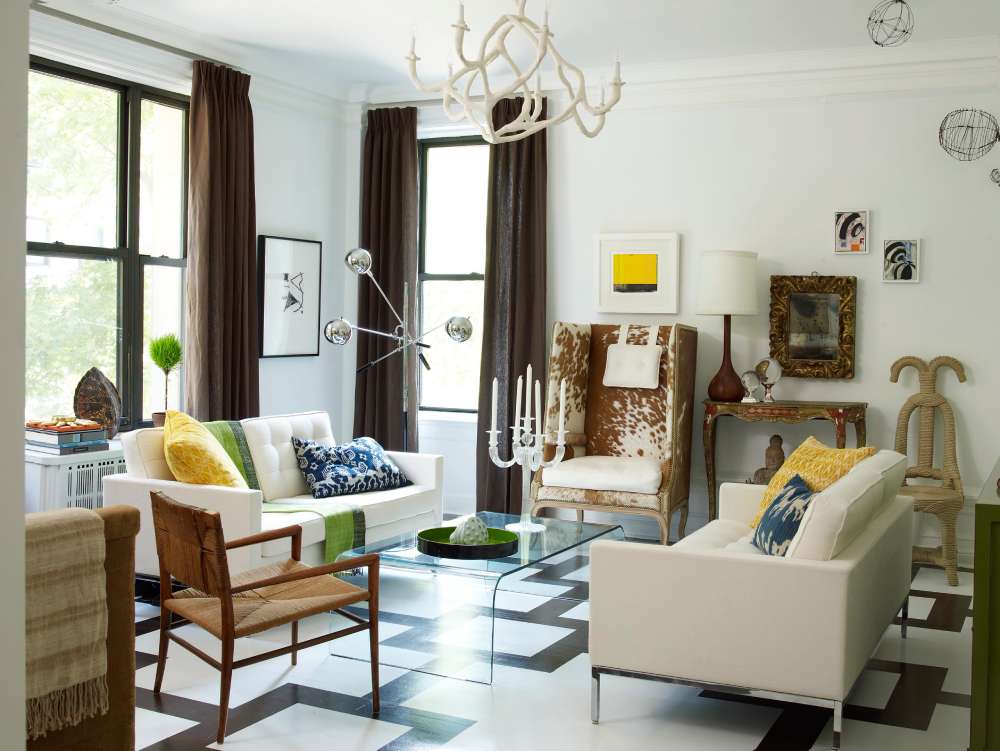
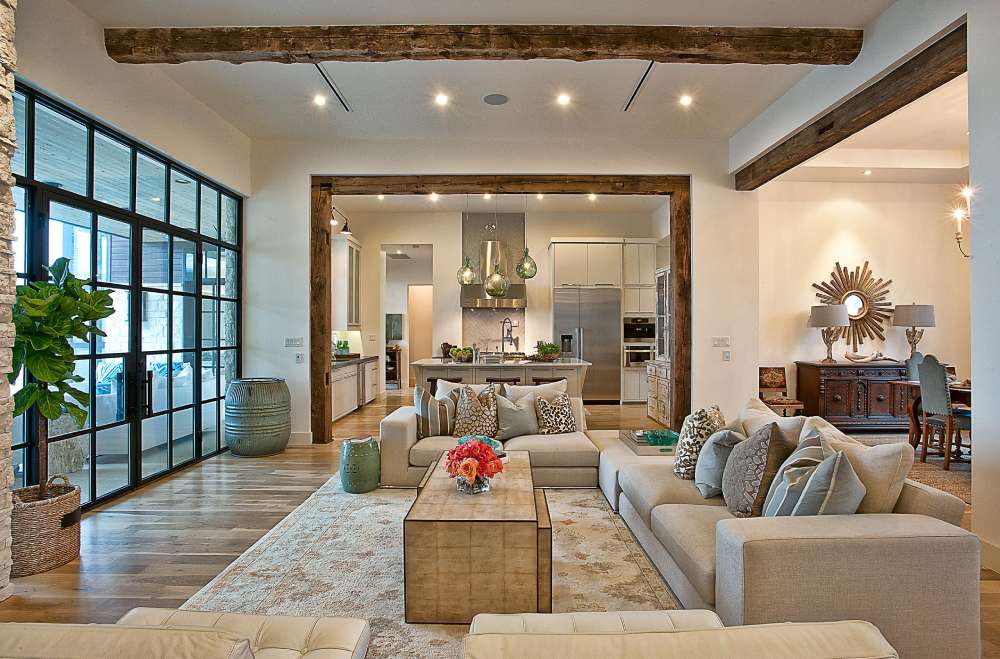
Image source: Andrew Flesher Interiors
Every eclectic room needs hierarchy. One or two items set the room’s visual weight, and everything else plays a supporting role.
The anchor is usually the sofa or the largest storage piece. It’s what the eye hits first. In most living rooms, a neutral-toned sofa with a clean silhouette works as the best anchor because it doesn’t compete with anything else you bring in.
The accents are where the fun happens. A pair of mismatched eclectic accent chairs. A vintage brass floor lamp. A coffee table you found at an estate sale. These pieces bring personality without destabilizing the whole room.
Think of it this way. The anchor is the quiet person at the party who holds the group together. The accents are the loud friends who make it interesting.
Silhouette Pairing Guide
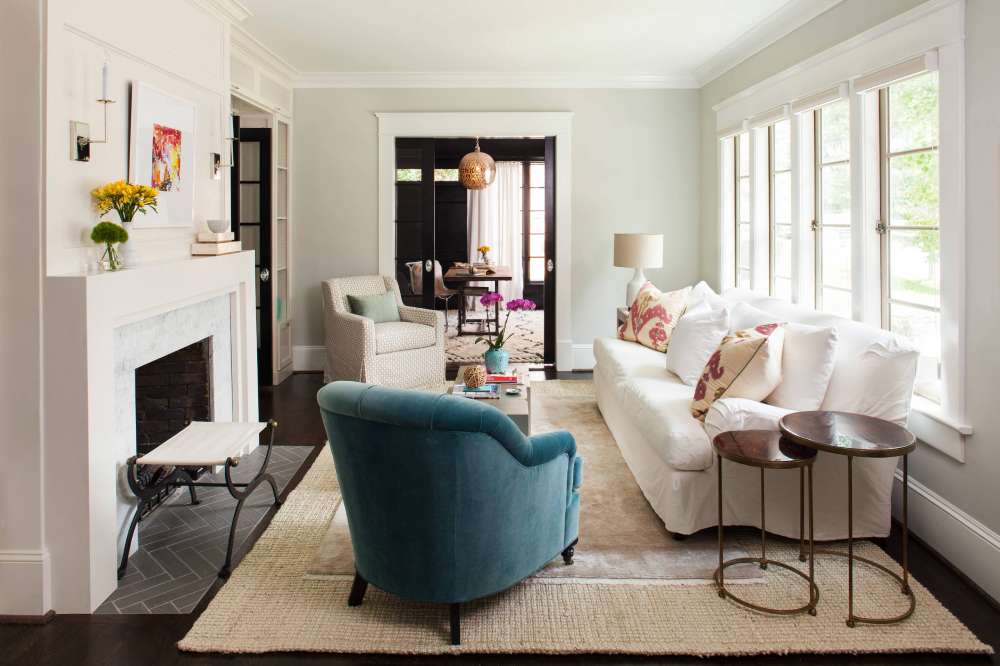
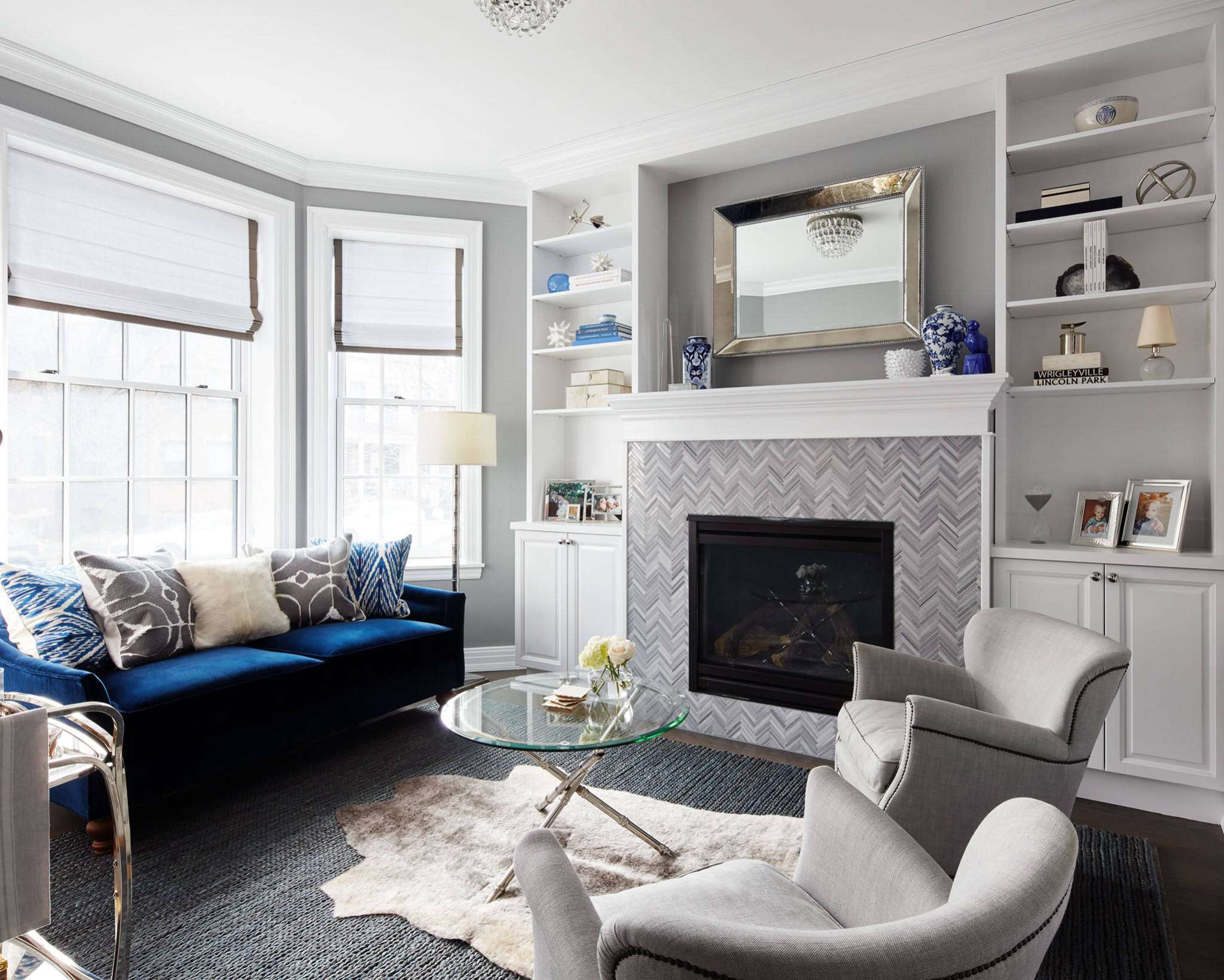 Image source: Third Coast Interiors
Curved and angular shapes work better together than two of the same kind. A round Art Deco armchair next to a straight-lined Shaker side table creates a visual conversation. Two curvy pieces side by side can start to feel like a funhouse.
| Pairing | Why It Works |
|---|---|
| Danish teak credenza + upholstered slipper chair | Warm wood meets soft fabric, contrasting textures with shared warmth |
| Victorian settee + Parsons coffee table | Ornate meets minimal, each highlights what the other lacks |
| Industrial metal shelf + velvet mid-century sofa | Hard edge meets plush comfort, bound by shared low-profile height |
Matching wood tones matters less than matching wood warmth. A walnut side table and a cherry bookshelf can coexist just fine, as long as both sit on the warm side of the spectrum. Mix a cool ash piece with a warm mahogany piece, though, and it starts looking like a mistake.
The second-hand furniture market hit $47 billion in 2025 and is growing at over 5% annually, according to Mordor Intelligence. A big chunk of that growth comes from people building eclectic interiors with pre-owned pieces rather than buying matched sets.
Layering Patterns and Textiles in an Eclectic Living Room
Patterns are where eclectic rooms either sing or collapse into noise. The line between “curated and bold” and “my eyes don’t know where to look” is thinner than you’d think.
Most designers who work with mixed-style rooms rely on the large-medium-small scale rule. You pick one large-scale pattern (the rug, usually). One medium-scale pattern (curtains or a large throw). And one or two small-scale patterns (pillows, a blanket). The sizes create a visual hierarchy that your brain can actually process.
Pattern Mixing That Works
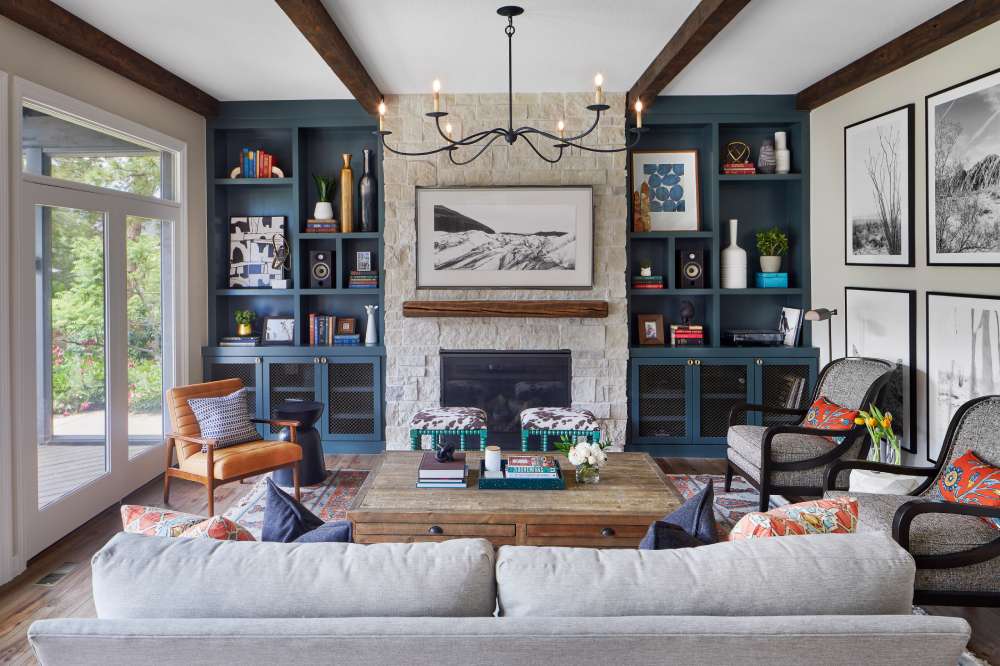
Geometric + organic is the safest combination. An ikat print on your curtains paired with striped throw pillow combinations gives you contrast without chaos. Florals layered with chevron does the same thing.
What tends to fail is geometric + geometric at the same scale. Two bold, large-scale geometric patterns fighting for attention will make the room feel anxious.
A Kilim rug underneath a sofa with floral pillows and a solid velvet throw. That’s three layers of pattern, three different textures, and it works because each operates at a different visual frequency.
How Many Patterns Are Too Many
Room size and natural light are the real governors here. A large, sunlit living room can handle four or five distinct patterns before it starts feeling cluttered. A smaller, darker room maxes out around two or three.
The squint test is the fastest way to check. Step back, squint at the room, and see if your eye can find a place to rest. If every surface is screaming for attention, pull something out.
Textile Weight and Texture Variation
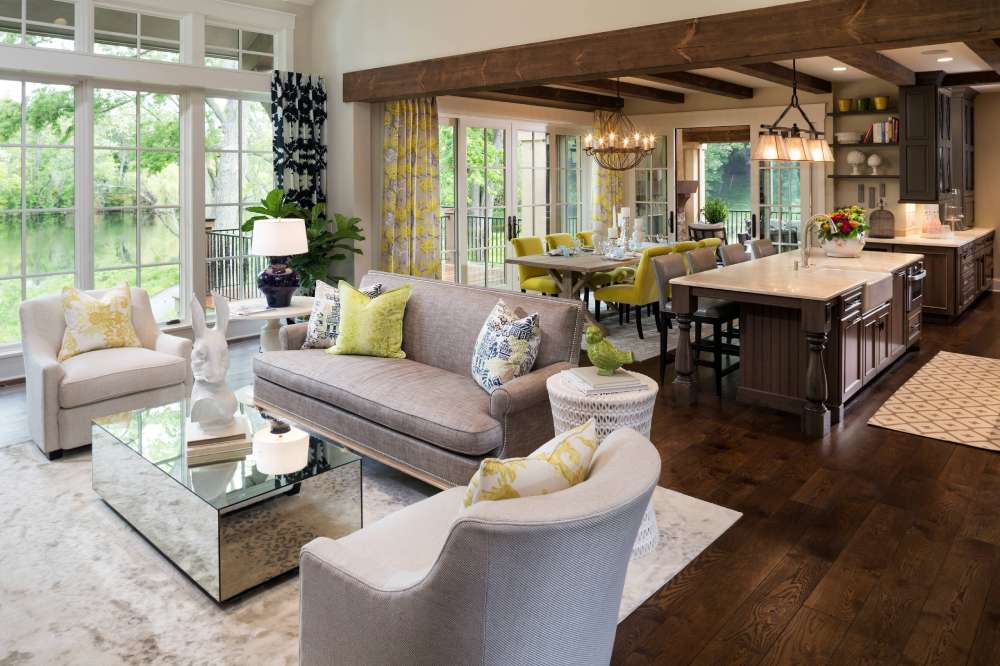
Image source: Kyle Hunt & Partners, Incorporated
Eclectic rooms need texture variety as much as they need pattern variety. Velvet next to linen next to jute creates depth you can physically feel.
Grand View Research found that the home textiles and floor coverings segment is growing at a 9.4% CAGR through 2033, driven partly by consumers layering more tactile materials in their rooms. People want things that feel different when they touch them.
Rug layering is especially effective for eclectic spaces. A flatweave over sisal. A vintage Persian over a natural fiber base. It’s a quick way to add richness without committing to one single style statement on the floor.
Vintage and Secondhand Sourcing for Eclectic Rooms
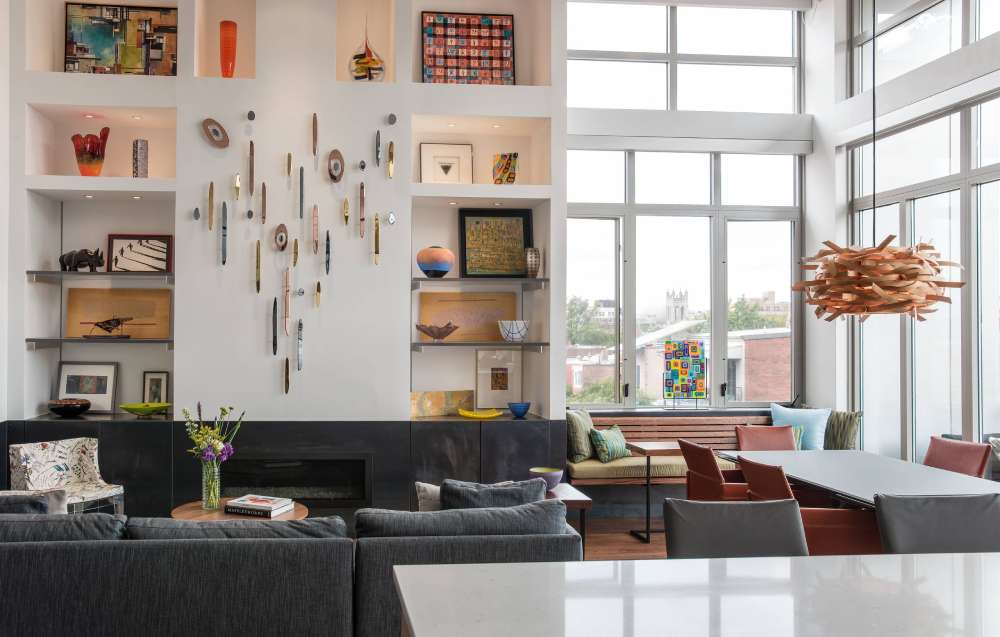
Image source: Patrick Brian Jones PLLC
You can’t build a good eclectic room entirely from new furniture. At least, I’ve never seen it done well. The whole point is that collected-over-time quality. And the fastest way to get there is buying things that actually were collected over time, by someone else.
Where to Find the Good Stuff
Estate sales remain the best source for solid wood furniture at a fraction of retail. You’ll find pieces from Drexel Heritage, Lane, and Thomasville from the 1960s and 70s that were built to last another century. They just need fabric updates.
Chairish saw a 35% year-over-year growth in North American sales in early 2024, with mid-century modern pieces leading the demand surge. That tells you where the market is heading.
Facebook Marketplace is still the Wild West of furniture sourcing. Inconsistent quality, but unbeatable prices if you know what to look for. The trick is searching for specific maker names rather than generic terms like “vintage dresser.”
Local consignment shops offer a middle ground. They’ve already filtered out the junk, so you’re browsing curated inventory. Prices sit between estate sales and Chairish.
What to Look For (and What to Skip)
Frame quality matters more than fabric condition. You can reupholster a chair for $300-800 depending on your area. You cannot fix a cracked wooden frame without spending more than the chair is worth.
Look at the joints. Are they dovetailed or just glued? Check the springs. Sit on it. If the frame feels solid and the proportions are right, the fabric is a secondary concern.
The second-hand furniture market is projected to reach $60 billion by 2030, according to Mordor Intelligence. Nearly 40% of items sold on eBay in 2024 were pre-owned, and searches for “vintage” exceeded 1,200 per minute. The appetite for previously owned furniture is not slowing down.
The Reupholstery Shortcut
Reupholstering a dated piece in a current textile is the single fastest way to build an eclectic look. Take a 1970s wingback chair with faded floral fabric and recover it in a deep emerald green velvet. Suddenly it’s not a thrift store castoff. It’s a statement piece.
This works with shabby chic frames, industrial finds, and anything with a strong silhouette hiding under tired fabric.
Art and Wall Decor in Eclectic Spaces
Wall art is where an eclectic living room goes from “nicely furnished” to “this room has a personality.” But it’s also where things go sideways fast if you treat every wall like a blank space to fill.
The global wall art market was valued at roughly $63 billion in 2024 and is projected to reach nearly $119 billion by 2032. That growth is largely fueled by consumers moving away from mass-produced prints and toward curated, personal collections.
Gallery Walls Done Right
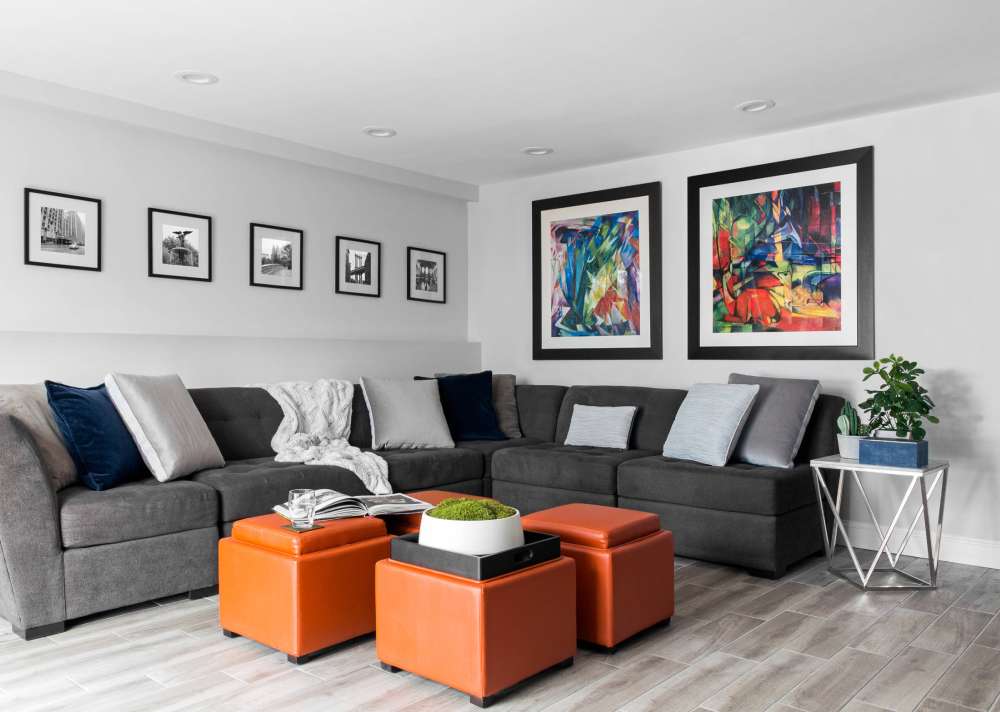
The eclectic gallery wall uses mixed frame finishes. Brass, raw wood, matte black, maybe one white lacquer frame. All the same finish reads as intentional but not eclectic. All different reads as random. Three or four different finishes hits the sweet spot.
Mix your media too. A photograph next to an oil painting next to a textile piece next to a mirror. Salon-style hanging (the clustered, asymmetric arrangement you see in old European homes) fits eclectic rooms better than a strict grid ever will.
Salon-style works because it mirrors the philosophy of the room itself. Nothing is perfectly aligned, but everything is placed with purpose. Understanding how asymmetry in interior design functions makes this approach feel deliberate rather than sloppy.
Oversized Statement Art as an Alternative
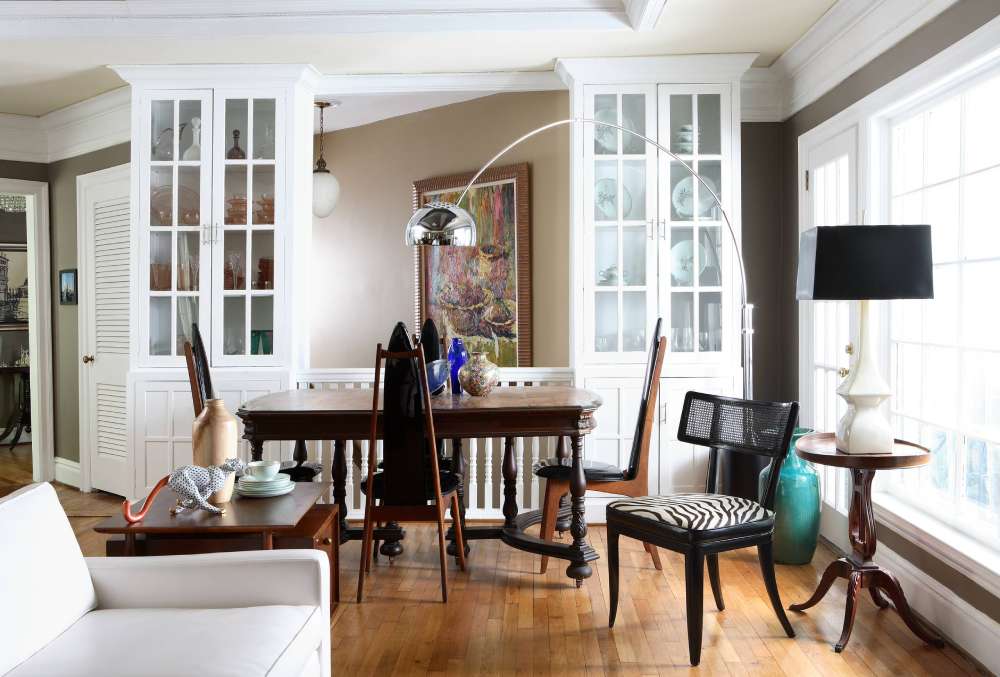
Image source: Design Theory Interiors of California, Inc
Not every eclectic room needs a gallery wall. Sometimes one oversized piece does more heavy lifting than twenty small ones.
A single large-scale abstract painting above the sofa can anchor the room’s color palette and give the eye a resting place. This works especially well when the rest of the room is already busy with pattern and texture.
The accent wall concept applies here, but instead of paint, you’re using one bold artwork to create that visual emphasis. A HIRI survey found that 52% of homeowners planning renovations in 2025 preferred textured or art-driven wall treatments over flat painted accent walls.
Avoiding the Flea Market Booth Look
The difference between a curated eclectic wall and a cluttered one comes down to breathing room. Leave gaps between pieces. Let the wall itself become part of the composition.
Mix original art with prints, but keep found objects to one or two per wall. A vintage mirror. A woven basket. That’s enough. Adding a ceramic plate collection, three macrame hangings, and a neon sign turns a wall display into a booth at the flea market.
Negative space is what separates collected from hoarded. Your mileage may vary, but I’d rather have five well-placed items on a wall than fifteen fighting for attention.
Lighting Fixtures as Style Bridges
Lighting does more work in an eclectic living room than most people realize. A single fixture can connect two completely different furniture styles that otherwise have nothing in common.
Decorative fixture installations in new home builds hit 31% of all lighting in 2024, up from 22% in 2021, according to industry data from 360 Research Reports. People are treating lights as design statements, not just functional necessities.
Setting the Room’s Tone with One Fixture
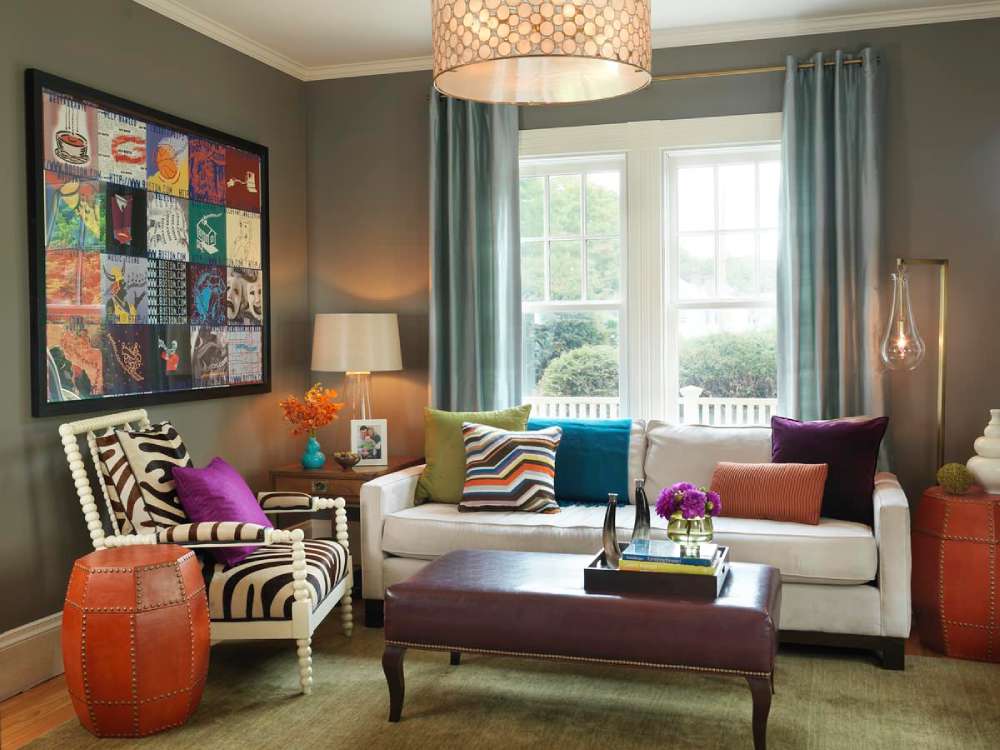
Image source: Rachel Reider Interiors
A sculptural pendant light or chandelier above the seating area becomes the room’s visual mediator. It sits above everything else, so it naturally becomes the piece that ties the room’s story together.
Rattan pendants bridge Scandinavian clean lines with coastal warmth. Brass pharmacy lamps connect industrial metal shelving to traditional leather seating. Ceramic table lamps soften hard-edged modern furniture while adding handmade texture.
The fixture doesn’t need to match anything. It just needs to share a quality with two or more other pieces in the room, whether that’s material, color, or visual weight.
Mixing Fixture Finishes on Purpose
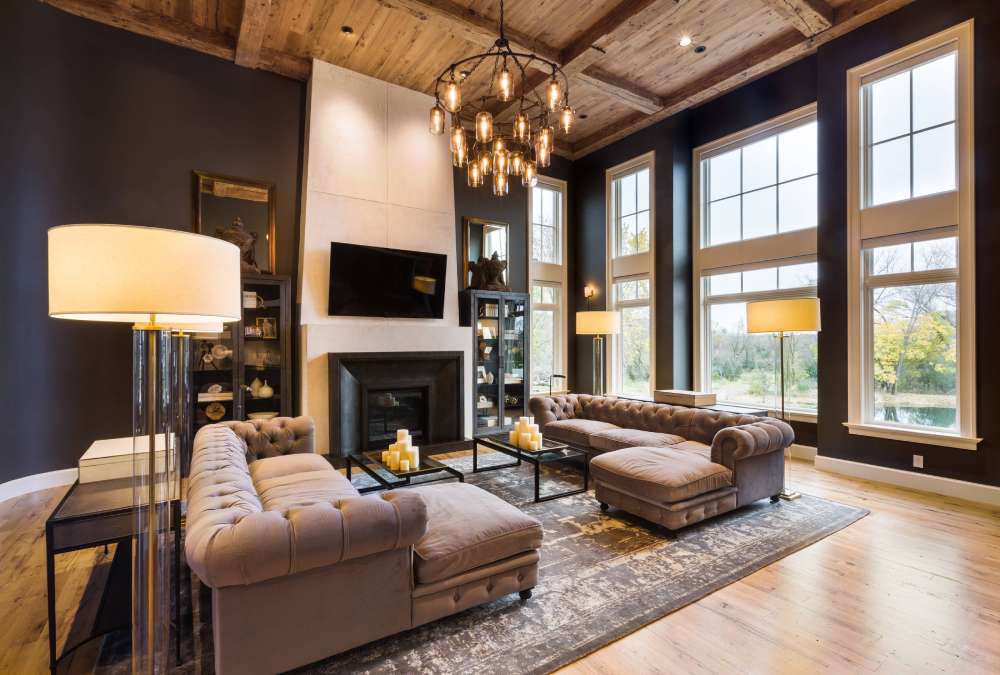
Image source: Raw Urth Designs
Matching every metal finish in a room is actually a contemporary design move, not an eclectic one. Eclectic rooms do better with two or three metal tones working together.
| Metal Combination | Effect | Best Paired With |
|---|---|---|
| Brass + matte black | Warm contrast, grounded elegance | Mid-century and industrial pieces |
| Antique bronze + polished nickel | Old-meets-new tension | Traditional and modern furniture |
| Copper + brushed gold | Tonal warmth, layered richness | Bohemian and Art Deco elements |
The global decorative lighting market was valued at $41.60 billion in 2024, with North America holding 36.6% of the revenue share, according to Grand View Research. The market is growing because people are investing in fixtures that do double duty as functional lighting and decorative objects.
Table Lamps from Different Eras
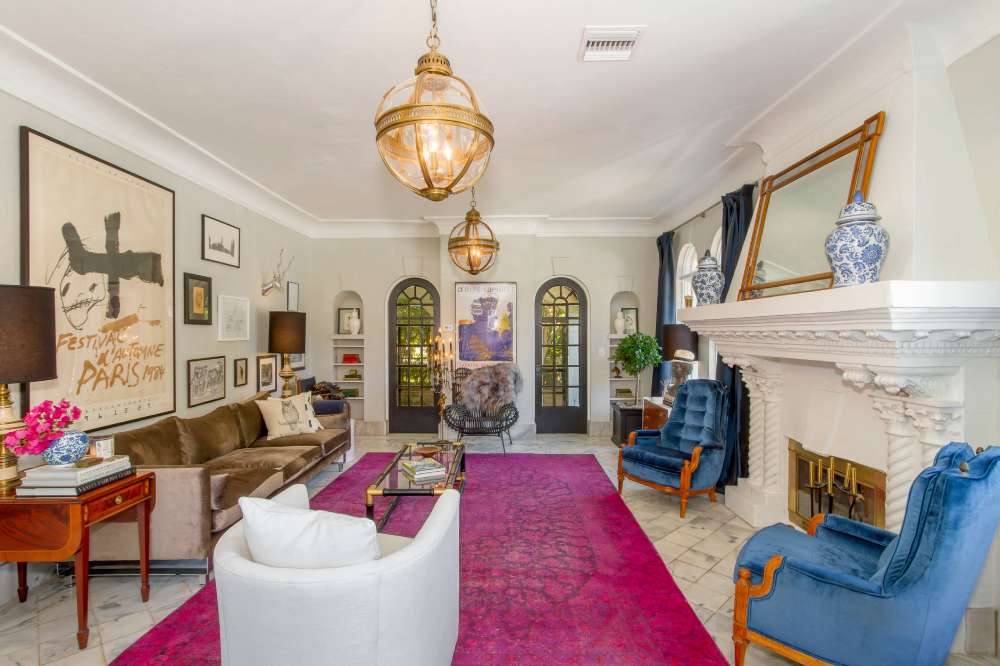
This is one of the easiest eclectic moves. Put two completely different table lamps on matching end tables. Or the reverse: identical lamps on mismatched side tables.
Either approach creates that “collected over time” feeling without any heavy lifting. A 1960s ceramic lamp next to a modern geometric one. A traditional brass candlestick lamp beside a blown-glass base. The mismatch is the point.
Ambient lighting sets the overall mood, while task lighting and accent lighting highlight specific zones and objects. In an eclectic room, you want all three layers pulling from different style eras.
Eclectic Living Room Layouts That Actually Function
A room can look amazing in photos and still be terrible to live in. Eclectic rooms are especially prone to this because people focus so hard on the visual mix that they forget someone needs to actually walk through the space and sit down comfortably.
The living and dining room furniture market reached $530 billion in 2024, per Mordor Intelligence. A significant piece of that spending goes to living room seating and tables, making layout decisions some of the most expensive choices in any home.
The Conversation Layout
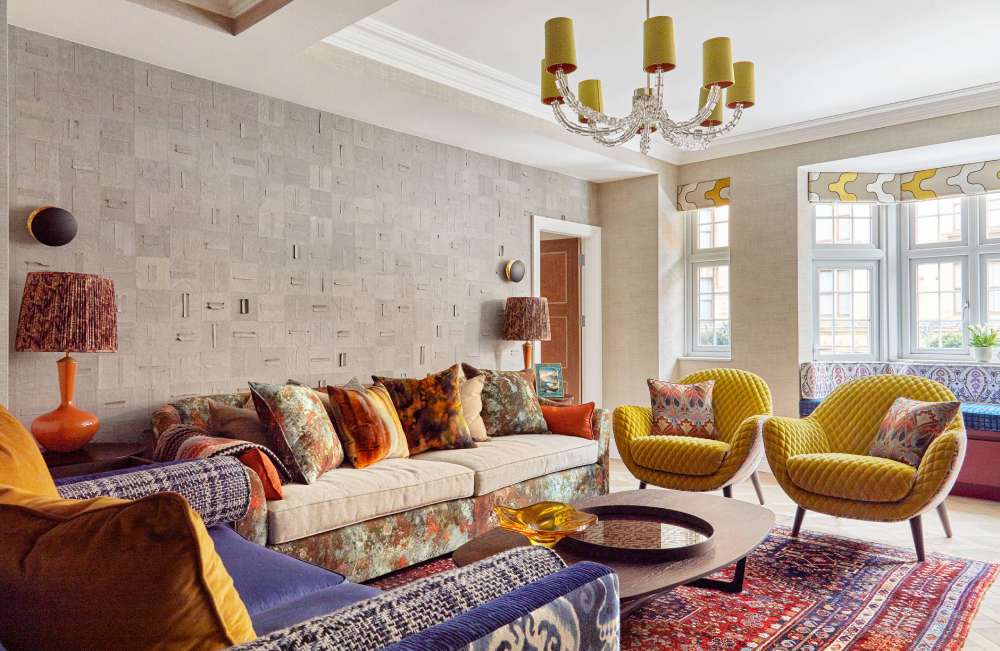
Mixed seating types are the foundation. A sofa facing two non-matching accent chairs, with a coffee table in between. Maybe an ottoman that can slide around as needed.
The key measurement: no more than 8 feet between seats in a conversation grouping. Go wider, and people start raising their voices to be heard. The distance matters more than the furniture style.
How you use space planning here determines whether the room flows or frustrates. Leave 30-36 inches for main traffic paths between furniture groupings.
Zoning with Rugs in Open Plans
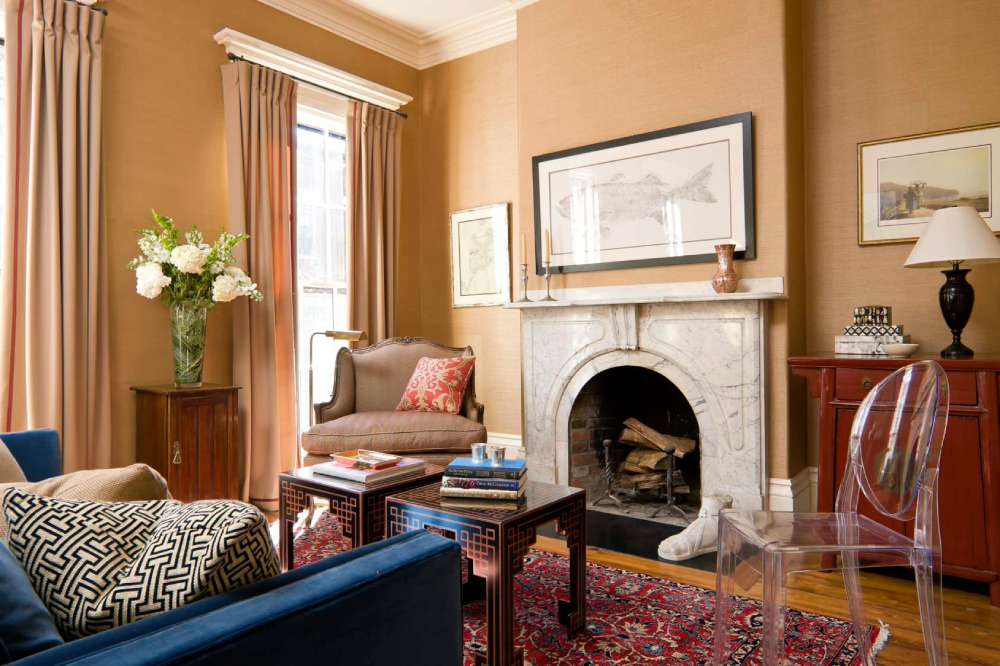
Image source: LDa Architecture & Interiors
Open-plan living rooms need boundaries, and rugs are the best way to create them without adding walls.
One rug defines the seating area. Another defines the dining zone. The rugs don’t need to match. They just need to share enough common ground (maybe a repeated color, or both being natural fiber) to feel connected.
A vintage Persian under the sofa grouping and a flatweave under the dining table. That’s two styles, two textures, and the room still reads as one living room. If your sofa is on the darker side, check out rugs that complement brown couches for starting points.
Where Symmetry Helps (and Where It Doesn’t)
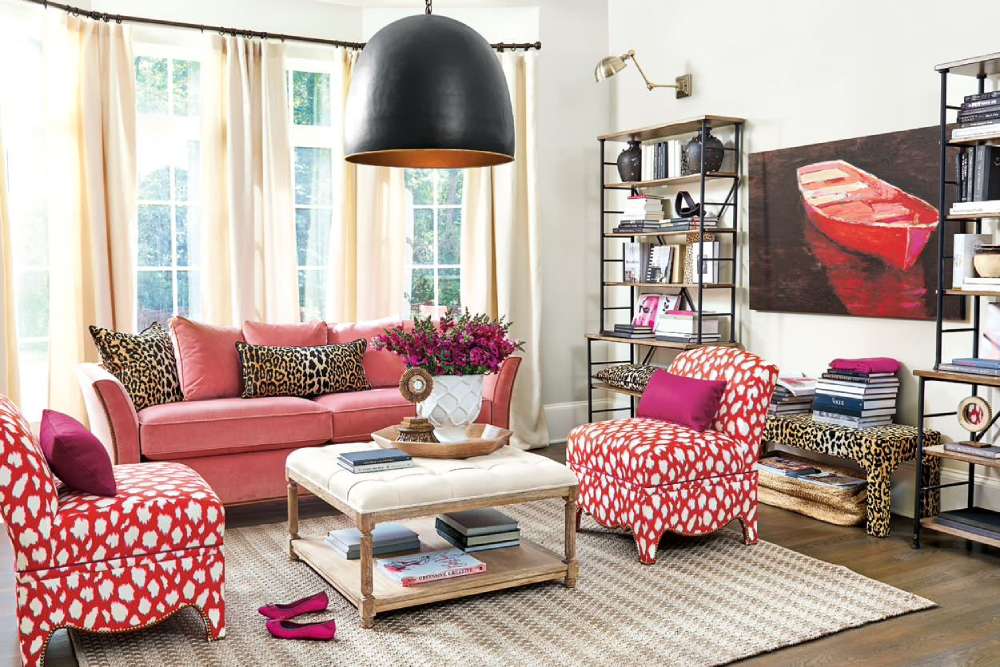
Image source: Ballard Designs
Use symmetry: flanking a fireplace with matching built-ins or identical sconces, framing a window with matching curtain panels, placing matching lamps on either side of the sofa.
Use asymmetric balance: the rest of the room. Different chairs on either side of the coffee table. A floor lamp on one end, a side table with a table lamp on the other. Uneven gallery wall arrangements.
Symmetry gives the eye a resting place. Asymmetry gives it something to explore. Eclectic rooms need both, or they tip into chaos.
Common Eclectic Decor Mistakes
Most eclectic rooms that fail don’t fail because of bad taste. They fail because of bad editing. Knowing what to leave out is harder than knowing what to put in.
Too Many Statement Pieces, No Quiet Ones
Every object fighting for attention means nothing gets noticed. If the sofa is bold, the rug is bold, the curtains are bold, and every pillow has a different loud pattern, the room becomes visual noise.
Eclectic rooms need “rest stops.” A plain linen pillow. A simple wooden side table. A solid-colored throw. These quiet pieces give the statement items room to breathe.
Ignoring Scale Completely
Cramming an oversized sectional, a massive armoire, and a grand piano into a 200-square-foot living room is not eclectic. It’s overcrowded.
Every piece needs to be proportional to the room, not just to each other. Small rooms max out at three to four furniture pieces before they start feeling cramped, regardless of style.
The “One of Everything” Problem
| Mistake | What It Looks Like | The Fix |
|---|---|---|
| One piece per style | Disjointed, like a showroom sampler | Repeat at least two styles across multiple items |
| No negative space | Every surface covered in objects | Leave 30-40% of surfaces empty |
| Zero color repetition | Chaotic, no visual thread | Repeat your accent colors at least three times |
The 1stDibs survey found that 33% of designers equally favored both maximalism and eclecticism in 2025. But where maximalism deliberately courts excess, eclectic styling always edits. That’s the difference. Maximalism says “more.” Eclectic says “more of the right things.”
Forgetting Negative Space
Surfaces without objects on them are not wasted space. They’re part of the design.
A coffee table with three carefully chosen objects looks curated. The same table with twelve items looks like a yard sale staging area. The details that matter are the ones that have room to be noticed.
Eclectic Decor on a Budget vs. With Investment Pieces
Budget changes the strategy, not the goal. Whether you’re spending $500 or $15,000 on a living room, the eclectic approach stays the same. Mix styles. Repeat colors. Edit ruthlessly.
Opendoor’s 2024 report found that Americans spend an average of $1,599 per year on home decor, with millennials outspending boomers by about 23%. That’s not a lot per room, which means smart sourcing matters more than a big budget.
The Budget Approach
Thrifted anchor pieces: A solid-frame sofa from Facebook Marketplace for $100-300, then reupholster it if the fabric is bad. The U.S. Census Bureau reports that homeowners completed over 50 million DIY projects in 2023, spending more than $125 billion total.
Textile layering for instant impact: Decorative pillows for your sofa and a layered rug are the cheapest way to make a room feel eclectic. Swap these seasonally for a whole new vibe.
Paint as the great unifier: One can of paint (around $30-50) to turn a dated bookshelf into a statement piece. Color is the most affordable tool in any decorating project.
The Investment Approach
One high-end vintage anchor surrounded by affordable supporting pieces. That’s the formula.
A Milo Baughman chrome-frame sofa from the 1970s (typically $2,000-5,000 on Chairish) becomes the room’s centerpiece. Everything around it, the coffee table, the side chairs, the lamps, can come from thrift stores, IKEA, or Target.
That single investment piece gives the entire room credibility. No one questions the $40 Target throw pillow when it’s sitting on a designer sofa.
Where to Spend and Where to Save
Spend on:
- The sofa (you sit on it every day, and it anchors the room)
- One statement rug (it defines the space and takes daily abuse)
- Lighting (a cheap fixture looks cheap from every angle)
Save on:
- Side tables (thrift stores are full of solid wood options for $20-50)
- Art frames (mix of thrifted, IKEA, and DIY frames creates eclectic texture)
- Window treatments (ready-made curtains in solid colors work fine)
Building an eclectic room gradually over months or years usually produces better results than buying everything at once. The room develops a real sense of history instead of a manufactured one. Give yourself permission to leave a corner empty until you find the right piece for it. Patience is the most underrated tool in eclectic home decor.
And if the eclectic direction isn’t fully clicking for you, that’s fine too. Check out other interior design styles to find the right mix for your space. Sometimes the best eclectic rooms borrow elements from a budget-friendly living room philosophy while pulling in statement items from a completely different aesthetic.
FAQ on Eclectic Living Room Decor
What is eclectic living room decor?
It’s the intentional mixing of furniture, textiles, and objects from different periods and styles within one room. The key is a unifying element like a shared color palette or repeated material that holds everything together.
How do you mix furniture styles without it looking messy?
Focus on scale and proportion rather than matching eras. Pair curved silhouettes with angular ones, keep visual weight consistent across pieces, and choose one or two anchor items that ground the room.
What color palette works best for eclectic rooms?
Start with a neutral base, then layer two or three accent colors across mixed-style pieces. Mustard with navy and ivory, or terracotta with sage green and cream, are proven combinations.
How many patterns can you mix in one room?
Large, sunlit rooms handle four or five patterns. Smaller spaces max out around two or three. Use the large-medium-small scale rule and mix geometric prints with organic ones to avoid visual clutter.
Where do you find furniture for an eclectic living room?
Estate sales, Chairish, Facebook Marketplace, and local consignment shops. Look for solid wood frames from makers like Drexel Heritage or Thomasville. Frame quality matters more than fabric condition since you can always reupholster.
Is eclectic the same as bohemian style?
No. Bohemian style leans heavily into global textiles and layered patterns from one aesthetic direction. Eclectic pulls from any style, era, or origin and keeps a tighter editorial hand on what stays.
Can you do eclectic decor on a budget?
Absolutely. Thrifted anchor pieces, DIY reupholstering, and affordable textile layering through throw pillows and rugs are the fastest budget-friendly path. One well-chosen vintage find can anchor a room full of affordable supporting pieces.
What lighting works in eclectic spaces?
Mix fixture finishes like brass with matte black or antique bronze with polished nickel. A sculptural pendant or chandelier above the seating area connects different furniture styles below it.
What are the biggest eclectic decorating mistakes?
Too many statement pieces with no quiet ones to rest the eye. Also, zero color repetition across items, ignoring scale relative to room size, and covering every surface with objects. Editing is the real skill.
How do you arrange furniture in an eclectic living room?
Use a conversation layout with mixed seating types, keeping seats within 8 feet of each other. Zone open-plan areas with rugs. Use symmetry near the fireplace and asymmetry everywhere else.
Conclusion
Eclectic living room decor works when every piece earns its place. Not because it matches, but because it connects to something else in the room through color, texture, or visual weight.
The best eclectic spaces feel collected, not decorated. A vintage rug under a modern sofa. Brass lighting next to ceramic accents. Mismatched chairs that somehow belong together because the proportions are right.
Start with one anchor piece you love. Build the color palette around it. Add layers slowly, whether that’s a gallery wall arrangement, a bold accent chair, or a handmade textile from a flea market find.
Edit as you go. Leave surfaces empty. Repeat your accent colors at least three times across the room.
The rooms that feel the most personal are never the ones bought in a single shopping trip. They’re built over time, one thoughtful piece at a time. Trust the process and trust your eye.

- Paint Colors That Go with Gray Floors - August 20, 2026
- What Color Bedding Goes with Dark Wood Furniture - August 18, 2026
- What Color Walls Go with Oak Floors - August 16, 2026