Contemporary living room decor changes every few years, and that’s the whole point. Unlike styles locked to a specific era, contemporary design absorbs what’s happening right now, from material trends to color shifts, and turns it into something that feels current without trying too hard.
The problem? Most people confuse it with modern design. Or they end up with a room that looks cold instead of edited.
This guide covers the actual interior design styles, materials, furniture, and layout strategies that define a contemporary living room in 2025. From warm neutral palettes and sculptural lighting to scale and proportion decisions that make or break a space, you’ll find specific, actionable choices at every budget level.
What Is Contemporary Living Room Decor
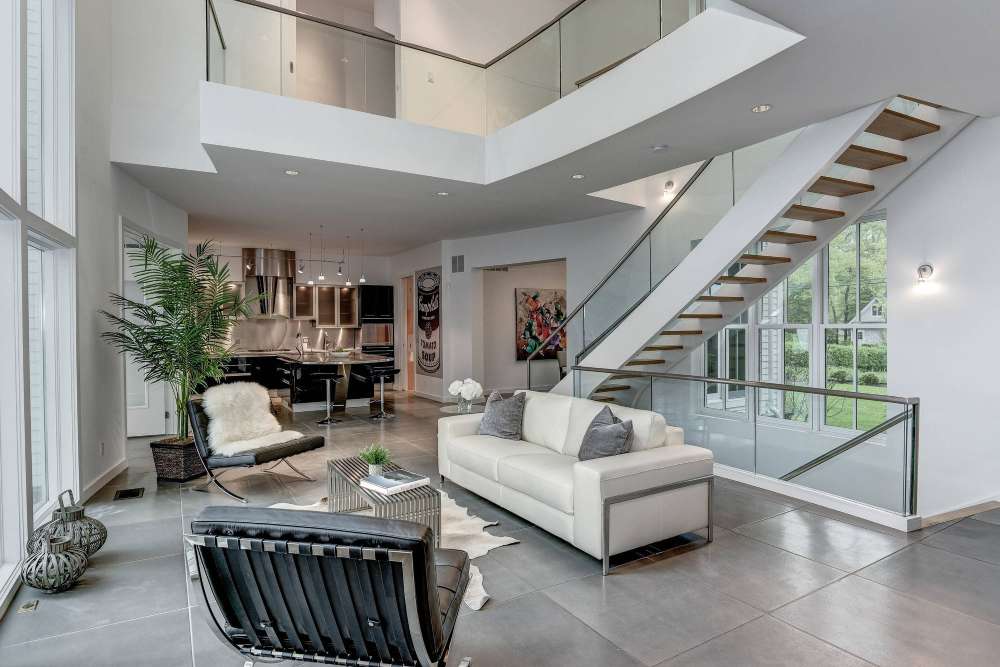
Contemporary living room decor is a style defined by what’s current right now. It borrows from multiple periods and movements without being locked to any single one.
That’s the thing most people get wrong. They use “contemporary” and “modern” interchangeably, but these are different ideas. Modern interior design refers to a specific movement rooted in early-to-mid 20th century principles, with clean geometry and industrial materials. Contemporary just means “of the moment.”
So a contemporary living room in 2025 looks different than one from 2015. And it will look different again in five years.
The core DNA stays consistent, though. Clean lines. Intentional negative space. A neutral foundation with selective bold accents. Furniture with low profiles and simple silhouettes. That part doesn’t really change.
According to the 1stDibs 2025 Designer Trends Survey, 85% of designers plan to use contemporary items currently in production for their projects, alongside vintage and antique pieces. That tells you something about how contemporary decor functions. It’s the anchor, even when rooms pull from other eras.
If you look at interior design history, most styles have a fixed set of rules. Art Deco has its geometry. Mid-century modern has its organic curves and tapered legs. Contemporary doesn’t work that way. It absorbs what’s happening across culture, architecture, and material trends, then spits out something that feels right for this exact moment.
The result? A living room that feels edited but livable. Not cold. Not busy. Somewhere in between, which is honestly harder to pull off than it sounds.
How Contemporary Differs from Other Popular Styles
People confuse this constantly, so let’s just lay it out.
| Style | Time Period | Key Trait |
|---|---|---|
| Contemporary | Always current | Fluid, absorbs current trends |
| Mid-century modern | 1940s-1960s | Organic shapes, tapered legs |
| Transitional | No fixed era | Blends traditional + modern elements |
| Minimalist | 1960s onward | Reduction, “less is more” |
Transitional decor is probably the closest cousin. But transitional rooms actively mix old and new. A contemporary room doesn’t look backward on purpose. It just takes what works now.
A Scandinavian living room might share the neutral palette, but it leans heavily on hygge and light wood tones. Contemporary spaces pull from a much wider material range, including marble, concrete, matte metals, and mixed textiles.
Color Palettes That Define a Contemporary Living Room
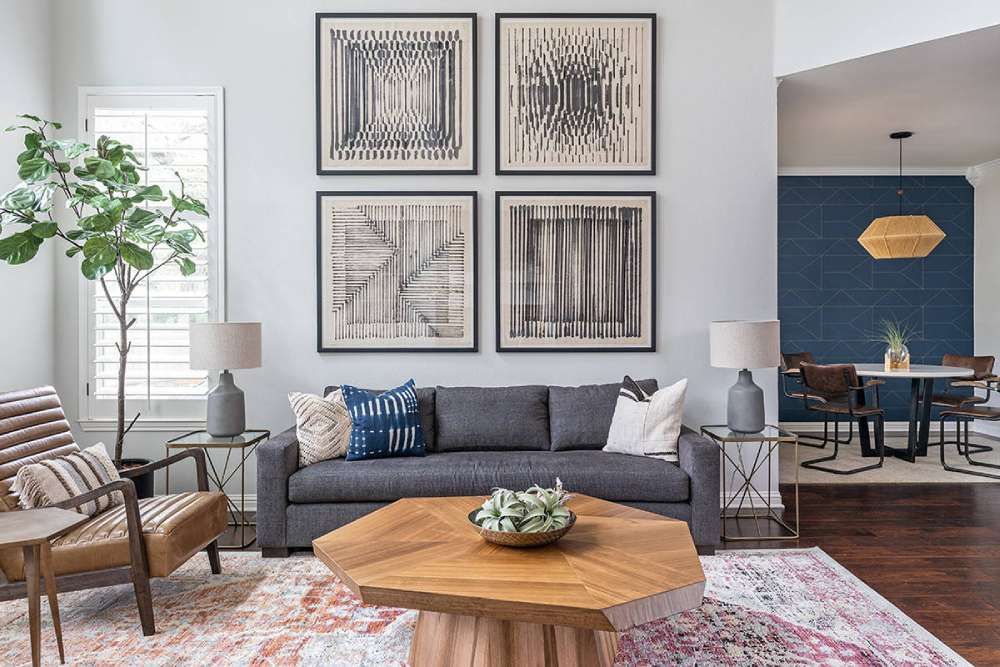
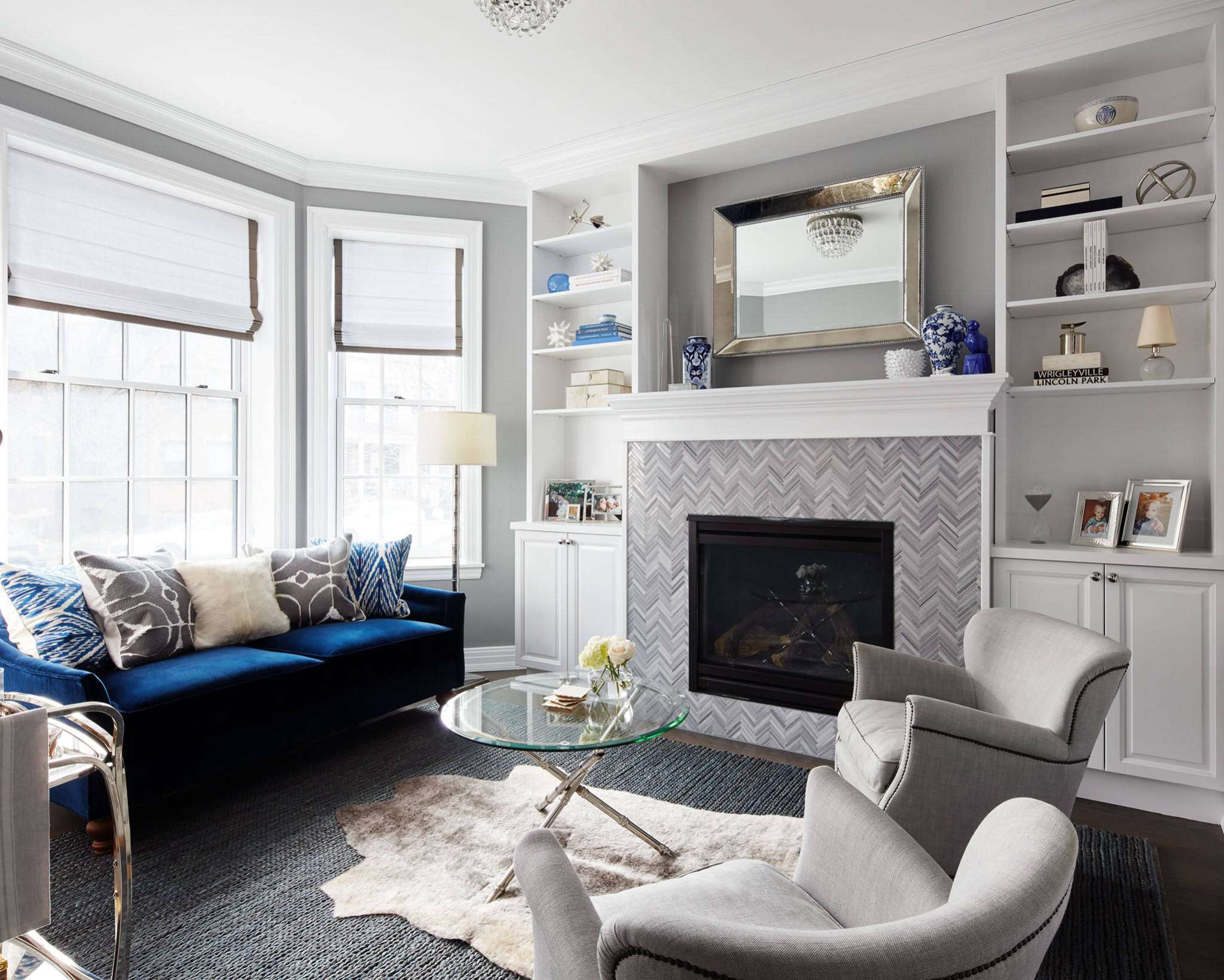
Image source: Christen Ales Interior Design
The cool grays that ran interior design for the better part of a decade? They’re done. Well, mostly done.
A 2024 Fixr.com survey of 71 design experts found that 48% chose warm white as the most popular interior paint color, while 41% selected warm neutrals as the trending palette. Earthy tones led overall at 46%. The shift from cool to warm has been building since 2022, but it hit a tipping point.
Right now, a contemporary living room’s color foundation looks something like this: greige, oatmeal, warm white, or soft clay. Pantone’s 2025 Color of the Year, Mocha Mousse, confirmed what practitioners already knew. Brown is back, and it’s the new neutral.
The NYDC’s 2024 Design Predictions survey backed this up. Over 90% of responding designers said brown would be a defining color. Took me forever to come around on brown walls, to be honest. But layered correctly with lighter tones, it works better than I expected.
Balancing Neutral Bases with Bold Accents
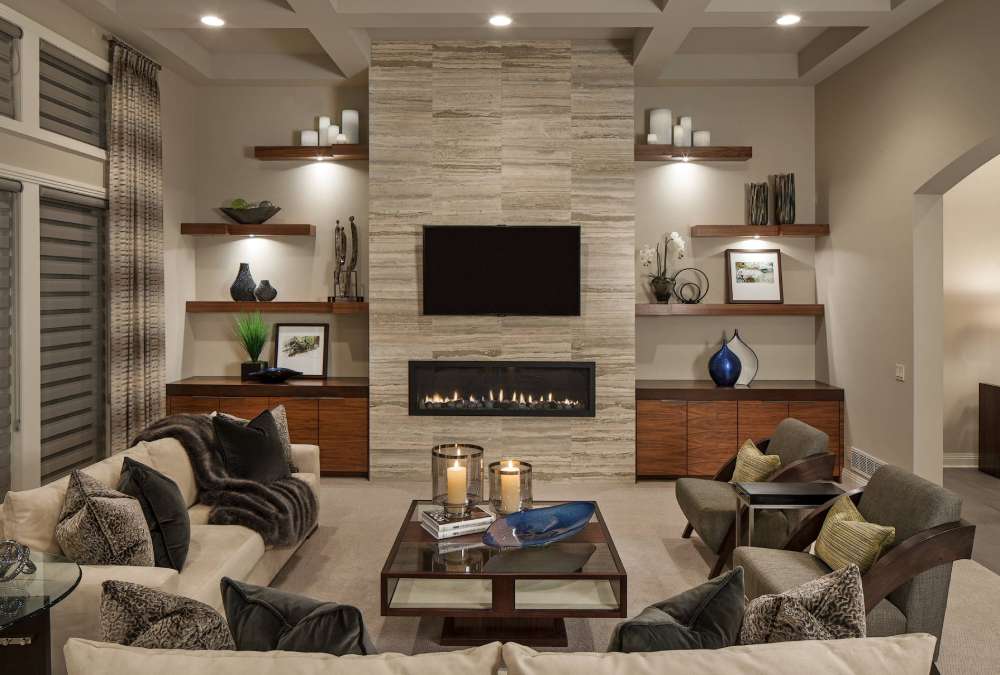
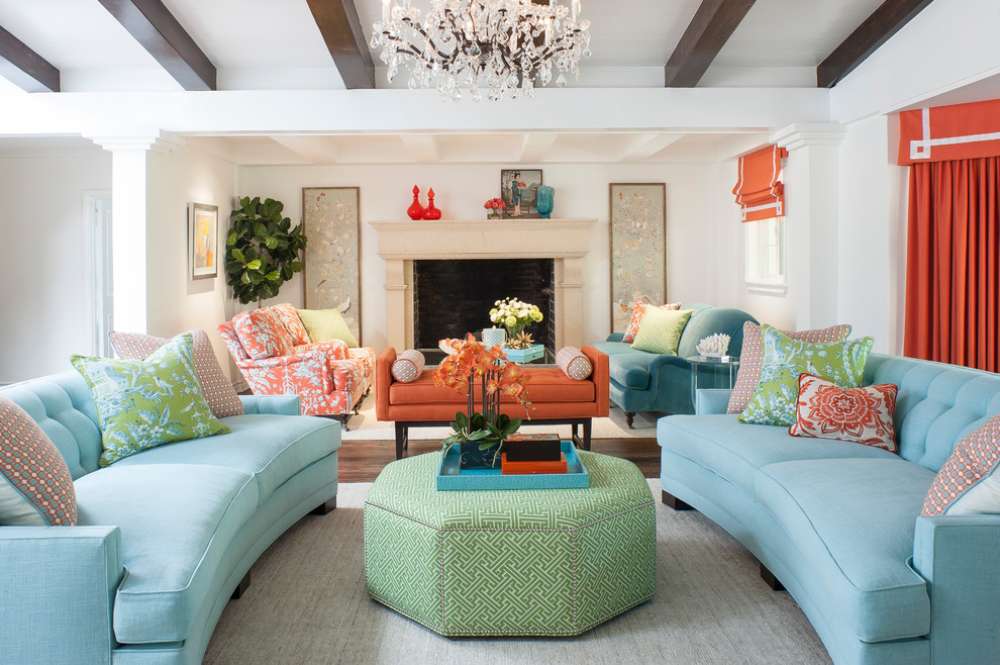
Image source: Interiors Joan and Associates
Understanding color theory helps here, but you don’t need a degree. The rough framework is 70/20/10.
- 70% dominant neutral (walls, large furniture, flooring)
- 20% secondary tone (curtains, rug, accent chairs)
- 10% bold accent (artwork, a single statement piece, decorative objects)
For accent colors in a contemporary space right now, you’re looking at deep navy, terracotta, muted rust, earthy greens, and olive. Accio market data shows earth tones and warm neutrals accounted for 60% of paint sales in 2025. That’s not a small number.
And then there’s black as an anchor. Matte black hardware, picture frames, furniture legs, light fixtures. It grounds a warm neutral room without making it feel heavy. If you’ve got a beige base, black accents give it the edge it needs to stay contemporary instead of drifting into traditional territory.
The mistake most people make? Going bold everywhere. One terracotta accent chair against a warm white room does more than three competing colors fighting for attention. Contrast works best when it’s strategic, not scattered.
Furniture Styles and Silhouettes
Furniture is where you either commit to contemporary or end up with something that looks confused. The pieces have to match the vibe. Low profiles. Geometric shapes. Mixed materials. And nothing too ornate.
The global modular furniture market hit $82.5 billion in 2024, growing at a 4.7% CAGR through 2034, according to Market.us research. Modular sofas alone hold a 28.3% share of that market. That’s the single biggest product type. People want furniture that adapts to their space, not the other way around.
Brands like CB2, Article, and West Elm have built entire collections around this demand. Restoration Hardware (RH) sits at the premium end. IKEA’s curated lines hit the budget tier without looking cheap, at least not the pieces they’re actually trying with.
Sofas and Seating
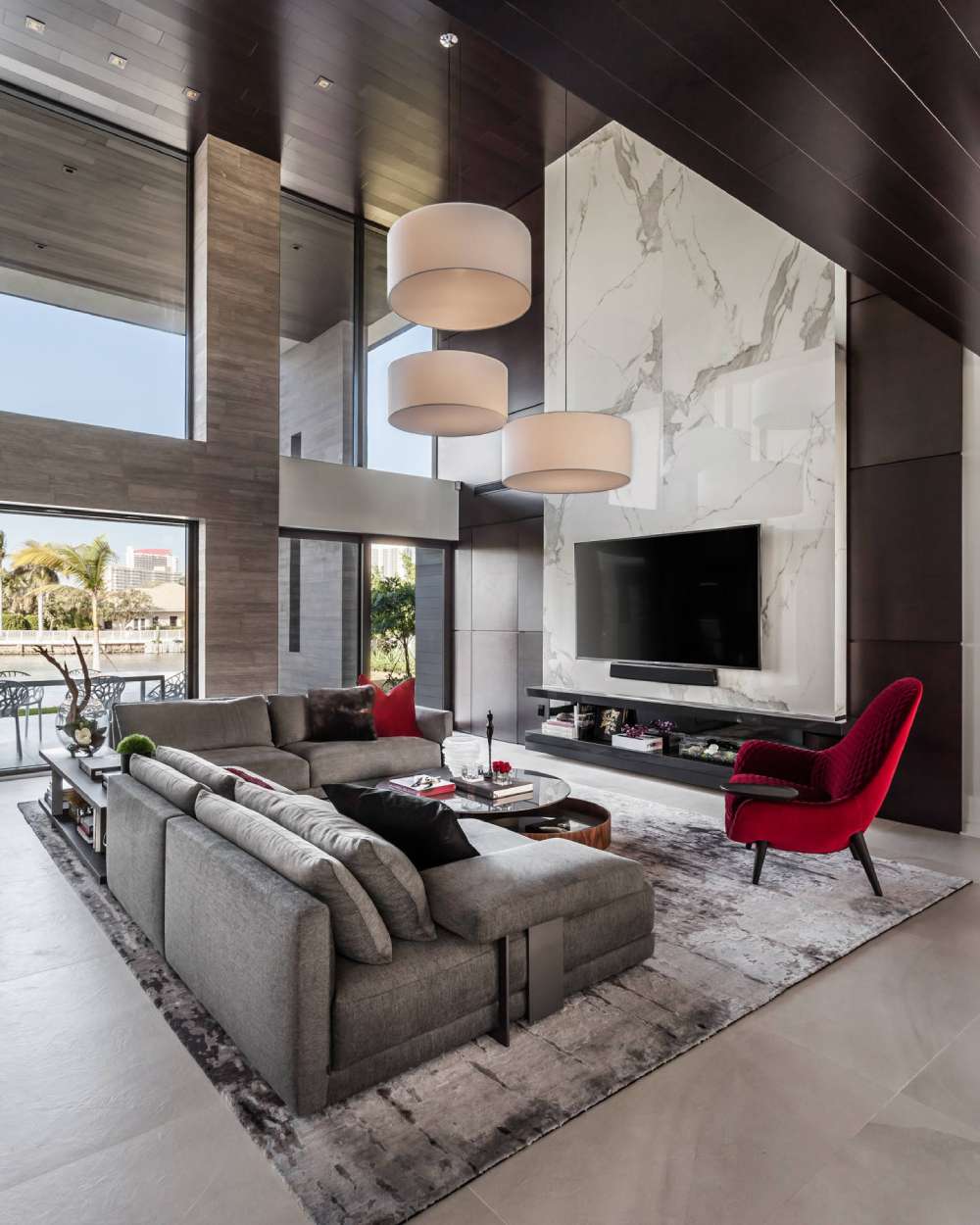
The sofa is the most expensive decision in the room and the one you’ll live with longest. Get this wrong and everything else just highlights the problem.
Modular sectionals dominate contemporary living rooms right now. Google Trends data from Accio shows modular sofa searches peaked at a normalized value of 100 in November 2024, with Amazon sales surging from 380 units to over 2,300 by April 2025.
Fabric choices that read contemporary:
- Boucle (textured, cozy, photographs well)
- Performance velvet (practical, rich-looking)
- Textured linen (relaxed, lived-in feel)
Curved sofas are having a moment, but don’t dismiss a sharp, clean-lined piece. Both work. It depends on the room’s form and whether you need something that softens hard architectural lines or echoes them.
Coffee Tables and Accent Furniture
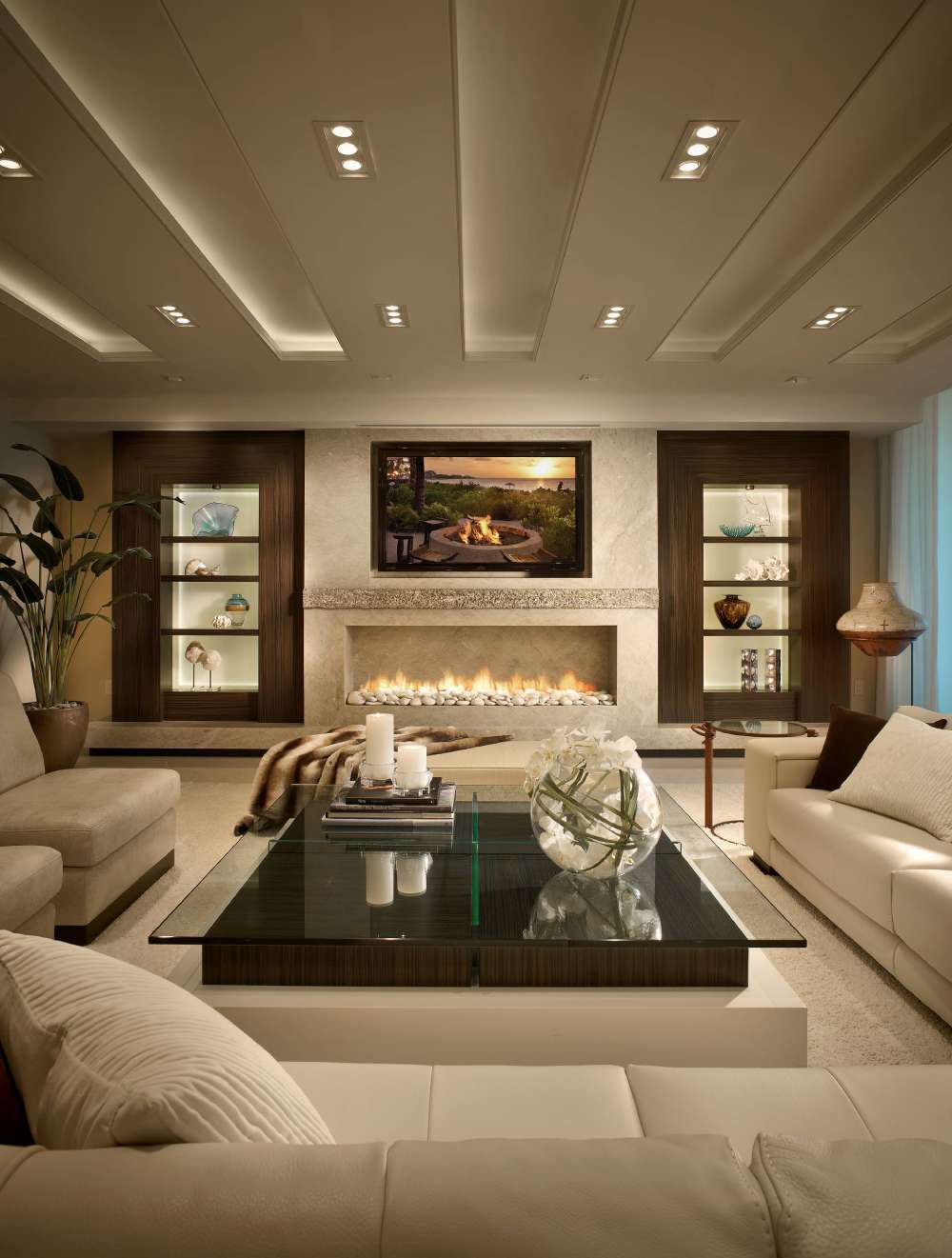
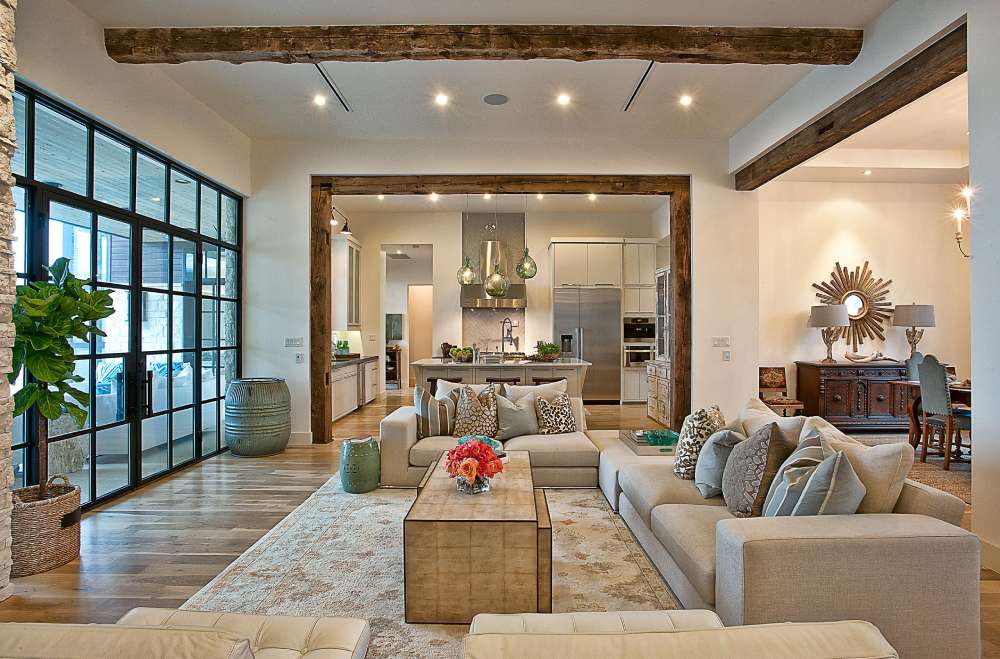
Image source: Interiors by Steven G
Sculptural coffee tables have become focal points in their own right. Organic shapes carved from travertine or cast concrete. Irregular edges. Heavy visual weight in a room that’s otherwise restrained.
Nesting tables are replacing the bulky traditional side table. They tuck away when you don’t need them, pull out when guests come over. Practical and contemporary.
Console tables along the back wall of a sofa or behind an entryway get styled with ceramic vessels, a single stack of books, maybe one sculptural object. The idea is restraint. Not every surface needs something on it, and a contemporary room looks better with fewer, better things.
Materials and Textures in Contemporary Spaces
Materials do more heavy lifting in contemporary rooms than color does. You can have an entirely neutral space that still feels interesting and layered if the materials are doing their job.
Grand View Research valued the global home decor market at $960.14 billion in 2024, projecting growth to $1.62 trillion by 2030. The furniture segment alone held 50.7% of that market. What’s driving the growth? Material innovation and consumer preference for mixed-material pieces.
Stone and Natural Materials
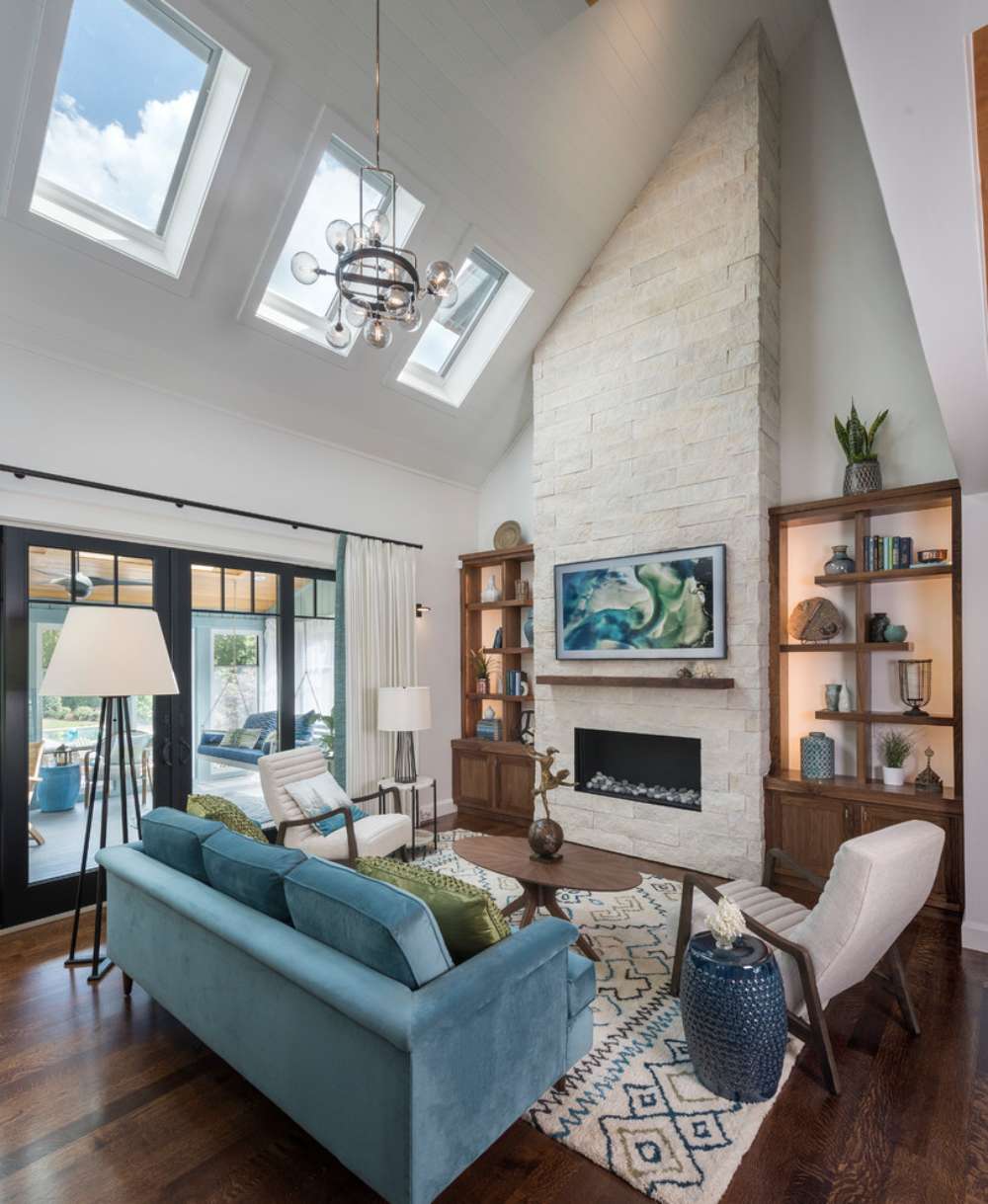
Travertine is everywhere. Coffee tables, console tables, fireplace surrounds, side tables. It has a warmth that Carrara marble doesn’t, which fits the broader move away from cool tones.
White oak and walnut remain the go-to woods for contemporary furniture. They pair well with matte metals (brushed brass, black iron, aged bronze) and natural textiles.
Concrete shows up in smaller doses. A concrete planter, a modern fireplace surround, a sculptural side table. It adds weight and grounding without taking over.
Textural Contrast as a Strategy
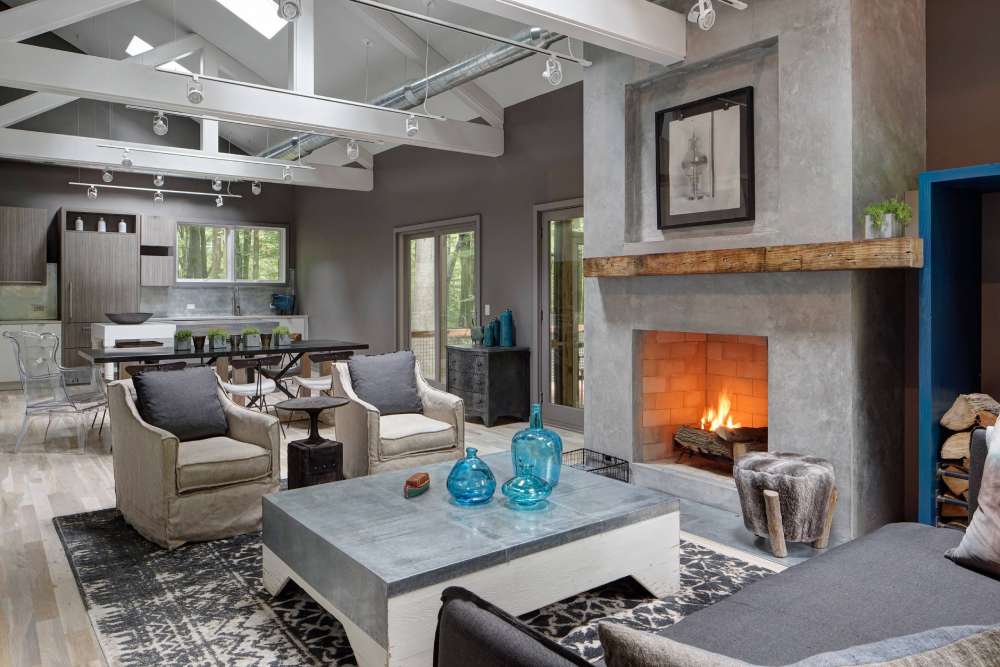
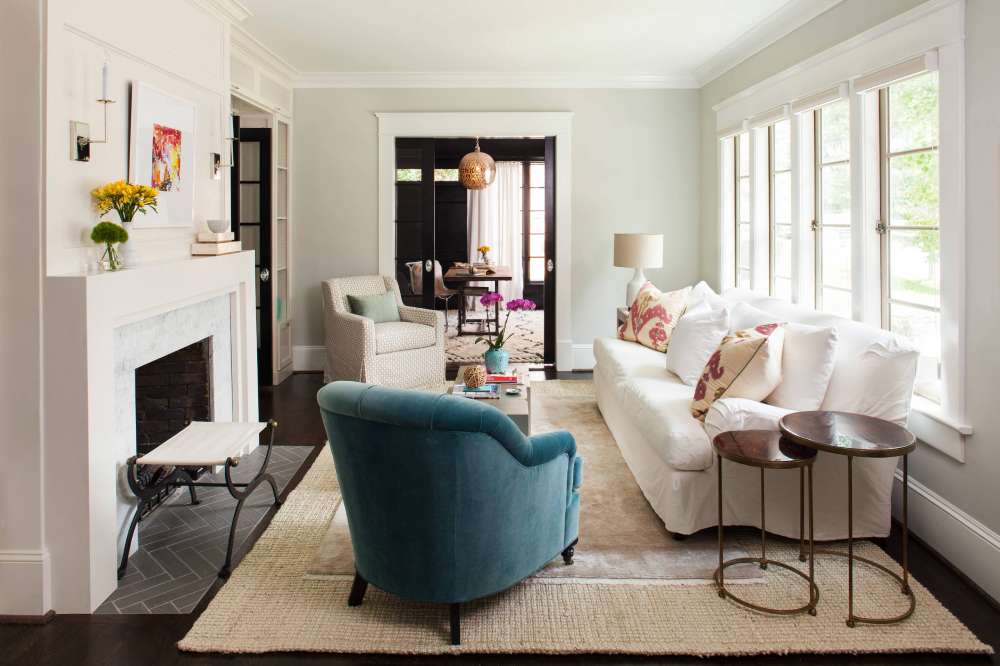
Image source: Fredman Design Group
This is where the real skill comes in. Understanding texture in interior design separates a room that feels “nice” from one that feels considered.
The technique is simple in theory: pair opposites.
- Smooth plaster walls against a chunky knit throw
- A velvet sofa next to a raw wood side table
- Reeded glass on a cabinet beside matte ceramic objects
Fluted details are having a big run right now, too. Fluted wood panels, reeded glass cabinet fronts, ribbed ceramic vases. These add visual rhythm to a room without introducing new colors.
What to avoid: overly glossy surfaces (they look dated fast), heavily distressed finishes (too rustic), and matchy-matchy material sets. Contemporary rooms work because the materials are varied but cohesive.
Layout and Spatial Planning
A contemporary living room doesn’t push furniture against every wall and call it done. Layout is where space planning actually matters.
Mordor Intelligence reports that living rooms held 30.37% of the U.S. home decor market share in 2025, the single largest room category. People spend more on this room than any other. And yet the layout is often the last thing they think about.
Floating Furniture Arrangements
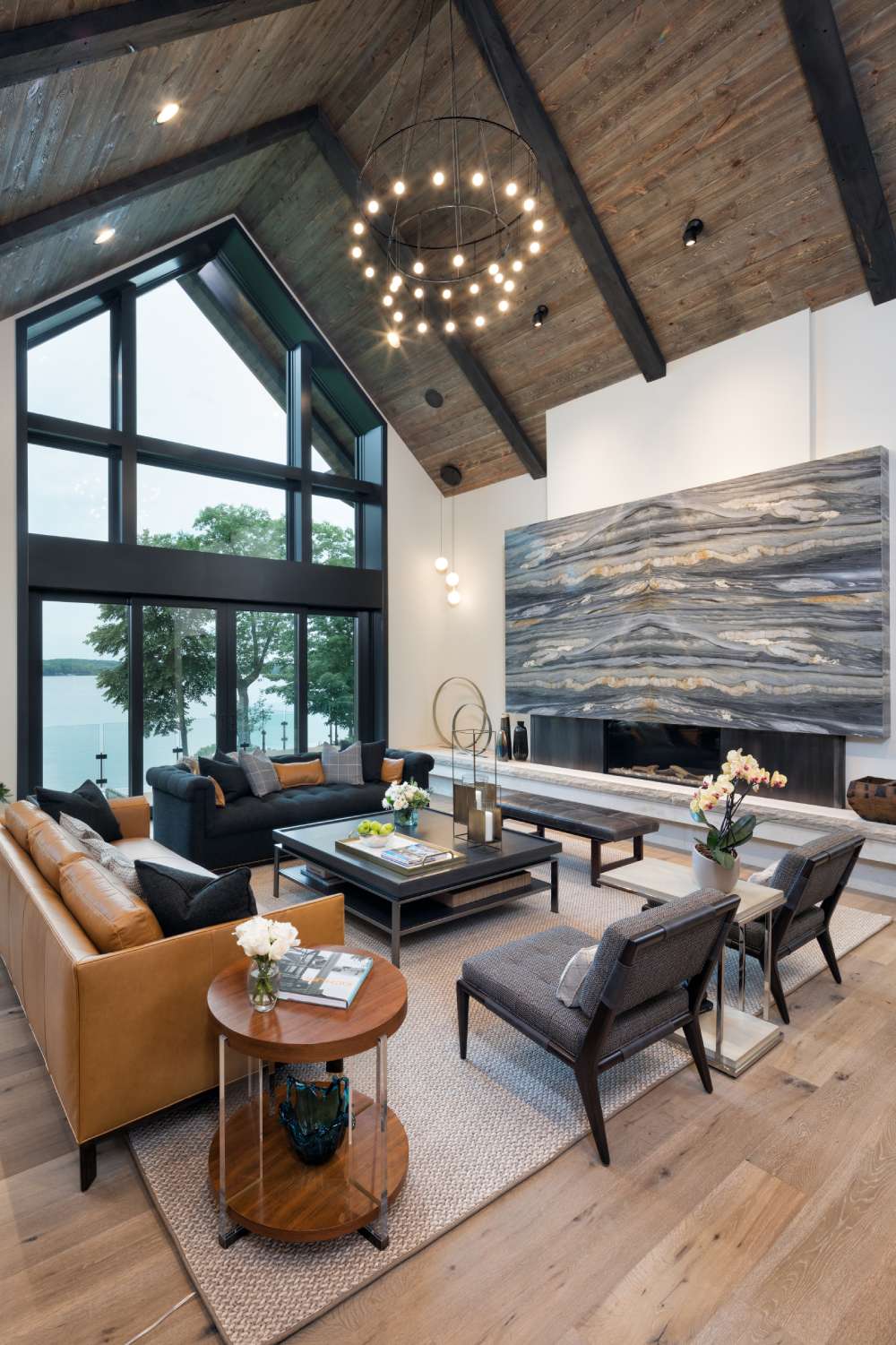
Image source: Aspect Design Build
Pulling furniture away from the walls creates a more intimate, conversational grouping. A sofa floating in the center of the room with a rug anchoring the seating area and accent chairs angled toward it. This is standard practice in contemporary design.
Houzz data shows living room renovations averaged 8.1 months of planning and 4.1 months of building. That’s a lot of time thinking about a room. And yet most people end up with everything shoved against the perimeter because it “feels bigger.” It doesn’t.
Negative space is a design feature in contemporary rooms, not wasted square footage. An empty corner isn’t a problem. It gives the eye somewhere to rest.
Zoning Open Floor Plans
Open concept layouts need some kind of separation or they just feel like one big undifferentiated space. For people working with larger areas, check out ideas for dividing a large living room without closing it off entirely.
Common zoning techniques:
- Area rugs to define conversation zones
- A console or low bookshelf as a soft divider
- Changes in lighting (pendant over dining, floor lamps in living area)
The key is maintaining visual flow. You want definition, not walls. Balance between open and defined keeps the room functional without losing that airy contemporary feel.
Regarding symmetry, contemporary rooms often mix it with deliberate asymmetry. Matching sofas facing each other (symmetrical), then a single sculptural floor lamp on one side and a stack of books on the other (asymmetrical). This tension keeps a room from feeling stiff or staged.
Lighting as a Design Element
Lighting in a contemporary living room isn’t just functional. It’s basically furniture for the ceiling. The fixture itself becomes a statement piece, sometimes the loudest thing in an otherwise quiet room.
The National Kitchen & Bath Association’s 2025 trend reports show 71% of designers are moving toward more expressive, colorful design choices across the home. Lighting is where that expression often starts, because you can take a risk on a bold fixture and swap it out later if it doesn’t work.
Layered Lighting Design
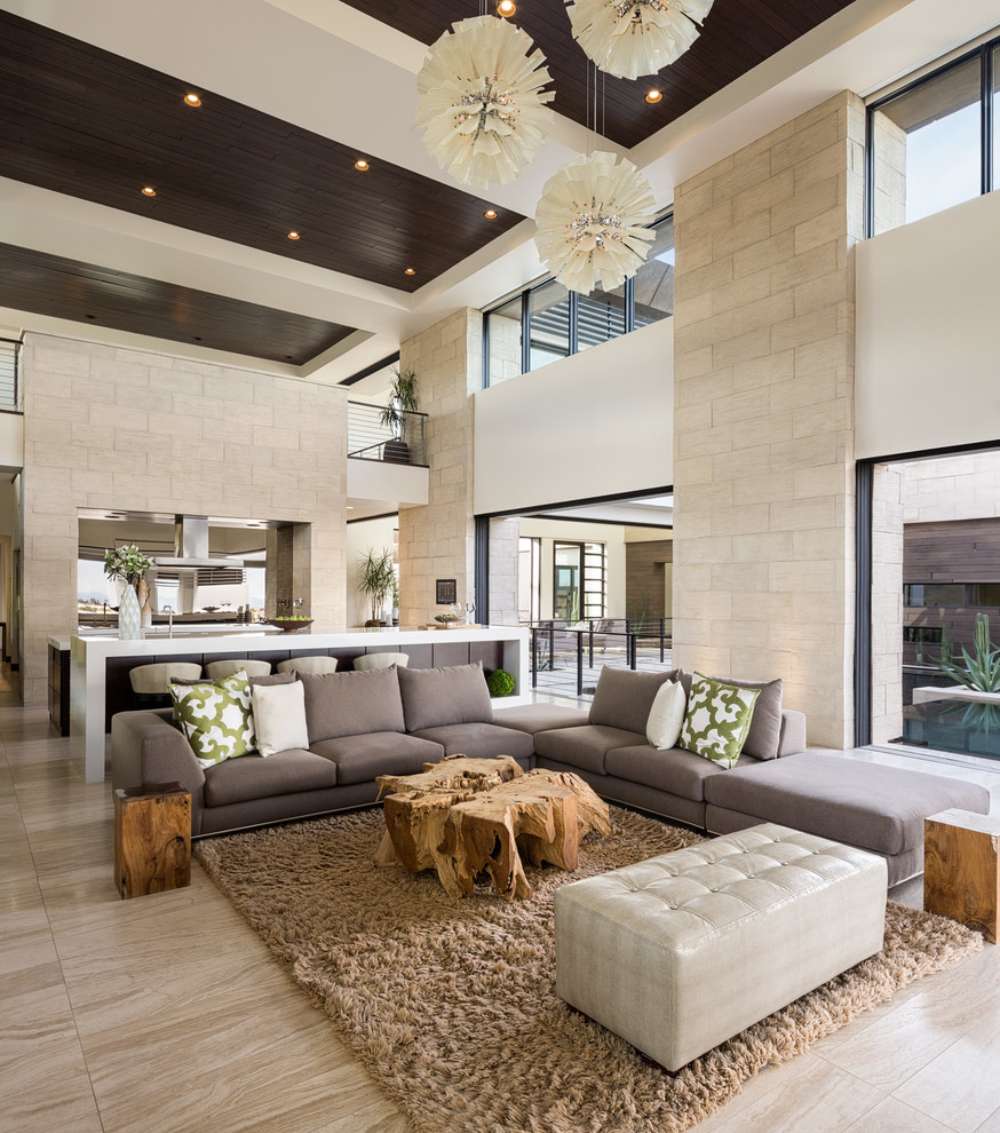
One overhead light for the entire room is not contemporary design. It’s a rental apartment. A well-lit contemporary living room layers three types of light:
Ambient lighting: The room’s general glow. Recessed lighting handles this quietly, or a large central fixture if you want to make it a moment.
Task lighting: Reading lamps, floor lamps next to a seating area. These serve a purpose and double as sculptural objects. An arc lamp over a reading chair is one of those contemporary living room moves that just works every time.
Accent lighting: LED strips inside shelving, picture lights above artwork, uplighting along an architectural feature. This is what separates a good-looking room from a professional one.
Statement Fixtures
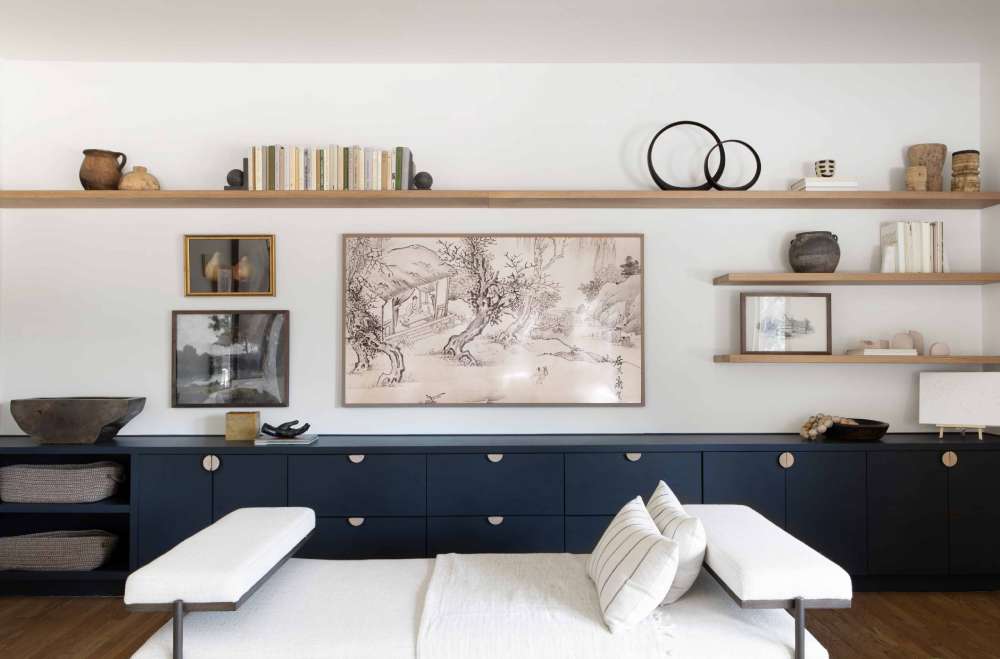
Image source: Urbanology Designs
Sculptural pendant lights and chandeliers are doing a lot right now. Linear chandeliers over a long coffee table. Globe pendants clustered at different heights. Geometric metal fixtures with exposed bulbs.
The 1stDibs survey found that 86% of designers plan to specify custom work for their projects in 2025. Custom lighting is a big part of that number. A one-of-a-kind fixture gives a room personality that no mass-market option can match.
But look. Not everyone has a custom lighting budget. And that’s fine. A well-chosen floor lamp from Article or a pendant from West Elm does the job. The point is to treat lighting as a design choice, not an afterthought. Pick fixtures with interesting shapes. Pay attention to where the eye lands first in the room and put your best fixture there.
Wall Treatments and Art
Walls set the entire mood. And in a contemporary living room, what you put on them (or choose not to) matters as much as the furniture.
The approach has shifted. A HIRI survey found that 52% of homeowners planning renovations in 2025 prefer textured walls over flat painted accent walls. That’s a clear move toward dimensional surfaces over simple color contrast.
Limewash and Textured Finishes
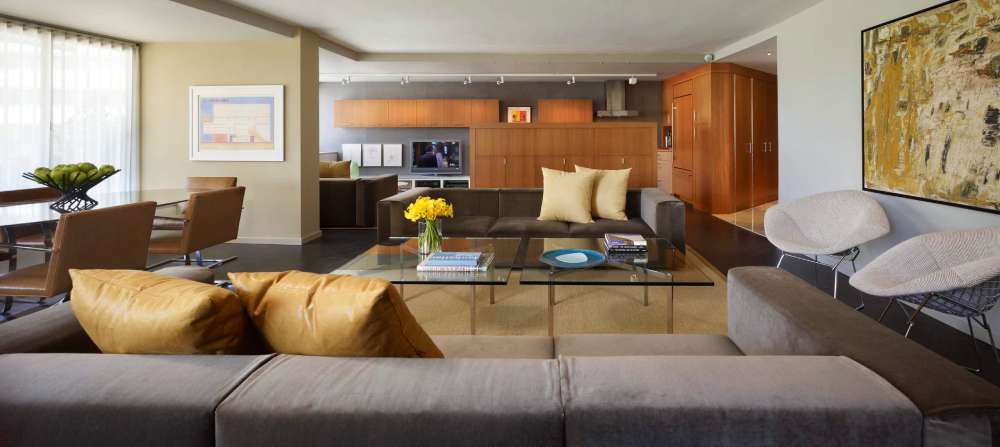
Limewash paint creates a soft, cloud-like finish with natural color variation across the surface. It’s the opposite of a flat, even wall, which is exactly the point.
Venetian plaster sits at the more polished end of the spectrum. Smooth, slightly reflective, with a depth that flat paint can’t match. Both finishes add visual interest without introducing new colors or patterns to the room.
The contemporary approach to wall texture is about subtlety. You notice the finish when the light hits it. You don’t notice it otherwise. That’s the goal.
Large-Scale Art and Gallery Walls
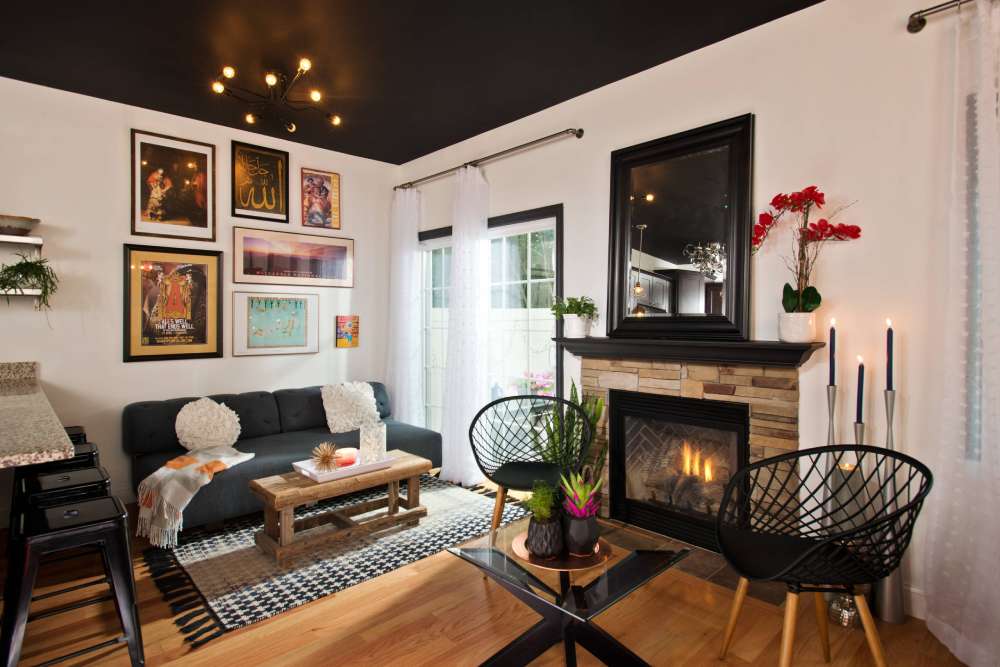
One oversized abstract piece on a main wall. That’s the contemporary standard.
The 1stDibs 2024 survey showed 51% of designers favored abstraction for client projects, making it the dominant art category. Contemporary art followed at 46%, with modern art at 39%.
Gallery walls still work, but the contemporary version is curated and restrained. Three to five pieces, similar frames, consistent spacing. Not the eclectic, mismatched salon wall you’d see in a Bohemian space. A clear focal point keeps the room from feeling busy.
Handling the TV Wall
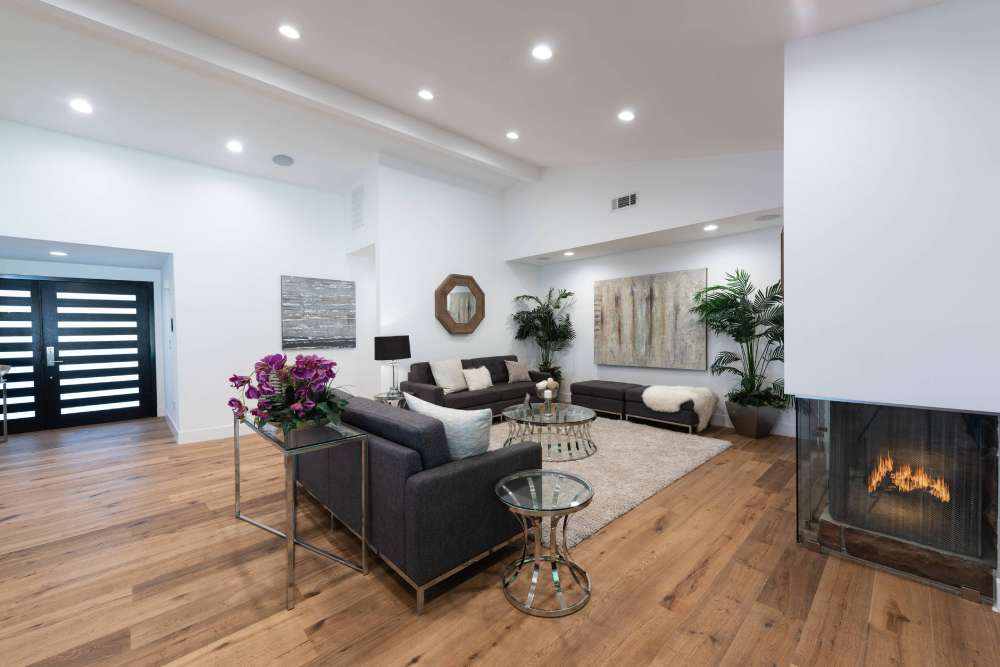
Image source: Levi Design Build
The TV is the elephant in the room. Literally. It’s a big black rectangle that fights with everything else on your walls.
Contemporary solutions:
- Frame TVs that display art when off (Samsung’s The Frame made this mainstream)
- Recessing the TV into a wood slat panel wall for a built-in look
- Mounting on a dark-painted or textured accent wall so it blends in
Leaving intentional blank wall space around the TV helps. A contemporary room needs breathing room, and that includes the walls.
Rugs, Textiles, and Soft Furnishings
Textiles are what prevent a contemporary living room from feeling like a showroom. They add warmth, sound absorption, and visual softness to rooms built around hard surfaces and clean geometry.
The global area rugs market reached $36.5 billion in 2024, according to IMARC Group, growing at a 4.64% CAGR through 2033. North America holds the largest share at 38%, driven by a strong home renovation culture and consumer demand for window treatments and floor coverings that define spaces within open layouts.
Rug Sizing and Placement
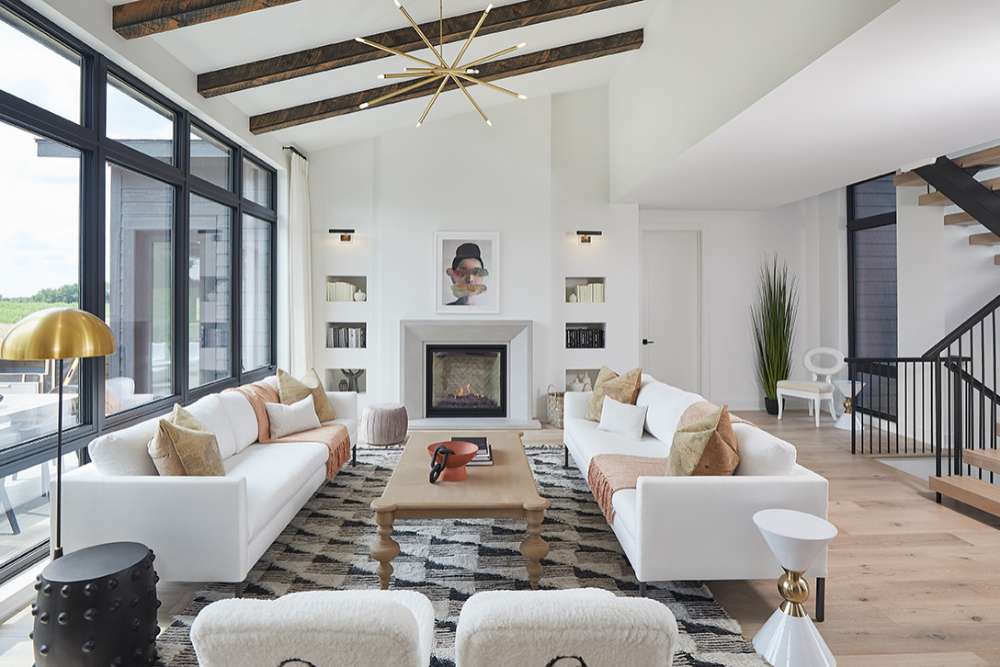
Image source: Visbeen Architects
The rug should be large enough that at least the front legs of every major seating piece sit on it. That’s the non-negotiable rule.
| Room Size | Recommended Rug Size | Placement Tip |
|---|---|---|
| Small (under 12×12) | 5×8 or 6×9 | Front legs only on rug |
| Medium (12×16) | 8×10 | All furniture on rug |
| Large (16×20+) | 9×12 or 10×14 | Full seating group anchored |
For sectional sofas specifically, sizing gets trickier. If you’re working with an L-shape, check out how to place a rug under a sectional for the right proportions.
Contemporary Rug Patterns and Textures
Abstract and tonal patterns define the contemporary rug right now. Think irregular brushstroke designs, color-washed effects, and subtle geometric motifs in muted palettes.
If your sofa is grey, the rug becomes a grounding piece. Warm-toned abstracts or textured solids in cream, sand, or soft rust tones work well. Need specifics? Here’s a guide on rugs that pair with grey couches.
Traditional motifs like Oriental or Persian patterns read differently in a contemporary room. Unless the rug is vintage and worn (which actually works), skip them. Go abstract or go solid.
Throw Pillows and Curtains
Fewer, larger pillows. That’s the contemporary rule. Three on a sofa. Maybe four on a big sectional. Not seven mismatched ones piled up like a bed display.
Fabric mix for pillows: one textured solid (boucle or linen), one subtle pattern, and one in a slightly different tone. For decorative pillow ideas on your sofa, the goal is variety without chaos.
Curtains should be simple. Ripple fold panels in linen or cotton, floor-length, hung as close to the ceiling as possible. If you’ve got white walls, the curtains can match or go one shade warmer. Nothing heavy, nothing ornate.
Decor Accessories and Styling
This is where most people go wrong. They fill every surface. Every shelf gets something. Every corner gets a plant. And the room starts to feel cluttered instead of curated.
Contemporary accessorizing is an editing exercise. Amber Lewis, one of the most followed designers working right now, built her brand on rooms that look collected over time, not purchased in one trip to a store. That “effortless” look takes effort.
The “Less Is More” Approach
Statista reports U.S. home decor market revenue hit $37.13 billion in 2025, with per-person spending at $108.10. People are buying decor. The question is whether they’re buying the right amount.
Editing rule: if you put ten things on a shelf, remove four. Then remove one more. Five items with breathing space between them will always look better than ten crammed together.
A contemporary coffee table needs three things at most. A stack of books, one ceramic object, maybe a small tray. That’s it.
Sculptural Objects and Ceramics
Organic shapes dominate contemporary decor accessories right now. Think handmade ceramic vessels in irregular forms, stone sculptures, and objects with imperfect edges.
The craftsmanship angle is growing fast. Business Research Insights projects the global arts and crafts market will reach $74.3 billion by 2033, up from $45.3 billion in 2024. Handmade objects aren’t just decor. They’re small investments in something with actual character.
- One statement piece per surface, not three small ones
- Vary heights and materials (tall ceramic next to a short stone object)
- Leave negative space between objects
What to Skip
Matching decor sets from the same store. Themed arrangements (beach shells next to a driftwood sign). Fake plants, full stop. Real plants or nothing.
Also skip the “staged model home” look. If every object is placed at a perfect 45-degree angle, it reads as artificial. Contemporary styling has a slight looseness to it. A book left slightly open. A throw draped, not folded.
Contemporary Decor on Different Budgets
You don’t need a design budget to get a contemporary living room. You need a plan. The style actually works better on a moderate budget than something like luxury interior design, because contemporary decor values restraint over excess.
Statista data shows the average U.S. consumer spent approximately $648 on furniture in 2024. The 2025 Houzz study found median living room renovation spending at $4,000. Those aren’t tiny numbers, but they’re manageable with smart allocation.
Where to Invest vs. Where to Save
| Category | Invest | Save |
|---|---|---|
| Seating | Sofa (quality frame, good fabric) | Accent chairs (swap later) |
| Lighting | One statement fixture | Floor and table lamps |
| Textiles | Rug (it anchors the whole room) | Throw pillows, blankets |
| Decor | One original art piece | Ceramic accessories, candles |
The sofa is the one thing you don’t cheap out on. Everything else can be swapped, updated, and rotated as trends shift. But a bad sofa ruins the room every single day.
Budget-Friendly Sourcing
Mid-range brands doing contemporary well: West Elm, CB2, Article, and IKEA’s Stockholm and Nockeby lines. These hit the aesthetic without the price tag of Restoration Hardware or Design Within Reach.
For budget living room decor, the biggest impact per dollar comes from paint and textiles. A limewash wall costs under $100 in materials. New throw pillow covers run $20-40 each. A well-chosen rug from Rugs USA or Ruggable can transform a room for under $500.
Art sourcing on a budget? Desenio, Juniper Print Shop, and even Etsy for original prints. Frame them in simple black or natural wood frames. Nobody needs to know what you paid.
The Three-to-Four Swap Strategy
You don’t have to redo the whole room. Change three to four key elements and the space feels completely different.
High-impact swaps:
- New throw pillows and a throw blanket
- A different rug
- One new piece of wall art
- Updated light fixture or lampshade
That’s a weekend and maybe $500-800. The principles of good design don’t change based on budget. Unity, proportion, and harmony work the same whether you’re spending $500 or $50,000. The key is choosing each piece with intention instead of impulse.
FAQ on Contemporary Living Room Decor
What is contemporary living room decor?
It’s a style defined by what’s current right now. Clean lines, neutral palettes with selective bold accents, and mixed materials like marble, wood, and matte metals. Unlike modern design, it shifts as trends change.
What colors work best in a contemporary living room?
Warm neutrals lead right now. Think greige, oatmeal, warm white, and soft clay tones. Accent with deep navy, terracotta, or sage green. Cool grays have largely fallen out of favor since 2022.
How is contemporary different from modern style?
Modern refers to a specific mid-20th century movement with fixed rules. Contemporary means “of the moment” and borrows from multiple eras. A contemporary room in 2025 looks different than one from 2015.
What type of sofa fits a contemporary living room?
Low-profile modular sectionals and clean-lined sofas in boucle, performance velvet, or textured linen. Brands like Article, CB2, and West Elm carry strong contemporary options across price points.
What materials define contemporary spaces?
Travertine, white oak, walnut, matte black hardware, and Venetian plaster finishes. The key is textural contrast, pairing smooth surfaces against rough ones. Overly glossy or heavily distressed finishes don’t belong.
How should I arrange furniture in a contemporary living room?
Float furniture away from walls. Anchor the seating area with a properly sized rug and create a conversational grouping. Negative space is a feature, not a problem. Leave room for the eye to rest.
What lighting works for contemporary living rooms?
Layer three types: ambient, task, and accent. Sculptural pendants or linear fixtures add visual interest overhead. Arc floor lamps and LED strip lighting inside shelving complete the look.
Can I get a contemporary look on a budget?
Yes. Invest in a quality sofa and rug, then save on accessories and pillows. A DIY limewash wall costs under $100. Affordable art from Desenio or Juniper Print Shop framed in simple black frames reads high-end.
What wall treatments suit contemporary decor?
Limewash paint, textured plaster, and wood slat accent panels are all popular right now. Large-scale abstract art on a single wall creates a focal point without clutter. Keep some walls intentionally bare.
What decor accessories fit a contemporary living room?
Sculptural ceramic vessels, organic-shaped objects, and curated book stacks. The rule is fewer, better pieces with space between them. Skip matching sets, themed arrangements, and fake plants entirely.
Conclusion
Contemporary living room decor works because it prioritizes editing over accumulation. Every choice, from a low-profile modular sofa to a limewash accent wall, serves a purpose. Nothing sits in the room just to fill space.
The warm neutral color palettes, sculptural lighting fixtures, and textural layering covered here aren’t passing trends. They’re the building blocks of a style that adapts as your taste evolves.
Start with the sofa and rug. Get those right and the rest follows. Swap pillows, rotate art, update a lamp. A few intentional changes every year keep the room feeling fresh without a full renovation.
The best contemporary rooms don’t look decorated. They look lived in, with every piece earning its place through function, color, or visual interest. That’s the standard worth working toward.

- Paint Colors That Go with Gray Floors - August 20, 2026
- What Color Bedding Goes with Dark Wood Furniture - August 18, 2026
- What Color Walls Go with Oak Floors - August 16, 2026