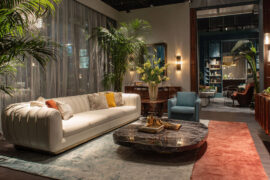
Your patio is either a room or wasted square footage. There is no in-between.
Contemporary patio design ideas have shifted how homeowners think about outdoor living space, moving away from scattered furniture on plain concrete toward purposeful layouts built around materials, zones, and light.
This guide covers everything from material selection and layout planning to outdoor kitchen features, shade structures, privacy solutions, and climate-specific design choices.
By the end, you will have a clear picture of what makes a patio feel genuinely contemporary and how to build one that holds up visually and structurally for years.
What Is Contemporary Patio Design?

Contemporary patio design is an outdoor living approach defined by clean lines, neutral material palettes, mixed textures, and zones organized around how people actually use the space. Unlike a fixed style from a specific decade, contemporary design reflects what looks current right now.
That’s the key distinction most homeowners miss. Contemporary design stays fluid, shifting as aesthetics evolve. Mid-century modern, by contrast, is locked to a specific era. When someone says “contemporary patio,” they mean a space that reads as current, not one that references a past movement.
The global outdoor living structure market was valued at USD 2.32 billion in 2024 and is projected to reach USD 3.35 billion by 2030, growing at a CAGR of 6.2% (Grand View Research). Patios and pergolas drove 64.3% of that market share in 2024.
That growth is tied to one shift: homeowners treating outdoor areas as real rooms. Not storage zones. Not afterthoughts.
What Makes a Patio Feel Contemporary vs. Modern?
This confuses a lot of people, and honestly, even some designers use the terms interchangeably. They shouldn’t.
| Feature | Contemporary Patio | Modern Patio |
|---|---|---|
| Time reference | Present day, evolving | 1950s–1970s aesthetic |
| Lines | Clean, minimal, sometimes curved | Strictly rectilinear |
| Materials | Mixed (concrete, steel, wood, composite) | Teak, steel, glass |
| Color palette | Neutral with accent flexibility | Warm neutrals, earthier tones |
| Style rigidity | Flexible, current | Fixed to a period |
Key difference: Contemporary patios can absorb new trends. A modern patio gets dated the moment design moves on.
Why the Distinction Matters for Material Selection
Choosing the wrong frame of reference leads to expensive mismatches. A homeowner who thinks “contemporary” means “modern” might buy teak furniture with tapered legs and warm bronze hardware. It will look beautiful but will clash against a gray concrete patio surface with corten steel planters.
Contemporary outdoor spaces are cohesive across all elements: surface, structure, furniture, lighting, and planting. If one element is from a different design era, it reads as a mistake, not character.
Understanding how contrast works in design helps here. Contemporary patios use contrast deliberately, not accidentally. Rough concrete next to smooth powder-coated steel is intentional. Teak loungers sitting on travertine next to rusted wrought iron is not.
What Materials Define a Contemporary Patio?
Contemporary patios are built from 5 core material categories: concrete, composite decking, corten steel, natural stone, and powder-coated aluminum. The design comes from how these materials combine, not from any single one.
Polymer-based composites alone accounted for over 50% of global composite decking material usage in 2024 (Business Research Insights). The composite decking market is forecast to grow at a CAGR of 16.6% between 2024 and 2029 (Technavio), driven by demand for low-maintenance, weather-resistant outdoor surfaces.
Concrete and Stone Surfaces
Poured concrete is the most common contemporary patio surface. It tolerates almost every climate, accepts integral color or exposed aggregate finishes, and costs less than natural stone at scale.
Concrete finish options for contemporary patios:
- Broom-finished concrete: slip-resistant, cost-effective, reads clean
- Exposed aggregate: texture and visual depth without added material
- Polished or acid-stained: higher end, works indoors and out
- Stamped concrete: avoid in contemporary design – mimicry reads cheap
Natural stone options include Dekton (a sintered surface from Cosentino), limestone, and large-format porcelain pavers. Belgard concrete pavers are a mid-range option that holds its own against full stone when laid in large rectangular formats.
Houzz (2024) reported that 17% of homeowners who hired professionals for outdoor renovation chose a stone, paver, or concrete specialist, making this trade the second most-hired after landscape contractors.
Metal and Wood Combinations
Corten steel weathers to a deep rust-orange patina over 12-18 months and then stabilizes. It works as planter boxes, privacy screens, or accent walls. The color contrast against gray concrete or pale stone is a core contemporary patio move.
Powder-coated aluminum is the structural material of choice for pergola frames, furniture frames, and privacy screens. It doesn’t rust, doesn’t require painting, and holds dimensional accuracy through temperature changes.
Wood in contemporary patios is almost always used as an accent, not a primary surface. Teak slats on an aluminum-framed bench. Ipe or thermally modified ash on a vertical privacy screen. Full wood decking surfaces are harder to maintain and age unevenly, which works against the clean look contemporary design requires.
In January 2024, Trex Company launched a new eco-friendly composite line made from 100% recycled materials, signaling where the material market is heading. Performance without the maintenance tradeoff.
What Are the Best Contemporary Patio Layout Ideas?
Contemporary patio layouts are organized around zones, not furniture arrangements. The layout defines the zones first. Furniture fills them second.
According to the NAR, 64% of homeowners aspire to create multi-functional outdoor spaces (NAHB, 2024). That number explains why zone-based layout planning has become the default approach for patios above 200 square feet.
Open-Plan Layouts with Defined Zones
The open-plan approach removes physical barriers between the dining, lounging, and cooking areas. Instead, zones are defined through surface changes, level shifts, or furniture placement.
Zone definition tools in contemporary patios:
- Surface transition: concrete dining zone into composite decking lounge area
- Level change: raised deck for seating, lower ground plane for fire feature
- Overhead structure: pergola marks the dining zone, open sky marks the lounge
- Planting edge: low ornamental grass border separates zones without blocking sightlines
The key rule with open-plan layouts is sightline management. Standing at the cooking zone, you should see every other zone. Space planning principles that apply indoors apply directly here: clear circulation paths, no furniture blocking natural movement, and focal points visible from the primary seating zone.
Small Patio Layouts
Small patio design (under 120 square feet) demands vertical thinking. Floor space is fixed; vertical space isn’t.
| Strategy | Application | Space saved |
|---|---|---|
| Built-in seating | Bench along perimeter wall | Removes need for chairs |
| Wall-mounted planting | Corten or powder-coated frames | Keeps floor clear |
| Folding dining table | Stores flat against wall | Reclaims 12–15 sq ft |
| Overhead lighting only | Linear pendants or string lines | No floor lamp footprint |
Two-thirds of outdoor kitchens fall between 100 and 400 square feet, according to NKBA. Even compact patios can support a functional cooking zone if layout planning happens before any materials are purchased.
Large Patio Layouts with Zones
Large patios (400+ square feet) fail when they’re treated as one undivided surface. The result looks like a parking lot with furniture.
Good large-format contemporary patio layout separates 3 primary zones: dining, lounging, and transition. The transition zone is what most people skip. It’s the in-between space. Walking paths, a fire feature, a water element, or a planted strip. It creates breathing room between the active zones and makes the overall layout feel designed rather than dropped in.
L-shaped and wraparound configurations work well on corner lots. The corner creates a natural anchor point for the lounge zone, while the two wings carry the dining and cooking zones along the house perimeter.
What Furniture Styles Work in Contemporary Patio Design?
Contemporary outdoor furniture is characterized by low profiles, clean silhouettes, and neutral upholstery. The furniture should read as an extension of the material palette, not a contrast to it.
More than 50% of home buyers are willing to pay a premium for homes with an outdoor living area, according to Brown Jordan Outdoor Kitchens via NAR. The furniture quality visible from the street or during a showing drives part of that perception.
Furniture Forms That Read Contemporary
Sofa-style seating: Low-profile, deep-cushioned outdoor sofas in charcoal, warm white, or greige. Brands like Kettal, Gloster, and CB2 Outdoor all produce aluminum-framed versions that hold shape through seasonal temperature shifts.
Sling and woven chairs: Powder-coated steel frames with synthetic woven seats or sling backs. Armless versions read cleaner than those with armrests in most contemporary configurations.
Dining tables: Rectangular, oversized, and low-contrast. A Dekton or large-format porcelain tabletop on an aluminum or steel base sits correctly in a contemporary outdoor dining zone. Round tables work in compact spaces but can disrupt the rectilinear geometry of a contemporary layout.
What to Avoid
Certain furniture categories pull a contemporary patio backward immediately:
- Ornate wrought iron with scrollwork
- Curved Victorian silhouettes
- Heavily distressed finishes (these read as rustic, not contemporary)
- Wicker in honey or natural tones (reads coastal or bohemian)
- Matching furniture sets with identical pieces – contemporary layouts mix forms
Restoration Hardware Outdoor launched 18 outdoor furniture collections in early 2024 featuring teak, aluminum, wicker, and rattan. The collections that read contemporary were those built around powder-coated frames with performance-fabric cushions in warm neutrals, not those leaning into natural material warmth.
What Color Palettes Work for Contemporary Patios?
Contemporary outdoor color systems are built on a neutral base with one intentional accent. The base does the work. The accent does the personality.
78% of outdoor design experts identify indoor-outdoor coherent design as the biggest current trend (Market Research Blog via Fixr.com). That coherence starts with matching the outdoor color system to the home’s interior palette, not selecting outdoor colors in isolation.
The Contemporary Neutral Base
The 5 neutrals that anchor most contemporary patios:
- Warm white (surface: pavers, furniture upholstery)
- Charcoal (frames, structural elements, accent wall)
- Greige (concrete finish, cushion fabric, stone surface)
- Slate gray (composite decking, metal planters)
- Warm black (powder-coated hardware, lighting fixtures, pergola frame)
These neutrals work together because they share undertone direction. Warm neutrals (cream, greige, warm white) pair with warm blacks and weathered corten. Cool neutrals (slate, charcoal, stone gray) pair with cool blacks and brushed steel.
Mixing warm and cool neutrals in the same outdoor space is the single most common contemporary patio color mistake. The space ends up looking unresolved. Learn how color relationships function to avoid this before purchasing any materials.
Adding Accent Color Without Breaking the Palette
One accent. Not two. The accent comes through a single category: cushion fabric, planter color, or one accent wall.
Accent approaches that work in contemporary patios:
- Terracotta or burnt orange cushions against a charcoal frame and gray concrete
- Deep olive planting against warm white pavers
- Navy blue outdoor rug under a greige furniture grouping
Seasonal flexibility is a real advantage of the neutral base. Swap the cushion covers in spring. The whole space feels refreshed without touching a single structural element. Understanding color theory principles makes this kind of seasonal switching predictable rather than guesswork.
What Lighting Ideas Suit a Contemporary Patio?
Contemporary patio lighting uses 3 distinct layers: ambient, task, and accent. Each layer serves a different function. Running only one layer produces flat, institutional-feeling outdoor spaces.
22% of all renovating homeowners identified outdoor lighting as a top priority in their remodel project, according to Houzz (2024). The LED outdoor lighting market is forecast to grow at a CAGR of 5.1% from 2024 to 2032, driven by smart technology adoption and energy efficiency requirements (Lumary, 2024).
Ambient Lighting: The Base Layer

Ambient lighting establishes the overall brightness level of the outdoor space. Contemporary patios use 3 primary ambient sources:
String lights in a contemporary configuration are warm white (2700K-3000K), not multicolor. They’re suspended in clean horizontal runs or a grid pattern, not draped loosely. The difference between a contemporary string light installation and a generic backyard one is tension and linearity.
Linear LED profiles under pergola beams or along wall bases create wash lighting that defines architectural structure without a visible fixture. This is the most contemporary-specific ambient approach.
Recessed in-ground lighting set into pavers or step edges provides low, even ambient coverage. Recessed lighting placed in outdoor hardscape surfaces eliminates the need for pole-mounted fixtures that interrupt clean sightlines.
Task and Accent Lighting
Task lighting serves the cooking and dining zones. Over outdoor kitchen countertops, use under-cabinet LED strips rated for damp or wet locations. Over dining tables, pendant lighting with geometric or minimal silhouettes works in covered pergola configurations. Avoid lantern-style pendants: they read traditional, not contemporary.
Accent lighting highlights architectural features: a corten steel planter, a vertical plant wall, a stone fireplace surround. Accent lighting uses directional fixtures, typically adjustable spotlights or wash fixtures, placed at 30-45 degree angles to the surface being highlighted.
Smart integration options include Lutron Caseta Outdoor for dimming control and Philips Hue Appear for color-adjustable path and facade lighting. The U.S. outdoor lighting market is growing at a CAGR of 7.8% from 2025 to 2030 (Grand View Research), with smart-enabled fixtures driving the residential adoption curve.
What Doesn’t Belong in a Contemporary Patio Lighting Scheme
- Solar path lights with plastic housing (scale and finish never read contemporary)
- Colored LED strips in non-architectural placement
- Floodlights mounted on the house wall pointing down across the patio (harsh, flat)
- Mismatched fixture finishes (mixing brushed nickel and aged bronze in the same zone)
What Outdoor Kitchen and Dining Features Fit Contemporary Patio Design?
Contemporary outdoor kitchens are built-in, material-consistent, and zone-anchored. They don’t look like a grill sitting on a deck. They read as a permanent outdoor cooking structure that was designed as part of the patio, not dropped into it later.
The global outdoor kitchen market reached $24.45 billion in 2024, with residential kitchens accounting for 62% of revenue (Grand View Research). Among renovating homeowners, 12% added or upgraded an outdoor kitchen in 2024 (Houzz). ROI ranges from 55% to 200%, depending on climate, materials, and market (Remodeling Magazine).
Built-In Grill Station Design

The grill station is the anchor of any outdoor kitchen. In a contemporary configuration, it’s recessed into a built masonry or marine-grade polymer cabinet run. The countertop sits at standard counter height (36 inches) and uses one of 3 contemporary-appropriate surfaces:
- Dekton (sintered ceramic, heat-resistant, low maintenance)
- Concrete countertop (integral color or pigmented sealer for consistency with patio surface)
- Large-format porcelain (durable, non-porous, range of finish options)
DCS by Fisher and Paykel and Lynx Grills both produce professional-grade built-in grill heads with stainless steel finishes that sit correctly in a contemporary outdoor kitchen surround. Evo Cooking Systems offers a flat-top griddle format that suits the clean, horizontal aesthetic of contemporary kitchen design.
Cabinetry and Storage
Marine-grade polymer and powder-coated aluminum are the 2 cabinet materials that hold in outdoor conditions without periodic refinishing. Stainless steel cabinet boxes work but show fingerprints and require cleaning. In a contemporary outdoor kitchen, the cabinet face material is usually either stainless steel door panels or smooth-face composite panels in charcoal or warm white.
66% of outdoor kitchens fall between 100 and 400 square feet (NKBA). For kitchens at the smaller end of that range, a single run of cabinets with grill, prep surface, and undercounter refrigerator covers the functional requirements without overbuilding.
The Outdoor Dining Zone

Contemporary outdoor dining areas use oversized rectangular tables that seat 6-10 people. A table under 72 inches long looks residential-small in a contemporary patio layout. 84-96 inches is the standard for spaces with a defined dining zone.
The dining zone benefits from an overhead structure, either a flat-roof pergola or a louvered system, that marks the zone, provides shade, and anchors the pendant lighting installation above the table. Understanding what a pergola contributes structurally and visually helps with scale decisions here. The pergola span should exceed the table footprint by at least 24 inches on all sides for the zone to feel properly framed.
What Shade Structures Work in Contemporary Patio Design?

Contemporary shade structures share one trait: clean rooflines. Arched or ornate overhead structures read traditional or Mediterranean. Flat-pitch and louvered systems read contemporary.
Pergolas and patios drove 64.3% of the global outdoor living structures market in 2024 (Grand View Research). Nearly 41% of all new outdoor structure installations in 2024 involved pergolas, gazebos, or modular shade units (Future Market Insights).
Flat-Roof Pergolas and Louvered Systems

Flat-roof pergola: Powder-coated aluminum frame, no pitch, no decorative post caps. This is the default contemporary pergola form. Brands like StruXure and Renson Camargue produce aluminum louvered systems where the roof slats adjust from 0 to 160 degrees.
A fully motorized smart louvered pergola averages around $200 per square foot installed, totaling approximately $25,200 for a standard configuration (Valley Covers, 2024). That includes weather sensors that close the louvers automatically during rain.
In 2024, StruXure by AZEK launched its updated outdoor living lineup featuring the StruXure+ app for smartphone-controlled louver adjustments, reinforcing the move toward smart shade structures in premium outdoor living spaces.
Retractable Awnings and Cantilever Umbrellas
Retractable awnings are the mid-range shade option. Markilux produces motorized retractable systems with Sunbrella fabric covers that retract fully when not in use, preserving the open sightlines that contemporary patios rely on.
Cantilever umbrellas work in zones where a pergola column would interrupt the layout. The off-center post keeps the shade area clear of obstructions. For contemporary patios, choose square or rectangular canopy shapes over round ones, and neutral fabric in charcoal, greige, or warm white.
What to avoid:
- Peaked or pointed rooflines on pergola structures
- Lattice-top pergolas (these read cottage or traditional)
- Brightly colored fabric on umbrellas or awnings
- Vinyl or plastic pergola kits with visible seams
What Plants and Landscaping Fit a Contemporary Patio?
Plant selection in a contemporary patio follows one rule: architectural form over ornamental softness. Plants are chosen for structure, not for flowers or informal charm.
77% of homeowners upgraded their outdoor plants or shrubs during renovation projects in 2024, according to Houzz. The outdoor privacy screen market was valued at USD 1.5 billion in 2024 and is projected to reach USD 3.2 billion by 2033 at a CAGR of 9.2%, driven partly by the shift toward plant-integrated privacy solutions (Verified Market Reports).
Architectural Plants for Contemporary Spaces

Houzz 2024 data shows that homeowners increasingly choose low-maintenance and native plants for outdoor renovations. The 5 species that read most naturally in a contemporary patio setting:
- Ornamental grasses (Karl Foerster, Blue Oat) for movement and vertical texture
- Agave in large corten steel containers for stark sculptural form
- Bird of paradise (Strelitzia reginae) for tropical structure in warmer zones
- Bamboo in contained planters for a privacy screen that reads natural
- Yucca for dry climate patios where aggressive architectural form is needed
What to avoid: overly romantic cottage plants (lavender, climbing roses, foxglove), highly seasonal flowering annuals, and asymmetric wildflower-style planting in a structured geometric layout.
Planter Selection and Ground Cover
The planter is as important as the plant. Terracotta reads rustic or Mediterranean. In a contemporary patio, planters are corten steel, smooth concrete, or powder-coated aluminum in charcoal or matte black.
Ground cover options that maintain the clean look between pavers or at zone edges:
- Decomposed granite (DG) for dry-climate contemporary patios
- Pea gravel in natural gray tones for a textured but restrained ground plane
- Mondo grass as a low, dense fill between large paver gaps
Keep groupings odd-numbered and clustered. A single large planter reads stronger than 4 small ones scattered around a patio perimeter. The core principles of design that govern indoor spaces apply directly to outdoor plant arrangement: repetition, scale, and negative space matter just as much outside.
Privacy Through Planting
Living barriers can reduce wind by up to 50% and create defined outdoor rooms without hard structures, according to landscaping research from Task Masters. For contemporary patios, tall hedge planting reads cleaner than mixed cottage-style planting.
Contemporary-appropriate privacy planting strategies:
- Single-species columnar hedge (Green Giant Arborvitae, Leyland Cypress) in a linear row along one boundary
- Tall bamboo in contained planters along a fence line to add height without spreading
- Raised planter beds with ornamental grasses at the patio edge
For harder privacy, corten steel or horizontal-slat composite screens are the contemporary choice. These are structural elements, not just functional ones. They contribute to the material palette of the space the same way a concrete surface or powder-coated pergola frame does. Understanding how texture works as a design element helps when layering hard screens with soft planting behind them.
What Privacy Solutions Fit Contemporary Patio Design?
Privacy is a structural decision, not an afterthought. In contemporary patios, privacy elements are designed into the layout, not added after the fact.
Over 65% of new housing units in 2026 included private outdoor living areas, according to U.S. Census Bureau data cited by Verified Market Reports. The market response is clear: privacy is now an expected feature, not a premium one.
Hard Screens: Slatted and Panel Options
Horizontal slat screens are the most common contemporary privacy solution. They give partial visual screening while maintaining airflow and sightlines at a specific angle.
| Screen Type | Material | Best For | Maintenance |
|---|---|---|---|
| Horizontal slatted screen | Composite or powder-coated aluminum | Side boundaries, feature walls | Very low |
| Corten steel panel | Weathering steel | Accent wall, standalone screen | None after patina forms |
| Glass panel fencing | Frameless tempered glass | Pool surrounds, view preservation | Regular cleaning |
| Living wall frame | Corten or aluminum + planting | Soft boundary, biophilic element | Irrigation required |
Wood slatted screens work in contemporary patios too, but only thermally modified or composite wood. Untreated pine or cedar will silver unevenly and require refinishing every 2-3 years, which undermines the low-maintenance principle most contemporary outdoor spaces are built around.
How to Integrate Privacy Without Breaking Sightlines
The mistake most people make is building a solid fence around the entire patio perimeter. Full enclosure kills the spatial connection between the patio and the garden, which is one of the defining qualities of a well-designed contemporary garden design.
Better approach: Screen the 2 sides that matter most (usually the neighbor-facing boundary and the public street side) and leave the garden-facing side open or softly planted. Use emphasis principles to draw the eye toward the open view rather than the screened sides.
Glass panel fencing is the right call when the view beyond the patio is worth preserving. Pool surrounds, hillside patios, and garden-view patios all benefit from frameless tempered glass panels that provide wind and fall protection without visual obstruction.
What Are the Best Contemporary Patio Ideas for Specific Climates?
Material selection in a contemporary patio is only correct relative to the climate it will live in. A beautiful corten steel and composite deck that works in Denver will fail aesthetically and structurally in coastal Florida within 3 seasons.
Porcelain is non-porous and resists extreme weather better than most other patio surface materials (Fixr.com). Composite decking, meanwhile, resists rot and insects without periodic sealing, making it the default choice across multiple climate zones.
Hot and Dry Climates
Arizona, New Mexico, Southern California, and Texas fall into this category. The primary design challenge is surface heat absorption and UV intensity.
Surface: Light-toned large-format porcelain or travertine pavers. Both reflect rather than absorb solar heat. Avoid dark concrete in direct sun, the surface temperature becomes unusable by midday in summer.
Shade: Louvered pergola systems are worth the investment here. Full shade coverage during peak sun hours (10am-3pm) determines whether the patio is actually usable 8 months of the year or just 4.
Plants: Agave, yucca, ornamental cacti in corten containers. Drought-resistant planting eliminates irrigation complexity and reads architecturally strong in contemporary layouts.
Wet and Humid Climates
The Gulf Coast, Southeast, and Pacific Northwest all share high moisture loads, though the temperature profiles differ. The primary challenge is drainage, material degradation, and mold on soft surfaces.
Key material rules:
- Composite decking over wood decking at all times
- Powder-coated aluminum furniture frames over steel (steel rusts faster in humidity)
- Performance fabric cushions rated for moisture, not standard polyester fills
- Sloped patio grade of at least 1% away from the house for drainage
In humid climates, resin wicker and synthetic outdoor fabrics consistently outperform natural fibers when exposed to moisture (Patio Productions research). The look can still read contemporary. The material just has to be selected differently than it would be in an arid zone.
Cold Climates
Freeze-thaw cycles are the material killer in northern states and Canada. Any surface material that absorbs water will crack when that water expands during freezing.
Bluestone and interlocking frost-resistant pavers are the two contemporary-compatible options for cold-climate patios (Fixr.com). Large-format porcelain, when installed with proper drainage and flexible joint compound, also handles freeze-thaw well. Avoid large poured-concrete slabs without control joints: they crack.
Cold-climate extras that maintain year-round usability:
- Radiant heating panels mounted under a covered pergola
- Infrared electric heaters on the pergola ceiling for instant warmth
- Covered structures rated for snow load (aluminum louvered systems from Renson and StruXure specify snow load ratings)
How Much Does a Contemporary Patio Cost to Build?
Contemporary patio builds span a wide cost range, driven by 4 variables: surface material, square footage, structural additions, and labor market.
The average cost to build a patio in 2025 is $4,003, with most homeowners spending between $2,027 and $6,088 for basic installations (HomeAdvisor). Full contemporary outdoor living builds including pergola, outdoor kitchen, and designed landscaping run significantly higher.
Cost by Build Tier
| Build Tier | Includes | Typical Range |
|---|---|---|
| Entry contemporary | Concrete or paver surface, minimal furniture | $8,000 – $15,000 |
| Mid-range build | Pavers + flat-roof pergola + outdoor kitchen rough-in | $20,000 – $45,000 |
| Full contemporary | Natural stone + louvered pergola + complete outdoor kitchen | $60,000 – $120,000+ |
Pavers cost approximately $30 to $40 per square foot installed in 2025 (Molinaro Property Service). Retaining walls run $75 to $95 per square foot (face foot), which adds up quickly on sloped lots.
ROI and Cost Recovery
Landscaping upgrades as a category deliver a 100% cost recovery on an average $9,000 spend, according to NAR data. Outdoor kitchens return between 55% and 200% of their investment cost depending on climate, materials, and market (Remodeling Magazine).
63% of homeowners would prioritize outdoor living space investment if they were to remodel, according to a Brown Jordan Outdoor Kitchens study. The AIA Home Design Trends Survey confirmed that outdoor living spaces were the most requested residential design feature in 2024 for the fifth consecutive year.
The exterior improvements principle from Zonda’s 2025 Cost vs. Value Report holds true for outdoor living: curb-visible and lifestyle-enhancing improvements outperform internal renovations in resale ROI when the quality of materials and installation meets buyer expectations in the local market.
What Drives Cost Up Most
Most homeowners underestimate 3 cost categories when planning a contemporary patio build:
- Site prep: Sloped lots with clay soil add $5,000-$15,000 in grading and drainage before a single paver is placed
- Structural permits: In 23% of U.S. municipal jurisdictions, structural permits and setback restrictions add up to 15% to total project cost (Future Market Insights)
- Lighting: A properly layered 3-level lighting installation (ambient, task, accent) for a mid-range patio runs $3,000-$8,000 professionally installed
The structural and legal distinctions between a patio, deck, and veranda affect permitting requirements and what contractors are qualified to build. Clarifying this before receiving bids saves rework and cost surprises.
If a contemporary patio build is part of a larger outdoor living investment, reviewing how other outdoor living styles approach the same space planning decisions gives useful context for understanding what structural decisions are style-specific and which ones are universal to any well-built outdoor space.
FAQ on Contemporary Patio Design Ideas
What is the difference between a contemporary and a modern patio?
Contemporary means current and evolving. Modern refers to a fixed 1950s-1970s aesthetic with strict rectilinear forms and warm wood tones. A contemporary patio absorbs today’s trends. A modern patio reflects a specific design era.
What materials are best for a contemporary patio?
The core material palette includes concrete, composite decking, corten steel, natural stone, and powder-coated aluminum. These materials combine well, hold up in most climates, and require minimal maintenance compared to natural wood surfaces.
What color palette works best for a contemporary outdoor space?
Stick to a neutral base: charcoal, greige, warm white, or slate gray. Add one accent color through cushions or planters. Mixing warm and cool neutrals in the same space is the most common contemporary patio color mistake.
How do I define zones in an open-plan patio layout?
Use surface transitions, level changes, overhead structures, or low planting edges. A pergola marks a dining zone. A level shift separates lounge from cooking areas. Zone definition replaces physical walls in contemporary outdoor living space planning.
What outdoor furniture works in a contemporary patio?
Low-profile sofas, sling chairs, and armless loungers in neutral upholstery on powder-coated aluminum frames. Avoid ornate wrought iron, heavily distressed finishes, and matching furniture sets. Contemporary layouts mix forms rather than relying on matched collections.
What plants suit a contemporary patio design?
Choose plants with architectural form: ornamental grasses, agave, bird of paradise, bamboo, and yucca. Plant in corten steel or concrete containers. Avoid cottage-style flowering plants and informal wildflower planting in structured geometric layouts.
What shade structure fits a contemporary patio?
Flat-roof pergolas and louvered pergola systems from brands like StruXure and Renson are the standard choice. Avoid peaked rooflines, lattice tops, and arched structures. These read traditional or rustic, not contemporary.
How do I add privacy to a contemporary patio without ruining the look?
Use horizontal-slat composite screens, corten steel panels, or frameless glass fencing. Screen only the 2 sides that need it most. Full perimeter enclosure breaks the spatial connection between the patio and the garden.
How much does a contemporary patio cost to build?
Entry-level builds run $8,000 to $15,000. Mid-range builds with a pergola and outdoor kitchen rough-in cost $20,000 to $45,000. Full builds with natural stone and a louvered roof system reach $60,000 to $120,000 or more.
Does a contemporary patio add value to a home?
Yes. Landscaping upgrades recover 100% of costs on average, according to NAR data. Outdoor kitchens return 55% to 200% depending on climate and materials. The AIA confirmed outdoor living was the most requested residential design feature in 2024 for the fifth consecutive year.
Conclusion
Contemporary patio design ideas work because every decision connects: material palette, zone layout, shade structure, lighting layers, and plant selection all reinforce each other.
Get one element wrong and the whole space reads unresolved. Get them right and the patio functions as a genuine outdoor room.
The material choices covered here, from composite decking and corten steel to Dekton surfaces and powder-coated aluminum, are not just aesthetic preferences. They determine how the space performs across seasons and climates.
Privacy, shade, and hardscape design decisions made early in the planning process save significant cost and rework later.
A well-built contemporary outdoor living space adds measurable home value and daily usability. Start with the layout. Everything else follows.

- Paint Colors That Go with Gray Floors - August 20, 2026
- What Color Bedding Goes with Dark Wood Furniture - August 18, 2026
- What Color Walls Go with Oak Floors - August 16, 2026