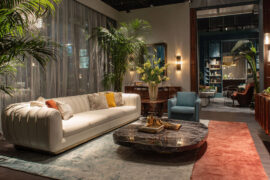
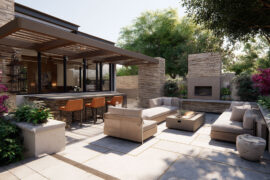
Most rooms feel designed. The best ones feel found.
Modern organic interior design is a structured approach to creating spaces that feel connected to the natural world, built around raw materials, curved forms, and an earthy color palette that prioritizes warmth over polish.
It is not a trend. It borrows from mid-century organic modernism, wabi-sabi philosophy, and Scandinavian minimalism, and it has grown into one of the most searched residential design approaches of the past three years.
This guide covers everything from natural material selection and lighting strategy to space planning, wet room specification, and the sustainability claims worth trusting, and the ones worth questioning.
What Is Modern Organic Interior Design?

Modern organic interior design is a design approach that prioritizes natural materials, irregular forms, and living elements to create spaces that feel connected to the natural world. It is structured, not ornamental. The goal is material honesty, tactile depth, and low visual noise.
A lot of people conflate it with biophilic design, and honestly, the confusion makes sense. But they are different things. Biophilic design is a psychological framework about human connection to nature. Organic design is the aesthetic and material system you use to build that connection into a room.
It also has nothing to do with rustic design. Rustic relies on weathered charm and country nostalgia. Organic modern is clean, grounded, and forward-looking.
How Does Organic Modern Differ from Related Styles?

This comes up constantly. Here is a direct breakdown:
| Style | Core Logic | Material Approach | Structural Feel |
|---|---|---|---|
| Modern Organic | Material honesty, natural form | Raw linen, stone, unfinished oak | Warm, clean, grounded |
| Biophilic | Psychological framework for nature connection | Plants, water, natural light | Variable |
| Wabi-Sabi | Beauty in imperfection and transience | Handmade, aged, irregular | Quiet, imperfect, philosophical |
| Japandi | Japanese wabi-sabi + Scandinavian hygge | Light wood, linen, ceramics | Minimal, functional, calm |
Organic modern borrows from all three. But unlike wabi-sabi, it does not celebrate aging for its own sake. Unlike Scandinavian design, it does not default to cool whites and pale birch. It runs warmer, earthier, and more tactile.
Where Does the Style Come From?
The roots sit firmly in mid-century organic modernism. Alvar Aalto was building with birch and natural light in the 1930s. Isamu Noguchi was carving furniture from solid stone and wood a decade later. Both treated natural material as the point, not the backdrop.
The style went quiet for a while, absorbed into the broader minimalist movement. It came back hard through Scandinavian influences in the 2010s, and by 2024, Japandi had become one of the most searched interior design styles globally according to Google’s Year in Search data, pulling organic modern principles into mainstream residential design.
The sustainable home decor market tells the same story. It was valued at $388.7 billion in 2024 and is projected to reach $663.9 billion by 2034 (Global Insight Services), reflecting how deeply rooted the demand for natural, honest materials has become.
What Are the Core Materials Used in Modern Organic Interiors?

The material palette is where organic modern becomes concrete. Material honesty is the operating principle: visible grain, natural texture variation, and aging over time are features of the design, not problems to solve.
The global natural stone market was valued at $10.17 billion in 2024 and is projected to reach $14.11 billion by 2030 at a 5.8% CAGR (Grand View Research). That growth tracks directly with rising demand for travertine, limestone, and unpolished stone in residential interiors.
Primary Materials in the Organic Palette
Textiles and soft materials: raw linen, unbleached wool, undyed cotton, jute, bouclé fabric, hemp
Hard surfaces: untreated oak, walnut, travertine, limestone, terracotta, raw plaster, handmade ceramic
Accent materials: rattan, unlacquered brass, brushed bronze, blackened steel, washi paper (for lighting)
Brands like Libeco (linen), Faribault Woolen Mill (wool throws), and Beni Ourain rug weavers are the reference points here. These are not decorative accessories. They are structural to how the room feels.
Natural Stone vs. Engineered Stone in Organic Design
This is a genuine decision point. Natural stone ages, stains, and develops character. Engineered stone stays consistent. One fits organic design. The other does not.
Travertine is the standout material right now. The travertine market was valued at $3.55 billion in 2024 and is projected to grow through 2035 at a 3.44% CAGR (Market Research Future). Its warm, stratified patterning and matte surface make it one of the most compatible stones with organic modern interiors.
Polished quartz and engineered marble undermines the material honesty that organic design depends on. Honed, tumbled, or brushed finishes on natural stone are the correct specification. The goal is a surface that looks like it came from the ground.
Wood Finishes That Hold Up in Organic Interiors

Oiled and waxed finishes are correct. They let the grain show, age gracefully, and carry significantly lower VOC emissions than synthetic lacquers.
According to EPA data, natural plaster, clay-based paint, and oil-finished wood have substantially lower VOC content than their synthetic alternatives. That matters both for environmental reasons and for the tactile quality of the surface.
High-gloss lacquer breaks organic coherence. So does polyurethane. FSC-certified oak, walnut, and reclaimed wood in matte or oiled finishes are the standard specification for organic modern cabinetry, flooring, and furniture. Reclaimed wood, in particular, brings visible material history into the space, which reinforces rather than contradicts the design intent.
What to avoid: chrome hardware, high-polish synthetics, any finish that reads as plastic or mass-produced. The character of reclaimed wood is exactly the kind of material honesty organic design depends on.
What Color Palettes Work in Modern Organic Interiors?

The organic color logic pulls from soil, clay, sand, bark, and stone. Warm whites, oatmeal, terracotta, sage, ochre, and deep umber form the core palette. These are not neutral colors in the conventional sense. They carry temperature and weight.
Cool grays and stark whites work against organic design. They signal industrial minimalism, not earthy warmth. The difference is the undertone: organic whites have yellow, pink, or red in them. A pure cool white reads as clinical next to raw linen and unfinished oak.
How to Layer an Organic Color Scheme
43% of millennials prefer eco-friendly or sustainable design (Dara Agruss Design, 2024), and the earthy, grounded palette of organic modern design maps closely to this preference. That consumer base is also the one most likely to choose paint brands aligned with organic principles.
Specific references worth knowing:
- Bauwerk Colour (Australia): limewash paints in mineral tones, low VOC
- Earth Born Paints (UK): clay and chalk-based, zero VOC
- Portola Paints (US): Roman clay and limewash finishes with visible texture
The layering logic is straightforward: work within a family of 3-4 tones pulled from the same natural source. Terracotta, ochre, and raw linen all come from the same mineral family. Pair them with an untreated wood floor and one plaster wall, and the room has tonal coherence without looking designed.
How Natural Light Changes Organic Pigments
This is something that gets overlooked in client conversations. Natural pigments in organic paints shift through the day in ways synthetic paints do not. An oatmeal wall at 8am reads differently at 3pm. That responsiveness is a feature of the palette, not an inconsistency.
Sheer linen drapes are the right window treatment here. They diffuse and warm incoming light without blocking it. Heavy blackout curtains or structured roller blinds work against the organic palette by flattening the light. For more on how light functions structurally in a room, the interaction between warm pigments and diffused natural light is the central consideration in organic modern spaces.
How Does Furniture Shape Define an Organic Interior?

Material choice matters. But form matters more than most people expect. A room full of natural materials and rectilinear furniture still reads as industrial or contemporary, not organic.
Organic furniture uses curved, asymmetrical, or softened forms. Not decoratively curved, but structurally curved. Rounded sofas, organic-edged tables, and low-profile seating that sits close to the ground all contribute to a room that feels connected to natural form rather than manufactured geometry.
Key Silhouettes for Organic Modern Furniture
Research from Dazkir and Read (2012), published in Environment and Behavior, found that curved interior environments produce lower cortisol responses compared to rectilinear ones. That is the design science behind why organic modern spaces feel genuinely calming rather than just aesthetically soft.
Rounded sofas: low, wide, and upholstered in bouclé or natural wool. The Christophe Delcourt approach, where the sofa anchors the room like a stone.
Organic-edged tables: live edge or hand-carved forms in walnut or oak. Soren Rose Studio’s work is a direct reference here.
Low-profile seating: keeps the visual center of gravity close to the floor, which reinforces the grounded quality of the palette.
Vintage and Antique Pieces in a Modern Organic Scheme
Pierre Jeanneret’s chandigarh furniture, originally designed for post-independence India in solid teak, now regularly appears in organic modern interiors. The aged grain and honest joinery fit perfectly. That is not nostalgia. It is material quality that contemporary production rarely matches.
The integration of vintage pieces into organic schemes is one of the more direct routes to material authenticity. Aged wood carries visible history. Mass-produced furniture, even in natural materials, tends to read as uniform.
What to avoid: furniture with ornate detailing, high-gloss surfaces, and heavily geometric profiles. The relationship between form and material in organic design is direct: softer forms need softer materials, and both need to feel like they came from somewhere real.
What Role Do Plants and Living Elements Play?

Plants in organic modern design are not accessories. They are material elements that contribute texture, scale, and measurable environmental quality.
Human Spaces research found that workers in environments with biophilic elements are 6% more productive, 15% more creative, and report 15% higher wellbeing. A 2024 systematic review of 74 peer-reviewed studies in Intelligent Buildings International confirmed significant psychological, physiological, and cognitive benefits from biophilic design. These findings apply to residential spaces as well as workplaces.
How to Select and Place Plants in Organic Interiors
Scale over quantity. One large fiddle leaf fig or olive tree reads as a structural element. Twelve small succulents read as a hobby. Organic modern design uses plants the same way it uses furniture: as anchors with real visual weight.
Specific species that work structurally:
- Fiddle leaf fig (Ficus lyrata): vertical scale, broad leaves, strong silhouette
- Monstera deliciosa: sculptural form, works in corners with indirect light
- Olive tree: Mediterranean character, fine texture, works in floor-level ceramic pots
- Snake plant (Sansevieria): compact, upright, low maintenance, good for smaller spaces
The NASA Clean Air Study (1989, with ongoing supporting research) identified pothos, peace lily, and snake plant as effective at reducing VOCs in enclosed spaces. That is a functional argument for plant integration, not just an aesthetic one.
Dried Botanicals and Preserved Moss
Dried botanicals provide the same textural value as living plants with no maintenance requirement. Dried pampas grass, preserved eucalyptus, and bundles of dried grasses in ceramic vessels all fit the organic palette without requiring watering schedules.
Preserved moss walls are worth mentioning. They are maintenance-free, carry genuine tactile texture, and introduce a green tone that sits well within the earthy organic palette. The concern is sourcing: responsibly harvested preserved moss is FSC-adjacent in its approach, and the distinction matters both environmentally and for the material integrity of the design.
How Is Lighting Designed in Modern Organic Interiors?

Warm color temperature is not optional in organic design. 2200K-2700K is the correct range. This mimics natural firelight and complements the warm tones of raw linen, unfinished oak, and terracotta in ways that cool-white LED at 4000K completely undermines.
The global home decor market reached $133.62 billion in 2024 (Grand View Research), with lighting a significant and growing segment. As more homeowners move toward organic and sustainable interiors, the demand for fixture materials that align with natural design principles is increasing alongside it.
Fixture Materials That Fit the Organic Palette
| Fixture Type | Material | Why It Works |
|---|---|---|
| Pendant | Woven rattan, washi paper | Diffuses light softly, natural texture overhead |
| Table lamp | Handmade ceramic, raw stone | Adds weight and material honesty at eye level |
| Floor lamp | Bent wood, linen shade | Soft diffusion, organic form |
| Wall sconce | Unlacquered brass, hand-blown glass | Ages naturally, warm reflection |
Avoid: cool-white LED strips, chrome or stainless fixtures, and highly geometric pendant systems. These read as contemporary or industrial, which pulls against organic coherence.
How to Layer Lighting in an Organic Space
Ambient lighting forms the base layer. In organic interiors, this should be warm and diffused, not recessed grid lighting at full brightness. Recessed downlights at 2700K work, but they should be dimmed and supplemented rather than used as the primary light source.
Task lighting sits at desk or reading level: a ceramic table lamp, a bent-wood floor lamp next to a low sofa. Accent lighting picks out texture: a wall sconce beside a plaster feature, a low-level lamp that throws light across a natural fiber rug.
The layering principle is simple. Low, warm, and close to the ground reinforces the organic palette. High, bright, and overhead fights it. Sheer linen drapes at the windows extend natural light further into the day, reducing the need for artificial lighting and maintaining the warmth of the palette across hours. For a full breakdown of how light functions as a design element, the interaction between fixture temperature, natural pigments, and surface texture is the core of organic lighting design.
What Textile Choices Reinforce Organic Design?
Textiles are where organic design becomes sensory. The fiber type, weave structure, and placement all contribute to whether a room feels genuinely tactile or just visually organic.
Sustainable home decor furniture accounts for 45% of the sustainable market share, followed by textiles at 30% (Global Insight Services, 2024). That split tells you that textiles are the second-largest material category in sustainable home design, and they are also the most accessible entry point for applying organic principles to an existing room.
Natural Fiber Hierarchy for Organic Interiors
Linen is the most versatile. It is cool in summer, warm in winter, gets softer with washing, and comes in a natural tonal range that fits the earthy organic palette without needing to be dyed. Libeco’s undyed linen is the industry benchmark.
Wool adds thermal weight and texture. Bouclé in particular has become the defining upholstery fabric of organic modern interiors. Beni Ourain rugs, hand-knotted in undyed Berber wool, are the standard reference for natural fiber rugs in this style. The irregular pile height and cream-on-ivory patterning are exactly the kind of material imperfection that organic design values.
Jute and hemp work well in rugs and storage baskets. They are coarser than linen and carry more visible fiber structure, which suits the tactile layering approach. Faribault Woolen Mill’s domestic wool throws are a good reference for the weight and finish that works in this context.
What to Avoid in Textile Selection
This is where organic design fails most often in execution. Polyester microfiber, high-sheen synthetic velvet, and heavily printed fabrics all break material coherence, even when the room is otherwise well-specified.
Avoid:
- Polyester and microfiber upholstery
- Pattern-dominant printed fabrics that compete with natural texture
- High-sheen synthetic velvet
- Machine-made rugs imitating Beni Ourain patterns in synthetic fiber
The GOTS (Global Organic Textile Standard) certification is the most reliable way to verify that a fabric is genuinely organically sourced and processed. It covers fiber production, manufacturing, and finishing, which matters because many products marketed as “natural” use synthetic dyes and chemical finishes that undercut the organic intent. For a closer look at how texture functions as a design principle, the layering of natural fiber textiles is one of the most direct ways to build tactile richness into a room without adding visual complexity.
How Are Organic Interiors Structured Around Space and Flow?
Space planning in organic modern design is not just about furniture placement. It is about how empty areas relate to furnished ones, and how the room’s geometry reinforces or undercuts the natural palette.
A 2024 study published in Heliyon (Strachan-Regan and Baumann, Bond University) found that participants in curved room environments reported higher positive affect, lower heart rate, and higher creative output compared to rectilinear rooms. That is the scientific backing for why organic modern spaces consistently feel calmer to be in.
Spatial Principles That Define Organic Layout
Negative space is structural. In organic interiors, empty floor area around a low sofa group or beside a large plant is not wasted space. It is part of the composition.
Low furniture placement keeps the visual center of gravity close to the ground, reinforcing the grounded quality of the palette and connecting the room to its natural material base.
Curved spatial arrangements replace grid-based layouts. This includes rounded seating groups, arched doorways, and curved area rugs that soften the floor plane. For a deeper look at how space functions as a design element, the relationship between negative space and material anchors is central to organic composition.
Indoor to Outdoor Connection in Organic Homes
Organic design performs best when interior materials continue into exterior spaces. Travertine flooring that runs from a living room onto a terrace, or oak shelving that meets a glazed wall looking onto a garden, removes the visual boundary between inside and outside.
Large openings, unobstructed sills, and sheer linen drapes support this. The principles of space planning in organic interiors always account for the view as part of the room’s composition. A wall of glass looking onto a dead fence defeats the concept entirely.
West Elm’s organic collection lines are a retail example of this approach applied commercially: natural material continuity between indoor furniture and outdoor accessories, with consistent warm tonal ranges across both.
What Makes a Kitchen or Bathroom Organic in Design?
Wet rooms and kitchens require more careful specification than living spaces. The material constraints are tighter. But the same logic applies: natural materials, matte finishes, and honest form.
A 2024 industry survey found 52% of professionals report growing demand for sustainability in kitchen design, particularly among millennial clients (Granite and TREND Transformations). The NKBA 2024 Kitchen Trends Report confirmed that organic, earthy materials and natural textures rank among the top priorities for today’s kitchen buyers.
Organic Kitchen Design Specifics
White oak or walnut for cabinet fronts. No lacquer. Oiled or waxed finish only.
- Stone or concrete countertops in honed finish, not polished
- Integrated appliances to keep surfaces uninterrupted
- Open shelving in raw wood or ceramic for accessible storage
- Hardware in brushed brass, unlacquered bronze, or blackened steel
FSC-certified cabinetry is the correct specification here. The Forest Stewardship Council provides two certifications: forest management (verifying origin) and chain of custody (verifying supply chain). For kitchen cabinetry, chain of custody certification is the relevant one.
What breaks organic kitchen coherence: white gloss cabinetry, polished chrome fixtures, large-format porcelain tiles with artificial stone printing. These read as contemporary or clinical, not organic.
Organic Bathroom Design Specifics
The bathroom is where organic design tends to fail most visibly. Builders default to white gloss and chrome. The organic specification is the opposite.
| Element | Organic Specification | What to Avoid |
|---|---|---|
| Wall surface | Polished plaster, Venetian plaster, limewash | Glossy ceramic tile, stark white paint |
| Floor | Travertine, limestone, unsealed terracotta | Large-format digital-print porcelain |
| Bath | Freestanding stone or wood-framed | Drop-in acrylic with chrome surround |
| Hardware | Brushed brass, aged bronze | Polished chrome, brushed nickel |
One practical note on travertine in wet areas: natural travertine is porous and requires sealing before installation in showers. Unsealed travertine in a shower needs resealing annually. That is a maintenance commitment worth disclosing to clients upfront. It does not change the specification, but it changes expectations.
How Does Modern Organic Design Perform Against Sustainability Standards?
Natural materials are not automatically sustainable. That is the most important thing to understand before specifying an organic interior on environmental grounds.
The sustainable home decor market is projected to grow from $388.7 billion in 2024 to $663.9 billion by 2034 (Global Insight Services), with furniture at 45% of market share and textiles at 30%. The demand is real. But so is the greenwashing.
Where Natural Materials Fall Short of Sustainability Claims
Rattan sourced from unmanaged forests contributes to deforestation. Wool from high-methane farms carries a significant carbon cost. Stone quarried with diesel-heavy equipment at high transport distances negates its natural origin story.
The certifications that verify claims:
- FSC (Forest Stewardship Council): wood from responsibly managed forests, two label types: FSC 100% and FSC Mix
- GOTS (Global Organic Textile Standard): the most comprehensive organic textile certification, covers the entire supply chain from raw fibre to finished product, requires at least 70% certified organic fibre
- Cradle to Cradle: evaluates full product lifecycle, material health, reuse potential, and carbon footprint
- Oeko-Tex Standard 100: tests for 420+ harmful chemicals in finished textiles, does not certify the farming process
The practical distinction: GOTS covers production process, Oeko-Tex covers the finished product, FSC covers sourcing. None is a complete sustainability claim on its own (KOTHEA, 2026).
Where Organic Design Genuinely Performs Well
35% increase in demand for eco-friendly building materials was recorded in 2024 (Green Building News).
Natural plaster and clay-based paints carry significantly lower VOC content than synthetic alternatives, according to EPA data. Low-VOC finishes reduce indoor air pollutants, which is a direct health benefit independent of environmental arguments.
Longevity is the most underrated sustainability argument. Travertine flooring specified in 2024 will outlast three rounds of luxury vinyl plank replacement cycles. That reduced replacement frequency is a legitimate lifecycle sustainability claim, even for materials with higher upfront carbon costs. For a full picture of how sustainable interior design frameworks evaluate material choices, the lifecycle argument is central.
What Are the Most Common Mistakes in Organic Interior Design?
Most failed organic interiors share the same 4 or 5 errors. They are not expensive to avoid. They just require clarity about what the design is actually trying to do.
Surface Application Without Structural Change
This is the most common problem. A room gets a jute rug, a ceramic vase, and a bouclé cushion, but the furniture is still rectilinear and the paint is still cool white. The organic elements read as accessories rather than design decisions.
Organic modern is a structural approach. The curved sofa, the low profile, the warm plaster wall, the matte stone floor: these are not decorative additions. They are the design. Accessories follow that structure. They cannot replace it.
Incompatible Natural Material Combinations
Dark tropical wood paired with pale Scandinavian oak creates tonal conflict. Both are natural. Both can be beautiful independently. Together, they undercut each other because their color temperature and grain scale are incompatible.
The organic palette works within a tonal family. Warm oaks, warm linens, warm plasters, warm stones. Mixing cool and warm natural materials in the same room is a common error that no amount of plant styling will fix.
Redfin’s 2024 interior design trend roundup confirmed that earthy, grounded interiors driven by natural textures and organic curved edges were among the defining residential design movements of the year. The rooms that worked were tonally consistent. The ones that did not were material collections without a unifying warmth.
Faux Natural Materials
Vinyl wood flooring. Faux rattan in PVC. Synthetic stone in high-gloss finish. These break organic coherence at the material level, even when every other element is correctly specified.
The problem is not cost. There are genuine natural materials at accessible price points. The problem is that synthetic imitations carry exactly the qualities that organic design rejects: uniformity, gloss, and the visual absence of material history. For context on how the broader range of interior design styles positions itself relative to material authenticity, organic modern is one of the most material-specific approaches in the category.
Scale Errors in Accessory Selection
A single small ceramic vessel on a large travertine shelf does not anchor the space. Twelve small plants in a large living room read as a collection, not a design decision.
Organic design works at scale. One large fiddle leaf fig. One oversized walnut bowl. One wide-arm rounded sofa that fills the room. Small accessories supplement large anchors. They do not replace them.
How Is Modern Organic Design Applied in Small Spaces?
The organic approach scales down. It just requires editing. The same principles apply: warm palette, natural materials, curved forms, negative space. The constraint is material quantity, not concept.
Houzz’s 2024 U.S. renovation study found median renovation spending hit $24,000 in 2023, a 60% increase from 2020. More than half of renovating homeowners spent $25,000 or more. Small apartments are being treated as seriously as larger homes, with the same expectations for material quality and design coherence.
Material Editing for Small Organic Spaces
Limit the natural material palette to 2-3 types. In a large room, travertine floor, oak joinery, linen upholstery, and rattan lighting work together because there is visual breathing room between them. In a small room, that same combination becomes visually busy.
Pick one dominant hard material (oak flooring or limewash plaster) and one dominant soft material (linen or wool). Add one accent texture (rattan, ceramic, or stone). Stop there.
Furniture and Mirror Selection for Small Organic Rooms
According to the American Society of Interior Designers, 75% of interior design firms reported increased demand for multifunctional furniture in 2024. Storage ottomans in wool bouclé, bench seating in raw oak, and low platform beds with under-frame storage all fit the organic palette while serving a spatial function.
For mirrors: the frame matters. Stone-framed, unfinished wood-framed, or ceramic-framed mirrors fit organic design. Frameless mirrors read as contemporary. Chrome-framed mirrors break the palette entirely.
Vertical Planting and Light in Compact Organic Rooms
Floor space is limited. Vertical space is not.
- Wall-mounted ceramic planters in earthy tones
- Hanging rattan plant holders at different heights
- A single tall snake plant in a floor-level stone pot as a vertical anchor
Sheer linen curtains hung floor to ceiling make small rooms feel taller and warmer simultaneously. The warmth of the linen filters incoming light and maintains the organic palette even in rooms with limited natural light. For practical guidance on how space planning decisions scale across room sizes, the fundamental principle is the same: negative space and material coherence matter more than square footage. The right window treatment in a small organic room does more spatial work than most furniture decisions.
FAQ on Modern Organic Interior Design
What is modern organic interior design?
Modern organic interior design is a structured approach that uses natural materials, curved forms, and an earthy color palette to create spaces that feel grounded and connected to nature. It is not rustic. It is clean, tactile, and intentional.
How is organic modern different from biophilic design?
Biophilic design is a psychological framework about human connection to nature. Organic modern is the aesthetic and material system used to build that connection into a room. One is a theory. The other is a design language.
What materials are used in organic modern interiors?
The core palette includes raw linen, unbleached wool, untreated oak, walnut, travertine, limestone, terracotta, rattan, jute, and natural plaster. Material honesty is the principle: visible grain, natural texture, and aging over time are features, not flaws.
What colors work best in an organic interior?
Warm whites, oatmeal, terracotta, sage, ochre, and deep umber. These tones pull from soil, clay, and bark. Cool grays and stark whites undercut organic warmth. The palette works best when 3-4 tones come from the same natural color family.
Is organic modern the same as Japandi?
Related, but not identical. Wabi-sabi and Scandinavian hygge both inform organic modern, but Japandi runs cooler and more minimal. Organic modern runs warmer, earthier, and allows more tactile layering than strict Japandi allows.
What furniture shapes define an organic modern room?
Rounded sofas, organic-edged tables, and low-profile seating close to the ground. A 2024 study published in Heliyon found curved rooms produce lower heart rate and higher positive affect than rectilinear spaces, confirming the science behind the aesthetic.
How do you add plants to an organic interior correctly?
Use scale over quantity. One large fiddle leaf fig or olive tree reads as a structural element. Twelve small plants read as a hobby. In organic design, living elements are material anchors, not accessories placed after the room is finished.
What lighting temperature suits organic interiors?
K to 2700K only. This range mimics natural firelight and complements raw linen, unfinished oak, and terracotta. Cool-white LED at 4000K undermines the entire warm palette. Fixture materials should be rattan, ceramic, hand-blown glass, or washi paper.
Are natural materials actually sustainable?
Not automatically. Rattan from unmanaged forests, high-emission wool, and long-haul quarried stone all carry real environmental costs. Look for FSC certification on wood, GOTS on textiles, and Cradle to Cradle on products. Longevity is the strongest sustainability argument for natural materials.
Can organic modern design work in a small apartment?
Yes, with editing. Limit the natural material palette to 2-3 types. Choose one dominant hard material and one dominant soft material. Use vertical planting, floor-to-ceiling linen drapes, and multifunctional organic furniture to maintain spatial coherence without overcrowding the room.
Conclusion
This conclusion is for an article presenting modern organic interior design as a material-first discipline, not a decorative trend.
The decisions that define it, travertine over engineered stone, bouclé over microfiber, a single large monstera over a shelf of succulents, are all expressions of the same principle: material honesty over surface-level styling.
Getting the earthy color palette right matters. So does the warm-toned lighting, the FSC-certified wood, the GOTS-verified linen. But none of it works without the curved forms and grounded spatial planning that give the style its structure.
Done well, a natural material interior built on wabi-sabi principles and slow living values feels less like a design choice and more like the room it was always supposed to be.

- Paint Colors That Go with Oak Floors - August 22, 2026
- Paint Colors That Go with Gray Floors - August 20, 2026
- What Color Bedding Goes with Dark Wood Furniture - August 18, 2026