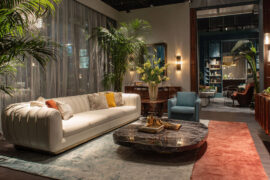
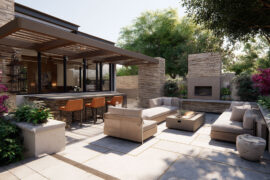
Colonial architecture has always had good bones. The symmetry, the ceiling height, the louvered windows built for airflow rather than aesthetics. What it lacked, for a long time, was a way to live in it comfortably today.
Modern colonial interior design solves that. It keeps the structural authority of colonial architecture while stripping away the heavy drapes, dark excess, and ornate detailing that made traditional colonial spaces feel dated.
This guide covers everything from color palettes and rattan furniture to regional interpretations across Southeast Asia, Australia, and the American South. It also addresses the most common mistake people make: confusing modern colonial with Hamptons style.
By the end, you will know exactly what defines this style, what breaks it, and how to apply it.
What Is Modern Colonial Interior Design?

Modern colonial interior design is a residential style that combines colonial-era architectural frameworks with clean contemporary finishes and restrained ornamentation. It keeps the structural weight and symmetry of colonial architecture while removing the heavy layering, dark excess, and ornate detailing that define its traditional counterpart.
The result is a space that reads as calm, composed, and livable rather than period-faithful or museum-like.
This is worth clarifying because the three terms get used interchangeably and they are not the same thing.
| Style | Core Approach | Key Distinction |
|---|---|---|
| Traditional colonial | Period-accurate reproduction | Heavy drapes, dark wood, ornate hardware |
| Colonial revival | Historical recreation | Nostalgic mimicry with modern materials |
| Modern colonial | Living reinterpretation | Heritage structure, contemporary livability |
The style gained traction as a serious design category in the early 2000s, particularly across Southeast Asia, Australia, and parts of the American South, where heritage homes needed updating without losing their architectural identity.
It solves a specific tension: how to keep the proportional authority of colonial architecture while making a home feel genuinely modern. That tension is what separates it from both a restoration project and a generic contemporary renovation.
According to the history of interior design, colonial interiors across different regions were always a product of available materials and climate, not purely aesthetic choice. Modern colonial design respects that practical logic by keeping what worked and discarding what was purely decorative.
The global interior design market was valued at $137.93 billion in 2024 (Grand View Research), and heritage-influenced residential styles have been among the fastest-growing segments as homeowners move away from minimalism toward spaces with more character and warmth.
Who Uses Modern Colonial Design Today
Primary adopters are homeowners with existing colonial-era or heritage homes who want to update without erasing the architectural bones.
A second group builds new construction with colonial proportions and applies contemporary material choices from the start. This is especially common in Singapore, Bali, and coastal Australia, where developers have long understood the commercial appeal of colonial-influenced architecture with modern amenities.
Charles Hilton Architects, which has spent over 35 years renovating colonial-style homes in the northeastern United States, describes the goal consistently as “blending historic preservation with contemporary style” rather than choosing one over the other.
What Are the Core Characteristics of Modern Colonial Interiors?

Modern colonial interiors share 5 defining characteristics that appear consistently regardless of regional context.
These are not optional styling choices. They are structural and material decisions that create the style’s recognizable visual logic. Remove any one of them and the result reads as something else.
Spatial Layout and Proportions
Symmetry drives everything. Formal symmetrical layouts, high ceilings, and prominent window placement are the structural foundation of the style.
Doors align across hallways. Windows are centered on walls. Furniture placement mirrors itself on either side of a central axis, whether that axis is a fireplace, a doorway, or a view. This is one of the clearest applications of symmetry in interior design found in any residential style.
Ceiling heights in colonial architecture typically run 9 to 12 feet. Modern colonial preserves this. It is one of the features that gives the style its sense of calm authority that lower-ceilinged contemporary spaces cannot replicate.
Surface Finishes and Material Restraint

Mordor Intelligence data shows the rattan furniture market reached $0.91 billion in 2024 and is growing at over 5% annually, driven partly by demand for natural materials in heritage-influenced and tropical interior styles.
The material palette is narrow and deliberate:
- Rattan and cane for seating and pendant lighting
- Teak or oiled mahogany for case furniture and flooring
- Whitewashed or natural timber for ceiling beams and shutters
- Encaustic tile or wide plank hardwood for floors
- Linen and cotton for all soft furnishings
Negative space is treated as a deliberate design decision, not an oversight. A room in this style should look finished with fewer pieces than most contemporary interiors. Clutter is not part of the visual vocabulary.
The teak furniture market was valued at approximately $8.5 billion in 2023 (DataIntelo), reflecting sustained demand for hardwood furniture that performs across both traditional and contemporary settings.
What Color Palettes Define Modern Colonial Interiors?

The warm neutral palette is the most consistent element across every regional interpretation of modern colonial design. It is also where most people get things wrong, reaching for colors that are either too stark or too saturated.
According to a 2024 report by Fixr.com based on input from 71 design experts, 48% of professionals selected warm white as the color of the year, and 41% identified warm neutrals as the dominant interior palette. This aligns precisely with the tonal logic of modern colonial design.
Understanding how color functions in interior design is useful here. In a colonial space, wall color does two things: it sets a warm base tone and it allows architectural detailing, trim, and furniture to read clearly against it.
Primary Palette and Paint References
Base colors that work consistently:
- Farrow and Ball “String” (a warm linen tone)
- Benjamin Moore “Pale Oak” (a soft greige with warm undertones)
- Dulux “Natural White” (the standard Australian colonial base)
- Any aged ivory or raw umber in the warm beige-to-linen range
Trim is nearly always painted white or bone. This contrast between trim and wall is not decorative. It makes crown molding, door casings, and window frames read as the architectural features they are.
Accent Colors and What to Avoid
Accent colors are drawn from the surrounding landscape context of the region. Deep greens, dusty blues, and rust tones work because they read as natural rather than applied.
Colors that break the style:
- High-contrast black used as a base (works in industrial and contemporary, not here)
- Saturated jewel tones on walls (belongs in eclectic or maximalist design)
- Cool-toned whites and grays (they flatten colonial architectural detail rather than defining it)
The Fixr.com 2024 report also notes that 60% of design experts recommend neutral palettes for resale value. Modern colonial’s inherent warmth and restraint makes it one of the most commercially resilient residential styles to maintain.
What Furniture Pieces Belong in a Modern Colonial Interior?
Furniture selection in modern colonial design is about form and material, not brand or price point. The wrong silhouette breaks the style even if the quality is high.
The style demands furniture that has visual weight without bulk. Pieces with tapered legs, visible wood grain, and minimal hardware. Upholstery that is simple and flat rather than tufted or overstuffed.
| Piece | What Works | What Doesn’t |
|---|---|---|
| Beds | Four-poster, simplified frame, no canopy fabric | Platform beds, upholstered headboards |
| Chairs | Plantation-style, wide arms, rattan or cane seating | Overstuffed club chairs, chrome frames |
| Storage | Sideboards with tapered legs, minimal hardware | Lacquered finishes, mirrored surfaces |
| Case furniture | Dark-stained or oiled hardwood as contrast anchor | Flat-pack, laminate, or glass-fronted units |
Living Room Furniture Selection

The plantation chair is the most recognizable living room piece in the style. Wide arms, a slightly reclining back, and a cane or rattan seat on a teak or mahogany frame. These originated in colonial-era veranda design, where ventilation and comfort in hot climates were the primary requirements.
One practical rule: dark hardwood anchor pieces (a sideboard, a console, a coffee table) should appear against lighter walls rather than grouped together. The contrast is what defines the room’s visual hierarchy.
Avoid grouping too many natural fiber pieces together. Rattan chairs plus a rattan pendant plus a jute rug plus a woven throw in the same room tips the style from modern colonial into bohemian territory.
Bedroom Furniture Selection

The four-poster bed is the non-negotiable centerpiece. But the version that works in modern colonial design has a simplified frame, no canopy fabric, no heavy carving. Just the vertical posts and a clean horizontal top rail.
Scale matters significantly here. A queen four-poster in a 10-foot ceiling room reads as undersized. The style’s high ceilings need furniture that rises to meet them, which is one reason the four-poster works so well and low platform beds do not.
What Textiles and Fabrics Work in Modern Colonial Spaces?
Textile choices in modern colonial design follow the same logic as the material palette: natural fiber, restrained pattern, minimal layering.
Get the textiles wrong and a modern colonial room starts to feel either like a beach house or a country cottage. Both are a drift away from the style’s more formal, composed character.
Base Textiles and Natural Fiber Choices
Unlined floor-length linen curtains are the standard window treatment for this style. They let light filter through, they hang with natural weight, and they avoid the formality of fully lined drapes while still having enough presence for a high-ceilinged room.
Textile hierarchy by category:
- Upholstery: Linen or cotton in solid off-white, warm beige, or natural flax
- Rugs: Sisal, jute, or flat-weave cotton in natural tones
- Cushions: One room, one patterned textile maximum
- Throws: Woven cotton or fine wool, folded rather than draped loosely
The 2024 trend toward natural and raw finishes in home interiors, noted by 60% of design experts in the Fixr.com report, reflects exactly the material logic that modern colonial has always applied. The style was ahead of this curve by several decades.
Pattern Restraint and Common Mistakes

Patterns belong in modern colonial interiors. Just one per room, and at a scale that reads clearly rather than becoming visual noise.
Narrow stripes on a single cushion cover. A simple botanical print on one set of drapes. A block-printed tablecloth in a dining room. These work because they give the eye something to land on without competing with the architectural detail of the space.
What breaks the textile palette:
- Ikat overuse (belongs in bohemian and eclectic contexts)
- Heavy brocade or velvet (reads as traditional or Art Deco)
- Synthetic sheen on any surface (breaks the natural material logic completely)
What Lighting Fixtures Suit Modern Colonial Interiors?
Lighting in modern colonial design needs to do two things: respect the ceiling height and reinforce the natural material palette. Most contemporary lighting fails on the first count or the second.
Understanding light as a design element is particularly relevant here, because colonial spaces use their ceiling height and window placement to create natural light that is softer and more directional than what most modern homes achieve.
Ceiling and Pendant Fixtures

Rattan and woven pendant lights are the primary ceiling fixture in this style. They work because they introduce natural texture overhead without visual weight, and because they diffuse light in a warm, ambient direction rather than a direct downward beam.
Ceiling fans deserve specific mention. In modern colonial design, a timber or rattan blade ceiling fan is both functional and stylistically accurate. It references the climate-control function that colonial architecture was built around, and it integrates into the material palette naturally. Using a standard plastic-blade fan with a chrome motor is one of the most common and easily avoided mistakes in colonial renovation.
The global decorative lighting market was valued at $41.60 billion in 2024 (SwiftBeacon data), growing at 2.9% annually, with natural material fixtures representing one of the fastest-growing subcategories as demand for artisan and biophilic lighting solutions increases.
Accent and Table Lighting

Brass and antique brass hardware is the correct metal finish for this style. Wall sconces, table lamp bases, and cabinet pulls should all share the same finish family to maintain visual consistency.
Lamp bases that work: ceramic in neutral glaze tones, turned timber, aged brass column bases.
What to avoid entirely:
- Industrial Edison bulb clusters (references the wrong design era)
- Ultra-modern geometric pendants in black or chrome
- Recessed lighting as the primary light source (flattens the ceiling architecture)
A good test: if the fixture would look at home in an industrial interior or a contemporary apartment, it almost certainly does not belong in a modern colonial space.
How Do Architectural Features Shape a Modern Colonial Interior?
Architectural features are where modern colonial design earns its character. A space with the right furniture and palette but none of the architectural elements reads as vaguely colonial at best. The built environment is the style’s skeleton.
These are not features you can fake with accessories. They are either present in the structure or they are not, which is why modern colonial design works best in actual colonial-era or heritage-proportioned buildings.
Windows, Shutters, and Ventilation Elements

Louvered windows and plantation shutters are the single most recognizable external marker of the style. They originated as a practical climate response: adjustable slats that allow air circulation while blocking direct sunlight and rain.
In modern colonial interiors, they are retained because they work. They also add a vertical rhythm to window openings that standard blinds or curtains cannot replicate. Exploring window treatments for colonial spaces almost always leads back to louvered shutters as the primary solution, with sheer linen panels as a secondary layer for softer light diffusion.
The design rule: louvered shutters should be painted to match trim, not wall color. This keeps them reading as part of the architectural structure rather than as a decorative addition.
Flooring, Beams, and Ceiling Details

Wide plank hardwood flooring and encaustic tile are the 2 correct floor materials for this style. Wide planks in teak, oak, or reclaimed timber reinforce the warm material logic. Encaustic tile works in hallways, kitchens, and bathrooms where hardwood would be impractical.
Ceiling treatment options by context:
- Timber beams: left natural or whitewashed, never painted over in wall color
- Crown molding: used with restraint, one profile per room, not layered
- Ceiling roses: appropriate in formal rooms where a pendant fixture is centered
- Flat painted ceilings: acceptable in secondary spaces but avoid in main living areas
Woodgrain’s 2024 interior trend report specifically identified New Colonial as one of the year’s top 10 design movements, noting that “incorporating timeless hardwood floors like oak, maple, walnut, and cherry adds classic elegance while enhancing the cozy and inviting ambiance.” This confirms that flooring material is not a secondary decision in this style.
Verandas and the Indoor-Outdoor Transition

The veranda is the architectural element that makes modern colonial design functionally distinct from other heritage styles. It is not just an outdoor feature. It is a transitional space that extends the interior outward and modifies how interior rooms receive light and air.
A covered veranda on the south or west side of a house changes the quality of afternoon light entering the living room. Interior rooms planned in relation to a veranda feel different from those without one. This is the space planning logic that colonial architects applied by necessity and that modern colonial designers preserve by choice.
Understanding the difference between a veranda, patio, and deck matters when specifying these transitions, as each creates a different relationship between interior and exterior space.
What Is the Role of Plants and Natural Elements in Modern Colonial Design?
Plants in modern colonial spaces are structural decisions, not accessories. A large-leaf tropical plant placed in a corner does the same visual work as a floor lamp: it fills vertical space, anchors the room’s perimeter, and adds warmth without adding furniture weight.
The global indoor plants market was valued at $20.68 billion in 2024 and is expected to reach $30.25 billion by 2032 (Data Bridge Market Research), with the home decoration segment accounting for 65.45% of total revenue in 2024. The overlap between biophilic interior design and modern colonial sensibility is not coincidental. Both prioritize natural materials and a connection to the surrounding landscape.
Plant Selection and Placement
Plants that work structurally in colonial rooms:
- Fiddle leaf fig (tall, architectural, single stem)
- Bird of paradise (wide spread, fills corners at high-ceiling scale)
- Monstera deliciosa (mid-height, strong leaf texture)
- Kentia palm (soft, vertical, appropriate for formal rooms)
The placement rule is simple: greenery fills volume that furniture does not. It is not decorative layering on top of a complete room. A colonial living room with the right furniture and no plants is finished. One that is light on furniture but has a large bird of paradise in the corner also reads as finished.
Over 65% of consumers now consider greenery essential for interior aesthetics (Global Growth Insights, 2024), which reflects exactly the shift that makes modern colonial design commercially accessible right now.
Stone, Terracotta, and Non-Plant Natural Elements
Terracotta pots and woven rattan baskets replace ornamental accessories in this style. A ceramic pot in a warm earth tone on a teak sideboard does more visual work than any decorative object of similar size.
Natural stone surfaces by room:
- Bathroom: Honed limestone or travertine wall tiles, unsealed for texture
- Kitchen: Honed marble or limestone bench tops, not polished
- Entry: Encaustic tile or stone flags, often in a geometric pattern
Water features belong on verandas or in entry courtyards in tropical and subtropical interpretations, particularly in Bali and Singapore contexts where the sound of moving water is an architectural feature rather than a decorative addition.
How Does Modern Colonial Design Differ Across Regional Interpretations?
Modern colonial is not a fixed template. It adapts to local climate, building tradition, and material availability. What stays consistent across all 4 regional interpretations is the underlying logic: symmetry, natural materials, and restrained ornamentation.
Google’s Year in Search for 2024 ranked modern colonial among the top 10 most-searched interior design styles globally (BAM, 2025), confirming that the style’s cross-regional appeal translates into genuine consumer intent rather than just design industry interest.
| Region | Dominant Material | Climate Adaptation | Palette Shift |
|---|---|---|---|
| Southeast Asia | Heavy rattan, teak | Cross-ventilation, open plan | Warm ivory, deep green |
| Australia | Lighter timber, linen | Indoor-outdoor emphasis | Pale neutrals, sandy tones |
| Caribbean | Painted timber, jalousie | Jalousie windows, raised floors | Warmer accent colors |
| American South | Hardwood, formal upholstery | Columned porticos, high entry halls | Formal neutrals, white trim |
Southeast Asian Interpretation
The Singapore and Bali interpretations are the most globally recognized versions of modern colonial design, largely because of the hospitality industry’s investment in the aesthetic. Aman Resorts and Como Hotels both use colonial architectural frameworks with natural material interiors as a signature language.
What defines the Southeast Asian version: heavier rattan use, full open-plan living areas, cross-ventilation prioritized over air conditioning where possible, and teak or sononowood furniture with visible natural grain. The Singapore “black and white” colonial shophouse, restored with contemporary interiors, is the archetype most referenced by designers working in this context.
Australian Interpretation
Australian modern colonial blends with Hamptons influence more than any other regional version. The palette is lighter, the furniture is slightly less formal, and the indoor-outdoor connection is more casual.
The key distinction from pure Hamptons: Australian colonial keeps the symmetrical room layout and hardwood floors as non-negotiables, while Hamptons allows more asymmetry and uses coastal-reference materials like driftwood and sea grass. A space that has both plantation shutters and shiplap paneling has drifted away from colonial and into Hamptons territory.
American Southern Interpretation
American Southern colonial is the most formal regional version. Columned facades, symmetrical entry halls with double-height ceilings, and formal room proportions are retained from the original architectural tradition.
Interior updates follow the same logic as the other regional variants: lighter palette, simplified furniture silhouettes, and natural fiber upholstery replace the heavy drapes and ornate hardware of traditional southern colonial. Charles Hilton Architects, based in the northeastern United States, describes this approach as keeping the style “true to the original spirit while infusing it with design features critical for today’s lifestyle needs.”
What Are Common Design Mistakes in Modern Colonial Interiors?
Most modern colonial mistakes fall into 2 categories: mixing too many sub-styles into one space, or applying the surface palette without the underlying architectural logic. Both produce rooms that feel vaguely colonial at best.
Woodgrain’s 2024 interior trend analysis noted that the style works best when its “balanced combination of colors, textures, and furnishings” creates visual harmony rather than competing references. That word “balanced” is doing a lot of work.
Style Mixing and Material Overload
The 3 most common mixing errors:
- Combining British Raj references (heavy carved furniture, dark lacquer) with Caribbean colonial (bright accent colors, jalousie windows) in the same room
- Saturating the space with rattan until it reads as bohemian rather than colonial
- Pulling from both modern colonial and coastal design without a clear primary direction
The test: if you removed every piece of furniture and kept only the architectural features, would the room still read as colonial? If yes, the furniture choices are secondary. If the architecture is neutral and the room reads colonial only through accessories, the foundation is wrong.
Scale and Proportion Errors
Low furniture in a high-ceiling colonial room is one of the most common and most visually disruptive mistakes in the style. A low platform bed in a 10-foot ceiling room creates a visual gap between the furniture and the ceiling that reads as an error rather than a design choice.
Scale and proportion in interior design are nowhere more consequential than in colonial spaces, where the ceiling height sets a visual expectation that every other element must respond to.
Proportion rules specific to colonial rooms:
- Furniture height: aim for pieces that sit at least 36 inches tall (chairs, cabinets, headboards)
- Curtain drop: always floor to ceiling, never to sill height
- Pendant size: diameter should be at least 1/3 the width of the table or seating area below it
Reproduction Furniture vs. Genuine Vintage or Quality Contemporary
Reproduction antique colonial furniture reads as inauthentic in ways that are hard to explain but immediately obvious. The proportions are slightly off, the finish is too consistent, and the hardware looks new against aged-effect timber.
The better options, in order of preference:
- Genuine vintage pieces sourced from estate sales or specialist dealers
- Well-made contemporary pieces in correct silhouettes from makers like Jardan (Australia) or Commune (Singapore)
- Reproduction pieces only when they are clearly contemporary interpretations rather than fakes of antiques
The distinction matters because modern colonial design is a living style, not a historical recreation. A contemporary four-poster in oiled oak with clean lines belongs here. A reproduction mahogany four-poster with distressed finish and carved posts does not.
What Is the Difference Between Modern Colonial and Hamptons Style?
These 2 styles are the most commonly confused pair in residential interior design, particularly in Australian and New Zealand markets where both are widely used. The confusion is understandable: both use natural materials, neutral palettes, and symmetrical layouts. But the design logic behind each is different, and mixing them without a clear primary direction produces rooms that belong to neither.
BAM’s 2025 analysis of Google’s 2024 Year in Search data confirmed both modern colonial and Hamptons among the top searched interior styles, indicating that the confusion between them is not just theoretical but actively playing out in consumer research behavior.
Palette and Material Differences
Hamptons prioritizes a coastal light palette: crisp whites, soft blues, celadon greens, and grey-whites that reference sky and sea. Modern colonial uses warmer tones: aged ivory, raw umber, soft terracotta, and deep greens that reference vegetation and earth rather than coastline.
Material choices separate them at a practical level:
- Hamptons: driftwood, sea grass, shiplap paneling, white-painted furniture
- Colonial: teak, rattan, encaustic tile, oiled or dark-stained hardwood
Suzie Anderson Home’s 2024 Hamptons guide confirms the style’s palette as “whites, creams, neutrals, shades of blue, sea, and celadon greens.” That coastal color reference is what modern colonial does not have.
Structural and Furniture Differences
Hamptons actively lightens the structural weight of a space. Shiplap, white-painted paneling, and open plan layouts are used to maximize a bright, casual feel. Modern colonial retains structural weight. Crown molding, ceiling roses, timber beams, and louvered shutters are kept precisely because they add visual mass and architectural authority.
Furniture scale tells the story most clearly:
- Hamptons uses plush, casual upholstered pieces: oversized sofas, wicker ottomans, linen-covered armchairs
- Modern colonial uses harder, more formal silhouettes: plantation chairs with cane seats, four-poster beds, case furniture in dark hardwood
A space can borrow from both, but it needs one as its primary direction. A colonial room with a Hamptons-influenced casual sofa works. A room that applies equal weight to Hamptons casual and colonial formal ends up looking undecided. Understanding the principles of interior design including unity and harmony helps clarify why a dominant direction matters more than any individual piece choice.
How to Decide Between the Two
Choose modern colonial if: the home has existing colonial architecture, high ceilings, hardwood floors, or louvered windows. The style will amplify what is already there.
Choose Hamptons if: the home is lighter in structure, close to the coast, and the desired feeling is casual and airy rather than composed and formal. The Hamptons style is also more forgiving of lower ceiling heights.
Blend only when: one style is clearly primary and the second contributes one or two elements (a Hamptons-influence casual linen sofa in an otherwise colonial room, for example). The use of contrast between styles only works when the dominant direction is visually clear.
FAQ on Modern Colonial Interior Design
What is modern colonial interior design?
Modern colonial interior design blends colonial-era architectural frameworks with clean contemporary finishes. It keeps symmetrical layouts, high ceilings, and natural materials like teak and rattan while removing heavy ornamentation, dark excess, and period-faithful detailing that make traditional colonial spaces feel dated.
What colors work best in a modern colonial interior?
Warm whites, aged ivory, linen, and soft greige form the base palette. Farrow and Ball “String,” Benjamin Moore “Pale Oak,” and Dulux “Natural White” are reliable references. Accent colors drawn from deep greens, dusty blues, and rust tones complement the warm neutral foundation without overwhelming it.
What furniture belongs in a modern colonial home?
Plantation chairs with cane or rattan seating, simplified four-poster beds, and sideboards with tapered legs in oiled or dark-stained teak or mahogany. Avoid overstuffed upholstery, chrome frames, and heavily lacquered finishes. Furniture silhouette and material matter more than brand or price point.
How is modern colonial different from traditional colonial design?
Traditional colonial reproduces the period accurately, with heavy drapes, ornate hardware, and dark wood layering. Modern colonial keeps the architectural structure but applies a lighter palette, restrained ornamentation, and contemporary material choices. It is a living style, not a historical recreation.
What natural materials are used in modern colonial interiors?
Rattan, teak, mahogany, linen, jute, sisal, encaustic tile, travertine, limestone, and whitewashed timber are the core materials. Natural fiber upholstery and woven pendant lights reinforce the palette. Synthetic sheens, chrome, and lacquered finishes are inconsistent with the style’s material logic.
How does modern colonial design differ from Hamptons style?
Hamptons uses crisp whites, coastal blues, shiplap, and casual upholstered furniture. Modern colonial uses warmer tones, teak, rattan, and more formal furniture silhouettes. Both share symmetry and natural materials, but Hamptons references coastline while modern colonial references vegetation, heritage architecture, and tropical climate.
What lighting suits a modern colonial interior?
Rattan and woven pendant lights, brass wall sconces, ceramic lamp bases in neutral glaze tones, and ceiling fans with timber or rattan blades. Avoid industrial Edison clusters, chrome fixtures, and ultra-modern geometric pendants. Antique brass hardware is the correct metal finish across all lighting types.
What plants work in a modern colonial space?
Fiddle leaf fig, bird of paradise, monstera deliciosa, and kentia palm are the most structurally appropriate choices. Plants fill vertical volume rather than acting as accessories. Terracotta pots and woven rattan baskets replace decorative objects. Greenery should anchor corners, not cluster on surfaces.
What are the most common modern colonial design mistakes?
Mixing too many colonial sub-styles, over-saturating with rattan until the room reads as bohemian, using low furniture under high ceilings, and applying the palette to a space with no colonial architectural features. Scale and proportion errors are the most visually disruptive and the most common.
What are the main regional versions of modern colonial design?
Southeast Asian, Australian, Caribbean, and American Southern are the 4 primary interpretations. All share symmetry, natural materials, and restrained ornamentation. Regional differences appear in palette warmth, material weight, ventilation strategy, and how formal or casual the indoor-outdoor connection is treated.
Conclusion
This article on modern colonial interior design has covered the full picture, from encaustic tile flooring and plantation shutters to the precise difference between a Bali-influenced tropical colonial and an American Southern interpretation.
The style works because it is built on structure, not surface. Symmetrical floor plans, wide plank hardwood, rattan pendant lighting, and a warm neutral palette create a coherent visual logic that holds regardless of regional context.
Get the colonial architecture right and the rest follows. Get it wrong and no amount of teak furniture or linen upholstery will save the room.
Pick one regional direction. Commit to the material palette. Let the ceiling height and louvered windows do the work they were designed to do.

- Paint Colors That Go with Oak Floors - August 22, 2026
- Paint Colors That Go with Gray Floors - August 20, 2026
- What Color Bedding Goes with Dark Wood Furniture - August 18, 2026