

The right kitchen table does more work than any other piece of furniture in the room.
It anchors the eat-in kitchen layout, defines the seating area, and takes daily impact from meals, homework, and morning coffee. Most people pick one based on looks alone, then live with clearance problems and material failures for years.
This guide covers every decision that actually matters: size, shape, material, leg style, seating compatibility, color, kitchen table lighting, and daily styling. Whether you are working with a small kitchen under 100 square feet or an open-plan layout that needs a visual anchor, the right kitchen table ideas are here.
What Is a Kitchen Table
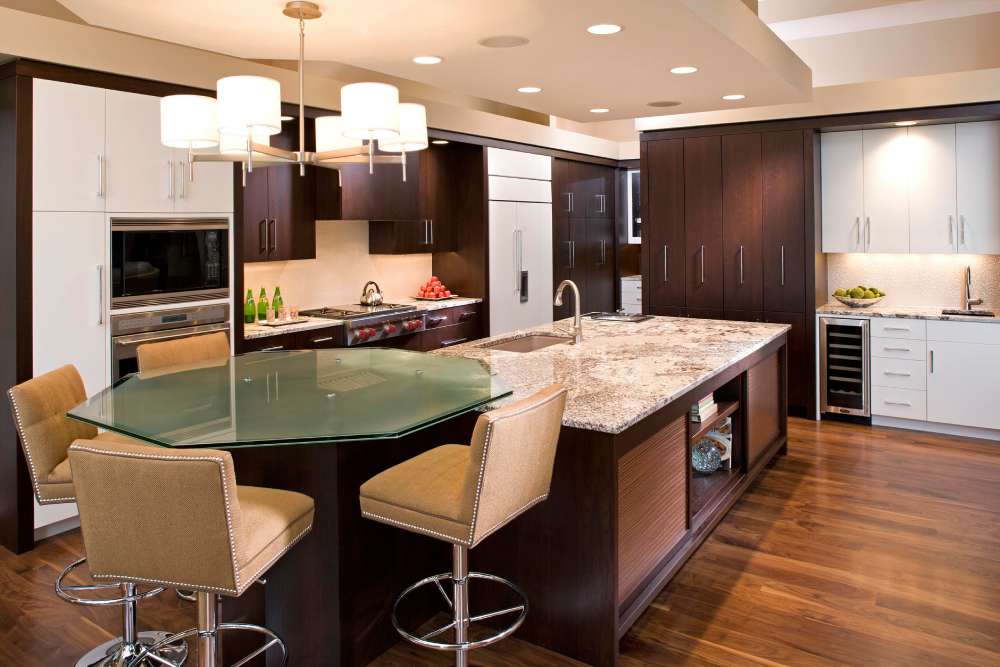
Image source: Eminent Interior Design
A kitchen table is a freestanding dining surface placed within the kitchen’s own footprint, not in a separate dining room. It shares the room with appliances, cabinets, and work zones, which makes its size, material, and shape directly tied to how functional the space remains after it’s added.
This is where most people go wrong: they treat it like a scaled-down dining table. It isn’t.
The kitchen table operates under stricter spatial constraints. It sits closer to high-heat zones, moisture from the sink, and daily foot traffic. Those conditions determine which table top materials hold up and which ones fail within a few years.
How it differs from similar furniture:
- vs. dining table: Smaller scale (typically 36-60 inches), positioned within the kitchen, built for daily use rather than formal entertaining
- vs. kitchen island: No built-in storage requirement, fully mobile, used exclusively for seating rather than prep work or appliance housing
- vs. breakfast bar: Freestanding rather than fixed to a counter, seats on all sides, lower surface height (28-30 inches vs. 36-42 inches)
- vs. breakfast nook: Not built-in, does not require banquette seating, can be relocated without construction
NAHB’s 2024 What Home Buyers Really Want study found that 80% of buyers rate table space for eating in the kitchen as either essential or desirable, tying it with walk-in pantry as the most-wanted kitchen feature (NAHB, 2024).
The global dining table market was valued at $7.98 billion in 2024 and is projected to reach $13.21 billion by 2032, growing at a 6.5% CAGR (Stellar MR, 2024). That growth is driven largely by residential demand for functional, multi-purpose surfaces in eat-in kitchens.
Common kitchen table top materials include solid hardwood, laminate, marble, tempered glass, and metal. Each behaves differently under daily kitchen conditions. That material decision matters more here than it does for a dining table in a separate room, because proximity to cooking heat and moisture is constant.
What Size Kitchen Table Fits Your Space
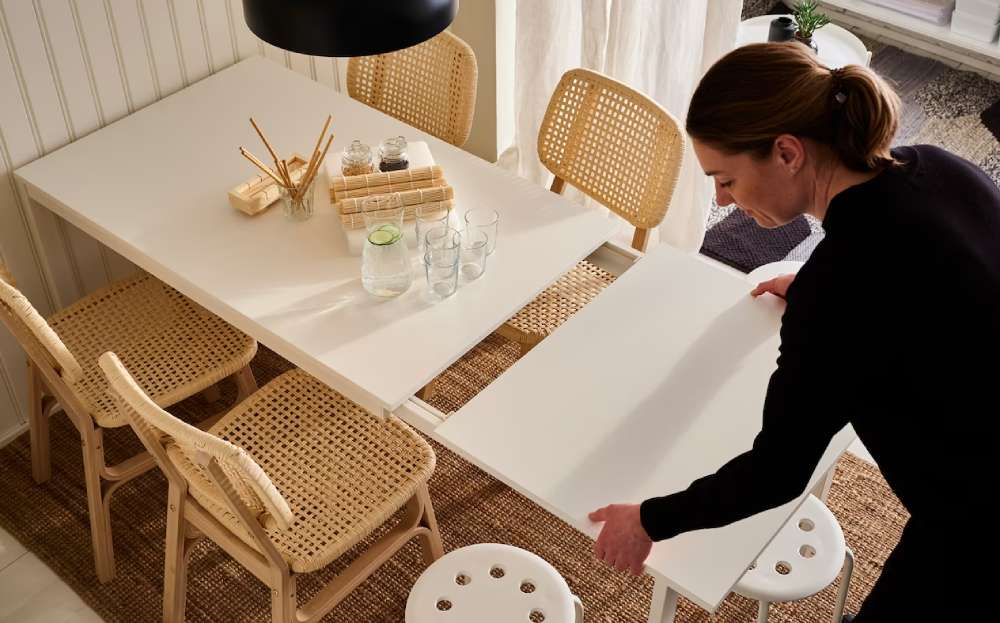
Table size is the first decision to make, not the last. Choosing the style before the size leads to tables that look right online and create a cramped, dysfunctional kitchen once they arrive.
The NKBA (National Kitchen and Bath Association) recommends a minimum clearance of 36 inches from the table edge to any wall or obstruction where traffic passes. Where no traffic passes behind a seated diner, 32 inches is the minimum (CRD Design Build, 2024).
Get that measurement wrong and the table becomes the most annoying piece of furniture in the house.
Small Kitchen Table Sizes (2 to 4 seats)
For kitchens under 120 square feet, these are the options that actually fit:
| Table Size | Seats | Min. Room Footprint |
|---|---|---|
| 24-inch Round Bistro | 2 | 80 sq ft |
| 36-inch Round | 2–3 | 90 sq ft |
| 36 x 48-inch Rectangle | 4 | 110 sq ft |
A painter’s tape floor test is the most reliable way to check fit before buying. Tape the exact table dimensions on the floor, then pull out chairs and walk around normally. Most people discover the table they wanted is 12 inches too wide.
Standard Kitchen Table Sizes (4 to 6 seats)
The mid-range size kitchen table runs 48 to 60 inches in length. A 48-inch round or rectangular table seats 4 comfortably. A 60-inch rectangle seats 6, but only works in kitchens with at least 150 square feet of total floor space after subtracting cabinet run and appliance footprint.
Seat width matters too. Each person needs a minimum of 24 inches of table width, with 18 inches of clear knee space beneath a 30-inch table height (NKBA guidelines, 2024).
The mid-range dining table segment accounts for 50% of total market volume (Mordor Intelligence, 2024). That concentration reflects how consistently buyers settle on 4-to-6 seat configurations rather than going larger or smaller.
What Kitchen Table Shapes Work Best by Room Layout
Shape is not a style decision. It’s a spatial one. The wrong shape for a room’s geometry wastes clearance, blocks traffic, or makes seating awkward regardless of how well-chosen the finish is.
According to Global Sources industry data, 68% of new homes now have open floor plans, up from 40% in 1999 (National Association of Home Builders). That shift changes how kitchen table shape interacts with the broader room, since the eating zone no longer has defined walls to anchor it.
| Shape | Best Room Type | Key Advantage |
|---|---|---|
| Round | Square rooms, corner-tight layouts. | Eliminates sharp edges and maximizes natural traffic flow. |
| Rectangular | Galley kitchens, narrow rooms. | Provides the highest seating capacity per square foot. |
| Square | Open-plan kitchens with defined zones. | Balanced proportions and ensures equal-access seating. |
| Oval | Mid-size rooms with traffic on all sides. | Combines rectangular seating capacity with round traffic flow. |
| Drop-leaf | Kitchens under 100 sq ft. | Folds completely flat for zero footprint when not in use. |
Round tables work in square rooms because they echo the room’s equal-dimension geometry. Placing a round table in a long, narrow kitchen creates a visual conflict and cuts usable aisle space on both sides.
Drop-leaf and extendable table shapes are increasingly popular. Freedonia Group data projects that casual, multi-functional dining table shipments will grow 2.4% annually through 2025, driven specifically by demand for space-saving formats in smaller urban kitchens.
What Are the Most Common Kitchen Table Styles
Style follows material and size decisions, not the other way around. That said, kitchen table style affects how the entire eat-in area reads visually, and choosing a style that fights the cabinetry or flooring creates a disjointed kitchen no matter how nice each individual piece is.
Farmhouse Kitchen Table Ideas

Image source: Wendi Young Design
Farmhouse is the most searched kitchen table style in the US. The defining features are a thick solid wood top, typically white-painted or natural oak, and turned or tapered legs. It reads warm and informal, which suits kitchens with shaker-style cabinets, butcher block counters, or farmhouse interior design details throughout.
IKEA’s MOCKELBY and Pottery Barn’s Benchwright are the two most commonly referenced farmhouse kitchen table benchmarks, which tells you something about what price range and finish people expect from this style.
- Top material: solid pine, oak, or reclaimed wood
- Leg style: turned, tapered, or trestle
- Finish: white painted, natural, or whitewash
Mid-Century Modern Kitchen Table Ideas
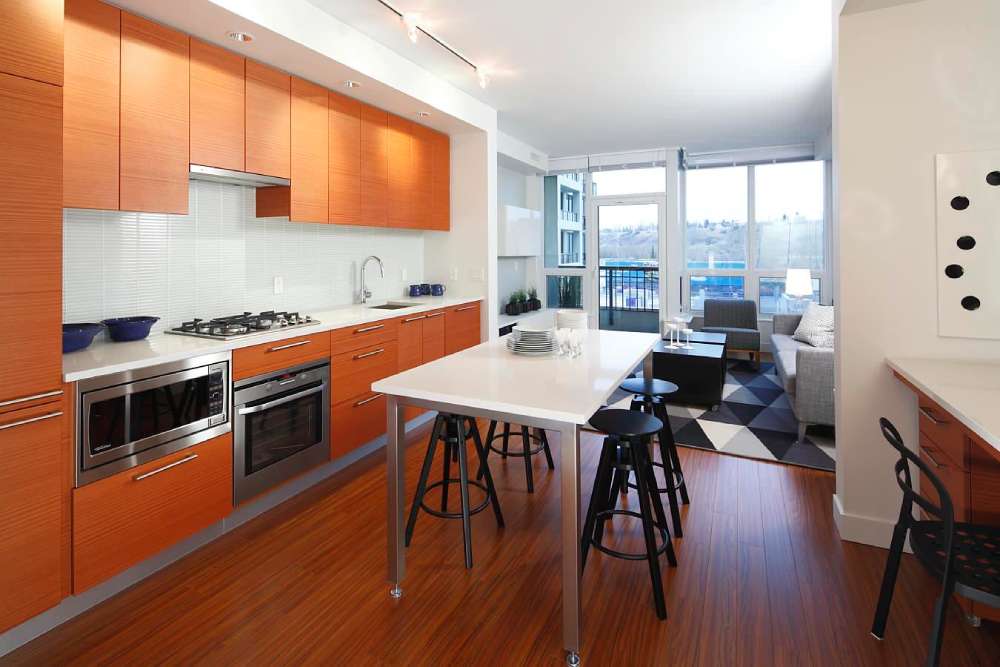
Mid-century modern kitchen tables are defined by 3 elements: tapered legs (hairpin or splayed), compact scale, and warm wood tones like walnut or teak.
The style works in kitchens where the cabinet profile is flat-front and hardware is minimal. It does not read well next to raised-panel or ornate cabinetry.
Best for: kitchens under 180 square feet with flat-front cabinets and warm flooring tones. West Elm’s Mid-Century range and Article’s Seno table are frequently cited real-world examples of this category.
Industrial Kitchen Table Ideas
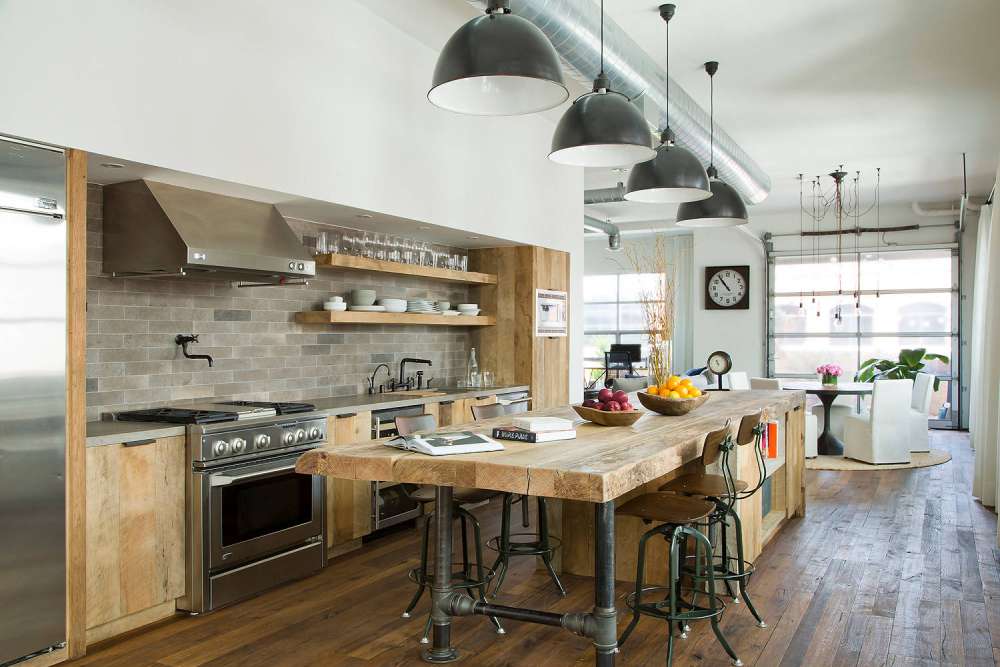
Image source: SUBU Design Architecture
Industrial kitchen tables pair a metal base with a reclaimed wood or concrete-look top. The industrial interior design approach relies on raw, unfinished material combinations rather than refined finishes.
One thing worth knowing: metal bases show fingerprints and dust more than wood. In a kitchen that sees daily use, that’s a maintenance consideration most style guides skip over.
- Base: powder-coated steel, cast iron, or blackened metal
- Top: reclaimed hardwood, concrete, or laminate with concrete-look finish
- Pairs with: exposed brick walls, open shelving, Edison bulb pendant lighting
Scandinavian Kitchen Table Ideas
Scandinavian design kitchen tables use light wood species (birch, ash, beech), a minimal leg profile, and a monochrome or neutral palette. The visual weight is low, which makes them one of the best options for small kitchens where a heavier table would dominate the room.
IKEA’s LISABO and EKEDALEN are the two most-purchased Scandinavian kitchen tables globally, which confirms how broadly accessible this style has become. The Scandinavian kitchen approach prioritizes functional simplicity over ornamentation, and the table follows that same logic.
What Materials Last Longest in a Kitchen Table
Material choice is where most kitchen table decisions go wrong. People choose based on appearance, then discover the material doesn’t hold up to the actual conditions of their kitchen.
Heat, moisture, and daily impact are the 3 forces that determine table top lifespan. Every material responds differently to each one.
Wood Kitchen Table Top Options
Solid hardwood (oak, maple, walnut) is refinishable. That single property separates it from every other kitchen table material: when it scratches, dents, or stains, it can be sanded and resealed rather than replaced. With proper sealing, solid oak and maple table tops exceed 20 years of use (Rever Kitchens, 2024).
Oak: dense grain, resists scratching, takes stain well, widely available at mid-range price points.
Walnut: darker tone, more expensive, softer than oak (more prone to denting), but preferred for mid-century modern and transitional styles.
Maple: hardest of the 3, lightest in color, best for high-impact households with children.
Stone and Laminate Kitchen Table Top Options
Laminate kitchen table tops last 10 to 20 years, resist heat and staining, and cost significantly less than stone or solid hardwood. The trade-off: they cannot be refinished. A deep scratch or edge chip on laminate means replacement, not repair (Rever Kitchens, 2024).
Statista data shows 73% of US consumers say environmental impact influences their furniture buying decisions. That’s pushing manufacturers toward laminate products made with recycled content and low-VOC adhesives as a mid-ground option.
| Material | Lifespan | Refinishable | Heat Resistant |
|---|---|---|---|
| Solid Hardwood | 20+ years | Yes | Moderate (requires regular sealing) |
| Laminate | 10–20 years | No | High |
| Marble/Stone | Decades (with sealing) | Limited | High |
| Tempered Glass | 10–15 years | No | High |
| Metal (Steel/Zinc) | 15+ years | No | Poor (tends to concentrate heat) |
Marble requires sealing every 6 to 12 months and chips under sharp impact. It works in low-traffic kitchens where aesthetics outrank practicality. Tempered glass is hygienic and easy to clean, but is not recommended for households with young children where impact resistance matters more than appearance.
What Kitchen Table Leg Styles Affect Function and Space
Leg design changes 3 things: how stable the table is, how many people can sit at it comfortably, and how easy it is to clean underneath. Most people focus on visual style and ignore all three.
Pedestal and Four-Leg Base Options
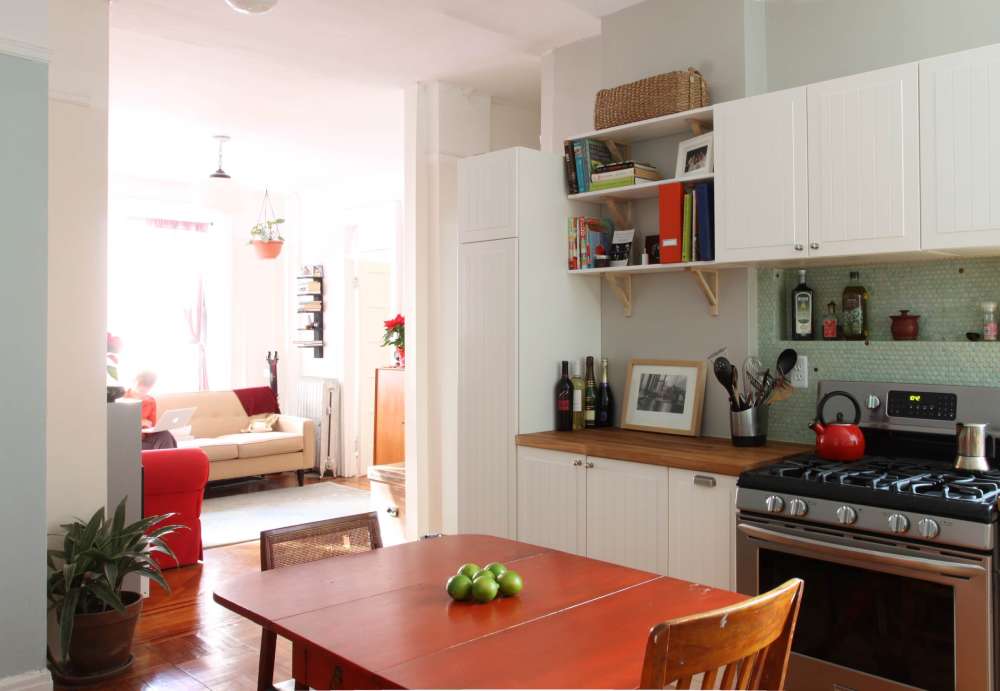
A pedestal base is a single central column, which means no corner legs blocking knee space. Maximum seating flexibility with minimum obstruction. It’s the best leg design for small round kitchen tables where every seat counts.
The four-leg tapered design is the most structurally stable option for heavy table tops like marble or solid hardwood. The trade-off: corner legs cut off end seating, reducing a 4-seat rectangular table to a functional 4-seat table only if people don’t mind sitting at corners.
Open-Frame and Trestle Leg Options
Hairpin legs create the least visual weight of any base style. That property makes them the go-to choice for small kitchens where a bulky base would make the room feel even more cramped. They work best under lighter tops (solid wood under 2 inches thick). Pairing hairpin legs with a marble top is a structural mismatch that leads to table wobble within months of regular use.
Trestle bases are strong and suit long rectangular tables in larger kitchens. The horizontal cross-brace at foot level blocks end seating entirely, which limits the table’s real capacity compared to what the top surface suggests.
Sawhorse bases have a similar profile to trestle but with an A-frame rather than flat cross-member. They work in industrial kitchen designs and require checking the cross-brace height against chair seat depth before purchasing.
What Are the Best Small Kitchen Table Ideas
Small kitchen tables are the fastest-growing segment of the dining table category. Online sales of dining furniture are forecast to rise at a 7.6% CAGR through 2030 (Mordor Intelligence, 2024), driven largely by urban consumers prioritizing space-optimization over size.
NAHB data from 2024 confirms the trend: 38% of builders constructed smaller homes in 2023, with 26% planning to build even smaller in 2024. Smaller homes mean smaller kitchens, and that means the kitchen table has to earn its footprint or get replaced by something collapsible.
Drop-Leaf Kitchen Table Ideas
A wall-mounted drop-leaf table folds completely flat when not in use. Zero permanent floor footprint. This is the correct solution for kitchens under 90 square feet where any freestanding table becomes an obstacle during food prep.
Key specs to check before buying:
- Folded depth: 8-12 inches flush against the wall
- Extended surface: minimum 24 x 36 inches for 2 usable seats
- Wall anchor: must be stud-mounted, not drywall-only, to hold table weight plus dinnerware
IKEA’s NORBERG wall-mounted drop-leaf table is the most-purchased example in this category globally, which confirms how widely this solution is applied in small-space kitchens.
Bistro Kitchen Table Ideas for Two
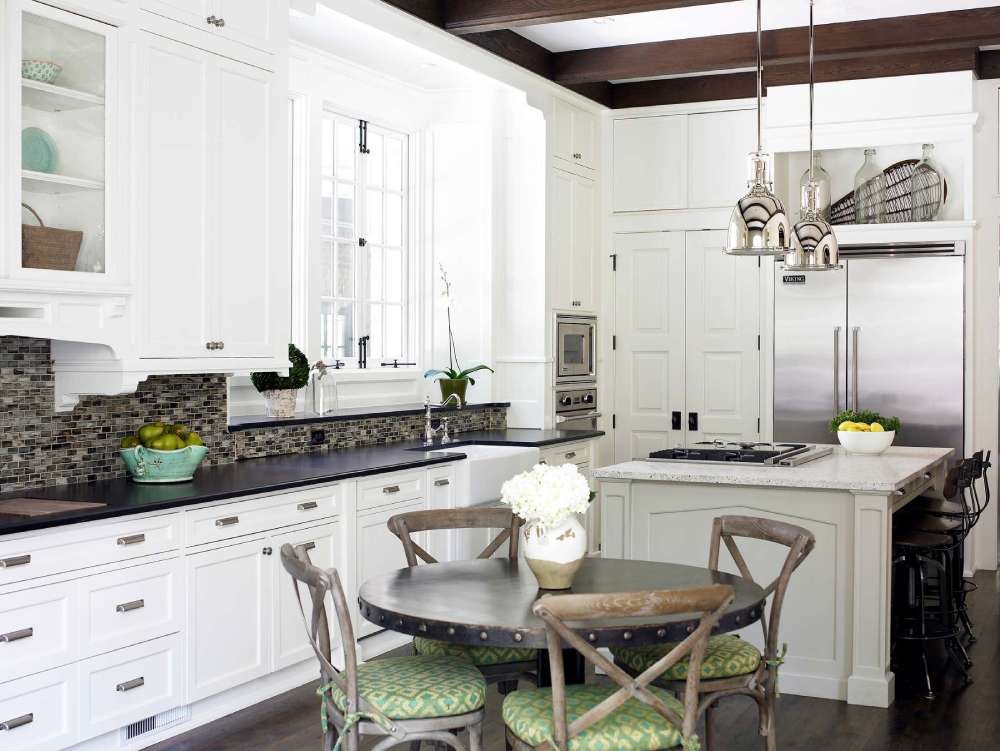
Image source: Brian Watford Interiors
A 24-to-30-inch round bistro table is the smallest functional 2-seat kitchen table. It fits in galley kitchens, corner spots adjacent to kitchen windows, and breakfast nooks where a larger table would reduce walkway clearance below the NKBA-recommended 32-inch minimum.
The bistro format also works as an island-adjacent seating option in kitchens where a full kitchen table and a kitchen island coexist. West Elm and CB2 both offer bistro-scale pedestal tables that fit within a 60-square-foot dining zone, which is roughly the floor space equivalent of a 6 x 10-foot area including chair pull-out clearance.
Built-in banquette seating with a small fixed table gains approximately 30% more seating capacity in the same footprint compared to a freestanding table-and-chairs arrangement. That efficiency gap explains why small kitchen seating ideas frequently feature banquette builds as the primary recommendation over freestanding options.
What Are Kitchen Table Ideas for Open-Plan Kitchens
Open-plan kitchens present a specific table problem: no walls to anchor the eating zone. Without walls, the kitchen table floats visually in the room unless deliberate design decisions define its territory.
The majority of first-time and repeat home buyers prefer an open kitchen-family room configuration, according to NAHB’s 2023 design trends report. That preference has made the open-plan kitchen table one of the most searched furniture positioning questions in home design.
A pendant light directly above the table is the single most effective zone anchor. It draws the eye down to the table and separates the eating area from the kitchen workflow zone without using any physical barrier.
Table selection rules for open-plan kitchens:
- Match the table finish to cabinet color, not the sofa or rug
- Scale up: open-plan rooms support tables up to 72 inches without visual crowding
- Use a round or oval table when the kitchen flows into a living space on multiple sides
- A table runner or area rug under the table reinforces the zone boundary visually
West Elm’s styling guidelines recommend keeping the table material within the same warm-cool tonal family as the kitchen cabinetry. That connection is what makes the eating area read as part of the kitchen rather than a separate room dropped into the same floor plan.
The island-versus-table question comes up constantly in open-plan layouts. Both make sense when the kitchen exceeds 180 square feet and entertaining is a regular use case. Below that threshold, kitchen island alternatives like a well-positioned table often serve the space better than trying to fit both.
What Chair and Bench Options Work With Kitchen Tables

Chair choice is not independent from table choice. Get the seat height wrong by more than 2 inches and the table becomes uncomfortable for daily use regardless of how good the material or finish is.
The standard kitchen table height runs 28 to 30 inches. Standard dining chairs measure 18 to 20 inches at the seat, leaving the correct 10 to 12-inch gap for comfortable legroom (Lagoon Furniture, 2024).
| Table/Surface Height | Chair/Stool Seat Height | Best Use |
|---|---|---|
| 28–30 inches (Standard Dining) | 18–20 inches | Family dining, daily meals, formal settings. |
| 34–36 inches (Counter Height) | 24–26 inches | Casual eating, kitchen island breakfast nooks. |
| 40–42 inches (Bar Height) | 28–30 inches | Entertaining, small-space kitchens, high-top bars. |
Bench Seating vs. Chair Seating
A bench fits 2 to 3 people per side and requires no individual positioning. One bench replaces 2-3 chairs in the same footprint, which is why it appears in almost every small kitchen table idea roundup.
The practical downside: bench seating is not height-adjustable. It works well for households where adults use the table consistently. It’s less practical for households with young children or elderly users who need chair arms for support when sitting and standing.
Mixed Seating Combinations
IKEA’s What We Buy home furnishing research consistently shows mixed bench-and-chair configurations gaining over the past 3 years, particularly in kitchens where the table sits against a wall.
Bench one side, chairs opposite is the most efficient combination. It adds 1 to 2 extra seats per table without widening the table footprint, and it gives the bench-side sitters more flexibility to slide along the seat rather than pull out a chair.
Each chair needs a minimum of 24 inches of table width per seat. A 36-inch-wide table seats 1 person per side comfortably. A 42-inch-wide table seats 1 per side with room for dishes between them.
What Finishes and Colors Work Best for Kitchen Tables
Kitchen table finish is a coordination decision, not just an aesthetic one. The table top color either anchors the kitchen’s palette or creates a visual disconnect that makes the whole room feel unresolved.
According to Houzz data cited by Statista (2024), 46% of American homeowners chose or would choose white for their kitchen cabinets. That dominance of white cabinetry means most kitchen table finish decisions are made in the context of white or off-white backgrounds.
Light Wood Tones and Natural Finishes
Natural oak and ash tones are the most versatile kitchen table finishes. They work against white, grey, and navy cabinets without competing for visual attention.
Urban Natural Home’s 2024 furniture trend research notes that darker walnut and teak stains are gaining ground over lighter Scandinavian-style finishes, particularly in kitchens with warm flooring tones. The shift is toward richer browns and chocolates rather than the pale birch and pine tones that dominated from 2018 to 2022.
- Light oak: pairs with white, cream, or grey cabinets
- Walnut stain: pairs with white or black cabinets, warm-toned flooring
- Natural ash: best against cool-toned cabinetry
Painted and Two-Tone Table Finishes
Painted kitchen tables are not going out of style. Chalk paint and milk paint both hold up reasonably well on table surfaces with a protective topcoat, but chip faster at edges than stained wood.
White painted tables show wear at corners within 2 to 3 years of daily use without regular touch-ups. That’s not a reason to avoid them, but it’s a maintenance commitment most finish guides skip over.
Two-tone tables (painted base, natural wood top) are the most design-flexible option. Plain and Fancy Cabinetry’s 2024 color trend report confirms the two-tone approach as a continuing preference, with the natural top working against painted cabinets in the same room. The combination lets the table carry color without overwhelming small kitchens.
For rustic kitchen designs, whitewash finishes and distressed paint techniques work better than solid chalk paint. They read more authentically against reclaimed wood or exposed brick rather than competing with those textures.
What Lighting Setup Works Above a Kitchen Table
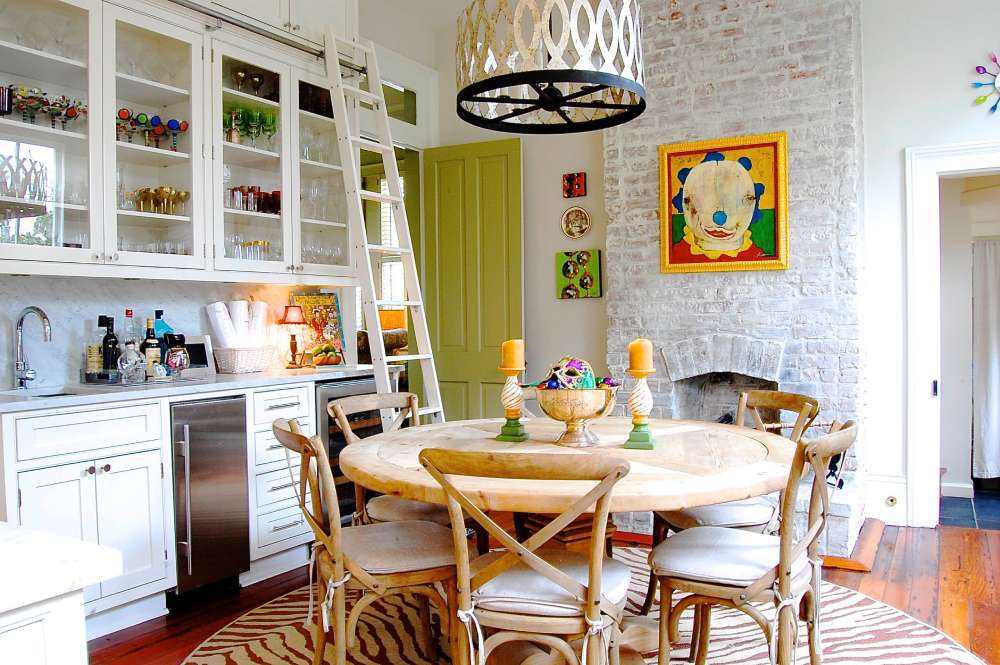
Lighting above the kitchen table is not decorative first. It’s functional. The pendant or fixture needs to illuminate the table surface adequately before anything else.
The accepted standard: hang the bottom of the pendant 30 to 36 inches above the table surface for standard 8-foot ceilings (Studio McGee, 2023; City Lights SF, 2024). For every additional foot of ceiling height above 8 feet, raise the fixture 3 inches.
Single Pendant vs. Multiple Pendants
Single pendant above a round table. Row of 2 to 3 pendants above a rectangular table 60 inches or longer. That’s the rule most designers follow, and it’s the right call for most kitchens.
Pendant diameter relative to table width: the fixture should span half to two-thirds the table width (Bandido Studio, via Livingetc, 2024). A 24-inch pendant over a 60-inch rectangular table looks undersized and creates dark zones at both ends of the table surface.
Multiple smaller pendants over a long rectangular table need equal spacing. The gap between fixture centers should match the gap from each end fixture to the table edge. That spacing produces visual balance without requiring precise measurement tools, just a tape measure and a level.
Bulb Temperature and Dimmer Setup
2700 to 3000K color temperature is the correct range for kitchen table lighting. It produces a warm, amber-adjacent light that reads well against wood finishes, food presentation, and skin tones during meals.
Daylight bulbs (5000-6500K) are task lighting color temperatures. They belong over work surfaces, not eating zones. Using daylight bulbs above a kitchen table makes the space feel clinical rather than comfortable.
Dimmers are not optional for kitchen table pendant lighting. A fixed-output pendant that works well for breakfast becomes glare-heavy during an evening meal. A dimmer switch costs under $30 and eliminates that problem entirely. Most pendant lighting setups support standard dimmer switches with LED-compatible bulbs.
How to Style a Kitchen Table for Daily Use
A kitchen table that works daily needs a different approach to styling than one that gets used for occasional entertaining. Permanent decor has to coexist with plates, laptops, homework, and coffee cups without making every meal feel like a set-design production.
Houzz data from 2025 shows that 41% of homeowners purchased large furniture in 2024, up from 37% in 2023, with kitchen and dining furniture leading that increase. That spending reflects genuine investment in the daily-use space, not just the formal dining room.
Centerpiece Scale and the Three-Item Rule
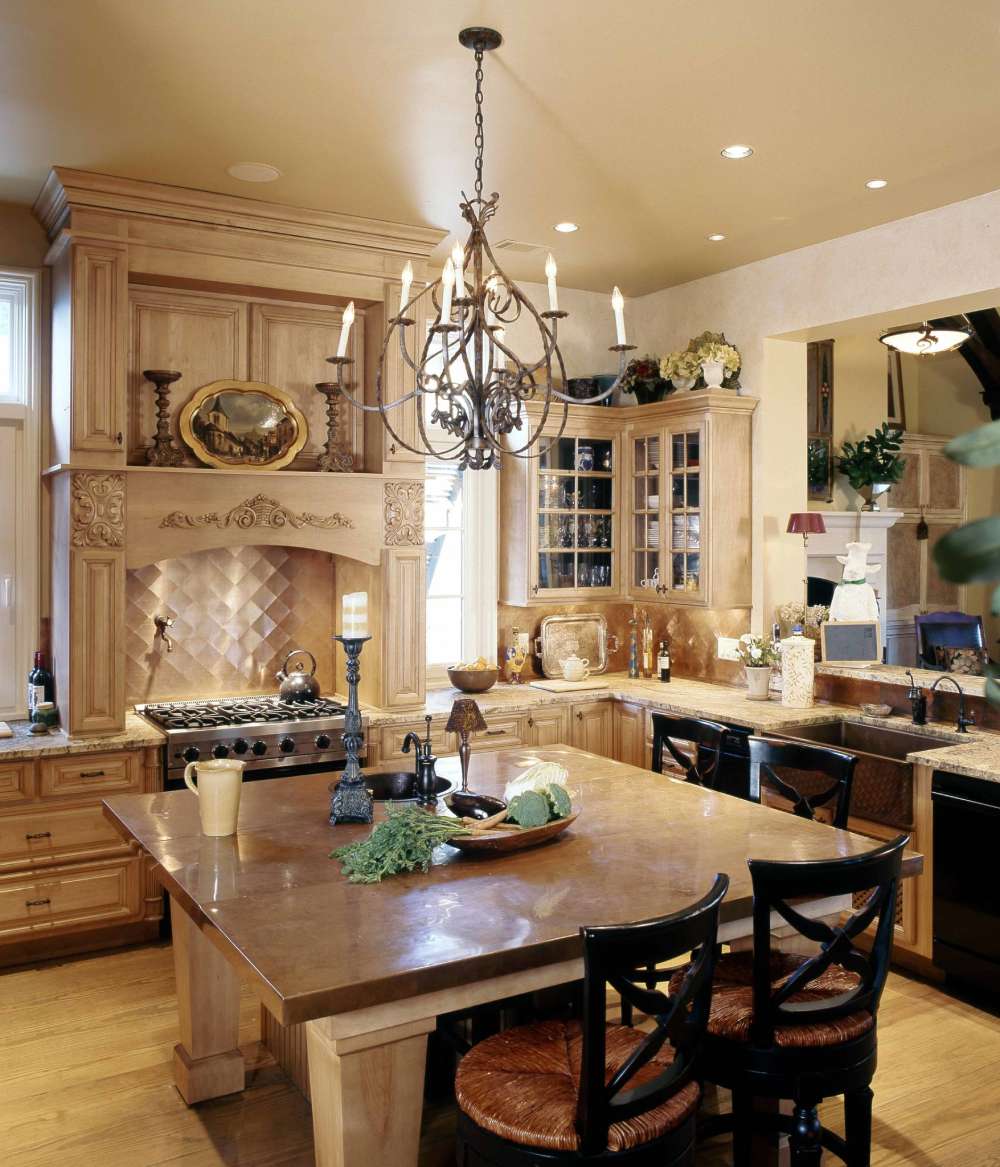
Keep permanent centerpiece items under 12 inches tall. Anything taller blocks sightlines across the table and makes conversation across the table visually interrupted.
The three-item grouping approach works well: one tall element (a small vase, candle, or plant), one low element (a fruit bowl, tray, or flat decorative object), and one organic element (fresh herbs, a branch, or seasonal fruit). That combination creates visual interest without density.
Rustic table centerpieces follow the same rule but tend toward natural materials: a wooden bowl, dried botanicals, and a small woven object rather than ceramic or glass. The material contrast with the wood table top creates texture variation without color conflict.
Table Runners vs. Placemats
Table runners suit rectangular tables 60 inches or longer. They visually extend the table lengthwise and work as a zone for centerpiece items.
Placemats suit smaller or round tables where a runner would cover too much of the surface. They protect the table finish at each seat without committing to a full textile setup.
Material choice for daily use: woven cotton or linen washes easily. Vinyl placemats wipe down faster but have less visual warmth. Avoid felt or thick wool table runners in kitchens where spill frequency is high.
Table Surface Protection by Material
Solid hardwood tables need felt pads under any ceramic or glass object placed on the surface regularly. Ceramic bases leave ring marks in the finish over time, even on sealed wood tops.
Trivets or heat-resistant mats are non-negotiable for laminate table surfaces. Laminate warps at sustained heat above approximately 150 degrees Fahrenheit, and a hot pot placed directly on the surface causes permanent damage that cannot be sanded out. This is the one maintenance rule that every kitchen table decor guide should lead with, and most don’t.
Marble tables need coaster use for any acidic drink (citrus juice, wine, coffee). Acid etching on marble is irreversible without professional polishing, which costs significantly more than the coasters would have.
FAQ on Kitchen Table Ideas
What size kitchen table fits in a small kitchen?
A 36-inch round table seats 2 to 3 people and fits kitchens under 100 square feet with proper 36-inch clearance on all sides. For 4 seats, a 36 x 48-inch rectangle works in kitchens with at least 110 square feet of floor space.
What is the best kitchen table material for daily use?
Solid hardwood (oak or maple) is the most durable option for daily use. It resists scratching, handles heat with a proper sealant, and can be refinished when damaged. Laminate is a lower-cost alternative with strong stain and heat resistance but cannot be repaired once chipped.
What shape kitchen table works best for an open-plan kitchen?
Round and oval tables work best in open-plan kitchens because they allow traffic flow on all sides. Rectangular tables suit kitchens with a defined eating zone against a wall. Match the table shape to how traffic moves around the space, not to personal preference alone.
How much clearance does a kitchen table need?
The NKBA recommends a minimum of 36 inches between the table edge and any wall or obstruction where traffic passes. Where no one walks behind seated diners, 32 inches is the minimum. Use painter’s tape on the floor to test clearance before buying.
What is the standard kitchen table height?
Standard kitchen tables measure 28 to 30 inches tall. Counter-height tables run 34 to 36 inches. Bar-height tables reach 40 to 42 inches. Chair seat height must be matched to table height, leaving a 10 to 12-inch gap between seat and table underside.
What kitchen table style works with farmhouse cabinets?
A farmhouse kitchen table with a thick solid wood top and turned or tapered legs suits shaker-style cabinets best. Natural oak and white-painted finishes are the most common choices. Trestle and pedestal bases both work well in this style.
Can a kitchen table replace a kitchen island?
Yes, in kitchens under 180 square feet. A freestanding kitchen table provides seating on all sides and takes less clearance than an island. It cannot replace island storage or a prep surface but works well as a breakfast bar alternative in compact eat-in kitchens.
How do I choose a kitchen table for an open-floor plan?
Match the table finish to the cabinet color, not the living room furniture. Use a pendant light directly above the table to anchor the eating zone visually. Scale up: open-plan kitchens support tables up to 72 inches without the space feeling crowded.
What pendant light size works above a kitchen table?
The pendant diameter should span half to two-thirds the table width. Hang the fixture 30 to 36 inches above the table surface for standard 8-foot ceilings. Use a single pendant above round tables and a row of 2 to 3 pendants above rectangular tables 60 inches or longer.
How do I style a kitchen table for everyday use?
Keep permanent centerpiece items under 12 inches tall to maintain sightlines. Use the three-item grouping rule: one tall, one low, one organic element. Table runners suit rectangular tables 60 inches or longer. Placemats protect the table top finish at each seat without covering the full surface.
Conclusion
This conclusion is for an article presenting kitchen table ideas that cover every decision between a functional eat-in kitchen and one that fights you daily.
Size and clearance come first. Material durability follows. Style, finish, and table top color only matter once those two foundations are right.
The chair-to-table height gap, the pendant diameter, the centerpiece scale — these are the details most buyers ignore and most guides skip.
A well-chosen kitchen table set anchors the dining area, works with your cabinet finish, and holds up through years of daily use without needing replacement.
Get the table size and seating clearance right first. Everything else follows from there.

- Paint Colors That Go with Gray Floors - August 20, 2026
- What Color Bedding Goes with Dark Wood Furniture - August 18, 2026
- What Color Walls Go with Oak Floors - August 16, 2026


