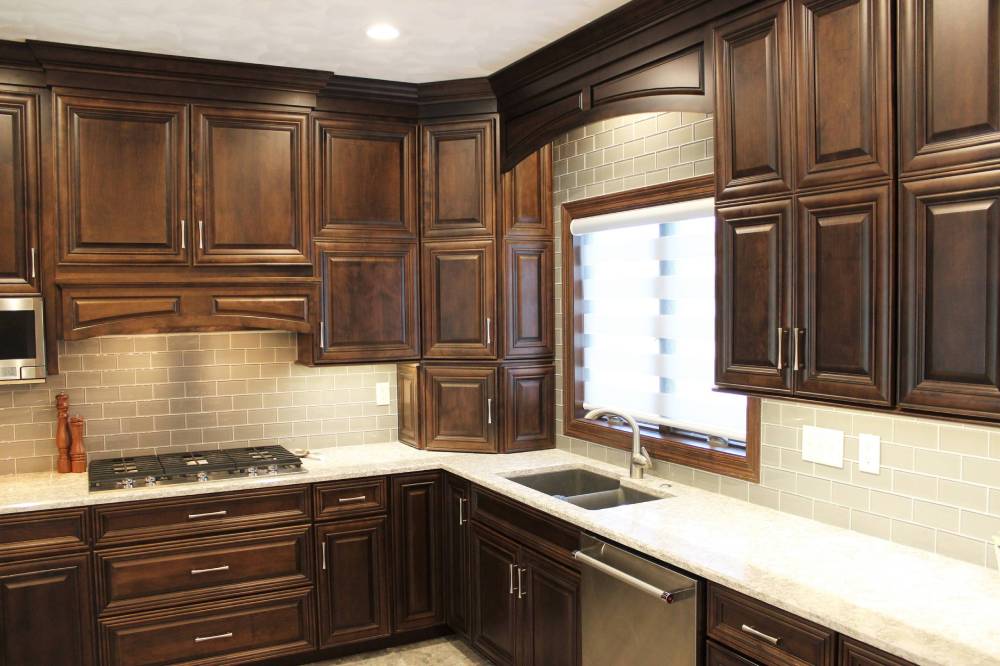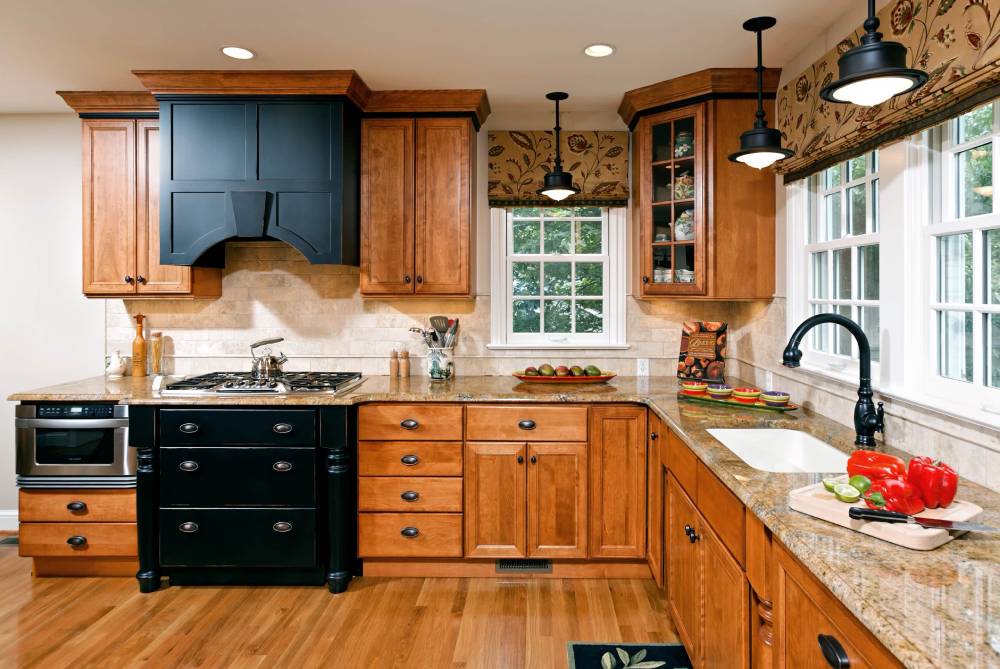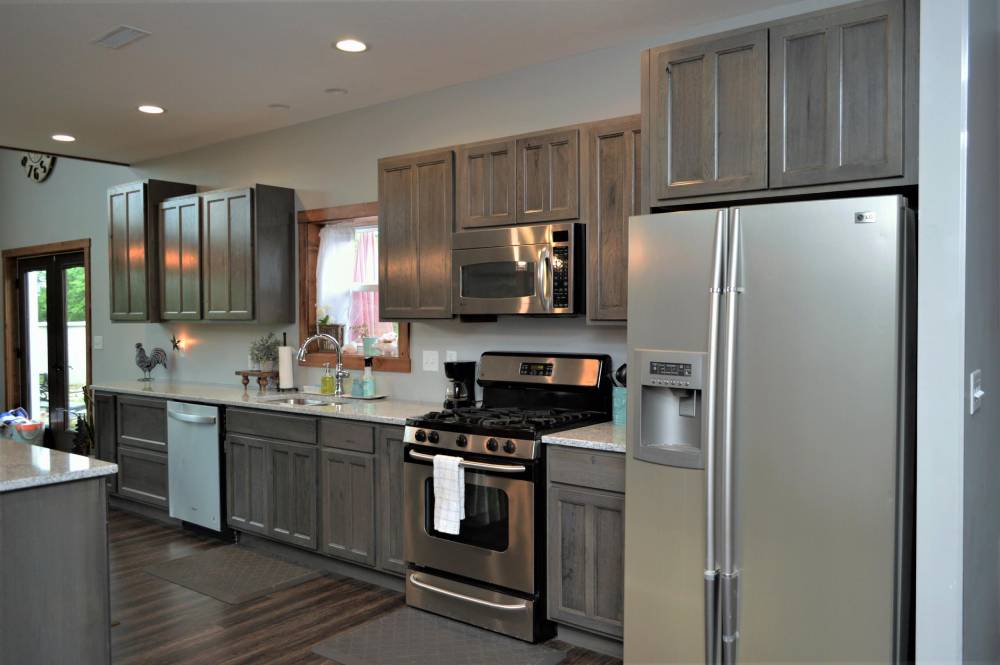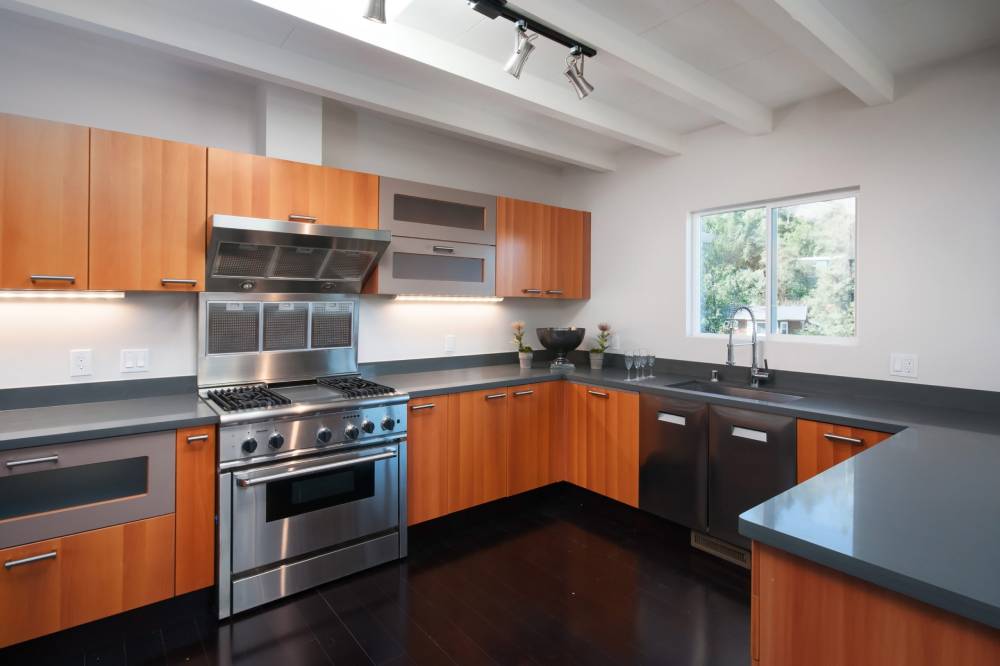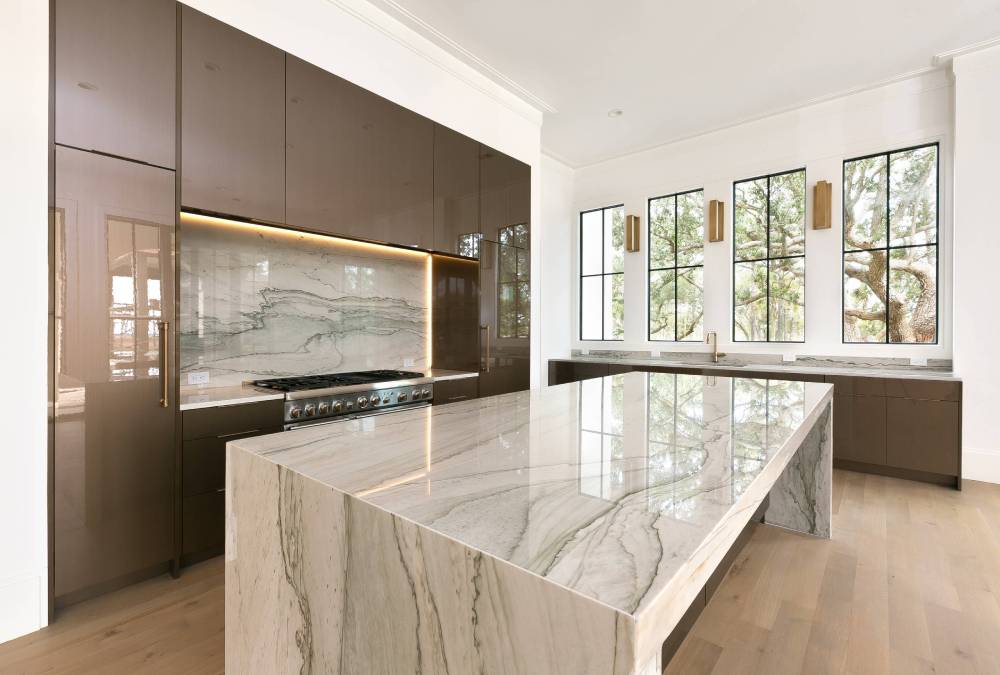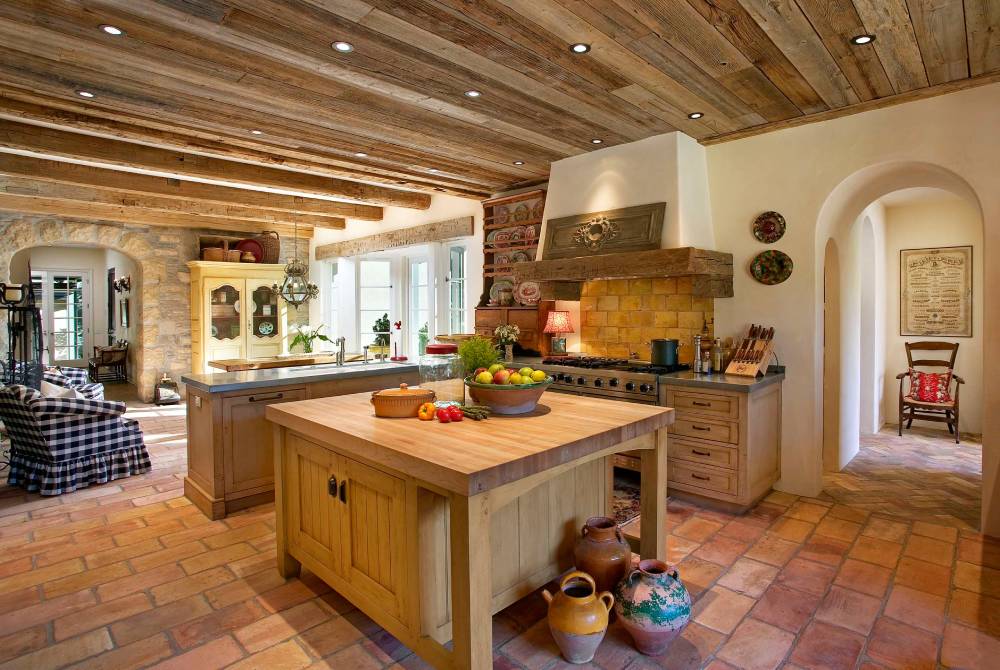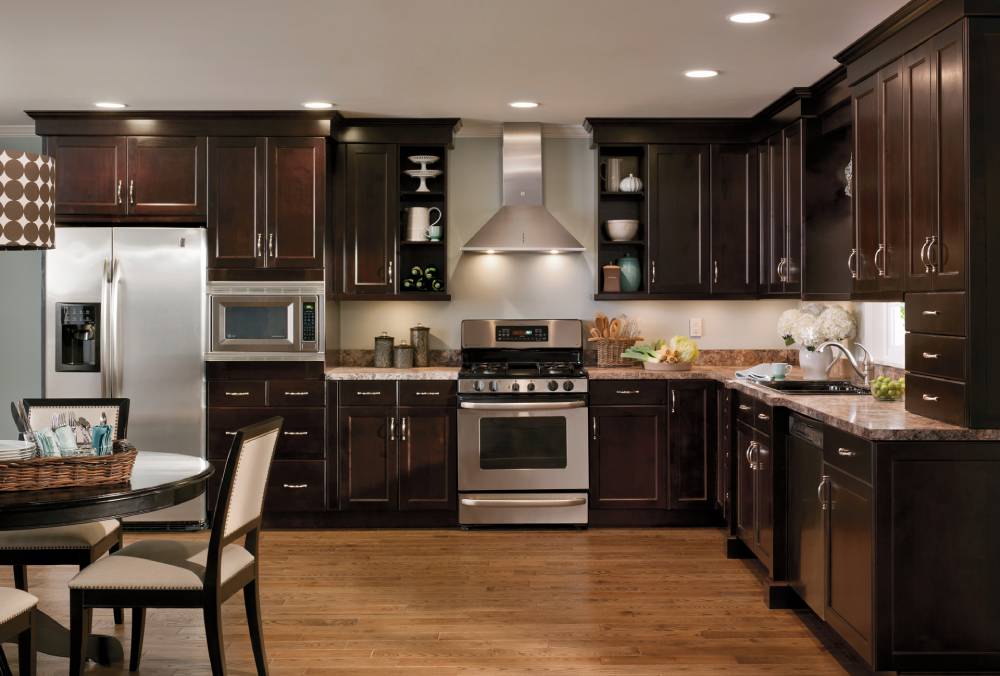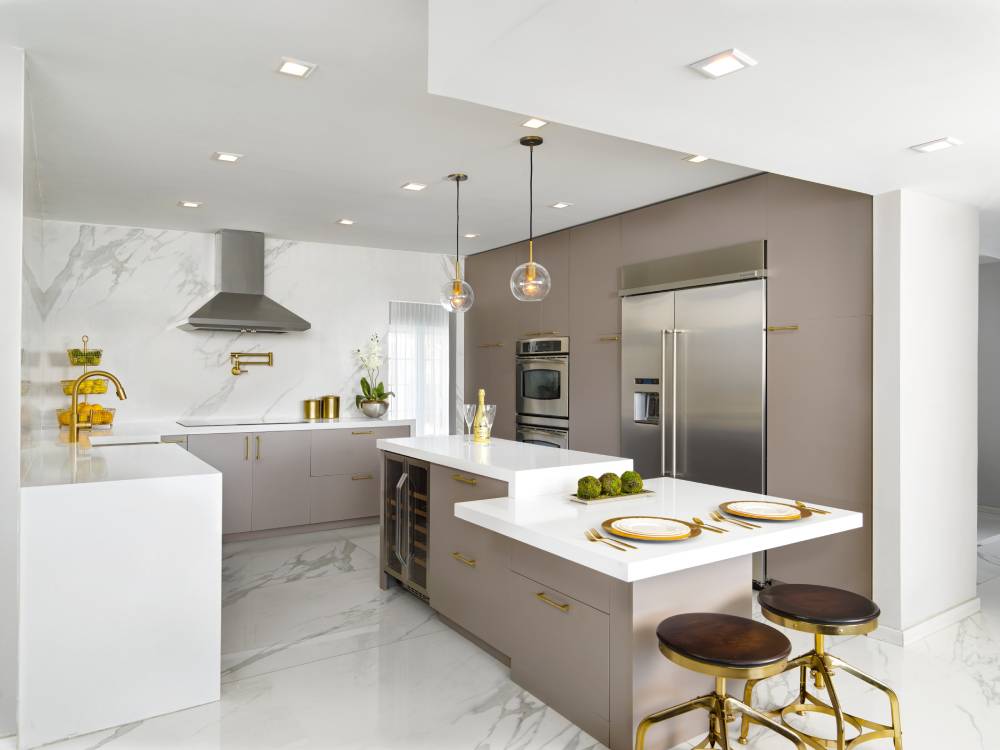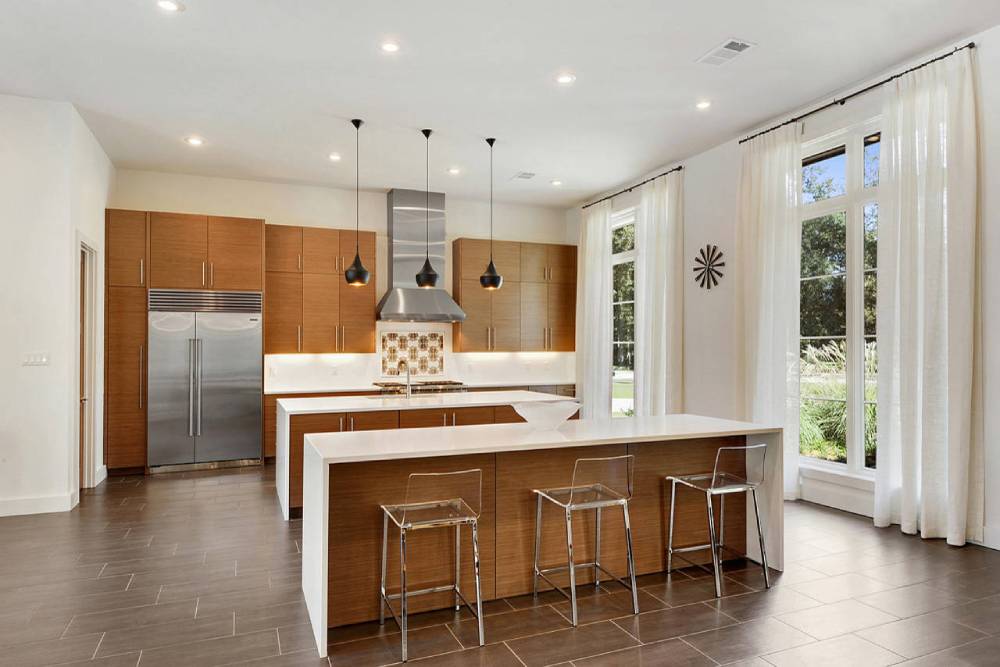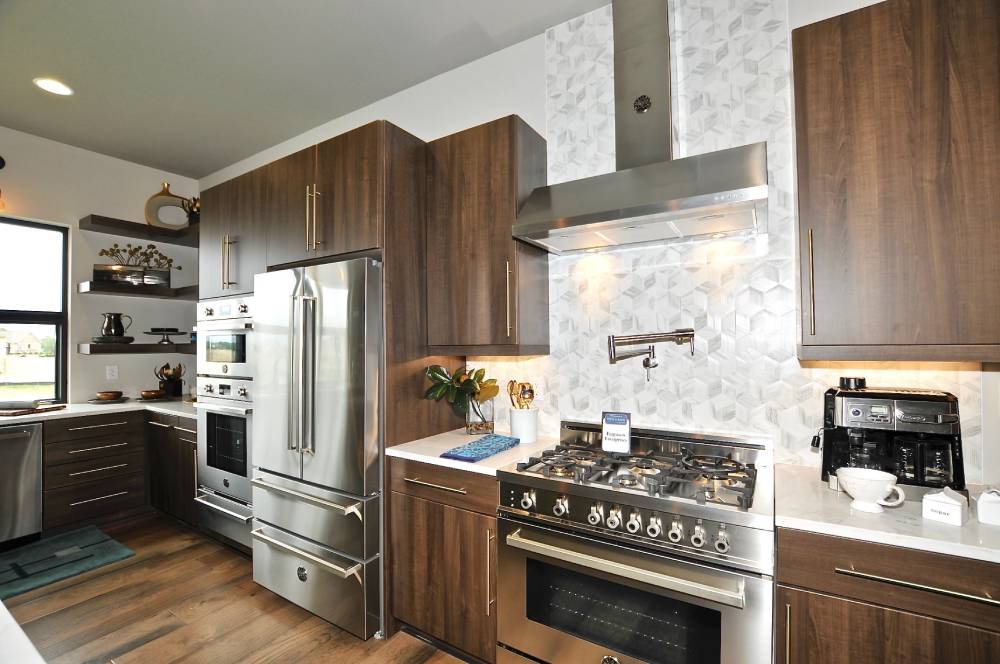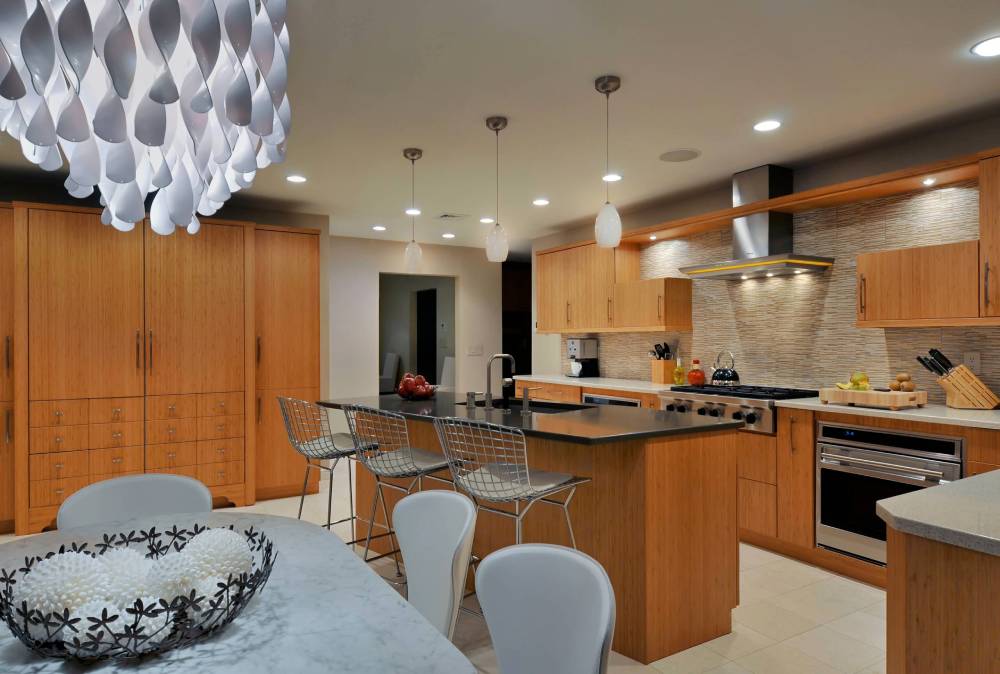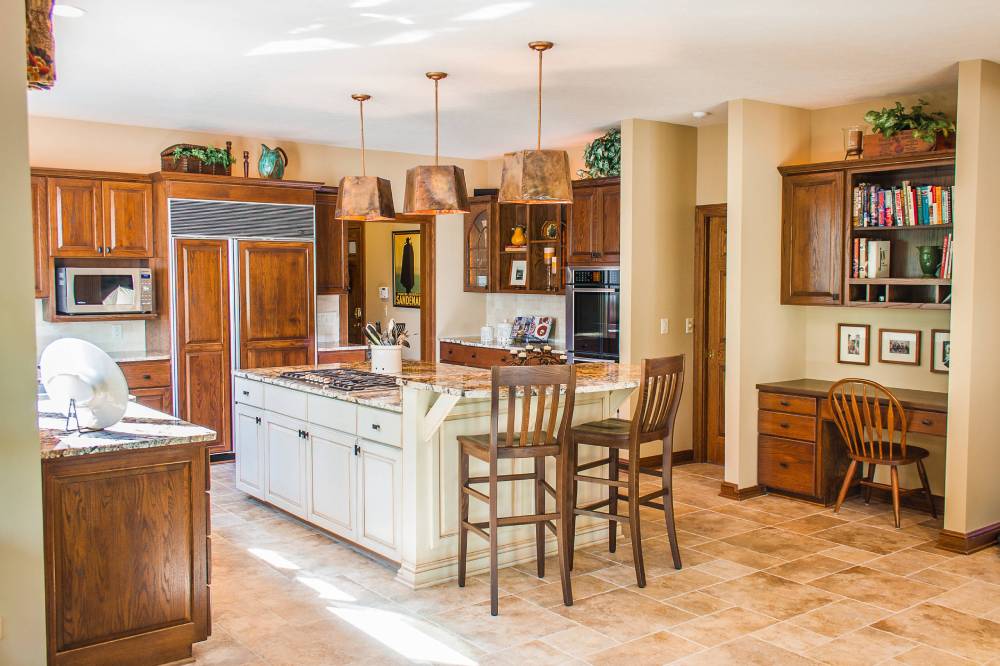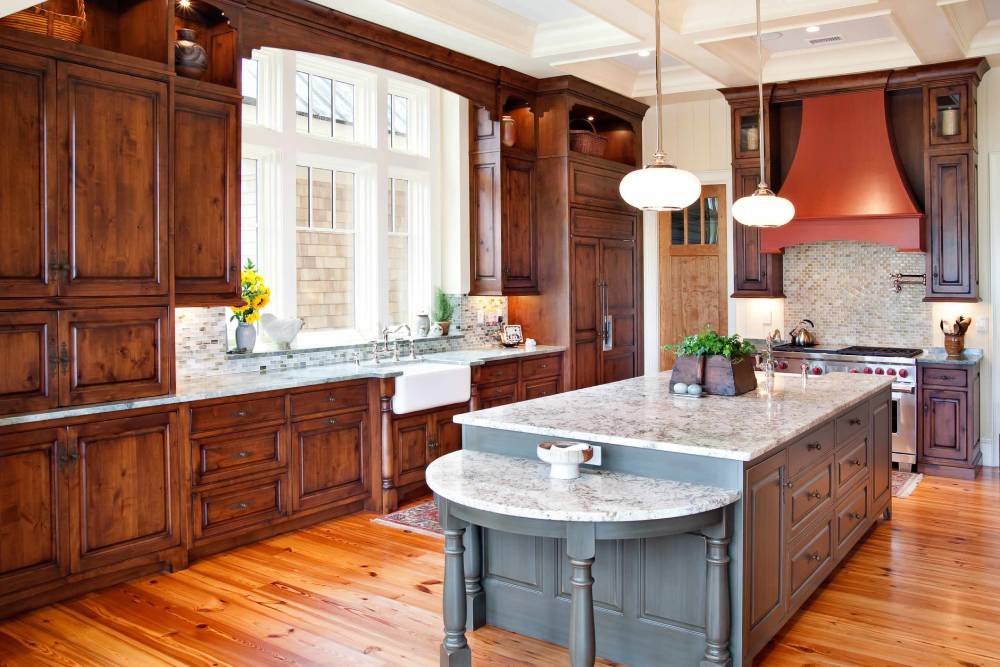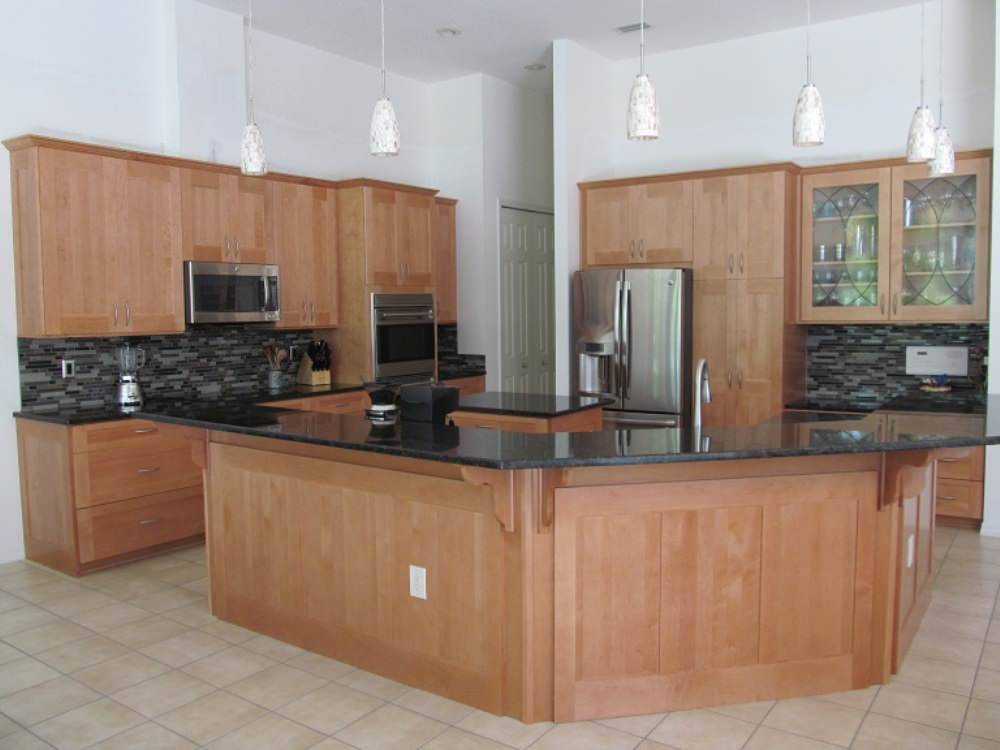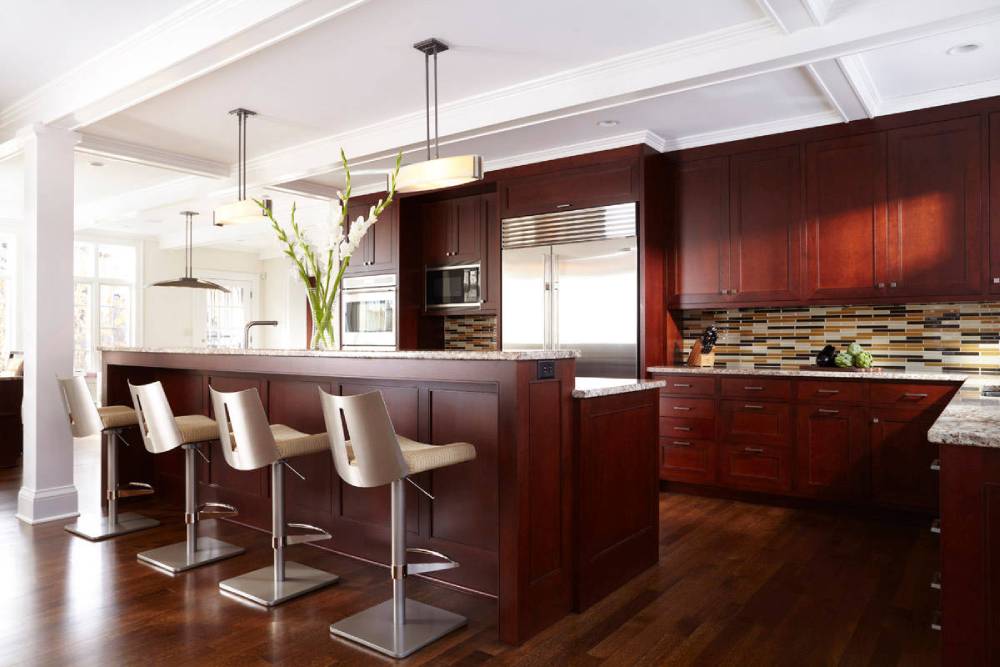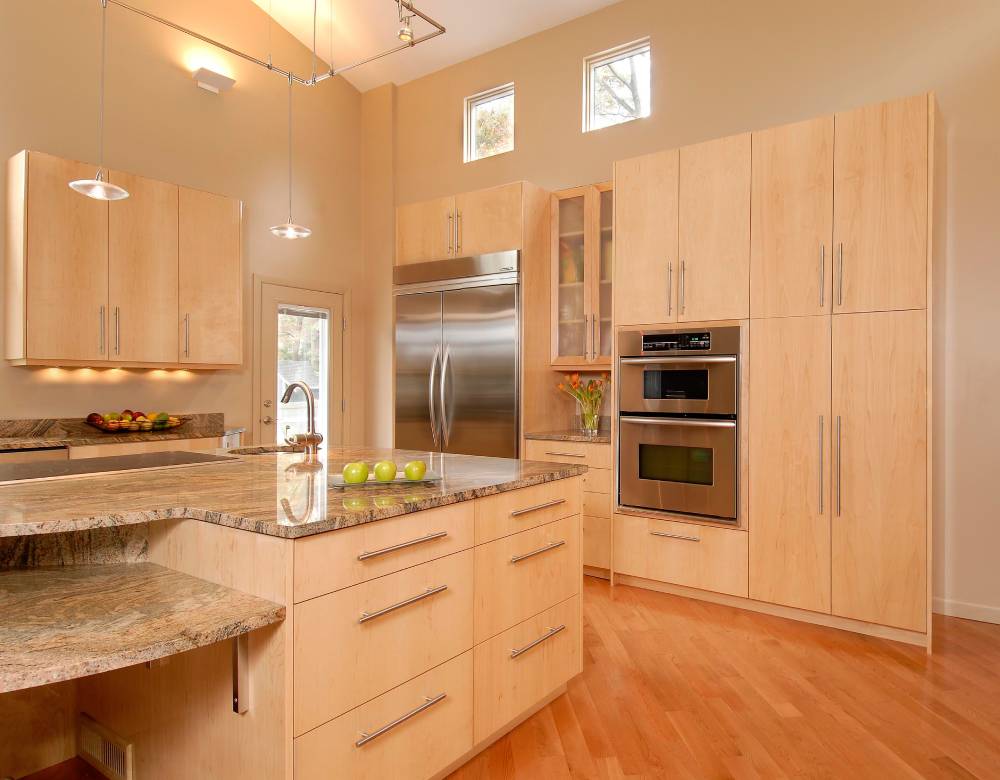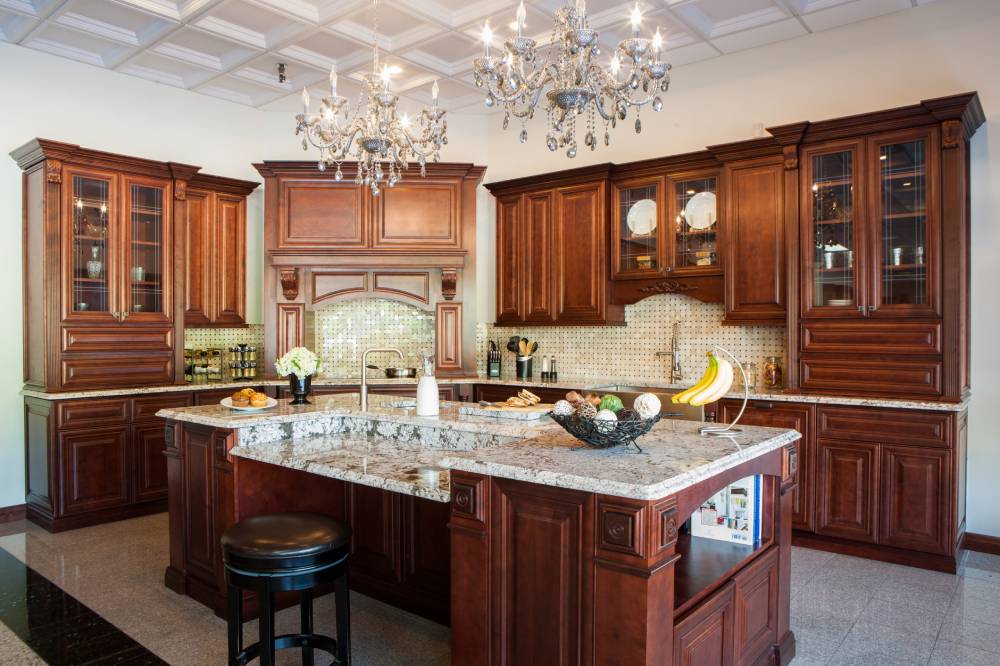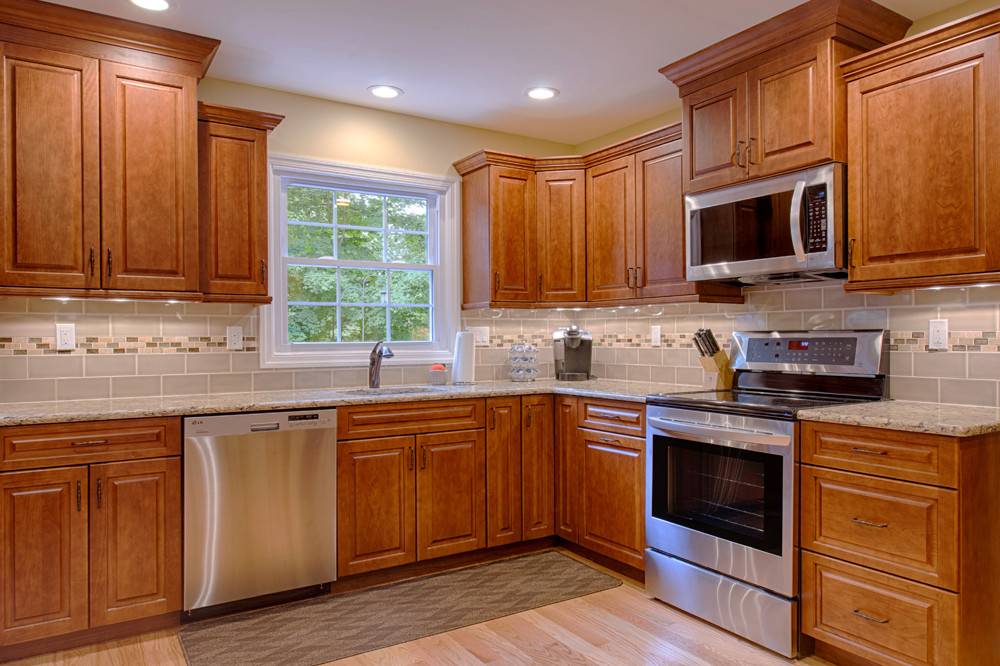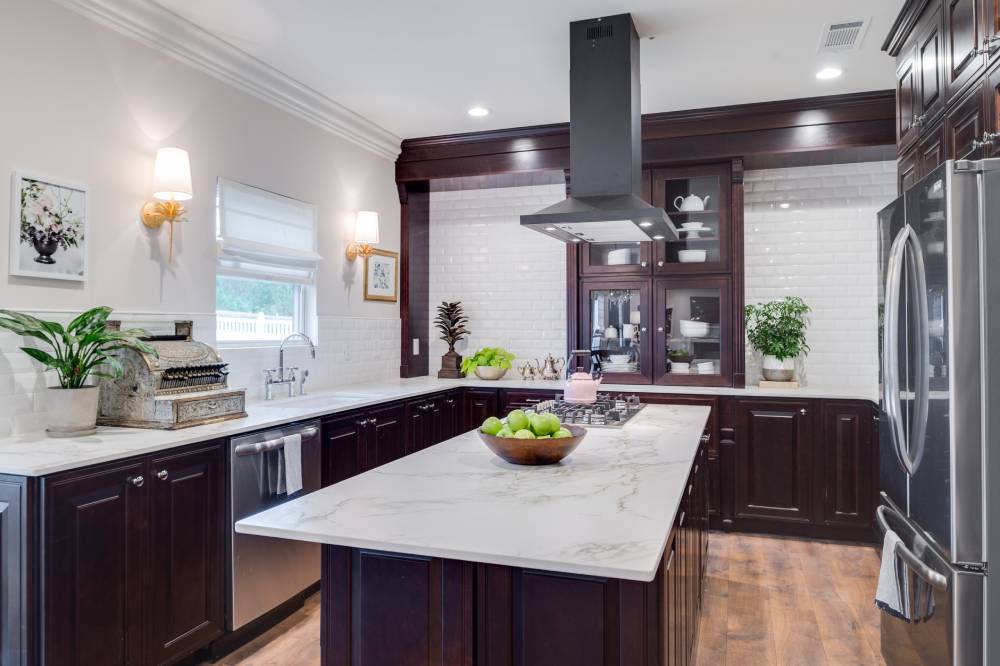
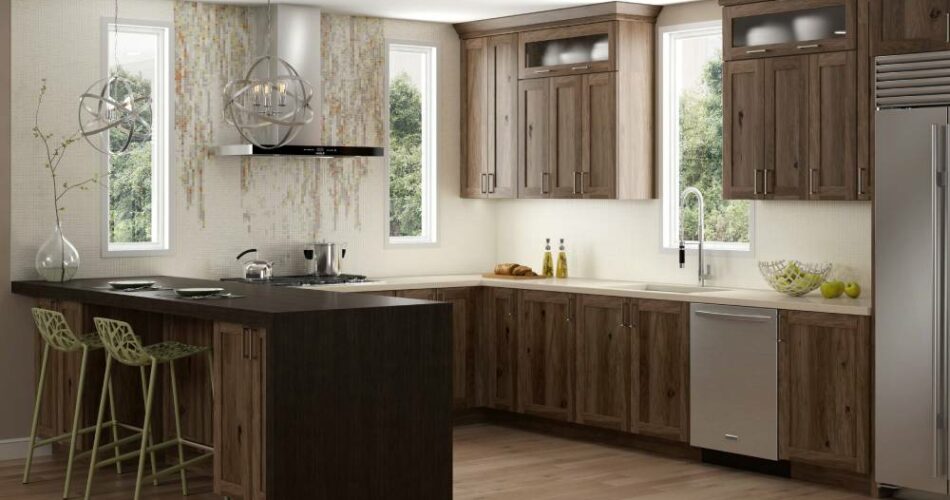
Brown is back, and it looks nothing like the honey oak of the 1990s.

Today’s brown kitchen ideas span warm walnut cabinetry, espresso shaker doors, natural white oak finishes, and rich chocolate brown islands paired with brass hardware and stone countertops.

The range is wider than most people expect. Brown covers everything from pale honey and tan to deep, near-black espresso, each requiring a different approach to flooring, lighting, and countertop selection.

This guide covers cabinet styles, countertop pairings, backsplash options, hardware finishes, lighting, wall paint colors, and specific ideas for small kitchens, open-plan layouts, dark schemes, light natural wood kitchens, and brown and white combinations.

What Are Brown Kitchen Ideas?


Image source: Case Design/Remodeling, Inc.

Brown kitchen ideas cover the full range of warm, earth-toned kitchen designs built around brown as the dominant color. That includes cabinetry in walnut, espresso, honey oak, and chocolate finishes, along with brown applied through countertops, flooring, wood ceiling beams, and stone surfaces.

Brown is not one shade. It spans from soft beige and tan through medium honey and caramel tones all the way to dark chocolate and near-black espresso. Each tone carries different undertones, red, yellow, or gray, that determine which design direction, rustic, traditional, transitional, or modern, the kitchen falls into.

The distinction between a brown-dominant kitchen and a kitchen that uses brown as an accent matters for planning. A brown-dominant scheme means at least the cabinetry or flooring reads as brown. An accent approach brings in brown through an island, open shelving, or wood beams against a lighter palette.

Brown has moved well past a passing trend. The NKBA 2025 Kitchen Trends Report shows brown ranked third among the most popular kitchen colors at 56%, behind green (76%) and blue (63%). That puts brown ahead of every other color category in residential kitchen design right now.

The style works across 4 main kitchen aesthetics: rustic, transitional, traditional, and modern. Each uses brown differently in terms of wood species, finish type, and the materials paired alongside it. A rustic kitchen leans into raw grain and rough-sawn texture. A modern brown kitchen keeps the grain subtle and the finish matte.

Understanding where your brown kitchen sits within these categories is the first step before choosing cabinets, countertops, or hardware.

What Brown Cabinet Styles Work Best in a Kitchen?

Brown cabinets work in 5 main styles: flat-front espresso, shaker walnut, raised-panel dark oak, two-tone brown and white, and natural or cerused light wood. Each suits a different kitchen size, layout, and design direction.

Wood cabinets overtook white as the most specified finish for the first time in nearly a decade, according to the 2026 Houzz Kitchen Trends Study, with 29% of renovating homeowners choosing wood versus 28% for white. That shift is being driven largely by walnut, white oak, and medium brown stain finishes.

Cabinet Style Finish Type Best Kitchen Context
Flat-Front Espresso Dark stain; matte or satin sheen. Modern, spacious kitchens with abundant south-facing natural light.
Shaker Walnut Medium-dark stain; natural grain texture. Transitional, farmhouse, and mid-century modern designs.
Raised-Panel Dark Oak Dark stain; optional decorative glazing. Traditional, formal spaces and kitchens with high ceilings.
Two-Tone Brown and White Stained lower cabinets with painted upper cabinetry. Small to medium kitchens and open-plan living areas.
Light Natural or Cerused Wood Wire-brushed; matte, minimal stain. Scandinavian, Japandi, and contemporary interiors.

Espresso and Dark Walnut Cabinet Finishes


Image source: Sobczak Construction Services, Inc.

Espresso flat-front cabinets read as nearly black under warm lighting but show rich brown undertones in natural daylight. They work best in kitchens over 150 square feet with at least 3 recessed light sources per 100 square feet.

Walnut shaker cabinets are the most requested brown cabinet style among designers right now. The shaker frame breaks up the flat surface while the walnut grain adds warmth without heaviness. Interior designer Michel Smith Boyd describes white oak as “a timeless look that complements many spaces,” a principle that applies equally to walnut at a slightly darker register.

Finish matters as much as species. Matte finishes hide fingerprints and daily wear better than gloss in a brown kitchen. Wire-brushed texture on walnut or oak adds depth that flat-stain finishes can’t replicate.

Two-Tone Brown and White Cabinet Pairings


Image source: Village Home Stores

The most common two-tone configuration: white upper cabinets, brown lower cabinets. This keeps the upper half of the kitchen light and prevents the visual weight of dark cabinetry from pressing down on the space.

A brown kitchen island paired with white perimeter cabinets works well for kitchens over 150 square feet. The island reads as a furniture piece rather than built-in cabinetry, which gives the overall design more flexibility and character.

Starting ratio: 60% white, 40% brown. Adjust toward more brown only when the kitchen has large south or west-facing windows and high ceilings.

What Countertop Materials Pair With Brown Cabinets?


Image source: Kitchen Solvers of the Gulf Coast

The right countertop for brown cabinets depends on 3 factors: the brown tone (light, medium, or dark), the desired contrast level (high or low), and the kitchen’s overall style direction. The wrong countertop choice flattens or muddies a brown kitchen palette.

Engineered quartz commands 78% of design professional preferences according to NKBA data, making it the most specified countertop material in brown and natural wood kitchens today.

High-Contrast Countertop Pairings


Image source: SHELTER Custom-Built Living

White quartz against dark brown cabinets is the most popular combination in espresso and dark walnut kitchens. The contrast is sharp without feeling cold, especially when the quartz carries subtle warm veining.

  • Calacatta-style white quartz with gray veining for modern dark brown kitchens
  • Cream or off-white quartz for transitional brown kitchens that lean warm
  • Honed finish over polished to reduce reflectivity in dark, dramatic spaces

Marble-look quartz in a transitional brown kitchen keeps the palette soft while adding visual texture. Brands like Cambria produce veined quartz surfaces that pair with both walnut and espresso finishes without reading as too formal.

Low-Contrast and Warm Countertop Options

Beige or cream granite pairs with medium brown cabinetry for a cohesive, warm-toned kitchen. The result reads as layered rather than flat because the granite’s natural variation adds movement.

Butcher block is seeing a resurgence, particularly for kitchen islands paired with stone perimeter countertops. Hardwoods used in butcher block surfaces include maple, walnut, teak, and birch. Cost runs $50 to $150 per square foot installed.

Dark brown countertops on light cabinetry inverts the standard configuration. This works well when the lower half of the kitchen is painted white or cream and the countertop anchors the color.

What Flooring Options Work in a Brown Kitchen?


Image source: Soulful Nest

Flooring in a brown kitchen either contrasts the cabinetry or complements it. Both approaches work, but each requires a specific material and tone selection to avoid the space reading as flat or overly uniform.

The most common mistake: matching the floor wood tone too closely to the cabinet stain. When floors and cabinets read as the same brown, the kitchen loses depth and the transition between vertical and horizontal surfaces disappears.

Light Flooring Options

Light oak hardwood is the strongest performer under dark brown cabinets. It provides contrast without the starkness of a white or gray floor, and the oak grain visually connects to wood cabinetry even when the tones differ.

  • Natural white oak flooring: pairs with espresso, walnut, and dark shaker cabinets
  • Blonde maple: works with chocolate brown and warm-toned cabinets
  • Light luxury vinyl plank: a durable, water-resistant option at lower cost

Warm and Earthy Flooring Options

Terracotta tile brings out red undertones in brown cabinetry. It suits rustic and Mediterranean brown kitchens. Grout color controls the look significantly, wide cream grout lines read as traditional, tight gray grout lines push the aesthetic toward modern.

Gray tile floors cool down red-toned brown cabinetry and read as more current than beige tile. Large-format gray tiles, 24×24 inches or larger, work better in brown kitchens than small mosaic formats.

Matching wood-tone floors to cabinets works only when the grain patterns are visibly different. Rift-sawn oak floors with a flat-grain walnut cabinet create enough visual distinction to avoid the “same wood” problem.

What Backsplash Ideas Complement a Brown Kitchen?

A backsplash in a brown kitchen does one of 3 jobs: it adds contrast, it continues a warm palette, or it introduces a second material for texture. Choosing which job the backsplash performs determines every other material and color decision in that section of the kitchen.

Ceramic or porcelain tile remains the most specified backsplash material, chosen in 54% of kitchen renovations according to Houzz 2024 Kitchen Trends data. In brown kitchens, white and cream ceramic tile dominates because it provides contrast without introducing a competing color.

White and Neutral Backsplash Options

White subway tile is the most used backsplash pairing with dark brown cabinets. It keeps the upper portion of the kitchen light and makes dark cabinetry read cleaner.

Grout color changes everything here. White grout with white subway tile reads as seamless and modern. Dark grout with white subway tile adds grid lines that suit a more traditional or industrial brown kitchen aesthetic.

Zellige and handmade ceramic tiles in warm whites and creams add surface variation that flat subway tile cannot. The slight irregularity in each tile catches light differently and gives brown kitchens a more handcrafted, less generic quality.

Stone and Earthy Backsplash Options


Image source: Giffin & Crane General Contractors, Inc.

Stone slab backsplash creates continuity when the countertop is granite or quartzite. Running the same stone vertically behind the range eliminates the visual break between counter and wall.

  • Travertine tile: warm, textured, natural fit for rustic brown kitchens
  • Terracotta mosaic: earthy, handmade quality for Mediterranean and warm transitional schemes
  • Brick veneer: raw texture that pairs well with dark walnut and exposed wood beam kitchens

For an approach to understanding how texture in a kitchen affects the overall reading of a space, the relationship between rough backsplash materials and smooth countertop surfaces is a key factor in brown kitchen design.

What Hardware Finishes Suit Brown Kitchen Cabinets?

Hardware finish in a brown kitchen either warms the palette or grounds it. The 3 most common choices are brushed brass, matte black, and oil-rubbed bronze. Each reads differently depending on the specific brown tone of the cabinetry.

Hardware Finish Best Cabinet Match Design Direction
Brushed Brass Warm brown, honey oak, walnut. Transitional, mid-century, and warm modern.
Unlacquered Brass Dark walnut, rich medium brown. Traditional, eclectic, and bold transitional.
Matte Black Espresso, dark chocolate brown. Modern, industrial, and high-contrast.
Oil-Rubbed Bronze Medium brown, cherry, raised-panel. Traditional, rustic, and formal.
Satin Nickel Gray-toned brown, cooler espresso. Contemporary, transitional, and clean modern.

Matte black hardware against dark espresso cabinets creates a tonal, low-contrast look. This works when the countertop and backsplash provide the contrast in the design. Without a light countertop, the combination can feel heavy.

Brushed brass is the most versatile choice for warm brown kitchens. It reinforces the warm undertones in walnut and honey oak without competing with the wood grain the way a cool metal finish would.

Pull type affects proportion. Bar pulls read as more contemporary. Knobs read as more traditional. For shaker-style brown cabinets, a 5-inch bar pull in brushed brass is a current specification that works across transitional and modern-rustic kitchen styles. NKBA 2025 design data notes that oversized handles and statement hardware are among the fastest-growing accessory trends in kitchen renovation.

What Lighting Works in a Brown Kitchen?

Lighting in a brown kitchen has one job above others: making the brown finishes read as warm and intentional rather than dark and flat. The wrong bulb color temperature turns walnut cabinets greenish and espresso finishes muddy.

Warm white bulbs at 2700K to 3000K bring out the red and yellow undertones in brown wood finishes. Cool white bulbs at 3500K to 4000K suit gray-toned or ashy brown cabinetry where the goal is to neutralize warmth rather than amplify it.

Ambient and Recessed Lighting

Dark brown kitchens need more recessed lighting than light kitchens. A minimum of 3 recessed light sources per 100 square feet prevents dark cabinetry from absorbing too much light and making the space feel closed.

For a full picture of how ambient lighting shapes the perception of color and space in a kitchen, the relationship between lumens, color temperature, and surface reflectivity is the core framework to understand before specifying fixtures in a brown scheme.

  • 4-inch recessed cans: better for lower ceilings, more focused light distribution
  • 6-inch recessed cans: wider spread, suited to open-plan brown kitchens
  • Adjustable recessed fixtures: direct light toward specific work zones or cabinet faces

Task and Under-Cabinet Lighting

Under-cabinet lighting prevents dark brown lower cabinets from visually merging with the countertop. Without it, the counter surface loses definition and the lower half of the kitchen reads as one dark mass.

LED strip lights at 2700K to 3000K work well under cabinets in brown kitchens. They add task light for prep areas while reinforcing the warm tones in the countertop surface.

Under-cabinet lighting is not optional in dark brown kitchen schemes. It is a functional and visual requirement, not a finishing detail. For more on how task lighting works in a kitchen context, the placement and output requirements differ from decorative or ambient sources.

Pendant Lights Over a Brown Kitchen Island

Pendant lights in a brown kitchen serve two purposes: they add task light over the island work surface and they introduce a design element that either contrasts or continues the brown palette.

Brass pendant fixtures are the most specified choice over walnut and warm brown islands right now. Matte black pendants suit espresso and dark brown islands where the hardware is also black. Aged bronze pendants suit traditional brown kitchens with oil-rubbed bronze hardware throughout.

Pendant sizing: for an island 4 feet wide and 7 feet long, 2 pendants spaced evenly and hung 30 to 36 inches above the countertop surface is the standard specification. One oversized pendant centered over a smaller island is an alternative that reads as more current.

For more on choosing and sizing pendant lighting for a kitchen island, the relationship between ceiling height, pendant scale, and the visual weight of surrounding cabinetry directly affects how the fixture reads in the finished space.

What Paint Colors Work With Brown Cabinets?

The wall color in a brown kitchen either reinforces the warmth of the cabinetry or provides relief from it. Choosing wrong in either direction results in a kitchen that reads as too heavy, too cold, or simply unresolved.

Sherwin-Williams designers in 2026 frequently point to mushroom grays, a blend of beige and gray, as the strongest wall color for brown cabinet kitchens. The tone adds elegance while letting the natural richness of wood grain show through without competition.

Warm and Neutral Wall Colors

Off-white and warm cream remain the most used wall colors with brown kitchen cabinets. They reflect light without reading as stark, and they let the wood tones sit as the dominant warmth in the room.

  • Benjamin Moore White Dove: soft white, suits warm brown and walnut cabinets
  • Sherwin-Williams Alabaster: slightly warmer, works with honey oak and medium brown
  • Benjamin Moore Simply White: clean but warm, keeps the kitchen feeling open alongside dark cabinetry

Greige, a mix of gray and beige, works as a neutral bridge when the cabinetry has cool undertones. It keeps the palette cohesive without committing to either warm or cool.

Accent and Contrast Wall Colors

Sage green and olive are the strongest earthy accent colors for brown wood cabinetry in 2024 and 2025 kitchen design. They share the same warm, nature-derived quality as brown wood grain without competing with it.

Deep navy and charcoal wall colors work in open-plan brown kitchens where one wall reads as an accent. These darker tones are best reserved for kitchens with strong natural light or high ceilings.

Farrow and Ball’s Mole’s Breath and Dead Salmon are two specific shades that have been consistently paired with walnut and dark brown cabinetry across transitional kitchen projects. Both carry warm undertones that read as deliberate rather than neutral.

For a broader view of how color in interior design affects perception of warmth, scale, and spatial depth, the relationship between surface tone and light reflectance index is the framework that underpins every wall color decision in a brown kitchen.

What Are the Best Brown Kitchen Ideas for Small Kitchens?


Image source: Bailey’s Cabinets

Small brown kitchens fail for one reason: too much dark tone with too little light. The solution is not to avoid brown but to apply it selectively and pair it with materials that reflect rather than absorb light.

The 2024 Houzz Kitchen Trends Study found that 78% of designers ranked the kitchen island as the number one build priority, but nearly 2 in 5 renovating homeowners do not have an island at all. In small kitchens, brown is most safely introduced through a single element, an island, lower cabinets, or open shelving, rather than applied wall to wall.

Light Brown and Selective Application

Honey-toned and light brown cabinetry performs better than espresso or dark walnut in kitchens under 150 square feet. The lighter the brown, the more it reads as wood tone rather than darkness.

  • White upper cabinets, brown lower cabinets: the standard small-kitchen configuration
  • Natural oak or cerused wood open shelving instead of upper cabinets
  • Brown kitchen island against white perimeter cabinetry

Open shelving in natural wood replaces upper cabinets entirely in some small brown kitchens. This removes visual weight from the upper half of the room and keeps the ceiling feeling higher.

Surfaces That Compensate for Dark Tones

Glossy backsplash tile and reflective countertops bounce light back into a small brown kitchen. Matte countertops absorb light. In a space under 100 square feet with brown cabinetry, surface reflectivity is not optional.

Key surfaces to keep light in a small brown kitchen:

  • White or cream quartz countertop: non-negotiable in dark brown, small-kitchen combinations
  • High-gloss white subway tile backsplash: reflects both natural and artificial light
  • Light oak or pale gray flooring: prevents the floor from reading as a third dark surface

Avoiding dark espresso on all four walls of a galley or single-wall kitchen is the most important spatial rule in small brown kitchen design. Even in a galley with good natural light, full-surround dark cabinetry creates a tunnel effect that no amount of lighting fully corrects.

What Are the Best Brown Kitchen Ideas for Open-Plan Spaces?

Image source: Carolina Kitchens

Open-plan kitchens with brown cabinetry face a specific challenge: the brown tones need to transition into adjacent dining and living areas without looking disconnected or isolated. The kitchen reads as part of the whole room, not a separate zone.

About half of designers surveyed by NKBA in 2024 noted that clients are opening floor plans to feature eat-in kitchens with maximized islands rather than closed-off dining rooms. A brown kitchen island is the single most effective anchor element in these open layouts.

Using the Brown Island as an Anchor

A walnut or warm brown kitchen island functions as a furniture piece in an open plan. It grounds the kitchen zone visually without requiring that brown cabinetry extend across the entire perimeter.

Island-as-anchor works best when:

  • Perimeter cabinetry is white or cream
  • The island uses the same wood species as dining furniture in the adjacent space
  • The island countertop is a different material from the perimeter countertops

Naked Kitchens, a UK-based custom cabinetry brand, produced a notable open-plan brown kitchen with a single-slab dark marble island surface on a rich walnut trestle frame. The design keeps the perimeter light while giving the island enough visual weight to anchor a large open-plan room.

Wood Tone Continuity Across Zones

Consistent wood tones between kitchen cabinetry and dining furniture are more important in open-plan spaces than in closed kitchens.

When the kitchen uses walnut shaker cabinets and the dining table is also walnut, the two zones read as connected. When the wood tones clash, the open plan looks like two separate rooms forced together.

Flooring continuity matters as much as furniture. Running the same light oak hardwood from the kitchen through the dining and living area is the most used approach in open-plan brown kitchen schemes. It creates a ground plane that unifies the zones without relying on identical colors or materials overhead.

For guidance on how color theory in interior design applies to multi-zone open layouts, the principles of visual weight, tone distribution, and the 60-30-10 color ratio are directly relevant to brown kitchen planning in open plans.

What Are Dark Brown Kitchen Ideas?


Image source: Seestedt’s

Dark brown kitchens, covering espresso, ebony, and deep chocolate brown finishes, require more deliberate planning than medium or light brown schemes. The darker the cabinet, the more the lighting, countertop, and flooring decisions determine whether the space reads as sophisticated or closed.

Dark kitchens need 10 to 20% more ambient lumens than light kitchens to achieve the same perceived brightness, according to lighting specification data. That number rises in kitchens with limited natural light or below-average ceiling heights.

Espresso Cabinet Kitchen Ideas

Espresso flat-front cabinets with integrated pulls are the most current dark brown kitchen specification. The handleless look keeps the surface clean and prevents hardware from competing with the dark cabinet color.

  • White quartz or marble-look countertop: provides the highest contrast, most specified pairing
  • White or cream subway tile backsplash: keeps the upper zone light
  • Light hardwood or light gray tile flooring: prevents the floor from reading as a third dark plane
  • Recessed lighting at minimum 3 fixtures per 100 sq ft

Espresso kitchens work best in rooms over 150 square feet with south- or west-facing windows. Natural light changes the reading of dark brown wood finishes significantly across morning, afternoon, and evening hours.

Chocolate Brown and Brass Kitchen Schemes


Image source: Chris and Dick’s

Chocolate brown cabinets paired with brushed brass fixtures and stone countertops are the most popular combination in transitional and mid-century modern dark brown kitchens right now.

The brass reinforces the warm undertones in chocolate brown without reading as too traditional. Unlacquered brass develops a patina over time that actually improves the pairing with rich wood tones as both materials age.

Countertop options ranked for chocolate brown cabinets:

  • Cream or off-white quartz: warm, low-contrast, cozy result
  • Calacatta marble or marble-look quartz: high-contrast, more formal result
  • Soapstone: dark gray-green, very low contrast, suits eclectic brown kitchens

For how contrast in interior design applies to dark cabinet pairings, the principle of value contrast, the difference in lightness between two adjacent surfaces, directly governs how heavy or balanced a dark brown kitchen reads.

What Are Light Brown and Natural Wood Kitchen Ideas?


Image source: JDE Designs, LLC

Light brown and natural wood kitchens cover honey, tan, cerused oak, and natural white oak finishes. These are the fastest-growing segment of brown kitchen design right now, driven largely by the white oak surge that has reshaped cabinet specifications since 2023.

The NKBA 2025 Kitchen Trends Report shows 59% of design professionals now prefer white oak as their primary cabinet material choice, with 51% of professional specifications calling for white oak specifically as a wood grain finish.

Natural Oak and White Oak Kitchen Ideas

White oak kitchen cabinets sit at a warm, pale brown tone that works with almost every countertop, hardware, and backsplash combination.

Rift-cut white oak is the most specified variety for flat-front modern kitchen cabinets. Its straight, consistent grain reads as calm and intentional rather than busy. Quartersawn white oak, with its distinctive ray fleck figure, suits Arts and Crafts and traditional kitchen styles instead.

Oak Cut Grain Pattern Kitchen Style Match
Rift-sawn Linear, straight, and shows minimal variation. Modern, Japandi, and Scandinavian.
Quartersawn Features distinct “ray fleck” and a pronounced, structured figure. Arts and Crafts and traditional.
Flat-sawn Wide “cathedral” grain with high visual variation. Rustic, farmhouse, and transitional.

IKEA’s AXSTAD and BJORKET door fronts cover the most accessible price points for white oak kitchen cabinets. Custom cabinetry in rift-sawn white oak runs $500 to $1,200 per linear foot installed, depending on region and cabinet complexity.

Honey Maple Kitchen Cabinet Ideas

Honey maple cabinets are the warmest of the light brown finishes, leaning toward orange-yellow undertones rather than the neutral gray-brown of white oak.

The key distinction from 1990s orange oak: honey maple in current kitchen design uses a matte, low-sheen finish rather than the high-gloss lacquer that dated earlier generations of the style. The difference in finish changes the reading of the color completely.

Best pairings for honey maple cabinets:

  • White quartz countertops with warm undertones, not cool gray veining
  • Matte black hardware for a modern-rustic contrast
  • Sage green or cream wall paint to complement, not compete with, the warm wood tone

Honey maple suits farmhouse, transitional, and mid-century modern kitchen directions. It reads poorly against cool gray backsplash tile or chrome hardware, both of which pull against the warm undertones and make the cabinet color look outdated rather than warm.

What Are Brown and White Kitchen Ideas?


Image source: Antonio Cuellar Photography

Brown and white is the most used two-tone combination in kitchen design. It works because it provides contrast, balance, and flexibility without introducing a third competing color into the palette.

The standard ratio: 60% white, 40% brown. This applies whether the brown is in the lower cabinets, the island, or the flooring. Shifting beyond 50% brown in a kitchen under 200 square feet requires specific light conditions and material choices to prevent the space from feeling heavy.

Cabinet Configurations

White upper cabinets, brown lower cabinets is the most specified two-tone brown and white kitchen layout. It keeps the upper zone light, which maintains ceiling height perception and balances the visual weight of dark lower cabinetry.

Three main two-tone configurations:

  • Upper white, lower brown: most common, works in kitchens of any size
  • Brown island, white perimeter: best for kitchens over 150 square feet
  • White cabinets, brown floating shelves: light approach for small kitchens avoiding upper cabinets

The 2025 Houzz Kitchen Trends Study confirmed that transitional style, which frequently relies on two-tone brown and white cabinet combinations, remains the top choice among renovating homeowners at 25% of all kitchen remodel style selections.

Materials That Bridge Brown and White

White shiplap or beadboard paneling combined with brown wood cabinetry and accents is a common approach in farmhouse and cottage-style brown and white kitchens.

The paneling reads as white from a distance but adds surface texture that connects to the organic quality of wood cabinetry. It prevents the white sections of the kitchen from reading as flat or sterile next to warm brown wood tones.

Brown floating shelves against white painted walls and white tile backsplash is a lower-commitment approach to the brown and white palette. It introduces natural wood tone without replacing full upper cabinet runs, which suits renters or homeowners working within a tighter renovation budget.

For a broader understanding of how balance in interior design applies to two-tone kitchen schemes, the concept of visual weight distribution across vertical and horizontal planes directly governs how a brown and white kitchen reads as resolved or unbalanced.

FAQ on Brown Kitchen Ideas

Are Brown Kitchens Still in Style?

Yes. Brown ranked third among the most popular kitchen colors in the NKBA 2025 Kitchen Trends Report at 56%. Walnut, white oak, and espresso finishes are all actively specified by designers. The all-white kitchen era is fading, and warm wood tones are replacing it.

What Color Countertops Go With Brown Cabinets?

White quartz is the most specified countertop for dark brown cabinets. Beige granite suits medium brown. Butcher block works well on islands paired with stone perimeter countertops. Avoid cool gray countertops with warm brown cabinetry as they pull the tones apart.

What Wall Color Goes With Brown Kitchen Cabinets?

Off-white, warm cream, and greige are the strongest choices. Sage green and olive complement warm wood tones without competing. Mushroom gray works well with medium and dark brown cabinetry. Avoid stark cool whites, which make brown cabinets read as dated rather than warm.

What Hardware Finish Works Best With Brown Cabinets?

Brushed brass suits warm walnut and honey oak cabinets. Matte black pairs with espresso and dark chocolate brown. Oil-rubbed bronze fits traditional raised-panel brown kitchens. Satin nickel works with gray-toned or cooler espresso finishes where the goal is to reduce warmth.

Do Brown Cabinets Make a Kitchen Look Smaller?

Dark brown cabinets can, but light and medium brown tones do not. The fix for dark kitchens is white upper cabinets, light countertops, reflective backsplash tile, and adequate recessed lighting. Dark espresso on all four walls of a small galley kitchen is the configuration to avoid.

What Flooring Goes With Brown Kitchen Cabinets?

Light oak hardwood is the strongest choice under dark brown cabinets. Terracotta tile suits rustic brown kitchens. Gray tile cools down red-toned brown cabinetry. Avoid matching the floor stain to the cabinet stain too closely, as it removes depth and flattens the overall kitchen palette.

What Backsplash Goes With Brown Cabinets?

White subway tile is the most used option. Zellige ceramic in warm whites adds texture without competing color. Stone slab backsplash creates continuity when the countertop is granite or quartzite. Terracotta mosaic tile suits rustic and Mediterranean brown kitchen schemes at any budget level.

What Light Bulb Color Temperature Works in a Brown Kitchen?

Warm white bulbs at 2700K to 3000K bring out the red and yellow undertones in brown wood finishes. Cool white at 3500K to 4000K suits gray-toned brown cabinetry. Dark kitchens require 10 to 20% more lumens than light kitchens to achieve the same perceived brightness.

What Is the Best Two-Tone Combination for a Brown Kitchen?

White upper cabinets with brown lower cabinets is the most specified configuration. A starting ratio of 60% white to 40% brown keeps the palette balanced. A brown island against white perimeter cabinetry works well in kitchens over 150 square feet with adequate natural light.

What Style Does a Brown Kitchen Suit Best?

Brown works across rustic, transitional, traditional, and modern kitchen styles. Walnut shaker cabinets suit transitional and mid-century modern schemes. Espresso flat-front cabinets fit modern kitchens. Raised-panel dark oak reads as traditional. Natural white oak spans Japandi, Scandinavian, and contemporary farmhouse directions equally well.

Conclusion

This conclusion is for an article presenting brown kitchen ideas across the full spectrum, from light honey maple and natural white oak to deep espresso and chocolate brown cabinet schemes.

The decisions that make or break a brown kitchen are countertop contrast, flooring tone, hardware finish, and lighting output. Get those right, and the warm wood tones do the rest.

Two-tone configurations, a walnut island against cream perimeter cabinets, or brown shaker lowers paired with white uppers, give you flexibility without committing to full-surround dark cabinetry.

Brown works in rustic kitchens, transitional layouts, and modern open-plan spaces equally well. The earth tone color palette is not a trend with an expiration date. It is a design direction built on natural materials that age well.

Andreea Dima
Author

Andreea Dima is a certified interior designer and founder of AweDeco, with over 13 years of professional experience transforming residential and commercial spaces across Romania. Andreea has completed over 100 design projects since 2012. All content on AweDeco is based on her hands-on design practice and professional expertise.

Pin It