Throw Pillows
Creative Throw Pillow Combinations to Elevate Your Home Decor

Most pillow sets that look good come down to a few choices. Use two sizes of square pillow plus one lumbar, and pull the colors from a palette of two or three. Let one pattern lead and add a contrasting texture so the set doesn’t look matched.
Count follows seat length. Raymour and Flanigan (2026) lists two to three pillows for a loveseat, and up to nine for a sectional, depending on its size.
Designers disagree on whether the total should be odd or paired. The answer mostly follows how formal the room is. Either way, an insert 2 inches larger than its cover keeps the pillows from sagging.
How many throw pillows does each seating type need?
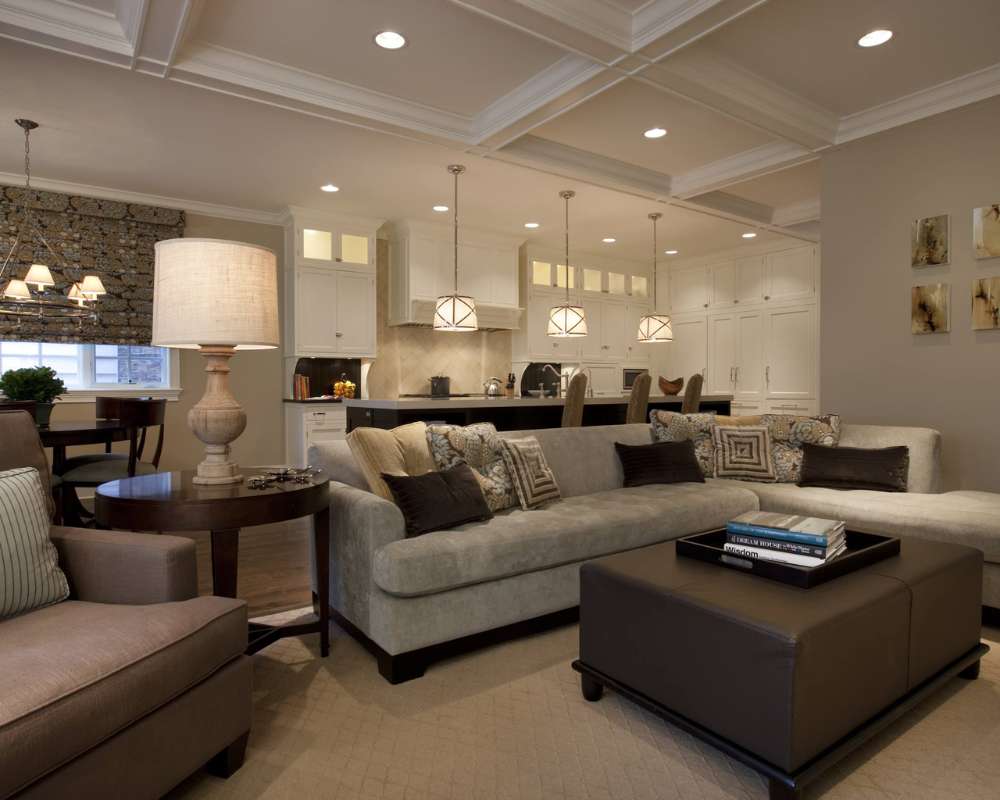
Seat length sets the number. A loveseat takes the fewest, a sectional the most, and a bed gets counted on its own.
- A loveseat or two-seater takes 2 to 3 pillows (Livingetc, 2024).
- A three-seater wants 3 to 5 (Livingetc, 2024).
- Sectionals land at 5 to 6 (Livingetc, 2024).
- Designer Jody Cox puts 5 pillows on a 94-inch sofa, split 3 and 2 (St. Louis Magazine).
- For a bed, Green With Decor suggests 3 to 5 throw pillows in front of 2 shams.
The sources overlap at five for a full-length sofa. Where they differ is how the five gets split, and that shapes the look more than the count does.
Cox puts three on one side and two on the other. Interior designer Marie Flanigan, quoted in Livingetc, goes another way for maximalist or symmetrical looks and puts one pillow in every corner of the couch or sectional.
The furniture retailer Raymour and Flanigan (updated August 2026) gives a simple stop signal. If pillows get moved every time someone sits down, the sofa has too many.
Throw pillow sizes and shapes that work together

Two sizes of square plus a lumbar make a sofa read as layered instead of matched. Large pillows go at the back and the outer edges, with small and rectangular ones in front.
| Pillow | Typical role | Fits best |
|---|---|---|
| 18×18 | Base size, front layer | Standard sofas, accent chairs |
| 20×20 | All-purpose square | Standard sofas, beds |
| 22×22 to 24×24 | Back layer, adds visual weight | Deep sofas, sectionals, beds |
| Lumbar, 12×20 to 14×24 | Front layer, horizontal contrast | Sofas, chairs, bed fronts |
Roles follow retailer sizing guides from Tonic Living and Edward Martin.
Square pillow sizes
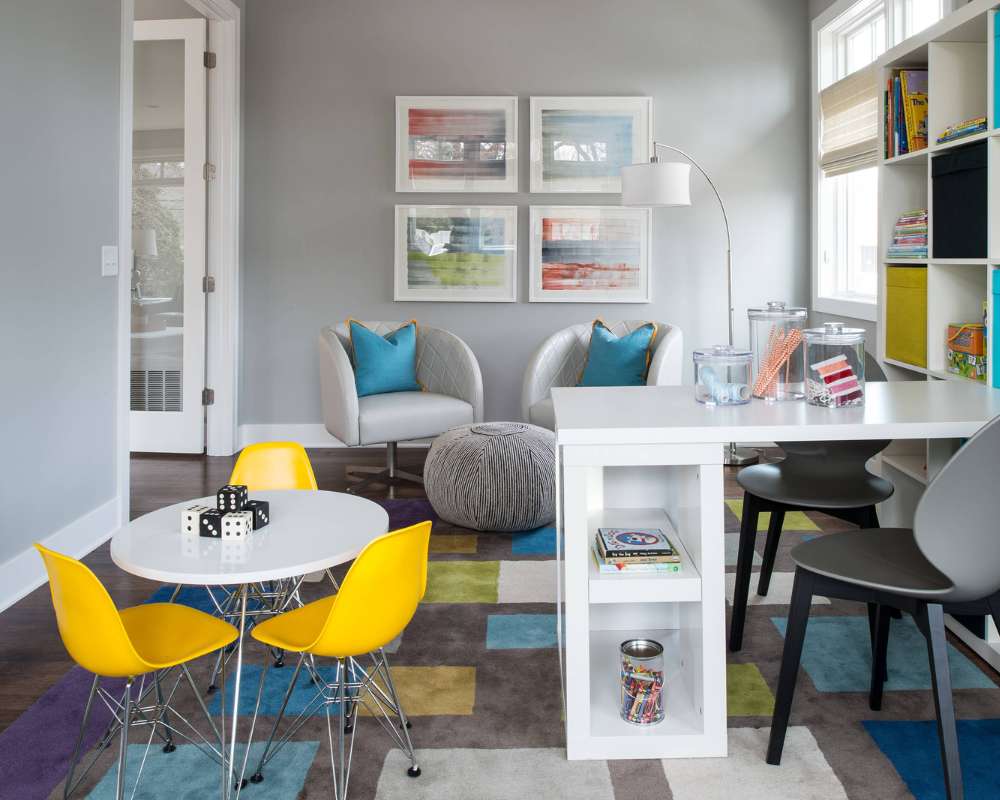
Nobody agrees on a default. Livingetc calls 18×18 the common standard (its writer finds 20 inches more generous), while an AOL roundup says many designers consider 20×20 the standard.
I’d pick by sofa depth and ignore the default. Deep sofas and modular sectionals can carry 22×22 as the back layer, and low-backed modular sofas suit 16 or 18-inch squares, according to Edward Martin and Livingetc’s designers.
Pillow size is a scale question like any other in the room. The same scale and proportion principles that keep a sofa from swamping a small room keep an oversized pillow from swamping a loveseat.
Lumbar, round, and bolster shapes
A lumbar runs 12 to 14 inches tall, with lengths that vary, and one in front breaks up a row of squares. A bolster can stand in for a lumbar and suits beds better. Round pillows add a curve that softens a straight line of squares, and a euro is an oversized 26×26 square that mostly lives on a bed.
One wildcard shape per sofa is plenty. Two round pillows stop being an accent and start competing with the squares.
How to choose a color scheme for throw pillow combinations

Pull two or three colors already in the room and let one pillow carry them. A pillow that shares nothing with the rug, walls, or art reads as a mistake, not an accent.
From there you either contrast the sofa or match it. Wayfair pairs a cream sofa with navy and gold pillows, which works on neutral sofas that can take several colors. One of Livingetc’s layouts, The Minimalist, uses pillows in the sofa’s own color instead, and it suits a pared-back room.
A statement-colored sofa changes the brief. Flanigan’s advice is to pick pillow colors that pick up the other tones in the room instead of fighting the sofa.
Cox sticks to three main colors, pulled from the rug, paint, wallpaper, fabrics, and art. That gives enough range for variety and few enough to look planned.
The 60-30-10 proportion keeps a palette in check: roughly 60 percent dominant color, 30 percent secondary, 10 percent accent. Pillows usually carry the 10. Livingetc applies the same ratio at the scale of a single sofa, with one of the colors kept neutral.
Tidbits and Twine flags the catch. Pillows alone can’t carry a secondary color, so larger pieces such as drapery or a chair have to do that job.
Complementary pairs sit opposite each other on the wheel and analogous colors sit side by side. Both splits are covered in more depth in how color theory applies to interiors.
If the room offers no obvious palette to borrow from, a room color scheme generator can suggest one to test the pillows against.
Mixing patterns and textures without clashing
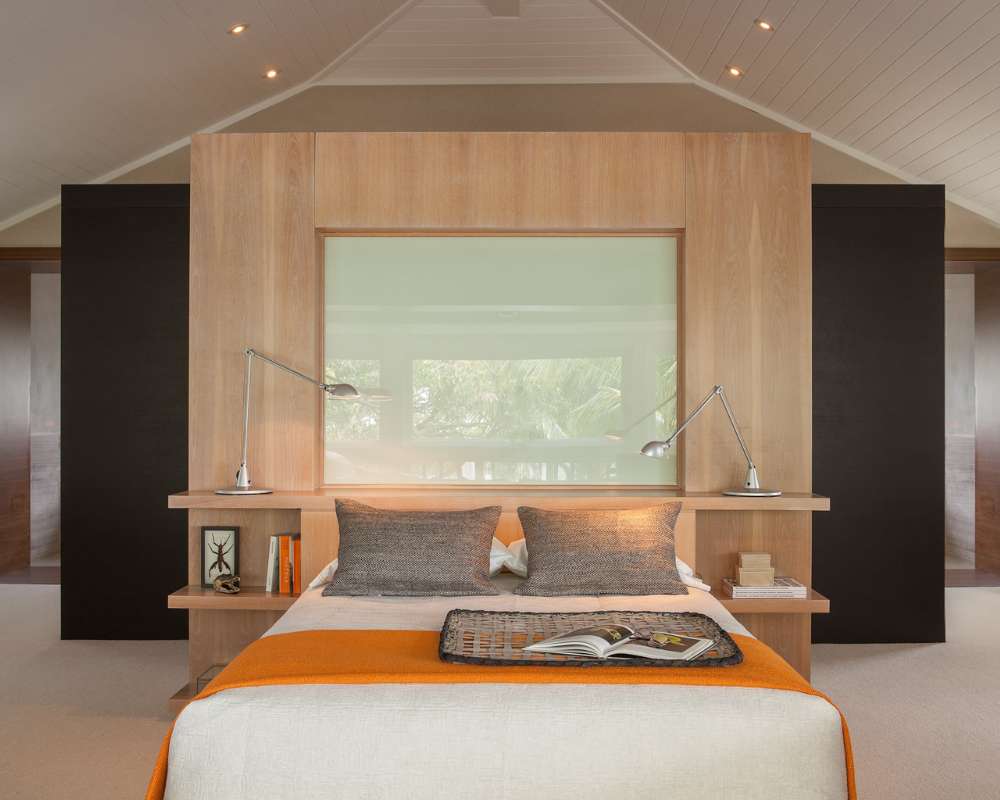
Pick one hero pattern, vary the scale of everything else, and give the eye a solid to rest on. Texture then keeps the solids from going flat.
Pattern scale and ratio

Studio McGee starts with organic prints, since they are the hardest to mix, then adds geometric ones and varies the scale across them. Solids come in last to balance the set.
Little House of Four lands on a similar rule: one floral, one geometric, one solid. Livingetc sorts pillows by print size instead, with one large print, one small print, and one plain pillow per section of the couch.
Domino’s approach is to designate one print as the hero pattern and build the rest of the set around it.
Scale decides how loud a print reads, which is why a large print next to a small one works and two large prints fight. A broader look at how pattern works in a room explains the logic.
The opposite failure is real too. DKOR’s designers warn that an all-solid set can feel dull.
Texture and fabric pairings
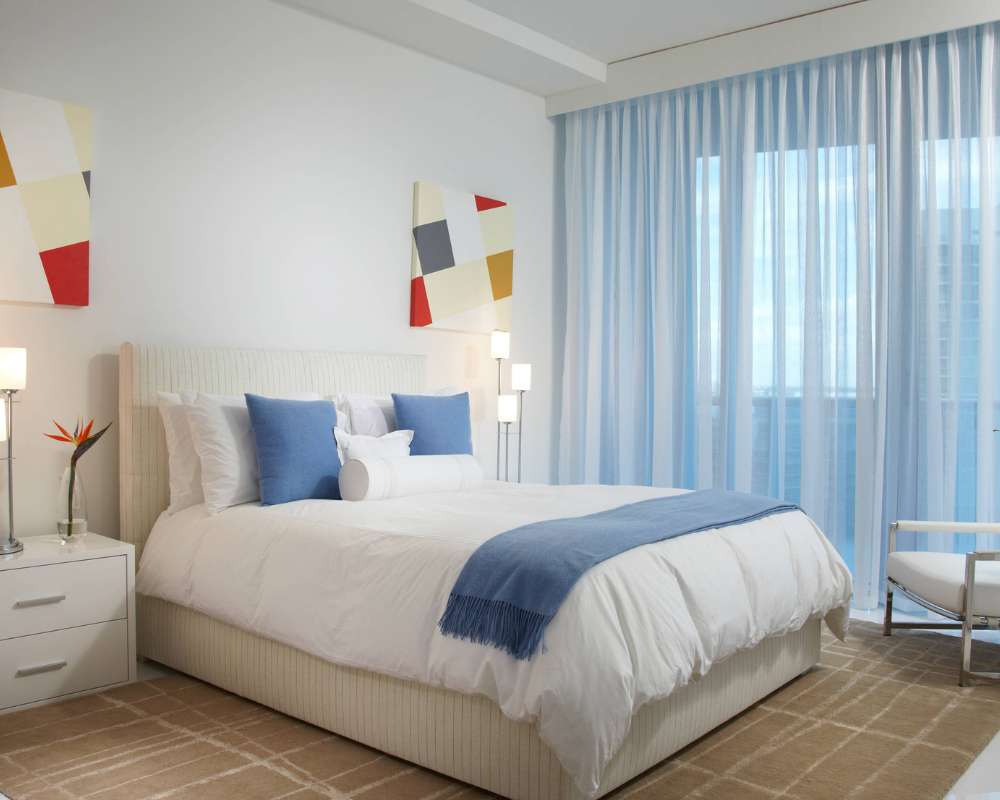
Texture does for a neutral sofa what color does for a bold one.
Linen and boucle are quiet surfaces that suit a neutral base. Chunky knit and faux fur are heavier and add warmth to a plain sofa. Velvet has a sheen that contrasts with matte linen or wool. Wool and sheepskin bring depth, and both turn up in the neutral pillow combinations on Style by Emily Henderson.
Designer April Jensen picks a texture that contrasts with the sofa upholstery, per St. Louis Magazine. Flanigan keeps to two or three complementary textures, and Livingetc’s writer adds that a run of plain pillows in a single texture feels one-note.
For the wider principle behind these pairings, see how texture shapes a room.
Do inserts decide how full a combination looks?
They do. A cover that outsizes its insert sags at the corners, and no color scheme fixes that.
The standard fix is an insert 2 inches larger than the cover, so a 20×20 cover takes a 22×22 insert (Hunker, The Citizenry). Julie Blanner gives a wider range of 2 to 4 inches and saves the extra for larger covers.
Lumbar covers split the sources. Hunker sizes them up like squares, while Edward Martin says a same-size insert often suits a lumbar cover better and avoids side-seam pulling.
Down and feather inserts give a full pillow with some slouch, per Little House of Four. Hackner Home sells 10/90 down feather as plumper and stiffer and 25/75 as softer. Little House of Four also says they look best in a cover 1 to 2 inches smaller than the insert.
Polyester fiberfill is affordable, springy, and often machine washable, according to Lazada’s decor guide. It is less full than down, so Hackner Home notes a larger insert can be stuffed into the same cover. It loses loft over time and needs regular fluffing.
A flat pillow doesn’t always need a new cover. Edward Martin’s advice is to check the insert first.
When you’re stuffing one in, fold the insert in half before feeding it into the cover, per The Citizenry.
How to arrange throw pillows on a sofa, sectional, bed, or accent chair
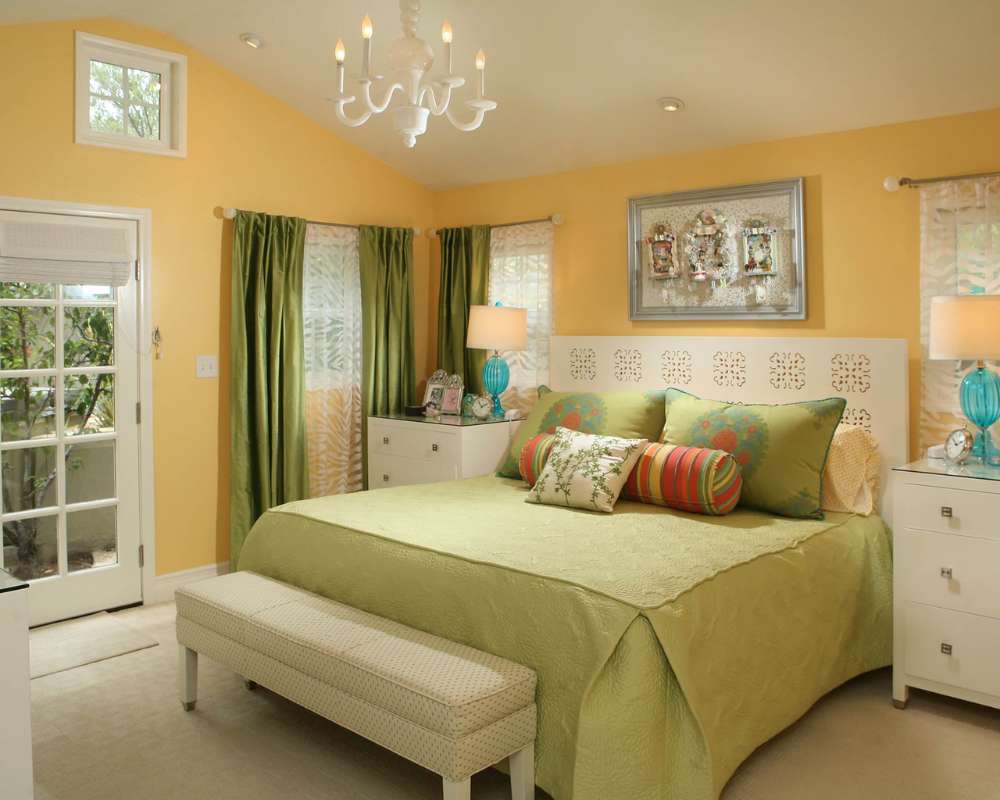
Build from the back forward. The largest pillow goes first, a smaller or patterned layer next, and the accent in front.
That order is Marie Flanigan’s 1-2-3 method as Livingetc reports it, with a solid pillow at the back and a pattern in front.
Sofa and sectional

- Place the largest pillows at each end of the sofa.
- Layer a smaller pillow in front of each, patterned if the back one is solid.
- Add one differently shaped accent, such as a lumbar, in the center or in front of one end group.
- Lean the pillows at a slight angle. Stylist Loui Burke says an exaggerated karate chop now reads as amateur and a light tap is the most it needs (Livingetc, August 2026).
- Sit down. Anything you have to move to sit goes.
Raymour and Flanigan’s standard-sofa recipe is two 22-inch pillows at the ends, two 20-inch pillows in front of them, and one lumbar.
Sectionals follow the same order at a larger scale. Raymour puts the big pillows in the corners, repeats one or two colors across both sides, and adds a couple of accent pillows where the sections meet.
That repetition gives the seating area visual unity without matching every pillow. One oversized pillow at one end can balance two large ones at the other.
Counts diverge here. Livingetc caps a sectional at six pillows, while Raymour allows up to nine and ties the number to the sectional’s size.
Bed
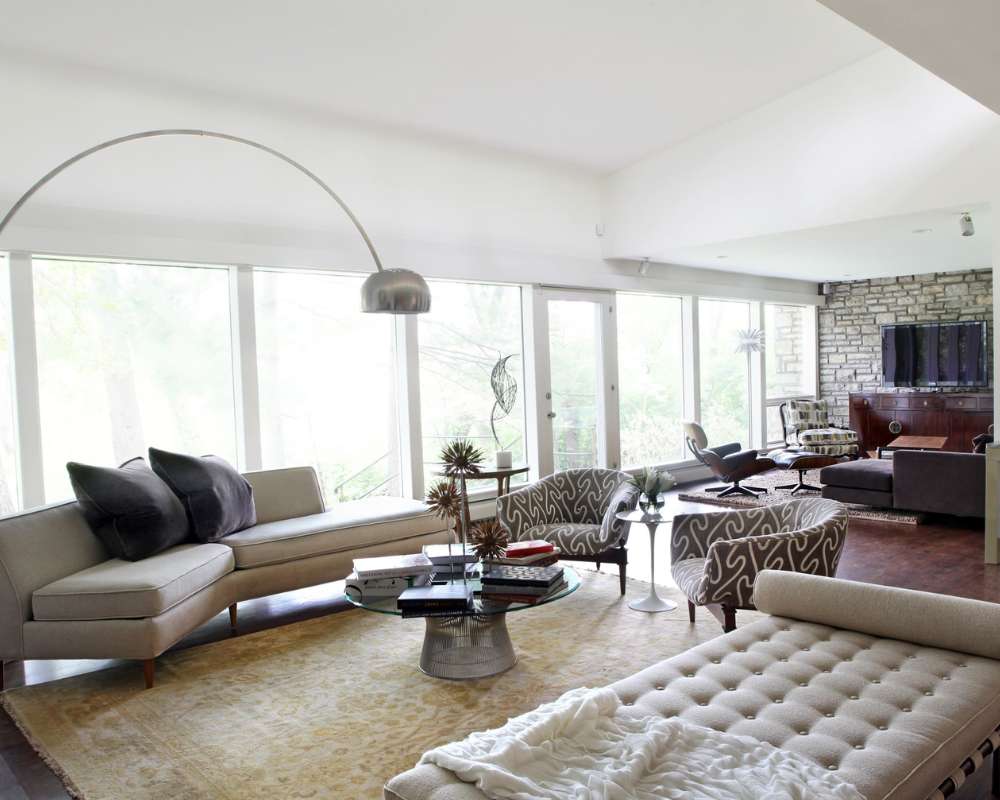
Designer Erin Gates, writing for Kassatex, layers a bed from the back forward. Sleeping pillows sit at the back and are mostly hidden. Shams come next, three euros on a king bed or two kings. A pair of accent pillows or one long lumbar goes in front.
Designer Amy Peltier, quoted in Saatva’s bed guide, stacks four sleeping pillows two on two, then leans three throw pillows in front. Two of them match, preferably 22×22, and the third is a smaller rectangular one.
Whichever route you take, Burke’s warning applies. Don’t repeat the same size and shape across the whole bed.
Accent chair
One pillow does the job. A lumbar or a single square is plenty.
Raymour and Flanigan warns that an oversized pillow overpowers an accent chair. One Houzz poll respondent keeps a single lumbar on each of two living room chairs.
Pull one color from the sofa’s pillows instead of copying a pillow outright. The chair then looks related, not matched.
Odd numbers or matching pairs?
Odd counts suit relaxed rooms and pairs suit formal ones. Designers split along that line, not along right and wrong.
Jody Cox designs in odds. April Jensen, quoted in the same St. Louis Magazine piece, goes symmetrical with four pillows, two on each end.
An odd layout reads as relaxed and lived-in, according to La-Z-Boy Kanata’s pillow guide, and Raymour and Flanigan says it keeps the eye traveling across the sofa. The cost is that one side carries fewer pillows, so size has to balance the weight.
Pairs look clean and tailored on a structured sofa (Raymour and Flanigan) and fit symmetrical, traditional rooms. They can also feel stiff, and Domino notes that all-matching pillows pull the eye to the center of the sofa.
Underneath the argument sits one idea. A paired layout is formal symmetry in a room, where one half mirrors the other.
An odd layout trades the mirror image for visual balance, where unequal pieces still weigh the same.
Livingetc’s coverage of the 3-5-7 rule allows an exception. Designer Jamie Gernert says more traditional or classical rooms might call for more symmetry.
If the room is formal, the sofa is centered, and the art above it is symmetrical, go with pairs. A relaxed room or an off-center sofa calls for odds, with the larger pillow on the lighter side.
Throw pillow combinations by sofa color and style

Four sofa colors cover most living rooms: gray, white, navy, and brown leather. Each asks something different of its pillows.
By sofa color
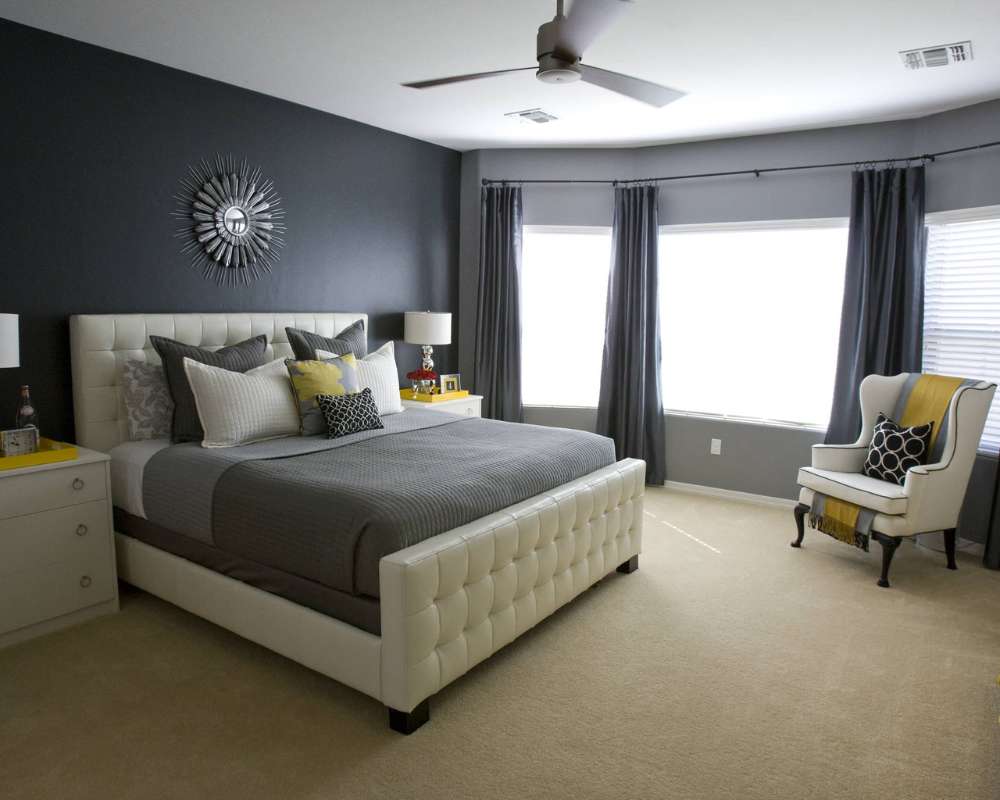
| Sofa | Base pillows | Accent colors | Texture |
|---|---|---|---|
| Gray | Rich camel | Mustard, teal, fuchsia | Woven leather, thick shearling |
| White | Neutral linen, velvet, or wool | Blue stripe, navy paisley, navy-and-white animal print | Linen, velvet, wool, faux fur |
| Navy | White, beige | Gold, yellow, coral | Velvet |
| Brown leather | Cream, beige, taupe | Navy, terracotta, olive, mustard | Boucle, knit, faux fur |
Pairings draw on Livingetc, One Kings Lane, Rove Lab, and Modern Furniture.
Gray offers the longest list of workable colors. Livingetc’s designers range from fuchsia, mustard, and teal to several bright colors mixed together for an eclectic look, and a full set of pillow pairings for a grey couch goes further than a table can.
On a neutral sofa, swapping two or three pillows resets the whole look. One Kings Lane replaced blue-striped squares on a white sofa with a navy-and-white animal print and moved the room from breezy chic to laid-back glamour.
Brown leather takes texture over color. Modern Furniture’s guide pairs smooth leather with rougher fabrics such as boucle and knit, and RoomDsign suggests white pillows to tone down a couch that dominates the room.
Dark brown fabric couches follow the same logic, covered in ideas for dressing a dark brown couch with pillows.
By room style
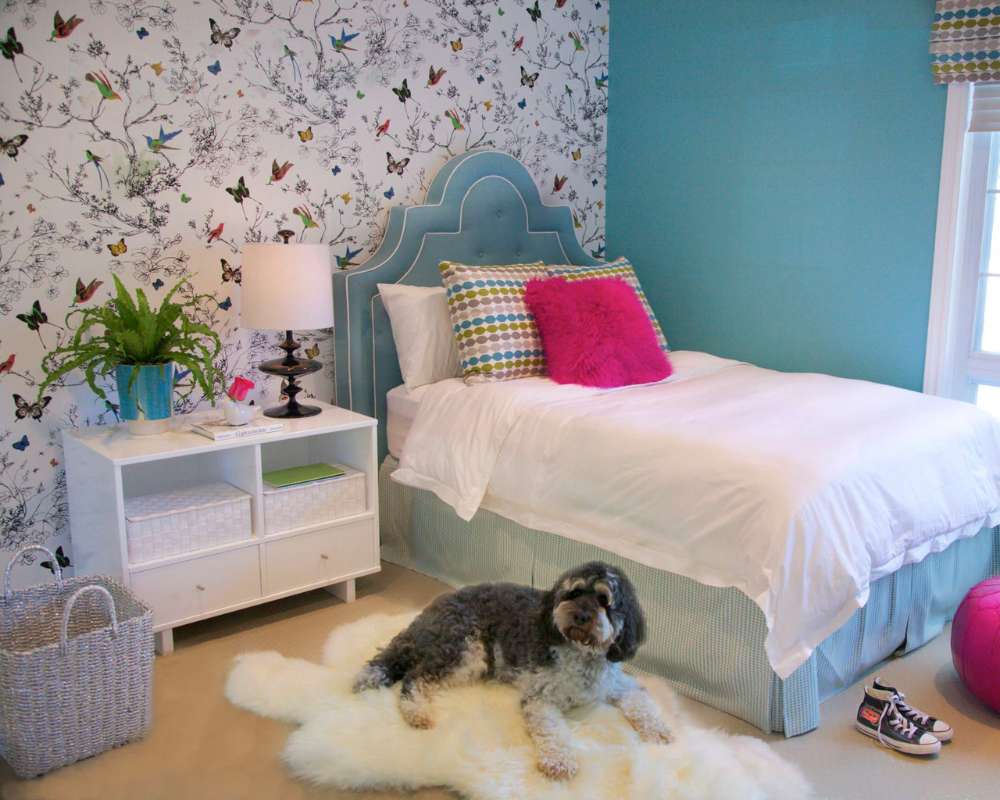
For boho rooms, 54 Kibo suggests layered patterns, breezy linens, and hand-stitched texture. Modern rooms get geometric prints for contemporary and mid-century looks (2Modern), or one floral for contrast against a structured sofa (54 Kibo). In a farmhouse, 54 Kibo layers neutral pillows against tan leather and adds navy accents. Coastal rooms lean on blue pillows with white alongside (2Modern).
Most real rooms borrow from more than one of these. A shared color is what makes the mix read as intentional.
When throw pillow combinations stop working
The formulas assume a sofa people actually sit on. When seats are shallow, the room is already busy, or the household is rough on cushions, fewer pillows and simpler sets win.
Overcrowding is the usual culprit. Livingetc designer Kashi Shikunova says many people overload their sofas until sitting gets uncomfortable, and Cox says guests stop sitting down.
Shallow seats make it worse. Livingetc designer Jennifer J Morris says extra pillows become annoying to shuffle or remove when the seat depth is shallow.
Unusual sofa shapes need restraint, and Spoak keeps pillows to a minimum on sofas with dynamic or unique forms. In a busy room, DKOR’s designers take out the strongest colored or textured pillow when a set feels like too much. A Houzz poster, meanwhile, reports that seasonal pillows on a daily-use sofa usually end up on the floor.
Burke’s rule covers the rest. Lean a pillow naturally or leave it off.
Livingetc’s August 2026 reporting calls less-is-more the current approach on beds, with a lumbar, bolster, or pebble-shaped cushion standing in for a row of standard squares.
A quick test works well. Remove the front layer and look. If the sofa looks better, the combination was carrying too much.
Throw Pillow Combinations FAQ
How do you swap throw pillow combinations between seasons without buying new pillows?
Keep the inserts and change the covers. Once you own the inserts, you only buy covers from then on, according to Repurpose and Upcycle.
Raymour and Flanigan adds that new pillows also refresh a room after a holiday or a repaint.
How do you fluff throw pillows that look flat?
After someone sits against a pillow, fluff it back into shape and lean it again, advises stylist Loui Burke (Livingetc, August 2026).
If a pillow keeps collapsing, Burke points to the fill. A feather insert or a lofty fiber alternative holds a relaxed shape better than a rigid synthetic one.
Can you put throw pillows on top of a throw blanket?
Yes. Fold or gather the throw, then set the pillows directly on the blanket, per Raymour and Flanigan.
Choose pillows that contrast with the throw in color or texture, and vary the scale of the patterns.
Should the same pillow appear in more than one place in a room?
Yes. Repeating a pillow elsewhere in the room makes it look like it belongs, according to Green With Decor.
The same guide says 7 to 10 different pillows spread across one space can look random.
Which inserts work for outdoor pillows?
Polyester. The Pillow Collection offers a 100% polyester insert for its outdoor styles.
Hackner Home also sells an indoor/outdoor polyester non-woven insert.
Where can you buy throw pillow covers and inserts cheaply?
Green With Decor suggests the clearance sections at TJ Maxx and HomeGoods, which often carry covers with good inserts.
Many retailers also sell covers without inserts, which lets you buy a larger insert separately (Livingetc).
What to Buy First When You Own No Pillows
Throw pillow combinations start with three pillows, not a full set. Three suits a loveseat, a three-seater, and the front row of a bed, so one starter trio moves between rooms.
Livingetc’s loveseat range (2 to 3), its three-seater range (3 to 5), and Green With Decor’s bed count (3 to 5) overlap at that single number.
Start with two matching solid squares for structure. Add one patterned pillow that repeats a room color, then a lumbar or textured accent once the pair and the pattern are in place.
The order matters because the solids set the structure, the pattern sets the palette, and an accent has nothing to accent until both exist.
The downside is a stiffer, paired look at the ends until the patterned pillow arrives.

- Kitchen Color Schemes by Cabinet Color: What Pairs Well - October 19, 2026
- Curtain Colors for Every Wall Color: Safe vs Bold Picks - October 18, 2026
- Interior Design Styles: Find Your Primary and Secondary - October 14, 2026


