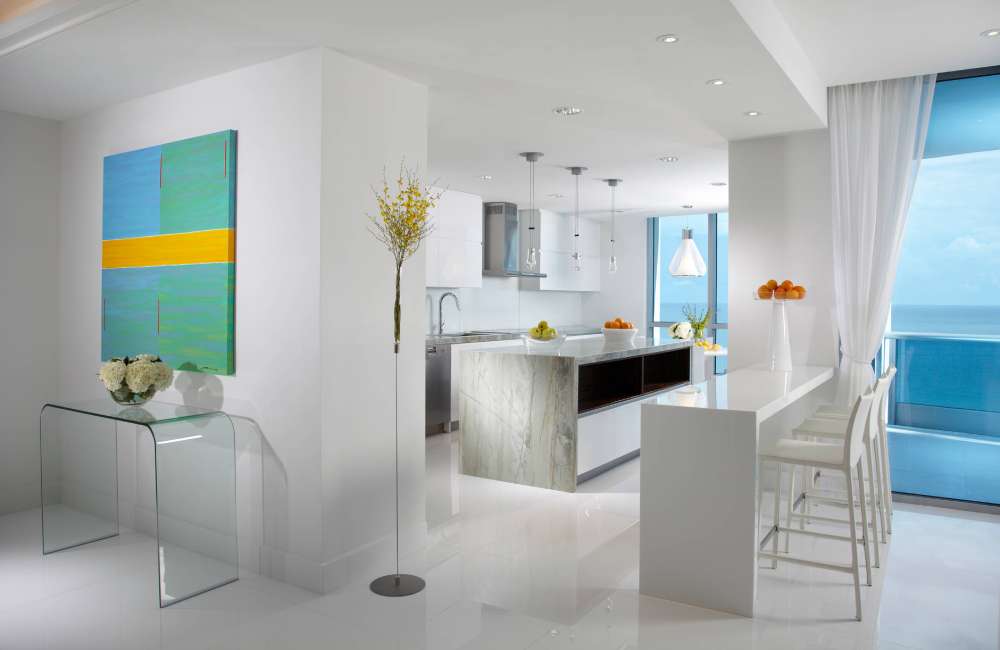
Rently’s 2025 survey found that 55% of renters put affordability first when making decor decisions. That’s more than half of all renters trying to make a space feel like home without overspending. Affordable apartment decor is how you get there.
Rental restrictions, small square footage, and tight budgets don’t have to mean bare walls and boring rooms. From thrift store furniture finds and DIY wall art to budget-friendly textiles and renter-safe kitchen upgrades, there are real ways to decorate well for less.
This guide covers where to shop, what to prioritize, room-by-room ideas for living rooms and bedrooms, and the common mistakes that make cheap decorating look, well, cheap. Everything here works on a real budget, in a real apartment.
What Is Affordable Apartment Decor?
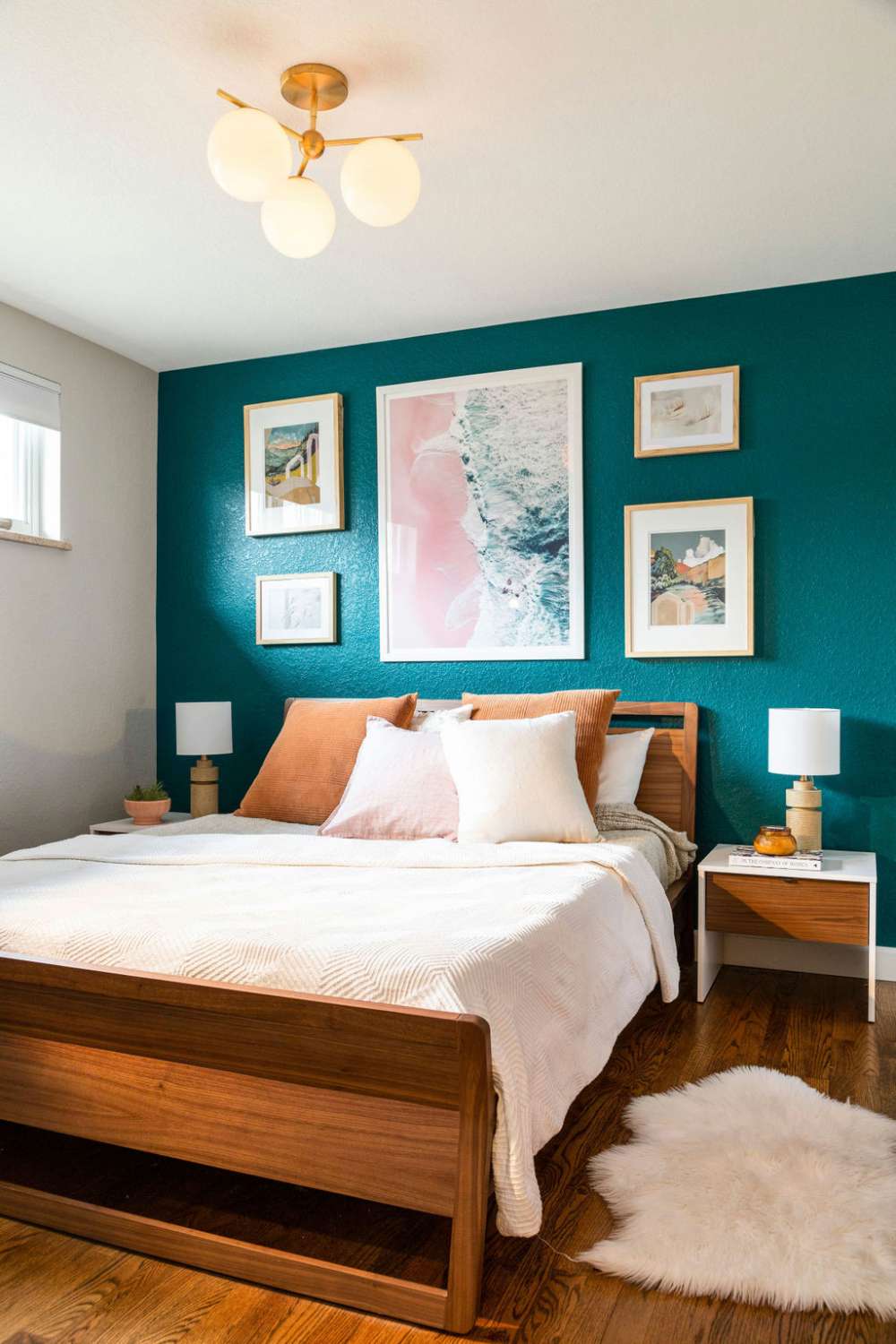
Image source: TVL Creative Ltd.
Affordable apartment decor is the practice of decorating a rental space with intention, quality, and style while keeping total spending under realistic budget limits. For most people, that means staying under $500 overall or under $50 per individual item.
There’s a real difference between cheap and affordable here. Cheap means buying the lowest-priced item without thinking twice. Affordable means making smart choices that balance cost with how something actually looks and lasts.
Apartments come with built-in constraints that houses don’t. You’re dealing with smaller square footage, rental restrictions on painting or drilling, and the reality that you might move in a year or two. Those limits change how you approach every purchasing decision.
Rently’s 2025 Apartment Design & Decor Trends Report found that 55% of renters put affordability first when making decor decisions. But that doesn’t mean they’re willing to sacrifice style. Only 7% said they’d prioritize looks over function, which tells you most renters want both.
The same survey showed 38% of renters plan to spend between $101 and $500 on decor, while 29% are open to going up to $1,000. So “affordable” doesn’t mean free. It means being strategic about where those dollars go.
Inflation and rising rents have pushed more people toward budget decorating than ever. With homeownership out of reach for a growing number of people, renters are treating their apartments as long-term homes worth investing in. The mindset has shifted from “it’s just a rental” to “this is my space.”
Where to Buy Affordable Apartment Decor
Where you shop matters more than what you buy. The same style of throw pillow can cost $12 at Target or $45 at West Elm. Knowing the right sources cuts your total budget without cutting corners on how your space looks.
Budget Retail Lines Worth Knowing
IKEA remains the go-to for apartment furniture and small decor items. The KALLAX shelf unit and BILLY bookcase have become staples in rental living for a reason. They’re modular, affordable, and easy to hack with paint or peel-and-stick wallpaper.
Target’s Threshold line and the Hearth & Hand with Magnolia collection offer a mid-range look at entry-level prices. Walmart’s Better Homes & Gardens line does something similar, especially for bedding and textiles.
For pure discount shopping, HomeGoods, TJ Maxx, and Marshalls carry name-brand home accessories at 20-60% off retail. Five Below has become surprisingly useful for small items like candle holders, frames, and seasonal decor.
Online, Wayfair and Amazon carry budget furniture lines like Zinus and Walker Edison that ship flat-pack and assemble in under an hour. Shein Home and Temu have entered the space with extremely low prices on textiles, though quality varies.
Secondhand and Thrifted Finds
The secondhand furniture market was valued at $40.2 billion in 2024, according to Market.us, and it’s projected to nearly double by 2034. That growth reflects a real shift in how people furnish their homes.
Facebook Marketplace and Craigslist are the fastest way to find solid wood furniture at a fraction of retail price. Habitat for Humanity ReStore locations carry donated furniture and home goods, often at 50-90% below what you’d pay new.
Thrift stores and estate sales are better for smaller items like frames, vases, lamps, and decorative objects. The trick is going regularly, since inventory rotates fast.
Online resale platforms are growing too. Mordor Intelligence reported that online marketplaces held 41.31% of secondhand furniture sales in 2024. AptDeco, Chairish, and Kaiyo specialize in used furniture with delivery built in.
Timing Your Purchases
Sales cycles exist for a reason. January white sales at stores like Target and Bed Bath & Beyond (now Overstock) bring bedding prices down 30-50%.
Black Friday and end-of-season clearance events are the best windows for furniture and larger items. IKEA runs periodic events across its product lines, and Wayfair’s Way Day sales happen twice yearly.
Affordable Wall Decor Ideas for Apartments
Walls define a room more than any other surface. And in a rental, they’re the trickiest to deal with because most leases prohibit painting or drilling large holes.
But that doesn’t mean your walls have to stay blank. Rently’s 2025 survey found that 56% of renters use artwork to bring color into their apartments without paint. It’s the single most popular method.
Gallery Walls on a Budget
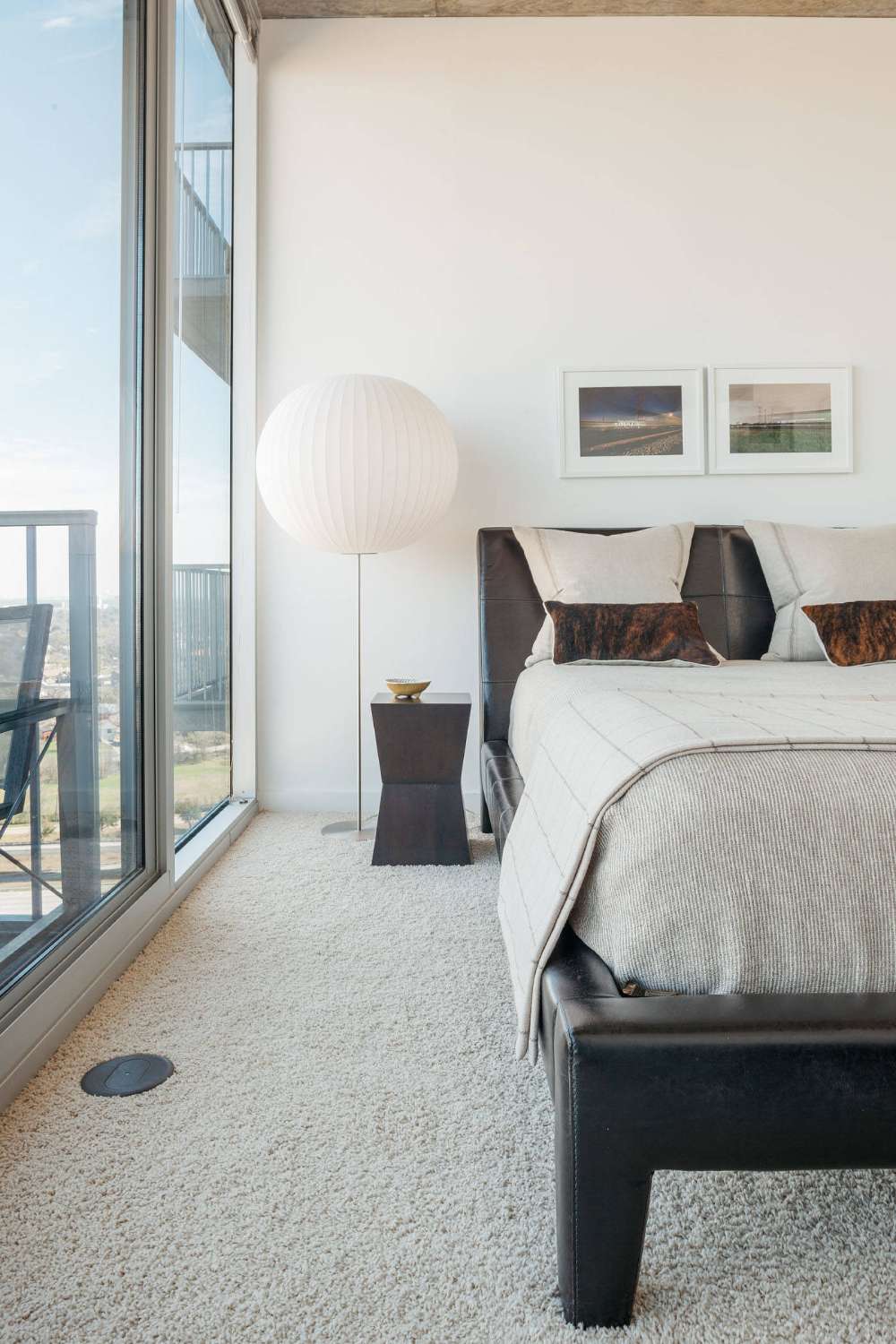
Image source: Benjamin Hill Photography
A gallery wall looks expensive. It usually isn’t.
The frames are the biggest cost, and thrift stores sell them for $1-5 each. Spray paint them all the same color (black works everywhere) and you’ve got a cohesive set for under $20.
For the art itself, the Metropolitan Museum of Art, the Getty Museum, and the National Gallery of Art all offer free, high-resolution digital downloads of public domain works. Unsplash has free photography. You can print 8×10 images at Walgreens or CVS for a few dollars each.
Command strips from 3M hold frames up to 16 pounds without damaging walls. They cost around $4-8 per pack and they’re reusable if you’re careful removing them.
Peel-and-Stick Options
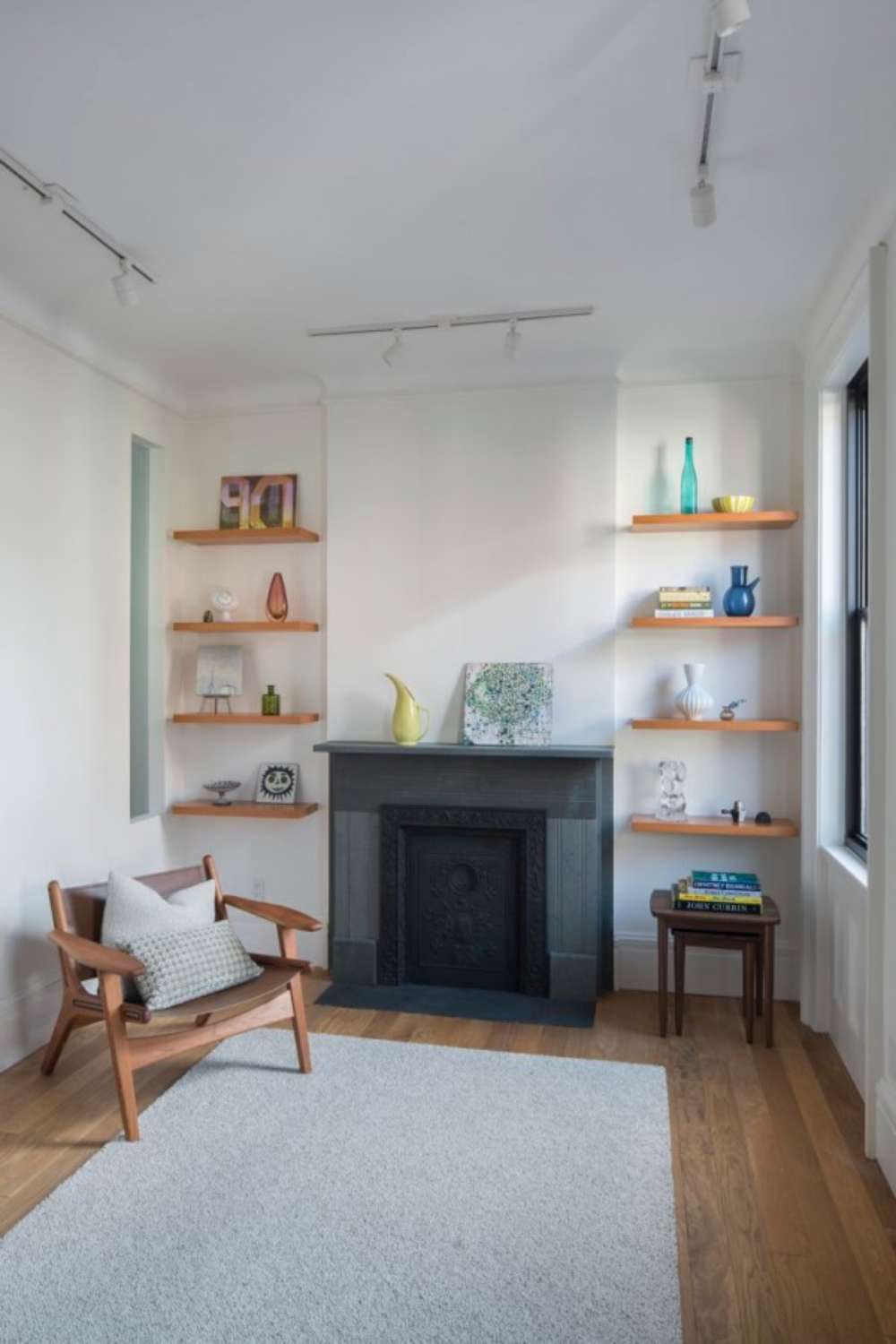
Image source: Trinity Building Inc.
Peel-and-stick wallpaper has become one of the most popular renter-friendly upgrades available. You can apply it to a single wall to create an accent wall effect, and it peels off cleanly when you move.
Wall decals and washi tape are even cheaper alternatives for adding pattern or geometric shapes to a space. Neither requires any tools or leaves residue.
Mirrors as a Budget Visual Trick
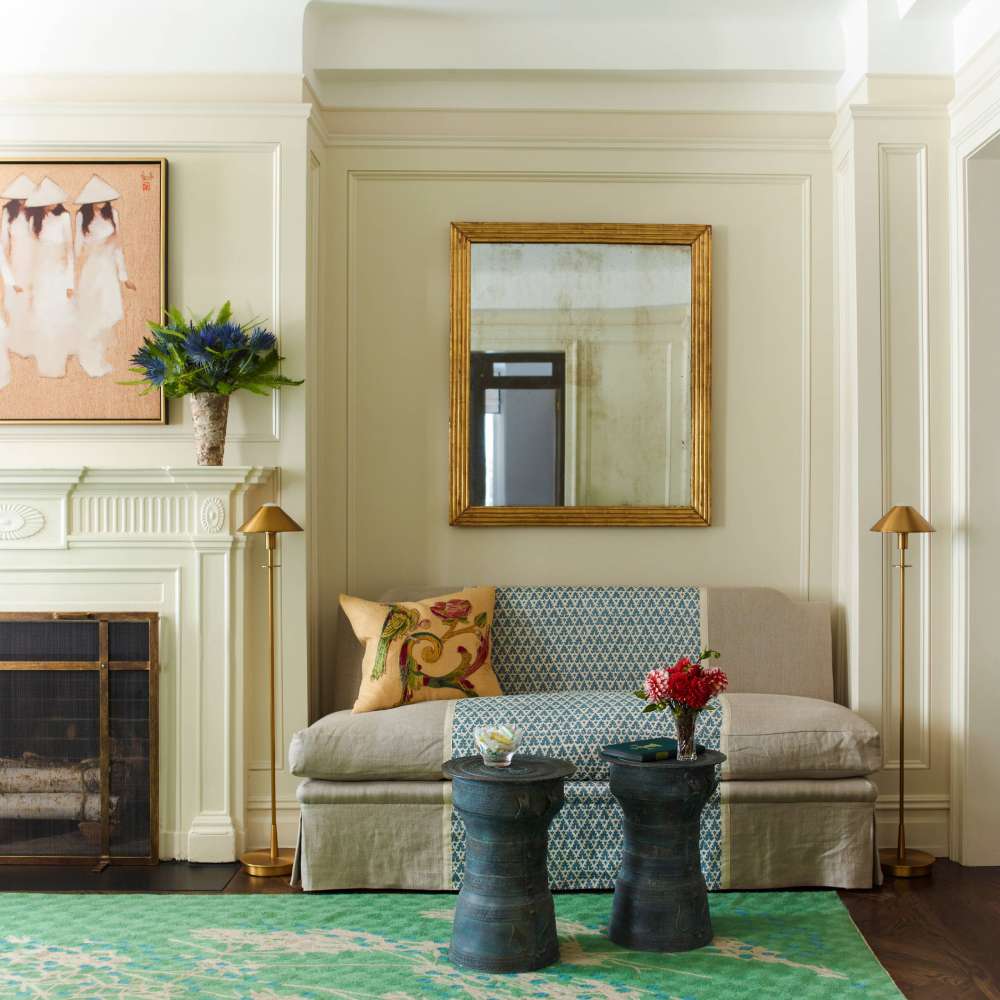
Image source: Anik Pearson Architect, P.C.
A large mirror on a main wall does two things at once. It reflects light to make the room feel brighter, and it creates the illusion of more square footage.
IKEA’s full-length mirrors start around $10-30. Leaning one against a wall avoids the need for heavy-duty mounting. For something with more character, thrift stores regularly carry ornate vintage mirrors for $15-40.
Budget-Friendly Furniture for Small Apartments
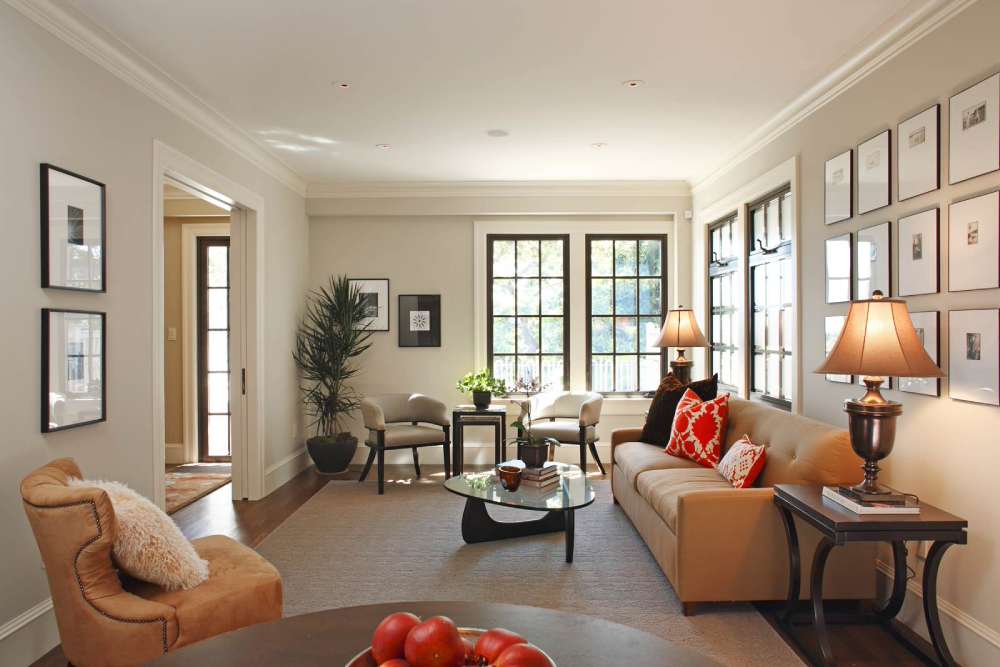
Image source: Matthew MacCaul Turner
Furniture is usually the single biggest expense when decorating. It’s also where the biggest savings exist if you know where to look and what to prioritize.
Statista reported that the average U.S. consumer unit spent around $648 on furniture in 2024. That’s a realistic starting point for an entire apartment if you mix new and secondhand pieces.
Multi-Functional Pieces
In small apartments, every piece of furniture should do more than one thing.
Storage ottomans hold blankets and double as extra seating. Fold-out desks mount to walls and disappear when you don’t need them. Nesting tables tuck into each other and come out only when guests visit.
IKEA’s KALLAX unit works as a room divider, bookshelf, TV stand, or entryway storage depending on how you position it. That kind of flexibility matters when you’re working with 500-800 square feet.
What to Buy New vs. Used
| Item | Buy New | Buy Used | |——|———|———-| | Mattress | Yes, for hygiene and support | No | | Sofa | Yes, if budget allows | Only if clean, inspected | | Dining table | Either works | Great used value | | Bookshelves | Either works | Often better quality used | | Nightstands | Skip new, overpriced | Almost always cheaper used | | Desk | Either works | Solid wood desks hold up |
The general rule: buy anything that touches your body new (mattresses, sofa cushions). Buy anything structural, like tables and shelving, used. Solid wood furniture from the 1970s-1990s is built better than most flat-pack options sold today.
IKEA Hacks and Flat-Pack Alternatives
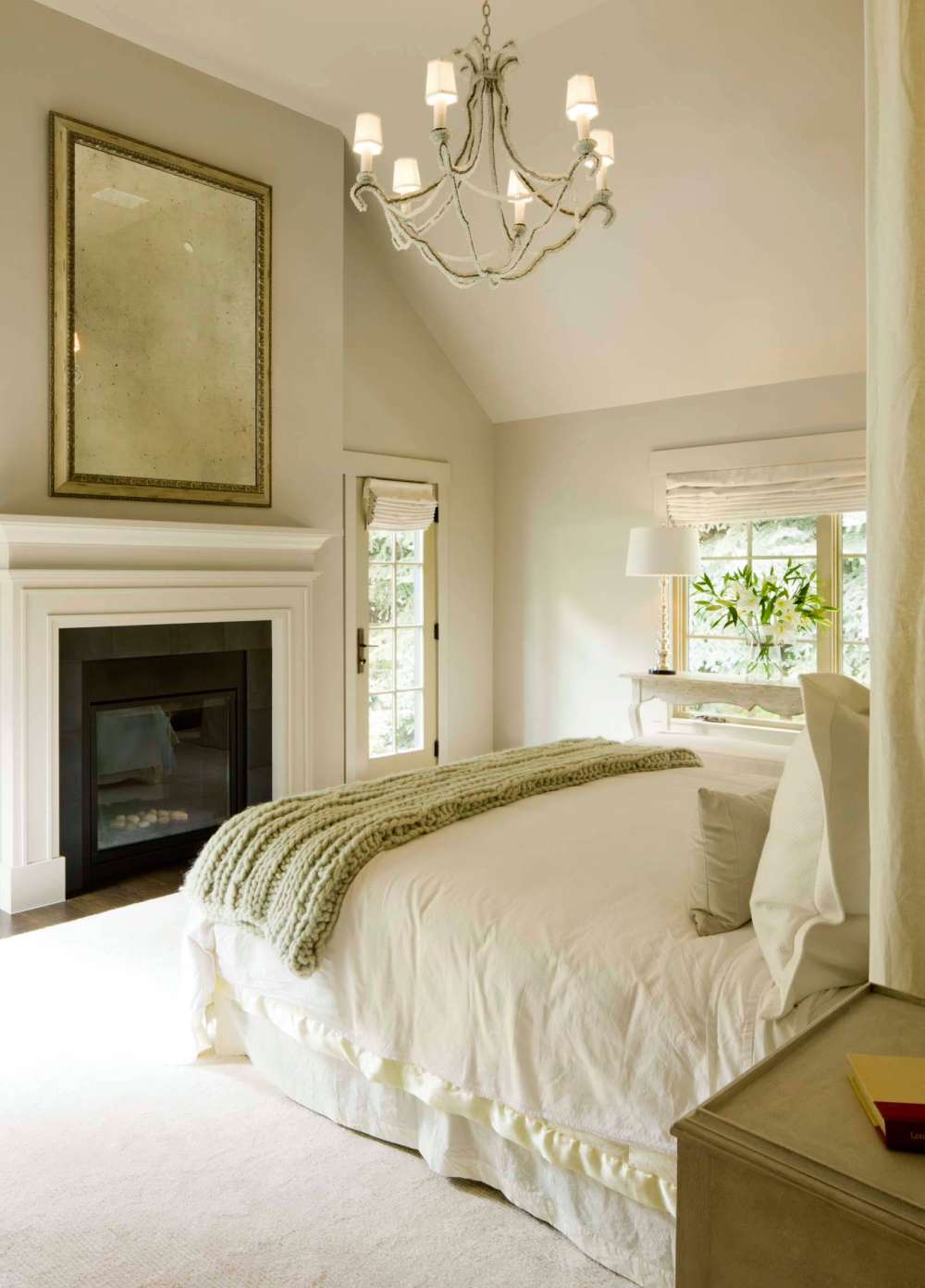
Image source: Gary McBournie Inc.
IKEA hacking has its own subculture for a reason. A $35 MALM dresser with new brass pulls and a coat of chalk paint looks completely different from the stock version.
Beyond IKEA, Wayfair Basics, Zinus, and Walker Edison sell flat-pack furniture that ships directly to your door. Zinus frames and headboards in particular hit a good price-to-quality ratio for bedrooms.
In 2022, IKEA launched its Buy Back & Resell program in the U.S., letting customers exchange used IKEA furniture for store credit. That program cuts costs on both ends.
How to Decorate an Apartment Living Room on a Budget
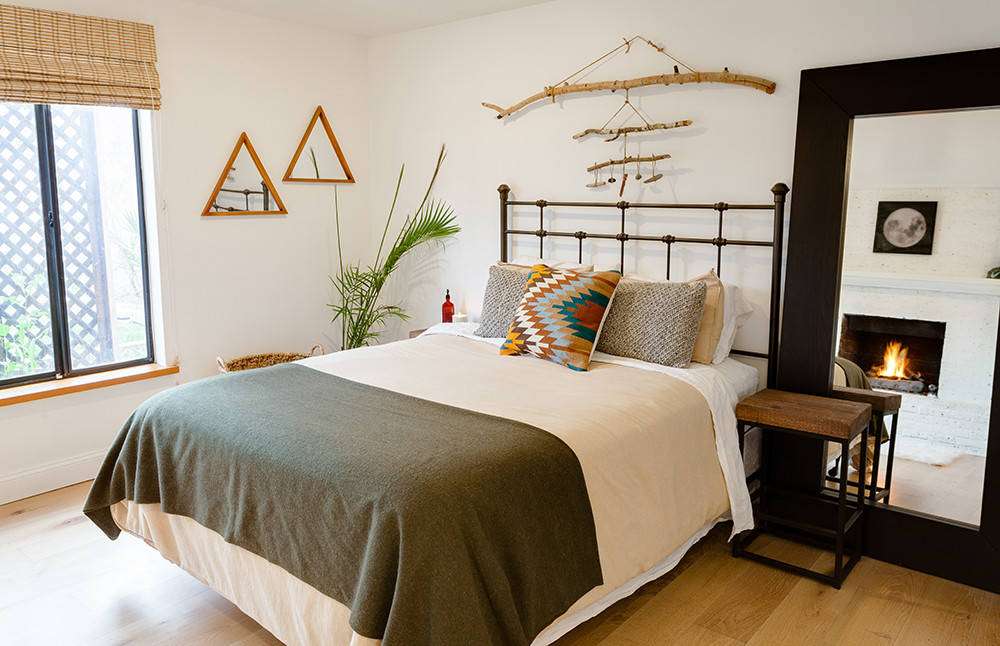
Image source: Mackenzie Collier Interiors
The living room gets the most attention because it’s where you spend the most waking hours. Rently’s 2025 data confirms this: 46% of renters plan to redecorate their living room first, more than any other room.
The good news is that living rooms respond well to inexpensive updates. A few targeted swaps can completely shift the feel of the space.
Layering Textiles for Quick Impact
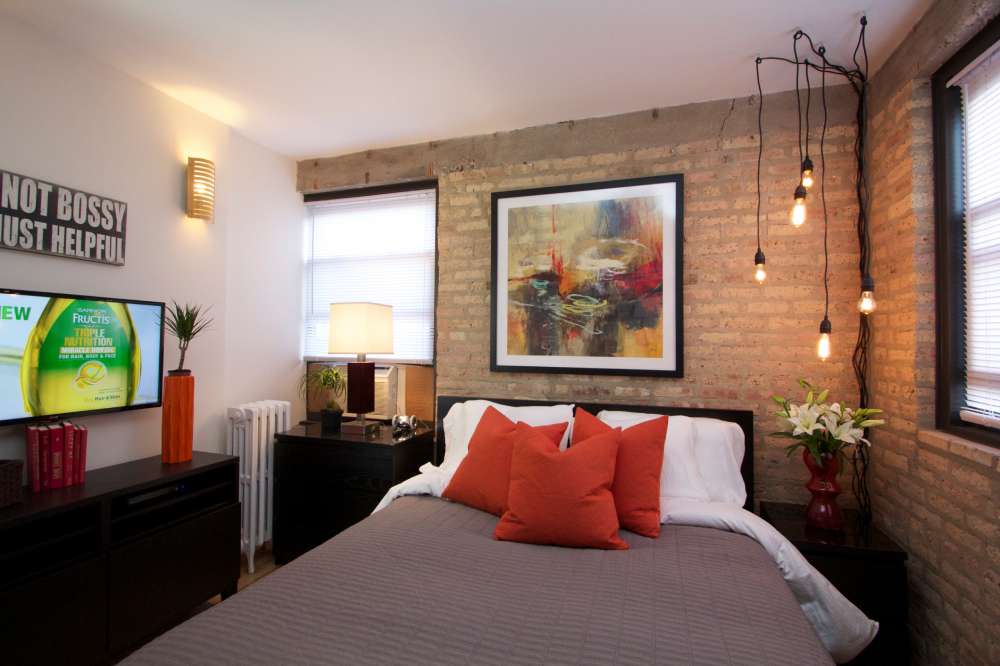
Image source: Robeson Design
Throw pillows, blankets, and an area rug are the fastest way to make a living room feel finished.
Rently’s survey found that 55% of renters use bold rugs to add color to their apartments. Rugs USA, Boutique Rugs (during sales), and IKEA flatweaves all offer options under $100 for a 5×7 size. If you have a grey sofa, check out rugs that pair well with grey couches before buying.
For throw pillow combinations, mixing two to three patterns at different scales keeps things visually interesting without looking cluttered. Stick to a color palette of two to three tones, then add one contrasting accent.
Lighting as a Mood Shift
Rently reported that 79% of renters want soft, layered lighting in their apartments. That number alone tells you how much people care about this.
Most apartment overhead lights are harsh and unflattering. The fix is layering: one floor lamp for ambient lighting, one task light near where you read or work, and LED strip lights or string lights for background warmth.
Floor lamps from IKEA start at $15-25. LED strip lights on Amazon run $8-15 for a full room’s worth. The Opendoor 2024 Home Decor Report noted that lamps and lighting accessories are among the most common decor purchases, alongside pillows, plants, and curtains.
The One Anchor Piece Strategy
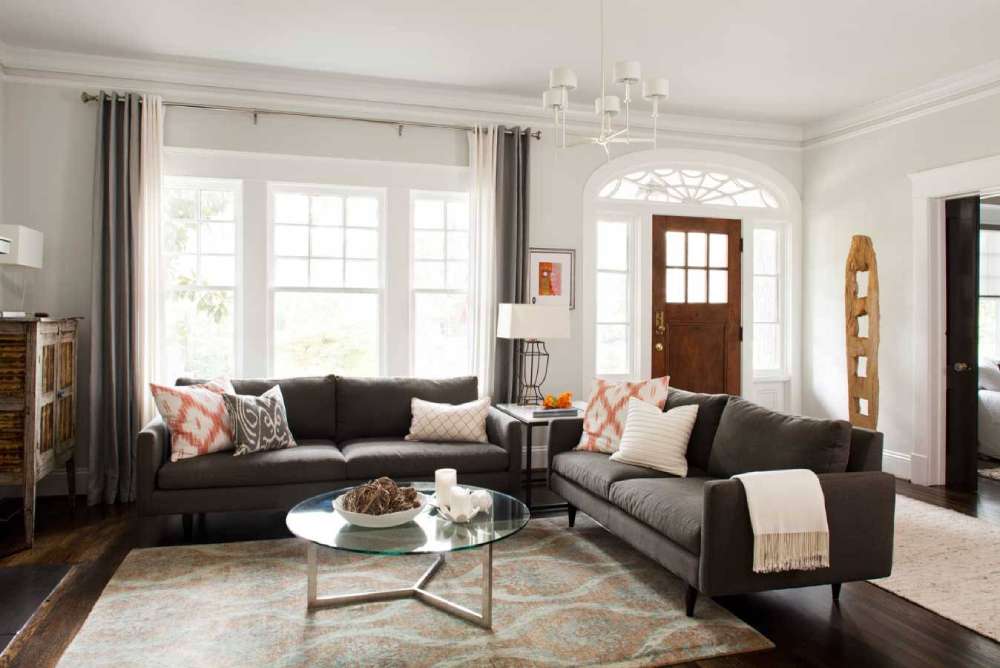
Image source: Terracotta Design Build
This is the approach that actually works on a tight budget.
Pick one item in the room to invest slightly more in. Maybe it’s a quality sofa, a statement rug, or a large piece of wall art. Then go minimal and cheap on everything else around it.
That single piece creates a focal point that pulls the whole room together. Everything else can be basic, because the eye goes to the anchor first. This is also how you avoid the “catalog look” that happens when everything matches too perfectly from one store.
Affordable Bedroom Decor That Actually Looks Good
Bedrooms ranked as the second most popular room for renter redecoration in 2025, with 44% of renters planning updates there, according to Rently.
The bedroom is also where budget decorating has the highest return on effort. A few changes here make the room feel dramatically different because the surfaces are large and simple.
Bedding as the Biggest Visual Element
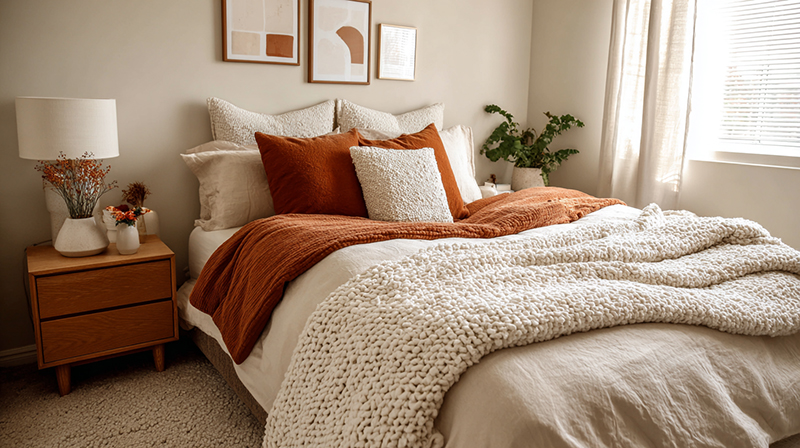
Your bed takes up most of the room visually. The duvet cover or comforter is the single most impactful purchase you’ll make for the bedroom.
Target’s Casaluna line and Amazon’s Bedsure brand both sell quality duvet covers under $50. Go for a solid neutral color like white or warm beige as the base, then layer texture with a throw blanket and accent pillows on the bed.
Matching your bedding to one color scheme makes a $40 bed set look like it cost triple.
DIY Headboard Ideas
Wood slat walls: Thin pine slats from a hardware store, cut to height and attached with Command strips or a freestanding frame behind the bed. Total cost: $30-50.
Fabric-wrapped foam boards: Buy a large foam insulation panel from Home Depot ($10-15), wrap it in fabric ($5-10 per yard at Joann), and lean it against the wall. Looks like an upholstered headboard for under $30.
Large-scale art: A single oversized print or canvas centered above the bed replaces the need for a headboard entirely. This works especially well in minimalist bedroom setups.
Nightstand Alternatives and Window Treatments
Traditional nightstands are overpriced for what they are. A wall-mounted shelf ($10-15 at IKEA) does the same job with a smaller footprint. Stacked vintage suitcases from a thrift store work too, and they double as storage.
For window treatments, upgrading from standard blinds to curtains makes a bedroom feel more finished instantly. IKEA’s LENDA curtains run about $15 a pair. If you have white walls, linen-look curtains in an off-white or natural tone add warmth without competing with the rest of the room.
Hang the curtain rod higher than the window frame and wider than the window itself. This old trick makes windows (and rooms) appear taller and larger than they are. It’s free if you already have the rod, and it changes the entire sense of proportion in the space.
Kitchen and Bathroom Decor on a Rental Budget
Kitchens and bathrooms are the hardest rooms to decorate in a rental. They’re small, they have fixed elements you can’t change, and most leases won’t let you touch the cabinets, countertops, or tile.
But they’re also the rooms where small upgrades go the furthest. A $15 shower curtain swap or a $100 peel-and-stick backsplash can completely shift how the space feels.
Renter-Safe Kitchen Upgrades
Peel-and-stick backsplash tiles from brands like Art3d, Smart Tiles, and Tic Tac Tiles cost between $1 and $10 per square foot. A standard kitchen backsplash area runs about 15-20 square feet, putting the total project well under $200.
Compare that to professional ceramic tile installation, which averages $15 to $25 per square foot including labor, according to 2026 cost data from Stickwoll. The savings are significant, and you can finish the project in a single afternoon.
Contact paper is even cheaper for covering dated countertops or cabinet fronts. A roll runs $8-15 and can transform the look of laminate surfaces. Just peel it off when you move out.
Open shelving with Command strip shelf units adds storage and display space without drilling. Some renters use tension rods inside cabinet openings to create extra shelf layers.
Bathroom Refreshes Under $50
| Upgrade | Cost | Time to Install | |———|——|—————–| | New shower curtain + rings | $15-25 | 5 minutes | | Matching towel set | $15-20 | Instant | | Peel-and-stick mirror frame | $10-15 | 15 minutes | | Small potted plant (pothos, snake plant) | $5-10 | Instant |
A coordinated shower curtain and towel set in a cohesive color like sage green or navy blue makes the whole bathroom look intentional instead of random.
Low-maintenance plants like pothos and snake plants thrive in bathroom humidity and add life to a space for under $10. They work just as well in kitchens, sitting on open shelves or window ledges. This kind of biophilic approach adds warmth even in the smallest rooms.
DIY Apartment Decor Projects Under $20
Rently’s 2025 survey found that 32% of renters plan to tackle DIY projects to make their apartments more personal. And the best part about DIY is that you control the cost completely.
These projects don’t require special skills. A trip to the thrift store, a stop at the hardware store, and an afternoon is all you need.
Painted Thrift Store Frames
Buy 4-6 mismatched frames from a thrift store for $1-3 each. One can of matte black or gold spray paint ($5-8) unifies them instantly.
Fill with free printable art from museum archives or Unsplash photos. Total gallery wall cost: under $20.
Macrame Plant Hangers and Concrete Candle Holders
Macrame hangers: A spool of cotton macrame cord on Amazon costs about $8-12. One spool makes 3-4 hangers. YouTube tutorials cover the basic spiral knot pattern in under 10 minutes.
Concrete candle holders: Grab a bag of quick-set concrete ($5-7 at Home Depot) and silicone molds ($6-10 on Amazon). Mix, pour, wait 24 hours. You get 6-8 holders from one batch, and they look like something from a boutique home store.
Decorative Book Stacks and Floating Shelf Styling
Hardcover books from thrift stores cost $0.50-2 each. Stack 3-4 in neutral tones like beige or cream, then top with a small plant or candle.
This is one of those tricks that looks more expensive than it is. Coffee table styling, shelf arrangements, and nightstand vignettes all benefit from a well-placed book stack. It adds detail and visual weight for almost nothing.
Common Mistakes with Cheap Apartment Decorating
Budget decorating goes wrong more often than people realize. Not because of the budget itself, but because of how the money gets spent.
The Rently 2025 survey found that 72% of renters prefer clean lines and warm neutrals. That tells you something: most people want a curated look, not a cluttered one. But achieving “curated” on a budget requires avoiding a few specific traps.
Buying Too Many Small Items
This is the number one mistake. Ten $5 items from Five Below won’t have the same impact as one $50 area rug or a single large piece of wall art.
Small items (mini plants, tiny candles, little figurines) create visual noise without creating visual impact. The fix is simple: fewer, larger pieces always look more intentional. Your mileage may vary on exact quantities, but the general rule holds across every style of decorating.
Ignoring Scale and Lighting
Scale problems: A tiny 8×10 print centered on a large living room wall looks lost. A full-size sofa crammed into a studio apartment makes the whole space feel tight. Understanding visual balance prevents these mismatches, even on a budget.
Lighting problems: Relying on a single overhead fixture is the fastest way to make any apartment feel flat and uninviting. Rently’s data showed 79% of renters want layered lighting. If nearly 8 in 10 people feel this way, it’s clearly a gap in most rentals.
The Catalog Look and Clutter Trap
Buying everything from one store (all IKEA, all Target) creates a showroom feel. Not in a good way. Mix sources: one thrifted piece, one IKEA basic, one DIY item. That mix creates a sense of harmony that feels lived-in rather than staged.
And then there’s clutter. The line between “decorated” and “cluttered” gets thin fast on a budget, because cheap items tend to be small items, and small items accumulate. Edit ruthlessly. If something doesn’t actively improve the room, it’s taking up space.
How to Make a Decorating Plan Before Spending Anything
The biggest money-wasting move in budget decorating? Shopping without a plan. Impulse buys at HomeGoods and TJ Maxx add up fast when you don’t know what you actually need.
Opendoor’s 2024 Home Decor Report found that Americans spend an average of $1,599 per year on home decor. Renters working with tighter budgets can’t afford to waste even a fraction of that on items that don’t fit.
Room-by-Room Priority Ranking
Start with the room you spend the most time in. For 46% of renters that’s the living room (Rently 2025). For others it might be the bedroom or a home office.
Rank every room by daily use, then allocate your budget accordingly. The room you barely enter doesn’t need a $100 rug. The room you sit in for 4 hours a night does.
Setting a Realistic Budget
Rently found that 38% of renters budget $101-$500 for decor, while 29% go up to $1,000. Pick your number before you start browsing.
Break it down by room. If your total is $400 and you have three rooms to decorate, that’s roughly $130 each, with some flex for the priority space. Use a Google Sheet or even a notes app to track every purchase as you go.
Free Planning Tools
Pinterest: Rently’s survey showed 31% of renters use Pinterest for decor inspiration. Create one board per room, pin only items you’d actually buy, and look for patterns in what you’re drawn to. This clarifies your style before you spend a dollar.
Floorplanner: Free online tool for creating 2D and 3D room layouts. Plug in your apartment dimensions and arrange furniture digitally before moving anything.
The 48-hour rule: See something you like? Wait two days. If you still want it after 48 hours, buy it. This alone eliminates most impulse purchases, especially those “it was on sale” buys that never quite fit the space.
Measuring Before Buying
Measure these before you shop for anything:
- Wall widths (for art, shelving, and furniture placement)
- Floor area in each room (for rug sizing under furniture)
- Window height and width (for curtain rod placement and curtain selection)
Took me forever to learn this one, but a $60 rug that’s too small for the room is worse than no rug at all. Good space planning starts with a tape measure, not a credit card.
FAQ on Affordable Apartment Decor
How can I decorate my apartment on a tight budget?
Focus on high-impact, low-cost changes. Thrift store frames, affordable area rugs, throw pillows, and rearranging existing furniture cost little or nothing. Rently’s 2025 survey found 45% of renters refresh their space just by moving furniture around.
What are the best stores for budget apartment decor?
IKEA, Target (Threshold line), HomeGoods, TJ Maxx, and Five Below cover most needs. For furniture, check Facebook Marketplace and Habitat for Humanity ReStore. Online, Wayfair and Amazon carry budget lines like Zinus and Walker Edison.
How do I decorate rental walls without losing my deposit?
Use Command strips for hanging art and shelves. Peel-and-stick wallpaper creates an accent wall that peels off cleanly. Washi tape and removable wall decals also work without leaving marks or residue on painted surfaces.
What is the most impactful budget decor change I can make?
Add an area rug. It anchors furniture, adds warmth, and defines zones in open layouts. Rugs USA and IKEA sell 5×7 options under $100. A rug changes a room faster than almost anything else.
How do I make a small apartment look bigger on a budget?
Lean a large mirror against a wall to reflect light and create depth. Choose furniture with visible legs, keep clutter minimal, and use lighter colors for textiles. These tricks cost almost nothing.
Is secondhand furniture worth buying for apartments?
Yes. The secondhand furniture market hit $40.2 billion in 2024 (Market.us), and solid wood pieces from thrift stores often outlast new flat-pack options. Buy tables and shelving used. Buy mattresses and cushioned seating new.
What DIY decor projects work for apartments?
Spray-painted thrift store frames, macrame plant hangers, and concrete candle holders all cost under $20. These projects require no special tools and add personality that store-bought items can’t match.
How do I decorate a rental kitchen without renovating?
Peel-and-stick backsplash tiles from Art3d or Smart Tiles run $1-10 per square foot. Contact paper covers dated countertops. Add open shelving with adhesive mounts and a few low-maintenance plants for a complete refresh.
How much should I budget for apartment decorating?
Rently’s 2025 data shows 38% of renters spend between $101 and $500 total. Start with the room you use most, set a per-room cap, and track every purchase. Spreading the budget across months helps too.
What are the biggest mistakes people make with cheap decor?
Buying too many small items instead of fewer statement pieces. Ignoring scale and proportion is another common issue. And purchasing everything from one store creates a flat, catalog look that feels impersonal.
Conclusion
Affordable apartment decor comes down to spending with intention. Every dollar goes further when you know which rooms to prioritize, where to source pieces, and when to DIY instead of buying retail.
Secondhand furniture from Facebook Marketplace and Craigslist fills rooms for a fraction of new prices. Peel-and-stick backsplash tiles and contact paper handle kitchens and bathrooms without touching your security deposit.
Layered accent lighting, a well-placed area rug, and a few decorative pillows on a sofa can shift an entire room’s feel for under $100.
Plan first. Measure everything. Use Pinterest and Floorplanner before you spend anything. And apply the 48-hour rule on every impulse purchase.
Budget constraints don’t limit good design. They just force better decisions.

- Paint Colors That Go with Gray Floors - August 20, 2026
- What Color Bedding Goes with Dark Wood Furniture - August 18, 2026
- What Color Walls Go with Oak Floors - August 16, 2026