Summarize this article with:

Your apartment doesn’t need more space. It needs better decisions. Modern apartment decor is built on that idea, using clean lines, functional furniture, and neutral color palettes to make even a small living room feel intentional and put together.

But pulling it off in a rental with 8-foot ceilings and zero built-in storage takes a different approach than decorating a house. The rules change when square footage is limited and permanent changes aren’t an option.

This guide covers everything from furniture selection and lighting design to wall art, textiles, and the specific mistakes that make apartments look worse instead of better. Each section focuses on practical choices you can actually make, not just ideas that look good on Pinterest.

What Is Modern Apartment Decor

Modern apartment decor is a design approach built on clean lines, functional furniture, and restrained ornamentation, adapted specifically for apartment-scale living. It pulls from mid-20th-century modernism, but the way it plays out in a 700-square-foot one-bedroom looks nothing like what you’d see in a 3,000-square-foot house.

The whole point is intentional simplicity. Every piece in the room has a reason to be there.

Grand View Research valued the global home decor market at $960 billion in 2024, with furniture accounting for over 50% of that revenue. That tells you something about how much people care about what goes inside their homes, even when those homes keep getting smaller.

Modern vs. Contemporary: They’re Not the Same Thing


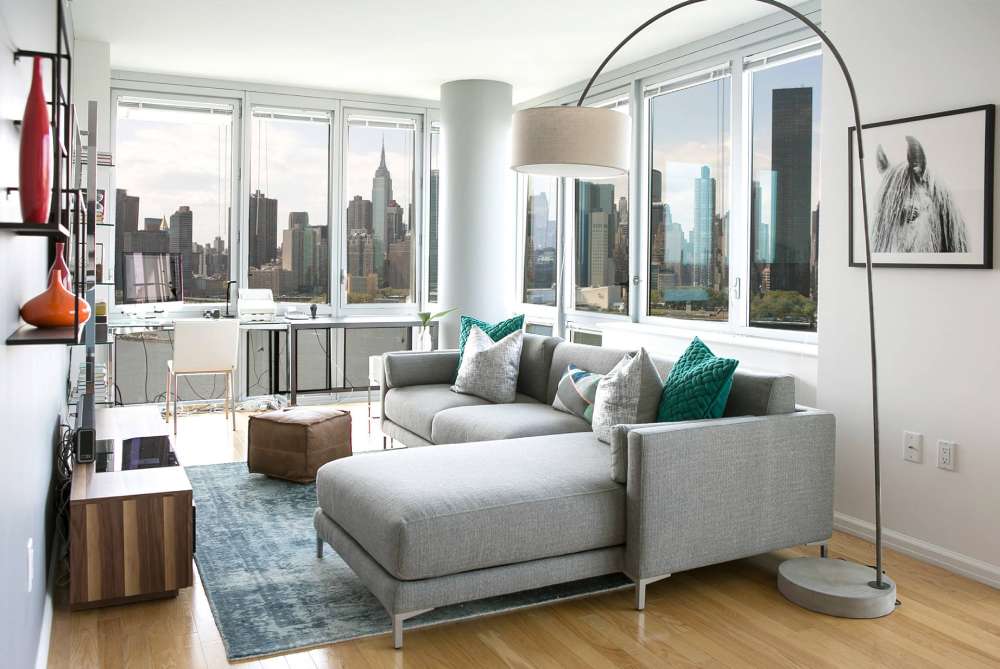
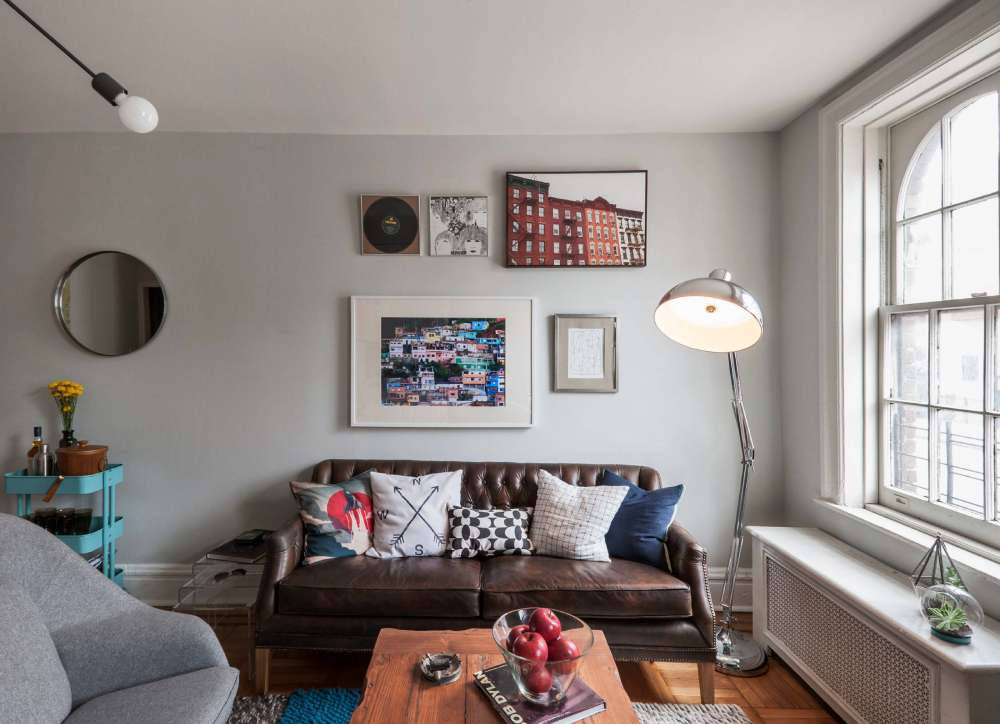
Image source: Resolution: 4 Architecture

“Modern” and “contemporary” get used like they’re interchangeable. They’re not.

Modern design refers to a specific movement rooted in the early-to-mid 1900s, think Bauhaus influence, minimal decoration, and an obsession with function. Modern interior design keeps things stripped down to what matters.

Contemporary interior design, on the other hand, means “what’s happening right now.” It borrows from multiple eras and shifts with trends. A contemporary room in 2026 looks different from a contemporary room in 2015.

Trait Modern Contemporary
Time period Mid-20th century roots Current era, always shifting
Lines Clean, horizontal, low-profile Varies, often curved
Color palette Neutral base, warm earth tones Anything trending
Materials Wood, leather, steel, glass Mix of old and new

Why Apartments Change the Rules

You can’t approach apartment decor the same way you’d handle a house. Ceiling heights are usually standard 8 feet. Layouts are tighter. And if you’re renting, permanent changes are off the table.

U.S. Census data shows roughly 44.6 million households rent their homes, about 35% of all occupied housing. Most renters are under 45. That’s a huge chunk of people making design decisions inside spaces they don’t own.

Apartment living forces you to think about space planning before anything else. A sofa that looks great in a showroom can wreck a small living room if the scale and proportion are off.

Core Characteristics


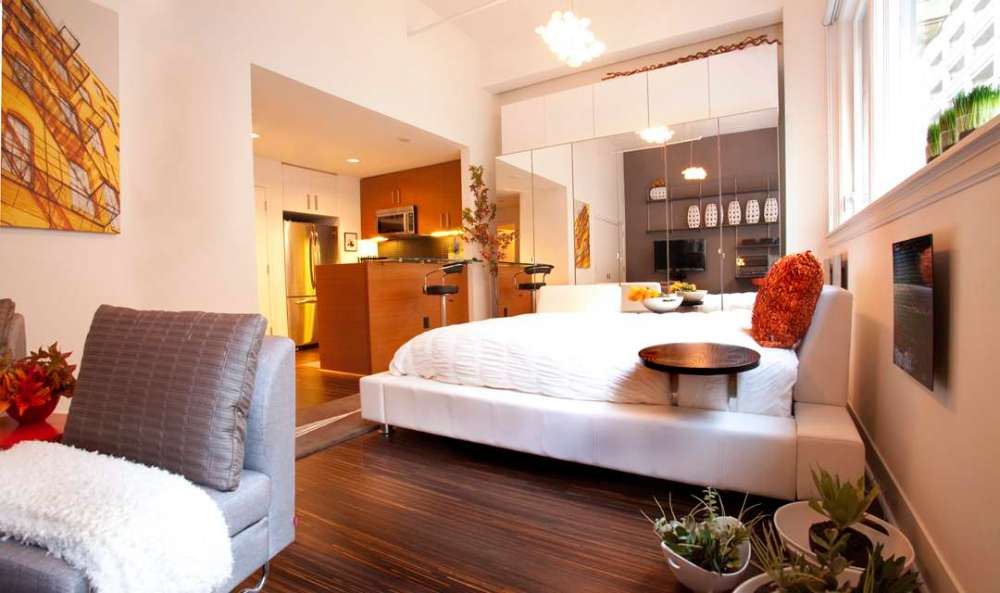
Image source: Maletz Design

Negative space: Modern apartments leave room to breathe. Not every wall needs something on it.

Neutral foundations: Whites, grays, beiges, and warm taupes set the base. Bold color shows up in accents, not everywhere.

Natural materials: Wood, stone, linen, leather. These ground a modern space and keep it from feeling sterile.

Functional pieces: If it doesn’t serve a purpose, it probably doesn’t belong.

Color Palettes That Define Modern Apartments


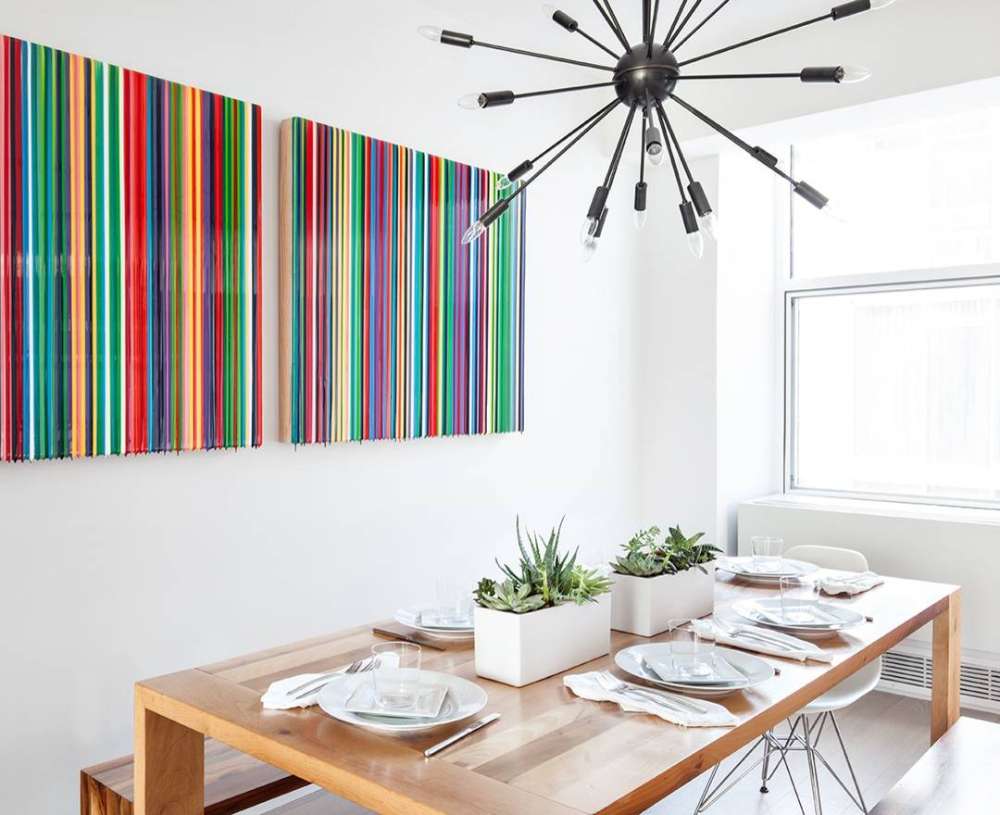
Image source: Get Decorated

Color does more heavy lifting in a small apartment than most people realize. Pick wrong and a 600-square-foot studio feels like a cave. Pick right and that same studio feels open, calm, and bigger than it actually is.

Benjamin Moore named Cinnamon Slate its 2025 Color of the Year, a warm plum-brown that signals where things are heading: away from cool grays, toward richer earth tones. Pantone went with Mocha Mousse. The whole industry is leaning warm.

Warm Neutrals vs. Cool Neutrals in Small Spaces

This decision matters more than the specific shade you pick.

North-facing rooms with limited natural light almost always look better in warm neutrals. Greige, warm taupe, soft cream. Cool grays can make these rooms feel flat and uninviting.

South-facing rooms with plenty of sun can handle cooler tones without losing warmth. A pale blue-gray or soft white works here because the natural light adds warmth back in.

Understanding how color works in interior design isn’t optional when you’re decorating apartments. The room’s orientation and light exposure change how every paint chip looks on the wall.

Using Accent Colors Without Overwhelming a Room

The 60-30-10 rule still holds up, even if it sounds like old advice.

60% of the room gets your dominant neutral. Walls, large furniture, the floor.

30% goes to a secondary tone. Think curtains, an area rug, a pair of chairs.

10% is your accent. A few throw pillows, a piece of art, a vase.

In a modern apartment, that 10% accent is where personality lives. And honestly, it doesn’t take much. A couple of well-placed pieces in deep blue, sage green, or warm terracotta against a neutral backdrop can shift the entire feel of a room without making it busy.

If you’re working with gray walls, choosing the right curtain color becomes a real decision point because it falls into that 30% secondary zone.

Paint References Worth Looking At

Benjamin Moore: Simply White (OC-117), Revere Pewter (HC-172), Edgecomb Gray (HC-173)

Sherwin-Williams: Alabaster (SW 7008), Agreeable Gray (SW 7029), Accessible Beige (SW 7036)

Farrow & Ball: Skimming Stone, Elephant’s Breath, Strong White

These come up over and over in apartment projects. They read as warm without being yellow, and neutral without being boring. Understanding the basics of color theory helps you see why certain combinations work together and others fall apart.

Furniture Selection for Modern Apartments

Furniture is where most apartment dwellers spend the biggest share of their budget, and it’s where mistakes are the most expensive to fix. Getting the wrong sofa means living with it for years or eating the cost of replacing it.

The multifunctional furniture market hit $15.9 billion globally in 2024, according to Global Market Insights, growing at nearly 5% annually. That growth is directly tied to shrinking apartment sizes. The National Association of Home Builders reported that the average new home size in 2023 dropped to its smallest in 13 years.

Multi-Functional Furniture That Still Looks Good


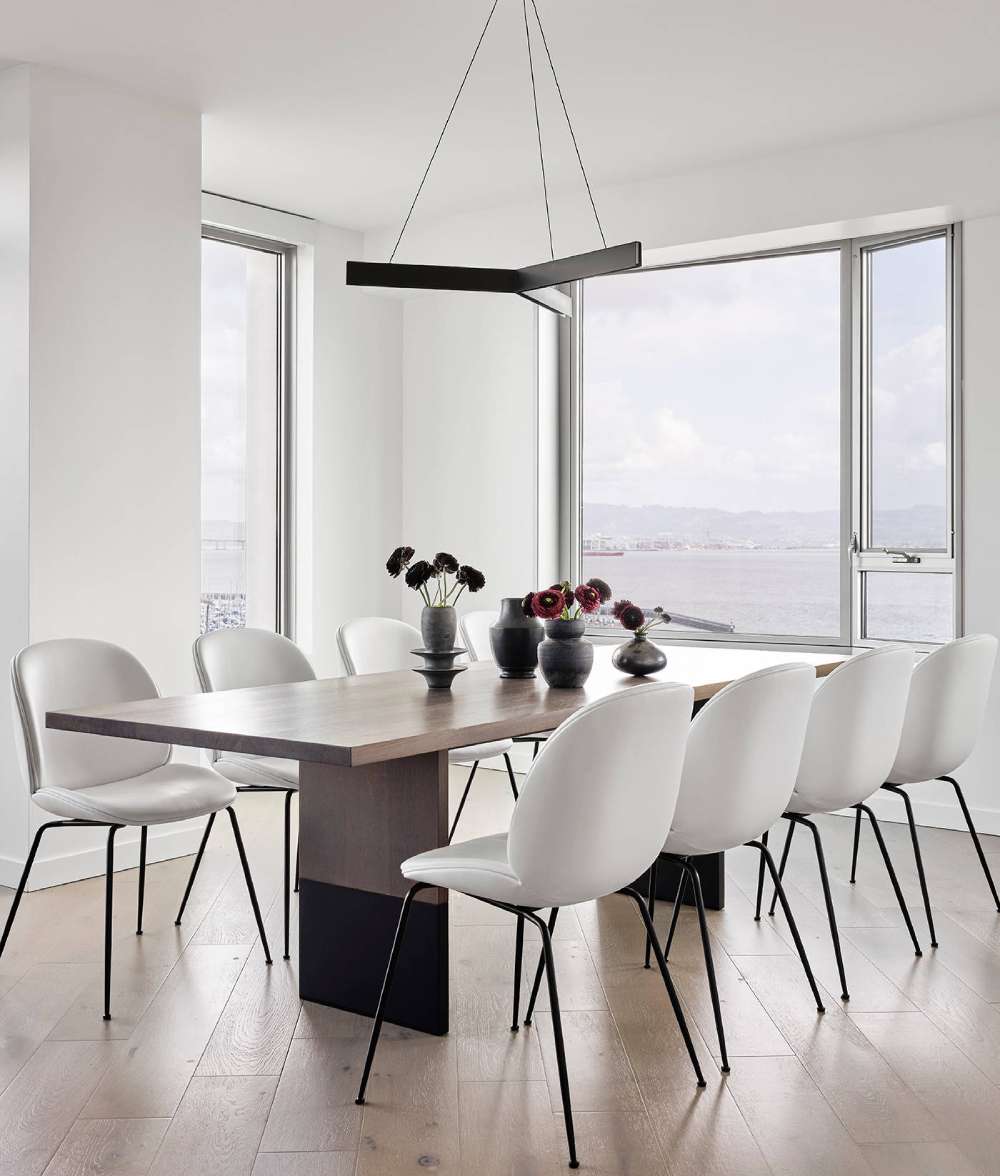
Image source: Jeremy Chin Designs

The days of ugly futons and clunky murphy beds are done. Took me a while to stop associating “multi-functional” with “looks cheap,” but the market has genuinely caught up.

Storage beds with hydraulic lifts give you an entire closet’s worth of space underneath the mattress. Nesting coffee tables stack when you don’t need them and spread out when guests come over. Expandable dining tables go from two-person to six-person in seconds.

The U.S. multifunctional furniture market alone was worth $4.4 billion in 2024, with sofa beds leading the segment. That number makes sense. In a studio apartment, your couch literally is your bed.

The key is picking pieces where the “multi” part isn’t obvious. A storage ottoman from West Elm shouldn’t scream “I’m hiding blankets inside me.” It should just look like a nice ottoman.

Brands and Product Lines Worth Knowing

Article: Mid-century silhouettes, reasonable prices. Their Sven sofa is practically a starter-apartment staple at this point.

CB2: Crate & Barrel’s younger sibling. More angular, more modern, sized for apartments.

IKEA Stockholm and Nockeby lines: The higher-end IKEA stuff that doesn’t look like IKEA. Seriously underrated.

Floyd: Modular platform beds and sofas built for people who move a lot. Everything breaks down flat.

West Elm: Their mid-century collection nails the modern apartment look. Watch for sales because the full-price markup is steep.

Leg styles give away a piece’s design era immediately. Tapered wood legs and slim metal frames read as modern. Bun feet and carved details read as traditional. In a modern apartment, clean lines are everything.

Scale Mistakes That Ruin Apartment Rooms


Image source: Marie Burgos Design

This is probably the most common problem I’ve seen in apartments. People buy furniture that’s the right style but completely wrong size.

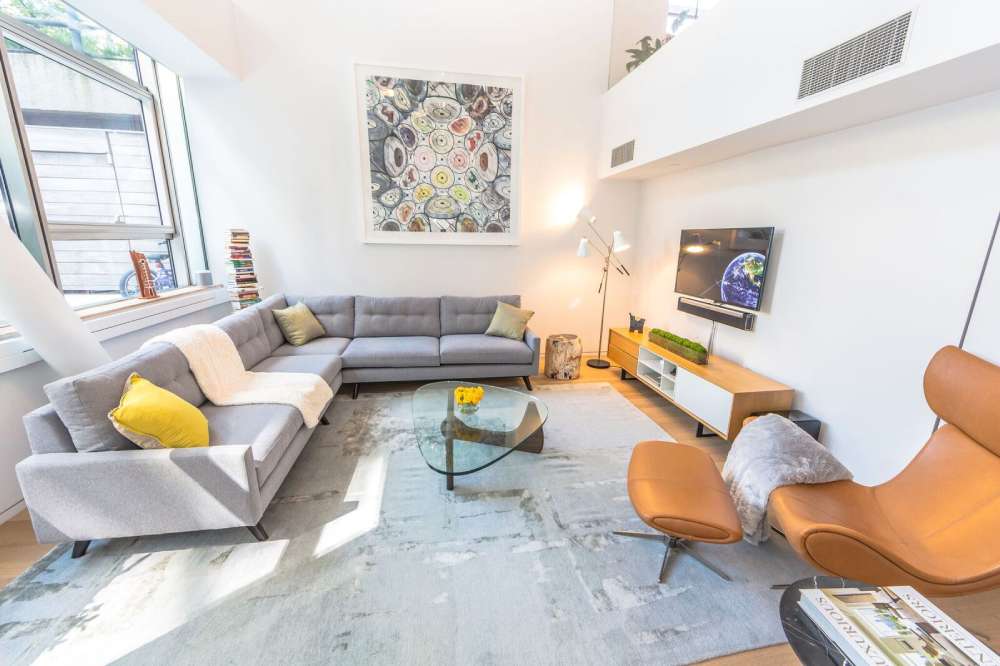
A sectional that seats six doesn’t belong in a living room that’s 12 by 14 feet. It just doesn’t. No matter how much you want it to work.

Low-profile silhouettes matter more than you’d think when ceilings are 8 feet. A sofa with a 30-inch back height makes a room feel taller than one with a 36-inch back. Same room, same floor space, totally different feel. That’s balance at work.

Lighting as a Decor Element in Modern Apartments

Lighting is the one thing that can completely change a room without moving a single piece of furniture. And yet it’s consistently the last thing people think about when decorating an apartment.

The smart lighting market was valued at roughly $15.7 billion in 2024, with indoor residential applications making up the largest share, according to Global Market Insights. The market is projected to grow at over 19% annually through 2034. People are spending real money on how their rooms are lit.

Layered Lighting in Apartment Rooms


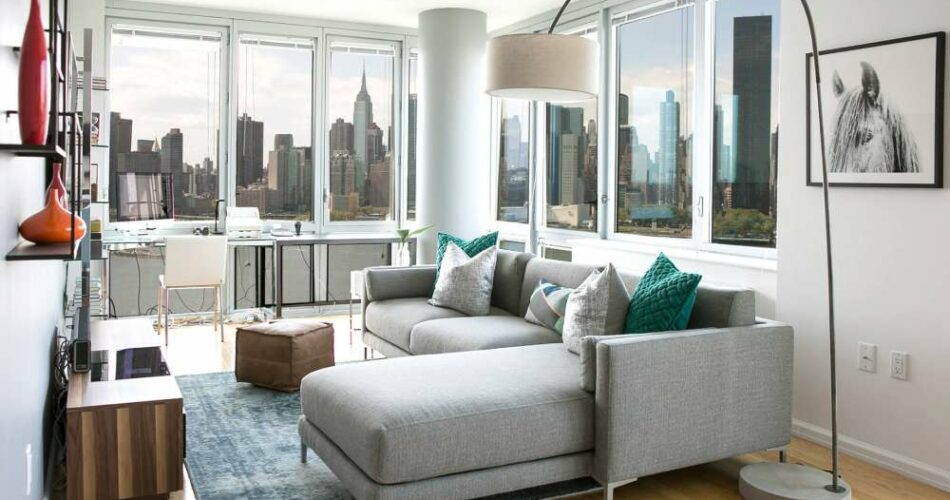
Image source: Michael Schmitt Architect pc

One overhead fixture doesn’t cut it. It never did, but in apartments the problem is worse because builders install the cheapest boob light they can find and call it done.

Three layers make a room work:

  • Ambient lighting sets the overall brightness. Flush mounts, recessed lighting, or even a well-placed floor lamp
  • Task lighting goes where you actually do things. A desk lamp, under-cabinet strips in the kitchen, a reading light by the bed
  • Accent lighting adds mood. LED strip lighting behind a TV console, a picture light over artwork, candles (yes, candles count)

You need all three. Skip one and the room feels either too flat or too dim.

Statement Fixtures That Pull Their Weight

Pendant lights over a dining table or kitchen island are probably the single highest-impact lighting swap you can make in an apartment. They draw the eye up, which makes low ceilings feel taller. And they act as a focal point that ties the room together.

The Noguchi Akari lamp has been showing up in apartments for decades and still looks current. The Flos Arco floor lamp is another one, though its price tag is brutal. IKEA’s PS collection offers sculptural shapes at a fraction of the cost.

In apartments without hardwired ceiling fixtures (looking at you, older New York City walk-ups), plug-in pendants and arc floor lamps are the move. Renters don’t have to settle for clip-on lights anymore.

Bulb Temperature Matters More Than You Think

2700K (warm white) is the sweet spot for modern apartments. It complements warm neutral paint colors and makes a room feel cozy without going orange.

3000K works in kitchens and bathrooms where you want slightly brighter, crisper light.

Anything above 4000K starts feeling like a hospital waiting room. Avoid it in living spaces. Understanding how light impacts interior design really comes down to matching bulb temperature to your color palette and room function.

Wall Decor and Art in Modern Apartments


Image source: Get Decorated

Bare walls in a modern apartment are fine if it’s intentional. But most of the time bare walls just mean someone hasn’t gotten around to hanging anything yet. There’s a difference between minimalist and unfinished.

According to Market Data Forecast, the e-commerce channel held 44.3% of the global home decor market share in 2024. A big chunk of that is wall art and decorative items. People are buying, just not always in stores.

Gallery Walls vs. Single Statement Pieces

A gallery wall works in larger rooms where you have at least 6 to 8 feet of uninterrupted wall space. Below a certain size, gallery walls start looking cluttered instead of curated.

In small apartments, a single oversized piece of art, like a 36×48 canvas or a large-format print, usually makes more impact. One piece, centered above the sofa or over the bed. Done.

The choice also depends on what kind of emphasis you want in the room. A gallery wall spreads attention across multiple points. A single large piece concentrates it.

Framing and Hanging Without Destroying Walls

Frame styles that read modern: Thin black metal, natural oak float frames, frameless canvas. Anything ornate, gilded, or overly thick pulls you toward vintage apartment territory.

Renter-friendly hanging methods:

  • 3M Command Strips, the large picture hanging kind, hold up to 16 pounds per set
  • Picture ledges that lean art instead of hanging it
  • Adhesive hooks rated for weight, available at most hardware stores

Propping art on a shelf or mantel instead of hanging it is a totally valid modern look. Leaning a large print against the wall behind a console table gives the room a relaxed, collected feel that screams “I have taste but I’m not trying too hard.”

Where to Find Art That Actually Fits

Society6 and Minted both have huge catalogs of prints from independent artists. You can filter by color palette, which is more useful than it sounds.

Local printmakers and art fairs are worth the effort if you have access. Nothing makes a space feel more personal than a one-of-a-kind piece.

Mirrors also belong in this conversation. A well-placed mirror reflects light and makes a room feel twice its size. That’s not a gimmick; it’s basic physics and solid small room strategy.

Textiles and Soft Furnishings in Modern Spaces

Textiles are what keep a modern apartment from feeling cold. You can have the best furniture and the right paint color, but without the right rug, the right curtains, and a few well-chosen throw pillows, it still won’t feel like home.

Market Data Forecast reported that the home textiles and floor coverings segment is expected to grow at 9.4% annually through 2033, the fastest of any home decor category. People are investing more in soft furnishings than ever before.

Rug Sizing and Placement


Image source: Rebekah Nicole Interiors

This is where people consistently get it wrong. A rug that’s too small for the room makes everything feel disconnected and cheap.

Living room rule: All furniture legs should sit on the rug, or at minimum the front legs. An 8×10 rug is usually the starting point for most apartment living rooms. Anything smaller than a 5×7 in a living room setup looks like a bath mat that wandered into the wrong room.

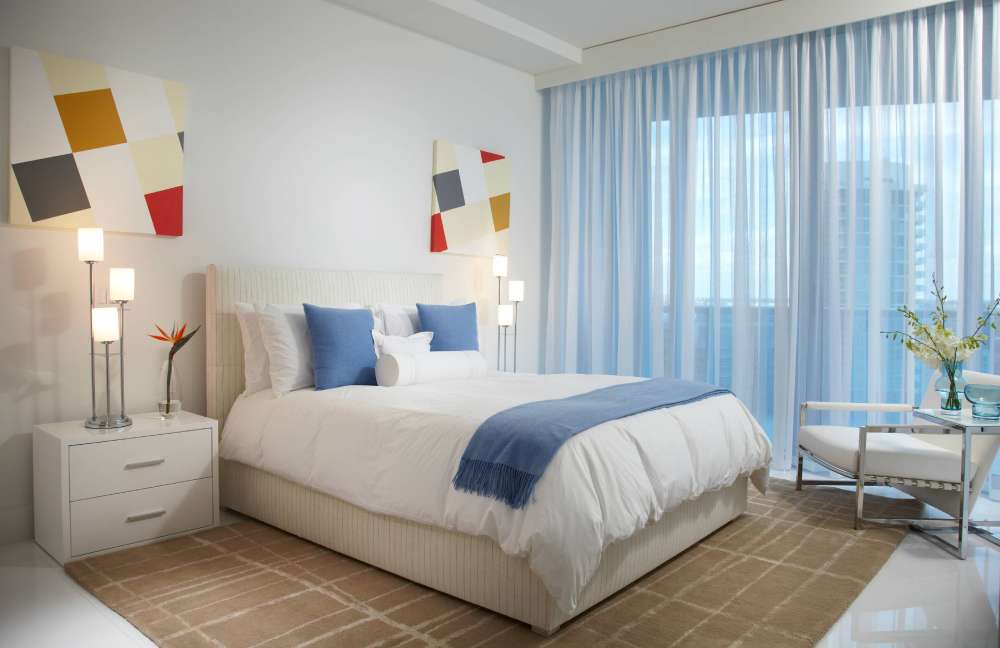
Bedroom rule: A rug under a queen bed should extend at least 18 to 24 inches on each side so your feet hit something soft when you get up.

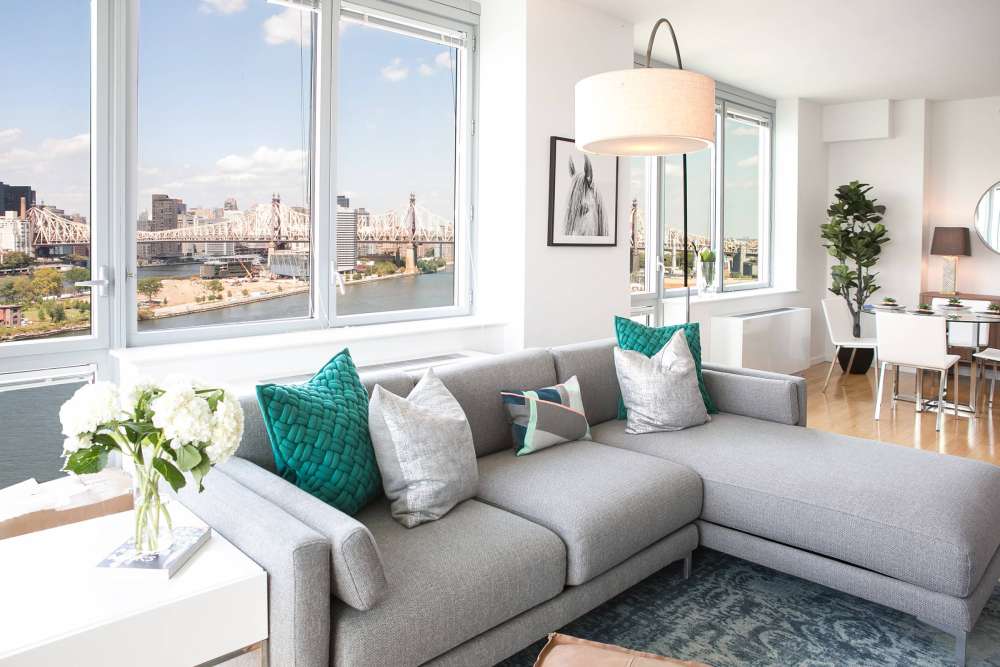
If you have a grey sofa, picking a rug that complements it can make or break the room. Warm-toned rugs in cream, rust, or muted gold add contrast and prevent a gray-on-gray washout.

Curtain Styles for Modern Apartments

Three curtain styles work in modern apartments. Pretty much everything else looks dated or fussy.

Ripple fold: The hotel look. Sleek, uniform S-curves. Best on ceiling-mounted tracks.

Grommet top: Metal rings punched into the fabric. Clean, simple, easy to hang.

Flat panel: No pleats, no gathers. Just fabric. Works well in minimalist spaces.

Understanding window treatments as a design category, not just a privacy tool, changes how you approach them. And always hang curtains close to the ceiling, not right above the window frame. That extra height makes the room feel taller. It’s one of those tricks that costs nothing.

Throw Pillows and Blankets: Less Is More (But Not None)

Four to five pillows on a sofa is plenty in a modern apartment. Two matching, two different but coordinating, and maybe one smaller lumbar. Any more than that and sitting down becomes an event.

Look at specific throw pillow combinations that work with your sofa color. For a grey couch, mustard, olive, and cream pillows hit that sweet spot between warm and modern.

Fabric matters: Linen, boucle, and wool add texture that keeps a neutral room from going flat. Cotton is fine for summer swaps. Velvet brings weight and richness but can tip a room toward luxury decor territory if you use too much.

One draped blanket on the arm of the sofa. That’s it. The goal is warmth without clutter.

Modern Kitchen and Bathroom Decor in Apartments

Kitchens and bathrooms are the two rooms where renters have the least control and the most daily frustration. You can’t rip out cabinets. You probably can’t change the countertops. But you can still make these spaces look intentional.

A 2024 report from Opendoor found that U.S. consumers spend an average of $1,598 on home decor annually. A big chunk of that goes toward kitchens and bathrooms because those rooms get the most visual traffic.

Rental-Friendly Kitchen Upgrades

Hardware swaps are the fastest win. Replacing builder-grade knobs with matte black or brushed brass pulls takes 20 minutes and costs under $50 for a standard kitchen. Keep the originals in a bag so you can swap them back at move-out.

Peel-and-stick backsplash tiles from brands like Smart Tiles have gotten surprisingly convincing. A full backsplash project with real tile can run over $1,000, but a peel-and-stick version covers the same area for under $200.

For countertop styling, the rule is simple: display what’s beautiful, hide what isn’t. A wooden cutting board leaned against the wall, a ceramic olive oil bottle, one plant. Everything else goes in a cabinet. If you’re working with white cabinets, warm-toned accessories in wood and brass keep things from looking clinical.

Bathroom Decor That Takes Ten Minutes

Swap Cost Impact
Mirror upgrade $40–150 High, changes the whole vanity area
Matching soap dispenser + tray $15–40 Medium, adds a cohesive look
New shower curtain + rings $25–60 High, largest visual surface
Towel bar or hooks $15–35 Medium, adds function and style

The shower curtain is the biggest canvas in most apartment bathrooms. A solid white waffle-weave curtain reads modern instantly. Avoid anything with loud prints unless you’re going for a bohemian or eclectic look.

Brands like Brizo and Kohler make gorgeous fixtures, but for renters, the focus should be accessories you take with you. Coordinated sets in matte black or brushed nickel pull a bathroom together without touching plumbing.

Plants and Natural Elements in Modern Apartment Decor


Image source: J Design Group – Interior Designers Miami – Modern

Data Bridge Market Research valued the global indoor plants market at $20.68 billion in 2024, growing at nearly 5% annually. That’s a real market built on the fact that people want green things in their homes.

But there’s a line. Cross it and your modern apartment starts looking like a Bohemian interior or a plant shop. Keeping greenery within the modern aesthetic takes some restraint.

Plants That Fit the Modern Aesthetic

Not every plant reads as “modern.” Trailing pothos in macrame hangers? That’s boho. A single fiddle leaf fig in a matte concrete planter? Modern.

  • Snake plant (Sansevieria): Vertical, architectural, practically indestructible
  • Monstera deliciosa: Big statement leaves, one plant fills a corner
  • Pothos: Low light tolerant, works on shelves without looking fussy
  • ZZ plant: Glossy dark leaves, handles neglect well

Business Research Insights data shows demand for low-maintenance indoor plants surged 33% among millennials in urban areas. That tracks. Busy people in apartments want plants that won’t die if they forget to water for a week.

Planters and Natural Materials That Stay Modern

The planter matters as much as the plant. A beautiful monstera in a cheap plastic pot with a foil wrapper ruins the whole effect.

What works: Matte ceramic in white, black, or terracotta. Concrete planters. Simple terracotta (the unglazed kind, not painted). Cylinder shapes over ornate ones.

What doesn’t: Wicker baskets (too coastal), distressed metal (too farmhouse), anything with a face on it.

Natural wood accents, stone trays, and simple woven textures can bring organic warmth without tipping the style. The whole idea behind biophilic design is connecting indoor spaces to nature through materials and greenery, and modern apartments do this best with a light touch.

Storage and Organization as Part of the Decor


Image source: Michel Arnaud

In a house, you can hide clutter behind closed doors. In an apartment, storage is always partly visible. That makes it a design decision, not just a practical one.

Business Research found the global home organization market will reach $13.27 billion in 2025, up from $12.59 billion in 2024. Closet organizers hold the largest product segment at 20.5% of the market, according to Transparency Market Research.

Built-In Look With Freestanding Pieces

IKEA’s Billy bookcase hack is probably the most documented example of this. Line them wall-to-wall, add crown molding on top, and they look built-in for a fraction of the cost. The String Shelving System from Sweden does something similar with a more mid-century feel.

Muuto’s Stacked shelving lets you configure different-sized boxes into a custom wall unit. Expensive, but the modular approach means you can rearrange it when you move to a different apartment with different walls.

Global Growth Insights reports that 42% of homeowners now prioritize organized living spaces when purchasing furniture. Modular systems lead this trend because they adapt to different layouts.

Display Shelving vs. Closed Storage

The right ratio depends on how much stuff you own and how much of it looks good out in the open. Most people need more closed storage than they think.

Good ratio for most apartments: 70% closed, 30% open display.

Open shelves work for books, a few plants, and curated objects. But if every shelf is crammed full, you’ve got visual noise, not decor. The idea of details in interior design applies here. What you choose to display says more than filling every surface.

Entryway Solutions for Apartments Without Foyers

Most apartments don’t have a real entryway. You open the front door and you’re standing in the living room.

A narrow console table (12 to 14 inches deep), a wall-mounted hook rack, and a small tray for keys can create an entry zone without eating floor space. A dedicated shoe storage solution near the door keeps the rest of the apartment clean.

Even a simple rug placed just inside the door signals “this is the entryway” and gives the space a sense of visual harmony with the rest of the apartment.

Common Modern Apartment Decor Mistakes

Getting the style right is one thing. Avoiding the mistakes that pull a room apart is another. And some of these are so common that you’ll probably recognize at least a couple from places you’ve lived.

Mixing Too Many Styles Without a Thread

A little mixing is fine. Actually, it’s encouraged. A mid-century credenza next to a Scandinavian-style sofa can work beautifully. But a industrial pipe shelf next to a French Provincial mirror next to a rustic wood accent wall? That’s three different conversations happening in the same room.

Pick one primary style and let everything else support it. The principles of interior design exist specifically to prevent this kind of visual chaos. Unity doesn’t mean every piece matches. It means everything feels like it belongs together.

Choosing Furniture That’s Too Large

This keeps coming up because it keeps happening. People fall in love with an oversized sectional at a furniture store and don’t measure first.

Always measure your apartment before shopping. Measure doorways too, because that gorgeous 90-inch sofa isn’t getting through a 30-inch door frame. IKEA’s room planning tools are free and surprisingly useful for testing layouts before committing. Paying attention to form and how pieces occupy physical space saves a lot of regret.

Ignoring Vertical Space

Walls above eye level in most apartments are completely bare. That’s wasted real estate.

Floating shelves at 6 to 7 feet, art hung slightly higher than you think it should be, and curtains mounted near the ceiling all draw the eye upward. This makes rooms feel taller and more complete. It’s a rhythm thing. The eye needs something to follow from floor to ceiling.

Skipping Window Treatments Entirely

This is more common in modern-styled apartments than any other style. People think bare windows look clean and minimal. What they actually look is unfinished.

Even a simple set of white linen curtains adds softness, controls light, and completes a room. If you have white walls, white curtains in a slightly different texture create subtle visual interest through pattern and texture without adding color.

Over-Relying on Matching Sets

Buying a complete living room set or a bedroom set from one store makes things easy. It also makes your apartment look like a showroom page from a catalog.

The better approach is curating pieces individually. A sofa from one place, a coffee table from another, a rug that works under the dining table from somewhere else. Mixing sources creates the layered, personal feel that different design styles share when done well. You want your apartment to look like it was put together over time, not ordered in one afternoon.

Your mileage may vary on some of this. But if you avoid even half of these mistakes, you’re ahead of most people decorating their first (or fifth) apartment.

FAQ on Modern Apartment Decor

What defines modern apartment decor?

Clean lines, minimal ornamentation, and functional furniture. The style draws from mid-century modernism and relies on neutral color palettes, natural materials like wood and leather, and intentional negative space. Every piece in the room serves a purpose.

How do I decorate a modern apartment on a budget?

Start with IKEA’s Stockholm or Nockeby lines for affordable modern furniture. Swap cabinet hardware, add peel-and-stick backsplash tiles, and invest in one statement lighting fixture. Prioritize a good rug and affordable decor over quantity.

What colors work best in a modern apartment?

Warm neutrals like greige, soft white, and taupe form the base. Benjamin Moore’s Revere Pewter and Sherwin-Williams Agreeable Gray are popular picks. Add accent colors like deep blue or sage green through pillows and textiles at the 10% level.

What is the difference between modern and contemporary decor?

Modern refers to a specific design movement from the mid-1900s with fixed characteristics. Contemporary means whatever is trending right now. A contemporary room shifts with the times. A modern room follows established design principles that don’t change.

How do I make a small modern apartment look bigger?

Use low-profile furniture to keep sightlines open. Hang curtains near the ceiling, not above the window frame. Mirrors reflect light and double the visual depth. Stick to a consistent color scheme and avoid clutter on every surface.

What furniture brands are best for modern apartments?

Article, CB2, West Elm, and Floyd all make pieces sized for apartment living. IKEA’s higher-end collections work too. Look for tapered legs, slim metal frames, and low-profile silhouettes that don’t overwhelm smaller rooms.

Can I achieve modern decor in a rental apartment?

Yes. Focus on removable upgrades: peel-and-stick tiles, Command Strip art hanging, plug-in pendant lights, and hardware swaps on cabinets. Rental-friendly decorating means choosing pieces you take with you when the lease ends.

What lighting works best in modern apartments?

Layer three types: ambient for overall brightness, task for work areas, and accent for mood. Use 2700K warm white bulbs in living spaces. A single statement pendant over the dining table gives any apartment an instant upgrade.

How many plants should a modern apartment have?

Three to five well-placed plants is plenty. A snake plant, a monstera, and a pothos in matte ceramic planters cover most rooms. More than that starts pushing the style toward bohemian territory rather than modern.

What are the biggest modern apartment decor mistakes?

Oversized furniture, bare windows, matching sets bought all at once, and ignoring vertical wall space above eye level. Also, mixing too many styles without a unifying thread. Pick one direction and let the rest support it.

Conclusion

Modern apartment decor comes down to editing. Choosing fewer, better pieces. Letting the room breathe instead of filling every corner.

The right color scheme, properly scaled furniture, and layered lighting do more for a small space than any single expensive purchase. A well-placed area rug, a few indoor plants in simple planters, and curtains hung at ceiling height can shift an entire room.

Rental restrictions don’t have to limit your style. Peel-and-stick solutions, hardware swaps, and removable fixtures give you room to personalize without risking your deposit.

Start with one room. Get the layout and color palette right before adding accessories. Build slowly, buy intentionally, and skip the matching sets. Your apartment should look like you live there, not like you ordered everything on the same afternoon.

Andreea Dima
Author

Andreea Dima is a certified interior designer and founder of AweDeco, with over 13 years of professional experience transforming residential and commercial spaces across Romania. Andreea has completed over 100 design projects since 2012. All content on AweDeco is based on her hands-on design practice and professional expertise.

Pin It