
French country bedroom decor works because it does not try too hard. The style pulls from the farmhouses and villages of Provence, where rooms feel warm, lived-in, and quietly elegant without a single piece looking brand new.
Getting there takes more than buying a few distressed furniture pieces and calling it done. The color palette, the textiles, the lighting, the mix of antique and reproduction pieces all need to work together.
This guide covers everything from muted color palettes and linen bedding to furniture selection, flooring, and budget-friendly ways to pull the whole look off. Whether you are starting from scratch or reworking a room you already have, you will find specific products, brands, and techniques that actually deliver the Provencal look without the guesswork.
What Is French Country Bedroom Decor?
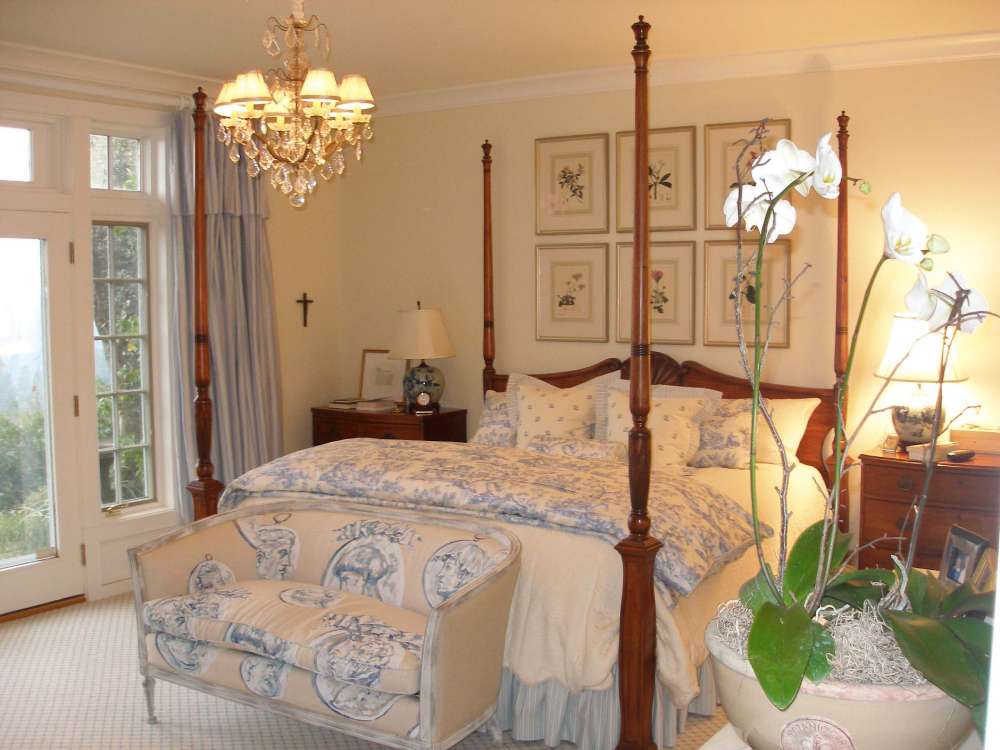
Image source: Kate Byer Interior Design
How It Differs French country bedroom decor is a design style rooted in the rural regions of southern France. It pulls from the villages and farmhouses of Provence, where comfort matters more than perfection and everything looks like it has been lived in for decades.
The style started showing up in the French countryside as early as the 1600s. Local homeowners took cues from the ornate furniture coming out of Paris and Versailles, but they softened everything. Curved Louis XV silhouettes got painted in chalk whites and pale grays instead of gilded gold. Silk gave way to linen. Marble floors became wide-plank oak.
What you end up with is a bedroom that feels warm and relaxed but still has a sense of quiet elegance. Think distressed wood furniture, soft muted tones, rumpled linen bedding, and antique accessories picked up over time rather than bought in one trip to a showroom.
How It Differs from Similar Styles
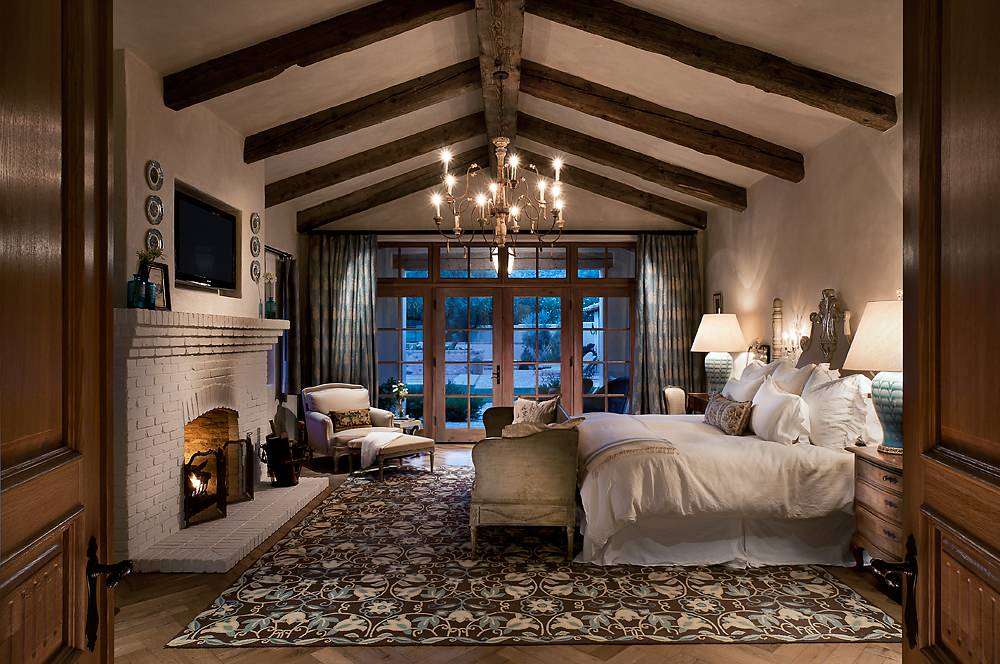
Image source: Higgins Architects
People mix this up with shabby chic home decor constantly. And yeah, they share DNA. But shabby chic leans heavier into pink, ruffles, and an almost precious quality that French country avoids.
Traditional interior design overlaps too, especially in its love for antiques and classic silhouettes. But traditional rooms tend to be more formal, more symmetrical, more “put together” in a way that a French country bedroom deliberately is not.
| Style | Mood | Key Difference |
|---|---|---|
| French Country | Warm, lived-in, and relaxed elegance | Balanced Aging: Uses weathered finishes, natural linen, and a muted, earthy palette. |
| French Provincial | Formal, refined, and sophisticated | Higher Polish: More gilding, polished wood surfaces, and highly structured, symmetrical layouts. |
| Shabby Chic | Soft, feminine, and romantic | Floral Focus: Heavier use of pinks, ruffles, and deliberately “over-distressed” or chipped paint. |
| Farmhouse | Simple, functional, and rustic | Utilitarian: Fewer ornate curves; emphasizes clean lines, sturdy furniture, and modern practicality. |
The global home decor market was valued at roughly $960 billion in 2024, according to Grand View Research. That number keeps climbing, and a big piece of the growth comes from people wanting bedrooms that actually feel personal rather than pulled from a catalog.
Why This Style Keeps Coming Back
French country decor has gone through several waves of popularity in the U.S. It arrived after World War I when returning soldiers fell in love with the Provencal countryside. It faded in the 1930s with Art Deco, came back in the 1960s, got repackaged during the shabby chic movement of the 1990s, and now it is back again.
The reason is pretty straightforward. People want rooms that feel collected over time. Imperfection is the whole point. A bed frame with visible brush strokes, a nightstand with a slightly uneven patina, a linen duvet that looks better wrinkled than pressed.
Homes and Gardens reported in 2024 that French country paired with wabi-sabi was emerging as a top trend, with designers like Kathy Kuo noting the two styles share a foundation of “beautiful imperfection.” That tracks. Both styles treat wear and age as features, not flaws.
Color Palettes That Define the Style
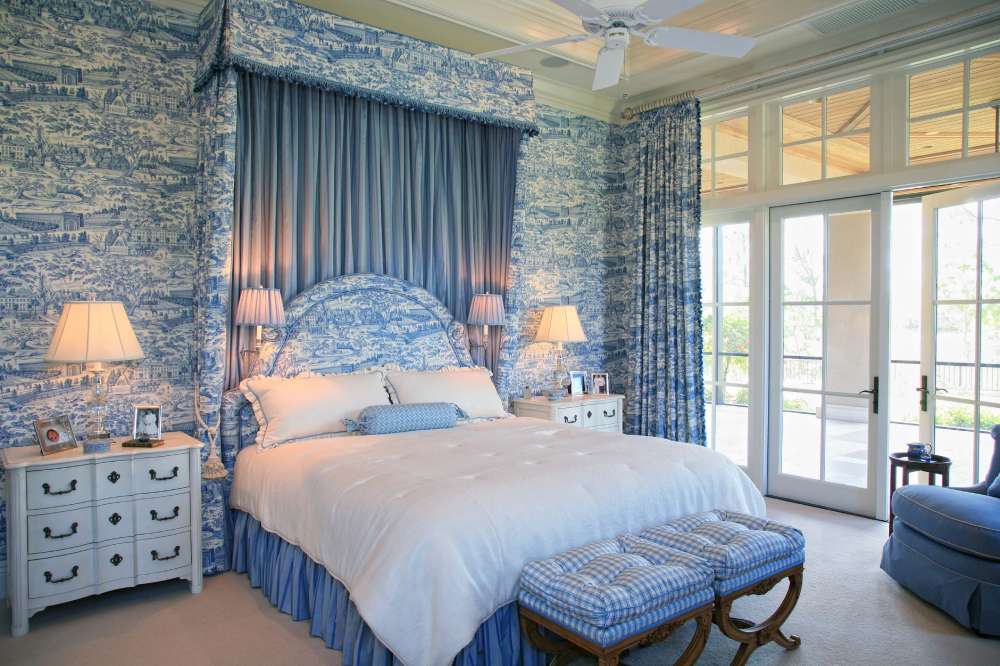
Image source: JMA INTERIOR DESIGN
Getting the color right matters more than any single furniture choice. A French country bedroom lives and dies by its palette. Too bright and the room loses its calm. Too dark and you kill the airy, Provencal quality that makes the style work.
The core colors come straight from the southern French landscape. Soft cream, warm white, pale lavender, dusty rose, sage green, faded blue. These are the colors that work well with beige tones and natural wood, which is exactly what you will find in most French country rooms.
Primary Palette Breakdown
Warm whites and creams form the backbone. Not stark, bright white. Think the color of old linen or unbleached cotton. Benjamin Moore’s “White Dove” and Farrow & Ball’s “Pointing” both land in this range.
Pale blues and lavenders show up on accent walls, bedding, and upholstery. These reference the lavender fields of Provence. Sherwin-Williams “Sleepy Blue” is a solid starting point.
Sage green tones work particularly well on painted furniture and cabinetry. They ground the room without competing with softer elements.
Dusty rose is used sparingly. A throw pillow here, a small ceramic there. It adds warmth without pushing the room toward shabby chic territory.
What to Avoid
Saturated, bold colors will fight the style. No bright red accent walls. No navy feature walls. No neon anything.
Understanding color theory in interior design helps here. French country works in a narrow tonal range. Everything stays muted and slightly washed out, as if the Provencal sun has been fading the pigment for years.
Black is almost entirely absent. If you need a dark anchor, go with a deep charcoal or aged iron tone, and keep it to small accents like hardware or lamp bases.
Wall Treatments Beyond Paint
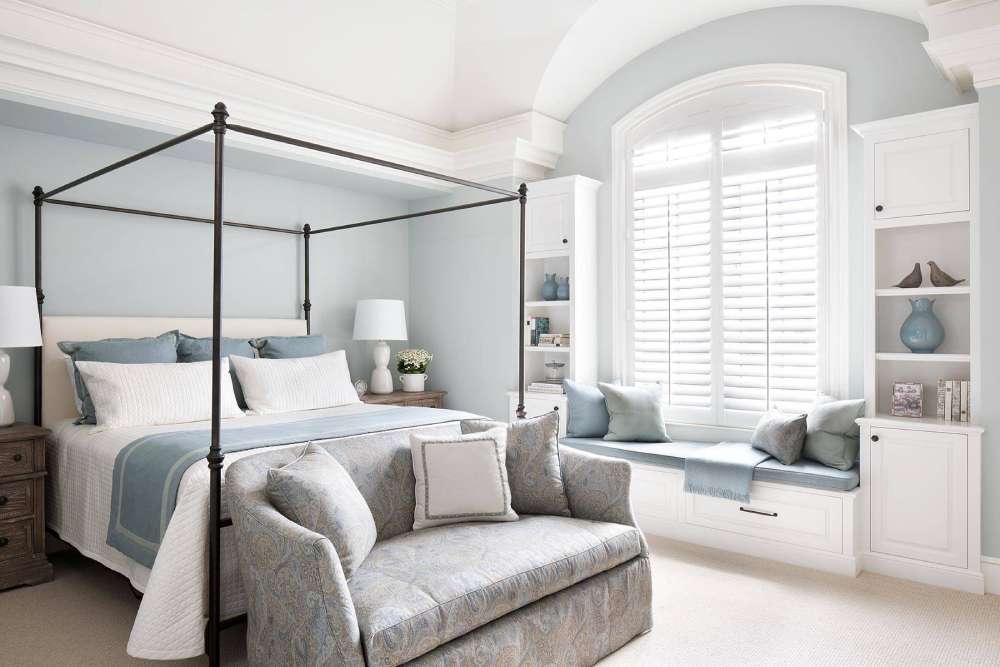
Image source: Harry Gandy Howle & Associates PA
Flat paint on drywall is fine. But if you want to push the room further, look at these options:
- Toile de Jouy wallpaper: pastoral scenes in blue, red, or gray on a cream background. Classic French pattern that reads immediately as French country
- Limewash finish: brands like Portola Paints and Bauwerk Colour make this accessible. The subtle texture and color variation feel authentically old-world
- An accent wall in exposed stone or a faux stone panel works in larger bedrooms. Keep it to one wall
The home textiles and floor coverings segment is growing at a projected 9.4% CAGR through 2033, according to Market Data Forecast. Wall treatments fall into this wider trend of people investing more in the surfaces around them, not just the furniture sitting on the floor.
Furniture Pieces for a French Country Bedroom
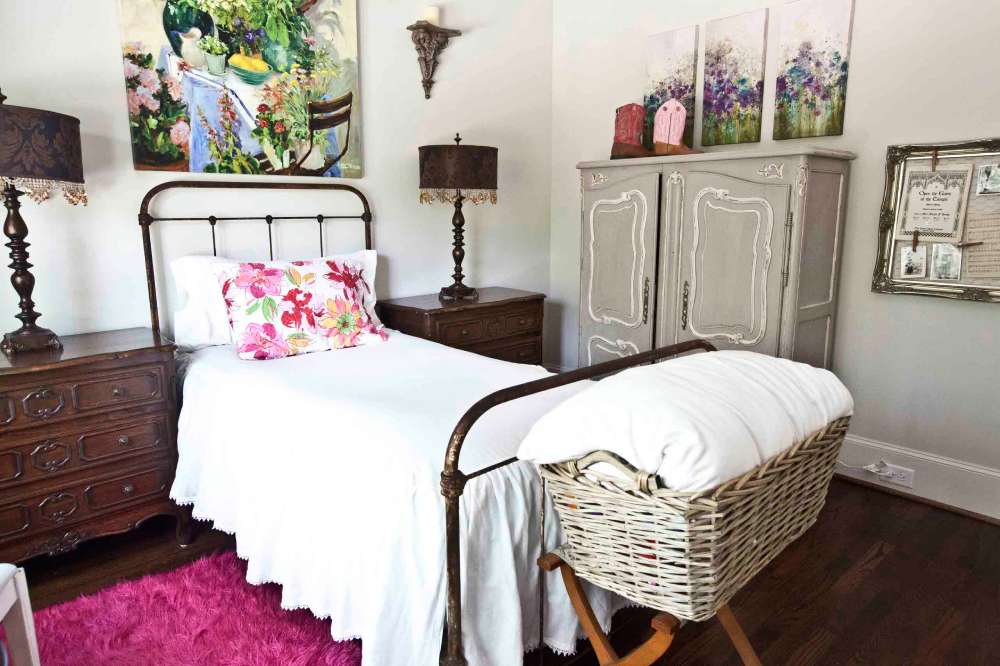
Image source: Ridgewater Homes LLC
Furniture anchors the entire room. Get this wrong and no amount of nice bedding or paint will save you. French country furniture has specific characteristics: curved lines, carved details, painted or natural wood finishes, and a sense that each piece has its own history.
The secondhand furniture market is booming right now. According to the U.S. Chamber of Commerce, the global market for secondhand furniture is expected to double from $40.2 billion in 2024 to $87.6 billion by 2034. That is good news if you are trying to furnish a French country bedroom, because vintage and antique pieces are exactly what this style calls for.
Bed Frames
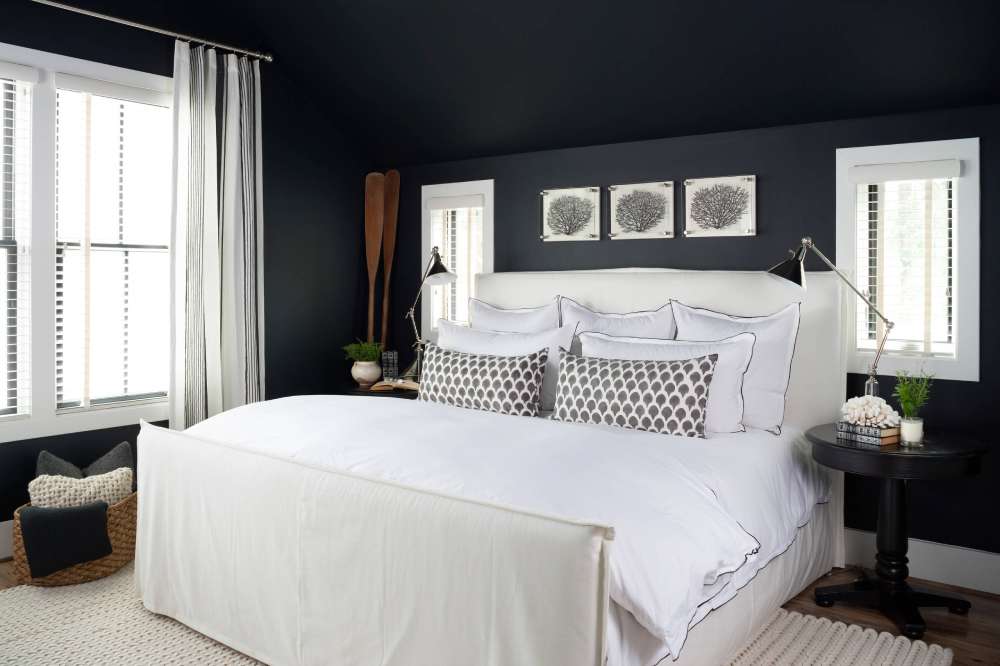
Image source: OPaL Design Build
The bed is the focal point in the room. Three options work well here.
Carved wood headboards with soft curves and subtle detail. These reference the Louis XV period without being overly ornate. Look for whitewashed or gray-washed finishes.
Upholstered linen headboards in neutral tones. Natural linen fabric with a slightly slubby texture reads perfectly for this style. Oatmeal, flax, and soft gray are the safest choices.
Wrought iron bed frames with gentle scrollwork. These lean slightly more rustic and work best in rooms with higher ceilings or exposed beams. The iron should look matte and aged, not shiny or new.
Nightstands and Dressers
Image source: Marie Burgos Design
Louis XV-style curved legs are the tell. If the legs are straight and squared off, the piece probably belongs in a different room.
Distressed oak, painted finishes in white or soft gray, and visible wood grain all work. Restoration Hardware, Ethan Allen, and Arhaus carry pieces in this vein at retail. For better prices and more authenticity, check Chairish and 1stDibs for vintage options.
Chairish has seen 14% year-over-year growth in its trade business, with interior designers driving much of that demand (U.S. Chamber of Commerce). Vintage pieces with real patina are in high demand right now.
Armoires Over Built-In Closets
Here is a detail most people overlook. Traditional French country homes did not have built-in closets. They used armoires.
A full-size armoire serves double duty. It handles your storage needs and it gives the room a major visual anchor beyond the bed. Look for pieces with two doors, possibly mirrored, in distressed white or natural oak.
If your bedroom already has a closet, a smaller armoire or a tall linen press still works beautifully as a secondary piece.
Antique vs. Reproduction Furniture
| Factor | Genuine Antique (Pre-1926) | Modern Reproduction |
|---|---|---|
| 2026 Price Range | $1,200 – $6,500+ per piece | $350 – $2,500 |
| Authenticity | True Patina: Natural oxidation and “honest” wear; irregular, hand-cut dovetail joints. | Distressed Finish: Uniform, machine-applied aging (sanding, staining) on symmetrical builds. |
| Availability | Limited: Requires sourcing via estate sales, 1stDibs, or high-end galleries. | High: Readily available at retailers like Pottery Barn, Wayfair, or specialist boutiques. |
| Investment Value | High: Assets tend to appreciate or hold value as “Best-in-Class” collector pieces. | Low: Depreciates immediately like new cars; valued for utility and immediate style. |
| Best For | Statement pieces: One-of-a-kind armoires, beds, or focal point dining tables. | Supporting pieces: High-traffic items like nightstands, benches, or kids’ room furniture. |
Mixing one genuine antique with a few quality reproductions is the most practical approach. It keeps the budget realistic while still giving the room that collected-over-time quality. Annie Sloan Chalk Paint is useful for refinishing thrift store finds to match your palette.
Bedding and Textiles
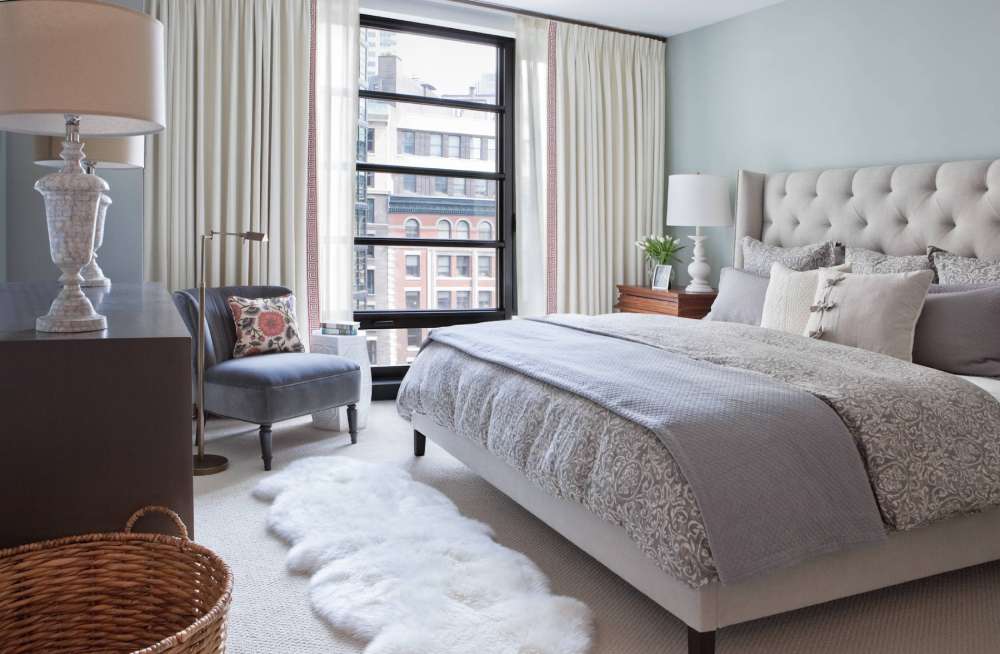
Image source: Twelve Chairs Interiors
Textiles carry the room. Took me a while to appreciate this, but in a French country bedroom, the bedding does as much work as the furniture. Maybe more.
Linen is the dominant fabric. Full stop. Not cotton sateen, not polyester blends, not microfiber. Linen. It wrinkles naturally, softens with every wash, and has the kind of relaxed drape that no other fabric quite matches.
The bedroom linen market was valued at $33.4 billion globally in 2024 and is growing at 6.9% annually through 2030, per Grand View Research. Linen bedding usage specifically jumped 41% between 2021 and 2024 across luxury homes, according to Market Reports World.
Layering the Bed
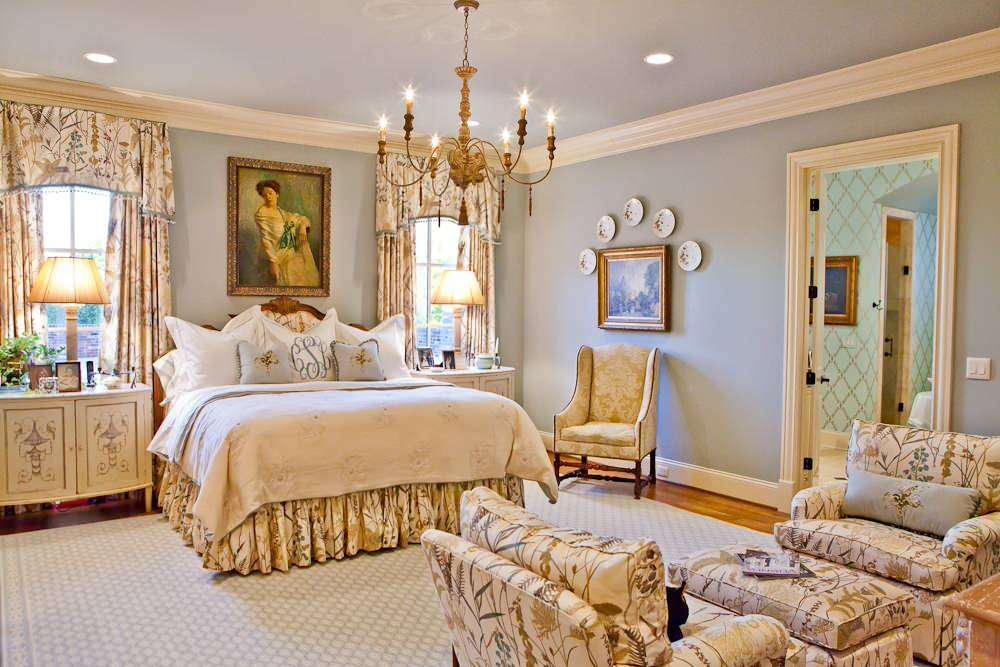
Image source: Eric Ross Interiors, LLC
French country bedding is about layers, not a single matching set. Those coordinated “bed-in-a-bag” sets from department stores? They work against you here.
Base layer: linen sheets in white, natural, or a very soft stripe. Parachute Home, Cultiver, and Rough Linen all make quality sets.
Middle layer: a linen duvet cover or a cotton matelasse coverlet. These add dimension without bulk.
Top layer: a quilt or lightweight throw at the foot of the bed. A hand-knit blanket or vintage quilt adds just enough visual interest.
For pillow arrangements on the bed, mix Euro shams (26 x 26 inches) in the back with standard sleeping pillows and one or two smaller accent pillows in front. Three layers of pillows is plenty. More than that starts looking fussy.
Patterns That Work
- Ticking stripes in blue, gray, or red on white
- Small-scale florals, not big bold botanicals
- Toile de Jouy for duvet covers or shams
- Gingham in pale blue or soft green
- Plain solids in muted tones to balance patterned pieces
Understanding pattern in interior design helps you mix these without the room feeling chaotic. The trick is keeping everything in the same tonal family even when the patterns differ.
Where Texture Matters Most
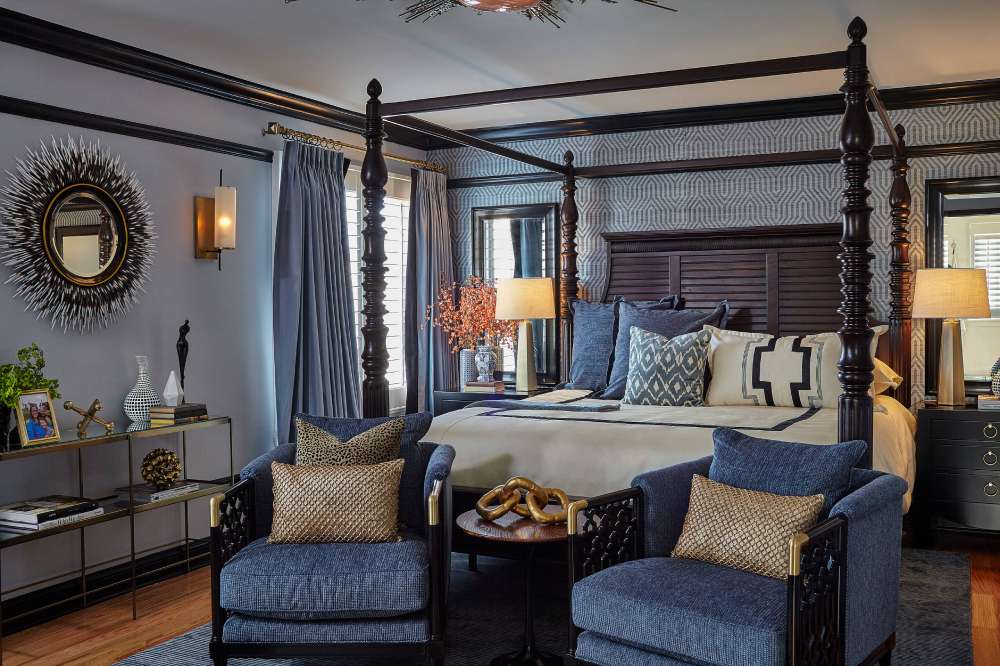
Image source: Tiffany Brooks, HGTV Host & Interior Designer
Texture beats pattern in a French country bedroom. A bed covered entirely in smooth cotton sateen will look flat and boring. But mix rumpled linen sheets with a matelasse coverlet and a chunky knit throw? Now you have depth.
Provence textiles traditionally reject synthetics. Cotton, linen, and wool are the core materials. Silk shows up rarely and in small doses (a trim on a pillow, not a full bedspread).
Garnet Hill and IKEA’s organic linen ranges offer more affordable entry points if Parachute Home or Cultiver stretch the budget too far.
Lighting That Fits a French Country Bedroom
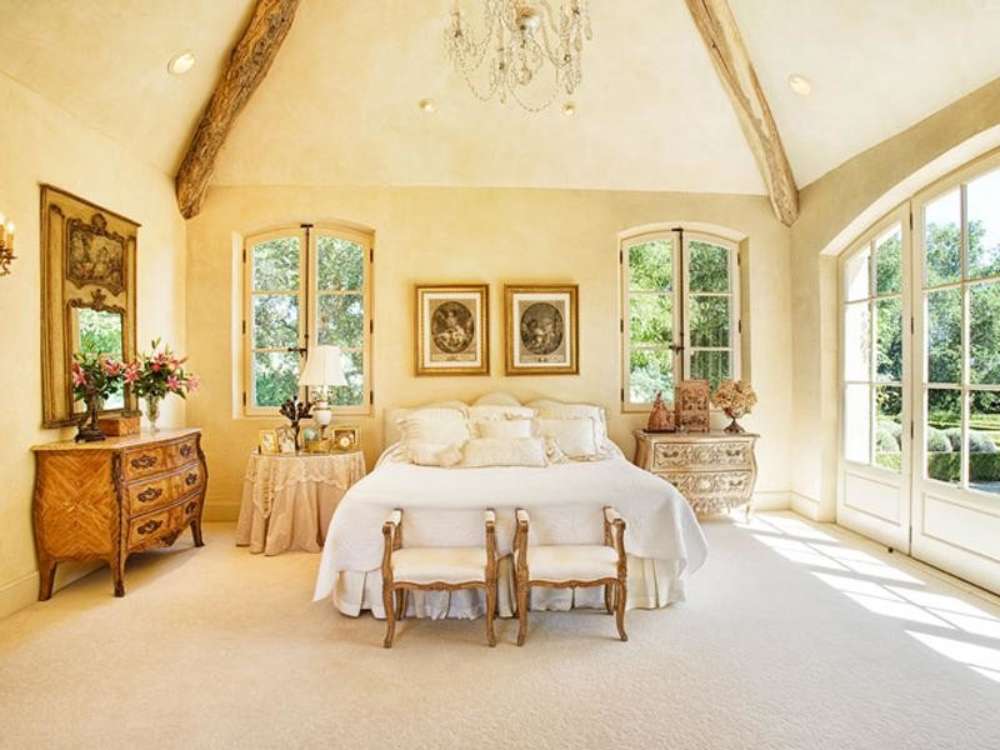
Bad lighting ruins good rooms. Seen it happen dozens of times. Someone gets the furniture right, nails the color palette, picks beautiful bedding, then installs a chrome flush-mount ceiling fixture and wonders why the room feels off.
French country bedrooms need warm, layered light. No single overhead source can do this alone. You need multiple layers working together.
Chandeliers
A chandelier in the bedroom feels indulgent, but it is one of the strongest moves you can make for this style. Keep the scale appropriate. A chandelier that would fit in a ballroom does not belong in a 14 x 16 foot bedroom.
Good options: small crystal chandeliers, wood bead chandeliers, iron candle-style fixtures, or aged brass fixtures with linen shades.
Visual Comfort and Schoolhouse Electric carry fixtures that fit the style well. Pottery Barn’s lighting section has more affordable options that land in the right territory.
Table and Bedside Lamps
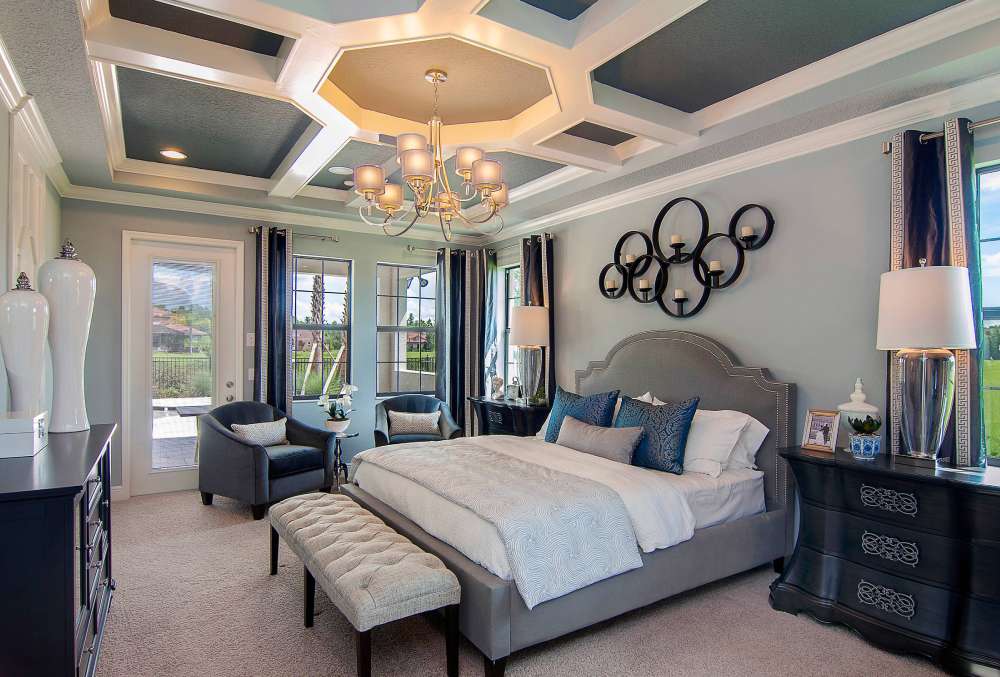
Image source: Masterpiece Design Group
Task lighting on nightstands is where most of your actual reading and winding-down light comes from.
Ceramic bases in white or blue with linen shades. Turned wood bases with a natural or whitewashed finish. Candlestick-style lamps that reference the room’s French roots.
Avoid anything chrome, brushed nickel, or overtly modern. The metal finishes in a French country bedroom are aged brass, iron, or antique gold.
Wall Sconces as an Alternative
In smaller bedrooms, accent lighting through wall sconces frees up nightstand space. Swing-arm sconces in brass or iron work especially well flanking the bed.
This is also practical if you have narrow nightstands (which many antique French pieces are) that cannot accommodate a full-size lamp.
A Note on Recessed Lighting
If your bedroom already has recessed lighting, do not rip it out. Just manage it. Use warm-tone bulbs at 2700K and install dimmer switches so you can drop the intensity in the evening.
Ambient lighting should feel soft and golden, never harsh or clinical. The goal is to make the room feel like it is lit by candlelight, even if it is not.
Decorative Accents and Finishing Touches
Accents are where people either get French country right or go completely overboard. The instinct to fill every surface with “stuff” is strong with this style. Fight it.
A French country bedroom should look collected, not cluttered. Each piece should feel like it has a reason for being there, even if that reason is just “it looks beautiful.”
Mirrors
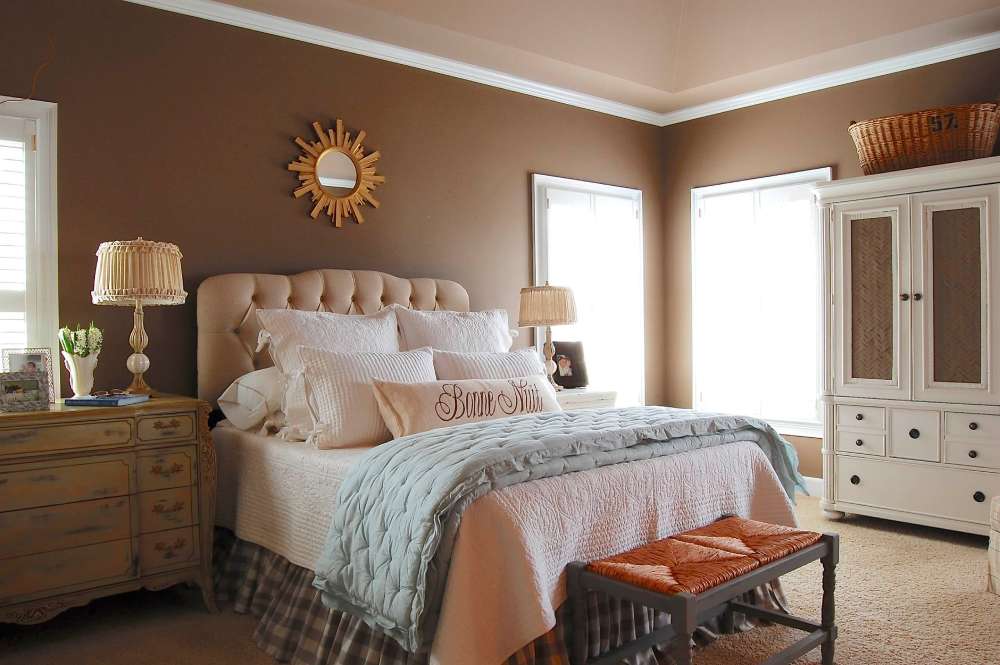
Every French country bedroom needs at least one mirror. They bounce light around the room and add an instant sense of elegance.
Best choices: ornate gilded frames (slightly tarnished, not bright gold), trumeau mirrors with a painted panel above the glass, and arched shapes that echo the curves found in the furniture.
Lean a large floor mirror against the wall if you do not want to drill into plaster. This casual placement actually suits the style better than a perfectly centered wall mount.
Ceramics and Pottery
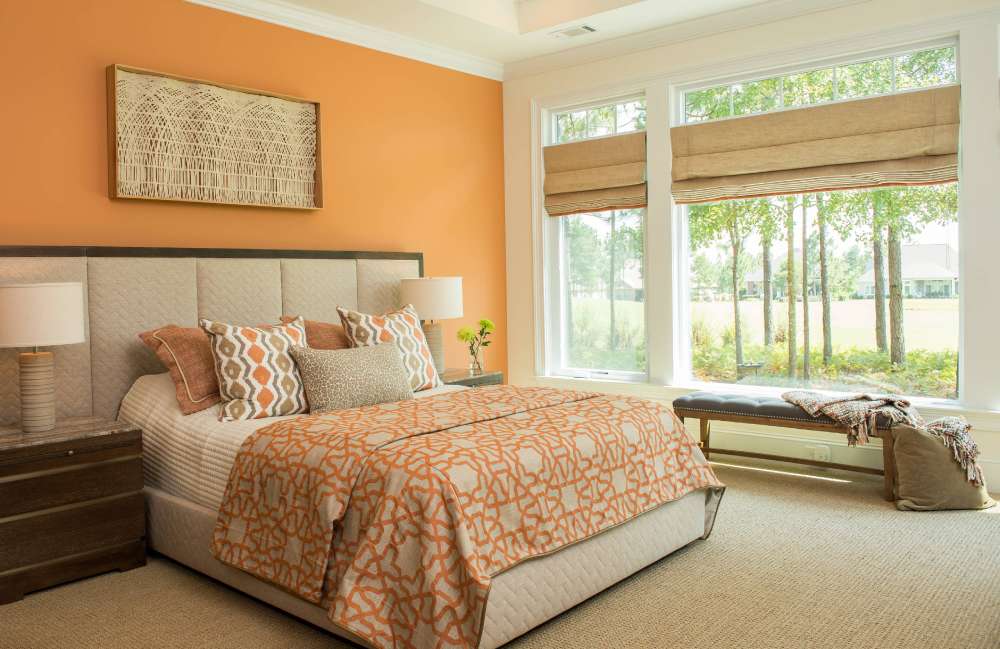
Image source: Bespoke Fine Interiors
White ironstone pitchers, French confit pots in warm yellow or green glazes, simple stoneware vases. These look right on dressers, nightstands, and windowsills.
Confit pots were originally used for preserving duck and goose fat in French country kitchens. They migrated into decorative use because their chunky shape and aged glaze look genuinely beautiful sitting on a shelf with dried lavender or garden roses inside.
Florals
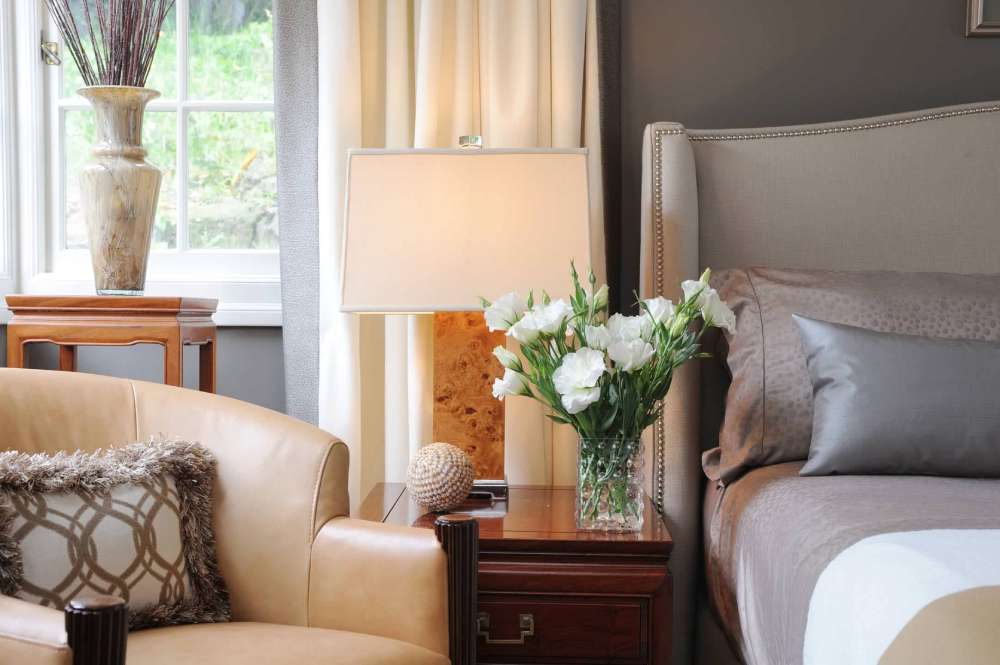
Image source: Brian Dittmar Design, Inc.
Dried lavender bundles are the obvious choice and they work. But fresh flowers do more for the room. Peonies, garden roses, and wildflower arrangements in simple vessels beat dried flowers every time for adding life.
Keep the arrangements loose and slightly messy. A tight, formal bouquet does not fit the casual vibe. Think “just picked from the garden” rather than “ordered from a florist.”
Wall Art and Framing
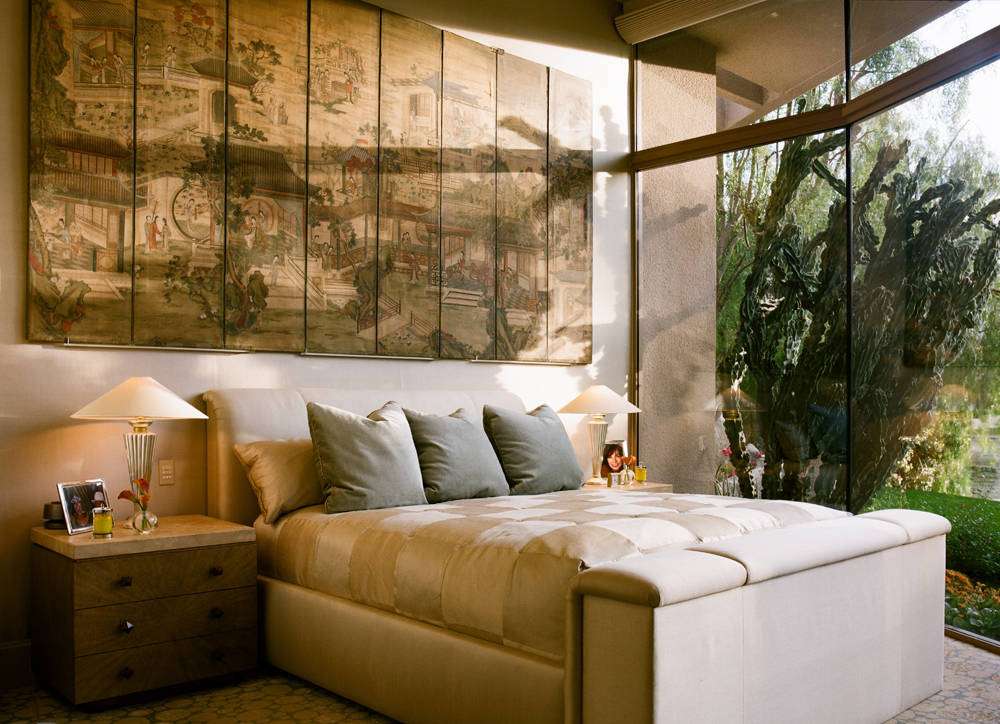
Image source: Peter Christiansen Valli
Botanical prints, pastoral landscapes, and vintage French typography all fit the style.
Frame styles: thin gold, whitewashed wood, or raw natural wood. Avoid black frames, thick modern frames, or anything with a metallic gallery finish.
You can go gallery wall (asymmetrical grouping of mixed sizes) or single statement piece above the bed. Either approach works, but do not do both on the same wall. Understanding balance in interior design helps you decide which approach fits the room better based on its size and layout.
What to Leave Out
Skip anything plastic. Skip mass-produced “farmhouse” signs with cursive lettering. Skip decorative objects that look like they came off an assembly line.
The whole ethos of the style is attention to details, not accumulation. If a piece does not look like something you would find in a French flea market or your grandmother’s attic, it probably does not belong.
Flooring and Rugs
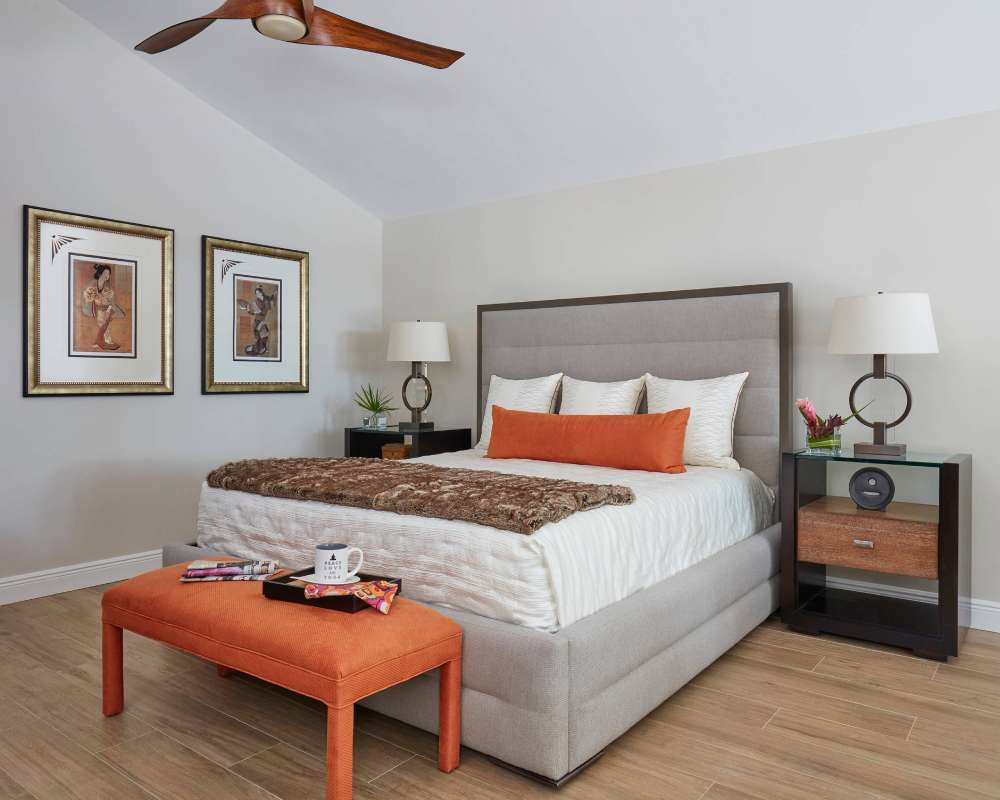
What goes underfoot changes how the whole room feels. You can get the furniture, bedding, and paint exactly right, but the wrong floor (or the wrong rug) will pull things off track fast.
The global area rugs market was valued at $11.77 billion in 2024 and is growing at 6.6% annually through 2030, per Grand View Research. Wool rugs hold the largest material share at over 38%, which makes sense for French country rooms where natural fibers are always the better choice.
Hard Flooring Options
Wide-plank oak is the gold standard. If you are building from scratch or doing a full renovation, this is the floor you want. Light to medium tones work best, and the planks should be wide (5 inches or more) to read as authentically rustic.
Reclaimed wood flooring adds real character but comes at a premium. For a similar look at a lower cost, engineered hardwood with a hand-scraped or wire-brushed finish gets you close.
| Flooring Type | French Country Fit | 2026 Budget Level |
|---|---|---|
| Wide-plank oak | Ideal: Authentic, warm, and timeless; the gold standard for the aesthetic. | $$$ – $$$$ ($7–$14/sq. ft.) |
| Reclaimed wood | Excellent: Provides real patina and history; often sourced from antique French barns. | $$$$ ($15–$25+/sq. ft.) |
| Terra cotta tile | Strong: Essential for the “Provincial” look; adds earthy, rustic warmth. | $$ – $$$ ($6–$12/sq. ft.) |
| Stone tile | Good: Best for large, airy rooms or entryways; provides a cool, durable surface. | $$$ ($8–$18/sq. ft.) |
| Laminate | Acceptable: A practical choice that can mimic oak well when paired with the right rug. | $ ($3–$6/sq. ft.) |
If your bedroom already has carpet or laminate, do not panic. A well-chosen area rug can redirect the entire look without ripping anything out.
Rug Types That Work
A vintage Oushak rug is the single best rug choice for a French country bedroom. The faded, muted tones and slightly worn pile match the whole aesthetic perfectly.
Other good options:
- Muted Persian rugs with soft blues, creams, and roses
- Simple jute or sisal for a more casual, rustic look
- Flatweave cotton rugs in stripes or subtle patterns
Loloi makes affordable patterned rugs that land in the right color range. For genuine vintage pieces, eBay and Etsy are still the best hunting grounds.
Getting the Size Right
This is where most people mess up. A rug that is too small under the bed looks like an afterthought.
The rug should extend at least 2 feet beyond the sides and foot of the bed. For a queen bed, that typically means a rug sized 8×10 or 9×12. Anything smaller gets lost visually and feels wrong when your feet hit bare floor in the morning.
Use a quality rug pad underneath. It protects the floor, keeps the rug from sliding, and adds a layer of cushion that makes the whole setup feel more comfortable.
French Country Bedroom Decor on a Budget
Not everyone can drop $3,000 on an antique armoire or $800 on linen sheets. The good news is that French country is one of the most budget-friendly styles to pull off, because it actively rewards imperfection and secondhand finds.
Opendoor research shows Americans spend an average of $1,599 per year on home decor. Millennials spend about 23% more than Boomers. Whatever your number is, you can make this style work if you are smart about where the money goes.
Thrifting and Estate Sales
B-Stock reports that furniture brands sold 85% more secondhand units in 2024 than the year before, per Modern Retail. The resale market is flooded with quality pieces right now.
Estate sales are where the real finds hide. Look for carved wood frames, old mirrors, ceramic pitchers, and side tables with curved legs. These are the exact pieces that make a French country bedroom feel authentic, and they cost a fraction of retail.
IKEA’s Buy Back program now accepts over 3,000 eligible products for resale, up from 2,700 the year before. Check their As-Is sections for deals on items that just need a fresh coat of paint.
DIY Techniques That Actually Work
Annie Sloan Chalk Paint remains the go-to for transforming cheap or dated furniture. No sanding, no priming. Just paint, distress lightly with fine sandpaper, and seal with wax.
Rust-Oleum’s chalked paint line is a more affordable alternative that you can pick up at any hardware store. A quart runs about $15 compared to Annie Sloan’s $40+ per liter.
HIRI research shows paint and paint supplies were the most purchased home improvement products throughout 2024. Interior painting was also the most planned project category. People are already doing this. The tools and tutorials are everywhere.
Where to Spend vs. Where to Save
| Spend More (Quality First) | Save Here (Budget Alternatives) |
|---|---|
| Linen duvet cover: A high-quality primary layer dictates the room’s temperature and visual texture. | Pillowcases: Target’s Casaluna line offers linen-feel or bamboo options starting at $30–$55, providing softness where it counts without the full set cost. |
| Bed frame or headboard: The structural anchor of the room; a solid frame prevents squeaking and lasting wear. | Nightstands: These are the easiest items to source secondhand. A thrifted wood table with a fresh coat of paint and new hardware looks high-end. |
| Natural fiber area rug: Invest in wool or jute for durability and underfoot comfort that lasts years. | Curtains: H&M Home and IKEA remain the gold standard for “linen-look” panels. Use 2026 spring-weight sheers to filter light for under $50–$100. |
| Vintage statement mirror: A genuine vintage piece adds immediate character and unique soul to a space. | Wall art: Use high-resolution digital downloads or your own photography; print locally and use standard frames with custom mats. |
Mixing one investment piece with budget items is the strategy. A $200 linen duvet cover on a thrift store bed with repainted nightstands looks better than a $2,000 matching bedroom set from a furniture warehouse.
Free Changes That Matter
Remove clutter. Seriously. Take out anything that does not look like it belongs in a French country bedroom. The modern alarm clock, the plastic organizer on the dresser, the mismatched curtain rod.
Rearrange your furniture to create better flow in the space. Pull the bed away from the corner if it is pushed against two walls. Let natural light do more by swapping heavy window treatments for sheer linen panels or lighter curtains.
These changes cost nothing and can completely shift how the room reads.
Common Mistakes to Avoid
The difference between a French country bedroom that works and one that falls flat usually comes down to a handful of repeated errors. Most of them are easy to fix once you know what to look for.
The Matching Furniture Set Trap
Buying a complete bedroom set from one store is the fastest way to kill the collected-over-time quality that defines this style. Every piece looks the same. Same finish, same hardware, same wood tone. It reads as “showroom” instead of “inherited.”
The fix is simple. Buy your bed from one source, your nightstands from another, and your dresser from somewhere else. Mix painted pieces with natural wood. Let the room look like it was assembled over years, not one Saturday afternoon.
Overdoing the Distressing
When every single surface in the room looks like it has been attacked with sandpaper and white paint, the effect flips from charming to costume-like. It stops feeling real.
One or two heavily distressed pieces is plenty. Let the rest of the furniture show more subtle signs of age. Think slightly worn edges and faded paint, not chunks of missing finish on every drawer front.
Confusing French Country with Shabby Chic
This keeps happening. Too much pink. Too many ruffles on the bedding. An abundance of porcelain figurines on every surface.
French country has a backbone that shabby chic sometimes lacks. It is warm but not precious. Relaxed but not frilly. If the room looks like it belongs in a dollhouse, you have crossed the line. Pull back on the ruffles, reduce the pink, and add some natural wood elements to ground things.
Ignoring Scale and Proportion
A massive armoire in a 10 x 12 bedroom will swallow the room. Tiny nightstands next to a king bed will look ridiculous. Understanding scale and proportion in interior design is not optional here.
Measure your room before buying anything. Leave enough walking space around the bed (at least 24 inches on each side). If the room is small, skip the armoire entirely and focus on a beautiful bed frame with well-proportioned nightstands.
Using Synthetic Fabrics
Polyester bedding, microfiber throws, and synthetic curtain panels all undercut the look. They might photograph fine from a distance, but up close they feel wrong. And this style is all about how things feel, not just how they look.
Stick to cotton, linen, and wool where it counts. The bedding, the curtains, and the upholstered pieces should be natural fibers. A linen curtain panel from IKEA costs about the same as a polyester one from a big box store, so cost is not really the excuse here.
Achieving harmony in the overall design means everything works together. One synthetic throw pillow on an otherwise all-natural bed is going to stand out for all the wrong reasons. Keep the materials consistent and the room will feel right.
FAQ on French Country Bedroom Decor
What defines French country bedroom decor?
It is a style rooted in rural Provence that combines rustic warmth with casual elegance. Think distressed wood furniture, muted color palettes, natural linen textiles, and antique accessories that look collected over decades rather than purchased all at once.
What colors work best for a French country bedroom?
Soft whites, warm creams, pale lavender, dusty rose, sage green, and faded blue. Everything stays muted and slightly washed out. Avoid bold, saturated tones. Farrow & Ball and Benjamin Moore both carry colors that fit this palette well.
What is the difference between French country and shabby chic?
French country has more structure and less pink. Shabby chic leans heavily into ruffles, pastels, and an overtly feminine quality. French country feels lived-in but grounded. Shabby chic can tip into precious territory. They share DNA but the mood is different.
What type of bed frame suits this style?
Carved wood headboards with soft curves, upholstered linen headboards in neutral tones, or wrought iron frames with gentle scrollwork. The finish should look aged or painted, never shiny or overly polished. Louis XV-style curves are the classic reference point.
Is linen bedding necessary for a French country bedroom?
Not strictly necessary, but it is the single best fabric choice for this look. Linen wrinkles naturally, softens with washing, and has a relaxed drape nothing else matches. Brands like Parachute Home and Cultiver specialize in quality linen bedding.
Can I achieve this style on a budget?
Yes. Thrift stores, estate sales, and chalk paint go a long way. Repaint a secondhand dresser, add affordable linen bedding from Target’s Casaluna line or H&M Home, and lean a vintage mirror against the wall. Mix one investment piece with budget finds.
What kind of lighting works in a French country bedroom?
Small chandeliers (crystal, wood bead, or iron), ceramic table lamps with linen shades, and brass wall sconces. Keep bulbs at 2700K for warm tones. Avoid anything chrome, brushed nickel, or overly contemporary in finish.
What rugs pair well with French country decor?
Vintage Oushak rugs are the top choice. Muted Persian rugs, simple jute, and flatweave cotton also work. The rug should extend at least two feet beyond the bed on all visible sides. Loloi offers affordable options in the right color range.
Should I use antique or reproduction furniture?
Mix both. Use a genuine antique for one statement piece like the bed or armoire. Fill in with quality reproductions from retailers like Restoration Hardware or Arhaus. This keeps the budget realistic while maintaining an authentic collected feel.
What are the biggest mistakes people make with this style?
Buying a matching bedroom set from one store, overdoing the distressed finish on every surface, using synthetic fabrics where natural ones belong, and confusing the style with shabby chic by adding too many ruffles and pink accents.
Conclusion
French country bedroom decor rewards patience over perfection. The best rooms in this style look like they happened slowly, with a vintage Oushak rug found at an estate sale sitting next to a Restoration Hardware bed frame and linen sheets from Cultiver.
That mix is the whole point. Carved wood headboards next to chalk-painted nightstands. Toile de Jouy pillows on rumpled cotton matelasse. A small iron chandelier casting warm light over weathered oak floors.
Start with the color palette and the bed. Get those right and everything else falls into place more easily than you would expect.
Skip the matching furniture sets. Hunt for pieces with real character. Choose natural linen and cotton over synthetic alternatives. Let the room breathe.
The Provencal farmhouse look is not about spending the most money. It is about making honest choices with materials, finishes, and layers that age well and feel good to live in every single day.

- Paint Colors That Go with Oak Floors - August 22, 2026
- Paint Colors That Go with Gray Floors - August 20, 2026
- What Color Bedding Goes with Dark Wood Furniture - August 18, 2026


