
Exposed brick, steel bed frames, and raw concrete might sound like a construction site. But in the right bedroom, they become the whole aesthetic. Industrial bedroom decor pulls from converted warehouses and factory lofts to create spaces that feel honest, lived-in, and genuinely cool.
The tricky part is keeping it comfortable. Too much metal and the room feels cold. Too little and it just looks like a regular bedroom with a pipe shelf.
This guide covers the specific materials, furniture, lighting, color palettes, and textiles that make the style work. Plus how to pull it off in small rooms, on a tight budget, and without falling into the most common design mistakes that trip people up.
What Is Industrial Bedroom Decor?
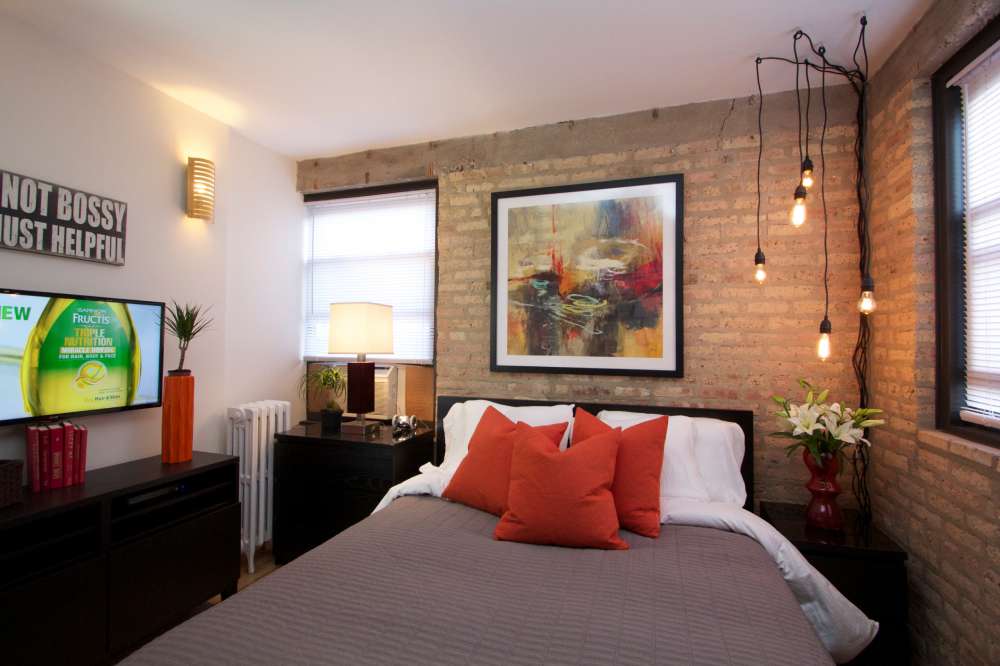
Image source: Robeson Design
Industrial bedroom decor is a design style built on raw materials, structural honesty, and utilitarian furniture pulled straight from converted warehouses and factory lofts. Think exposed brick, steel bed frames, concrete surfaces, and visible ductwork.
The style traces back to the mid-20th century, when old manufacturing buildings in cities like New York, London, and Chicago started getting converted into living spaces. People kept the bones of those buildings, the pipes and beams and rough walls, because tearing them out was expensive. And then something happened. The roughness became the whole point.
Grand View Research valued the global interior design market at $137.93 billion in 2024, with residential services growing at a projected 4.5% CAGR through 2030. A good chunk of that residential growth comes from homeowners chasing specific aesthetics, and the industrial look remains one of the most searched bedroom styles online.
But here’s where people get confused. Industrial doesn’t mean unfinished. It doesn’t mean your bedroom should feel like a parking garage.
The real skill is mixing rough and refined. A wrought iron bed frame paired with soft linen bedding. A concrete floor softened by a vintage Persian rug. You’re keeping the raw character while making the room livable enough to actually sleep in. That tension between hard and soft is what separates good industrial interior design from a room that just looks neglected.
Industrial vs. Rustic vs. Modern Industrial
These three get mixed up constantly, and the differences matter when you’re shopping for furniture or picking finishes.
| Style | Primary Materials | Overall Feel |
|---|---|---|
| Industrial | Structural steel, exposed concrete, raw red brick | Authentic Loft: Heavily utilitarian, emphasizing original architectural bones and urban grit. |
| Rustic Industrial | Reclaimed barn wood, aged/distressed metals | Warm & Textured: Softens hard edges with natural timber; ideal for a “modern farmhouse” crossover. |
| Modern Industrial | Polished concrete, matte black steel, glass | Minimalist & Clean: A contemporary take that prioritizes sleek surfaces and a more refined, “quiet” palette. |
Rustic decor leans heavily on warmth and natural imperfections. It borrows from farmhouses and cabins. Modern industrial strips everything back to clean geometry and polished surfaces.
Pure industrial sits between the two. It keeps the grit but doesn’t romanticize it.
Raw Materials That Define the Look
The material palette is what makes or breaks an industrial bedroom. Get the materials right and the rest follows. Get them wrong and you’ve just got a cold, uncomfortable room with no identity.
Every material in an industrial space should look like it has a reason to be there. No decorative excess. No filler. Texture in interior design is doing the heavy lifting here, not paint or wallpaper.
Steel and Iron
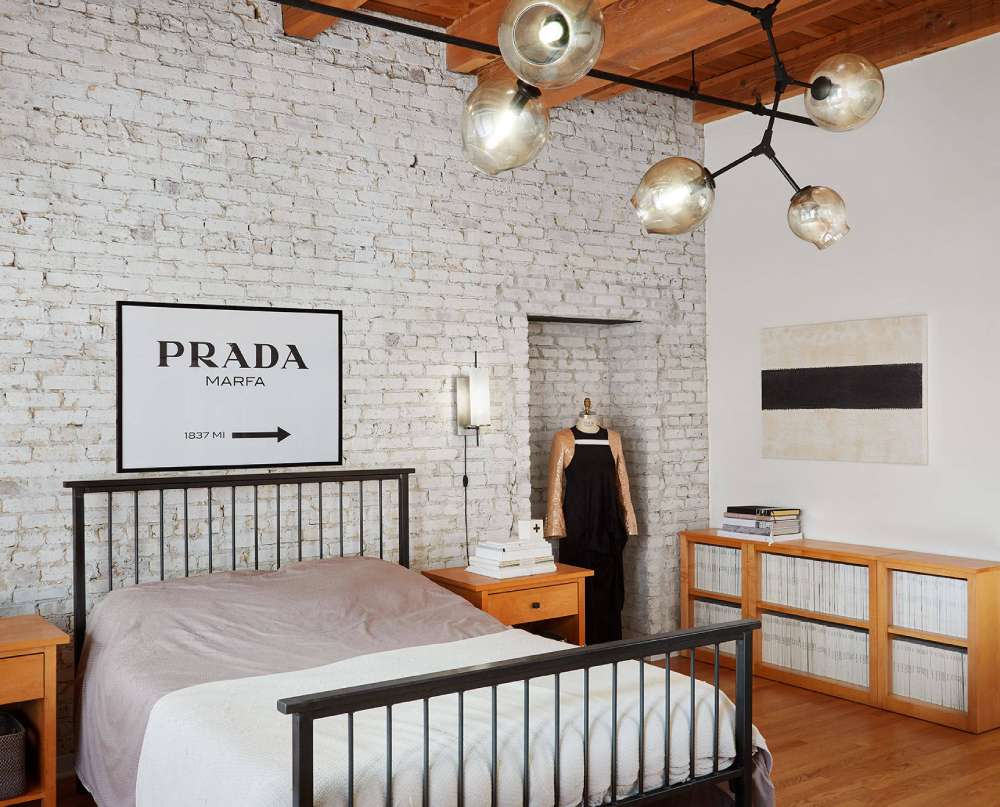
Image source: Third Coast Interiors
The backbone of the whole style. Steel shows up in bed frames, shelving brackets, light fixtures, and exposed structural supports.
Wrought iron beds are the classic choice. They’ve been part of interior design history for over a century, and they carry that factory-floor weight without needing anything else to anchor the room.
Matte black is the go-to finish. It reads as strong without being flashy, and it pairs with basically every other material on this list.
Reclaimed Wood
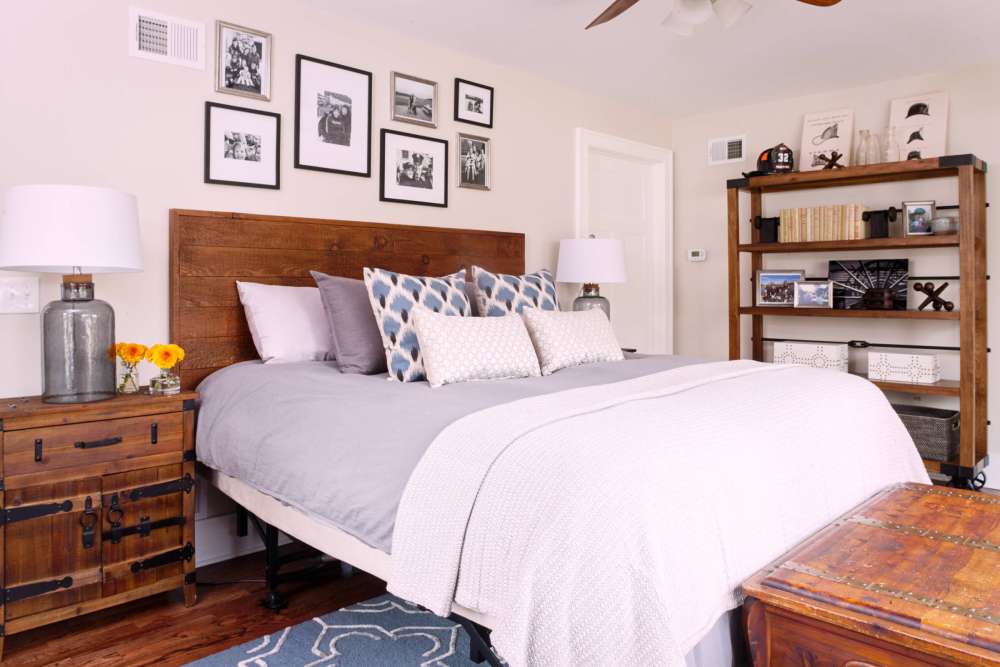
IMARC Group valued the global reclaimed lumber market at $62.2 billion in 2024, growing at 3.89% CAGR through 2033. Furniture accounts for roughly a third of all reclaimed wood applications.
In an industrial bedroom, reclaimed wood shows up as headboards, nightstands, floating shelves, and accent wall paneling. The old barn wood and salvaged factory timber add warmth that steel and concrete can’t provide on their own.
Took me forever to understand why some reclaimed wood pieces look incredible while others look like scrap. The difference is usually the finish. A clear matte sealant preserves the character. Too much stain kills it.
Exposed Brick
Nothing signals “loft bedroom” faster than an accent wall of exposed brick. Real brick is always better, but faux brick panels have come a long way, and in a rental, they’re sometimes the only option.
Red and brown brick set a warm, traditional industrial tone. Whitewashed brick opens the room up and leans more Scandinavian. Painted gray brick goes full modern industrial.
If you’re working with real brick, keep in mind that it’s porous. Seal it, or it collects dust like nothing else and can develop moisture issues over time.
Concrete
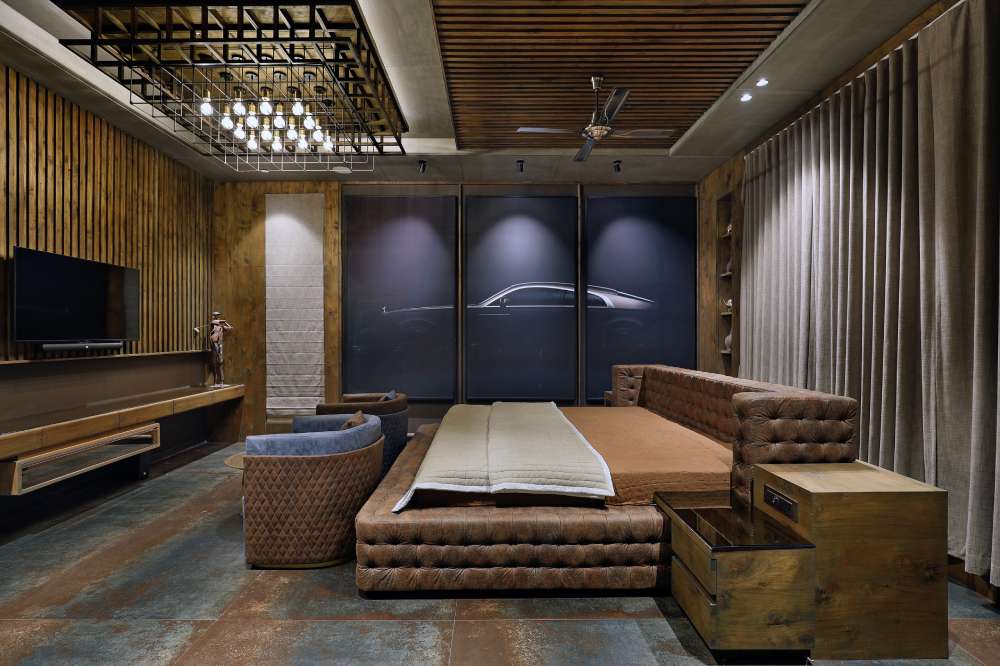
Polished concrete floors are the gold standard for industrial bedrooms. They’re durable, low maintenance, and they reflect light in a way that gives the room depth.
But concrete floors are cold. Literally cold. An area rug isn’t optional here, it’s a survival requirement if you live anywhere with actual winters. A jute rug or distressed flatweave works well without breaking the aesthetic.
For walls, concrete-effect plaster and limewash paint create that raw look without pouring actual concrete. Farrow & Ball and Benjamin Moore both carry finishes that get close enough to fool most people.
Leather
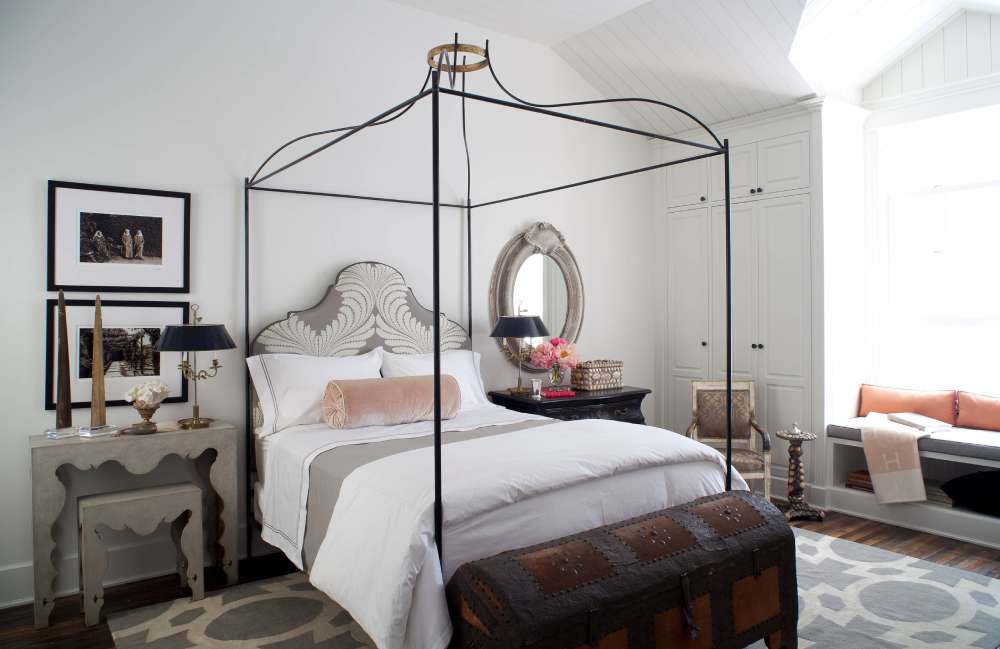
Leather in an industrial bedroom works as the finishing touch, not the main event. A cognac leather accent chair in the corner. A leather strap on a wall-mounted shelf. A leather-wrapped desk accessory on the nightstand.
It adds warmth and a sense of age without competing with the harder materials. Aged brass fixtures alongside leather creates a combination that feels collected over time, not decorated in a weekend.
Mixing Raw and Refined Finishes
The whole game is pairing opposites. A steel bed frame looks harsh by itself. Throw a chunky knit blanket over it and suddenly it looks intentional.
Matte black hardware works as the connective thread across all these different materials. It’s on the nightstand legs, the shelving brackets, the light fixture, and the curtain rod (if you’re using curtains). That repetition of finish is what creates harmony in interior design when everything else is deliberately mismatched.
Industrial Bedroom Furniture and Where to Find It
Furniture choices define whether the room reads as “intentionally industrial” or “forgot to finish decorating.” The pieces should be simple, sturdy, and look like they could survive being thrown off a truck.
According to the 2025 NAR/NARI Remodeling Impact Report, Americans spent an estimated $603 billion on home remodeling in 2024. Primary bedroom suites earned a perfect 10 Joy Score, the highest happiness rating after completion. People care about how their bedrooms look. A lot.
Bed Frames That Actually Work
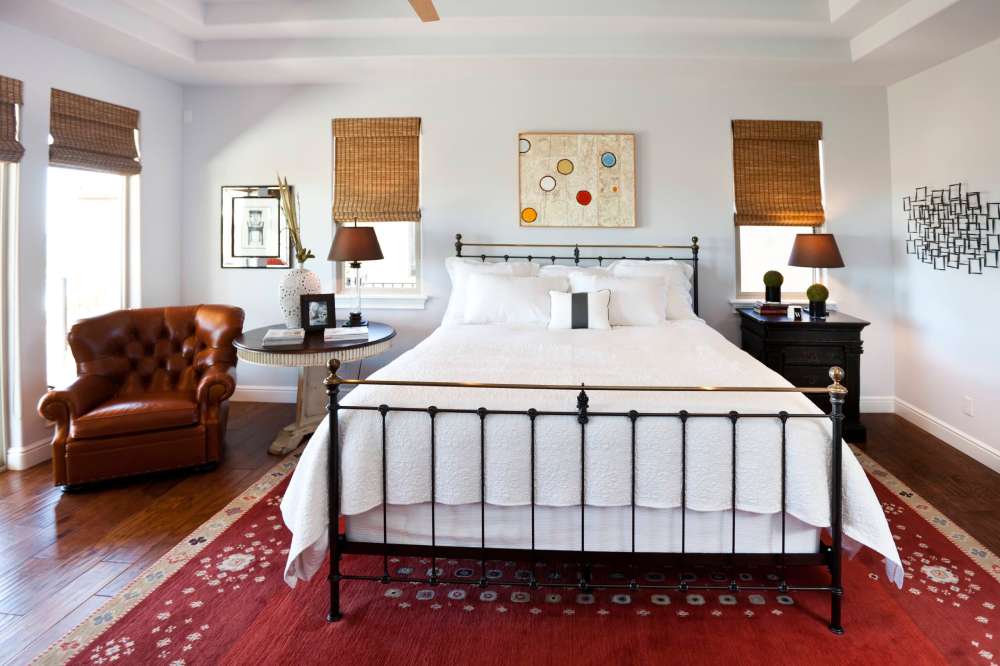
Image source: Kerrie Kelly Design Lab
Metal platform beds are the starting point. A black iron frame with clean lines and no headboard gives you the most authentic industrial feel. But if you want a headboard, a reclaimed wood plank mounted to a steel frame hits the right note.
Pipe-frame beds, the kind made from actual plumbing pipes, had a moment around 2016. Honestly? They still look good in the right context, but they’ve been done so many times on Pinterest that they’ve started to feel a bit like a costume. If you go that route, keep the rest of the room very restrained.
Sizing matters here. Industrial frames tend to look better at queen or king size. A twin pipe-frame bed just looks like dorm furniture. Scale and proportion are doing a lot of the work.
Where to Source Industrial Furniture
Restoration Hardware: The higher-end stuff. Their iron and reclaimed wood pieces are well-built but expensive. Wait for sales.
West Elm: Good mid-range option with cleaner lines. Their metal-and-wood nightstands sit comfortably in the modern industrial range.
CB2: Leans contemporary but carries enough raw-material pieces to work. Their steel shelving is solid.
Etsy: Best place for one-of-a-kind pieces from small makers. Search for pipe shelving, custom steel frames, and reclaimed wood headboards. Quality varies wildly, so check reviews and ask about materials.
Thrift stores and salvage yards: The real treasure is here. Vintage metal lockers, rolling tool cabinets, old factory carts. These pieces carry authentic wear that no manufacturer can replicate.
Storage That Fits the Style
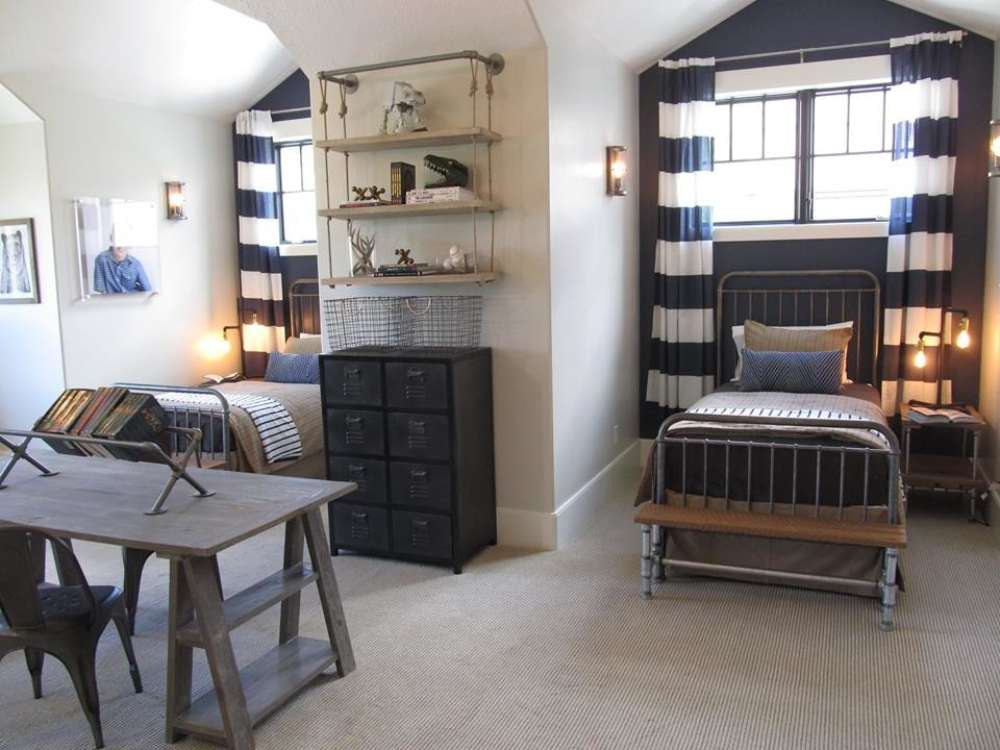
Image source: OSMOND DESIGNS
Industrial bedrooms don’t hide storage. They show it off.
- Open steel wardrobes with exposed hanging rods
- Metal lockers repurposed as closet space
- Pipe shelving mounted directly to brick or concrete walls
- Vintage factory carts used as accent tables with storage below
The IKEA KALLAX hack with pipe legs is one of the most copied industrial storage solutions online. It costs maybe $80 total and looks like something from a design catalog. Your mileage may vary, but it’s a decent starting point for anyone working with a tight budget.
Lighting for Industrial Bedrooms
Lighting sets the mood more than any other element in a bedroom. In an industrial space, the fixtures themselves are part of the decor. You’re not hiding them behind shades and diffusers. You’re putting them on display.
The vintage bulbs market hit $0.84 billion in 2024, according to Wise Guy Reports, growing at 9.22% CAGR through 2032. Residential lighting accounts for about 42% of that market. People want filament bulbs, and they want them visible.
Edison Bulb Fixtures
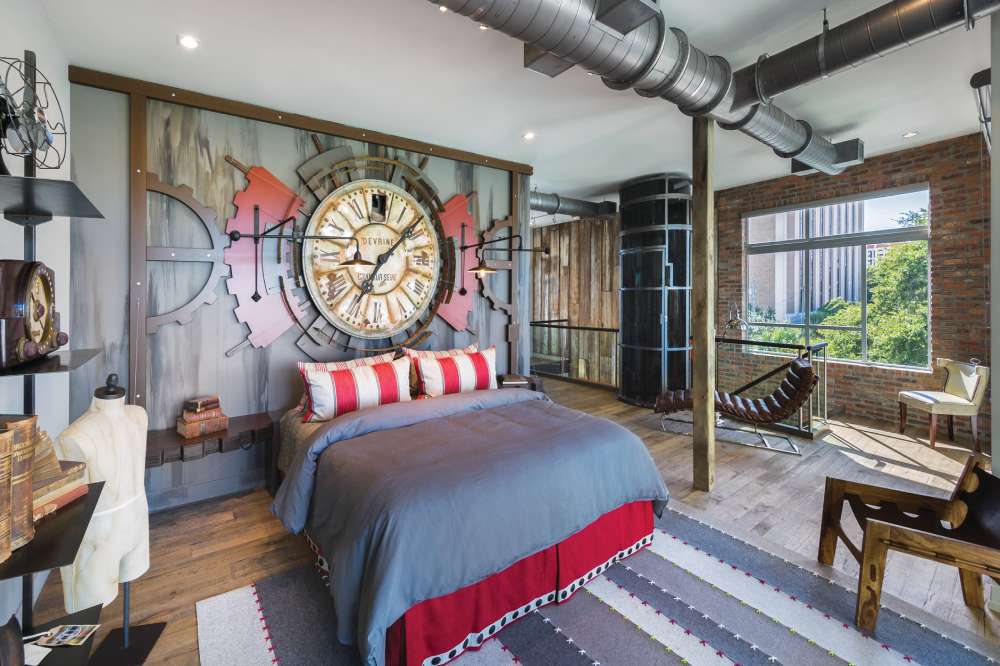
Image source: HOME & DESIGN MAGAZINE NAPLES
The Edison bulb is the single most recognizable element of industrial lighting. That warm amber glow from exposed filaments turns any room into something that feels like a Brooklyn loft.
Here’s the thing, though. LED filament bulbs have basically replaced incandescent Edisons. They look nearly identical but use a fraction of the energy and last years longer. The LED Edison bulb market hit roughly $1.86 billion in 2024, growing fast as more people switch over.
Don’t overdo it. Three Edison bulbs on a single fixture or one oversized pendant above the bed is plenty. When every single light source in the room is an Edison bulb, the effect goes from “cool” to “themed restaurant.”
Fixture Types That Work
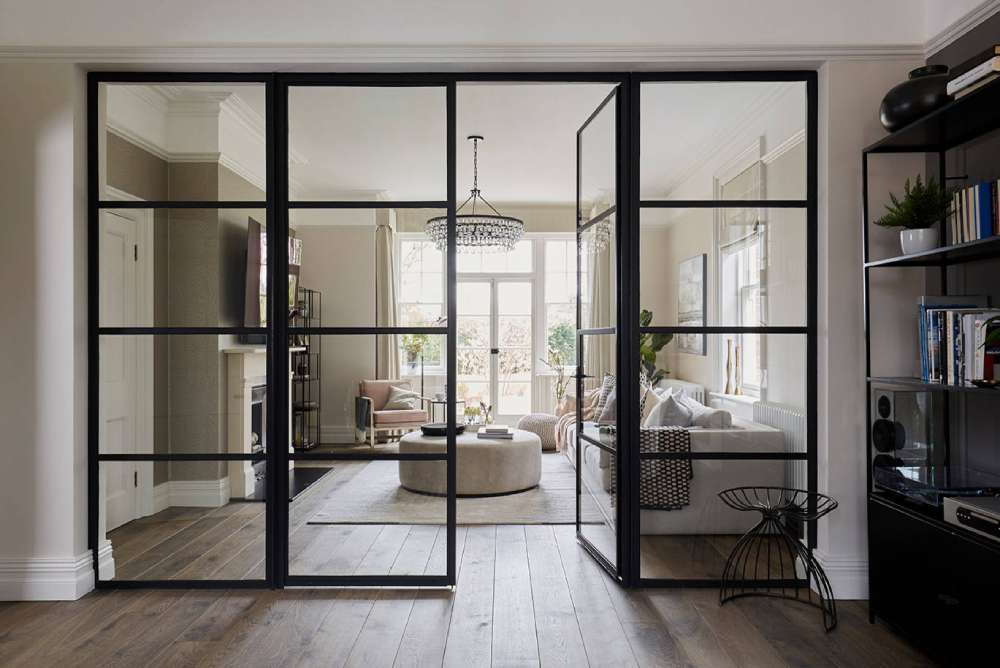
Image source: Cherie Lee Interiors
Cage lights: Metal wire cages around bare bulbs. Mount them as sconces on either side of the bed for a balanced look.
Gooseneck sconces: Adjustable arms that angle the task lighting right where you need it. Perfect for reading.
Pulley-system pendants: Adjustable height fixtures on a rope-and-pulley mechanism. They look great and serve a real function if you change bed configurations.
Tripod floor lamps: A tall metal tripod with an exposed bulb works well in a corner. It pulls the eye upward and makes the room feel bigger.
Schoolhouse Electric and Rejuvenation both carry excellent industrial lighting lines. For budget options, Etsy sellers out of Brooklyn and Portland produce solid cage lights and pendant fixtures at half the price of bigger brands.
What to Avoid
Skip recessed lighting. It kills the industrial vibe instantly by making the ceiling look too clean and modern.
Overhead fluorescent is an obvious no. And avoid anything with fabric shades. If it looks like it belongs in a hotel room at a Marriott, it doesn’t belong here.
Ambient lighting in an industrial bedroom should come from multiple warm sources at different heights, not from one bright overhead fixture. That layered approach is what creates the moody atmosphere the style is known for.
Color Palettes for Industrial Bedrooms
Color in industrial bedrooms does less. That’s by design. The materials are the visual interest. The paint just sets the stage.
According to Clever Real Estate, 42% of homeowners who painted their homes in 2024 chose white, 35% chose beige, and 32% chose light gray. Neutral dominance isn’t going anywhere, and for industrial bedrooms, it’s exactly what works.
The Neutral Base
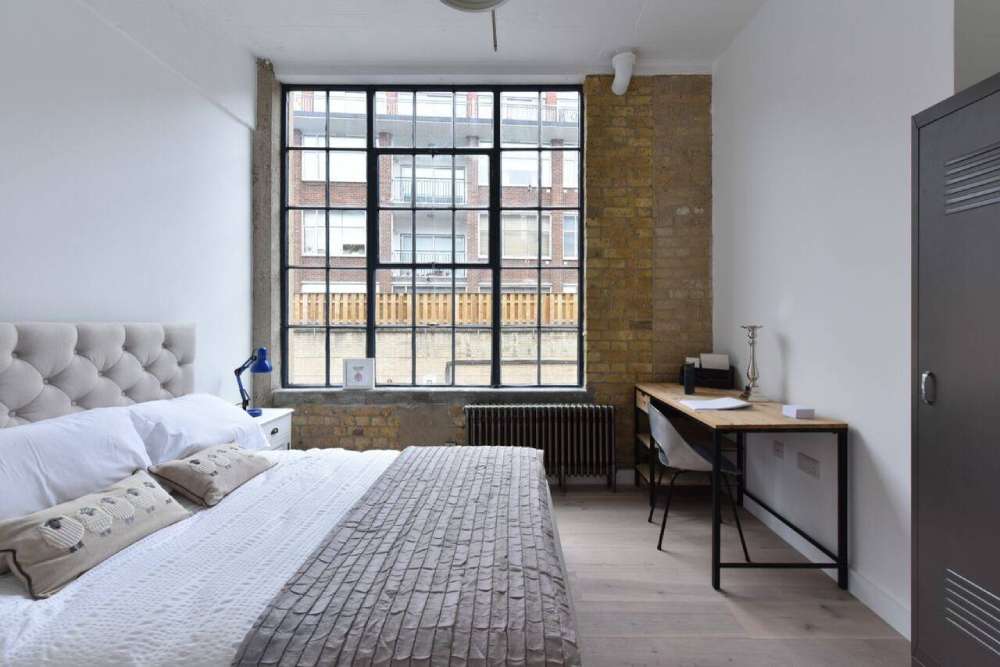
Image source: Petko Slavov Photography
Every industrial bedroom starts with a neutral foundation. The base palette pulls from the materials themselves.
- Charcoal and slate gray for walls with concrete references
- Warm white for ceilings and trim to keep things from getting cave-like
- Matte black as an accent, not a wall color (unless the room has massive windows)
Color in interior design affects how large or small a room feels. In industrial bedrooms, going too dark too fast is the number one mistake. Your mileage may vary based on natural light, but a charcoal wall needs at least one large window or the room will feel like a bunker.
Warm Accents
This is where you save the room from being depressing. Warm tones counterbalance all that gray and black metal.
Rust and cognac leather: These colors that go with burnt orange tones bring warmth without being loud. A leather chair, a rust-colored throw, a vintage tin sign.
Aged brass: Gold-adjacent without being glam. Brass drawer pulls, a brass desk lamp, or brass-toned accents on the nightstand add just enough warmth.
A Houzz study found that primary bedroom renovation spending dropped 21% in 2024, from $3,500 to $2,750 median. That means more people are working within smaller budgets, which makes accent-focused color changes (throws, pillows, small decor) a smarter play than repainting entire rooms.
Cool Accents
Navy blue is the strongest cool accent for industrial bedrooms. It reads as sophisticated without clashing with metal finishes.
Deep teal and steel blue work too, but use them sparingly. A teal accent on bedding or a single decorative object is enough. These cooler tones can make the room feel colder if they cover too much surface area.
Specific Paint Colors Worth Trying
| Paint Color | Brand | Best For |
|---|---|---|
| Wrought Iron | Benjamin Moore | Subtle Depth: Dark accent walls with soft, warm undertones. |
| Agreeable Gray | Sherwin-Williams | The Safe Base: Versatile full-room color; reads warm in most lighting. |
| Railings | Farrow & Ball | Soft Black: Ideal for trim, doors, and creating steel-adjacent surfaces. |
| Iron Ore | Sherwin-Williams | High Drama: Statement walls that pair perfectly with charcoal gray. |
If you want to check how these actually look against brick, grab a sample pot first. Paint colors that go with red brick are tricky because the warm undertones in brick can clash with cool-toned grays. Always test on the actual wall before committing.
Textiles and Bedding That Soften the Space
This is where most industrial bedrooms fail or succeed. All the steel and concrete in the world won’t make a room look good if the bedding looks like an afterthought. Textiles are the counterweight to every hard surface.
The 1stDibs Designer Trends Survey for 2025 showed that 33% of designers are leaning into maximalism and eclecticism, with texture layering ranked as a defining trend. Even in a stripped-back industrial room, textiles should feel intentional and abundant.
Bedding
Linen bedding in neutral tones is the default starting point. It’s breathable, it wrinkles in a way that looks lived-in (not messy), and it gets softer with every wash.
Color-wise, stick to oatmeal, warm white, slate, or charcoal. Bright white bedding in an industrial room can look sterile. A warm off-white sits better against dark metal frames.
Layer a chunky knit throw at the foot of the bed. Faux fur draped over one corner works too, though it’s easy to overdo. One textured throw pillow arrangement at the headboard finishes the look.
Area Rugs
Jute rugs are the most commonly paired rug type with industrial bedrooms. They’re affordable, they add natural texture, and they don’t compete with the rest of the room’s palette.
For something with more character, a distressed flatweave kilim or a faded Persian rug adds color and history. When you’re placing a rug under a queen bed, aim for an 8×10 minimum so it extends beyond the sides and foot of the bed. Anything smaller looks like a bath mat.
Curtains and Window Treatments
Some industrial bedrooms skip curtains entirely. Bare windows with visible hardware lean into the loft aesthetic, and if you have factory-style windows, covering them feels wrong.
But if you need privacy or light control, simple linen panels in a neutral tone work. Floor-length, hung high, no pattern. If your walls are gray, curtains that go with gray walls in warm white or charcoal keep the palette consistent without distracting from the harder materials.
Understanding window treatments in industrial spaces is about restraint. Anything ruffled, pleated, or overly decorative will clash immediately.
Throw Pillows
Pillows are the one spot where you can sneak in a bit of pattern without breaking the industrial feel. Geometric prints, simple stripes, or a single textured solid in a warm accent color.
Keep the throw pillow combinations limited. Two to four pillows total. Industrial style doesn’t do the “twelve decorative pillows stacked four deep” thing. That’s a different aesthetic entirely.
Wall Treatments and Art for Industrial Bedrooms
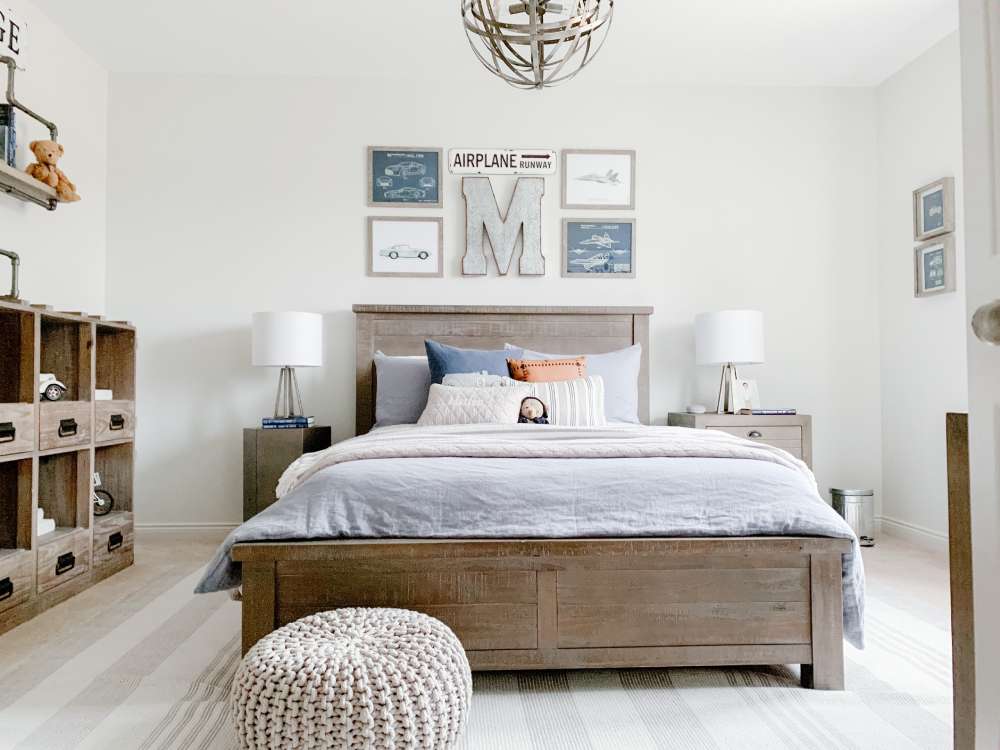
Walls in an industrial bedroom aren’t just background. They’re the main character. The treatment you choose sets the entire tone of the room, and in this style, the wall itself is often the art.
A Home Improvement Research Institute survey found that 52% of homeowners planning renovations in 2025 prefer textured walls over flat painted accent walls. That shift plays directly into industrial design, where texture is the whole point.
Exposed Brick and Concrete Effects
Real exposed brick is the gold standard. If your building has brick behind the plaster, uncovering it instantly gives the room its focal point.
For rentals and newer construction, faux brick veneer panels get close enough. Brands like GenStone and NextStone produce panels that look convincing from a few feet away. Peel-and-stick brick wallpaper is the cheapest option but reads flat under direct light.
Concrete-effect plaster and brick and stone wall treatments offer a middle ground. Limewash paint from Portola Paints or Roman Clay from Behr creates that raw, mottled surface without pouring actual concrete.
Art Selection and Display
Industrial bedroom art follows one rule: nothing cute, nothing fussy.
- Black and white architectural photography in oversized formats
- Vintage patent drawings and industrial blueprints in black metal frames
- Metal wall sculptures or welded art pieces
- Vintage factory signage or old typography prints
Gallery walls work here, but keep the frames consistent. All matte black, all the same width. Mixing ornate gold frames with industrial content creates visual confusion.
Avoiding the Pinterest Starter Pack
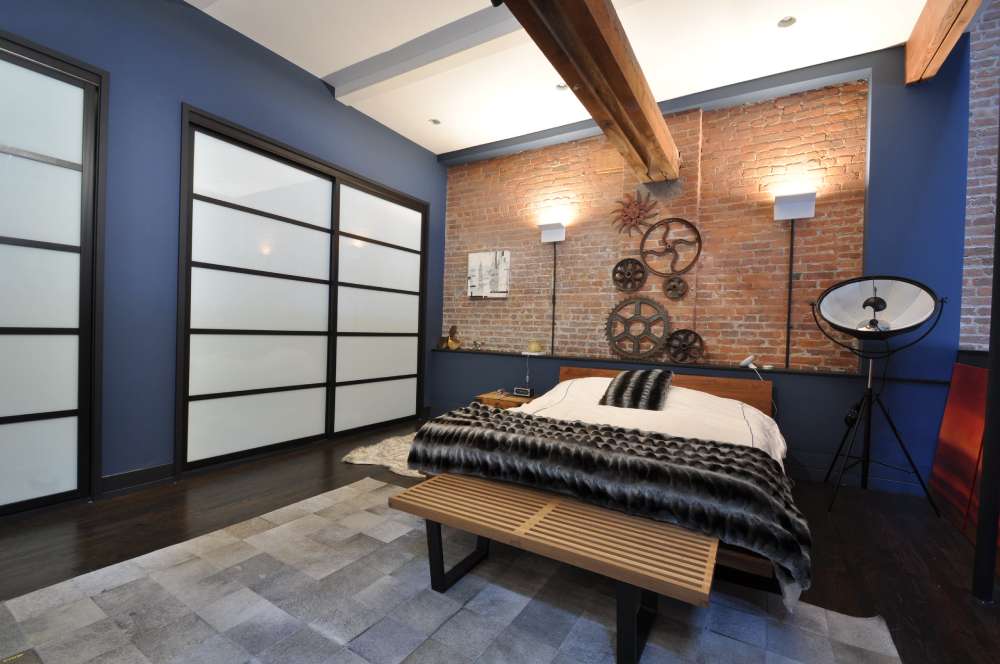
Gear-shaped wall clocks. “Live Laugh Loft” signs. Decorative pipes that go nowhere and do nothing. These items have been photographed and reshared so many times that they’ve become parodies of the style.
Better approach: find one unexpected piece. A vintage department store sign. An old factory gauge mounted on a wood block. A photograph you actually took yourself. The room should feel like someone lives there, not like someone searched “industrial wall decor” and clicked “add to cart” on the first page of results.
The best industrial spaces pull their details from real objects with real histories. That’s what separates curated from generic.
Small Bedroom Adaptations
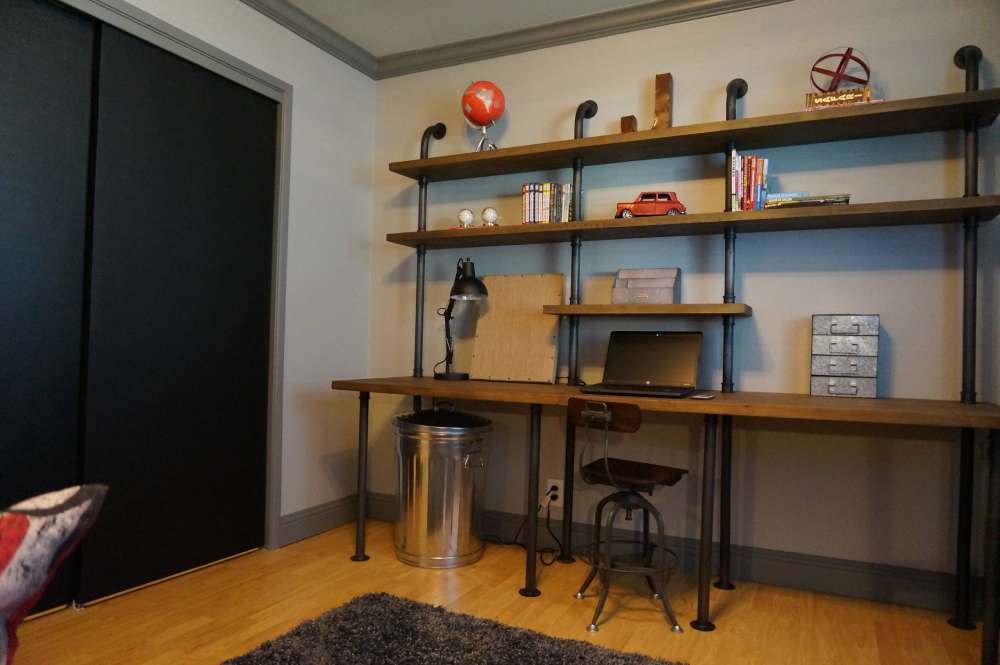
Image source: Alina Druga Interiors
The average U.S. bedroom measures about 132 square feet, according to multiple home design sources. Secondary bedrooms and apartment bedrooms are often closer to 100 to 120 square feet. That’s not a lot of room for a style that was born in 2,000-square-foot warehouse lofts.
But industrial decor can absolutely work in small rooms. You just have to edit harder.
Scale Down the Materials
Lighter metal finishes make a huge difference in tight spaces. A thin-profile black iron bed frame feels less heavy than a chunky pipe-frame design. Brushed steel reads softer than matte black in a room where the walls are close.
One strong industrial element is enough. Pick the bed frame or the wall treatment, but not both at full intensity. Getting scale and proportion right means adjusting the weight of each piece to match the room’s size.
Use Vertical Space
Wall-mounted pipe shelving instead of a bookcase. A tall, narrow metal locker instead of a wide dresser. Floating shelves on brackets above the bed instead of a chunky headboard.
Going vertical keeps floor area open, which is critical in rooms under 120 square feet. It also draws the eye upward and creates the illusion of taller ceilings, which smaller rooms desperately need.
Mirror and Light Tricks
| Technique | Effect | Best Placement |
|---|---|---|
| Large leaning mirror | Depth: Mimics a doorway, doubling the perceived floor and wall space. | Positioned against the wall directly opposite a natural light source. |
| Wall sconces | Utility: Frees up valuable nightstand surface area for books or essentials. | Mounted at shoulder height, flanking both sides of the headboard. |
| Light rug on dark floor | Brightness: Acts as a reflector to brighten the lower third of the room. | Centered under the bed, extending at least 18–24 inches on each side. |
A mirror with a black metal frame keeps the industrial look while reflecting light back into the space. Don’t skip this. In small bedrooms especially, mirrors do more for perceived size than any furniture rearrangement.
Rental-Friendly Options
Peel-and-stick brick wallpaper for an accent wall. Freestanding pipe clothing racks instead of closet systems. Contact paper with a concrete finish on nightstand surfaces.
None of these damage walls or violate lease terms. For renters working with small apartment spaces, temporary solutions are the only way to commit to a style without losing a security deposit. The key is picking two or three removable elements and going all in, rather than half-committing to ten things.
Industrial Bedroom Decor on a Budget
A 2024 Opendoor report found that U.S. consumers spend an average of $1,598 per year on home decor. That’s not a lot. And industrial style can eat through a budget fast if you’re buying new from high-end retailers.
Good news: this is one of the most budget-friendly aesthetics out there if you know where to look. The whole style is built on repurposed materials and utility objects. Spending less can actually make the room look more authentic.
DIY Projects That Actually Work
Pipe shelving: A set of iron pipe fittings, flanges, and reclaimed wood planks costs $40 to $80 total. Takes about two hours to build and mount. Looks like a $200 store-bought unit.
Spray-painted furniture: Matte black spray paint transforms any thrift store nightstand or dresser into something that fits the style. Two cans of Rust-Oleum for under $10. Let it cure for 48 hours before use.
The U.S. Census Bureau’s 2023 American Housing Survey showed homeowners completed over 50 million DIY projects that year. And CivicScience data from 2024 found that nearly 6 in 10 DIYers intend to spend under $5,000. Budget projects are the norm, not the exception.
Where to Shop Cheap
IKEA hacks: The HYLLIS shelf ($14.99) in raw galvanized steel looks industrial out of the box. The TARVA nightstand stained dark with iron pipe legs swapped in runs under $60 total.
Amazon and Wayfair: Search “industrial bedroom furniture” and sort by price. The sub-$200 metal bed frames from brands like Zinus and VECELO are surprisingly solid.
Thrift stores, estate sales, and Facebook Marketplace: This is where the real finds happen. Old metal filing cabinets, rolling carts, vintage lamps. Look for pieces with genuine wear. That patina can’t be faked (well, it can, but it costs more).
Budget Breakdown for a Full Room
| Item | Budget Option | Mid-Range Option |
|---|---|---|
| Metal bed frame | $100 – $200 (Zinus, Amazon) | $400 – $800 (West Elm, CB2) |
| Bedding set | $60 – $100 (Target, IKEA) | $150 – $300 (Parachute, Brooklinen) |
| Lighting fixtures | $30 – $80 (Amazon, Etsy) | $150 – $400 (Schoolhouse, Rejuvenation) |
| Wall treatment | $20 – $50 (peel-and-stick panels) | $100 – $300 (faux brick veneer) |
| Shelving | $40 – $80 (DIY pipe shelf) | $150 – $250 (pre-made industrial) |
A full industrial bedroom makeover on a tight budget can land between $250 and $510. That’s well within the range that most people are spending on bedroom updates. Per Houzz data, median primary bedroom renovation spend was $2,750 in 2024, so even the mid-range column here leaves room to spare.
Common Mistakes in Industrial Bedroom Design
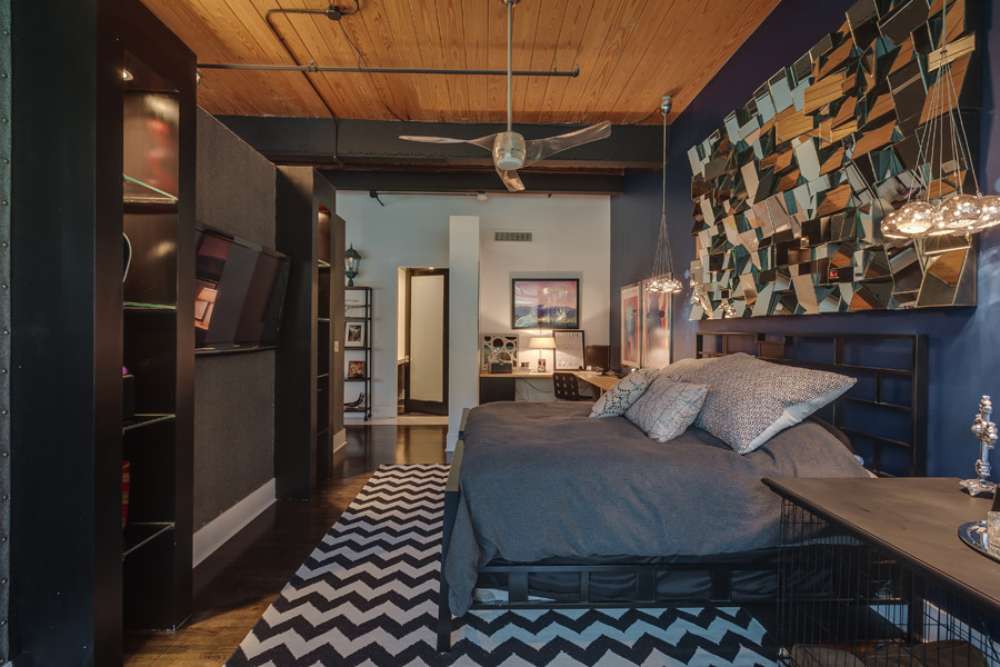
Image source: Atreum Construction Services
The style looks simple but it’s easy to get wrong. Most mistakes come from going too far in one direction without balancing the room out. And once the room tips, it’s hard to pull back without starting over.
SwiftBeacon research found that industrial is the most searched style trend in 24% of U.S. states. Popularity means more people are attempting it, and more people are making the same handful of errors.
The Dungeon Effect
Going too dark with no warm elements. Charcoal walls, black metal bed, dark concrete floor, gray bedding. Everything absorbs light and nothing reflects it.
The fix: Add at least two warm materials. A cognac leather accent, a reclaimed wood nightstand, or a warm brown element somewhere in the room. Even a single brass lamp changes the temperature of the space.
Over-Relying on One Material
All metal, all the time. When every surface is steel or iron, the room feels like the inside of a shipping container.
Industrial bedrooms need at least three materials working together. Metal plus wood plus textile is the minimum. Four is better: add brick, concrete, or leather to the mix. Understanding how contrast works in design helps you balance those competing surfaces.
Using Novelty Industrial Items
Gear-shaped clocks. Decorative pipes bolted to the wall that connect to nothing. “Steampunk” accessories that belong in a costume shop, not a bedroom.
Real industrial style comes from actual utility objects, not things made to look industrial. A vintage factory light fixture has more credibility than a brand-new gear clock from Amazon. If the item only exists to reference “industrial” without serving any function, skip it.
Ignoring Comfort
A bedroom is for sleeping. Full stop.
If the mattress is on a metal platform with no give, the bedding is stiff, and the floor is uncovered concrete, you’ve built a museum display, not a bedroom. The aesthetic has to serve the function. Soft linen bedding, a thick area rug, and a few pillows in warm tones make the difference between a room you photograph and a room you actually enjoy sleeping in.
Mixing Too Many Styles
Industrial plus bohemian plus mid-century modern plus coastal. Every style has a different material palette, and layering all of them creates visual noise.
Pick industrial as the base. Add one secondary influence, max. Scandinavian pairs well (clean lines, natural wood, neutral tones). Minimalist works too. But trying to blend three or more interior design styles in a single bedroom almost always ends in confusion.
Achieving unity in the room’s design means committing to a clear direction. Let the industrial elements lead. Everything else is just seasoning.
FAQ on Industrial Bedroom Decor
What defines industrial bedroom decor?
Industrial bedroom decor is a style rooted in converted warehouses and factory lofts. It features exposed brick, metal bed frames, concrete surfaces, reclaimed wood, and visible ductwork. The look balances raw materials with soft textiles for livability.
Is industrial style good for small bedrooms?
Yes, but you need to edit. Use thin-profile metal frames, lighter finishes, and wall-mounted pipe shelving to save floor space. Pick one strong industrial element instead of layering everything. Mirrors and warm lighting help open the room up.
What colors work best in an industrial bedroom?
Neutral tones like charcoal, slate gray, and warm white form the base. Add warmth with rust, cognac leather, and aged brass accents. Avoid going all-gray. A few warm wood tones prevent the room from feeling like a bunker.
How do I make an industrial bedroom feel cozy?
Textiles do the heavy lifting. Layer linen bedding, chunky knit throws, and a thick area rug over hard surfaces. Warm-toned accent lighting from Edison bulbs or brass fixtures softens the mood considerably.
What type of bed frame fits industrial style?
A black metal platform bed is the most common choice. Wrought iron frames and pipe-frame designs also work. Reclaimed wood headboards mounted on a steel frame bridge the gap between raw industrial and warmer rustic tones.
Can I achieve industrial decor on a budget?
Absolutely. DIY pipe shelving costs under $80. Matte black spray paint transforms thrift store furniture. IKEA carries raw metal shelving that fits the look out of the box. Salvage yards and estate sales are the best sources for authentic pieces.
What lighting works in an industrial bedroom?
Edison bulb pendants, cage light sconces, gooseneck wall lamps, and metal tripod floor lamps. Avoid recessed lighting and fabric shades. Layer multiple warm light sources at different heights instead of relying on a single overhead fixture.
What wall treatments suit industrial bedrooms?
Exposed brick is the classic choice, either real or faux panels. Concrete-effect plaster and limewash paint from brands like Farrow & Ball also work well. Painted brick in white or gray offers a lighter variation of the look.
How is industrial different from rustic decor?
Rustic decor leans on natural warmth, barn wood, and farmhouse charm. Industrial pulls from urban factories and loft spaces, favoring steel, concrete, and exposed infrastructure. Rustic industrial blends both, using reclaimed wood with metal accents.
What are common mistakes in industrial bedroom design?
Going too dark without warm elements. Over-relying on metal. Using novelty items like gear clocks or fake pipes. Mixing too many competing styles. And the biggest one: prioritizing aesthetics over comfort in a room meant for sleeping.
Conclusion
Industrial bedroom decor works because it’s built on real materials, not trends. Steel, reclaimed wood, exposed brick, and concrete carry visual weight on their own. They don’t need much help.
The style rewards restraint. Pick a strong metal bed frame, choose a neutral color palette with warm accents, layer your textiles generously, and let the raw surfaces speak for themselves.
Budget doesn’t have to be a barrier. Thrift stores, DIY pipe shelving, and a few cans of matte black spray paint can transform a generic bedroom into something with actual character.
Get the balance between rough and comfortable right, and you’ll have a room that looks intentional, feels livable, and doesn’t go out of style when the next Pinterest trend cycles through.

- Paint Colors That Go with Oak Floors - August 22, 2026
- Paint Colors That Go with Gray Floors - August 20, 2026
- What Color Bedding Goes with Dark Wood Furniture - August 18, 2026


