
Summarize this article with:

Most bedrooms fail not because they lack expensive things, but because nothing in the room talks to anything else. Luxury bedroom decor fixes that. It’s the difference between a room full of nice furniture and a room that actually feels considered.

This guide covers the specific materials, color choices, lighting setups, and furniture decisions that separate a high-end bedroom from one that’s just trying to look like one. Textiles, wall treatments, rug placement, window styling, and the small details that tie it all together.

No fluff. Just the practical breakdown of what works, what doesn’t, and where your money actually makes a visible difference.

What Is Luxury Bedroom Decor

Luxury bedroom decor is a design approach that pairs high-quality materials, intentional furniture selection, and layered sensory details to create a bedroom that feels both refined and restful. It is not defined by price tags alone.

A $4,000 mass-produced bedroom set can look generic. A $900 vintage walnut dresser paired with Belgian linen bedding and a single piece of art can look like it belongs in Architectural Digest.

The global luxury bedding market was valued at $3.17 billion in 2024, according to Fortune Business Insights, and is expected to reach $4.32 billion by 2032. That growth reflects something specific: people are willing to pay more for their sleep space than almost any other room in the house (except kitchens and bathrooms).

But luxury is misunderstood constantly. Most people equate it with buying expensive things and putting them together. The actual distinction sits between luxury and “premium.” Premium means high-end purchasing. Luxury means curation and restraint. It means knowing what to leave out.

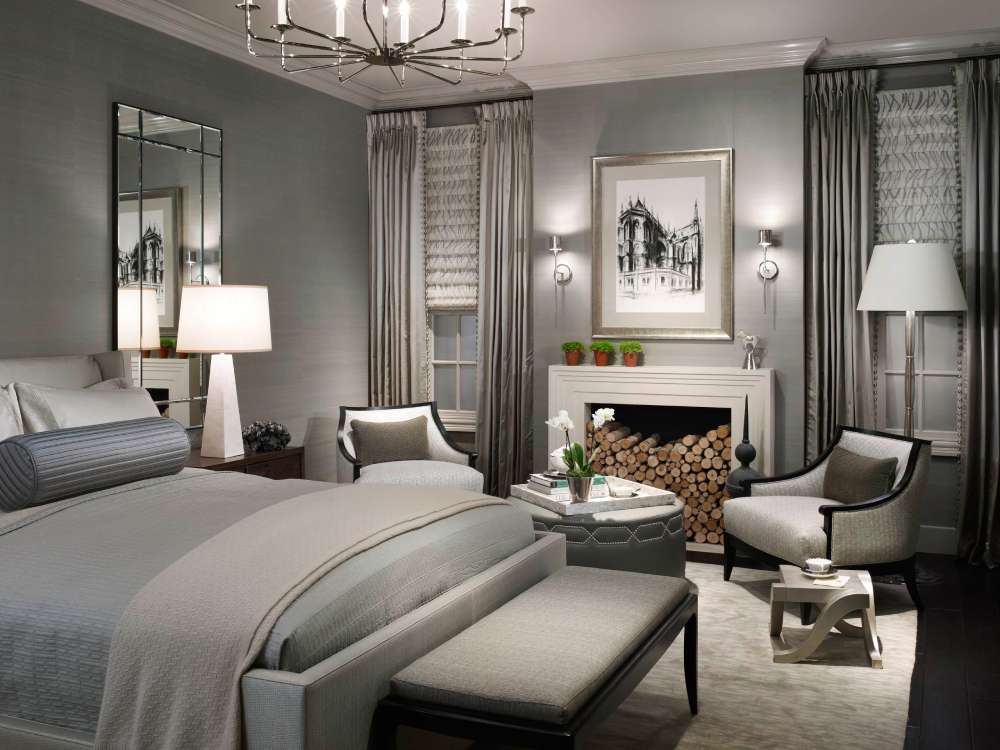
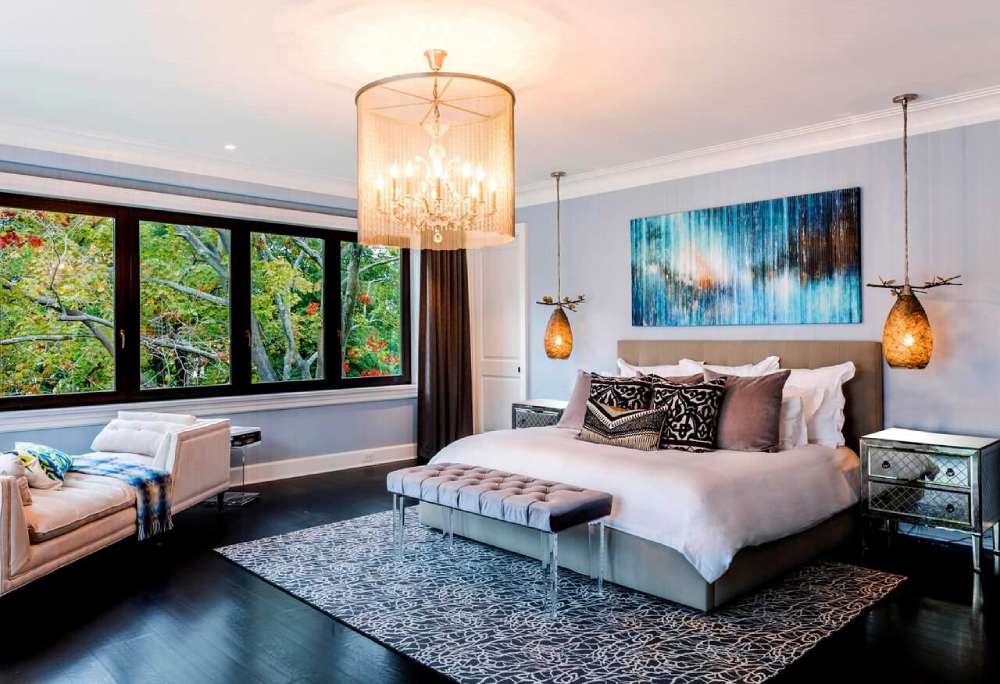
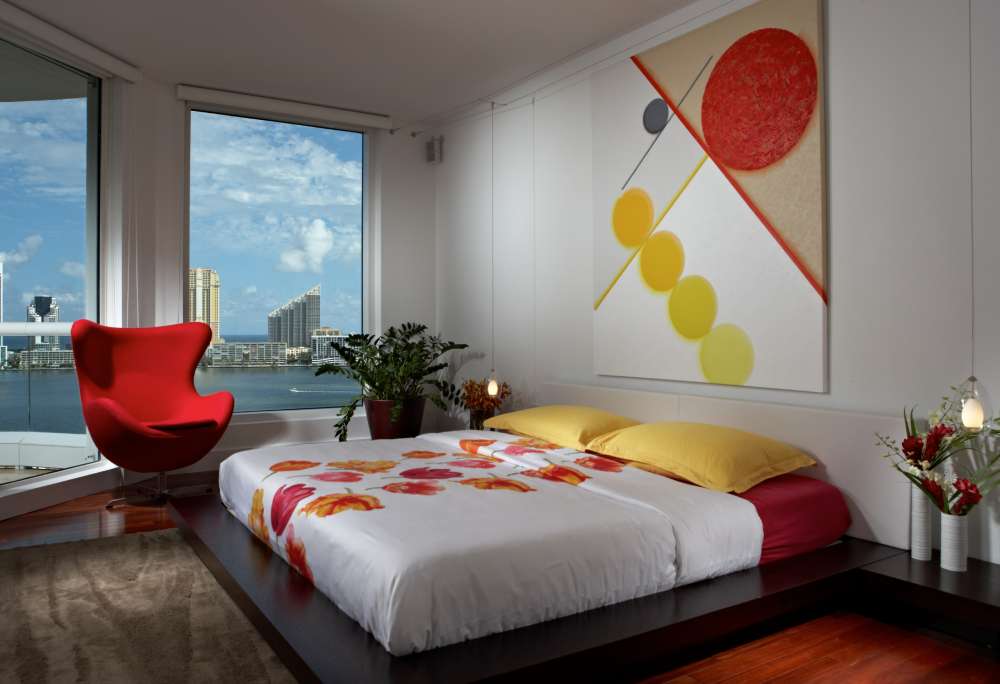
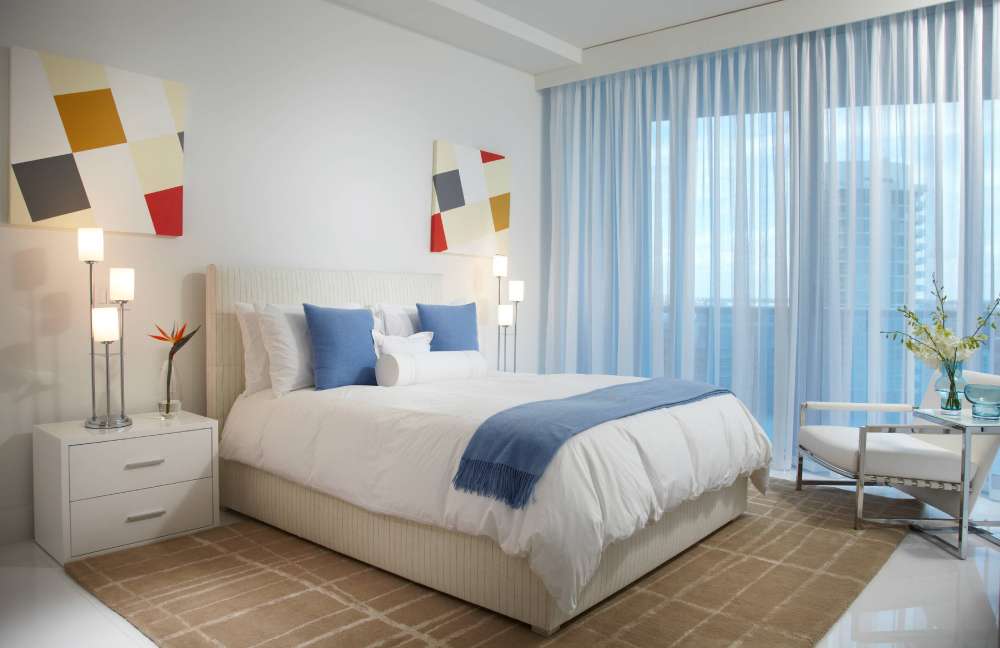
Boutique hotels figured this out decades ago. Walk into any Four Seasons or Aman Resorts property and count the items in the room. There aren’t many. What’s there is selected with purpose: clean lines, warm light, soft bedding, and negative space doing most of the visual work.

The same thinking applies to a luxury interior design approach at home. It starts with scale and proportion, moves into material quality, and ends with editing. The room should feel finished, not filled.

How Luxury Differs from Expensive in Bedroom Design


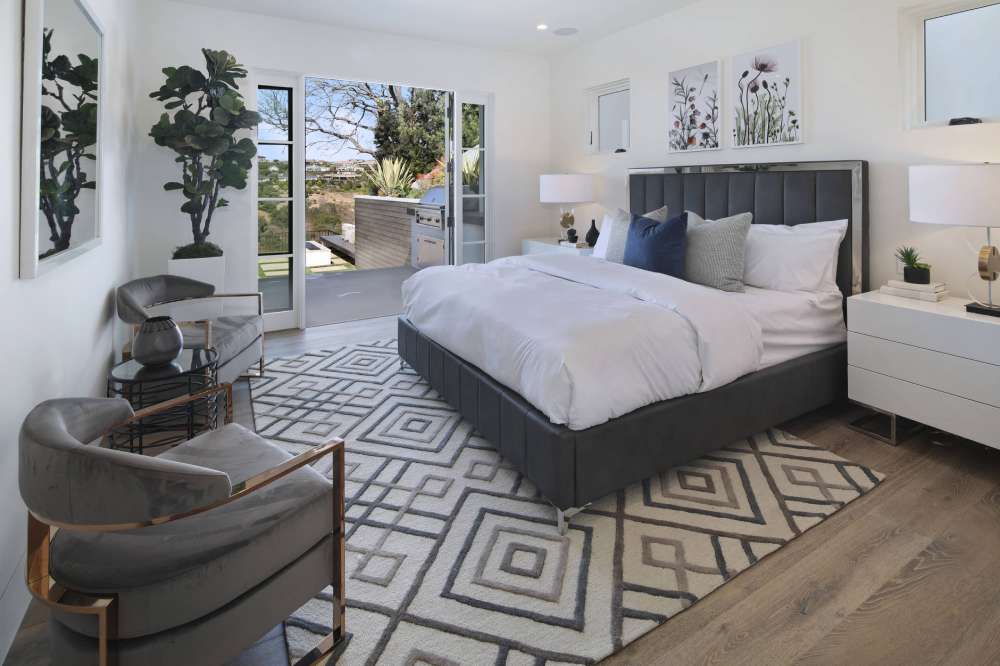
Image source: J Design Group – Interior Designers Miami – Modern

An expensive bedroom has a $6,000 mattress, a $2,500 headboard, and a $1,200 chandelier. A luxury bedroom has those things working together so well you barely notice any single piece.

That’s the difference. Expensive is a spending category. Luxury is a design outcome.

Factor Expensive Bedroom Luxury Bedroom
Focus Individual item cost Cohesion between all elements
Visual result Items compete for attention Room feels unified and calm
Editing More items, more cost Fewer items, better selected
Guiding principle Brand names and price Material quality and placement

The 2025 Houzz & Home Study found that median spend on primary bedroom renovations actually dropped 21% in 2024, from $3,500 to $2,750. People are spending less but spending smarter. That tracks with a luxury mindset: fewer upgrades, better choices.

The Role of Restraint and Editing


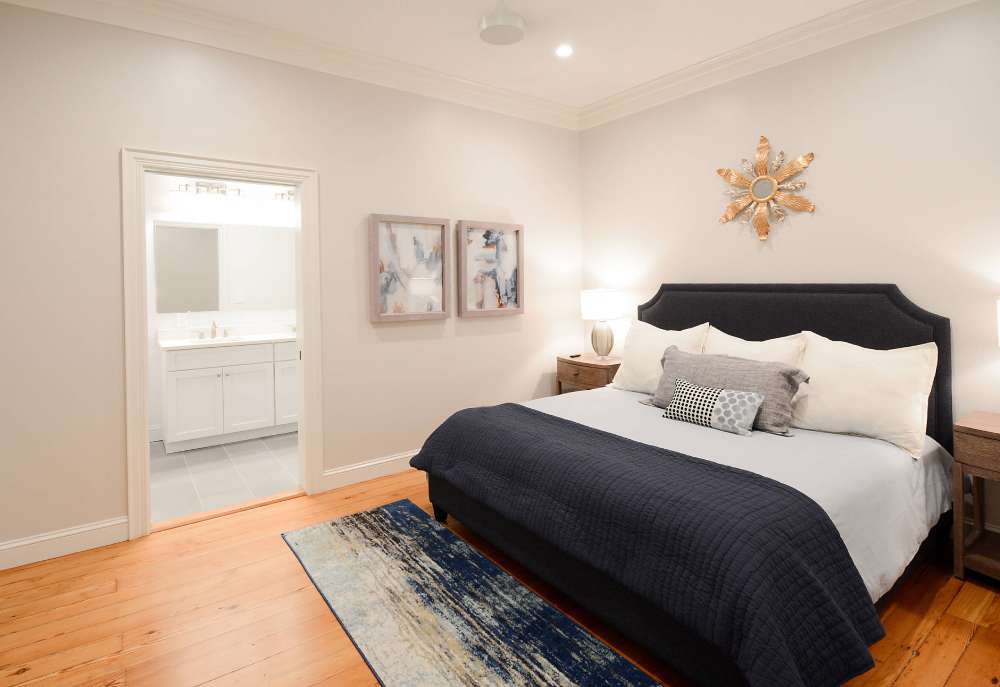
Image source: EDYTA & CO. INTERIOR DESIGN

Restraint is the hardest part. Most people add. Designers subtract.

A nightstand with a lamp, a small tray, and one book looks more expensive than a nightstand crammed with a diffuser, three frames, a candle, a phone charger, and yesterday’s water glass. The details in interior design always reveal themselves through what’s removed as much as what’s placed.

And negative space does real work here. A bed with 18 inches of clearance on each side feels more considered than one shoved into a corner. The gap between a dresser and the wall, the empty stretch of floor between the bed and the window, those contribute to the feeling of luxury as much as any fabric choice.

Took me a while to accept this honestly. The instinct is always to fill the space. But the best bedrooms have air in them. They let the eye rest.

Fabrics and Textiles That Define a Luxury Bedroom

Textiles are where you feel luxury before you see it. The second your hand touches the duvet or your feet hit the rug, the material quality either confirms or breaks the entire room.

Around 62% of luxury bedding manufacturers have adopted advanced fabric technologies, according to Reanin Research, including temperature-regulating textiles and breathable weave innovations. The industry is moving fast, and the gap between mid-range and high-end bedding is getting wider.

Bedding Layers and How to Stack Them


Image source: Charleston Luxury Interiors

Here’s the thing about thread count: it barely matters.

Brands stamp “1,000 thread count” on packaging because it sounds impressive. But manufacturers often inflate that number by twisting multiple thin threads together and counting each one separately. A 300 to 500 thread count sheet in single-ply, long-staple cotton will outperform a 1,000 count sheet made from cheaper multi-ply fibers almost every time.

What actually matters:

  • Fiber quality: Egyptian cotton, Supima cotton, and Belgian linen are the top choices. Long-staple fibers produce smoother, stronger threads that soften with washing instead of pilling
  • Weave type: Percale gives a crisp, cool feel (think hotel sheets). Sateen has a silky drape with a slight sheen. Linen has natural texture and breathes better than both
  • Layer order: Fitted sheet, flat sheet, duvet or coverlet, then decorative layers. Every luxury bed has at least three functional layers before the throw pillows go on

Sferra, Matouk, and Frette built their reputations on getting these basics right. Parachute Home and Cultiver have done the same at lower price points.

Accent Textiles: Curtains, Throws, and Upholstery


Image source: J Design Group – Interior Designers Miami – Modern

Bedding gets the most attention. But texture in design comes from the interplay between all the soft surfaces in the room.

Silk adds formality, especially in pillow covers or curtain panels. Velvet brings depth to headboards and accent chairs. Cashmere throws draped at the foot of the bed signal warmth without visual clutter.

The trick is mixing matte and sheen finishes. A linen duvet against a sateen sheet. A velvet bench at the foot of a bed dressed in crisp percale cotton. These contrasts create visual richness without adding more items to the room. Ralph Lauren Home and B&B Italia build entire collections around this kind of contrast.

Color Palettes for Luxury Bedrooms

Color sets the emotional tone of a bedroom before anything else registers. The wall color is the first thing the eye processes when you walk in, and it affects how every piece of furniture, fabric, and accessory reads in the space.

Credence Research valued the global luxury home decor market at $178 billion in 2024, with home textiles and floor coverings accounting for about 59% of total revenue. A significant share of that spending is driven by color and material choices in bedrooms specifically.

Neutral Palettes and Why They Dominate


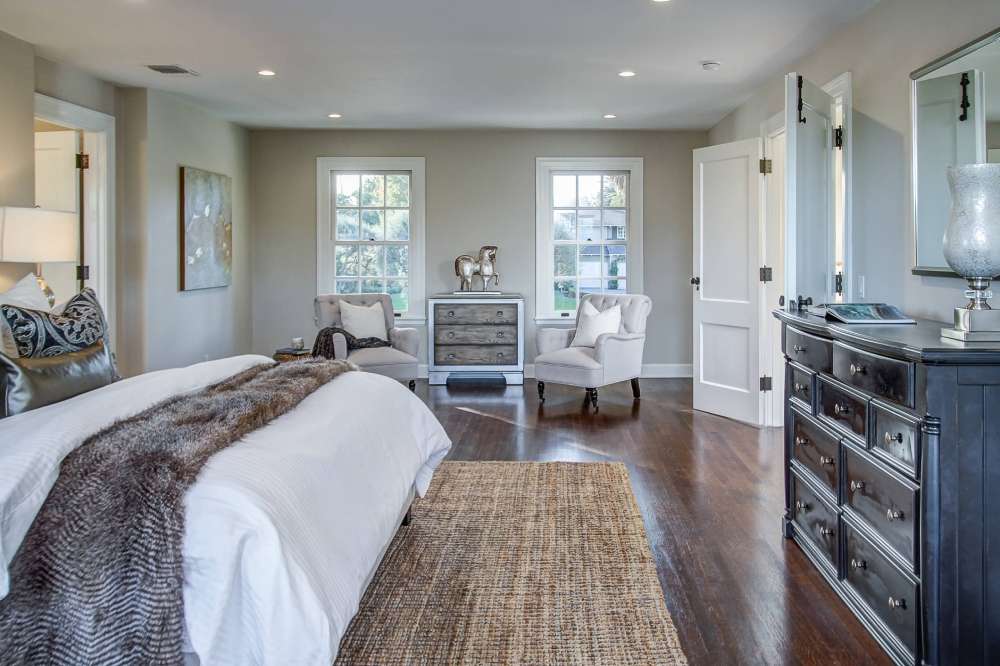
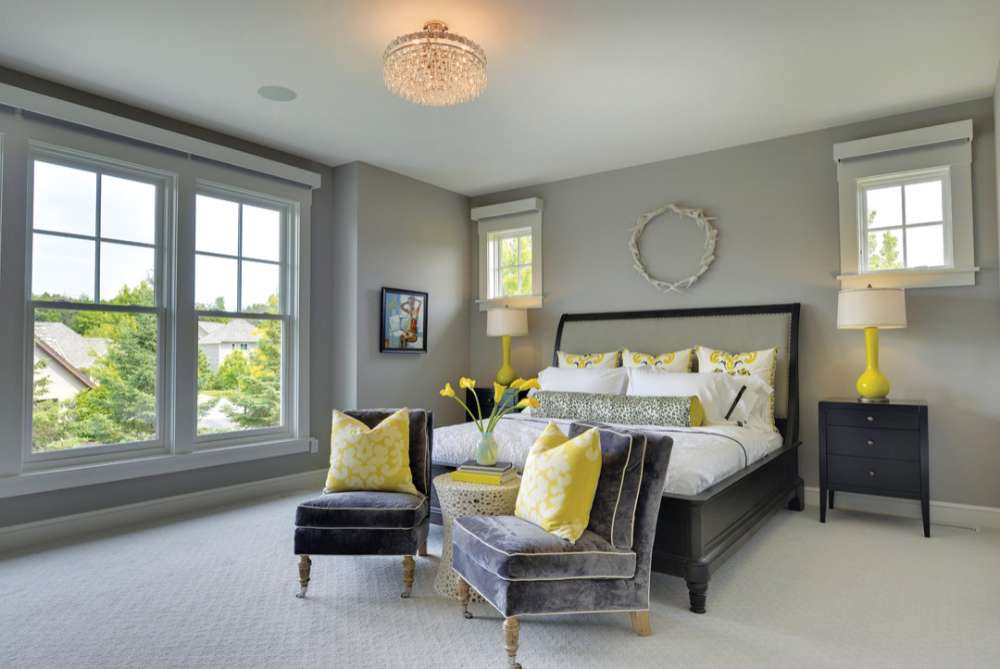
Image source: Susan Pickering Real Estate Photography

Warm whites, taupe, greige, and soft charcoal are not boring. They’re strategic.

Neutral palettes work in luxury bedrooms because they shift attention from the walls to the materials. When the wall color is quiet, the linen texture, the walnut grain on the nightstand, and the wool of the area rug all become more visible. That’s the whole point.

Benjamin Moore and Farrow & Ball make some of the most reliable neutrals for this purpose. Portola Paints offers a limewash finish that adds movement and depth to a single color, something flat paint simply cannot do.

The 60-30-10 rule still applies here. 60% dominant color (walls, large furniture), 30% secondary color (bedding, curtains, rug), and 10% accent (pillows, objects, art). But in a luxury bedroom, those three colors might all be variations of the same family. Beige tones in three different saturations, for example. Subtle, but it works.

Moody and Saturated Palettes


Image source: SRM Architecture and Interiors

Not every luxury bedroom needs to be neutral. Deep navy, forest green, and plum can feel just as high-end when applied correctly.

The difference is commitment. A navy accent wall looks indecisive. A fully navy room with ivory bedding and brass hardware looks intentional. If you go dark, go all the way. Half measures always read as unfinished.

Paint finish matters more than most people realize, too. Matte absorbs light and hides imperfections but can feel flat in large rooms. Eggshell adds a subtle warmth. Satin reflects light gently and works well in smaller bedrooms where you want the walls to push outward a bit. According to color theory fundamentals, darker colors absorb more light and visually shrink a room, so the finish you pick can either lean into that effect or soften it.

Furniture Pieces That Anchor a Luxury Bedroom

Furniture does the structural work. A bedroom with high-quality sheets on a flimsy bed frame still feels off. The furniture is what gives the room its architecture, its weight, its sense of permanence.

The 2025 Houzz & Home Study found that 41% of renovating homeowners purchased large furniture in 2024, up four percentage points from 2023. Bedroom furniture is where most of that investment lands after kitchens and living rooms.

Choosing a Bed Frame Style


Image source: Robeson Design

The bed frame is the single most important piece in the room. Everything else arranges itself around it.

Upholstered headboards are the most popular choice in luxury bedrooms right now, and for good reason. They add softness, texture, and visual height. A tall headboard (60 inches or more) makes a standard ceiling feel taller and gives the bed real presence as a focal point.

Four-poster beds work best in rooms with high ceilings. Without at least nine feet overhead, the posts can feel cramped. Platform frames suit lower-profile, contemporary rooms. They’re cleaner and work well in modern design settings where horizontal lines dominate.

Restoration Hardware built most of its bedroom business around upholstered frames in oversized proportions. Minotti does the same at a higher price point with Italian craftsmanship. The approach is the same: let the bed be the biggest visual statement in the room.

Seating Options Beyond the Bed


Image source: Ancient Surfaces

A bench at the foot of the bed is the easiest furniture upgrade in any bedroom. It adds function (somewhere to sit while putting on shoes), visual weight, and a second layer of texture below the bed line.

If the room has space, a reading chair in the corner creates a second zone. That’s key in larger bedrooms. Without a second functional area, master suites can feel like oversized hotel rooms with dead floor space. A chair, a side table, and a floor lamp turn a corner into a destination.

A chaise lounge is the classic option here, but honestly, most bedrooms don’t have the square footage to make one look right. You need at least 14 feet of open wall to place a chaise without crowding the room. For most people, a compact armchair from West Elm or Ethan Allen does the job better.

Lighting Design in a Luxury Bedroom

Lighting is the element most people get wrong. They install a single overhead fixture, add a bedside lamp, and call it done. That approach flattens the room and kills any sense of atmosphere.

Harvard researchers found that people exposed to warm light in the evening fell asleep 19 minutes faster than those under cool light. The Journal of Clinical Endocrinology & Metabolism confirmed that evening exposure to blue-enriched light reduces melatonin production by more than 50%. Ambient lighting decisions in the bedroom are not just about aesthetics. They affect sleep quality directly.

Three-Layer Lighting


Image source: DiMare Design

Every luxury bedroom uses three types of light, and they need to work independently from each other.

Ambient light provides the base layer. Cove lighting, recessed fixtures, or a statement pendant over the bed all work. The fixture choice depends on ceiling height and style, but the function is the same: even, diffused light that fills the room without harsh shadows.

Task lighting sits at the bedside. Wall-mounted sconces or table lamps with fabric shades. Each side of the bed should have its own switch. This is non-negotiable in a shared bedroom.

Accent lighting adds depth. Picture lights above art, LED strips behind headboards, or candles on the dresser. This layer is what separates a bedroom that looks “fine” from one that looks designed.

Color Temperature and Dimmer Controls


Image source: Karla Trincanello, CID, Interior Decisions, Inc.

Warm white bulbs in the 2700K to 3000K range are the standard for luxury bedrooms. This range mimics sunset light and supports natural melatonin production. Anything above 4000K feels clinical in a bedroom.

Dimmer switches on every circuit. Every single one. If your electrician says it’s unnecessary, get a different electrician. The ability to take a room from full brightness at 7am to a low glow at 10pm transforms how the space functions.

Visual Comfort and Kelly Wearstler produce some of the most recognizable luxury lighting fixtures. For a more accessible range, Cedar & Moss and Apparatus offer sculptural designs that hold up well against high-end competitors. The fixture itself matters less than getting the temperature and layering right, though. A $40 warm-white bulb behind a linen shade can outperform a $400 cool-white pendant.

Wall Treatments and Decorative Surfaces

Walls account for the largest surface area in any bedroom. If you leave them as flat white drywall with a coat of builder-grade paint, you’re leaving most of your design potential untouched. The texture, depth, and visual interest that wall treatments add can shift a bedroom from basic to high-end faster than almost any other change.

The Knight Frank Wealth Report noted that ultra-high-net-worth individuals spent an average of $1.2 million on interior design and decor in 2023. A significant portion of that goes to custom wall finishes and commissioned artwork. Obviously that’s an extreme, but the principle trickles down: walls set the tone.

Wallpaper and Textured Finishes


Image source: Dayna Katlin Interiors

Grasscloth wallpaper is one of the fastest ways to add texture to a luxury bedroom. It has natural variation in color and weave that makes every panel slightly different. Flat paint can’t replicate that depth.

de Gournay and Fromental produce hand-painted wallpaper panels that function more like art than wall covering. Cole & Son sits in a more accessible range and offers patterns that work well in both traditional and transitional bedrooms.

On the structural side:

  • Wainscoting adds formality and vertical line to a room, especially effective behind the bed
  • Fluted wood panels bring a contemporary, tactile quality that photographs well and adds dimension under side lighting
  • Limewash and Venetian plaster create depth with subtle color shifts across the wall surface, avoiding the flatness of standard paint

An accent wall behind the headboard is the most common placement for these treatments. But it doesn’t always have to be the bed wall. A textured wall flanking a reading nook or dressing area can work equally well if it draws the eye toward a secondary focal point.

Art and Mirror Placement


Image source: Jeri Koegel Photography

One large piece of art reads as more expensive than a gallery wall of twelve small prints. That’s not always true in dollar terms, but it’s consistently true in visual terms. A single oversized canvas or framed photograph centered above the headboard (or above a console on an opposite wall) anchors the room without clutter.

Sizing matters more than subject. The art should be roughly two-thirds the width of the furniture beneath it. Anything smaller looks like an afterthought.

Mirrors do double duty. An oversized floor mirror leaning against a wall adds light and makes the room feel bigger. Antiqued glass versions soften reflections and avoid the gym-mirror look that comes with bright, frameless panels. Place mirrors across from windows when possible. They’ll pull in natural light and make the room feel like it has more space than it actually does.

Rugs, Flooring, and Ground-Level Comfort

A bedroom without a rug under the bed feels unfinished. Your feet hit cold hardwood or bare tile every morning, and no amount of beautiful bedding or wall art fixes that disconnect. The floor is the largest horizontal surface in the room, and it sets the tactile tone for the entire space.

Grand View Research valued the global area rugs market at $11.77 billion in 2024, growing at a 6.6% CAGR through 2030. Wool held the largest material share at over 30%, and residential use accounted for roughly 60% of all purchases. People are putting real money into what goes under their feet.

Rug Sizing Rules for a Bedroom


Image source: Michael Abrams Interiors

The rug should extend at least 18 to 24 inches beyond the bed on each side and at the foot. That gives you something soft to step onto when you get out of bed, which is the whole point.

For a queen bed, that means an 8×10 rug minimum. If you’re working with a rug under a queen bed, anything smaller than 8×10 will look like a bath mat that wandered into the wrong room. King beds need a 9×12 or larger.

A common shortcut: place the rug two-thirds under the bed, leaving the top third exposed at the foot. This works when budget limits size options. But full surround coverage always looks more intentional.

Material Choices and Layering


Image source: Carl M. Hansen Companies

Hand-knotted wool is the standard for luxury bedrooms. It’s durable, naturally stain-resistant, and develops a patina over years of use that makes it look better, not worse. Vintage Persian rugs fall into this category and bring character that new rugs simply cannot replicate.

Rug Material Feel Best For Price Range
Hand-knotted wool Dense, warm Under-bed placement $$$
Silk-blend Soft, luminous Low-traffic areas $$$$
Vintage Persian Textured, lived-in Adding character $$-$$$$
Cowhide Flat, smooth Layering accent $$

Layering a smaller accent rug on top of a larger neutral base adds depth without overcomplicating the room. Loloi and Rugs USA offer solid options at accessible price points. ABC Carpet & Home and Restoration Hardware sit at the higher end.

Hardwood Flooring That Pairs Well

White oak and walnut are the two most common hardwood choices in luxury bedroom settings. White oak has a cooler, more contemporary grain. Walnut runs warmer and richer.

Herringbone and chevron patterns in hardwood have surged in popularity through platforms like Pinterest and Houzz. They add pattern to the floor plane without needing a rug at all, though most designers still recommend one for comfort and acoustic softening.

Window Treatments for a Polished Finish

Window treatments are the thing most people put off until last and then regret not doing sooner. They affect light, temperature, acoustics, and the overall sense of completeness in a bedroom. Without them, even a well-furnished room feels exposed.

The global window covering market was valued at $14.36 billion in 2024, according to Fortune Business Insights. The U.S. Department of Energy notes that the right window treatments can reduce energy costs by as much as 25%. That’s both a design and a functional upgrade.

Curtain Length and Hanging Height


Image source: Red Door Homes, Inc.

Two rules that instantly separate amateur bedrooms from designed ones:

  • Length: Curtains must touch the floor or puddle slightly (a half-inch break or a 2-inch puddle, nothing in between). Curtains floating an inch above the floor look like they shrunk in the wash
  • Hanging height: Mount rods as close to the ceiling as possible, not just above the window frame. This makes the ceiling appear taller and the window appear larger

The Shade Store built its business on custom-length treatments for exactly this reason. Stock curtains from big-box stores almost never come in the right length for ceiling-mounted rods, which is why custom or semi-custom is worth the extra spend here.

Fabric Choices and Functional Layers

Grand View Research data shows the curtains and drapes segment is growing at a CAGR of 8.7% through 2030, with high-tech features like solar-blocking and remote-control driving much of that growth.

Linen hangs with a relaxed drape that reads casual luxury. Great for bedrooms with natural light. Velvet blocks more light and adds visual weight. Best for dramatic or moody palettes where you want the window to contribute color rather than just coverage. Sheer layers behind heavier panels add dimension and let filtered light through during the day.

Blackout lining behind whatever fabric you choose is a non-negotiable for sleep quality. You can pair it with linen, cotton, or velvet. The front face stays beautiful while the back face does the work of blocking light.

Hardware Selection

Curtain rods and brackets get overlooked, but they sit at eye level and frame every window in the room.

Brass suits warm, traditional palettes. Matte black works with modern and contemporary rooms. Lucite or acrylic rods nearly disappear, which is useful when the fabric needs to be the star. Whatever you pick, make sure it matches or complements other metal finishes in the room (drawer pulls, light fixtures, mirror frames). Mixed metals can work, but they need to look deliberate, not random.

Decorative Objects and Styling Details

This is where luxury bedrooms succeed or collapse. The structural decisions are done. The furniture is placed, the bedding is layered, the walls are treated. What remains is the curation of small objects that bring the room to life without suffocating it.

The luxury home fragrance market was valued at $4.2 billion in 2024, according to Emergen Research, and is projected to reach $7.8 billion by 2034. Scent has become, as the industry puts it, the fifth element of home decor alongside color, texture, lighting, and furniture.

Nightstand and Dresser Styling


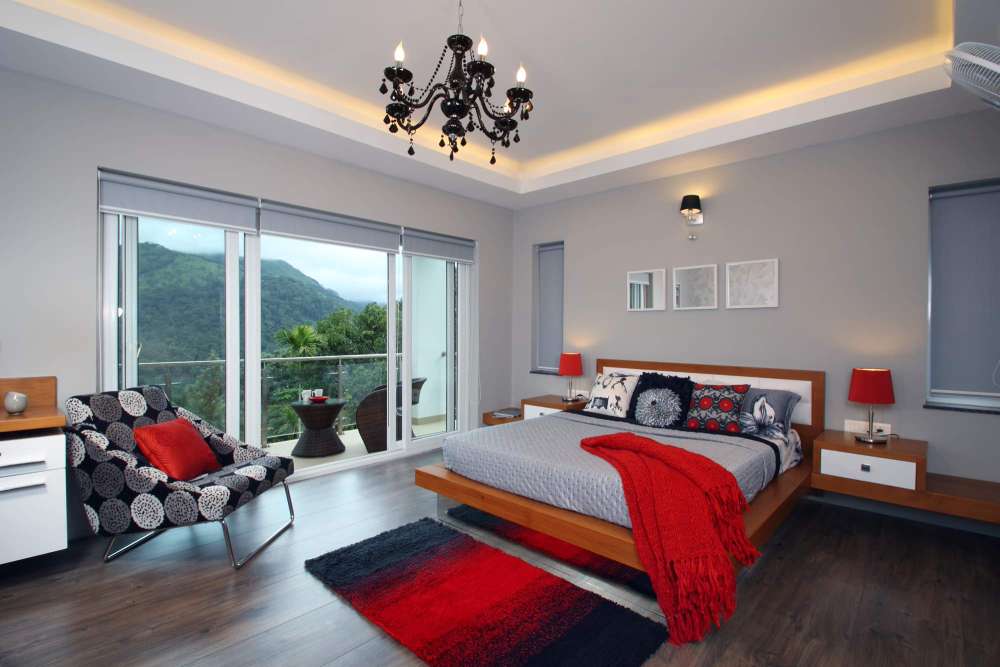
Image source: Savio & Rupa Interior Concepts (Bangalore)

The less-is-more approach is non-negotiable here. A nightstand should have three to five items, maximum.

  • A lamp (with a warm-white bulb, obviously)
  • A small tray in marble, brass, or lacquered wood
  • One or two books
  • A candle or small plant

That’s it. Phone chargers go in the drawer. Water glasses go on the tray. Anything else gets evaluated on a “does this earn its spot?” basis. The same thinking applies to dressers: a single tray to hold daily items, maybe a framed photo or a small ceramic piece, and nothing else.

Diptyque and Le Labo sell candles that double as decorative objects. The vessels are designed to look good on a nightstand even after the candle is burned through. That’s a very specific kind of luxury thinking.

Scent as a Design Element


Image source: Bita Interior Design

The National Candle Association reported in 2024 that roughly 75% of candle buyers consider scented candles a must for creating a relaxing atmosphere. That tracks with the broader trend of treating scent as part of bedroom design, not just an afterthought.

Candles provide scent plus ambient light. Perfect for nightstands or dresser tops.

Reed diffusers run continuously without a flame. Better for closets, bathrooms attached to the bedroom, or anywhere you want consistent background fragrance.

Linen sprays add scent directly to bedding and pillows. Aesop’s version is one of the better-known options. A quick mist before bed turns fresh sheets into something that feels like a boutique hotel.

Avoid overcrowding surfaces with scented items. One candle per nightstand is enough. Two scent sources in a single room is plenty. More than that and it starts to compete rather than complement.

Luxury Bedroom Decor on a Budget

Not everything here requires a Restoration Hardware budget. Some of the most effective luxury upgrades are the cheapest, and some of the most expensive items have the least visual return. Knowing where to spend and where to save changes everything.

The 2025 Houzz & Home Study showed that the overall median renovation spend dropped to $20,000 in 2024 from $24,000 in 2023. Bedroom-specific spending dropped even more sharply. People are looking for impact at lower cost, and it’s achievable.

Where to Invest

Bedding: This is the highest-impact upgrade per dollar in any bedroom. A $200 set of long-staple cotton sheets in percale weave will outperform a $60 microfiber set for years. You spend a third of your life on these sheets. Spend here.

Lighting: Swap overhead flush mounts for a pair of wall sconces or table lamps with fabric shades. Add dimmer switches. The total cost is under $300 for most bedrooms, and the change in atmosphere is dramatic.

Those two changes alone will shift a bedroom from standard to polished. If you only do two things, do those two things.

Where to Save

Item Budget Strategy Estimated Savings
Nightstands Vintage or secondhand 40-70% vs. retail
Decorative objects Thrift stores, flea markets 60-80% vs. retail
Curtain rods Simple matte black from Amazon 50-60% vs. designer
Throw pillows Covers only, swap seasonally 30-50% vs. full pillows

Secondhand and vintage furniture almost always looks more expensive than new mass-market pieces. A walnut mid-century dresser from an estate sale has grain and patina that no particle-board piece can touch. Same goes for mid-century modern decor items like brass lamps and ceramic vases.

The Hotel Trick

This is the cheapest full-room upgrade that actually works. It costs under $500 total and covers:

  • White bedding (duvet cover, flat sheet, fitted sheet)
  • Four to six layered pillows in complementary tones
  • Blackout curtains in a neutral color, hung at ceiling height
  • Two matching bedside lamps with warm-white bulbs

This is how Four Seasons and Ritz-Carlton make every room feel luxurious regardless of the building’s age or architecture. White bedding, controlled lighting, blackout curtains, clean surfaces. No clutter, no visual noise. Just material quality and harmony.

DIY upgrades add to the effect for minimal cost. Paint one wall a rich, saturated color (deep charcoal or warm taupe). Add crown molding with pre-primed MDF strips. Replace existing drawer pulls with brass or matte black hardware. Each of these takes an afternoon and costs under $100, but together they push the room noticeably closer to a designed look.

Luxury bedroom decor is less about what you buy and more about what you choose. The right rug sized correctly, the right bulb at the right temperature, the right curtain hung at the right height. These are design decisions, not spending decisions. And they’re the ones that actually make a room feel expensive.

FAQ on Luxury Bedroom Decor

What makes a bedroom look luxury?

Material quality, intentional layering, and restraint. High-end bedding in Egyptian cotton or Belgian linen, a well-proportioned bed frame, warm lighting at 2700K to 3000K, and minimal clutter. It’s about curation, not cost.

What is the best color for a luxury bedroom?

Warm neutrals like taupe, greige, and soft ivory dominate most luxury bedrooms. Deep navy and forest green work well for moodier palettes. Use the 60-30-10 rule to distribute color across walls, textiles, and accents.

Does thread count matter for luxury sheets?

Less than most people think. A 300 to 500 thread count in single-ply, long-staple cotton outperforms inflated 1,000-count sheets. Focus on fiber quality and weave type (percale or sateen) instead of the number on the label.

What size rug goes under a queen bed?

An 8×10 rug minimum. The rug should extend 18 to 24 inches beyond the bed on each side. Anything smaller looks disproportionate. Hand-knotted wool or vintage Persian rugs are the most common luxury choices.

How should curtains be hung in a luxury bedroom?

Mount rods as close to the ceiling as possible, not just above the window frame. Curtains should touch the floor or puddle slightly. Blackout lining behind linen or velvet panels adds function without losing aesthetics.

What lighting works best in a luxury bedroom?

Three layers: ambient, task, and accent. Use warm-white bulbs below 3000K and install dimmer switches on every circuit. Wall sconces, table lamps with fabric shades, and LED accent strips create depth and atmosphere.

What furniture is most important in a luxury bedroom?

The bed frame. Everything else arranges around it. Upholstered headboards add softness and height. A bench at the foot of the bed and a reading chair create secondary zones that make the room feel intentionally designed.

How do you make a bedroom look expensive on a budget?

White bedding, blackout curtains hung at ceiling height, matching bedside lamps, and warm-white bulbs. This is the hotel approach. Total cost is under $500. Thrift vintage nightstands and swap out existing hardware for brass or matte black.

What wall treatments add luxury to a bedroom?

Grasscloth wallpaper, fluted wood panels, and limewash or Venetian plaster finishes. These add texture and depth that flat paint cannot replicate. Brands like de Gournay and Cole & Son produce hand-finished options for higher budgets.

How do you style a nightstand without clutter?

Stick to three to five items: a lamp, a small tray, one or two books, and a candle. Phone chargers go in the drawer. Keep surfaces clear enough that each object has breathing room around it.

Conclusion

Luxury bedroom decor comes down to a sequence of deliberate choices. The right Belgian linen duvet, a hand-knotted wool rug sized correctly, velvet curtains hung at ceiling height, warm-white sconces on dimmers. None of these are complicated. They just require attention.

The master bedroom styling approach that works at the Four Seasons works at home. White bedding, layered textures, controlled lighting, edited surfaces. Skip the high thread count marketing. Invest in fiber quality, proper scale, and a neutral color palette that lets materials speak.

Start with bedding and lighting. Those two upgrades alone shift the entire feel of a room. Add a well-placed area rug, blackout window treatments, and one or two decorative objects that earn their spot on the nightstand.

Everything else is refinement. And refinement is where the real satisfaction lives.

Andreea Dima
Author

Andreea Dima is a certified interior designer and founder of AweDeco, with over 13 years of professional experience transforming residential and commercial spaces across Romania. Andreea has completed over 100 design projects since 2012. All content on AweDeco is based on her hands-on design practice and professional expertise.

Pin It