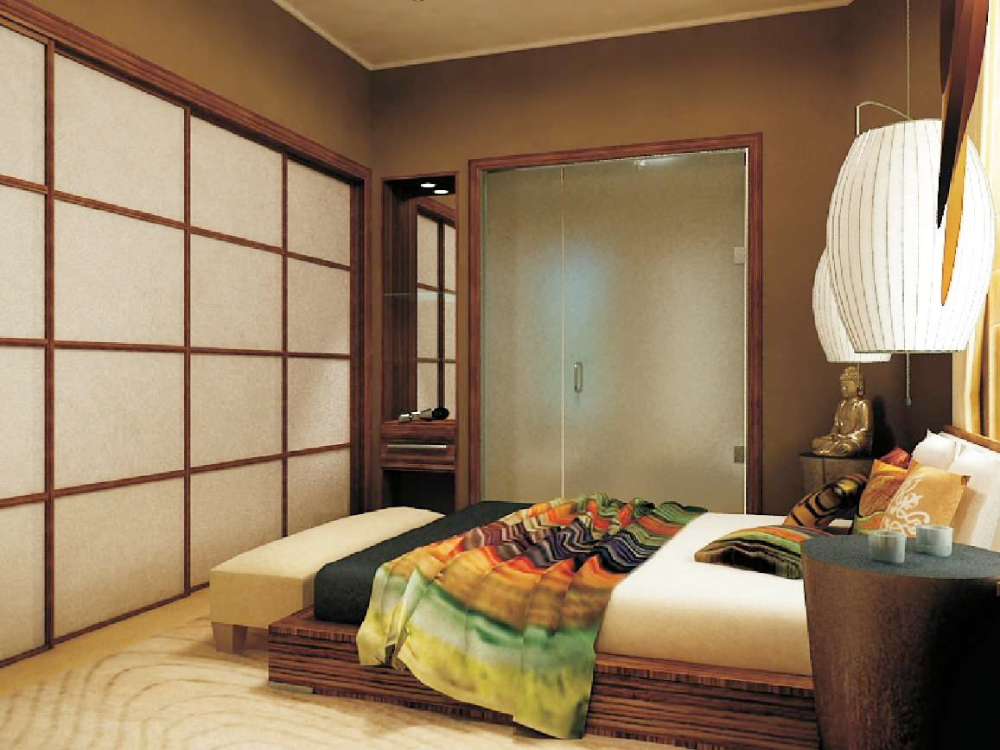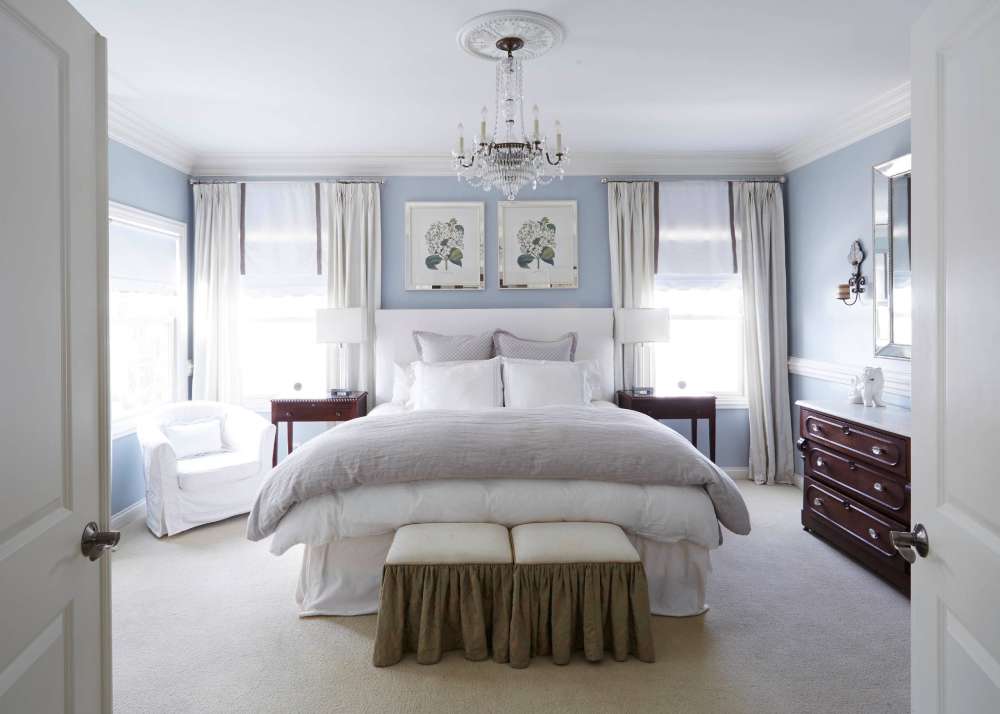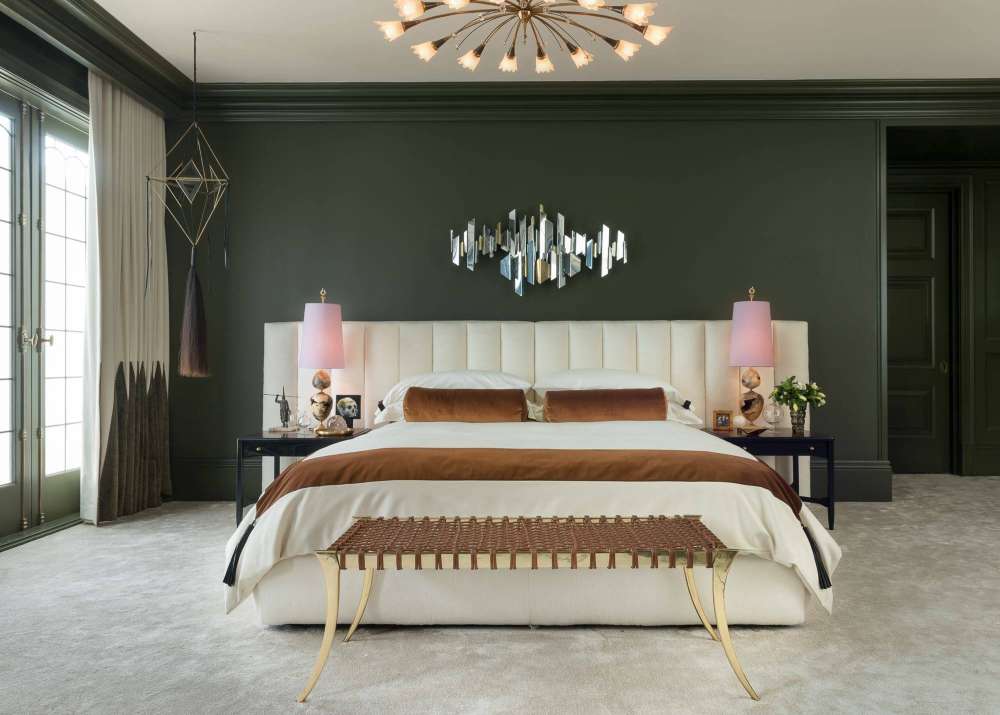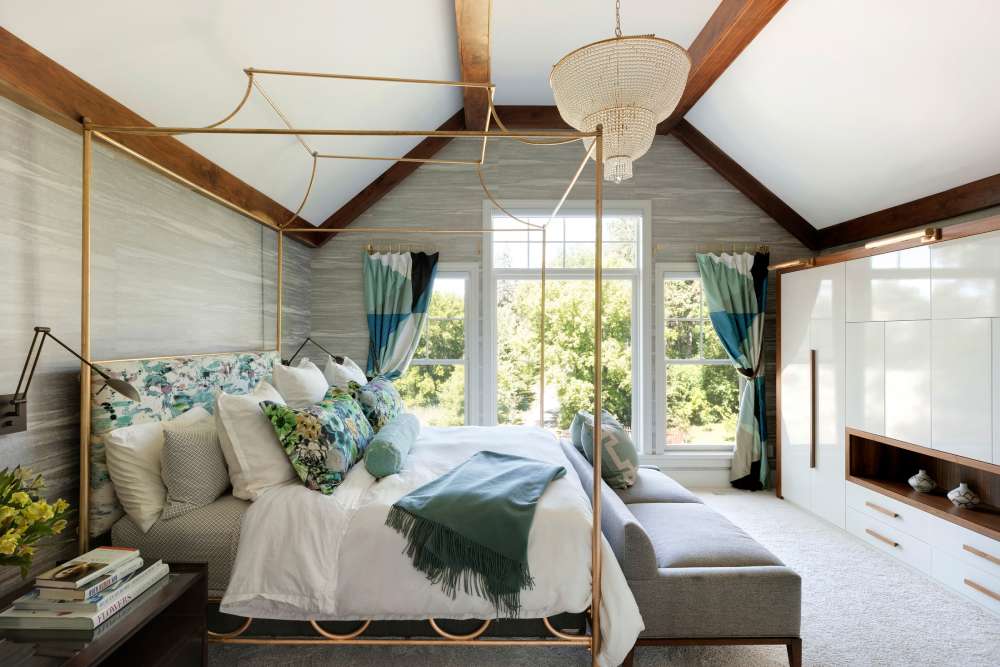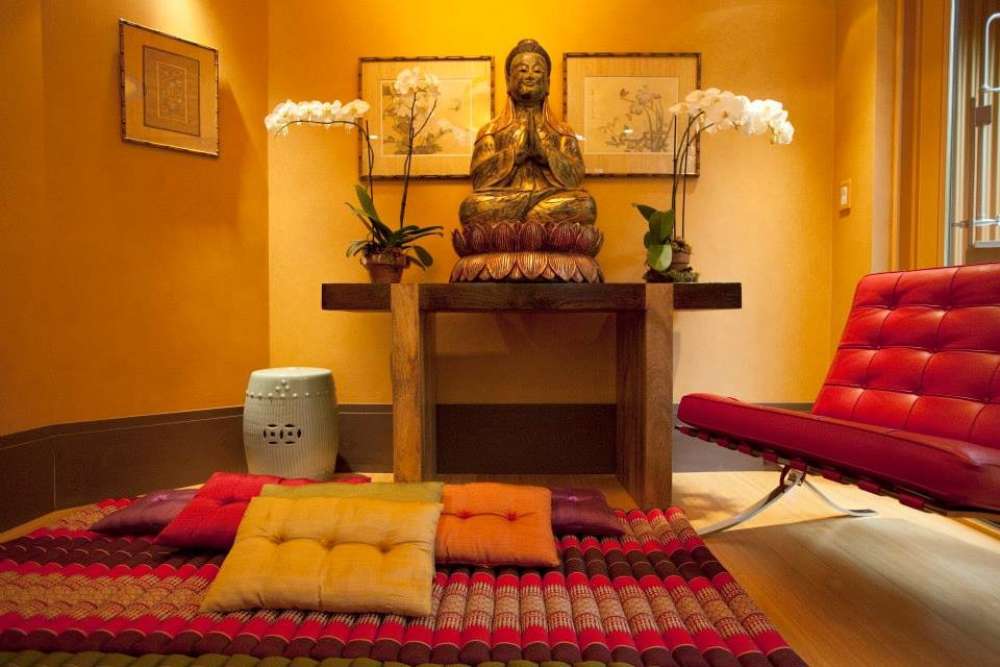
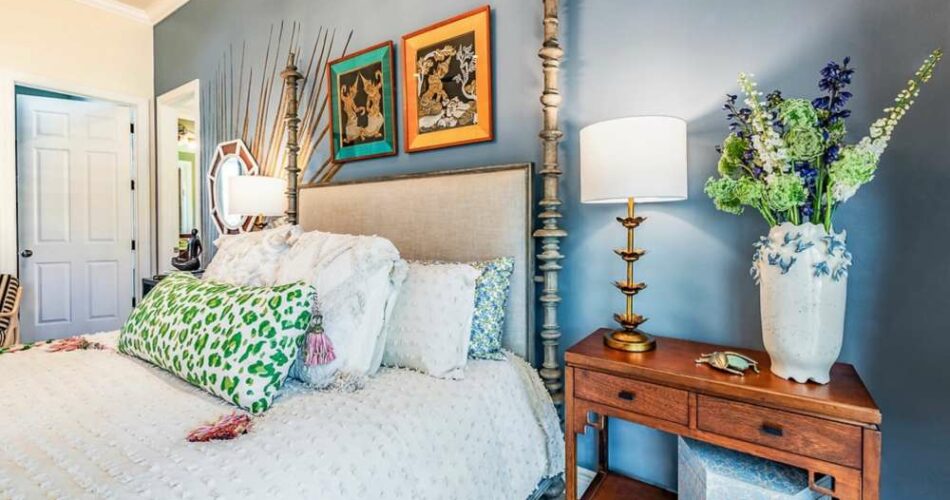
A calm bedroom shouldn’t require a complete renovation. Zen bedroom decor is built on a few clear ideas: natural materials, muted colors, intentional empty space, and nothing in the room that doesn’t earn its place.

The philosophy comes from Japanese Zen Buddhism and the wabi-sabi acceptance of imperfection. But you don’t need a background in either to apply it. You just need to know what works, what to avoid, and where most people go wrong.

This guide covers the specific color palettes, materials, furniture, lighting, textiles, and sensory elements that create a peaceful sleep environment. No vague inspiration. Just practical choices you can act on.

What Is Zen Bedroom Decor?


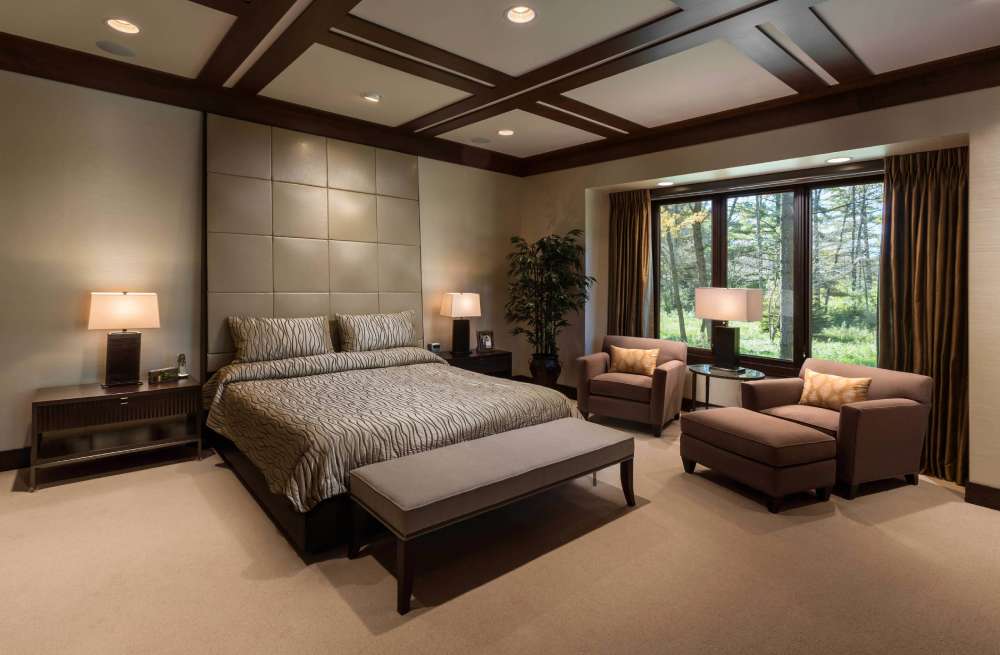
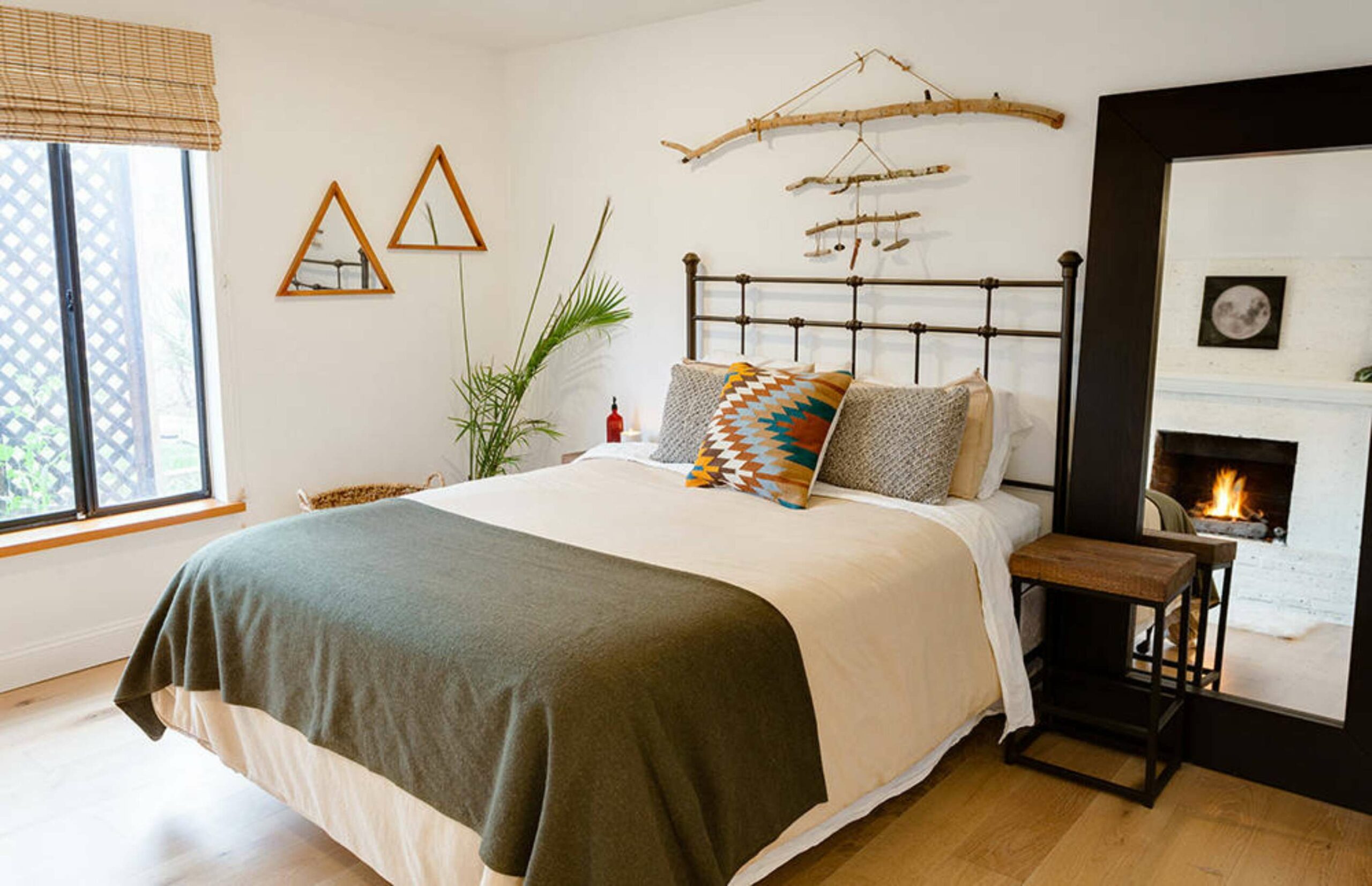
Image source: StudioLAB

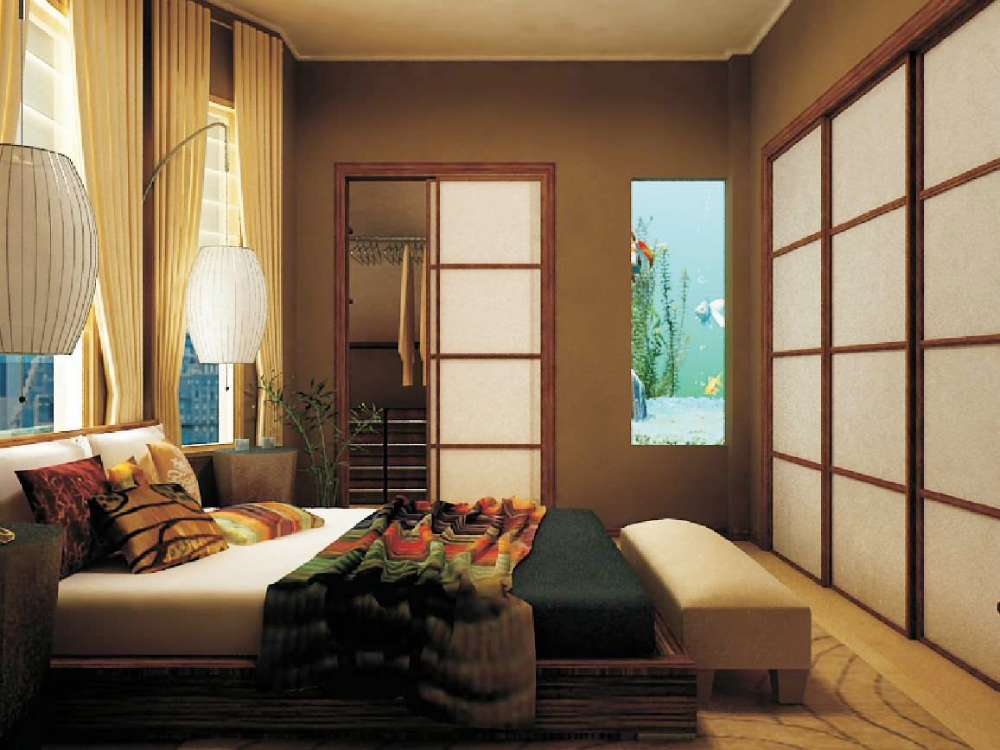
Zen bedroom decor is a design approach built on Japanese Zen Buddhist philosophy that strips a sleeping space down to what actually matters. No excess. No visual noise. Just calm, natural materials, and deliberate empty space.

The whole point is to make your bedroom feel like a place where your brain can stop processing. Where there’s nothing demanding your attention at 11 p.m. when you should be winding down.

It’s grounded in a few specific ideas. Ma, the Japanese concept of intentional negative space, treats emptiness as a design element rather than something that needs filling. Wabi-sabi, the acceptance of imperfection and natural aging in materials, keeps things honest. A hand-thrown ceramic vase with an uneven glaze belongs here. A mass-produced “zen” candle from a big-box store probably doesn’t.

People confuse this with generic minimalism all the time. They’re not the same thing.

Minimalist interior design focuses on reduction for its own sake. Zen decor has a spiritual and sensory layer underneath it. The goal isn’t just “less stuff.” It’s creating an environment that connects you to natural materials and quiet. A zen interior design approach always asks whether each object serves the room’s sense of peace, not just whether it fits a visual grid.

Research from the Personality and Social Psychology Bulletin found that people who described their homes as cluttered showed higher cortisol levels and worse mood patterns throughout the day. Zen bedroom design directly addresses this by making restraint the foundation.

How Zen Decor Differs from Other Calm Bedroom Styles

This gets muddled constantly. Japandi, Scandinavian, coastal, boho, they all claim to be “calming.” But the mechanics are different.

Style Primary Focus Material Palette Clutter Tolerance
Zen Spiritual calm, emptiness Raw wood, stone, linen Very low
Scandinavian Functional coziness Light wood, wool, sheepskin Low-moderate
Coastal Breezy lightness Rattan, cotton, driftwood Moderate
Bohemian Layered self-expression Mixed textiles, global finds High

Zen tolerates the least visual complexity. That’s the differentiator. If you can see more than a few objects from your pillow, you’ve probably gone too far.

Color Palettes That Work in a Zen Bedroom


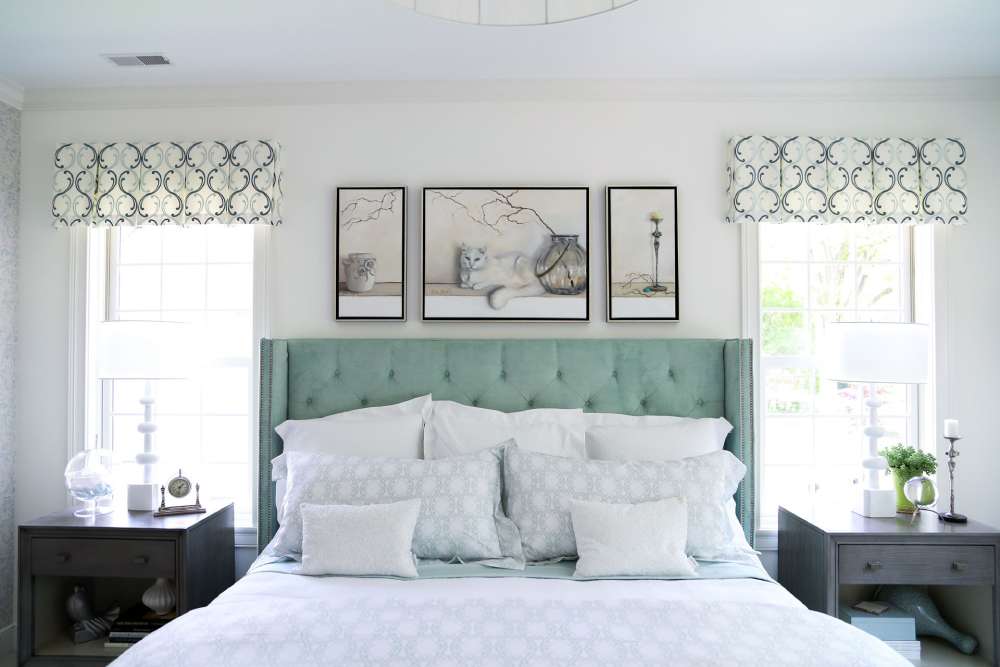
Image source: Sophisticate Interiors

A survey by The Painted Hinge found that people with blue bedrooms averaged 7 hours and 52 minutes of sleep per night, compared to just 5 hours and 56 minutes in purple rooms. Color choice isn’t cosmetic. It directly shapes how well you rest.

For a zen space, you’re working within a narrow band. Muted, low-saturation tones that don’t compete for your attention.

Warm Neutrals

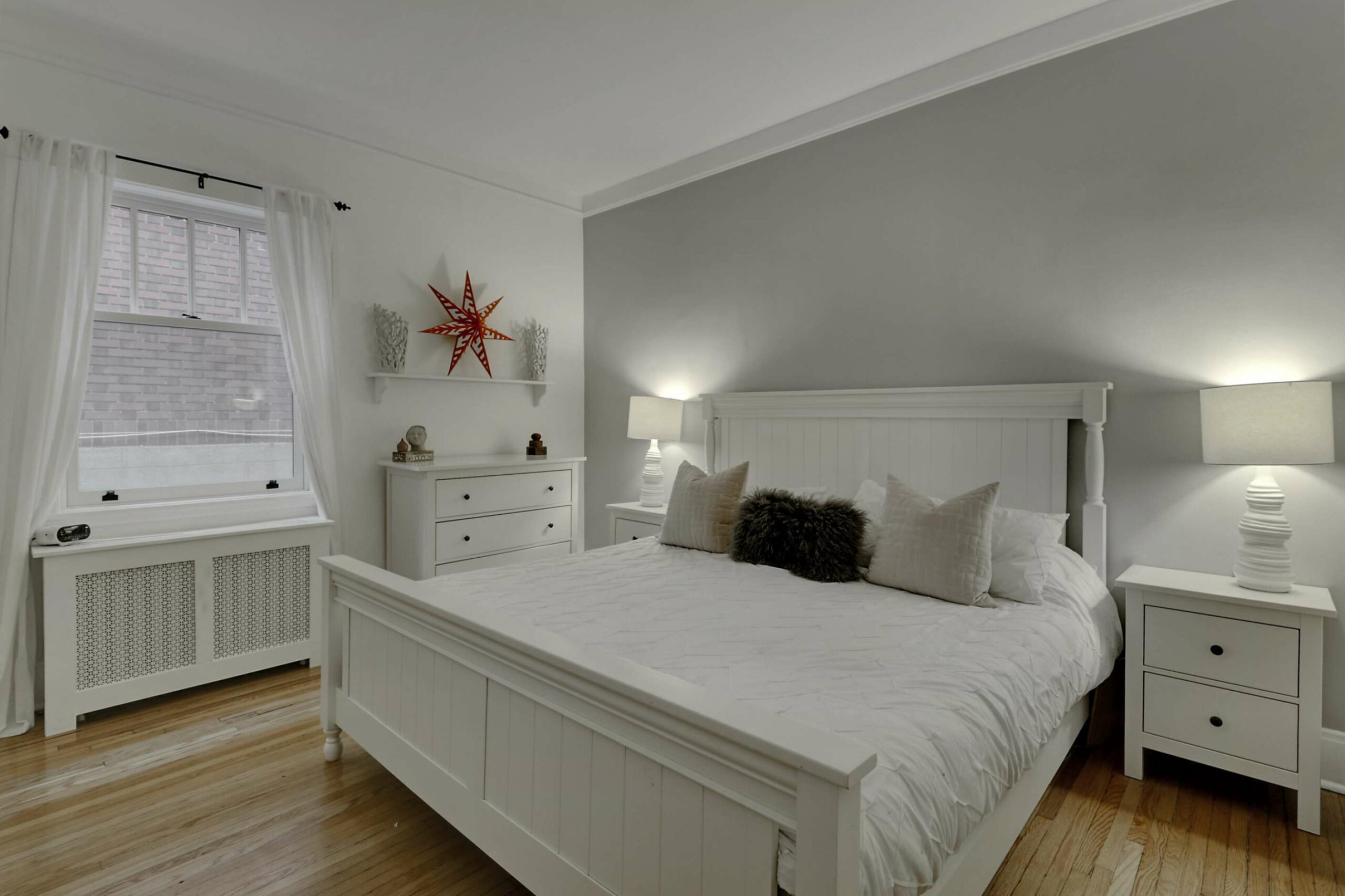
Sand, beige, warm white, taupe. These create a grounded base without feeling sterile. They work especially well in bedrooms that get a lot of natural light because they absorb and soften it instead of bouncing it around.

Benjamin Moore’s “White Dove” and Sherwin-Williams’ “Accessible Beige” are two of the most forgiving warm neutrals on the market. Both shift naturally between morning and evening light without looking yellow or gray. If you’re unsure where to start, understanding colors that go with beige helps build from this base.

Earth Tones

Clay, soft terracotta, muted olive. These pull the room toward the ground. There’s a weight to them that feels settled, not heavy.

Farrow & Ball’s “Setting Plaster” and Benjamin Moore’s “Kingsport Gray” both sit in this range. Use them on a single wall or across the full room, depending on how much warmth you want. Just avoid pairing earth tones with cool-toned furniture. Chrome legs next to a clay wall is a mismatch you’ll feel but maybe not immediately identify. Checking how colors that go with tan pair together can prevent that kind of mistake.

Cool Muted Options


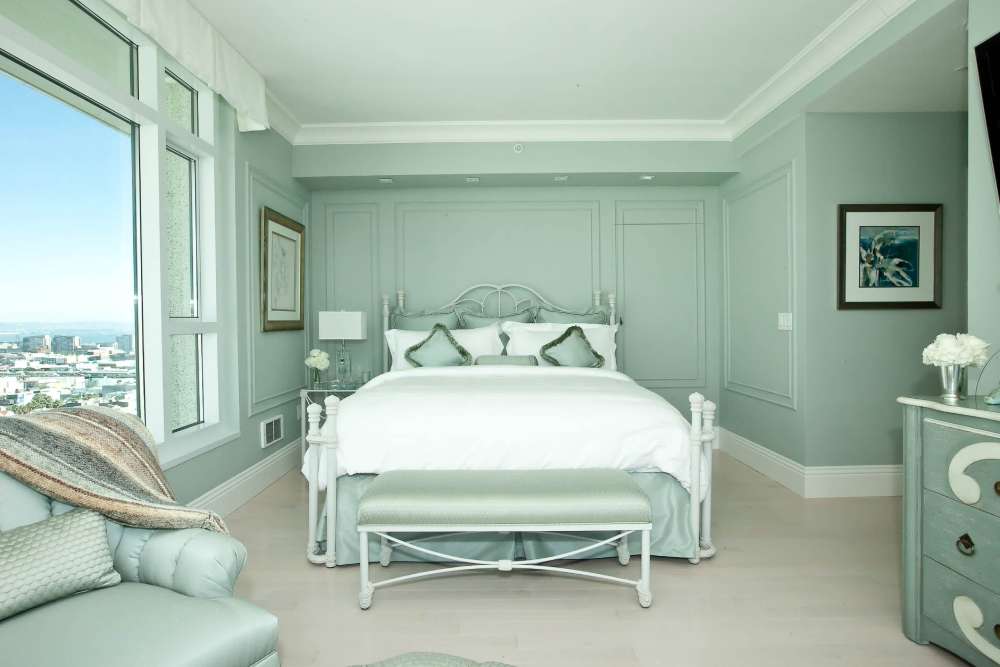
Image source: Lulu Designs

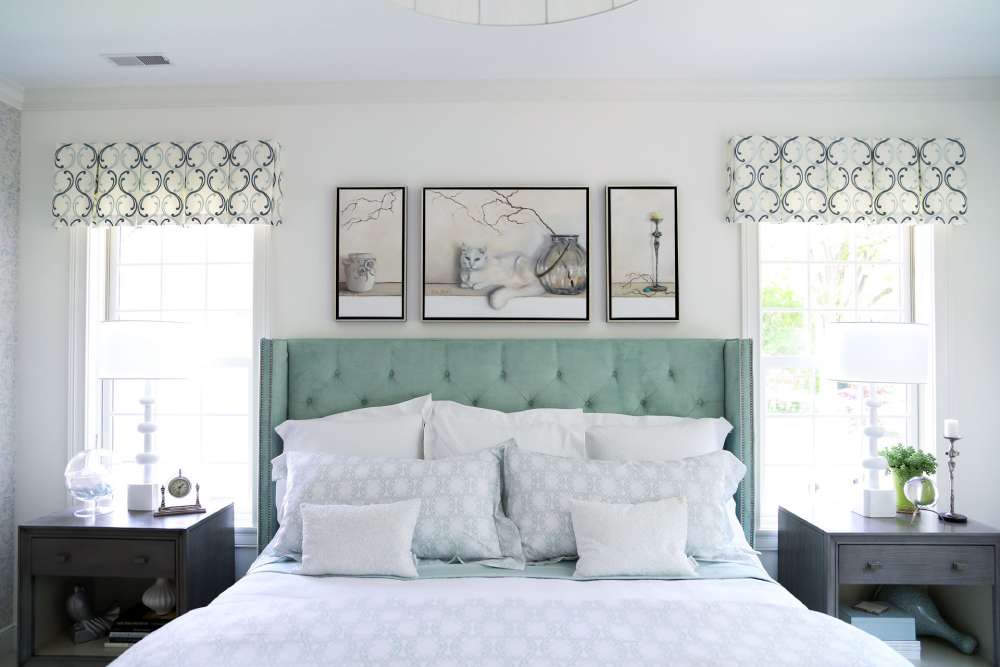
Research from the National Sleep Foundation and the University of Sussex shows that cool, muted hues can slow heart rate and lower blood pressure. Pale gray, soft sage, stone blue. These are all fair game for zen bedrooms.

Sage green, in particular, has exploded in popularity since 2023. And honestly, it works. It reads as natural without being literal (you’re not painting your walls forest green). Sherwin-Williams’ “Sea Salt” or Benjamin Moore’s “Gray Owl” both live in that quiet zone between gray and green. For those drawn to sage, looking at how colors that go with sage green interact can guide your full palette.

What to Avoid

High-contrast walls. Saturated accent colors. Anything that makes your eyes work when they should be resting.

A bright accent wall behind the bed might look great on social media. But in a zen bedroom, it creates a focal point that’s too visually loud. The 2018 University of Sussex study on color in interior design confirmed that exposure to certain muted colors measurably reduced stress levels compared to saturated alternatives.

Natural Materials for Walls, Floors, and Furniture

The global home decor market hit USD 779.8 billion in 2024, according to IMARC Group. A huge chunk of that growth comes from consumers choosing natural and sustainable materials over synthetic alternatives. This isn’t a passing thing.

PwC’s 2024 Voice of the Consumer Survey found that 80% of consumers are willing to pay more for sustainably produced goods. In zen bedroom design, sustainability isn’t a bonus. It’s baked into the philosophy.

Wood Types That Fit

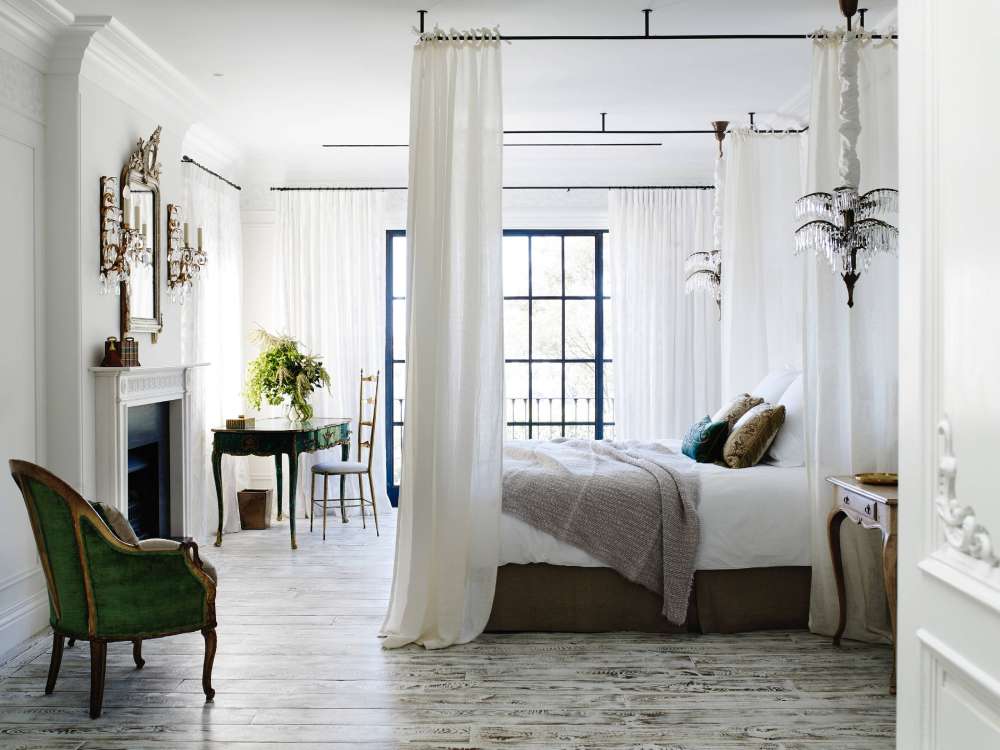
Image source: Tania Kalecheff

Light oak, bamboo, walnut, reclaimed wood. These are the core options. Light oak keeps things airy. Walnut adds warmth and grain variation without the heaviness of darker woods like mahogany. Bamboo grows fast, renews quickly, and has a clean, linear grain that suits zen spaces naturally.

Reclaimed wood carries the wabi-sabi quality of visible age, nail holes, slight warping, tonal variation. It feels lived-in without being shabby. IKEA launched an “Eco-Friendly Home Decor” collection in January 2024 made entirely from recycled materials, and their bamboo offerings in particular reflect how mainstream this shift has become.

Understanding how different textures in interior design play together is what separates a thoughtful zen bedroom from one that just looks empty.

Stone and Natural Accents

River stones on a shelf. A raw concrete planter. A slate tray on the nightstand.

Stone accents ground a room in a way that wood alone can’t. They add coolness and mass. In warmer climates, stone floors (or even just a stone tile entryway near the bed) provide a tactile contrast that connects you to the earth when you step out of bed.

The trick is restraint. One stone element per room is usually enough. Two can work if they’re different scales (a small tray and a large floor tile, for example). Three and you’re building a grotto.

Platform Beds and Low-Profile Furniture


Image source: Marie Burgos Design

Low furniture is standard in zen spaces. Not because of some arbitrary rule, but because lower sightlines create a greater sense of openness. Your eyes travel further across the room. The ceiling feels higher. The floor becomes part of the design instead of just something you walk on.

Japanese platform beds sit close to the ground, often without a box spring. Thuma’s “The Bed” and Floyd’s platform frame both hit this mark without requiring a full commitment to sleeping on a futon on tatami mats. IKEA’s Malm low frame offers a budget option that still reads as intentional.

Muji’s entire furniture line is built around this philosophy. Clean lines, light wood, no ornamentation. It’s the closest mass-market brand to a true zen aesthetic. Getting the proportions right matters here, so paying attention to scale and proportion in interior design keeps the room from feeling either cramped or cavernous.

Lighting for a Zen Bedroom


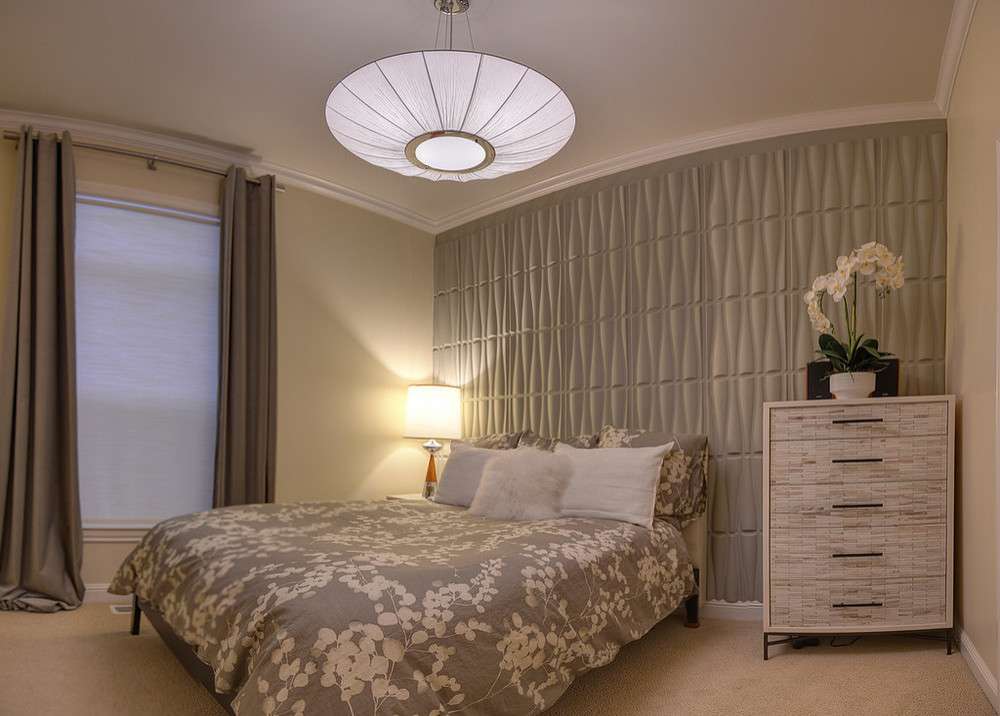
Image source: Edmunds Studios Photography, Inc.

SwiftBeacon data shows the global decorative lighting market hit USD 41.60 billion in 2024. From 2015 to 2020, the percentage of households using LED lighting for most indoor spaces jumped from 4% to 47%. Lighting technology has caught up with what zen design has always demanded: warm, dimmable, layered.

Color Temperature Matters More Than You Think

Stay between 2700K and 3000K. That warm range supports melatonin production in the evening. Cool-white LEDs (above 4000K) actively suppress melatonin, which is the hormone that tells your body it’s time to sleep.

Research on circadian rhythms consistently shows that warm lighting in the evening prepares your body for rest, while blue-toned light keeps the brain alert. Your zen bedroom should shift from natural daylight during the day to warm artificial light at night. Smart bulbs that change color temperature on a schedule make this almost effortless.

Fixtures That Fit the Aesthetic

Rice paper pendants are probably the most iconic zen lighting choice. Isamu Noguchi’s Akari Light Sculptures, designed in the 1950s, remain the gold standard. They diffuse light softly, cast gentle shadows, and look like they belong in the room rather than hanging from it.

Not everyone can drop several hundred dollars on a Noguchi lamp. IKEA’s “Regolit” paper shade is a reasonable alternative at a fraction of the cost. It won’t have the same sculptural quality, but it diffuses light similarly. Understanding the role that light plays in interior design helps you evaluate fixtures beyond just how they look on the shelf.

For bedside reading, task lighting with a warm, directional beam works better than another overhead source. A small wooden or ceramic table lamp keeps the zen feel intact.

What to Skip

Overhead fluorescents. Cool-toned recessed cans at full brightness. Chrome or mirrored fixtures that scatter light in sharp directions.

Recessed lighting itself isn’t the problem. It’s the temperature and the dimming. If you have recessed cans in your bedroom ceiling already, swap the bulbs to 2700K and add a dimmer switch. That one change makes a real difference. Ambient lighting should feel like it’s filling the room gently, not illuminating it for an exam.

Decluttering and Storage in a Zen Bedroom

A study presented in the journal Sleep found that bedroom decluttering habits predicted improved sleep quality in a sample of over 1,000 participants. Researchers noted that positive outcomes appeared after just four weeks of regular tidying routines. This isn’t lifestyle content fluff. It’s measurable.

Separately, research from the Journal of Clinical Sleep Medicine showed that clutter severity was associated with increased sleep disturbance, even when the bed itself was fully accessible. The psychological weight of disorder disrupts rest independently of physical obstruction.

Hidden Storage Is Non-Negotiable


Image source: Thomas & Jayne Interior Design

If you can see it, your brain is processing it. That’s the core problem.

Under-bed drawers absorb seasonal clothing, spare linens, and the random things that otherwise pile up on chairs. Built-in closets with doors (not open shelving) keep wardrobes out of sight. Wall-mounted shelving works for one or two intentional objects, not for general storage.

Marie Kondo’s KonMari method became a global phenomenon for a reason. It matched what environmental psychology had already established: fewer visible objects lead to lower cortisol and better cognitive function. A tidy bedroom is easier to maintain than a cluttered one. The activation energy drops once you’ve done the initial purge. Space in interior design isn’t just about square footage. It’s about what you leave empty.

The “One In, One Out” Rule

Simple but effective. Every new object that enters the bedroom means one existing object leaves. This keeps the room from gradually accumulating the kind of visual noise that undermines the entire zen approach.

It sounds rigid. And yeah, it kind of is. But the alternative is a slow drift back toward disorder, which happens faster than most people expect. Took me a while to actually follow this consistently, and the difference in how the room feels week to week is noticeable.

Capsule Wardrobe Integration

This connects directly to bedroom calm. A smaller, more intentional wardrobe means fewer decisions in the morning, less visual clutter in the closet, and less overflow onto bedroom surfaces.

You don’t need to go full extreme minimalist here. Even reducing from 60 hanging items to 35 changes how a closet looks and feels when you open it. The goal isn’t deprivation. It’s removing the things that add zero value to your daily life while taking up visual and mental bandwidth.

Plants and Natural Elements That Belong in a Zen Bedroom

A 2022 review of built-environment research found that biophilic interior design features correlate with improved mood, lower stress hormones, and better recovery after stressors. Indoor plants are a core part of this. But in a zen bedroom, the approach is specific: fewer plants, chosen carefully, placed with intention.

Low-Maintenance Plants That Work


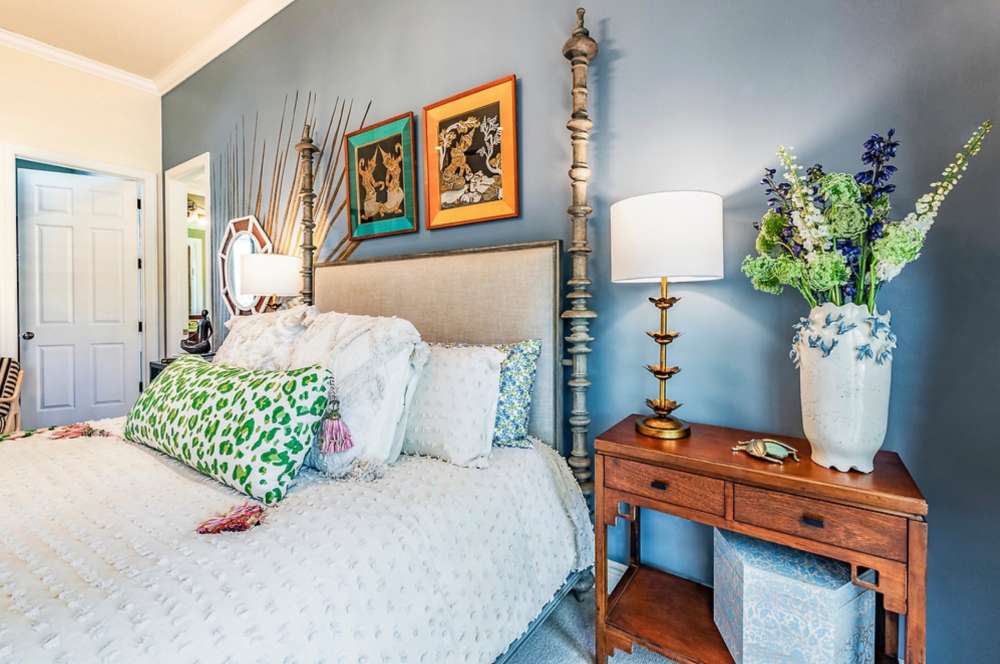
Image source: Volantes Decorating Service

Snake plant (Sansevieria): Tolerates low light, requires watering roughly every two weeks, and releases oxygen at night. It’s one of the few plants NASA’s clean air study confirmed as effective at filtering airborne toxins like formaldehyde.

Pothos: Trailing vine that grows in almost any condition. Hang it from a shelf or let it cascade from a high surface. One plant is enough to introduce greenery without crowding the room.

Peace lily: Thrives in low light and adds a subtle white bloom. Keep it on the floor near a corner or on a low wooden stand.

Bonsai: The classic zen choice. More demanding in terms of care, but a single bonsai on a nightstand or dresser carries the entire aesthetic of the room. Your mileage may vary on whether you want to commit to the upkeep.

Organic Accents Beyond Plants

Dried branches in a ceramic vase. A river stone arrangement on a tray. A sand garden on the dresser that doubles as a mindfulness tool.

Ikebana, the Japanese art of flower arrangement, works especially well here. It’s based on asymmetry and negative space, using one or two stems rather than a full bouquet. The result looks sparse but intentional, which is exactly what a zen bedroom needs.

Use odd numbers when grouping objects (three stones, one branch, one vase). Odd groupings create visual movement without symmetry, which aligns with the natural irregularity that wabi-sabi values. If perfect asymmetry in interior design sounds contradictory, well, it is. That’s sort of the point.

What Doesn’t Belong

Plastic plants. Overly dense terrariums. Faux moss walls. Anything that pretends to be natural without actually being natural.

The whole philosophy falls apart when you substitute synthetic for real. A single live pothos in a clay pot does more for the room’s energy than a shelf full of artificial succulents. If you genuinely can’t keep plants alive (no judgment, it happens), dried pampas grass or preserved eucalyptus branches are honest alternatives that don’t try to fake anything.

Textiles and Bedding for a Zen Bedroom


Image source: London Bay Homes

The global organic bedding market reached USD 936.4 million in 2023 and is growing at a 5.4% CAGR through 2030, according to Grand View Research. Linen is the fastest-growing segment at 6.0% CAGR. People are choosing natural fiber bedding not just for the feel, but because they want chemical-free sleep environments.

In a zen bedroom, textiles do double duty. They add warmth and softness without introducing visual complexity.

Linen Duvet Covers and Sheets

Linen is the default zen textile. It has a natural, slightly rumpled texture that looks lived-in without looking messy. It breathes well in summer, insulates in winter, and softens with every wash.

Coyuchi launched a “Climate Beneficial Wool” comforter line using wool from regenerative California farms. Brooklinen and Muji both offer organic linen options in the muted earth tones that work here. Parachute Home’s naturally dyed enzyme-finished linen sets sold over 140,000 units in their launch quarter, particularly among wellness-focused buyers aged 30 to 45, according to Market Growth Reports.

Layering Without Visual Bulk

One duvet. One throw. Two pillows maximum. That’s the formula.

The 2025 bedroom trend data from multiple sources confirms a clear shift toward pared-down bedding. Fewer layers, higher quality materials, less time spent rearranging decorative cushions every night. If you want a few ideas for keeping it simple without it looking bare, there are ways to approach throw pillow combinations for your bed that stay minimal.

Rugs and Floor Textiles

Wool, jute, or natural fiber rugs add floor warmth without competing with the rest of the room. A single rug under or beside the bed is enough.

Material Feel Best For Care Level
Jute Rough, earthy Low-traffic side of bed Low
Wool Soft, warm Under foot, beside bed Medium
Cotton (flatweave) Smooth, light Warmer climates Easy, machine washable
Tatami Firm, grassy Full room or meditation corner Moderate

If you’re placing a rug beside a queen bed, knowing the right sizing and position for a rug under a queen bed prevents it from looking like an afterthought.

Color and Pattern Choices

Stick to neutral tones across all textiles. Sand, cream, oatmeal, soft gray.

If you want pattern at all, hand-dyed shibori textiles or subtle indigo prints work. These are traditional Japanese dyeing techniques with natural irregularity built in, which fits the wabi-sabi approach. Avoid bold geometric prints or anything with high contrast repeats. The bedding should recede, not demand attention.

Art and Wall Decor in a Zen Bedroom

Image source: Mackenzie Collier Interiors

SwiftBeacon data puts the global wall decor market at USD 60.15 billion in 2023, projected to reach USD 85 billion by 2033. Minimalist art is one of the top-performing categories, aligning with the broader movement toward calm, uncluttered spaces.

When choosing wall art for a zen bedroom, the question is always: does this quiet the room or activate it?

What to Hang

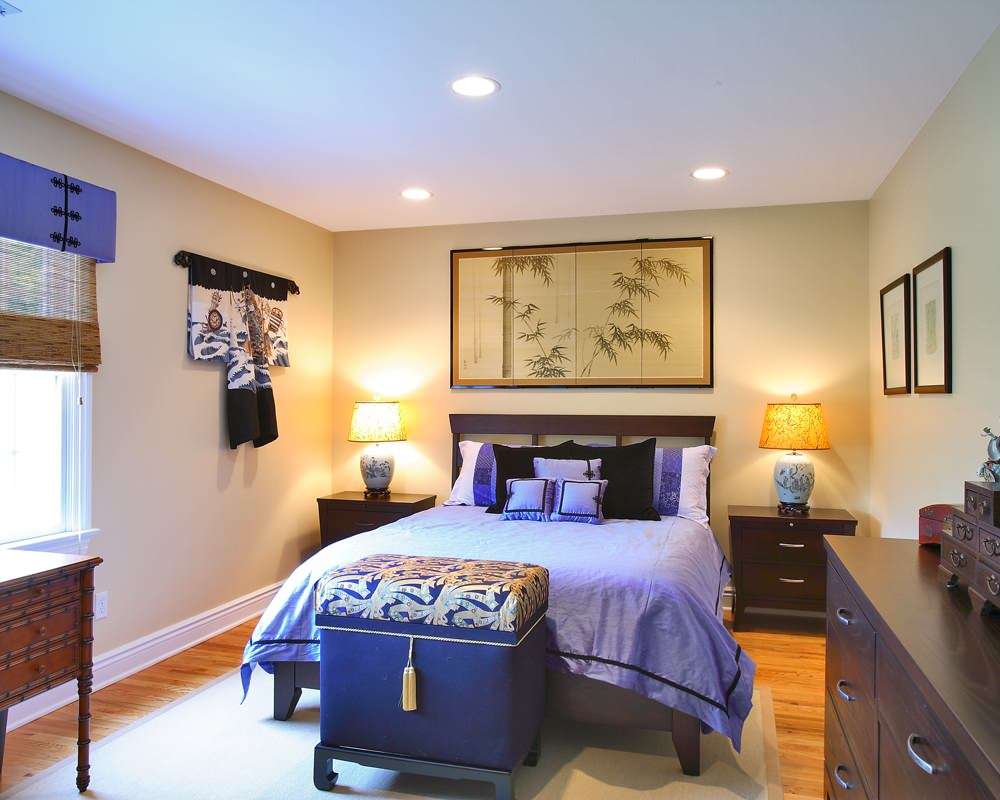
Ink wash paintings. Japanese sumi-e or Chinese brush painting. These use negative space as aggressively as they use ink, and that restraint matches the room’s philosophy.

Abstract nature photography. Macro shots of stone, water, bark. Black and white or desaturated color. A single large print can serve as the room’s one visual anchor.

Calligraphy. A single brushstroke character on rice paper, framed simply. Not a motivational quote. An actual piece of calligraphic art.

Frame Choices and Mounting

Thin black frames. Natural light wood. Frameless float mounting on a clean wall.

The frame should disappear. If you notice the frame before the art, it’s wrong. Heavy ornate frames, gilded edges, or chunky matting all pull the eye and break the room’s stillness. A focal point in interior design works best in a zen context when it’s quiet rather than loud.

The Power of Blank Walls

This is where most people struggle. An empty wall feels unfinished to the average person. In zen design, it’s intentional.

Blank space gives the room visual breathing room. It’s the same principle as ma, the deliberate pause. Muji’s Paris flagship store, opened in October 2023, uses exactly this approach. Co-living prototype spaces with minimal wall decoration, letting the architecture and materials speak instead. Your bedroom can do the same thing on a smaller scale. One piece of art. The rest stays empty.

Scent and Sound as Part of Zen Bedroom Design

A meta-analysis published in Complementary Therapies in Medicine found that aromatherapy measurably improved sleep quality and reduced stress, pain, anxiety, and fatigue. A single-blinded study in Scientific Reports confirmed that lavender aroma increased deep sleep brain activity and reduced sleep disturbances, with participants reporting better rest after just one night of exposure.

Scent and sound aren’t afterthoughts in a zen bedroom. They’re design decisions that work on your nervous system while you sleep.

Incense and Scent Options


Image source: Margaret Donaldson Interiors

Sandalwood: Warm, grounding. Traditional in both Japanese and Indian meditation practices. Burns slowly with minimal smoke in stick form.

Hinoki: Japanese cypress. Clean, woody, slightly citrus. Hinoki wood itself is aromatic, so even a small hinoki tray or block adds scent without burning anything.

White sage: Sharper, more herbal. Better for periodic use than nightly. Some people find it too intense for a sleep space.

Essential oil diffusers offer a smoke-free alternative. Sleep Foundation research found that a blend of bergamot and sandalwood oils improved sleep quality in 64% of study participants. Keep the diffuser small and the output low. You want a hint, not a cloud.

Sound as a Design Element


Image source: Eminent Interior Design

Nature soundscapes, white noise machines, and even a small tabletop water fountain all qualify as functional zen decor. The sound of moving water activates the parasympathetic nervous system, the body’s “rest and digest” mode.

Singing bowls and wind chimes are more traditional options. A Tibetan singing bowl on the nightstand doubles as a meditation tool and a sculptural object. These aren’t accessories. In a zen bedroom, they serve the same role that details serve in interior design broadly: small choices that shape how the entire room feels.

Diffusers vs. Traditional Incense

Method Pros Cons Best For
Stick incense Ritualistic: Provides a clear sensory signal that the day is over; minimal equipment. Air Quality: Produces smoke and ash residue; requires ventilation. Evening Wind-down: Best for a 20–30 minute pre-sleep routine.
Essential oil diffuser Continuous Delivery: Ultrasonic models can run safely for 4–8+ hours overnight. Maintenance: Requires regular cleaning and distilled water to prevent mineral buildup. Overnight Use: Ideal for sustained sleep support with lavender or cedarwood.
Hinoki wood block Zero-Waste: Completely passive and plastic-free; requires no electricity. Subtle Radius: Scent is very intimate and requires occasional sanding to “reactivate” oils. Passive Scent: Best for a nightstand to provide a subtle, natural woody aroma.
Natural Wax Candle Ambiance: Provides warm, flickering light that supports a melatonin-friendly environment. Safety: Fire risk; produces soot if the wick is not properly trimmed. Short Sessions: Perfect for setting a mood; must be extinguished before falling asleep.

Common Mistakes When Designing a Zen Bedroom

By 2024, 65% of homeowners said they prefer a minimalist aesthetic, according to Market.us data. But preference and execution are different things. Most zen bedrooms fail not because people don’t understand the concept, but because they overcorrect in one direction or mix in elements from completely different design languages.

Going Too Minimal

Strip a room down to a mattress on the floor and bare white walls, and you don’t have a zen bedroom. You have a room that feels cold and unfinished.

Zen isn’t absence. It’s careful selection. The difference between empty and intentionally spare comes down to material quality and one or two well-chosen objects. A beautiful wooden bed frame, a single ceramic vase, a linen duvet in a warm neutral. These create calm. An empty room creates anxiety about what’s missing.

Buying “Zen-Themed” Mass Market Decor

Bamboo-printed shower curtains. “Keep Calm” wall art. Plastic Buddha statues. None of this is zen decor. It’s decor with the word “zen” on the packaging.

Real zen design comes from material honesty and restraint, not from products marketed with a specific keyword. West Elm expanded its artisan partnership program in January 2024 to include weavers and ceramicists in Guatemala and Tunisia. That kind of sourcing, handmade objects from real craftspeople, is closer to the spirit of wabi-sabi than anything mass-produced.

Overcrowding with Plants or Candles

Five plants on the windowsill. Three on the dresser. Two on the nightstand. Candles on every surface. That’s not zen. That’s a bohemian bedroom with a different label.

One to three plants, placed with intention. One or two candles. The entire principles of interior design framework that applies here is about restraint. Each object earns its place or it goes.

Mismatching Materials

Chrome hardware next to raw wood. A high-gloss lacquered nightstand beside a linen headboard. Acrylic shelving above a tatami mat.

These combinations create visual tension. In most design styles, tension is useful. In zen design, it’s the opposite of the goal. Stick to one material family: natural wood, stone, linen, cotton, ceramic. When everything shares a similar finish temperature, warm matte surfaces rather than cool reflective ones, the room reads as whole. That’s what harmony in interior design actually looks like in practice.

Ignoring Personal Comfort

If you sleep cold, don’t ditch the extra blanket because it “ruins the look.” If you read in bed, keep a proper reading light instead of fumbling in dim ambient glow.

Zen design serves the person living in it. The whole philosophy is built on awareness and intentional living. Sacrificing comfort for aesthetics contradicts the point entirely. Make the room work for how you actually sleep, then make it look good within those constraints.

FAQ on Zen Bedroom Decor

What is zen bedroom decor?

It’s a design approach rooted in Japanese Zen Buddhism that prioritizes simplicity, natural materials, and intentional empty space. The goal is creating a peaceful sleep environment where every object serves a purpose and visual clutter is eliminated.

What colors work best in a zen bedroom?

Muted, low-saturation tones. Warm neutrals like sand, beige, and taupe. Earth tones like clay and soft olive. Cool options like pale gray and soft sage green. Avoid high-contrast or saturated colors that activate the eye.

What is the difference between zen decor and minimalist decor?

Minimalism focuses on reduction for its own sake. Zen decor adds a sensory and spiritual layer, emphasizing connection to natural materials, wabi-sabi imperfection, and deliberate empty space called ma. Less stuff, but with deeper intent.

What type of bed fits a zen bedroom?

Low-profile platform beds work best. Japanese platform frames, futon bases, or simple wooden frames close to the ground. Brands like Thuma, Floyd, and Muji offer options that match the aesthetic without requiring tatami mats.

Which plants are good for a zen bedroom?

Snake plants, pothos, peace lilies, and bonsai. Keep it to one to three plants placed with intention. Avoid overcrowding surfaces. A single well-placed plant in a ceramic pot does more than a shelf full of options.

What lighting should I use in a zen bedroom?

Warm lighting between 2700K and 3000K. Rice paper pendants, small ceramic table lamps, and dimmable fixtures. Avoid cool-toned LEDs or bright overhead fluorescents. Layered ambient light that fills the room gently is the goal.

How do I declutter a bedroom for zen design?

Start by removing everything that doesn’t serve rest or calm. Use hidden storage like under-bed drawers and closed closets. Follow the “one in, one out” rule. Research shows decluttering habits improve sleep quality within four weeks.

What materials are used in zen bedroom furniture?

Light oak, bamboo, walnut, and reclaimed wood for furniture. Linen, organic cotton, and wool for textiles. Stone and ceramic for accents. Avoid synthetic finishes, chrome, or high-gloss lacquer. Everything should feel natural to the touch.

Can I use scent and sound in a zen bedroom?

Yes. Sandalwood and hinoki incense, essential oil diffusers with lavender or bergamot, and nature soundscapes all support better sleep. Research confirms aromatherapy reduces sleep disturbances. Keep scent subtle and sound low.

What are the biggest mistakes in zen bedroom design?

Going too bare and creating a cold, empty room. Buying mass-produced “zen-themed” decor. Overcrowding with plants or candles. Mixing clashing materials like chrome and raw wood. And sacrificing personal comfort for aesthetics.

Conclusion

Zen bedroom decor isn’t about following a rigid set of rules. It’s about making fewer, better choices with materials that feel honest and a layout that lets your mind rest the moment you walk through the door.

Start with one change. Swap out synthetic bedding for organic linen. Remove three things from your nightstand. Replace a cool-toned overhead light with a warm 2700K lamp.

Small shifts in your bedroom color palette, your storage habits, and your material choices add up fast. A low-profile platform bed, a single bonsai on the dresser, a muted neutral wall. These aren’t decorating trends. They’re long-term decisions that shape how you sleep and how you feel every morning.

The best zen home decor doesn’t look designed. It just feels right.

Andreea Dima
Author

Andreea Dima is a certified interior designer and founder of AweDeco, with over 13 years of professional experience transforming residential and commercial spaces across Romania. Andreea has completed over 100 design projects since 2012. All content on AweDeco is based on her hands-on design practice and professional expertise.

Pin It