
That brass bed frame at the estate sale isn’t just old furniture. It’s the fastest way to give a bedroom actual personality.
Vintage bedroom decor pulls from roughly a century of design, from 1920s Art Deco glamour to 1970s bohemian warmth to 1990s grandmillennial florals. The style works because it prioritizes real materials, solid construction, and pieces that were built to last decades, not months.
This guide covers how to identify the right era for your taste, which furniture and textiles to prioritize, where to source authentic pieces without overpaying, and how to mix vintage with modern so the room feels collected rather than costume-y. Whether you’re starting from scratch or adding character to a space that feels too generic, you’ll find practical direction here.
What Is Vintage Bedroom Decor
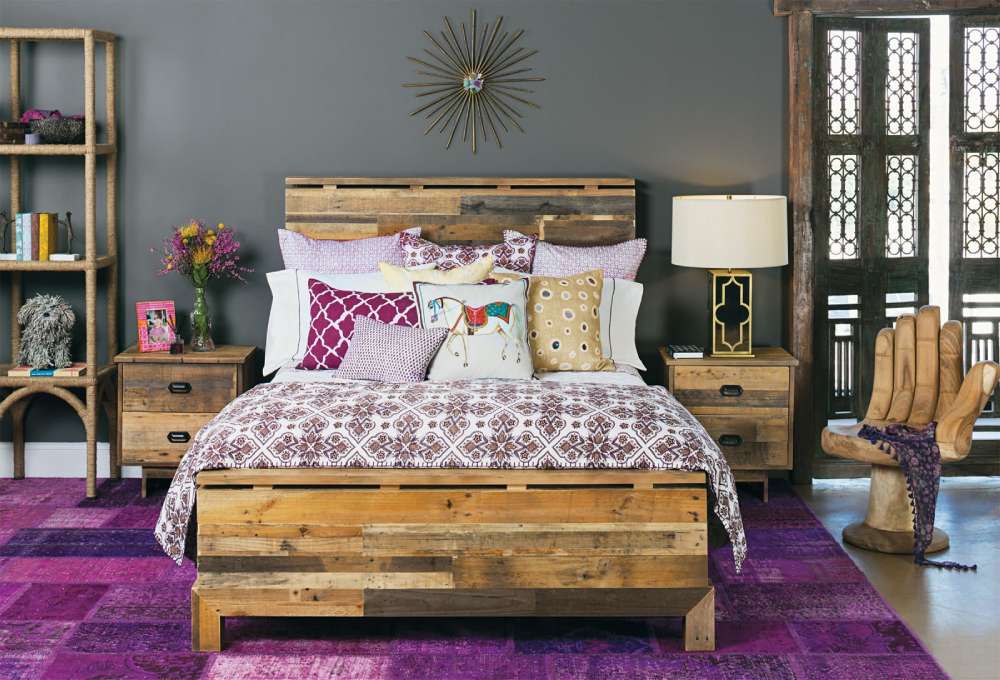
Image source: High Fashion Home
Vintage bedroom decor is a design approach that uses furniture, textiles, and accessories produced roughly 20 to 100 years ago. Or faithful reproductions of those pieces.
The word “vintage” gets thrown around loosely. People use it for anything that looks old. But there’s a real distinction worth knowing.
Antique means the item is over 100 years old. Vintage covers the range from about the 1920s through the early 2000s. Retro refers to new items made to look like they belong to an older period.
These categories matter because they affect price, quality, and authenticity. A genuine 1950s walnut dresser and a retro reproduction from IKEA will behave very differently in a room. One carries actual history in its wood grain and brass pulls. The other borrows the look without the material weight.
What makes vintage bedroom decor interesting is its range. You’re not locked into one era. A brass bed frame from the 1940s works alongside a 1970s rattan nightstand if you handle the color choices carefully. The flexibility is the whole point.
The secondhand furniture market reflects this growing interest. Market.US data shows the global secondhand furniture market was valued at $40.2 billion in 2024, projected to double to $87.6 billion by 2034. eBay’s own Watchlist report found that users searched for “vintage” more than 1,200 times per minute in 2024.
That’s not a niche hobby anymore. That’s a shift in how people furnish their bedrooms.
Popular Vintage Bedroom Styles by Era
Every decade left a fingerprint on bedroom design. Knowing which era speaks to you saves time at estate sales and keeps your room from becoming a confused mix of periods that don’t talk to each other.
Mid-Century Modern Bedrooms
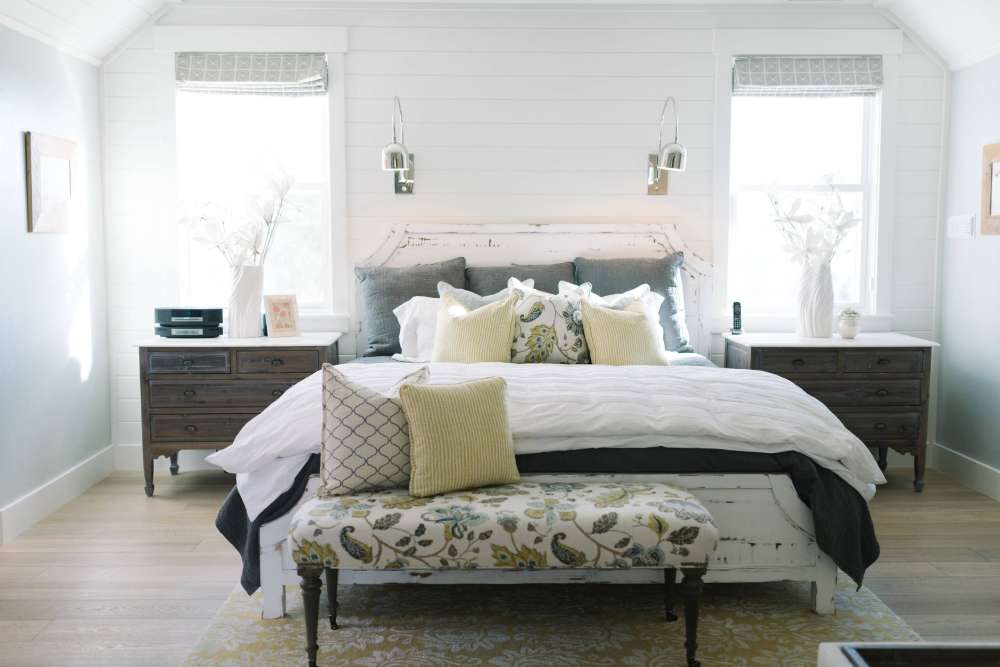
Image source: Four Chairs Furniture
The 1950s and 1960s gave us tapered legs, warm walnut and teak finishes, and organic shapes that still look current. Designers like Charles and Ray Eames and Arne Jacobsen created pieces during this period that remain in production today, which tells you something about how well the proportions hold up.
Mid-century modern bedrooms tend to favor low-profile bed frames, simple dressers with clean horizontal lines, and minimal ornamentation. The palette leans warm: mustard, olive, burnt orange, and lots of natural wood.
If you’re working with a small bedroom, this era is your friend. The furniture was designed for postwar apartments, so most pieces run compact.
Art Deco Bedrooms
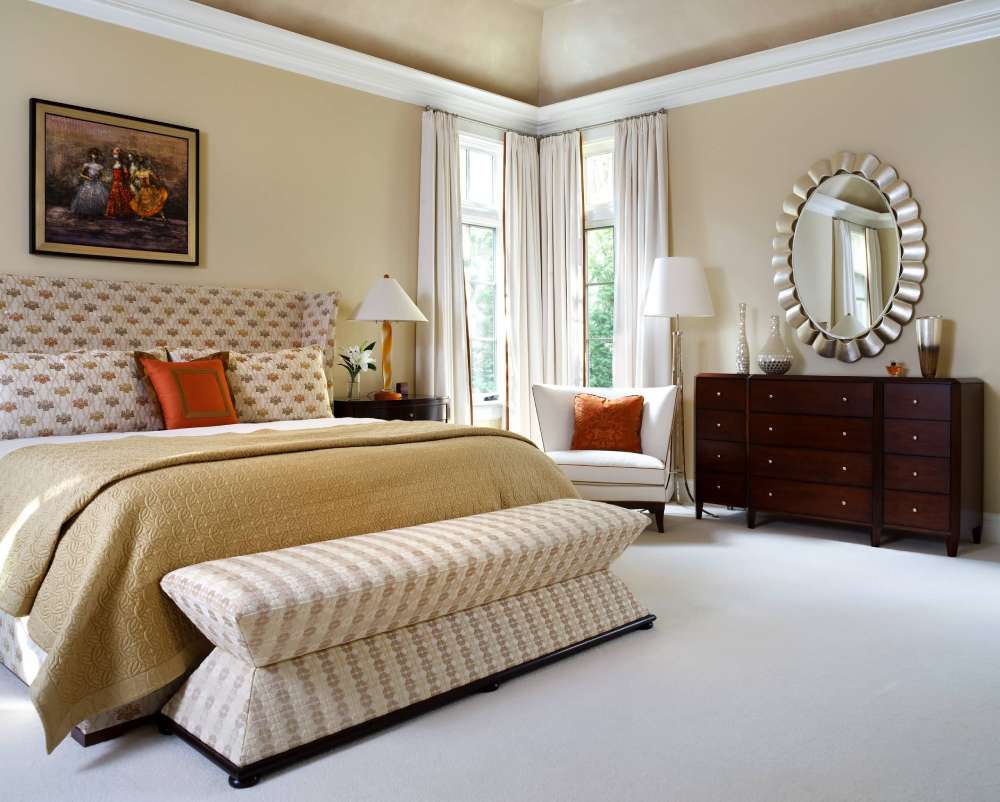
Image source: Sroka Design, Inc.
Art Deco pulls from the 1920s and 1930s. Geometric patterns. Mirrored surfaces. Velvet upholstery in deep jewel tones.
This style works best when treated as a statement rather than a full room commitment. One mirrored vanity table or a geometric sunburst mirror above the bed can anchor the whole space. Going full Art Deco in a bedroom risks feeling like a hotel lobby, at least in my experience.
Expect higher price points for authentic pieces from this era. Art Deco furniture was built with quality materials, and collectors know it.
Bohemian and 1970s-Inspired Bedrooms
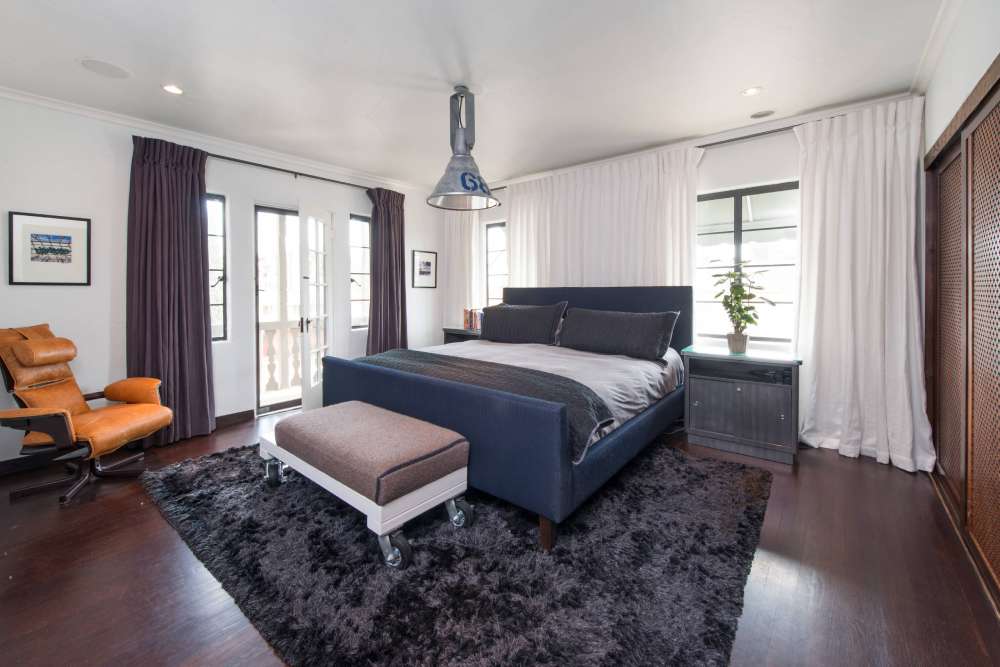
Rattan. Macrame. Bold wallpaper with oversized botanical prints. The 1960s and 1970s brought a relaxed, layered look that Bohemian bedroom design still pulls from heavily.
This is the era where texture matters most. Woven wall hangings, crochet throw blankets, and chenille bedspreads all stack together in ways that feel intentional but not stiff.
One thing to watch: 70s-inspired rooms can slide into costume territory fast. A couple of authentic rattan pieces and a vintage floral quilt go further than filling every surface with macrame.
Mixing Across Decades
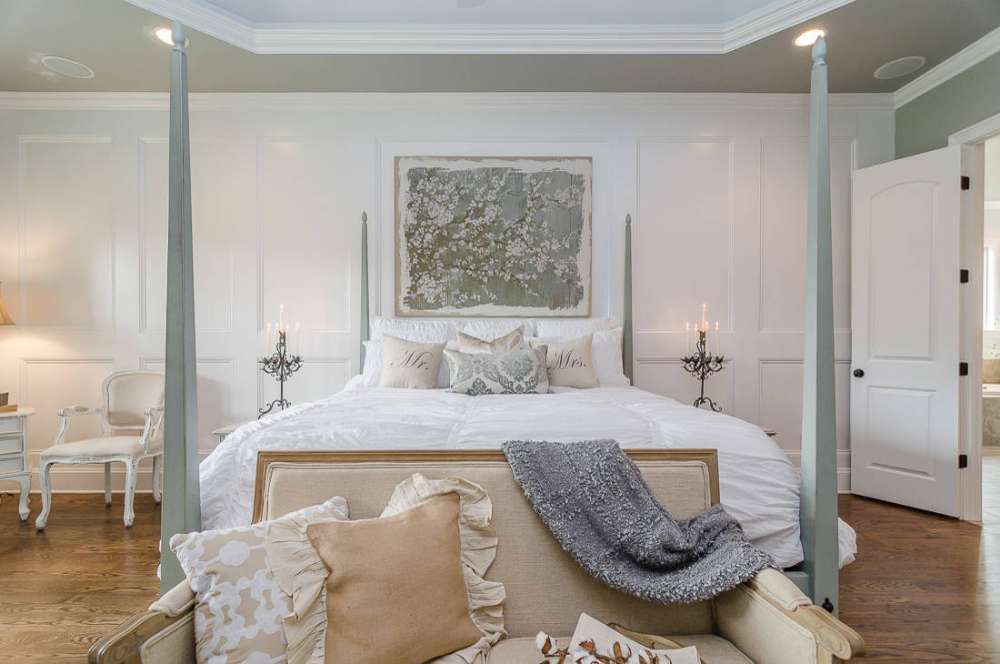
Image source: Styling Spaces Home Staging & Re-Design
Most interesting vintage bedrooms pull from more than one era. A 1950s dresser next to a 1970s rattan chair next to a contemporary bed frame. The trick is keeping one element consistent across all the pieces, usually color or wood tone.
Took me a while to figure that out. Early on, mixing decades felt chaotic until I started anchoring everything to one shared finish or palette.
Vintage Bedroom Color Palettes
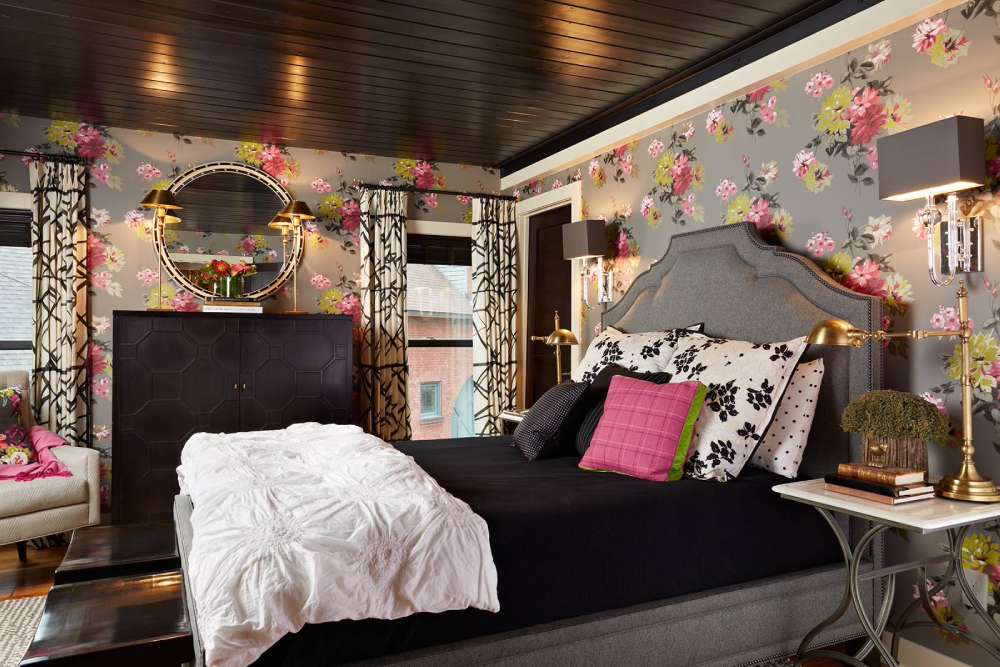
Image source: Fiddlehead Design Group, LLC
Color separates a vintage bedroom that feels authentic from one that just looks old.
The tones that read as genuinely vintage tend to be muted, dusty, and slightly desaturated. Think sage green, blush pink, faded terracotta, and mustard yellow. Bright, saturated versions of those same colors push the room toward retro costume rather than lived-in vintage.
Era-Specific Palettes
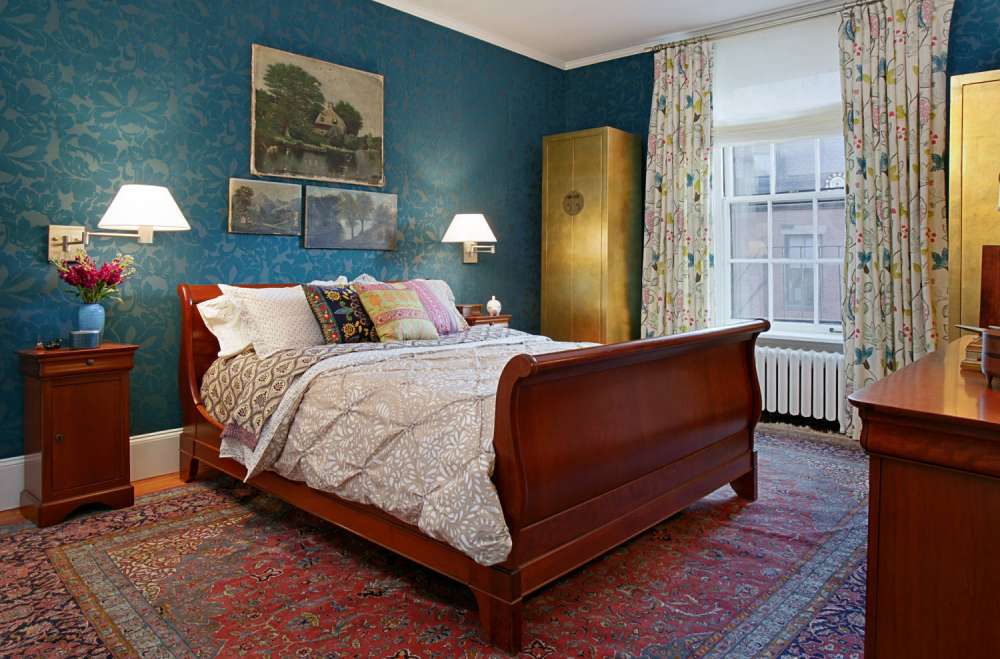
Image source: Kati Curtis Design
Each decade had its own color language.
| Era | Dominant Colors | Mood |
|---|---|---|
| 1920s–30s Art Deco | Black, gold, deep jewel tones (sapphire) | Glamorous, high-contrast, and sophisticated |
| 1950s Mid-Century | Mint green, pale pink, turquoise, cream | Cheerful, optimistic, and structurally clean |
| 1960s–70s Bohemian | Avocado, harvest gold, burnt orange, brown | Warm, earthy, and experimental |
| 1980s–90s Grandmillennial | Dusty rose, sage, cream, soft blue | Romantic, layered, and comforting |
The most common mistake? Picking a wall color without considering how it interacts with the wood tones already in the room. A sage green wall looks completely different behind a honey oak dresser than it does behind a dark walnut headboard.
Paint Brands with Heritage Collections
Farrow & Ball and Benjamin Moore both offer historically informed color collections that take the guesswork out. Sherwin-Williams has a similar range.
These period-accurate palettes are formulated to sit well together, which saves you from spending Saturday afternoon holding paint chips against furniture you already own. Sage green is probably the single most popular vintage bedroom wall color right now. It pairs with nearly every wood species and metal finish from any decade.
If you’re leaning toward pink tones, go dusty rather than bright. Blush and mauve read vintage. Hot pink reads 2005 dorm room.
Key Furniture Pieces for a Vintage Bedroom
Furniture does the heavy lifting in a vintage bedroom. Get the right anchor pieces and the rest falls into place. Get them wrong and no amount of styling fixes it.
Brass and Iron Bed Frames
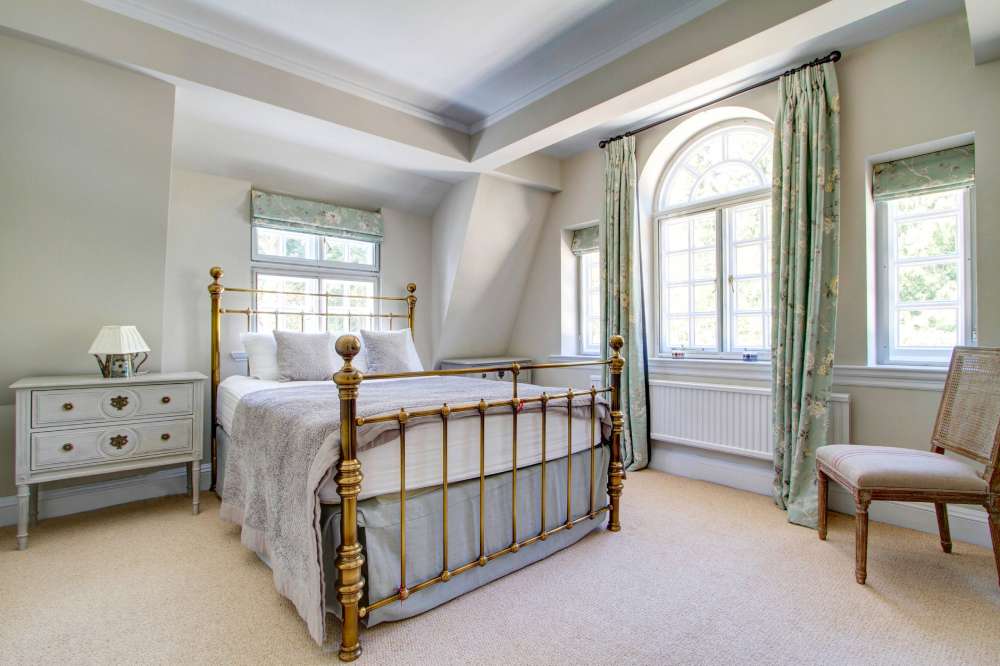
Image source: Stephanie Dunning Interior Design
A brass or iron bed frame is the single fastest way to make a bedroom read as vintage. The form is unmistakable, and authentic frames from the early to mid-1900s were built to last generations.
What to check before buying: test every joint for wobble, look for repairs that were soldered rather than welded (a sign of a quality original fix), and measure the dimensions carefully. Older bed frames often used non-standard sizing. A “full” from the 1940s might not match a modern full mattress exactly.
Expect to pay anywhere from $150 for a simple iron frame at a flea market to $2,000+ for a polished brass frame from a dealer like Chairish or 1stDibs.
Wooden Dressers and Vanities
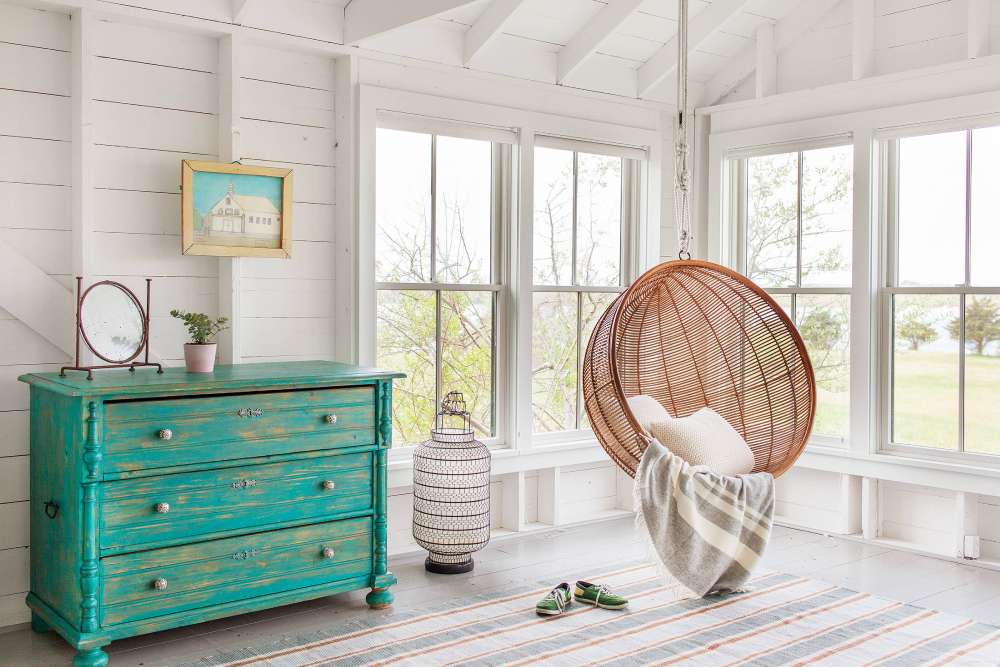
Image source: Sean Litchfield Photography
The dresser is usually the second most expensive piece you’ll buy. Here’s what actually matters when evaluating vintage dressers at an estate sale or on Facebook Marketplace:
- Dovetail joints on the drawers indicate quality construction, especially hand-cut dovetails
- Solid wood vs. veneer: veneer isn’t bad, but check for bubbling, peeling, or water damage at the edges
- Drawer function: pull every drawer in and out, because warped runners are expensive to fix
- Hardware: original pulls and knobs add value, but replacement hardware from companies like Rejuvenation or House of Antique Hardware works fine
Mid-century modern dressers in walnut and teak are some of the most sought-after pieces right now. Fairfield Market Research data shows that platforms like Chairish and Kaiyo saw a 33% sales increase from 2019 to 2022, with 54% of buyers citing environmental reasons.
The Case for Mismatched Nightstands
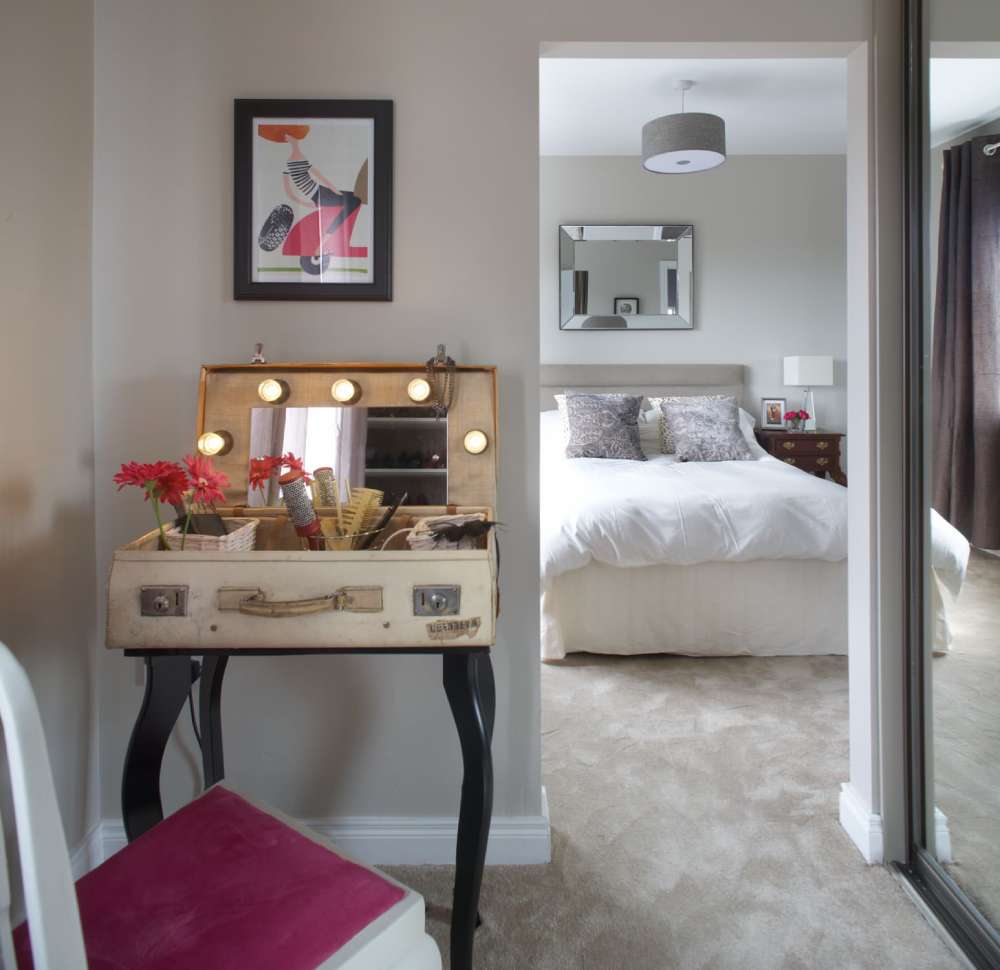
Matching nightstands are a modern retail invention. Vintage bedrooms almost never had them. Using two different but tonally related nightstands (say, one in maple and one in oak, both from similar decades) actually makes a room feel more collected and personal.
This is one of those things that looks “wrong” on paper but works beautifully in practice. It gives the room a sense of asymmetry that feels natural rather than staged.
Vintage Textiles and Bedding
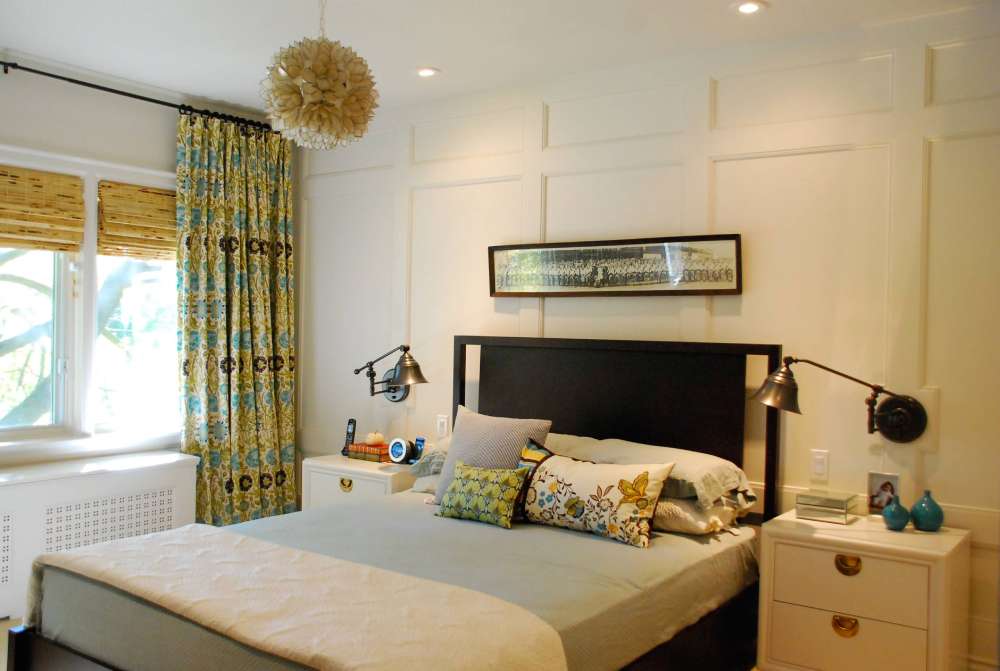
Image source: Jennifer – Rambling Renovators
Textiles are where a vintage bedroom gets its personality. The furniture provides the structure. The fabrics tell the story.
Layering Pieces
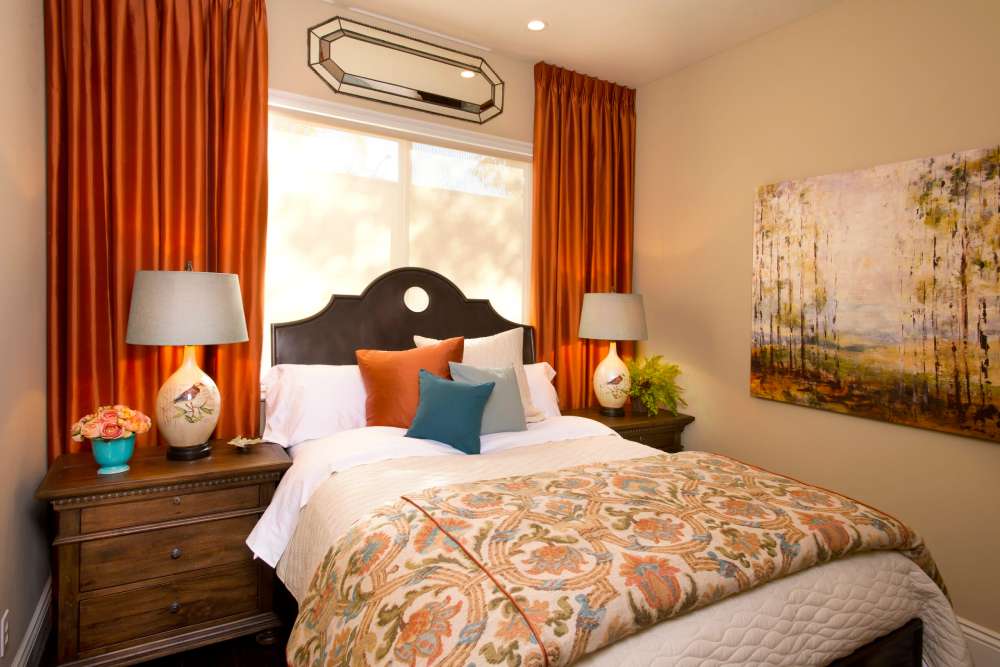
Image source: Robeson Design
Quilts are the backbone of vintage bedding. Handmade quilts from the mid-20th century show up at estate sales regularly, often for under $50. Chenille bedspreads are another strong option, especially the tufted white ones that practically scream 1950s guest bedroom.
Crochet throw blankets add textural depth without visual weight. Layer one at the foot of the bed over a solid-colored quilt and the bed immediately looks more interesting.
For throw pillows, mix sizes and fabrics. A velvet lumbar pillow next to a floral cotton standard pillow next to a small embroidered accent. Vintage bedding was never matchy-matchy, and that’s exactly what gives it warmth.
Sheets and Curtains
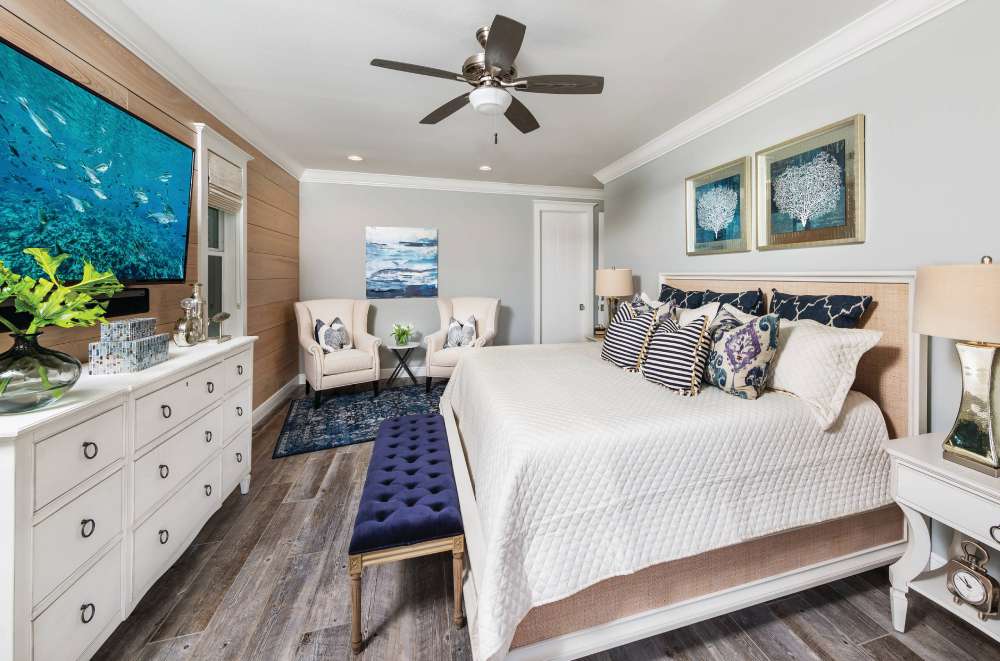
Image source: HOME & DESIGN MAGAZINE NAPLES
Linen and cotton percale sheets read more authentically vintage than sateen. The slightly textured, matte finish of percale matches the era better. Sateen has that smooth sheen that belongs more in a luxury bedroom setup.
For window treatments, the options depend on your era:
- Lace panels for Victorian and early 20th-century looks
- Tab-top cotton drapes for mid-century rooms
- Cafe curtains (covering only the lower half of the window) for cottage and farmhouse vintage
If you have beige walls, lace curtains add softness without competing with the wall color. Heavier drapes in deep tones work better against white walls where you need the windows to carry more visual weight.
Where to Find Vintage Textiles
Etsy’s vintage category is the most reliable online source. Ruby Lane and eBay also carry large selections, though quality varies more on eBay.
For in-person shopping, estate sales consistently have the best textile finds at the lowest prices. Most buyers skip right past the linen closet and go for the furniture, which means quilts, tablecloths, and curtain panels often go for a few dollars each.
Care tip: wash vintage textiles on a gentle cycle with cold water before using them. Some fabrics from the 1960s and earlier were treated with sizing or starch that breaks down over time. A gentle wash removes dust and residue without damaging the fibers.
Wall Decor and Art in Vintage Bedrooms
Walls get neglected in a lot of bedroom makeover projects. People buy the bed, the dresser, maybe a rug, and then leave the walls bare for months. But in a vintage bedroom, the walls do a surprising amount of the work.
Gallery Walls with Thrifted Frames
Image source: Styling Spaces Home Staging & Re-Design
A gallery wall is one of the cheapest ways to make a vintage bedroom feel finished. The approach is simple: collect mismatched frames from thrift stores and flea markets over time, then group them together.
The key is the frames, not the art inside them. Ornate gold frames, simple wood frames, and oval frames from different decades all work together when hung in a tight cluster. You can fill them with botanical prints, vintage family photos, or even pages torn from old books.
Five to eight frames arranged above the bed or along one wall creates a strong focal point without spending much. I’ve put together gallery walls for under $40 total using Goodwill finds.
Vintage Mirrors

Mirrors were a bigger deal in bedrooms before the 1980s than they are now. Gilded mirrors, sunburst mirrors, and beveled-edge mirrors all have a place in vintage bedrooms.
A single large vintage mirror leaning against a wall or mounted above a dresser adds depth to the room and reflects light in ways that make a small space feel bigger. Sunburst mirrors, especially those brass or gold-toned ones from the 1960s, work particularly well as a standalone statement piece above the headboard.
Wallpaper and Accent Walls
Image source: Fiddlehead Design Group, LLC
Toile, damask, and botanical print wallpapers are all deeply connected to vintage bedroom design. A full room of patterned wallpaper can overwhelm a small space, though. A single accent wall behind the bed usually does the job better.
Peel-and-stick wallpaper has made this much more accessible. Brands now offer vintage reproduction patterns that look convincing without the commitment (or cost) of traditional wallpaper installation. Perfect for renters or anyone who changes their mind every couple of years.
According to the EPA, Americans discard over 12 million tons of furniture and home goods annually, with 80% ending up in landfills. Choosing vintage pieces and repurposing old materials, including wallpaper and frames, is one of the more direct ways to push back against that waste cycle.
Alternatives to Framed Art
Plate walls (hanging decorative plates in a cluster) were common in bedrooms through the 1970s and are making a quiet comeback. Textile wall hangings, like small woven pieces or embroidered hoops, add a handmade quality that printed art can’t match.
Both options add visual detail to otherwise flat walls without the cost of framed artwork.
Lighting That Fits a Vintage Bedroom
Lighting can make or break the mood in a vintage bedroom. Get it right and the room feels warm, layered, and lived in. Get it wrong and it looks like a dentist’s office with old furniture.
Global Growth Insights data shows vintage and retro-styled lighting holds a 36% share among new decorative lighting product collections. That tells you manufacturers are paying attention to this demand.
Table Lamps and Bedside Options
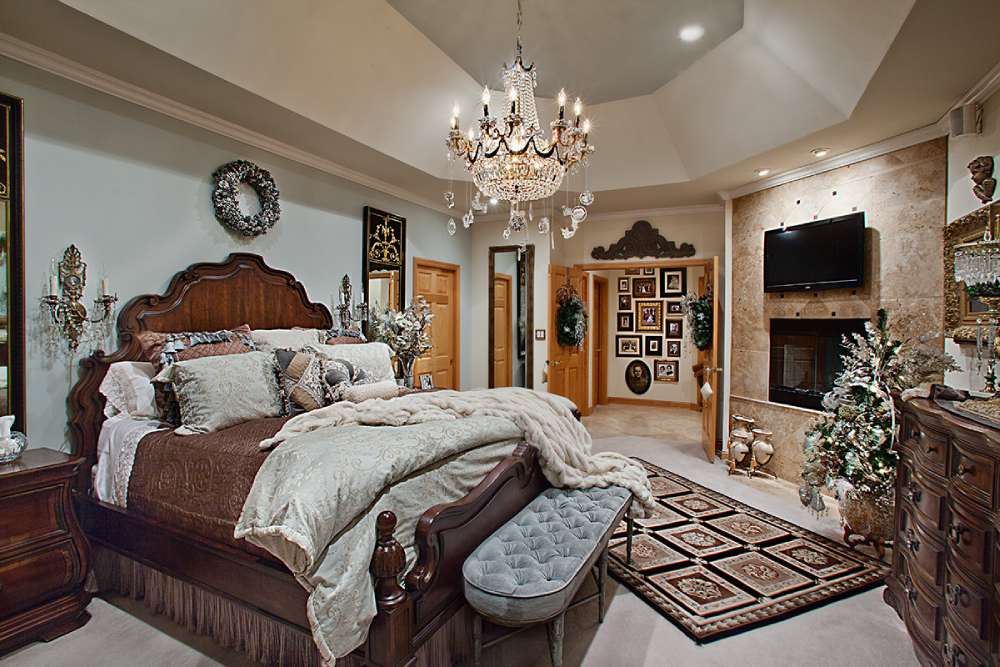
Image source: Spallina Interiors
Ceramic base lamps from the 1950s through 1970s are probably the easiest vintage lighting finds. They show up at nearly every estate sale and thrift store, often priced between $10 and $40.
Other styles that work well on a vintage nightstand:
- Milk glass lamps (white opaque glass, very 1940s-1960s)
- Banker’s lamps with green glass shades
- Tiffany-style stained glass lamps for Art Deco or Victorian setups
Pair a vintage base with a simple linen or pleated fabric shade. The shade does a lot of the work in controlling how much light spills into the room and how warm that light feels.
Overhead Fixtures
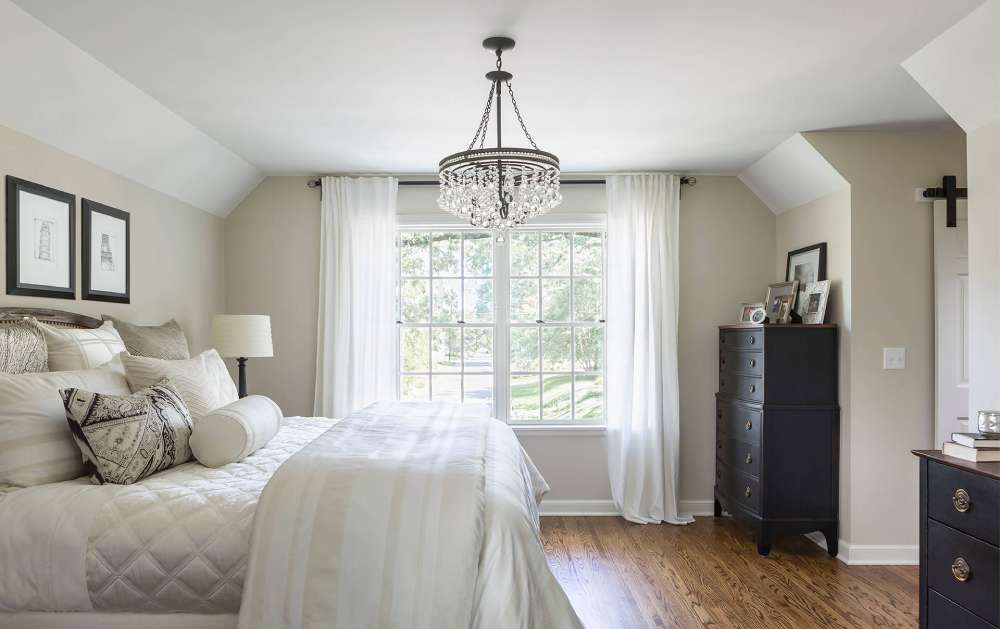
Schoolhouse pendants, glass flush-mount fixtures, and small chandeliers all read as vintage without making the room feel heavy. The right choice depends on ceiling height.
| Ceiling Height | Best Fixture Type | Why It Works |
|---|---|---|
| Under 8 feet | Flush-mount (Glass or low-profile LED) | Space Saver: Sits directly against the ceiling to provide maximum clearance and prevent the room from feeling “cramped.” |
| 8 – 9 feet | Semi-flush or Schoolhouse pendant | The “Sweet Spot”: Drops slightly to add visual depth and “ceiling bounce” light without becoming a head-clearance hazard. |
| Over 9 feet | Chandelier or Multi-tier pendant | Vertical Fill: Uses long downrods to occupy empty air space, creating a focal point and bringing light closer to the living area. |
| Vaulted / Sloped | Adjustable cord pendants or track lighting | Flexibility: Pendants gravity-level themselves, while tracks can be aimed to highlight architectural angles. |
A single pendant light centered over the bed works as a clean alternative to a chandelier. Look for brass or aged bronze finishes to match other vintage metals in the room.
Sconces and Wall-Mounted Lights
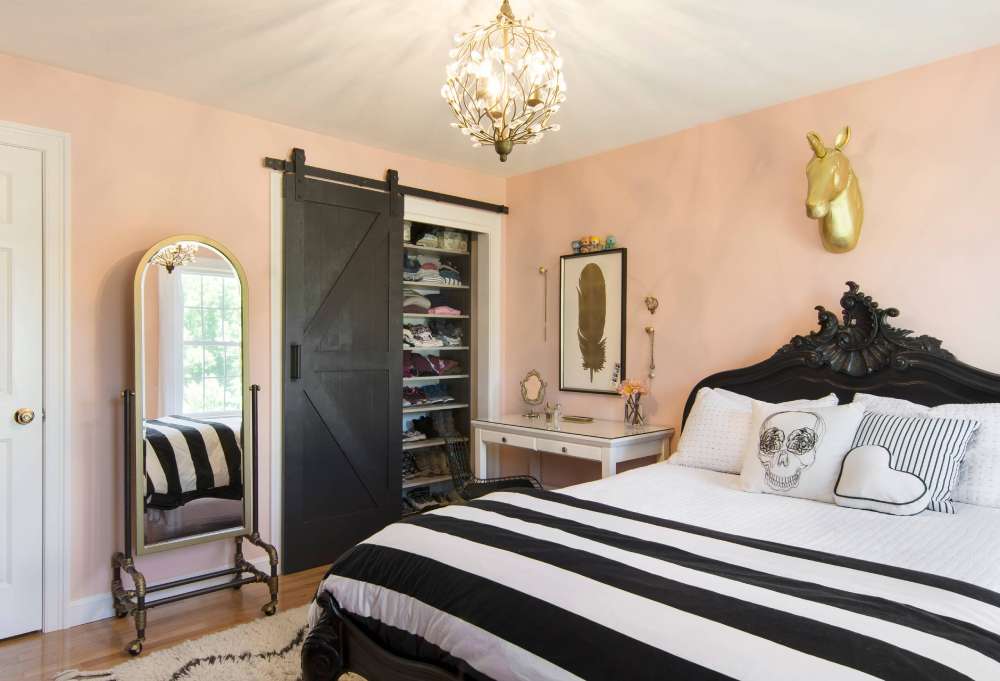
Image source: kelly mcguill home
Wall sconces are an underrated pick for vintage bedrooms, especially small ones where nightstand space is tight.
Mounting sconces on either side of the headboard frees up surface area on your nightstands and adds ambient light at just the right height for reading. Brass swing-arm sconces are the most versatile option, fitting rooms from mid-century to Victorian.
Grand View Research data shows the sconce segment held 34.2% of the decorative lighting market share in 2024, the largest of any fixture type.
Rewiring Vintage Lamps
Any lamp older than 30 or 40 years should be rewired before regular use. A basic table lamp rewire runs $25 to $100 at a local hardware store or electrician, depending on the lamp’s complexity. DIY kits cost under $15 if you’re comfortable doing it yourself.
For bulbs, Edison-style LED filament bulbs give off that warm, period-appropriate glow while using a fraction of the energy. They look right in exposed sockets and glass shades alike.
Where to Source Vintage Bedroom Furniture and Decor
Knowing where to look matters just as much as knowing what to look for. The sourcing landscape has changed a lot in the last five years, and some options are clearly better than others depending on your budget and patience level.
Online Marketplaces
Each platform serves a different price tier and buyer expectation.
| Platform | Price Range | Best For |
|---|---|---|
| Facebook Marketplace | $ – $$ | Local convenience: Best for furniture with same-day pickup and no shipping fees. |
| Etsy (Vintage) | $$ – $$$ | Curated small goods: Best for “Human Premium” items, textiles, and unique home accents. |
| AptDeco | $$ – $$$ | Lightly used modern: Best for verified used furniture from top brands (West Elm, CB2) in metro areas. |
| Chairish | $$$ – $$$$ | Mid-range luxury: Best for authenticated Mid-century modern and designer statement pieces. |
| 1stDibs | $$$$ | Investment grade: Best for high-end antiques, fine art, and museum-quality furniture. |
GM Insights data from 2025 shows that AptDeco, Chairish, eBay, Goodwill, IKEA, and Kaiyo together hold an estimated 20% to 25% of the global secondhand homeware market. These aren’t fringe platforms anymore.
Facebook Marketplace is still the best place for deals. Sellers there often don’t know what they have, and pricing reflects that. But you need to move fast. Good pieces go within hours.
In-Person Sources
Estate sales remain the gold standard. EstateSales.net and its app let you browse upcoming sales by location, see photos of inventory, and plan your route for a Saturday morning.
Other in-person options worth your time:
- Flea markets (arrive early, bring cash)
- Habitat for Humanity ReStores (furniture donations from estate cleanouts)
- Consignment shops (higher prices but items are vetted)
- Goodwill and Salvation Army (hit-or-miss, requires frequent visits)
Reproduction Retailers for Budget Alternatives
Not everything needs to be genuinely old. Anthropologie, World Market, and even IKEA carry vintage-inspired lines that work as filler pieces around authentic anchors.
The trick is not building the entire room from reproductions. One or two real vintage pieces surrounded by well-chosen reproductions reads much better than a room full of “vintage-style” items from a single retailer. You need that sense of harmony that comes from actual variety in age and origin.
Mixing Vintage with Modern in a Bedroom
A full vintage bedroom can tip into museum territory pretty fast. Most people are better off mixing eras, keeping some modern pieces in the room to ground everything and prevent the space from feeling like a time capsule.
The Ratio That Works
Somewhere around 70% vintage, 30% modern tends to hit the sweet spot. Or flip it if you prefer a more contemporary room with vintage accents.
The modern pieces should handle the functional heavy lifting. Your mattress, your everyday bedding, maybe your closet system. These are the things you interact with daily, and comfort matters more than aesthetics here.
The vintage pieces carry the visual identity. Bed frame, dresser, lamps, wall decor. These are what people notice when they walk in.
What to Keep Modern
Always buy new: mattresses and box springs (for hygiene and support), electronics and charging stations, any bedding that touches your skin nightly.
A clean, minimalist platform bed frame paired with a vintage dresser and antique lamps creates a look that feels intentional rather than random. The contrast between the simple modern bed and the more ornate vintage accessories actually makes both look better.
Mistakes That Make Rooms Look Costume-y
Took a while to learn these the hard way.
- Overcrowding: vintage pieces tend to have more visual weight, so you need fewer of them than you think
- Ignoring scale: a massive Victorian armoire in a small room with a low ceiling just doesn’t work, no matter how beautiful the piece is
- Clashing wood tones: three different wood species in three different finishes reads as chaotic, not eclectic
Understanding scale and proportion matters more in a vintage bedroom than almost any other style. Because these pieces weren’t designed to go together, you have to be the one who creates visual unity through careful selection.
Residential buyers made up 58.72% of secondhand furniture sales in 2024, according to Mordor Intelligence. The majority of those buyers are mixing vintage with modern, not furnishing entirely in one era.
Vintage Bedroom Decor on a Budget
You don’t need a big budget for this. Some of the best vintage bedrooms I’ve put together cost less than a single new dresser from a department store. It just takes patience and knowing where to put your money.
DIY Refinishing Basics
Annie Sloan Chalk Paint changed the DIY furniture game when it hit the market. No sanding, no priming. Just paint directly onto wood, metal, or even laminate.
Deep Market Insights valued the global furniture paint market at $9.82 billion in 2024, with residential applications accounting for about 70% of demand. The DIY segment keeps growing because the barrier to entry is so low.
A basic refinishing kit costs under $50: one quart of chalk paint, a brush, a small can of finishing wax, and new hardware pulls. That’s enough to completely transform a dresser or nightstand.
What to Buy Vintage vs. What to Buy New
Buy vintage: dressers, nightstands, mirrors, lamps, frames, decorative objects, quilts, accent chairs.
Buy new: mattresses (always), sheets that touch your skin, anything with upholstery you can’t easily clean, and light bulbs.
The logic is simple. Hard furniture with solid construction (wood, metal, glass) lasts decades and often improves with age. Soft goods that absorb moisture, dust, and skin oils are better replaced. Your mileage may vary with vintage quilts and throws, but those get washed before use anyway.
Timing Your Purchases
January and late summer are the best times for estate sale deals. Executors want to close out properties, and foot traffic drops after the holidays. That’s when you find walnut dressers for $75 that would be $400 on Chairish.
Online markdowns hit hardest in the weeks following major holidays, especially after Christmas and the New Year, when sellers on Facebook Marketplace, Etsy, and eBay clear inventory.
Free and Low-Cost Sources
Buy Nothing groups on Facebook are genuinely useful for finding vintage pieces. People clean out parents’ homes and give away furniture that has real value. I’ve seen solid wood headboards and mid-century nightstands go for free because the person just wanted them gone by Tuesday.
Curbside finds are hit or miss, but in older neighborhoods they can be remarkable. Always check for bedbugs and structural damage before bringing anything upholstered inside.
Small Changes, Big Impact
You don’t always need new furniture. Swapping brass or ceramic knobs on an existing dresser, adding a vintage-style switch plate cover, or changing a lamp shade to a pleated fabric one can shift the entire feel of a bedroom for under $20.
If you’re living in an apartment and can’t make permanent changes, vintage apartment styling comes down to these small, reversible updates. Layered bedding, a few thrifted frames, and one good lamp can transform a basic rental bedroom into something with real character.
FAQ on Vintage Bedroom Decor
What counts as vintage bedroom decor?
Vintage refers to furniture, textiles, and accessories made roughly 20 to 100 years ago. That covers everything from Art Deco mirrors to mid-century modern dressers to 1980s floral bedding. Anything older than 100 years is technically antique.
What is the best era for vintage bedroom furniture?
Mid-century modern (1950s-1960s) is the most popular right now because the pieces are compact, functional, and blend easily with contemporary rooms. But 1970s bohemian and Victorian styles both have loyal followings too.
Where can I buy authentic vintage bedroom pieces?
Estate sales offer the best pricing. Online, try Chairish, Etsy’s vintage category, and Facebook Marketplace. For higher-end items, 1stDibs and AptDeco carry authenticated pieces with detailed condition descriptions.
How do I mix vintage and modern furniture in a bedroom?
Keep modern pieces for daily-use items like your mattress and sheets. Let vintage carry the visual identity through the bed frame, dresser, and lamps. A 70/30 ratio between vintage and modern usually works well.
What colors work best in a vintage bedroom?
Muted, dusty tones read as authentically vintage. Sage green, blush pink, mustard yellow, and faded terracotta are reliable picks. Pair wall colors with gold accents for warmth, especially in Art Deco rooms.
Is vintage bedroom decor expensive?
It can be surprisingly affordable. Thrift stores, Goodwill, and Buy Nothing groups offer quality pieces for very little. DIY refinishing with chalk paint keeps costs under $50 per piece. Patience matters more than budget here.
How do I know if vintage furniture is good quality?
Check for dovetail joints on drawers, solid wood construction, and smooth drawer function. Avoid pieces with major veneer peeling or structural wobble. Original hardware and a patina finish are signs of a keeper.
Should I rewire a vintage lamp before using it?
Yes. Any lamp older than 30 years should be rewired for safety. A basic rewire costs $25 to $100 at a local shop. Pair rewired vintage bases with Edison-style LED bulbs for period-appropriate warmth.
What vintage textiles should I use for bedding?
Quilts, chenille bedspreads, and crochet throw blankets are the go-to layering pieces. Cotton percale sheets feel more authentic than sateen. Look for vintage textiles at estate sales and Etsy, and always wash gently before first use.
Can I create a vintage bedroom in a rental apartment?
Absolutely. Focus on reversible changes: layered bedding, thrifted frames for a gallery wall, a statement vintage lamp, and shabby chic accessories. Peel-and-stick wallpaper on one wall adds character without losing your deposit.
Conclusion
A vintage bedroom decor project doesn’t require a big budget or a professional eye. It requires patience, a few good sourcing habits, and the willingness to let a room come together over time rather than all at once.
Start with one anchor piece. A brass bed frame, a solid walnut dresser, or even a well-chosen quilt. Build around it slowly with thrifted finds, rustic accents, and layered textiles that add warmth without clutter.
The secondhand furniture market keeps growing for a reason. People want rooms that feel personal, sustainable, and built from pieces with actual history.
Skip the catalog bedroom. Collect the one that tells a story. The pieces are out there, sitting in estate sales and flea markets, waiting for someone who sees what they could become.

- Paint Colors That Go with Gray Floors - August 20, 2026
- What Color Bedding Goes with Dark Wood Furniture - August 18, 2026
- What Color Walls Go with Oak Floors - August 16, 2026


