Color Combinations
What Color Sofa Goes with Gray Walls
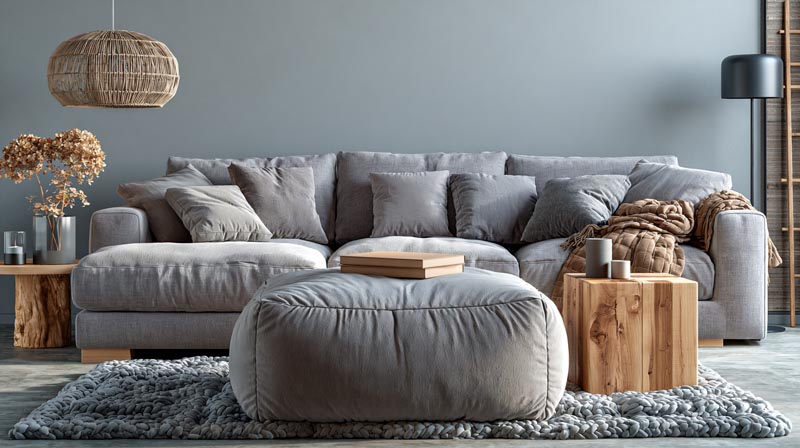
Gray walls look great until the sofa arrives and something feels off.
Knowing what color sofa goes with gray walls is not just about picking a shade you like. It comes down to undertones, light reflectance value, and color contrast working together.
Get it wrong and even an expensive sofa looks out of place. Get it right and the whole room clicks.
This guide covers the 8 best sofa colors for gray walls, how warm vs. cool gray changes every decision, and how to test any color before you buy.
For wall and accent colors to go with it, see our chart of which colors go together.
What Makes a Sofa Color Work With Gray Walls?
A sofa color works with gray walls when the undertones align, the contrast level suits the room’s light conditions, and the color relationship follows the 60-30-10 rule. These 3 factors determine whether a pairing looks intentional or accidental.
Gray is not a single color. It reads completely differently depending on whether it carries warm, cool, or neutral undertones, and that changes every sofa pairing decision that follows.
Warm Gray vs. Cool Gray: Why It Changes Everything
Warm gray carries beige or greige undertones. Sherwin-Williams Agreeable Gray (LRV 60) is the classic example. It pulls toward brown in natural light, which means it pairs with warm sofa colors: camel, tan, cream, sage green, and warm navy.
Cool gray carries blue or purple undertones. Benjamin Moore Stonington Gray HC-170 is a typical cool gray. It pairs with sofas that have cool or neutral undertones: charcoal, off-white, dusty rose, and true navy.
Pairing a warm-toned camel sofa with a cool blue-gray wall is one of the most common mistakes. The undertones fight each other and neither reads as intentional.
Light Reflectance Value and Sofa Color Contrast
LRV measures how much light a surface reflects on a scale of 0 to 100. Sherwin-Williams Repose Gray sits at LRV 58. A sofa in a color with a similar LRV will visually disappear into the wall.
British Standards Institute guidelines require a minimum 30-point LRV difference between surfaces for adequate visual contrast (BS 8300:2018). That same principle applies to sofa and wall pairings in interior design.
A cream sofa against a medium gray wall, for example, has a contrast gap of roughly 30 to 40 points. That gap makes the sofa read as a distinct design element rather than a blurry extension of the wall.
How Natural Light Shifts the Pairing
North-facing rooms amplify cool undertones in gray paint, making already-cool grays feel cold. Warmer sofa colors (camel, warm beige, mustard) correct this.
South-facing rooms with strong light can wash out light sofa colors against light gray walls. Mid-tone or saturated sofa colors hold their own better in high-light conditions.
The same blue sofa can feel energizing in bright morning light and calm in soft evening light, according to color psychology research. Testing fabric swatches at different times of day before buying is the only reliable check.
The 60-30-10 Color Rule Applied to Gray Rooms
In a gray-walled living room, the 60-30-10 color balance rule works like this:
- 60%: Gray walls as the dominant backdrop
- 30%: Sofa as the secondary color
- 10%: Accent colors in pillows, rugs, and accessories
The sofa carries 30% of the room’s color weight. A wrong sofa color does not just look off on its own. It throws the entire 60-30-10 balance out.
—
What Sofa Colors Go With Gray Walls?
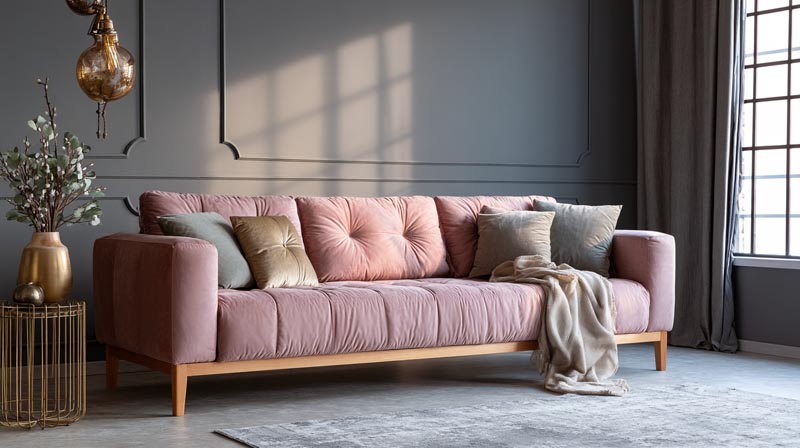
8 sofa colors work well with gray walls: white and off-white, navy and deep blue, charcoal, camel and tan leather, blush and dusty rose, sage and olive green, mustard and gold, and warm beige and greige. Each works differently depending on the gray’s undertone and the room’s light level.
According to a 2024 report by Living Cozy analyzing Google and Instagram searches, green is the most-searched color for living room designs for the second year running, which explains why sage and olive green sofas have moved from specialty choice to mainstream option against gray walls.
| Sofa Color | Best With | Contrast Level |
|---|---|---|
| White / Off-white | Any gray undertone | High |
| Navy blue | Cool or neutral gray | High |
| Charcoal | Light gray walls only | Medium-High |
| Camel / Tan leather | Warm gray (Agreeable Gray) | Medium |
| Blush / Dusty rose | Cool or neutral gray | Low-Medium |
| Sage / Olive green | Warm or neutral gray | Medium |
| Mustard / Gold | Warm gray | Medium-High |
| Warm beige / Greige | Warm gray | Low-Medium |
White and Off-White Sofas
White and off-white sofas deliver the highest contrast against any gray wall. They work regardless of the gray’s undertone, which makes them the most flexible sofa color for gray rooms.
Ivory and cream pull slightly warm, making them a stronger match for warm grays like Agreeable Gray. Pure white works better against cool grays with blue or purple undertones where a warmer white would clash.
Navy and Deep Blue Sofas
Navy sits on the cool side of the color wheel. It pairs best with cool or neutral gray walls rather than warm greige grays where the undertone conflict creates a muddy, unresolved look.
Interior designer Betsy Wentz notes that blue works well with all colors and functions as a neutral in many contexts. In a cool gray room, a navy sofa anchors the space without competing with the wall color.
Charcoal and Dark Gray Sofas
A charcoal sofa against a light gray wall is a tonal pairing. It relies on an LRV gap of roughly 30 or more points to keep the two surfaces visually distinct. Without enough LRV difference, both surfaces flatten into each other.
Texture carries the weight here. A bouclé or velvet charcoal sofa reflects light differently than the matte paint surface behind it, creating contrast through material rather than color alone.
Camel and Tan Leather Sofas
Camel is a warm, earthy tone that works specifically with warm grays. Against Sherwin-Williams Agreeable Gray or similar warm greige walls, camel leather reads as intentional and grounded.
Livingetc editor Hugh Metcalf and Austin-based designer Shelby Van Daley both identified natural brown tones as a timeless furniture color choice in 2025 trend reporting. Against warm gray walls, camel performs exactly as described: warm, rich, and lasting.
Blush and Dusty Rose Sofas
Dusty rose and blush sofas carry a muted pink-grey undertone that pairs well with cool and neutral grays. The shared gray base in both the wall and the sofa fabric creates natural cohesion rather than a forced contrast.
A blush velvet sofa against Benjamin Moore Repose Gray, for example, reads as a deliberate, sophisticated pairing. The velvet’s light-reflective quality separates the sofa visually from the matte wall surface behind it.
Sage and Olive Green Sofas
Sage and olive green carry warm, earthy undertones. They pair with warm gray walls where the shared warmth creates a coherent, nature-inspired room palette.
King Living’s 2025 Trend Report notes a measurable shift away from cool grays and blues toward nature-inspired tones including forest greens and earthy olives. In a warm gray room, an olive green sofa fits that direction without requiring a full room overhaul.
Mustard and Gold Sofas
Mustard yellow sits at high contrast against gray walls. It works specifically with warm grays because the yellow undertone of mustard clashes with the blue undertone of cool grays.
Used as a statement sofa in a warm gray room, mustard acts as the room’s accent and the 10% color element at the same time, removing the need for additional bright accessories to complete the palette.
Warm Beige and Greige Sofas
Warm beige and greige sofas are a low-contrast pairing for warm gray walls. They create a tonal, layered room rather than a high-contrast one. The risk is that both surfaces blend together without enough texture variation to separate them visually.
A greige sofa in a textured fabric, like a chunky linen weave or a ribbed upholstery, against Agreeable Gray walls creates a livable, calming room. Without that texture difference, the pairing looks flat.
—
Does Gray Wall Shade Change Which Sofa Color Works?
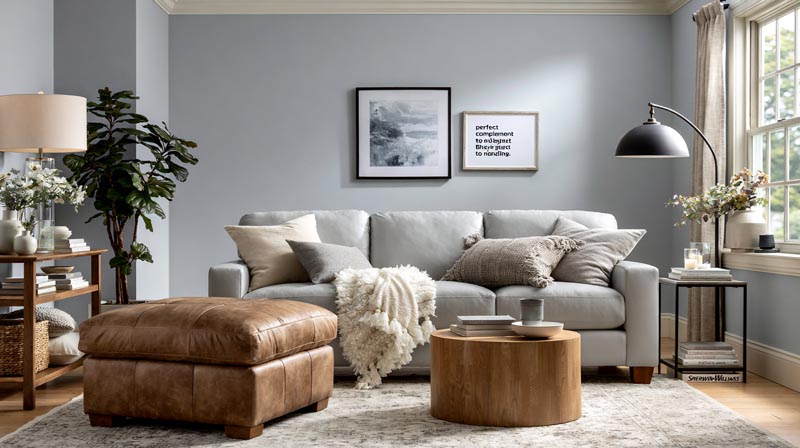
Yes. The specific shade and undertone of a gray wall directly determines which sofa colors work and which ones fail. A sofa color that looks perfect against Agreeable Gray (warm greige) can look wrong against Stonington Gray (cool, slightly blue).
Sherwin-Williams Agreeable Gray (LRV 60) remained one of the brand’s best-selling paint colors through 2024, described by Sue Wadden, Director of Color Marketing at Sherwin-Williams, as “the perfect complement to just about anything.” That versatility comes from its warm undertone, which broadens the range of sofa colors it accepts.
Warm Gray Walls and Their Sofa Pairings
Warm grays pull toward beige, brown, or gold. Common warm grays include Sherwin-Williams Agreeable Gray, Benjamin Moore Pale Oak, and Sherwin-Williams Accessible Beige.
Sofa colors that work with warm gray:
- Camel and tan leather
- Warm cream and ivory
- Sage and olive green
- Mustard and warm gold
- Warm beige and greige
Navy and cool charcoal can still work against warm gray, but they require warm accent colors like brass, rust, or terracotta to bridge the undertone gap.
Cool Gray Walls and Their Sofa Pairings
Cool grays pull toward blue, lavender, or slate. Benjamin Moore Stonington Gray HC-170, Sherwin-Williams Repose Gray (technically near-neutral with a faint cool lean), and Benjamin Moore Steel Blue Gray all fall into this category.
Sofa colors that work with cool gray:
- True white and crisp off-white
- Navy and deep ink blue
- Dusty rose and blush
- Charcoal (with LRV gap of 30+ points)
Camel and warm mustard tend to fight cool gray walls. The warm-cool undertone clash creates visual tension rather than contrast.
How to Identify Your Gray Wall’s Undertone
Hold a clean white piece of paper flat against the painted wall in natural daylight. The color the gray appears to shift toward next to pure white reveals its undertone.
Blue or purple shift = cool gray. Brown or gold shift = warm gray. No visible shift = true neutral gray, which accepts the widest range of sofa colors.
—
What Sofa Color Works Best in a Dark Gray Room?
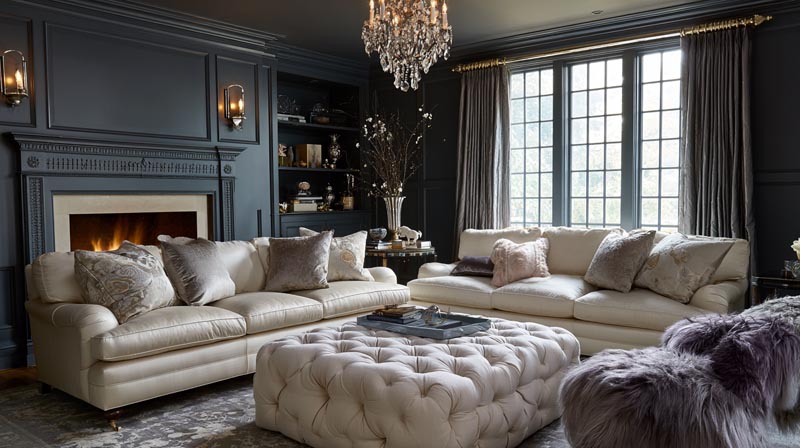
Light and high-contrast sofa colors work best in dark gray rooms. Cream, ivory, warm white, and pale blush sofas prevent a charcoal or deep gray room from feeling heavy and closed. Mid-tone sofas in the same dark range flatten the room entirely.
Dark gray walls have an LRV typically below 30. To meet the 30-point LRV contrast threshold, a sofa needs an LRV of 60 or above. That places cream, ivory, and off-white sofas in the correct range.
High-Contrast Sofas for Dark Gray Walls
Cream and ivory sofas are the most reliable choice. They are bright enough to separate from the wall, warm enough to prevent the room from feeling cold, and neutral enough to anchor other accent colors.
Warm white against a dark charcoal wall, like Sherwin-Williams Peppercorn or Benjamin Moore Dark Pewter, creates a deliberate, high-contrast room palette. Interior designer Nate Berkus described his preference for grays with putty or taupe undertones because they feel “rich and maybe a bit more historic.” That quality pairs naturally with warm, creamy upholstery.
Tone-on-Tone Approaches That Work
When to try tonal: Only when sofa fabric texture is genuinely distinct from the wall surface. A deep charcoal velvet sofa against Peppercorn walls requires the velvet’s sheen and pile to carry all the visual separation.
When tonal fails: Flat-woven or linen charcoal sofas against matte dark gray paint. Both surfaces absorb light similarly. The room looks like one undifferentiated mass.
Room Size Considerations for Dark Gray Walls
Fixr.com’s 2024 Paint and Color Trends Report found that 34% of design experts say dark hues can make spaces appear larger through added depth. But that effect requires contrast elements, not same-tone furniture, to define the layers of depth.
In rooms under 150 square feet, a dark gray wall combined with a mid-tone or dark sofa removes all spatial definition. A light sofa is the correction that restores the depth effect without making the room feel smaller.
—
What Sofa Color Works Best in a Light Gray Room?
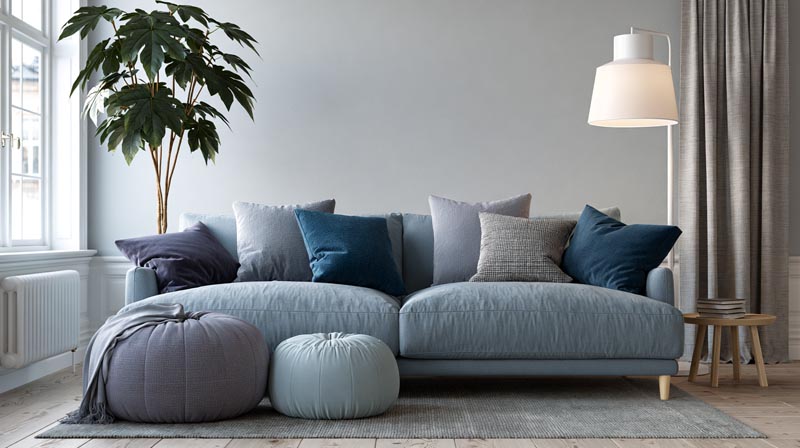
Mid-tone and saturated sofa colors work best in light gray rooms. Very light sofas against light gray walls flatten the room visually. A sofa needs enough color depth to anchor the space and prevent everything from washing out.
Sherwin-Williams Repose Gray (LRV 58) and Agreeable Gray (LRV 60) represent the most commonly used light-to-medium gray wall shades. Against these, a sofa with an LRV between 20 and 45 creates the visual anchor the room needs.
Mid-Tone Sofas That Anchor Light Gray Rooms
| Sofa Color | LRV Range | Effect in Light Gray Room |
|---|---|---|
| Navy blue | 5–15 | Strong anchor, high contrast |
| Camel leather | 25–40 | Warm anchor, medium contrast |
| Sage green | 20–35 | Organic anchor, earthy contrast |
| Charcoal | 10–25 | Dramatic anchor, tonal contrast |
| Mustard | 30–45 | Warm pop in warm-undertone rooms |
Why Very Light Sofas Fail in Light Gray Rooms
A cream or ivory sofa against Agreeable Gray walls has an LRV gap of roughly 15 to 25 points. That gap is below the 30-point contrast threshold that creates visual separation.
The result is a room that feels washed out rather than layered. Both surfaces compete for the “lightest thing in the room” position without either winning clearly.
The exception is when the light sofa has a distinctly different texture, like a heavily textured bouclé or a shearling sofa, where material contrast compensates for the low color contrast.
Fabric Choices for Light Gray Rooms
Velvet: Reflects light directionally, adding depth to mid-tone sofas and making them appear richer against flat matte gray walls.
Linen and cotton: Absorb light and soften color. A linen sofa will appear lighter and flatter than the same color in velvet against the same gray wall.
Leather: Creates contrast through surface quality rather than color alone. A camel leather sofa against Agreeable Gray reads as distinctly different in surface texture even when the color contrast is moderate.
—
How Does Sofa Fabric Affect Color Against Gray Walls?
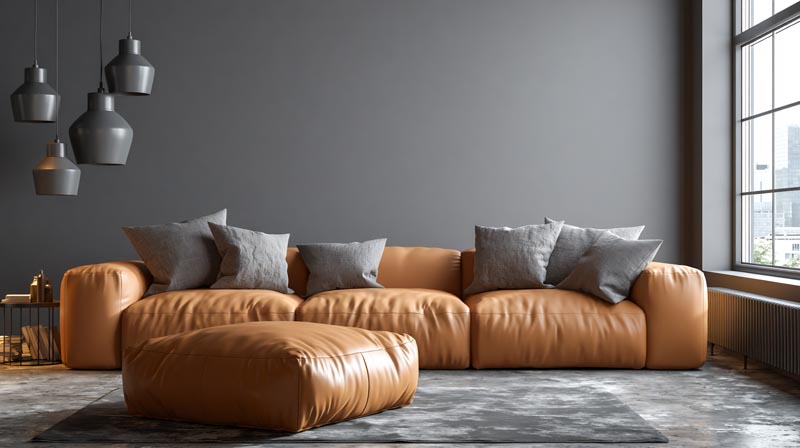
Sofa fabric changes how a color reads against gray walls more than most buyers expect. The same camel color in linen versus leather looks noticeably different against the same gray wall because the fabric surface changes how much light the sofa reflects and absorbs.
Research on consumer furniture color preferences published in ResearchGate notes that the lighting environment and finishing processes applied to furniture surfaces are directly influential on how colors appear and are perceived in the actual use environment, separate from how they appeared during selection.
Matte Fabrics: Linen, Cotton, and Flat Weaves
Matte fabrics absorb light rather than reflecting it. A linen sofa in navy will appear softer and less saturated against gray walls than the same navy in velvet.
When matte works: When the sofa color itself provides enough contrast through hue and LRV difference. A dark charcoal linen sofa against light gray Repose Gray walls still reads clearly because the LRV gap is large enough.
When matte fails: When the sofa color is already close to the wall in LRV. A warm beige linen sofa against greige gray walls in a flat weave disappears entirely.
Reflective Fabrics: Velvet and Leather
Velvet reflects light directionally, which means the sofa appears to shift in tone as natural light moves through the room. A sage green velvet sofa can read as deep olive in morning shadow and as a true sage in afternoon light.
This is useful in light gray rooms where contrast needs to work harder. The shifting reflectance of velvet keeps the sofa visually distinct from the static matte wall behind it throughout the day.
Leather creates separation through surface quality. Even a camel leather sofa in a moderate LRV range separates clearly from a matte gray wall because the surface textures are categorically different.
Bouclé and Textured Weaves
Bouclé is particularly effective in tonal gray rooms. A warm gray or off-white bouclé sofa against light gray walls relies entirely on the three-dimensional texture of the fabric to create visual interest where color contrast is minimal.
West Elm and Pottery Barn both expanded their bouclé sofa offerings significantly between 2022 and 2024, driven by consumer demand for texture-forward neutral sofas in gray-dominant living rooms. The commercial success of this category confirms that texture is increasingly used as the primary contrast tool in neutral rooms.
—
What Accent Colors Tie a Gray Wall and Sofa Together?
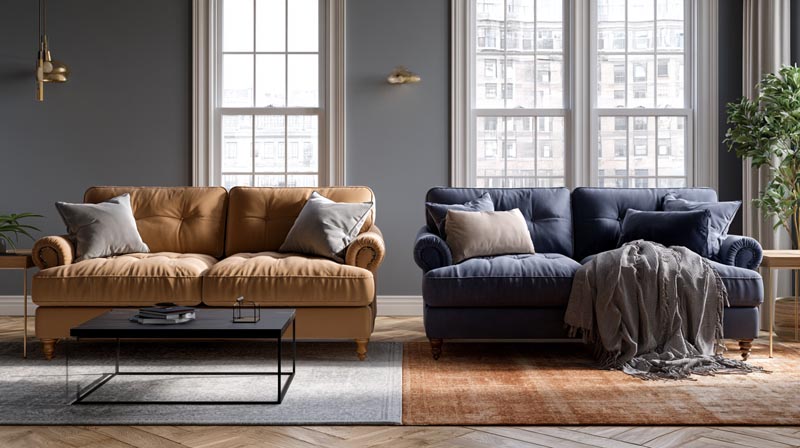
The right accent colors bridge the gap between sofa and gray wall by introducing a third element that shares qualities with both. Brass hardware connects a camel sofa to cool gray walls. A rust-toned rug bridges a navy sofa and warm gray walls. Without these connectors, even a correctly chosen sofa can look isolated in a gray room.
According to Fixr.com’s 2024 Paint and Color Trends Report, 46% of design experts identified earthy tones as the most popular color palette, which aligns with the growing use of terracotta, rust, and warm brass as accent connectors in gray living rooms.
Rug Colors That Ground the Sofa-Wall Relationship
The rug sits between the wall and the sofa, physically and visually. It is the single most effective accent tool for connecting a sofa color to gray walls.
For navy sofa and cool gray walls: A warm rust or terracotta rug adds warmth that prevents the room from reading as entirely cold.
For camel sofa and warm gray walls: A cream or warm ivory rug continues the warm undertone logic and ties the floor to both sofa and wall.
For charcoal sofa and light gray walls: A patterned rug with both light and dark tones mirrors the sofa-wall contrast relationship in a smaller, integrated format. See rug choices for grey couches for pattern-based options that work across different gray room configurations.
Pillow and Throw Logic for Gray Rooms
Throw pillows on the sofa serve 2 functions: they add color variation on the sofa itself, and they echo accent colors elsewhere in the room to create a coherent color scheme.
For a camel sofa against warm gray walls, pillows in warm navy or deep teal add the missing cool element that prevents the room from feeling overly warm. For a navy sofa against cool gray, rust or mustard pillows introduce warmth. The right decorative pillow combinations on a sofa follow the same undertone rules as the sofa color itself.
Hardware and Natural Materials
Brass and gold hardware bridges warm sofas to cool gray walls by introducing a third warm element at a smaller scale. A navy sofa against Stonington Gray walls with brass lamp bases and picture frames looks considered rather than disconnected.
Natural wood tones, plants, and woven textures act as neutral connectors across most sofa-gray wall combinations. They carry no strong undertone allegiance, which means they reduce visual tension between mismatched undertones without demanding a full redesign. This connects to broader biophilic design principles where natural materials ground any interior color palette.
What Sofa Colors to Avoid With Gray Walls?
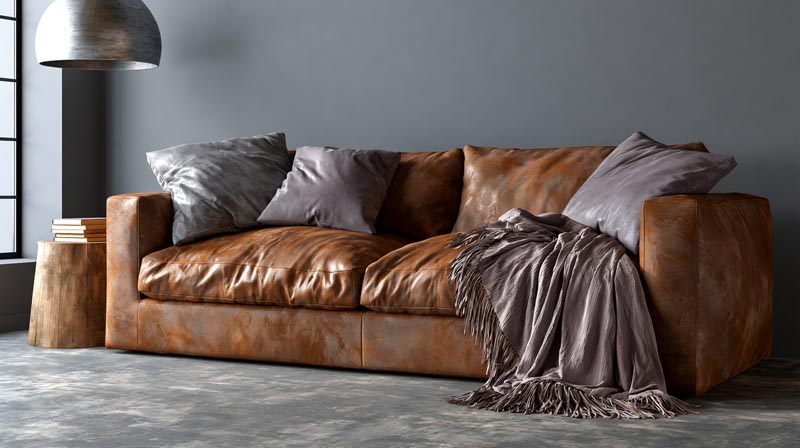
3 categories of sofa colors create problems with gray walls: undertone conflicts, same-LRV flatness, and trend-dated combinations. All 3 are avoidable once you know what to look for.
The most common mistake is not choosing an ugly color. It is choosing a color with the wrong undertone for the specific gray on the wall. A warm orange-red sofa against a cool blue-gray wall is the clearest example of this failure.
Undertone Conflicts That Always Look Wrong
Interior design expert Lubo Todorov of Raft Furniture states that pairing a sofa with walls in the same color family, but mismatched undertones, creates a room that looks disjointed and cluttered rather than cohesive.
Undertone conflict pairings to avoid:
- Orange-red sofa against cool gray with blue undertones (Benjamin Moore Stonington Gray)
- Warm terracotta sofa against a cool blue-gray wall
- Camel sofa against Sherwin-Williams Repose Gray in north-facing rooms where the cool lean intensifies
In each case, the sofa and wall are pulling in opposite temperature directions. No amount of accessorizing fully corrects this.
Colors That Disappear Against Gray
Same-LRV pairings. A medium gray sofa (LRV 35-45) against a medium gray wall (LRV 45-60) produces virtually no visual separation between the two surfaces. The room looks unfinished, not intentional.
Key rule: avoid any sofa color within 15 LRV points of your wall. The British Standards Institute 30-point contrast threshold (BS 8300:2018) exists for a reason. Below 15 points of difference, even highly trained eyes struggle to separate surfaces.
A flat-woven medium gray linen sofa against Repose Gray walls is the most common version of this mistake. Both surfaces absorb light similarly. Both sit at similar LRV values. The room flattens entirely.
Colors That Date Quickly in Gray Rooms
Certain sofa colors have a short shelf life against gray walls because they rely on a specific moment in trend history rather than a durable color relationship.
| Sofa Color | Why It Dates | Better Alternative |
|---|---|---|
| Cool steel gray | Creates an overused gray-on-gray look associated with 2015–2020 interiors | Warm greige or charcoal velvet |
| Bright teal | Commonly paired with gray walls in mid-2010s décor | Dusty sage or deep navy |
| Dark brown leather | Feels reminiscent of 2000s interiors against modern gray walls | Camel or cognac leather |
Ideal Home reported in 2025 that cool gray sofas are largely being left behind, with interior designer Paulina Wojas noting that the overuse of cool gray furniture created a “cold and unwelcoming atmosphere” that homeowners are actively moving away from.
How Room Size Changes These Mistakes
Small rooms amplify undertone conflicts. A warm sofa against a cool gray wall in a 12×14 room looks noticeably wrong. The same pairing in a large open-plan space has enough visual distance between surfaces that the conflict is less sharp.
Same-LRV flatness is more damaging in large rooms than small ones. In a large gray room with a same-tone gray sofa, the sheer amount of undifferentiated gray surface area makes the space feel cold and institutional. At least in a small room, other surfaces compete for visual attention.
—
What Color Sofa Goes With Gray Walls in a Small Room?
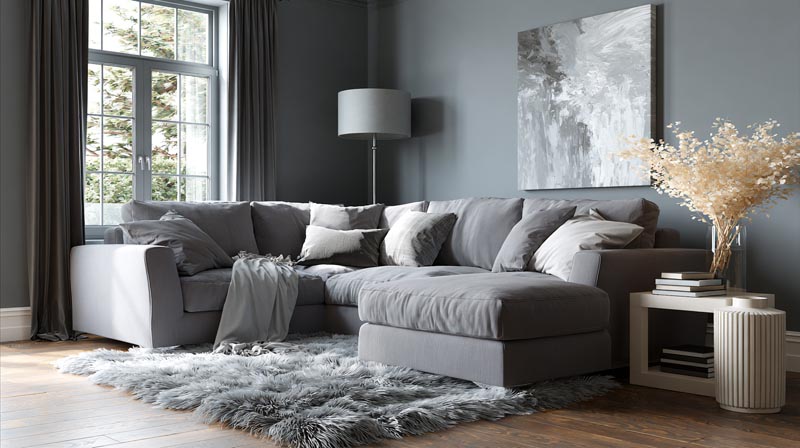
Light-reflective sofa colors prevent small gray rooms from contracting visually. The same rules that apply to choosing light paint for small spaces apply to sofa color selection: the lighter and warmer the sofa, the more open the room feels against the gray backdrop.
NYC-based interior designer James Stanley confirms that sofa color directly impacts the perception of room size, with the right sofa color able to give the impression of a spacious, airy, bright living room even when the actual footprint is small.
Light Sofa Colors That Open Small Gray Rooms
Homes and Gardens design experts consistently return to one shade for small spaces: a soft warm greige. Not flat beige. Not cool steely gray. The key is a balanced tone that carries just enough warmth to feel inviting and enough gray to stay current.
Best sofa colors for small gray rooms:
- Warm ivory and off-white (highest LRV, most light-reflective)
- Pale greige and warm cream
- Light blush with a gray undertone
- Soft warm beige
In small living rooms, light and neutral colors reflect light and create an open, airy feel, according to Povison’s small space design guidance. This applies directly to sofa upholstery, not just wall and floor surfaces.
Sofa Leg Visibility and Color Together
In rooms under 150 square feet, a sofa with visible legs reads as lighter and less space-consuming than one with a solid base, regardless of upholstery color.
This is not just visual: a sofa with 6-inch legs exposes floor space and light, which reduces the visual weight of even a mid-tone upholstery. A camel leather sofa on slender brass legs in a small gray room reads very differently from the same camel upholstery on a box base with no leg clearance.
Dark Sofa and Dark Gray Walls in Small Rooms
Avoid this combination in rooms under 150 square feet. Both surfaces absorb light. The room contracts around both of them.
Fixr.com’s 2024 Paint and Color Trends Report found that dark hues can make large spaces appear larger through added depth. That effect does not transfer to small rooms. In a compact space, dark sofa against dark gray walls removes every source of visual lightness, leaving the room with no relief point.
Interior designer Ana Coddington of Archival Designs states the number one rule for making small living rooms look bigger is using lighter colors, applying specifically to sofa selection alongside wall color choices.
—
How to Test a Sofa Color Against Your Gray Walls Before Buying?
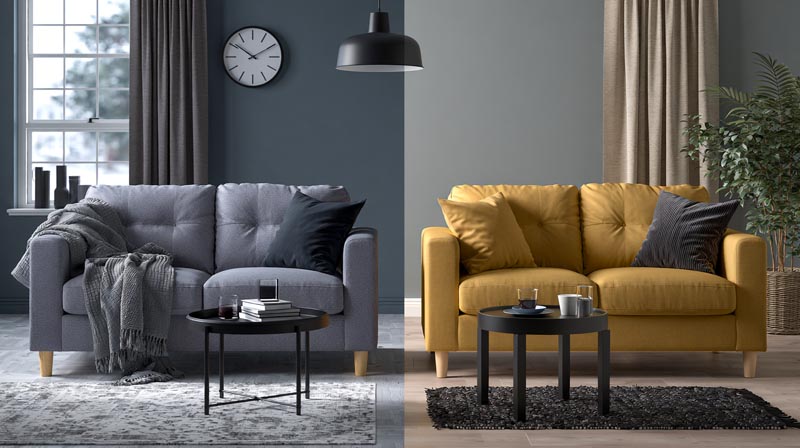
Testing before buying reduces the chance of a costly mismatch. IKEA Place’s AR technology was developed specifically because, as Michael Valdsgaard, IKEA’s Digital Transformation Leader, noted, most people postpone sofa purchase because they are not comfortable deciding without knowing if the color will match their room.
Market data shows a 23% drop in furniture returns when shoppers use AR visualization tools before buying, and companies like Wayfair have reported return rate reductions of 22-40% since implementing AR features (virtual try-on research, 2024).
Fabric Swatches: The Most Reliable Method
Order physical fabric swatches from sofa brands before committing. Article, West Elm, Pottery Barn, and IKEA all offer fabric samples, most at low or no cost.
Hold the swatch flat against the wall at eye level. The swatch needs to be large enough to register as a mass rather than a chip. A 4×4 inch swatch is the minimum useful size. Anything smaller gives an inaccurate impression of how the full sofa will read against the wall.
Evaluate the swatch at 3 different times of day: morning natural light, afternoon direct sun, and evening artificial light. The same fabric color can shift by several apparent LRV points across those conditions.
Poster Board Simulation for Scale
Paint a large piece of poster board or cardboard in the sofa’s approximate color using a sample paint match from a hardware store. Prop it against the wall at sofa height and step back to view the room from the seating position.
This method simulates the mass of the sofa in the room better than a small swatch. A color that looks fine on a 4-inch chip can read very differently when occupying 8 feet of visual space along a wall.
AR Visualization Tools
IKEA Place: places scaled 3D furniture models in a real-time camera view with 98% accuracy of real-life texture, fabric, lighting, and shadow representation (Ozturkcan, 2021).
Wayfair “View in Room 3D”: allows color and material changes on specific products in real-time. Directly useful for testing sofa colors against existing gray wall paint without committing to a purchase.
Houzz AR: offers both product visualization and the ability to browse room photos filtered by style and wall color for comparative reference.
These tools work best as a second check after physical swatch testing. Digital screens render colors differently from real-life surfaces. Use AR to confirm scale and proportion, use physical swatches to confirm the actual color relationship with the specific gray paint on the wall.
The Final Check: Gray Wall Undertone vs. Swatch in Natural Light
Hold the fabric swatch directly against the gray wall surface in natural daylight from the room’s primary window. This is the single most reliable test before purchase.
Look for undertone agreement between the swatch and the wall. If the swatch makes the gray wall appear more blue, the swatch has warm undertones that are pulling contrast in the wrong direction. If both swatch and wall appear to share a similar temperature, the pairing has a solid foundation. Understanding how contrast works in interior design helps interpret what you are seeing during this test rather than relying on instinct alone.
Also check the curtain color relationship with gray walls at the same time. Window treatments interact with both the sofa color and the wall color simultaneously, and testing all 3 together in natural light gives the most accurate preview of the finished room.
FAQ on What Color Sofa Goes With Gray Walls
What is the best sofa color for gray walls?
Navy blue, white, camel, and charcoal are the strongest options. The right choice depends on whether your gray walls are warm or cool. Warm grays pair best with camel and cream. Cool grays work well with navy and crisp white.
Does a gray sofa work with gray walls?
Yes, but only when the LRV difference between sofa and wall is at least 30 points. A charcoal sofa against light gray walls works. A medium gray sofa against medium gray walls flattens the room completely.
What sofa color goes with warm gray walls like Agreeable Gray?
Camel leather, warm cream, sage green, and mustard all pair well. Sherwin-Williams Agreeable Gray has a warm greige undertone, so it accepts sofa colors with brown, gold, or earthy warmth rather than cool-toned upholstery.
What sofa color works with cool gray walls?
Navy, off-white, dusty rose, and charcoal. Cool grays like Benjamin Moore Stonington Gray carry blue undertones. Warm sofa colors like camel or terracotta tend to clash unless bridged with warm accent colors.
Does a white sofa go with gray walls?
Yes. White and off-white sofas work against any gray wall shade. Pure white suits cool grays best. Ivory and cream perform better against warm grays like Agreeable Gray, where pure white can read as slightly stark.
What color sofa makes a small gray room look bigger?
Light-reflective sofa colors. Warm ivory, pale greige, and soft cream reflect light and reduce visual weight. Dark sofas against dark gray walls absorb light from both surfaces, making small rooms feel noticeably tighter and more enclosed.
What sofa color should I avoid with gray walls?
Avoid same-LRV pairings and undertone conflicts. A medium gray sofa against medium gray walls disappears visually. Orange-red sofas against cool blue-gray walls create an undertone clash that no amount of accessorizing fully corrects.
Does a navy sofa go with gray walls?
Yes, especially against cool or neutral gray walls. Navy creates high contrast and anchors the room. Pair it with warm accent colors like brass or rust to prevent the room from reading as entirely cool in its color scheme.
What accent colors help tie a sofa to gray walls?
Rugs, pillows, and hardware do the bridging work. Brass connects warm sofas to cool gray walls. A warm-toned rug with rust or terracotta tones bridges a navy sofa and warm gray wall without requiring a full room redesign.
How do I test a sofa color against my gray walls before buying?
Order fabric swatches and hold them against the wall in natural daylight at morning, afternoon, and evening. Use IKEA Place or the Wayfair AR app for scale testing. Physical swatches confirm undertone accuracy better than any screen-based tool.
Conclusion
This conclusion is for an article presenting what color sofa goes with gray walls, and the core takeaway is simple: undertone matching matters more than color preference.
Warm grays like Agreeable Gray need sofas with warm undertones. Cool grays like Stonington Gray need cool or neutral sofa colors. Get the undertone right and the rest of the room color scheme falls into place.
Navy, camel leather, off-white, sage green, and charcoal all work. Same-LRV pairings and undertone conflicts are the two mistakes worth avoiding.
Test fabric swatches against your specific wall in natural light before buying. Use AR tools like IKEA Place for scale confirmation.
The right sofa color does not just complement gray walls. It makes the entire living room feel considered.

- Kitchen Color Schemes by Cabinet Color: What Pairs Well - October 19, 2026
- Curtain Colors for Every Wall Color: Safe vs Bold Picks - October 18, 2026
- Interior Design Styles: Find Your Primary and Secondary - October 14, 2026